

Study Finds Ocean Mining Drastically Disrupts Biodiversity
Just two hours of mining caused significant habitat loss to fish and shrimp.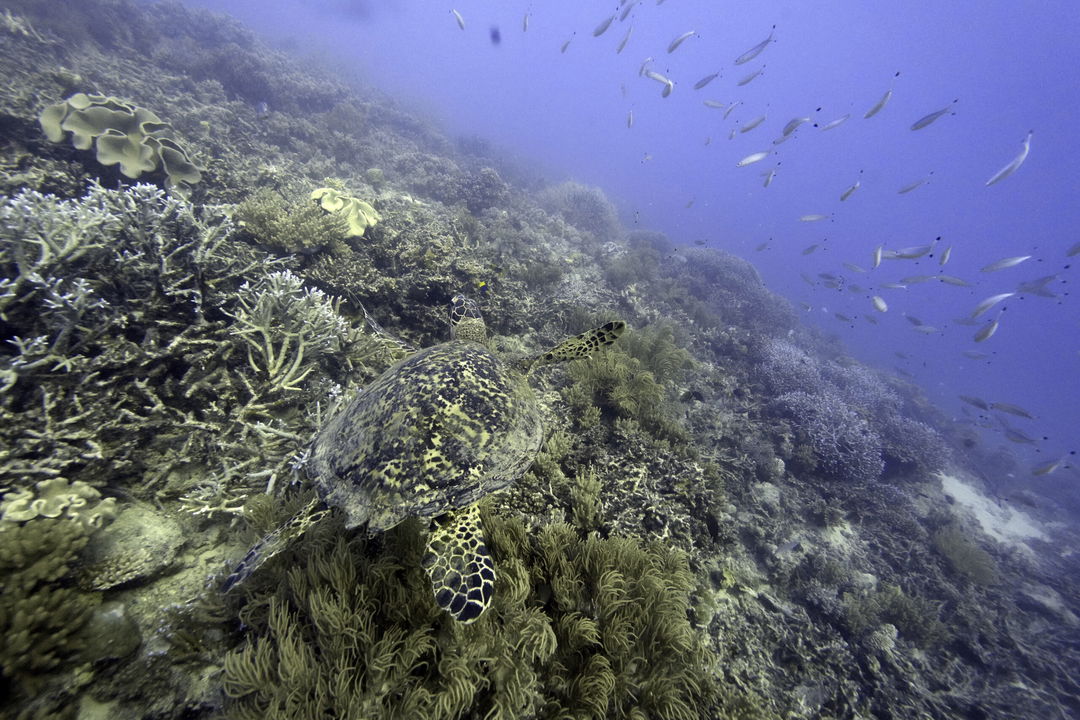 Moore Reef in Gunggandji Sea Country off the coast of Queensland in eastern Australia on Nov. 13, 2022. (AP Photo/Sam McNeil, File)
This is Part of the "The Scramble for Deep-Sea Minerals" Dig series
Moore Reef in Gunggandji Sea Country off the coast of Queensland in eastern Australia on Nov. 13, 2022. (AP Photo/Sam McNeil, File)
This is Part of the "The Scramble for Deep-Sea Minerals" Dig series
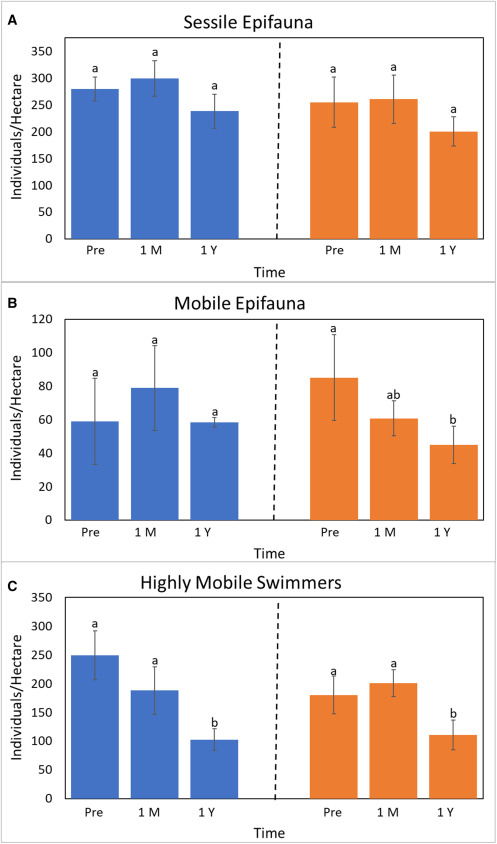
A study published in the scientific journal Current Biology in July shows that, a year after a two-hour mining experiment in the deep sea, populations of fish and shrimp in the mined area dropped 43%. In the surrounding areas, up to 150 meters away, these populations declined by 56%.
As the world debates the ethics and logistics of mining the minerals of the deep sea, a largely unstudied environment, in order to fuel the transition to renewable sources of energy, these kinds of studies carry weight.
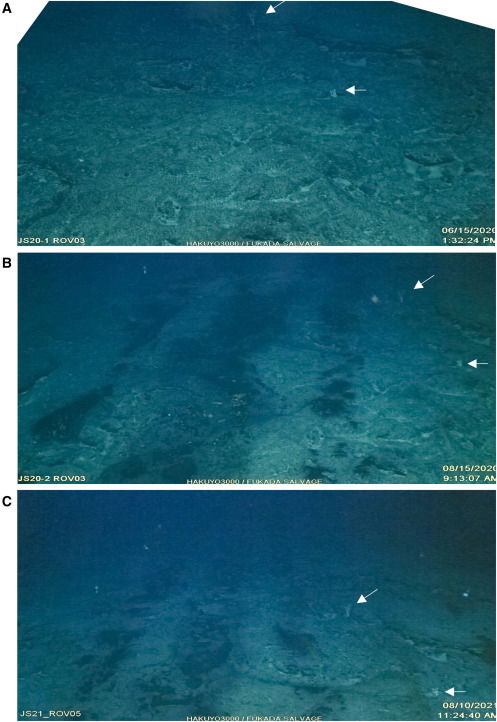
“Our results suggest that even a very small-scale seamount excavation may substantially alter benthic communities, with the largest spatial footprint of change observed for highly mobile swimming animals that are primarily predators/scavengers,” wrote the authors of the study, which was supported by the National Institute of Advanced Industrial Science and Technology in Japan. This means that even two hours of mining had a significant impact, particularly for fish that swim, crossing through the arbitrary boundaries humans draw on maps.
The study’s authors suggest several possible reasons for the population decline, including a lack of food that sent other animals elsewhere, and the “toxic effects of plume material.”
“Although deep seabed mining (DSM) may possibly help satiate increased global demand for various metals, it also has the potential to greatly disrupt many deep-sea habitats,” the study concluded. “Such disruptions include extinction events, destruction of globally significant ecosystems, and unknown harm to an environment essential to human health and the planet.”
TRUTHDIG’S JOURNALISM REMAINS CLEARThe storytellers of chaos tried to manipulate the political and media narrative in 2025, but independent journalism exposed what they tried to hide.
When you read Truthdig, you see through the illusion.
Support Independent Journalism.
 Environment
The international lending giant is funding high-rise “hog hotels” but not investing in sustainable agriculture.
Environment
The international lending giant is funding high-rise “hog hotels” but not investing in sustainable agriculture.
 Environment
A new declaration aims to make the southernmost continent an autonomous legal entity with inherent rights to participate in decisions that affect it.
Environment
A new declaration aims to make the southernmost continent an autonomous legal entity with inherent rights to participate in decisions that affect it.
 TD Original
A U.N. conference is meeting in a Colombian city known for cocaine and sugar. The key is what happens when it's over.
TD Original
A U.N. conference is meeting in a Colombian city known for cocaine and sugar. The key is what happens when it's over.
 Editorial Cartoons
 Environment
Grasping ecological complexity leads to new ways of thinking about climate change and viable responses to it.
Environment
Grasping ecological complexity leads to new ways of thinking about climate change and viable responses to it.
 Environment
One campaigner called the law’s passage a “ray of hope for Europe’s nature, future generations, and the livelihoods of rural communities.”
Environment
One campaigner called the law’s passage a “ray of hope for Europe’s nature, future generations, and the livelihoods of rural communities.”


You need to be a supporter to comment.
There are currently no responses to this article.
Be the first to respond.