A great seachange is underway in how Americans eat. The year 2020 brought with it an unexpected pandemic Black Swan event on our nation’s food and beverage industry, the ramifications of which we are only now beginning to comprehend. Tens of thousands of restaurants have already closed nationwide, many permanently. Summer’s long hours, good weather, and relaxed municipal outdoor dining laws have helped provide some life support, but the situation is grim come fall. Now more than ever Americans are cooking at home, a trend that shows no sign of slowing down.
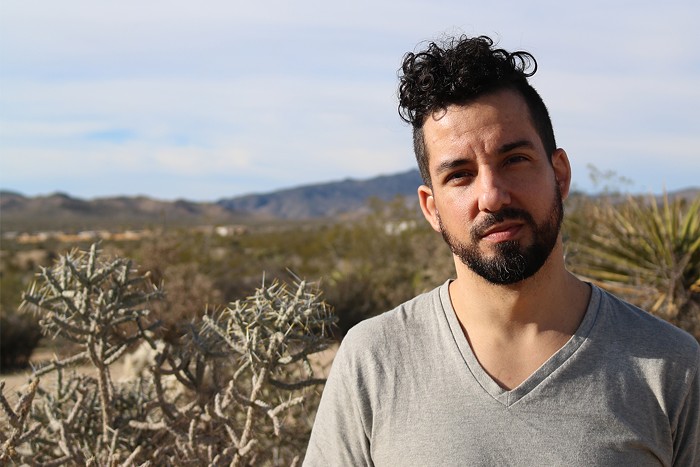
All of which is to say it’s a very interesting time to be someone like Kevin Smith, the proprietor of Ballard’s Beast & Cleaver butcher shop. Smith and his small team opened their doors on New Year’s Eve 2019, and from there experienced an inaugural year like no other. “We’d been open just three months when it hit,” Smith told me, “and we thought we were busy. Then COVID came and I have to tell you—we couldn’t keep up.”
Smith is a London native who fell in love with a Seattleite and pursued a career as a chef and butcher here at some of the city’s premier establishments for the abattoirial arts, including Rain Shadow Meats and The Butcher’s Table. About those heady days in spring, “It felt like a Christmas rush every day,” he says, with shoppers buying intense amounts of meat—40 pounds of ground beef, say, or Smith’s housemade sausages by the dozen.
Things have died down a bit now, which offers us a chance to look a little deeper at what a place like Beast & Cleaver means for food in Seattle, and in today’s wider moment. I think the heritage high-end butcher shop might be unfairly lumped in with some of the wider excesses of our all-food-everything early 21st century, where chefs became the new rockstars and restaurants the new opera houses. I have a hard time imagining how the 12-course foam-and-emulsion $300 tasting menu haute cuisine trope survives COVID, and also am out of fucks to give for it. The cult of El Bulli et. al is deader than the trench coat. Food and those who love it have collectively moved on. COVID is merely the knockout wallop.
But the butcher shop, specifically the all-world high-quality artisan butcher shop like Beast & Cleaver, is uniquely poised to be a breakout star in our new shared reality. 100% of the product line sold at Beast & Cleaver is sourced from small, meticulously managed farms with a focus on animal quality of life and minuscule herd sizes. Some of the beef sold here comes from farms as small as 40 to 50 heads of cattle at a time; by way of comparison, industrial farms process that many animals for slaughter in an hour. “I’ve done a lot of research into how animals are raised in the United States,” says Smith, “and you know, many of them never even see the light of day. Chickens in particular, the standard is 2-4 weeks of being alive and then they’re sorted and that’s what’s at every supermarket. The lower quality ones live in really bad conditions—they live in their own feces, they don’t go outside, they’re not free roaming, and they’re full of antibiotics. They’re not good food. Stay away from it.”
Factory farming is an ecological, industrial, and moral nightmare, and while this is nothing new, COVID has placed a renewed focus on the issue in 2020. Upton Sinclair’s 1906 novel The Jungle was intended to shine a light on the appalling conditions under which food processing workers labored, but had the unintended effect of causing a public outcry over mislabeling and standards abuse in the American meat supply, resulting in the Federal Meat Inspection Act of 1906. It’s been more than a hundred years and factory farming and industrial meat processing in America remains a flashpoint, an epidemiological hotspot.
Personally, learning about factory farming over the last few years led to a curiosity in veganism. I have dear vegan friends. I respect and acknowledge the moral and environmental arguments for veganism (though like any argument, it isn’t perfect). In 2019 I underwent a personal effort to learn more about veganism, eating vegan at home and abroad for the full year. It was a revealing, educational, and at times frankly gaseous experience, which I wrote about variously for publications in New York, Portland, and Los Angeles, whose vegan food scene has long-since fused with the health-and-wellness influencer zeitgeist, and is roaring.
I ate some great food and met some nice people along the way. At the end of the year I began slowly incorporating meat and dairy back into my diet, and found that my relationship with these products had fundamentally changed. Veganism is unequivocally correct in shining a light on the horrors of factory farming, about the cruelties we as a species inflict on other species in order to commodify and consume them. I encourage anyone else with the means and inclination to try veganism at some point in their life, because in my experience, it will forever impact how you think about what you eat.
But about those means. Veganism can be expensive (this topic is hotly debated and in fairness there are many many articles on the Vegan Internet refuting it) especially when compared to factory farmed foods. And veganism is not some sort of magical Ethical Consumption Under Capitalism “Get Out Of Jail Free” card; many popular vegan snacks are chocked full of palm oil, produced through the deforestation of rainforest habitats in Southeast Asia. Many vegan foods, vegan snacks, vegan meals are extremely high in saturated fats and sugar. Vegan food festivals are a lot of fun, but they are not “health food” festivals, I assure you.
High-end meat—meticulously sourced from heirloom heritage herds served by farmers with every last bona fide— is expensive, too.
For a lot of families in America, fast food is what's for dinner. This is the world we live in, the daisy chain of capitalistic forces creating systemic inequality up and down across lines of class, race, and geography. Food insecurity is a real thing in the daily lives of people in our own communities. It makes hemming and hawing over the availability of cheap meat feel like class warfare. Nobody is confusing Jack In The Box with a health food festival, either, but it is demonstrably inexpensive. What is undeniably cheap is the three-for-five menu or the Super Jumbo Deluxe combo or whatever at the fast food place on the busy intersection of every city, suburb, exurb, and rural truck stop in America.
And yet, the factory farm paradigm feels like class warfare, too, dripping in blood and guts and systemic oppression. There is no easy out. Consuming meat is fraught.
With that in mind, let’s get back to the butcher shop.
Beast & Cleaver puts a focus on whole meat butchery, which means working your way through an entire animal to yield small quantities of individual cuts and chops. “Most beef in America is sold from animals that are between 18 and 24 months of age,” says Smith. At Beast & Cleaver you can buy meat from animals that are 7, or even 9 years old, sourced from very small herd specialists like Palouse River Beef near Yakima. The experience of eating meat from an aged animal like this is totally different from any other sort of steak you can buy; it is delicate, takes careful cooking, and produces a different form of umami and texture, characterized by a kind of gentle yellow, grassy note throughout. The fat itself takes on a kind of yellow sheen, which is typical for a ruminant animal allowed to graze for a long, healthy lifespan. “I tell people it’s more like cooking halibut,” Smith says. “If you overcook it, it’ll come out tough very quickly. But if you cook it correctly it’s the best beef you’ve ever eaten.”
This to me is more interesting than any fine dining experience you can think of right now. That I can enjoy it from the safety of my own home is a significant bonus. That I might connect with the food further by actually being the one to cook it is, in my opinion, fun. The amount of attention to detail Kevin Smith and his team are paying to this stuff feels respectful, and meaningful.
This approach to sourcing can be found across Smith’s shop. It is perhaps most dramatic in the chickens he sells, which are offered at $7.99 a pound—roughly four times the chicken at Walmart—from a farmer who raises just 40 chickens a week for slaughter, compared to the thousands slaughtered each day in industrial facilities. “This is a six pound chicken that’s plump and healthy, and you can feed six people with it,” Smith tells me, “and it’s been raised directly for us. It’s all from Washington, and all truly sustainable.”
Therein lies the rub, for which there’s no glib conclusion—healthy and sustainable for whom? As an eater I was floored by the quality of meats on offer at Beast & Cleaver. The best organic bison I’ve ever had, a perfect glowing red hockey puck tenderloin sourced from a little farmer in Acme, Washington, in Whatcom County, and fed on grass and fermented alfalfa (to promote healthy digestion). Outrageously good beef pie, made with slowly braised shanks in a perfect shortcrust pastry (Smith is originally from Elephant and Castle, in southeast London), made using high quality pork leaf lard. And those glorious seven year aged Red Devon cuts of beef; I brought home flap steak, which isn’t the sexiest name, but refers to a flavorful cut from the bottom of the sirloin, and is similar to flank steak.
All of it was glorious. All of it was, compared to the QFC meat counter, at least twice as expensive, and thus out of reach for many Seattleites. Which means it’s not as simple as concluding that, if you want to find a moral and ethical way to consume meat while standing against the evils of factory farming, one should simply shop at Beast & Cleaver, or other very good butcher shops of its ilk. (There aren’t many as good; this is the best new butcher shop that opened in America this year, and in a normal year we’d have long since had the food media hordes from New York landing with their monocles crooked, ready to declare this place A Big Deal.)
It’s a bit like saying if you’ve got trouble with today’s housing crisis, simply buy yourself a home in Ballard. Food writing misserves food readers by not acknowledging this stuff. The conclusion has to be more complex, more inclusive.
Beast & Cleaver, and butchers like Kevin Smith, and the small farmers he curates together offer a kind of window into a better way of thinking about meat. Not everyone can afford it, and even those who can might not be able to afford it every day, for every shopping trip, although that does sound like a lovely life. It’s not enough to say let’s simply go to these places and call it good; we need food to look more like this for everyone in America, to begin unraveling the riddle of our food sources on a mass accessible scale, to interrogate unsustainable and dangerous systems of meat production just as we are interrogating so much in our daily lives in 2020.
“In the short term I see a few positives coming from COVID, and one is fresh attention for whole animal butchery and sustainable farming practices,” says Kevin Smith, adding, “I think we may be coming back into a new golden age of small focused butcher shops.”
I hope he’s right. The Jungle hasn’t gone away; the factory slaughter and consumption of animals remains a pressing issue for the health and wellness of our collective society, an active item on the docket of the American soul. (It’s not the only one.) But if you are blessed and privileged to have it in your budget to shop at Beast & Cleaver, I strongly feel you should do so. The products are delicious and thought-provoking and rare, and it’s more than just that. Here is a radical reimagining of what meat consumption means in America today, impeccably sourced and executed with immense intentionality. Beast & Cleaver is meat with meaning.