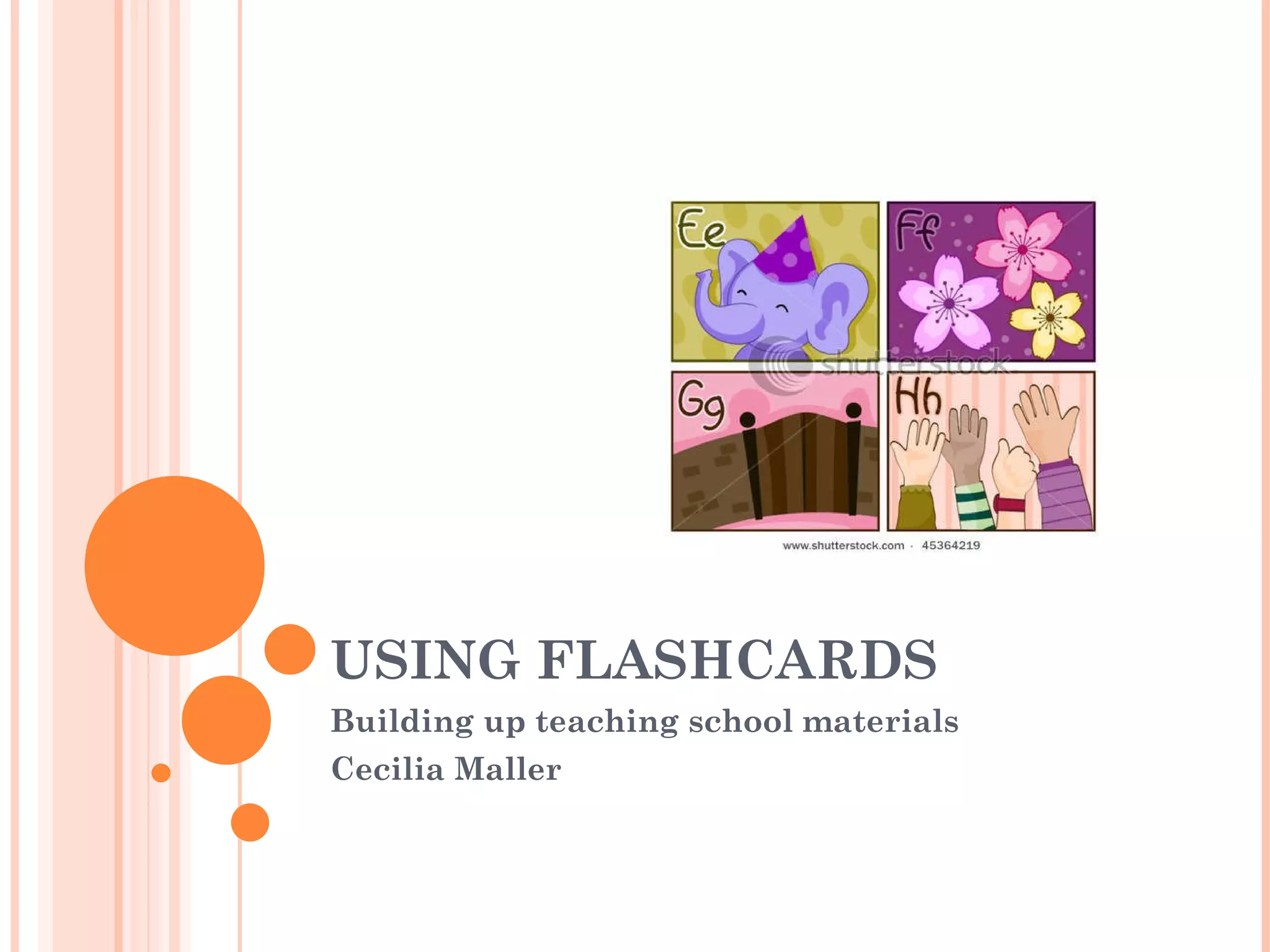
USING FLASHCARDS Building up teaching school materials Cecilia Maller
WHAT ARE FLASHCARDS? Resource: simple, useful and under exploited.  Why use flashcards? We should aim to appeal to different learner types. Visual learners. Flashcards: bright and colourful, make impact on Visual Ls.
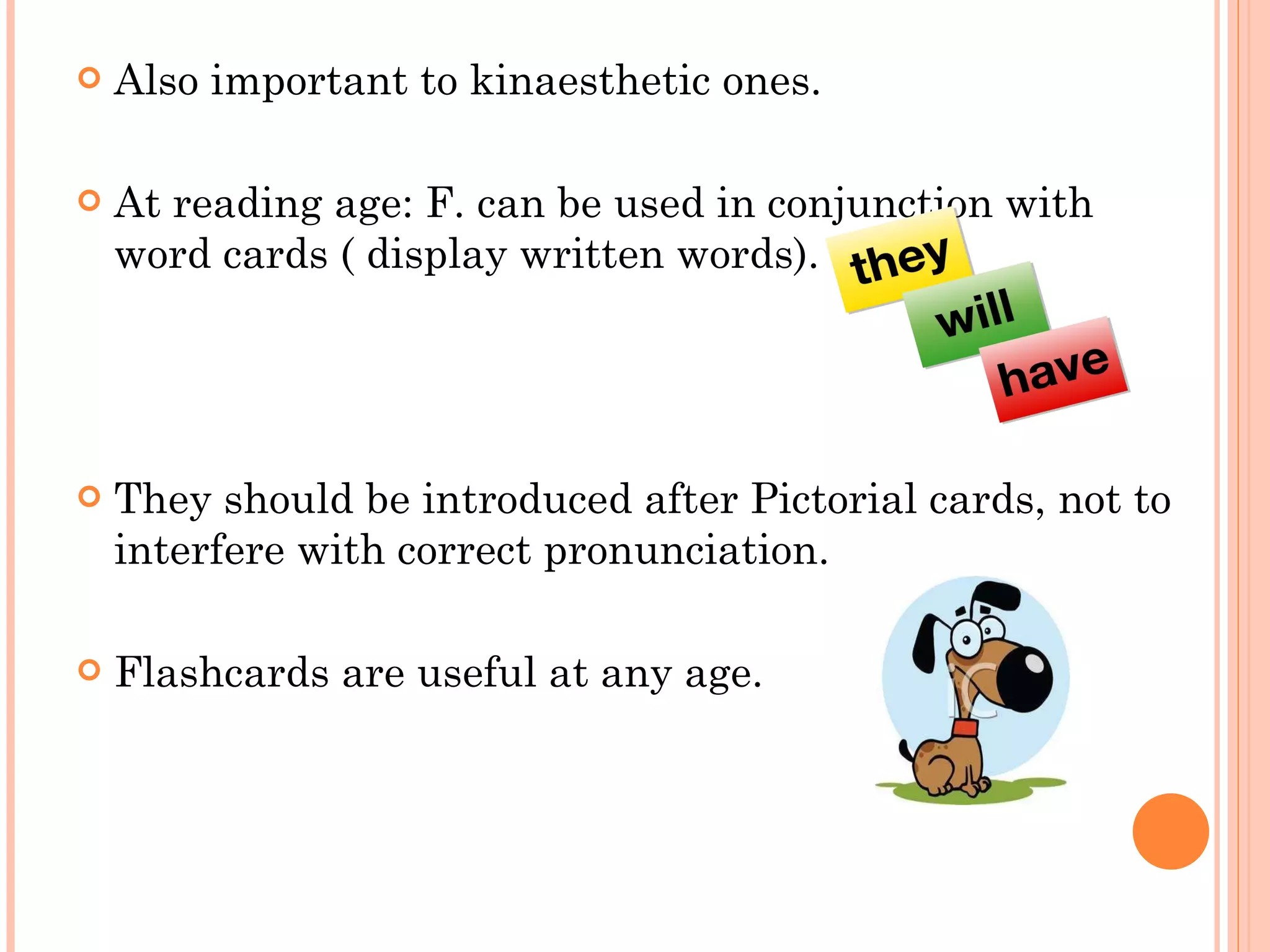
Also important to kinaesthetic ones. At reading age: F. can be used in conjunction with word cards ( display written words). They should be introduced after Pictorial cards, not to interfere with correct pronunciation. Flashcards are useful at any age.
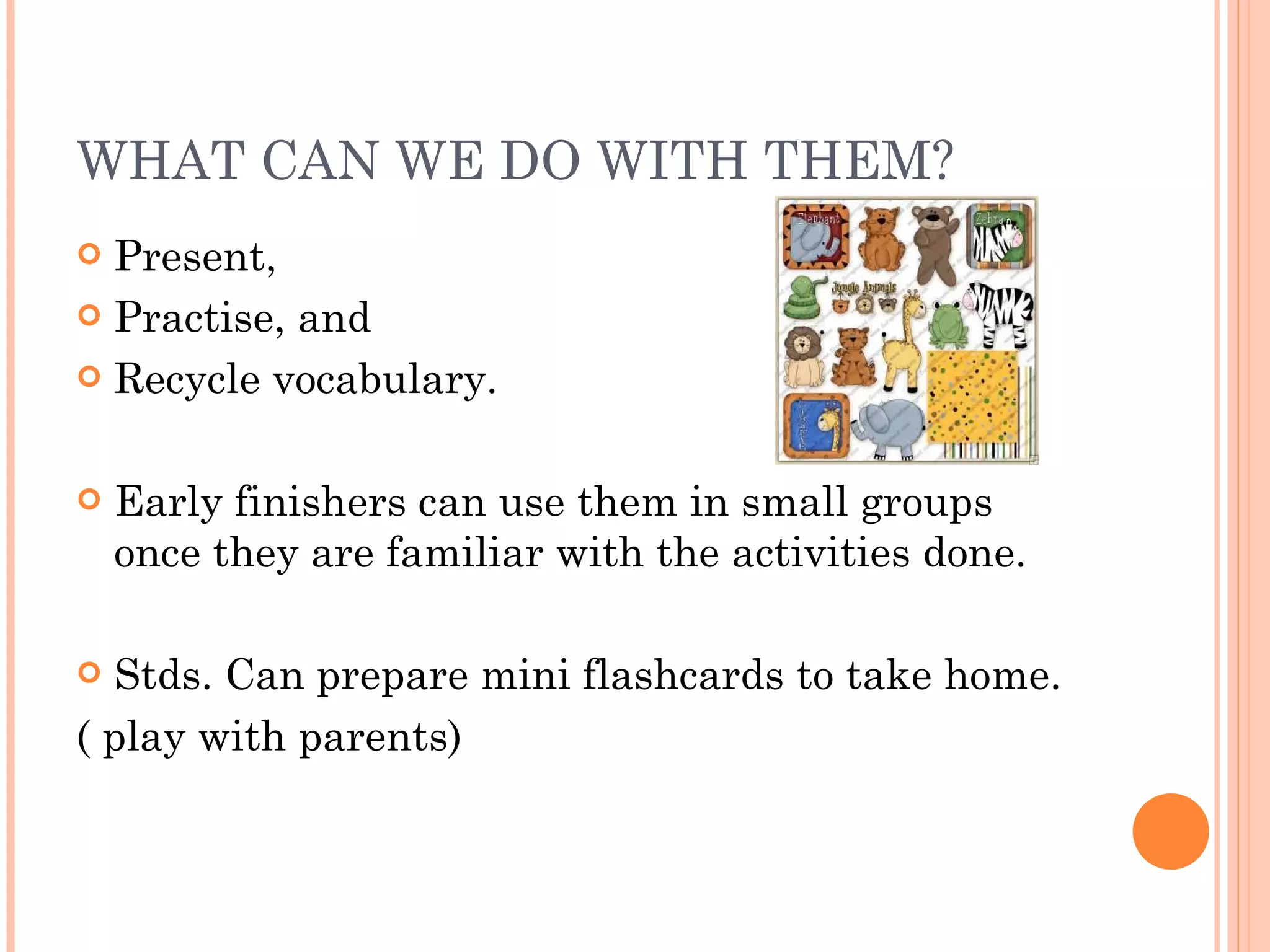
WHAT CAN WE DO WITH THEM? Present,  Practise, and Recycle vocabulary. Early finishers can use them in small groups once they are familiar with the activities done. Stds. Can prepare mini flashcards to take home.  ( play with parents)
WHERE TO GET FLASHCARDS? 1. Buy them. 2.Get them from Publishing Companies ( pack). Make them yourself: Using pictures from magazines, draws, copy from internet or clip art). Important: all of the same size, may be using different colours for diff. Sets. Laminate ( last for years)
ADVANTAGE OF MAKING YOUR OWN FLASHCARDS: Cheap Make sets for specific needs. Ex.: make a set to se in conjunction with a story book or graded reader, or accompany project work. 3. Students make them.
ACTIVITIES FOR USING FLASH CARDS: Three categories: Memory Drilling Identification and TPR activities
MEMORY ACTIVITIES Memory tester. Selection of them on the floor or board. Stds. Have a minute to memorise them. In groups, two minutes to write as many names as they can remember.
DRILLING ACTIVITIES Invisible Flashcards: Stick 9 flashcards on the board and draw a grid. Point to the card we are drilling. Gradually remove cards but continue to drill and pointing to the grid where the F. was.
You can show stds. the F. asking them where they go  ( depending age). ** This highlights impact of Visual Aids!! Images stick in students´minds.
IDENTIFICATION ACTIVITIES Reveal the word. Cover the card, slowly reveal it. Stds. Guess. Once the card is shown: drill the word- different intonation, silly voices to keep it fun.
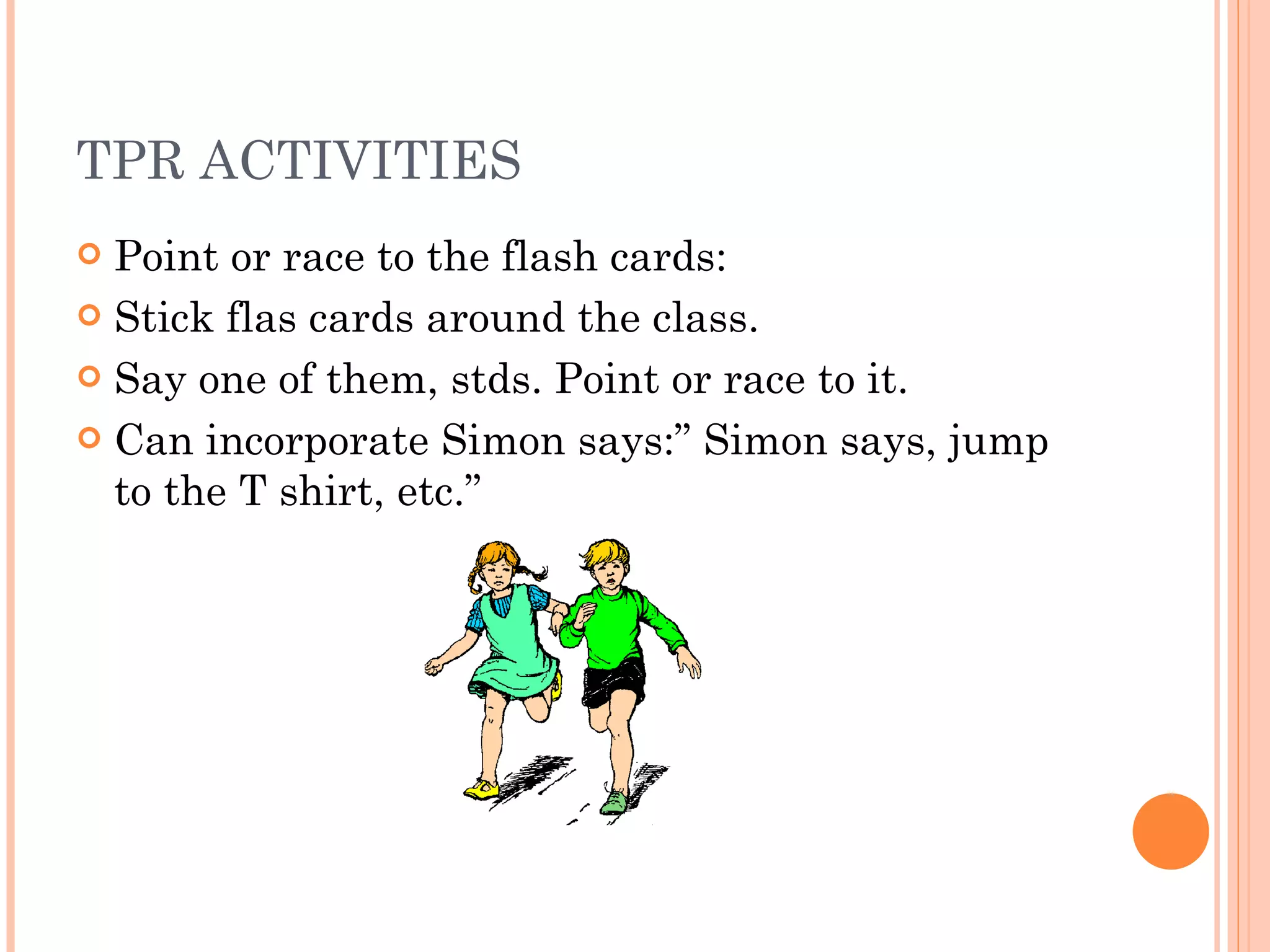
TPR ACTIVITIES Point or race to the flash cards: Stick flas cards around the class. Say one of them, stds. Point or race to it. Can incorporate Simon says:” Simon says, jump to the T shirt, etc.”
NOW…. CREATE YOU OWN FLASHCARDS

Using flashcards

  • 1.
    USING FLASHCARDS Buildingup teaching school materials Cecilia Maller
  • 2.
    WHAT ARE FLASHCARDS?Resource: simple, useful and under exploited. Why use flashcards? We should aim to appeal to different learner types. Visual learners. Flashcards: bright and colourful, make impact on Visual Ls.
  • 3.
    Also important tokinaesthetic ones. At reading age: F. can be used in conjunction with word cards ( display written words). They should be introduced after Pictorial cards, not to interfere with correct pronunciation. Flashcards are useful at any age.
  • 4.
    WHAT CAN WEDO WITH THEM? Present, Practise, and Recycle vocabulary. Early finishers can use them in small groups once they are familiar with the activities done. Stds. Can prepare mini flashcards to take home. ( play with parents)
  • 5.
    WHERE TO GETFLASHCARDS? 1. Buy them. 2.Get them from Publishing Companies ( pack). Make them yourself: Using pictures from magazines, draws, copy from internet or clip art). Important: all of the same size, may be using different colours for diff. Sets. Laminate ( last for years)
  • 6.
    ADVANTAGE OF MAKINGYOUR OWN FLASHCARDS: Cheap Make sets for specific needs. Ex.: make a set to se in conjunction with a story book or graded reader, or accompany project work. 3. Students make them.
  • 7.
    ACTIVITIES FOR USINGFLASH CARDS: Three categories: Memory Drilling Identification and TPR activities
  • 8.
    MEMORY ACTIVITIES Memorytester. Selection of them on the floor or board. Stds. Have a minute to memorise them. In groups, two minutes to write as many names as they can remember.
  • 9.
    DRILLING ACTIVITIES InvisibleFlashcards: Stick 9 flashcards on the board and draw a grid. Point to the card we are drilling. Gradually remove cards but continue to drill and pointing to the grid where the F. was.
  • 10.
    You can showstds. the F. asking them where they go ( depending age). ** This highlights impact of Visual Aids!! Images stick in students´minds.
  • 11.
    IDENTIFICATION ACTIVITIES Revealthe word. Cover the card, slowly reveal it. Stds. Guess. Once the card is shown: drill the word- different intonation, silly voices to keep it fun.
  • 12.
    TPR ACTIVITIES Pointor race to the flash cards: Stick flas cards around the class. Say one of them, stds. Point or race to it. Can incorporate Simon says:” Simon says, jump to the T shirt, etc.”
  • 13.
    NOW…. CREATE YOUOWN FLASHCARDS