Understanding
Garbage Collection
(aka Automatic Memory Management)
Douglas Q. Hawkins
http://www.dougqh.net
dougqh@gmail.com
Why?
Leaky Abstraction
2 of 3 Optimization Flags Are For
Memory Management
but not about
tuning per se
...
...
HotSpot Collectors
Young
Old
-XX:+UseSerialGC
-XX:+UseParNewGC -XX:+UseParallelGC
-XX:+UseConcMarkSweepGC -XX:+UseParallelOldGC
Serial
Parallel
Scavenge
Serial Old
(Mark Compact)
Concurrent
Mark &
Sweep
Parallel
Old
(Mark Compact)
Parallel
Topics
Basic Garbage Collection Strategies & Terminology
Garbage Collection in HotSpot
Garbage Collection in J9 and JRockit
Alternatives to Garbage Collection
Azul C4
Fundamentals
Tasks for a Tracing GC
Identify Live Objects
Remove Dead Objects
Optionally, Coalesce Free Space
(Compaction)
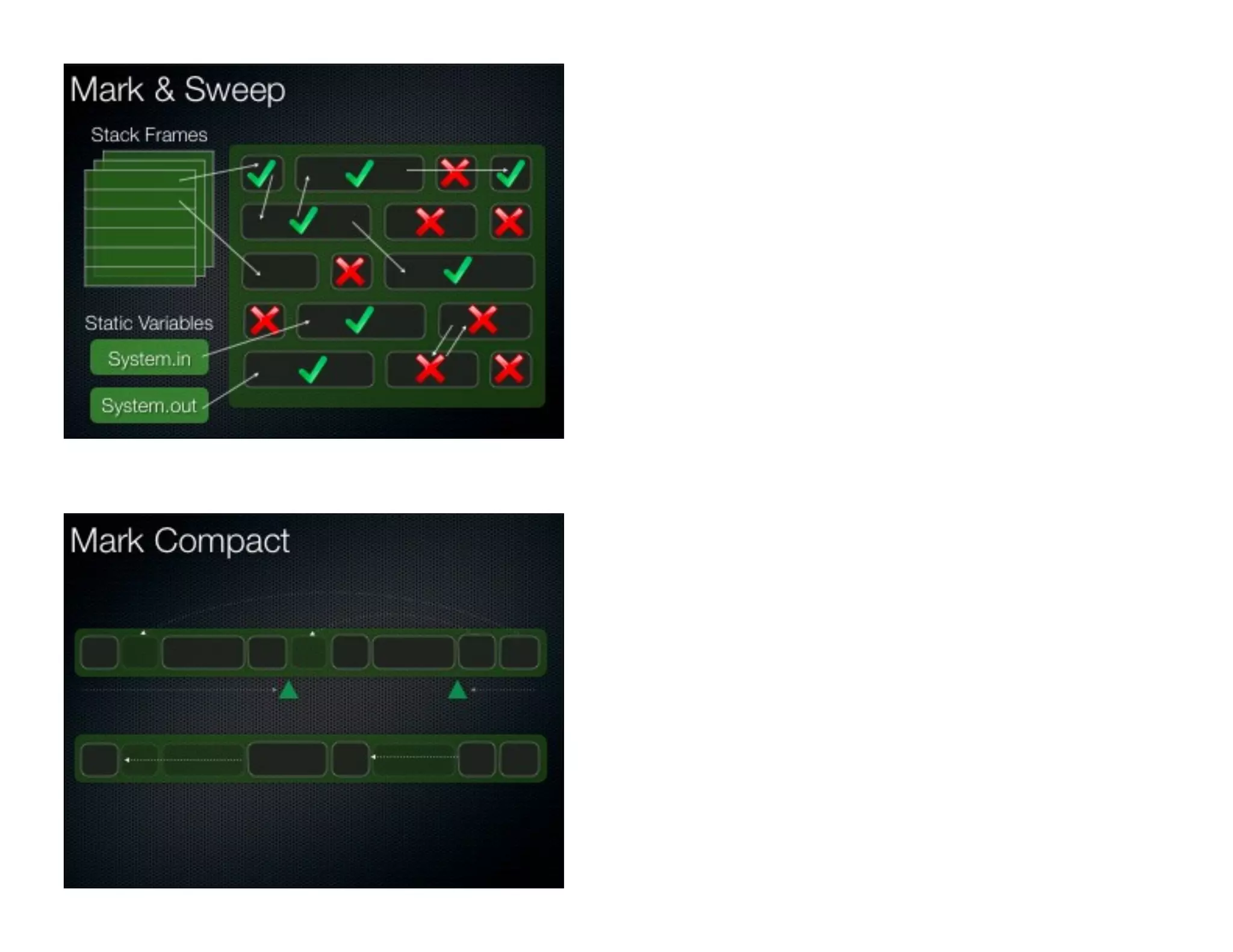
Stack Frames
Mark & Sweep
Static Variables
System.in
System.out
Mark Compact
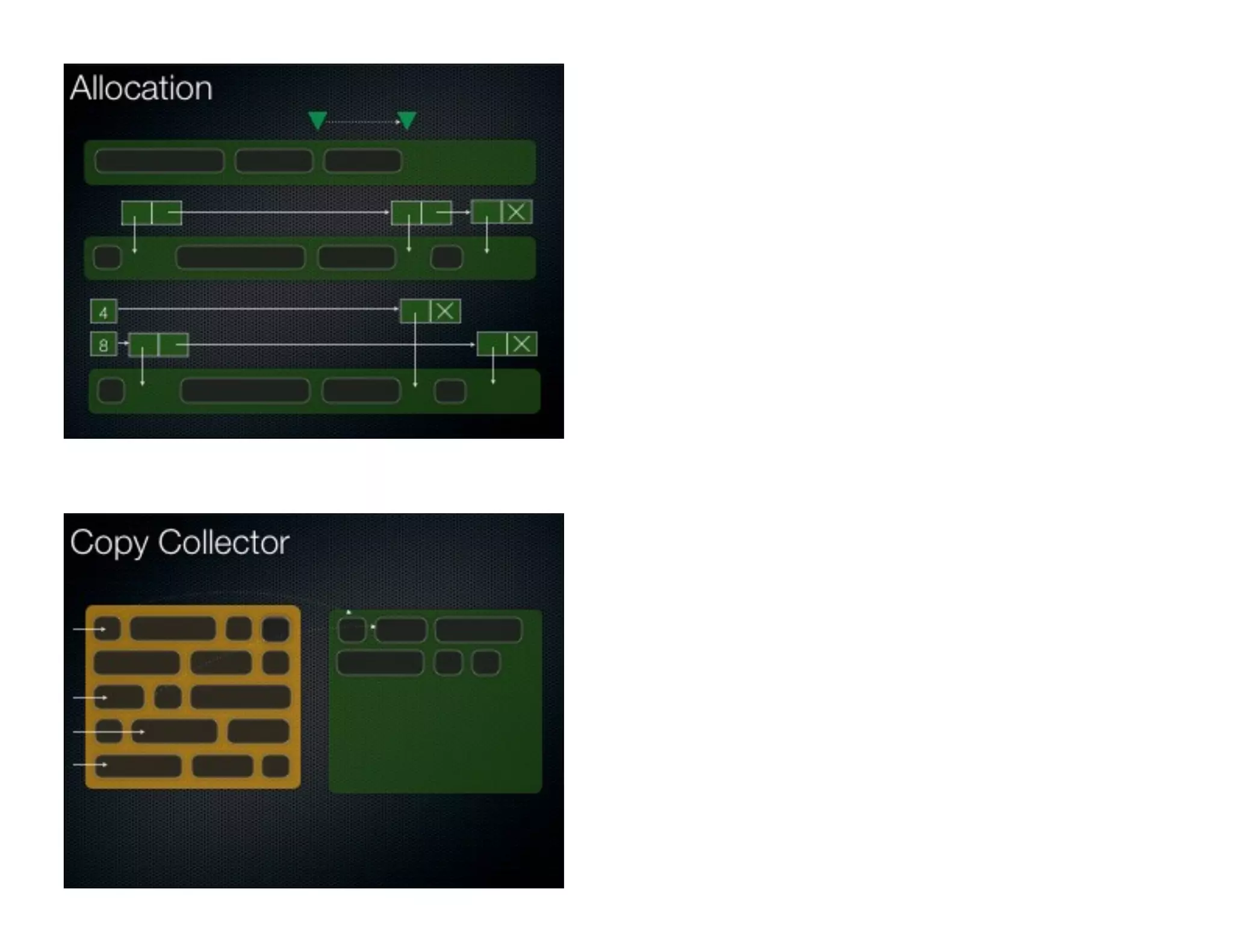
Allocation
4
8
Copy Collector
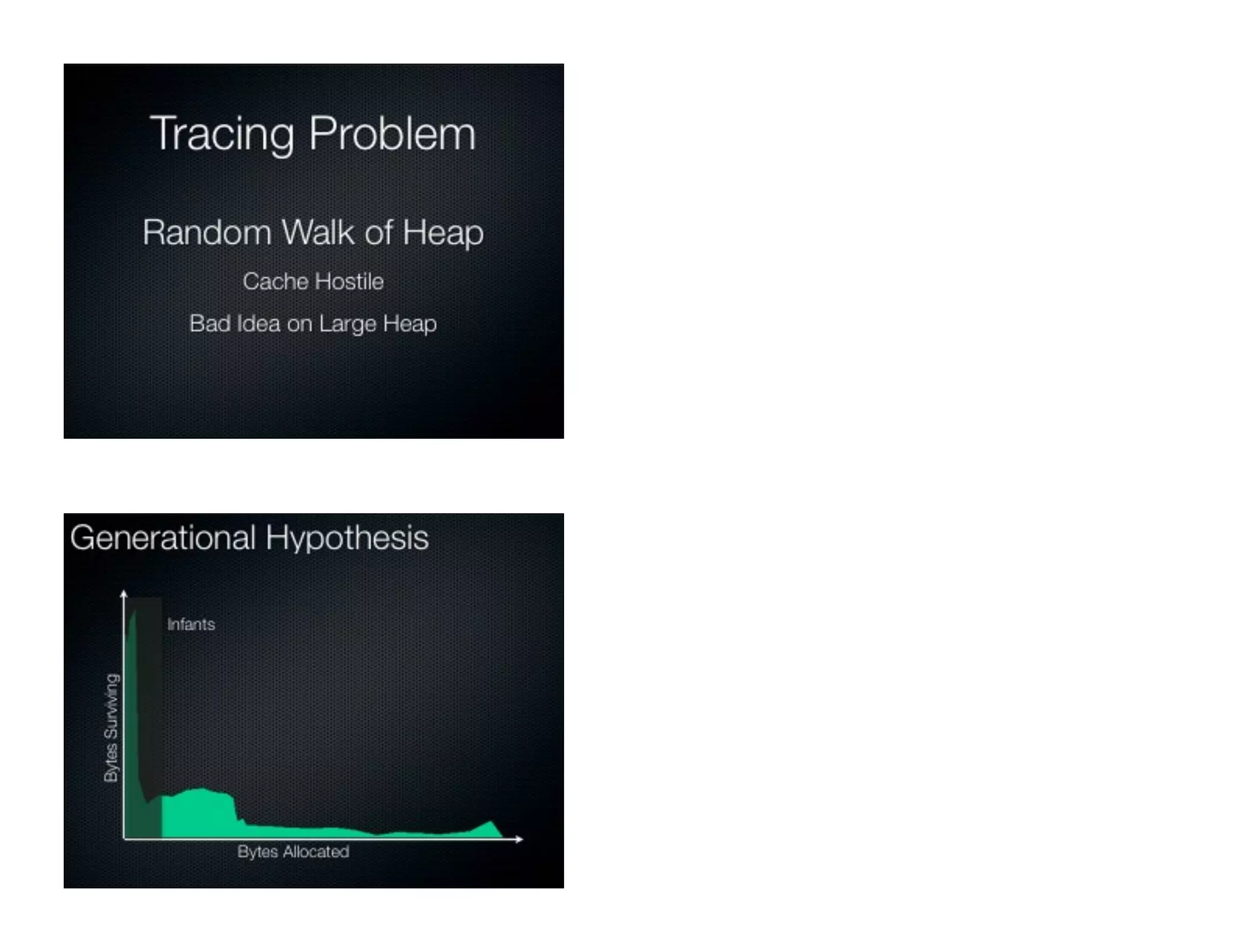
Tracing Problem
Random Walk of Heap
Cache Hostile
Bad Idea on Large Heap
Generational HypothesisBytesSurviving
Bytes Allocated
Infants
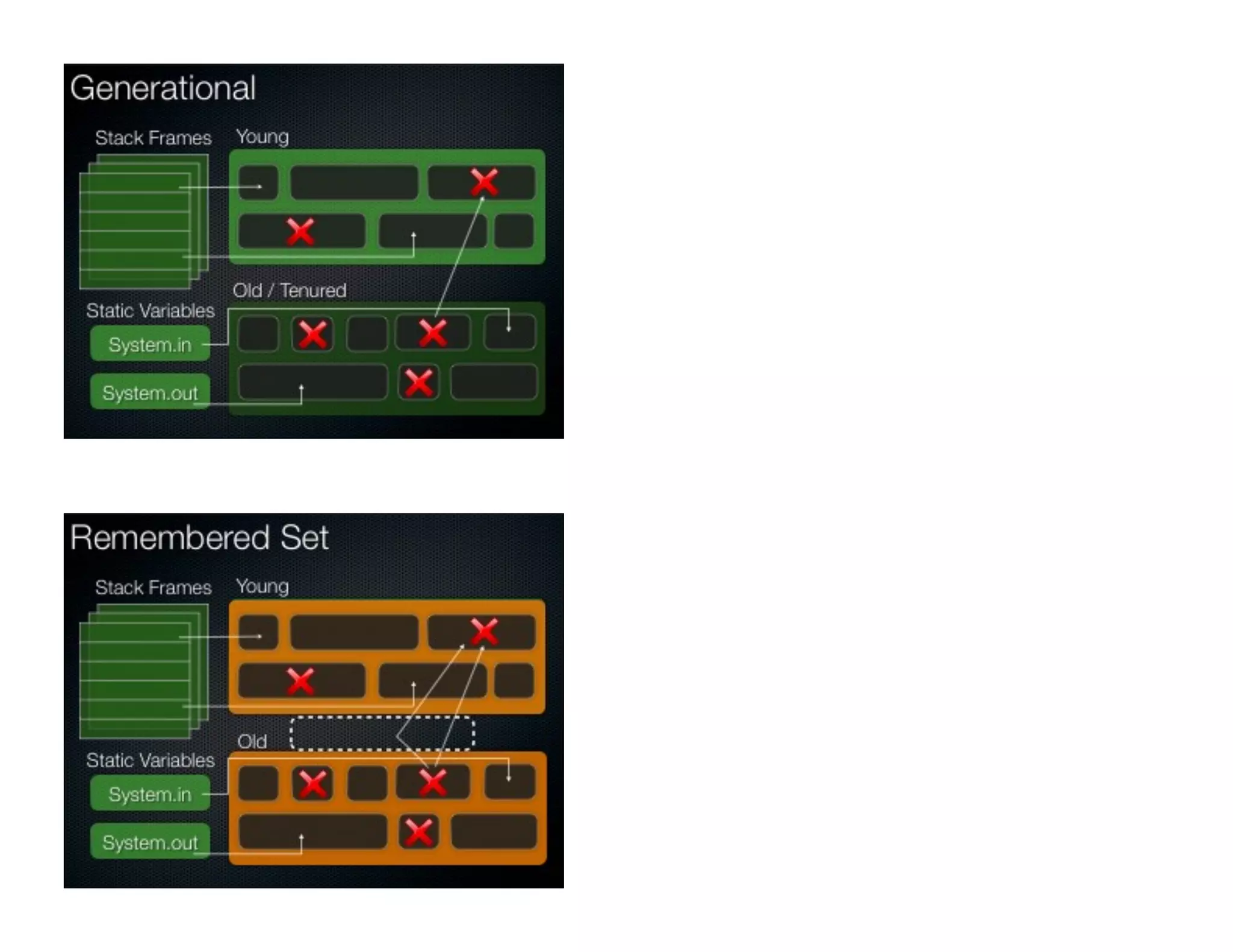
Generational
Young
Old / Tenured
Stack Frames
Static Variables
System.in
System.out
Remembered Set
Young
Old
Stack Frames
Static Variables
System.in
System.out
GC in
Java VMs
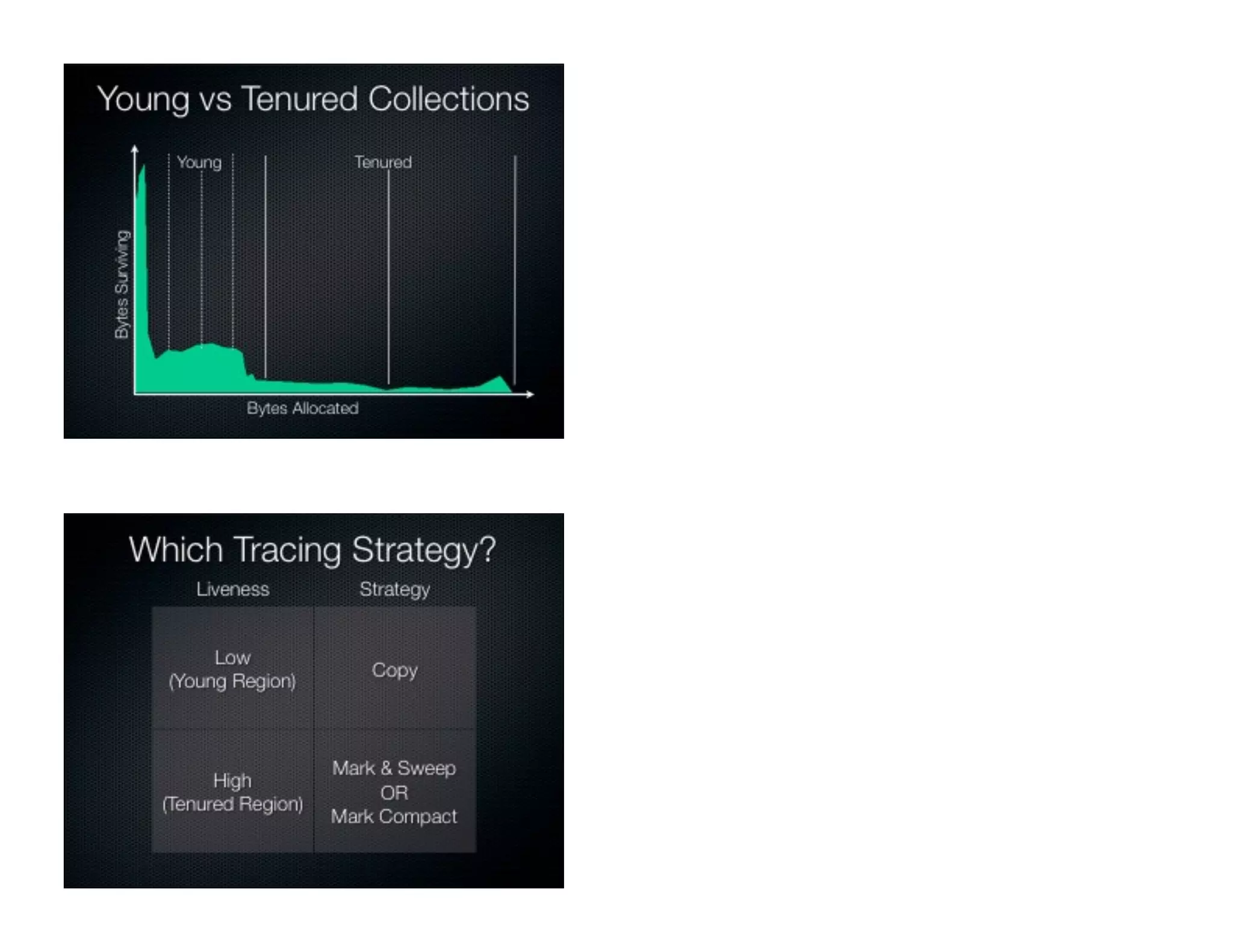
HotSpot Garbage Collector
Young Generation
Old Generation
Eden
S1S0
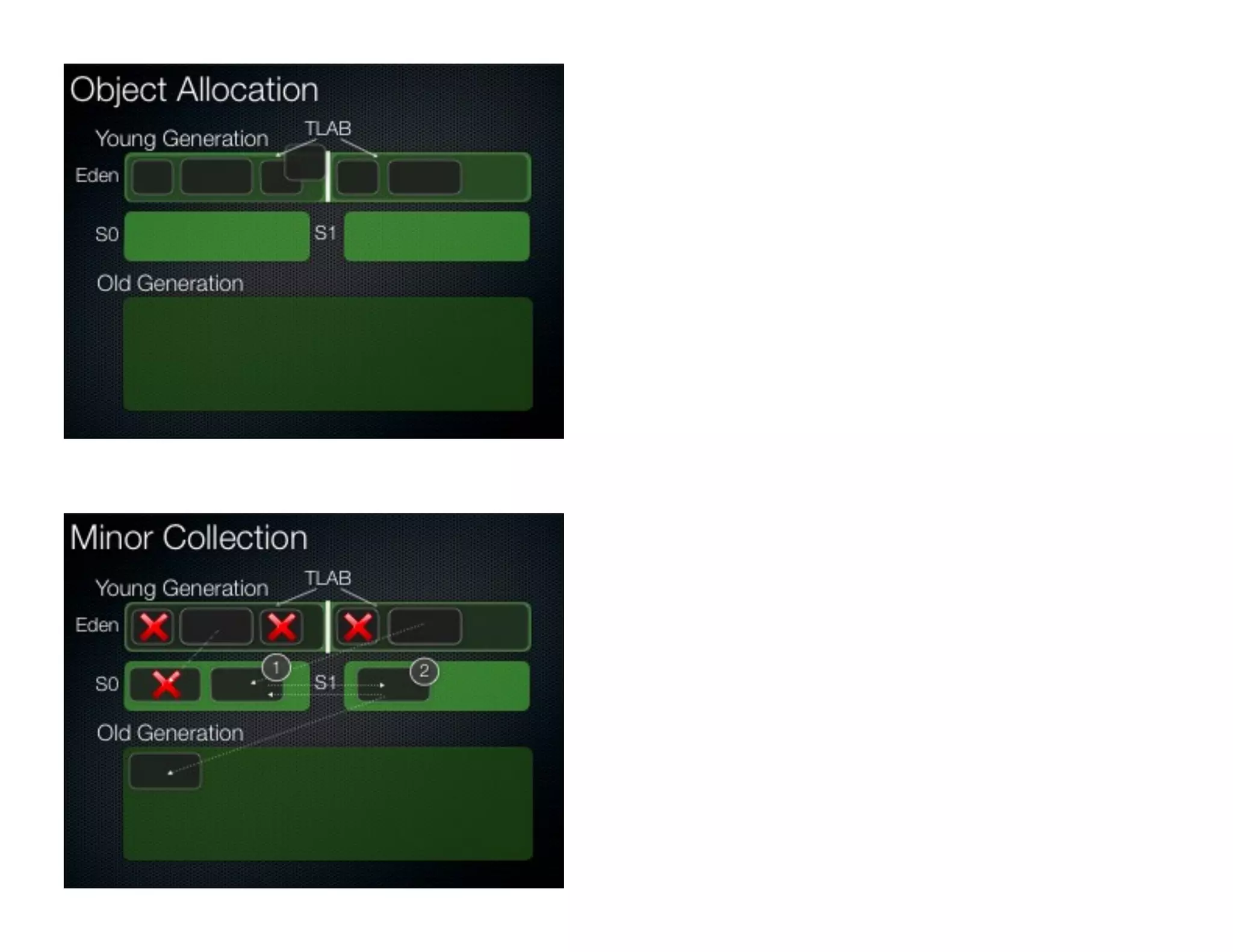
Young vs Tenured CollectionsBytesSurviving
Bytes Allocated
Young Tenured
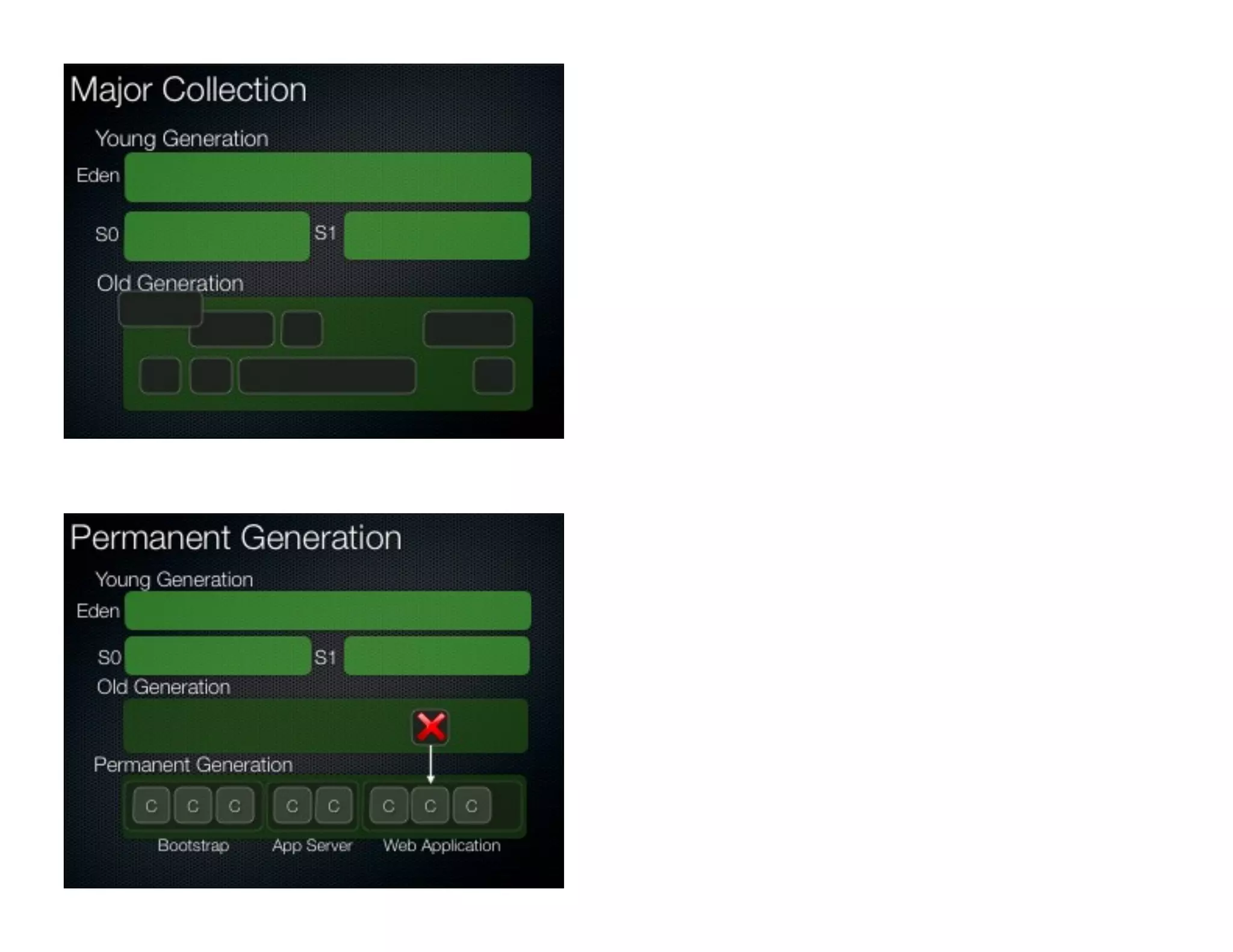
Which Tracing Strategy?
Low
(Young Region)
Copy
High
(Tenured Region)
Mark & Sweep
OR
Mark Compact
Liveness Strategy
Object Allocation
Young Generation
Old Generation
Eden
S1S0
TLAB
Minor Collection
Young Generation
Old Generation
Eden
S1S0
TLAB
1 2
Major Collection
Young Generation
Old Generation
Eden
S1S0
Permanent Generation
Young Generation
Old Generation
Eden
S1S0
Permanent Generation
Bootstrap App Server Web Application
C C C C C C C C
Demo
https://visualvm.dev.java.net/plugins.htmlhttps://visualvm.dev.java.net/
Tuning
Newer JVMs can adaptively tune,
but you may not want to rely on that.
Steady State
8x
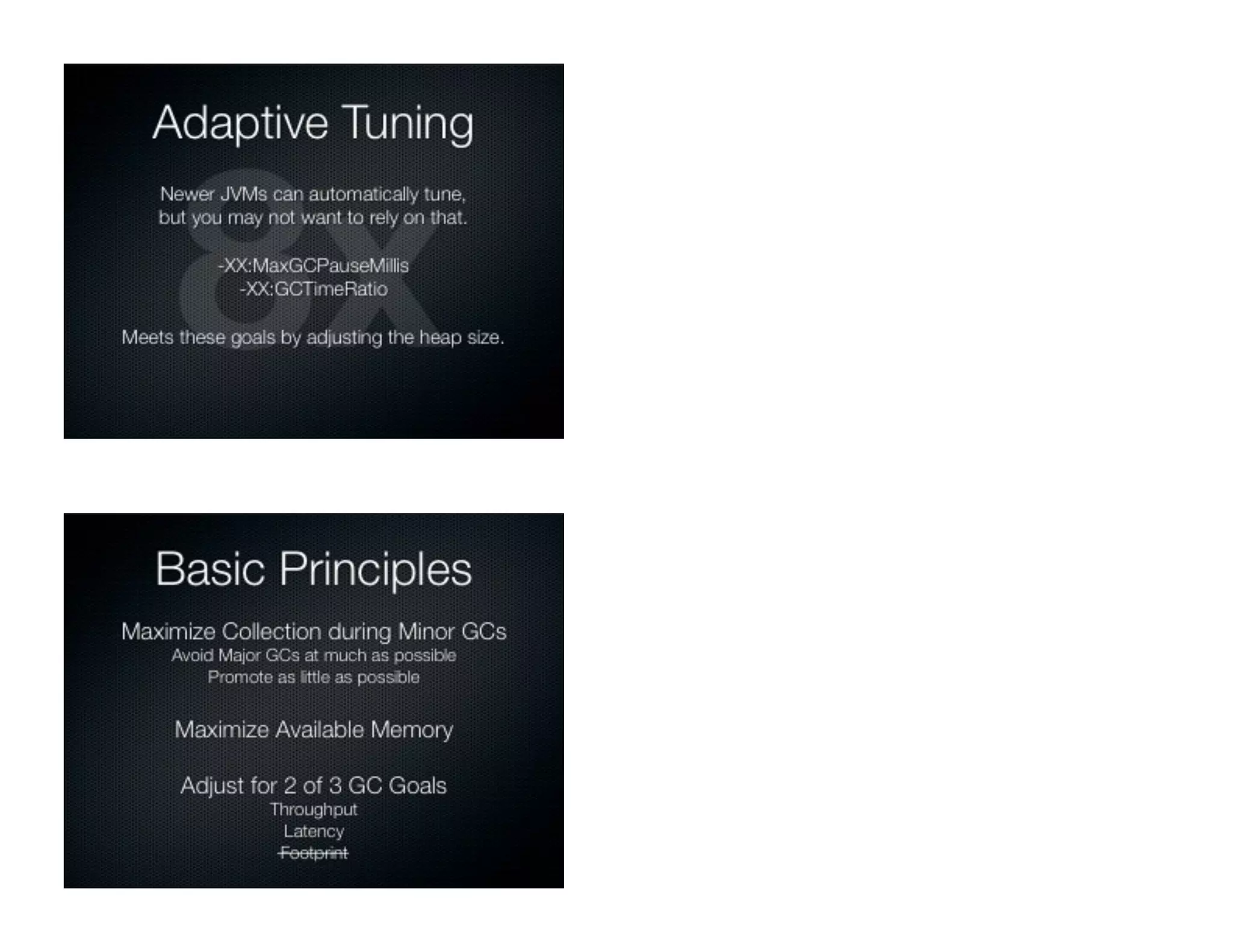
Newer JVMs can automatically tune,
but you may not want to rely on that.
-XX:MaxGCPauseMillis
-XX:GCTimeRatio
Meets these goals by adjusting the heap size.
Adaptive Tuning
Maximize Collection during Minor GCs
Avoid Major GCs at much as possible
Promote as little as possible
Maximize Available Memory
Adjust for 2 of 3 GC Goals
Throughput
Latency
Footprint
Basic Principles
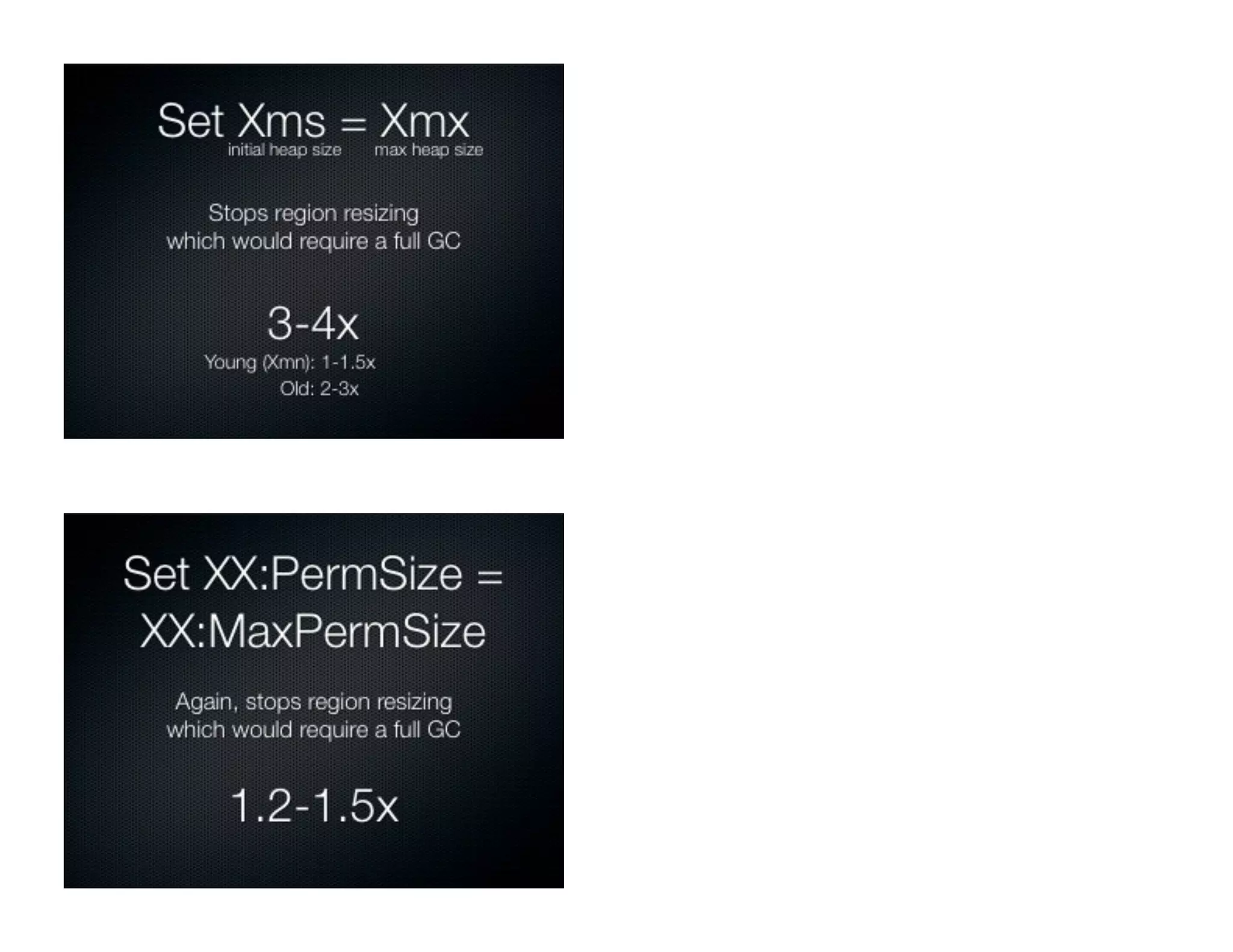
Stops region resizing
which would require a full GC
Set Xms = Xmxinitial heap size max heap size
3-4x
Young (Xmn): 1-1.5x
Old: 2-3x
Set XX:PermSize =
XX:MaxPermSize
Again, stops region resizing
which would require a full GC
1.2-1.5x
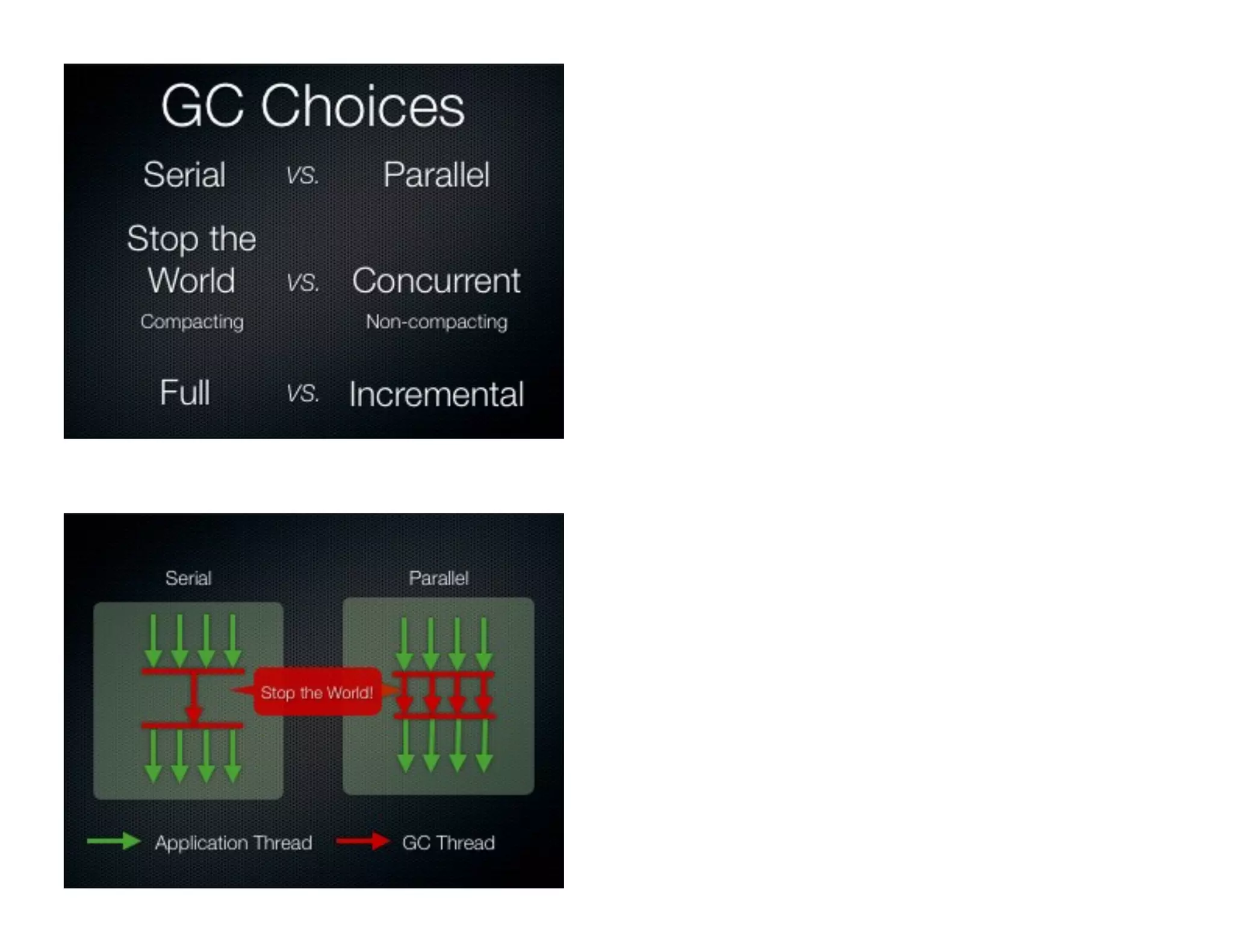
GC Choices
Serial ParallelVS.
Stop the
World Concurrent
Compacting Non-compacting
VS.
Full VS. Incremental
Application Thread GC Thread
ParallelSerial
Stop the World!
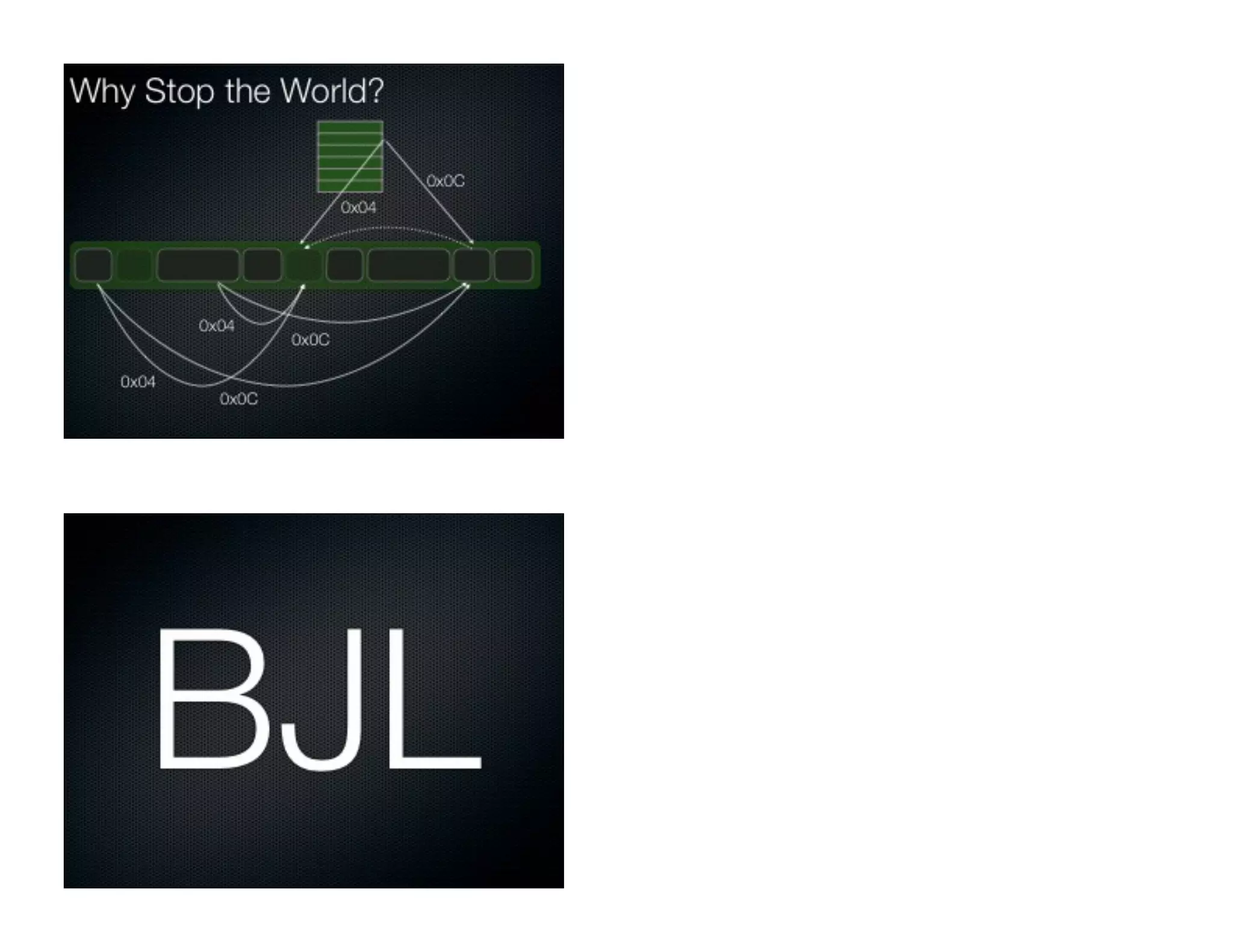
Why Stop the World?
0x0C
0x0C
0x0C
0x04
0x04
0x04
BJL
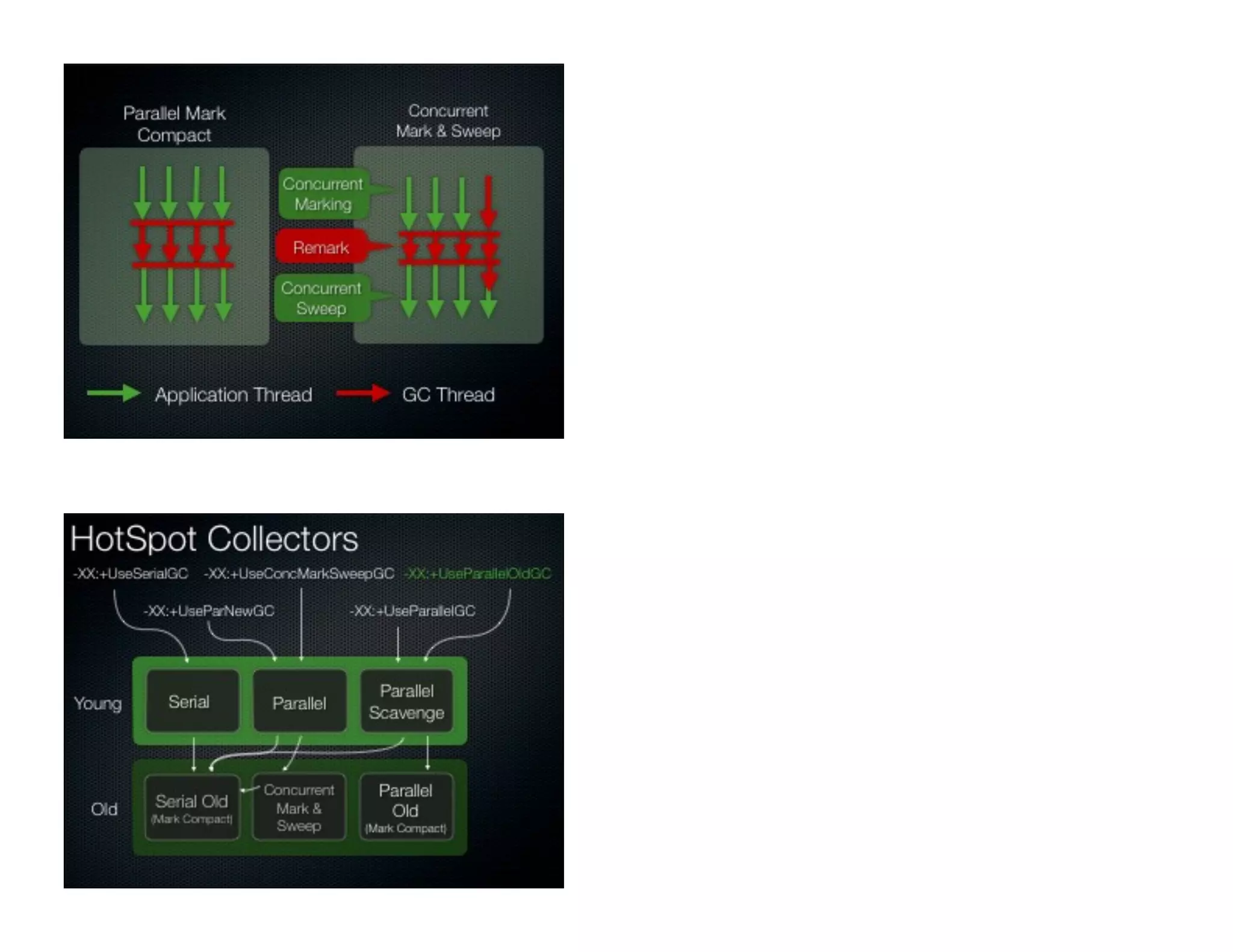
Parallel Mark
Compact
Application Thread GC Thread
Concurrent
Mark & Sweep
Concurrent
Marking
Remark
Concurrent
Sweep
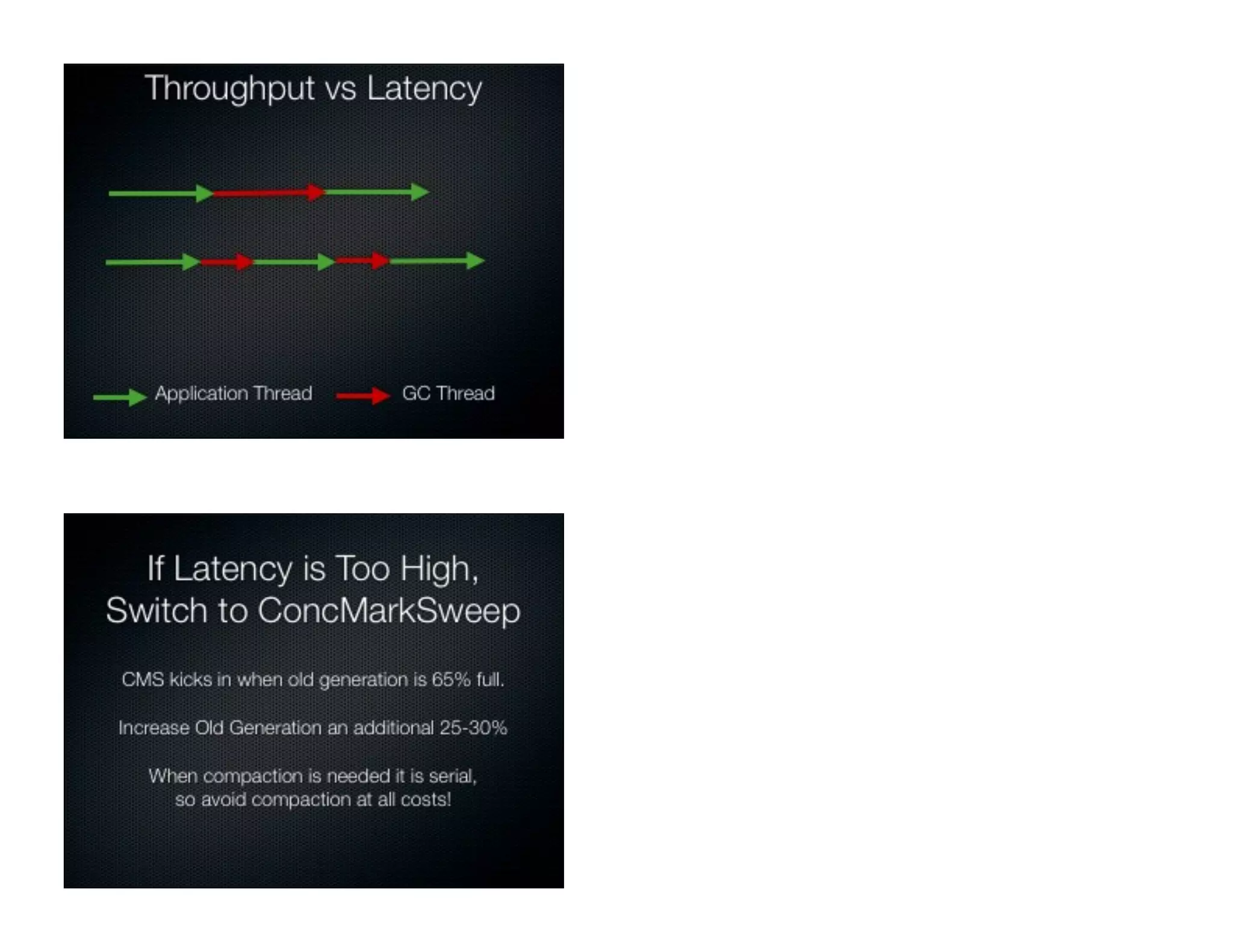
HotSpot Collectors
Young
Old
-XX:+UseSerialGC
-XX:+UseParNewGC -XX:+UseParallelGC
-XX:+UseConcMarkSweepGC -XX:+UseParallelOldGC
Serial
Parallel
Scavenge
Serial Old
(Mark Compact)
Concurrent
Mark &
Sweep
Parallel
Old
(Mark Compact)
Parallel
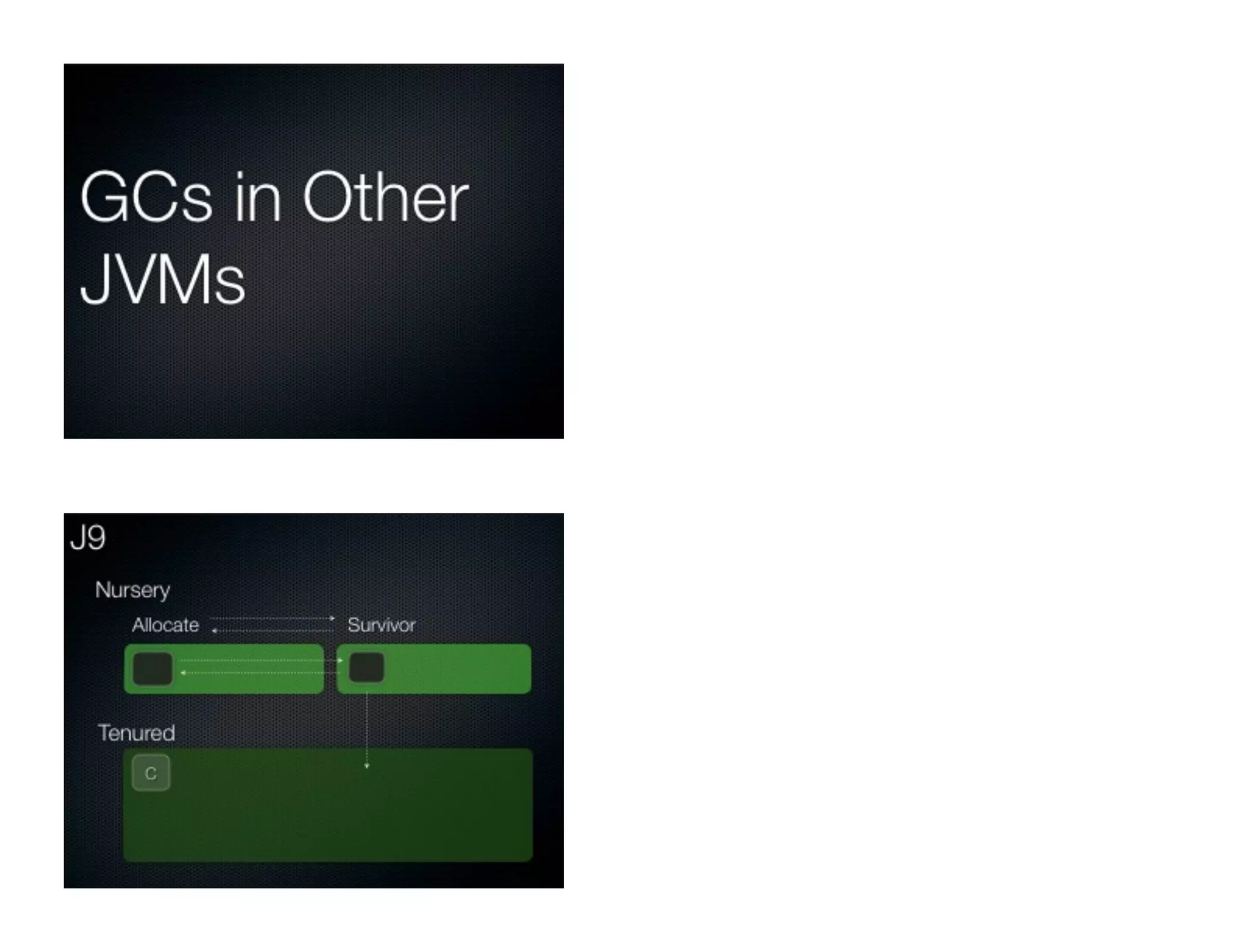
Application Thread GC Thread
Throughput vs Latency
If Latency is Too High,
Switch to ConcMarkSweep
CMS kicks in when old generation is 65% full.
Increase Old Generation an additional 25-30%
When compaction is needed it is serial,
so avoid compaction at all costs!
GCs in Other
JVMs
J9
Nursery
Tenured
SurvivorAllocate
C
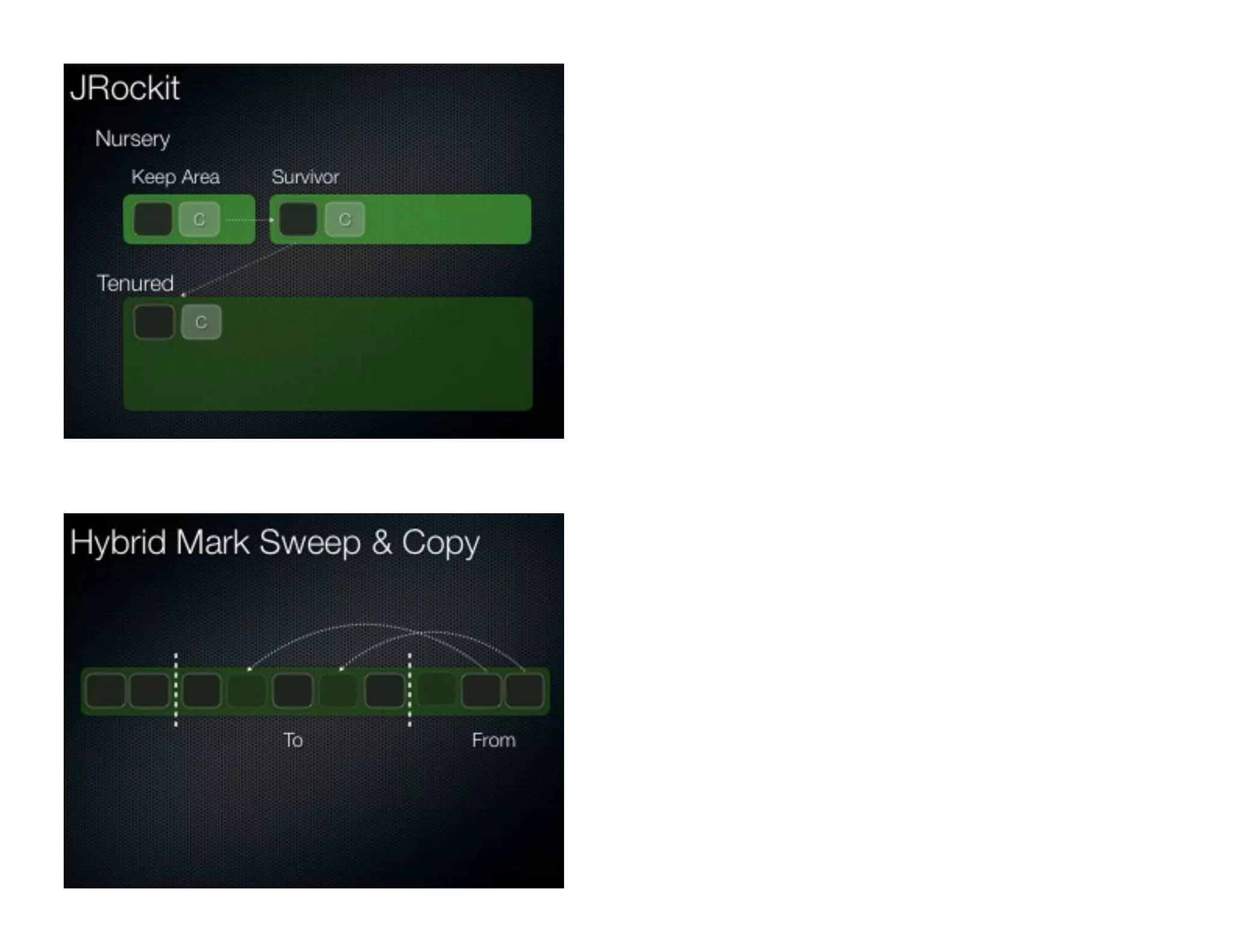
JRockit
Nursery
Tenured
Keep Area Survivor
C C
C
Hybrid Mark Sweep & Copy
To From
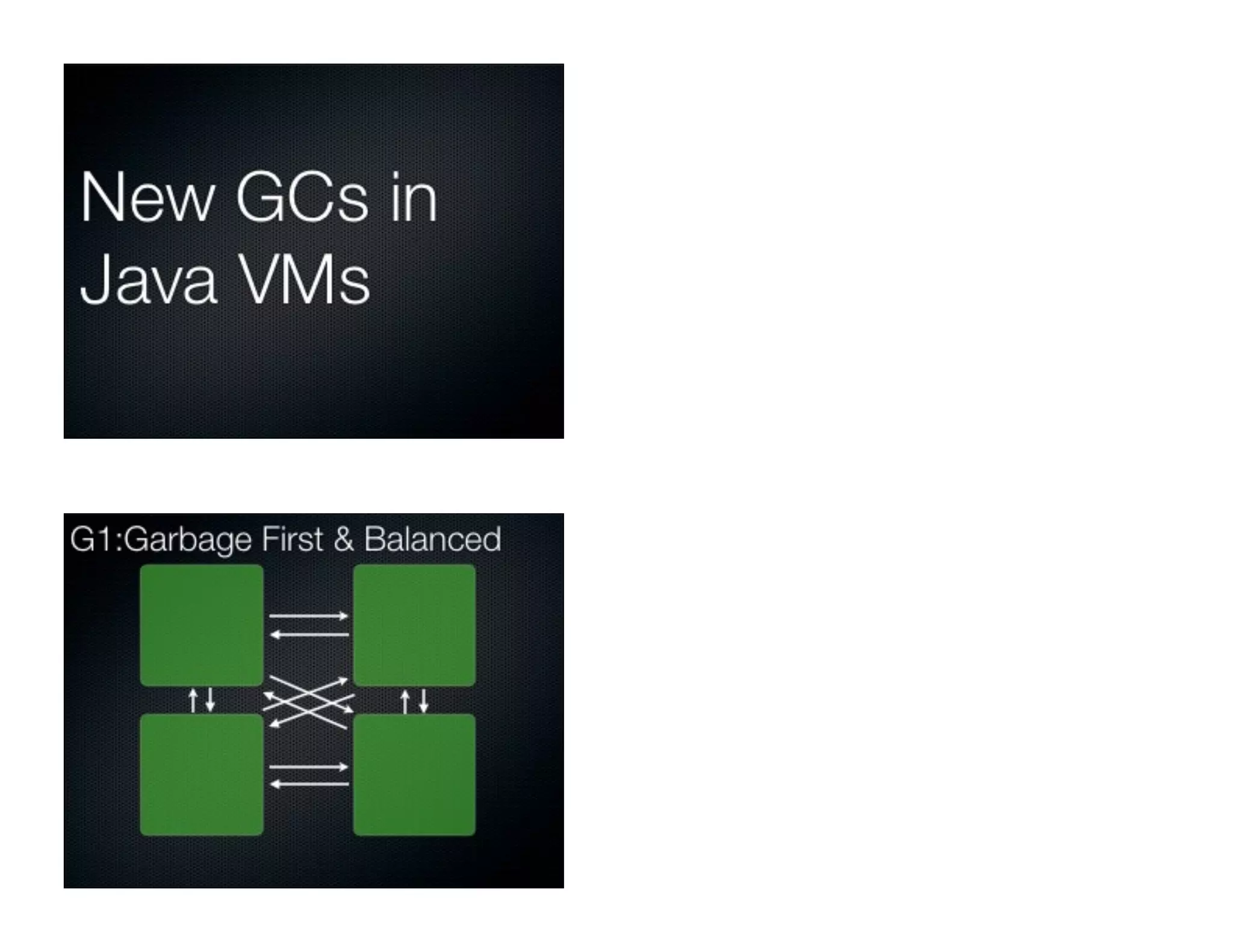
New GCs in
Java VMs
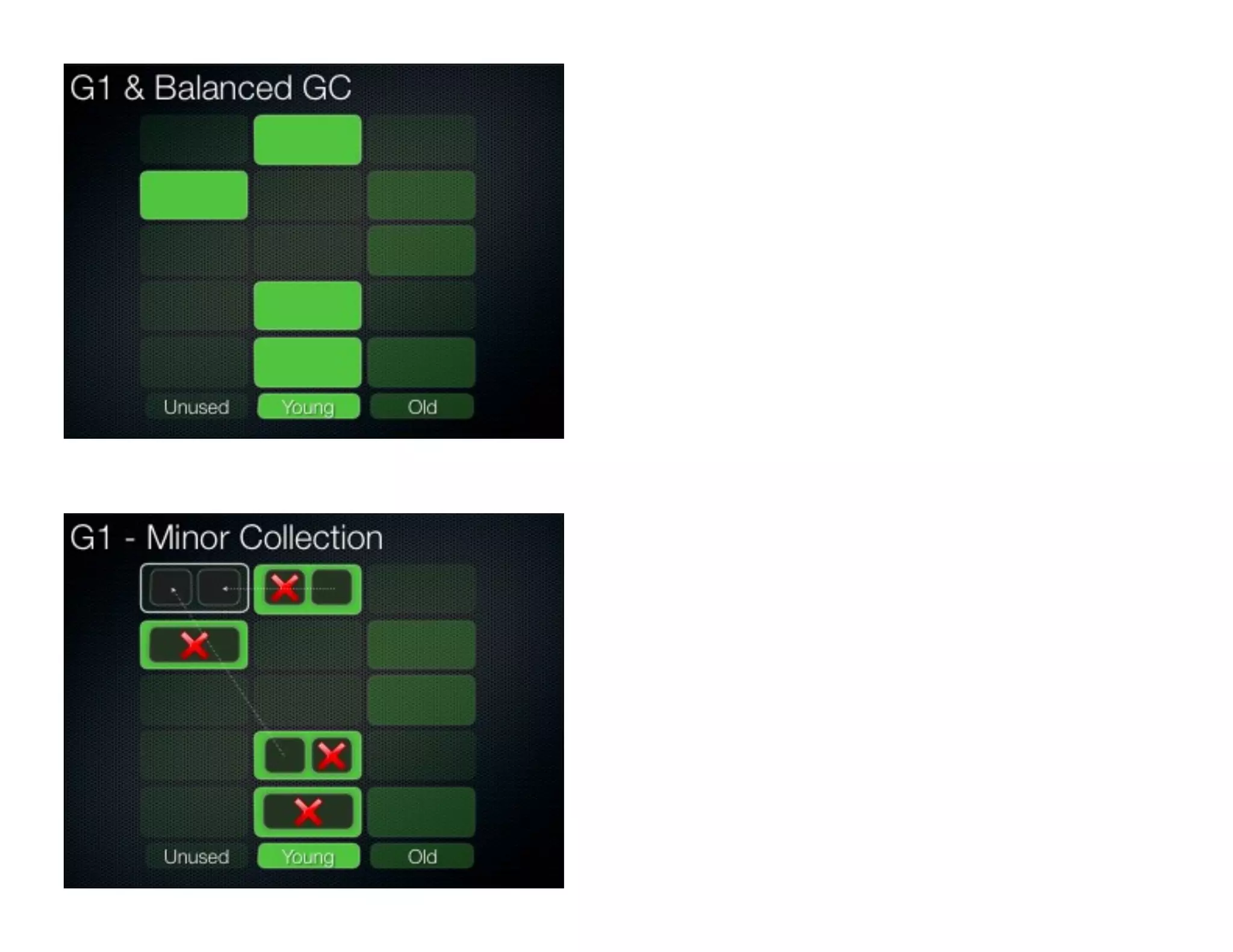
G1:Garbage First & Balanced
G1 & Balanced GC
Unused Young Old
G1 - Minor Collection
Unused Young Old
Unused Young Old
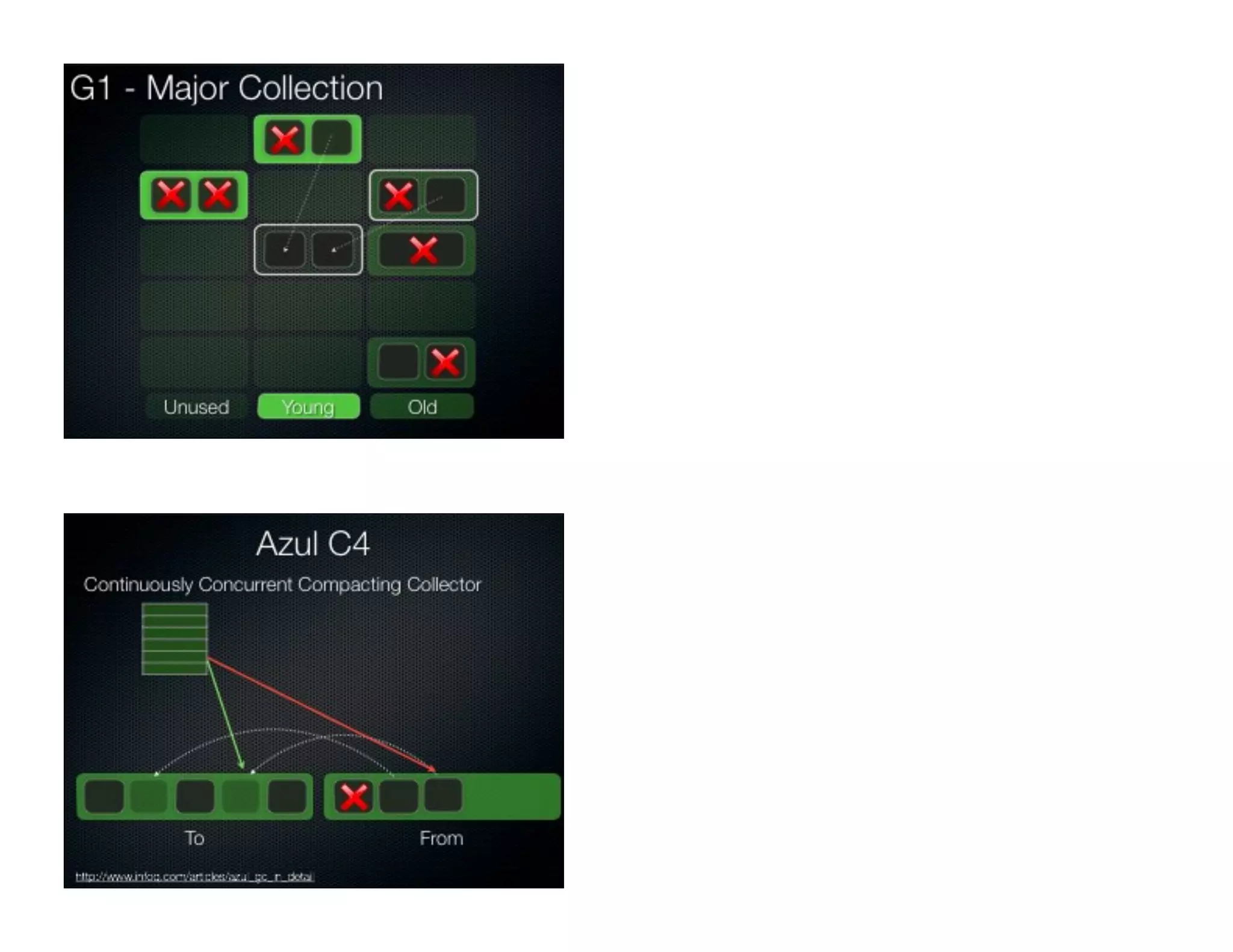
G1 - Major Collection
Azul C4
Continuously Concurrent Compacting Collector
To From
http://www.infoq.com/articles/azul_gc_in_detail
Alternatives to Hard
References & GC
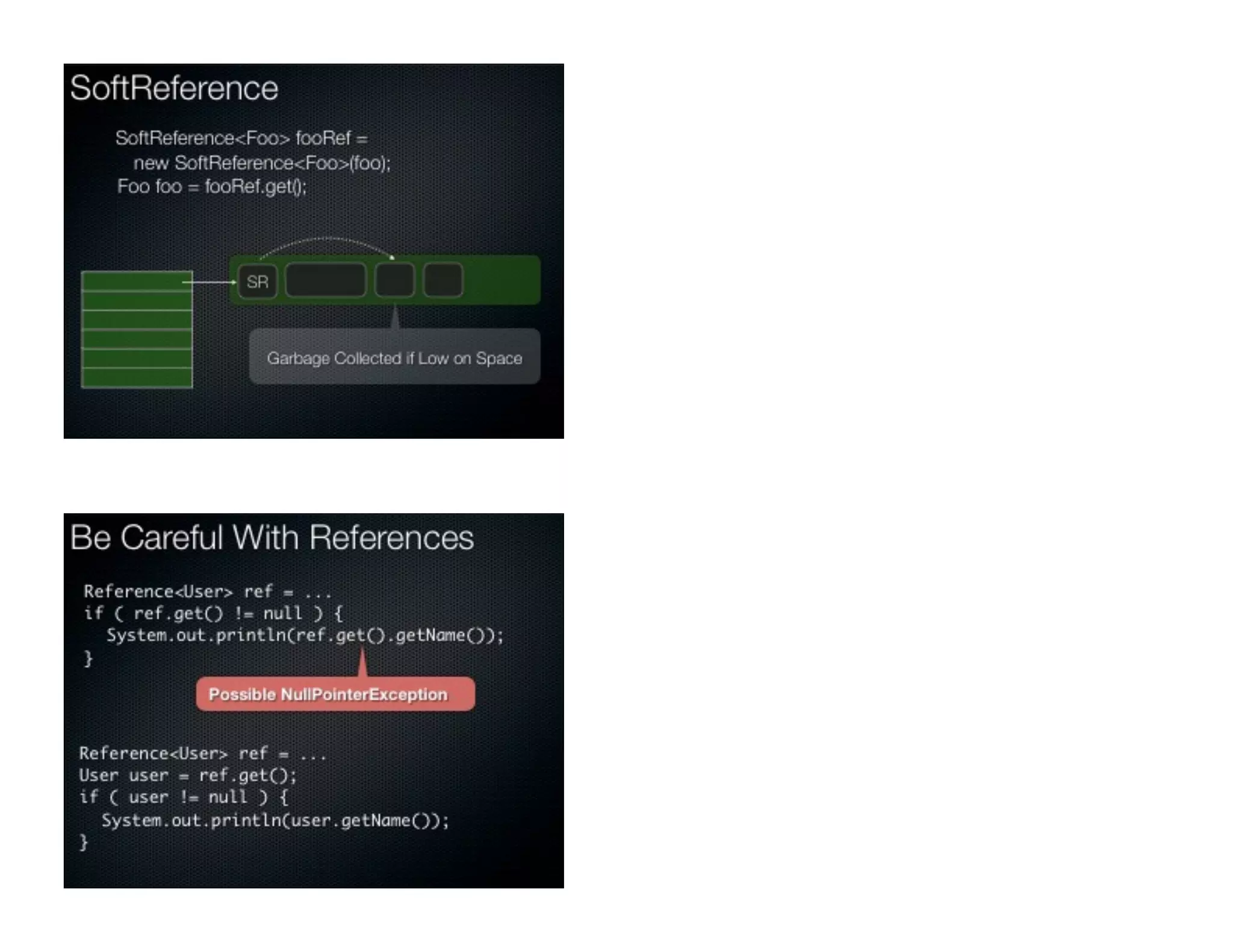
WeakReference
WR
WeakReference<Foo> fooRef =
new WeakReference<Foo>(foo);
Foo foo = fooRef.get();
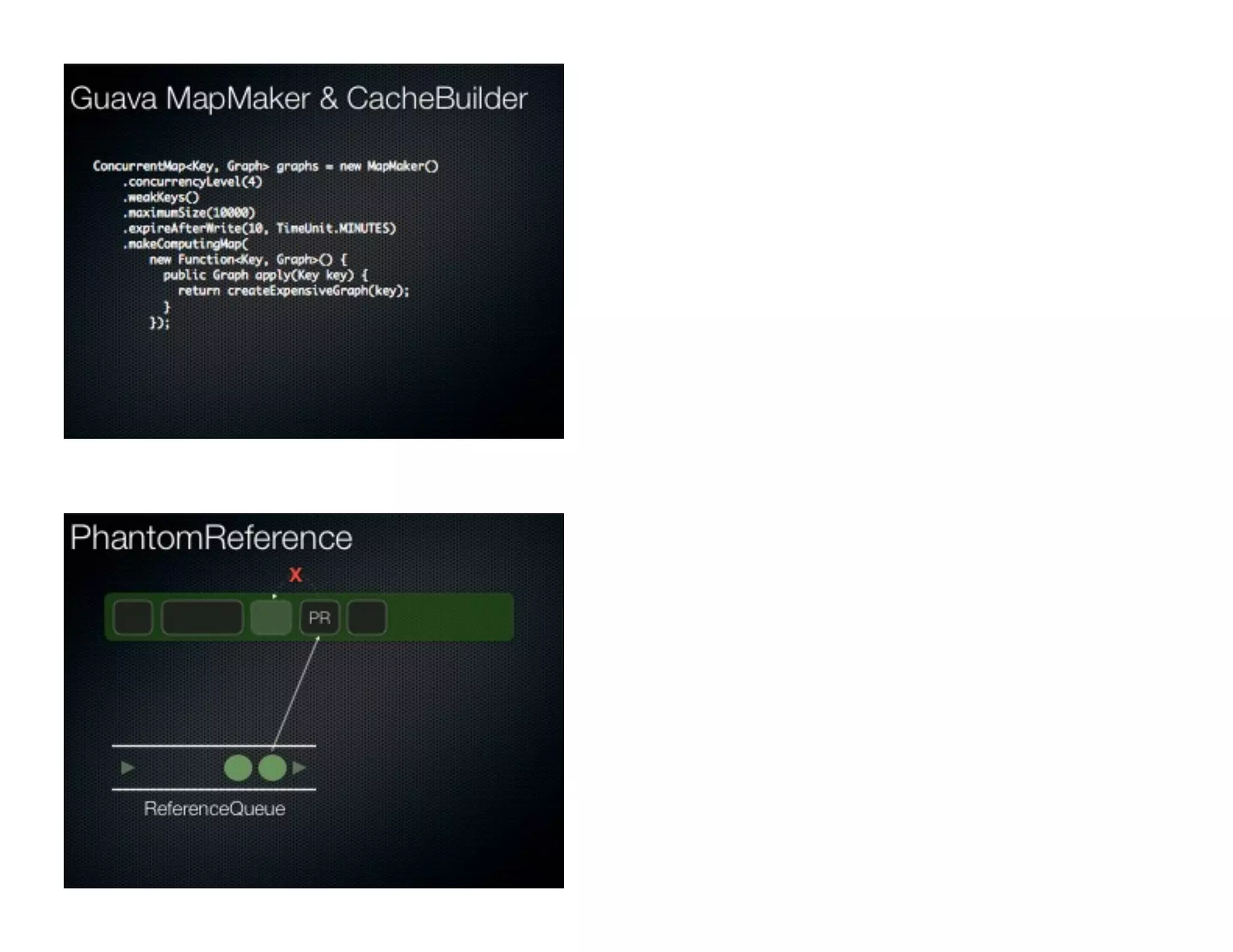
SoftReference
SR
SoftReference<Foo> fooRef =
new SoftReference<Foo>(foo);
Foo foo = fooRef.get();
Garbage Collected if Low on Space
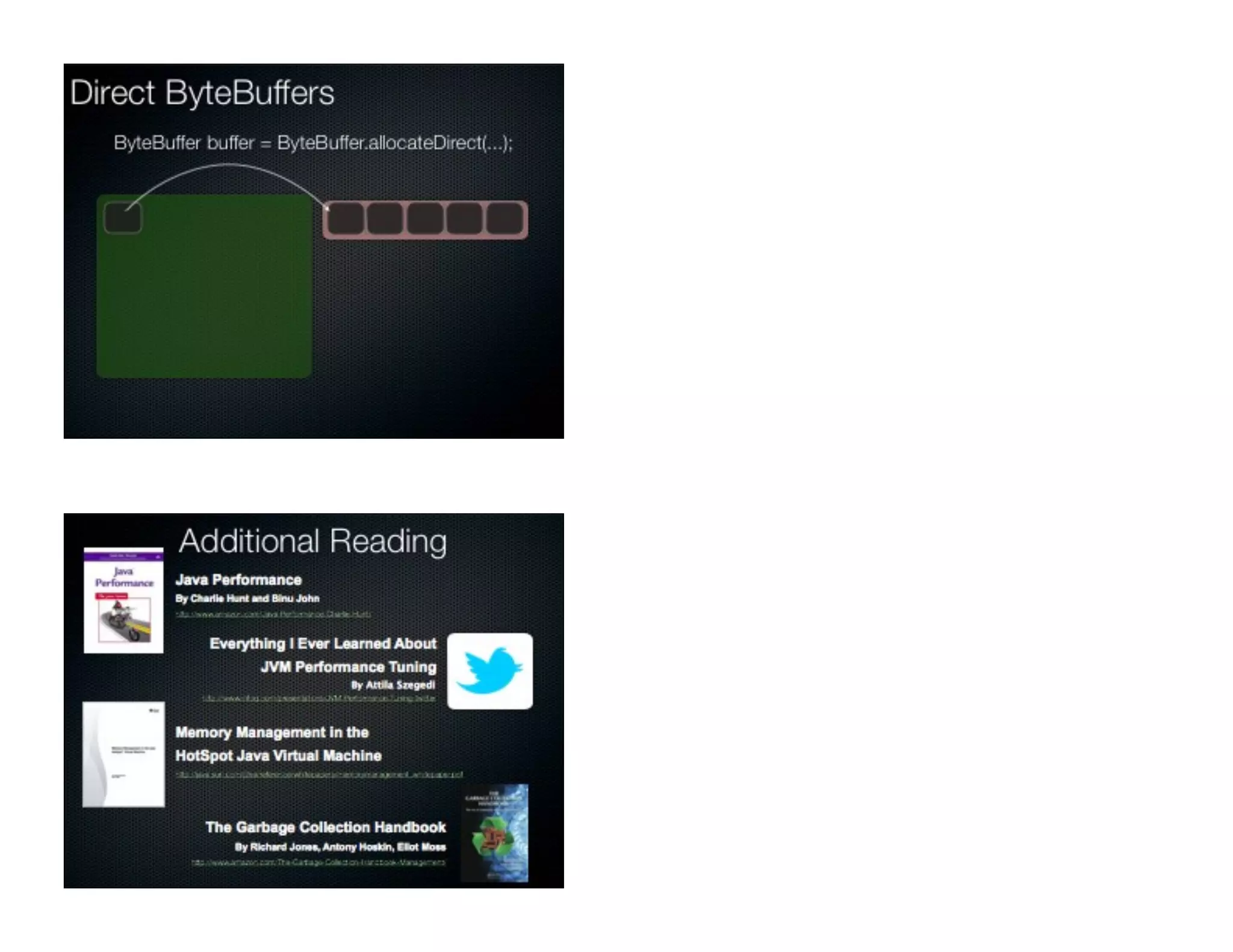
Be Careful With References
Reference<User> ref = ...
if ( ref.get() != null ) {
	 System.out.println(ref.get().getName());
}
Possible NullPointerException
Reference<User> ref = ...
User user = ref.get();
if ( user != null ) {
	 System.out.println(user.getName());
}
ConcurrentMap<Key, Graph> graphs = new MapMaker()
.concurrencyLevel(4)
.weakKeys()
.maximumSize(10000)
.expireAfterWrite(10, TimeUnit.MINUTES)
.makeComputingMap(
new Function<Key, Graph>() {
public Graph apply(Key key) {
return createExpensiveGraph(key);
}
});
Guava MapMaker & CacheBuilder
PhantomReference
ReferenceQueue
PR
X
Direct ByteBuffers
ByteBuffer buffer = ByteBuffer.allocateDirect(...);
Additional Reading
The Garbage Collection Handbook
By Richard Jones, Antony Hoskin, Eliot Moss
http://www.amazon.com/The-Garbage-Collection-Handbook-Management/
Memory Management in the
HotSpot Java Virtual Machine
http://java.sun.com/j2se/reference/whitepapers/memorymanagement_whitepaper.pdf
By Charlie Hunt and Binu John
Java Performance
http://www.amazon.com/Java-Performance-Charlie-Hunt/
http://www.infoq.com/presentations/JVM-Performance-Tuning-twitter
By Attila Szegedi
Everything I Ever Learned About
JVM Performance Tuning
Questions?
Thanks, please fill out your evaluations!
Douglas Q. Hawkins
http://www.dougqh.net
dougqh@gmail.com

Understanding Garbage Collection