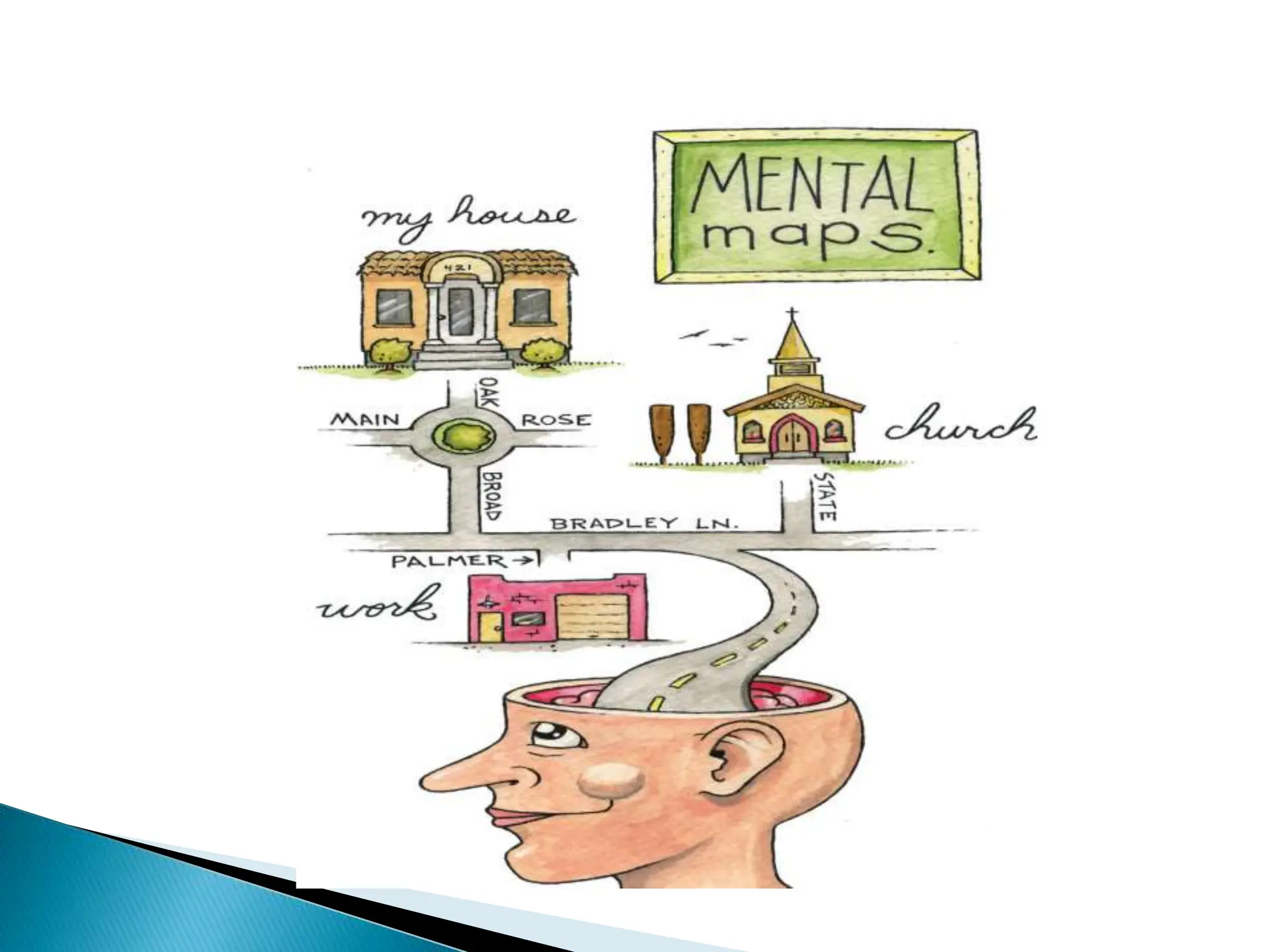
The document discusses mental maps and how humans organize geographic information in their minds. It explains that mental maps are psychological representations of environments that allow us to navigate and understand places. The document prompts readers to draw a simple map of their hometown from memory to illustrate features of their mental map. Analyzing these maps reveals insights into individuals' geographic knowledge and spatial thinking. The document emphasizes that identifying gaps in our knowledge is important for developing understanding through asking questions. It outlines five common types of geographic questions that can be answered using geographic information systems (GIS).