SOFT SKILLS
AUTHOR : MITHUN BANERJEE
DATE: 10-JUNE-2015
C O P Y W R I G H T P R O T E C T E D B Y E C L I P S E T E C H N O C O N S U L T I N G G L O B A L ( P ) L T D .
Topics we will discuss
• Communication Skills
• Body Languages
• Presentation Skills
• Team Work
• Professional Ethics
• Interpersonal Skills
• Time and Stress Management
• Leadership Management Skill
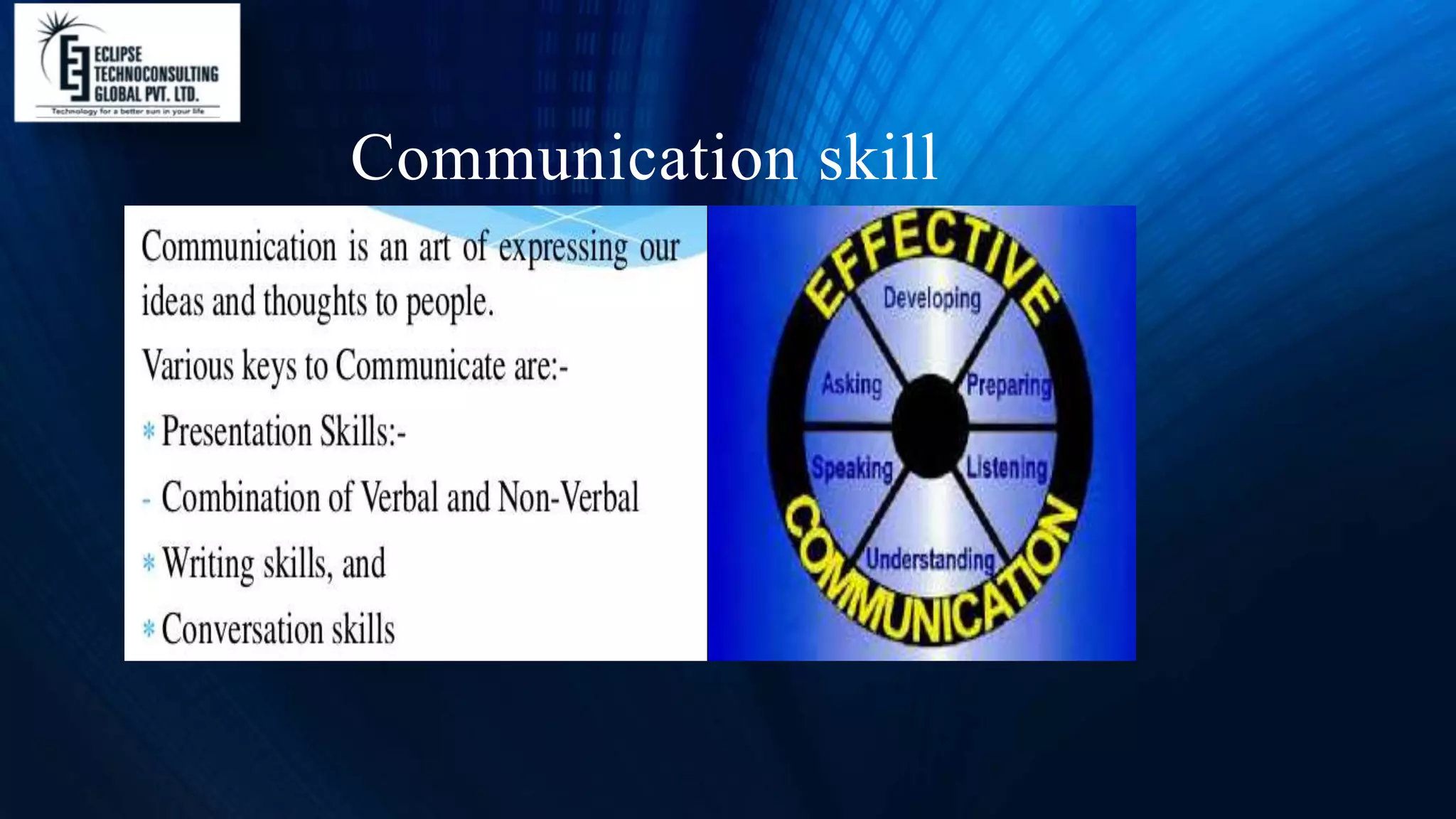
Communication skill
Attributes to discuss about Good
Communication Skills
• Making eye contact while communicating with people is important, because it shows you are listening to them
• Not swearing or shouting because it can be intimidating.
• Not chewing gum while having a conversation with them
• Not texting while speaking to some one as it will make them think you ignorant
• Always try to speak clearly and use words everyone can understand
• Make positive facial expressions
• Listening to the person you are speaking to
• Have a relaxed body languages
• Don’t speak over the people
• Do keep to the point while explaining something
Written Communication Skill
WRITING EVALUATES A PERSON’S PROFICIENCY INDICATIONS, SPELLING
GRAMMAR ETC…
 ERRORS COMMITTED WHILE WRITING CIRCULARS, REPORTS & AGENDA
CONSIDERABLY SPOIL THE IMAGE OF THE WRITER
 GOOD VISUAL PRESENTATION USING GRAPHICS, COLOR, BALANCED DESIGN
LAYOUT- ADDS SO MUCH TO WRITTEN COMMUNICATION.
 KEEP HANDOUTS AND OTHER WRITTEN MATERIALS FOR YOUR
PRESENTATION.
Body Language
Non verbal language
 Face is the index of the mind and it clearly displays the persons
interest
 Body language presents to the audience what we feel & think about the
particular matter
Ex: Nodding one’s head
 Body language (e.g, arms crossed, standing, sitting, relaxed)
 Emotion of the sender & receiver (e.g, speaking clearly, enthusiastic)
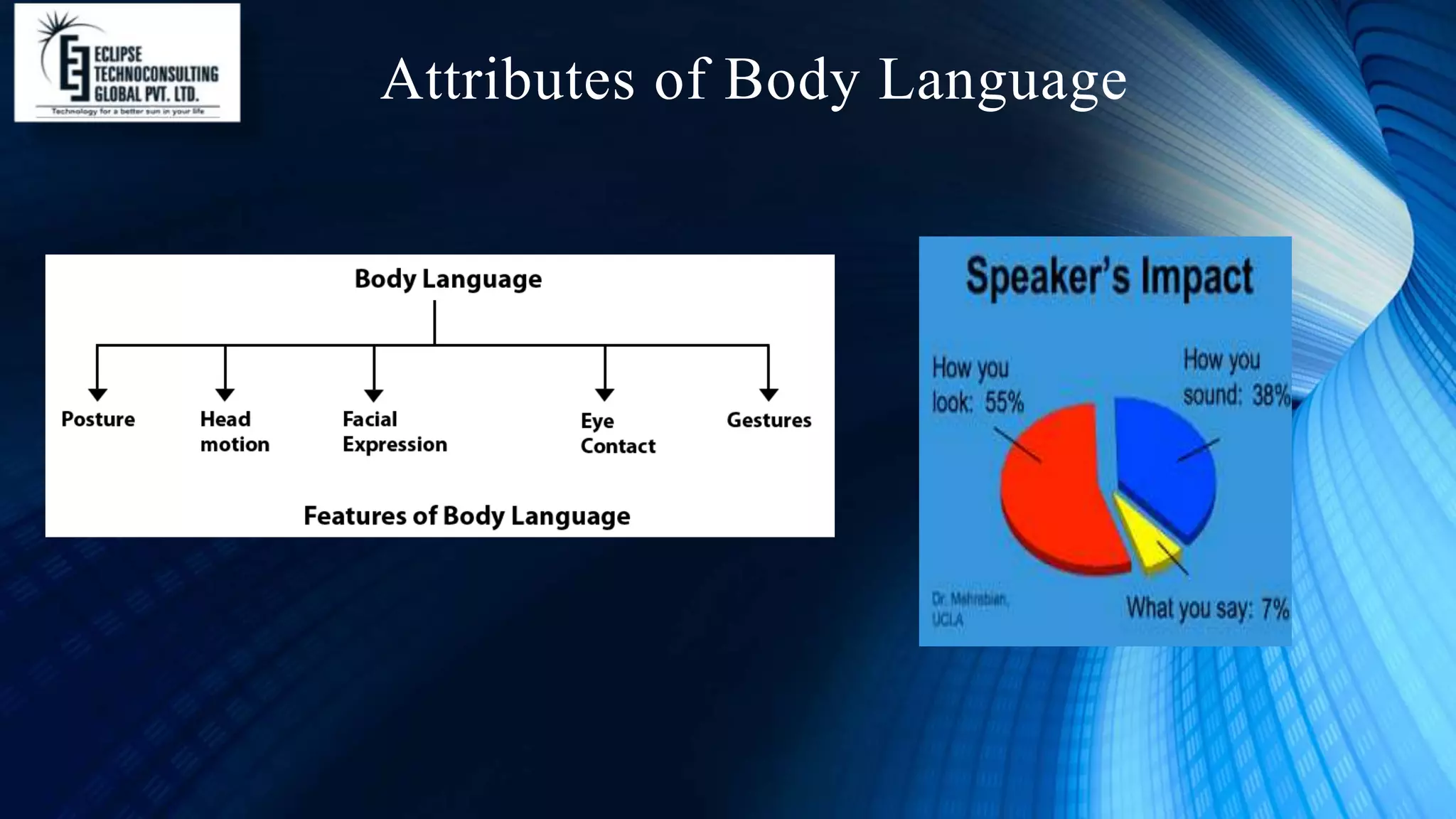
Attributes of Body Language
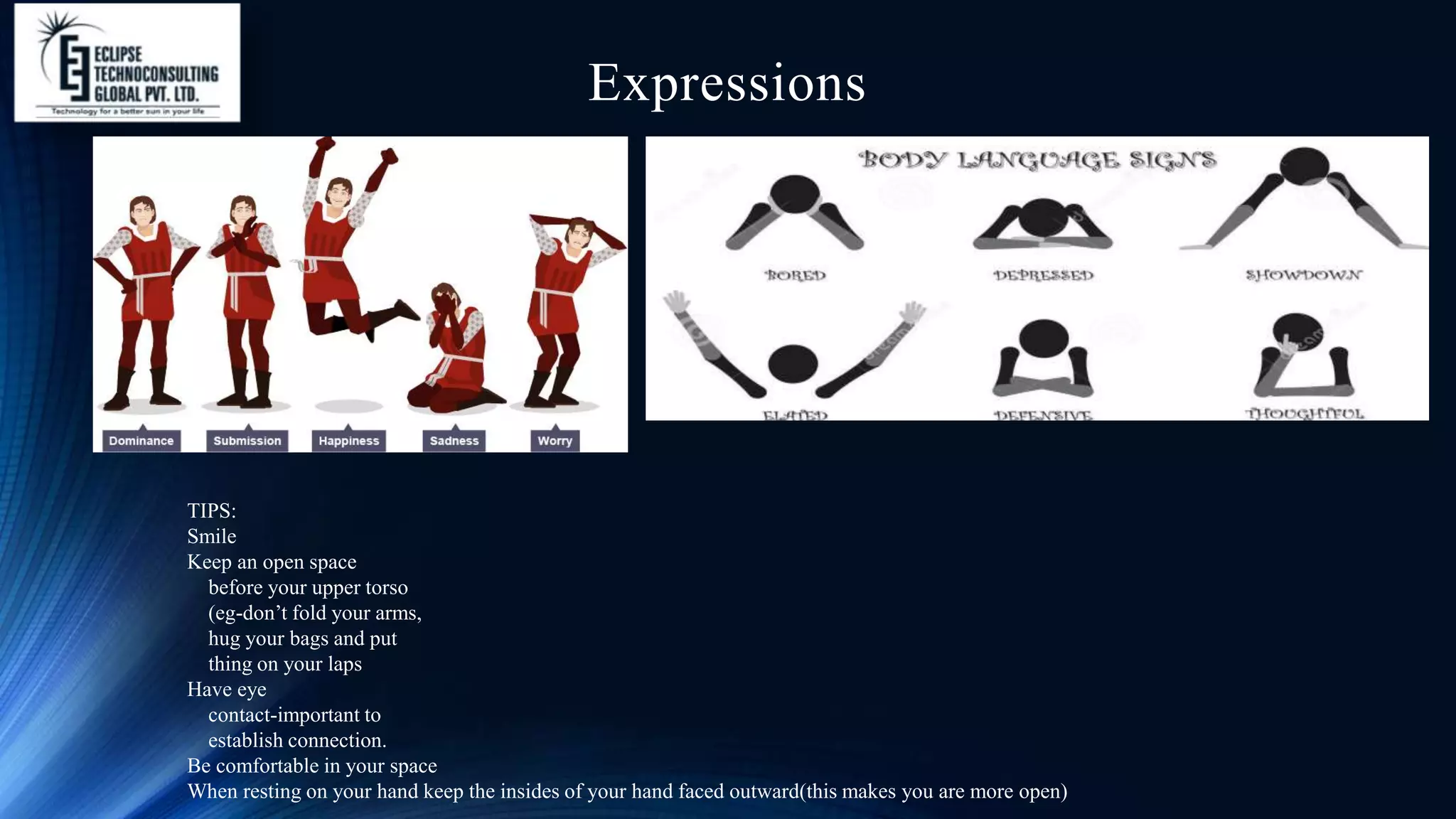
Expressions
TIPS:
Smile
Keep an open space
before your upper torso
(eg-don’t fold your arms,
hug your bags and put
thing on your laps
Have eye
contact-important to
establish connection.
Be comfortable in your space
When resting on your hand keep the insides of your hand faced outward(this makes you are more open)
Presentation Skills
 Presentation skills include planning, preparation & delivery of the message
 Making a formal speech is one form of presentation
 Presentation skills can be broadly categorized into physical oral, & electronic
Success in life depends on presenting ideas in an appropriate manners
Look at the eyes of audience & speak in a natural, conversational voice
 Appropriate voice will make the presentation effective and interesting
 Ask for feed back from your audience about your presentation & change accordingly
 In presentation especially, stop occasionally to ask the audience understand what you
have said
Team Work
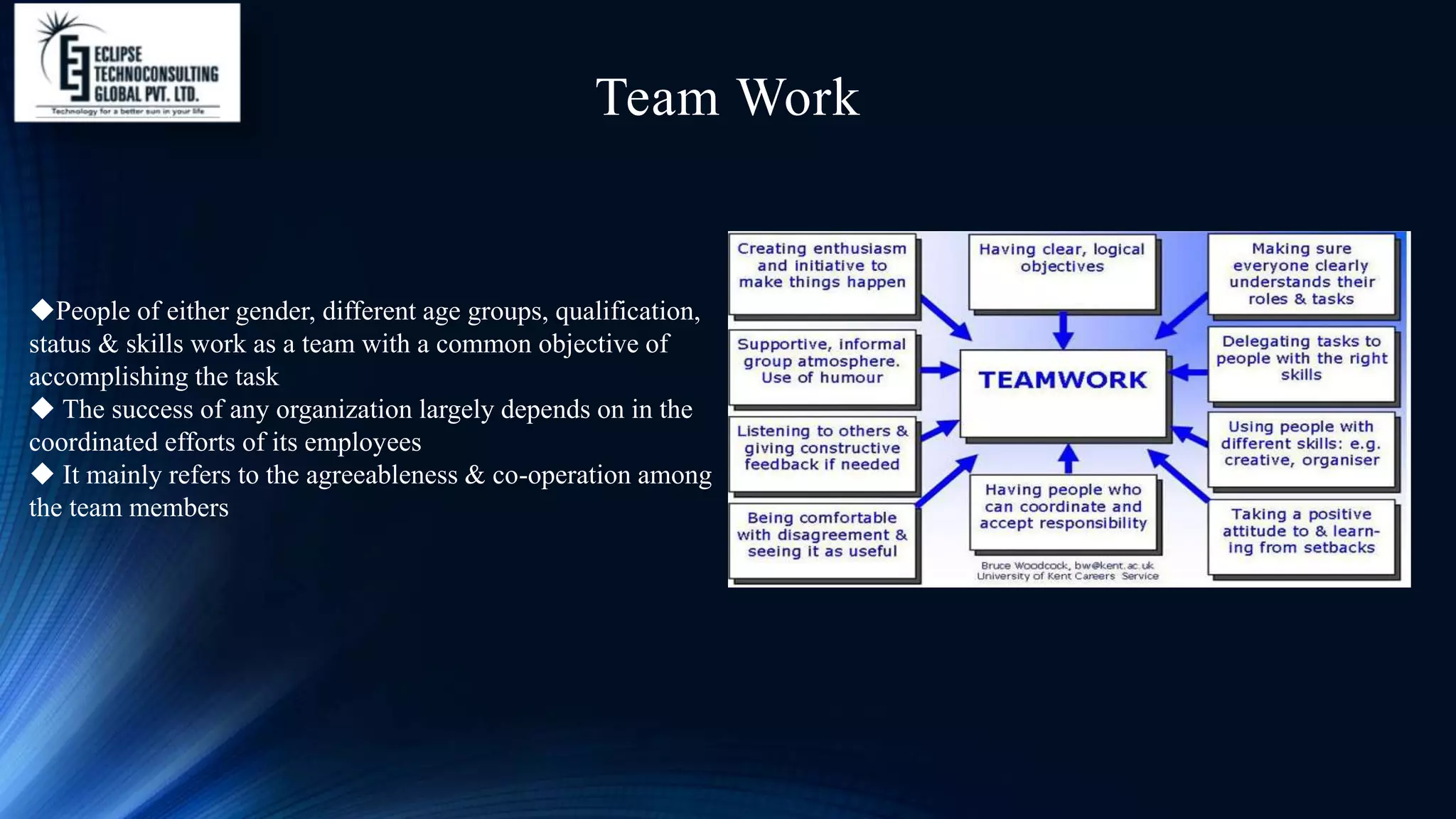
People of either gender, different age groups, qualification,
status & skills work as a team with a common objective of
accomplishing the task
 The success of any organization largely depends on in the
coordinated efforts of its employees
 It mainly refers to the agreeableness & co-operation among
the team members
Professional Ethics
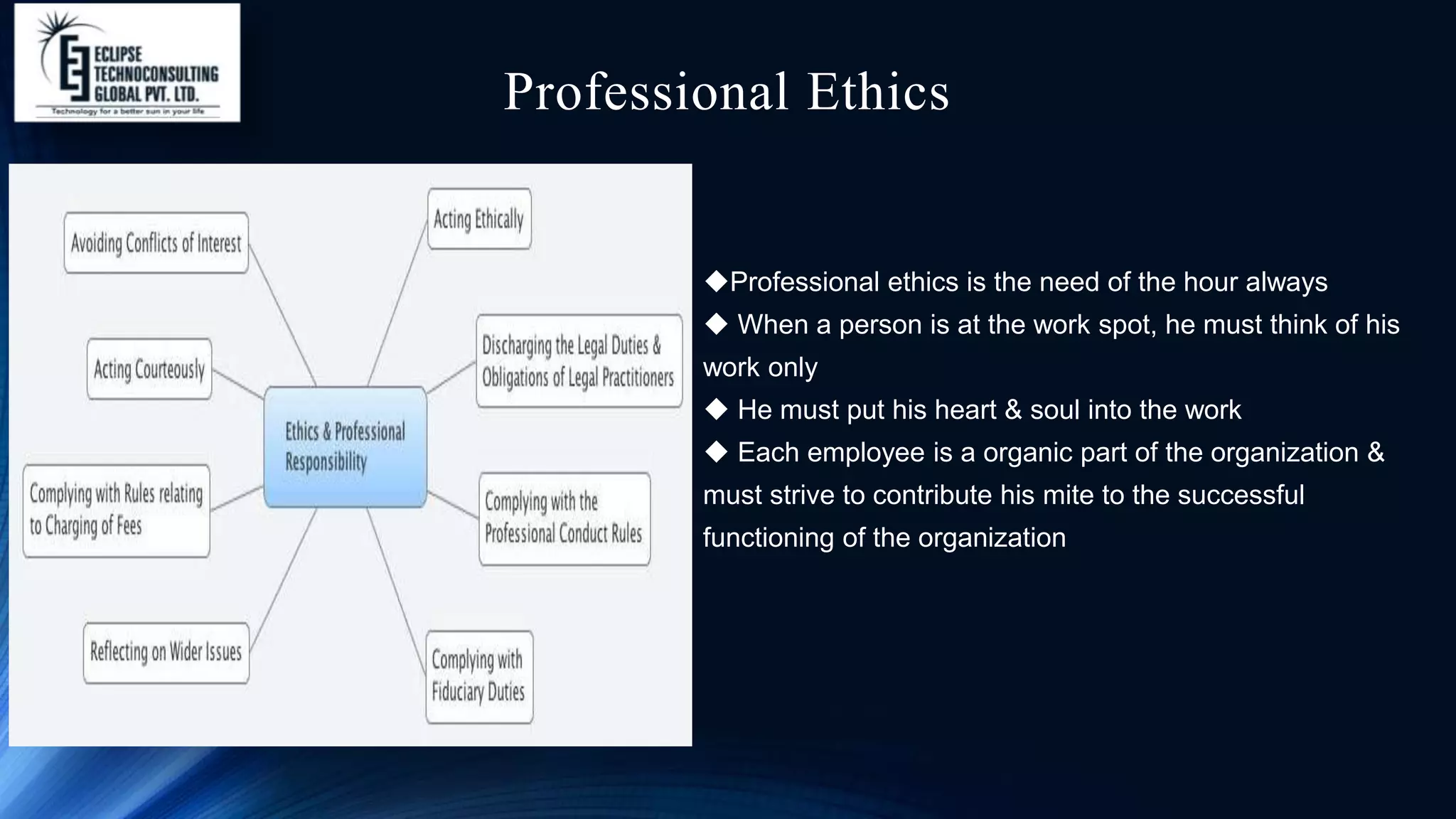
Professional ethics is the need of the hour always
 When a person is at the work spot, he must think of his
work only
 He must put his heart & soul into the work
 Each employee is a organic part of the organization &
must strive to contribute his mite to the successful
functioning of the organization
Interpersonal Skill
• Interpersonal skills are the life skills we use every day to communicate
and interact other people, both individually and in groups.
• People who have worked on developing strong interpersonal skills are
usually more successful in both their professional and personal lives.
Attributes of Interpersonal skills
Verbal Communication - What we say and how we say it.
Non-Verbal Communication - What we communicate without words, body
language is an example.
Listening Skills - How we interpret both the verbal and non-verbal messages sent
by others.
Negotiation - Working with others to find a mutually agreeable outcome.
Manners- Basic Etiquettes
Problem Solving - Working with others to identify, define and solve problems.
Decision Making – Exploring and analysing options to make sound decisions.
Assertiveness – Communicating our values, ideas, beliefs, opinions, needs and
wants freely.
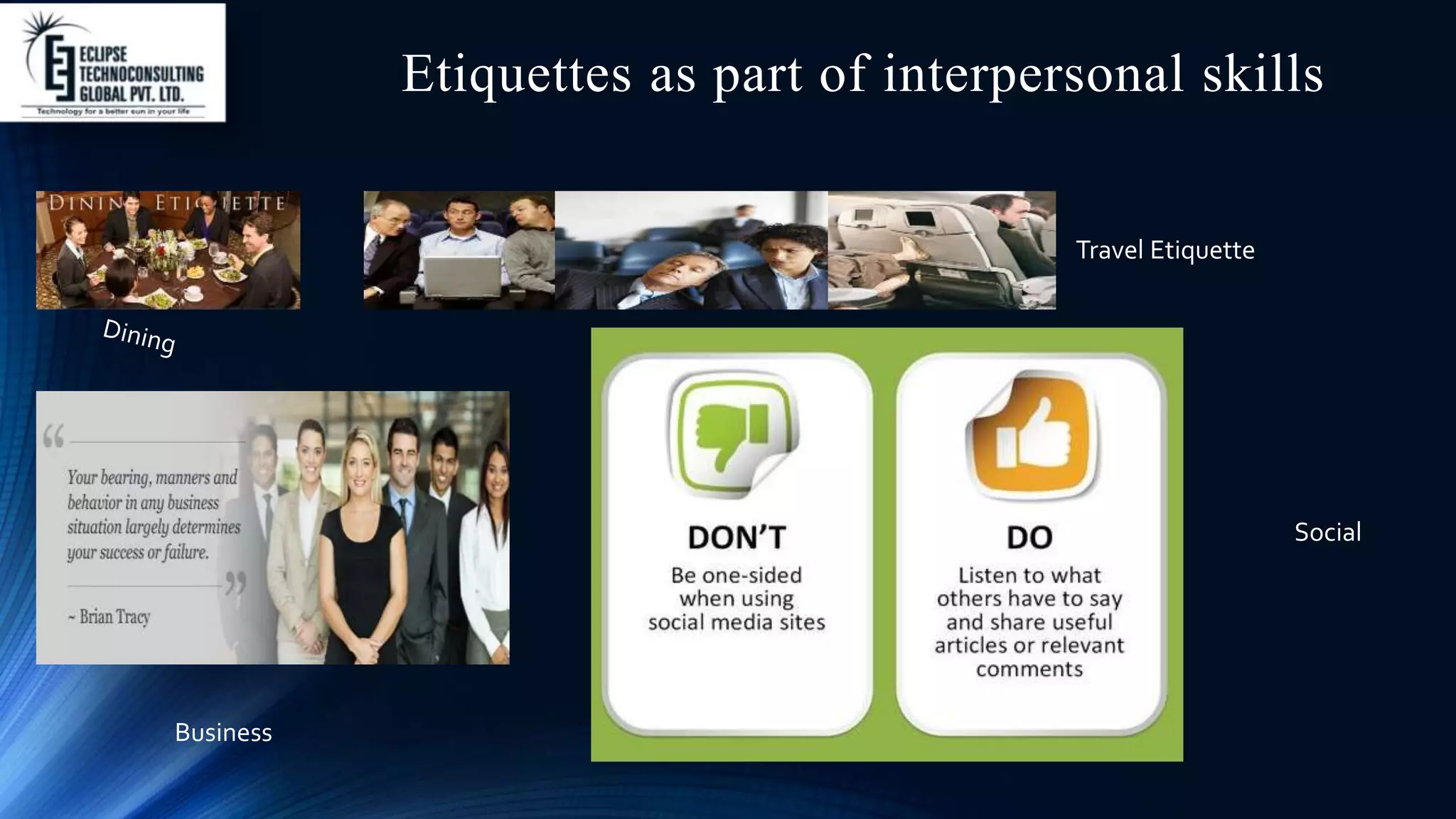
Etiquettes as part of interpersonal skills
Travel Etiquette
Business
Social
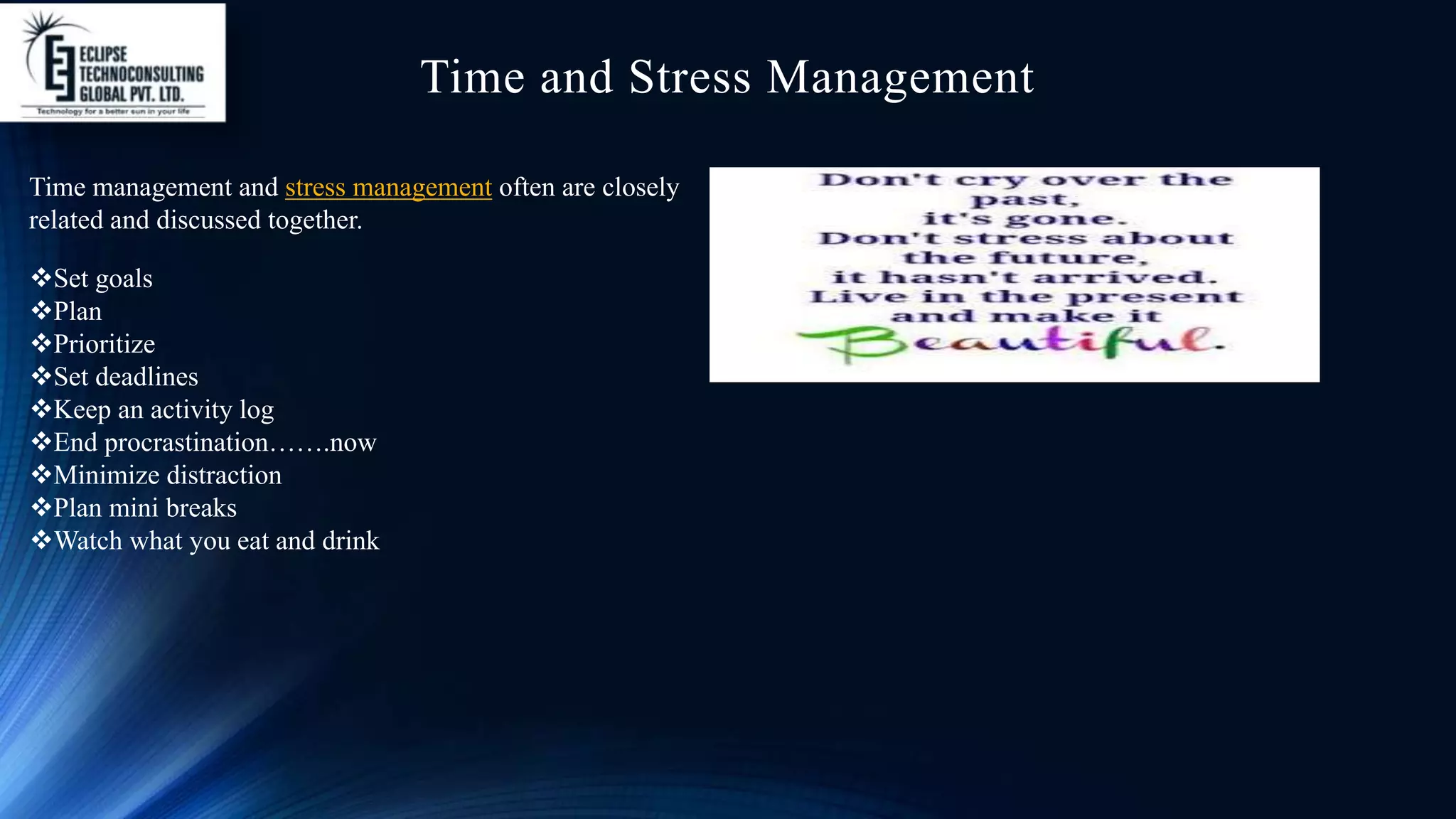
Time and Stress Management
Time management and stress management often are closely
related and discussed together.
Set goals
Plan
Prioritize
Set deadlines
Keep an activity log
End procrastination…….now
Minimize distraction
Plan mini breaks
Watch what you eat and drink
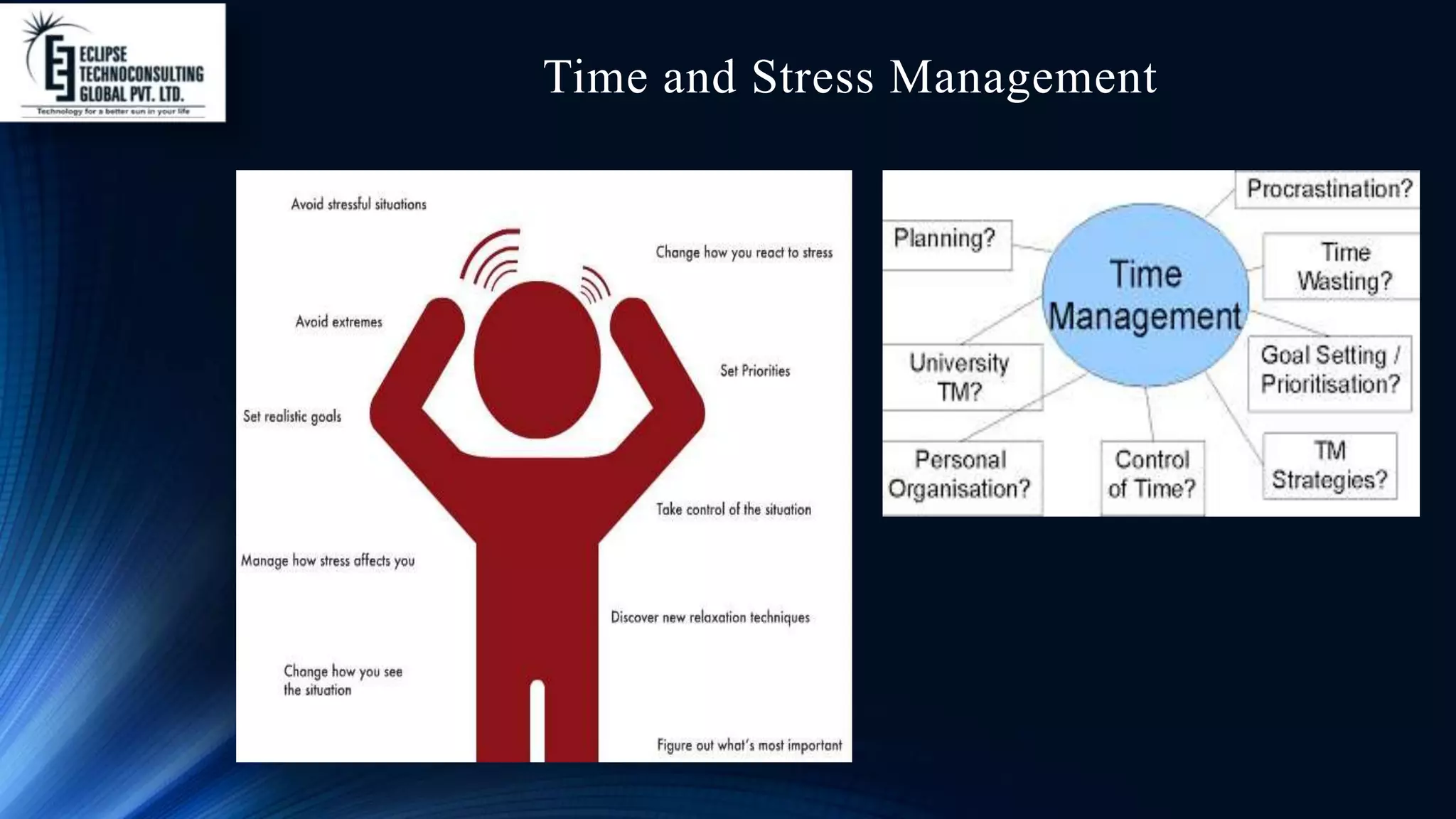
Time and Stress Management
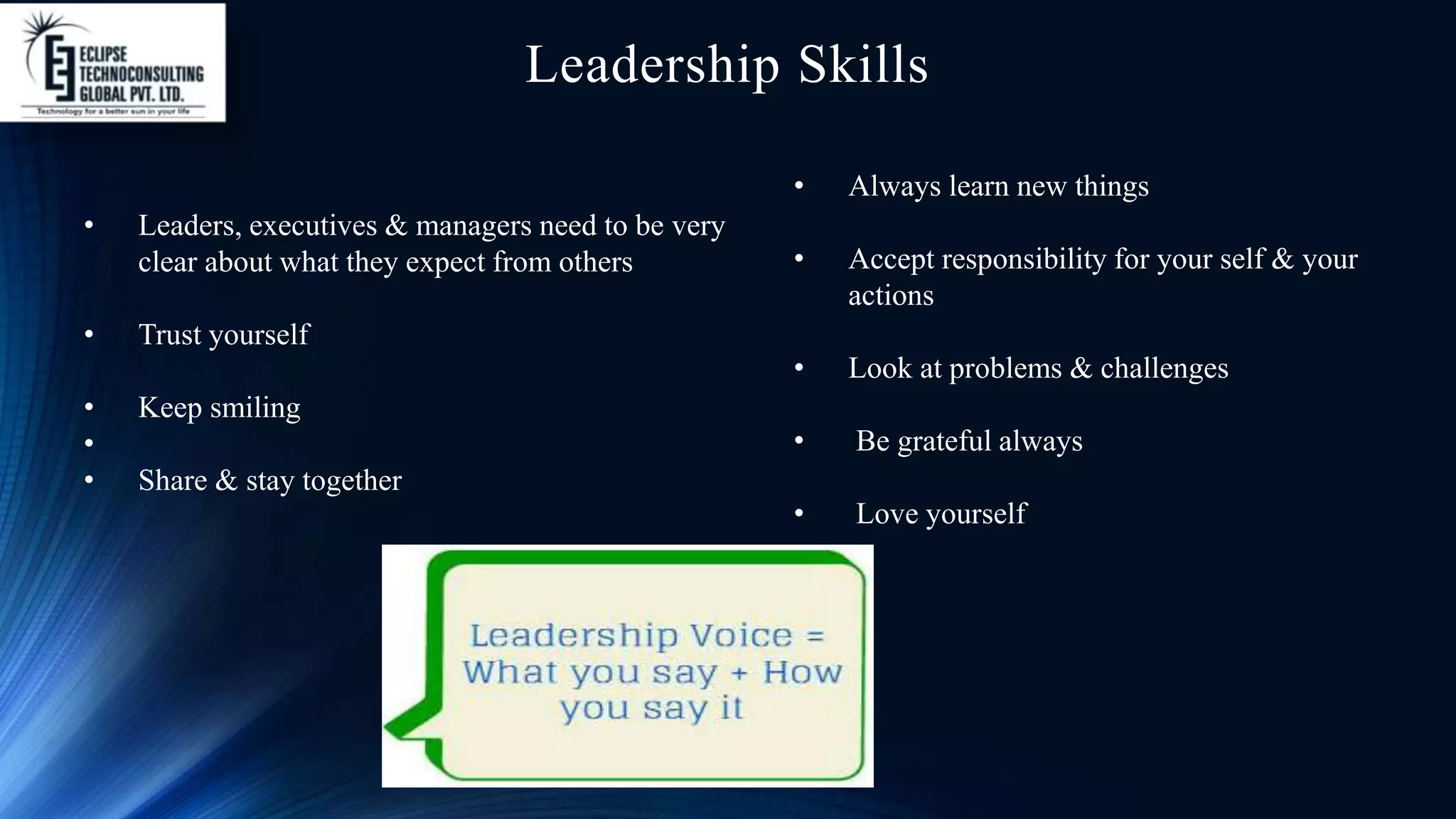
Leadership Skills
• Leaders, executives & managers need to be very
clear about what they expect from others
• Trust yourself
• Keep smiling
•
• Share & stay together
• Always learn new things
• Accept responsibility for your self & your
actions
• Look at problems & challenges
• Be grateful always
• Love yourself
Soft skill enhancement presentation

Soft skill enhancement presentation

  • 1.
    SOFT SKILLS AUTHOR :MITHUN BANERJEE DATE: 10-JUNE-2015 C O P Y W R I G H T P R O T E C T E D B Y E C L I P S E T E C H N O C O N S U L T I N G G L O B A L ( P ) L T D .
  • 2.
    Topics we willdiscuss • Communication Skills • Body Languages • Presentation Skills • Team Work • Professional Ethics • Interpersonal Skills • Time and Stress Management • Leadership Management Skill
  • 3.
  • 4.
    Attributes to discussabout Good Communication Skills • Making eye contact while communicating with people is important, because it shows you are listening to them • Not swearing or shouting because it can be intimidating. • Not chewing gum while having a conversation with them • Not texting while speaking to some one as it will make them think you ignorant • Always try to speak clearly and use words everyone can understand • Make positive facial expressions • Listening to the person you are speaking to • Have a relaxed body languages • Don’t speak over the people • Do keep to the point while explaining something
  • 5.
    Written Communication Skill WRITINGEVALUATES A PERSON’S PROFICIENCY INDICATIONS, SPELLING GRAMMAR ETC…  ERRORS COMMITTED WHILE WRITING CIRCULARS, REPORTS & AGENDA CONSIDERABLY SPOIL THE IMAGE OF THE WRITER  GOOD VISUAL PRESENTATION USING GRAPHICS, COLOR, BALANCED DESIGN LAYOUT- ADDS SO MUCH TO WRITTEN COMMUNICATION.  KEEP HANDOUTS AND OTHER WRITTEN MATERIALS FOR YOUR PRESENTATION.
  • 6.
    Body Language Non verballanguage  Face is the index of the mind and it clearly displays the persons interest  Body language presents to the audience what we feel & think about the particular matter Ex: Nodding one’s head  Body language (e.g, arms crossed, standing, sitting, relaxed)  Emotion of the sender & receiver (e.g, speaking clearly, enthusiastic)
  • 7.
  • 8.
    Expressions TIPS: Smile Keep an openspace before your upper torso (eg-don’t fold your arms, hug your bags and put thing on your laps Have eye contact-important to establish connection. Be comfortable in your space When resting on your hand keep the insides of your hand faced outward(this makes you are more open)
  • 9.
    Presentation Skills  Presentationskills include planning, preparation & delivery of the message  Making a formal speech is one form of presentation  Presentation skills can be broadly categorized into physical oral, & electronic Success in life depends on presenting ideas in an appropriate manners Look at the eyes of audience & speak in a natural, conversational voice  Appropriate voice will make the presentation effective and interesting  Ask for feed back from your audience about your presentation & change accordingly  In presentation especially, stop occasionally to ask the audience understand what you have said
  • 10.
    Team Work People ofeither gender, different age groups, qualification, status & skills work as a team with a common objective of accomplishing the task  The success of any organization largely depends on in the coordinated efforts of its employees  It mainly refers to the agreeableness & co-operation among the team members
  • 11.
    Professional Ethics Professional ethicsis the need of the hour always  When a person is at the work spot, he must think of his work only  He must put his heart & soul into the work  Each employee is a organic part of the organization & must strive to contribute his mite to the successful functioning of the organization
  • 12.
    Interpersonal Skill • Interpersonalskills are the life skills we use every day to communicate and interact other people, both individually and in groups. • People who have worked on developing strong interpersonal skills are usually more successful in both their professional and personal lives.
  • 13.
    Attributes of Interpersonalskills Verbal Communication - What we say and how we say it. Non-Verbal Communication - What we communicate without words, body language is an example. Listening Skills - How we interpret both the verbal and non-verbal messages sent by others. Negotiation - Working with others to find a mutually agreeable outcome. Manners- Basic Etiquettes Problem Solving - Working with others to identify, define and solve problems. Decision Making – Exploring and analysing options to make sound decisions. Assertiveness – Communicating our values, ideas, beliefs, opinions, needs and wants freely.
  • 14.
    Etiquettes as partof interpersonal skills Travel Etiquette Business Social
  • 15.
    Time and StressManagement Time management and stress management often are closely related and discussed together. Set goals Plan Prioritize Set deadlines Keep an activity log End procrastination…….now Minimize distraction Plan mini breaks Watch what you eat and drink
  • 16.
    Time and StressManagement
  • 17.
    Leadership Skills • Leaders,executives & managers need to be very clear about what they expect from others • Trust yourself • Keep smiling • • Share & stay together • Always learn new things • Accept responsibility for your self & your actions • Look at problems & challenges • Be grateful always • Love yourself