Reactive Programming
Sudip Ghosh
Evolution of programming
Past(10-15 years ago)
 Monolith applications
 Run in App server
 Does not embrace
Distributed Systems.
Today
• Micro services
• Run it in cloud.
• Embraces Distributed
systems
Expectations of the App:
 Scale based on the load.
 Use resources efficiently.
 Latency or Response Time should be faster.
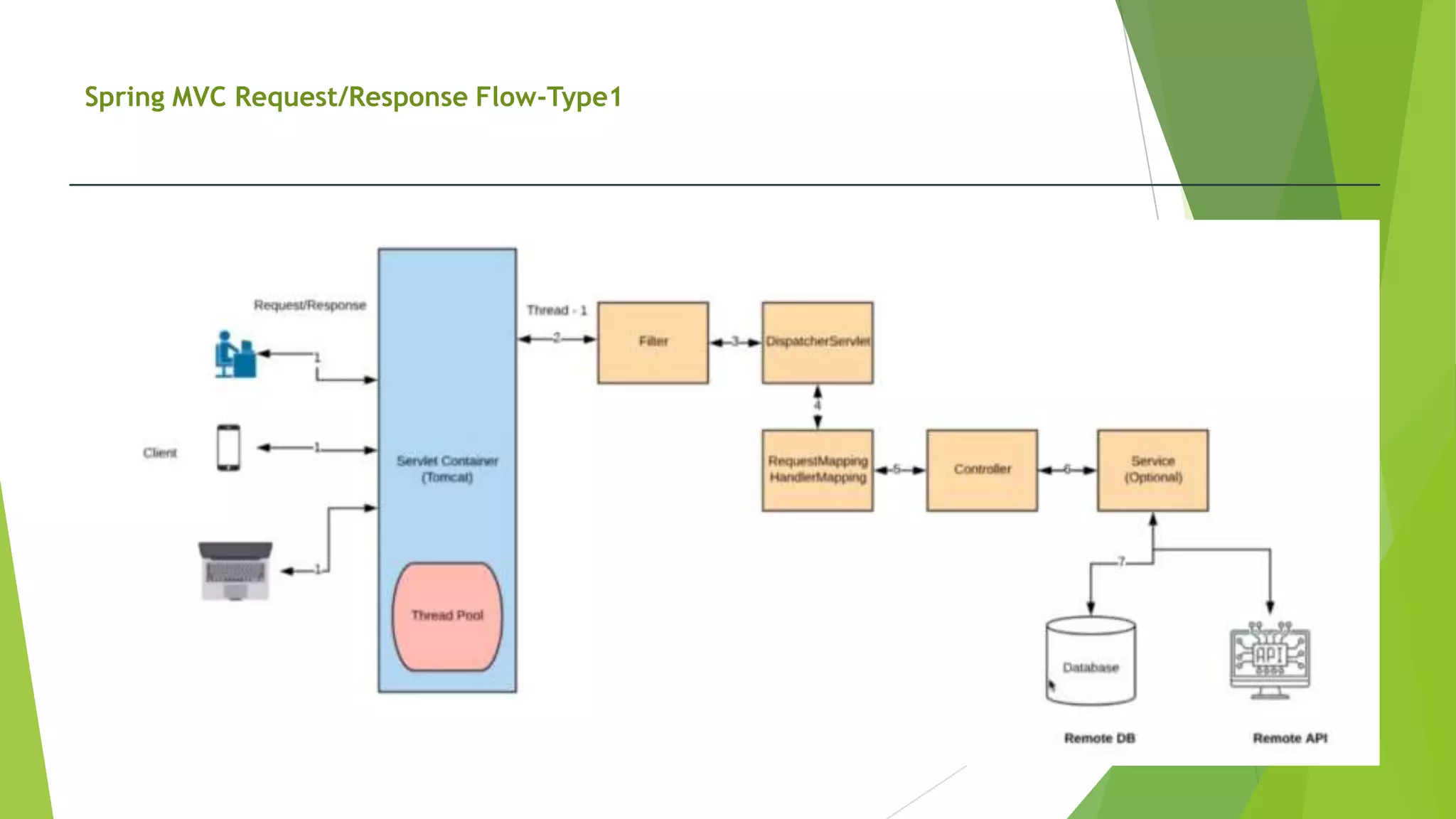
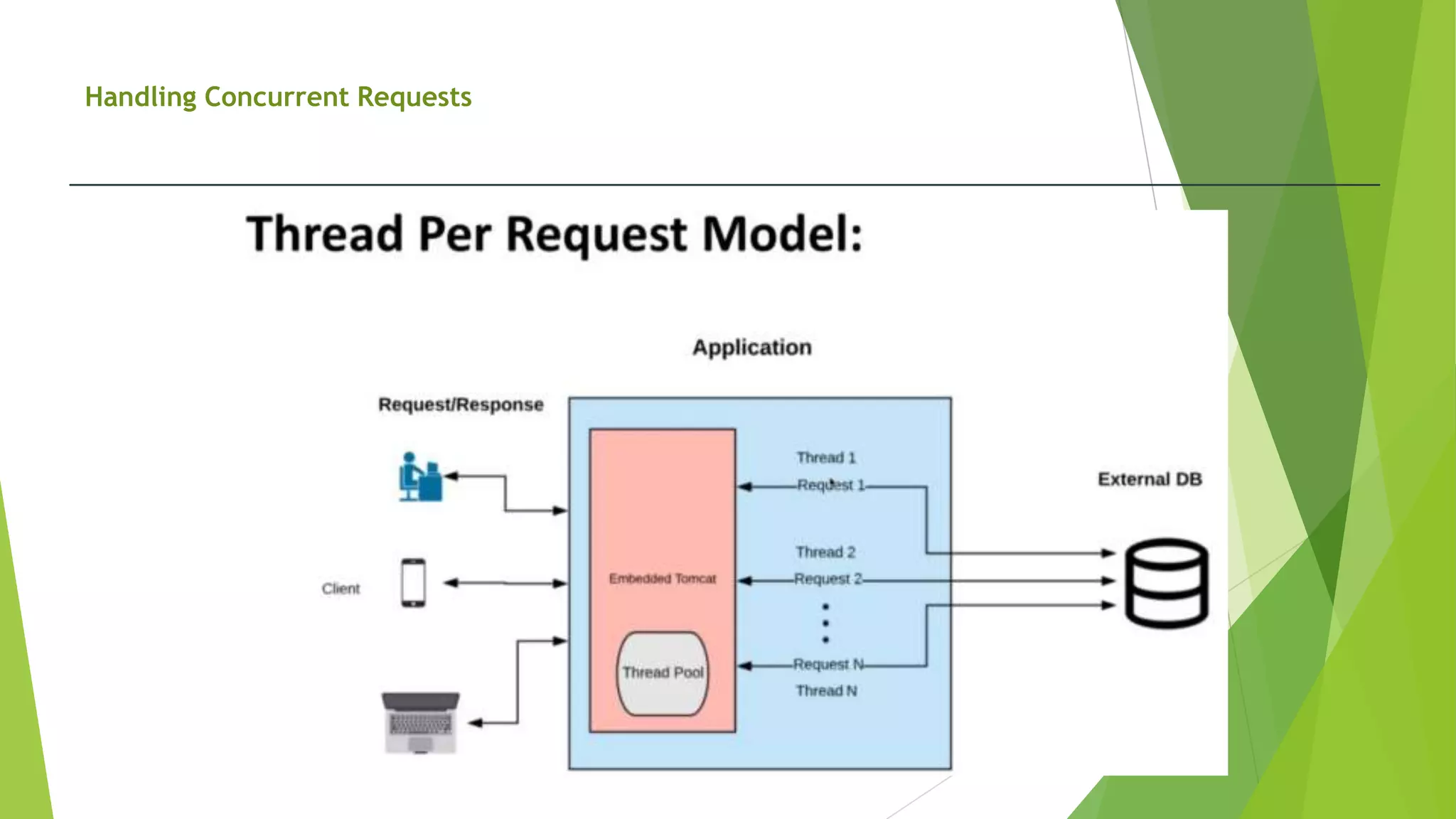
Spring MVC Request/Response Flow-Type1
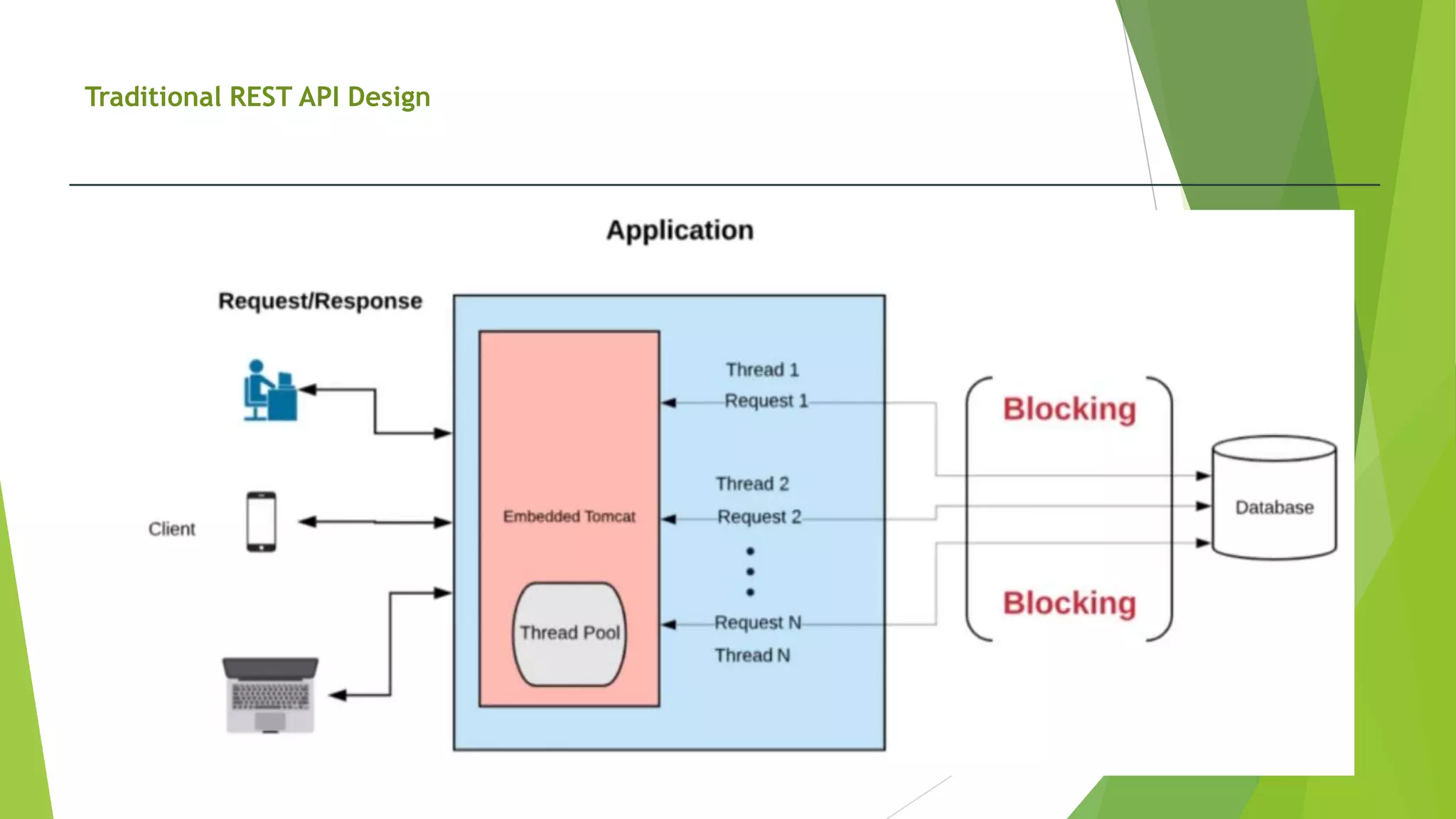
Handling Concurrent Requests
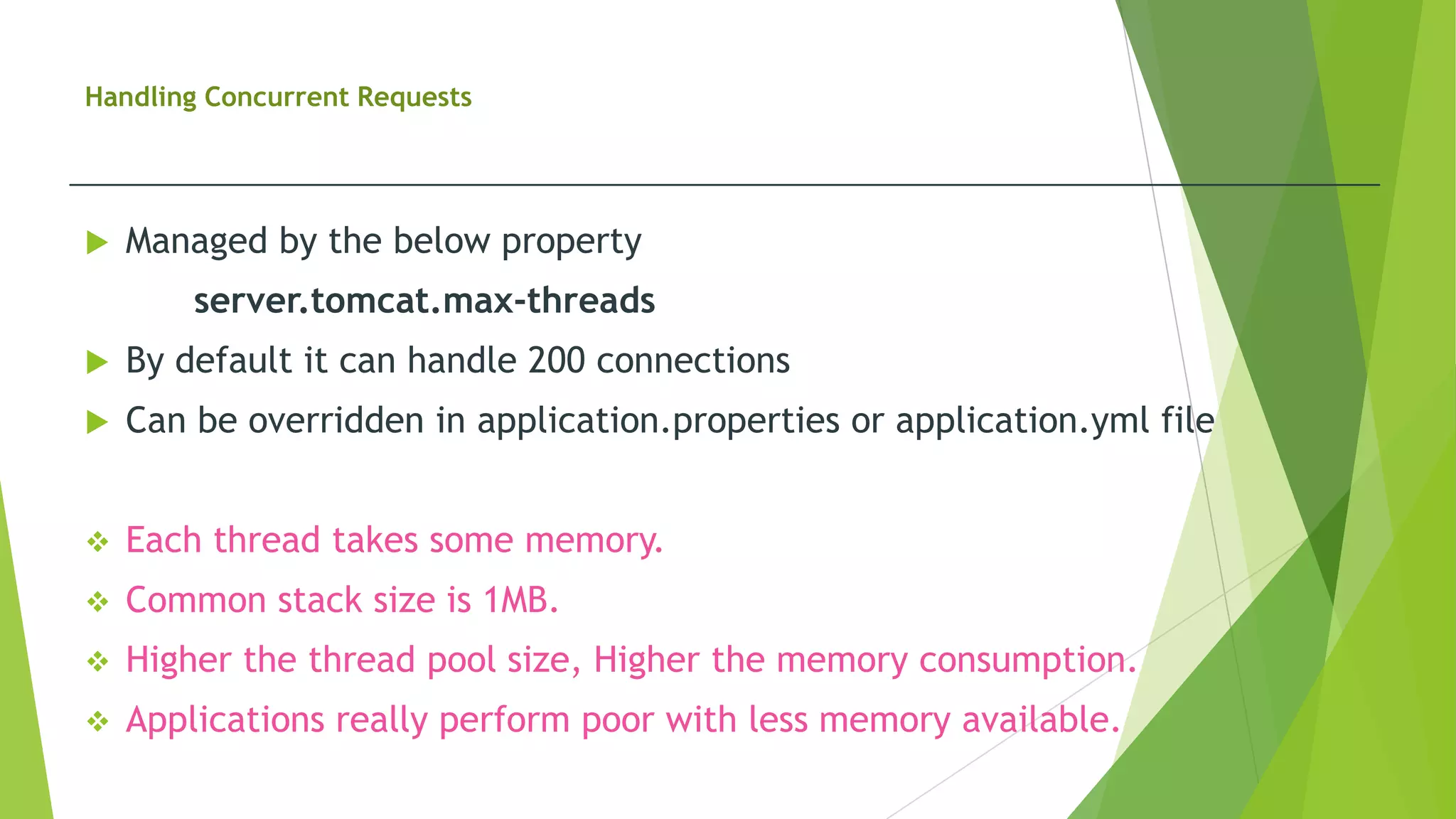
 Managed by the below property
server.tomcat.max-threads
 By default it can handle 200 connections
 Can be overridden in application.properties or application.yml file
 Each thread takes some memory.
 Common stack size is 1MB.
 Higher the thread pool size, Higher the memory consumption.
 Applications really perform poor with less memory available.
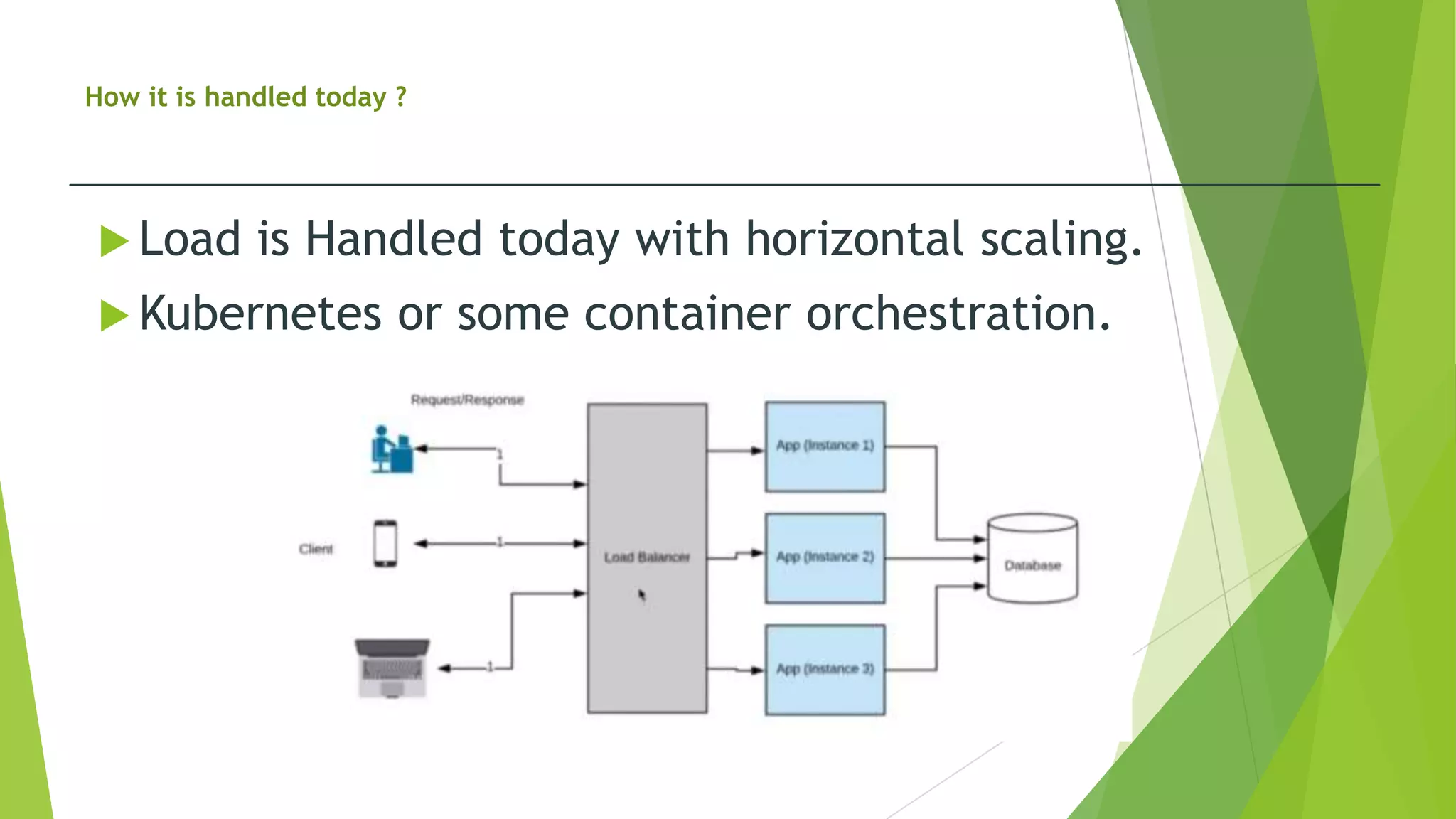
How it is handled today ?
 Load is Handled today with horizontal scaling.
 Kubernetes or some container orchestration.
Handling concurrent Requests
 Limitations on handling many concurrent users.
 Move away from “Thread per Request Model”.
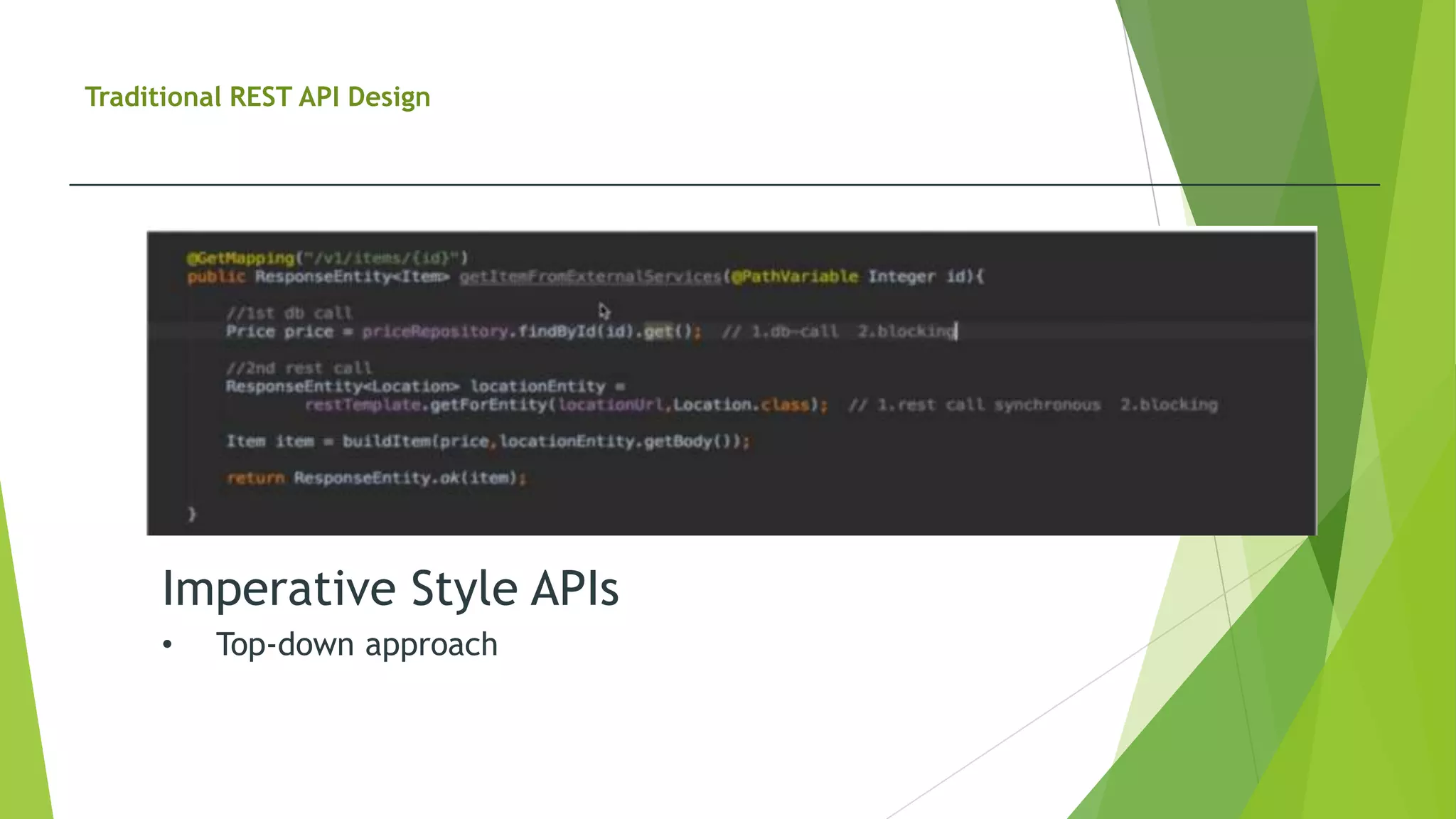
Traditional REST API Design
Imperative Style APIs
• Top-down approach
Traditional REST API Design
Traditional REST API DEsign
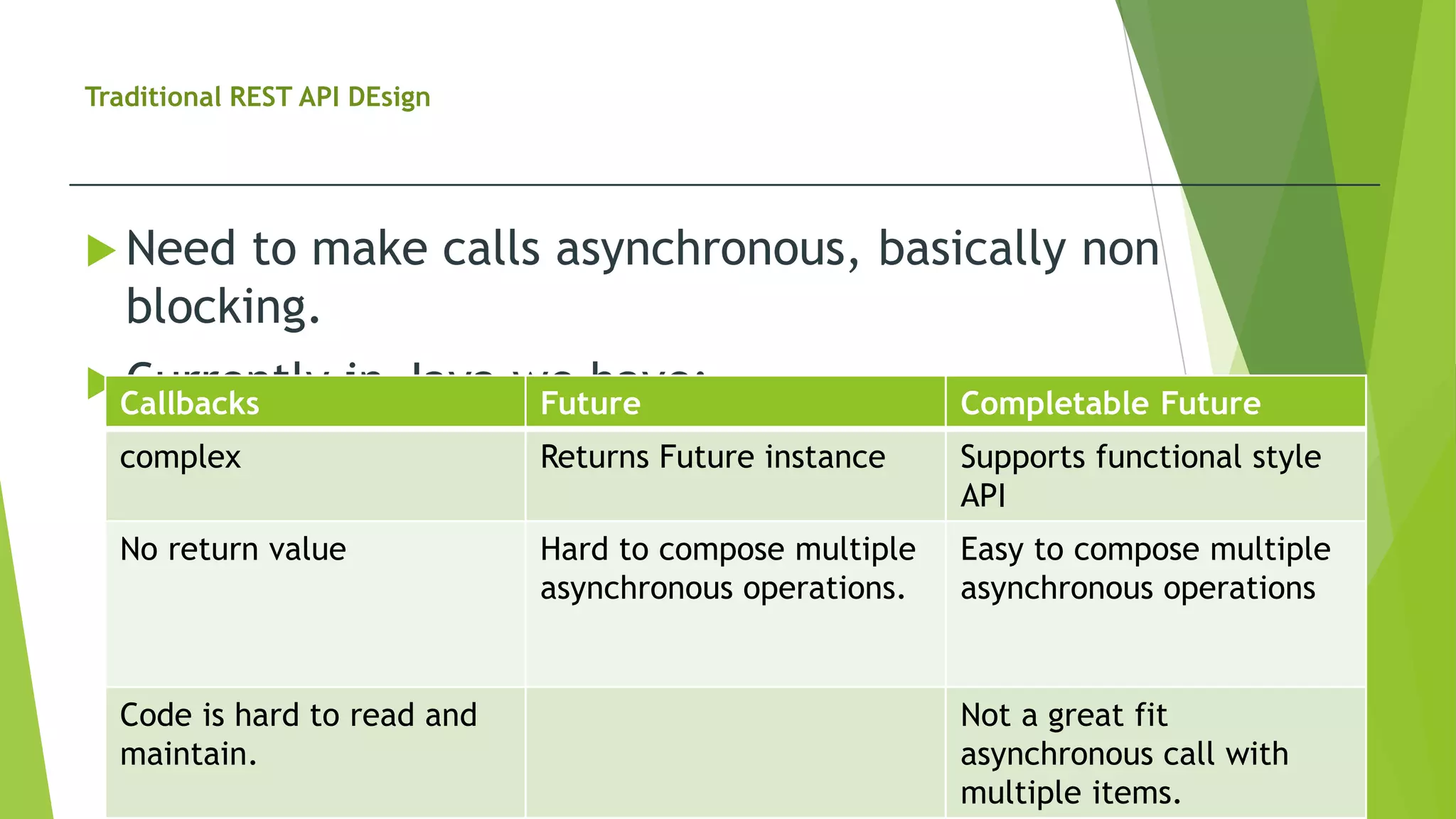
 Need to make calls asynchronous, basically non
blocking.
 Currently in Java we have:
Callbacks Future Completable Future
complex Returns Future instance Supports functional style
API
No return value Hard to compose multiple
asynchronous operations.
Easy to compose multiple
asynchronous operations
Code is hard to read and
maintain.
Not a great fit
asynchronous call with
multiple items.
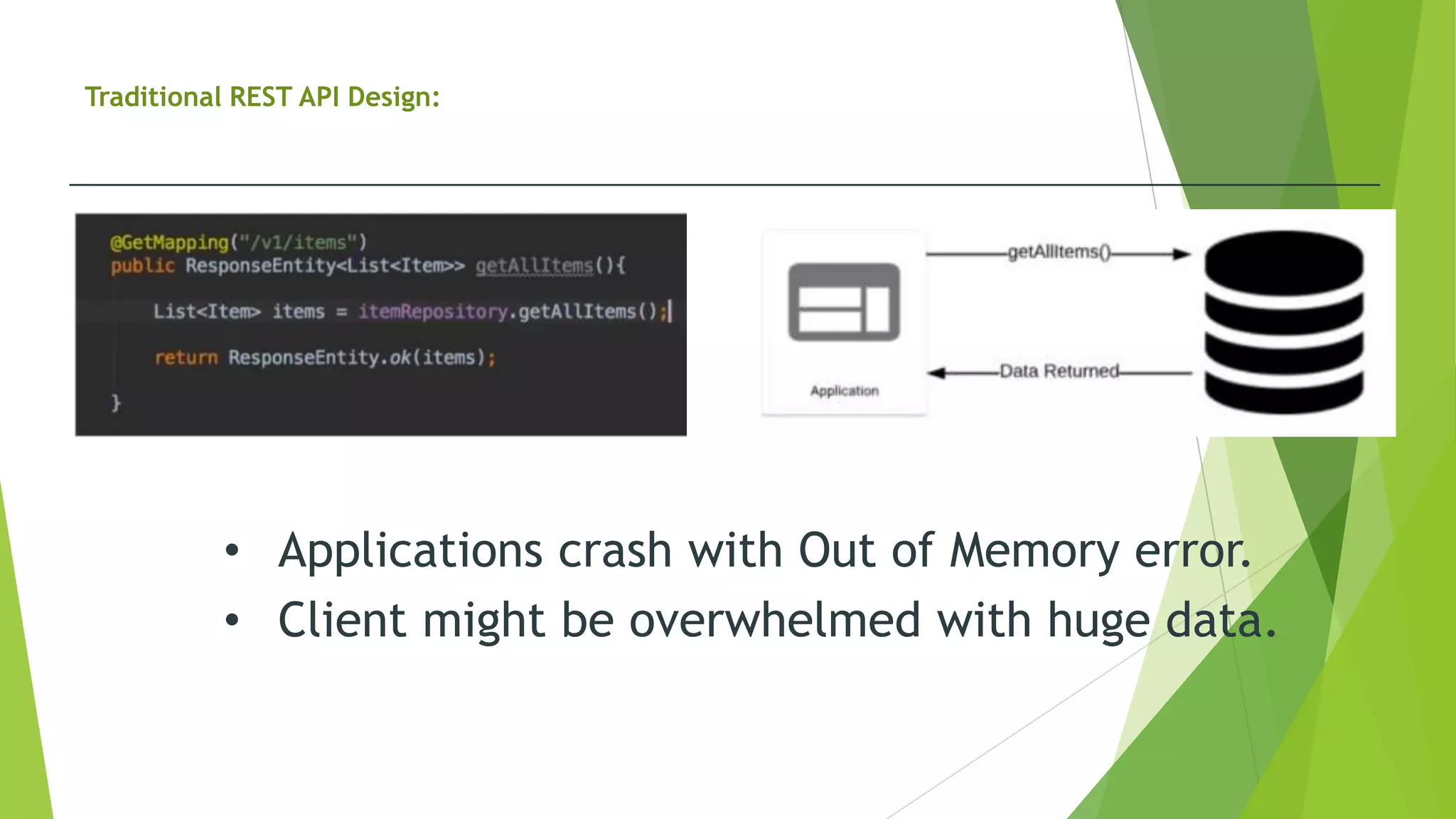
Traditional REST API Design:
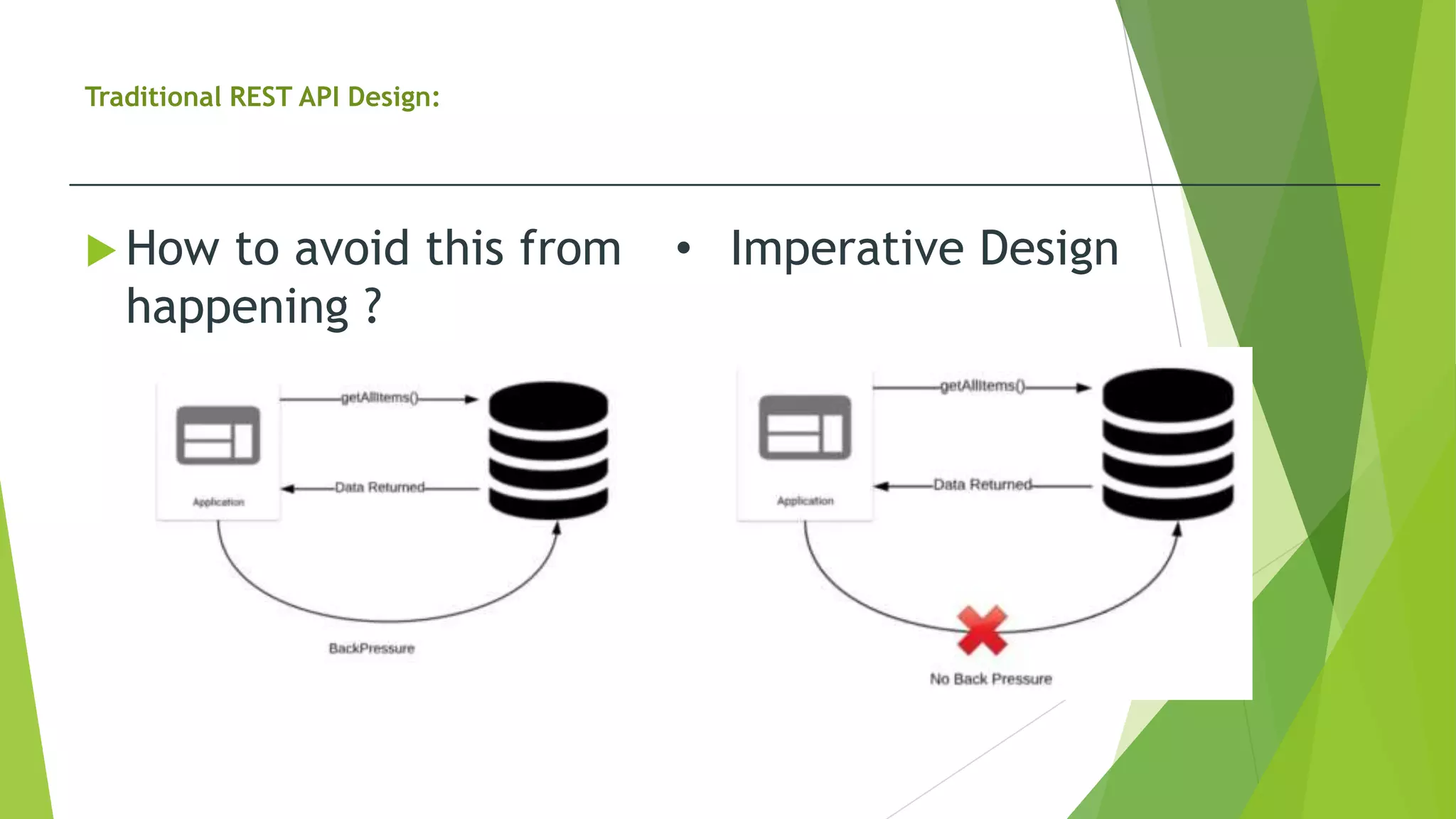
• Applications crash with Out of Memory error.
• Client might be overwhelmed with huge data.
Traditional REST API Design:
 How to avoid this from
happening ?
• Imperative Design
Summary on Traditional REST API Design:
 Limit on the number of Concurrent users.
 Synchronous and Blocking.
 Imperative Style APIs
 No Back Pressure support.
Better API Design:
 Asynchronous and Non Blocking.
 Move away from Thread per request model.
 Use fewer Threads.
 Back pressure compatible.
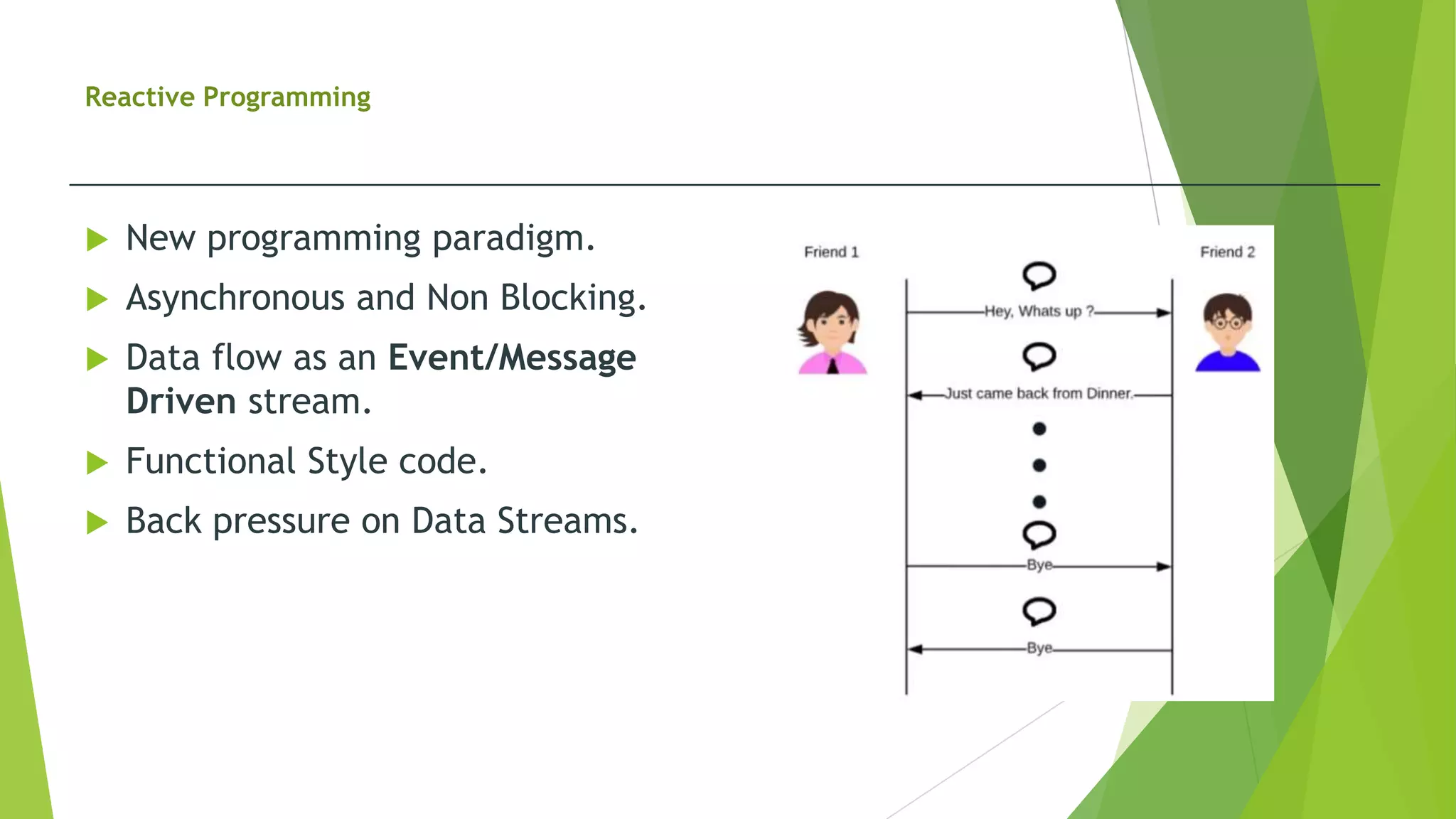
Reactive Programming
 New programming paradigm.
 Asynchronous and Non Blocking.
 Data flow as an Event/Message
Driven stream.
 Functional Style code.
 Back pressure on Data Streams.
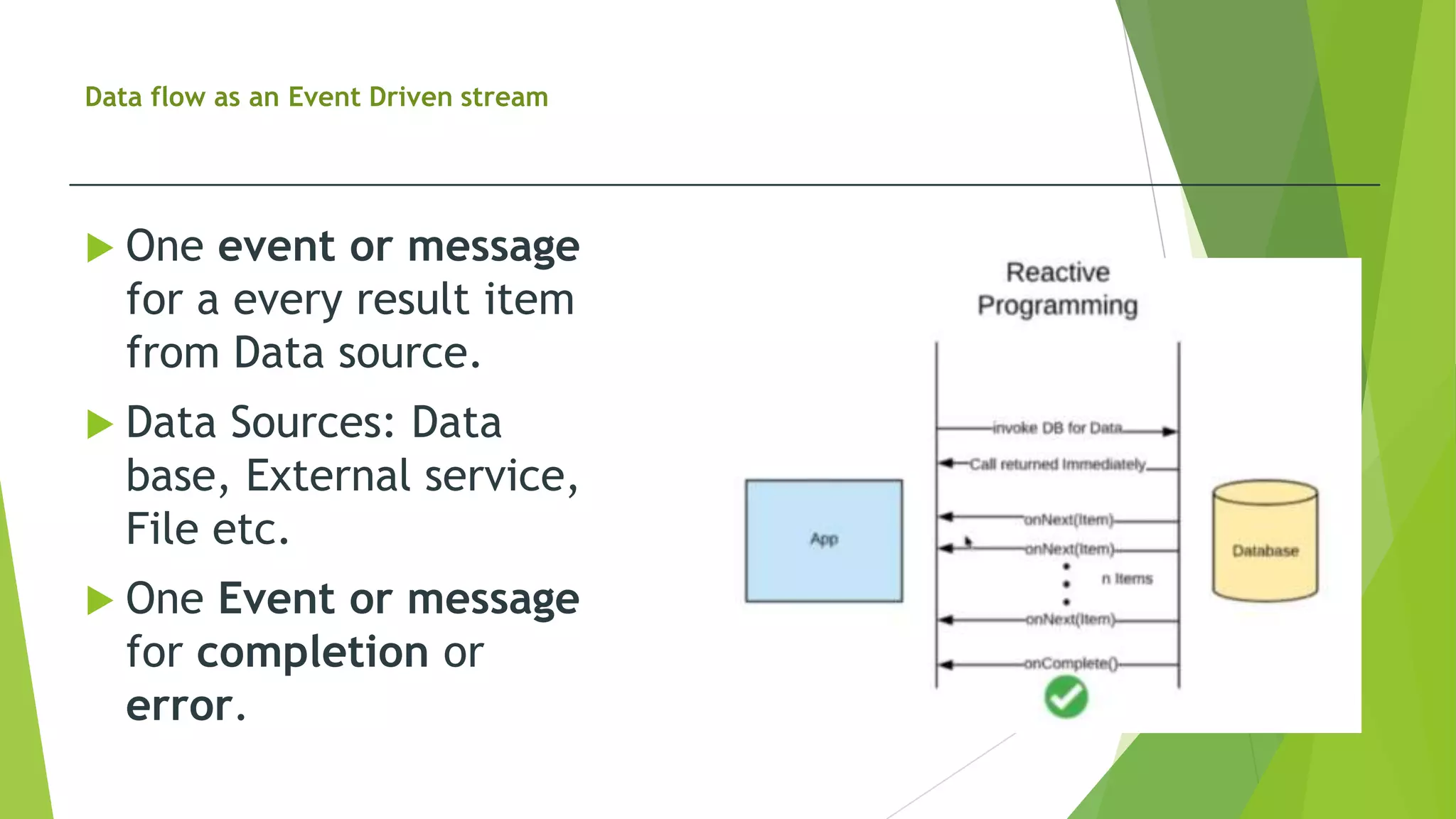
Data flow as an Event Driven stream
 One event or message
for a every result item
from Data source.
 Data Sources: Data
base, External service,
File etc.
 One Event or message
for completion or
error.
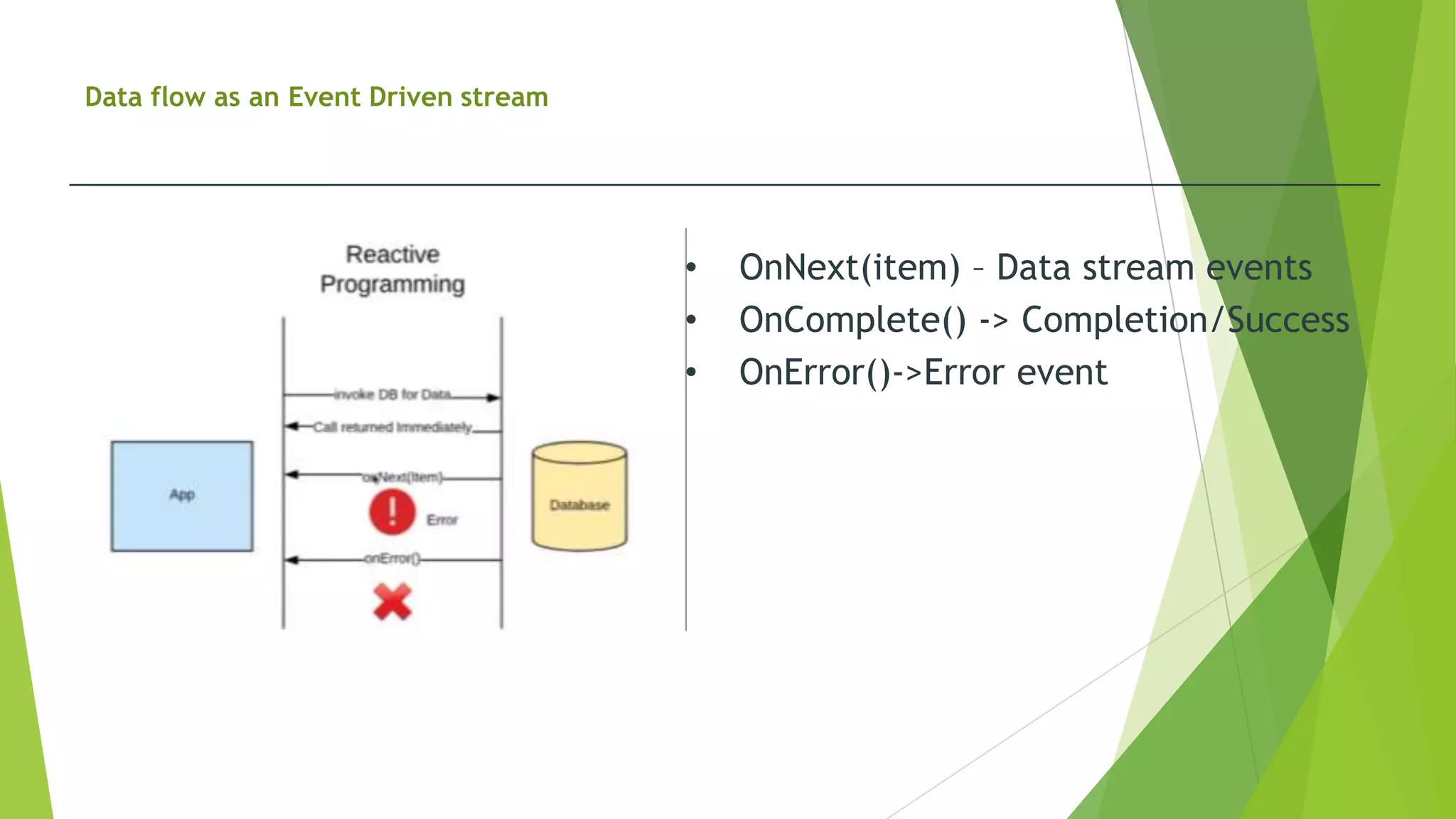
Data flow as an Event Driven stream
• OnNext(item) – Data stream events
• OnComplete() -> Completion/Success
• OnError()->Error event
Reactive Stream Specification
 Specification or Rules for a Reactive Stream.
 Specification created by :Pivotal, Netflix, lightbend,twitter
etc.
 https://github.com/reactive-streams/reactive-streams-jvm
Publisher
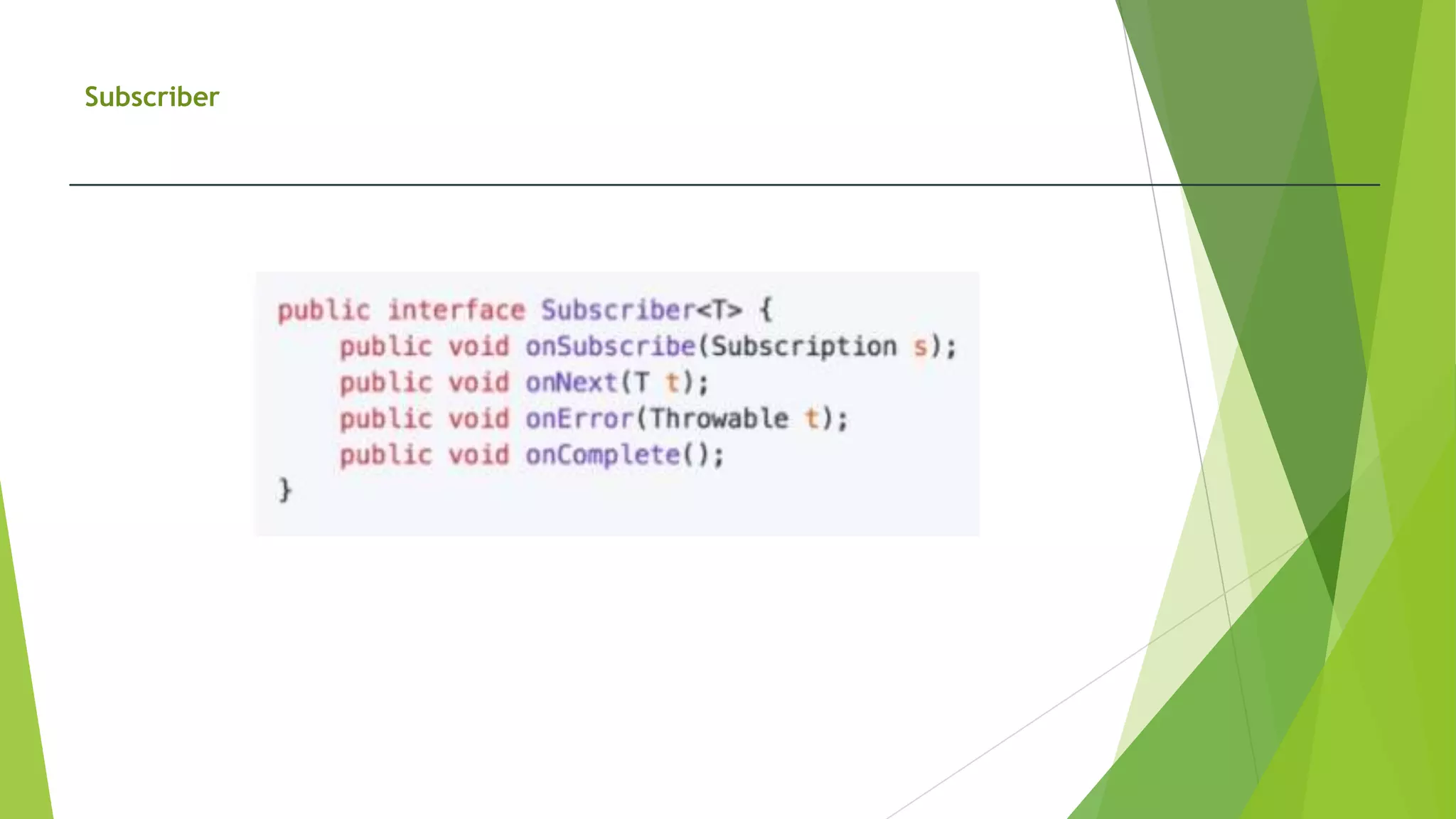
Subscriber
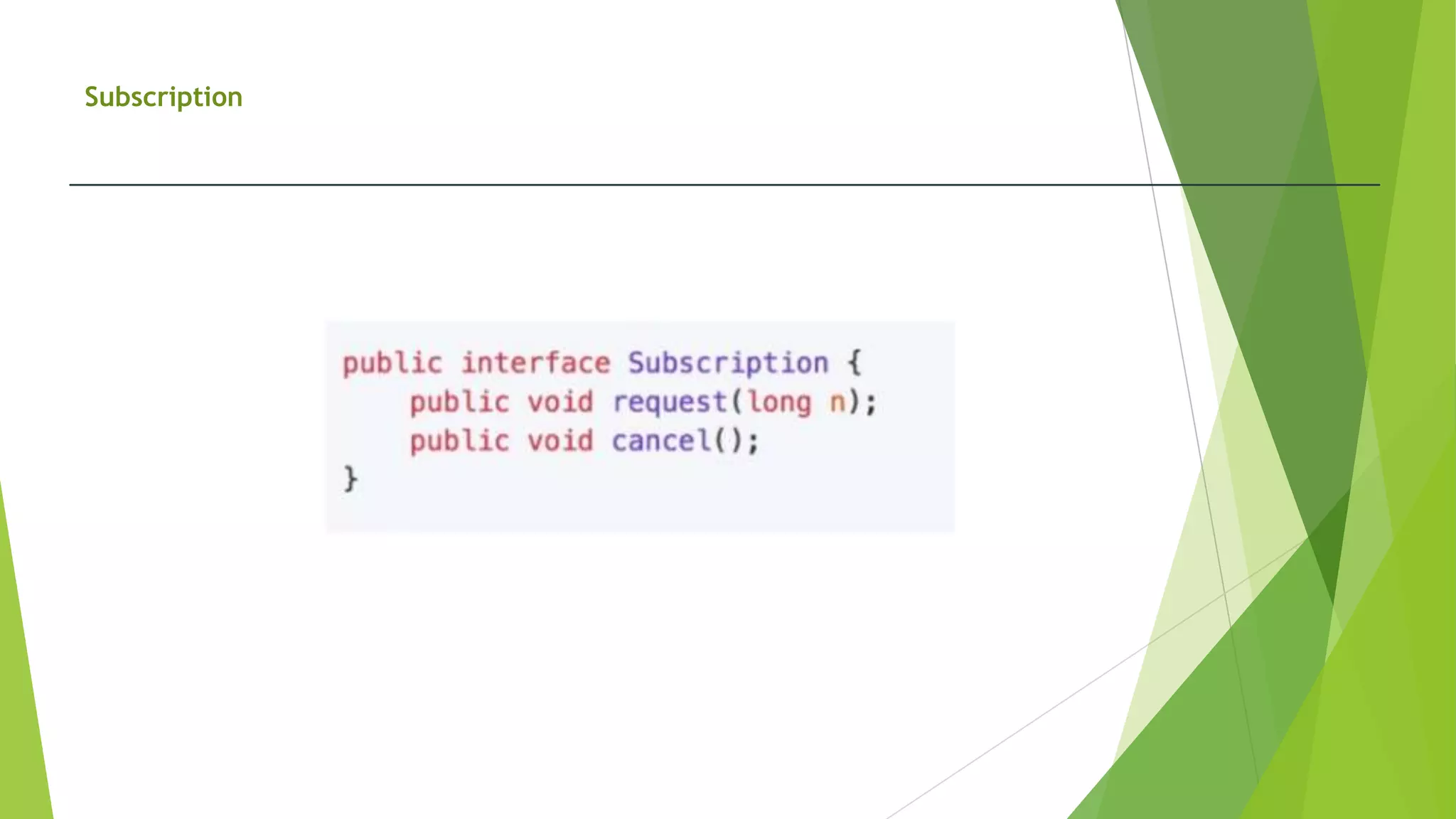
Subscription
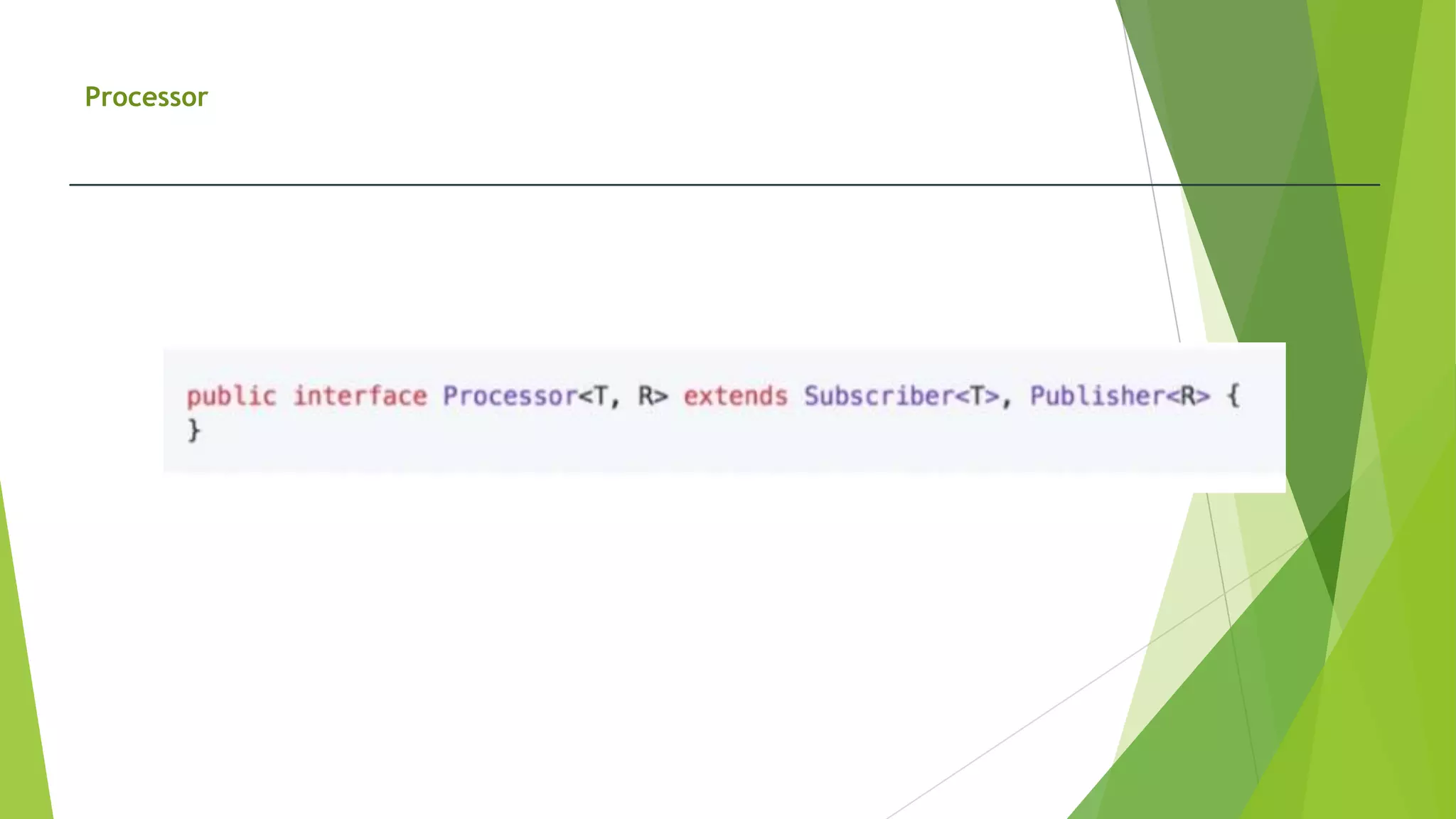
Processor
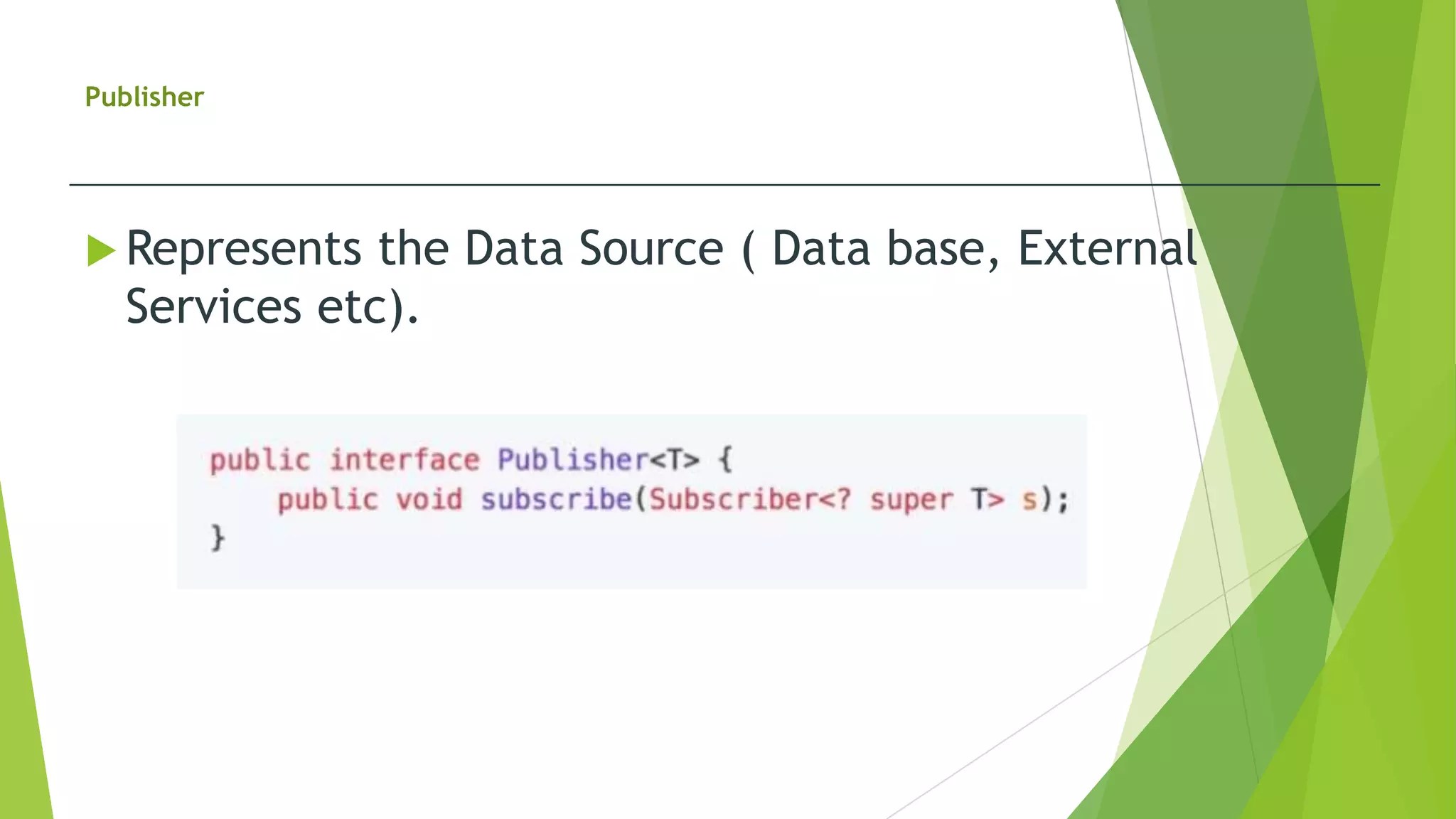
Publisher
 Represents the Data Source ( Data base, External
Services etc).
Subscriber
Subscription
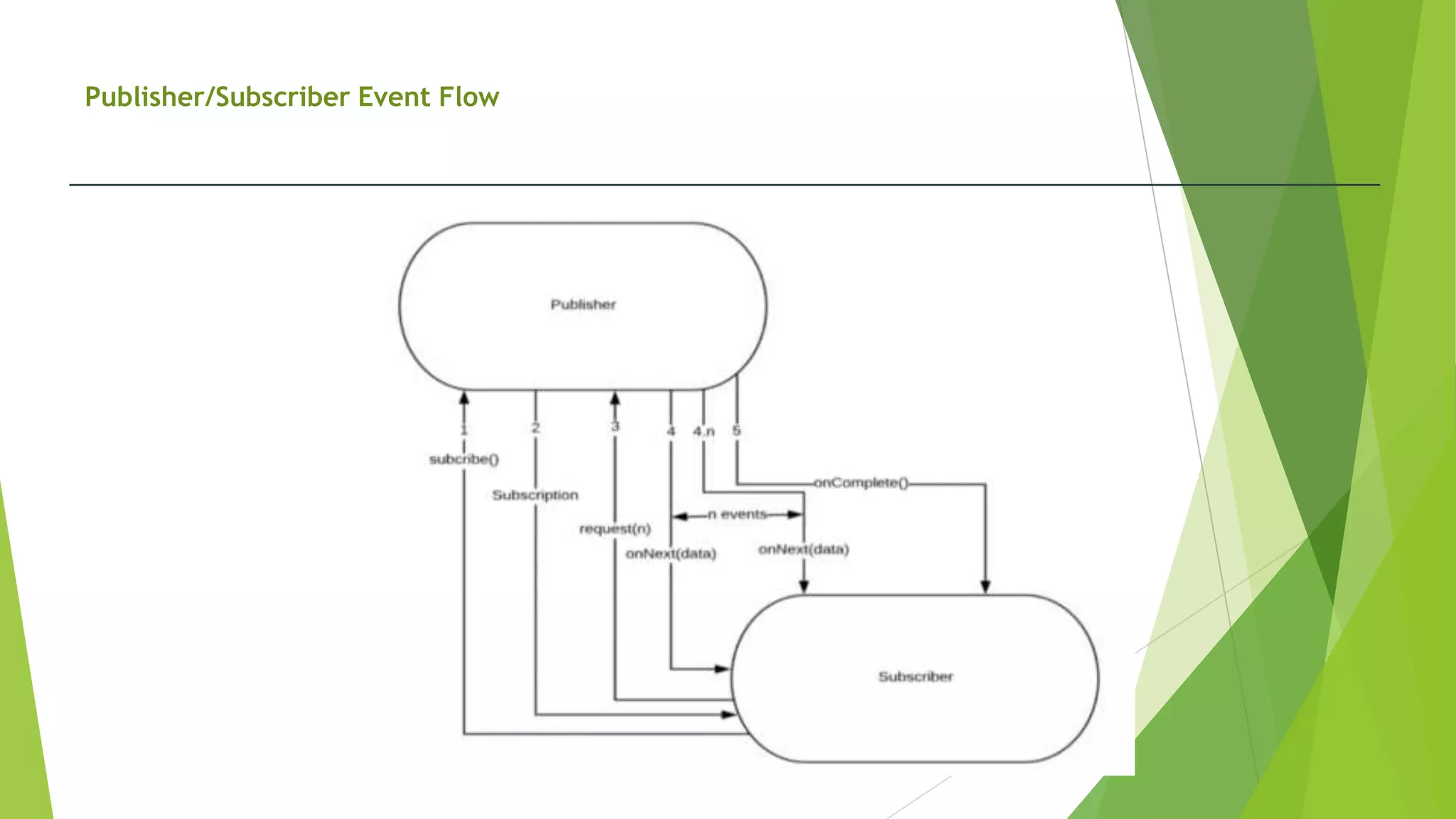
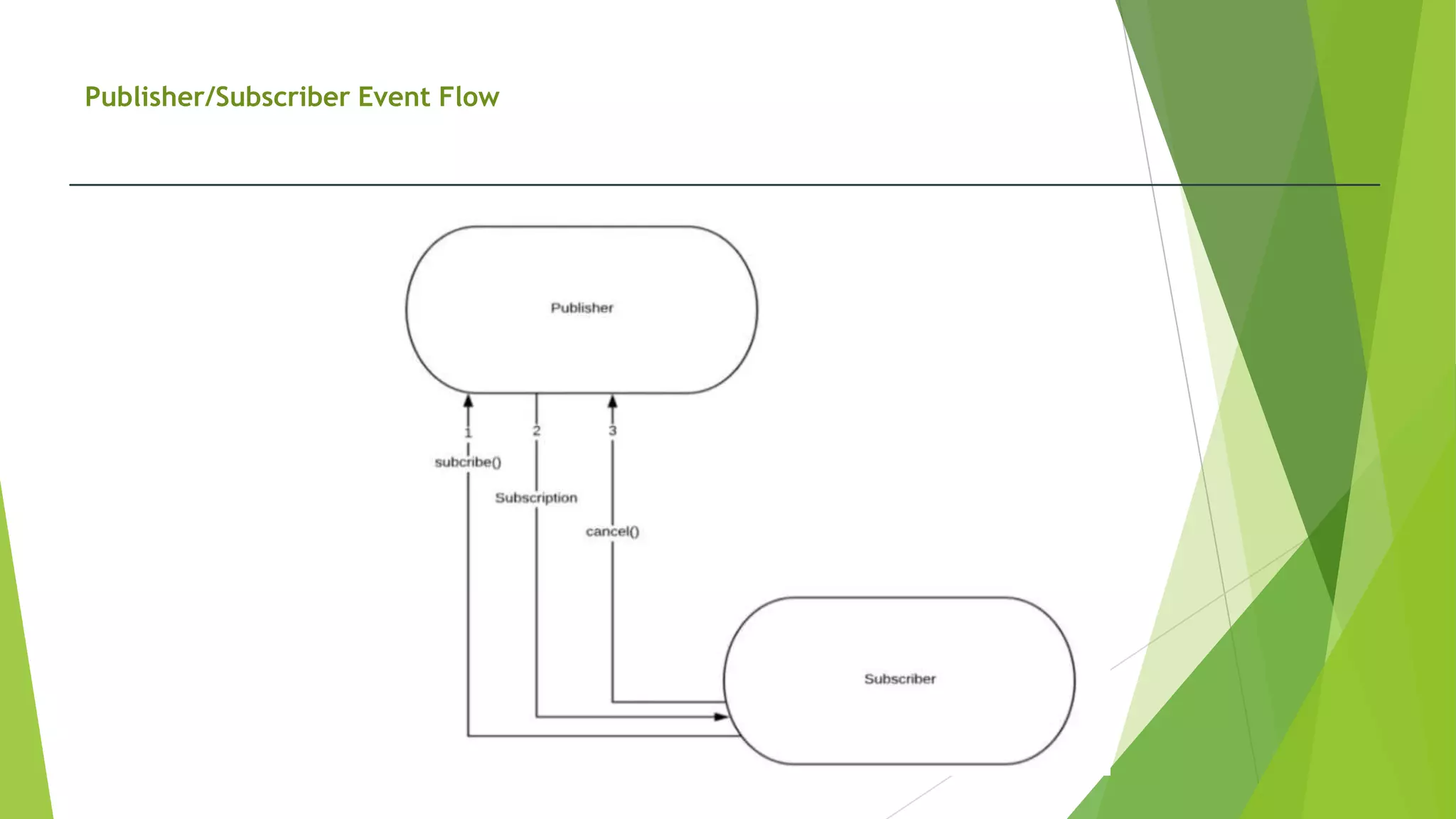
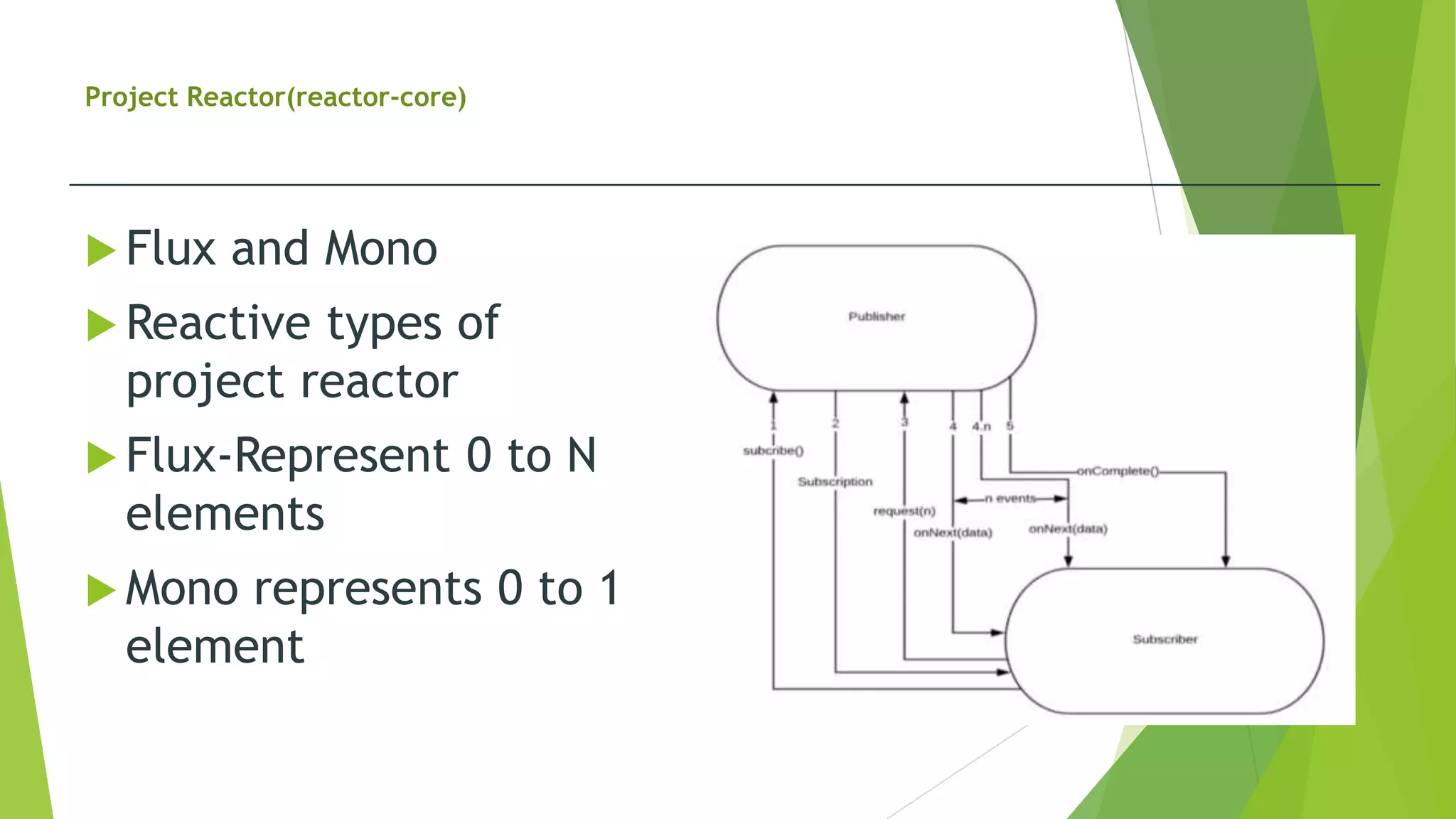
Publisher/Subscriber Event Flow
Processor
Reactive Libraries
 Implementations of Reactive Streams Specification.
RxJava
Reactor
Flow Class- JDK 9
• Project Reactor
• https://projectreactor.io/
Project Reactor(reactor-core)
 Flux and Mono
 Reactive types of
project reactor
 Flux-Represent 0 to N
elements
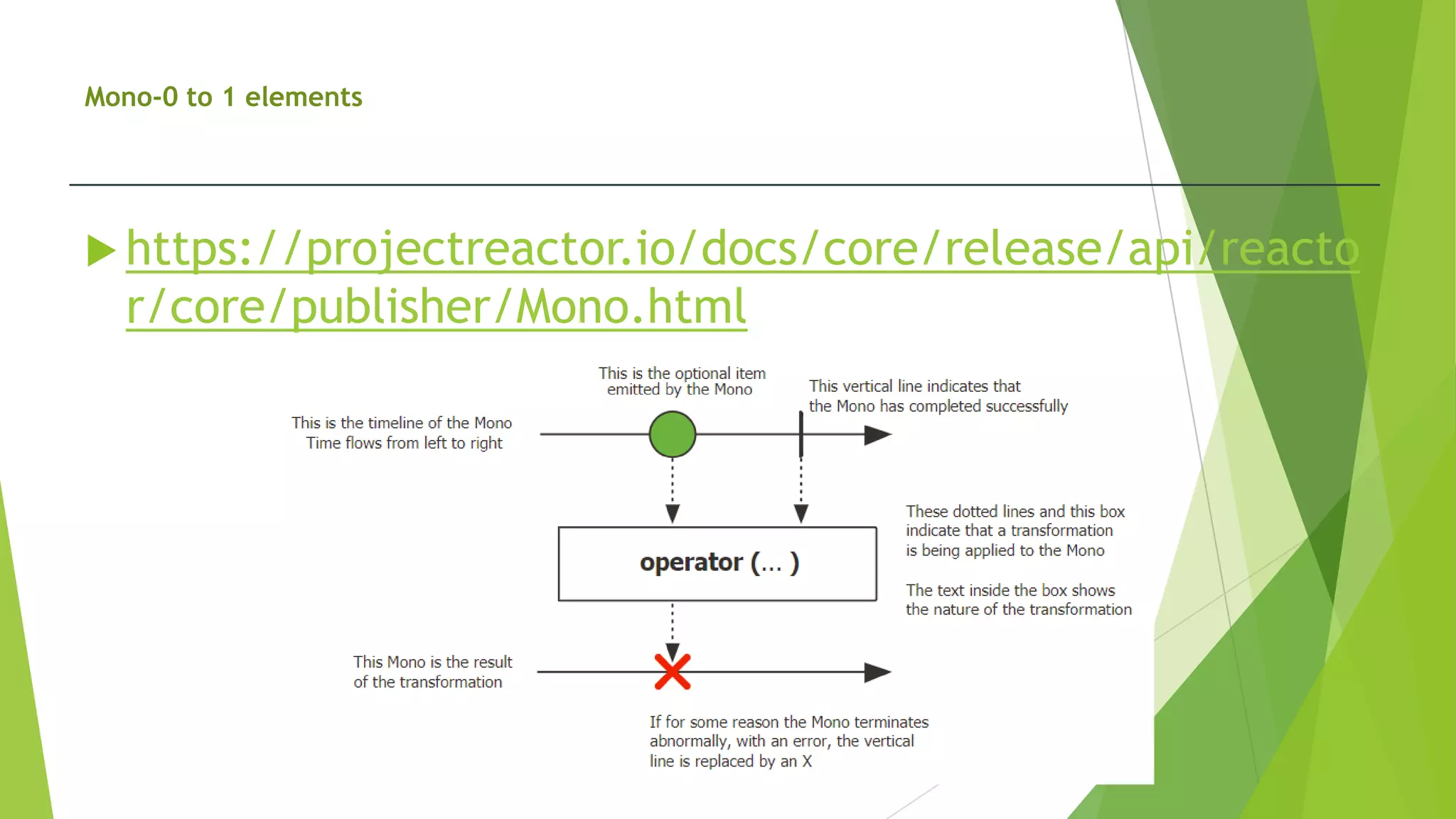
 Mono represents 0 to 1
element
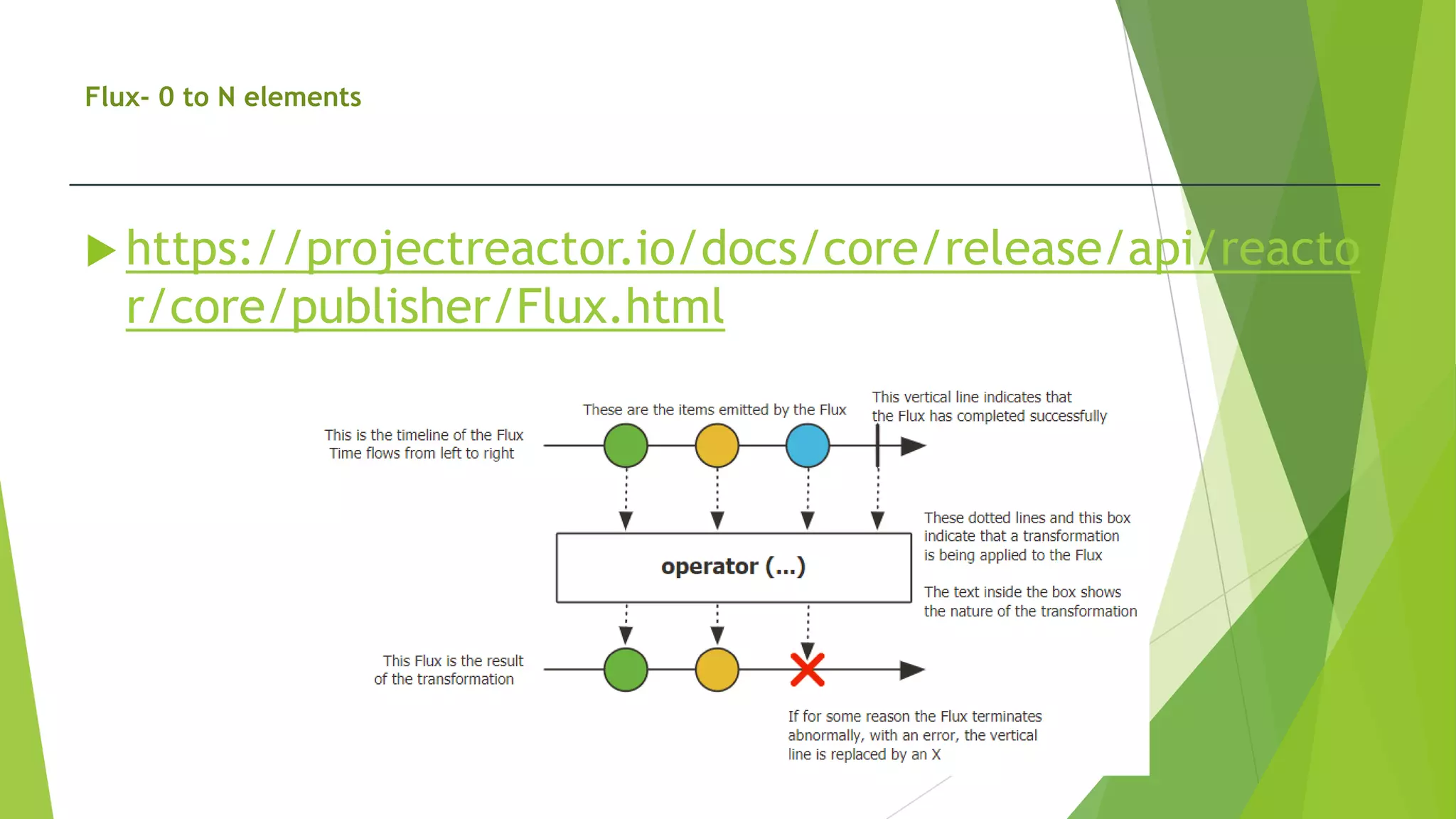
Flux- 0 to N elements
 https://projectreactor.io/docs/core/release/api/reacto
r/core/publisher/Flux.html
Mono-0 to 1 elements
 https://projectreactor.io/docs/core/release/api/reacto
r/core/publisher/Mono.html
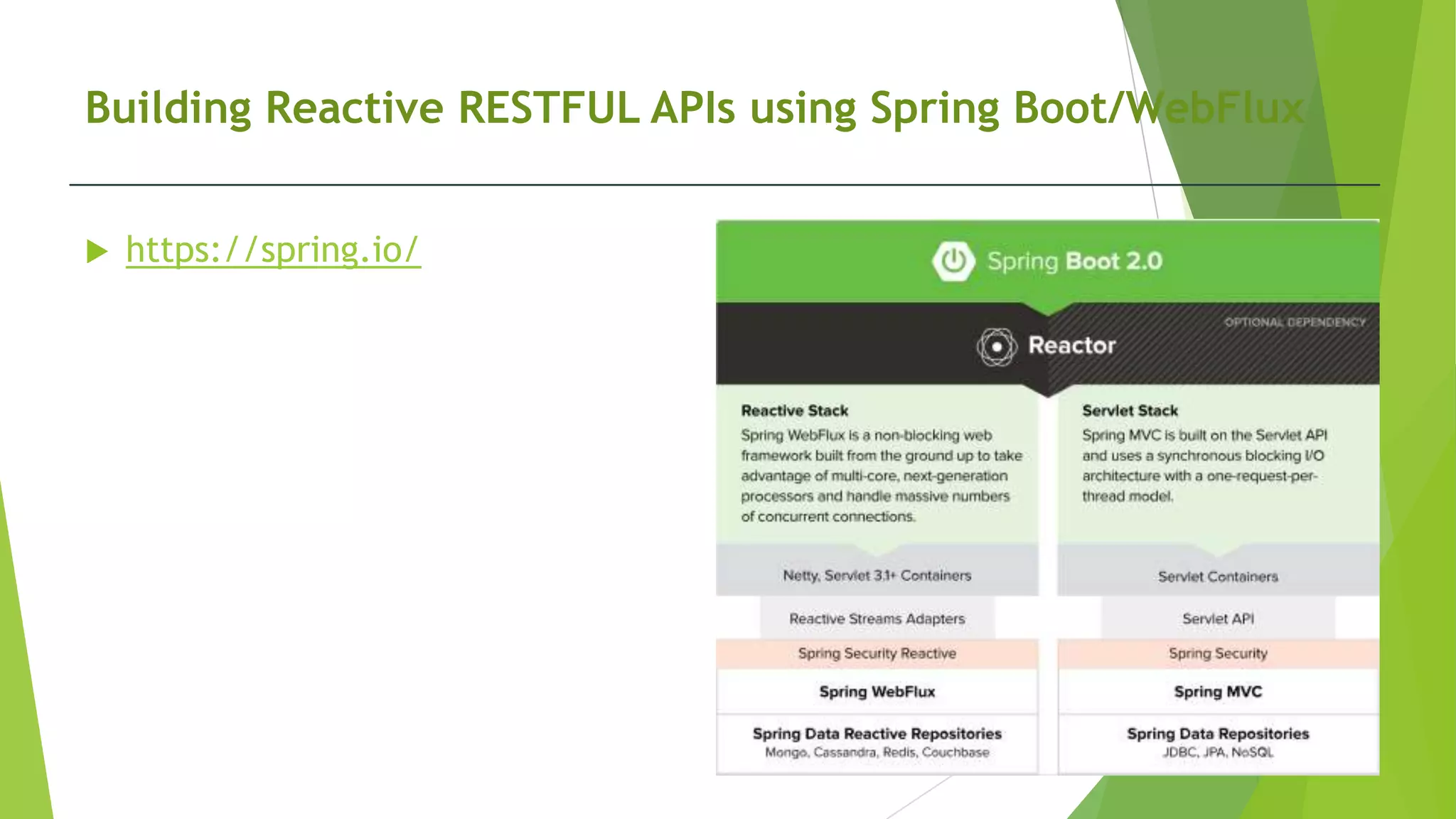
Building Reactive RESTFUL APIs using Spring Boot/WebFlux
 https://spring.io/
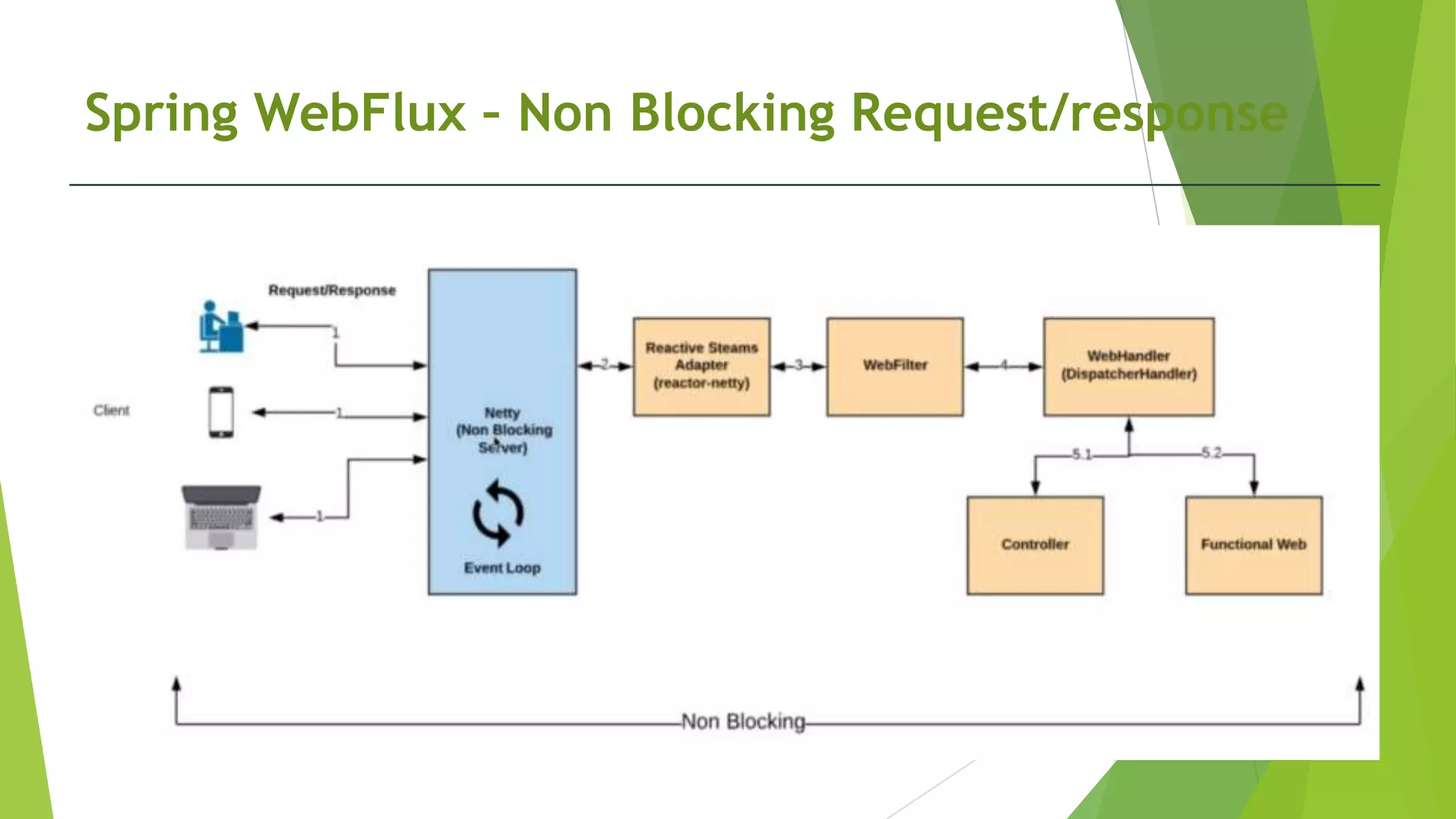
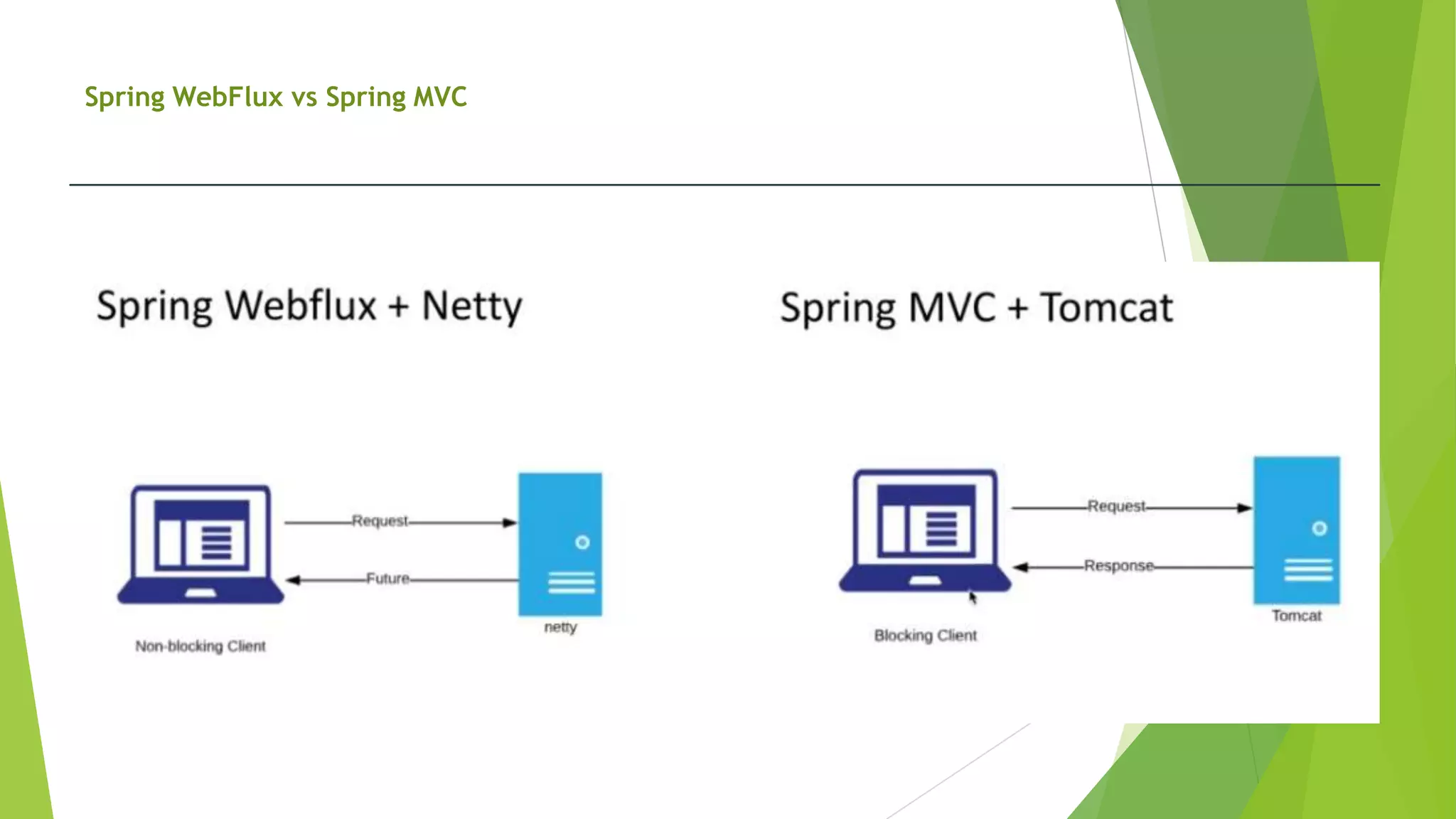
Spring WebFlux – Non Blocking Request/response
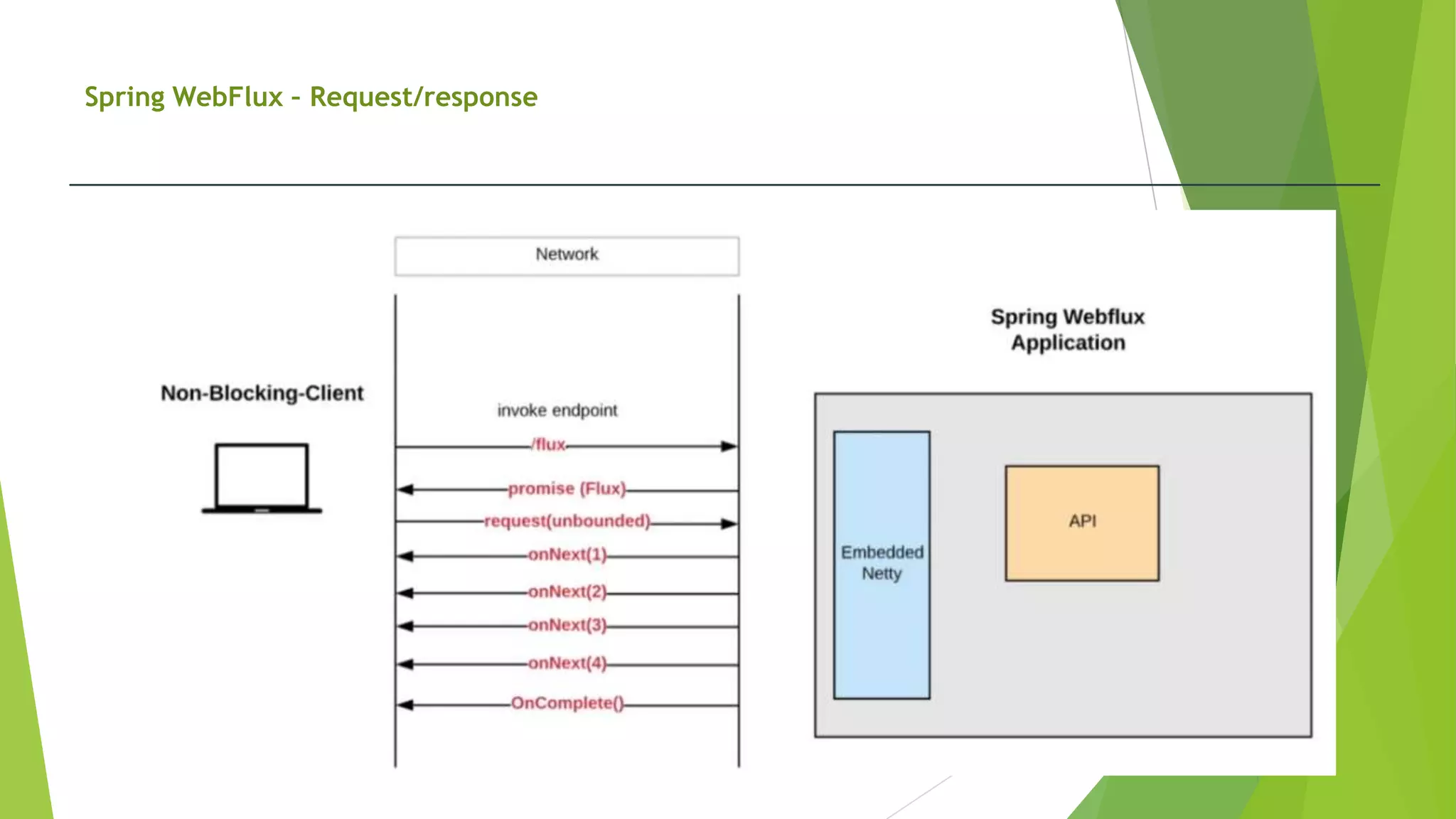
Spring WebFlux – Request/response
Spring WebFlux vs Spring MVC
Netty - Asynchronous
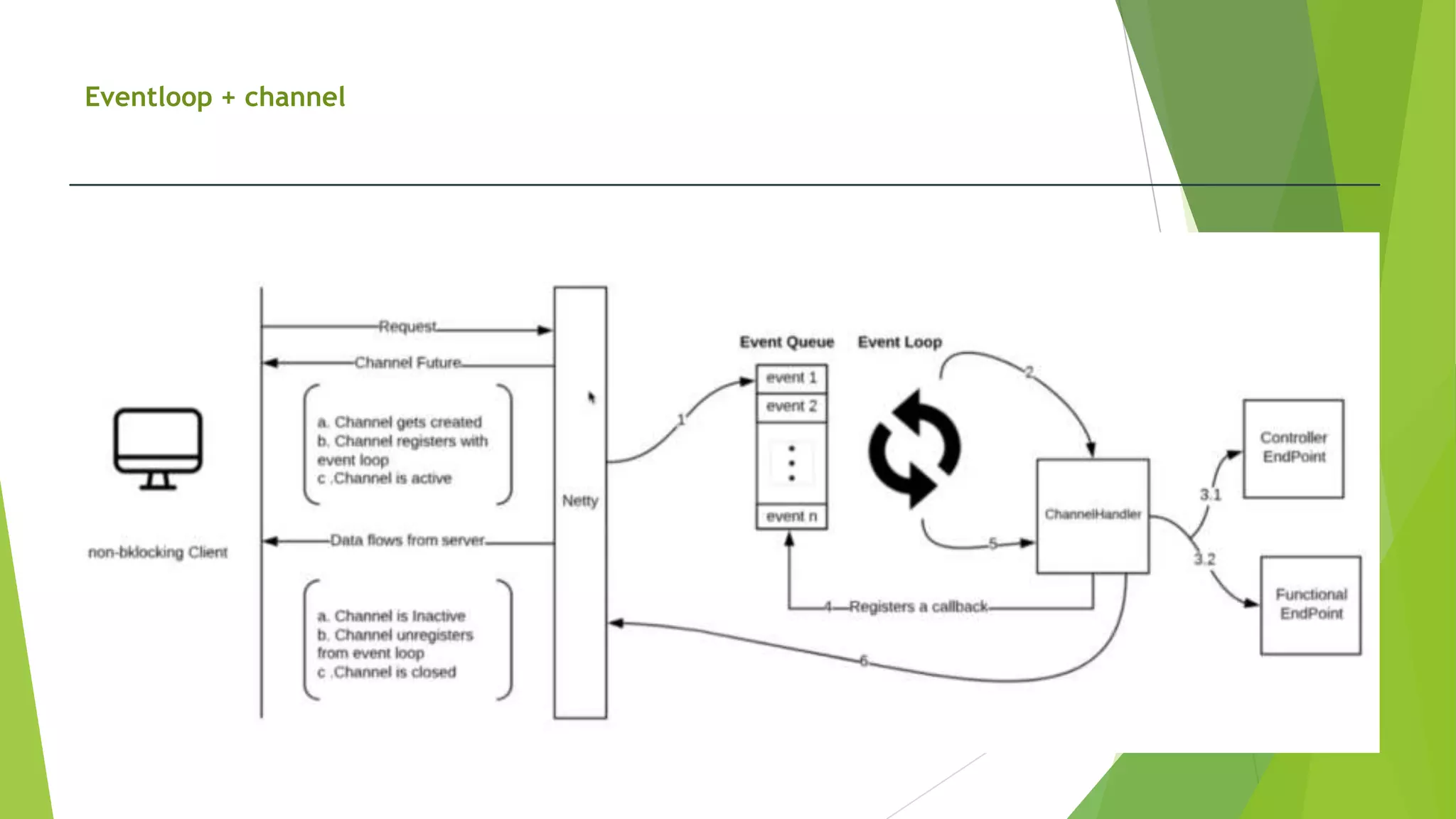
 Netty is an asynchronous event-driven network application
framework for rapid development of maintainable high
performance protocol servers & clients.
 Being asynchronous – Frees us from the blocking calls.
 Handles large number of connections.
 Events in Netty
 Client requesting for a new connection is treated as an event.
 Client requesting for data is treated as an event.
 Client posting for data is treated as an event.
 Errors are treated as event.
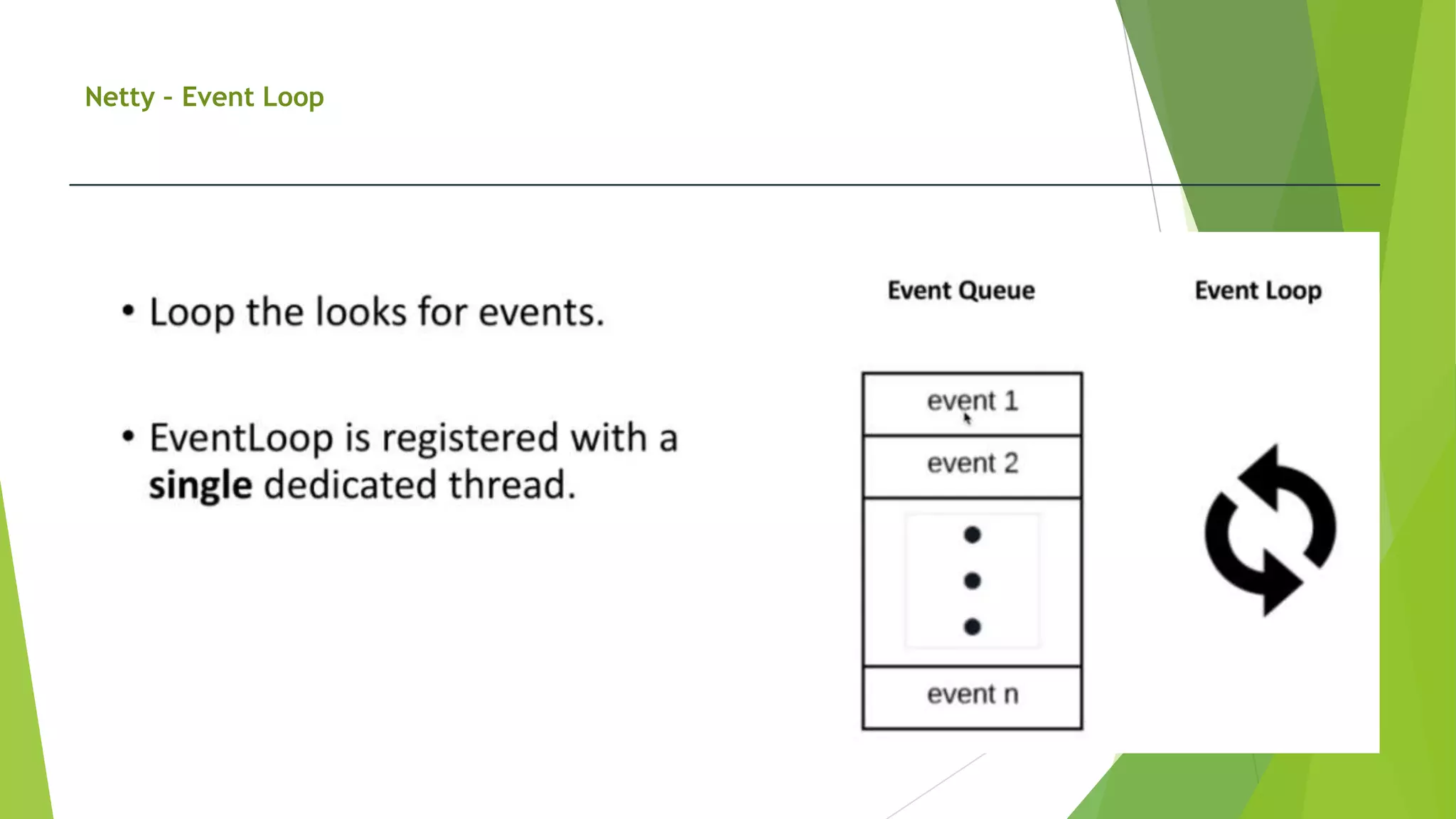
Netty - Channel
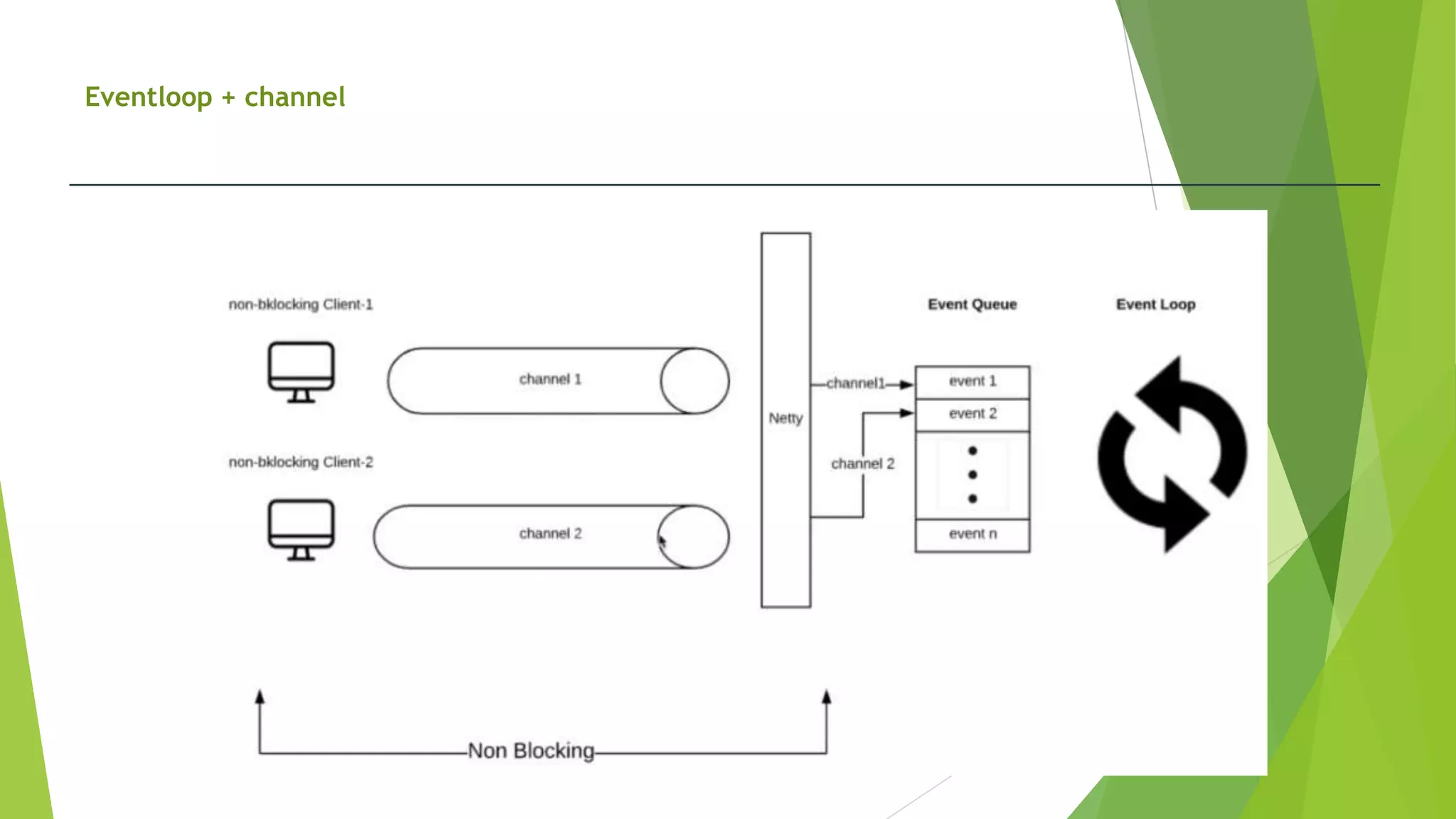
 Channel- represents the connection between the client and server.
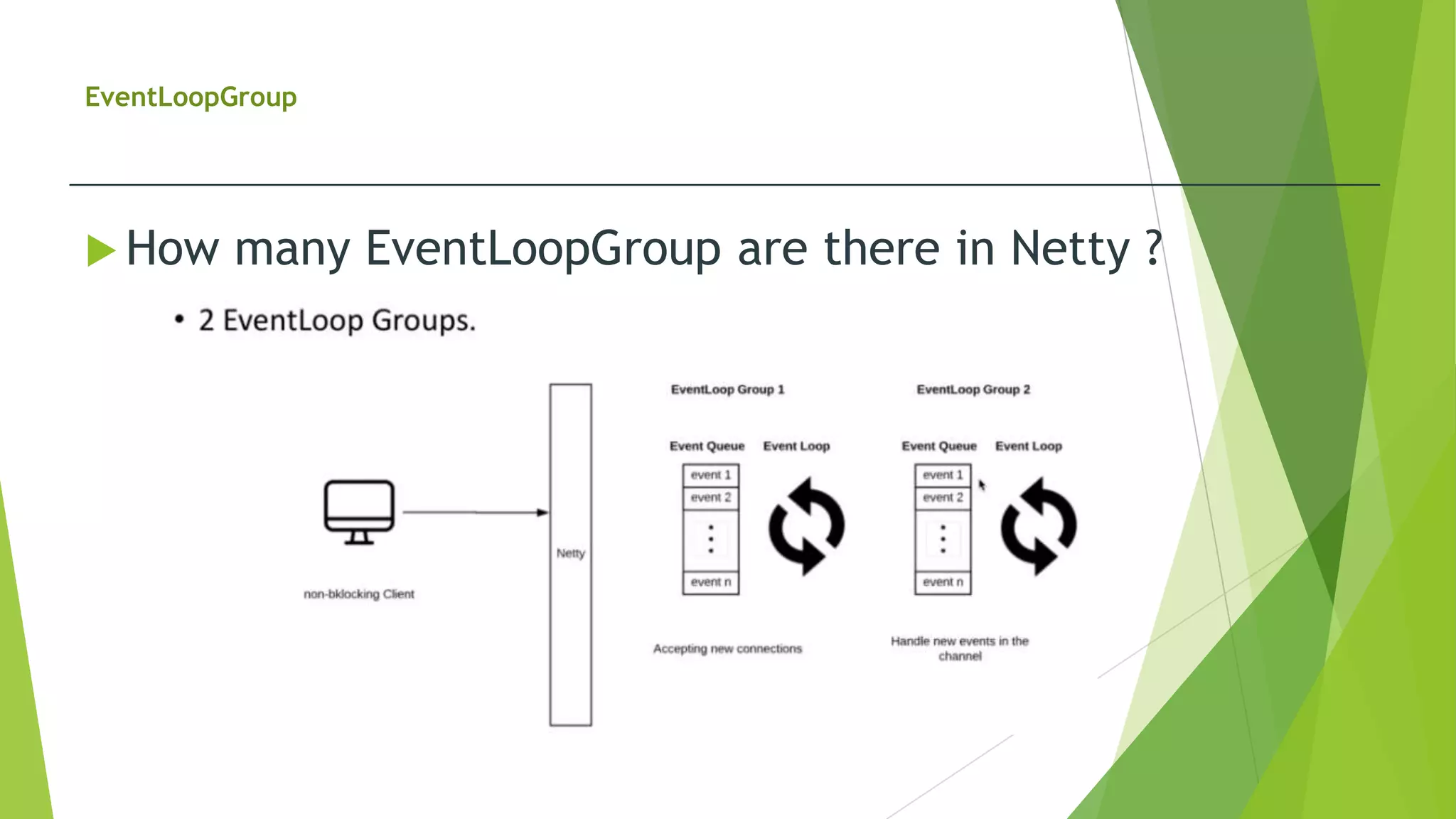
Netty – Event Loop
Eventloop + channel
Eventloop + channel
EventLoopGroup
 How many EventLoopGroup are there in Netty ?
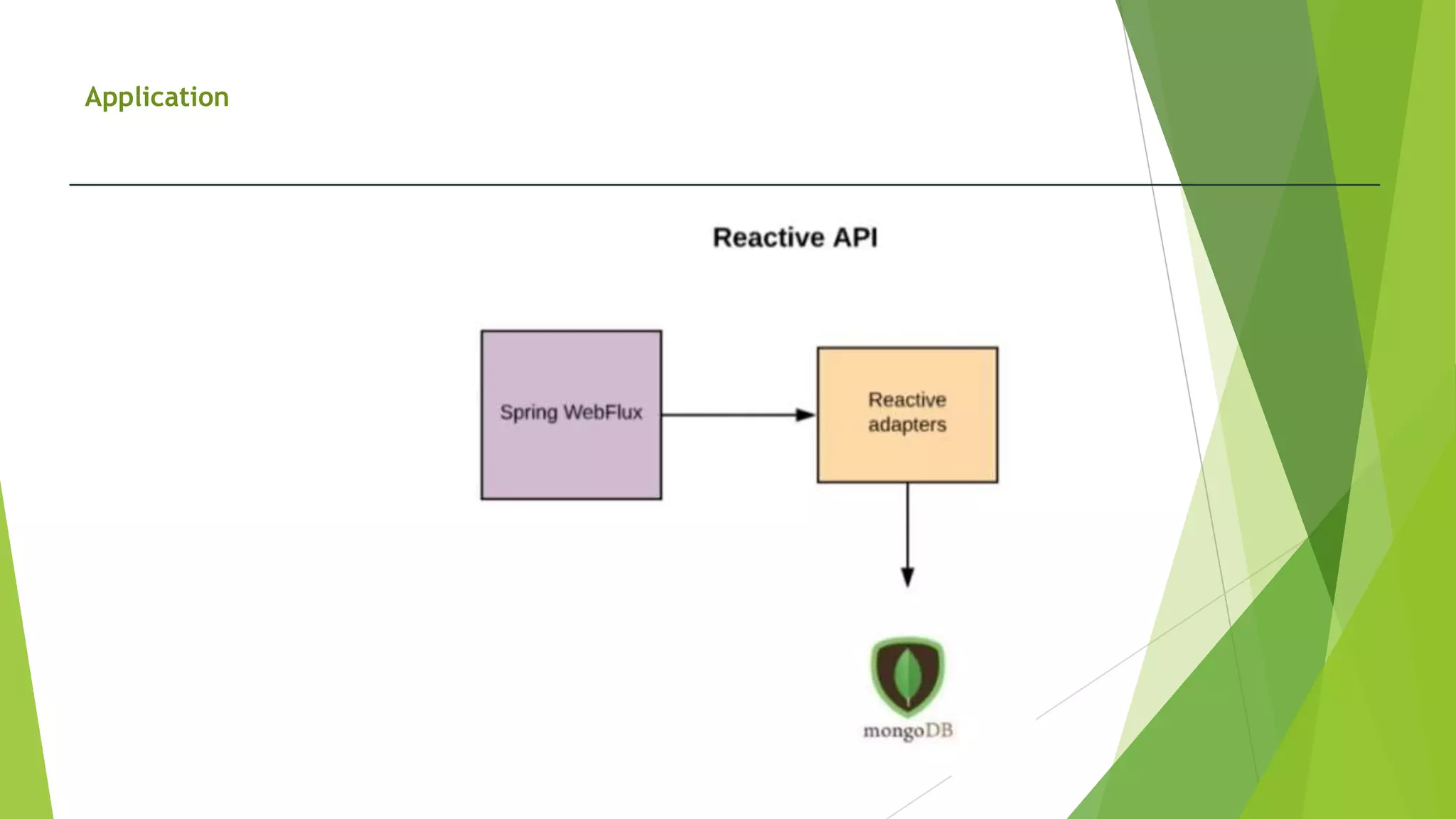
Application
Thank You
Sudip Ghosh

Reactive programming

  • 1.
  • 2.
    Evolution of programming Past(10-15years ago)  Monolith applications  Run in App server  Does not embrace Distributed Systems. Today • Micro services • Run it in cloud. • Embraces Distributed systems
  • 3.
    Expectations of theApp:  Scale based on the load.  Use resources efficiently.  Latency or Response Time should be faster.
  • 4.
  • 5.
  • 6.
    Handling Concurrent Requests Managed by the below property server.tomcat.max-threads  By default it can handle 200 connections  Can be overridden in application.properties or application.yml file  Each thread takes some memory.  Common stack size is 1MB.  Higher the thread pool size, Higher the memory consumption.  Applications really perform poor with less memory available.
  • 7.
    How it ishandled today ?  Load is Handled today with horizontal scaling.  Kubernetes or some container orchestration.
  • 8.
    Handling concurrent Requests Limitations on handling many concurrent users.  Move away from “Thread per Request Model”.
  • 9.
    Traditional REST APIDesign Imperative Style APIs • Top-down approach
  • 10.
  • 11.
    Traditional REST APIDEsign  Need to make calls asynchronous, basically non blocking.  Currently in Java we have: Callbacks Future Completable Future complex Returns Future instance Supports functional style API No return value Hard to compose multiple asynchronous operations. Easy to compose multiple asynchronous operations Code is hard to read and maintain. Not a great fit asynchronous call with multiple items.
  • 12.
    Traditional REST APIDesign: • Applications crash with Out of Memory error. • Client might be overwhelmed with huge data.
  • 13.
    Traditional REST APIDesign:  How to avoid this from happening ? • Imperative Design
  • 14.
    Summary on TraditionalREST API Design:  Limit on the number of Concurrent users.  Synchronous and Blocking.  Imperative Style APIs  No Back Pressure support.
  • 15.
    Better API Design: Asynchronous and Non Blocking.  Move away from Thread per request model.  Use fewer Threads.  Back pressure compatible.
  • 16.
    Reactive Programming  Newprogramming paradigm.  Asynchronous and Non Blocking.  Data flow as an Event/Message Driven stream.  Functional Style code.  Back pressure on Data Streams.
  • 17.
    Data flow asan Event Driven stream  One event or message for a every result item from Data source.  Data Sources: Data base, External service, File etc.  One Event or message for completion or error.
  • 18.
    Data flow asan Event Driven stream • OnNext(item) – Data stream events • OnComplete() -> Completion/Success • OnError()->Error event
  • 19.
    Reactive Stream Specification Specification or Rules for a Reactive Stream.  Specification created by :Pivotal, Netflix, lightbend,twitter etc.  https://github.com/reactive-streams/reactive-streams-jvm Publisher Subscriber Subscription Processor
  • 20.
    Publisher  Represents theData Source ( Data base, External Services etc).
  • 21.
  • 22.
  • 23.
  • 24.
  • 25.
  • 26.
    Reactive Libraries  Implementationsof Reactive Streams Specification. RxJava Reactor Flow Class- JDK 9 • Project Reactor • https://projectreactor.io/
  • 27.
    Project Reactor(reactor-core)  Fluxand Mono  Reactive types of project reactor  Flux-Represent 0 to N elements  Mono represents 0 to 1 element
  • 28.
    Flux- 0 toN elements  https://projectreactor.io/docs/core/release/api/reacto r/core/publisher/Flux.html
  • 29.
    Mono-0 to 1elements  https://projectreactor.io/docs/core/release/api/reacto r/core/publisher/Mono.html
  • 30.
    Building Reactive RESTFULAPIs using Spring Boot/WebFlux  https://spring.io/
  • 31.
    Spring WebFlux –Non Blocking Request/response
  • 32.
    Spring WebFlux –Request/response
  • 33.
  • 34.
    Netty - Asynchronous Netty is an asynchronous event-driven network application framework for rapid development of maintainable high performance protocol servers & clients.  Being asynchronous – Frees us from the blocking calls.  Handles large number of connections.  Events in Netty  Client requesting for a new connection is treated as an event.  Client requesting for data is treated as an event.  Client posting for data is treated as an event.  Errors are treated as event.
  • 35.
    Netty - Channel Channel- represents the connection between the client and server.
  • 36.
  • 37.
  • 38.
  • 39.
    EventLoopGroup  How manyEventLoopGroup are there in Netty ?
  • 40.
  • 41.