Python Programming
UNIT 1 : SYLLABUS
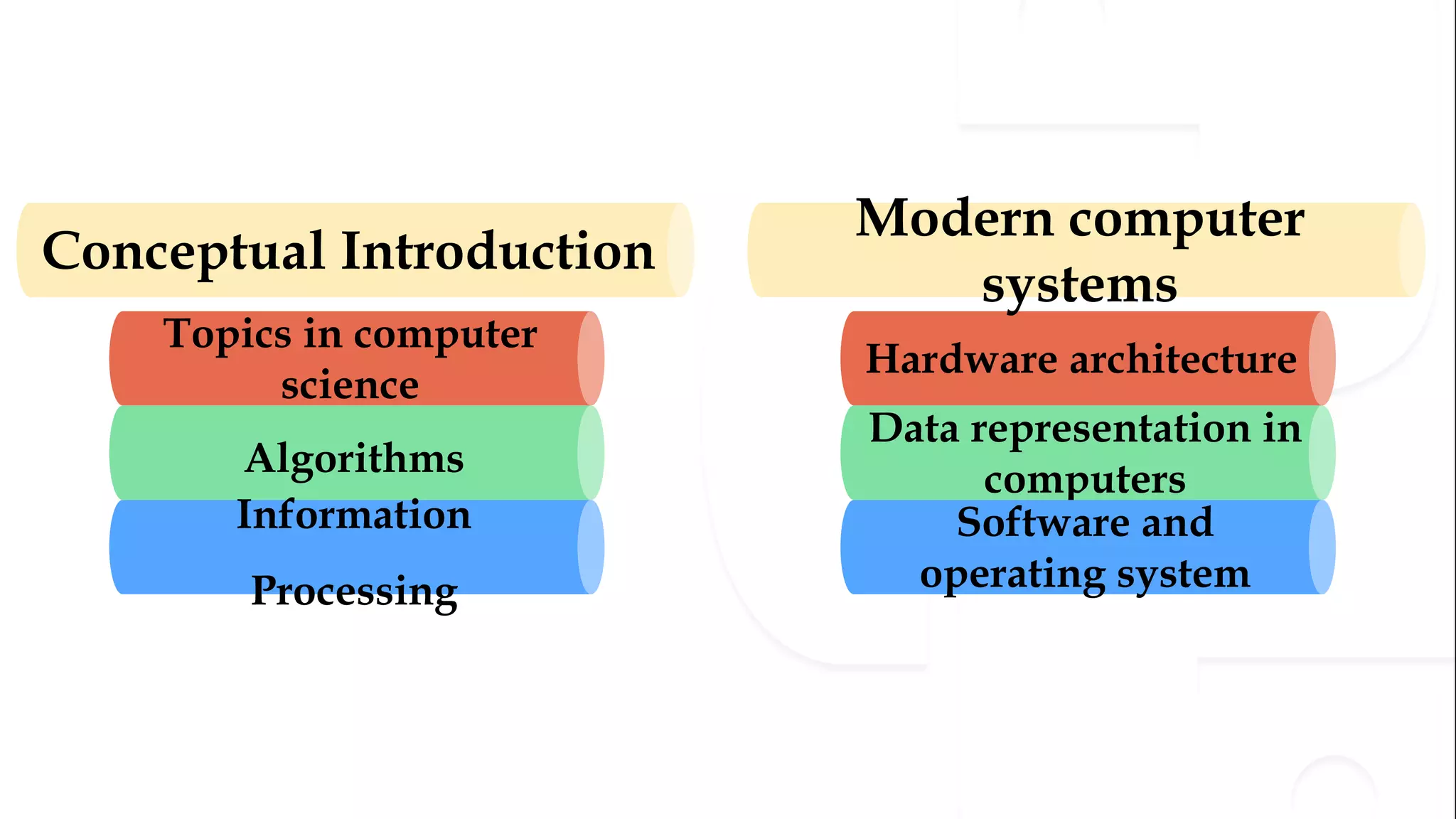
• Conceptual introduction: topics in computer science, algorithms;
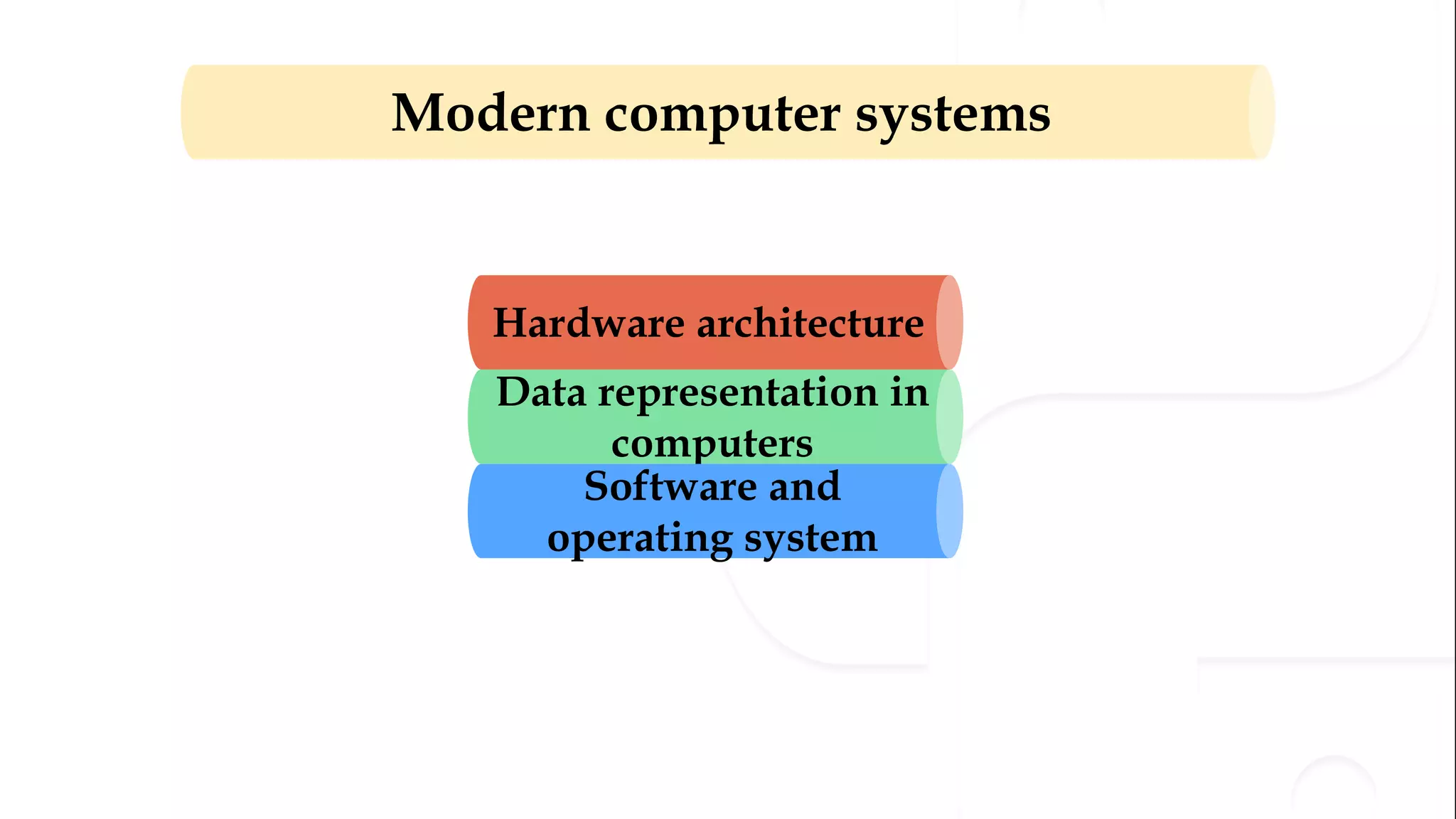
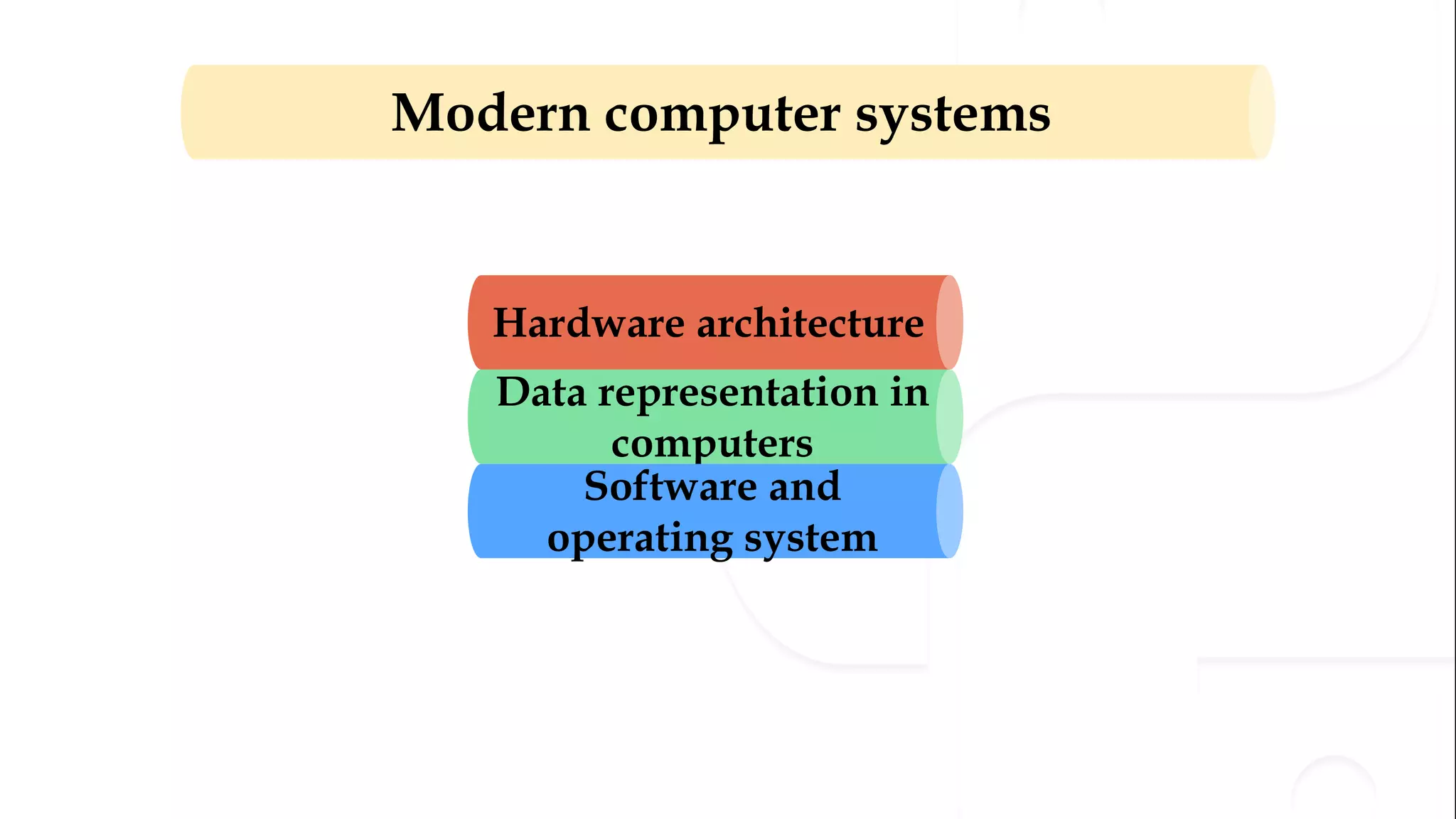
• Modern computer systems: hardware architecture, data
representation in computers, software and operating system;
• Installing Python; basic syntax, interactive shell, editing, saving, and
running a script.
• The concept of data types; variables, assignments; immutable
variables; numerical types;
• arithmetic operators and expressions; comments in the program;
understanding error messages;
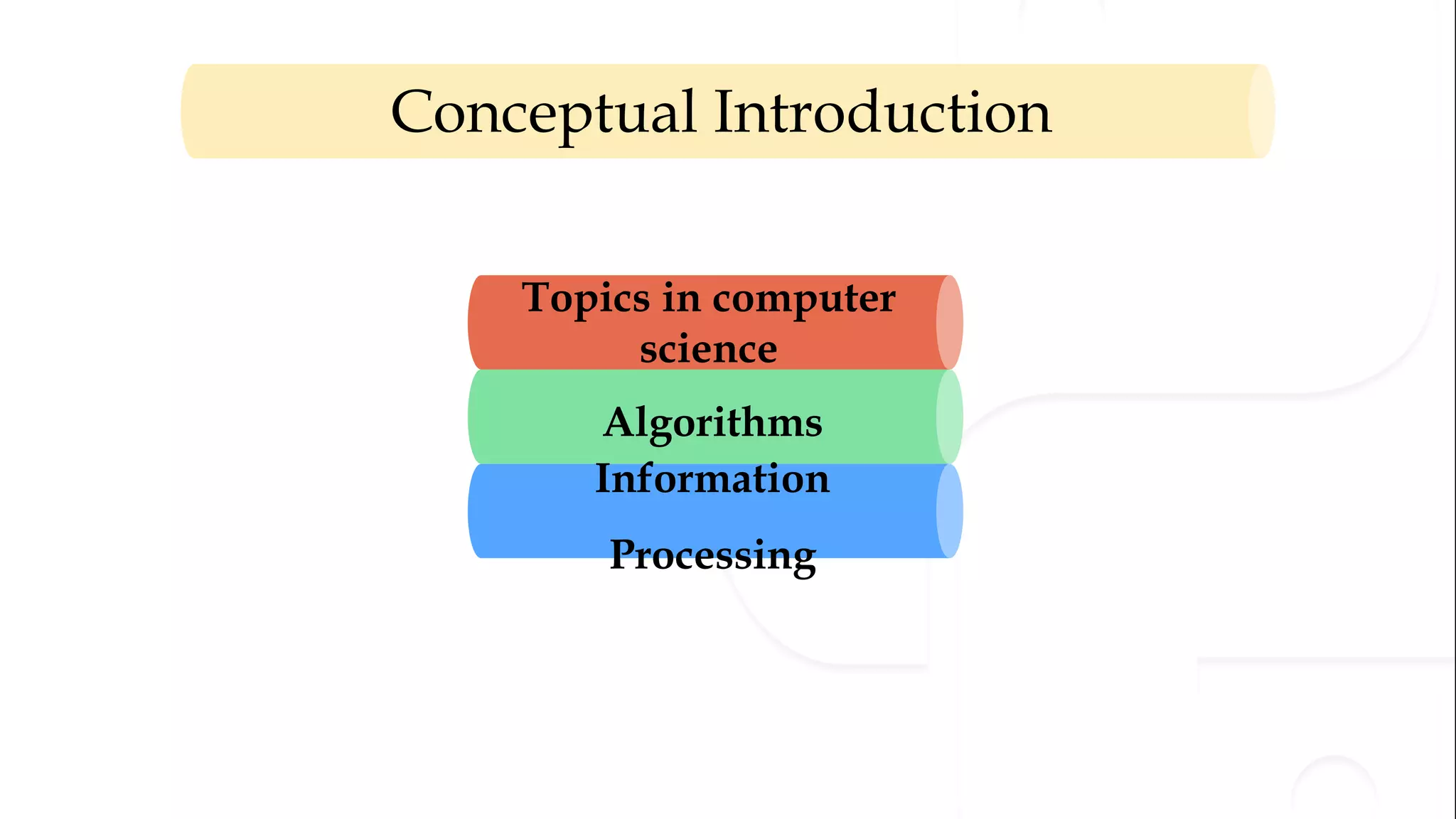
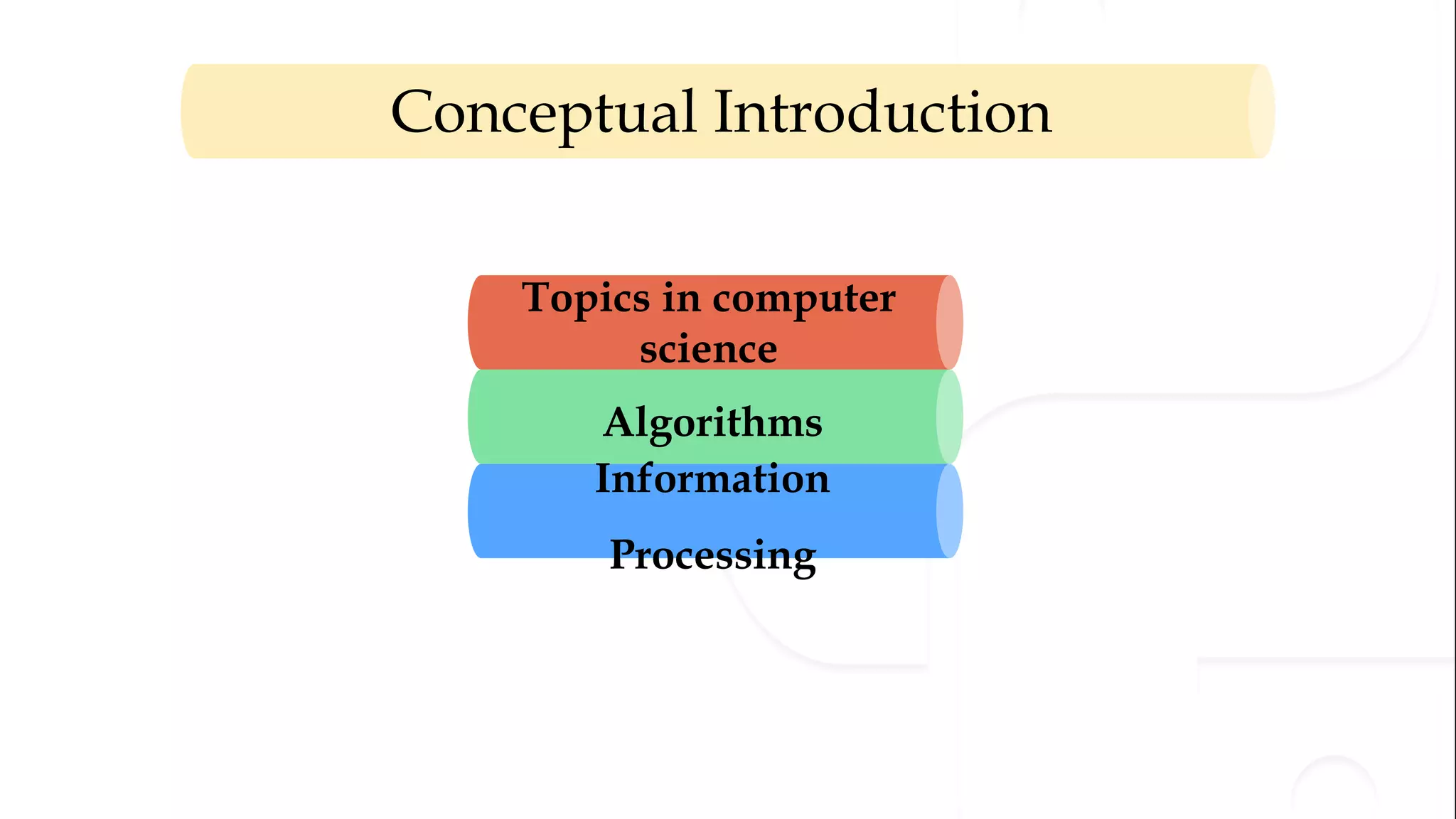
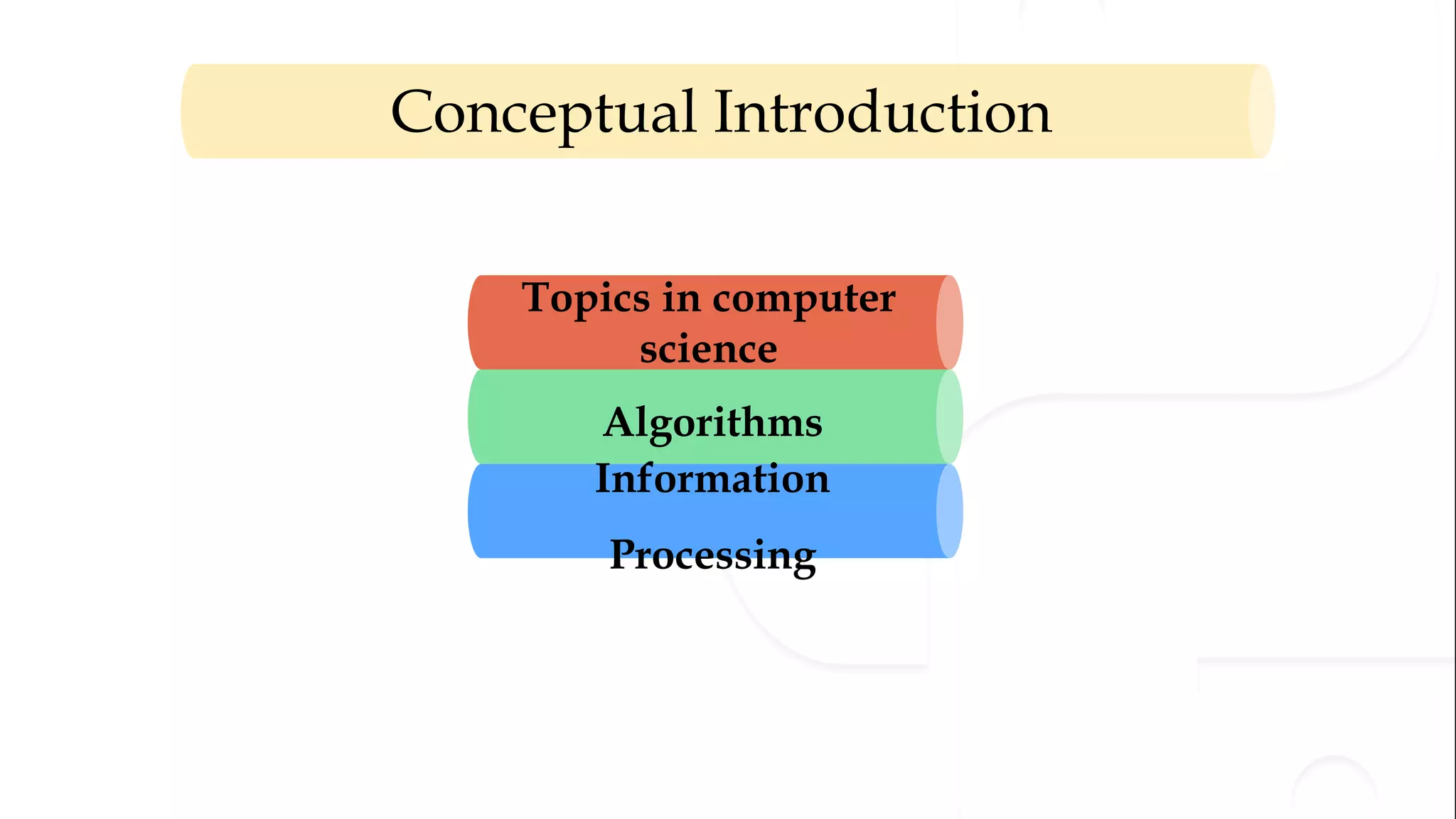
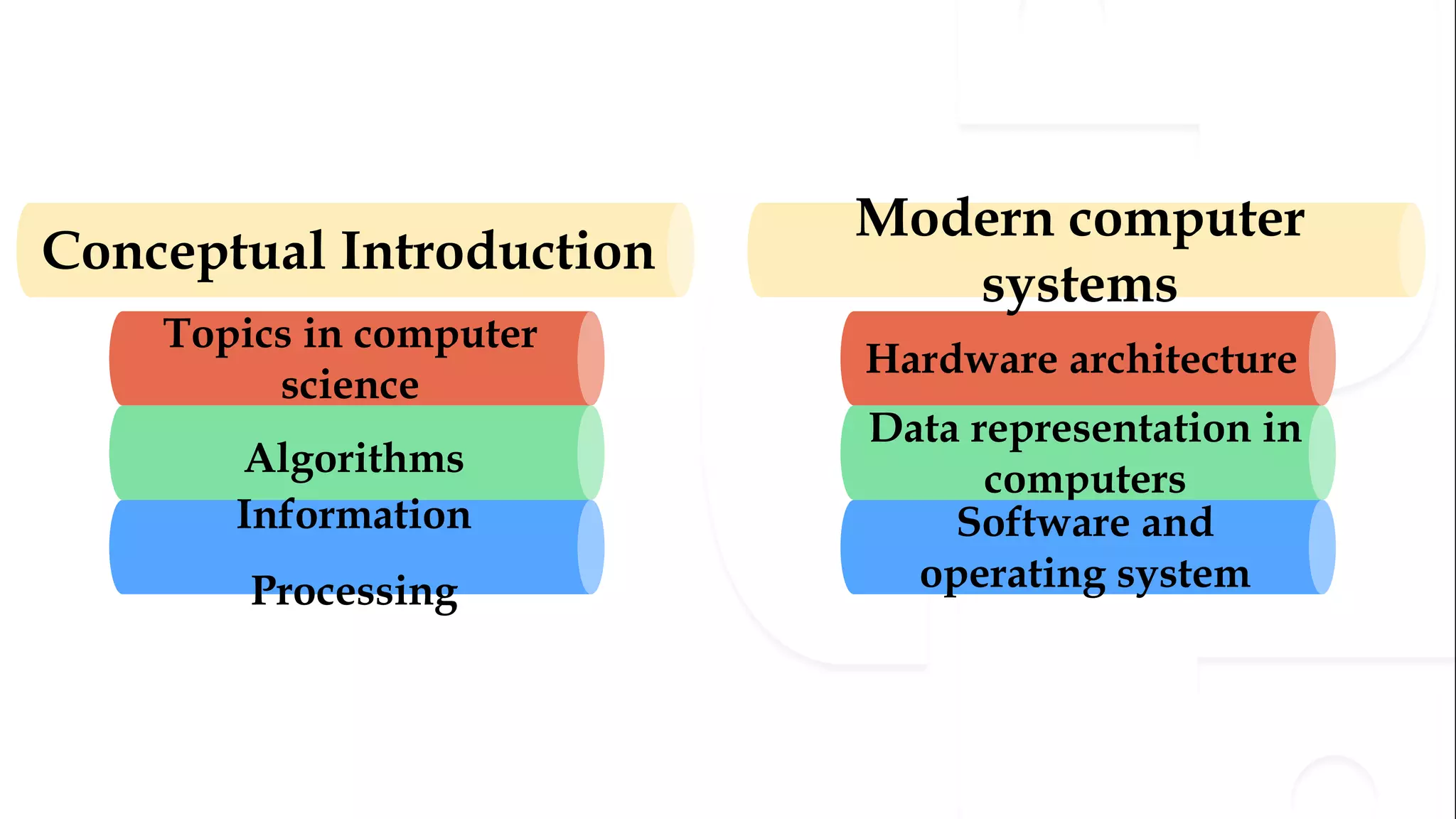
Topics in computer
science
Algorithms
Information
Processing
Conceptual Introduction
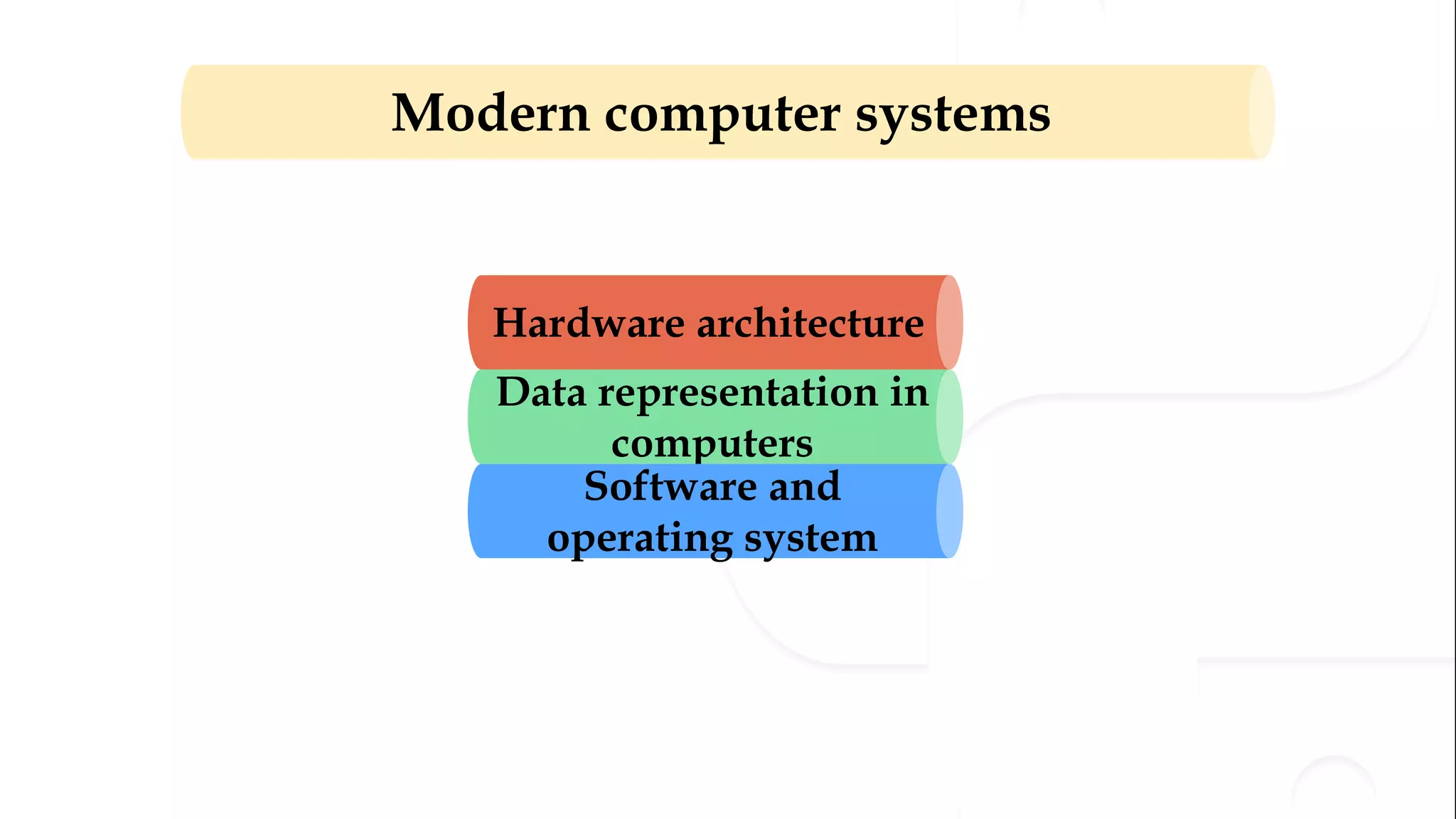
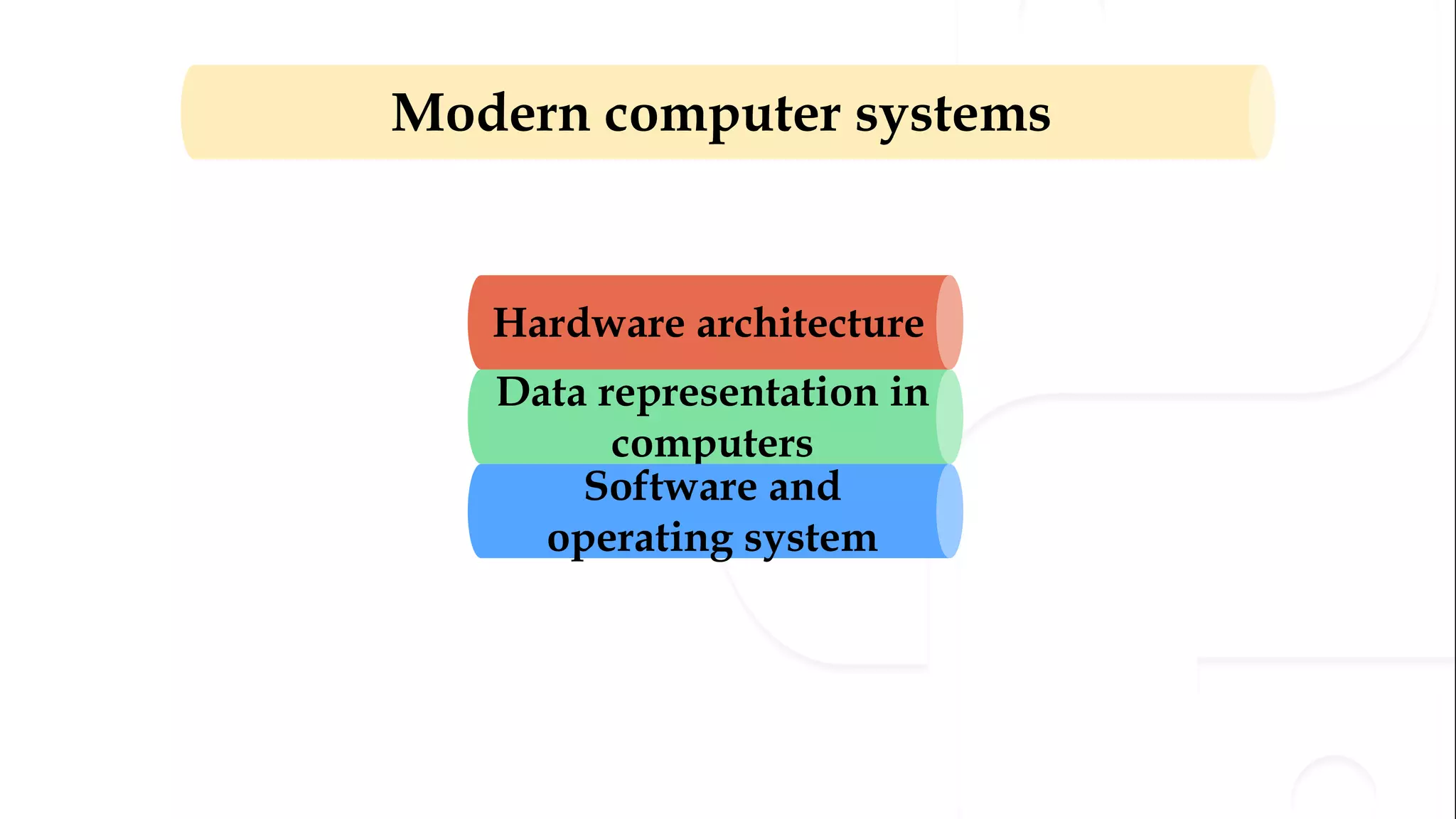
Hardware architecture
Data representation in
computers
Software and
operating system
Modern computer
systems
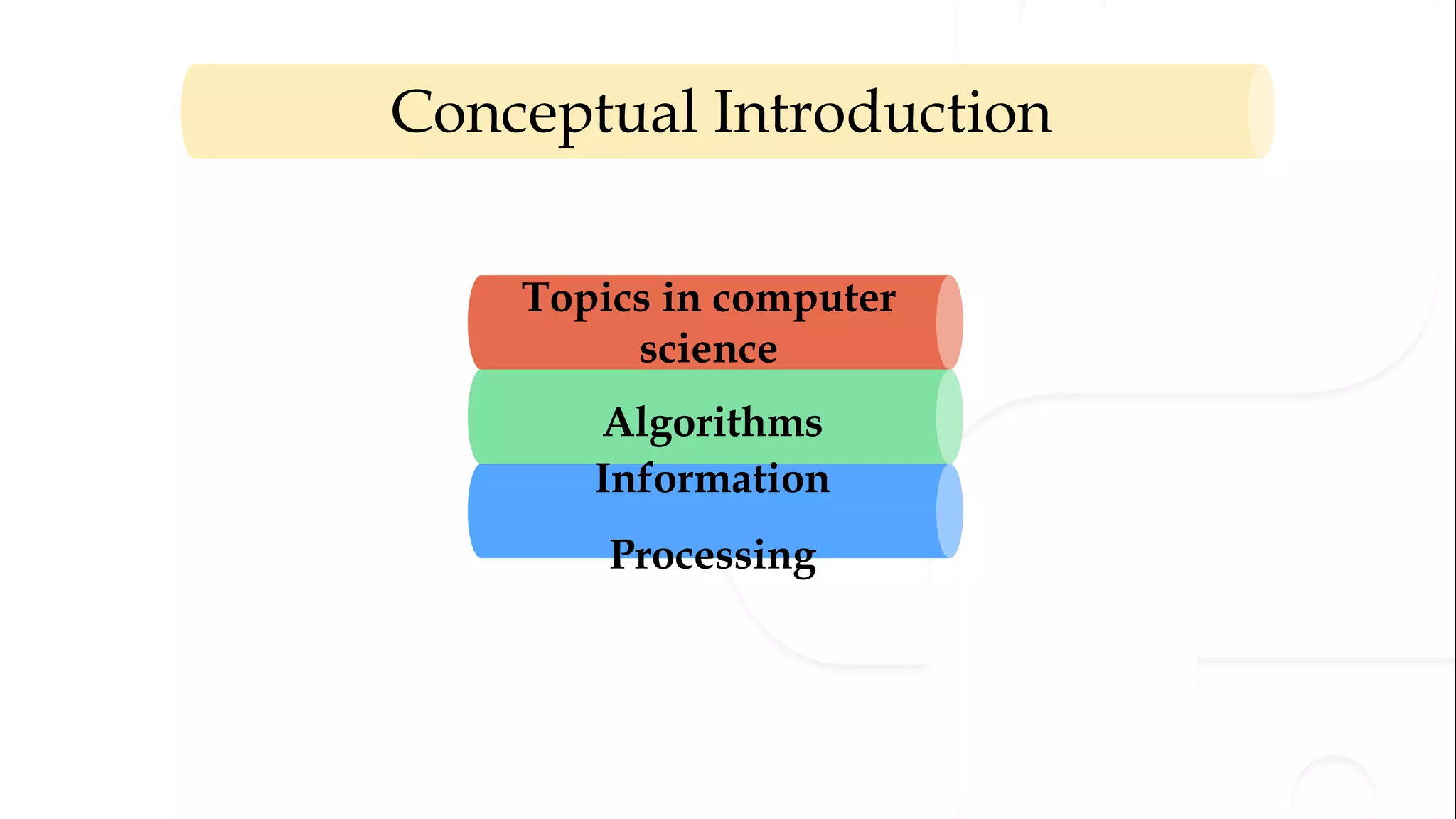
Topics in computer
science
Algorithms
Information
Processing
Conceptual Introduction
Topics in computer science
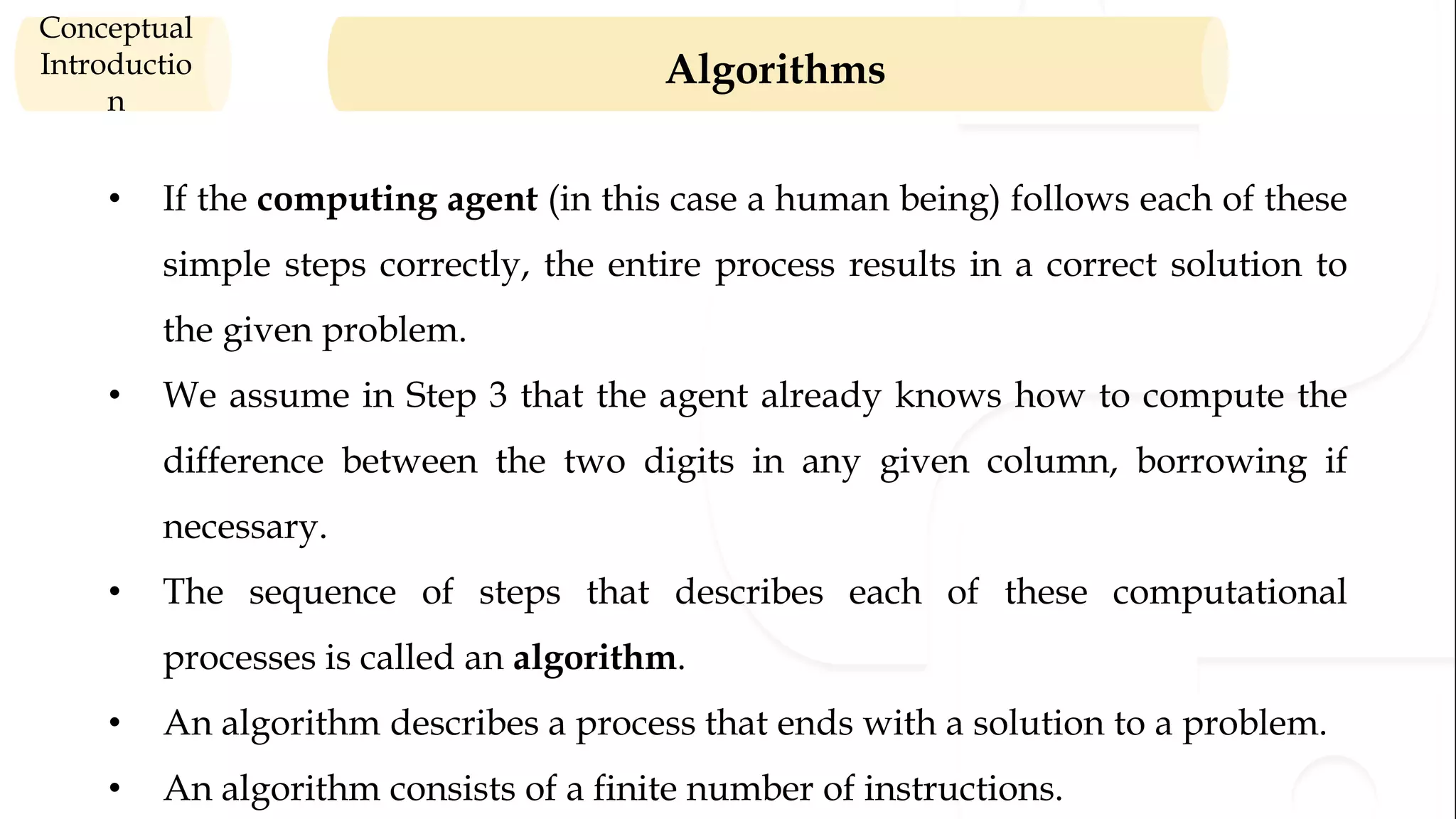
Conceptual
Introductio
n
Programming
Language
Data Structures &
Retrieval
Computer Networks
& Security
Computer Design
Algorithms
Parallel and
Distributed
Computing
Computer Science
Topics in computer
science
Algorithms
Information
Processing
Conceptual Introduction
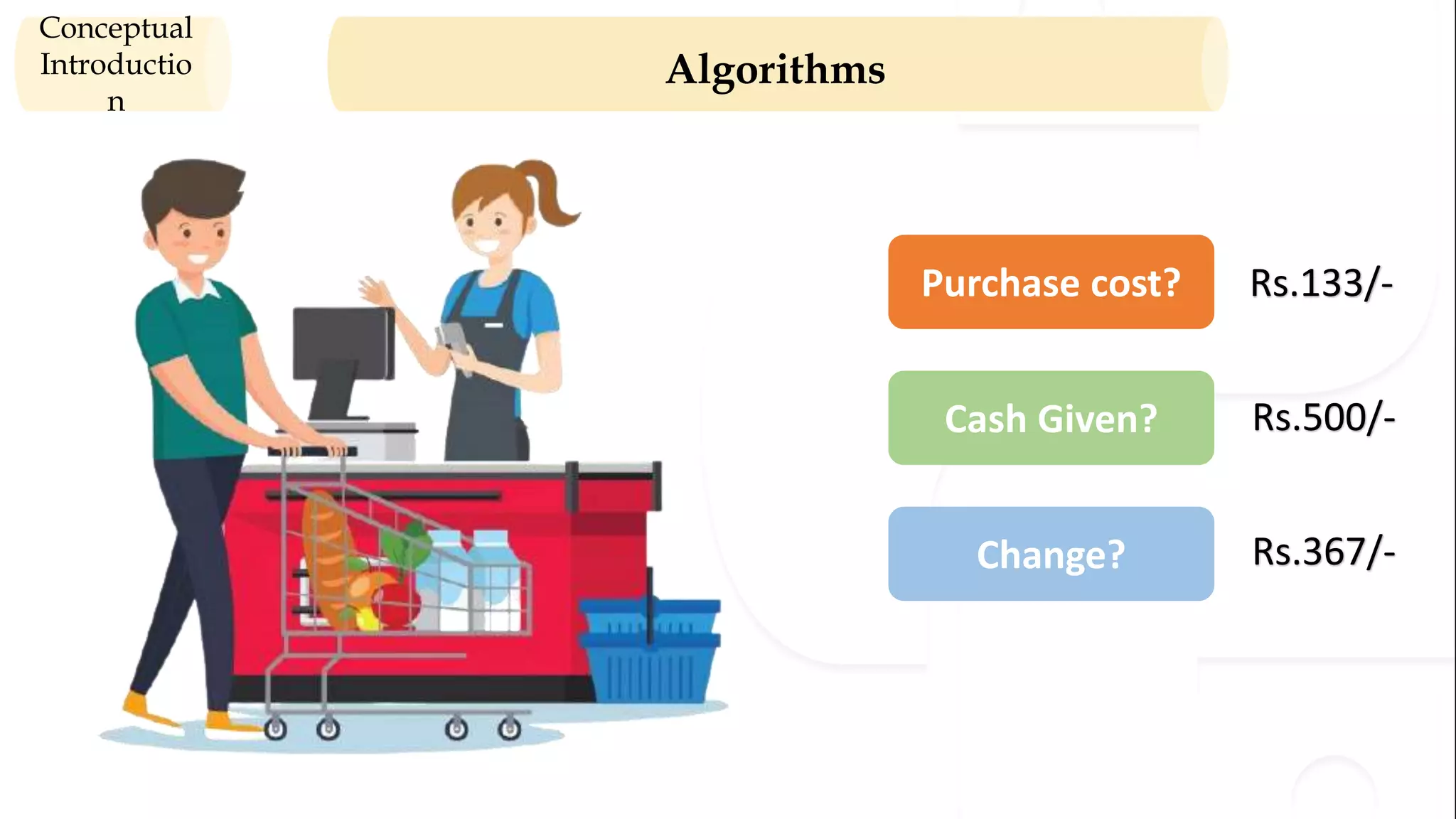
Algorithms
Conceptual
Introductio
n
Purchase cost?
Cash Given?
Change?
Rs.133/-
Rs.500/-
Rs.367/-
Algorithms
Conceptual
Introductio
n
• Step 1 : Write down the two numbers, with the larger
number above the smaller number and their digits aligned
in columns from the right.
• Step 2 : Assume that you will start with the rightmost
column of digits and work your way left through the
various columns.
• Step 3 : Write down the difference between the two digits
in the current column of digits, borrowing a 1 from the top
number’s next column to the left if necessary.
• Step 4 : If there is no next column to the left, stop.
Algorithms
Conceptual
Introductio
n
• If the computing agent (in this case a human being) follows each of these
simple steps correctly, the entire process results in a correct solution to
the given problem.
• We assume in Step 3 that the agent already knows how to compute the
difference between the two digits in any given column, borrowing if
necessary.
• The sequence of steps that describes each of these computational
processes is called an algorithm.
• An algorithm describes a process that ends with a solution to a problem.
• An algorithm consists of a finite number of instructions.
Topics in computer
science
Algorithms
Information
Processing
Conceptual Introduction
Information Processing
Conceptual
Introductio
n
Computer
Topics in computer
science
Algorithms
Information
Processing
Conceptual Introduction
Topics in computer
science
Algorithms
Information
Processing
Conceptual Introduction
Hardware architecture
Data representation in
computers
Software and
operating system
Modern computer
systems
Hardware architecture
Data representation in
computers
Software and
operating system
Modern computer systems
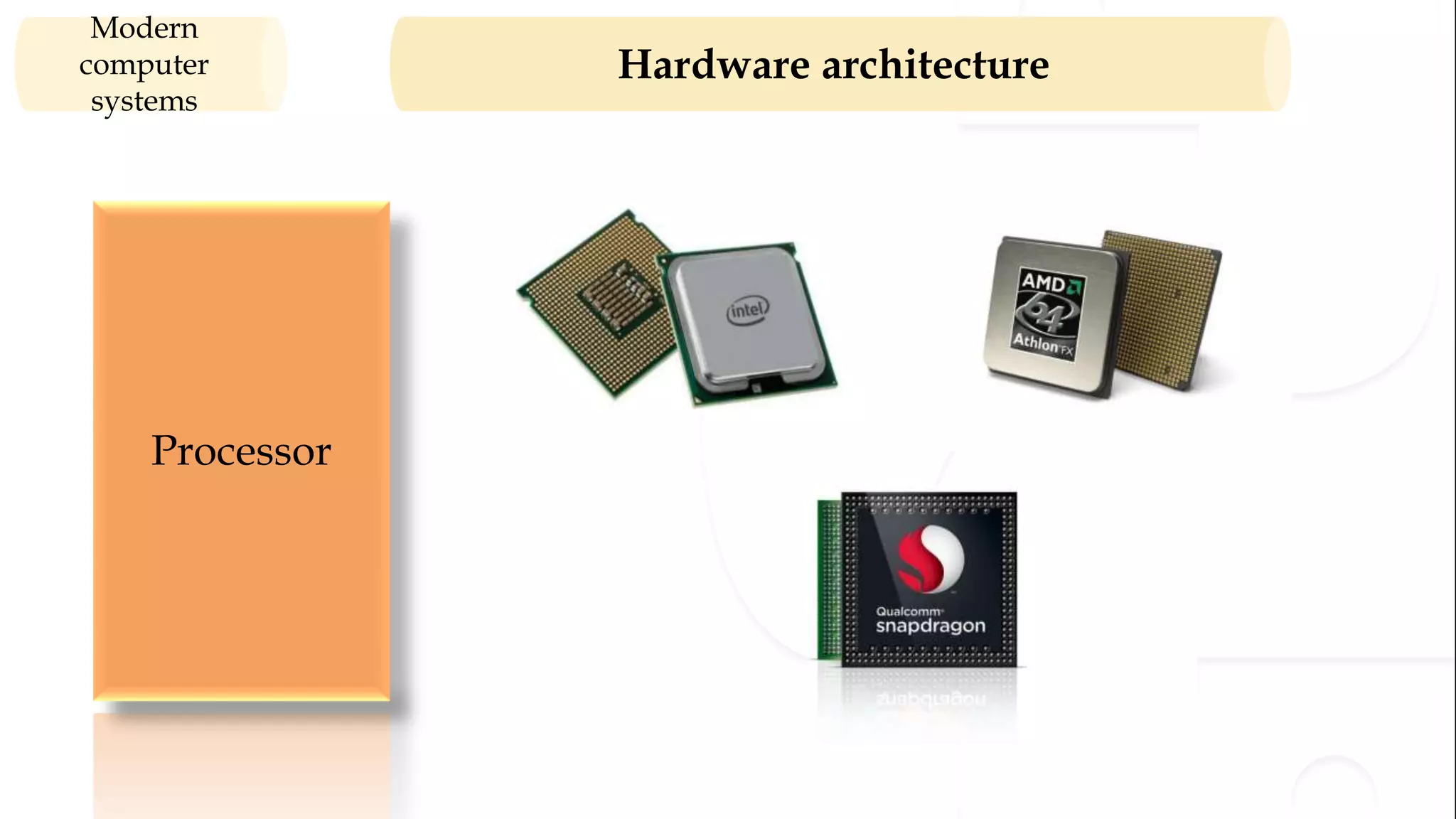
Hardware architecture
Modern
computer
systems
Processor
Input
Devices
Output
Devices
Memory
Hardware architecture
Modern
computer
systems
Processor
Hardware architecture
Modern
computer
systems
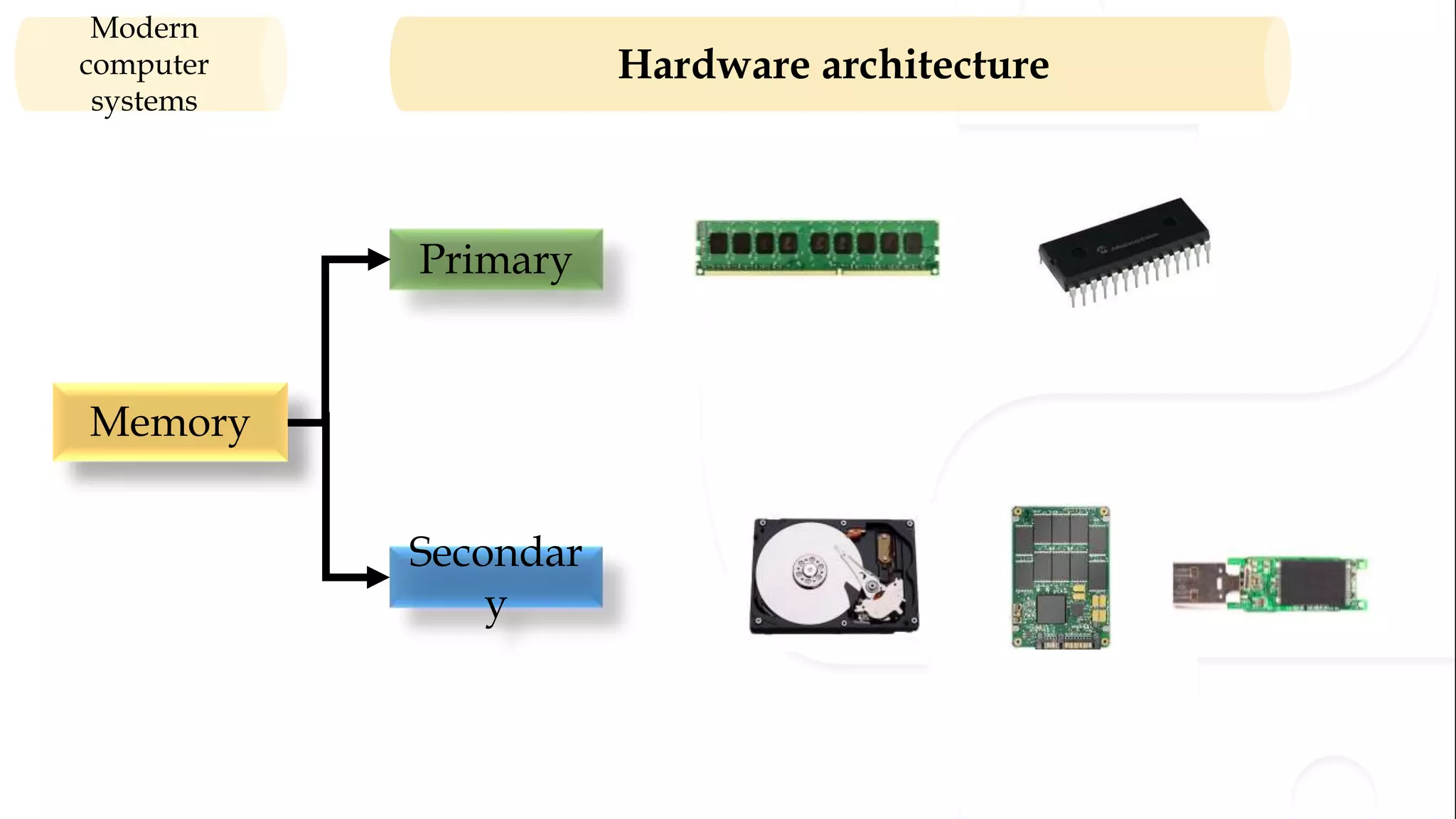
Memory
Primary
Secondar
y
Hardware architecture
Modern
computer
systems
Processor
Input
Devices
Output
Devices
Primary
Secondar
y
Cache
Hardware architecture
Data representation in
computers
Software and
operating system
Modern computer systems
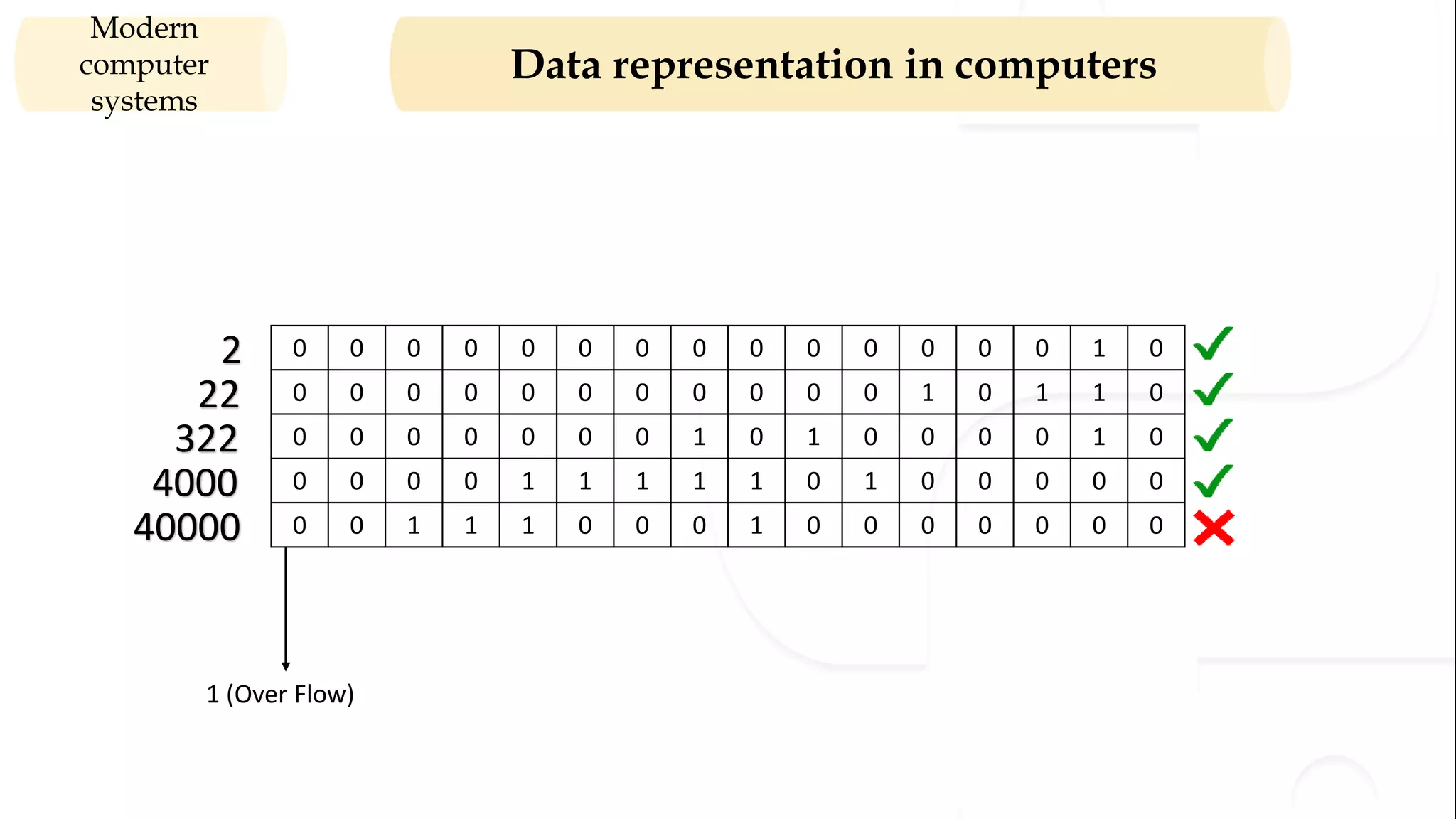
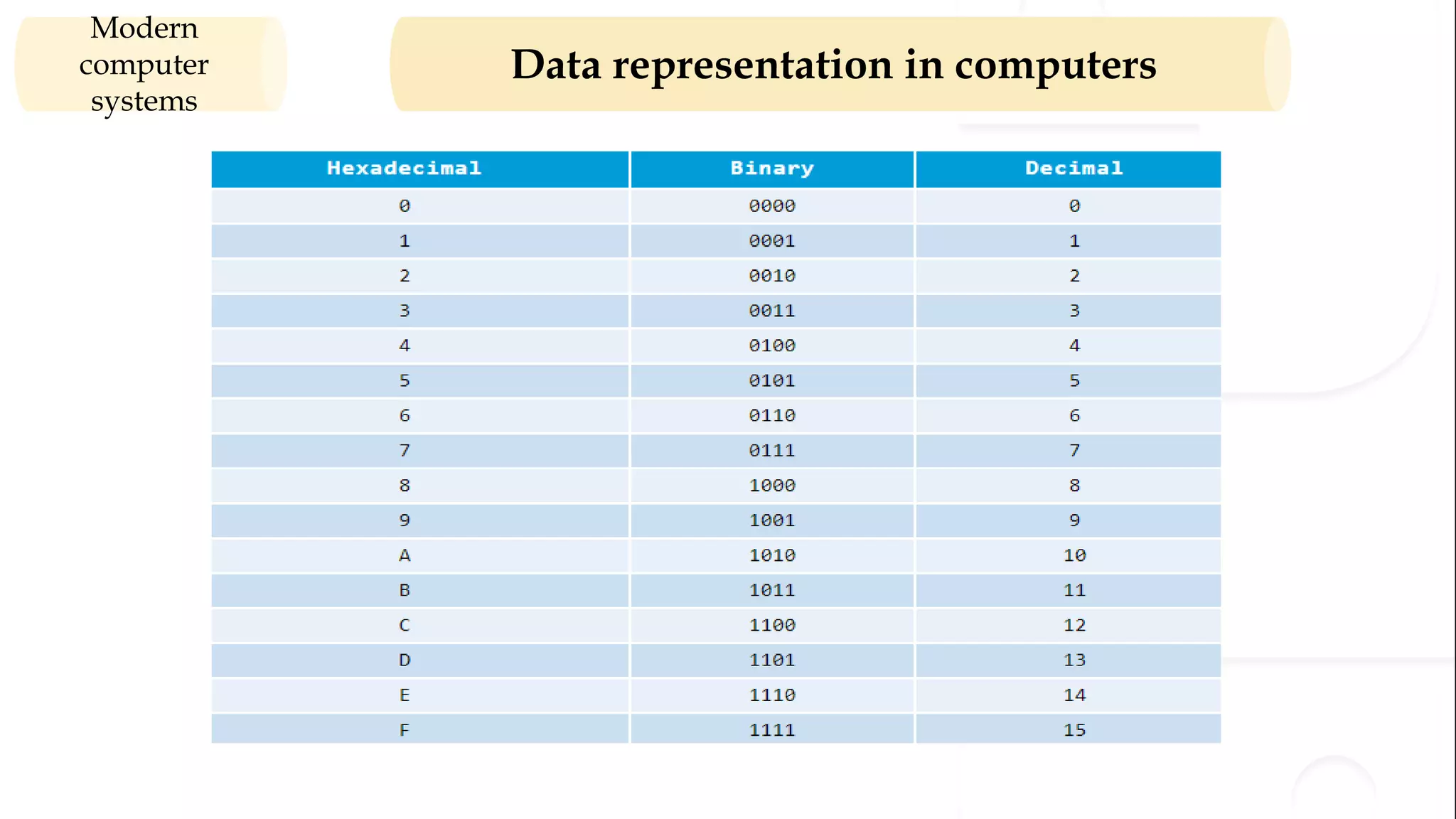
Data representation in computers
Modern
computer
systems
0 0 0 0 0 0 0 0 0 0 0 0 0 0 1 0
0 0 0 0 0 0 0 0 0 0 0 1 0 1 1 0
0 0 0 0 0 0 0 1 0 1 0 0 0 0 1 0
0 0 0 0 1 1 1 1 1 0 1 0 0 0 0 0
0 0 1 1 1 0 0 0 1 0 0 0 0 0 0 0
2
22
322
4000
40000
1 (Over Flow)
Data representation in computers
Modern
computer
systems
Hardware architecture
Data representation in
computers
Software and
operating system
Modern computer systems
Software and operating system
Modern
computer
systems
Any programs that are
stored in memory so that
they can be executed later
are called software.
Types of computer
software:
• Application software
• System software
• Programming software
Software and operating system
Modern
computer
systems
Application: Used in educational, business
and medical fields.
Ex: computer games.
System: Load and execute other
programs that make the development,
execution, and management of
programs easier. This type of software
is called system software.
Ex: Operating System
Programming: Develop the
programming languages necessary to
run computer software.
Ex: Compliers, interpreters, linkers and
text editors.
Software and operating system
Modern
computer
systems
Translators :
•Compilers
•Interpreters
Software and operating system
Modern
computer
systems
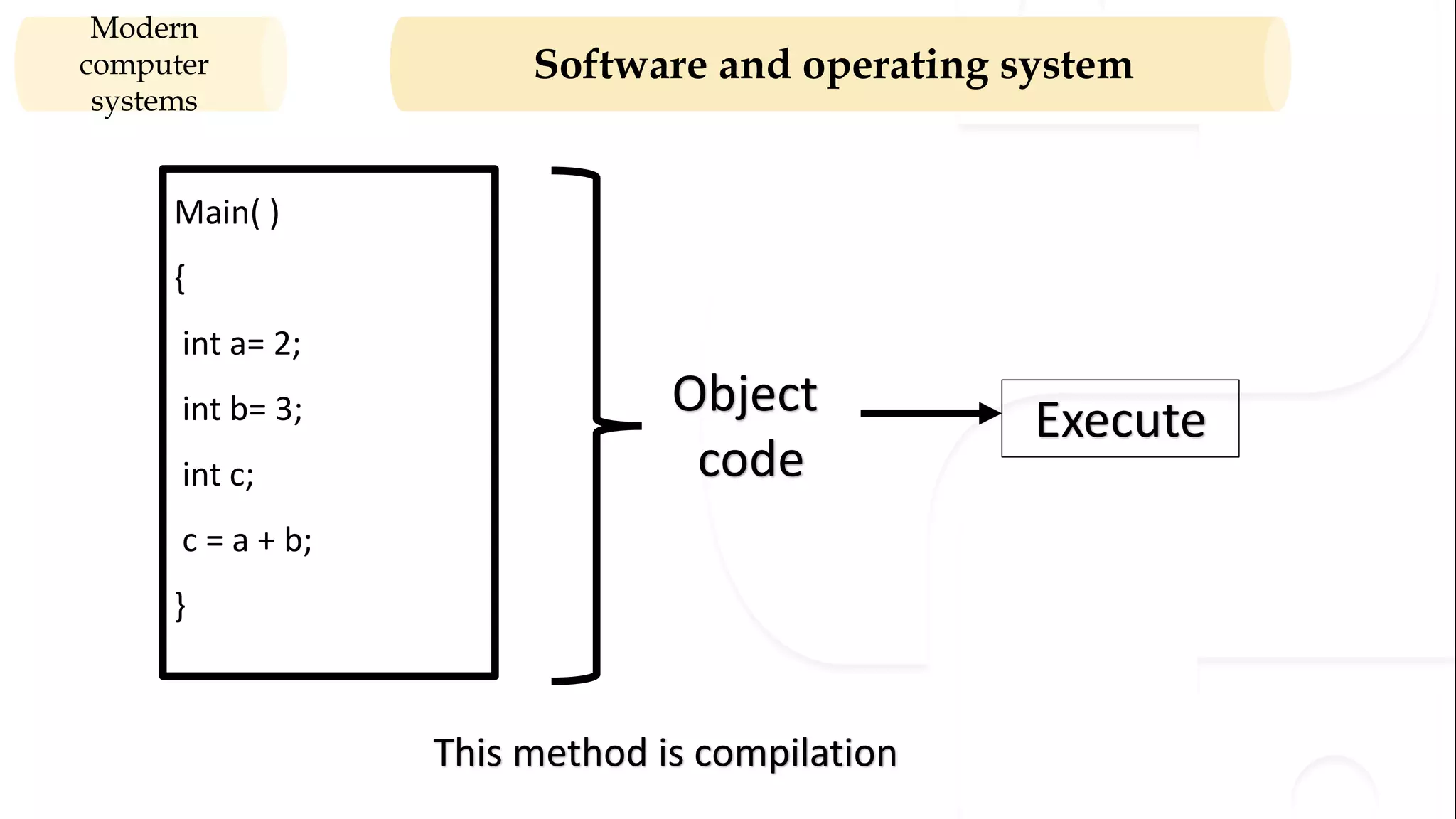
Main( )
{
int a= 2;
int b= 3;
int c;
c = a + b;
}
This method is compilation
Object
code
Execute
Software and operating system
Modern
computer
systems
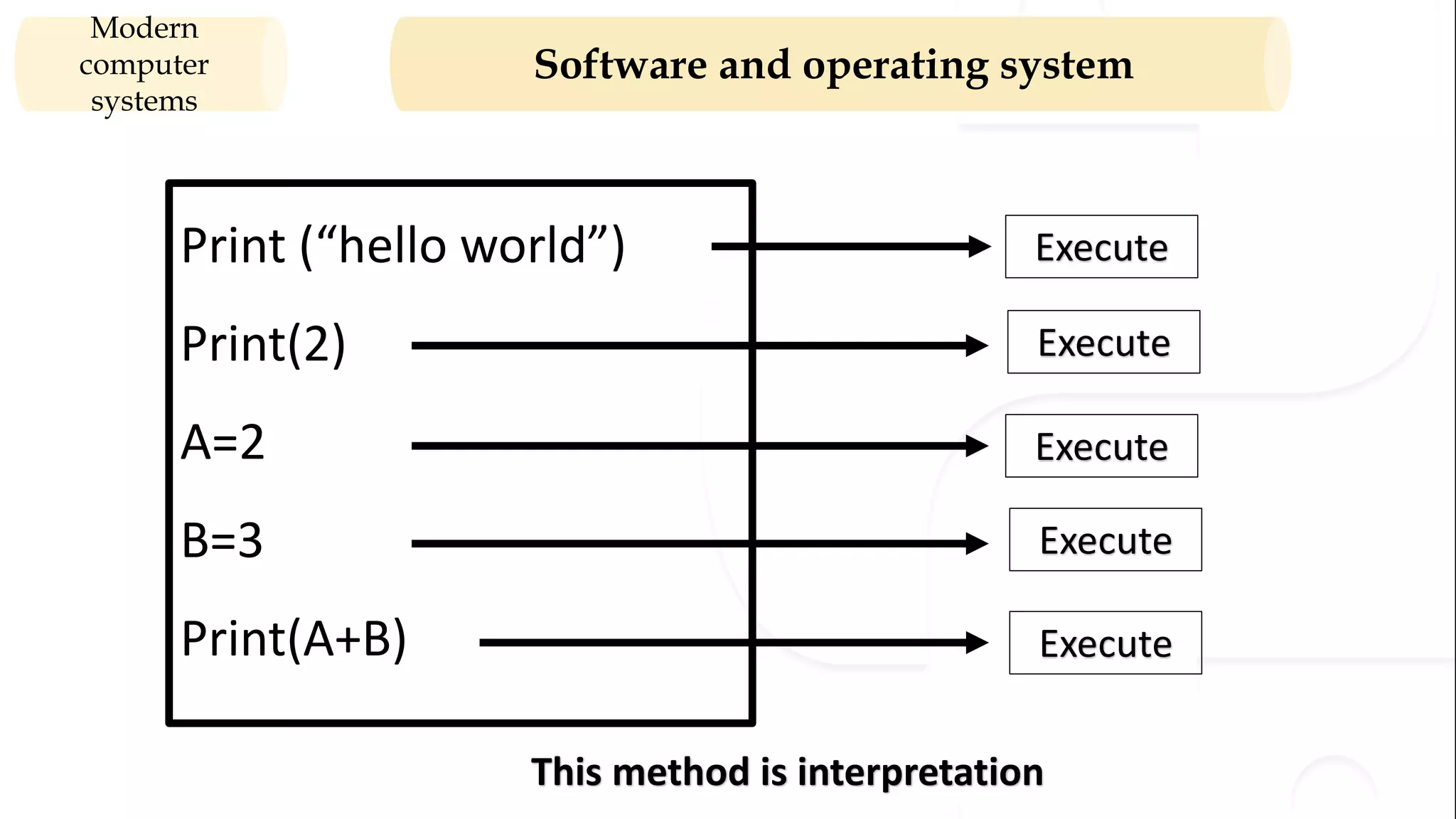
Print (“hello world”)
Print(2)
A=2
B=3
Print(A+B)
Execute
Execute
Execute
Execute
Execute
This method is interpretation
Hardware architecture
Data representation in
computers
Software and
operating system
Modern computer systems
Topics in computer
science
Algorithms
Information
Processing
Conceptual Introduction
Hardware architecture
Data representation in
computers
Software and
operating system
Modern computer
systems
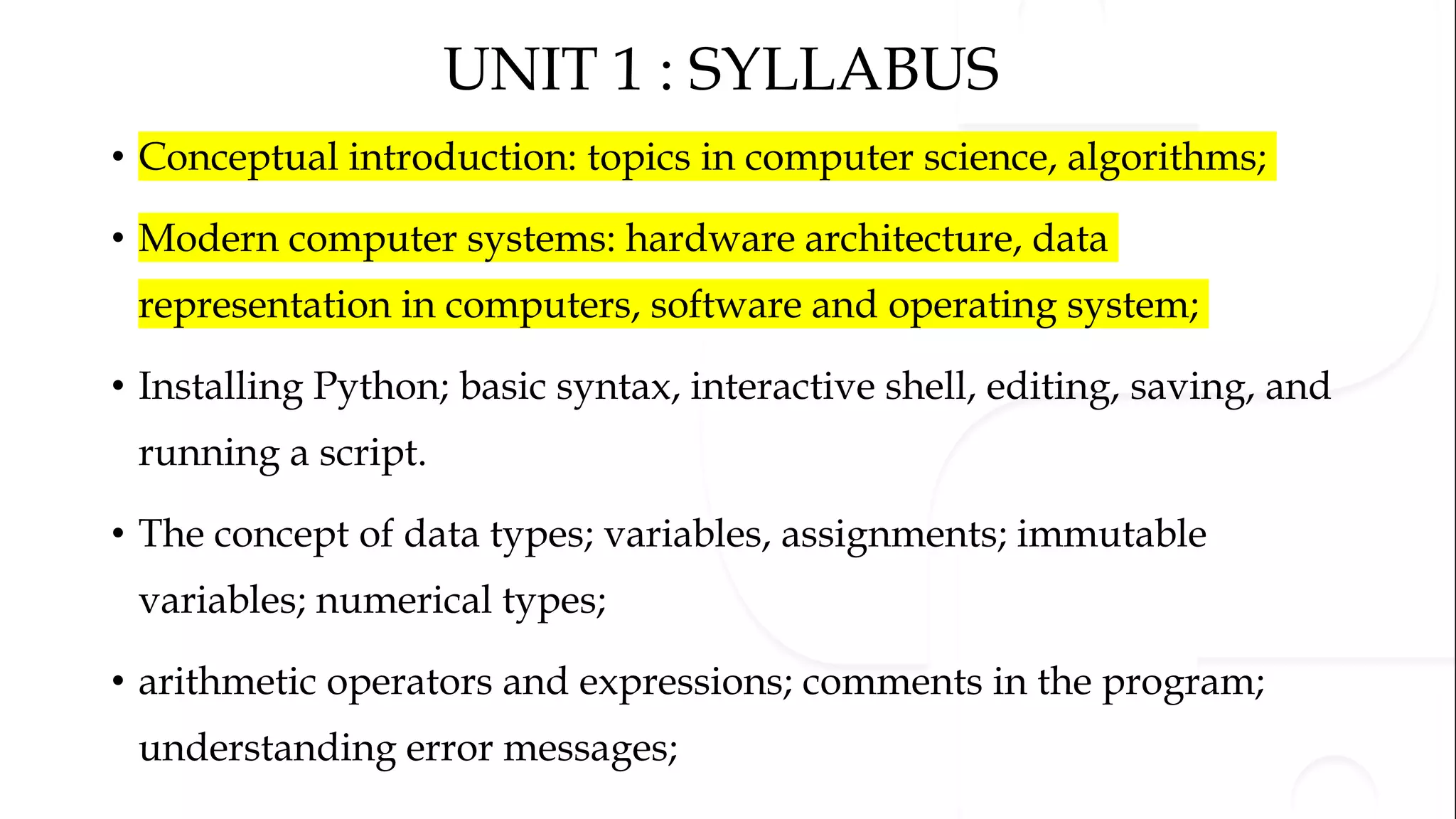
UNIT 1 : SYLLABUS
• Conceptual introduction: topics in computer science, algorithms;
• Modern computer systems: hardware architecture, data
representation in computers, software and operating system;
• Installing Python; basic syntax, interactive shell, editing, saving, and
running a script.
• The concept of data types; variables, assignments; immutable
variables; numerical types;
• arithmetic operators and expressions; comments in the program;
understanding error messages;

Python Programming | JNTUK | UNIT 1 | Lecture 1 & 2