Network sniffer in Python
     (event-based)


                  Jirka Vejražka (@JirkaV)
                       @Pyvec - PyVo #20
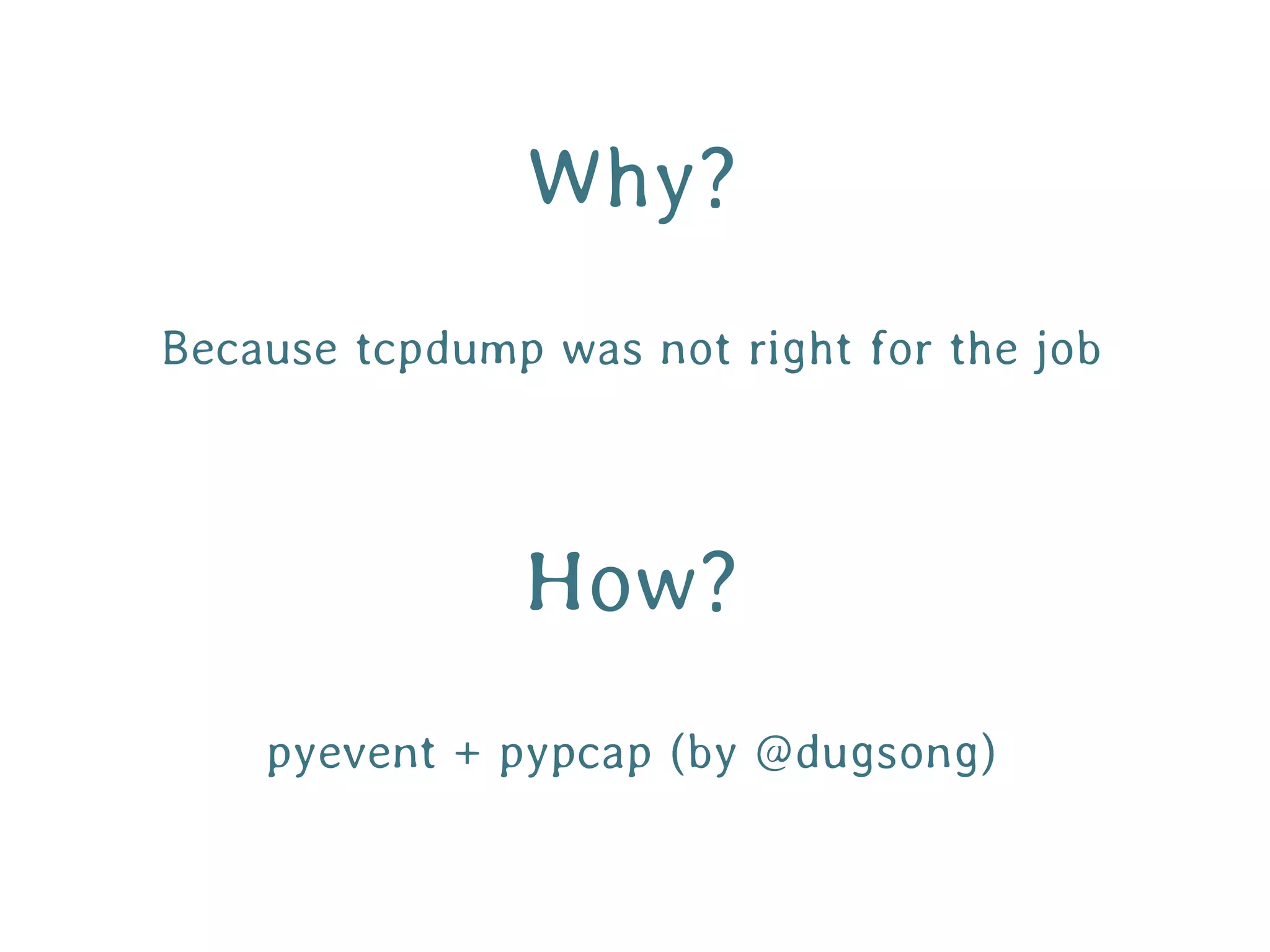
Why?
Because tcpdump was not right for the job


               How?
    pyevent + pypcap (by @dugsong)
The Code
                 (Python 2.x)


import pcap
import event
if_eth0 = pcap.pcap(‘eth0’) # needs root
pcap_file = get_PCAP_file()
event.read(if_eth0.fd, packets_handler, if_eth0)
event.dispatch() # it all happens here
print ‘All done, quitting’
Secret sauce? None!

def get_PCAP_file():
   pcap_f = open(‘packets.pcap’, ‘wb’)
   pcap_f.write(PCAP_HEADER) # PCAP docs
   return pcap_f
def packets_handler(iface):
   for timestamp, packet in iface.readpkts():
      pcap_file.write(packet)
   return True
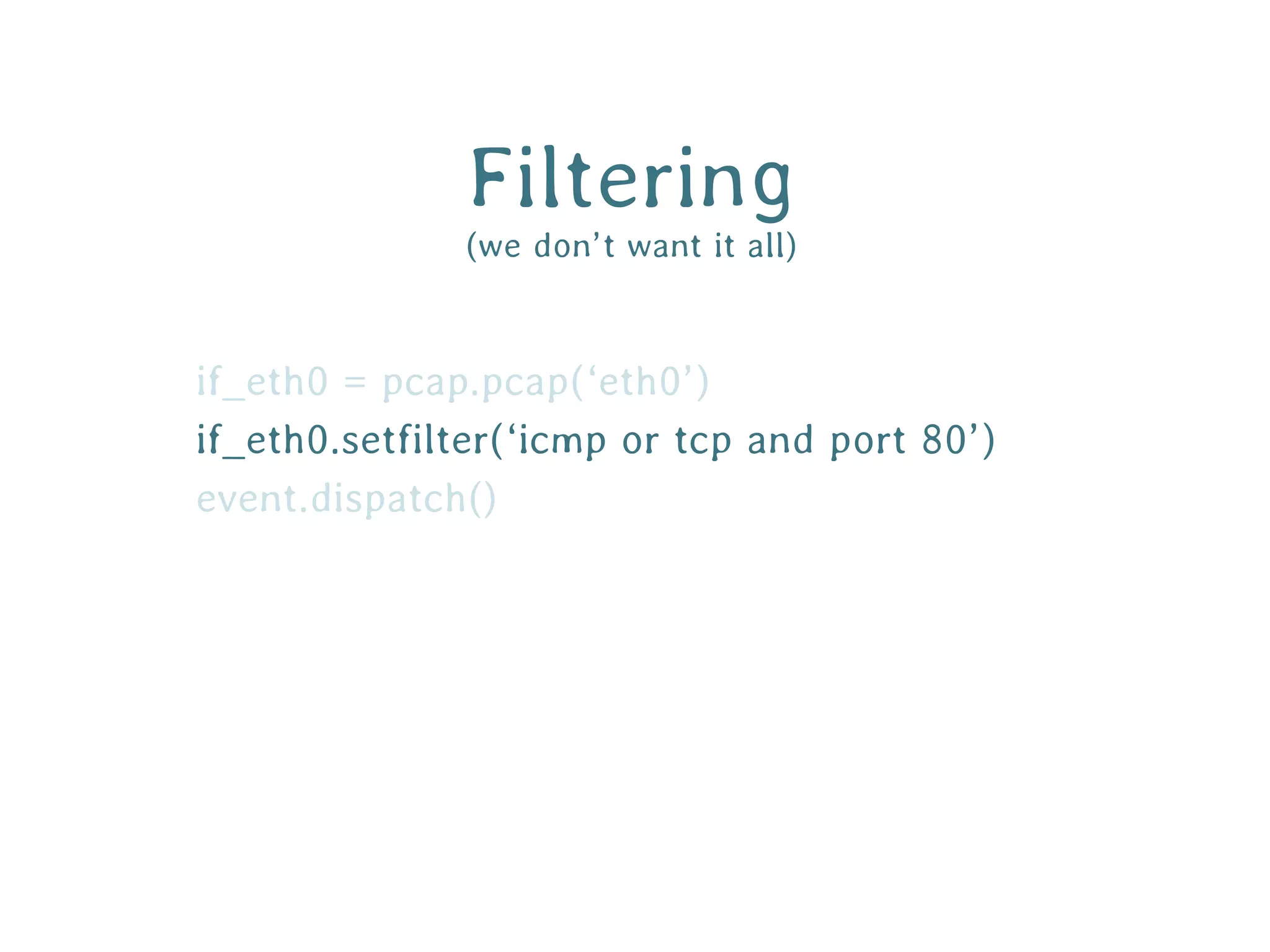
Filtering
              (we don’t want it all)


if_eth0 = pcap.pcap(‘eth0’)
if_eth0.setfilter(‘icmp or tcp and port 80’)
event.dispatch()
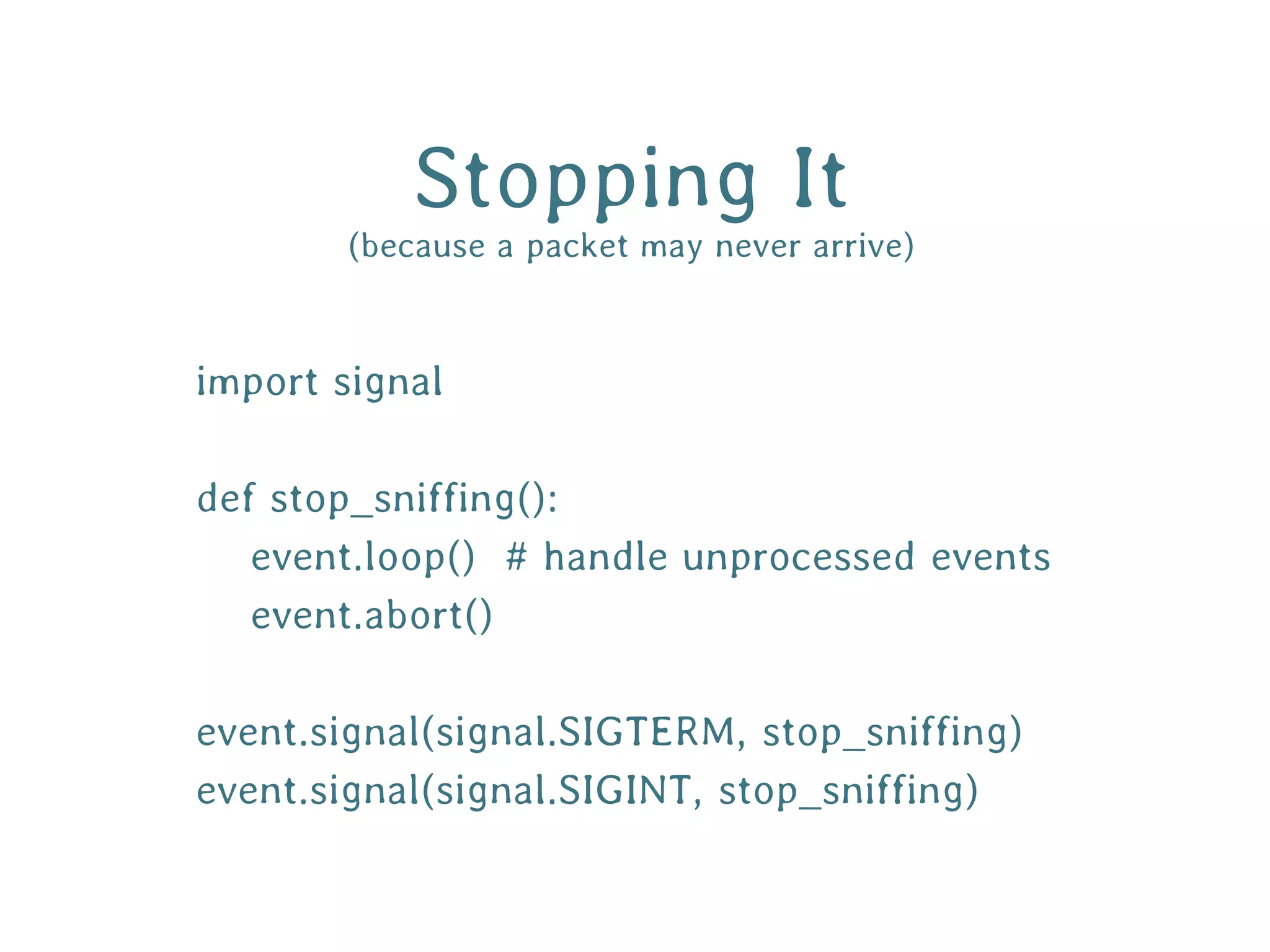
Stopping It
       (because a packet may never arrive)


import signal

def stop_sniffing():
   event.loop() # handle unprocessed events
   event.abort()

event.signal(signal.SIGTERM, stop_sniffing)
event.signal(signal.SIGINT, stop_sniffing)
Nice to Have
                   (statistics)


def print_stats(iface):
   recvd, dropped, if_drops = iface.stats()
   print ‘received:’, recvd
   print ‘dropped:’, dropped
   return True

event.signal(signal.SIGUSR1, print_stats, if_eth0)
event.timeout(60*15, print_stats, if_eth0)
Questions?


Kudos to @craigbalding for “rmmod perl && modprobe
python” as well as the whole sniffer idea

This presentation is incredibly average
thanks to the Avería font from iotic.com/averia/

Python event based network sniffer

  • 1.
    Network sniffer inPython (event-based) Jirka Vejražka (@JirkaV) @Pyvec - PyVo #20
  • 2.
    Why? Because tcpdump wasnot right for the job How? pyevent + pypcap (by @dugsong)
  • 3.
    The Code (Python 2.x) import pcap import event if_eth0 = pcap.pcap(‘eth0’) # needs root pcap_file = get_PCAP_file() event.read(if_eth0.fd, packets_handler, if_eth0) event.dispatch() # it all happens here print ‘All done, quitting’
  • 4.
    Secret sauce? None! defget_PCAP_file(): pcap_f = open(‘packets.pcap’, ‘wb’) pcap_f.write(PCAP_HEADER) # PCAP docs return pcap_f def packets_handler(iface): for timestamp, packet in iface.readpkts(): pcap_file.write(packet) return True
  • 5.
    Filtering (we don’t want it all) if_eth0 = pcap.pcap(‘eth0’) if_eth0.setfilter(‘icmp or tcp and port 80’) event.dispatch()
  • 6.
    Stopping It (because a packet may never arrive) import signal def stop_sniffing(): event.loop() # handle unprocessed events event.abort() event.signal(signal.SIGTERM, stop_sniffing) event.signal(signal.SIGINT, stop_sniffing)
  • 7.
    Nice to Have (statistics) def print_stats(iface): recvd, dropped, if_drops = iface.stats() print ‘received:’, recvd print ‘dropped:’, dropped return True event.signal(signal.SIGUSR1, print_stats, if_eth0) event.timeout(60*15, print_stats, if_eth0)
  • 8.
    Questions? Kudos to @craigbaldingfor “rmmod perl && modprobe python” as well as the whole sniffer idea This presentation is incredibly average thanks to the Avería font from iotic.com/averia/