個人背景 雨蒼 目前為[email_address] 窗口 完全沒摸過程式語言 曾去巨 x 學過 C++ 但是跟他不熟 netman 老師教的 bash shell 偷看過 python 教學影片 加入 lazybuntu 邊寫邊學
3.
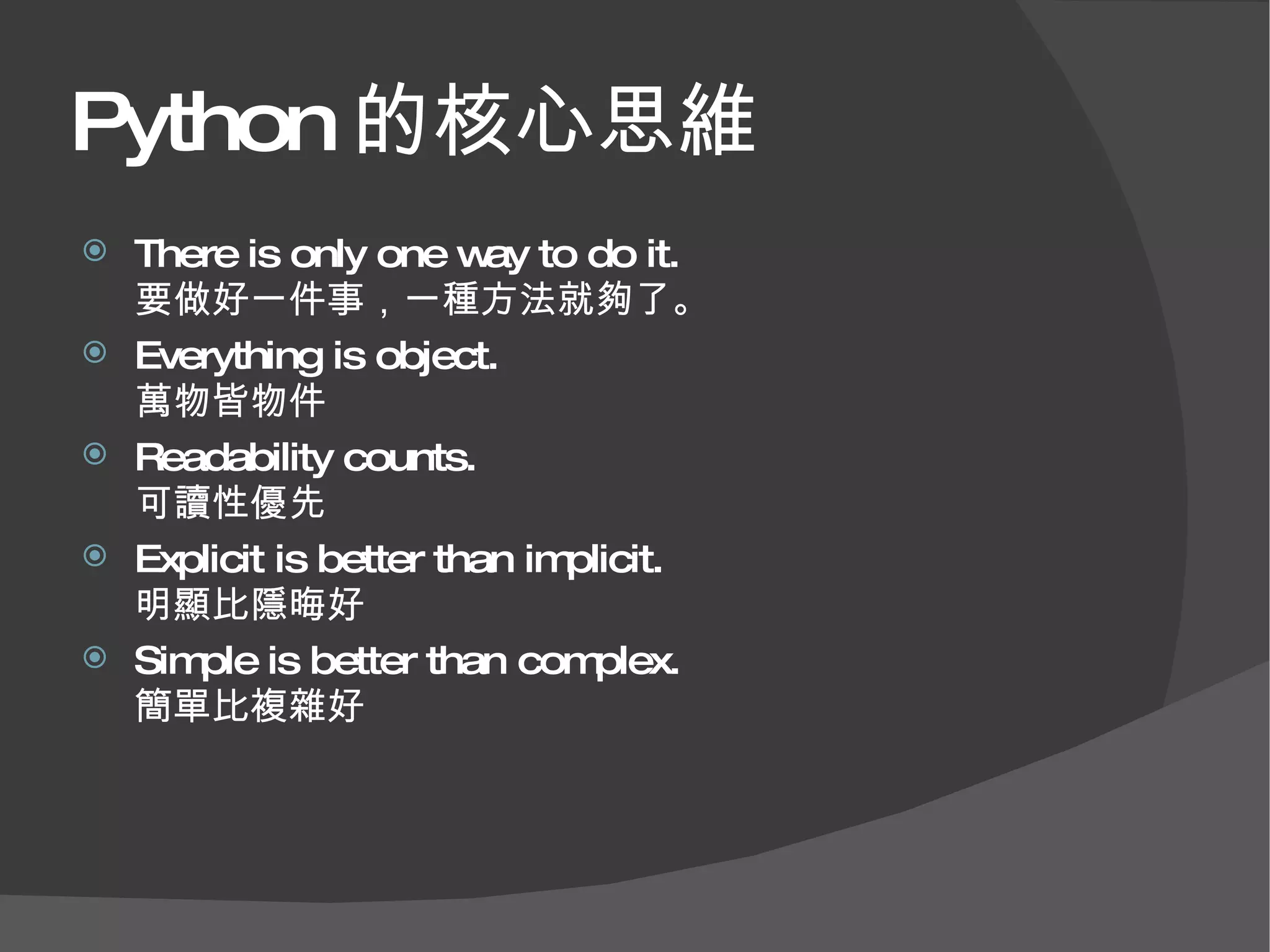
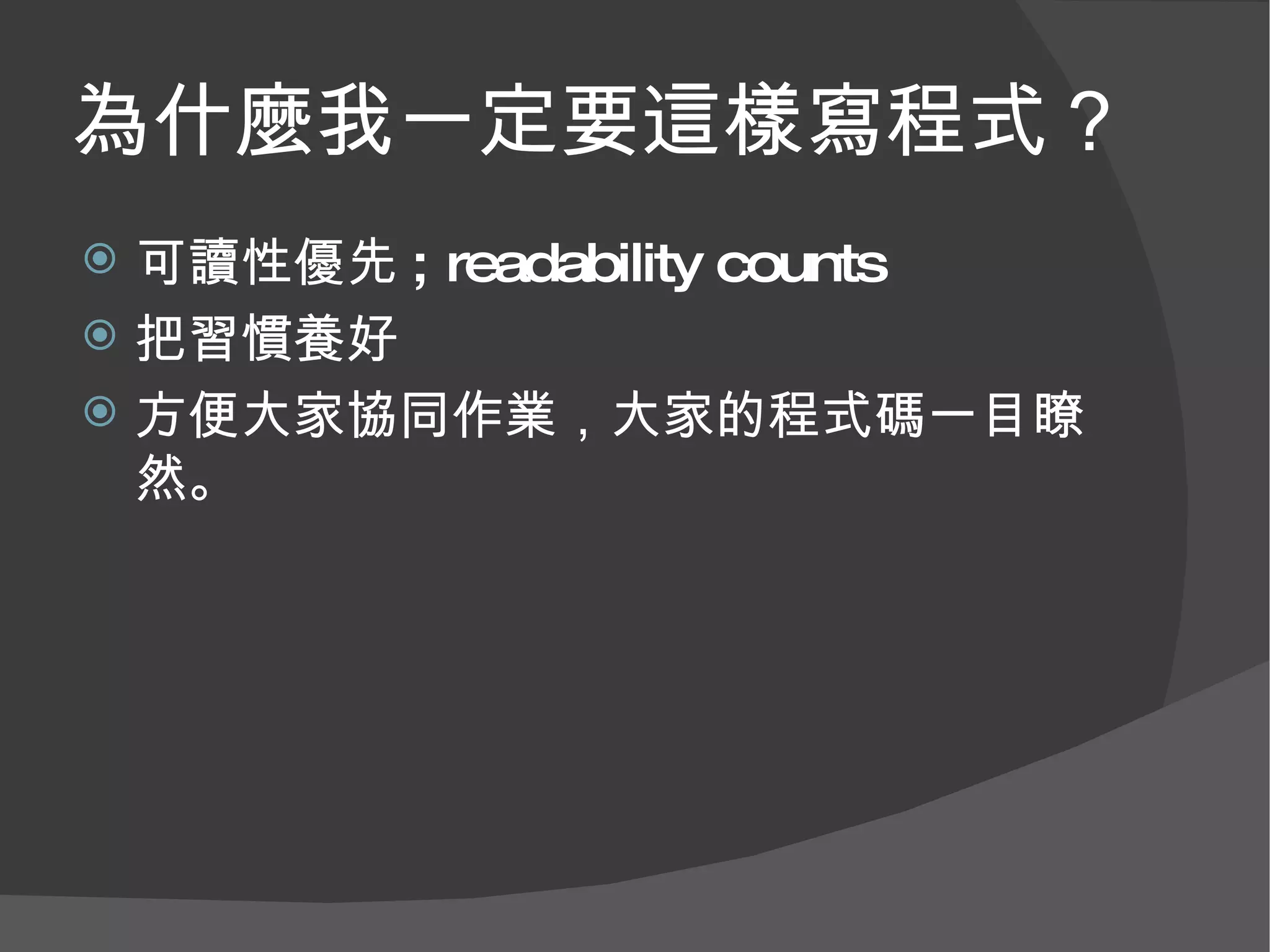
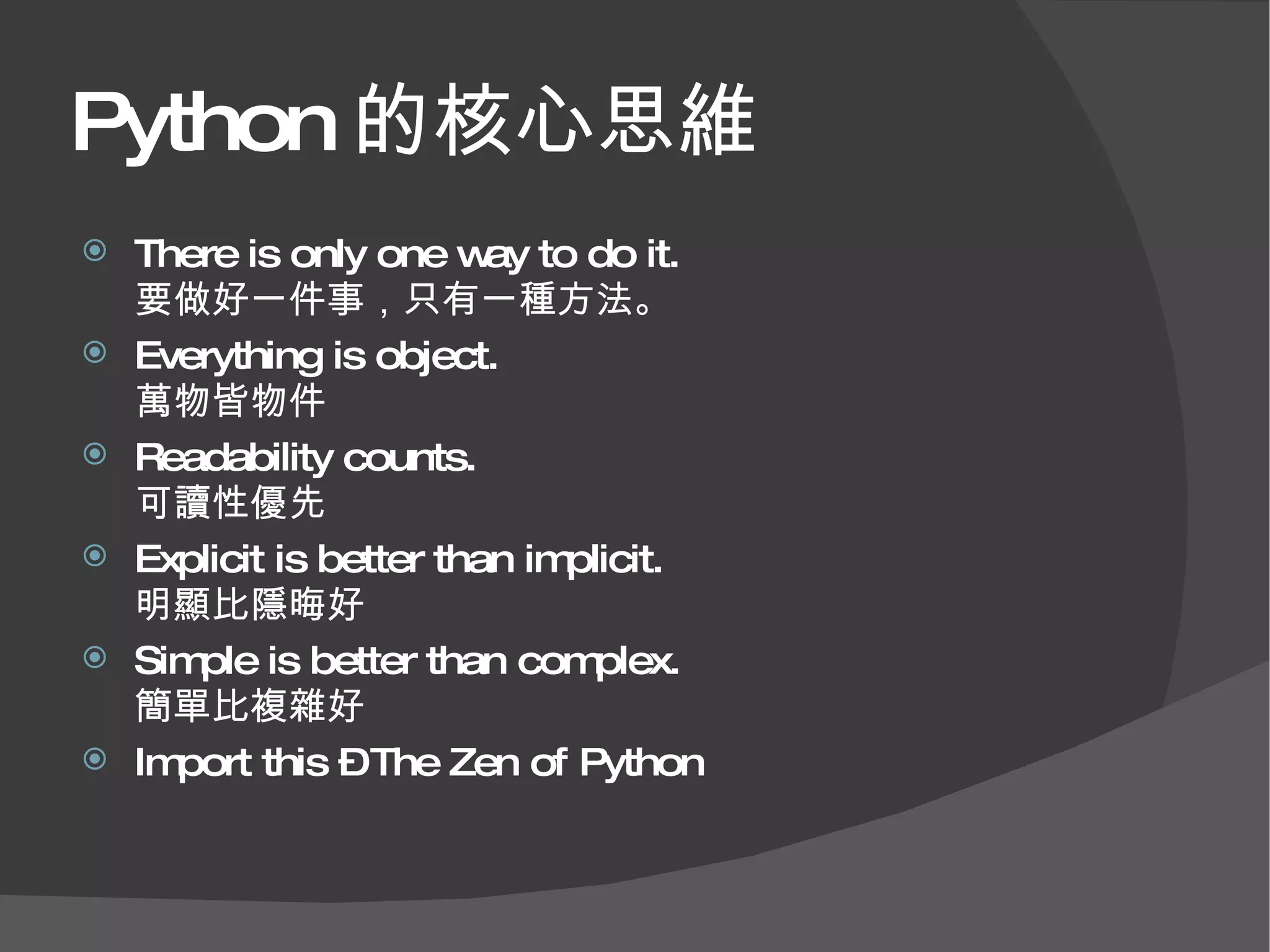
Python 的核心思維 Thereis only one way to do it. 要做好一件事,一種方法就夠了。 Everything is object. 萬物皆物件 Readability counts. 可讀性優先 Explicit is better than implicit. 明顯比隱晦好 Simple is better than complex. 簡單比複雜好
為什麼 Python 支援動態定型?整數,字串是不能改的?我明明就可以改他啊! A = 3 B = A print A , B A = 'hello' print A , B Refrence( 參照值 ) -> object( 物件 ) 屬性是屬於物件的,而變數就是參照值 [ 'abc' , [(1, 2), ([3],4)],'def']
28.
[ 'abc' ,[(1, 2), ([3],4)],'def'] ' abc ' (1, 2) ([3],4) 'd ef ' 1 2 [3] 4 3
網路資源 PyTUG www.python.org.tw irc.://irc.freenode.net/#python.tw Ptt Python 討論版
49.
Python 的核心思維 Thereis only one way to do it. 要做好一件事,只有一種方法。 Everything is object. 萬物皆物件 Readability counts. 可讀性優先 Explicit is better than implicit. 明顯比隱晦好 Simple is better than complex. 簡單比複雜好 Import this – The Zen of Python
![個人背景 雨蒼 目前為 [email_address] 窗口 完全沒摸過程式語言 曾去巨 x 學過 C++ 但是跟他不熟 netman 老師教的 bash shell 偷看過 python 教學影片 加入 lazybuntu 邊寫邊學](https://image.slidesharecdn.com/Python_Basic-090222112822-phpapp01/75/Python-Basic-2-2048.jpg)


![Slice 0 1 2 3 4 5 [: :] [ 起使:終止:步進 ] E C I L S](https://image.slidesharecdn.com/Python_Basic-090222112822-phpapp01/75/Python-Basic-17-2048.jpg)
![List [ 'abc', 123 , [ 'a' , 'b' ] ] 可任意巢狀化,不限定型態](https://image.slidesharecdn.com/Python_Basic-090222112822-phpapp01/75/Python-Basic-18-2048.jpg)
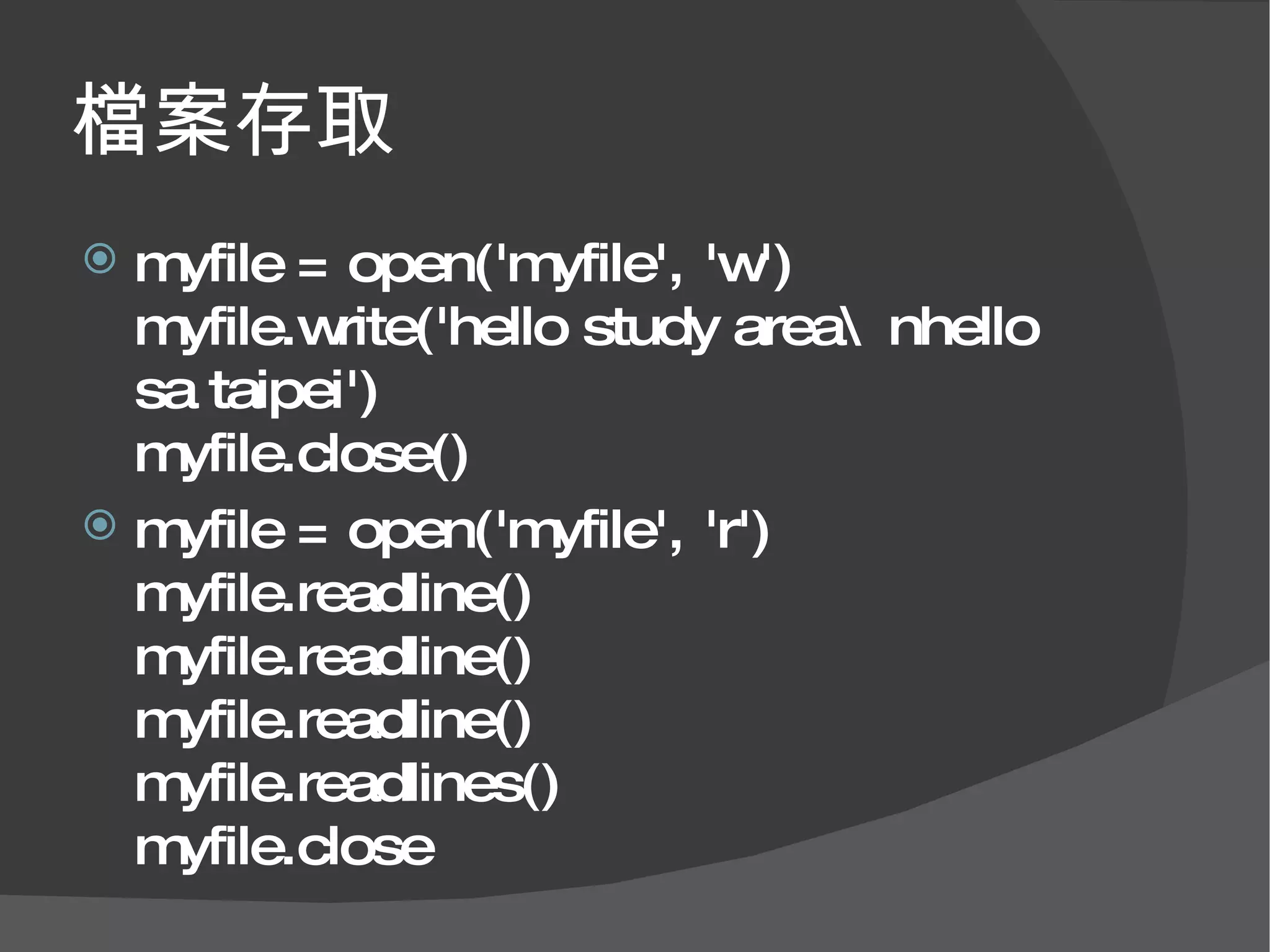
![Tuple ( 'abc', 123 , [ 'a' , 'b' ] ) 內含物不可變更之 list](https://image.slidesharecdn.com/Python_Basic-090222112822-phpapp01/75/Python-Basic-20-2048.jpg)
![辭典 (Dictionary) { 'name' : 'billy3321' ,'jobs' : ['student', 'maintainer'], 'develop' : {'name' : 'lazybuntu', 'OS' : 'Ubuntu' } } Key : Value 無序集合體,以 key 存取 以 hash table 實作](https://image.slidesharecdn.com/Python_Basic-090222112822-phpapp01/75/Python-Basic-21-2048.jpg)

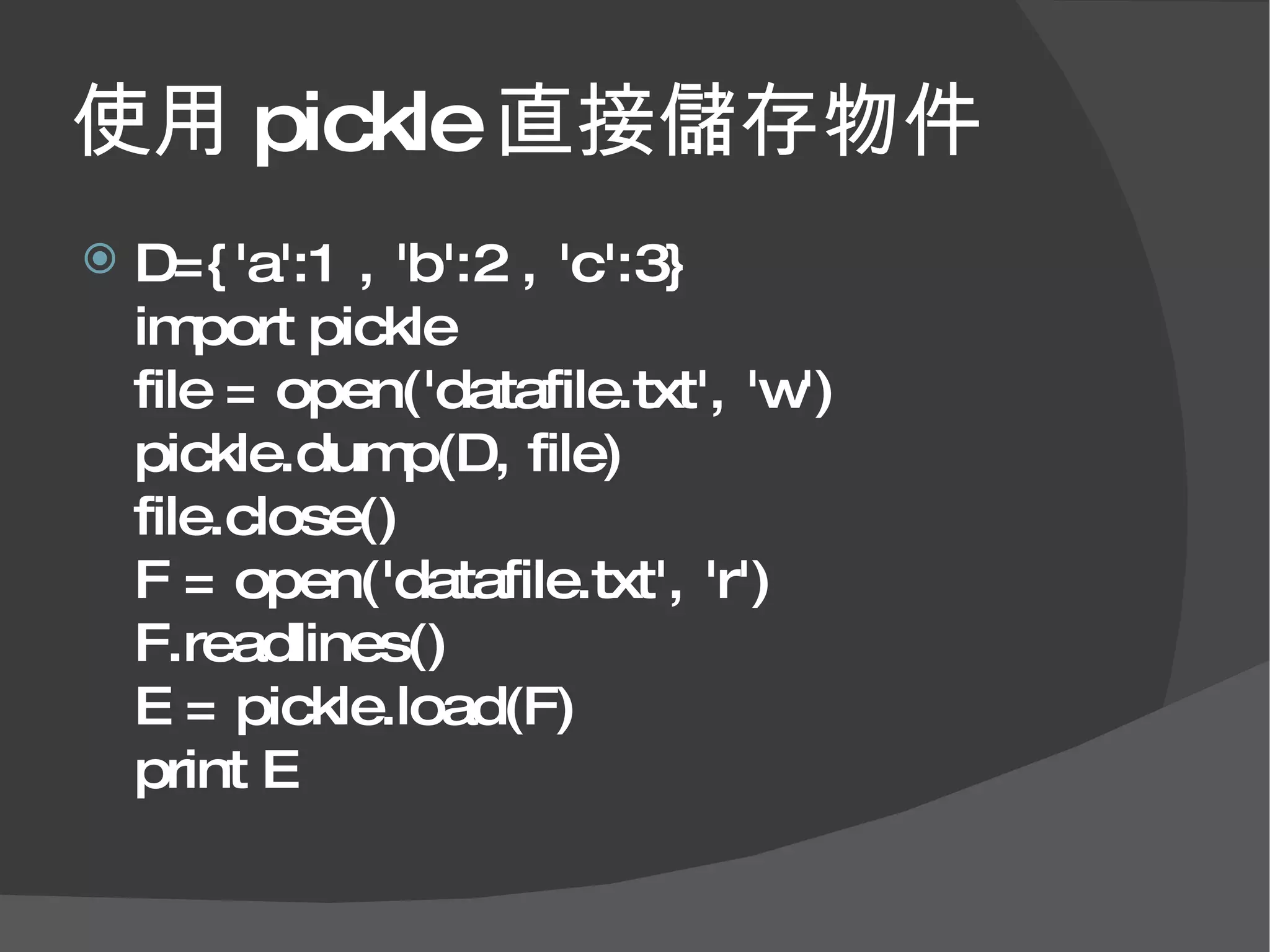

![為什麼 Python 支援動態定型? 整數,字串是不能改的?我明明就可以改他啊! A = 3 B = A print A , B A = 'hello' print A , B Refrence( 參照值 ) -> object( 物件 ) 屬性是屬於物件的,而變數就是參照值 [ 'abc' , [(1, 2), ([3],4)],'def']](https://image.slidesharecdn.com/Python_Basic-090222112822-phpapp01/75/Python-Basic-27-2048.jpg)
![[ 'abc' , [(1, 2), ([3],4)],'def'] ' abc ' (1, 2) ([3],4) 'd ef ' 1 2 [3] 4 3](https://image.slidesharecdn.com/Python_Basic-090222112822-phpapp01/75/Python-Basic-28-2048.jpg)
![共用參照值與複製 L1 = [ 2 , 3 , 4 ] L2 = L1 L1[0] = 24 L1 = [ 2 , 3 , 4 ] L2 = L1[:] L1[0] = 24](https://image.slidesharecdn.com/Python_Basic-090222112822-phpapp01/75/Python-Basic-29-2048.jpg)







![[系列活動] Python 程式語言起步走](https://cdn.slidesharecdn.com/ss_thumbnails/python20170812-170808043244-thumbnail.jpg?width=640&height=640&fit=bounds)


![[3]投影片 futurewad樹莓派研習會 141204](https://cdn.slidesharecdn.com/ss_thumbnails/3futurewad141204-141219162020-conversion-gate01-thumbnail.jpg?width=640&height=640&fit=bounds)


