DATA COMMUNICATION
PRESENTED BY-
SUBHAM LAHIRY MAJUMDAR
BRANCH:- E&TC
REGD NO.:- F15011003035
SEMESTER:- 5TH SEMESTER
CONTENTS-
 Introduction
 Basic Parts of Data Communication
 Data Transmission Types:-
i. Serial Data Transmission
ii. Parallel Data Transmission
 Types Of Serial Data Transmission:-
i. SYNCHRONOUS TRANSMISSION
ii. ASYNCHRONOUS TRANSMISSION
 Data Transmission Modes:-
i. SIMPLE
ii. HALF DUPLEX
iii. FULL DUPLEX
 BIBLIOGRAPHY
 CONCLUSION
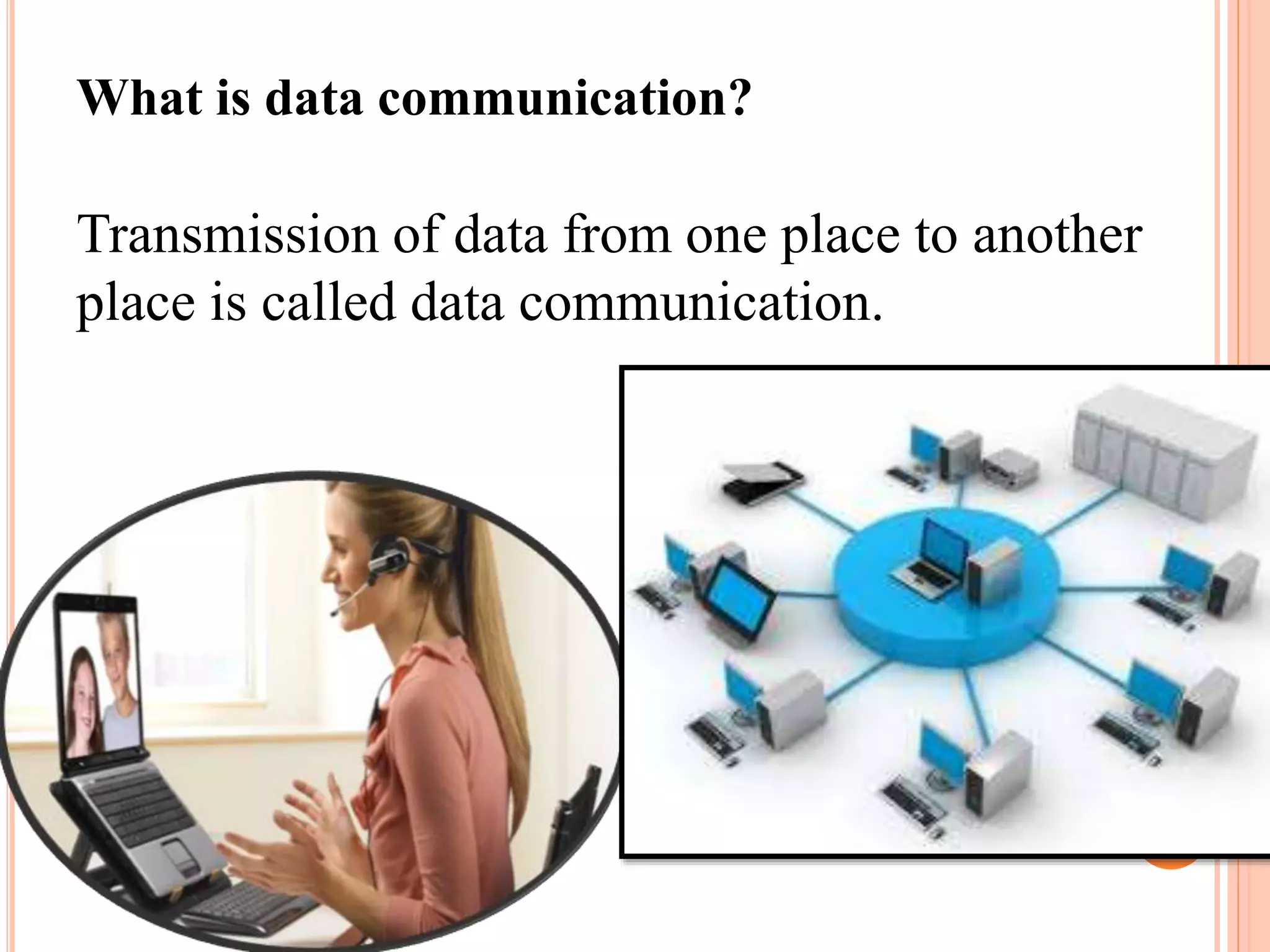
What is data communication?
Transmission of data from one place to another
place is called data communication.
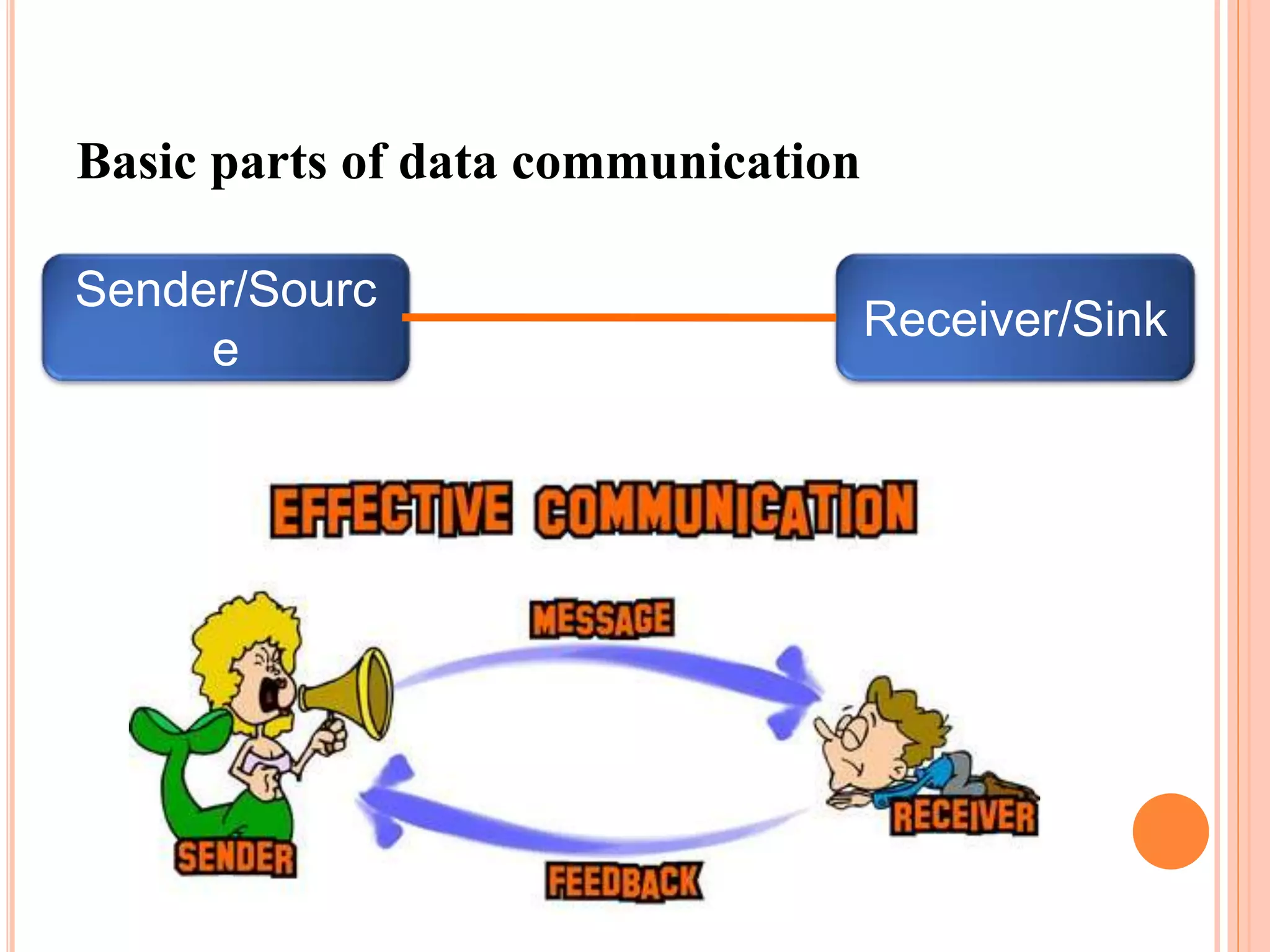
Basic parts of data communication
Three components are essential in data
communication.
1. Sender / Source
2. Data Communication Medium
3. Receiver / Sink
Basic parts of data communication
Sender/Sourc
e
Receiver/Sink
Medium
Sender / Source
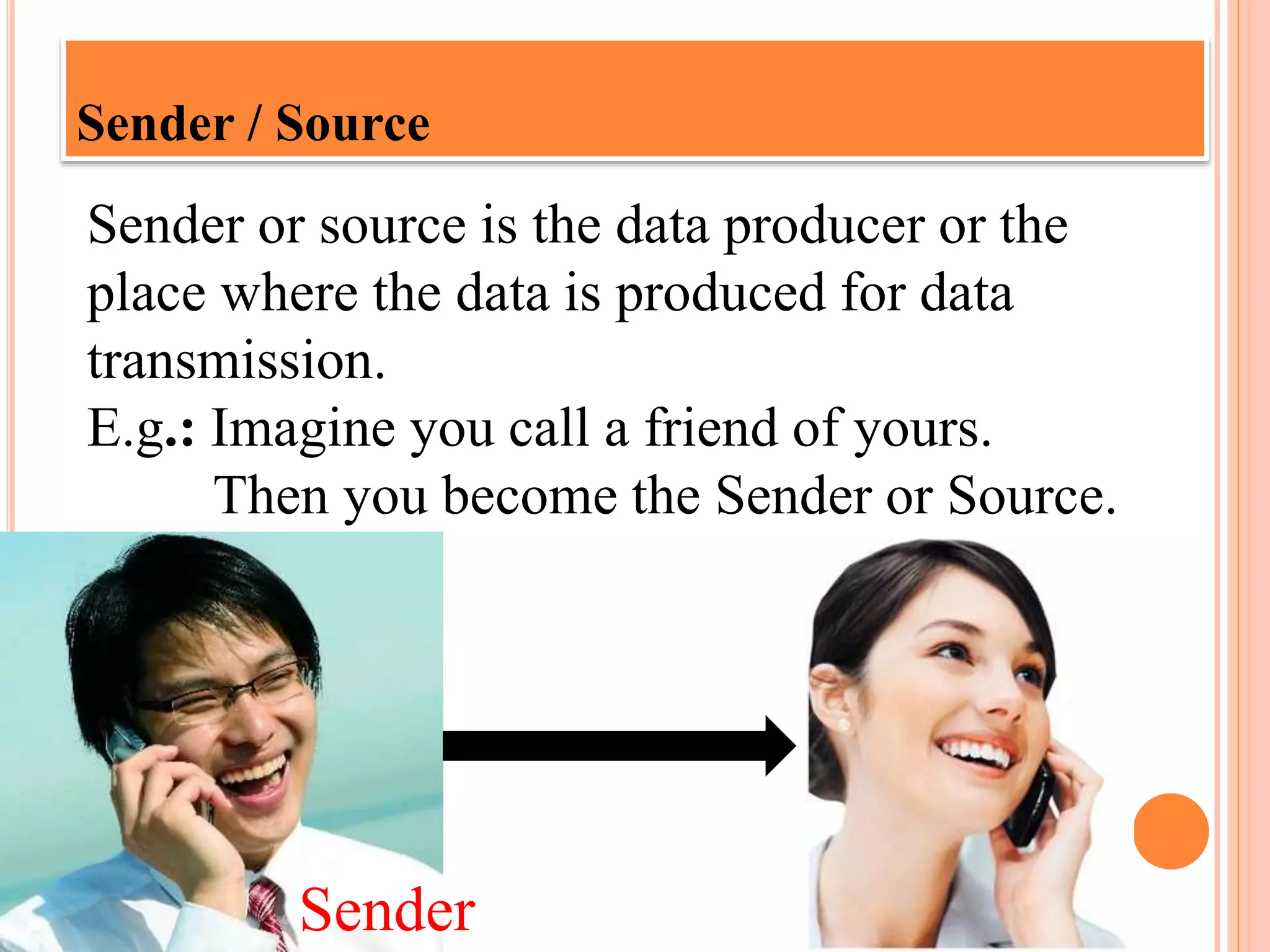
Sender or source is the data producer or the
place where the data is produced for data
transmission.
E.g.: Imagine you call a friend of yours.
Then you become the Sender or Source.
Sender
Data Communication Medium
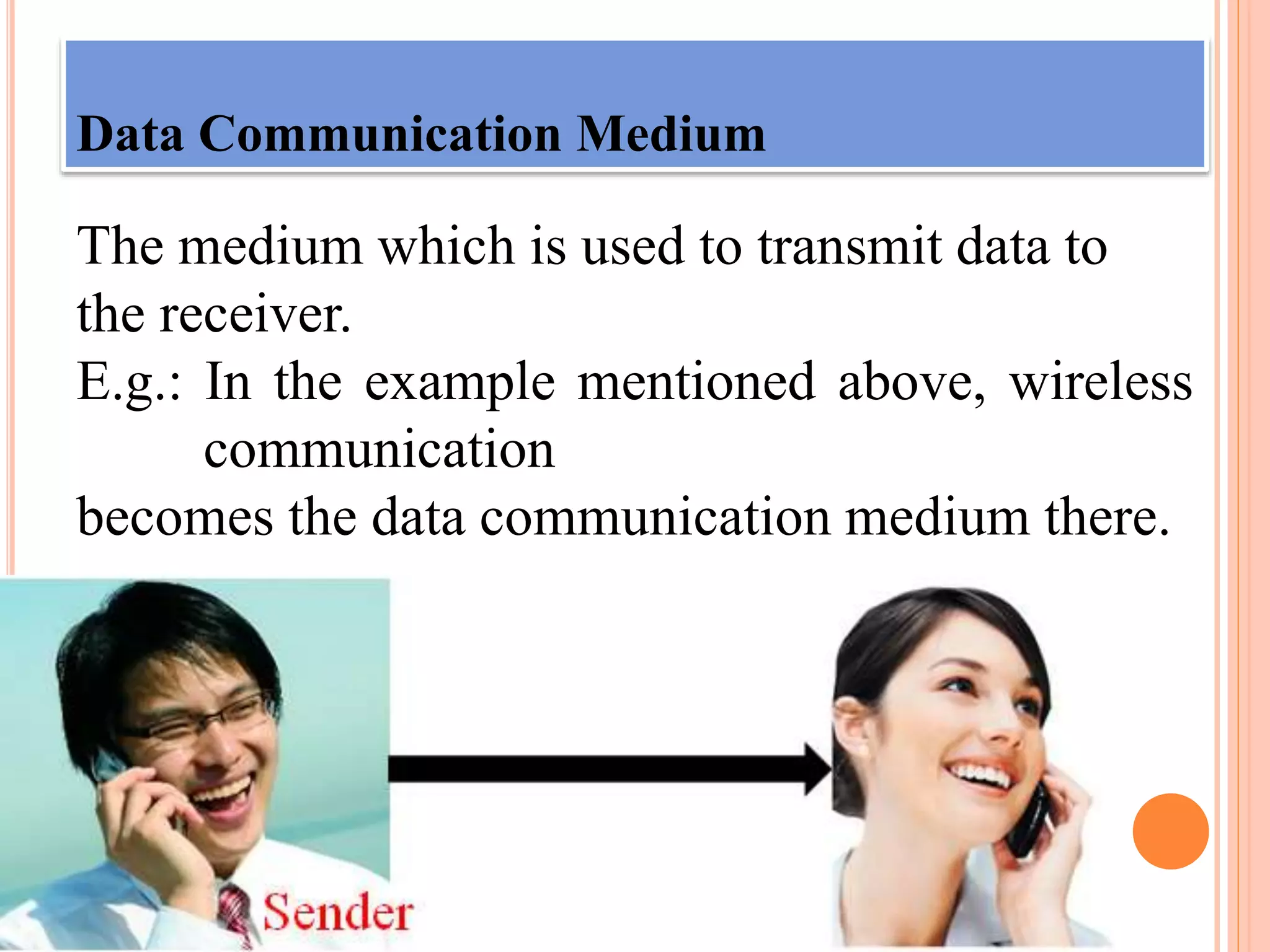
The medium which is used to transmit data to
the receiver.
E.g.: In the example mentioned above, wireless
…….communication
becomes the data communication medium there.
Receiver / Sink
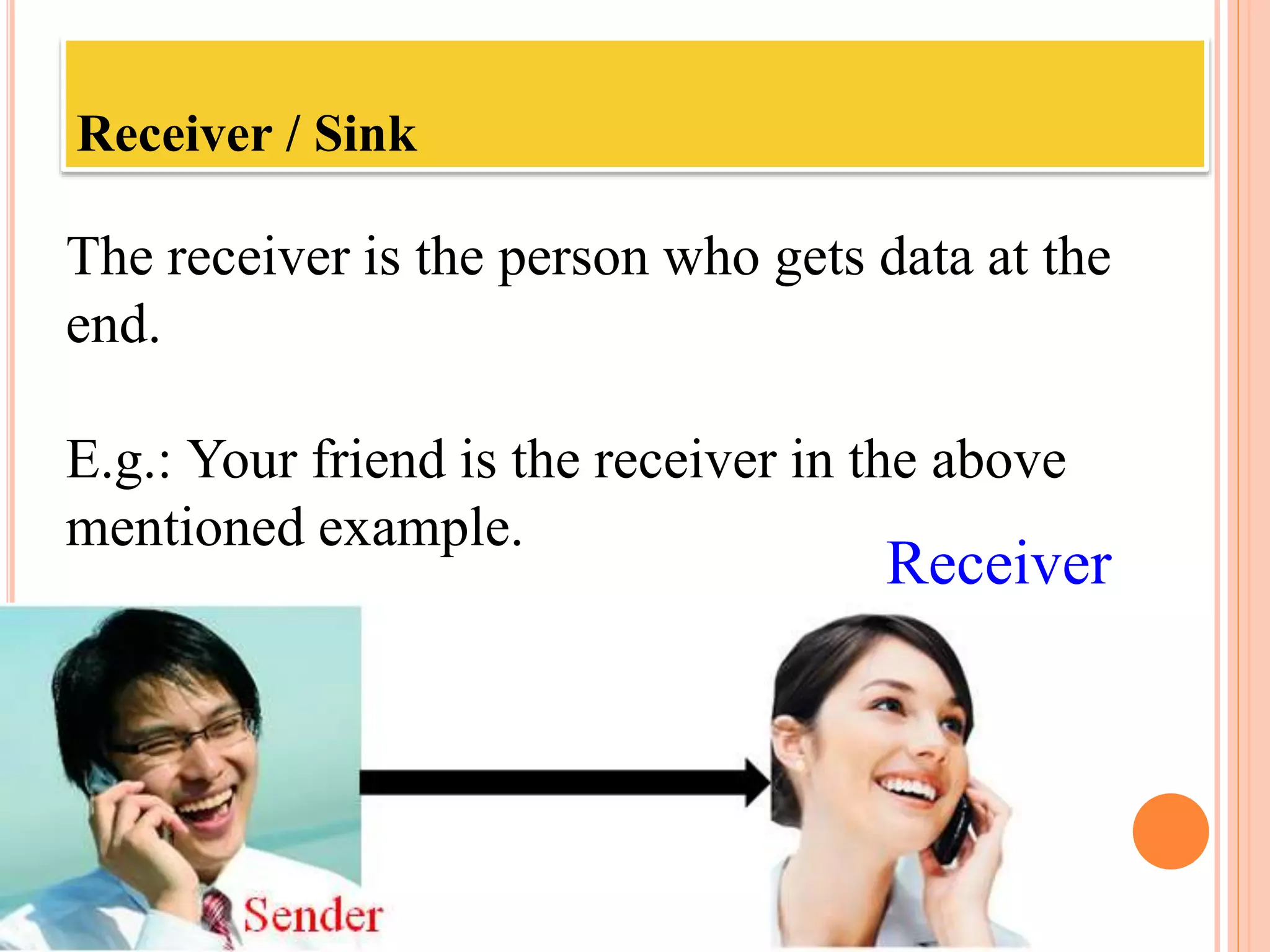
The receiver is the person who gets data at the
end.
E.g.: Your friend is the receiver in the above
mentioned example.
Receiver
DATA TRANSMISSION TYPES
Data transmission can be done in two ways.
1.Serial data transmission
2. Parallel data transmission
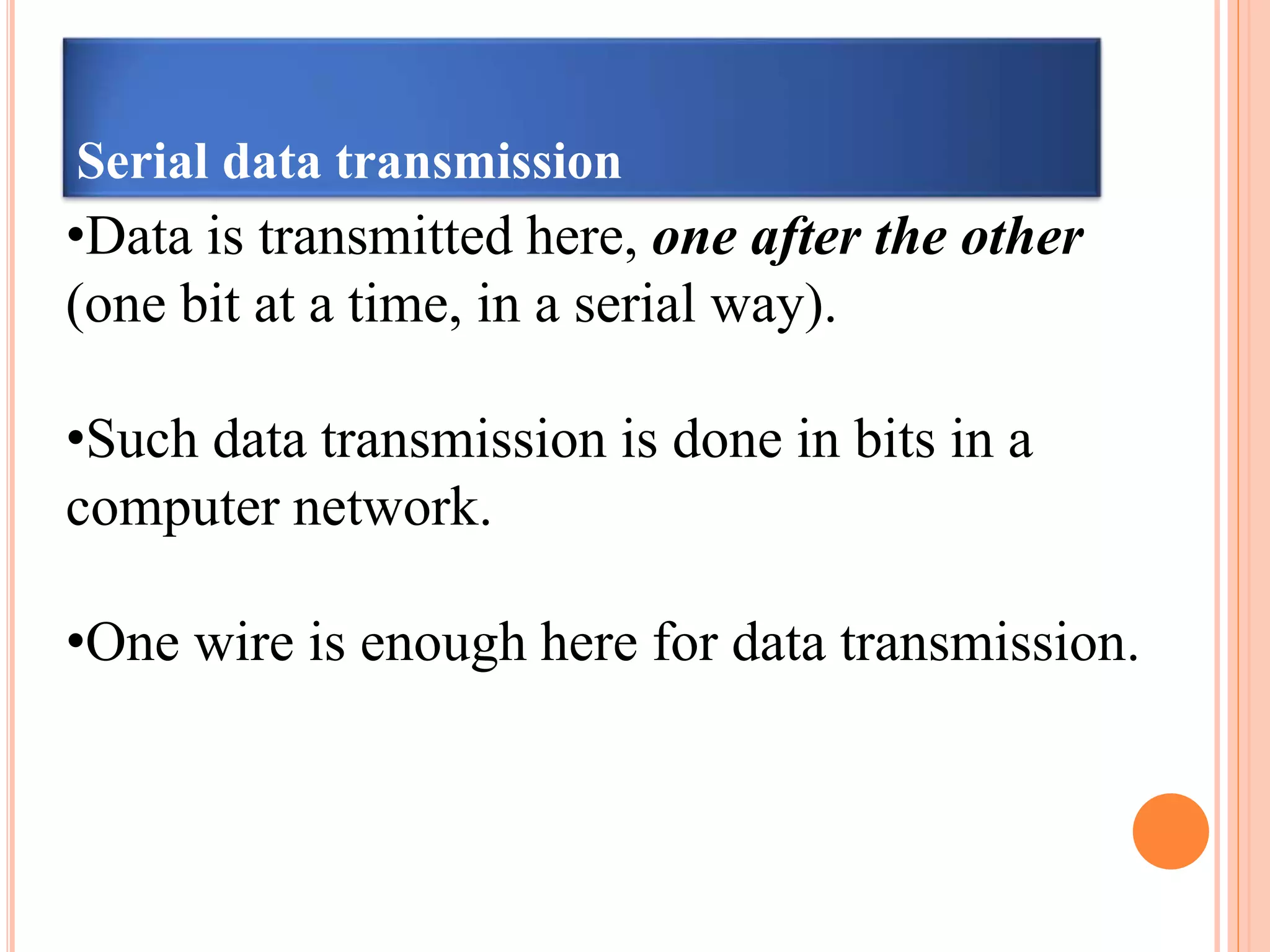
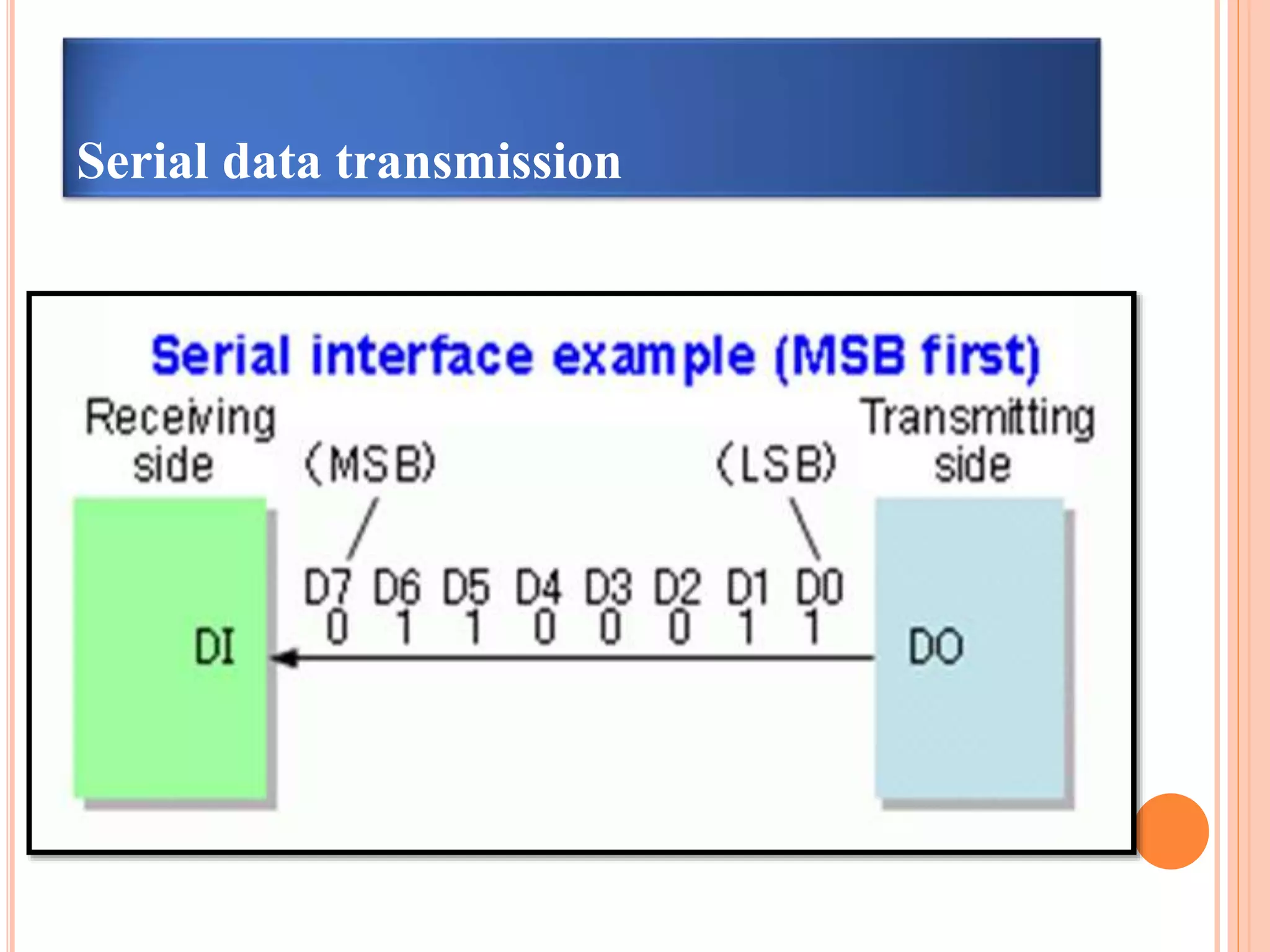
Serial data transmission
•Data is transmitted here, one after the other
(one bit at a time, in a serial way).
•Such data transmission is done in bits in a
computer network.
•One wire is enough here for data transmission.
Serial data transmission
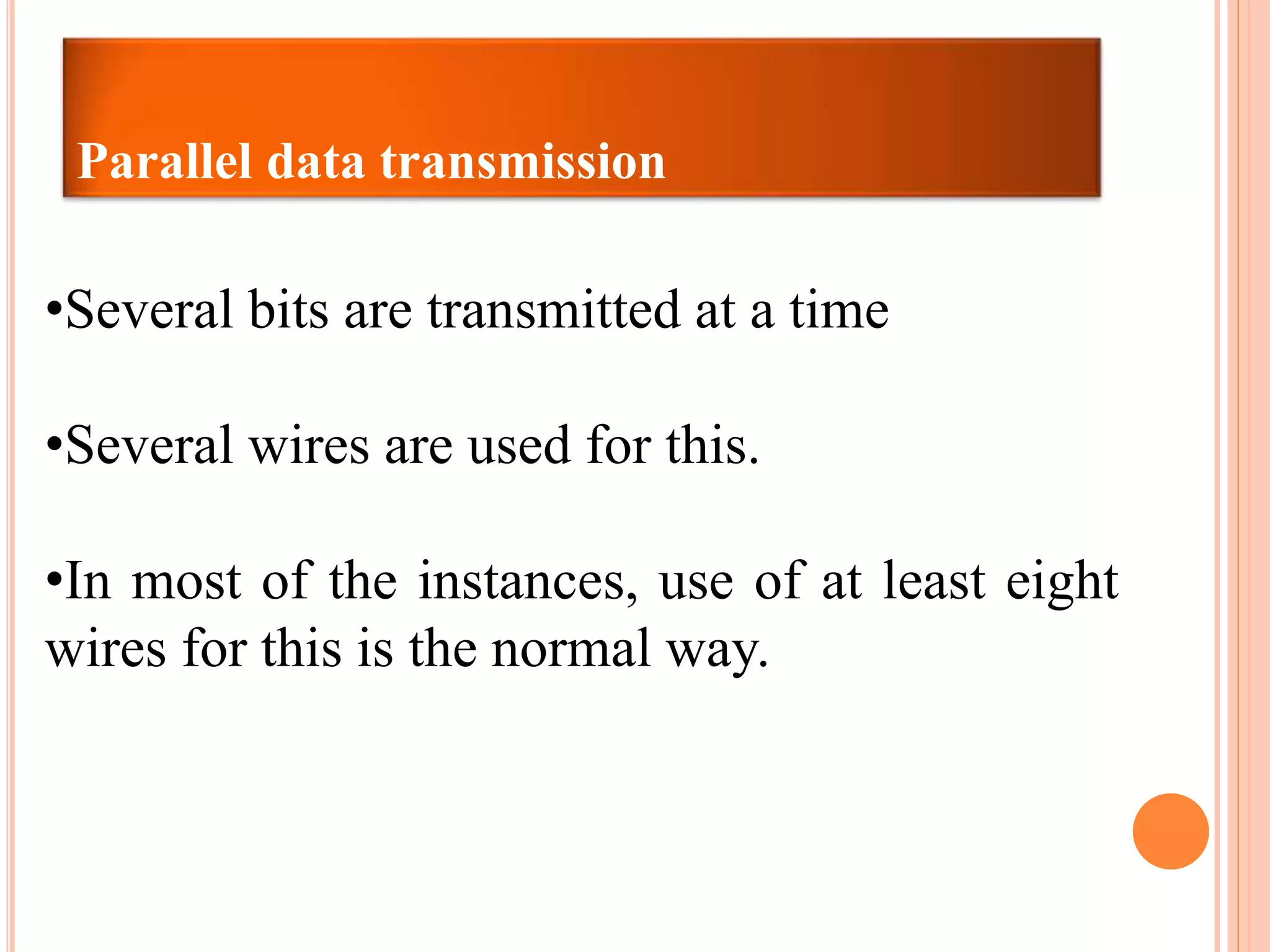
Parallel data transmission
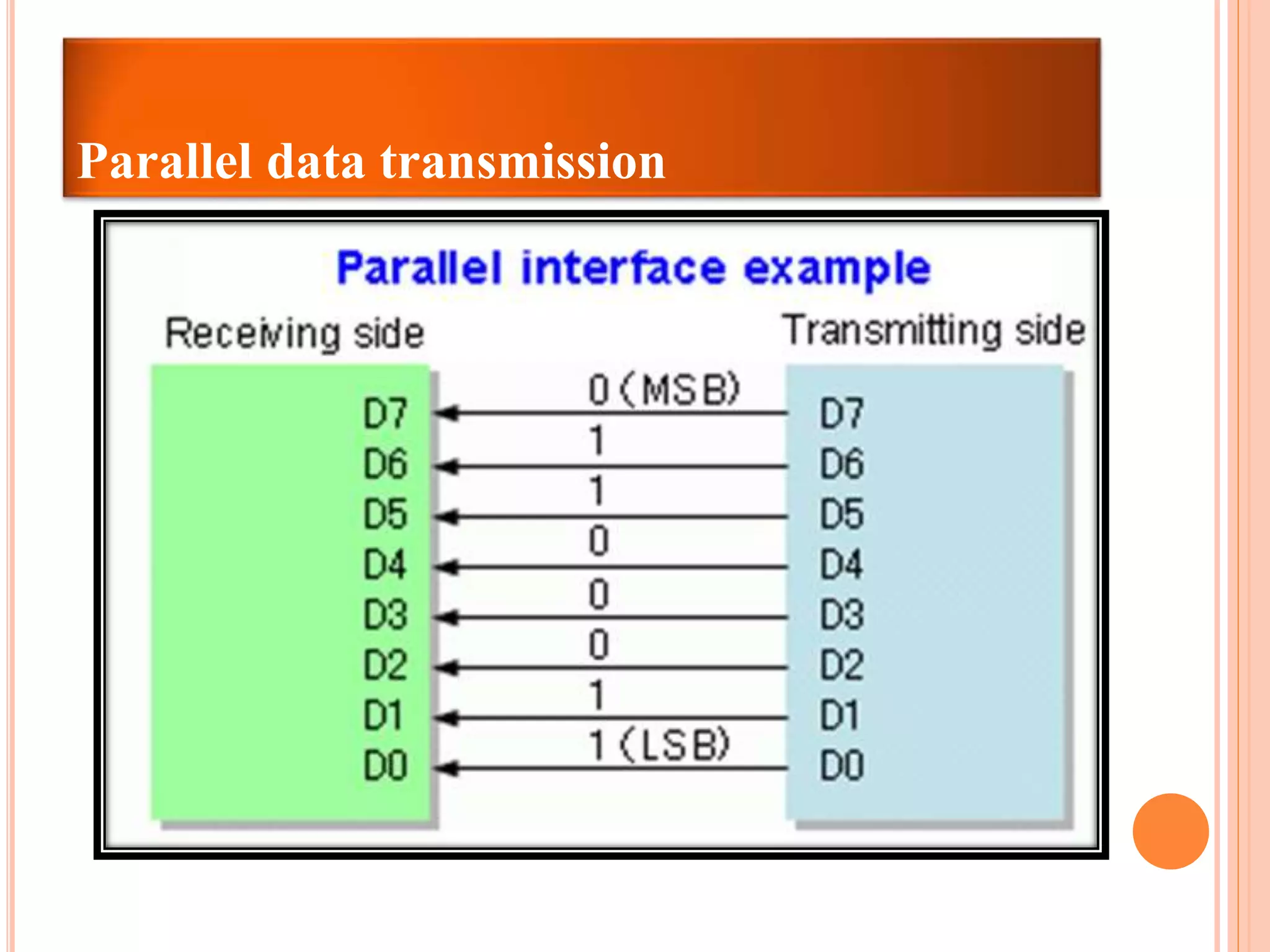
•Several bits are transmitted at a time
•Several wires are used for this.
•In most of the instances, use of at least eight
wires for this is the normal way.
Parallel data transmission
SERIAL TRANSMISSION IS FURTHER
DIVIDED INTO 3 TYPES:-
 ASYNCHRONOUS TRANSMISSION
 SYNCHROMOUS TRANSMISSION
 ISOCHRONOUS TRANSMISSION
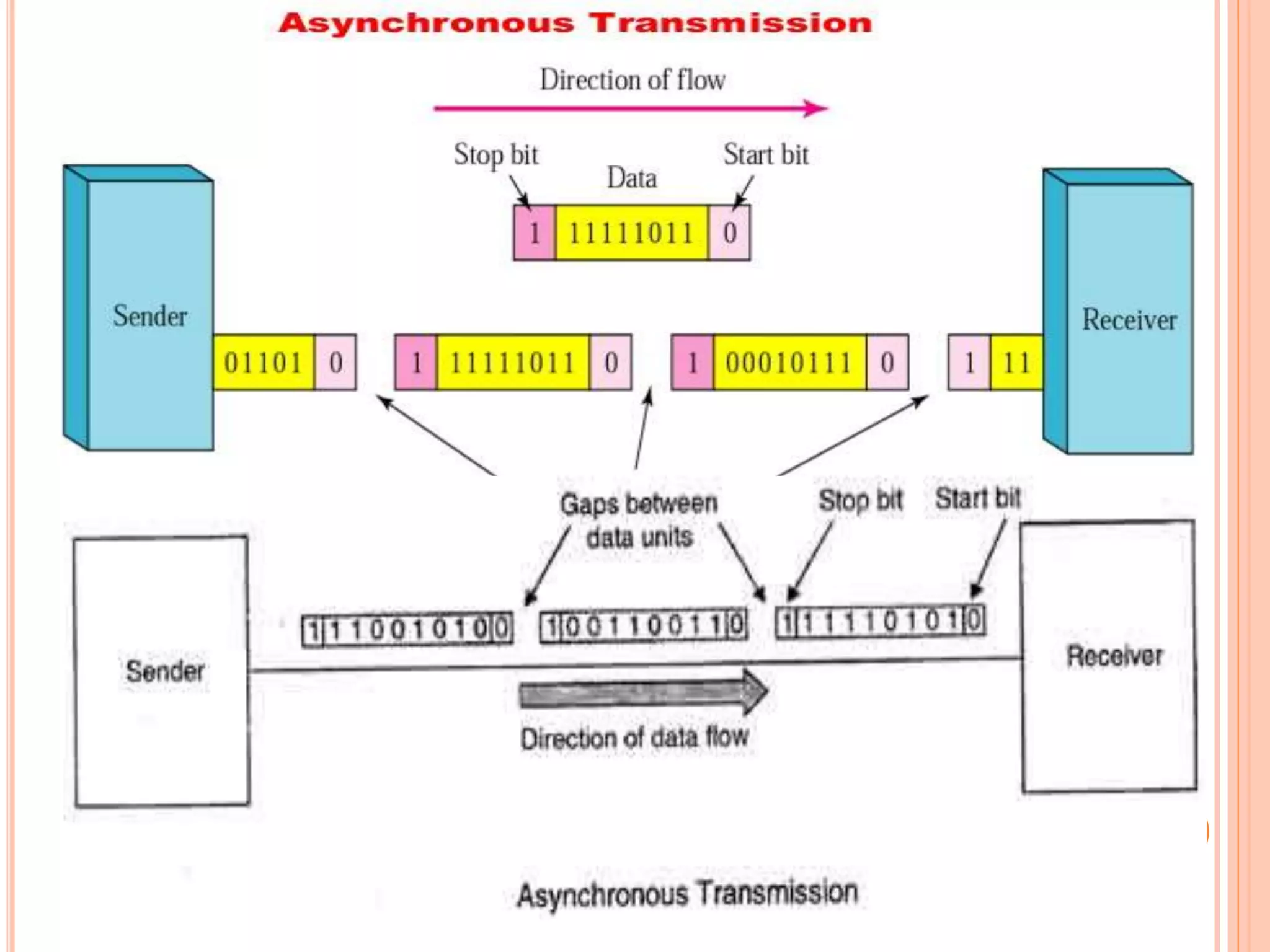
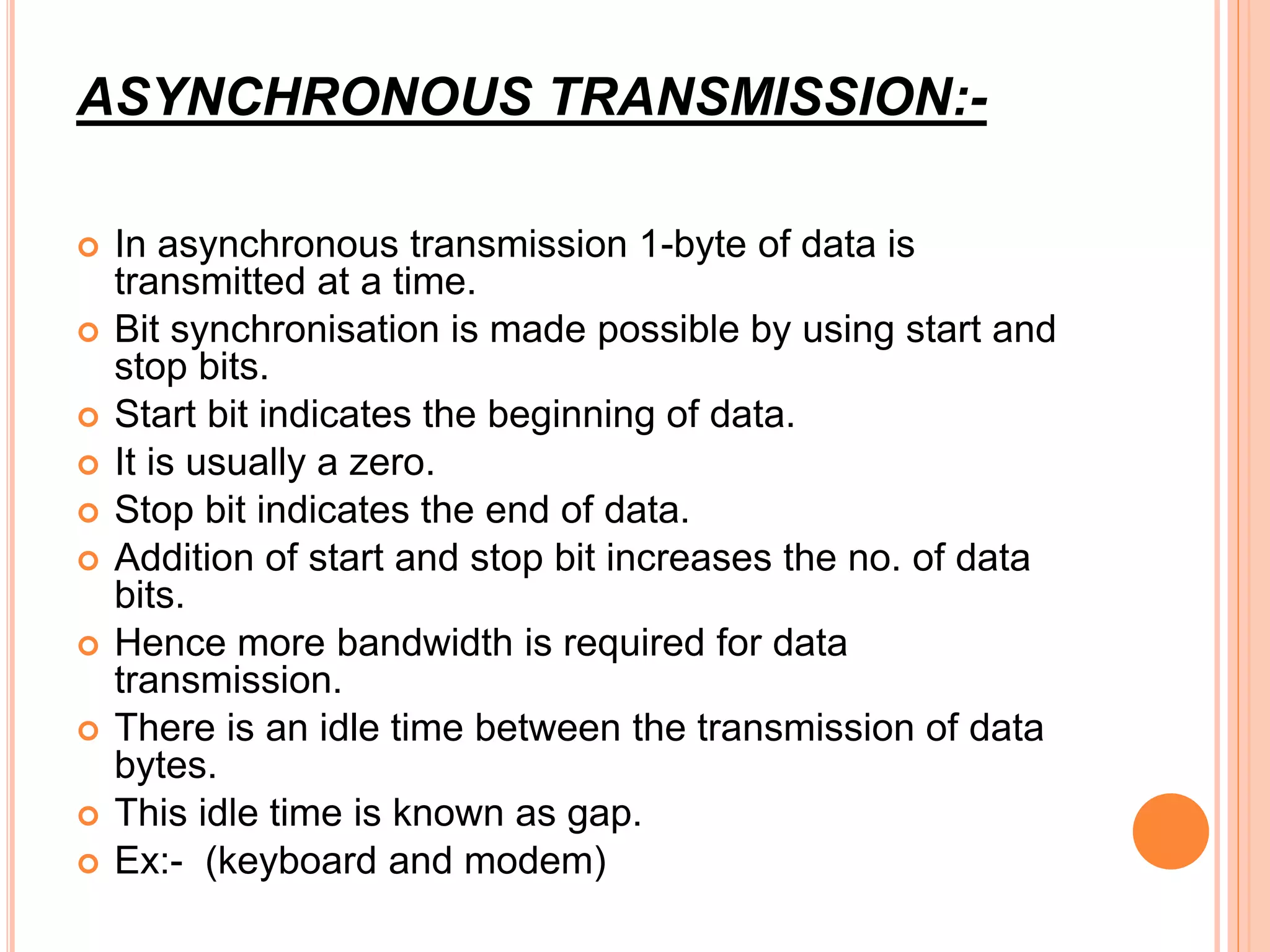
ASYNCHRONOUS TRANSMISSION:-
 In asynchronous transmission 1-byte of data is
transmitted at a time.
 Bit synchronisation is made possible by using start and
stop bits.
 Start bit indicates the beginning of data.
 It is usually a zero.
 Stop bit indicates the end of data.
 Addition of start and stop bit increases the no. of data
bits.
 Hence more bandwidth is required for data
transmission.
 There is an idle time between the transmission of data
bytes.
 This idle time is known as gap.
 Ex:- (keyboard and modem)
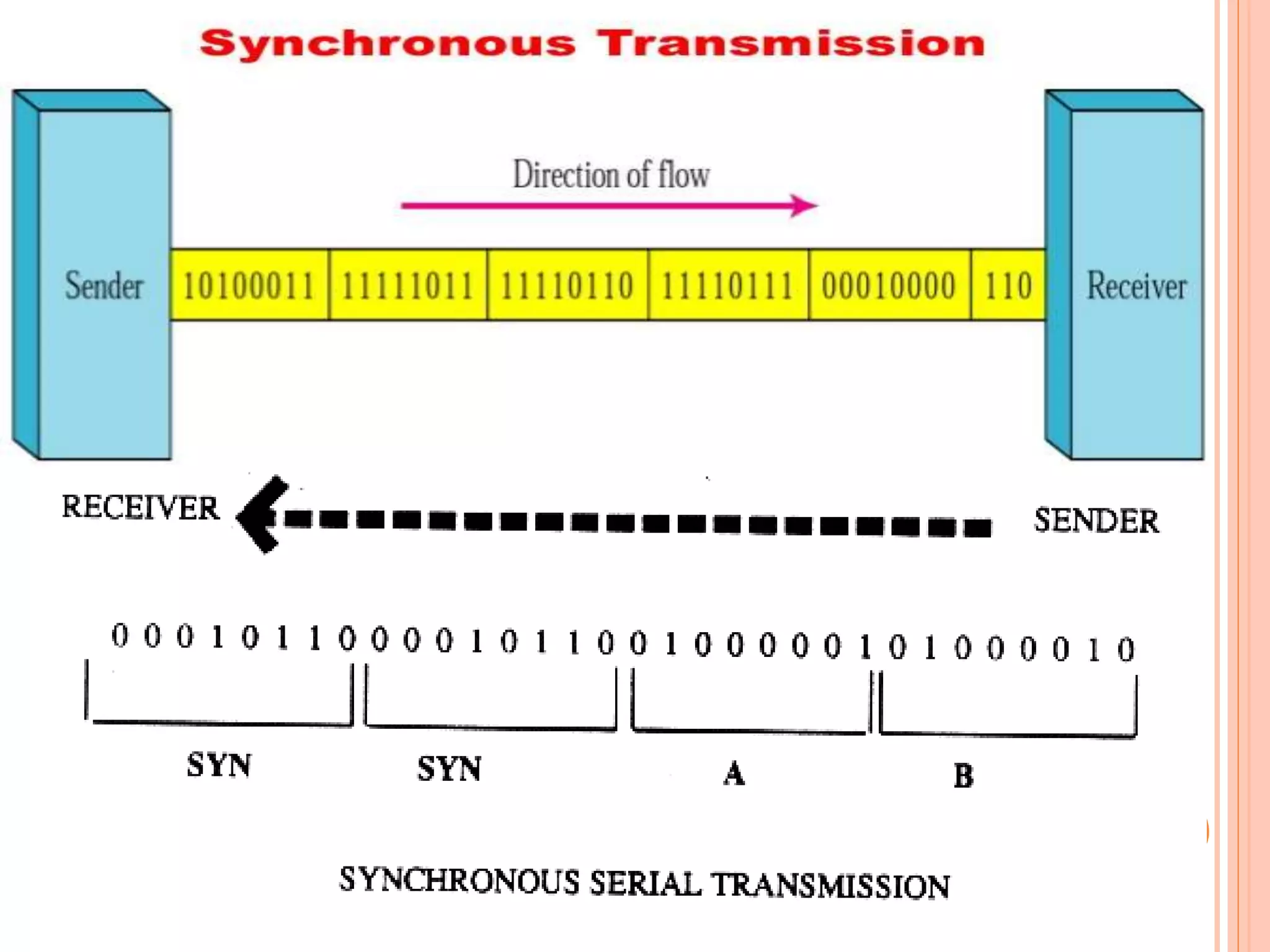
SYNCHRONOUS TRANSMISSION
 In synchronous transmission blocks of data are transmitted.
 It does not transmit start and stop bits.
 There is no gap between the various bytes in the data stream.
 As the bytes are placed on the link without any gap it is the
responsibility of the receiver to separate the bits stream into
bytes so as to reconstruct the original information.
 In order to receive data error free the receiver and sender
operates in same clock frequency.
 It is faster as compared to asynchronous transmission.
 It is costlier than asynchronous transmission.
 It is used for high speed data communication between
computers.
Data Transmission Speed
The speed of data transmission is measured in
Bytes per second (bps)
Kbps (kilobytes per second)
Mbps (Megabytes per second)
Gbps (Gigabytes per second).
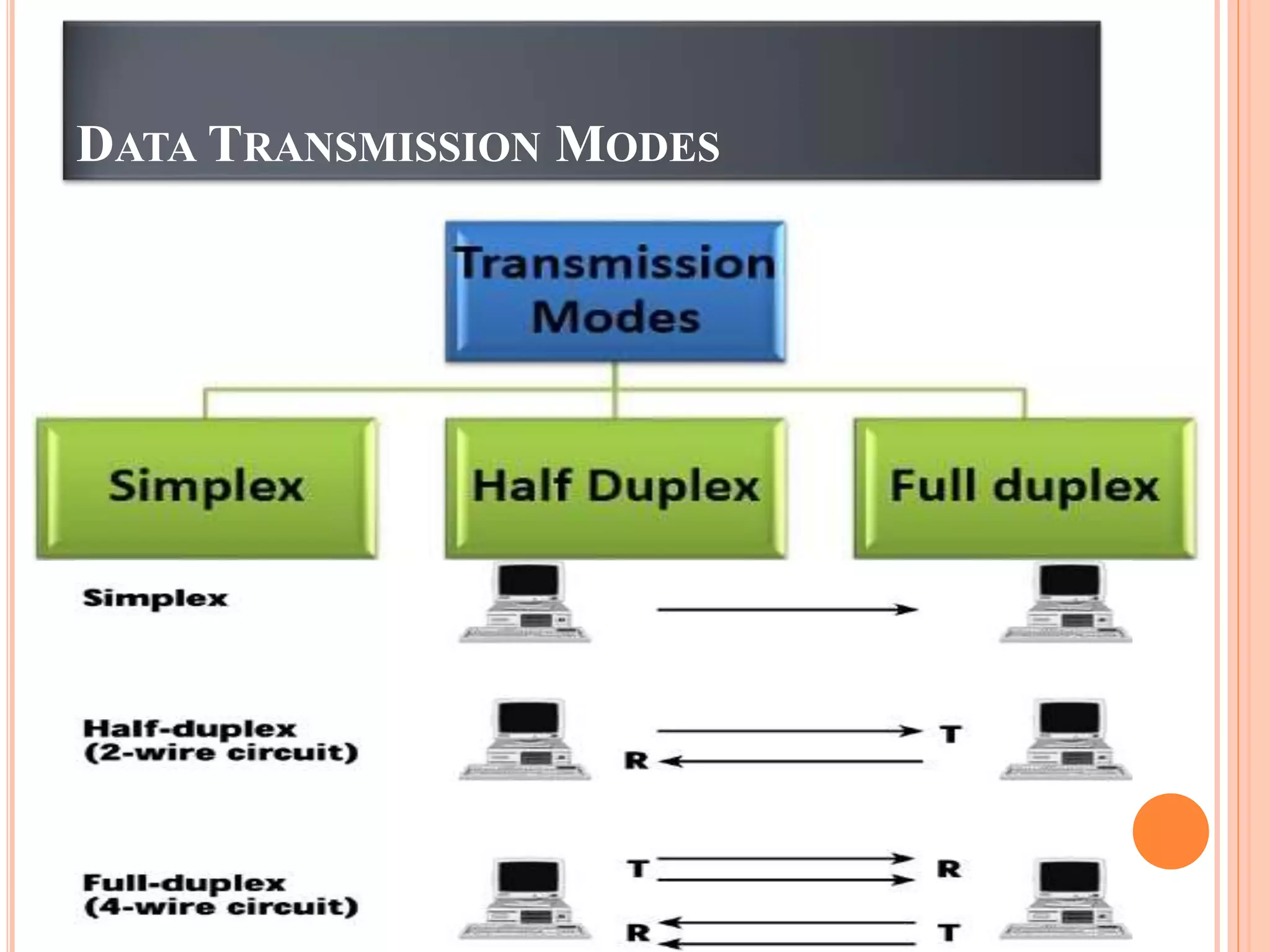
DATA TRANSMISSION MODES
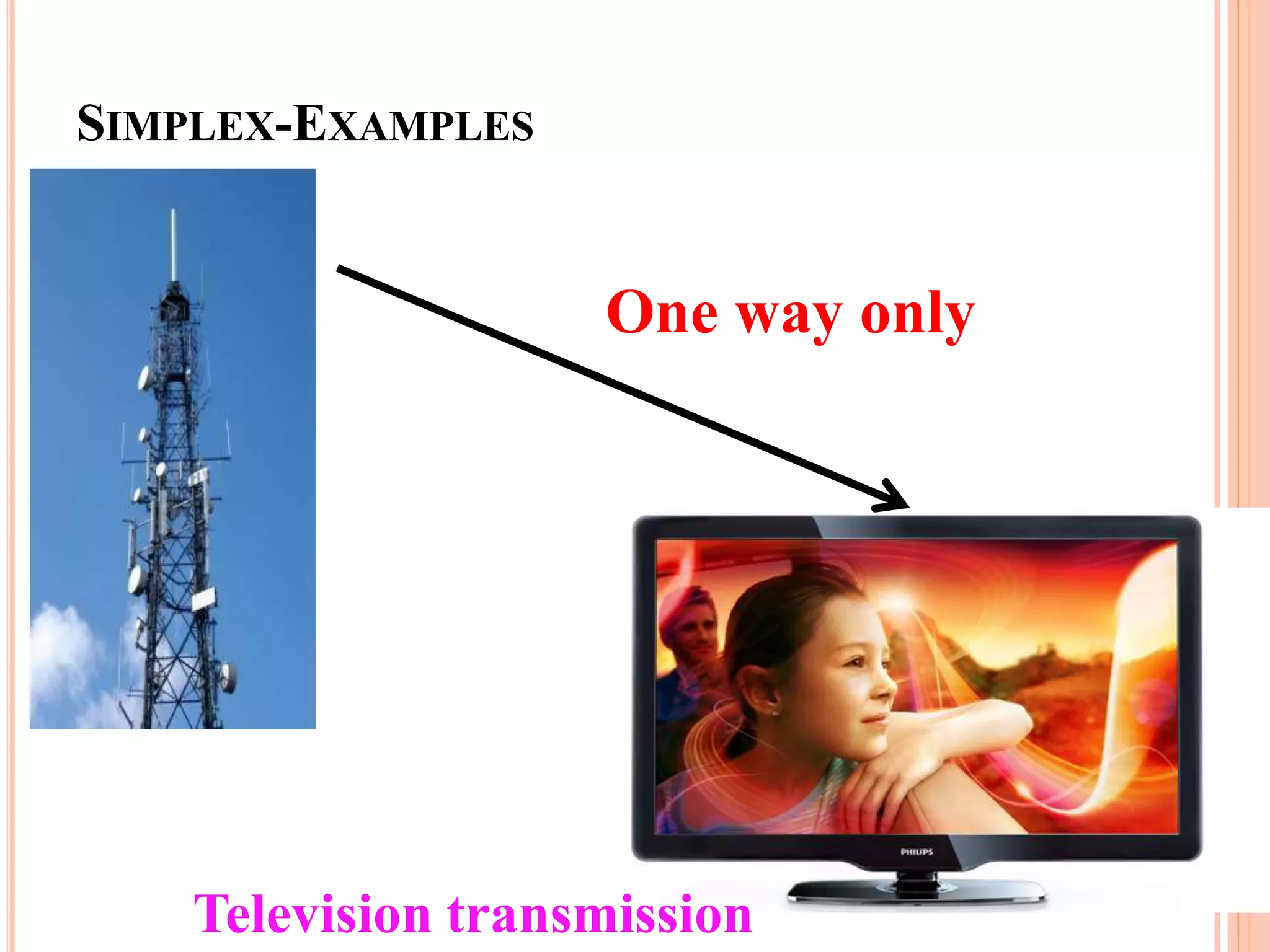
Simplex
•Data is directed one way only.
•There is no any space for data transmission to be
directed the other way.
Examples: Television transmission
Radio transmission.
From your computer to the printer.
From the mouse to your computer.
•Data transmission is always done here only from
sender to receiver.
SIMPLEX-EXAMPLES
One way only
Television transmission
Half-Duplex
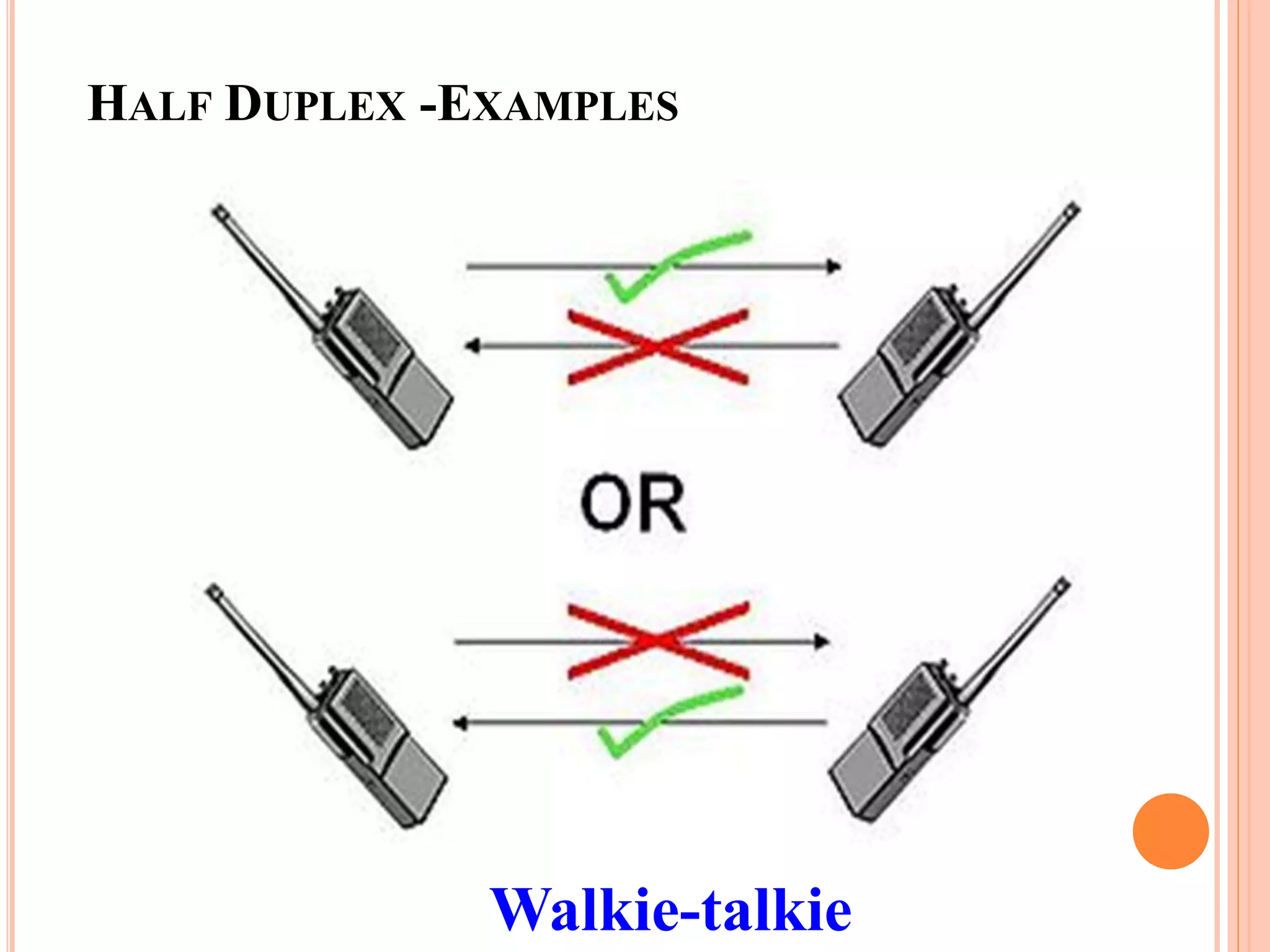
Data can be directed one way at a time.
The data flows in one direction or the other,
but not both at the same time.
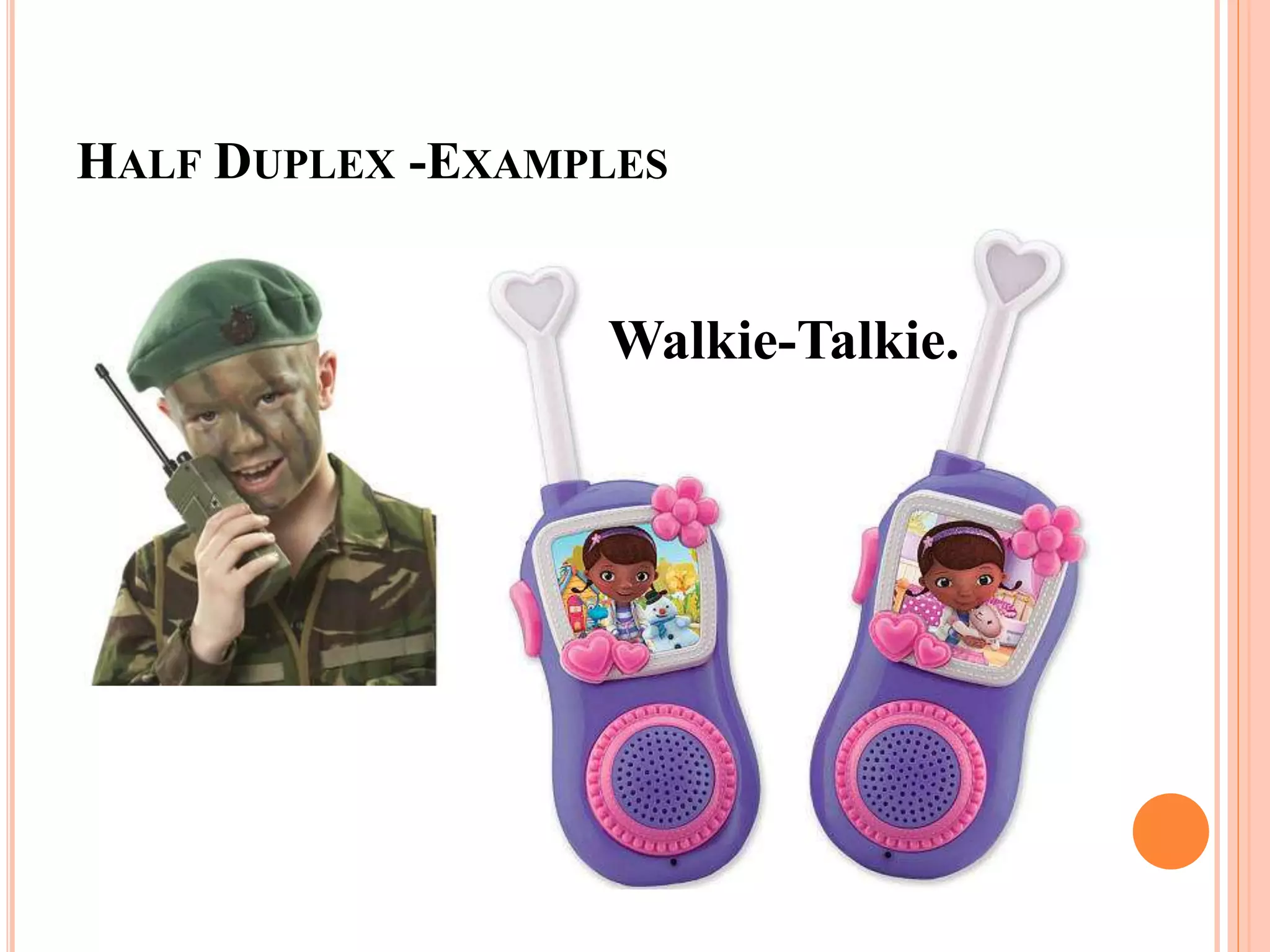
Example: Walkie-talkie.
Where only one party can talk to the other at a
time
HALF DUPLEX -EXAMPLES
Walkie-talkie
HALF DUPLEX -EXAMPLES
Walkie-Talkie.
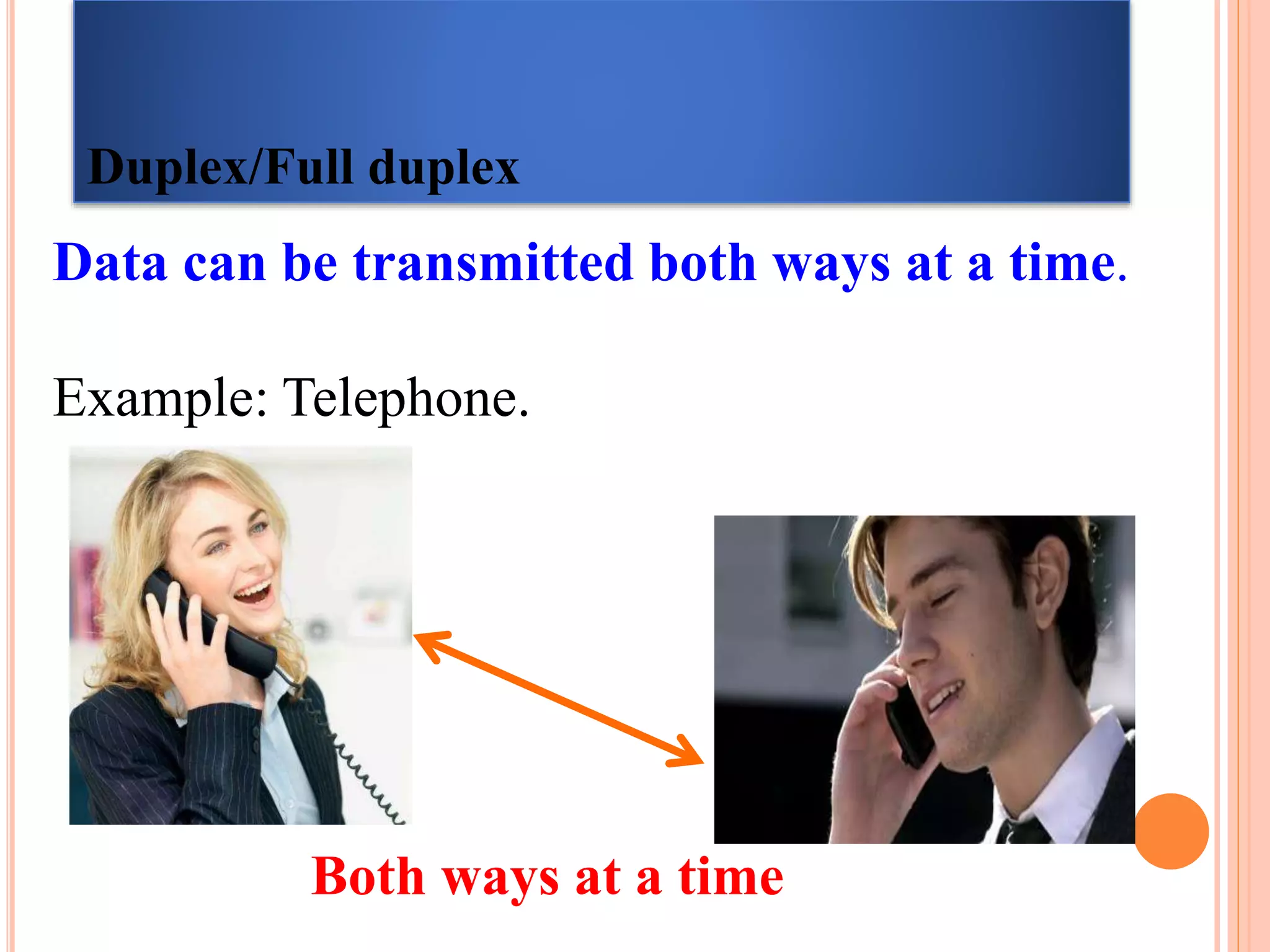
Data can be transmitted both ways at a time.
Example: Telephone.
Both ways at a time
Duplex/Full duplex
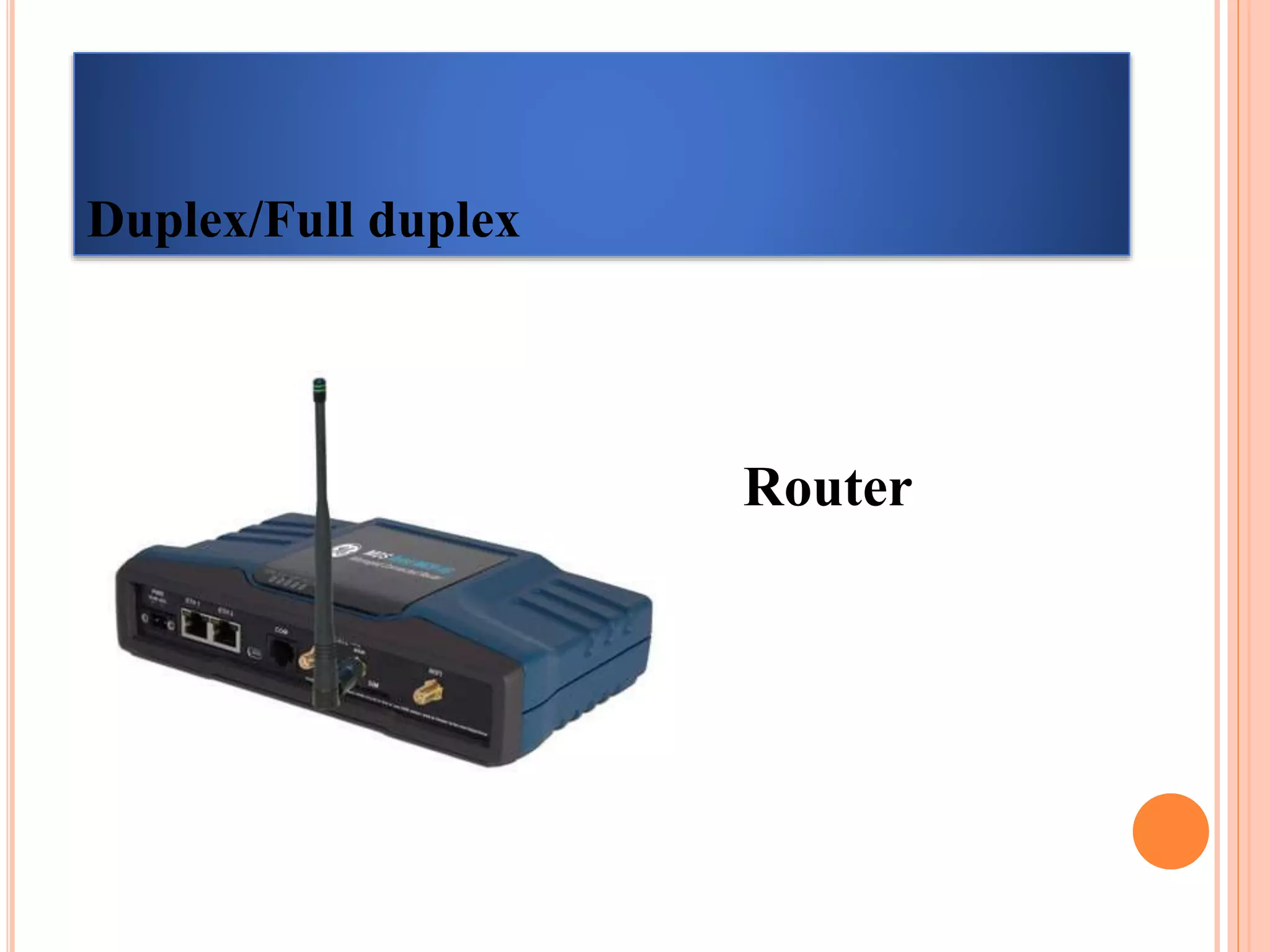
Duplex/Full duplex
Router
CONCLUSION
 New forms of business involving data, knowledge
and communication will result in a Information
Revolution. Computer networks will lift the current
businesses in the agricultural and industrial sectors
up to a higher level. Fast communication between
people, accurate control and a better co-ordination
of tasks will enable companies to
offer products and services that are exclusive and
of a better quality.

BIBLIOGRAPHY-
1. WIKIPEDIA
2. DATA COMMUNICATION NOTES
3. Www.GOOGLE.COM
4. TEXT BOOK OF DATA COMMUNICATION (BY B.A.
FOROUZAN)
5. Text book of ADVANCE COMMUNICATION(BY
S.RAPPAPORT)
Presentation on DATA COMMUNICATION by Cj Subham

Presentation on DATA COMMUNICATION by Cj Subham

  • 1.
    DATA COMMUNICATION PRESENTED BY- SUBHAMLAHIRY MAJUMDAR BRANCH:- E&TC REGD NO.:- F15011003035 SEMESTER:- 5TH SEMESTER
  • 2.
    CONTENTS-  Introduction  BasicParts of Data Communication  Data Transmission Types:- i. Serial Data Transmission ii. Parallel Data Transmission  Types Of Serial Data Transmission:- i. SYNCHRONOUS TRANSMISSION ii. ASYNCHRONOUS TRANSMISSION  Data Transmission Modes:- i. SIMPLE ii. HALF DUPLEX iii. FULL DUPLEX  BIBLIOGRAPHY  CONCLUSION
  • 3.
    What is datacommunication? Transmission of data from one place to another place is called data communication.
  • 4.
    Basic parts ofdata communication Three components are essential in data communication. 1. Sender / Source 2. Data Communication Medium 3. Receiver / Sink
  • 5.
    Basic parts ofdata communication Sender/Sourc e Receiver/Sink Medium
  • 6.
    Sender / Source Senderor source is the data producer or the place where the data is produced for data transmission. E.g.: Imagine you call a friend of yours. Then you become the Sender or Source. Sender
  • 7.
    Data Communication Medium Themedium which is used to transmit data to the receiver. E.g.: In the example mentioned above, wireless …….communication becomes the data communication medium there.
  • 8.
    Receiver / Sink Thereceiver is the person who gets data at the end. E.g.: Your friend is the receiver in the above mentioned example. Receiver
  • 9.
    DATA TRANSMISSION TYPES Datatransmission can be done in two ways. 1.Serial data transmission 2. Parallel data transmission
  • 10.
    Serial data transmission •Datais transmitted here, one after the other (one bit at a time, in a serial way). •Such data transmission is done in bits in a computer network. •One wire is enough here for data transmission.
  • 11.
  • 12.
    Parallel data transmission •Severalbits are transmitted at a time •Several wires are used for this. •In most of the instances, use of at least eight wires for this is the normal way.
  • 13.
  • 14.
    SERIAL TRANSMISSION ISFURTHER DIVIDED INTO 3 TYPES:-  ASYNCHRONOUS TRANSMISSION  SYNCHROMOUS TRANSMISSION  ISOCHRONOUS TRANSMISSION
  • 16.
    ASYNCHRONOUS TRANSMISSION:-  Inasynchronous transmission 1-byte of data is transmitted at a time.  Bit synchronisation is made possible by using start and stop bits.  Start bit indicates the beginning of data.  It is usually a zero.  Stop bit indicates the end of data.  Addition of start and stop bit increases the no. of data bits.  Hence more bandwidth is required for data transmission.  There is an idle time between the transmission of data bytes.  This idle time is known as gap.  Ex:- (keyboard and modem)
  • 18.
    SYNCHRONOUS TRANSMISSION  Insynchronous transmission blocks of data are transmitted.  It does not transmit start and stop bits.  There is no gap between the various bytes in the data stream.  As the bytes are placed on the link without any gap it is the responsibility of the receiver to separate the bits stream into bytes so as to reconstruct the original information.  In order to receive data error free the receiver and sender operates in same clock frequency.  It is faster as compared to asynchronous transmission.  It is costlier than asynchronous transmission.  It is used for high speed data communication between computers.
  • 19.
    Data Transmission Speed Thespeed of data transmission is measured in Bytes per second (bps) Kbps (kilobytes per second) Mbps (Megabytes per second) Gbps (Gigabytes per second).
  • 20.
  • 21.
    Simplex •Data is directedone way only. •There is no any space for data transmission to be directed the other way. Examples: Television transmission Radio transmission. From your computer to the printer. From the mouse to your computer. •Data transmission is always done here only from sender to receiver.
  • 22.
  • 23.
    Half-Duplex Data can bedirected one way at a time. The data flows in one direction or the other, but not both at the same time. Example: Walkie-talkie. Where only one party can talk to the other at a time
  • 24.
  • 25.
  • 26.
    Data can betransmitted both ways at a time. Example: Telephone. Both ways at a time Duplex/Full duplex
  • 27.
  • 28.
    CONCLUSION  New formsof business involving data, knowledge and communication will result in a Information Revolution. Computer networks will lift the current businesses in the agricultural and industrial sectors up to a higher level. Fast communication between people, accurate control and a better co-ordination of tasks will enable companies to offer products and services that are exclusive and of a better quality.
  • 29.
    BIBLIOGRAPHY- 1. WIKIPEDIA 2. DATACOMMUNICATION NOTES 3. Www.GOOGLE.COM 4. TEXT BOOK OF DATA COMMUNICATION (BY B.A. FOROUZAN) 5. Text book of ADVANCE COMMUNICATION(BY S.RAPPAPORT)