WHAT IS GOOGLE ALGORITHM????
• GOOGLE ALGORITHM IS A SET OF RULE THAT THE SEARCH ENGINE USES TO
DETERMINE THE SIGNIFICANCE OF A WEBPAGE.
• EACH SEARCH ENGINE HAS ITS OWN SET OF RULE.
• GOOGLE ALGORITHM PREVENTS CHEATING ON WEBSITES
• FROM TIME TO TIME GOOGLE ALGORITHMS WORKS TO PROVIDE BETTER
SEARCH RESULTS AND RELEVANT CONTENTS FOR INTERNET USERS.
TYPES OF GOOGLE ALGORITHM....
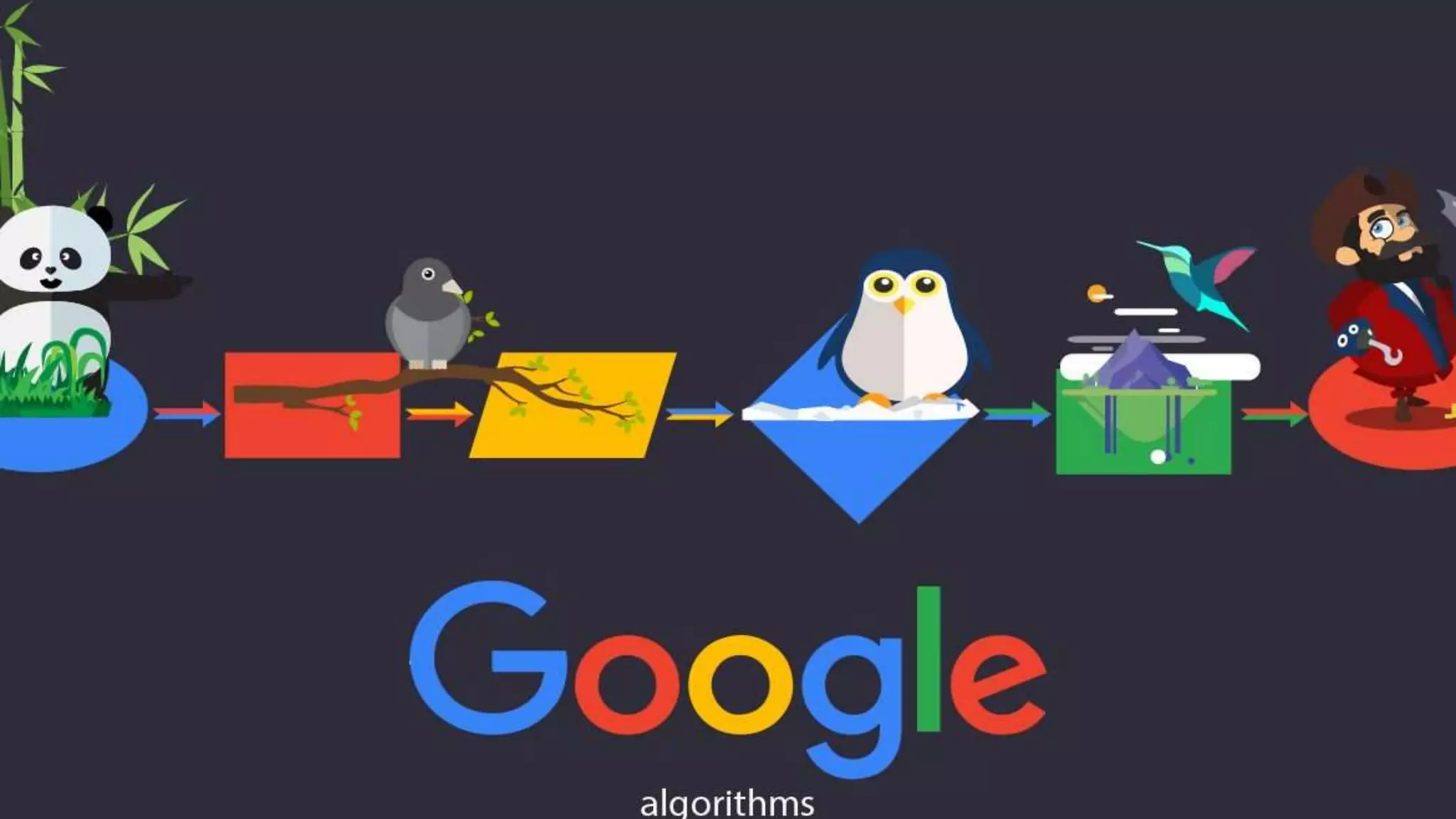
Google panda
Google penguin
Humming bird
Goggle mobile friendly update
Possum
Google pegion
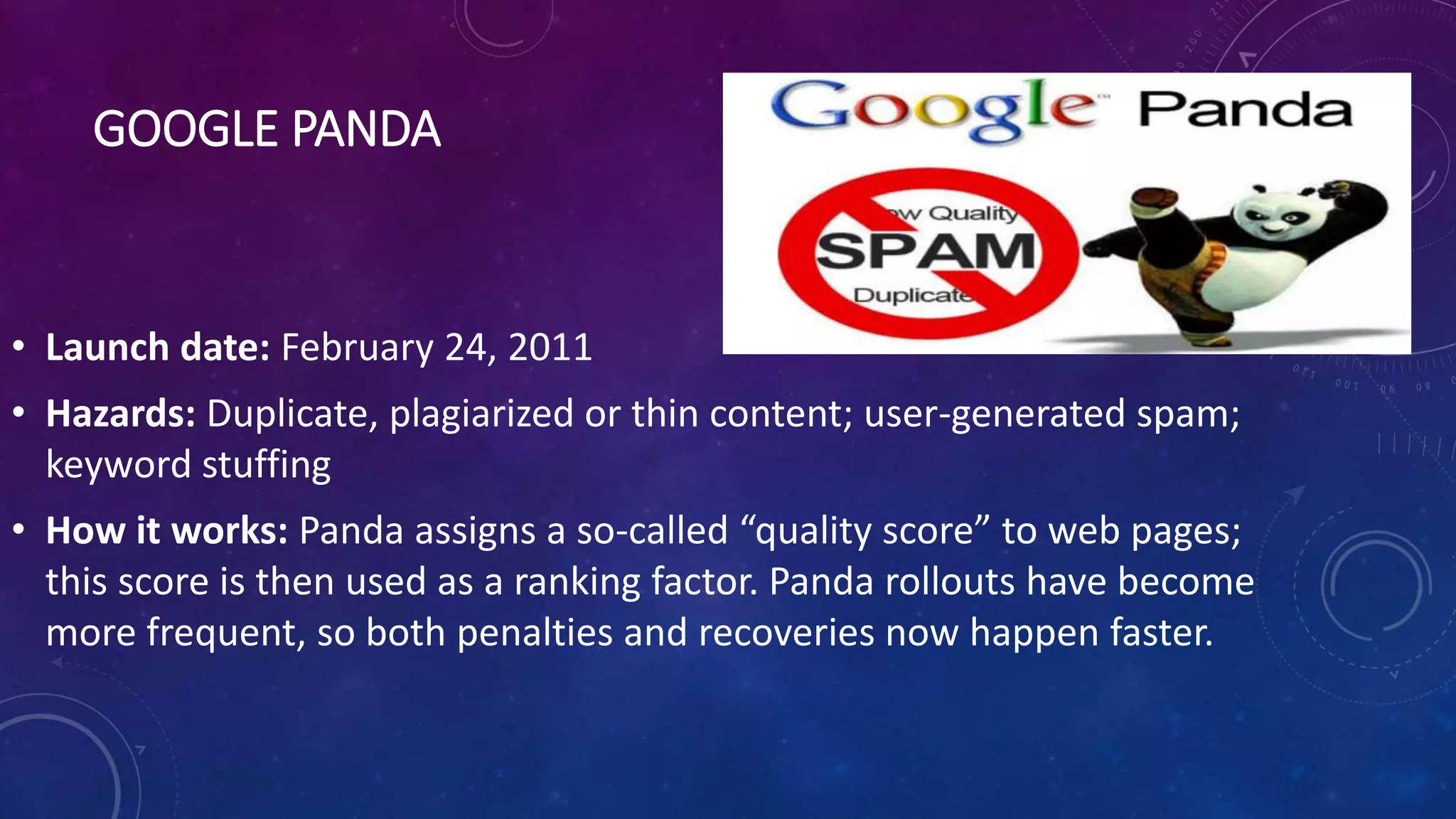
GOOGLE PANDA
• Launch date: February 24, 2011
• Hazards: Duplicate, plagiarized or thin content; user-generated spam;
keyword stuffing
• How it works: Panda assigns a so-called “quality score” to web pages;
this score is then used as a ranking factor. Panda rollouts have become
more frequent, so both penalties and recoveries now happen faster.
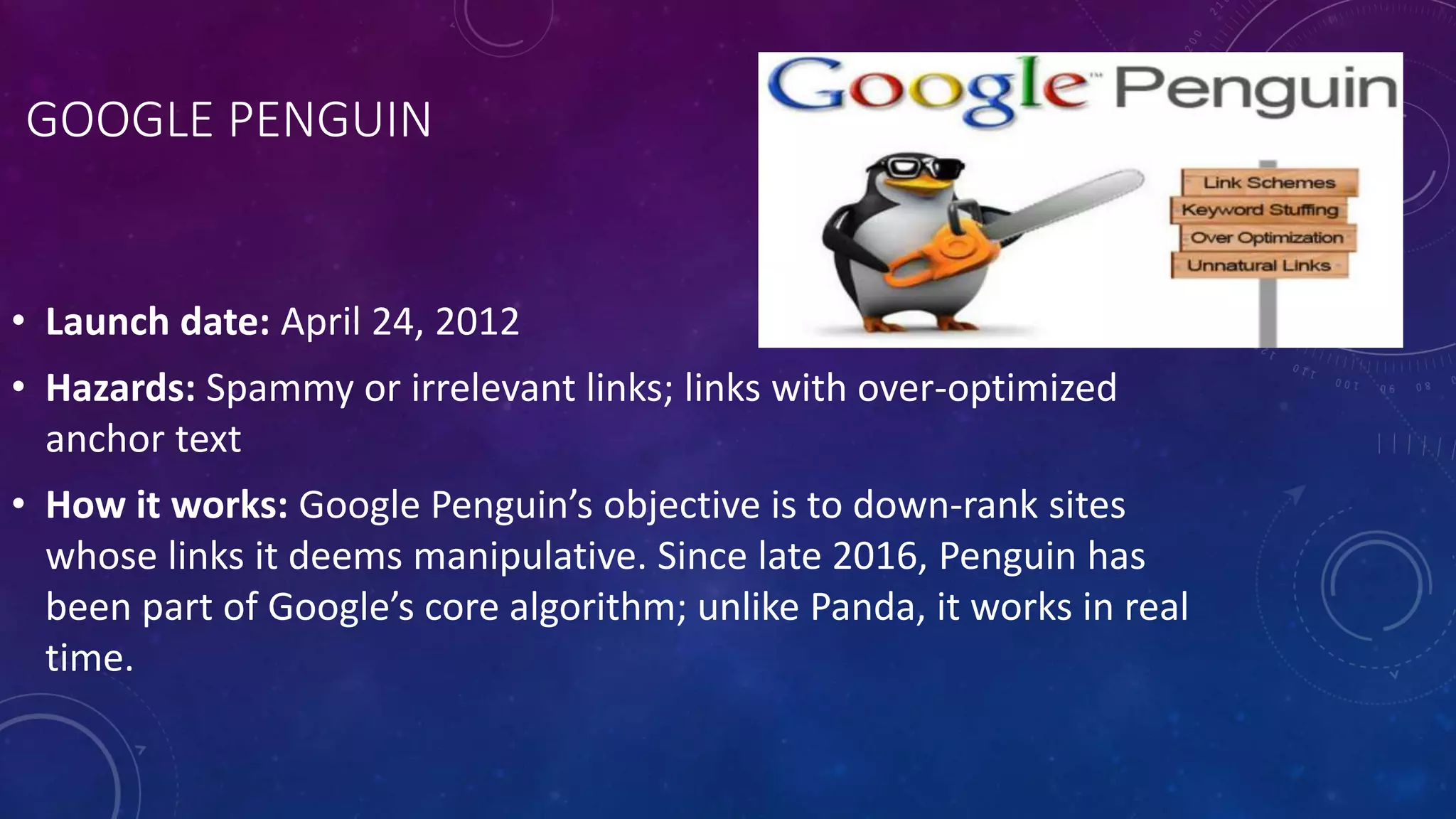
GOOGLE PENGUIN
• Launch date: April 24, 2012
• Hazards: Spammy or irrelevant links; links with over-optimized
anchor text
• How it works: Google Penguin’s objective is to down-rank sites
whose links it deems manipulative. Since late 2016, Penguin has
been part of Google’s core algorithm; unlike Panda, it works in real
time.
HUMMINGBIRD
• Launch date: August 22, 2013
• Hazards: Keyword stuffing; low-quality content
• How it works: Hummingbird helps Google better interpret search
queries and provide results that match searcher intent While keywords
continue to be important, Hummingbird makes it possible for a page to
rank for a query even if it doesn’t contain the exact words the searcher
entered.
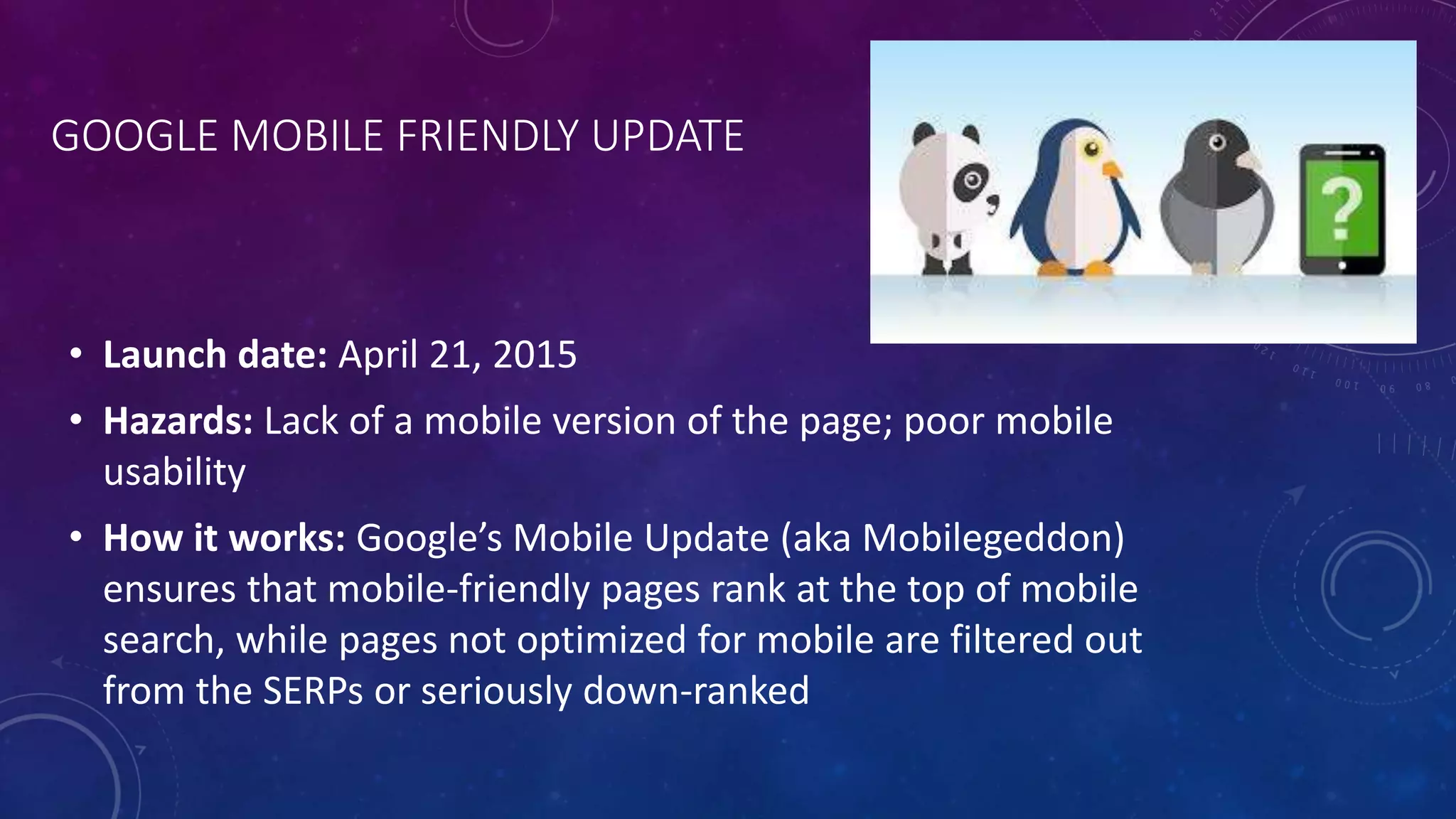
GOOGLE MOBILE FRIENDLY UPDATE
• Launch date: April 21, 2015
• Hazards: Lack of a mobile version of the page; poor mobile
usability
• How it works: Google’s Mobile Update (aka Mobilegeddon)
ensures that mobile-friendly pages rank at the top of mobile
search, while pages not optimized for mobile are filtered out
from the SERPs or seriously down-ranked
GOOGLE POSSUM
• Launch date: September 1, 2016
• Hazards: Tense competition in your target location
• How it works: The Possum update ensured that local results vary
more depending on the searcher’s location: the closer you are to a
business’s address, the more likely you are to see it among local
results.
GOOGLE PIGEON
• Launch date: July 24, 2014 (US); December 22, 2014 (UK,
Canada, Australia)
Hazards: Poor on- and off-page SEO
• How it works: Pigeon affects those searches in which the
user’s location plays an important part. The update created
closer ties between the local algorithm and the core
algorithm: traditional SEO factors are now used to rank local
results.
ppt presentation Google algorithm

ppt presentation Google algorithm

  • 2.
    WHAT IS GOOGLEALGORITHM???? • GOOGLE ALGORITHM IS A SET OF RULE THAT THE SEARCH ENGINE USES TO DETERMINE THE SIGNIFICANCE OF A WEBPAGE. • EACH SEARCH ENGINE HAS ITS OWN SET OF RULE. • GOOGLE ALGORITHM PREVENTS CHEATING ON WEBSITES • FROM TIME TO TIME GOOGLE ALGORITHMS WORKS TO PROVIDE BETTER SEARCH RESULTS AND RELEVANT CONTENTS FOR INTERNET USERS.
  • 3.
    TYPES OF GOOGLEALGORITHM.... Google panda Google penguin Humming bird Goggle mobile friendly update Possum Google pegion
  • 4.
    GOOGLE PANDA • Launchdate: February 24, 2011 • Hazards: Duplicate, plagiarized or thin content; user-generated spam; keyword stuffing • How it works: Panda assigns a so-called “quality score” to web pages; this score is then used as a ranking factor. Panda rollouts have become more frequent, so both penalties and recoveries now happen faster.
  • 5.
    GOOGLE PENGUIN • Launchdate: April 24, 2012 • Hazards: Spammy or irrelevant links; links with over-optimized anchor text • How it works: Google Penguin’s objective is to down-rank sites whose links it deems manipulative. Since late 2016, Penguin has been part of Google’s core algorithm; unlike Panda, it works in real time.
  • 6.
    HUMMINGBIRD • Launch date:August 22, 2013 • Hazards: Keyword stuffing; low-quality content • How it works: Hummingbird helps Google better interpret search queries and provide results that match searcher intent While keywords continue to be important, Hummingbird makes it possible for a page to rank for a query even if it doesn’t contain the exact words the searcher entered.
  • 7.
    GOOGLE MOBILE FRIENDLYUPDATE • Launch date: April 21, 2015 • Hazards: Lack of a mobile version of the page; poor mobile usability • How it works: Google’s Mobile Update (aka Mobilegeddon) ensures that mobile-friendly pages rank at the top of mobile search, while pages not optimized for mobile are filtered out from the SERPs or seriously down-ranked
  • 8.
    GOOGLE POSSUM • Launchdate: September 1, 2016 • Hazards: Tense competition in your target location • How it works: The Possum update ensured that local results vary more depending on the searcher’s location: the closer you are to a business’s address, the more likely you are to see it among local results.
  • 9.
    GOOGLE PIGEON • Launchdate: July 24, 2014 (US); December 22, 2014 (UK, Canada, Australia) Hazards: Poor on- and off-page SEO • How it works: Pigeon affects those searches in which the user’s location plays an important part. The update created closer ties between the local algorithm and the core algorithm: traditional SEO factors are now used to rank local results.