SHALINI KUMARI
  11ERWCSO74
CONTENTS
•   INTRODUCTION
•   CHARACTERSTICS
•    STRUCTURE OF PROGRAM
•   DATA TYPE
•   IF ELSE
•   SWITCH CASE
•   LOOPING
•   ARRAY
•   POINTER
•   STRUCTURE
•   FUNCTION
INTRODUCTION
• C language is one of the most popular
  computer language today because it is a
  structured ,low level ,machine dependent
  language

• It is developed by DENNIS RITCHIE in
  between 1969 and 1973 at bell labs.
CHARECTERISTICS
• There are a small, fixed number of keywords,
  including a full set of flow of control
  primitives : for, while, if, do while and switch.

• More than one assignment may be performed
  in a single statement.

• There are a large number of arithmetical and
  logical operators, such as +, +=, ++, &, ~, etc.
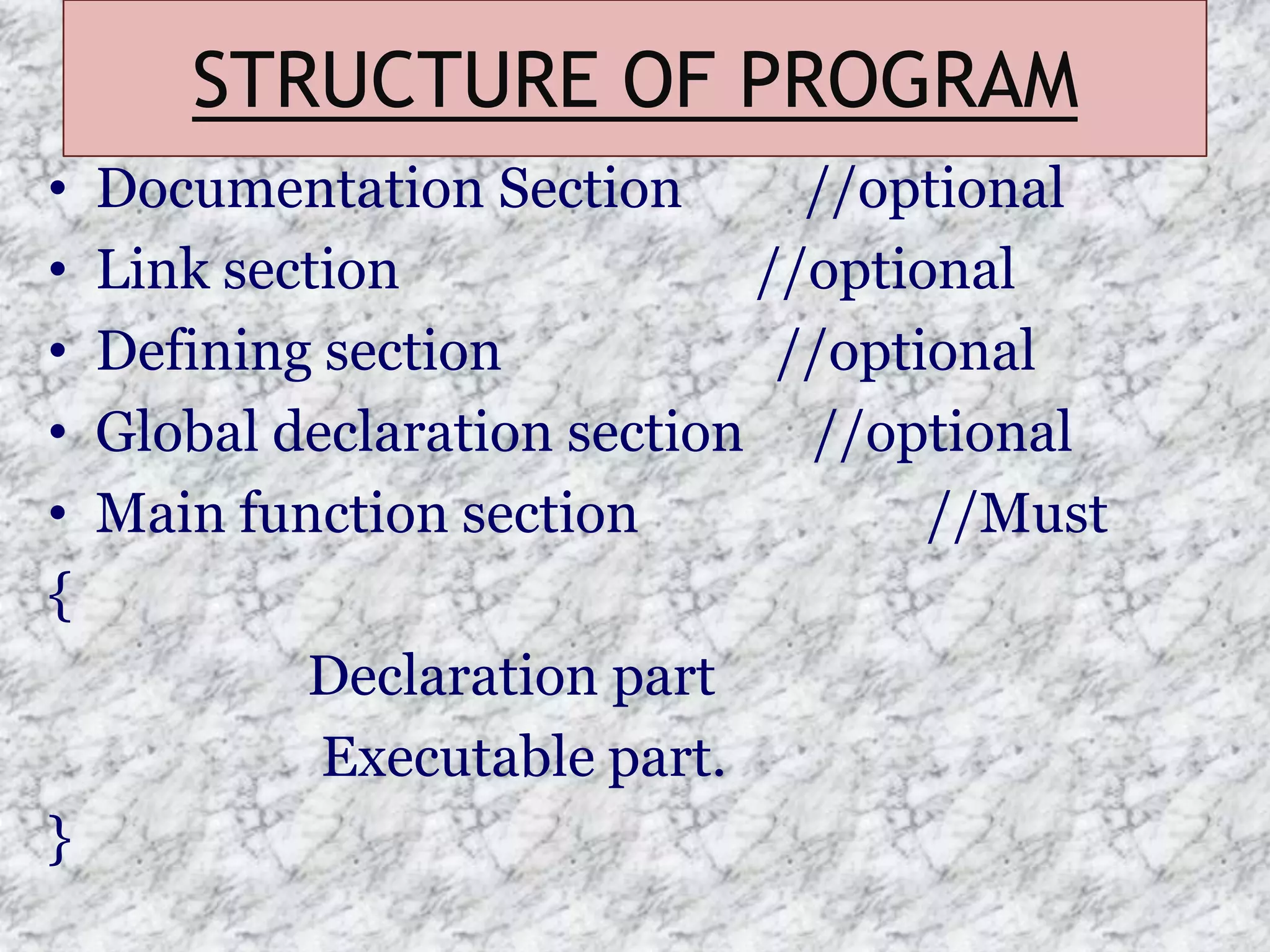
STRUCTURE OF PROGRAM
•   Documentation Section       //optional
•   Link section              //optional
•   Defining section           //optional
•   Global declaration section //optional
•   Main function section            //Must
{
            Declaration part
            Executable part.
}
• Sub program
  section            //optional
•         Function 1
•         Function 2
• Function n
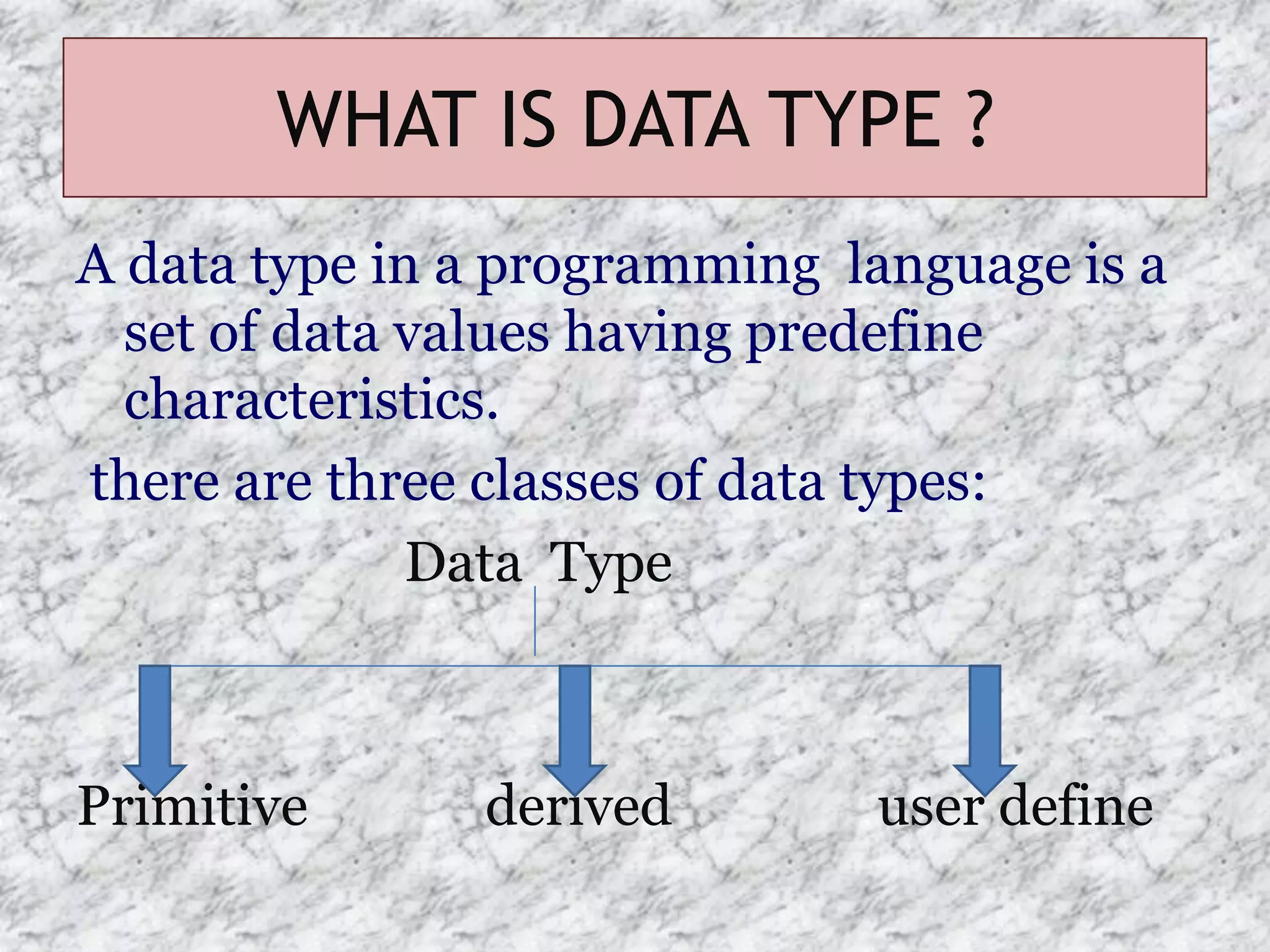
WHAT IS DATA TYPE ?
A data type in a programming language is a
  set of data values having predefine
  characteristics.
there are three classes of data types:
              Data Type


Primitive      derived        user define
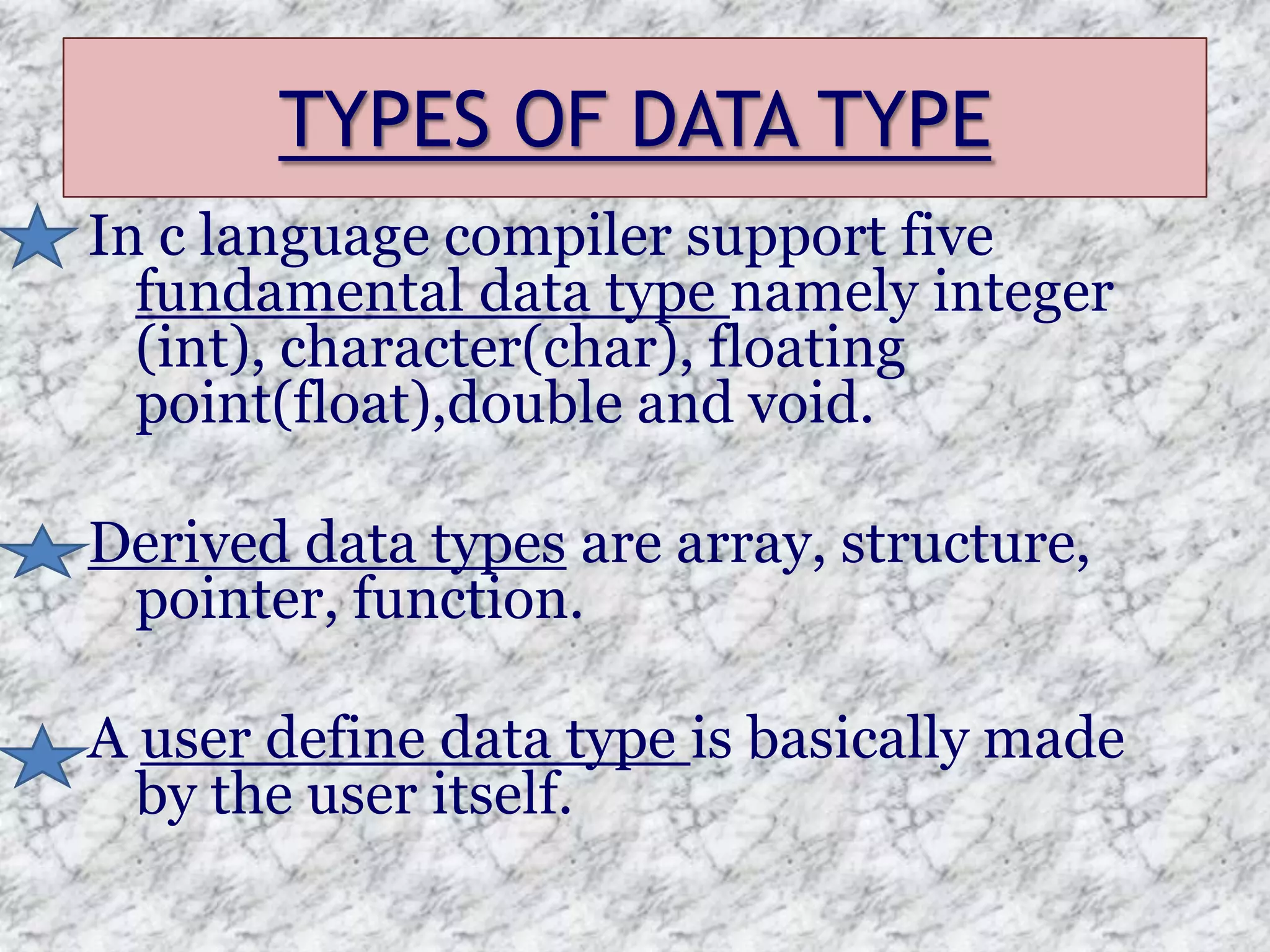
TYPES OF DATA TYPE
In c language compiler support five
  fundamental data type namely integer
  (int), character(char), floating
  point(float),double and void.

Derived data types are array, structure,
 pointer, function.

A user define data type is basically made
  by the user itself.
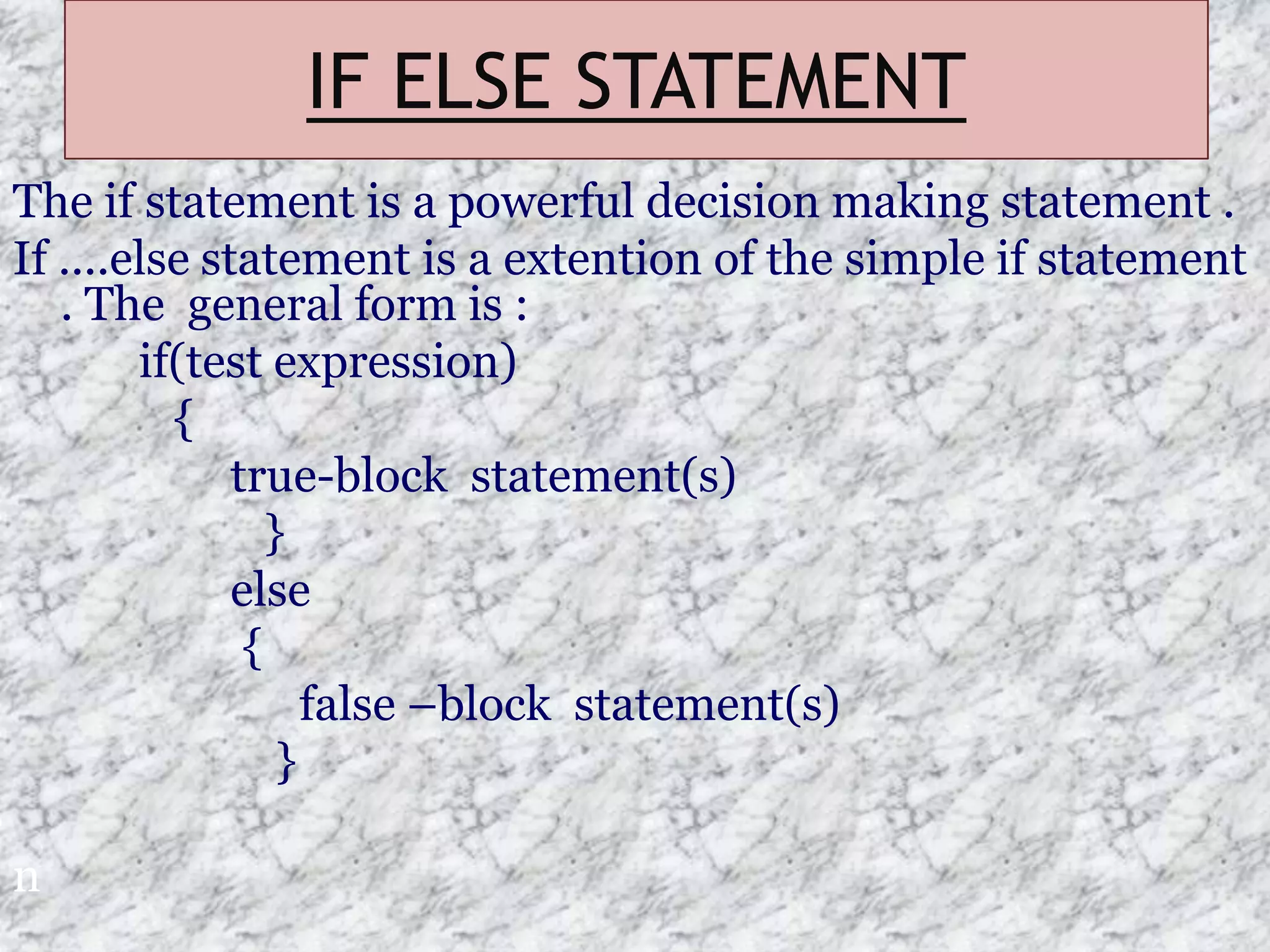
IF ELSE STATEMENT
The if statement is a powerful decision making statement .
If ....else statement is a extention of the simple if statement
   . The general form is :
        if(test expression)
          {
              true-block statement(s)
                 }
              else
               {
                    false –block statement(s)
                  }

n
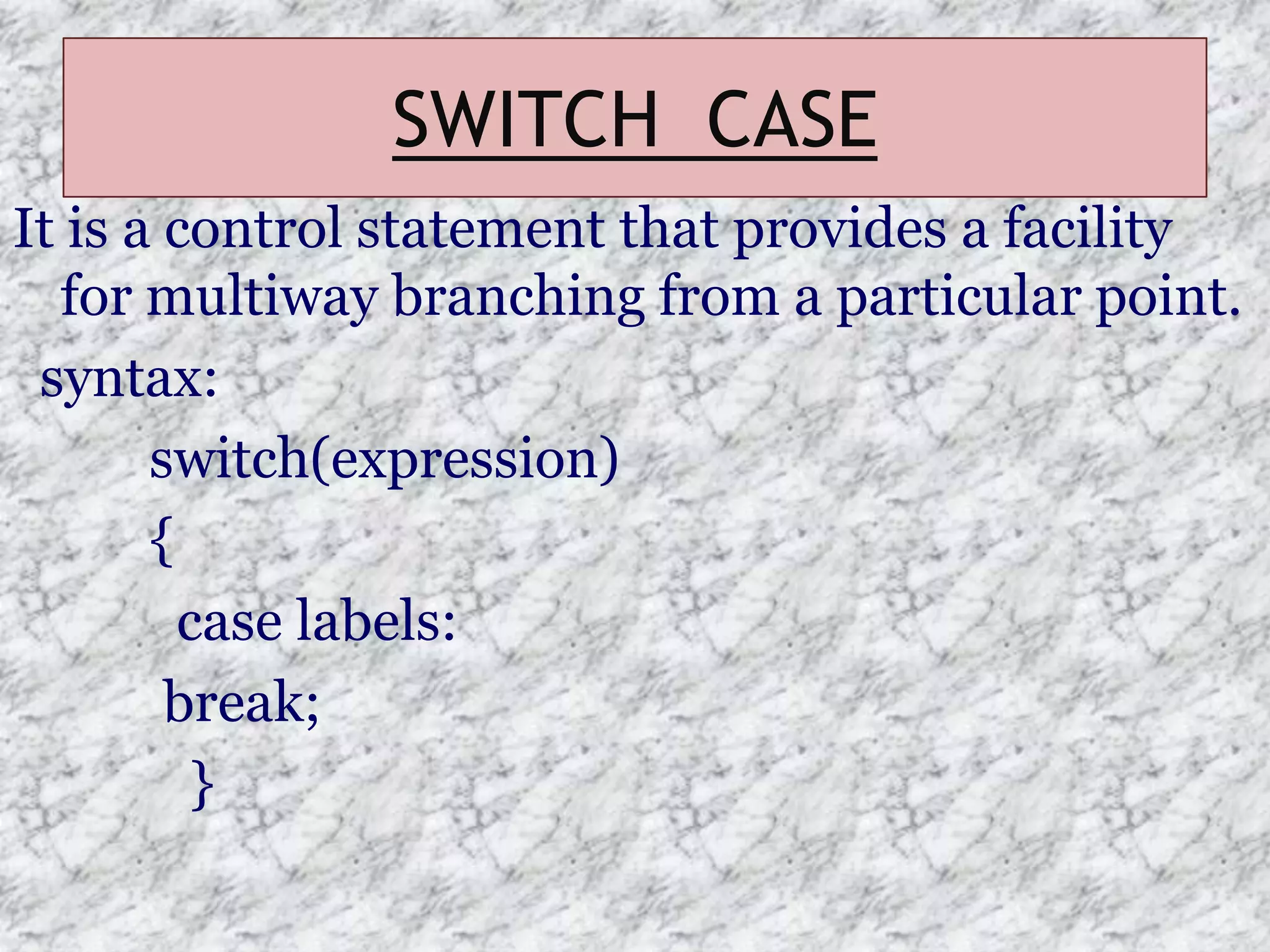
SWITCH CASE
It is a control statement that provides a facility
  for multiway branching from a particular point.
 syntax:
       switch(expression)
       {
         case labels:
        break;
          }
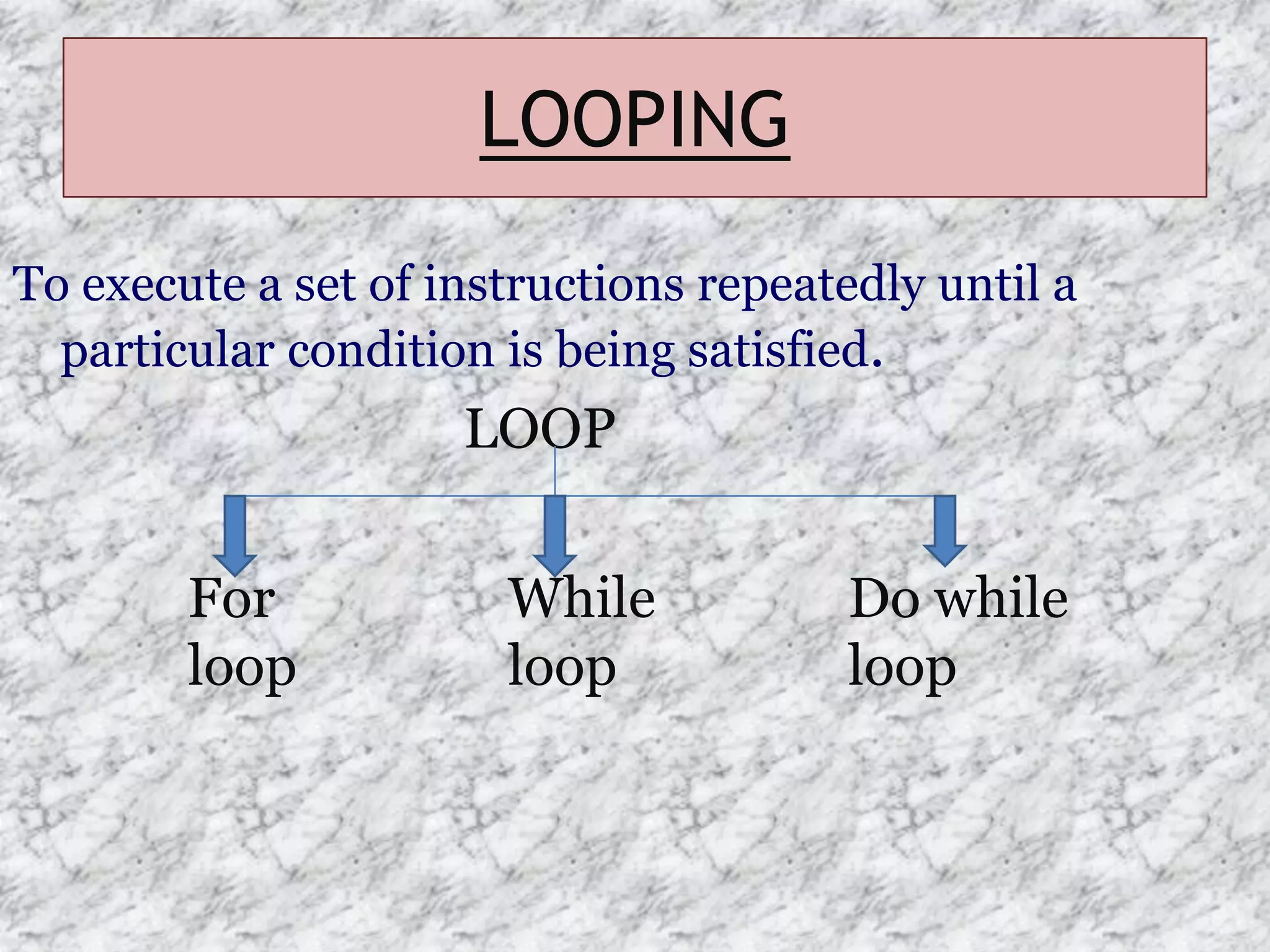
LOOPING
To execute a set of instructions repeatedly until a
  particular condition is being satisfied.
                     LOOP


        For            While            Do while
        loop           loop             loop
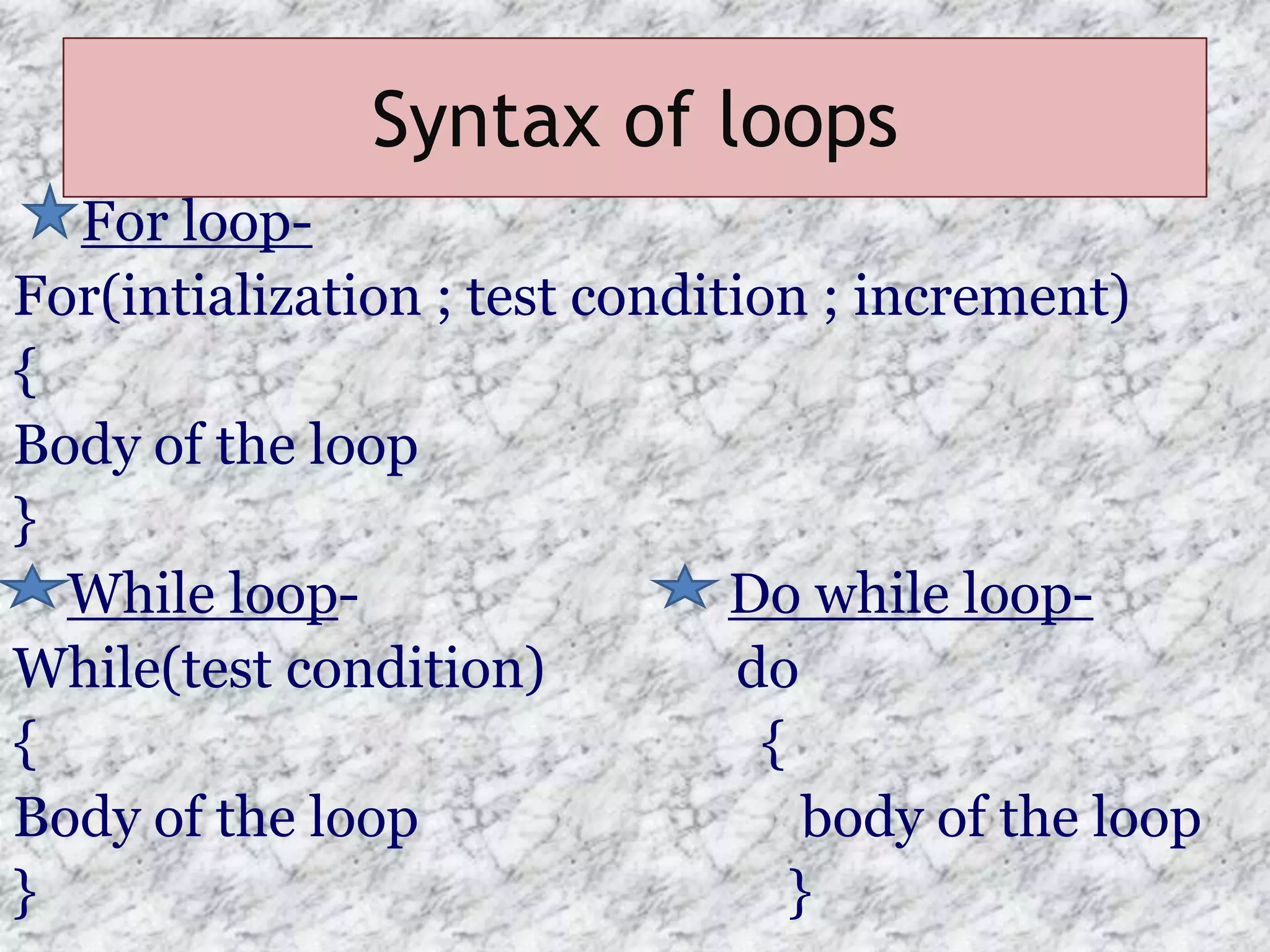
Syntax of loops
  For loop-
For(intialization ; test condition ; increment)
{
Body of the loop
}
  While loop-                  Do while loop-
While(test condition)          do
{                                {
Body of the loop                    body of the loop
}                                  }
ARRAY
An array is a collection of elements of the same
  data type.
Syntax :
 data type arrayname[size];
             Type of array

 1 dimensional   2 dimensional   Multi-dimensional
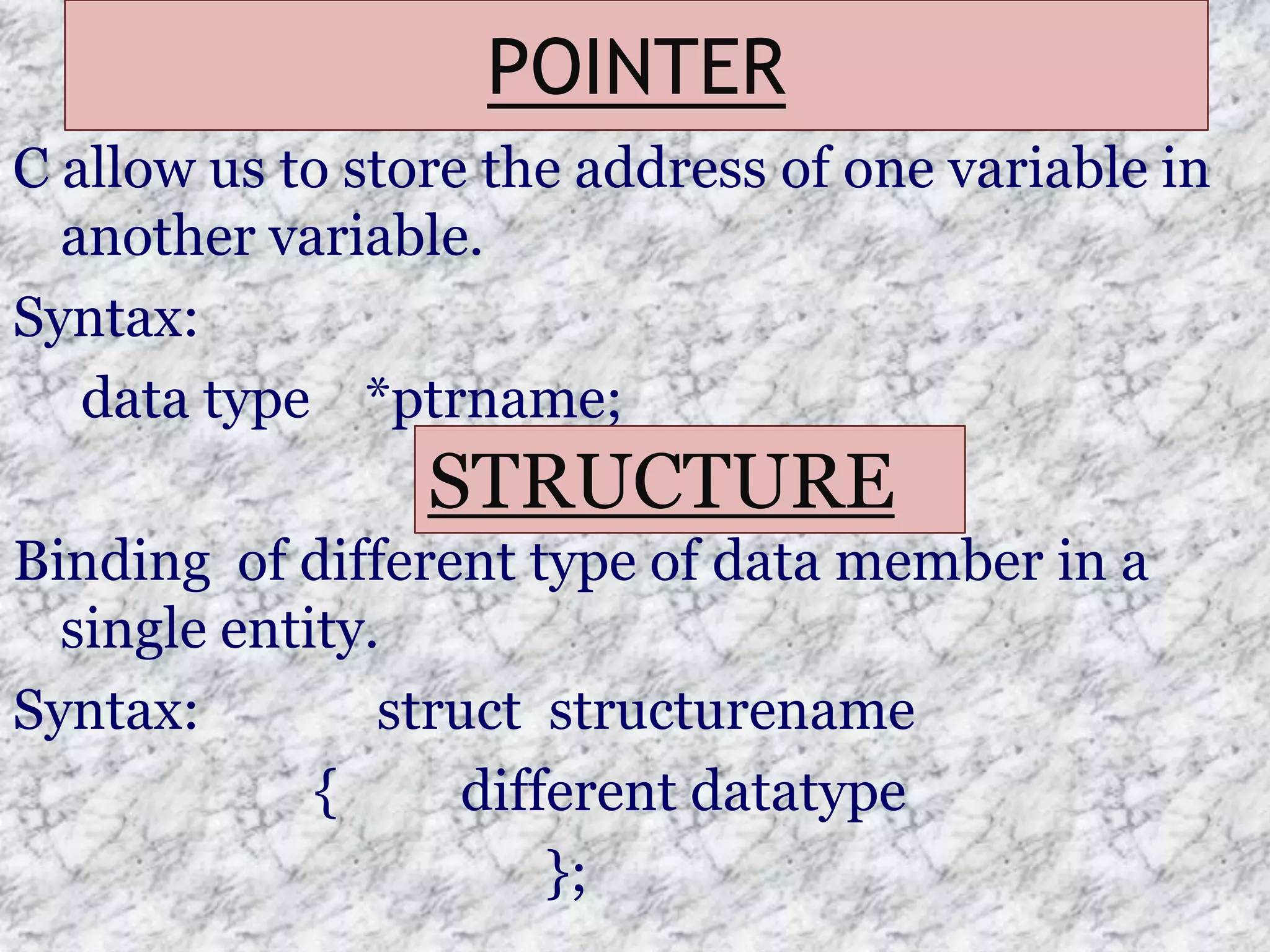
POINTER
C allow us to store the address of one variable in
  another variable.
Syntax:
   data type *ptrname;
                 STRUCTURE
Binding of different type of data member in a
  single entity.
Syntax:         struct structurename
             {      different datatype
                        };
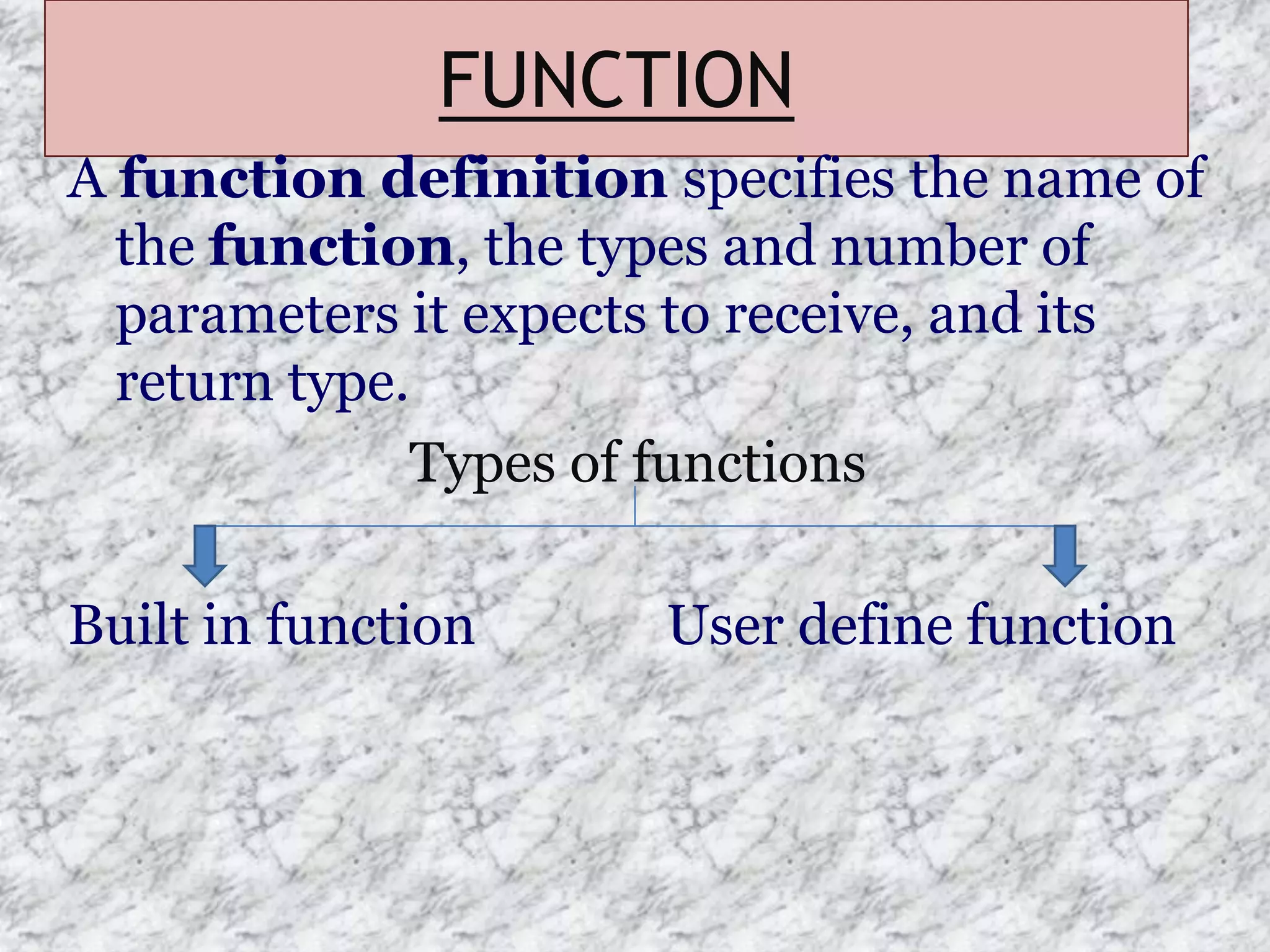
FUNCTION
A function definition specifies the name of
  the function, the types and number of
  parameters it expects to receive, and its
  return type.
              Types of functions

Built in function     User define function
Overview of c language

Overview of c language

  • 1.
    SHALINI KUMARI 11ERWCSO74
  • 2.
    CONTENTS • INTRODUCTION • CHARACTERSTICS • STRUCTURE OF PROGRAM • DATA TYPE • IF ELSE • SWITCH CASE • LOOPING • ARRAY • POINTER • STRUCTURE • FUNCTION
  • 3.
    INTRODUCTION • C languageis one of the most popular computer language today because it is a structured ,low level ,machine dependent language • It is developed by DENNIS RITCHIE in between 1969 and 1973 at bell labs.
  • 4.
    CHARECTERISTICS • There area small, fixed number of keywords, including a full set of flow of control primitives : for, while, if, do while and switch. • More than one assignment may be performed in a single statement. • There are a large number of arithmetical and logical operators, such as +, +=, ++, &, ~, etc.
  • 5.
    STRUCTURE OF PROGRAM • Documentation Section //optional • Link section //optional • Defining section //optional • Global declaration section //optional • Main function section //Must { Declaration part Executable part. }
  • 6.
    • Sub program section //optional • Function 1 • Function 2 • Function n
  • 7.
    WHAT IS DATATYPE ? A data type in a programming language is a set of data values having predefine characteristics. there are three classes of data types: Data Type Primitive derived user define
  • 8.
    TYPES OF DATATYPE In c language compiler support five fundamental data type namely integer (int), character(char), floating point(float),double and void. Derived data types are array, structure, pointer, function. A user define data type is basically made by the user itself.
  • 9.
    IF ELSE STATEMENT Theif statement is a powerful decision making statement . If ....else statement is a extention of the simple if statement . The general form is : if(test expression) { true-block statement(s) } else { false –block statement(s) } n
  • 10.
    SWITCH CASE It isa control statement that provides a facility for multiway branching from a particular point. syntax: switch(expression) { case labels: break; }
  • 11.
    LOOPING To execute aset of instructions repeatedly until a particular condition is being satisfied. LOOP For While Do while loop loop loop
  • 12.
    Syntax of loops For loop- For(intialization ; test condition ; increment) { Body of the loop } While loop- Do while loop- While(test condition) do { { Body of the loop body of the loop } }
  • 13.
    ARRAY An array isa collection of elements of the same data type. Syntax : data type arrayname[size]; Type of array 1 dimensional 2 dimensional Multi-dimensional
  • 14.
    POINTER C allow usto store the address of one variable in another variable. Syntax: data type *ptrname; STRUCTURE Binding of different type of data member in a single entity. Syntax: struct structurename { different datatype };
  • 15.
    FUNCTION A function definitionspecifies the name of the function, the types and number of parameters it expects to receive, and its return type. Types of functions Built in function User define function