










A Deloitte perspective on customer experience
in Canada’s financial services sector
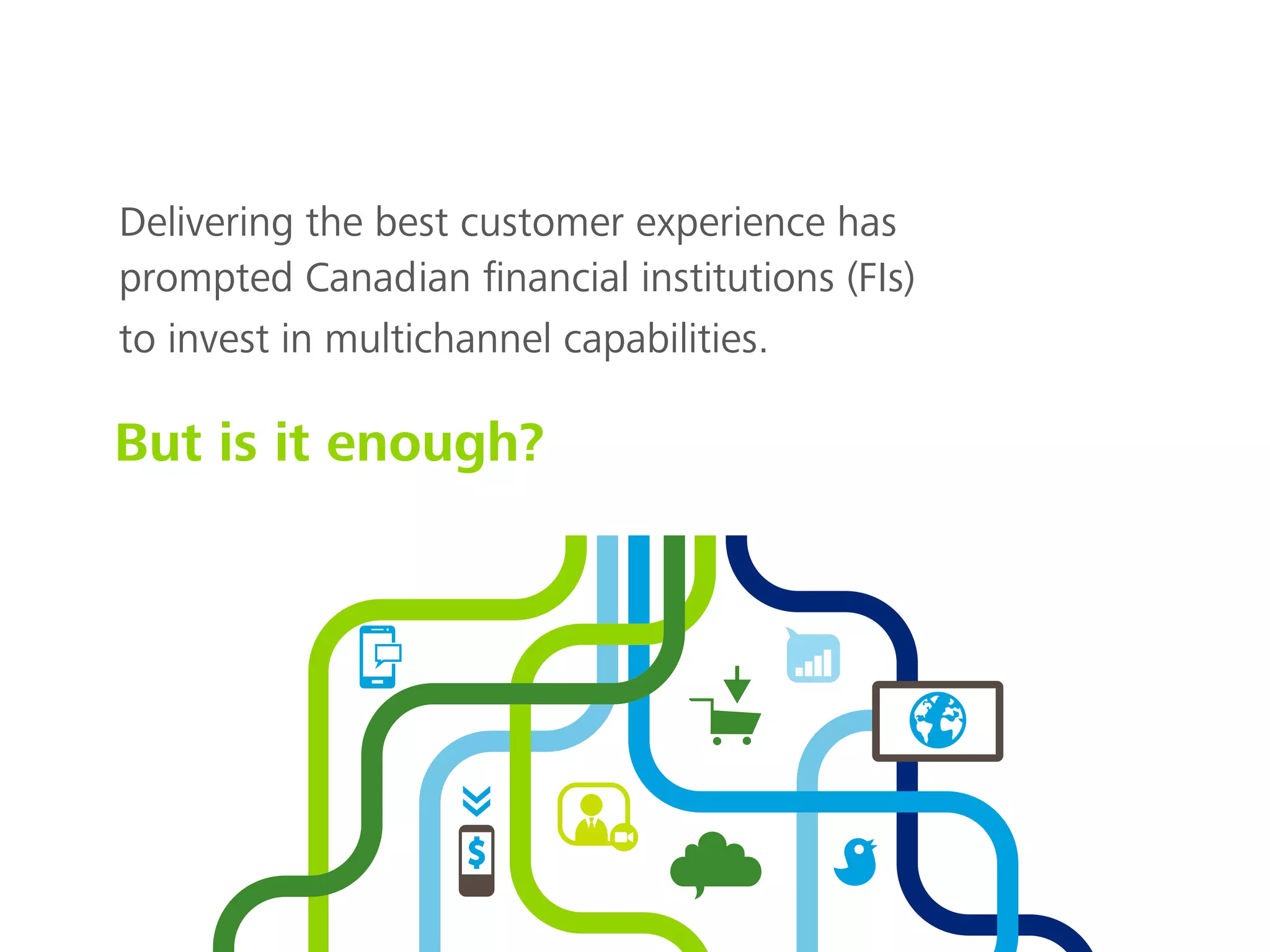
Delivering the best customer experience has
prompted Canadian financial institutions (FIs)
to invest in multichannel capabilities.
But is it enough?
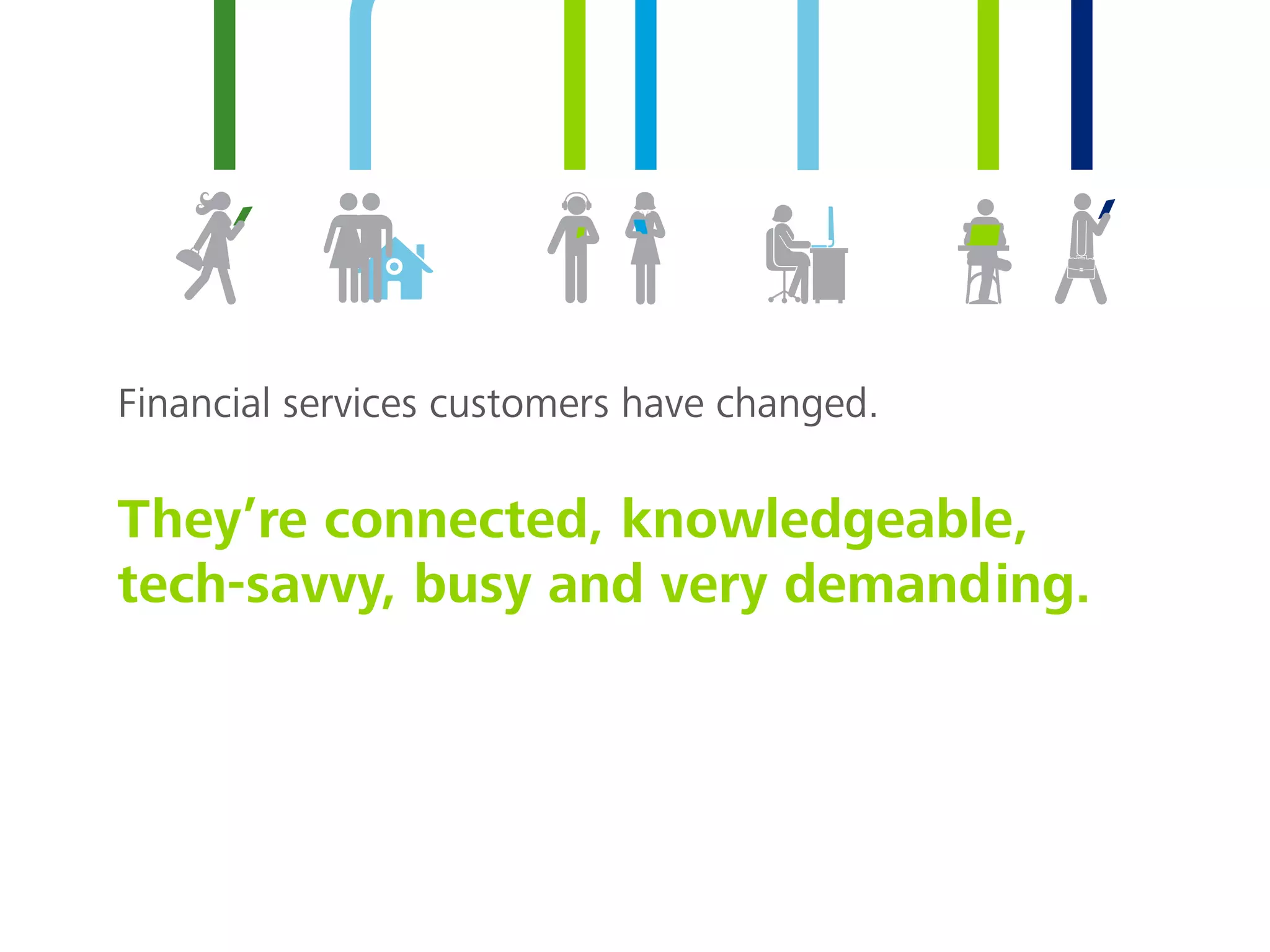
Financial services customers have changed.
They’re connected, knowledgeable,
tech-savvy, busy and very demanding.
They don’t compare financial service
institutions with each other. They rate
them against the best customer service
they receive, period.
And often those lessons about delivering the best
customer service are gleaned from the retail sector.
Financial services customers expect
to do business when, where and how
they want.
They expect their bank or insurer to
deliver products and services tailored to
their unique, individual needs and goals.
But FIs aren’t winning over everyone.
Millennials are an especially tough crowd.
A 2013 survey by a division of Viacom showed Millennials
placed all four of the leading American banks among their
10 least-loved brands.
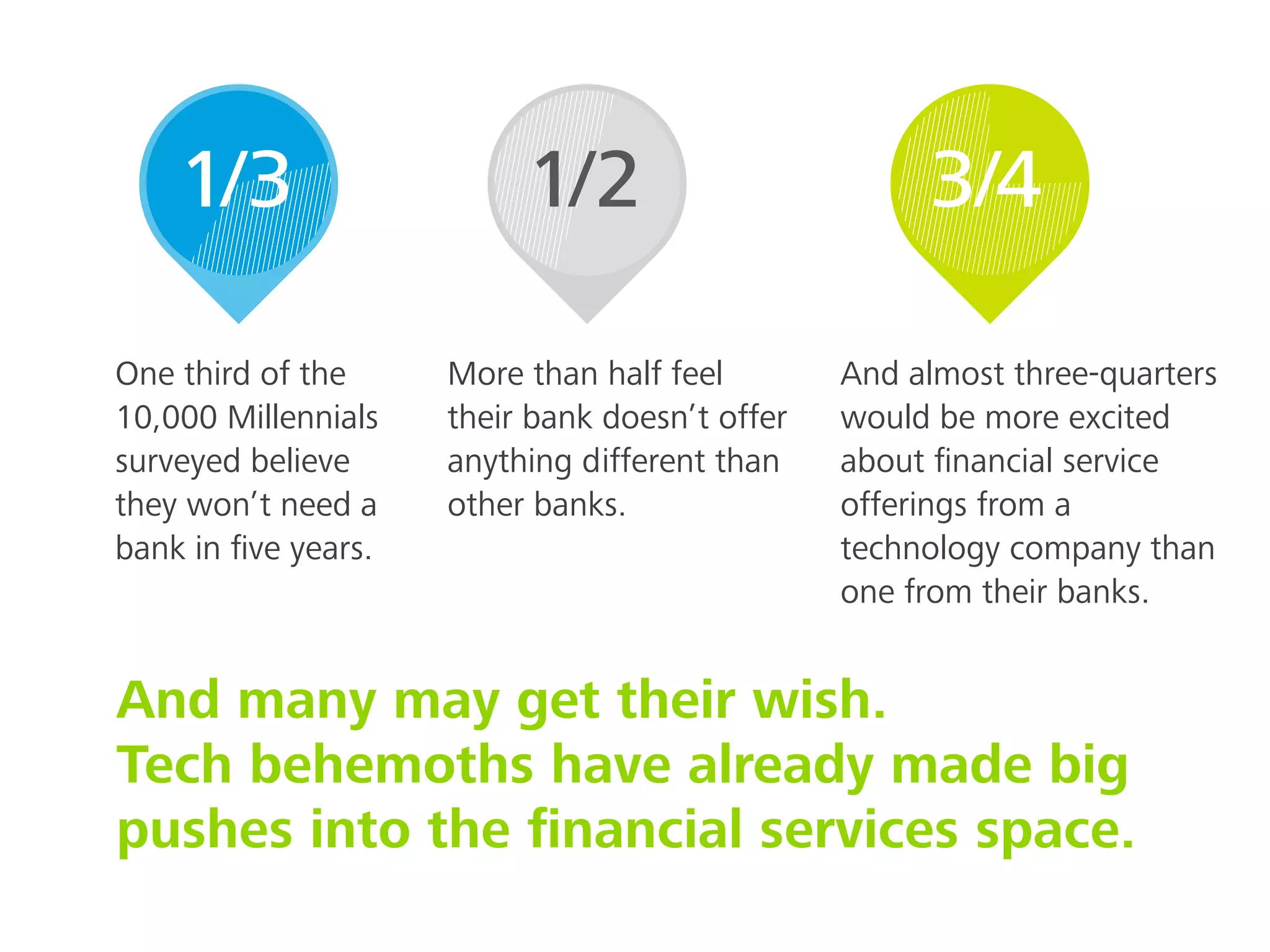
One third of the
10,000 Millennials
surveyed believe
they won’t need a
bank in five years.
1/3 1/2 3/4
And many may get their wish.
Tech behemoths have already made big
pushes into the financial services space.
More than half feel
their bank doesn’t offer
anything different than
other banks.
And almost three-quarters
would be more excited
about financial service
offerings from a
technology company than
one from their banks.
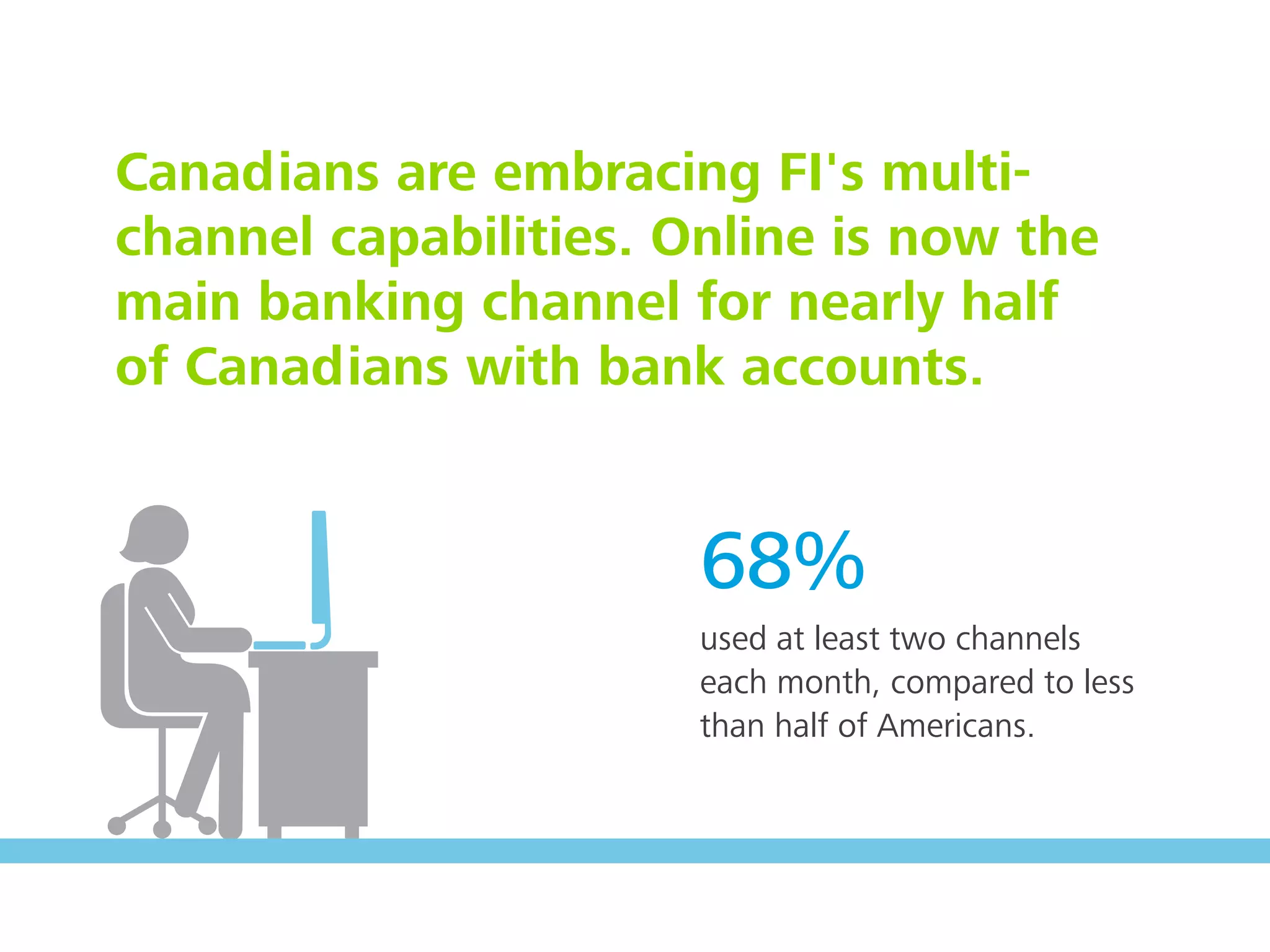
Canadians are embracing FI's multi-
channel capabilities. Online is now the
main banking channel for nearly half
of Canadians with bank accounts.
68%
used at least two channels
each month, compared to less
than half of Americans.
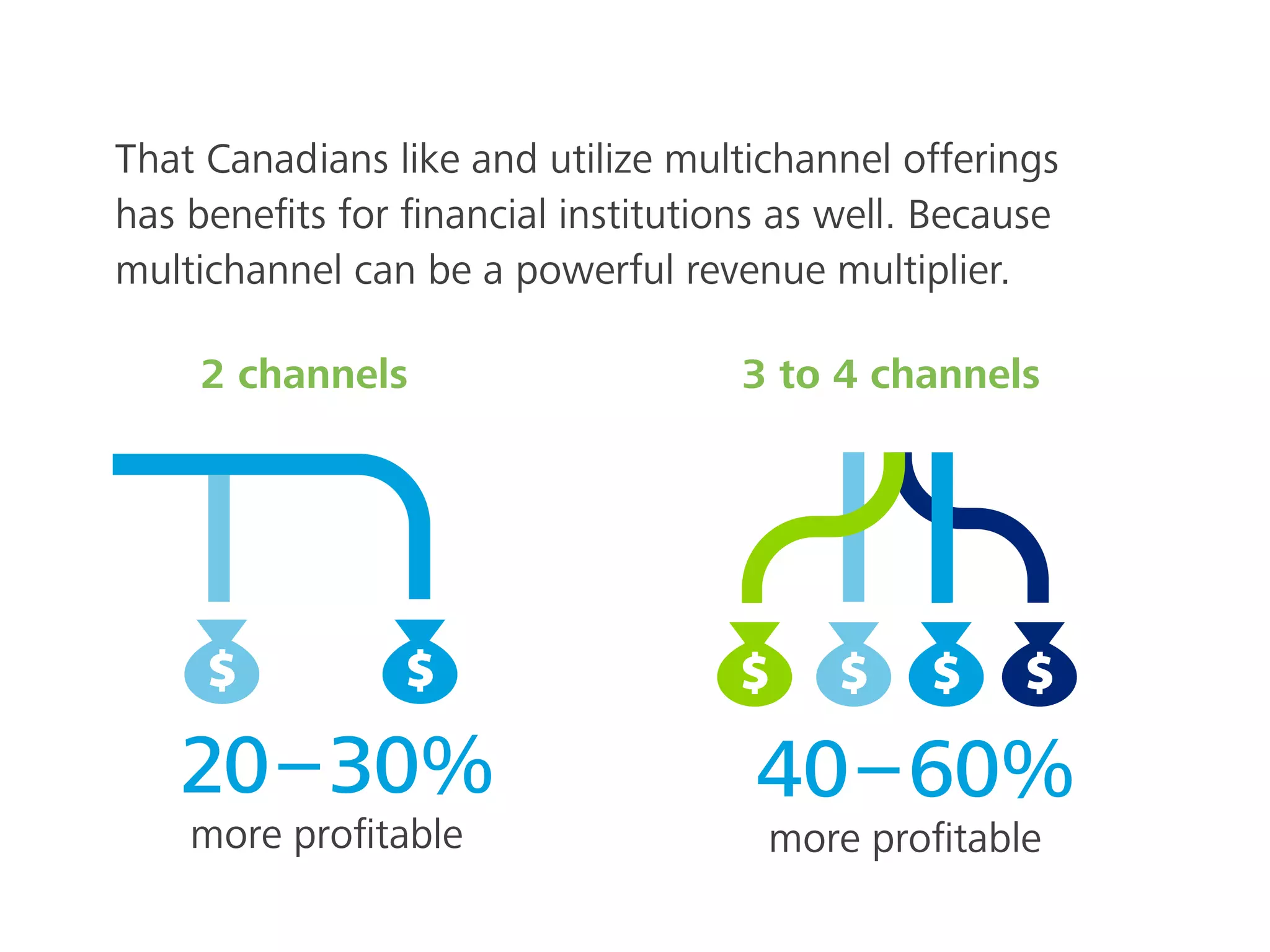
That Canadians like and utilize multichannel offerings
has benefits for financial institutions as well. Because
multichannel can be a powerful revenue multiplier.
3 to 4 channels2 channels
40–60%
more profitable
20–30%
more profitable
It’s no wonder that financial institutions
have been taking an all-out approach to
multichannel.
But, FI's need to look at their channels – and even their
business model – in new ways.
First, firms need to structure themselves around customers.
Not products or services.
1
Understand each customer and their path to
purchase, and make it simple, straightforward and
enjoyable for them to achieve their unique objectives.
2
Eliminate redundant application processes. Make sure
customer service reps, loan officers, advisors and managers
are working from the same complete view of each customer.
3
Deliver advice and offers that suit a specific customer’s
needs, not that customer’s general demographic profile.
4
Financial institutions need to look at channels together –
not separately – to exploit advantages and synergies,
deliver a superior experience and avoid unnecessary costs.
Moving beyond
multichannel
Things to consider
Understand who uses your
channels – and how
Who uses your channels? What do they do
there? Use this understanding to craft
solutions that meet those needs behaviours.
Understand your customers’
paths to purchase
As retailers already know, customers take a
long, winding road before they set foot in a
store or buy online. Understanding the paths
customers take can help you determine which
channels deserve significant investment – and
which don’t need as much attention.
Exploit each channel’s advantages
What’s the value proposition of each channel? What does
it offer that other channels (or competitors) don’t? Use
that to give customers a compelling reason to choose that
channel.
Improving customer experience isn’t always about adding
features. How can you make it easier for customers to do
what they need to do? Use different channels to
streamline and simplify processes.
Simplify
Invest in people
More tech doesn’t always mean a better
customer experience. Ensure staff is
properly trained and have access to a
complete picture of the client. It can
have a powerful impact on a person’s
impression of your business.
Look “outside” for inspiration
Retailers have made tremendous strides in understanding
their customers and delivering an outstanding experience.
Financial institutions can learn from these and adapt these
innovations to make sense in the FI space.
FSI 2.0
Innovation Breakouts
Some Canadian FIs are hoping to
improve customer experience by creating
everything from a coffee-shop to a spa
like feeling for the bank branches. Others
are joining forces with retailers to create
electronic wallets.
Advances are already
underway in different parts
of the FSI universe
Eurovision: overseas innovations
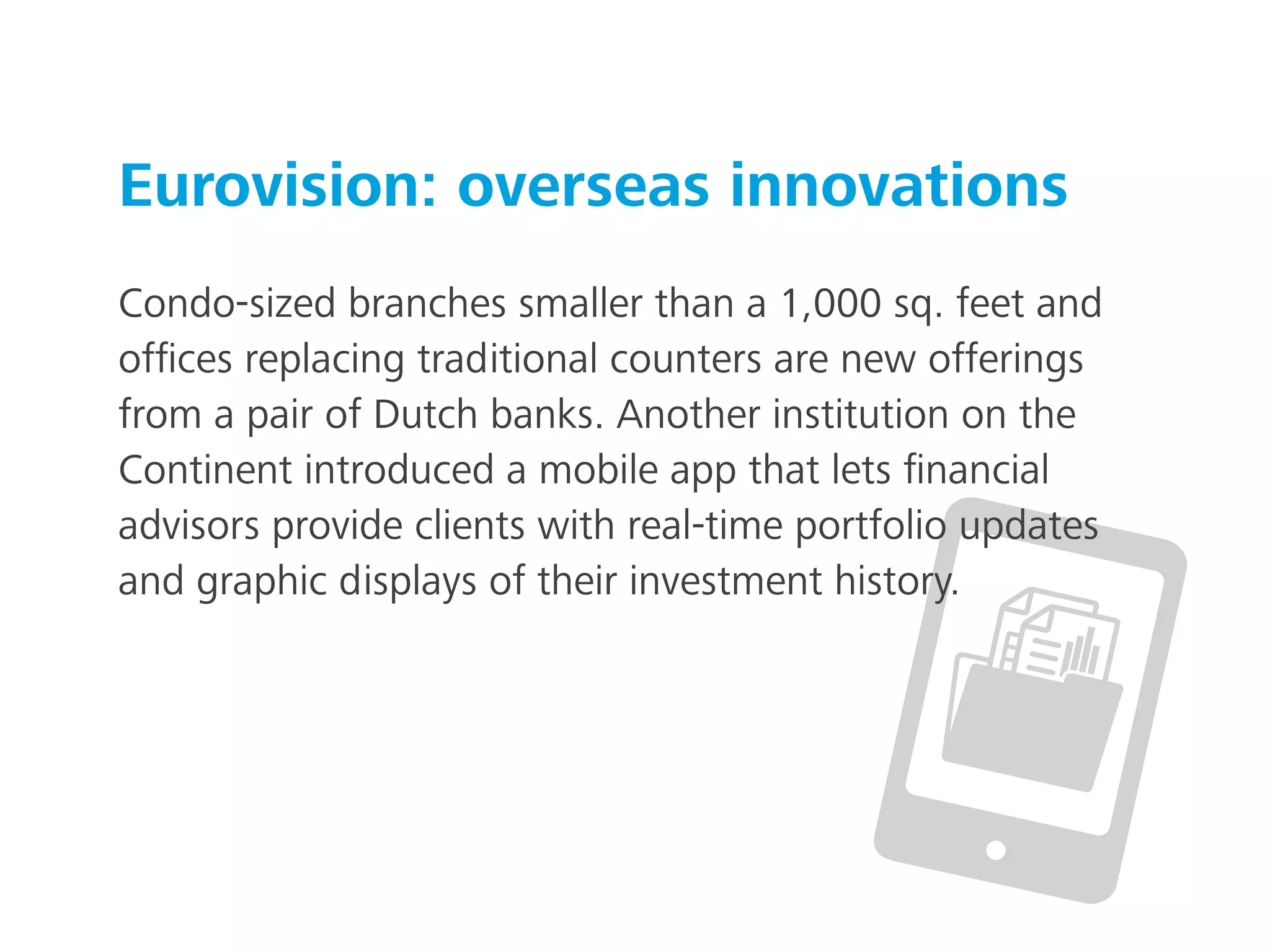
Condo-sized branches smaller than a 1,000 sq. feet and
offices replacing traditional counters are new offerings
from a pair of Dutch banks. Another institution on the
Continent introduced a mobile app that lets financial
advisors provide clients with real-time portfolio updates
and graphic displays of their investment history.
Evolve your real estate strategy
along with your multichannel
strategy
With customers moving to digital and mobile, the role of
traditional physical locations such as branches will
change. Financial services firms will need to rethink their
real estate strategies – are new formats in order? Smaller
spaces? New locations?
Redesign the P&L
In omnichannel, what matters is the sale, not where the
sale took place. Incentives that reward success and
profitability based on location or specific channel aren’t
well suited to the new environment. Financial institutions
will need to change incentives and metrics to encourage a
new way of thinking about business.
Invest in organizational change
An integrated, customer-centric approach to doing business
won’t thrive unless the organization’s set up to support it.
Customer data needs to be shared across the enterprise.
Sales and marketing efforts must be planned and executed
in an integrated way. Performance management and
incentives need to be redesigned to reward new behaviours.
These can be significant changes for an organization –
and it will take leadership and commitment to overcome
resistance and drive forward.
For more information
© Deloitte LLP and affiliated entities.
Email us at cafinancialservices@deloitte.ca
or visit www.deloitte.ca

Moving beyond multichannel: A Deloitte perspective on customer experience in Canada's financial services sector

  • 1.
    A Deloitte perspectiveon customer experience in Canada’s financial services sector
  • 2.
    Delivering the bestcustomer experience has prompted Canadian financial institutions (FIs) to invest in multichannel capabilities. But is it enough?
  • 3.
    Financial services customershave changed. They’re connected, knowledgeable, tech-savvy, busy and very demanding.
  • 4.
    They don’t comparefinancial service institutions with each other. They rate them against the best customer service they receive, period. And often those lessons about delivering the best customer service are gleaned from the retail sector.
  • 5.
    Financial services customersexpect to do business when, where and how they want. They expect their bank or insurer to deliver products and services tailored to their unique, individual needs and goals.
  • 6.
    But FIs aren’twinning over everyone. Millennials are an especially tough crowd. A 2013 survey by a division of Viacom showed Millennials placed all four of the leading American banks among their 10 least-loved brands.
  • 7.
    One third ofthe 10,000 Millennials surveyed believe they won’t need a bank in five years. 1/3 1/2 3/4 And many may get their wish. Tech behemoths have already made big pushes into the financial services space. More than half feel their bank doesn’t offer anything different than other banks. And almost three-quarters would be more excited about financial service offerings from a technology company than one from their banks.
  • 8.
    Canadians are embracingFI's multi- channel capabilities. Online is now the main banking channel for nearly half of Canadians with bank accounts. 68% used at least two channels each month, compared to less than half of Americans.
  • 9.
    That Canadians likeand utilize multichannel offerings has benefits for financial institutions as well. Because multichannel can be a powerful revenue multiplier. 3 to 4 channels2 channels 40–60% more profitable 20–30% more profitable
  • 10.
    It’s no wonderthat financial institutions have been taking an all-out approach to multichannel. But, FI's need to look at their channels – and even their business model – in new ways.
  • 11.
    First, firms needto structure themselves around customers. Not products or services. 1
  • 12.
    Understand each customerand their path to purchase, and make it simple, straightforward and enjoyable for them to achieve their unique objectives. 2
  • 13.
    Eliminate redundant applicationprocesses. Make sure customer service reps, loan officers, advisors and managers are working from the same complete view of each customer. 3
  • 14.
    Deliver advice andoffers that suit a specific customer’s needs, not that customer’s general demographic profile. 4
  • 15.
    Financial institutions needto look at channels together – not separately – to exploit advantages and synergies, deliver a superior experience and avoid unnecessary costs.
  • 16.
  • 17.
    Understand who usesyour channels – and how Who uses your channels? What do they do there? Use this understanding to craft solutions that meet those needs behaviours.
  • 18.
    Understand your customers’ pathsto purchase As retailers already know, customers take a long, winding road before they set foot in a store or buy online. Understanding the paths customers take can help you determine which channels deserve significant investment – and which don’t need as much attention.
  • 19.
    Exploit each channel’sadvantages What’s the value proposition of each channel? What does it offer that other channels (or competitors) don’t? Use that to give customers a compelling reason to choose that channel.
  • 20.
    Improving customer experienceisn’t always about adding features. How can you make it easier for customers to do what they need to do? Use different channels to streamline and simplify processes. Simplify
  • 21.
    Invest in people Moretech doesn’t always mean a better customer experience. Ensure staff is properly trained and have access to a complete picture of the client. It can have a powerful impact on a person’s impression of your business.
  • 22.
    Look “outside” forinspiration Retailers have made tremendous strides in understanding their customers and delivering an outstanding experience. Financial institutions can learn from these and adapt these innovations to make sense in the FI space.
  • 23.
  • 24.
    Some Canadian FIsare hoping to improve customer experience by creating everything from a coffee-shop to a spa like feeling for the bank branches. Others are joining forces with retailers to create electronic wallets. Advances are already underway in different parts of the FSI universe
  • 25.
    Eurovision: overseas innovations Condo-sizedbranches smaller than a 1,000 sq. feet and offices replacing traditional counters are new offerings from a pair of Dutch banks. Another institution on the Continent introduced a mobile app that lets financial advisors provide clients with real-time portfolio updates and graphic displays of their investment history.
  • 26.
    Evolve your realestate strategy along with your multichannel strategy With customers moving to digital and mobile, the role of traditional physical locations such as branches will change. Financial services firms will need to rethink their real estate strategies – are new formats in order? Smaller spaces? New locations?
  • 27.
    Redesign the P&L Inomnichannel, what matters is the sale, not where the sale took place. Incentives that reward success and profitability based on location or specific channel aren’t well suited to the new environment. Financial institutions will need to change incentives and metrics to encourage a new way of thinking about business.
  • 28.
    Invest in organizationalchange An integrated, customer-centric approach to doing business won’t thrive unless the organization’s set up to support it. Customer data needs to be shared across the enterprise. Sales and marketing efforts must be planned and executed in an integrated way. Performance management and incentives need to be redesigned to reward new behaviours. These can be significant changes for an organization – and it will take leadership and commitment to overcome resistance and drive forward.
  • 29.
    For more information ©Deloitte LLP and affiliated entities. Email us at cafinancialservices@deloitte.ca or visit www.deloitte.ca