10KeyStepsfor
MobileApplicationDevelopment
iProgrammer Solutions
www.iprogrammer.com
Clearly outlining what your app aims to
achieve and who it will serve. This step
lays the foundation for development by
aligning your app's goals with the
needs of your target audience.
www.iprogrammer.com
Define success metrics such as
downloads, user retention, or active
users.
KPIs
Set measurable objectives like increased
engagement or revenue.
App Goals
Identifying who will use your app
and their specific needs.
Target Audience
Definingthe
Objective
Gather insights into user behaviors and
expectations.
User Preferences
Pinpoint opportunities to offer unique
solutions.
Market Gaps
Study similar apps to identify strengths
and weaknesses.
Competitor Analysis
Conduct
Market
Research
Understanding user expectations and
analyze the competition to
differentiate your app. Research helps
uncover market opportunities and
ensures your app aligns with user
demands.
www.iprogrammer.com
Accessible via browsers, suitable for
simpler applications.
Web Apps
Use frameworks like Flutter or React
Native to support multiple platforms.
Cross-Platform Apps
Platform-specific apps for Android or
iOS with optimal performance.
Native Apps
Choosing
theRight
Platform
Deciding the most suitable platform to
maximize your app's reach and
performance. Factors like target
audience, budget, and desired
features guide this decision.
www.iprogrammer.com
Include tools to collect user opinions and
suggestions.
User Feedback Features
Add-ons such as AI-powered chat or
augmented reality.
Advanced Features
Essential functionalities like login,
notifications, or payments.
Core Features
DefiningApp
Features
List functionalities that align with user
and business requirements. Well-
defined features improve usability and
provide a seamless experience for your
audience.
www.iprogrammer.com
Use Figma, Sketch, or Adobe XD for high-
quality designs.
Design Tools
Interactive models to visualize the app
flow before development.
Prototypes
Simple sketches outlining the app layout
and navigation.
Wireframes
Designing
theUI/UX
Focusing on creating a visually
appealing and user-friendly
experience. Effective UI/UX design
ensures ease of navigation and
enhances user satisfaction.
www.iprogrammer.com
MyViB2CMobile
Application
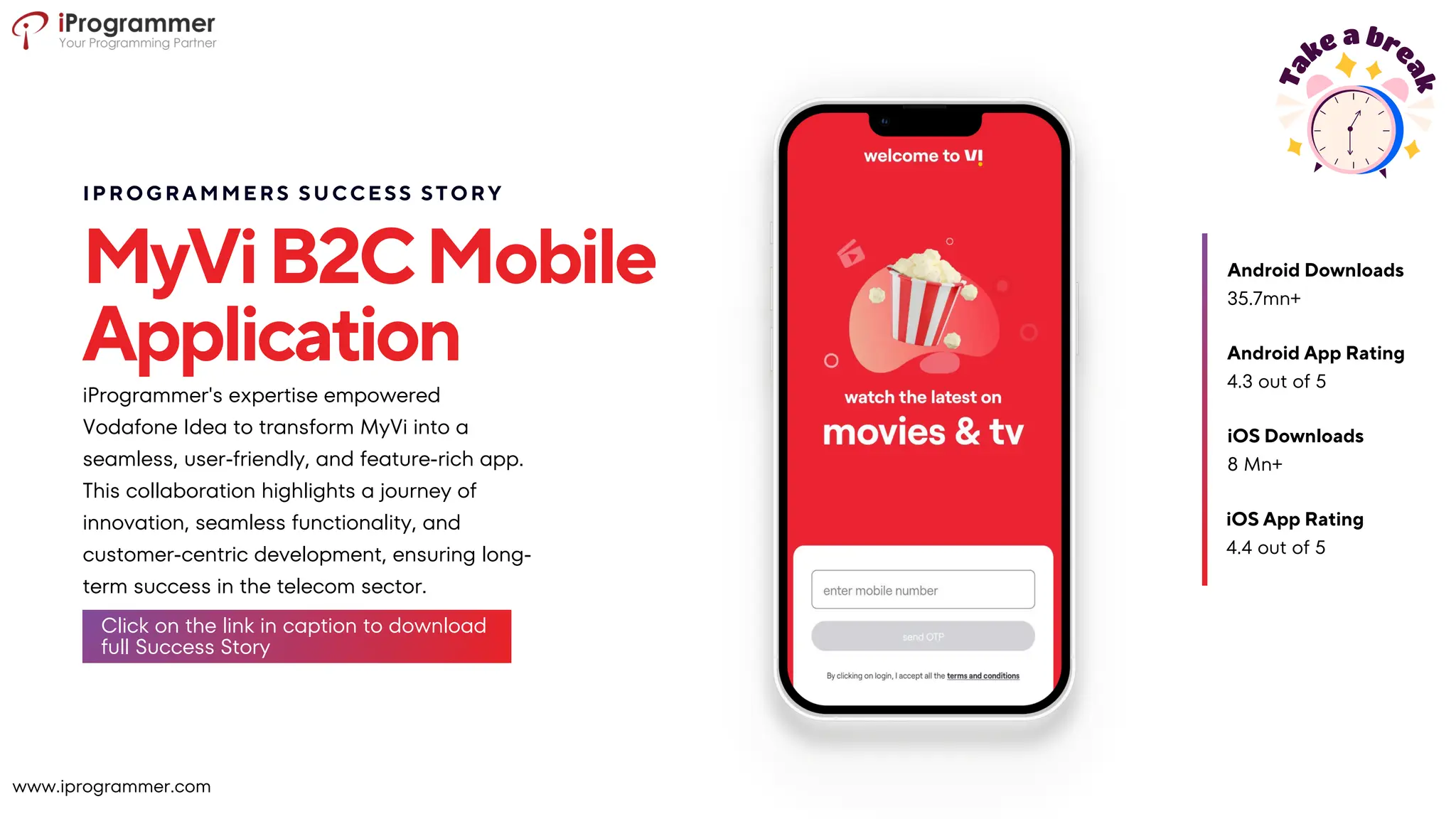
iProgrammer's expertise empowered
Vodafone Idea to transform MyVi into a
seamless, user-friendly, and feature-rich app.
This collaboration highlights a journey of
innovation, seamless functionality, and
customer-centric development, ensuring long-
term success in the telecom sector.
4.3 out of 5
Android App Rating
iOS Downloads
8 Mn+
iOS App Rating
4.4 out of 5
35.7mn+
Android Downloads
IPROGRAMMERS SUCCESS STORY
www.iprogrammer.com
Click on the link in caption to download
full Success Story
Ensuring smooth data exchange
between backend and frontend.
API Development
Developing scalable and secure server-
side processes.
Server Logic
Choosing systems like Firebase or
MongoDB for efficient data storage.
Database Management
Backend
Development
Building the infrastructure that powers
the app's functionality. A strong
backend ensures scalability, security,
and smooth performance.
www.iprogrammer.com
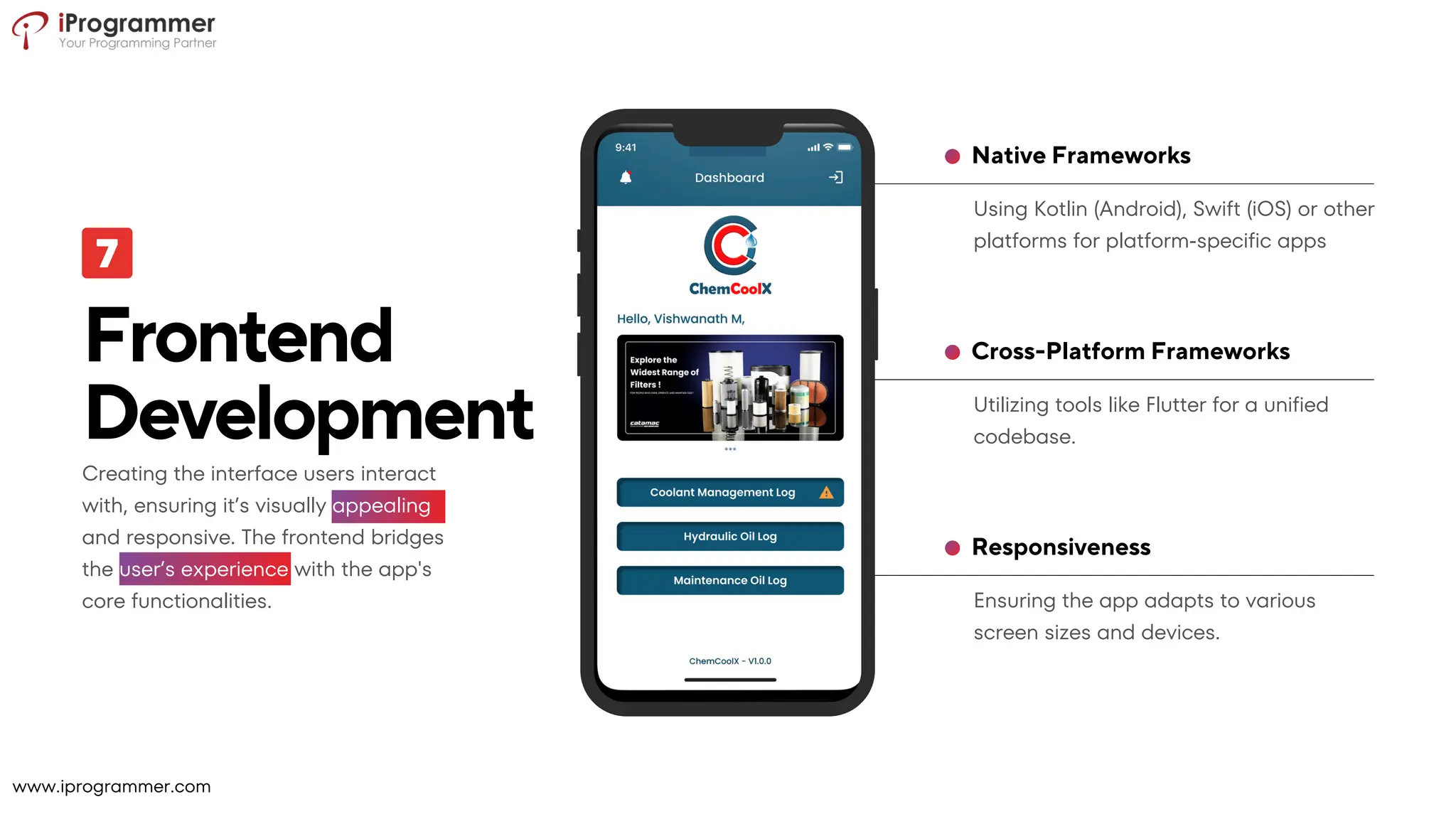
Ensuring the app adapts to various
screen sizes and devices.
Responsiveness
Utilizing tools like Flutter for a unified
codebase.
Cross-Platform Frameworks
Using Kotlin (Android), Swift (iOS) or other
platforms for platform-specific apps
Native Frameworks
Frontend
Development
Creating the interface users interact
with, ensuring it’s visually appealing
and responsive. The frontend bridges
the user’s experience with the app's
core functionalities.
www.iprogrammer.com
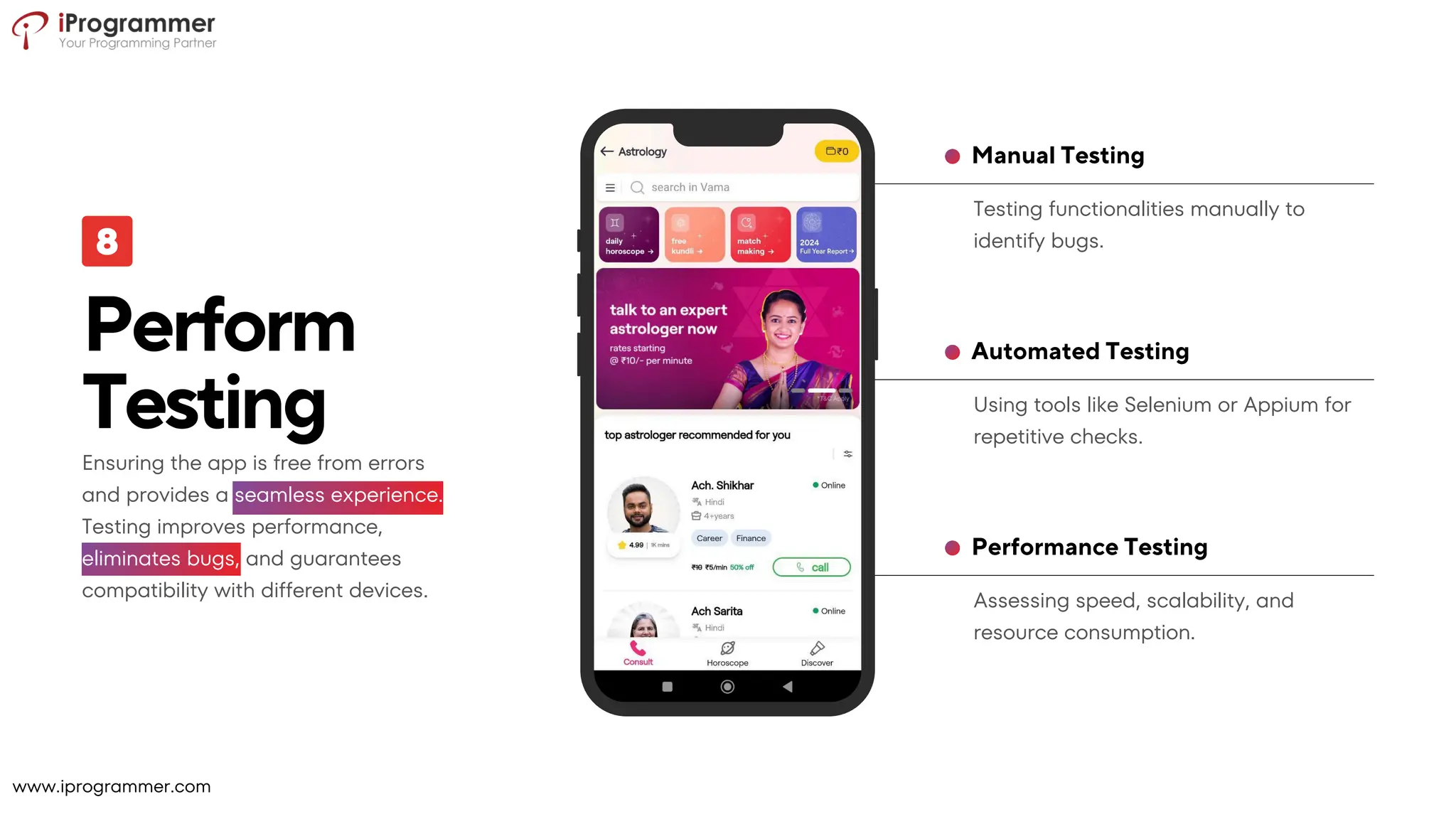
Assessing speed, scalability, and
resource consumption.
Performance Testing
Using tools like Selenium or Appium for
repetitive checks.
Automated Testing
Testing functionalities manually to
identify bugs.
Manual Testing
Perform
Testing
Ensuring the app is free from errors
and provides a seamless experience.
Testing improves performance,
eliminates bugs, and guarantees
compatibility with different devices.
www.iprogrammer.com
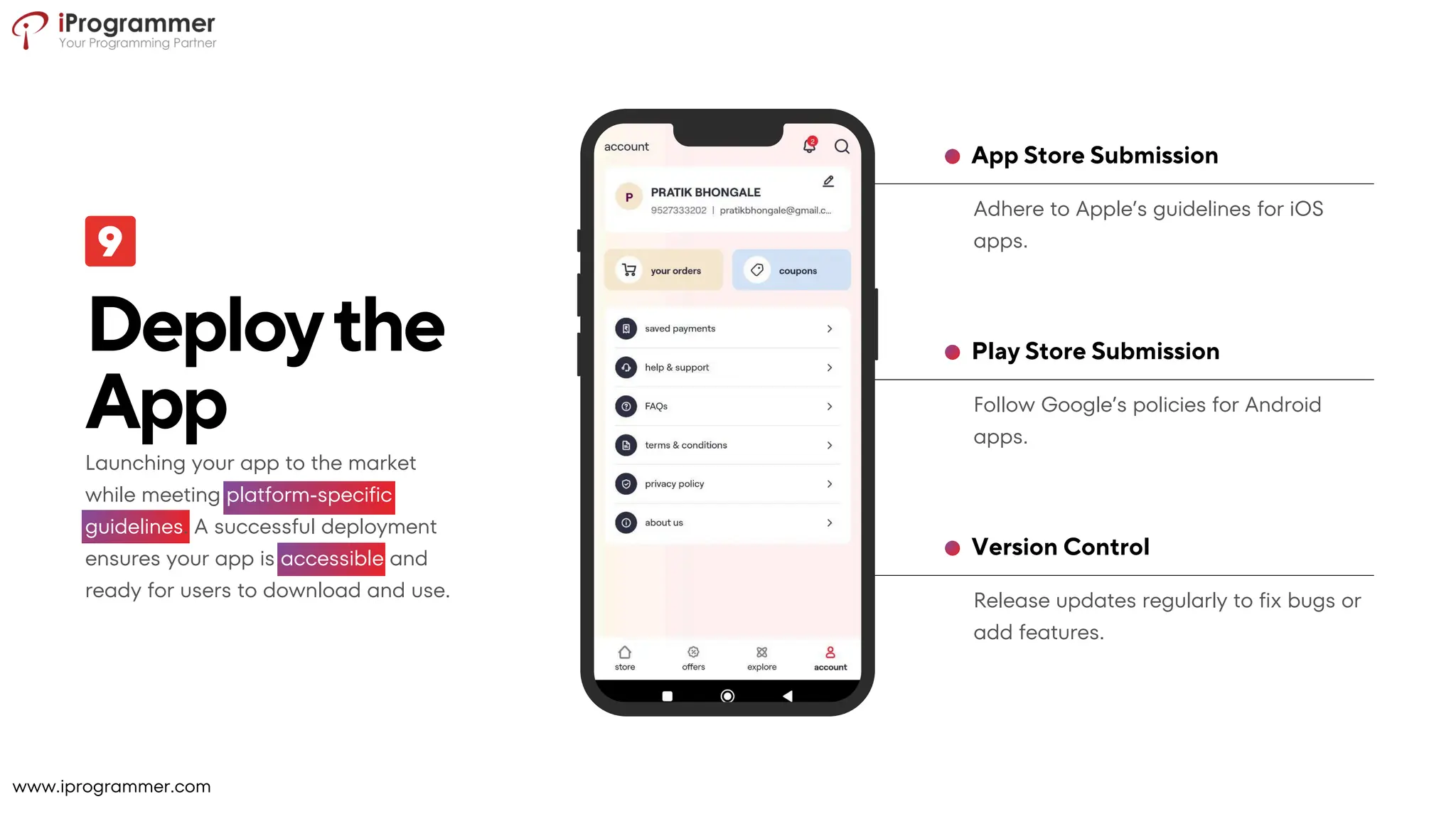
Release updates regularly to fix bugs or
add features.
Version Control
Follow Google’s policies for Android
apps.
Play Store Submission
Adhere to Apple’s guidelines for iOS
apps.
App Store Submission
Deploythe
App
Launching your app to the market
while meeting platform-specific
guidelines. A successful deployment
ensures your app is accessible and
ready for users to download and use.
www.iprogrammer.com
Marketand
Maintaining
theApp
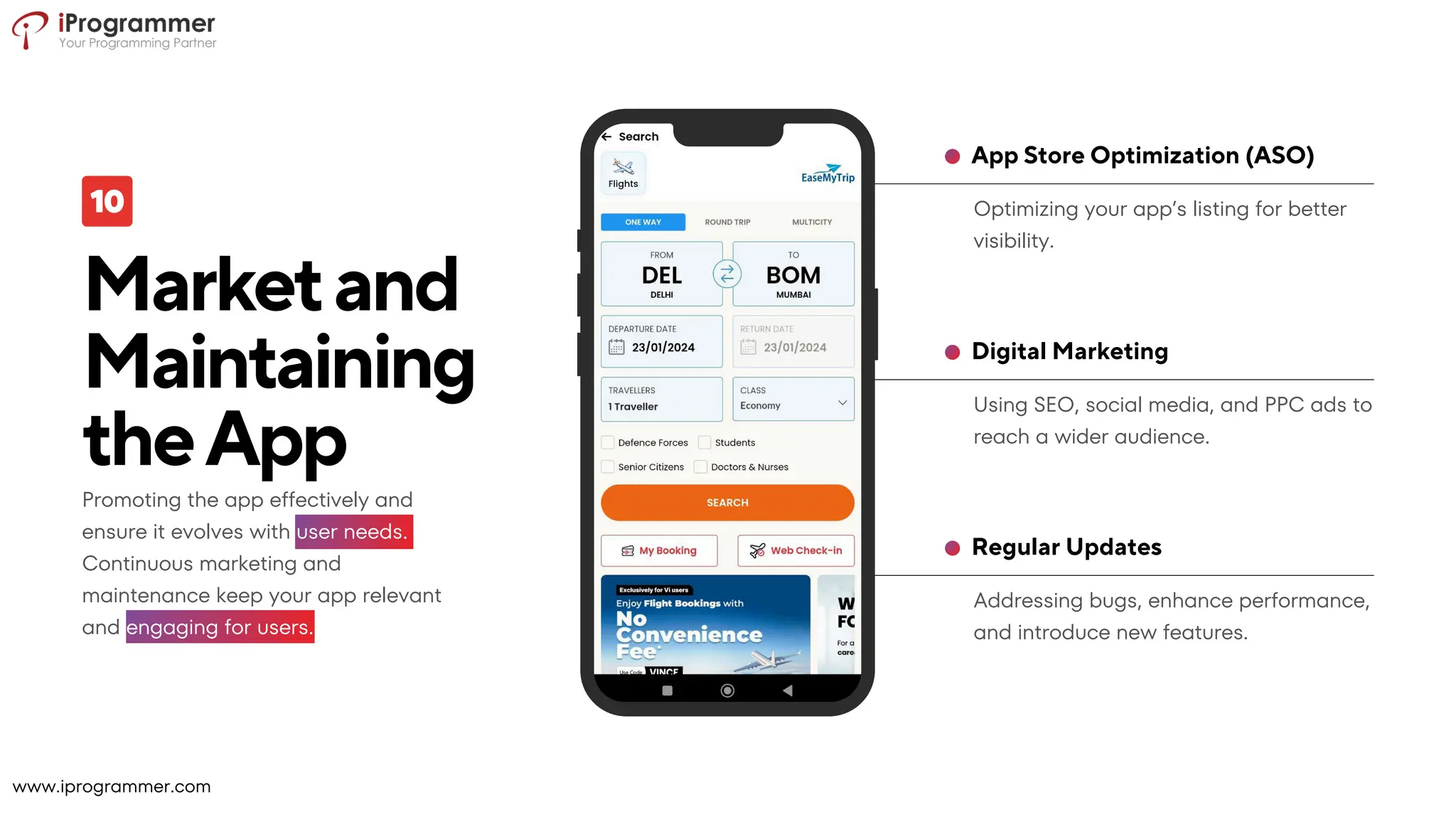
Addressing bugs, enhance performance,
and introduce new features.
Regular Updates
Using SEO, social media, and PPC ads to
reach a wider audience.
Digital Marketing
Optimizing your app’s listing for better
visibility.
App Store Optimization (ASO)
Promoting the app effectively and
ensure it evolves with user needs.
Continuous marketing and
maintenance keep your app relevant
and engaging for users.
www.iprogrammer.com
www.iprogrammer.com
sales@iprogrammer.co
+91 7385272772
ContactusforExpertMobile
AppDevelopment
iProgrammer Solutions

Mobile App Development Process by iProgrammer

  • 1.
  • 2.
    Clearly outlining whatyour app aims to achieve and who it will serve. This step lays the foundation for development by aligning your app's goals with the needs of your target audience. www.iprogrammer.com Define success metrics such as downloads, user retention, or active users. KPIs Set measurable objectives like increased engagement or revenue. App Goals Identifying who will use your app and their specific needs. Target Audience Definingthe Objective
  • 3.
    Gather insights intouser behaviors and expectations. User Preferences Pinpoint opportunities to offer unique solutions. Market Gaps Study similar apps to identify strengths and weaknesses. Competitor Analysis Conduct Market Research Understanding user expectations and analyze the competition to differentiate your app. Research helps uncover market opportunities and ensures your app aligns with user demands. www.iprogrammer.com
  • 4.
    Accessible via browsers,suitable for simpler applications. Web Apps Use frameworks like Flutter or React Native to support multiple platforms. Cross-Platform Apps Platform-specific apps for Android or iOS with optimal performance. Native Apps Choosing theRight Platform Deciding the most suitable platform to maximize your app's reach and performance. Factors like target audience, budget, and desired features guide this decision. www.iprogrammer.com
  • 5.
    Include tools tocollect user opinions and suggestions. User Feedback Features Add-ons such as AI-powered chat or augmented reality. Advanced Features Essential functionalities like login, notifications, or payments. Core Features DefiningApp Features List functionalities that align with user and business requirements. Well- defined features improve usability and provide a seamless experience for your audience. www.iprogrammer.com
  • 6.
    Use Figma, Sketch,or Adobe XD for high- quality designs. Design Tools Interactive models to visualize the app flow before development. Prototypes Simple sketches outlining the app layout and navigation. Wireframes Designing theUI/UX Focusing on creating a visually appealing and user-friendly experience. Effective UI/UX design ensures ease of navigation and enhances user satisfaction. www.iprogrammer.com
  • 7.
    MyViB2CMobile Application iProgrammer's expertise empowered VodafoneIdea to transform MyVi into a seamless, user-friendly, and feature-rich app. This collaboration highlights a journey of innovation, seamless functionality, and customer-centric development, ensuring long- term success in the telecom sector. 4.3 out of 5 Android App Rating iOS Downloads 8 Mn+ iOS App Rating 4.4 out of 5 35.7mn+ Android Downloads IPROGRAMMERS SUCCESS STORY www.iprogrammer.com Click on the link in caption to download full Success Story
  • 8.
    Ensuring smooth dataexchange between backend and frontend. API Development Developing scalable and secure server- side processes. Server Logic Choosing systems like Firebase or MongoDB for efficient data storage. Database Management Backend Development Building the infrastructure that powers the app's functionality. A strong backend ensures scalability, security, and smooth performance. www.iprogrammer.com
  • 9.
    Ensuring the appadapts to various screen sizes and devices. Responsiveness Utilizing tools like Flutter for a unified codebase. Cross-Platform Frameworks Using Kotlin (Android), Swift (iOS) or other platforms for platform-specific apps Native Frameworks Frontend Development Creating the interface users interact with, ensuring it’s visually appealing and responsive. The frontend bridges the user’s experience with the app's core functionalities. www.iprogrammer.com
  • 10.
    Assessing speed, scalability,and resource consumption. Performance Testing Using tools like Selenium or Appium for repetitive checks. Automated Testing Testing functionalities manually to identify bugs. Manual Testing Perform Testing Ensuring the app is free from errors and provides a seamless experience. Testing improves performance, eliminates bugs, and guarantees compatibility with different devices. www.iprogrammer.com
  • 11.
    Release updates regularlyto fix bugs or add features. Version Control Follow Google’s policies for Android apps. Play Store Submission Adhere to Apple’s guidelines for iOS apps. App Store Submission Deploythe App Launching your app to the market while meeting platform-specific guidelines. A successful deployment ensures your app is accessible and ready for users to download and use. www.iprogrammer.com
  • 12.
    Marketand Maintaining theApp Addressing bugs, enhanceperformance, and introduce new features. Regular Updates Using SEO, social media, and PPC ads to reach a wider audience. Digital Marketing Optimizing your app’s listing for better visibility. App Store Optimization (ASO) Promoting the app effectively and ensure it evolves with user needs. Continuous marketing and maintenance keep your app relevant and engaging for users. www.iprogrammer.com
  • 13.