Download as PDF, PPTX

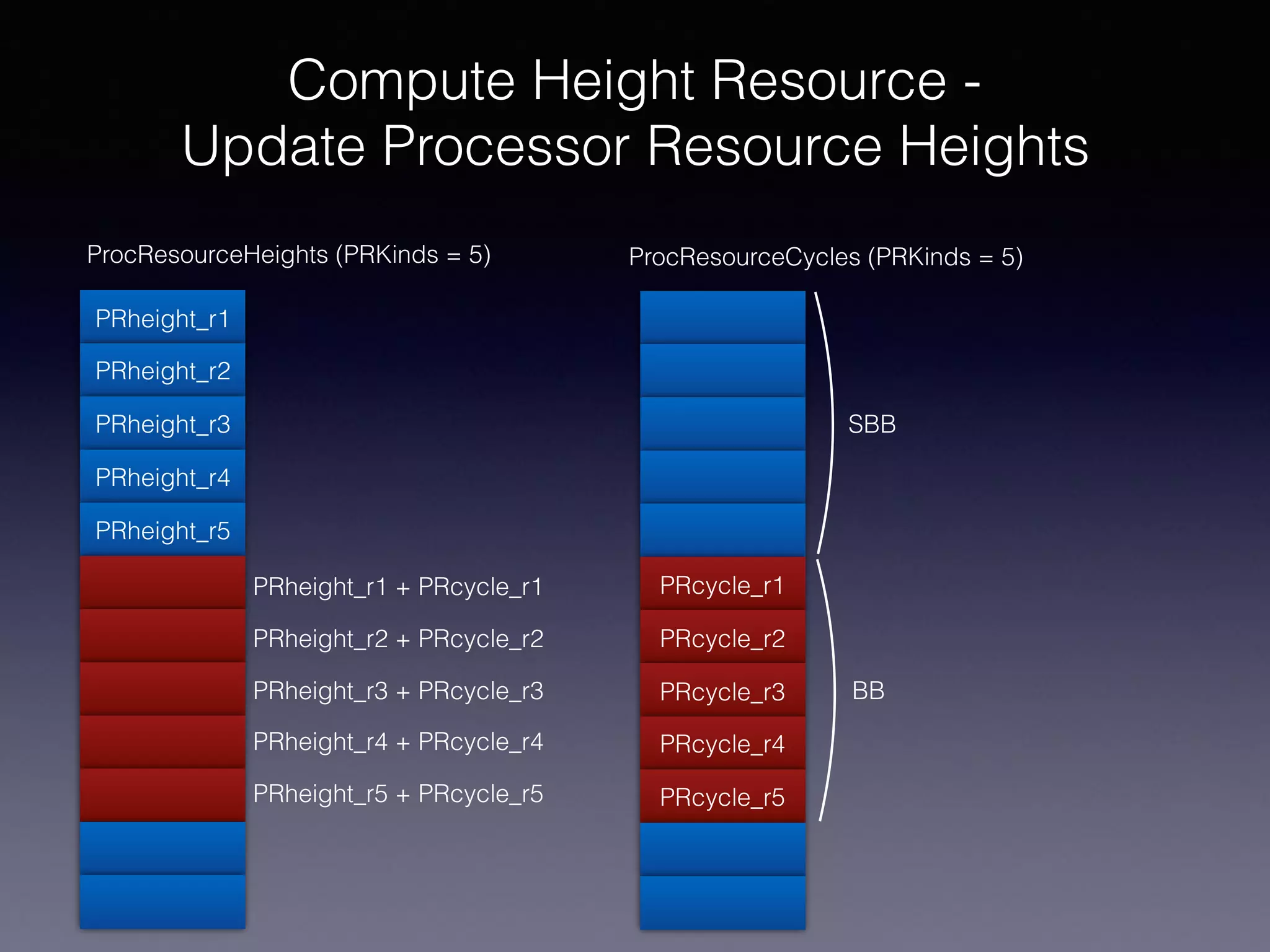
![ProcResourceCycles (PRKinds = 5)
PRCycles
block 0
block 1
ProcResourceIdx
The number of cycles consumed by
block B on processor resource R is at
ProcResourceCycles[B x Kinds + R]
Processor Resources Cycles](https://image.slidesharecdn.com/machinetracemetrics-171225060820/75/Machine-Trace-Metrics-3-2048.jpg)
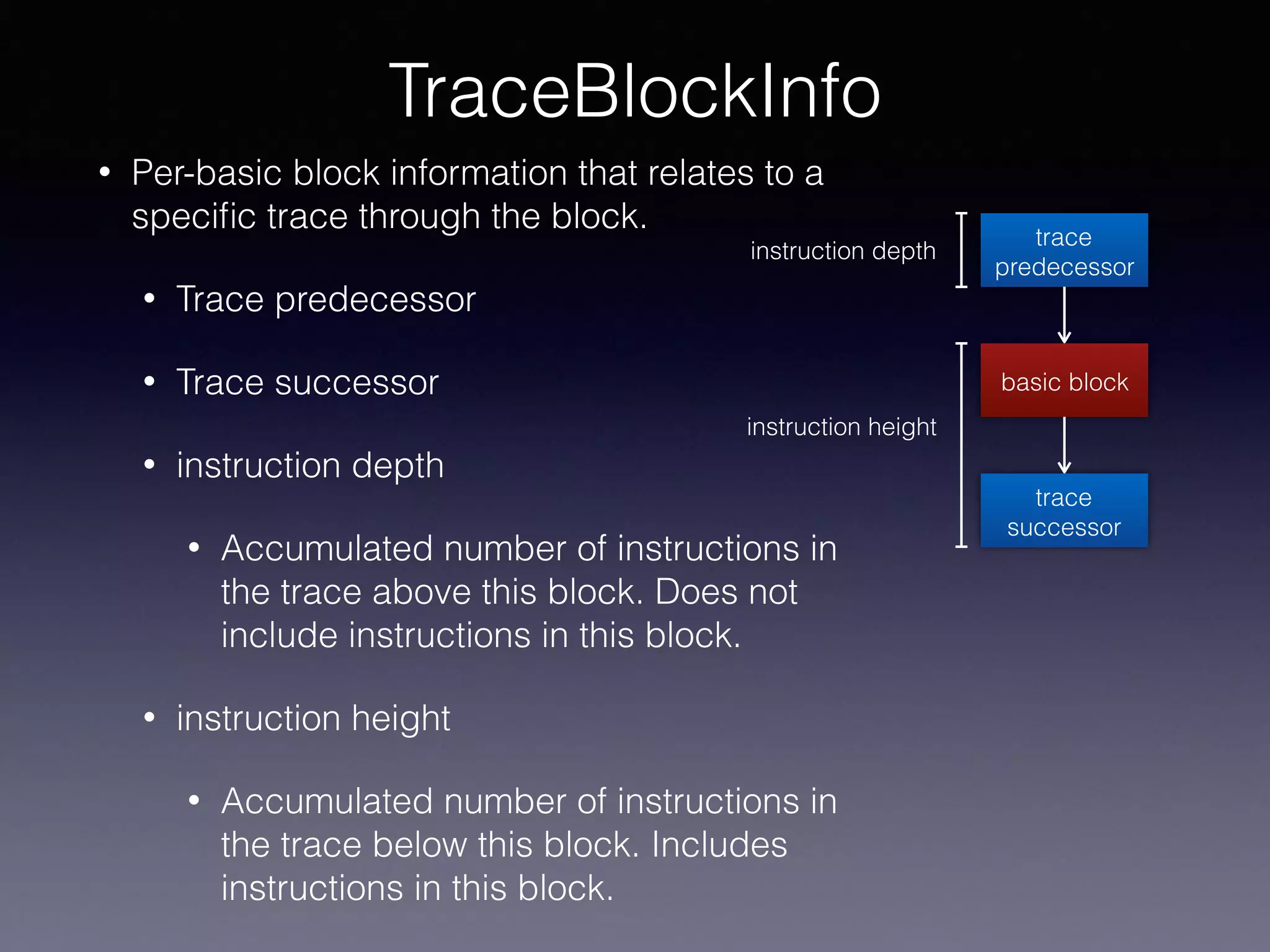
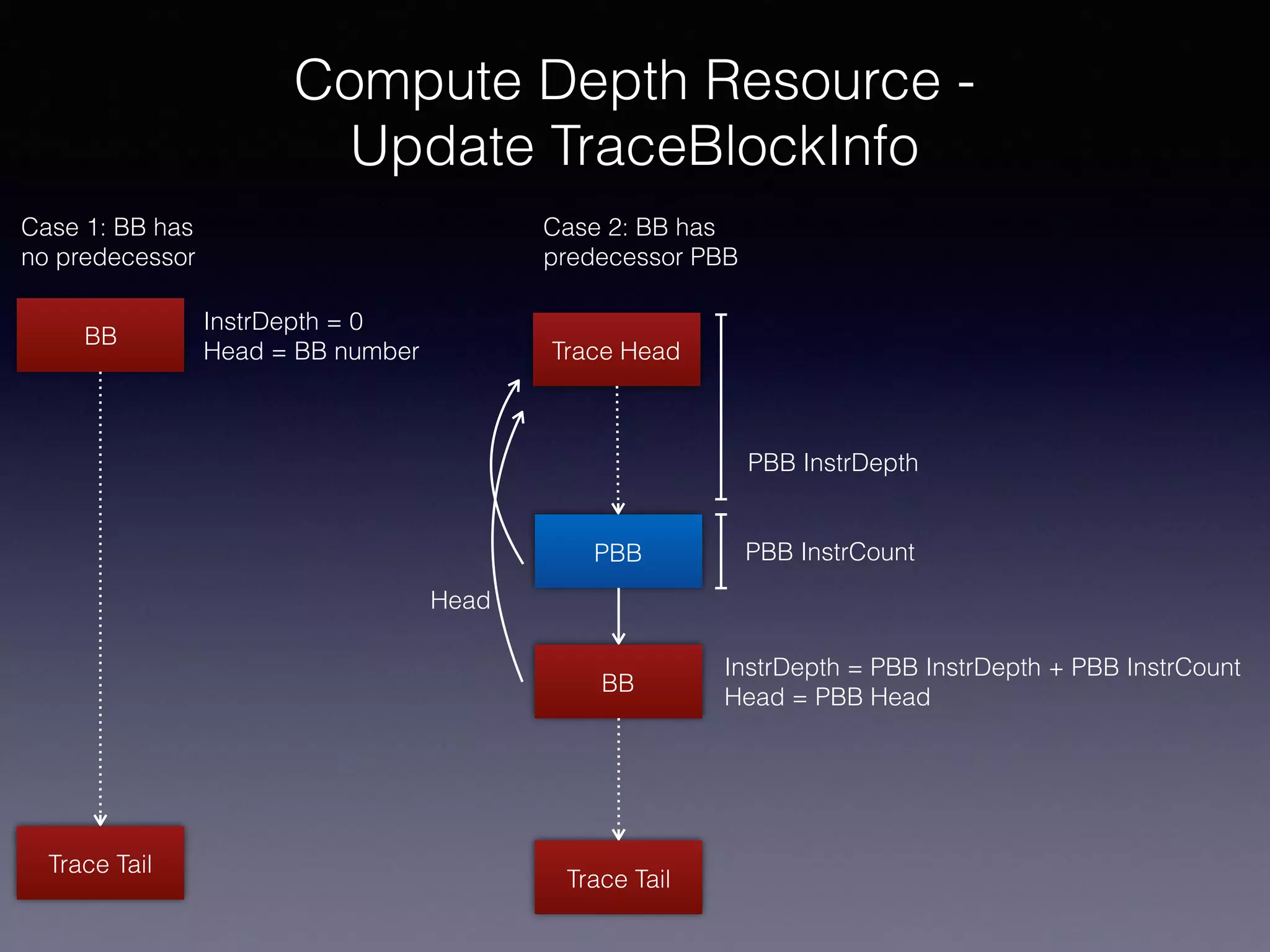

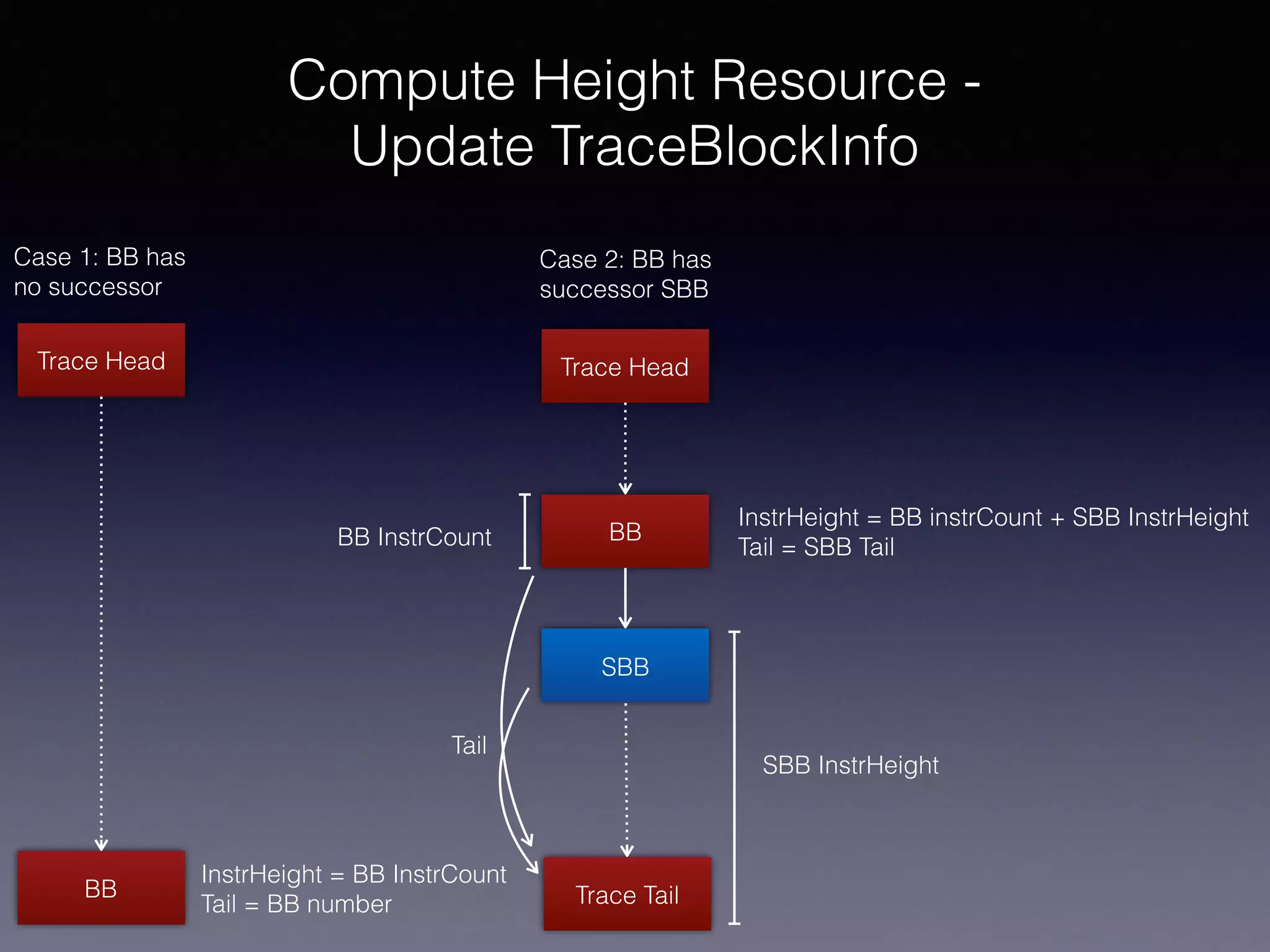
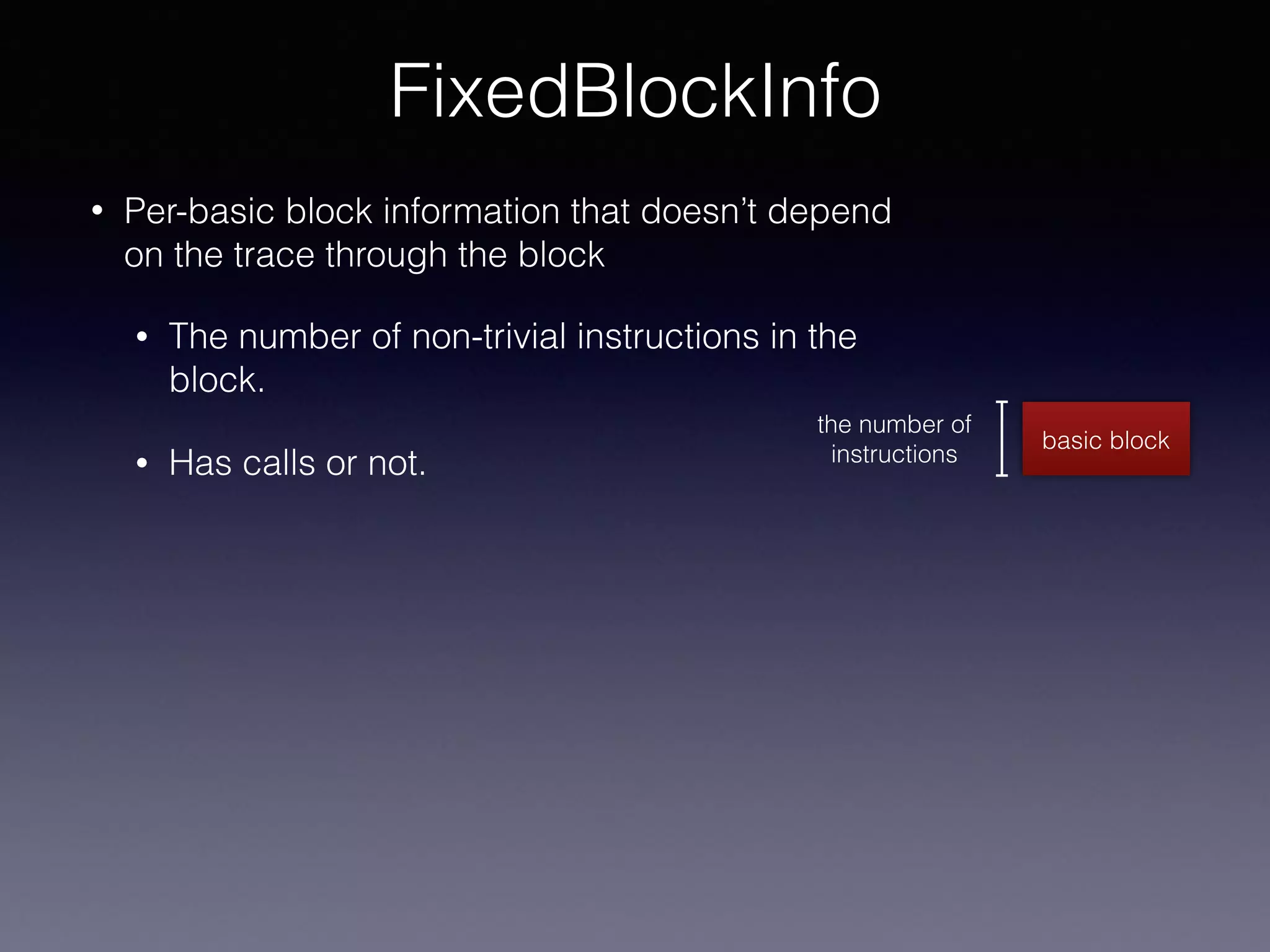
![• Inverse post-order traversal of predecessors.
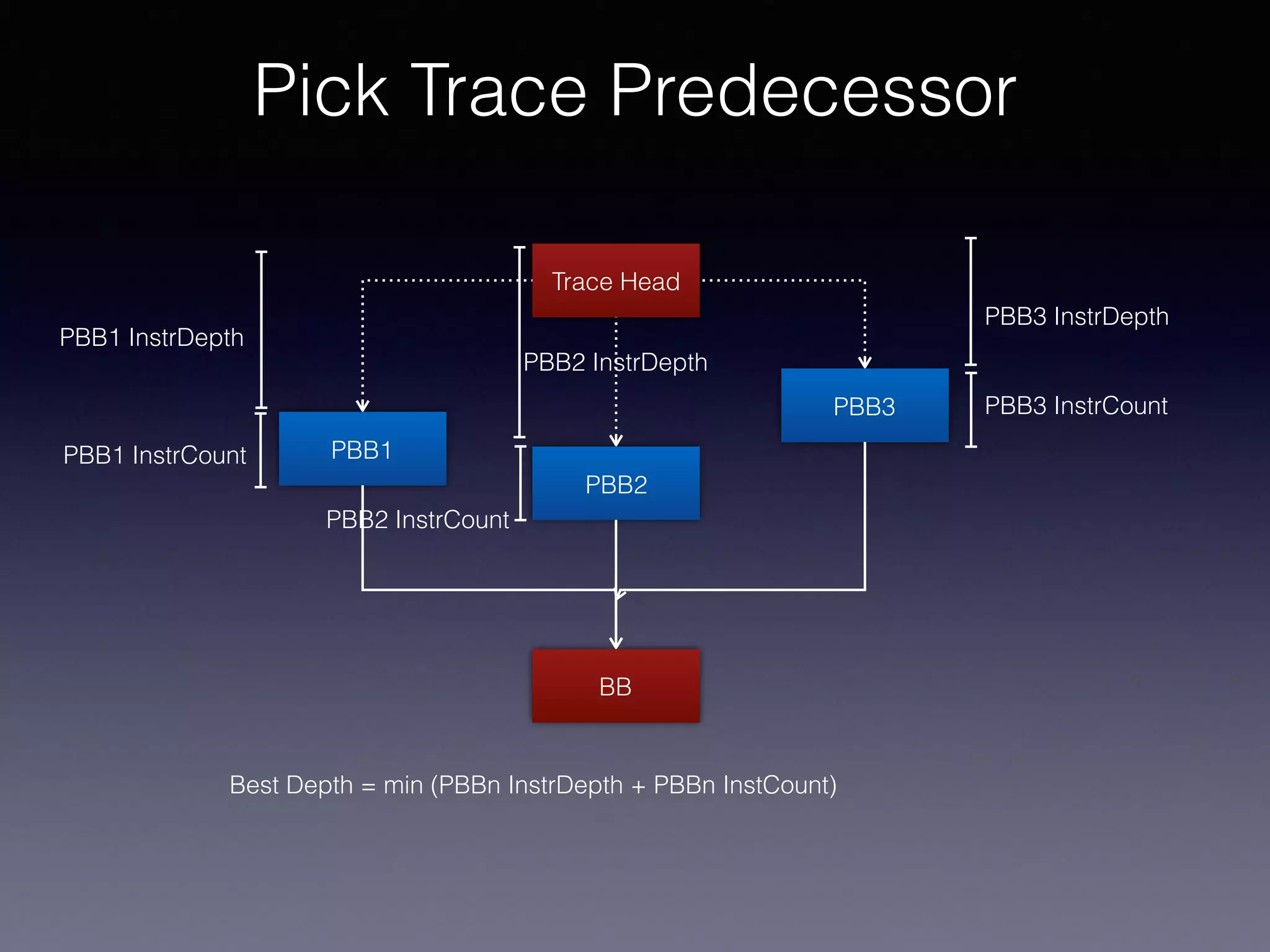
• Call pickTracePred() to find the best predecessor.
• Compute depth resources
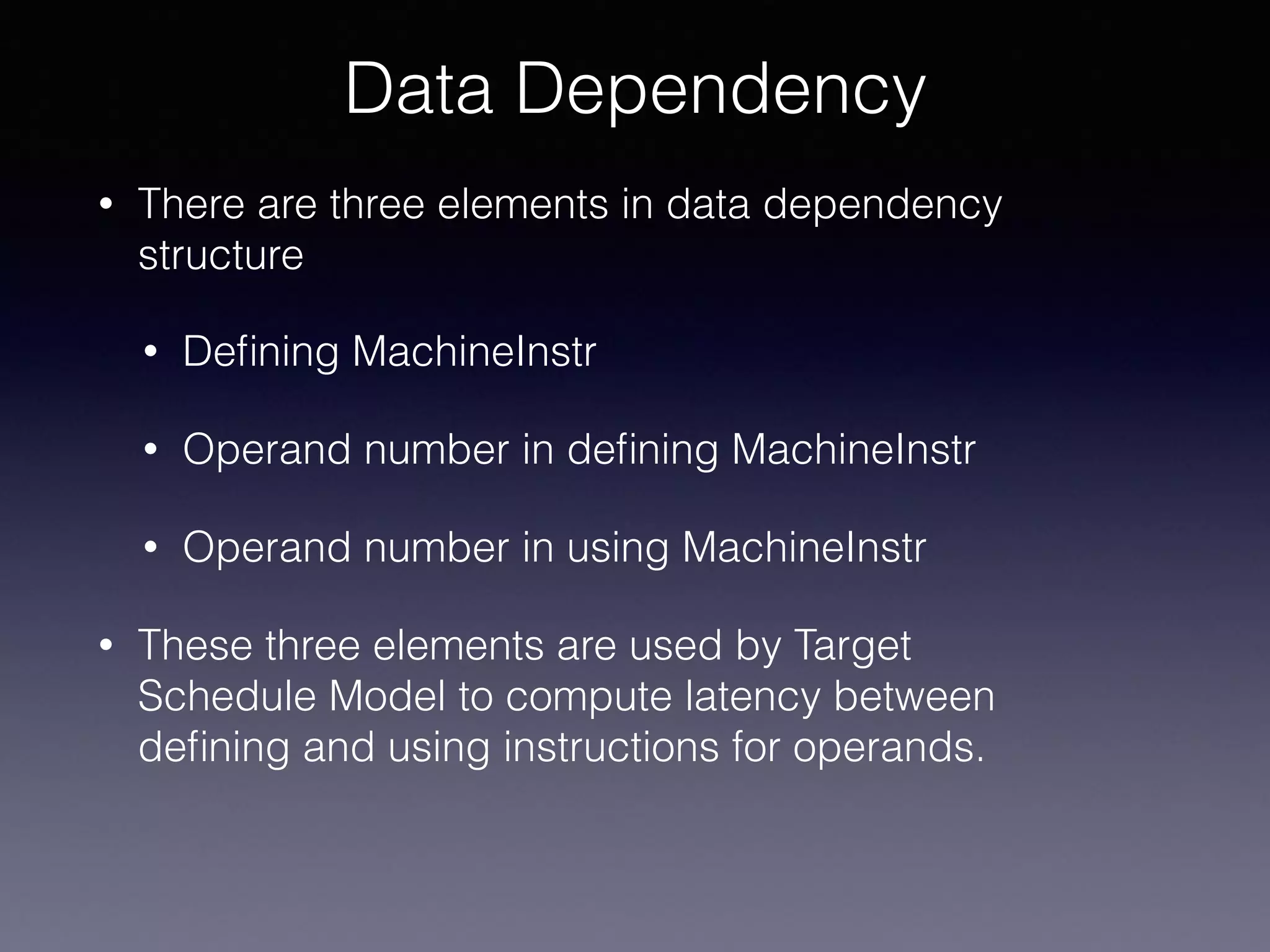
• TraceBlockInfo
• instruction depth, trace head, etc.
• ProcResourceDepths[]
• cycles count for each processor resources from trace head to the basic block, does
not include cycles in the basic block.
• Post-order traversal of successors.
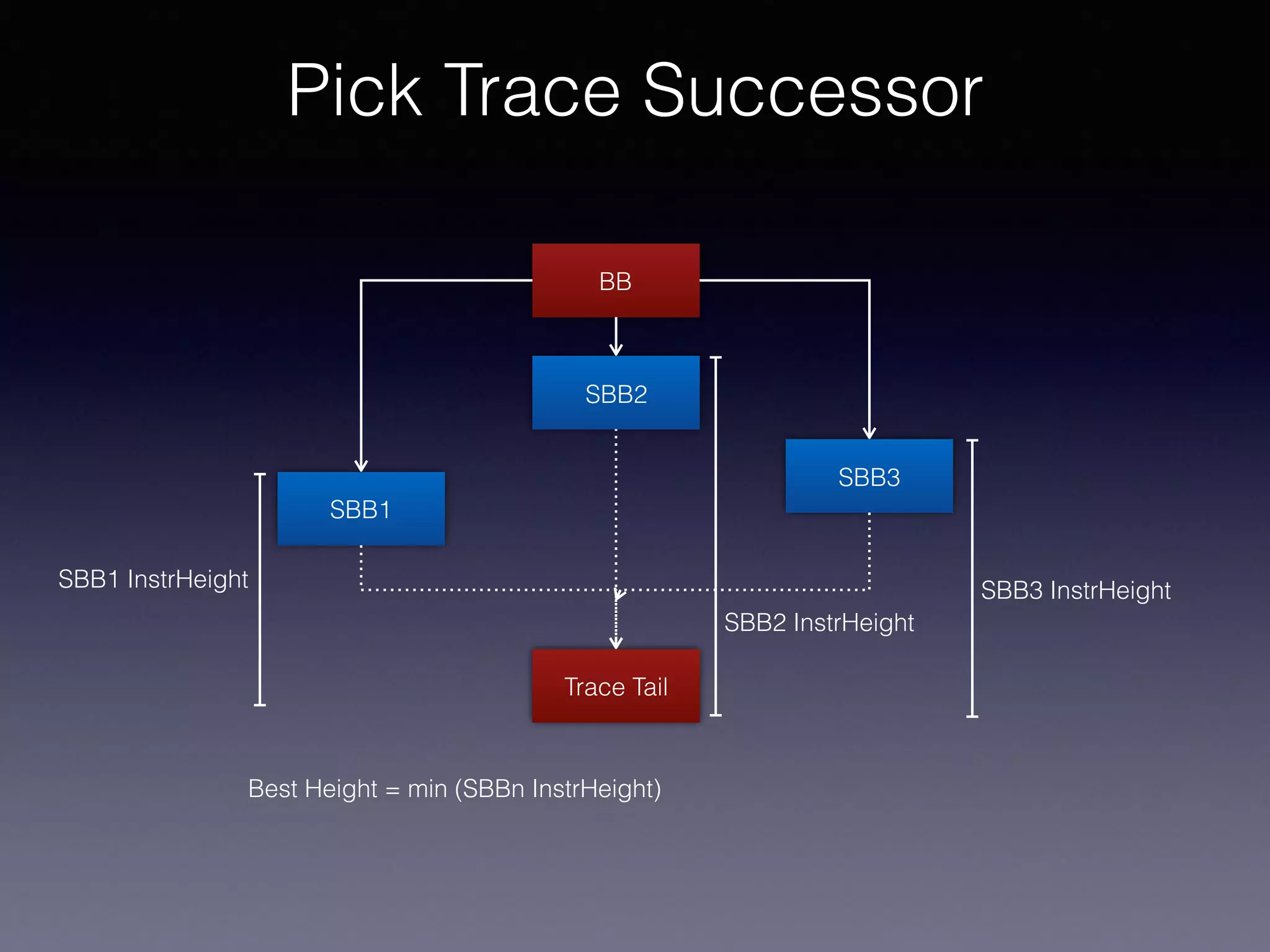
• Call pickTraceSucc() to find the best successor.
• Compute height resources
• TraceBlockInfo
• instruction height, trace tail, etc.
• ProcResourceHeights[]
• cycles count for each processor resources from the basic block to trace tail, including
cycles in the basic block.
Compute Trace for Basic Block](https://image.slidesharecdn.com/machinetracemetrics-171225060820/75/Machine-Trace-Metrics-11-2048.jpg)
![MIHeightMap & RegUnits
…
MI: DefOp, UseOp1, UseOp2
…
I: DefOp2, DefOp, …
…
DefOp.Cycle (Height of I)
Latency of DefOp (MI, I)
Height = Latency + DefOp.Cycle
// UseOp2 is a physical register.
RegUnits[UseOp2].Cycle = max (RegUnits[UseOp2].Cycle, Height)
RegUnits[UseOp2].MI = MI
RegUnits[UseOp2[.Op = 2
Trace Tail
…
DI: UseOp1, …
…
Data
dependency
(DI, 0, 1)
UseOp1 is virtual register
DefOp is physical register
Latency of UseOp1 (DI, MI)
MIHeightMap.insert (DI, Latency of UseOp1 + Latency of DefOp + DefOp.Cycle)](https://image.slidesharecdn.com/machinetracemetrics-171225060820/75/Machine-Trace-Metrics-14-2048.jpg)
![MIHeightMap & RegUnits
…
MI: DefOp, UseOp1, UseOp2
…
I: DefOp2, DefOp, …
…
DefOp.Cycle (Height of I)
Latency of DefOp (MI, I)
Height = Latency + DefOp.Cycle
// UseOp2 is a physical register.
RegUnits[UseOp2].Cycle = max (RegUnits[UseOp2].Cycle, Height)
RegUnits[UseOp2].MI = MI
RegUnits[UseOp2[.Op = 2
Trace Tail
…
DI: UseOp1, …
…
Data
dependency
(DI, 0, 1)
DefOp is physical register
Latency of UseOp1 (DI, MI)
MIHeightMap.insert (DI, Latency of UseOp1 + Latency of DefOp + DefOp.Cycle)
Computed by updatePhysDepsUpwards()
UseOp1 is virtual register](https://image.slidesharecdn.com/machinetracemetrics-171225060820/75/Machine-Trace-Metrics-15-2048.jpg)
![MIHeightMap & RegUnits
…
MI: DefOp, UseOp1, UseOp2
…
I: DefOp2, DefOp, …
…
DefOp.Cycle (Height of I)
Latency of DefOp (MI, I)
Height = Latency + DefOp.Cycle
// UseOp2 is a physical register.
RegUnits[UseOp2].Cycle = max (RegUnits[UseOp2].Cycle, Height)
RegUnits[UseOp2].MI = MI
RegUnits[UseOp2[.Op = 2
Trace Tail
…
DI: UseOp1, …
…
Data
dependency
(DI, 0, 1)
DefOp is physical register
Latency of UseOp1 (DI, MI)
MIHeightMap.insert (DI, Latency of UseOp1 + Latency of DefOp + DefOp.Cycle)
Computed by getDataDep()
UseOp1 is virtual register](https://image.slidesharecdn.com/machinetracemetrics-171225060820/75/Machine-Trace-Metrics-16-2048.jpg)
![MIHeightMap & RegUnits
…
MI: DefOp, UseOp1, UseOp2
…
I: DefOp2, DefOp, …
…
DefOp.Cycle (Height of I)
Latency of DefOp (MI, I)
Height = Latency + DefOp.Cycle
// UseOp2 is a physical register.
RegUnits[UseOp2].Cycle = max (RegUnits[UseOp2].Cycle, Height)
RegUnits[UseOp2].MI = MI
RegUnits[UseOp2[.Op = 2
Trace Tail
…
DI: UseOp1, …
…
Data
dependency
(DI, 0, 1)
DefOp is physical register
Latency of UseOp1 (DI, MI)
MIHeightMap.insert (DI, Latency of UseOp1 + Latency of DefOp + DefOp.Cycle)
Computed by pushDepHeight()
UseOp1 is virtual register
MIHeightMap[MI] or
computed by
updatePhysDepsUp
wards() if MI
contains physical
registers](https://image.slidesharecdn.com/machinetracemetrics-171225060820/75/Machine-Trace-Metrics-17-2048.jpg)
![Compute Instruction Depth
BB
Trace Head
BB #2
BB #1:
…
UseMI…
for all instruction UseMI in BB #1:
for all data dependency:
Cycle = max (Cycles[DefMI].Depth + Latency (DefMI, UseMI))
Has valid
instruction Depth.
compute
instruction depth
from BB #1.
Critical path length for basic block is
maximum of Cycles[MI].Depth + Cycles[MI].Height for all
instructions MI in basic block.
…
DefMI…
data dependency
Latency of (DefMI, UseMI)
Cycles[DefMI].Depth
Cycles[UseMI].Depth = Cycle](https://image.slidesharecdn.com/machinetracemetrics-171225060820/75/Machine-Trace-Metrics-18-2048.jpg)
![Compute Instruction Depth
BB
Trace Head
BB #2
BB #1:
…
UseMI…
for all instruction UseMI in BB #1:
for all data dependency:
Cycle = max (Cycles[DefMI].Depth + Latency (DefMI, UseMI))
Has valid
instruction Depth.
compute
instruction depth
from BB #1.
Critical path length for basic block is
maximum of Cycles[MI].Depth + Cycles[MI].Height for all
instructions MI in basic block.
…
DefMI…
data dependency
Latency of (DefMI, UseMI)
Cycles[DefMI].Depth
Cycles[UseMI].Depth = Cycle
1. Get data dependency](https://image.slidesharecdn.com/machinetracemetrics-171225060820/75/Machine-Trace-Metrics-19-2048.jpg)
![Compute Instruction Depth
BB
Trace Head
BB #2
BB #1:
…
UseMI…
for all instruction UseMI in BB #1:
for all data dependency:
Cycle = max (Cycles[DefMI].Depth + Latency (DefMI, UseMI))
Has valid
instruction Depth.
compute
instruction depth
from BB #1.
Critical path length for basic block is
maximum of Cycles[MI].Depth + Cycles[MI].Height for all
instructions MI in basic block.
…
DefMI…
data dependency
Latency of (DefMI, UseMI)
Cycles[DefMI].Depth
Cycles[UseMI].Depth = Cycle
2. Calculate UseMI’s cycle](https://image.slidesharecdn.com/machinetracemetrics-171225060820/75/Machine-Trace-Metrics-20-2048.jpg)
![Compute Instruction Depth
BB
Trace Head
BB #2
BB #1:
…
UseMI…
for all instruction UseMI in BB #1:
for all data dependency:
Cycle = max (Cycles[DefMI].Depth + Latency (DefMI, UseMI))
Has valid
instruction Depth.
compute
instruction depth
from BB #1.
Critical path length for basic block is
maximum of Cycles[MI].Depth + Cycles[MI].Height for all
instructions MI in basic block.
…
DefMI…
data dependency
Latency of (DefMI, UseMI)
Cycles[DefMI].Depth
Cycles[UseMI].Depth = Cycle
3. Update UseMI’s Depth](https://image.slidesharecdn.com/machinetracemetrics-171225060820/75/Machine-Trace-Metrics-21-2048.jpg)
![Compute Instruction Height
Trace Tail
BB
BB #2
BB #1:
MI…
Has valid
instruction Height.
Succ
compute through
the trace blocks in
bottom-up order
if MI has no physical registers:
Cycle = Heights[MI]
else
Cycle = updatePhysDepsUpwards()
update Heights
according to data
dependency
Cycles[MI].Height = Cycle
if LiveInReg is virtual register:
LiveInReg.Height = Heights[DefMI]
if LiveInReg is physical register
LiveInReg.Height = RegUnit.Cycle](https://image.slidesharecdn.com/machinetracemetrics-171225060820/75/Machine-Trace-Metrics-22-2048.jpg)
![Compute Instruction Height
Trace Tail
BB
BB #2
BB #1:
MI…
Has valid
instruction Height.
Succ
compute through
the trace blocks in
bottom-up order
if MI has no physical registers:
Cycle = Heights[MI]
else
Cycle = updatePhysDepsUpwards()
update Heights
according to data
dependency
Cycles[MI].Height = Cycle
if LiveInReg is virtual register:
LiveInReg.Height = Heights[DefMI]
if LiveInReg is physical register
LiveInReg.Height = RegUnit.Cycle
1. Get data dependency](https://image.slidesharecdn.com/machinetracemetrics-171225060820/75/Machine-Trace-Metrics-23-2048.jpg)
![Compute Instruction Height
Trace Tail
BB
BB #2
BB #1:
MI…
Has valid
instruction Height.
Succ
compute through
the trace blocks in
bottom-up order
if MI has no physical registers:
Cycle = Heights[MI]
else
Cycle = updatePhysDepsUpwards()
update Heights
according to data
dependency
Cycles[MI].Height = Cycle
if LiveInReg is virtual register:
LiveInReg.Height = Heights[DefMI]
if LiveInReg is physical register
LiveInReg.Height = RegUnit.Cycle
2. Compute cycles of MI](https://image.slidesharecdn.com/machinetracemetrics-171225060820/75/Machine-Trace-Metrics-24-2048.jpg)
![Compute Instruction Height
Trace Tail
BB
BB #2
BB #1:
MI…
Has valid
instruction Height.
Succ
compute through
the trace blocks in
bottom-up order
if MI has no physical registers:
Cycle = Heights[MI]
else
Cycle = updatePhysDepsUpwards()
update Heights
according to data
dependency
Cycles[MI].Height = Cycle
if LiveInReg is virtual register:
LiveInReg.Height = Heights[DefMI]
if LiveInReg is physical register
LiveInReg.Height = RegUnit.Cycle
3. Update Heights[]](https://image.slidesharecdn.com/machinetracemetrics-171225060820/75/Machine-Trace-Metrics-25-2048.jpg)
![Compute Instruction Height
Trace Tail
BB
BB #2
BB #1:
MI…
Has valid
instruction Height.
Succ
compute through
the trace blocks in
bottom-up order
if MI has no physical registers:
Cycle = Heights[MI]
else
Cycle = updatePhysDepsUpwards()
update Heights
according to data
dependency
Cycles[MI].Height = Cycle
if LiveInReg is virtual register:
LiveInReg.Height = Heights[DefMI]
if LiveInReg is physical register
LiveInReg.Height = RegUnit.Cycle
4. Update MI’s Height](https://image.slidesharecdn.com/machinetracemetrics-171225060820/75/Machine-Trace-Metrics-26-2048.jpg)
![Compute Instruction Height
Trace Tail
BB
BB #2
BB #1:
MI…
Has valid
instruction Height.
Succ
compute through
the trace blocks in
bottom-up order
if MI has no physical registers:
Cycle = Heights[MI]
else
Cycle = updatePhysDepsUpwards()
update Heights
according to data
dependency
Cycles[MI].Height = Cycle
if LiveInReg is virtual register:
LiveInReg.Height = Heights[DefMI]
if LiveInReg is physical register
LiveInReg.Height = RegUnit.Cycle
5. Update LiveInReg’s Height](https://image.slidesharecdn.com/machinetracemetrics-171225060820/75/Machine-Trace-Metrics-27-2048.jpg)
![Compute Cross Block Critical Path
BB
LIR in BB’s LiveIns
…
LIR.Reg = … (DefMI)
…
Len = LIR.Height + Cycles[DefMI].Depth
for all LIR in LiveIns, the maximum of Len is critical
path length for the basic block BB.
LIR.Height:
Height of defining instruction
Trace Head Cycles[DefMI].Depth:
Earliest issue cycle as determined by data
dependencies and instruction latencies
from the beginning of the trace.
Trace Tail
LIR.Reg is a virtual register](https://image.slidesharecdn.com/machinetracemetrics-171225060820/75/Machine-Trace-Metrics-28-2048.jpg)

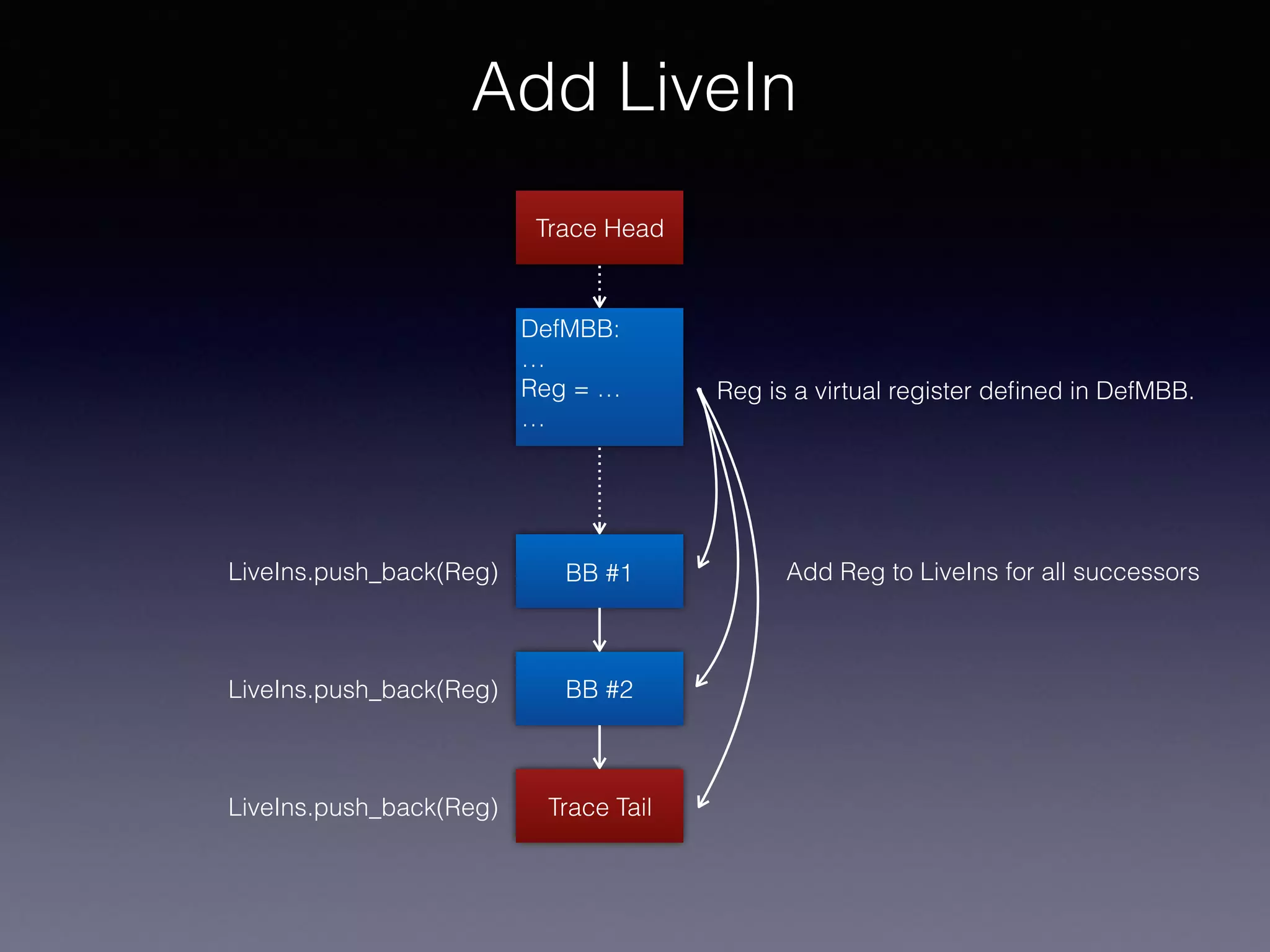
1. The document describes methods for computing trace metrics like instruction depth, height, and critical path length for basic blocks. It involves analyzing data dependencies between instructions within and across blocks to determine earliest issue cycles while traversing the trace in postorder and inverse postorder. 2. Key steps include finding the best predecessor and successor blocks for each block, computing depth and height values bottom-up and top-down based on dependency latencies, and tracking register liveness across blocks to determine the overall critical path.


![[Sitcon2018] Analysis and Improvement of IOTA PoW Implementation](https://cdn.slidesharecdn.com/ss_thumbnails/sitcon2018analysisandimprovementofiotapowimplementation-180306085230-thumbnail.jpg?width=640&height=640&fit=bounds)


![Semtex.c [CVE-2013-2094] - A Linux Privelege Escalation](https://cdn.slidesharecdn.com/ss_thumbnails/semtex-160316092108-thumbnail.jpg?width=640&height=640&fit=bounds)


![[JavaOne 2011] Models for Concurrent Programming](https://cdn.slidesharecdn.com/ss_thumbnails/24881-modelsforconcurrentprogramming-111019034625-phpapp02-thumbnail.jpg?width=640&height=640&fit=bounds)


