Find the fulloriginal copyable PDF textbook in the link
below:
https://textbookrequests.com
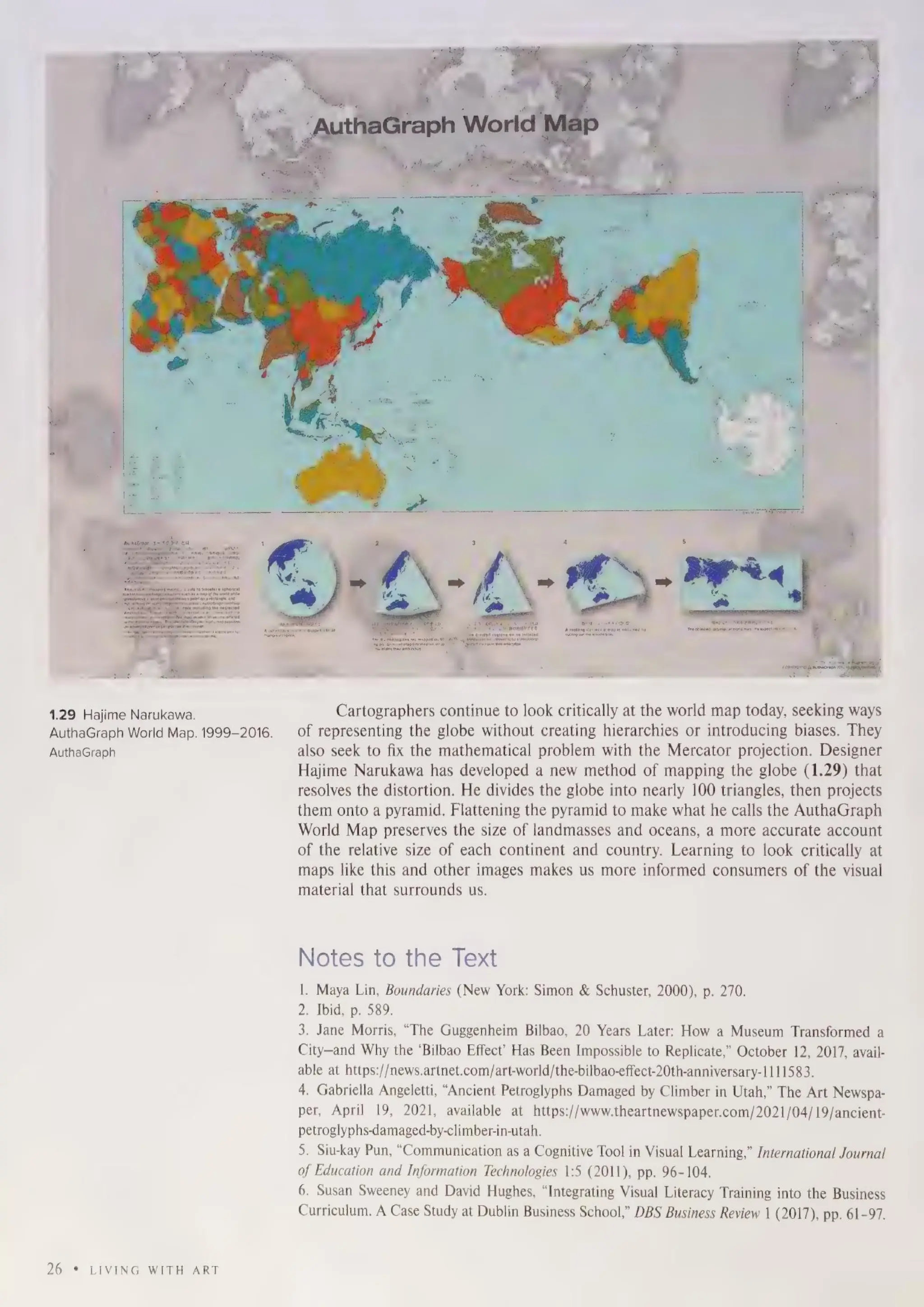
60.
not an exclusivelymale activity. In fact, some European caves have mostly women’s
hand prints. A painted cave in the U.S. state of Wyoming, on the other hand, reveals
that men, women, and children of both sexes left their prints on the walls.’ While
this research cannot tell us who drew the animals, it suggests that painting caves
and rock shelters was a community effort.
When Paleolithic cave paintings were first discovered during the late 19th
century, scholars suggested that they had been made purely for pleasure during
leisure, but their presence in deep and difficult-to-reach areas suggested another
purpose. To go to such lengths, either the images or the act of making them must
have been meaningful. One influential early theory held that the images were a form
of magic to ensure success in hunting. Other scholars considered each cave as a
purposefully structured whole, carefully noting the placement of every image and
symbolic marking within it. A related branch of research examined how Paleolithic
artists responded to the unique characteristics of each underground space, including
its acoustics. Still other theories suggested that the images were used in rituals
conducted by shamans, religious specialists who communicated with a spirit world,
often through animal spirit go-betweens.
Fascinating as those theories are, they omit the notion that the impulse and
ability to make images are unique human characteristics. Along with musical instru-
ments, personal ornaments, and portable sculptures, cave paintings were part of a
cultural toolkit that helped communities to form and thrive in their environments.
If images had not been useful to us, we would have stopped making them.
Art and Creativity
What does it take to create a work of art? Creativity is a word that comes up often
when talking about art, but what does it mean? Are we born with it? Can it be
learned? Can it be lost? Are artists more creative than other people?
Creativity has been broadly defined as the ability to produce something that
is both innovative and useful within a given social context. Although the exact
nature of creativity remains elusive—there is no definitive test for it—psychologists
agree that creative people tend to possess certain traits such as the ability to gener-
ate numerous ideas, many of them quite original, and then to analyze their ideas,
selecting the most promising ones to develop. Creative individuals redefine prob-
lems and seek connections between seemingly unrelated ideas. They tend to have
a playful side, but they are also capable of long periods of intense, concentrated
work. They take risks, remain open to experience, and do not feel restricted by
existing knowledge or conventional solutions.
Advances in brain monitoring and imaging technology have allowed neurosci-
entists to investigate creativity from their own point of view, with fascinating results.
Several early studies showed that creativity involves all parts of the brain, with dif
ferent areas taking the lead depending upon the task. Using magnetic resonance
imaging (MRI) to monitor white matter—the tissue that transmits signals from one
area of the brain to another—researchers discovered that nerve traffic (i.e., signal
transmission) in a creative brain is slower and more meandering in key areas, per-
haps allowing more novel and varied ideas to be linked up. MRI data has also
revealed how brains function during creative acts. While monitored, the participants
in one study drew and evaluated their drawings as they worked. The scans showed
that creative acts forged neural relationships within the brain that were not common
to other kinds of problem solving.”
The art profession is not the only one that requires creativity. Scientists, math-
ematicians, teachers, business executives, doctors, librarians, computer program-
mers, and people in every line of work look for ways to be creative. Artists open
the channels of visual creativity.
Can a person learn to be more creative? Absolutely, say researchers. The key
to creativity is the ability to alternate quickly between two modes of thinking—
generating ideas and analyzing them—and this ability can be consciously cultivated.
Furthermore, by regularly practicing a creative activity, people can learn to tap into
ARTISTS AND AUDIENCES 29
61.
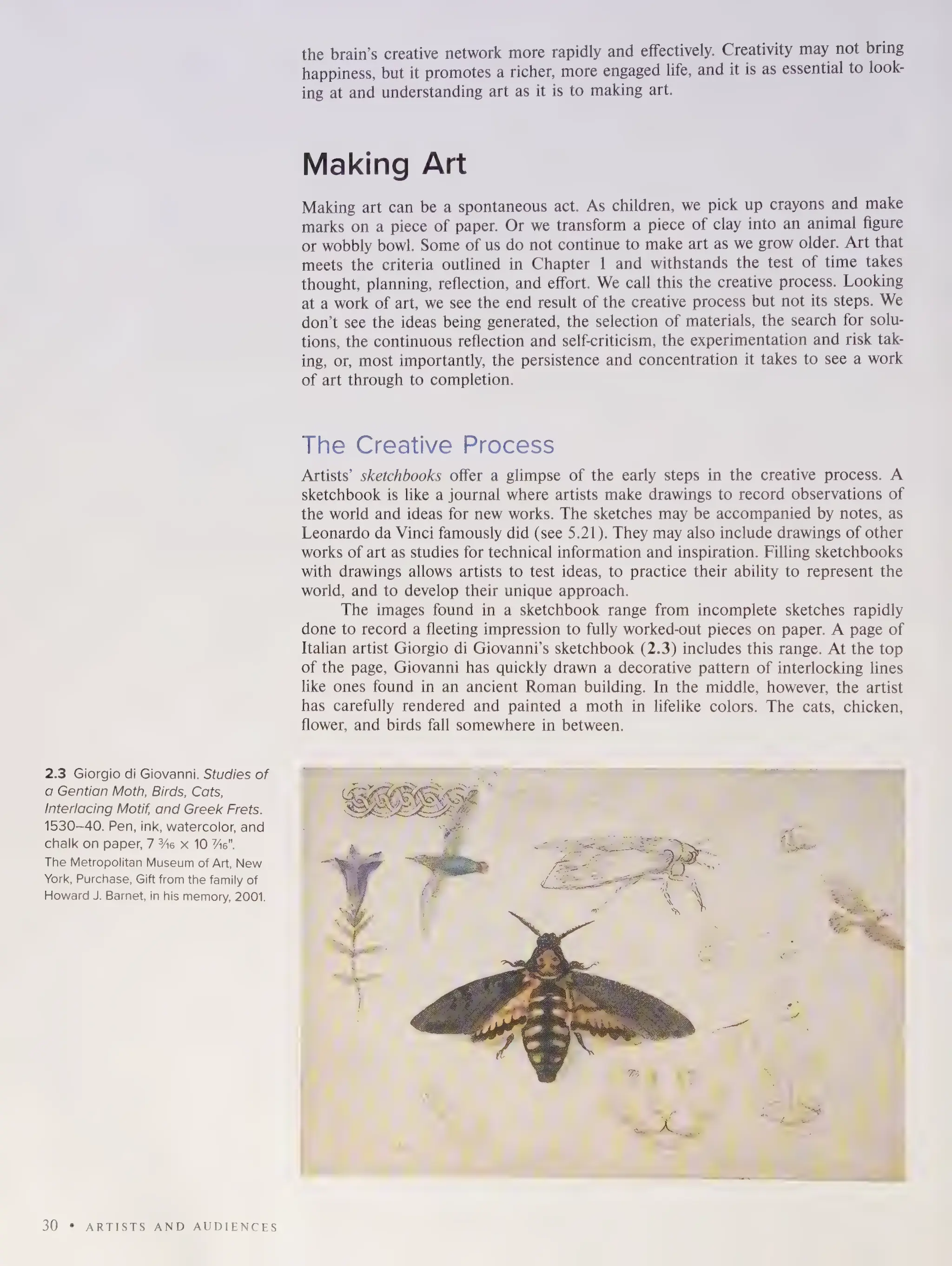
2.3 Giorgio diGiovanni. Studies of
a Gentian Moth, Birds, Cats,
Interlacing Motif, and Greek Frets.
1530—40. Pen, ink, watercolor, and
chalk on paper, 7 %6 x 10 eo".
The Metropolitan Museum of Art, New
York, Purchase, Gift from the family of
Howard J. Barnet, in his memory, 2001.
30 * ARTISTS AND AUDIENCES
the brain’s creative network more rapidly and effectively. Creativity may not bring
happiness, but it promotes a richer, more engaged life, and it is as essential to look-
ing at and understanding art as it is to making art.
Making Art
Making art can be a spontaneous act. As children, we pick up crayons and make
marks on a piece of paper. Or we transform a piece of clay into an animal figure
or wobbly bowl. Some of us do not continue to make art as we grow older. Art that
meets the criteria outlined in Chapter | and withstands the test of time takes
thought, planning, reflection, and effort. We call this the creative process. Looking
at a work of art, we see the end result of the creative process but not its steps. We
don’t see the ideas being generated, the selection of materials, the search for solu-
tions, the continuous reflection and self-criticism, the experimentation and risk tak-
ing, or, most importantly, the persistence and concentration it takes to see a work
of art through to completion.
The Creative Process
Artists’ sketchbooks offer a glimpse of the early steps in the creative process. A
sketchbook is like a journal where artists make drawings to record observations of
the world and ideas for new works. The sketches may be accompanied by notes, as
Leonardo da Vinci famously did (see 5.21). They may also include drawings of other
works of art as studies for technical information and inspiration. Filling sketchbooks
with drawings allows artists to test ideas, to practice their ability to represent the
world, and to develop their unique approach.
The images found in a sketchbook range from incomplete sketches rapidly
done to record a fleeting impression to fully worked-out pieces on paper. A page of
Italian artist Giorgio di Giovanni's sketchbook (2.3) includes this range. At the top
of the page, Giovanni has quickly drawn a decorative pattern of interlocking lines
like ones found in an ancient Roman building. In the middle, however, the artist
has carefully rendered and painted a moth in lifelike colors. The cats, chicken,
flower, and birds fall somewhere in between.
62.
Thank you forreading. To get the full copyable version:
https://textbookrequests.com
































![Reading Techniques [Autosaved].pptxReading Techniques [Autosaved].pptx](https://cdn.slidesharecdn.com/ss_thumbnails/readingtechniquesautosaved-251211193055-b8821f9d-thumbnail.jpg?width=640&height=640&fit=bounds)


