https://www.youtube.com/watch?v=AgOmeANl3ls
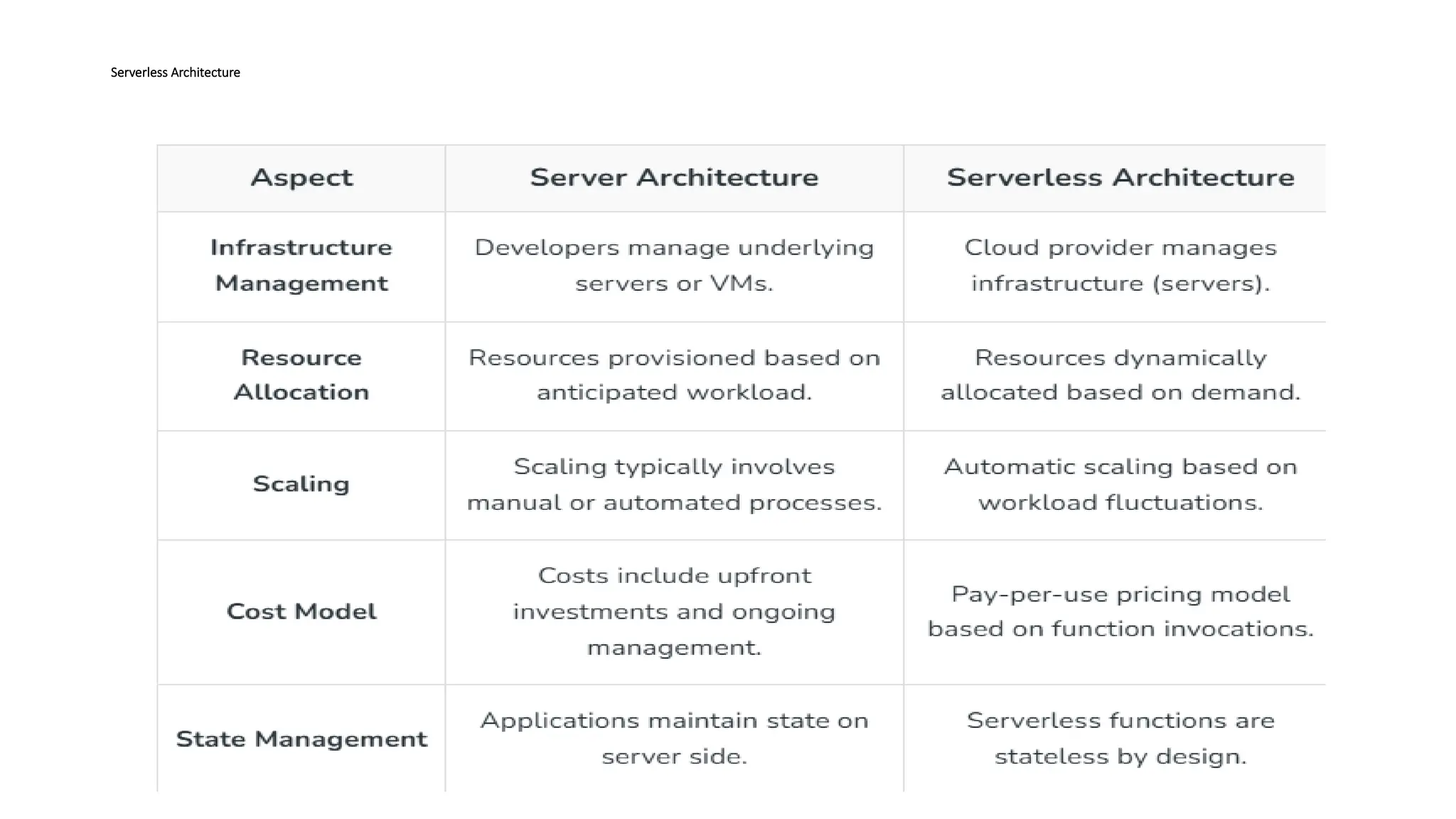
• traditional servers and serverless computing
• Server architecture refers to the design and arrangement of hardware,
software, and networking components within a server system. It
encompasses the organization and configuration of these components
to efficiently manage resources, facilitate communication, and deliver
services to clients over a network.
Serverless Architecture
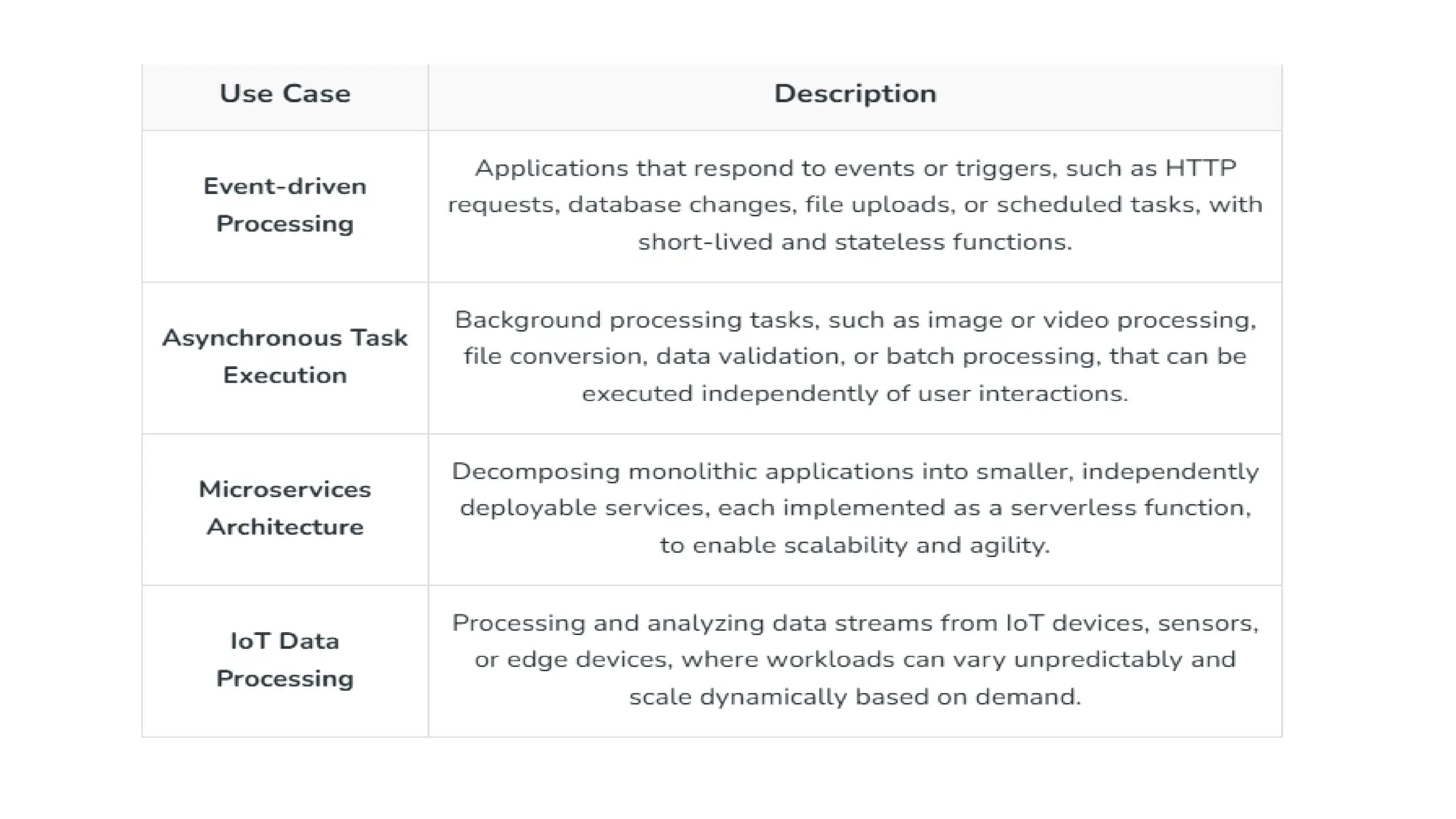
• All projects need a compute capability to handle processing tasks.
Here are some examples:
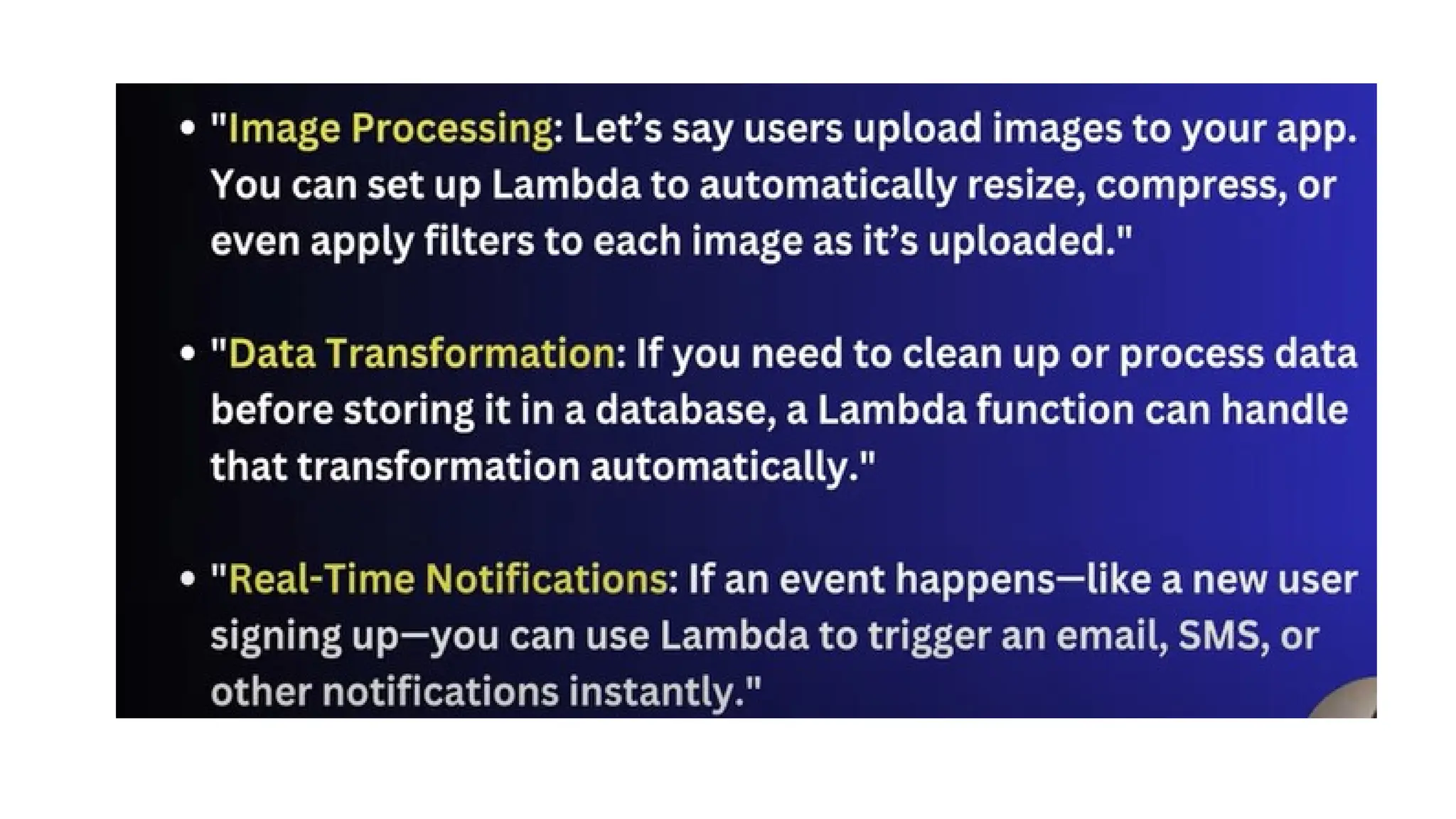
 Handling web application and API requests
Transforming batches of data
Processing messages from a queue
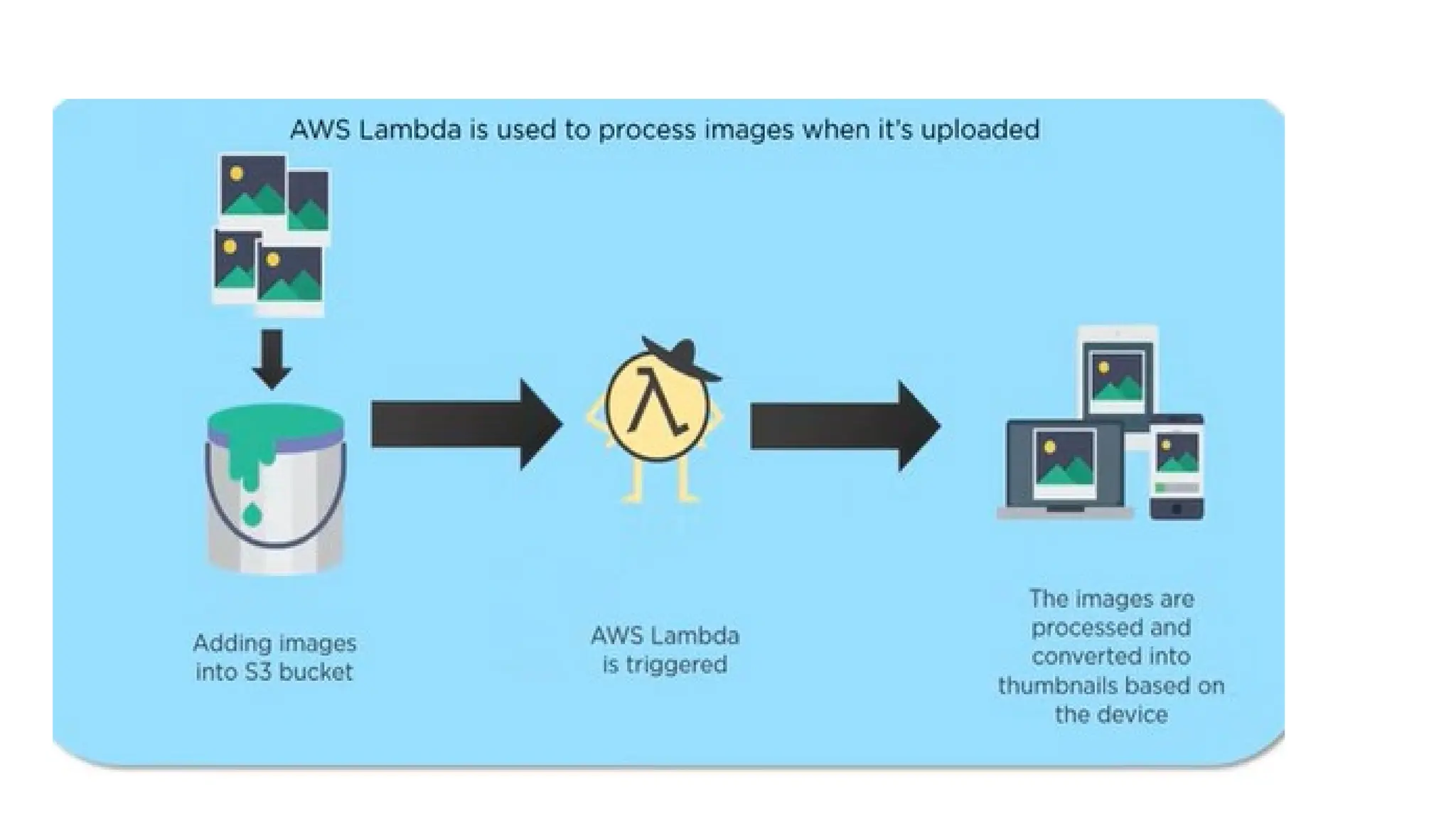
Resizing images
Generating dynamic PDFs from customer data
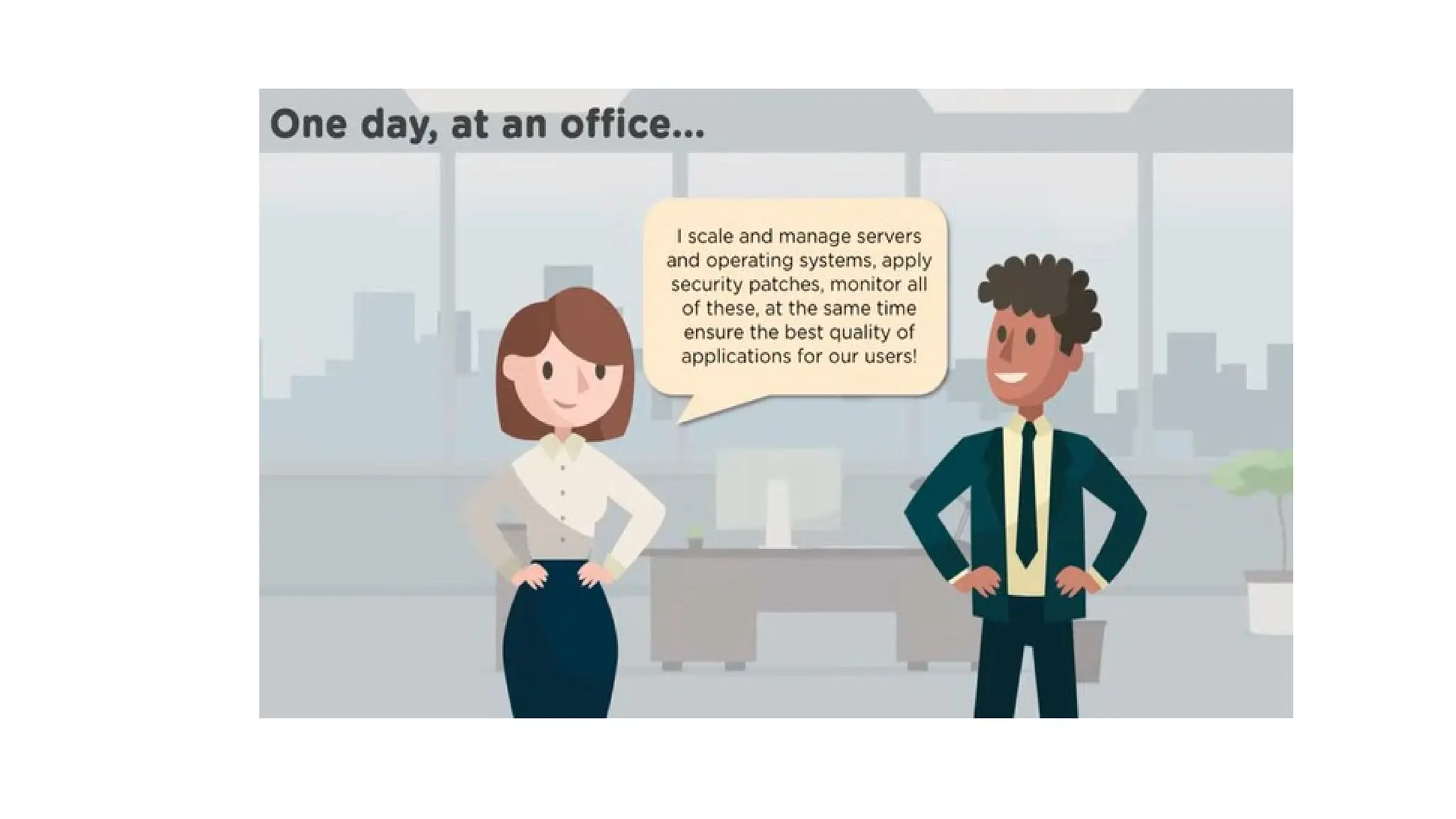
• Setting up, configuring and maintaining the frameworks, runtime
environments, and virtual or physical infrastructure slows down your
delivery of features, bug fixes, and improvements.
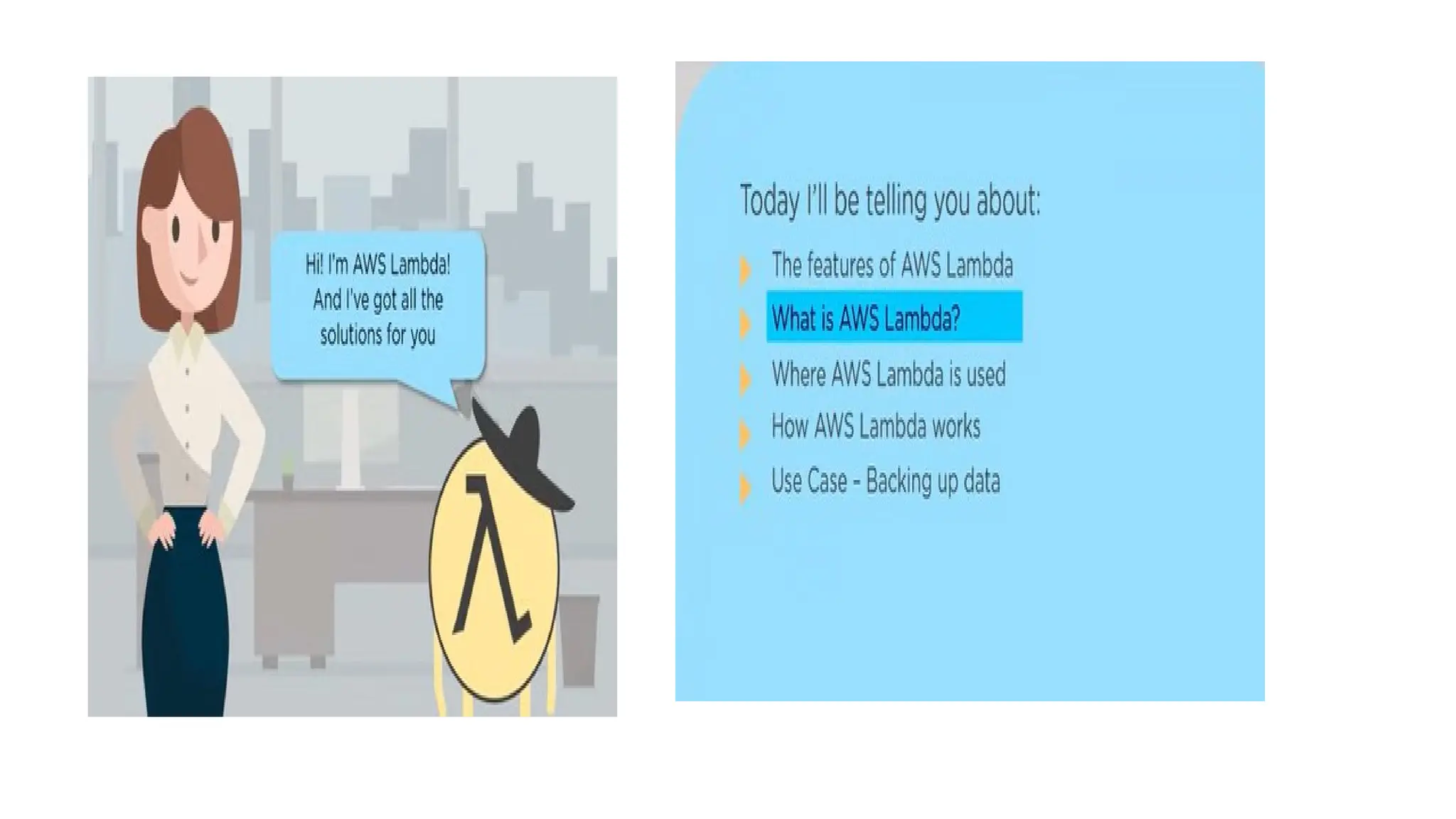
• In Lambda, you write function code. Lambda runs the functions. That’s
it. There are no servers.
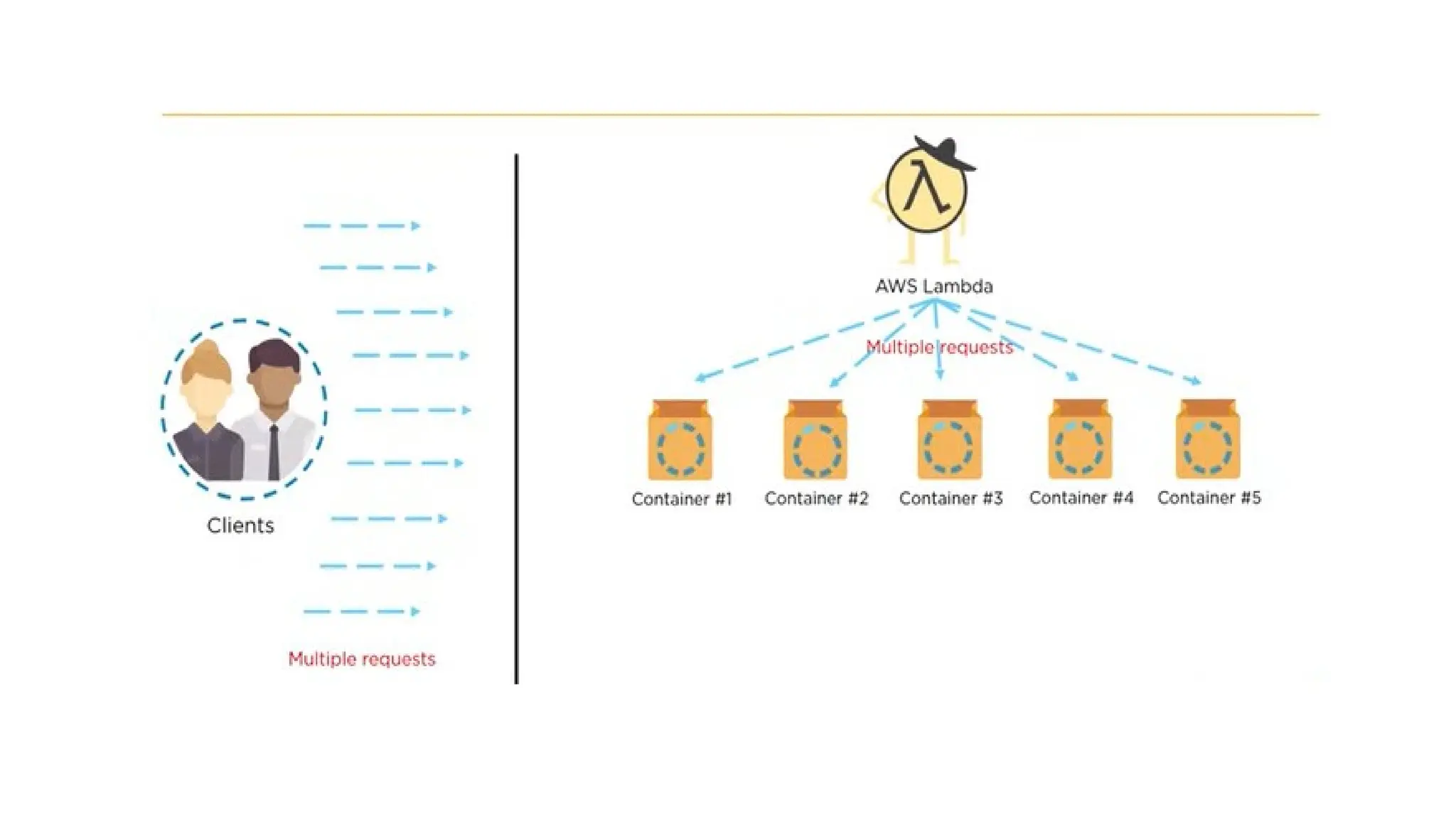
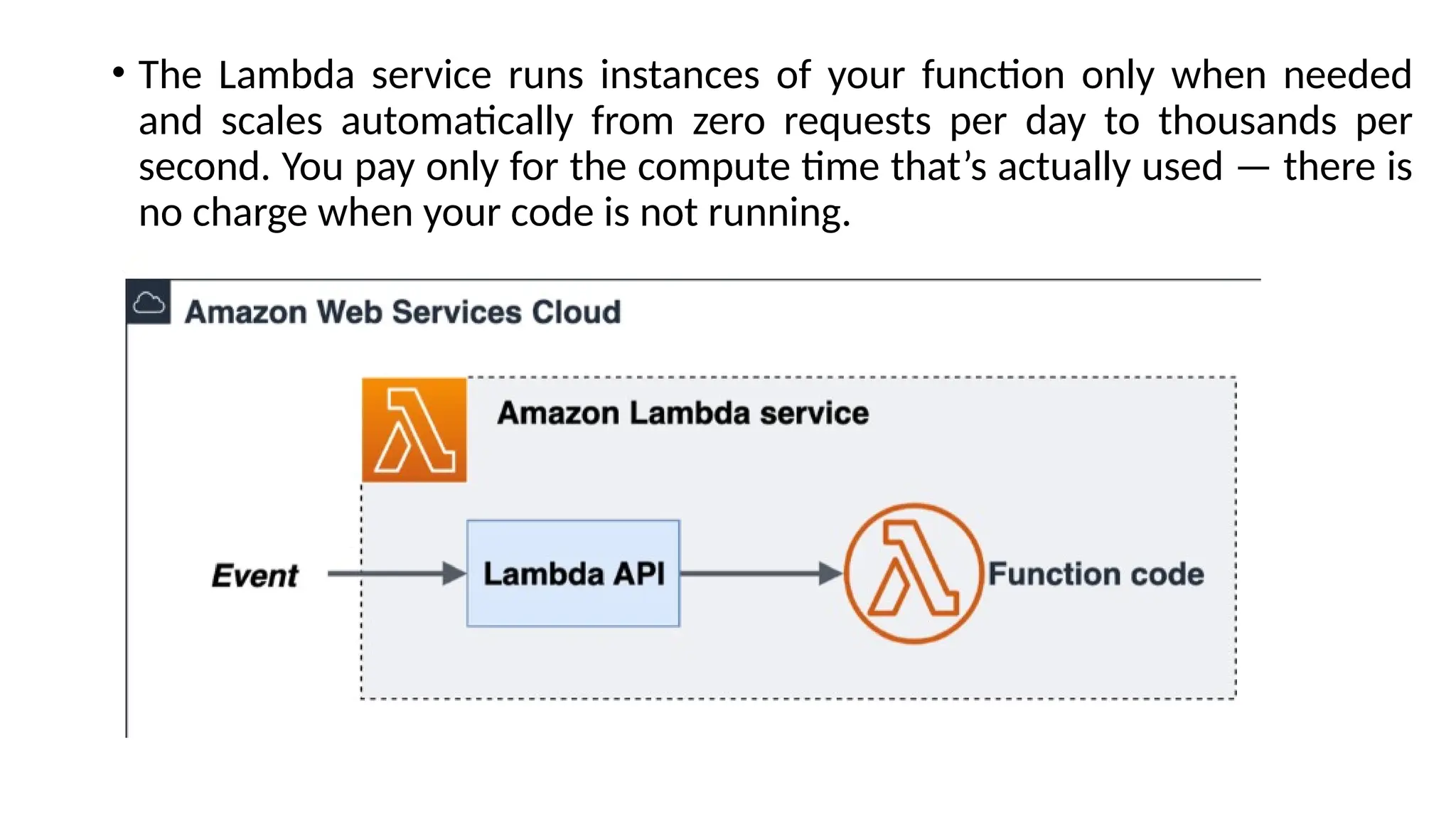
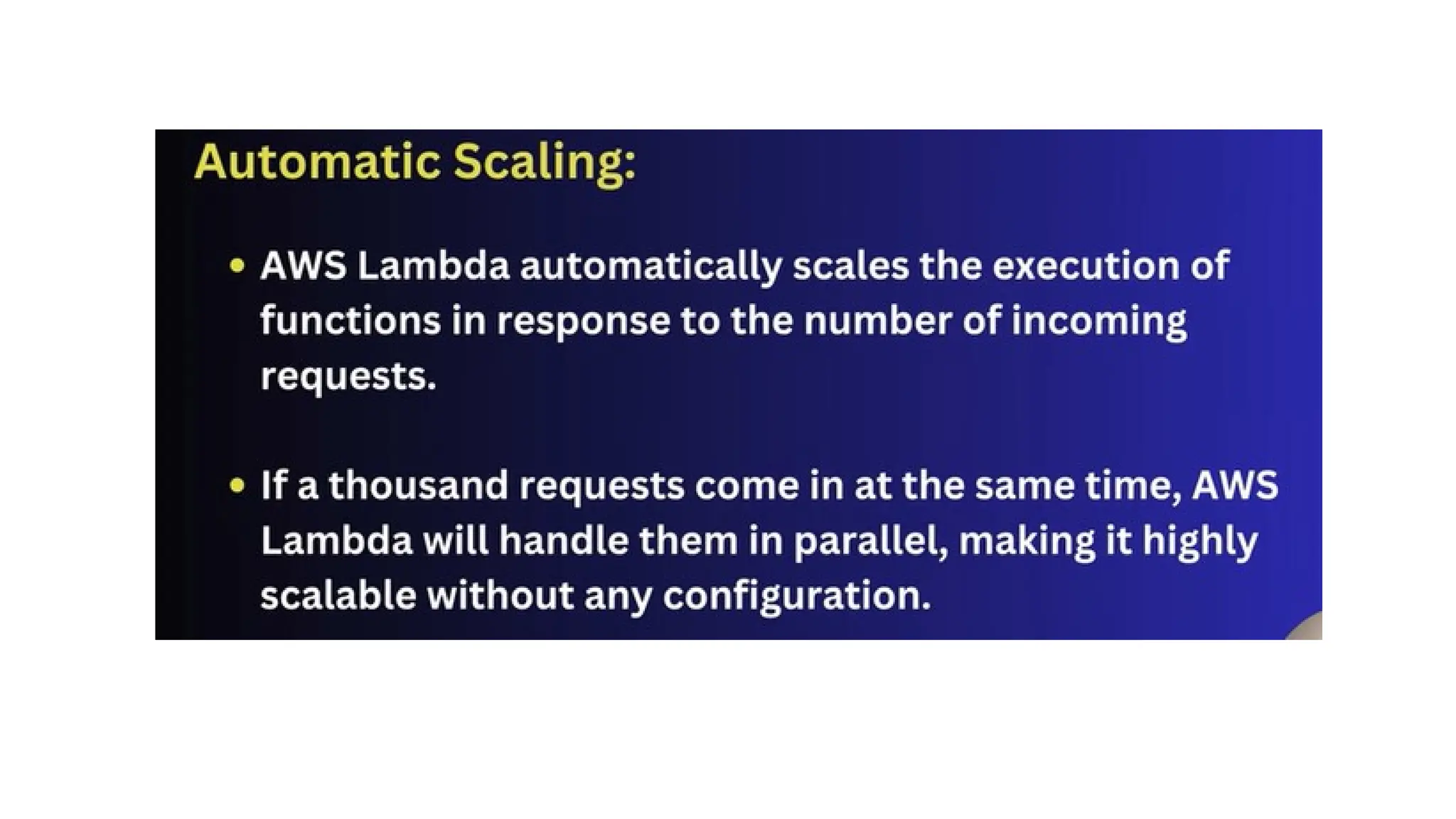
• The Lambda service runs instances of your function only when needed
and scales automatically from zero requests per day to thousands per
second. You pay only for the compute time that’s actually used — there is
no charge when your code is not running.
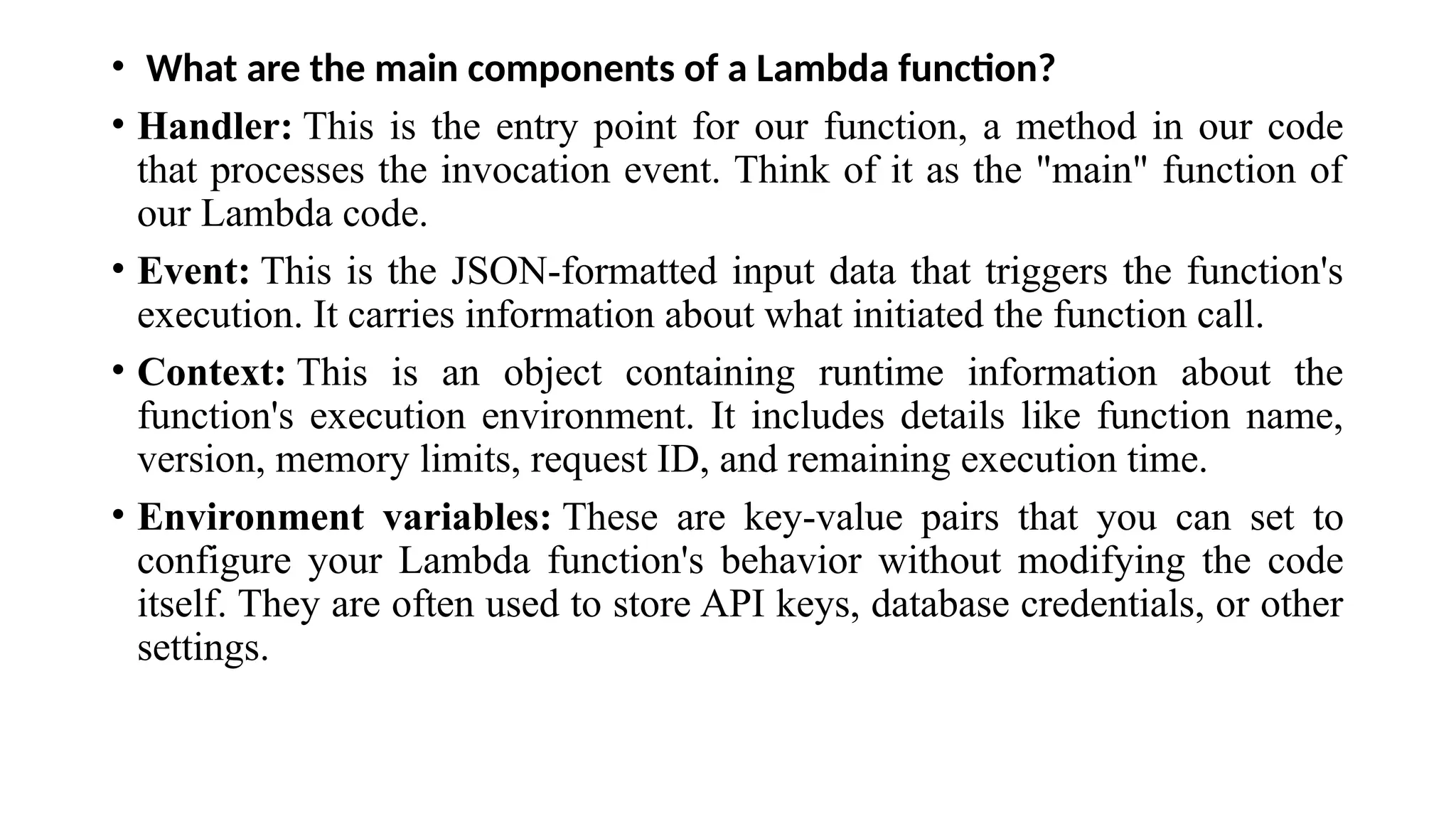
• What are the main components of a Lambda function?
• Handler: This is the entry point for our function, a method in our code
that processes the invocation event. Think of it as the "main" function of
our Lambda code.
• Event: This is the JSON-formatted input data that triggers the function's
execution. It carries information about what initiated the function call.
• Context: This is an object containing runtime information about the
function's execution environment. It includes details like function name,
version, memory limits, request ID, and remaining execution time.
• Environment variables: These are key-value pairs that you can set to
configure your Lambda function's behavior without modifying the code
itself. They are often used to store API keys, database credentials, or other
settings.
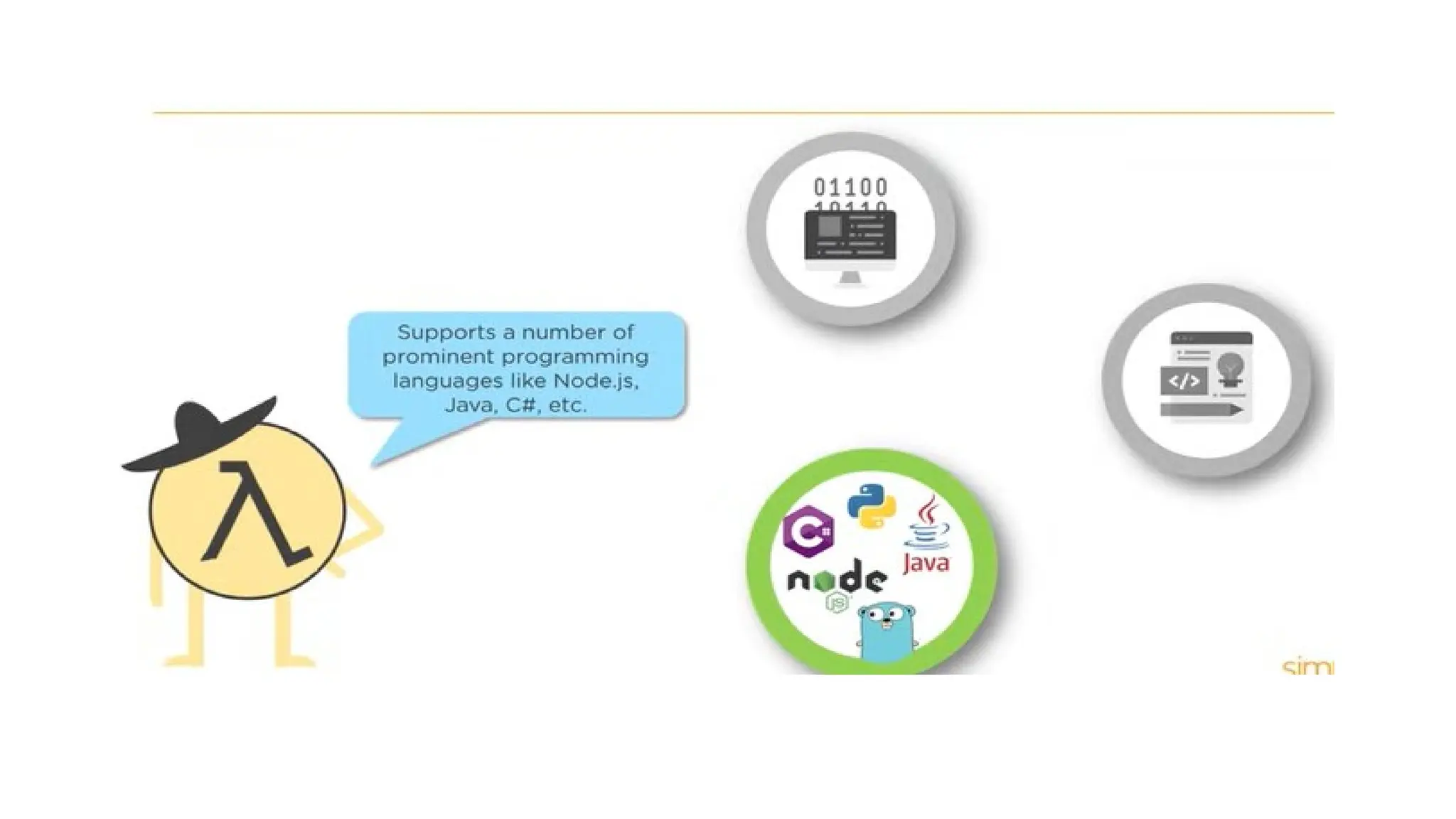
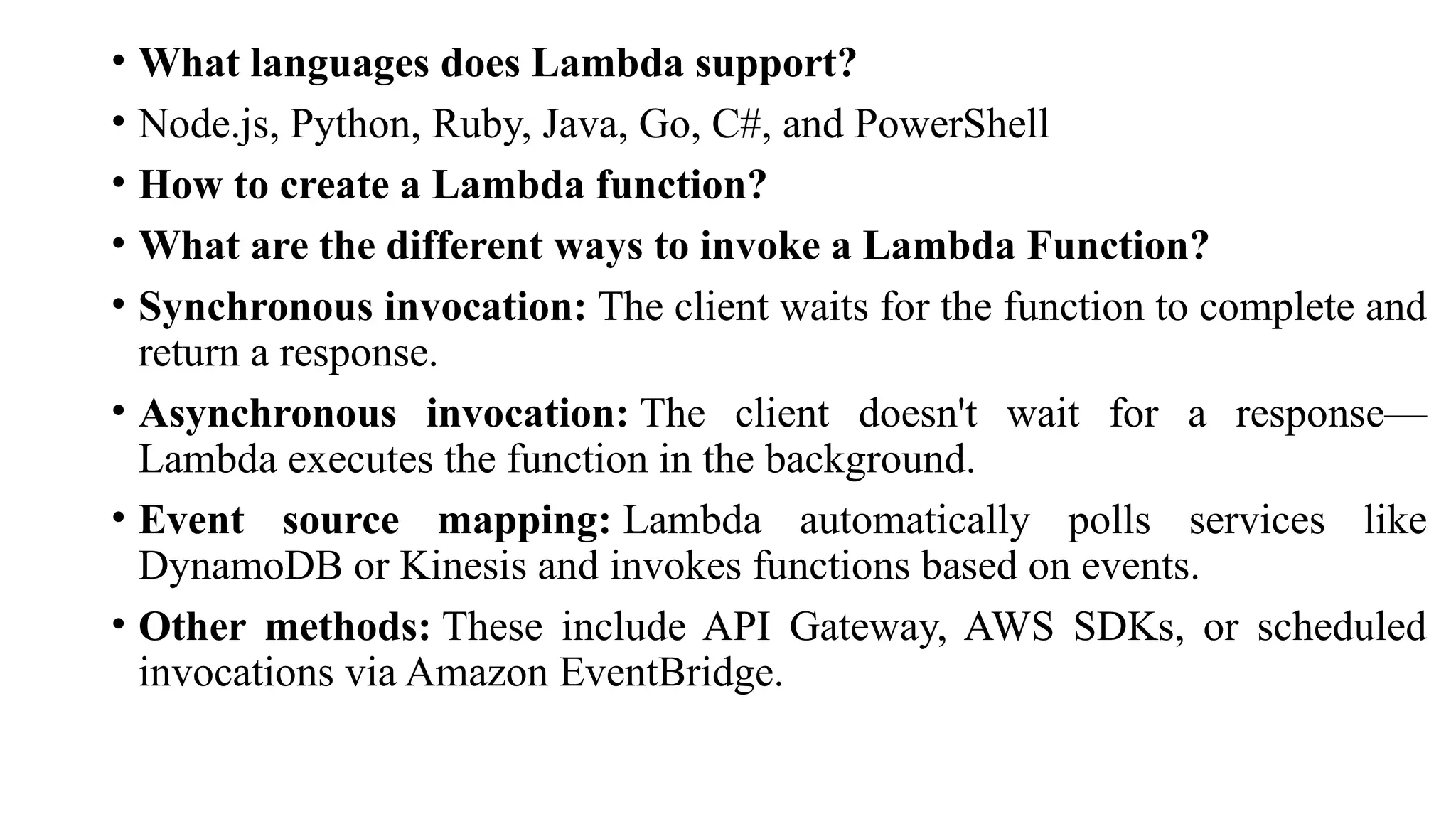
• What languages does Lambda support?
• Node.js, Python, Ruby, Java, Go, C#, and PowerShell
• How to create a Lambda function?
• What are the different ways to invoke a Lambda Function?
• Synchronous invocation: The client waits for the function to complete and
return a response.
• Asynchronous invocation: The client doesn't wait for a response—
Lambda executes the function in the background.
• Event source mapping: Lambda automatically polls services like
DynamoDB or Kinesis and invokes functions based on events.
• Other methods: These include API Gateway, AWS SDKs, or scheduled
invocations via Amazon EventBridge.
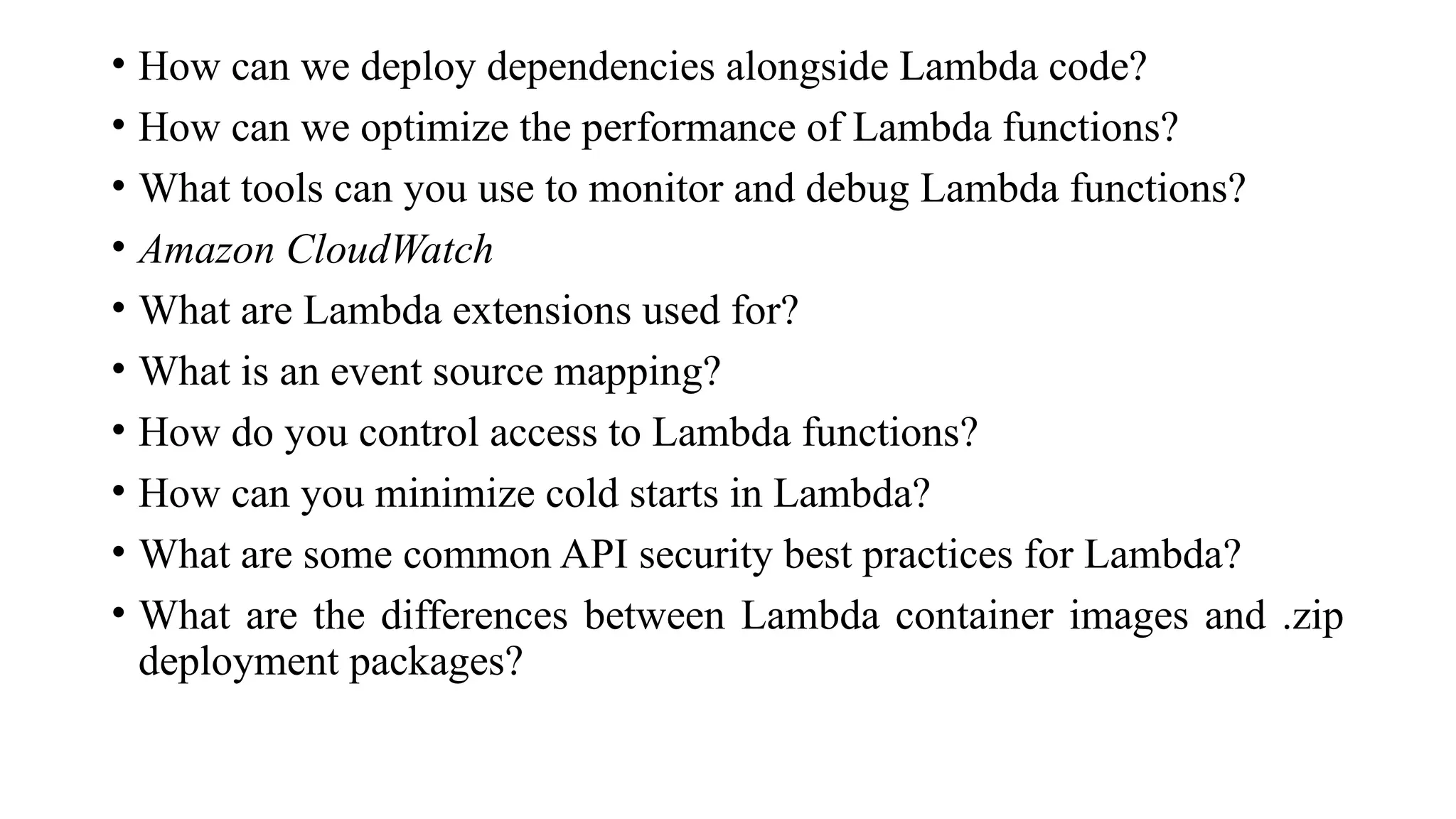
• How can we deploy dependencies alongside Lambda code?
• How can we optimize the performance of Lambda functions?
• What tools can you use to monitor and debug Lambda functions?
• Amazon CloudWatch
• What are Lambda extensions used for?
• What is an event source mapping?
• How do you control access to Lambda functions?
• How can you minimize cold starts in Lambda?
• What are some common API security best practices for Lambda?
• What are the differences between Lambda container images and .zip
deployment packages?
• Can Lambda functions call other Lambda functions?
• Yes, Lambda functions can invoke other functions directly using the
AWS SDK. Common use cases include function orchestration,
aggregating results from multiple functions, and fanning out event
processing.
• When a Lambda function invokes another, the invoked function's
resource-based policy should explicitly grant access to allow
invocation from the calling function.
https://www.datacamp.com/blog/aws-lambda-interview-questions
• How do you implement a simple REST API using Lambda and API
Gateway?
• How do you configure a Lambda function to process events from an
S3 bucket?
• How do you configure a Lambda function to write data to a
DynamoDB table?
• How do you implement a scheduled Lambda function?
• How do you gradually shift traffic to a new version of a Lambda
function?
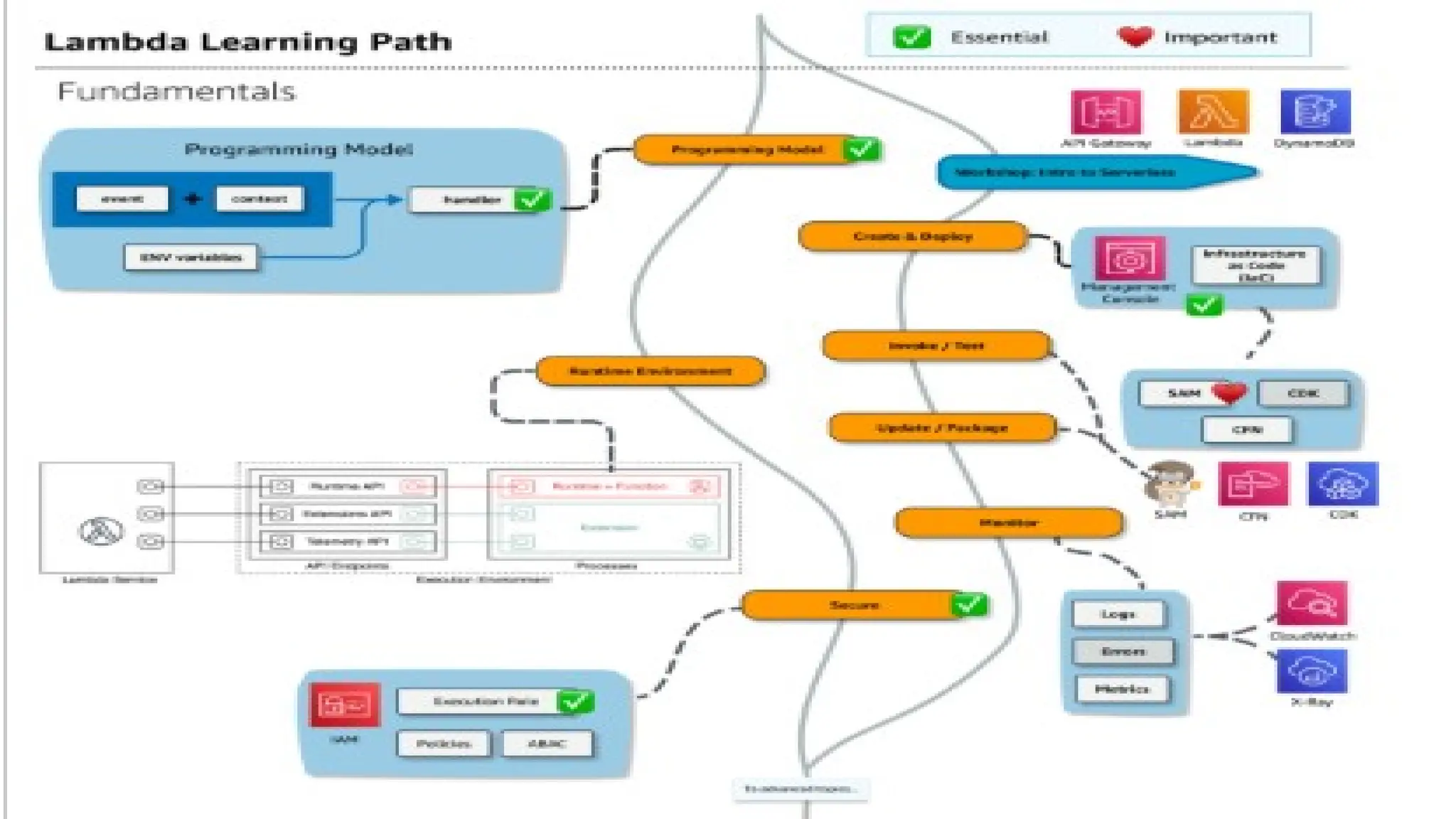
Fundamentals
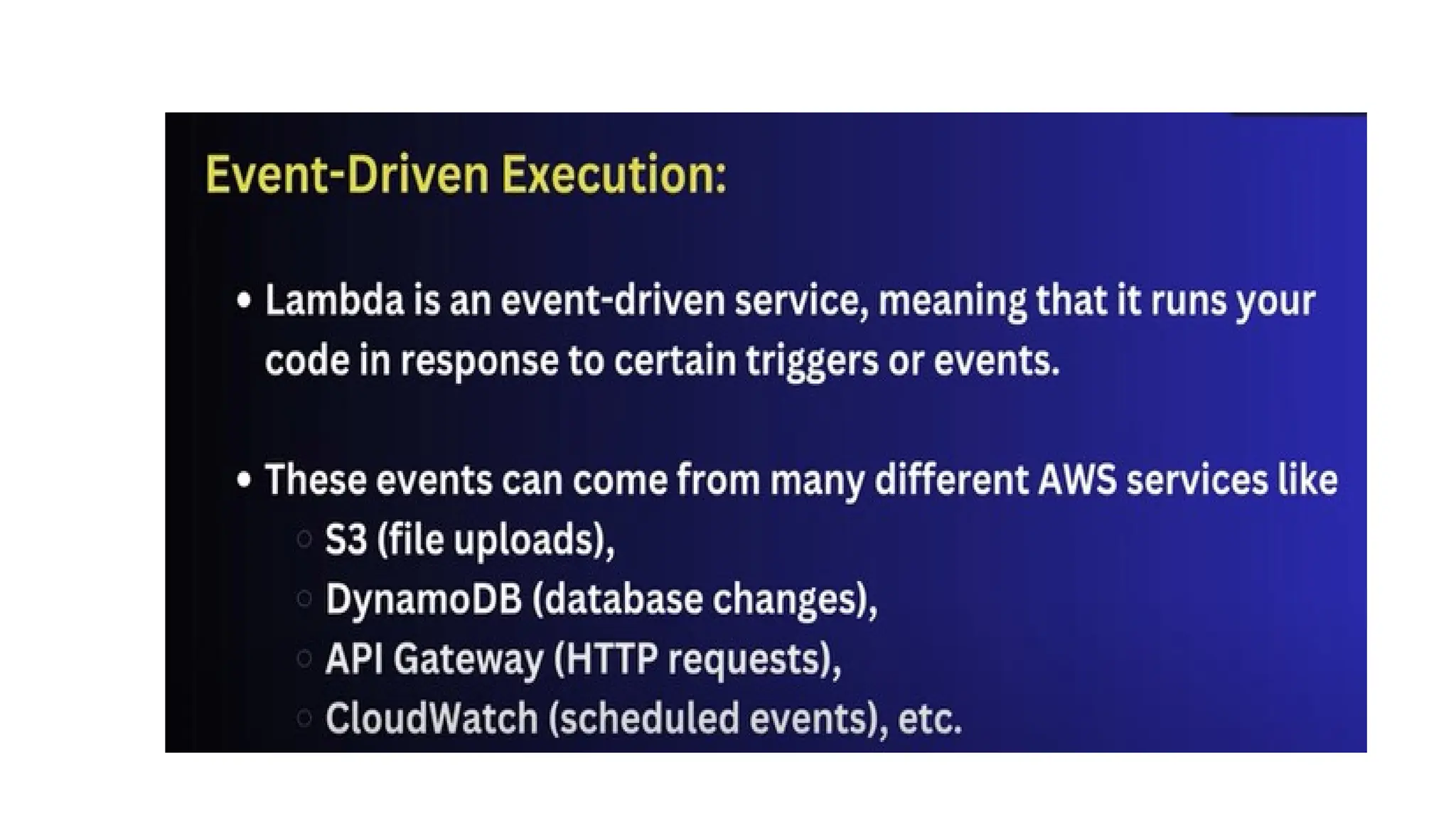
• Serverless solutions are based on event-driven
architecture, or EDA, where services send and
receive events, which represent an update or change in state.
The primary activity of Lambda functions is to process
events.
• Within the Lambda service, your function code is stored in a
code package, deployed as a .zip or a container image. All
interaction with the code occurs through the Lambda API.
There is no direct invocation of functions from outside of the
Lambda service.
Building applications with Lambda:
• How the event-driven programming model invokes Lambda
functions
• How to create, invoke, test, update, package, and secure
functions
• How the execution and runtime environment runs your
functions
• How to view logs and monitor your functions
• Hands-on opportunities to learn how to invoke functions
lambda function Amazon AWS explained .pptx

lambda function Amazon AWS explained .pptx

  • 1.
    https://www.youtube.com/watch?v=AgOmeANl3ls • traditional serversand serverless computing • Server architecture refers to the design and arrangement of hardware, software, and networking components within a server system. It encompasses the organization and configuration of these components to efficiently manage resources, facilitate communication, and deliver services to clients over a network.
  • 2.
  • 12.
    • All projectsneed a compute capability to handle processing tasks. Here are some examples:  Handling web application and API requests Transforming batches of data Processing messages from a queue Resizing images Generating dynamic PDFs from customer data • Setting up, configuring and maintaining the frameworks, runtime environments, and virtual or physical infrastructure slows down your delivery of features, bug fixes, and improvements. • In Lambda, you write function code. Lambda runs the functions. That’s it. There are no servers.
  • 13.
    • The Lambdaservice runs instances of your function only when needed and scales automatically from zero requests per day to thousands per second. You pay only for the compute time that’s actually used — there is no charge when your code is not running.
  • 15.
    • What arethe main components of a Lambda function? • Handler: This is the entry point for our function, a method in our code that processes the invocation event. Think of it as the "main" function of our Lambda code. • Event: This is the JSON-formatted input data that triggers the function's execution. It carries information about what initiated the function call. • Context: This is an object containing runtime information about the function's execution environment. It includes details like function name, version, memory limits, request ID, and remaining execution time. • Environment variables: These are key-value pairs that you can set to configure your Lambda function's behavior without modifying the code itself. They are often used to store API keys, database credentials, or other settings.
  • 16.
    • What languagesdoes Lambda support? • Node.js, Python, Ruby, Java, Go, C#, and PowerShell • How to create a Lambda function? • What are the different ways to invoke a Lambda Function? • Synchronous invocation: The client waits for the function to complete and return a response. • Asynchronous invocation: The client doesn't wait for a response— Lambda executes the function in the background. • Event source mapping: Lambda automatically polls services like DynamoDB or Kinesis and invokes functions based on events. • Other methods: These include API Gateway, AWS SDKs, or scheduled invocations via Amazon EventBridge.
  • 21.
    • How canwe deploy dependencies alongside Lambda code? • How can we optimize the performance of Lambda functions? • What tools can you use to monitor and debug Lambda functions? • Amazon CloudWatch • What are Lambda extensions used for? • What is an event source mapping? • How do you control access to Lambda functions? • How can you minimize cold starts in Lambda? • What are some common API security best practices for Lambda? • What are the differences between Lambda container images and .zip deployment packages?
  • 22.
    • Can Lambdafunctions call other Lambda functions? • Yes, Lambda functions can invoke other functions directly using the AWS SDK. Common use cases include function orchestration, aggregating results from multiple functions, and fanning out event processing. • When a Lambda function invokes another, the invoked function's resource-based policy should explicitly grant access to allow invocation from the calling function.
  • 23.
    https://www.datacamp.com/blog/aws-lambda-interview-questions • How doyou implement a simple REST API using Lambda and API Gateway? • How do you configure a Lambda function to process events from an S3 bucket? • How do you configure a Lambda function to write data to a DynamoDB table? • How do you implement a scheduled Lambda function? • How do you gradually shift traffic to a new version of a Lambda function?
  • 24.
    Fundamentals • Serverless solutionsare based on event-driven architecture, or EDA, where services send and receive events, which represent an update or change in state. The primary activity of Lambda functions is to process events. • Within the Lambda service, your function code is stored in a code package, deployed as a .zip or a container image. All interaction with the code occurs through the Lambda API. There is no direct invocation of functions from outside of the Lambda service.
  • 25.
    Building applications withLambda: • How the event-driven programming model invokes Lambda functions • How to create, invoke, test, update, package, and secure functions • How the execution and runtime environment runs your functions • How to view logs and monitor your functions • Hands-on opportunities to learn how to invoke functions