Download to read offline

![Let’s check out the example...
#include <stdio.h>
int main() {
int *a = new int[10];
printf("size(a) = %lun", sizeof(a) / sizeof(int));
return 0;
}](https://image.slidesharecdn.com/jvm-abriefintroduction-170126225733/75/Jvm-a-brief-introduction-14-2048.jpg)
![Memory management
MyClass *obj = new MyClass();
// ...
delete obj;
MyClass **objs = new (MyClass*)[100];
for (int i = 0; i < 100; ++i) {
objs[i] = new MyClass();
}
delete objs;
In C++ you were responsible for freeing the memory:](https://image.slidesharecdn.com/jvm-abriefintroduction-170126225733/75/Jvm-a-brief-introduction-20-2048.jpg)
![Short example
public class Main {
public static final String[] opts = { "Eggs", "Chickens", "Philosophers" };
public static void main(String[] args) {
for (String option : opts) {
process(option);
}
}
public static void process(String option) {
System.out.printf("%sn", option);
}
}](https://image.slidesharecdn.com/jvm-abriefintroduction-170126225733/75/Jvm-a-brief-introduction-23-2048.jpg)
![Loops unrolling
public class Main {
public static final String[] opts = { "Eggs", "Chickens", "Philosophers" };
public static void main(String[] args) {
process(opts[0]);
process(opts[1]);
process(opts[2]);
}
public static void process(String option) {
System.out.printf("%sn", option);
}
}](https://image.slidesharecdn.com/jvm-abriefintroduction-170126225733/75/Jvm-a-brief-introduction-24-2048.jpg)
![Reducing unneeded data loading
public class Main {
public static void main(String[] args) {
System.out.printf("%sn", "Eggs");
System.out.printf("%sn", "Chickens");
System.out.printf("%sn", "Philosophers");
}
}](https://image.slidesharecdn.com/jvm-abriefintroduction-170126225733/75/Jvm-a-brief-introduction-26-2048.jpg)
![Reducing unneeded data loading
public class Main {
public static void main(String[] args) {
System.out.printf("%sn", "Eggs");
System.out.printf("%sn", "Chickens");
System.out.printf("%sn", "Philosophers");
}
}
And unneeded method calls!](https://image.slidesharecdn.com/jvm-abriefintroduction-170126225733/75/Jvm-a-brief-introduction-28-2048.jpg)
![Reducing unneeded data loading
public class Main {
public static void main(String[] args) {
System.out.printf("%sn", "Eggs");
System.out.printf("%sn", "Chickens");
System.out.printf("%sn", "Philosophers");
}
}
Reduced memory cost here](https://image.slidesharecdn.com/jvm-abriefintroduction-170126225733/75/Jvm-a-brief-introduction-30-2048.jpg)
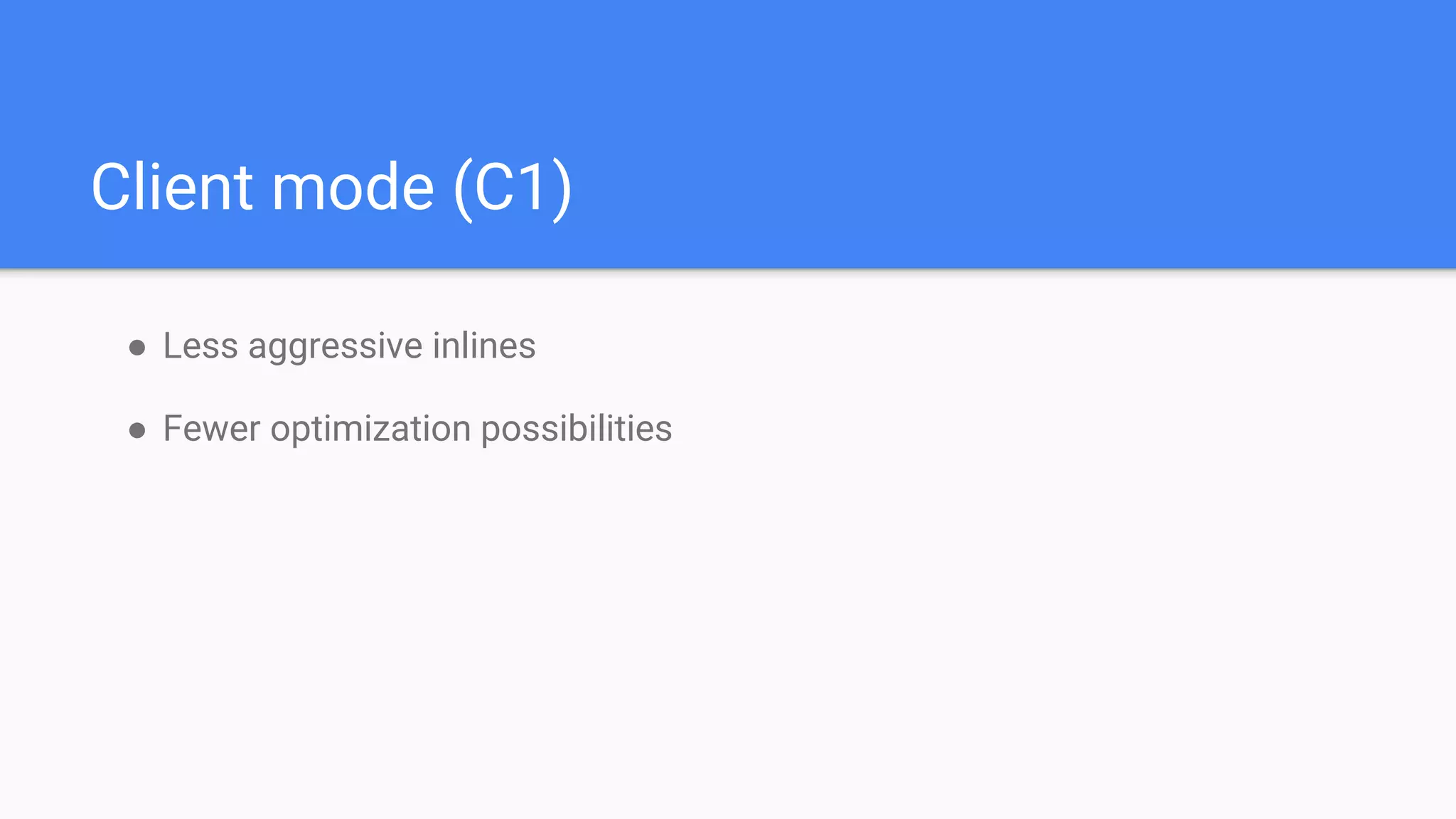
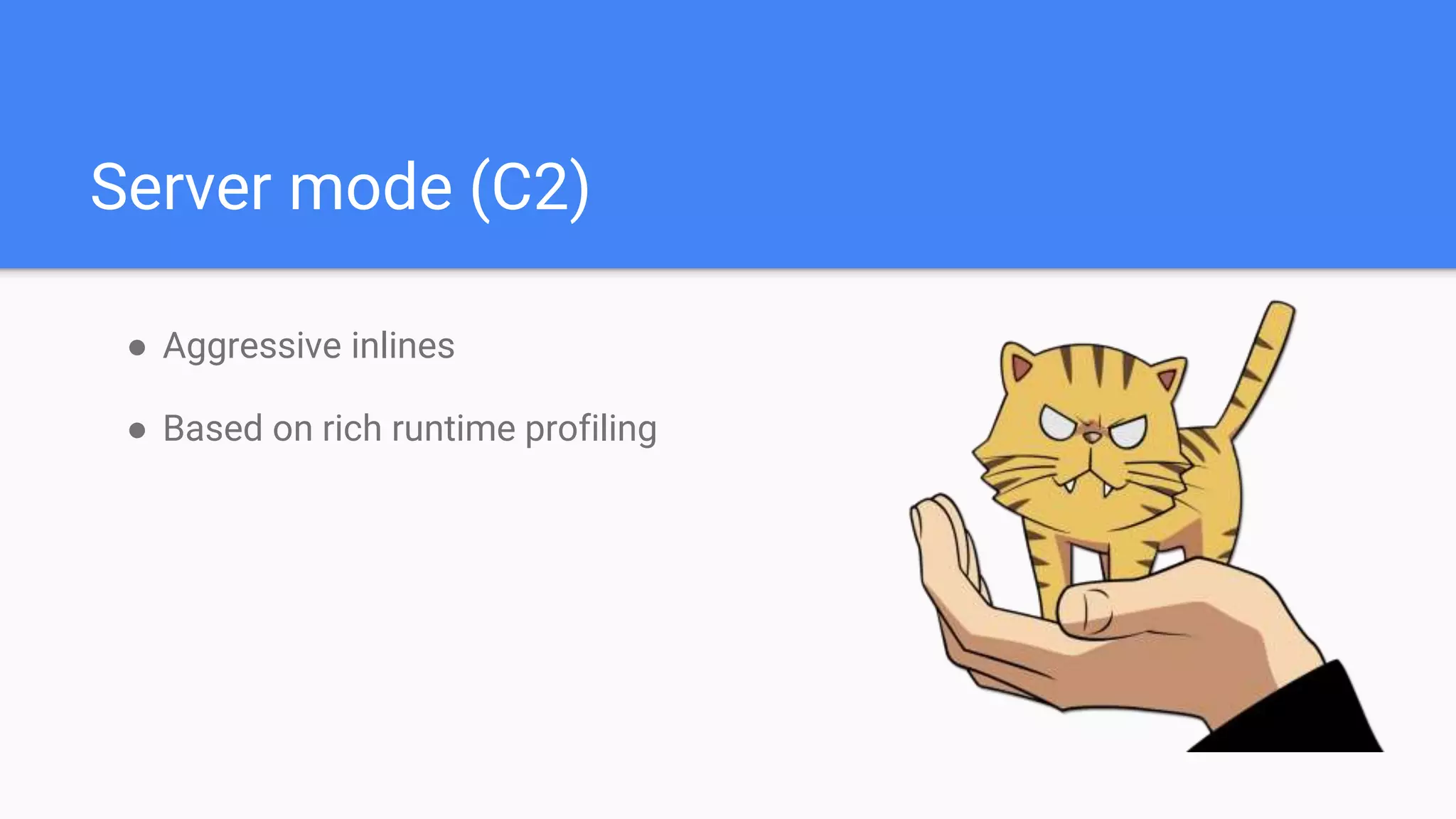
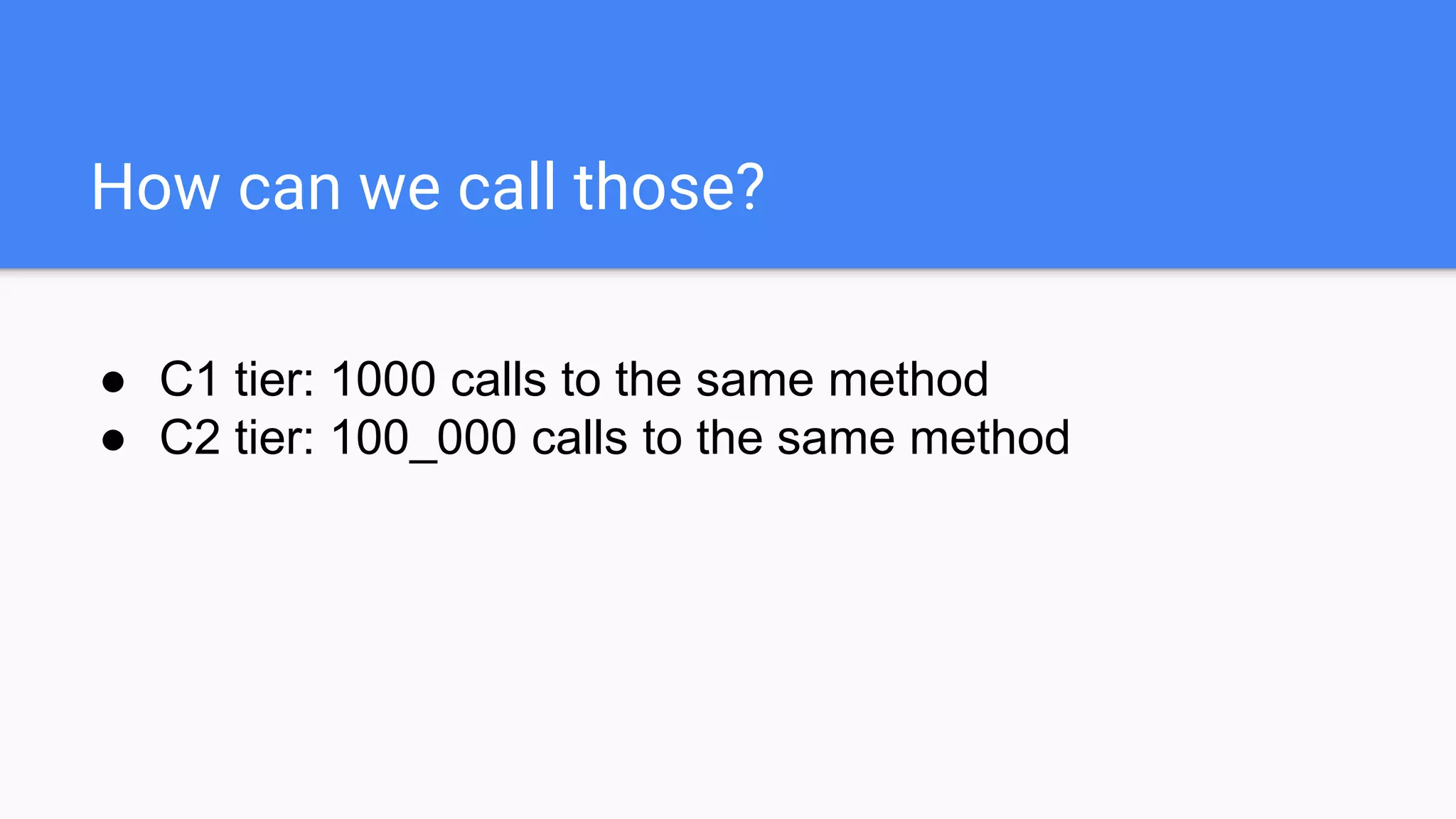


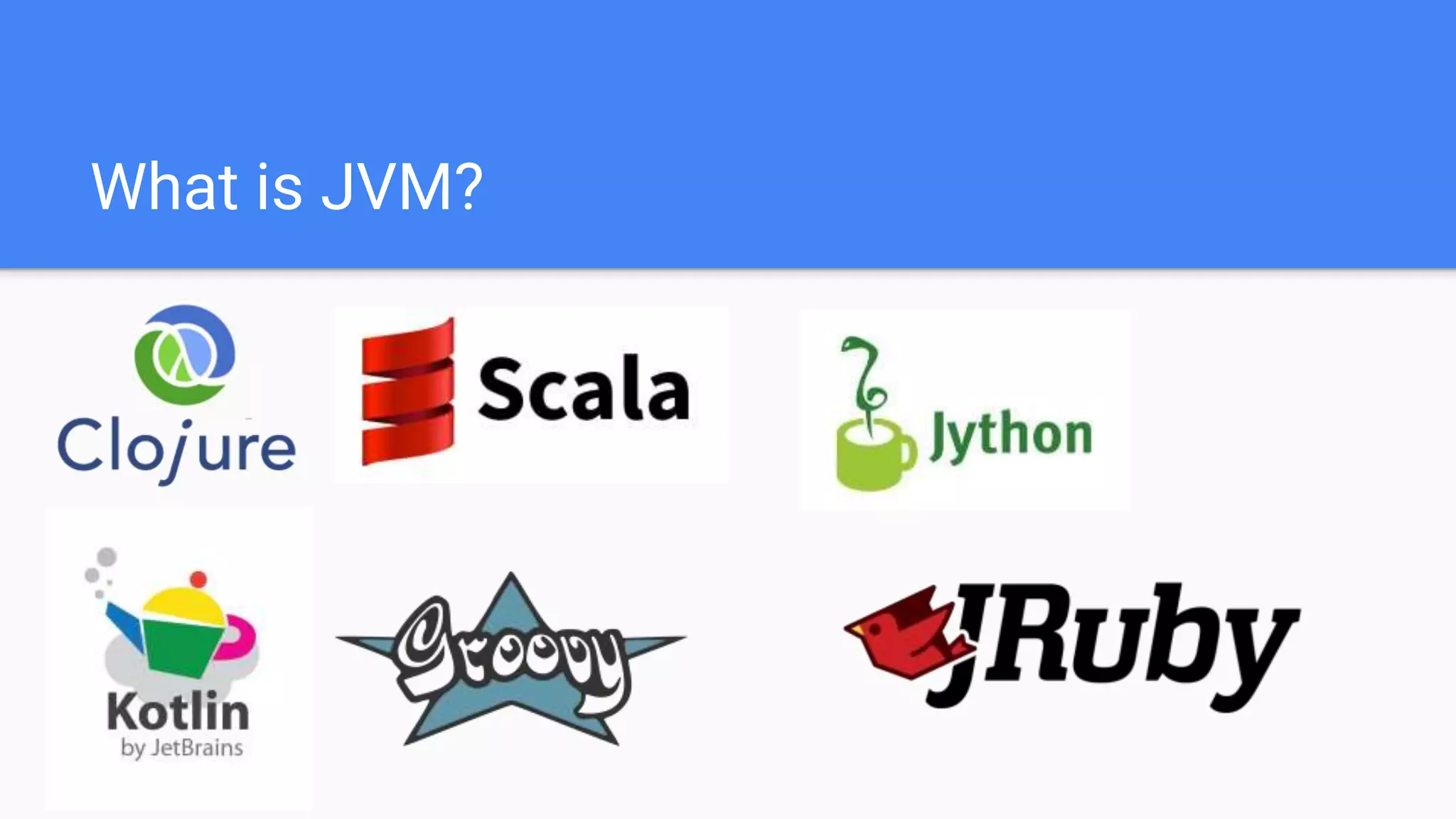
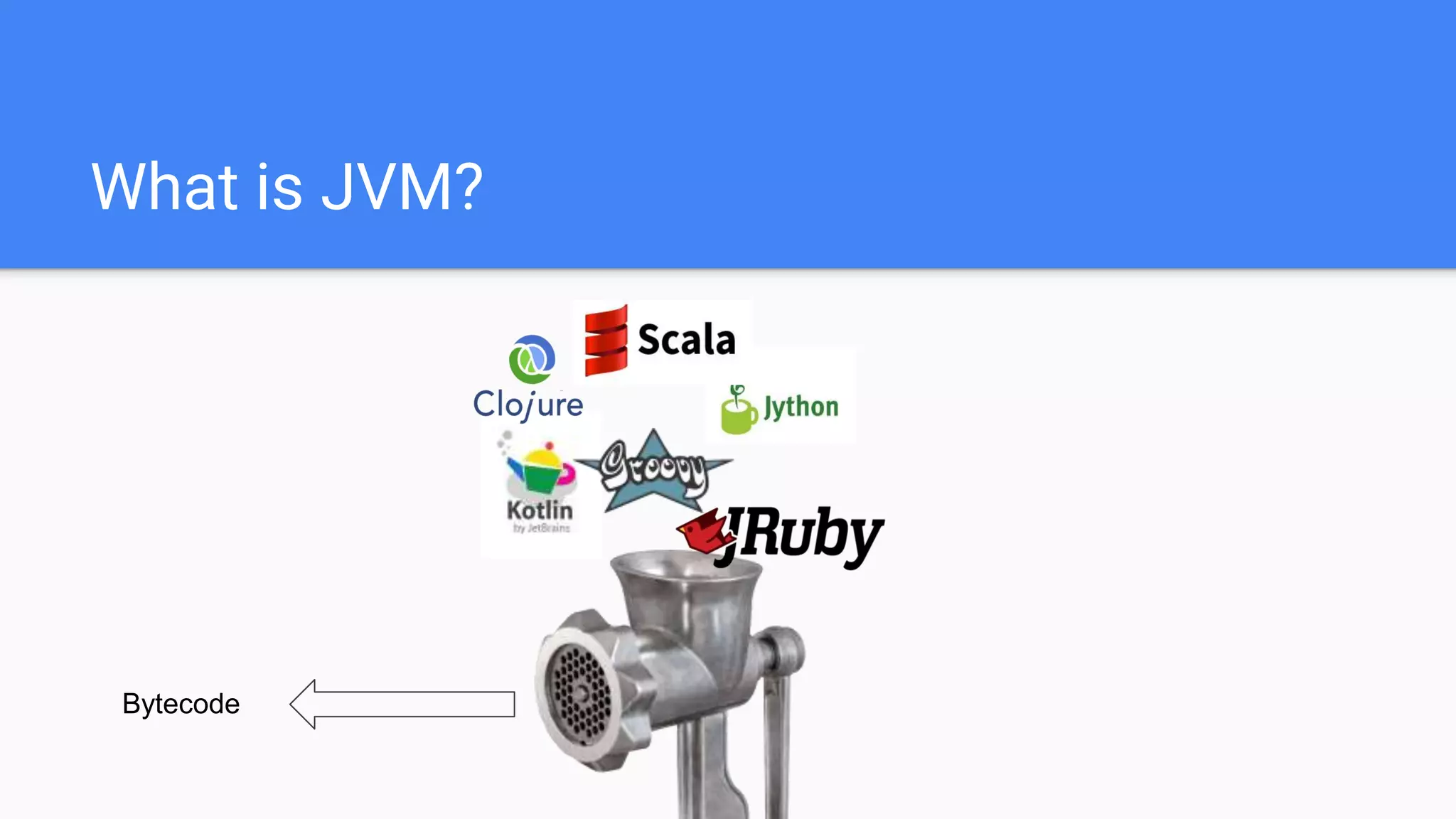
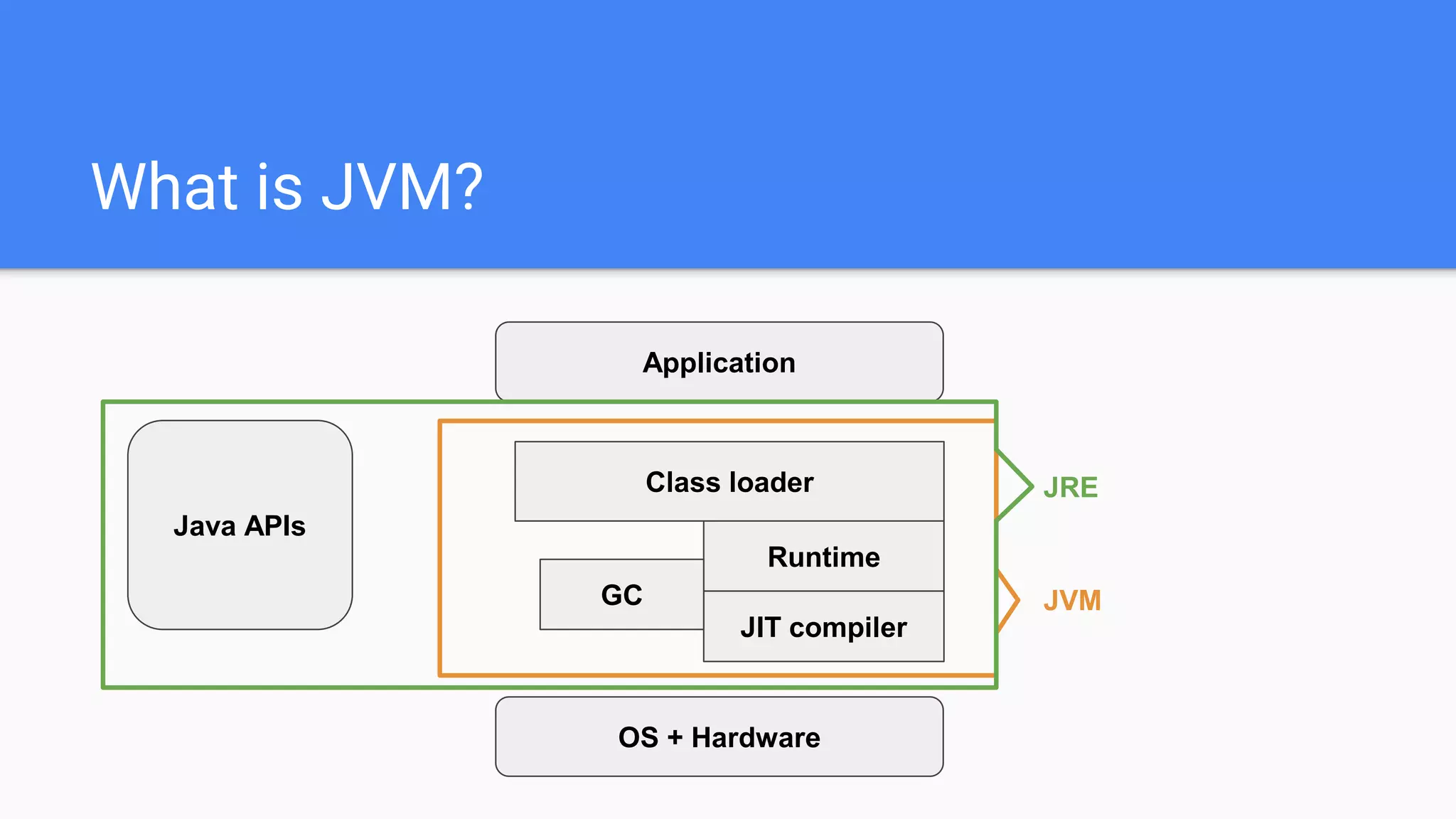
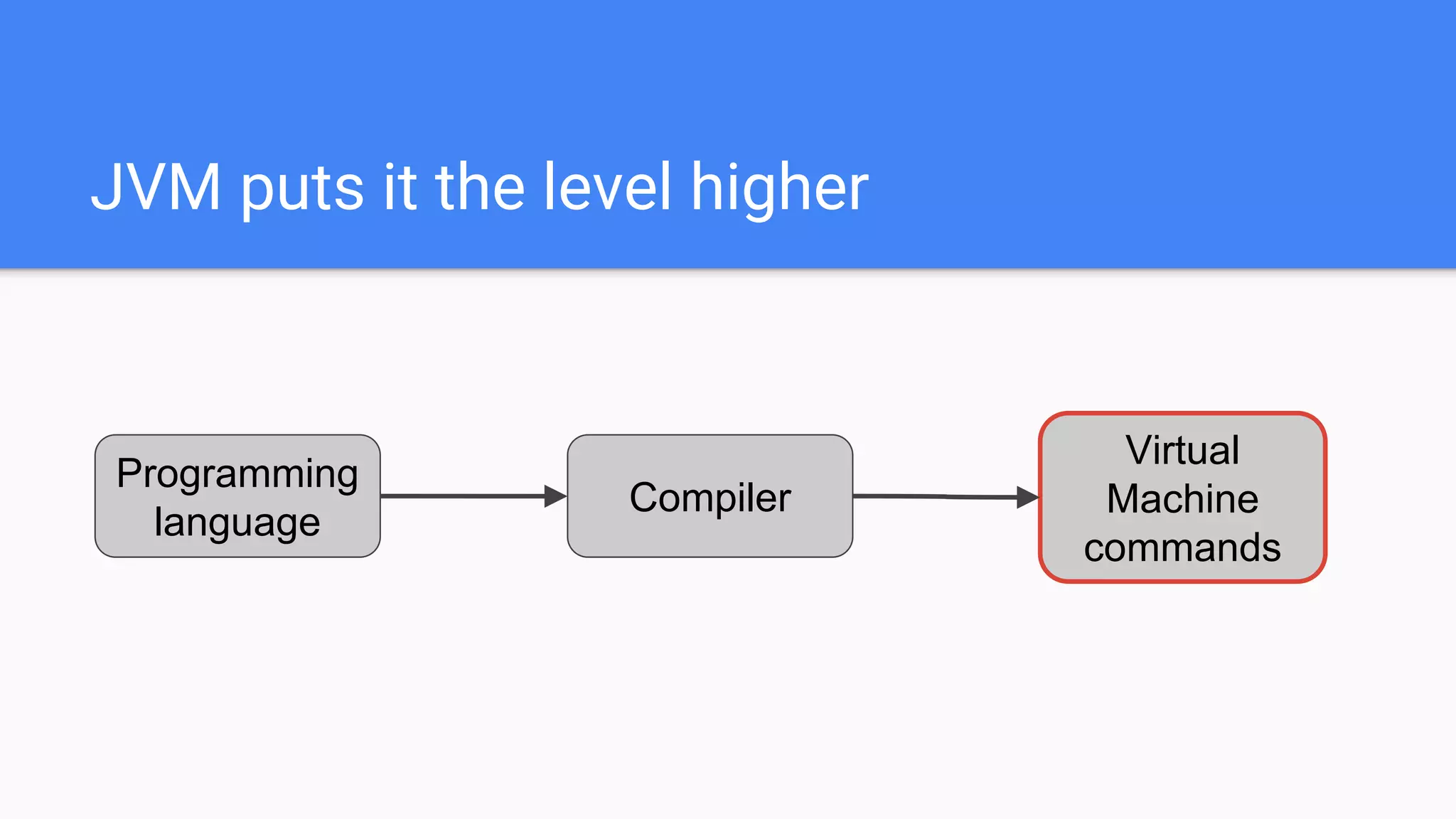
The JVM is a virtual machine that runs Java bytecode. It provides memory management, code optimization through just-in-time compilation, and allows Java programs to run on different platforms. The JVM optimizes code at runtime by techniques like loop unrolling, reducing unnecessary data loading and method calls. It has two compilation modes - client mode for less optimization and server mode for more aggressive optimization based on runtime profiling.


![[232]TensorRT를 활용한 딥러닝 Inference 최적화](https://cdn.slidesharecdn.com/ss_thumbnails/232dlinferenceoptimizationusingtensorrt1-181012004550-thumbnail.jpg?width=640&height=640&fit=bounds)
![[232] TensorRT를 활용한 딥러닝 Inference 최적화](https://cdn.slidesharecdn.com/ss_thumbnails/232dlinferenceoptimizationusingtensorrt1-181012014455-thumbnail.jpg?width=640&height=640&fit=bounds)


![[D2 Campus] Tech meetup (주제: Android) 모바일 머신러닝 [열일한 내 거북ᄆ...](https://cdn.slidesharecdn.com/ss_thumbnails/naverd2techmeetup-mobilemachinelearning-fromtensorflowlitetomlkit-190125125033-thumbnail.jpg?width=640&height=640&fit=bounds)


