Modules in
Python
BY PAURUSH SINHA
What are Modules?
Modules are files containing Python definitions and statements (ex.
name.py)
A module’s definitions can be imported into other modules by using
“import name”
The module’s name is available as a global variable value
To access a module’s functions, type “name.function()”
More on Modules
 Modules can contain executable statements along with function
definitions
 Each module has its own private symbol table used as the global
symbol table by all functions in the module
 Modules can import other modules
 Each module is imported once per interpreter session
 reload(name)
 Can import names from a module into the importing module’s symbol
table
 from mod import m1, m2 (or *)
 m1()
The Module Search Path
The interpreter searches for a file named name.py
◦ Current directory given by variable sys.path
◦ List of directories specified by PYTHONPATH
◦ Default path (in UNIX - .:/usr/local/lib/python)
Script being run should not have the same name as a standard module
or an error will occur when the module is imported
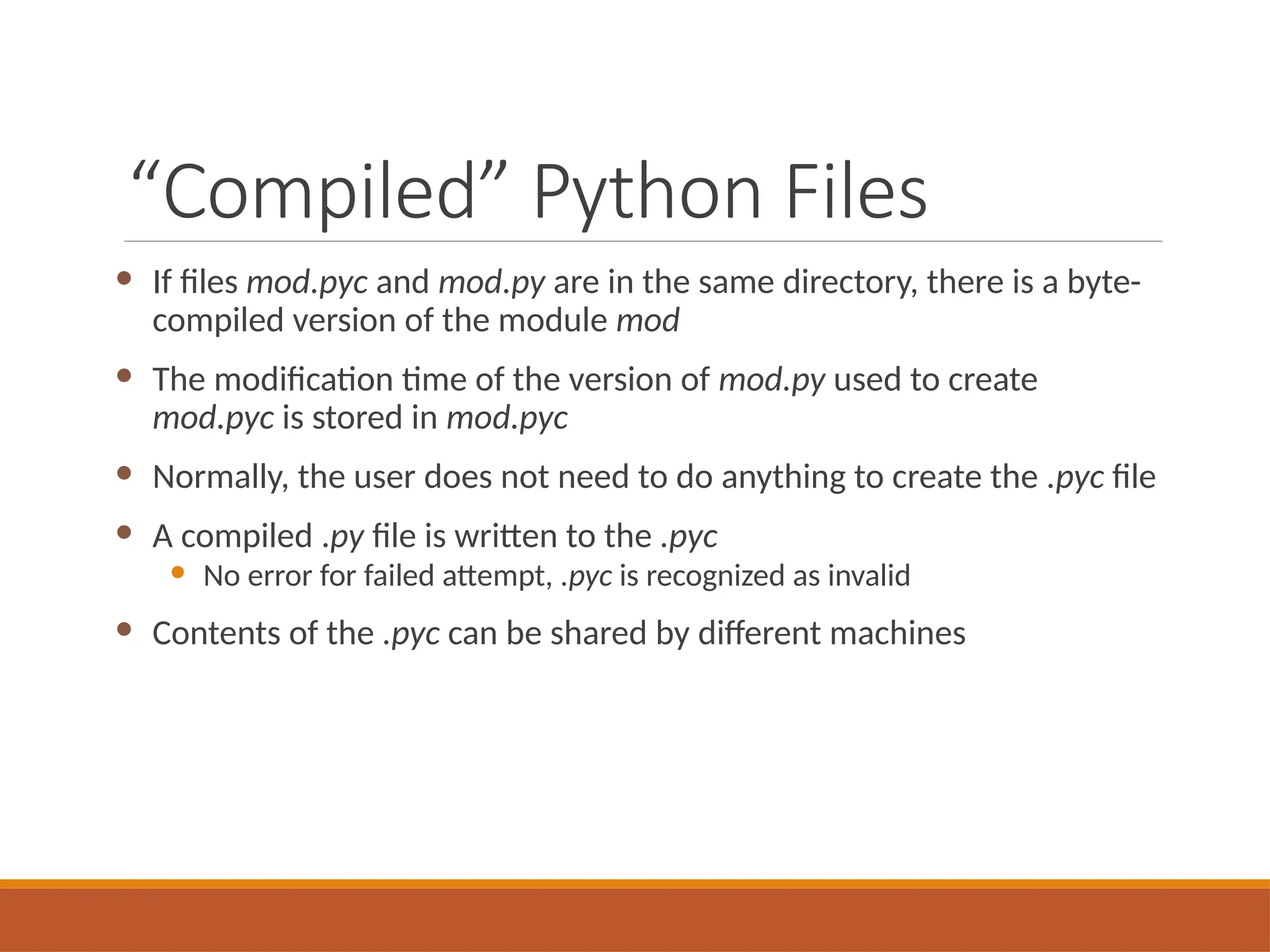
“Compiled” Python Files
 If files mod.pyc and mod.py are in the same directory, there is a byte-
compiled version of the module mod
 The modification time of the version of mod.py used to create
mod.pyc is stored in mod.pyc
 Normally, the user does not need to do anything to create the .pyc file
 A compiled .py file is written to the .pyc
 No error for failed attempt, .pyc is recognized as invalid
 Contents of the .pyc can be shared by different machines
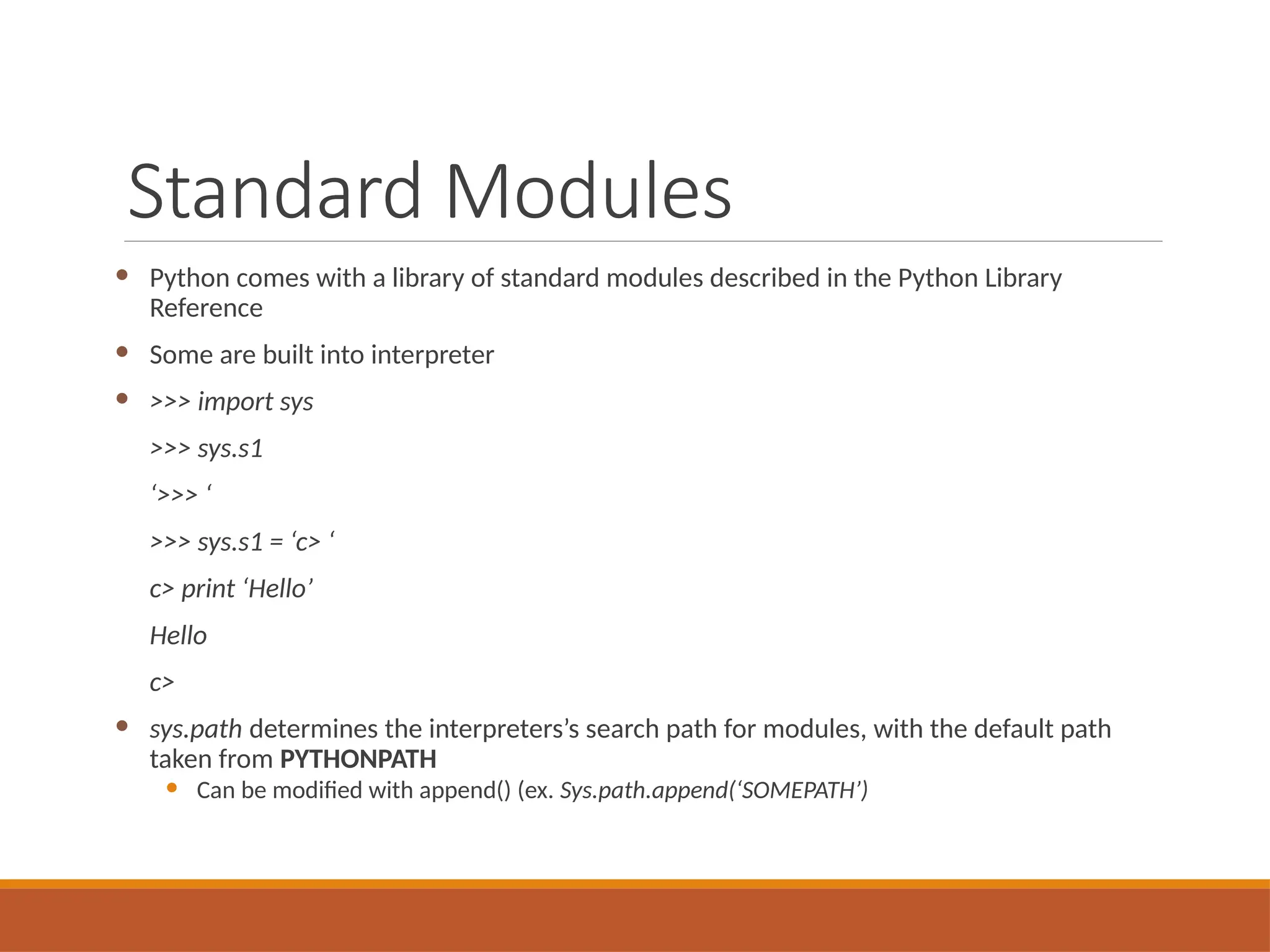
Standard Modules
 Python comes with a library of standard modules described in the Python Library
Reference
 Some are built into interpreter
 >>> import sys
>>> sys.s1
‘>>> ‘
>>> sys.s1 = ‘c> ‘
c> print ‘Hello’
Hello
c>
 sys.path determines the interpreters’s search path for modules, with the default path
taken from PYTHONPATH
 Can be modified with append() (ex. Sys.path.append(‘SOMEPATH’)
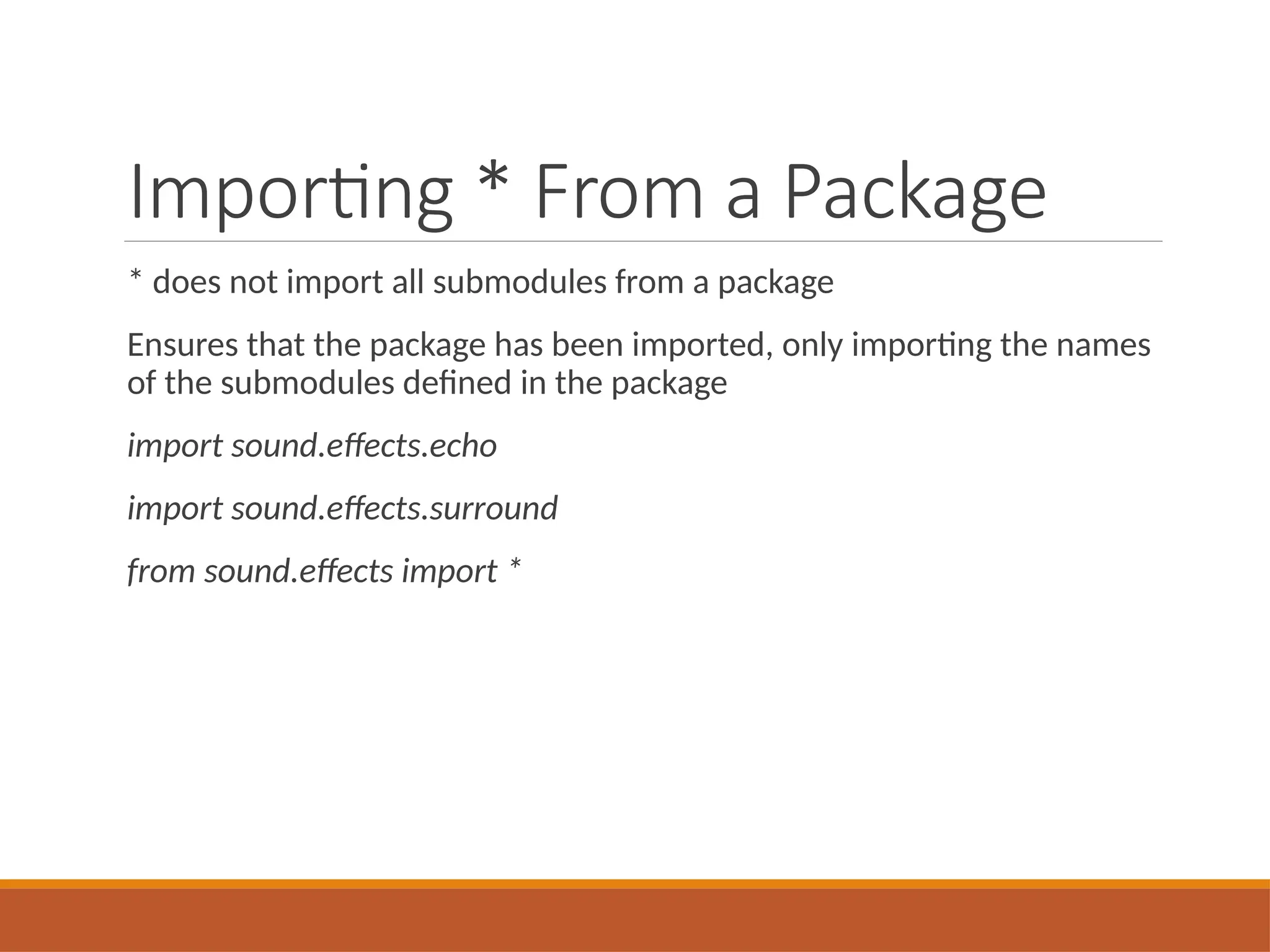
Importing * From a Package
* does not import all submodules from a package
Ensures that the package has been imported, only importing the names
of the submodules defined in the package
import sound.effects.echo
import sound.effects.surround
from sound.effects import *
Sources
http://docs.python.org/tutorial/modules.html

jb_Modules_in_Python.pptx jb_Modules_in_Python.pptx

  • 1.
  • 2.
    What are Modules? Modulesare files containing Python definitions and statements (ex. name.py) A module’s definitions can be imported into other modules by using “import name” The module’s name is available as a global variable value To access a module’s functions, type “name.function()”
  • 3.
    More on Modules Modules can contain executable statements along with function definitions  Each module has its own private symbol table used as the global symbol table by all functions in the module  Modules can import other modules  Each module is imported once per interpreter session  reload(name)  Can import names from a module into the importing module’s symbol table  from mod import m1, m2 (or *)  m1()
  • 4.
    The Module SearchPath The interpreter searches for a file named name.py ◦ Current directory given by variable sys.path ◦ List of directories specified by PYTHONPATH ◦ Default path (in UNIX - .:/usr/local/lib/python) Script being run should not have the same name as a standard module or an error will occur when the module is imported
  • 5.
    “Compiled” Python Files If files mod.pyc and mod.py are in the same directory, there is a byte- compiled version of the module mod  The modification time of the version of mod.py used to create mod.pyc is stored in mod.pyc  Normally, the user does not need to do anything to create the .pyc file  A compiled .py file is written to the .pyc  No error for failed attempt, .pyc is recognized as invalid  Contents of the .pyc can be shared by different machines
  • 6.
    Standard Modules  Pythoncomes with a library of standard modules described in the Python Library Reference  Some are built into interpreter  >>> import sys >>> sys.s1 ‘>>> ‘ >>> sys.s1 = ‘c> ‘ c> print ‘Hello’ Hello c>  sys.path determines the interpreters’s search path for modules, with the default path taken from PYTHONPATH  Can be modified with append() (ex. Sys.path.append(‘SOMEPATH’)
  • 7.
    Importing * Froma Package * does not import all submodules from a package Ensures that the package has been imported, only importing the names of the submodules defined in the package import sound.effects.echo import sound.effects.surround from sound.effects import *
  • 8.