Introduction to
InfluxDB and TICK Stack
Ahmed AbouZaid
@aabouzaid
Ahmed AbouZaid
DevOps @ CrossEngage
Author and Free/Open source geek
who loves the community.
Automation, data, and metrics are my preferred
areas. I have a built-in monitoring chip, and
too lazy to do anything manually :D
Blog | Github | Twitter
Nope, I’m not Mexican, but Egyptian!
So I could actually be anything!
SaaS CDP (Customer Data Platform) that easily combines all customer
data sources and manages cross-channel marketing campaigns
with your existing infrastructure.
crossengage.io
Overview
● What is time series data?
● Why TICK Stack?
● Where could it be used?
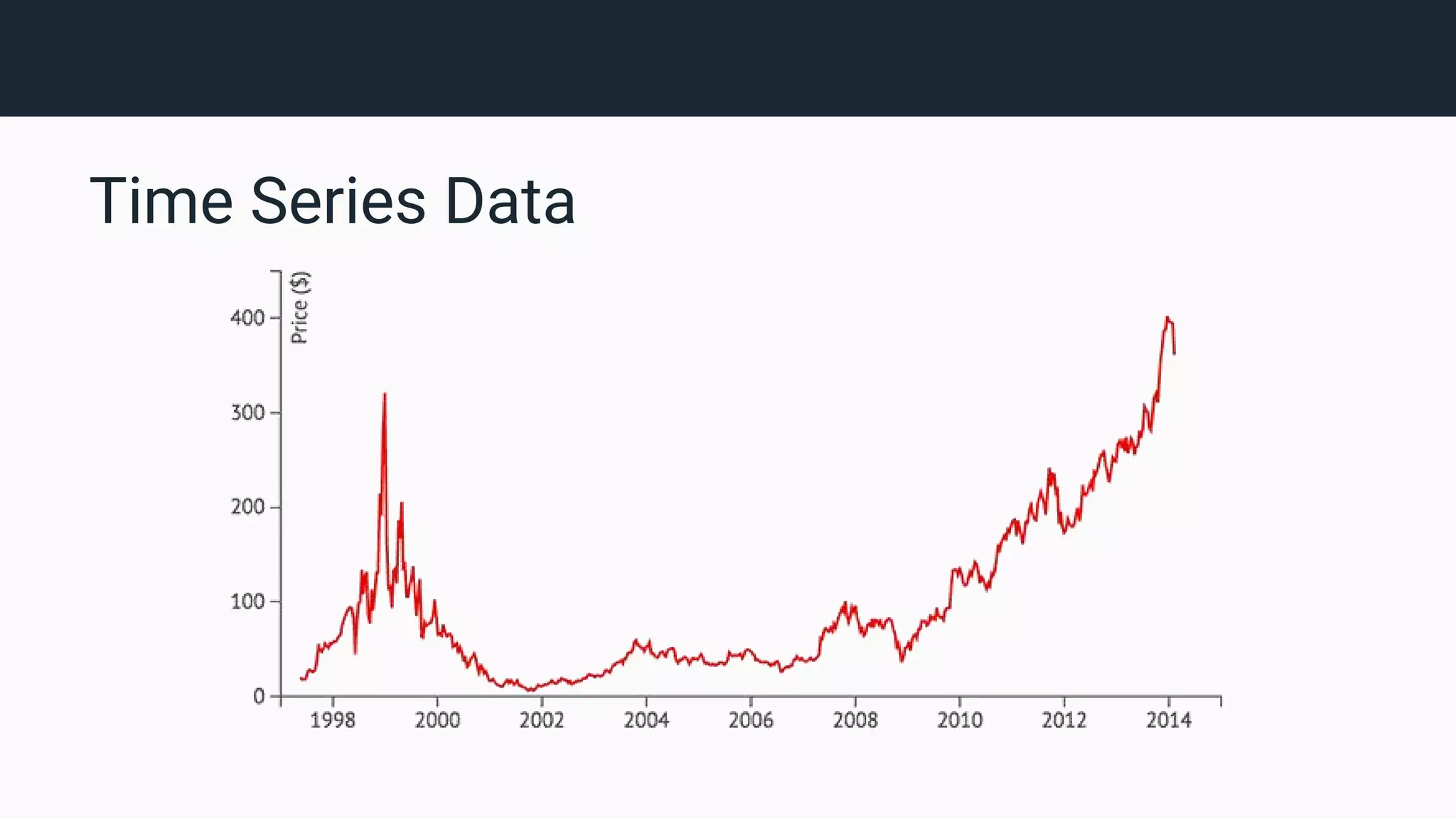
Time Series Data
“A time series is a series of data points indexed (or listed or graphed) in time
order. Most commonly, a time series is a sequence taken at successive equally
spaced points in time. Thus it is a sequence of discrete-time data”.
Properties of Time Series Data
● Billions of individual data points.
● High read and write throughput.
● Large deletes (data expiration).
● Mostly an insert/append workload, very few updates.
Time Series Data
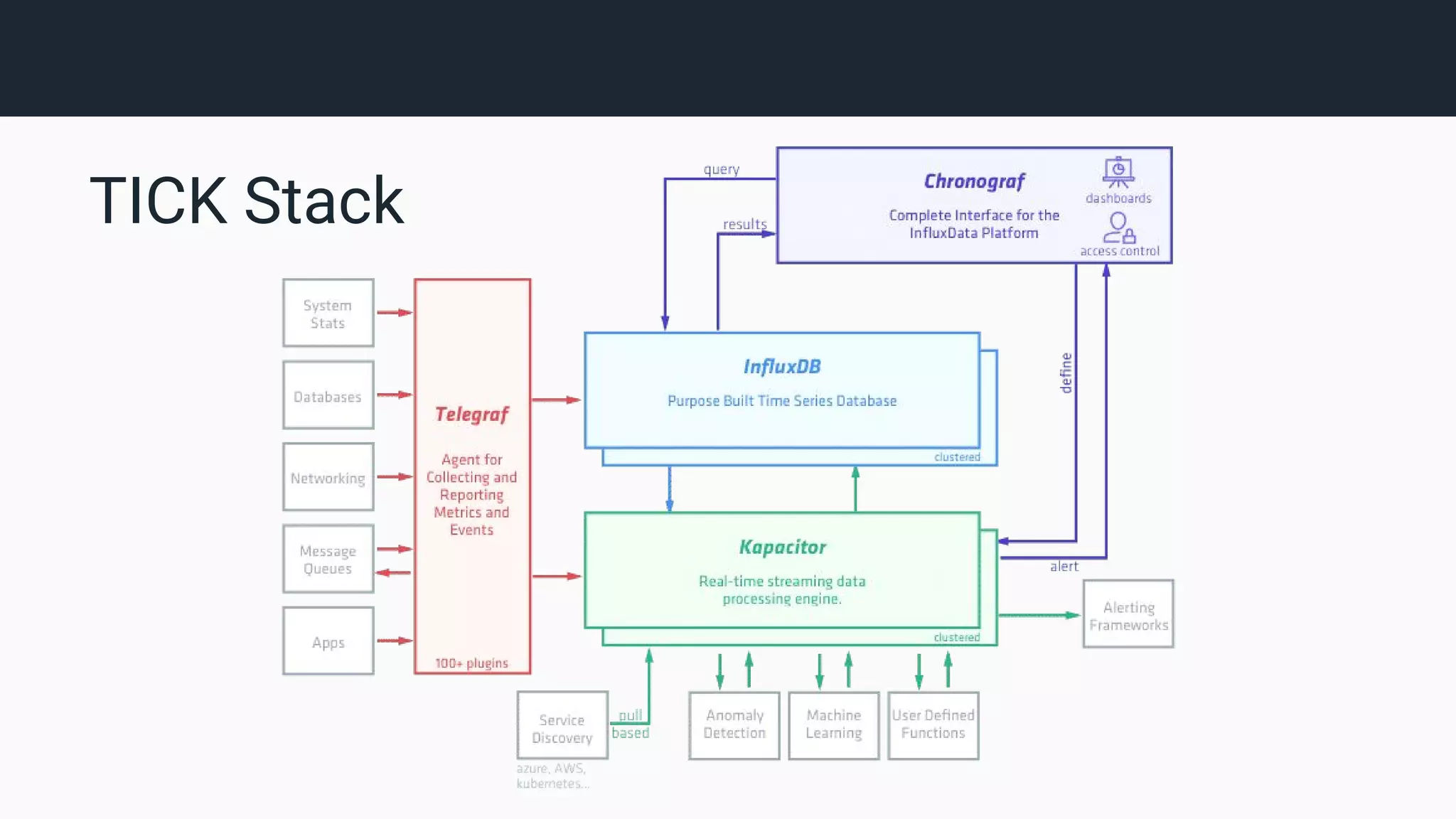
TICK Stack
TICK Stack
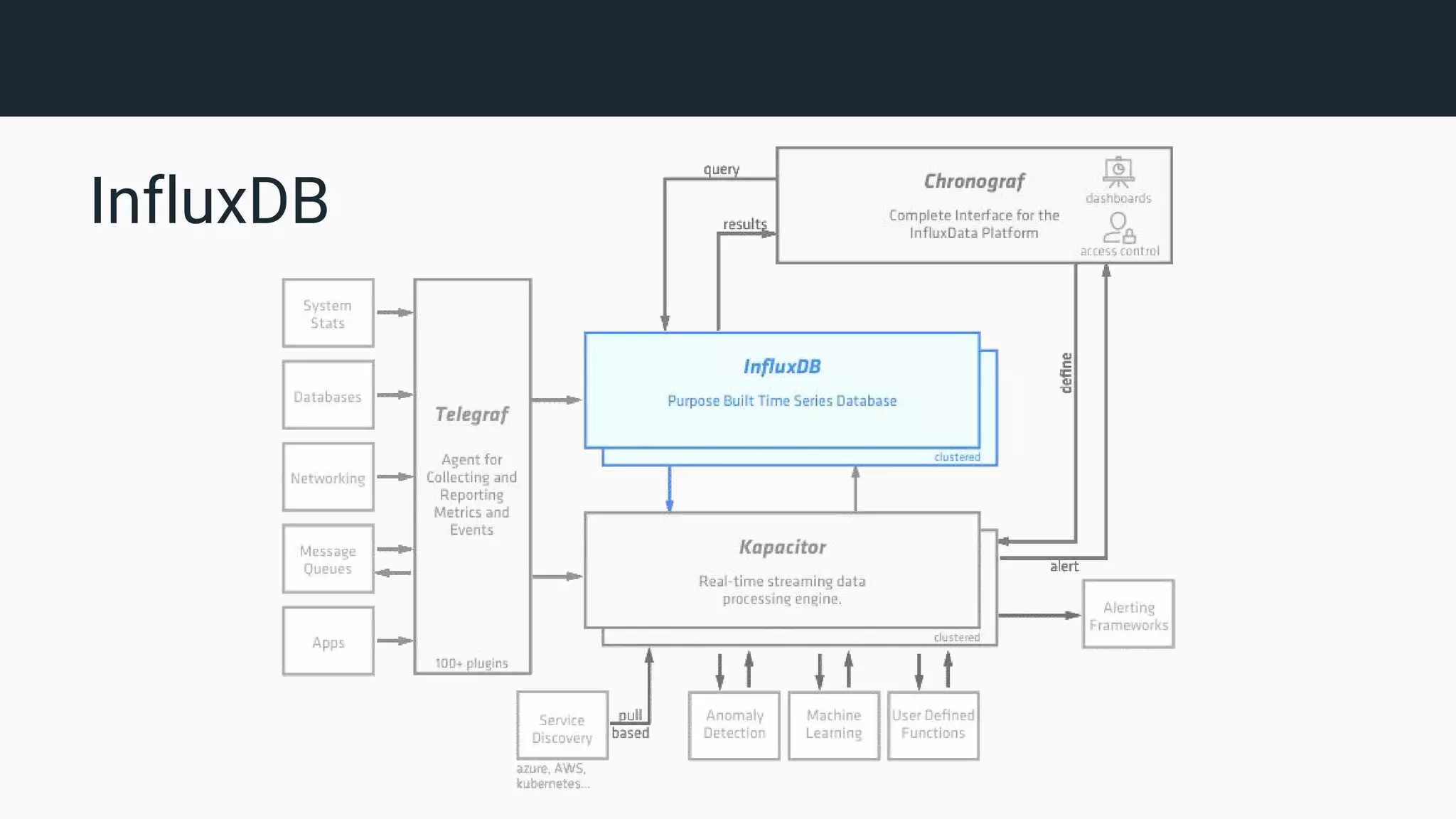
TICK = Telegraf (Collect), InfluxDB (Store),
Chrongraf (Visualize), and Kapacitor (Process).
● The Open Source Time Series Stack provides services
and functionality to accumulate, analyze, and act on time series data.
● Has a big community and ecosystem.
● Written entirely in Go. It compiles into a single binary with
no external dependencies.
● TOML configuration,Tom's Obvious, Minimal Language.
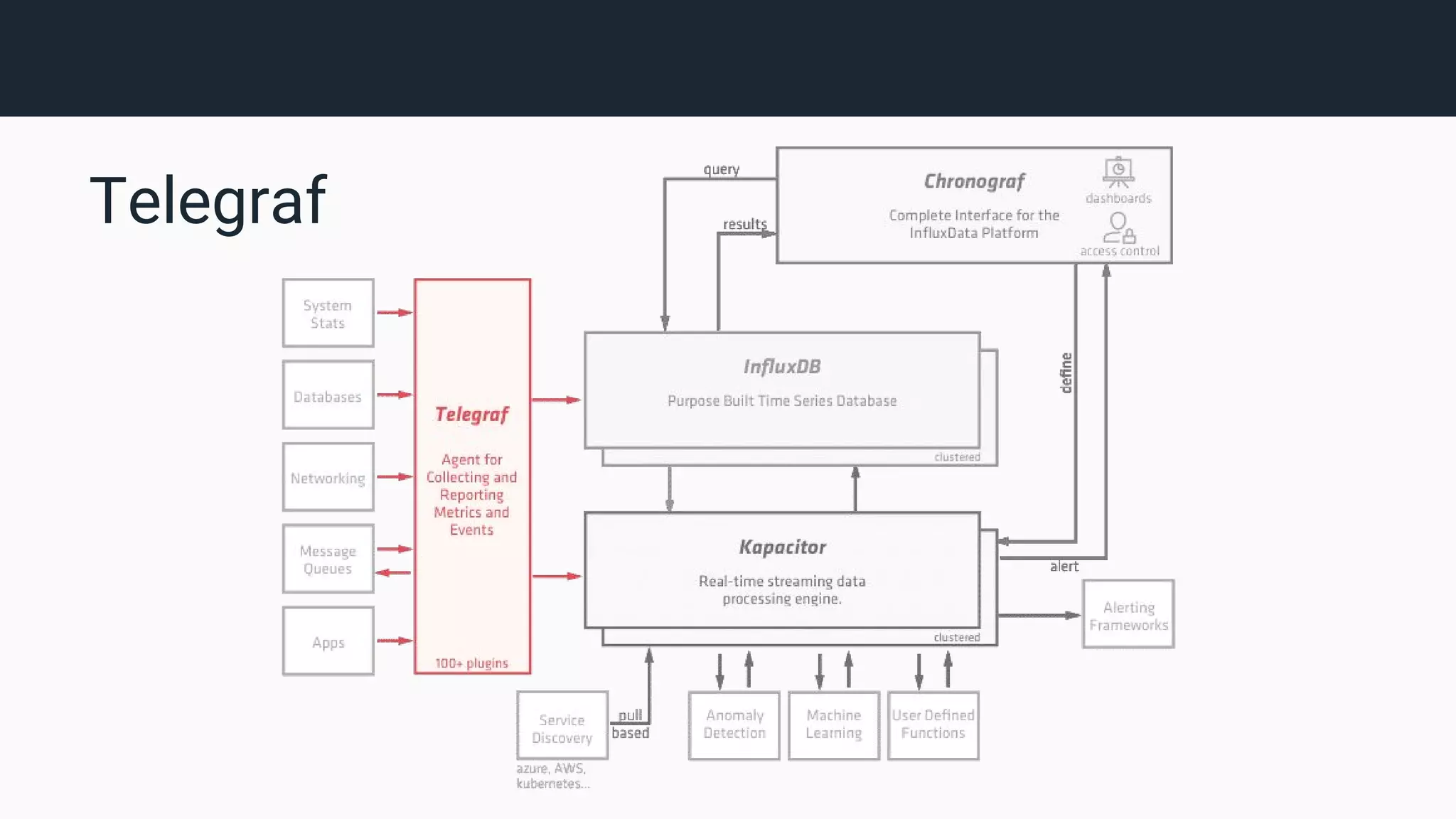
Telegraf
Telegraf
The plugin-driven agent for collecting & reporting metrics.
● Minimal memory footprint.
● +100 plugs with a wide number of plugins for many popular services
already exist for well known services and APIs.
● Plugin system allows new inputs and outputs to be easily added.
● Can work with any external scripts.
Telegraf
● Understand Telegraf output:
$ telegraf --config telegraf.conf --input-filter cpu --test
[measurement],[tag1,tag2] [field1,field2,field3] [timestamp]
system,host=tux,env=prod load1=1.25,load5=1.27,load15=1.29 1509997632000000000
InfluxDB
InfluxDB
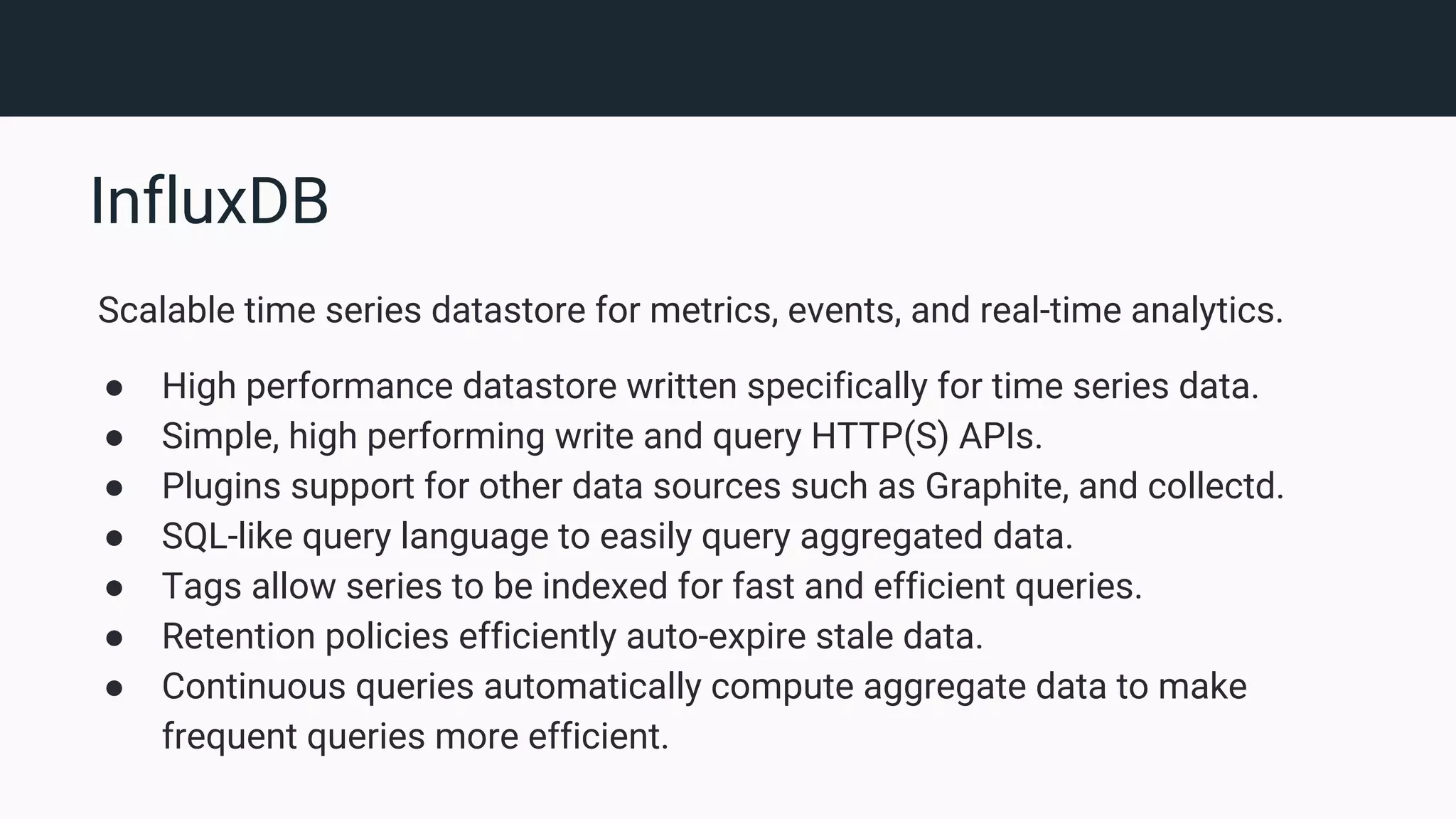
Scalable time series datastore for metrics, events, and real-time analytics.
● High performance datastore written specifically for time series data.
● Simple, high performing write and query HTTP(S) APIs.
● Plugins support for other data sources such as Graphite, and collectd.
● SQL-like query language to easily query aggregated data.
● Tags allow series to be indexed for fast and efficient queries.
● Retention policies efficiently auto-expire stale data.
● Continuous queries automatically compute aggregate data to make
frequent queries more efficient.
InfluxDB
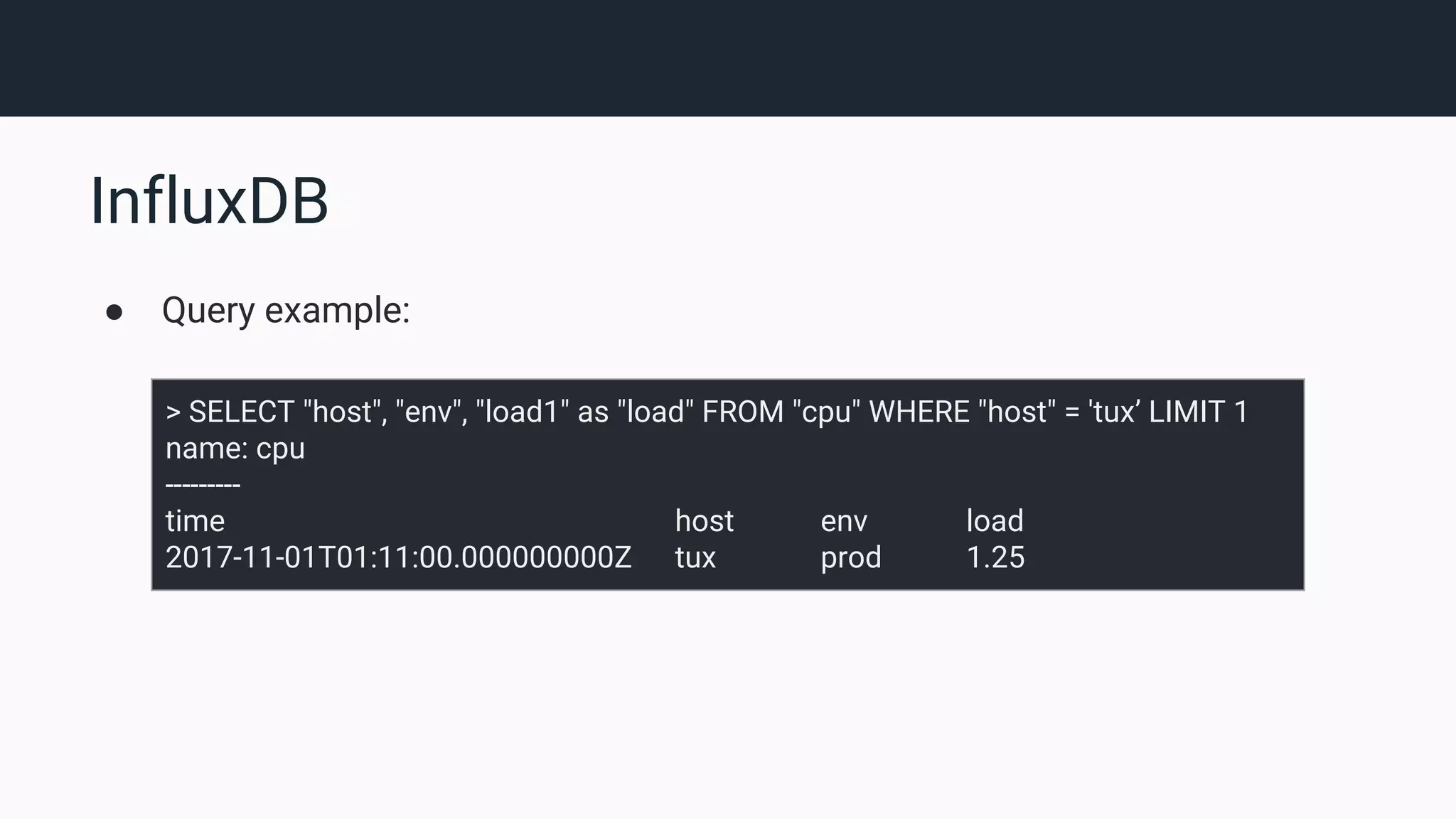
● Query example:
> SELECT "host", "env", "load1" as "load" FROM "cpu" WHERE "host" = 'tux’ LIMIT 1
name: cpu
---------
time host env load
2017-11-01T01:11:00.000000000Z tux prod 1.25
Chronograf
Chronograf
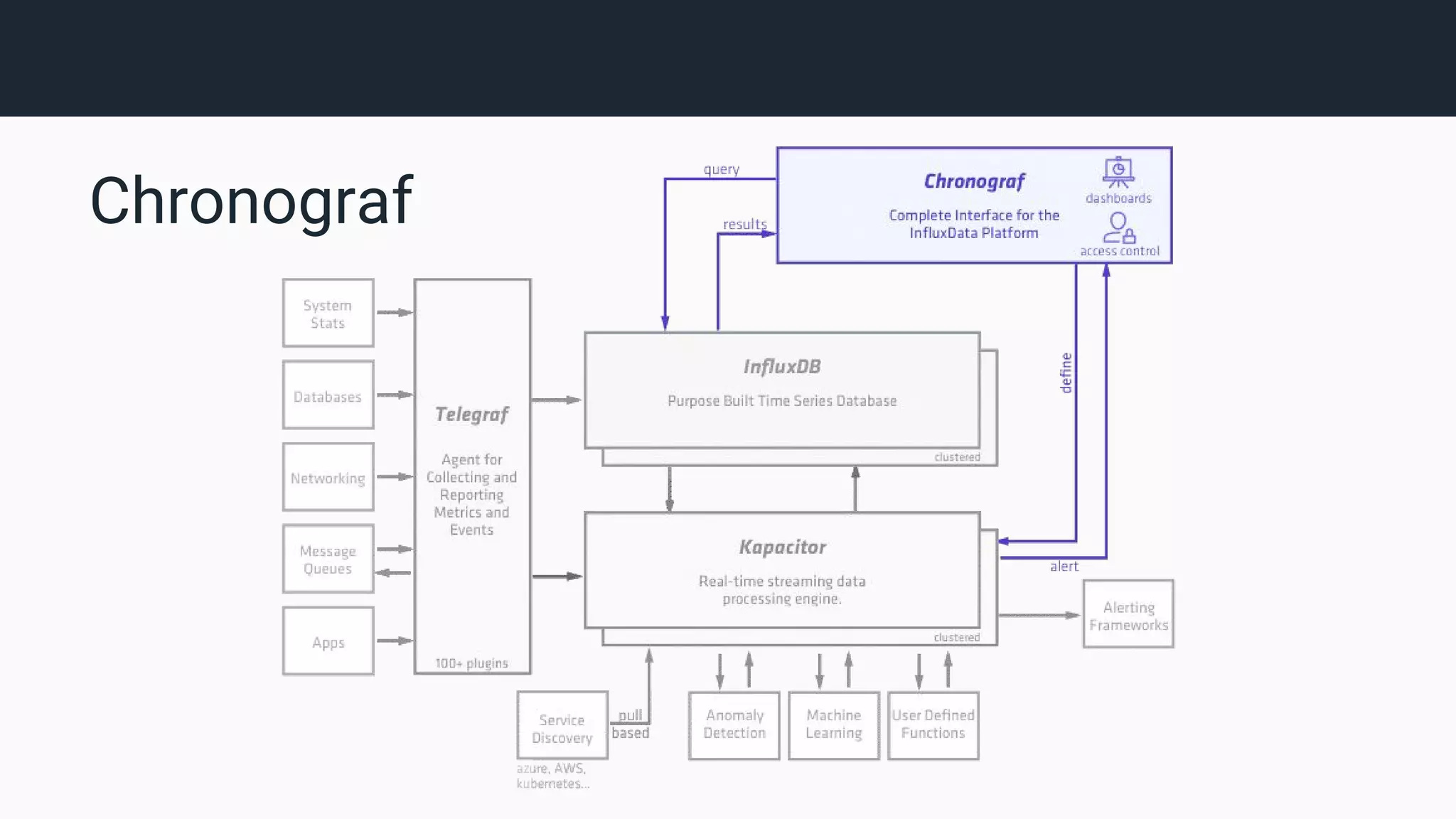
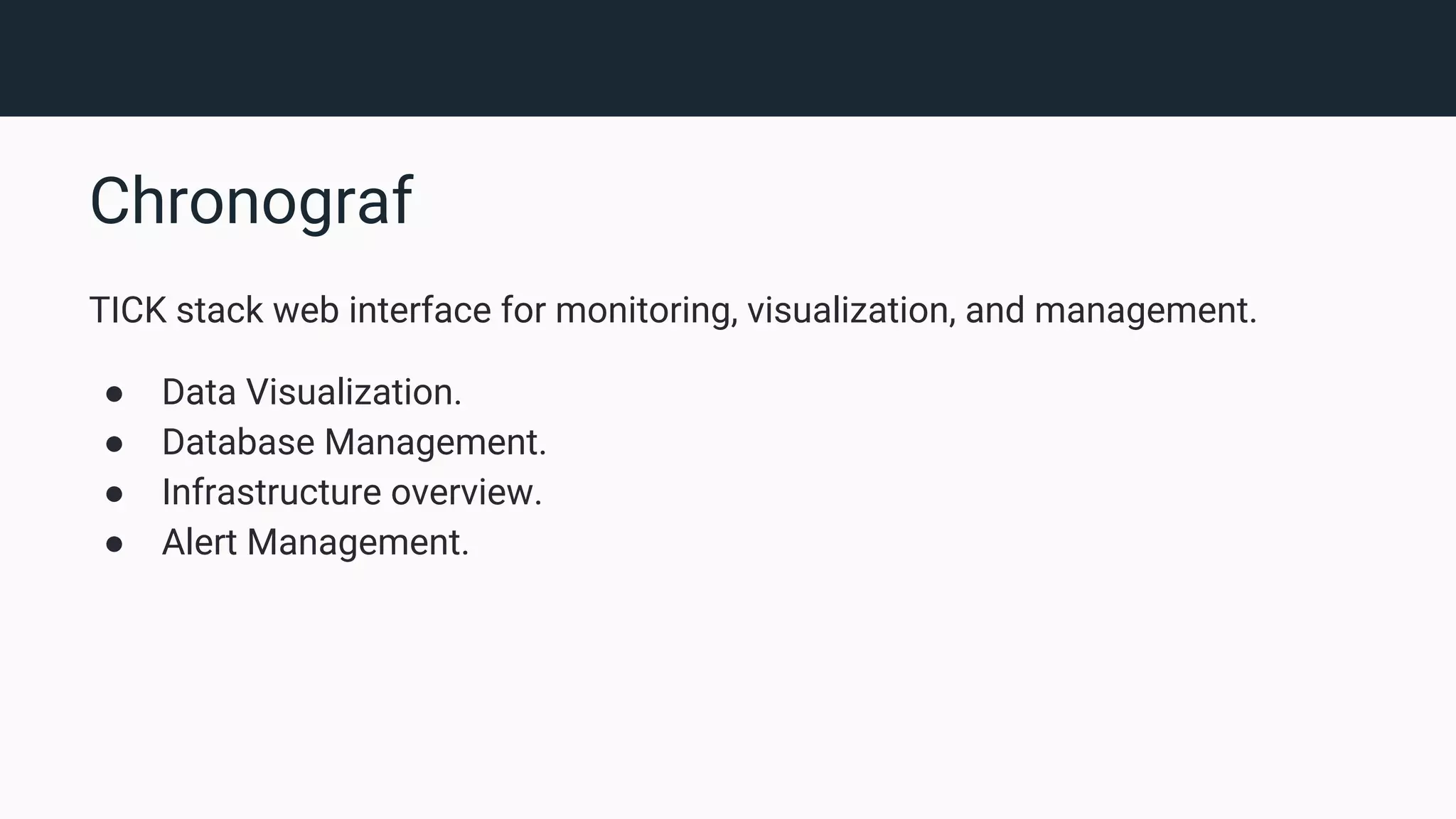
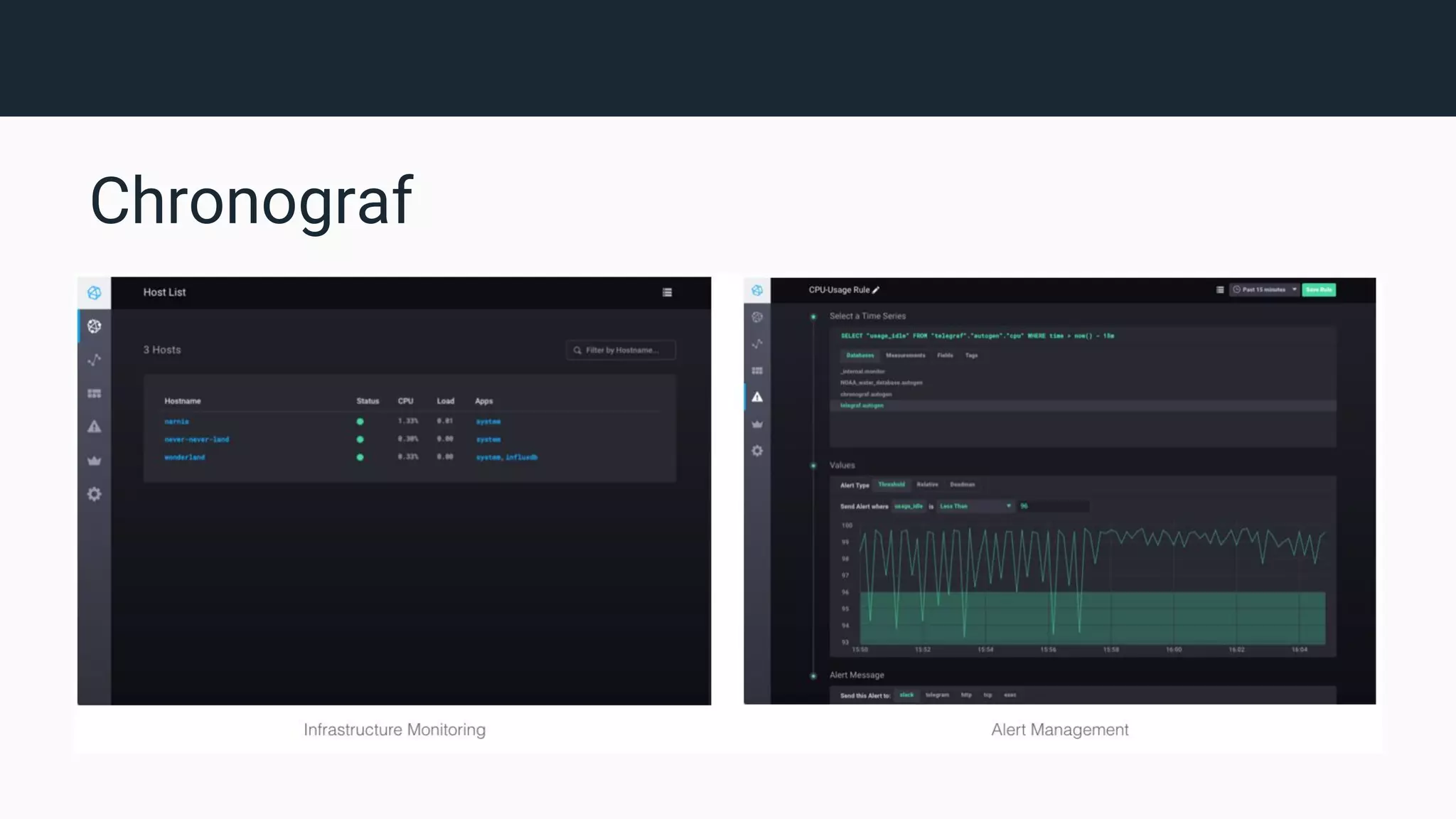
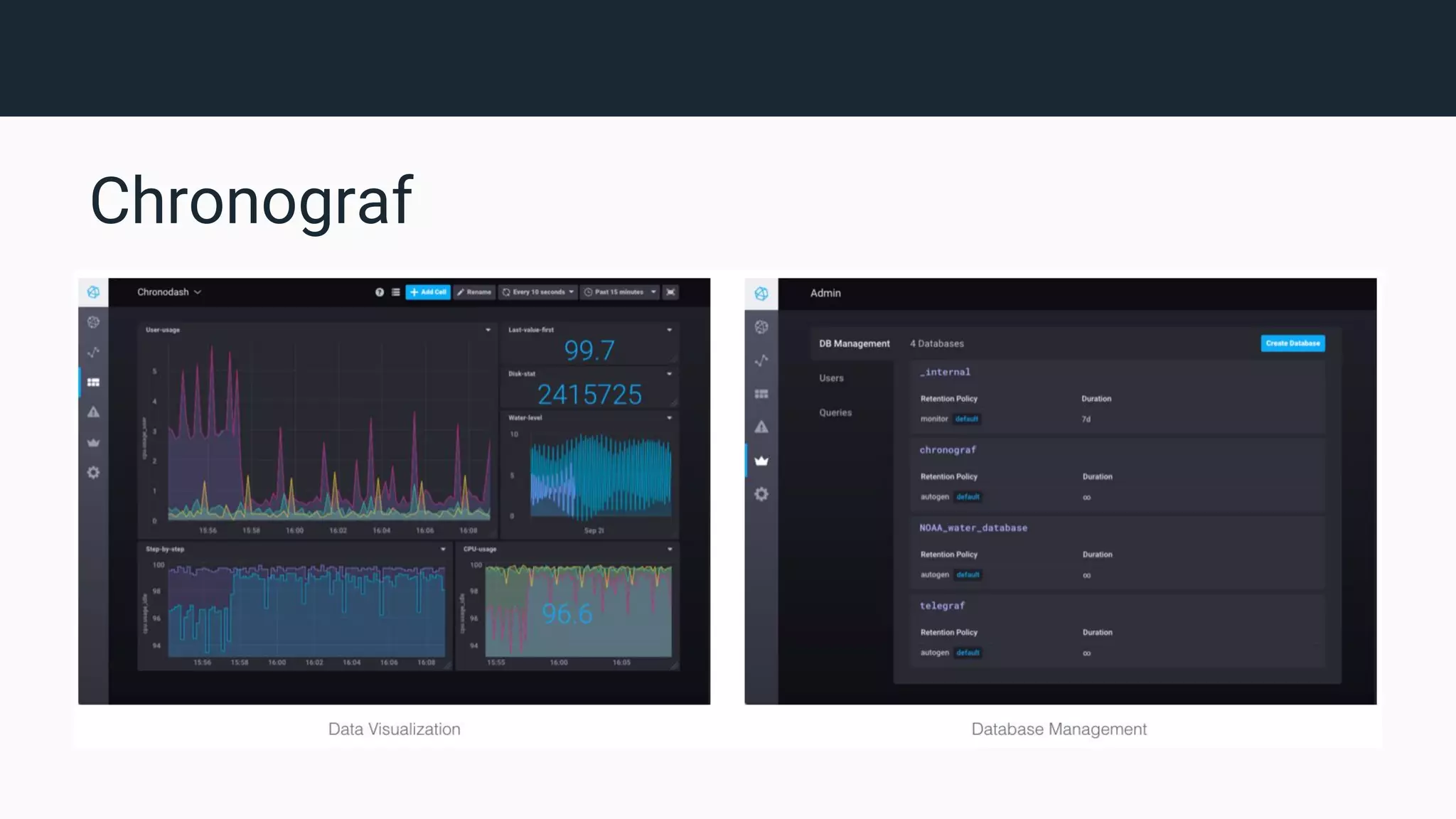
TICK stack web interface for monitoring, visualization, and management.
● Data Visualization.
● Database Management.
● Infrastructure overview.
● Alert Management.
Chronograf
Chronograf
Kapacitor
Kapacitor
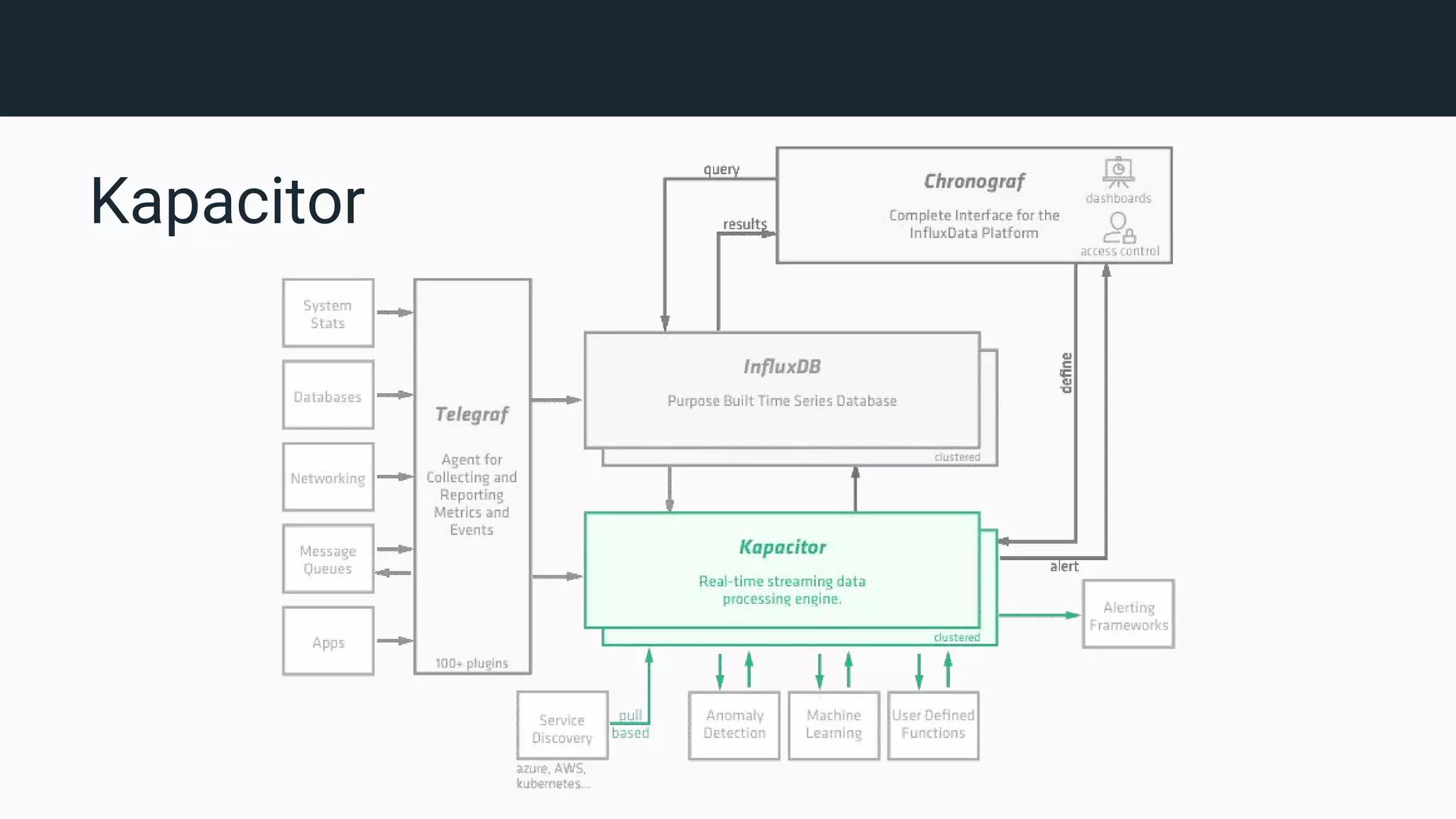
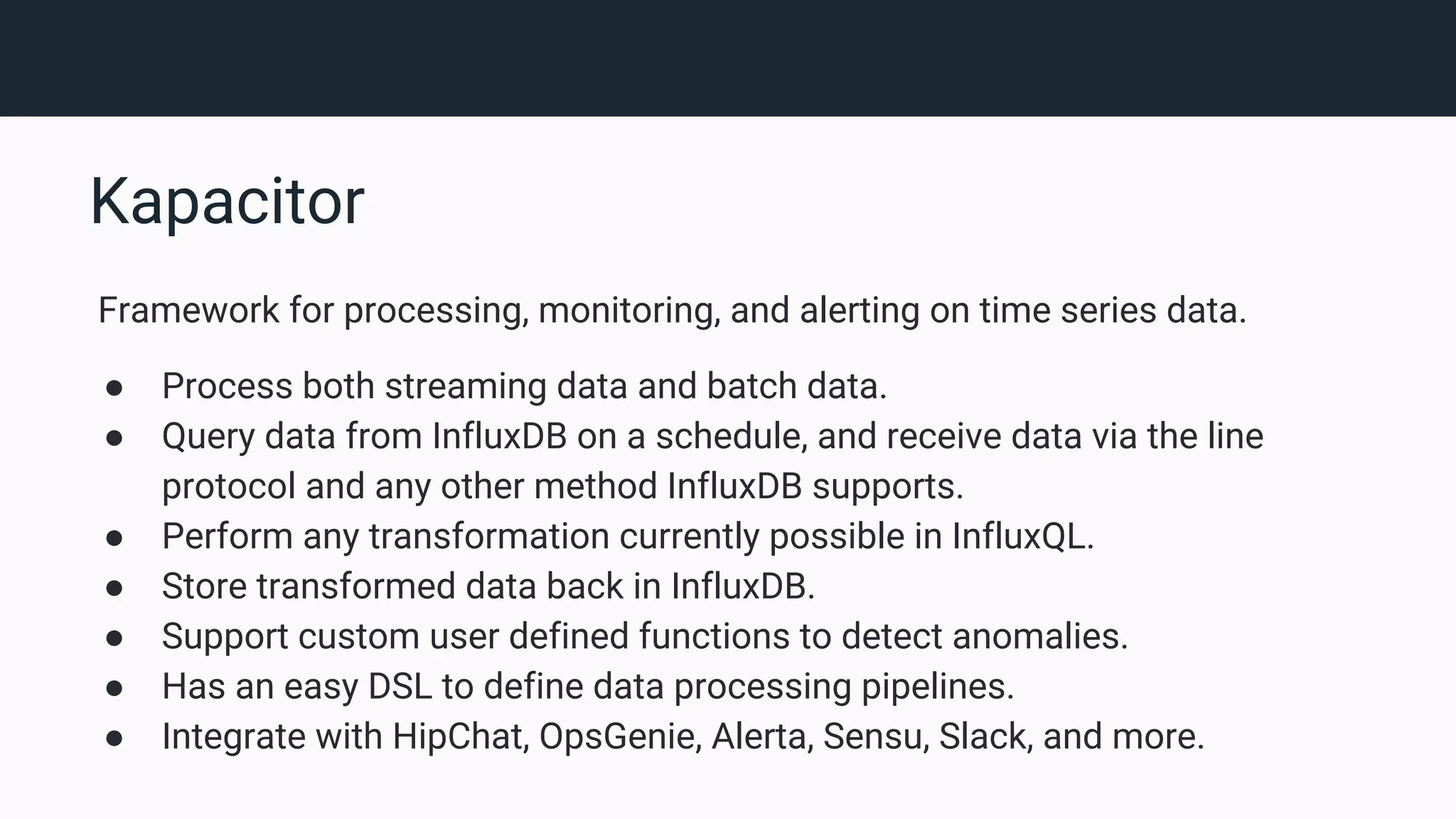
Framework for processing, monitoring, and alerting on time series data.
● Process both streaming data and batch data.
● Query data from InfluxDB on a schedule, and receive data via the line
protocol and any other method InfluxDB supports.
● Perform any transformation currently possible in InfluxQL.
● Store transformed data back in InfluxDB.
● Support custom user defined functions to detect anomalies.
● Has an easy DSL to define data processing pipelines.
● Integrate with HipChat, OpsGenie, Alerta, Sensu, Slack, and more.
Kapacitor
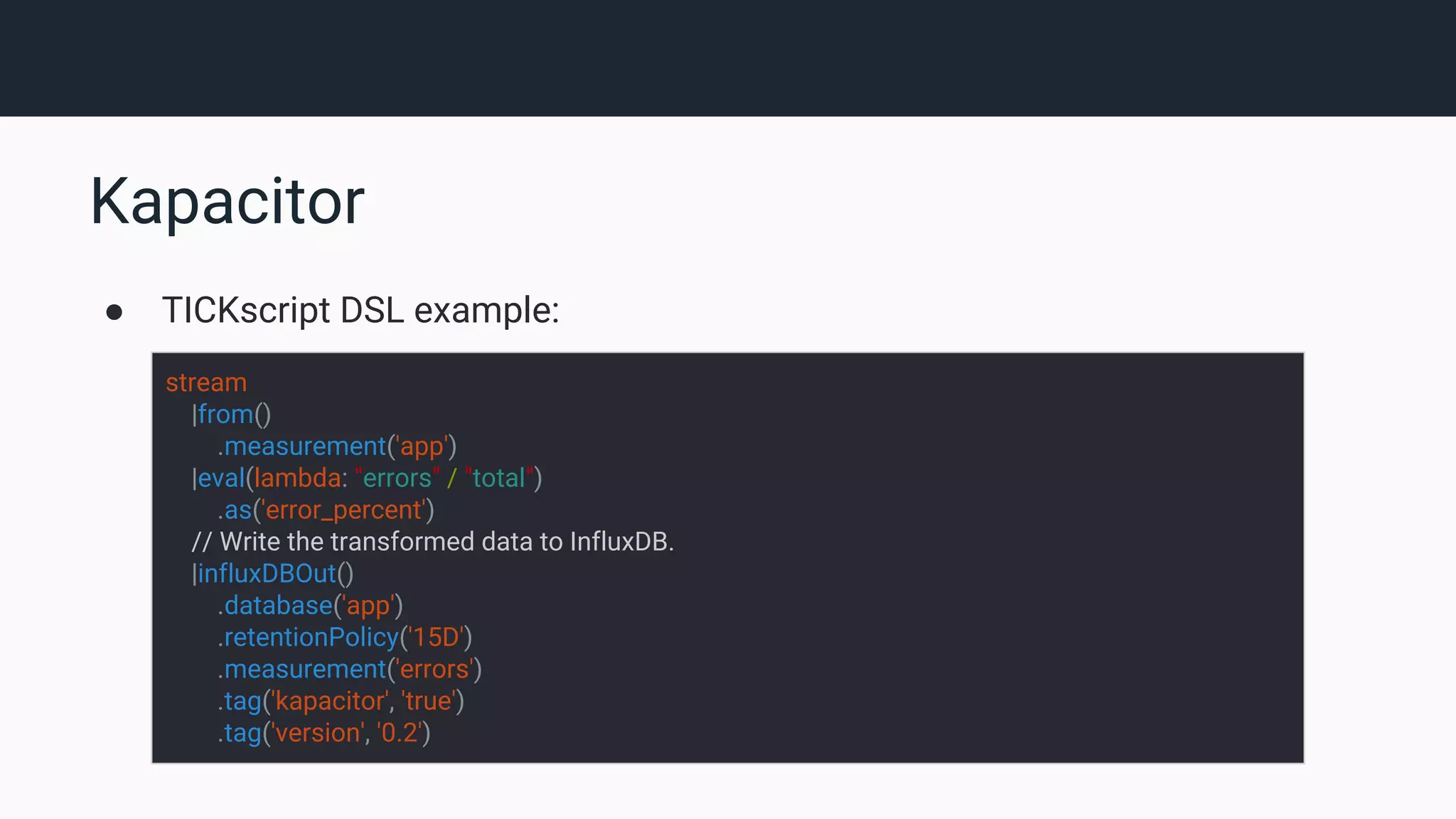
● TICKscript DSL example:
stream
|from()
.measurement('app')
|eval(lambda: "errors" / "total")
.as('error_percent')
// Write the transformed data to InfluxDB.
|influxDBOut()
.database('app')
.retentionPolicy('15D')
.measurement('errors')
.tag('kapacitor', 'true')
.tag('version', '0.2')
Use cases
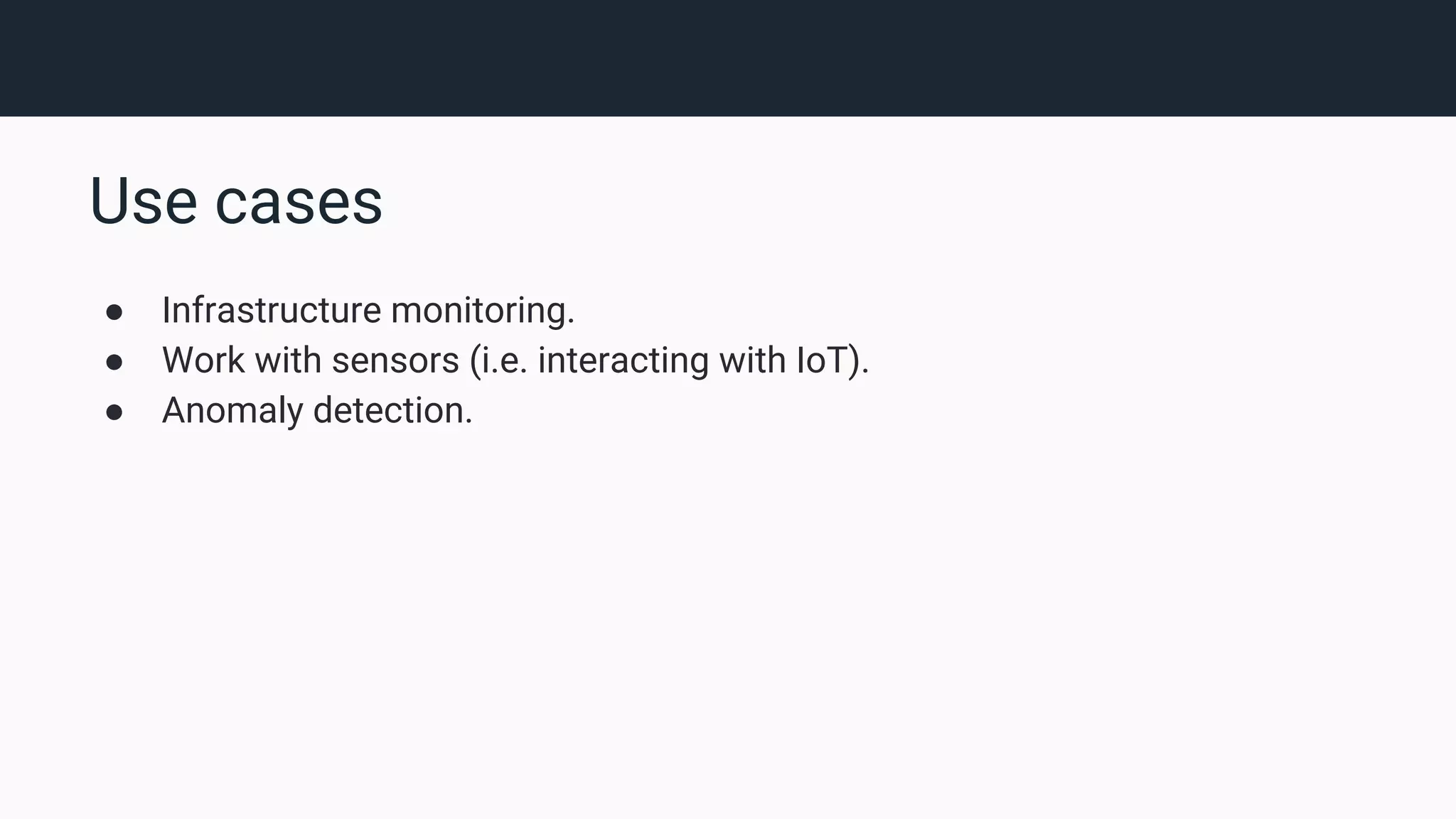
● Infrastructure monitoring.
● Work with sensors (i.e. interacting with IoT).
● Anomaly detection.
Resources
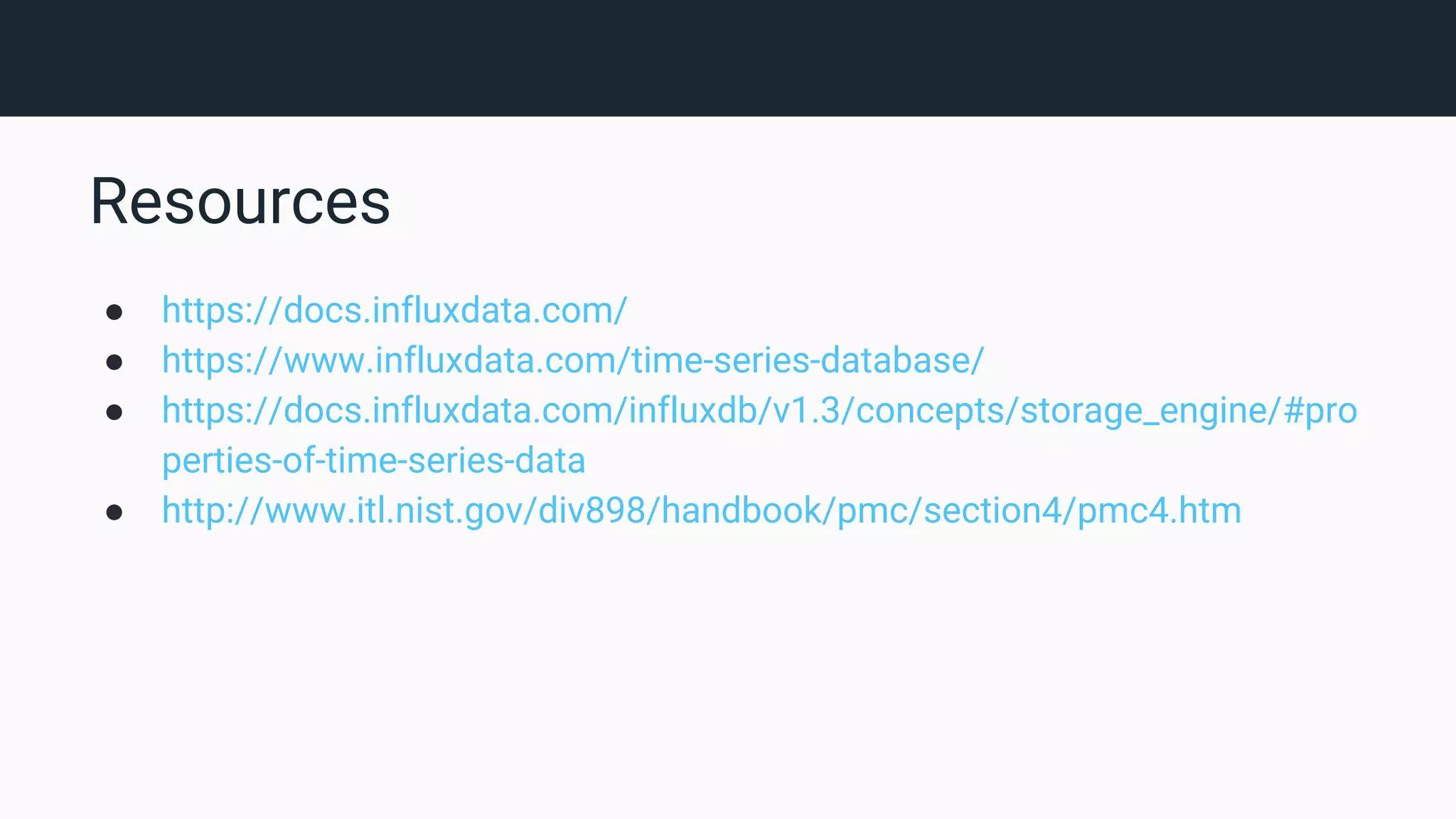
● https://docs.influxdata.com/
● https://www.influxdata.com/time-series-database/
● https://docs.influxdata.com/influxdb/v1.3/concepts/storage_engine/#pro
perties-of-time-series-data
● http://www.itl.nist.gov/div898/handbook/pmc/section4/pmc4.htm
Questions?
Thanks :-)

Introduction to InfluxDB and TICK Stack

  • 1.
    Introduction to InfluxDB andTICK Stack Ahmed AbouZaid @aabouzaid
  • 2.
    Ahmed AbouZaid DevOps @CrossEngage Author and Free/Open source geek who loves the community. Automation, data, and metrics are my preferred areas. I have a built-in monitoring chip, and too lazy to do anything manually :D Blog | Github | Twitter Nope, I’m not Mexican, but Egyptian! So I could actually be anything!
  • 3.
    SaaS CDP (CustomerData Platform) that easily combines all customer data sources and manages cross-channel marketing campaigns with your existing infrastructure. crossengage.io
  • 4.
    Overview ● What istime series data? ● Why TICK Stack? ● Where could it be used?
  • 5.
    Time Series Data “Atime series is a series of data points indexed (or listed or graphed) in time order. Most commonly, a time series is a sequence taken at successive equally spaced points in time. Thus it is a sequence of discrete-time data”. Properties of Time Series Data ● Billions of individual data points. ● High read and write throughput. ● Large deletes (data expiration). ● Mostly an insert/append workload, very few updates.
  • 6.
  • 7.
  • 8.
    TICK Stack TICK =Telegraf (Collect), InfluxDB (Store), Chrongraf (Visualize), and Kapacitor (Process). ● The Open Source Time Series Stack provides services and functionality to accumulate, analyze, and act on time series data. ● Has a big community and ecosystem. ● Written entirely in Go. It compiles into a single binary with no external dependencies. ● TOML configuration,Tom's Obvious, Minimal Language.
  • 9.
  • 10.
    Telegraf The plugin-driven agentfor collecting & reporting metrics. ● Minimal memory footprint. ● +100 plugs with a wide number of plugins for many popular services already exist for well known services and APIs. ● Plugin system allows new inputs and outputs to be easily added. ● Can work with any external scripts.
  • 11.
    Telegraf ● Understand Telegrafoutput: $ telegraf --config telegraf.conf --input-filter cpu --test [measurement],[tag1,tag2] [field1,field2,field3] [timestamp] system,host=tux,env=prod load1=1.25,load5=1.27,load15=1.29 1509997632000000000
  • 12.
  • 13.
    InfluxDB Scalable time seriesdatastore for metrics, events, and real-time analytics. ● High performance datastore written specifically for time series data. ● Simple, high performing write and query HTTP(S) APIs. ● Plugins support for other data sources such as Graphite, and collectd. ● SQL-like query language to easily query aggregated data. ● Tags allow series to be indexed for fast and efficient queries. ● Retention policies efficiently auto-expire stale data. ● Continuous queries automatically compute aggregate data to make frequent queries more efficient.
  • 14.
    InfluxDB ● Query example: >SELECT "host", "env", "load1" as "load" FROM "cpu" WHERE "host" = 'tux’ LIMIT 1 name: cpu --------- time host env load 2017-11-01T01:11:00.000000000Z tux prod 1.25
  • 15.
  • 16.
    Chronograf TICK stack webinterface for monitoring, visualization, and management. ● Data Visualization. ● Database Management. ● Infrastructure overview. ● Alert Management.
  • 17.
  • 18.
  • 19.
  • 20.
    Kapacitor Framework for processing,monitoring, and alerting on time series data. ● Process both streaming data and batch data. ● Query data from InfluxDB on a schedule, and receive data via the line protocol and any other method InfluxDB supports. ● Perform any transformation currently possible in InfluxQL. ● Store transformed data back in InfluxDB. ● Support custom user defined functions to detect anomalies. ● Has an easy DSL to define data processing pipelines. ● Integrate with HipChat, OpsGenie, Alerta, Sensu, Slack, and more.
  • 21.
    Kapacitor ● TICKscript DSLexample: stream |from() .measurement('app') |eval(lambda: "errors" / "total") .as('error_percent') // Write the transformed data to InfluxDB. |influxDBOut() .database('app') .retentionPolicy('15D') .measurement('errors') .tag('kapacitor', 'true') .tag('version', '0.2')
  • 22.
    Use cases ● Infrastructuremonitoring. ● Work with sensors (i.e. interacting with IoT). ● Anomaly detection.
  • 23.
    Resources ● https://docs.influxdata.com/ ● https://www.influxdata.com/time-series-database/ ●https://docs.influxdata.com/influxdb/v1.3/concepts/storage_engine/#pro perties-of-time-series-data ● http://www.itl.nist.gov/div898/handbook/pmc/section4/pmc4.htm
  • 24.