Gentle Introduction to
Blockchains and
Cryptocurrency
Bobinson K B
Agenda
• Digital cash
• Bitcoin : an economical invention
• Smart contracts
• Public and Private Blockchains
• Applications
• Forensic Audit of transactions
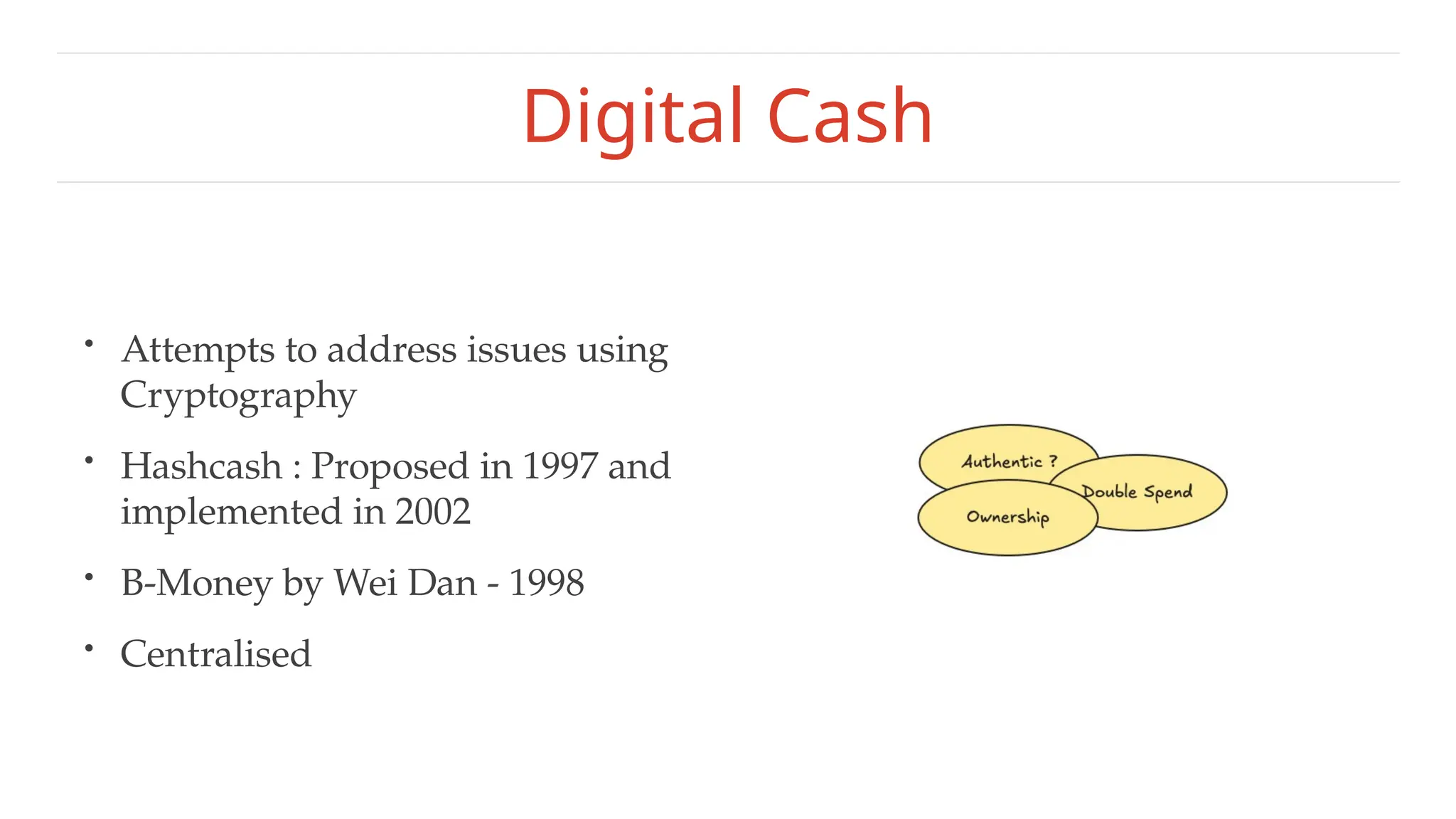
Digital Cash
• Attempts to address issues using
Cryptography
• Hashcash : Proposed in 1997 and
implemented in 2002
• B-Money by Wei Dan - 1998
• Centralised
Economics
• Mimics Central banks in decentralised fashion
• “Mints” money
• Limited Supply - results attributes like Gold
• Deflationary
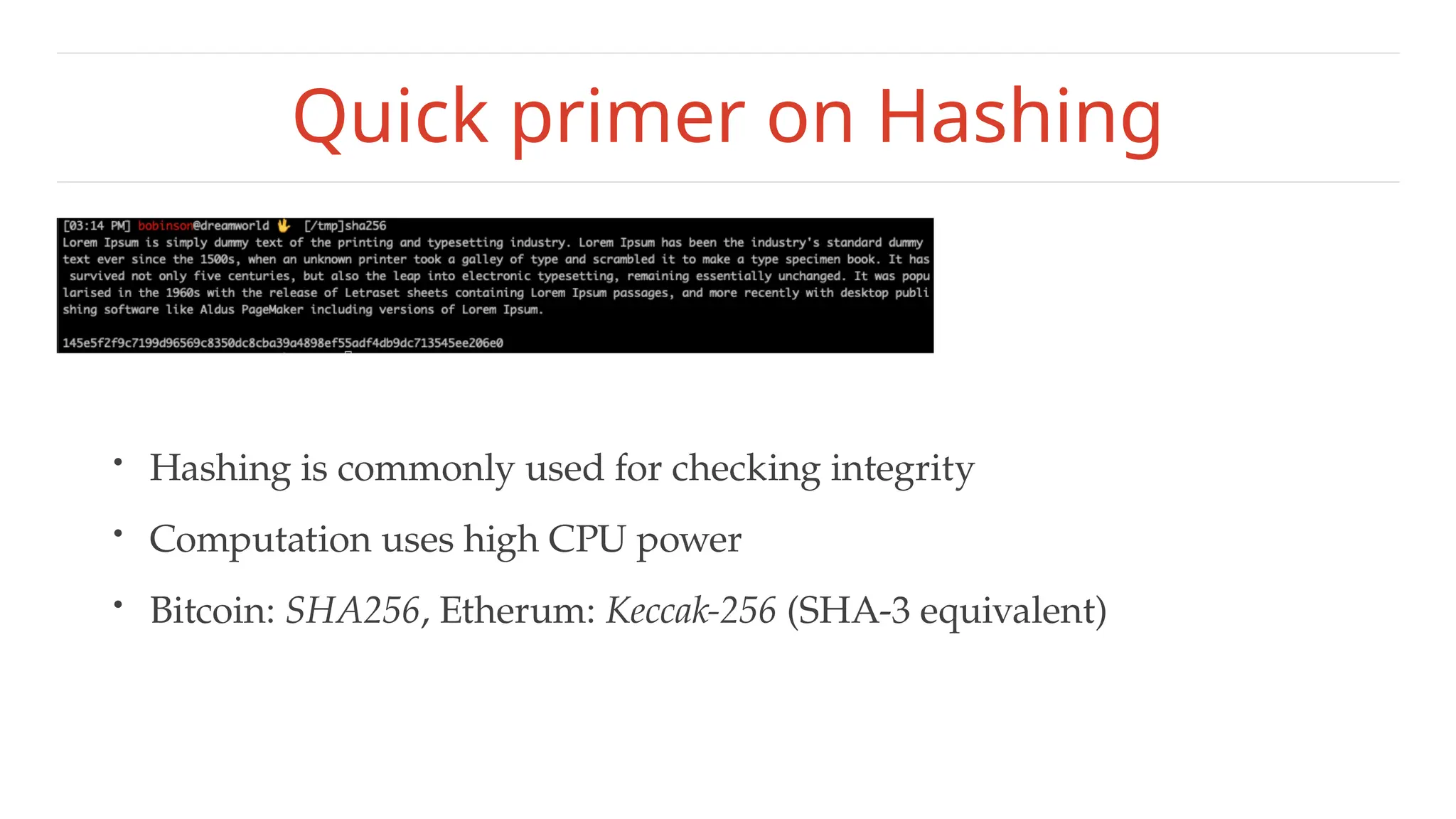
Quick primer on Hashing
• Hashing is commonly used for checking integrity
• Computation uses high CPU power
• Bitcoin: SHA256, Etherum: Keccak-256 (SHA-3 equivalent)
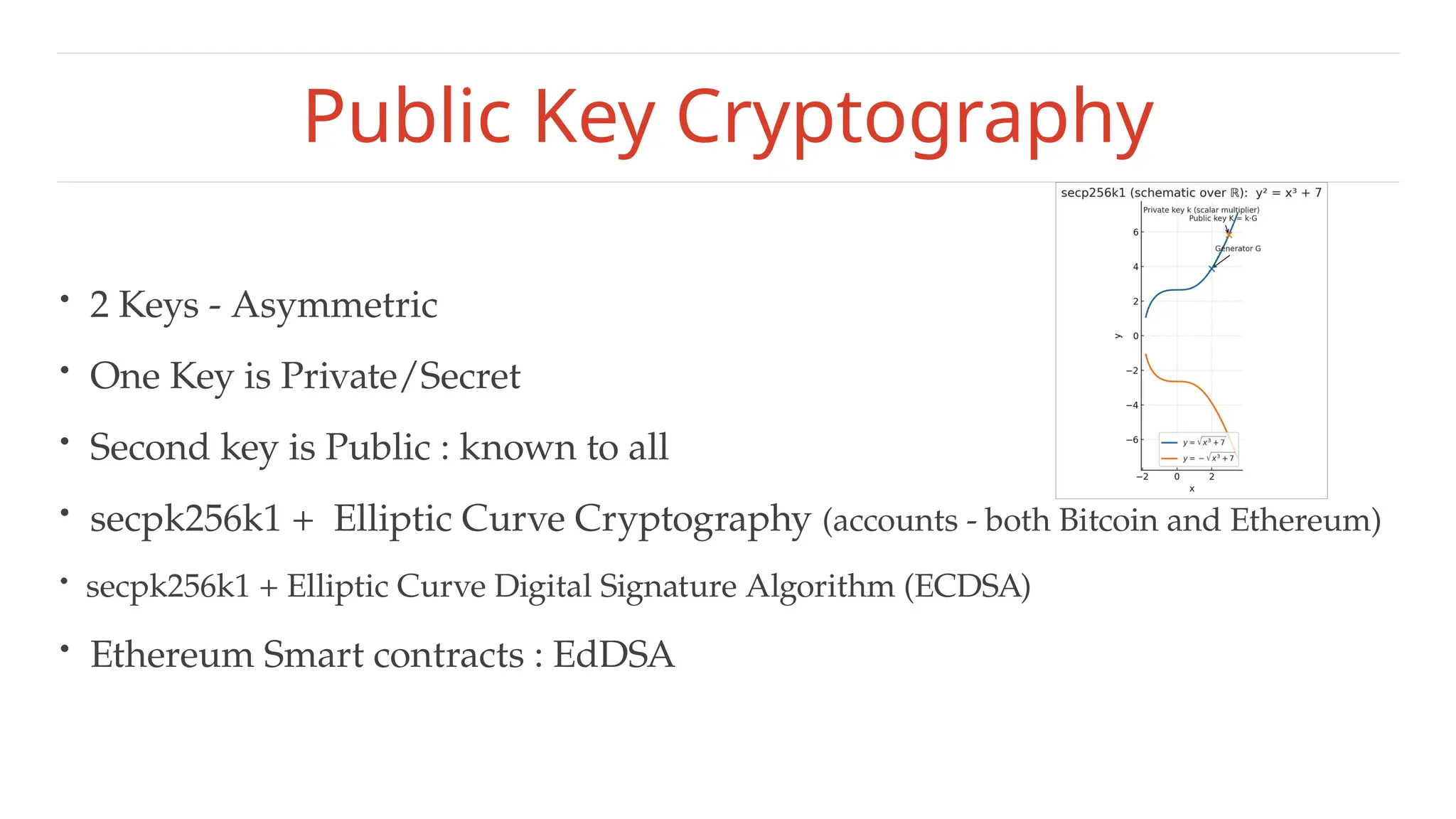
Public Key Cryptography
• 2 Keys - Asymmetric
• One Key is Private/Secret
• Second key is Public : known to all
• secpk256k1 + Elliptic Curve Cryptography (accounts - both Bitcoin and Ethereum)
• secpk256k1 + Elliptic Curve Digital Signature Algorithm (ECDSA)
• Ethereum Smart contracts : EdDSA
Cryptography + Hashing
• Generation of addresses :
Random number (private key) > seckpk256k1 curve (public key) > hash (address)
• Transaction Signature
• Blockhash
Bitcoin
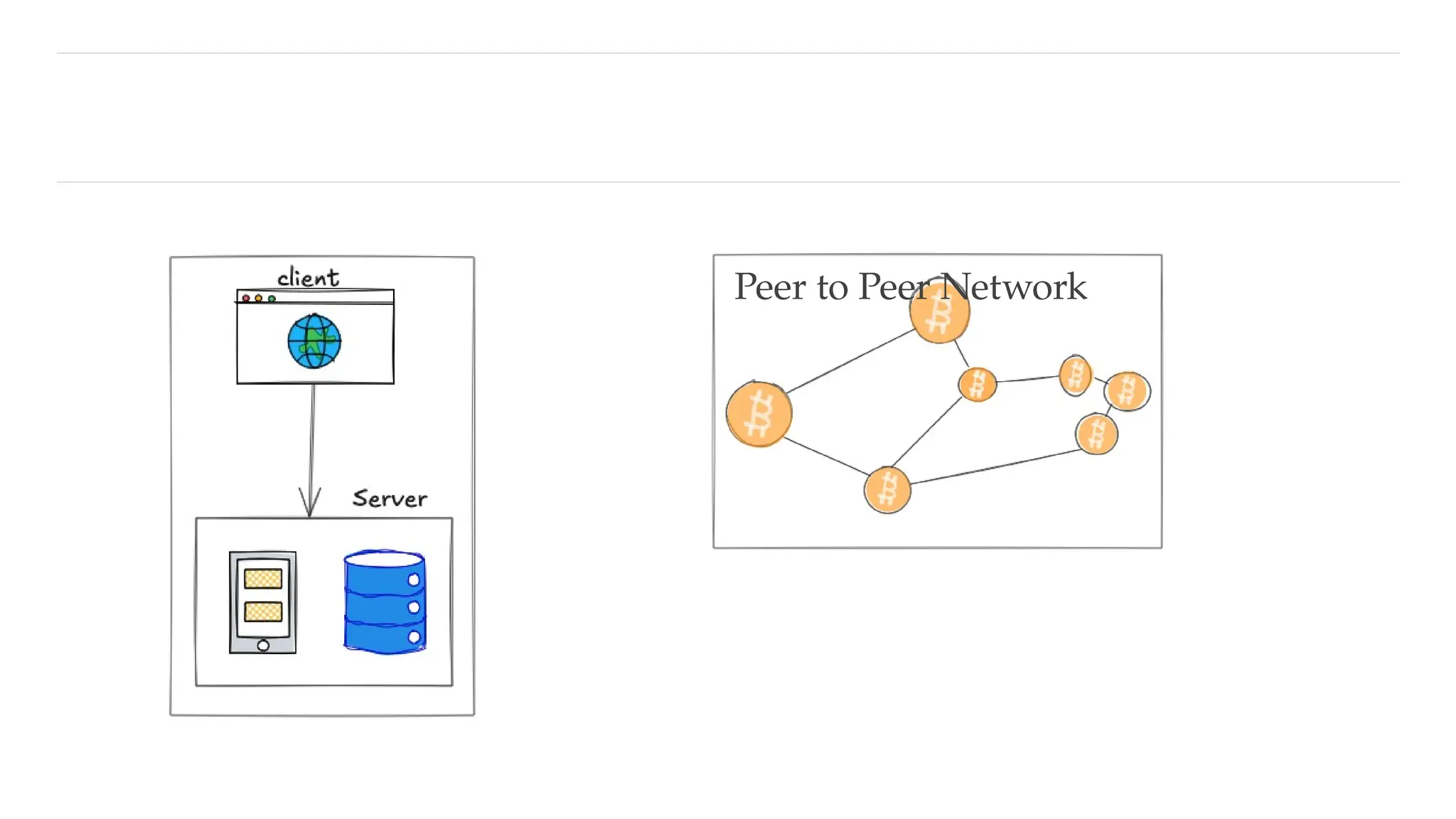
• Decentralised Peer to Peer Network
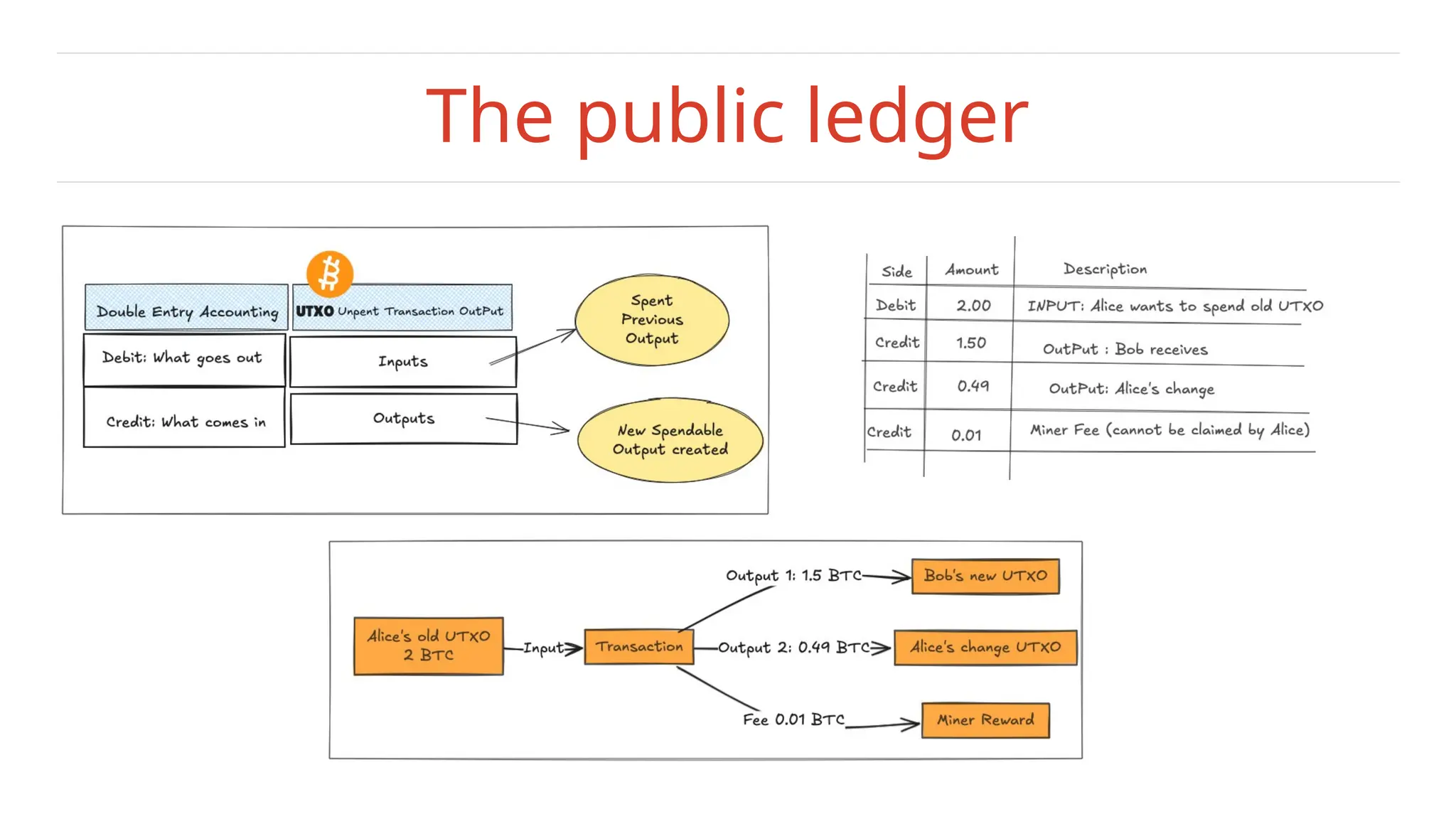
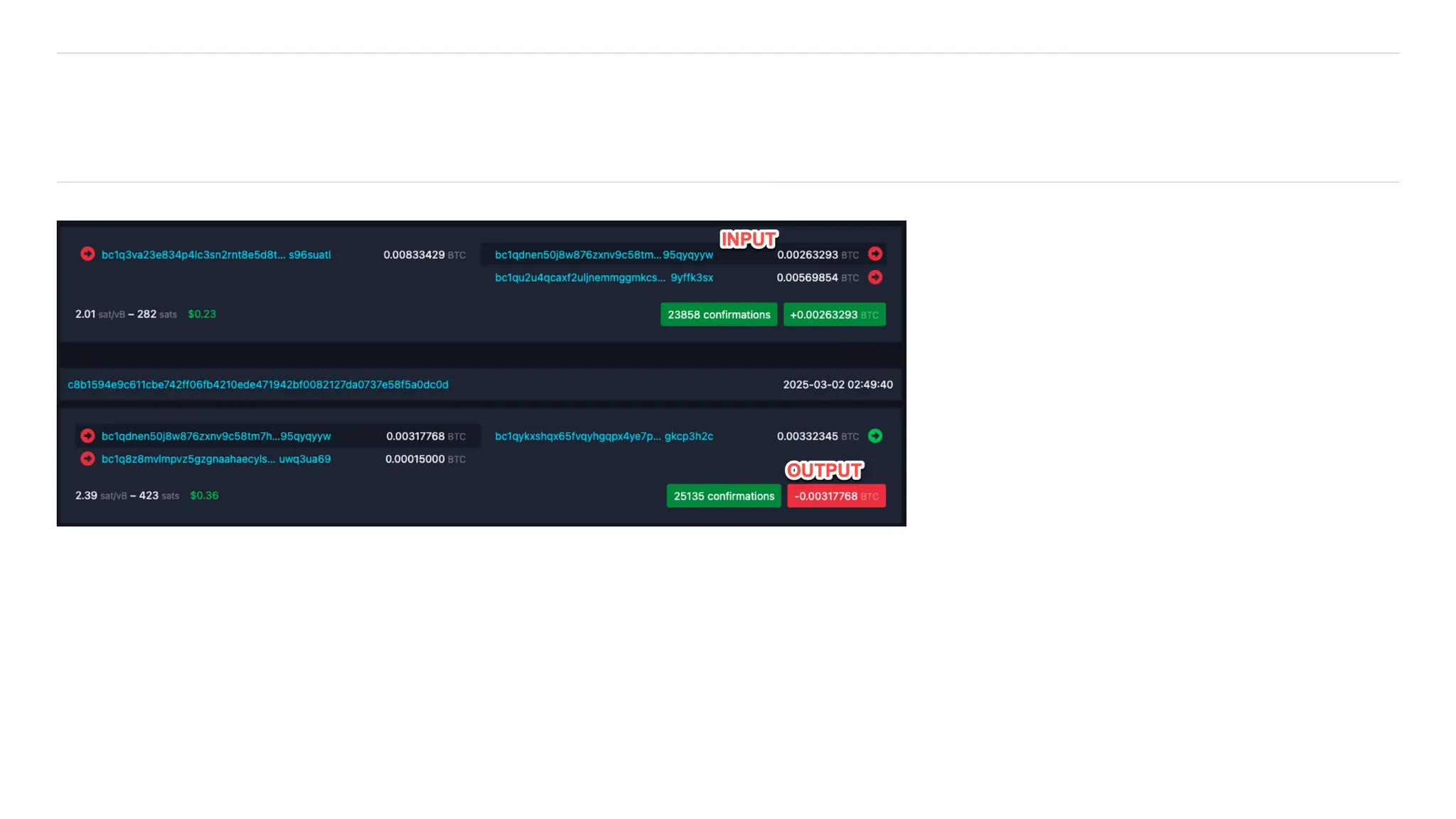
• Public Transaction Ledger
• Consensus Rules : Regulates Currency issuance
• Proof of Work : Global Consensus
Peer to Peer Network
The public ledger
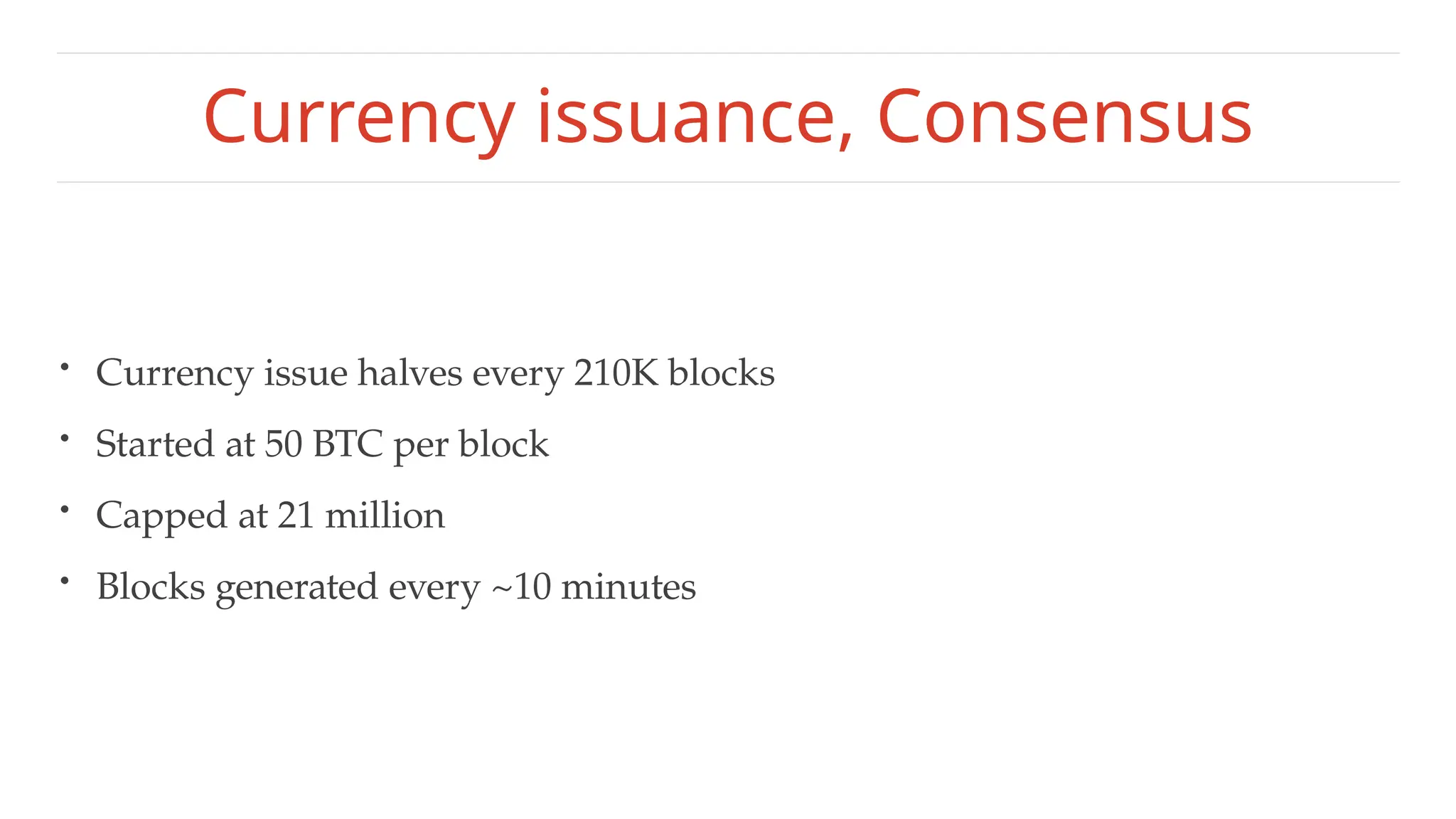
Currency issuance, Consensus
• Currency issue halves every 210K blocks
• Started at 50 BTC per block
• Capped at 21 million
• Blocks generated every ~10 minutes
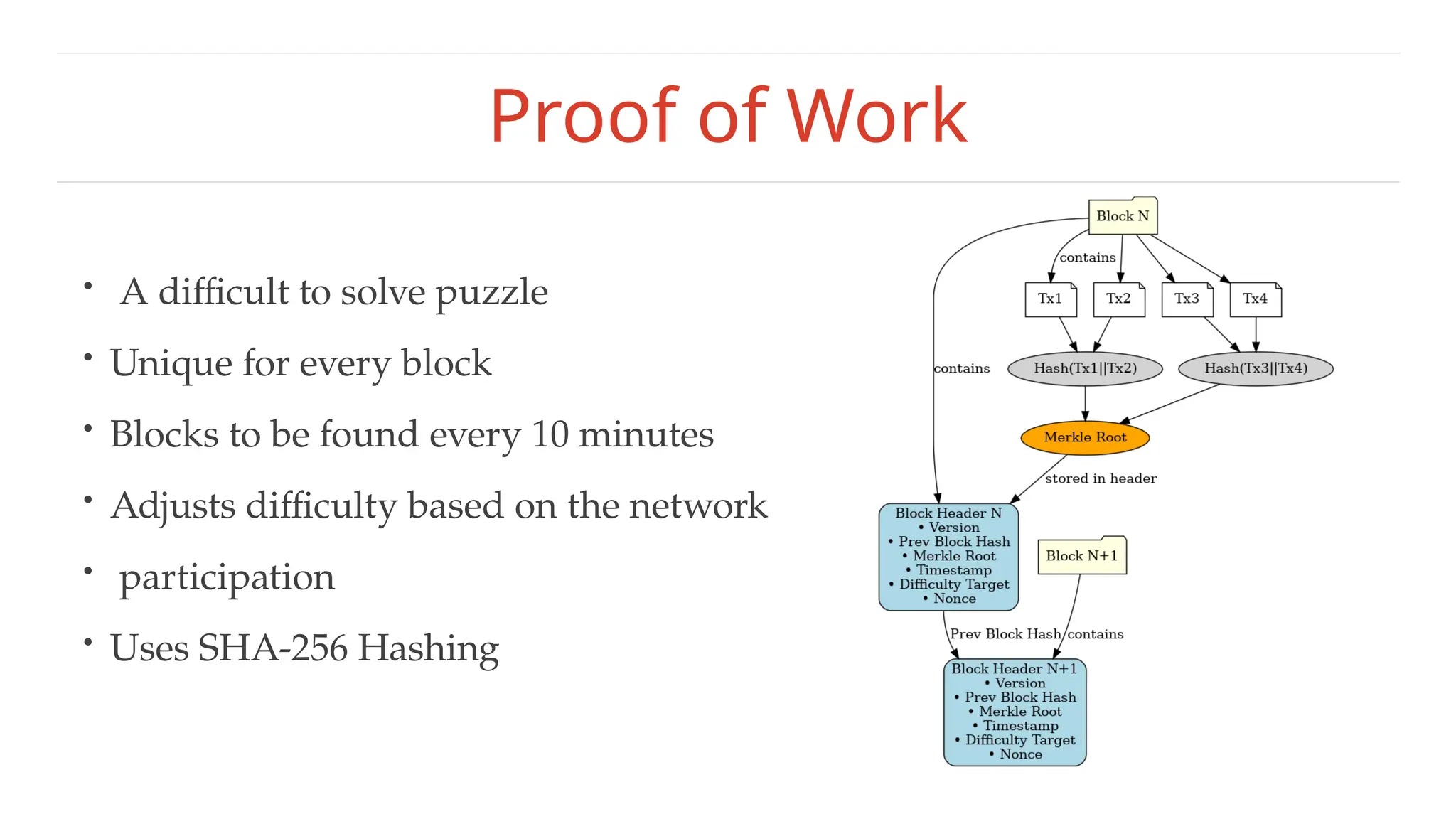
Proof of Work
• A difficult to solve puzzle
• Unique for every block
• Blocks to be found every 10 minutes
• Adjusts difficulty based on the network
• participation
• Uses SHA-256 Hashing
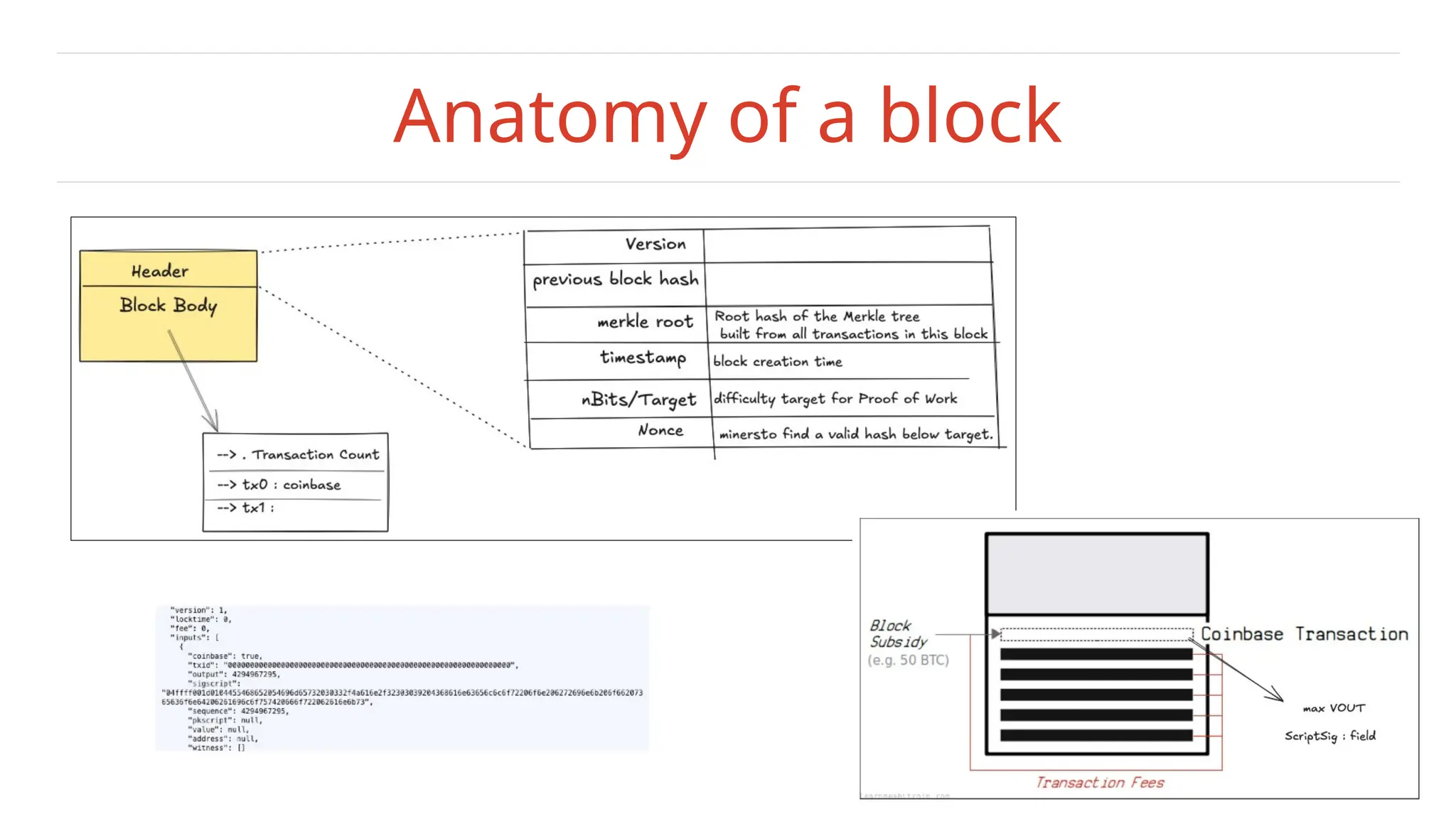
Anatomy of a block
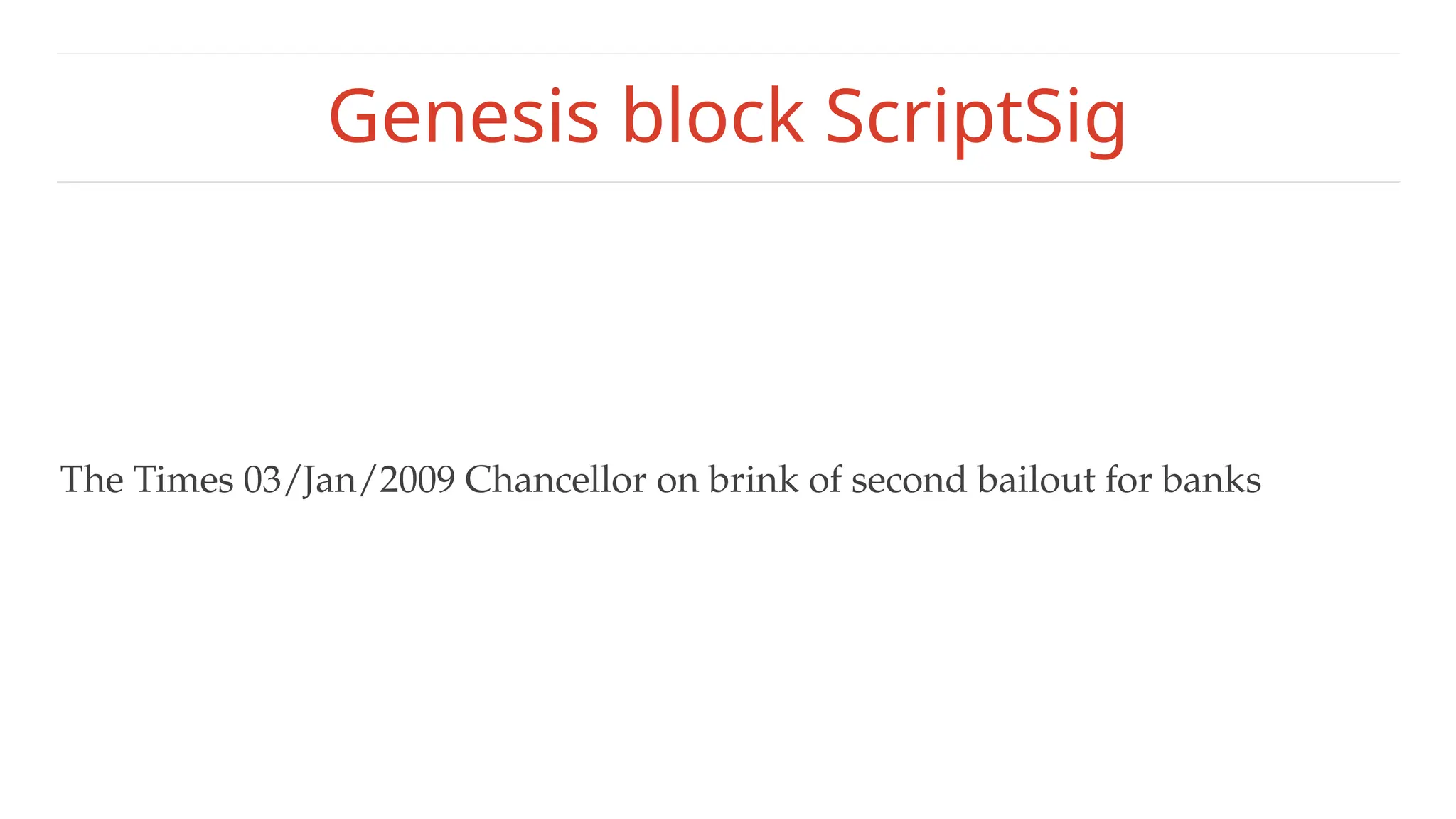
Genesis block ScriptSig
The Times 03/Jan/2009 Chancellor on brink of second bailout for banks
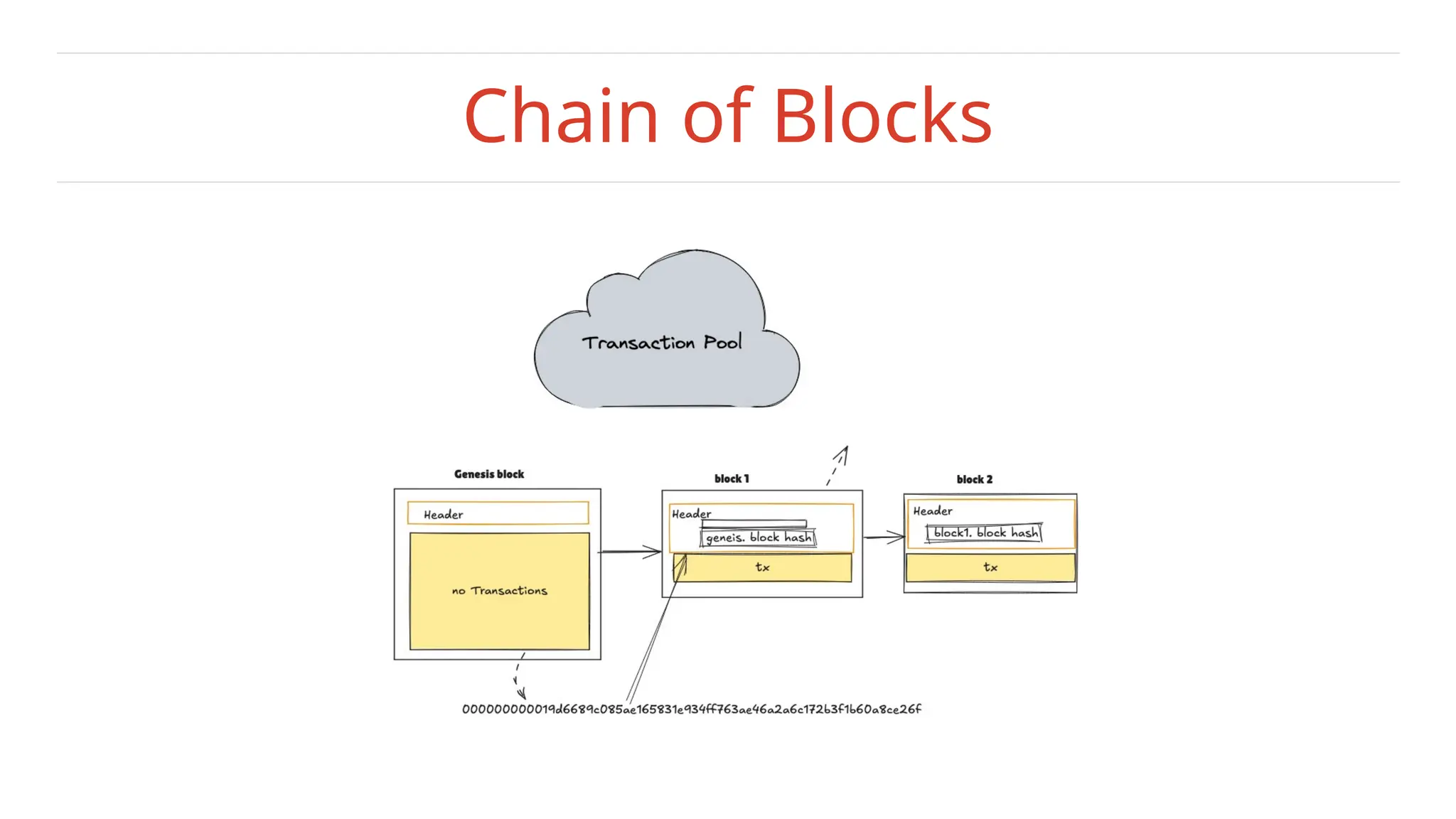
Chain of Blocks
Mining
• Difficulty target : Keep readjusting periodically
• Block hash must be less than “target”
• Results in funding a new, number every new block
Crypto currency
• Issued based on strict conditions
• Native assets/coins : BTC, ETH, SOL, DOT
• Native coins are created/minted by mining
• Tokens aka non-native coins are created by smart contracts
• Native coins are earned by mining or processing transactions
Distributed Ledger
• Every block contains transactions
• Stored across the world
• No central server
• Immutable - cannot alter/delete : Ultimate source of Truth
• Every node, miner performs computations —> smart contracts!
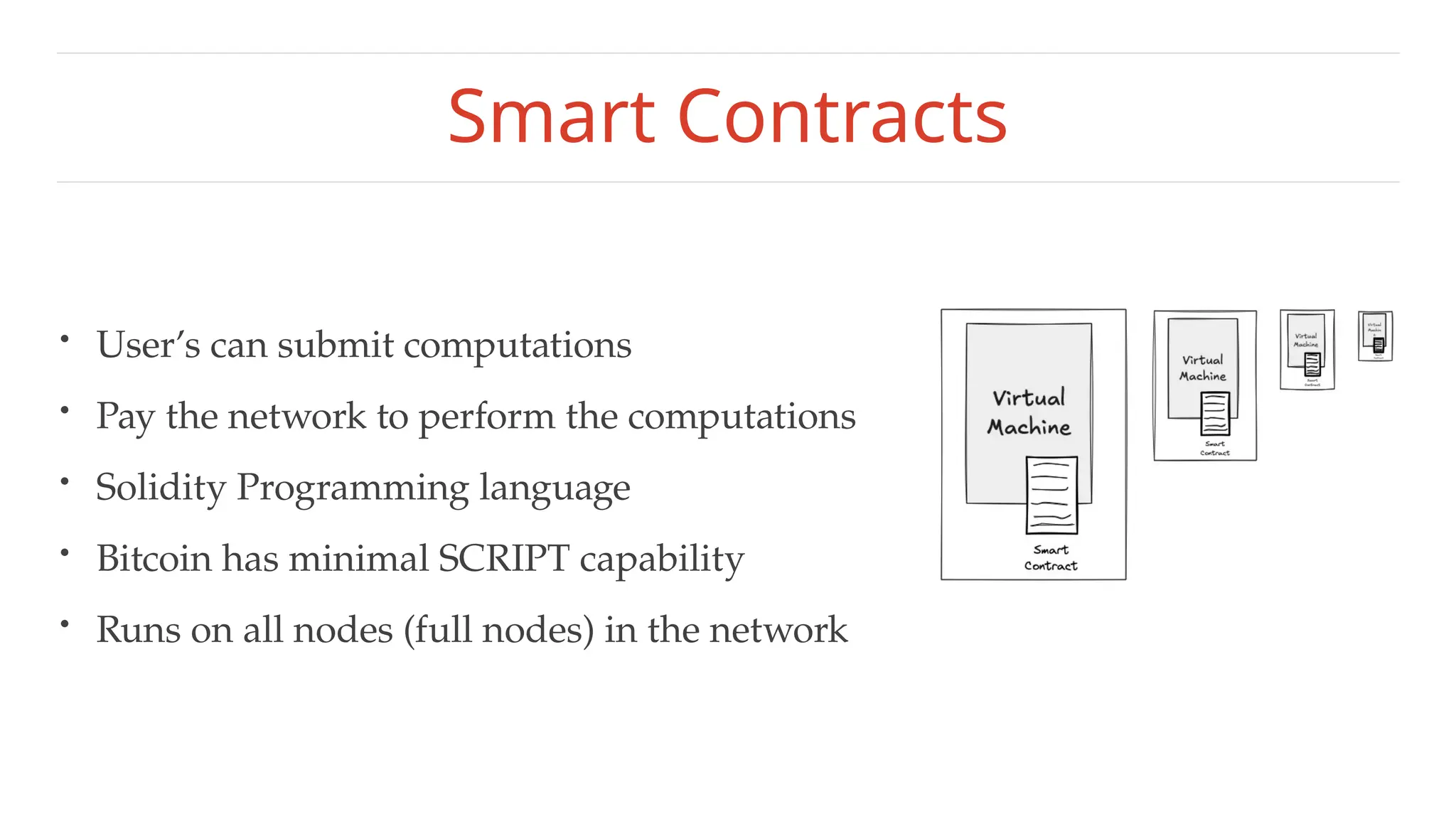
Smart Contracts
• User’s can submit computations
• Pay the network to perform the computations
• Solidity Programming language
• Bitcoin has minimal SCRIPT capability
• Runs on all nodes (full nodes) in the network
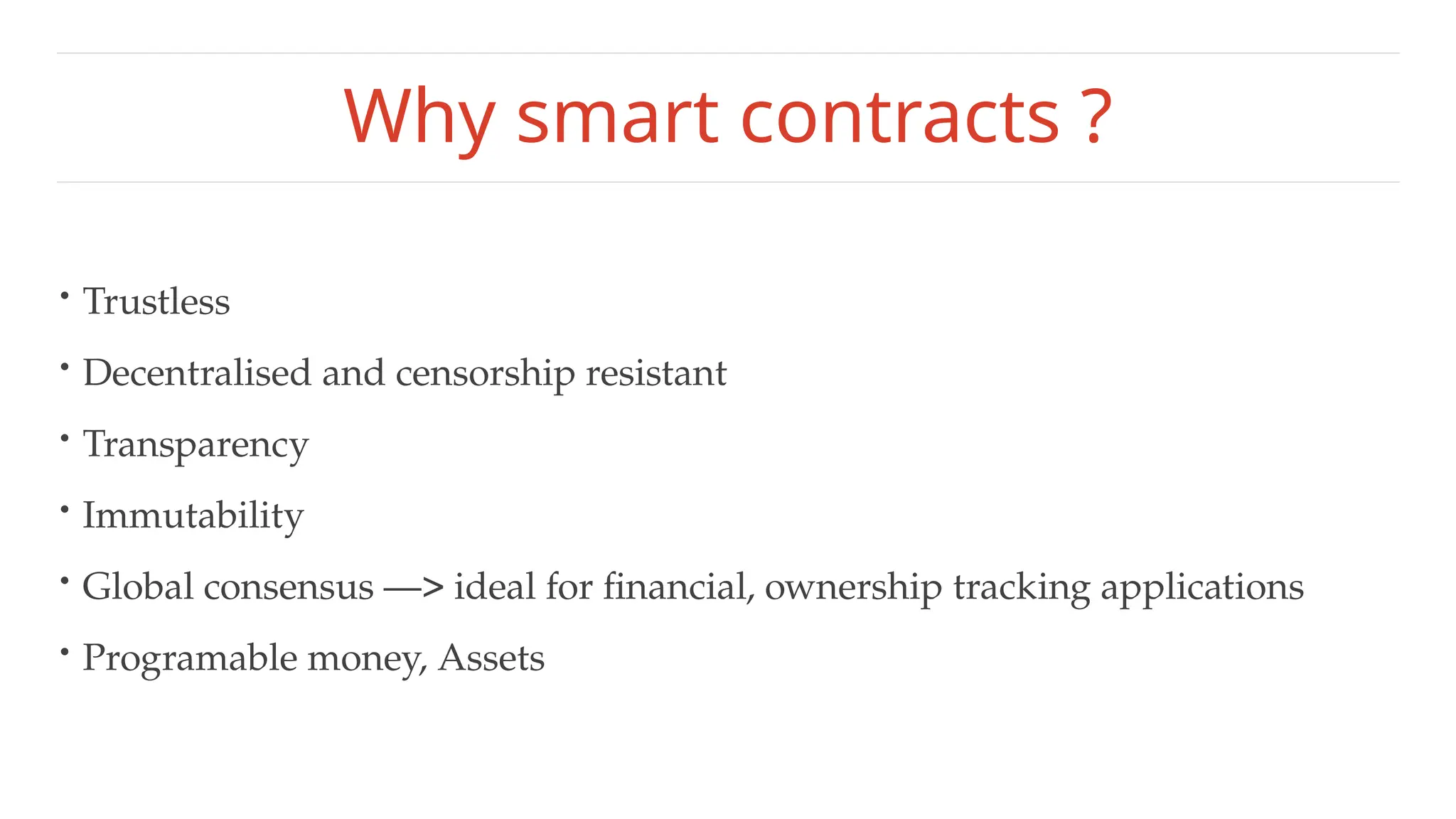
Why smart contracts ?
• Trustless
• Decentralised and censorship resistant
• Transparency
• Immutability
• Global consensus —> ideal for financial, ownership tracking applications
• Programable money, Assets
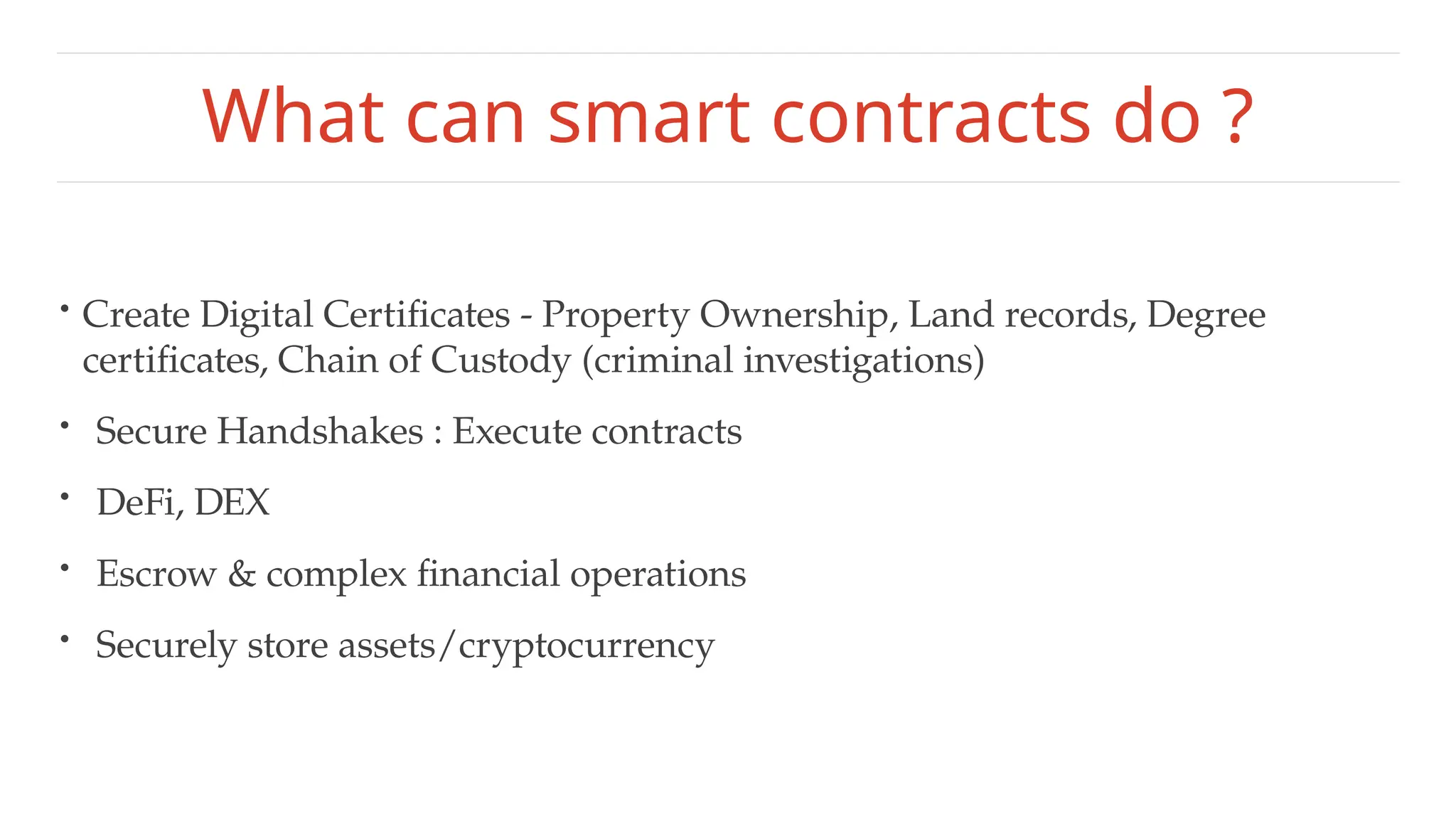
What can smart contracts do ?
• Create Digital Certificates - Property Ownership, Land records, Degree
certificates, Chain of Custody (criminal investigations)
• Secure Handshakes : Execute contracts
• DeFi, DEX
• Escrow & complex financial operations
• Securely store assets/cryptocurrency
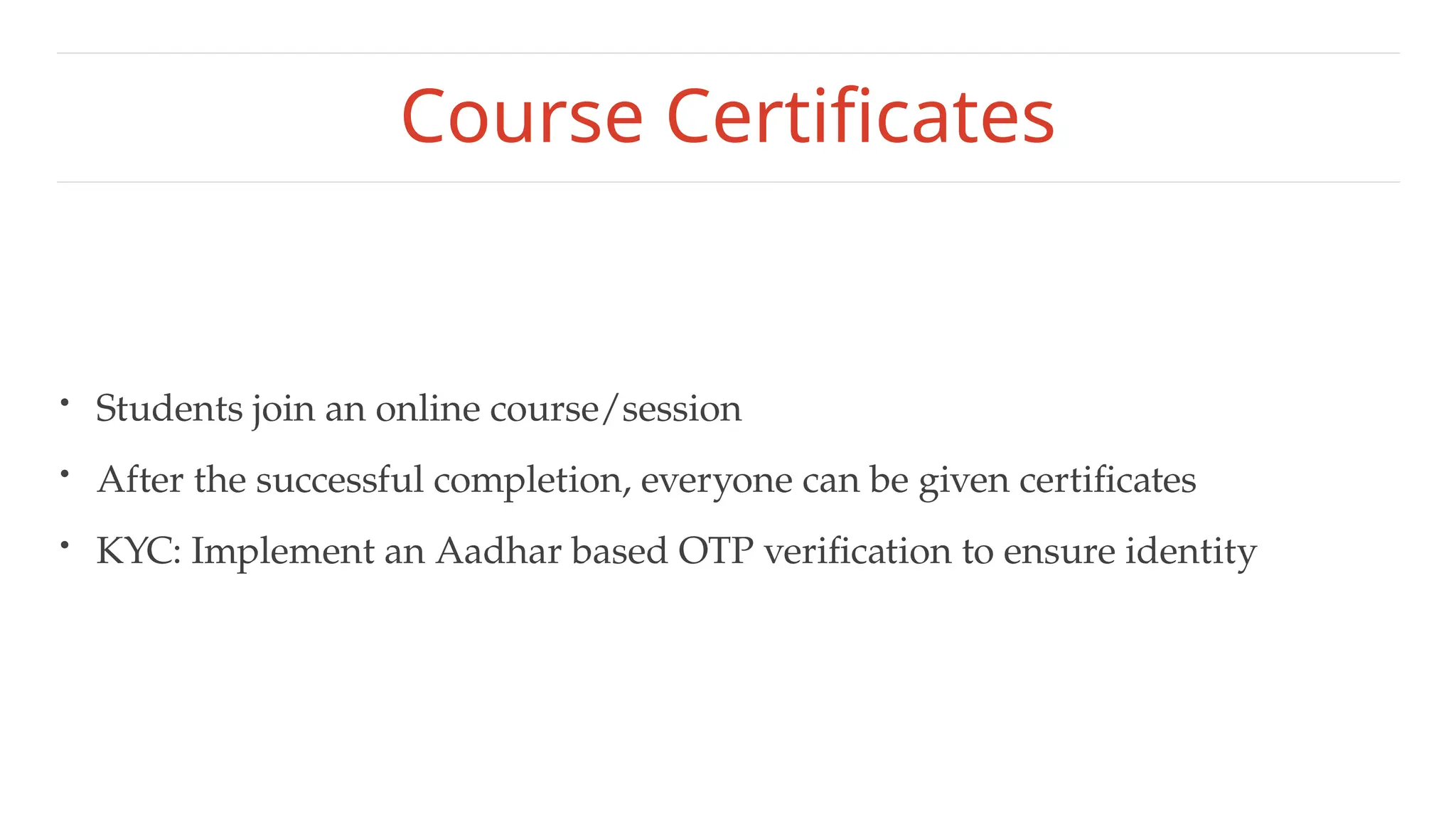
Course Certificates
• Students join an online course/session
• After the successful completion, everyone can be given certificates
• KYC: Implement an Aadhar based OTP verification to ensure identity
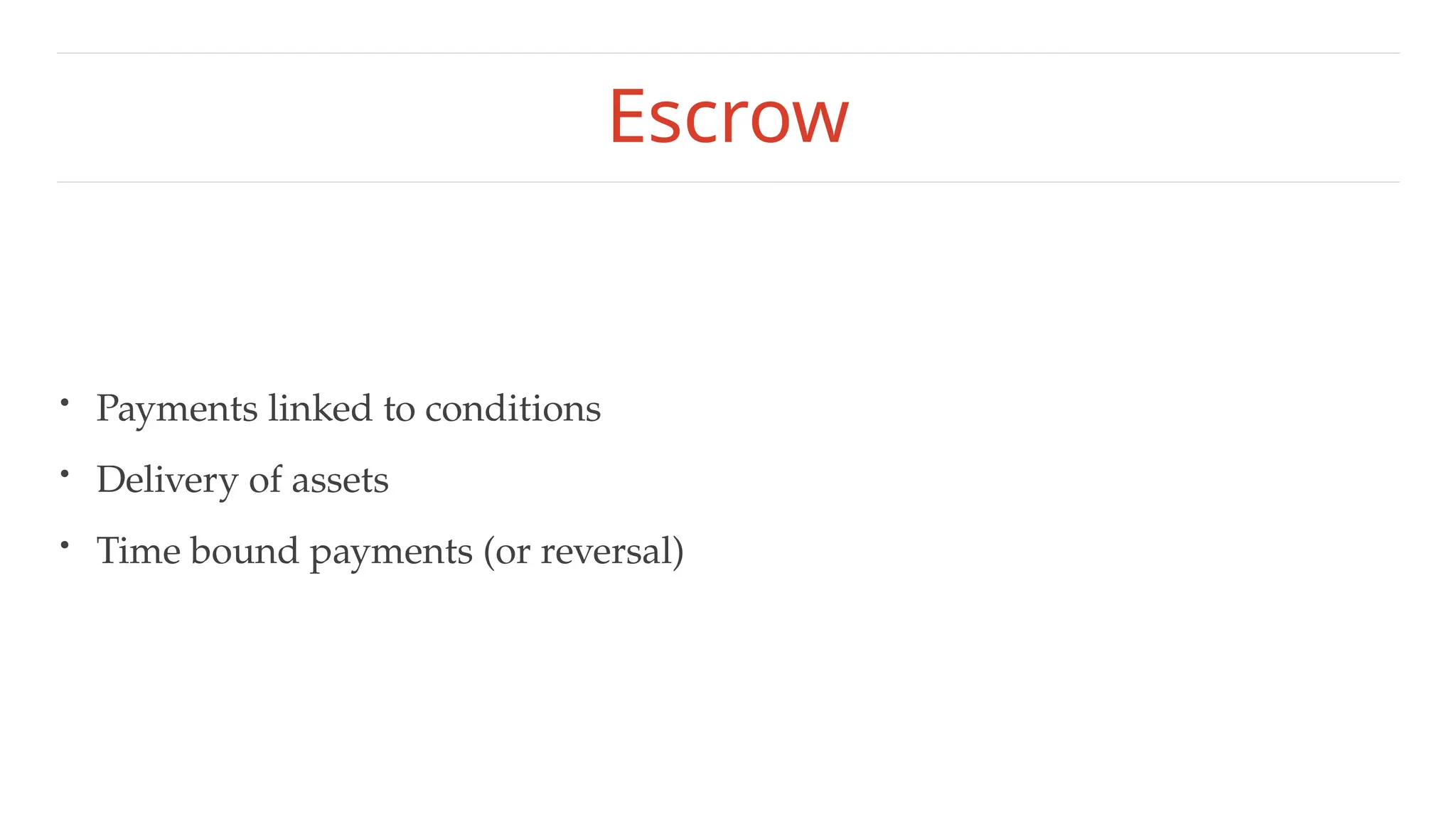
Escrow
• Payments linked to conditions
• Delivery of assets
• Time bound payments (or reversal)
DID
• Decentralised Identity - DID
• Applications like Digiyatra : Government ID, biometrics can be “attested”
• European Union Digital Wallet
Cross chain transactions
• Chains store value and data
• Value, aka tokens can be moved between chains
• Burn or lock in source chain, mint in destination chance
Privacy
• Obfuscate transactions
• Often involves ZK-SNARK (zero knowledge Proof)
• Monero, Zcash : chains focusing on privacy
• Tornado Cash : mixer
• Makes it difficult to track transactions
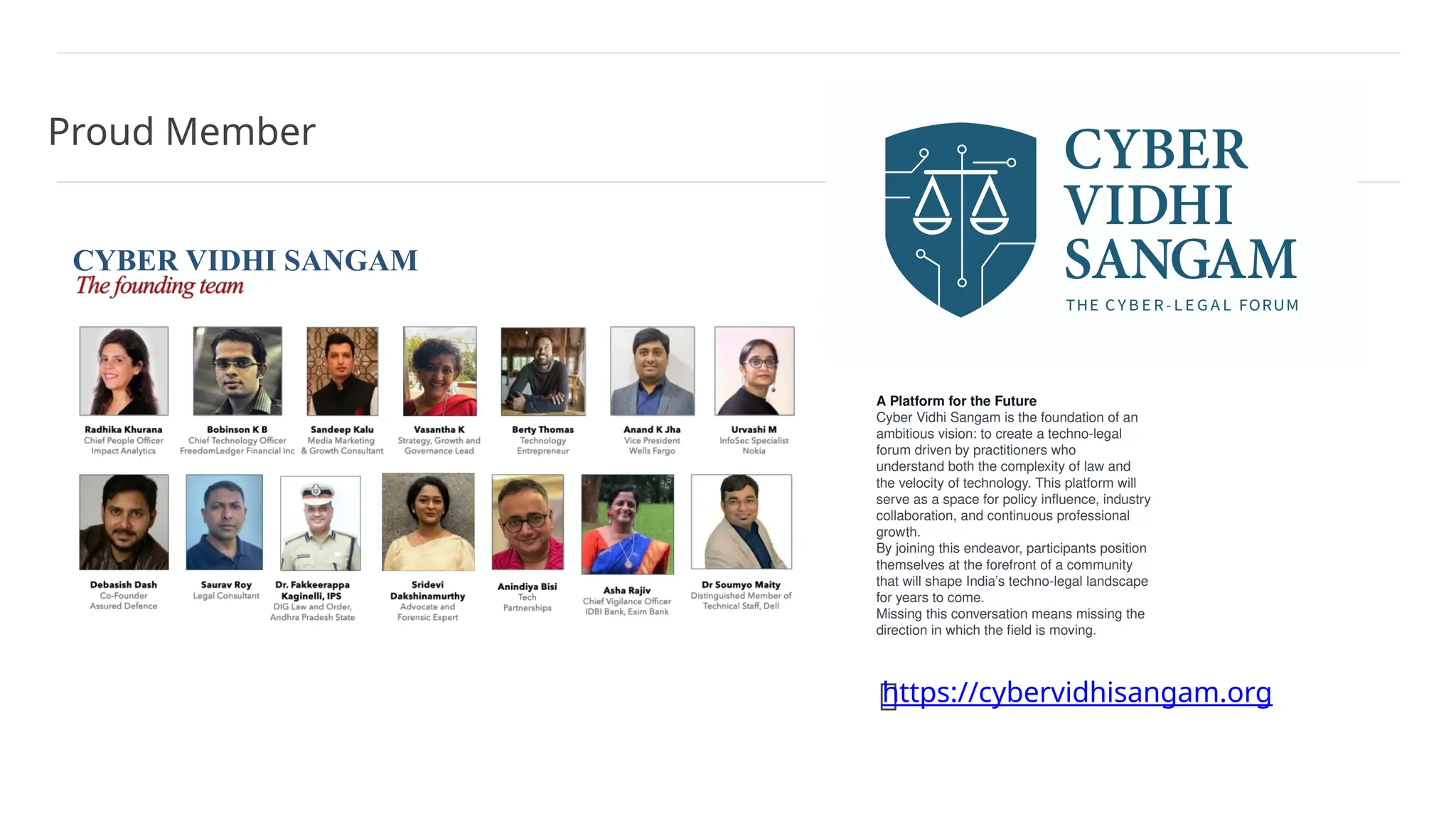
CYBER VIDHI SANGAM
A Platform for the Future
Cyber Vidhi Sangam is the foundation of an
ambitious vision: to create a techno-legal
forum driven by practitioners who
understand both the complexity of law and
the velocity of technology. This platform will
serve as a space for policy influence, industry
collaboration, and continuous professional
growth.
By joining this endeavor, participants position
themselves at the forefront of a community
that will shape India’s techno-legal landscape
for years to come.
Missing this conversation means missing the
direction in which the field is moving.
Proud Member
🔗
https://cybervidhisangam.org
Introduction Blockchains and Smart Contracts

  • 1.
    Gentle Introduction to Blockchainsand Cryptocurrency Bobinson K B
  • 2.
    Agenda • Digital cash •Bitcoin : an economical invention • Smart contracts • Public and Private Blockchains • Applications • Forensic Audit of transactions
  • 3.
    Digital Cash • Attemptsto address issues using Cryptography • Hashcash : Proposed in 1997 and implemented in 2002 • B-Money by Wei Dan - 1998 • Centralised
  • 5.
    Economics • Mimics Centralbanks in decentralised fashion • “Mints” money • Limited Supply - results attributes like Gold • Deflationary
  • 6.
    Quick primer onHashing • Hashing is commonly used for checking integrity • Computation uses high CPU power • Bitcoin: SHA256, Etherum: Keccak-256 (SHA-3 equivalent)
  • 7.
    Public Key Cryptography •2 Keys - Asymmetric • One Key is Private/Secret • Second key is Public : known to all • secpk256k1 + Elliptic Curve Cryptography (accounts - both Bitcoin and Ethereum) • secpk256k1 + Elliptic Curve Digital Signature Algorithm (ECDSA) • Ethereum Smart contracts : EdDSA
  • 8.
    Cryptography + Hashing •Generation of addresses : Random number (private key) > seckpk256k1 curve (public key) > hash (address) • Transaction Signature • Blockhash
  • 9.
    Bitcoin • Decentralised Peerto Peer Network • Public Transaction Ledger • Consensus Rules : Regulates Currency issuance • Proof of Work : Global Consensus
  • 10.
    Peer to PeerNetwork
  • 11.
  • 13.
    Currency issuance, Consensus •Currency issue halves every 210K blocks • Started at 50 BTC per block • Capped at 21 million • Blocks generated every ~10 minutes
  • 14.
    Proof of Work •A difficult to solve puzzle • Unique for every block • Blocks to be found every 10 minutes • Adjusts difficulty based on the network • participation • Uses SHA-256 Hashing
  • 15.
  • 16.
    Genesis block ScriptSig TheTimes 03/Jan/2009 Chancellor on brink of second bailout for banks
  • 17.
  • 18.
    Mining • Difficulty target: Keep readjusting periodically • Block hash must be less than “target” • Results in funding a new, number every new block
  • 19.
    Crypto currency • Issuedbased on strict conditions • Native assets/coins : BTC, ETH, SOL, DOT • Native coins are created/minted by mining • Tokens aka non-native coins are created by smart contracts • Native coins are earned by mining or processing transactions
  • 20.
    Distributed Ledger • Everyblock contains transactions • Stored across the world • No central server • Immutable - cannot alter/delete : Ultimate source of Truth • Every node, miner performs computations —> smart contracts!
  • 21.
    Smart Contracts • User’scan submit computations • Pay the network to perform the computations • Solidity Programming language • Bitcoin has minimal SCRIPT capability • Runs on all nodes (full nodes) in the network
  • 23.
    Why smart contracts? • Trustless • Decentralised and censorship resistant • Transparency • Immutability • Global consensus —> ideal for financial, ownership tracking applications • Programable money, Assets
  • 24.
    What can smartcontracts do ? • Create Digital Certificates - Property Ownership, Land records, Degree certificates, Chain of Custody (criminal investigations) • Secure Handshakes : Execute contracts • DeFi, DEX • Escrow & complex financial operations • Securely store assets/cryptocurrency
  • 25.
    Course Certificates • Studentsjoin an online course/session • After the successful completion, everyone can be given certificates • KYC: Implement an Aadhar based OTP verification to ensure identity
  • 26.
    Escrow • Payments linkedto conditions • Delivery of assets • Time bound payments (or reversal)
  • 27.
    DID • Decentralised Identity- DID • Applications like Digiyatra : Government ID, biometrics can be “attested” • European Union Digital Wallet
  • 28.
    Cross chain transactions •Chains store value and data • Value, aka tokens can be moved between chains • Burn or lock in source chain, mint in destination chance
  • 29.
    Privacy • Obfuscate transactions •Often involves ZK-SNARK (zero knowledge Proof) • Monero, Zcash : chains focusing on privacy • Tornado Cash : mixer • Makes it difficult to track transactions
  • 30.
    CYBER VIDHI SANGAM APlatform for the Future Cyber Vidhi Sangam is the foundation of an ambitious vision: to create a techno-legal forum driven by practitioners who understand both the complexity of law and the velocity of technology. This platform will serve as a space for policy influence, industry collaboration, and continuous professional growth. By joining this endeavor, participants position themselves at the forefront of a community that will shape India’s techno-legal landscape for years to come. Missing this conversation means missing the direction in which the field is moving. Proud Member 🔗 https://cybervidhisangam.org