INTRODUCTION TO
ARCHITECTING YOUR IOS APP
AGENDA
Goals of software architecture
Design guidelines
Practical tips
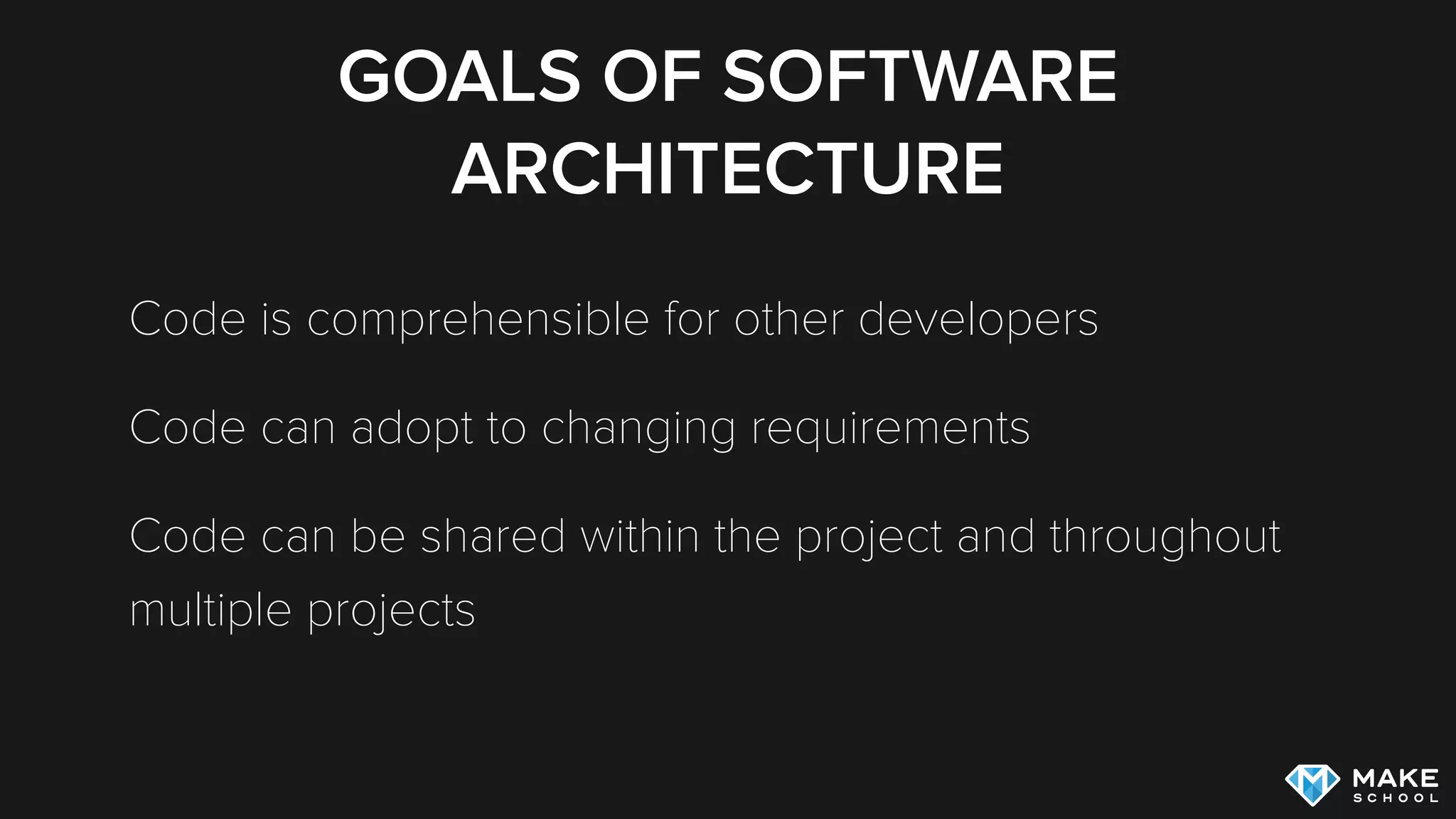
GOALS OF SOFTWARE
ARCHITECTURE
GOALS OF SOFTWARE
ARCHITECTURE
Code is comprehensible for other developers
Code can adopt to changing requirements
Code can be shared within the project and throughout
multiple projects
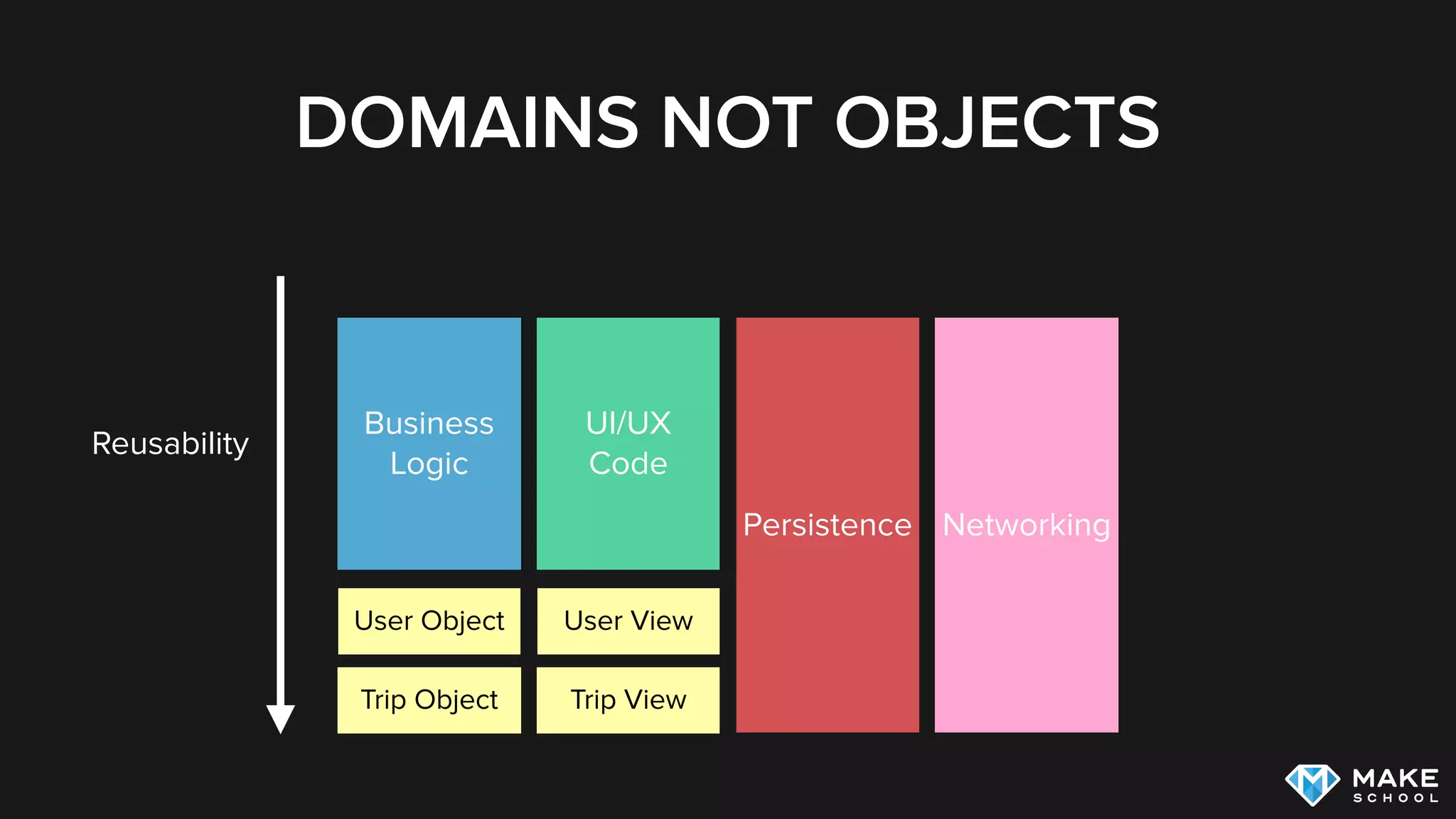
THINK IN DOMAINS NOT IN
OBJECTS
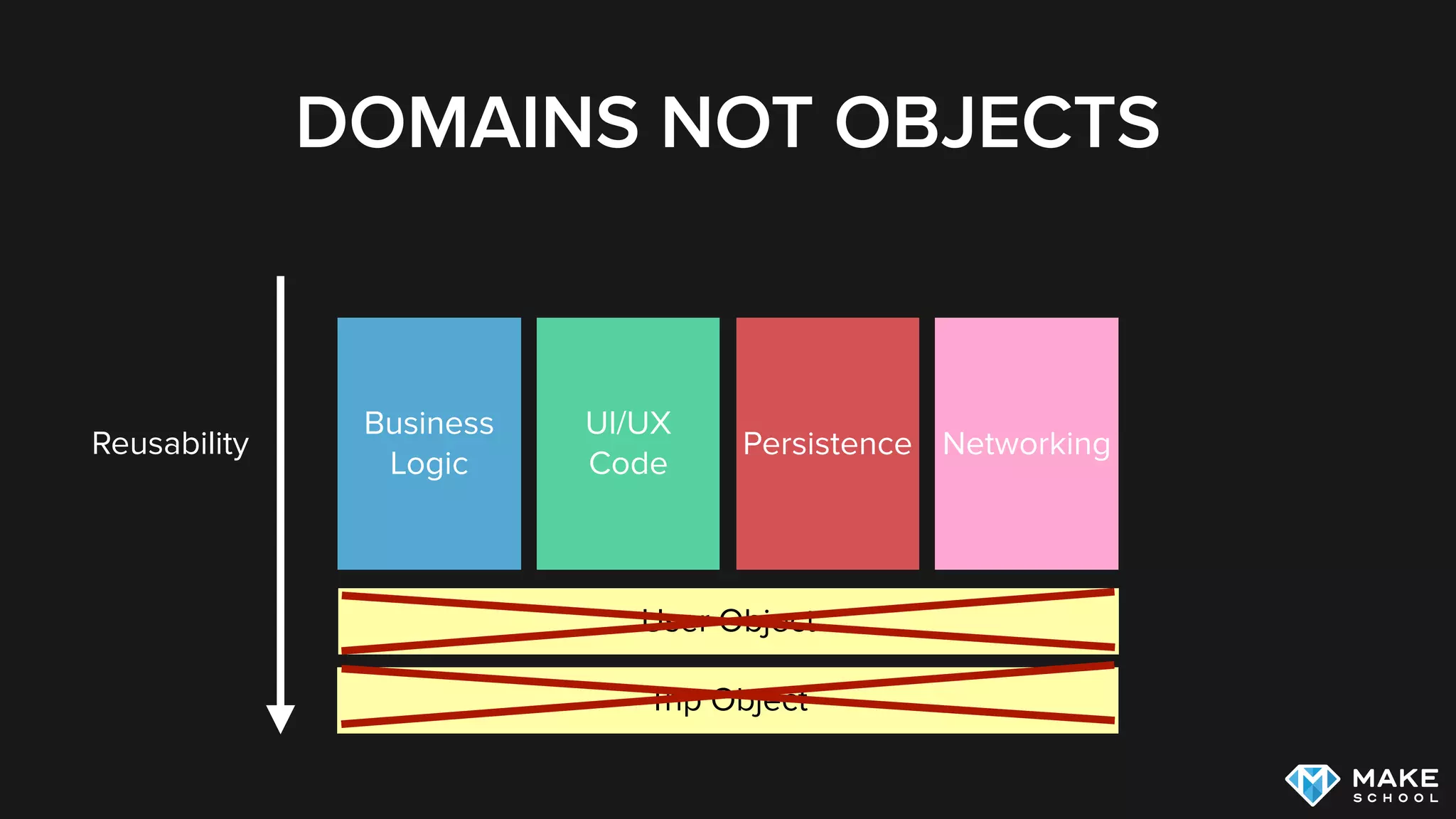
DOMAINS NOT OBJECTS
Business
Logic
Persistence
UI/UX
Code
NetworkingReusability
User Object
Trip Object
DOMAINS NOT OBJECTS
Business
Logic
Persistence
UI/UX
Code
Networking
Reusability
User Object
Trip Object
User View
Trip View
SINGLE RESPONSIBILITY
PRINCIPLE
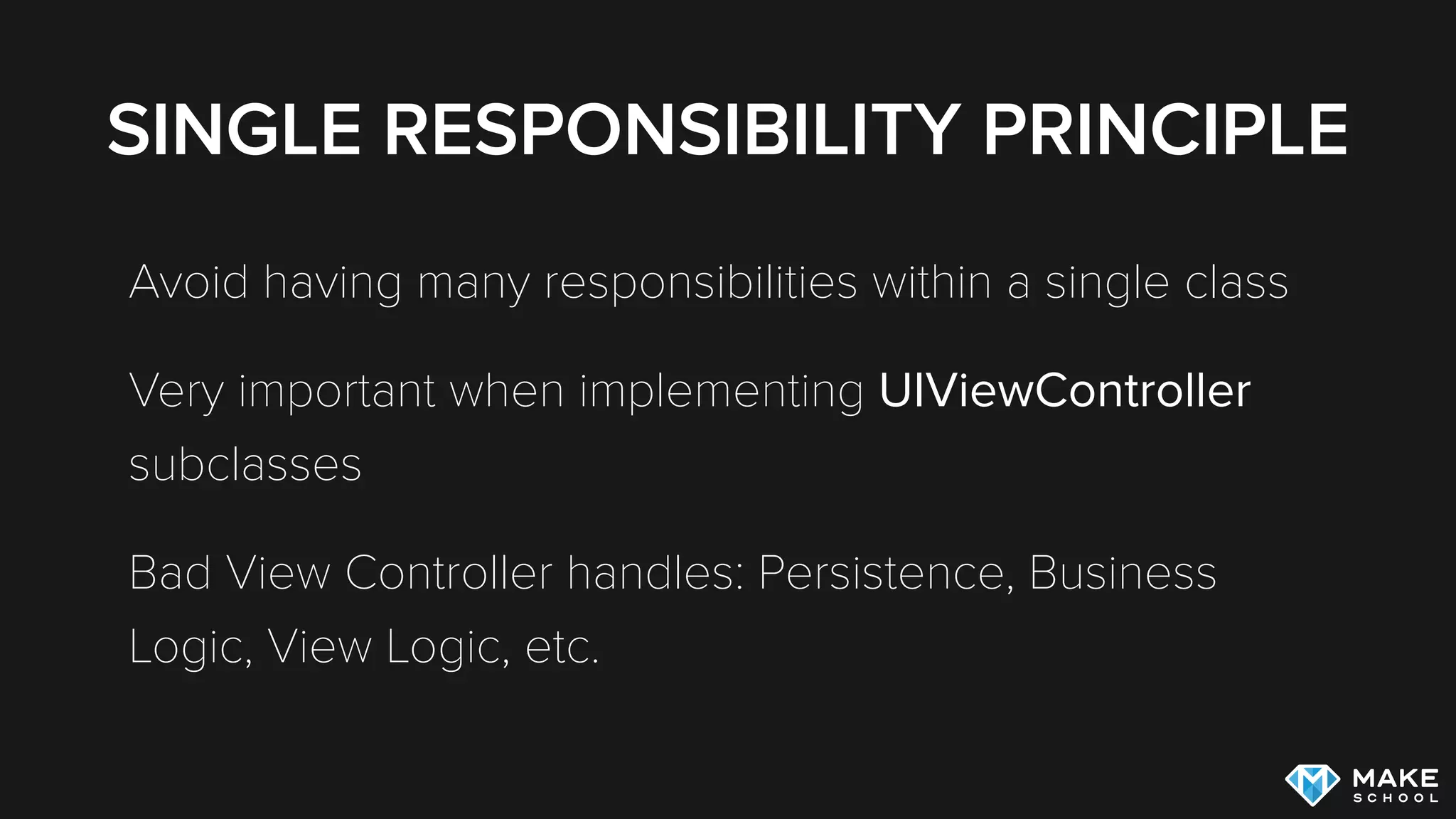
SINGLE RESPONSIBILITY PRINCIPLE
Avoid having many responsibilities within a single class
Very important when implementing UIViewController
subclasses
Bad View Controller handles: Persistence, Business
Logic, View Logic, etc.
ENCAPSULATE
ENCAPSULATE
Every component should know as little as possible
about its surrounding components 

→ reduces dependencies between components
How can this be accomplished?

→ small interfaces for communication
ENCAPSULATE
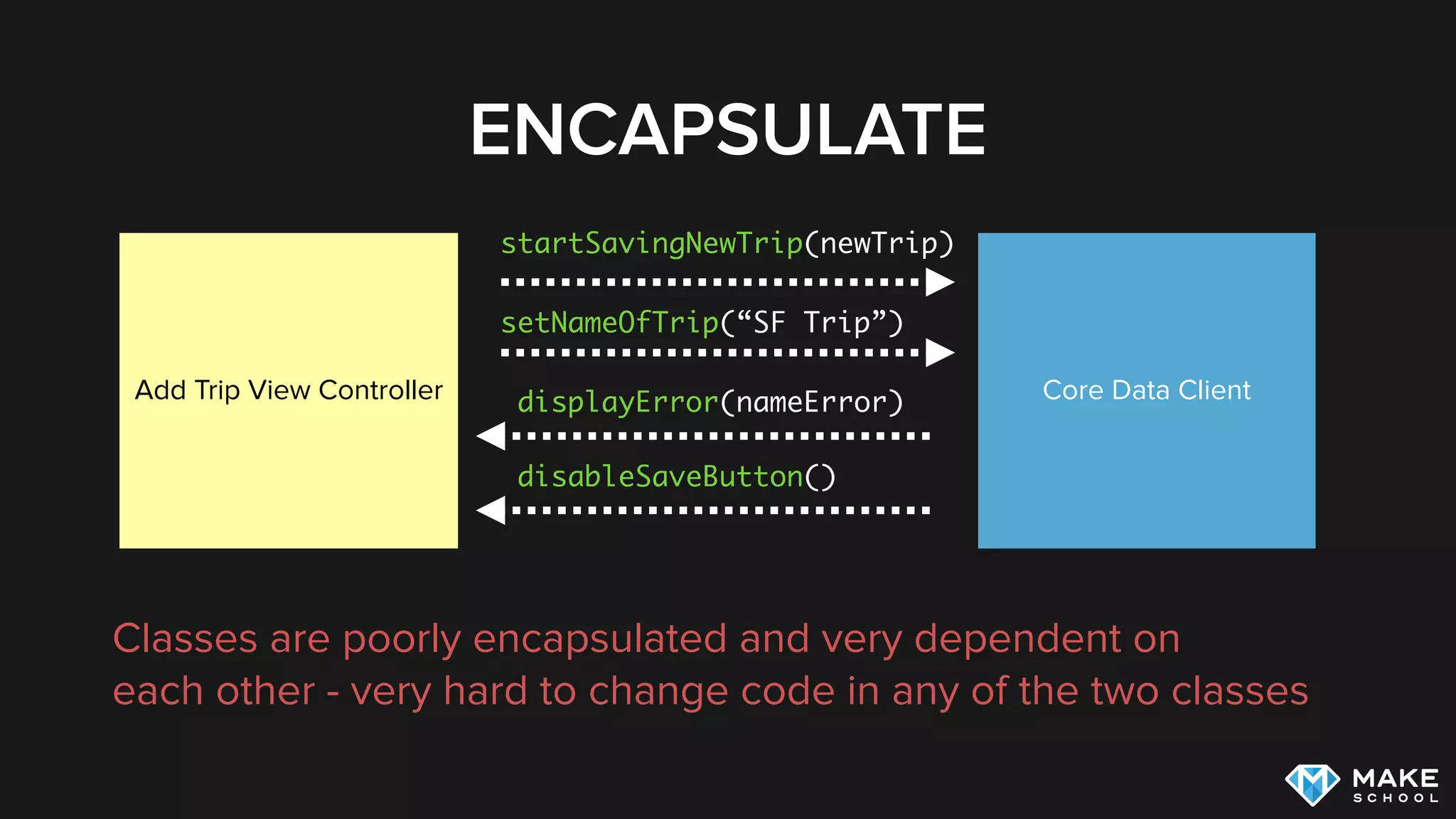
Add Trip View Controller Core Data Client
startSavingNewTrip(newTrip)
displayError(nameError)
setNameOfTrip(“SF Trip”)
disableSaveButton()
Classes are poorly encapsulated and very dependent on 

each other - very hard to change code in any of the two classes
ENCAPSULATE
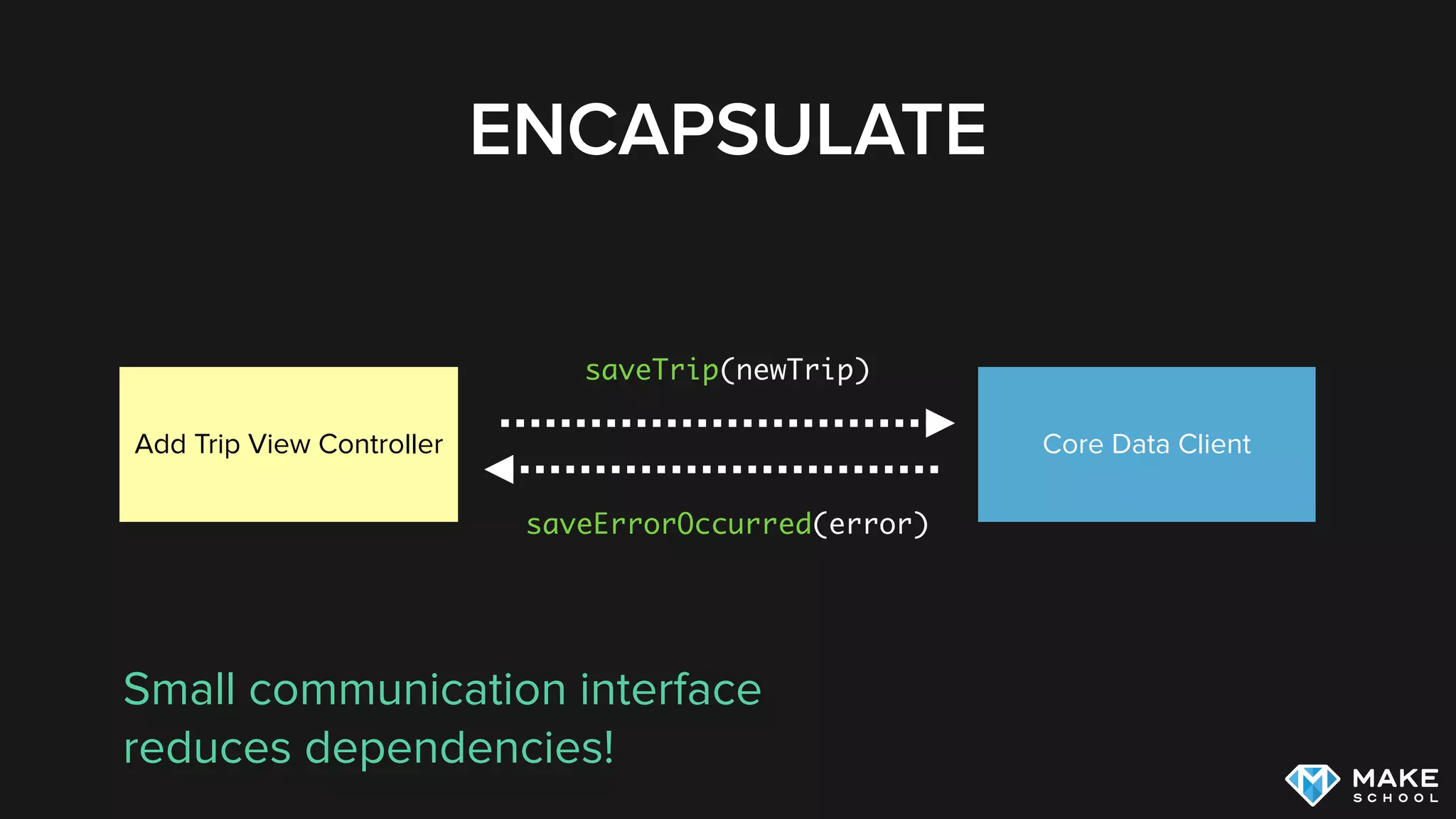
Add Trip View Controller Core Data Client
saveTrip(newTrip)
saveErrorOccurred(error)
Small communication interface 

reduces dependencies!
PRACTICAL TIPS
#1 AVOID THE MASSIVE
VIEW CONTROLLER
AVOID THE MASSIVE VIEW
CONTROLLER
Rule of thumb: A View Controller with > 300 lines is
probably doing more than it should do
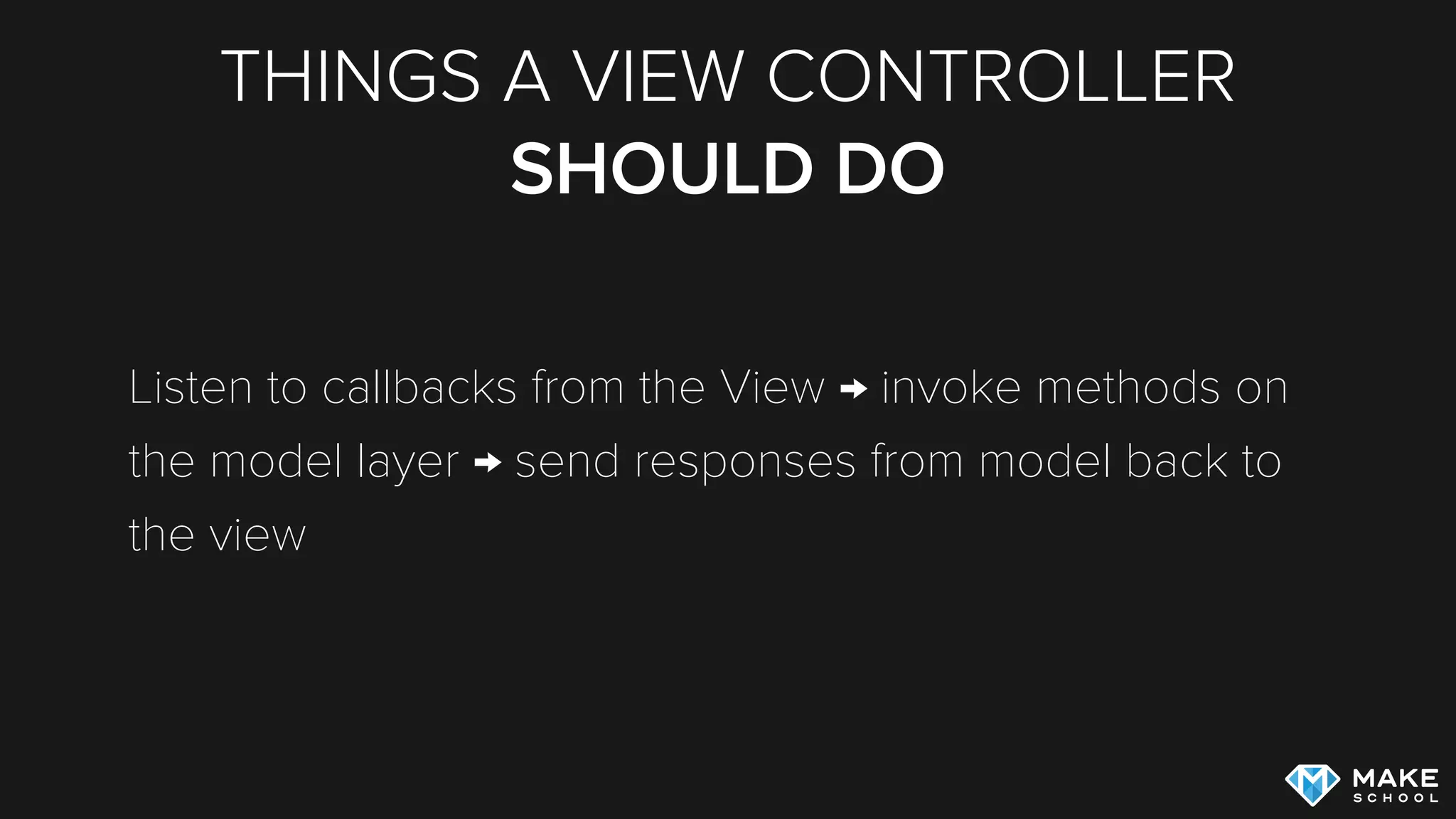
THINGS A VIEW CONTROLLER
SHOULD DO
Listen to callbacks from the View → invoke methods on
the model layer → send responses from model back to
the view
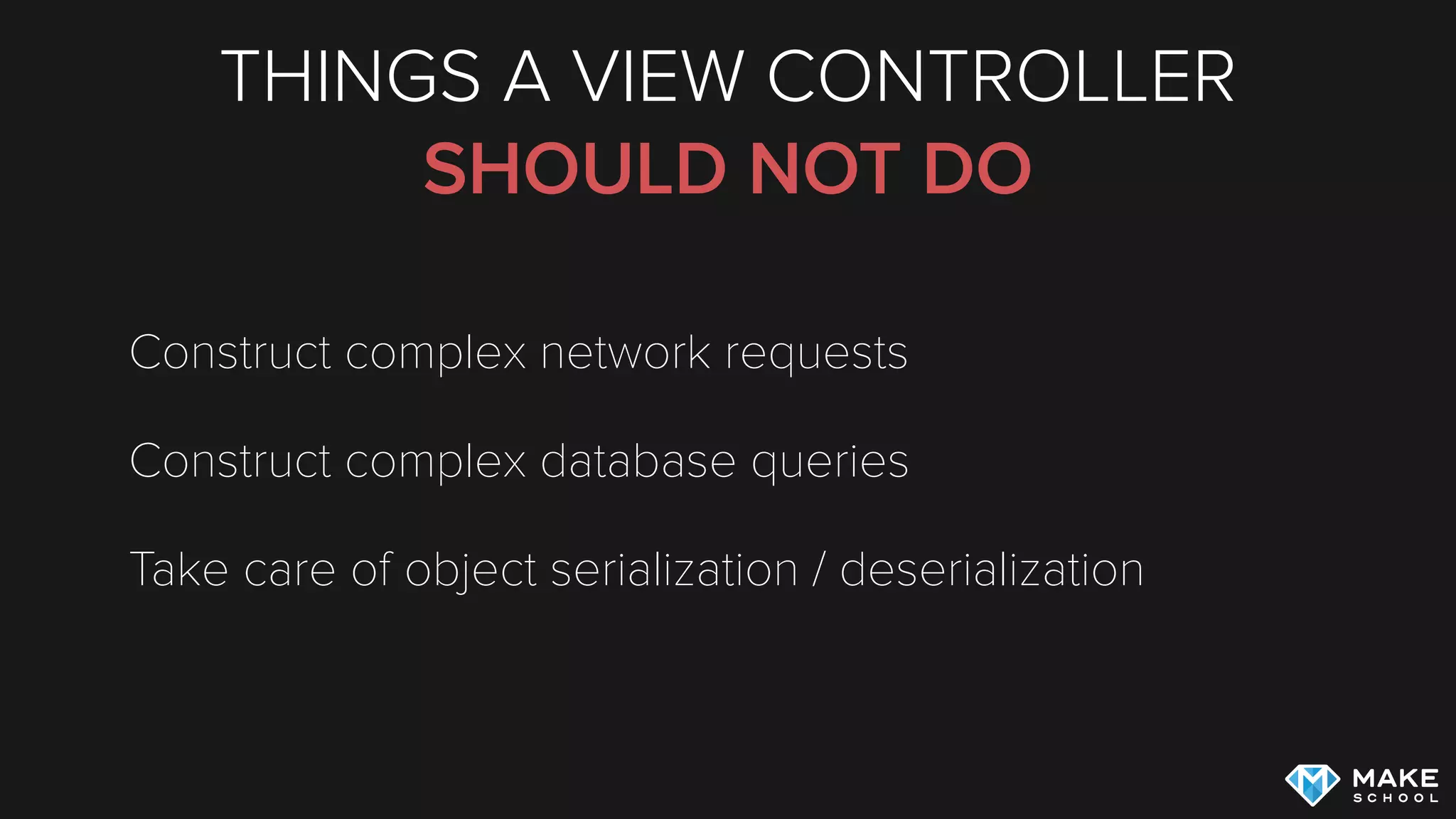
THINGS A VIEW CONTROLLER
SHOULD NOT DO
Construct complex network requests
Construct complex database queries
Take care of object serialization / deserialization
#2 DEFINE EXPRESSIVE APIS
DEFINE EXPRESSIVE APIS
E.g. instead of exposing details of the network layer,
provide functions with a simple interface:

func fetchAllUsers(callback: [User] -> ())


fetchAllUsers { users in
print(users)
}
#3 USE VIEW OBJECTS
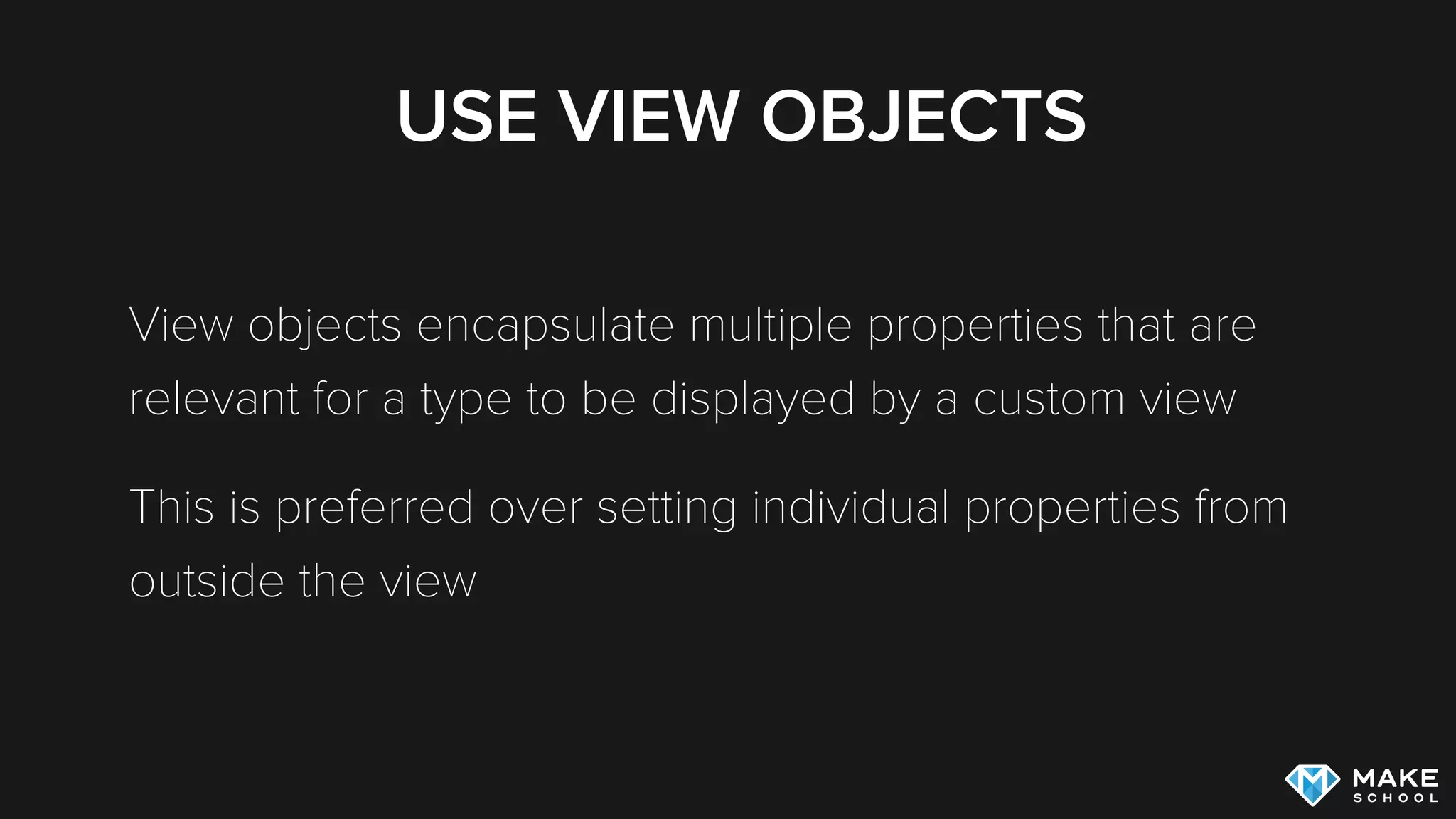
USE VIEW OBJECTS
View objects encapsulate multiple properties that are
relevant for a type to be displayed by a custom view
This is preferred over setting individual properties from
outside the view
USE VIEW OBJECTS
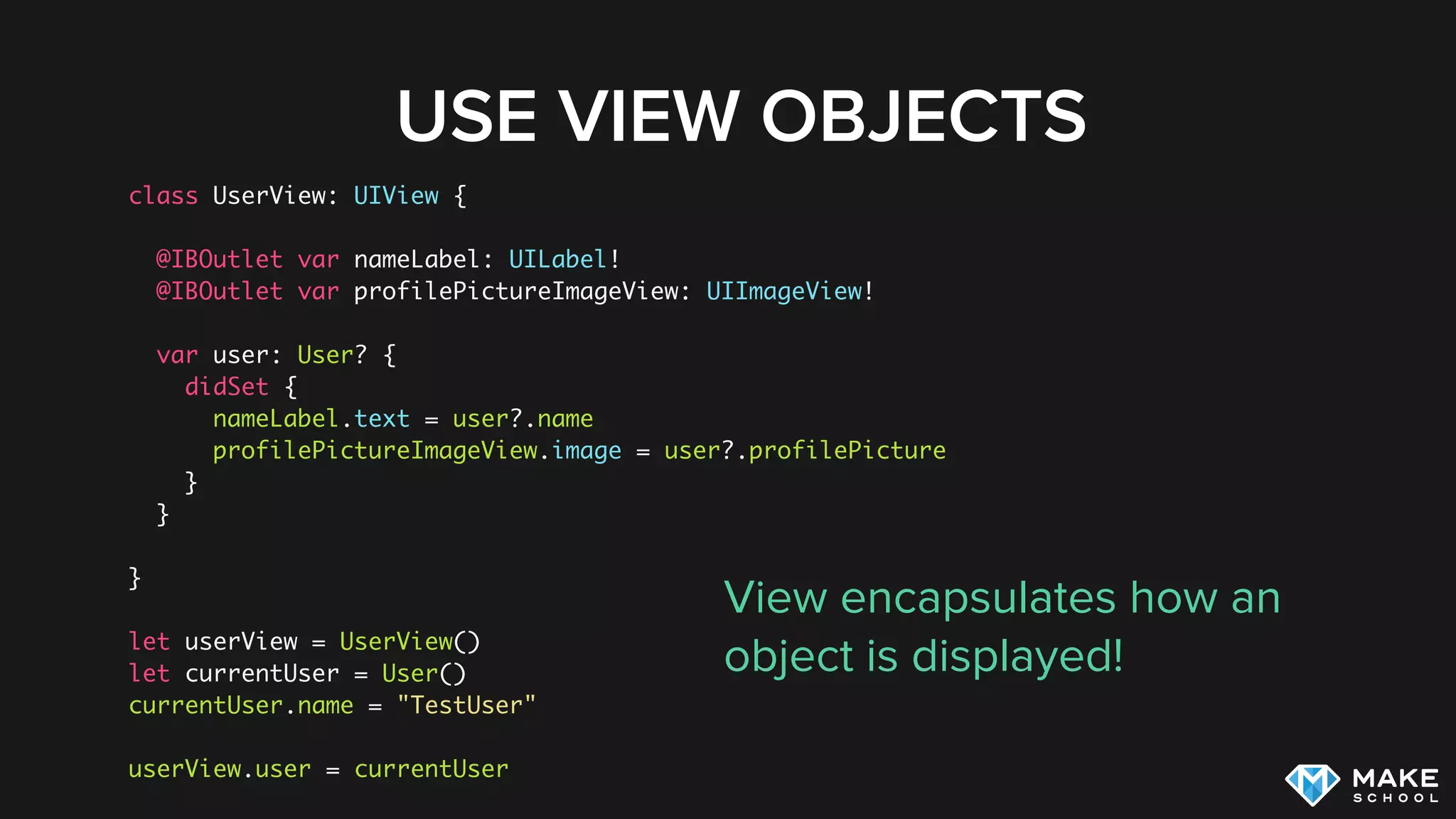
class UserView: UIView {
@IBOutlet var nameLabel: UILabel!
@IBOutlet var profilePictureImageView: UIImageView!
var user: User? {
didSet {
nameLabel.text = user?.name
profilePictureImageView.image = user?.profilePicture
}
}
}
let userView = UserView()
let currentUser = User()
currentUser.name = "TestUser"
userView.user = currentUser
View encapsulates how an 

object is displayed!
USE VIEW OBJECTS
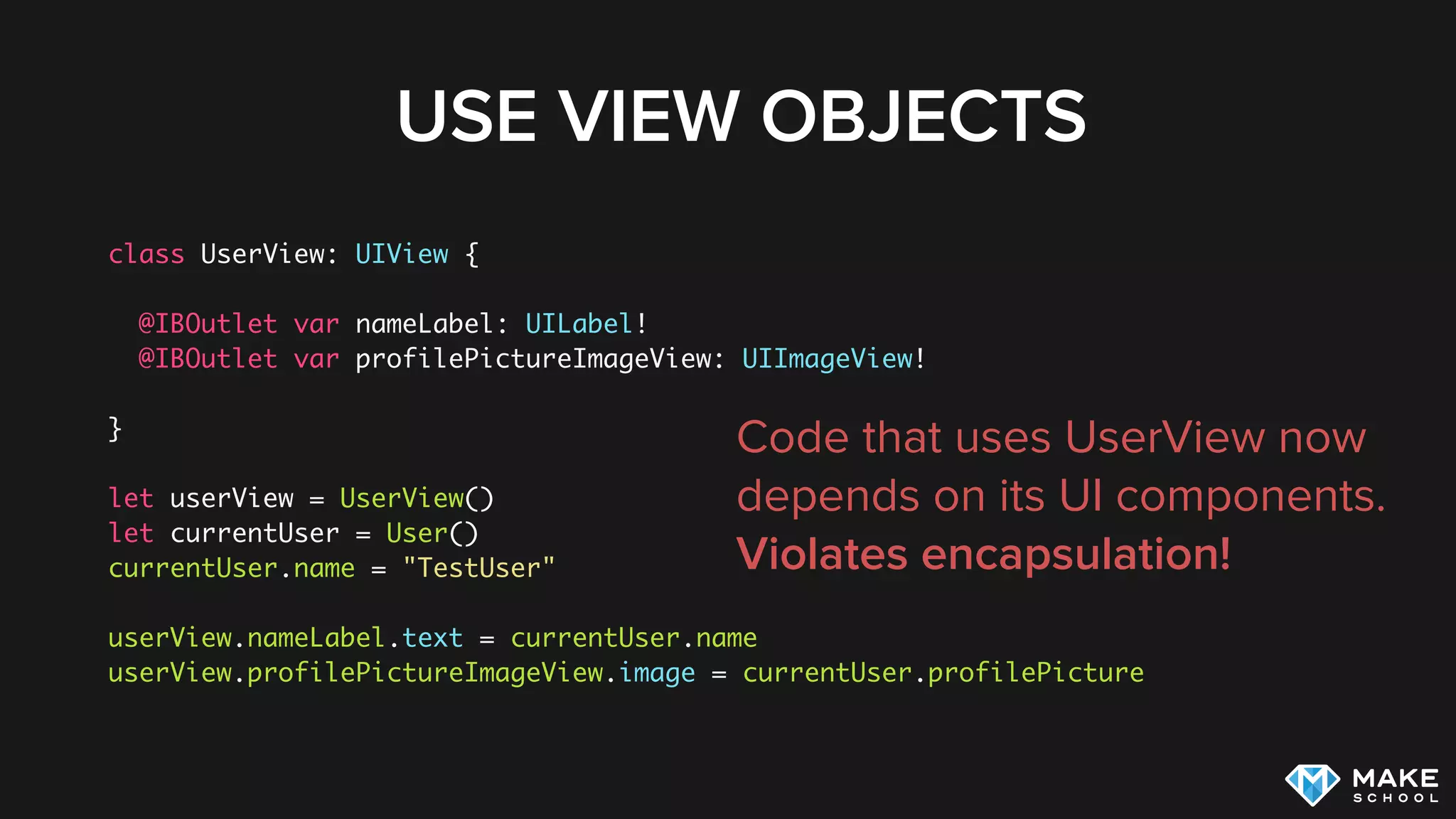
class UserView: UIView {
@IBOutlet var nameLabel: UILabel!
@IBOutlet var profilePictureImageView: UIImageView!
}
let userView = UserView()
let currentUser = User()
currentUser.name = "TestUser"
userView.nameLabel.text = currentUser.name
userView.profilePictureImageView.image = currentUser.profilePicture
Code that uses UserView now

depends on its UI components.

Violates encapsulation!
#4 BE WARY OF INHERITANCE
BE WARY OF INHERITANCE
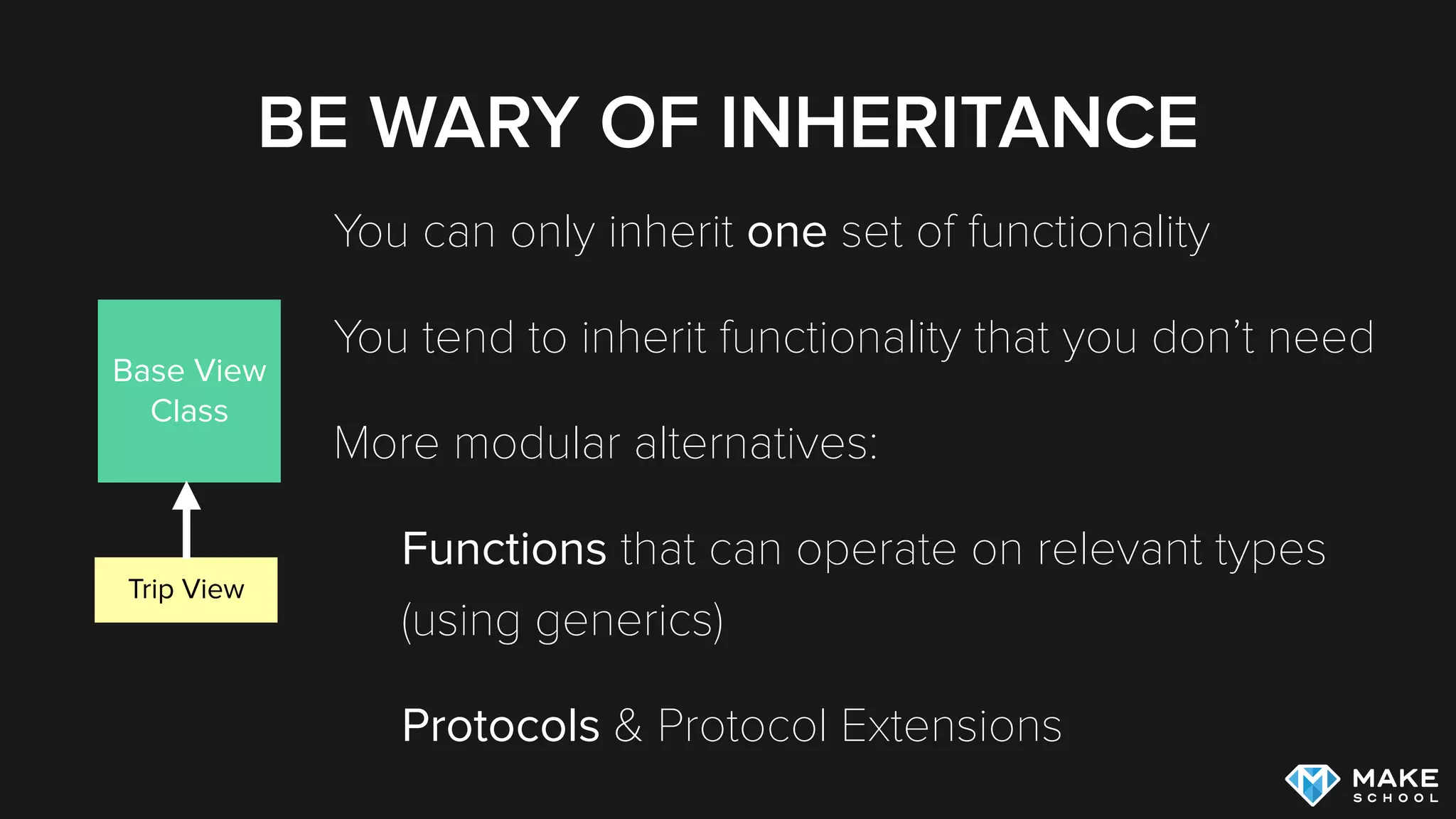
Base View
Class
Trip View
You can only inherit one set of functionality
You tend to inherit functionality that you don’t need
More modular alternatives:
Functions that can operate on relevant types 

(using generics)
Protocols & Protocol Extensions
BE WARY OF INHERITANCE
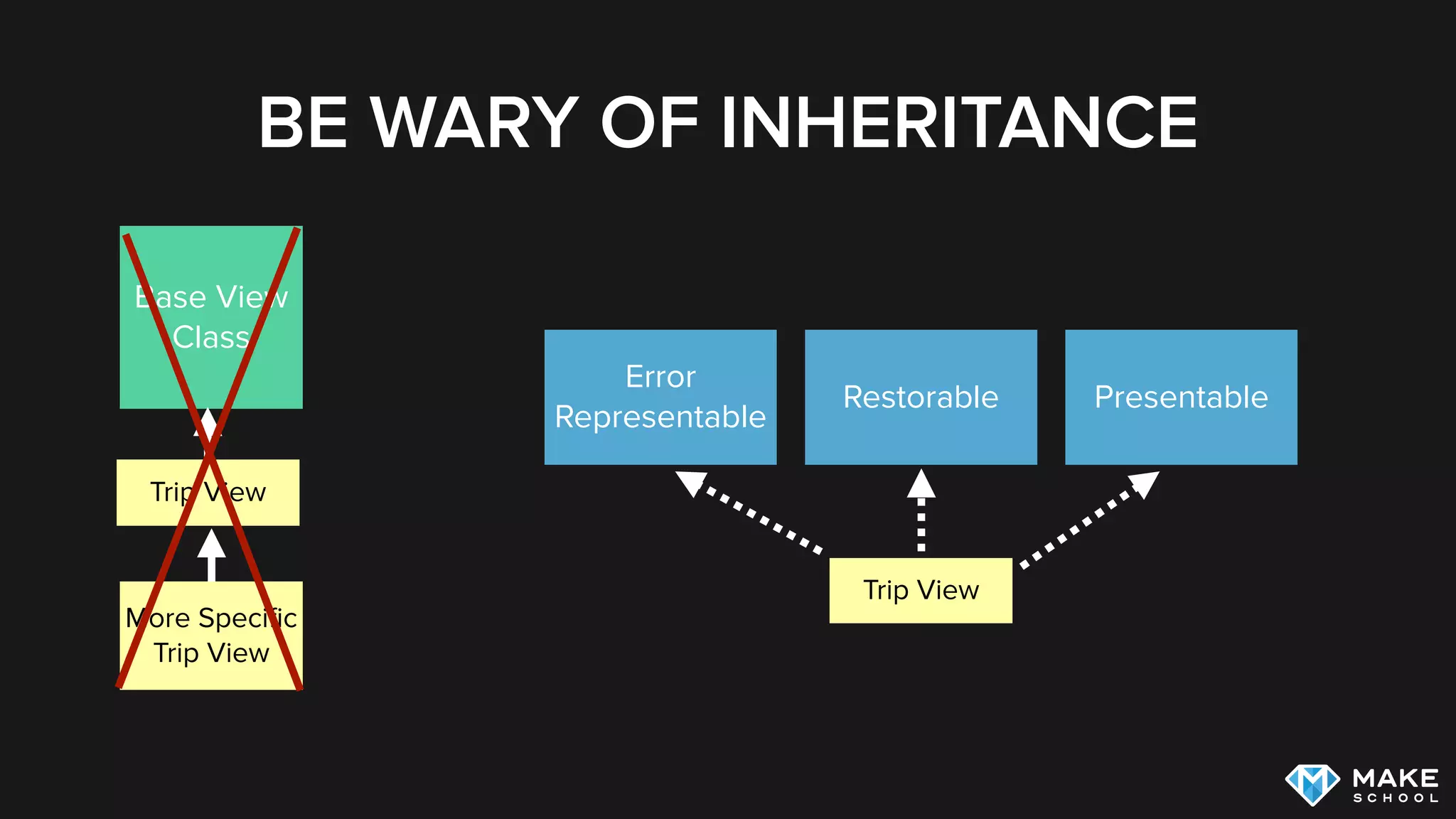
Base View
Class
Trip View
More Specific
Trip View
Trip View
Error

Representable
Restorable Presentable
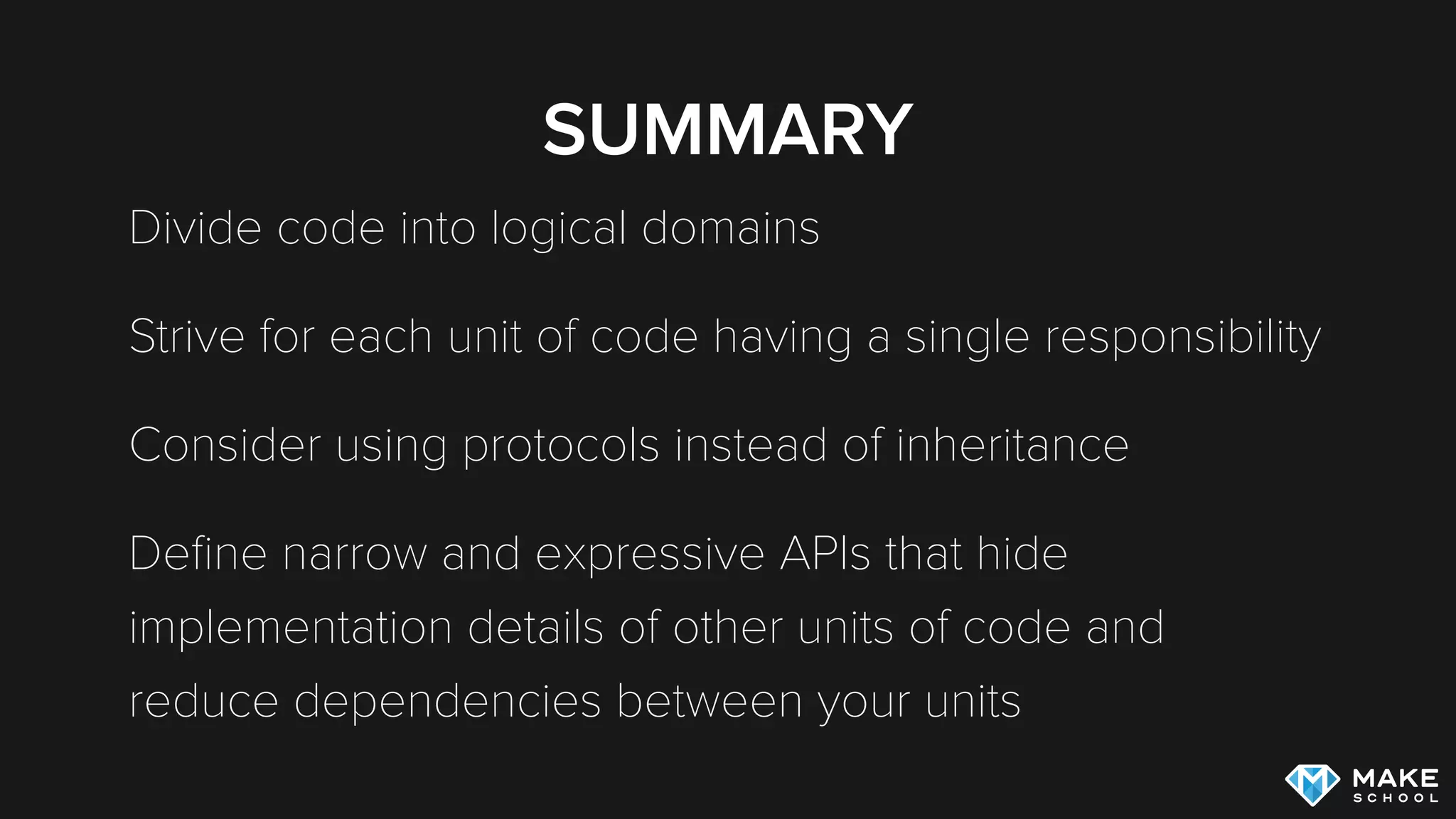
SUMMARY
SUMMARY
Divide code into logical domains
Strive for each unit of code having a single responsibility
Consider using protocols instead of inheritance
Define narrow and expressive APIs that hide
implementation details of other units of code and
reduce dependencies between your units
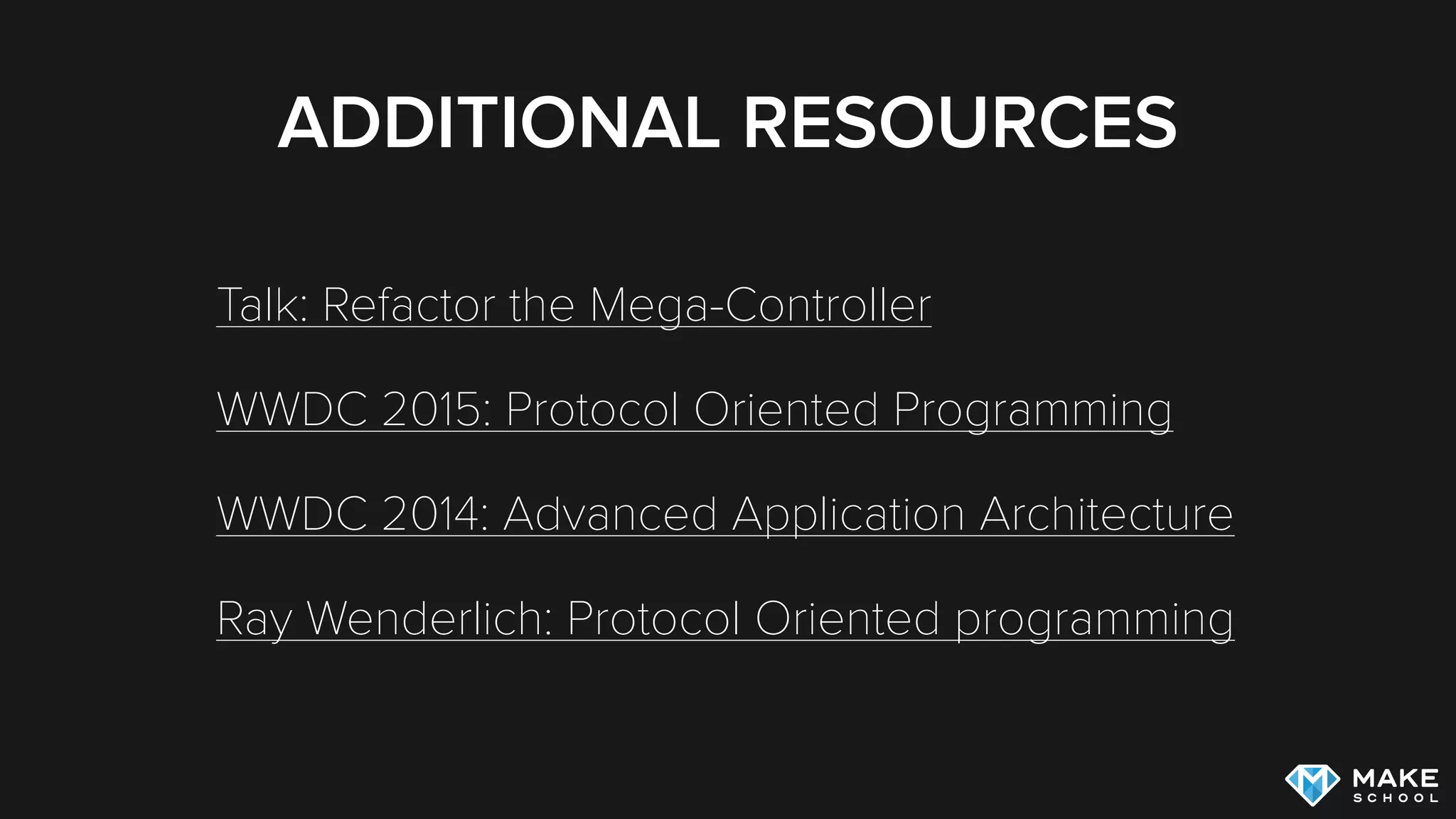
ADDITIONAL RESOURCES
Talk: Refactor the Mega-Controller
WWDC 2015: Protocol Oriented Programming
WWDC 2014: Advanced Application Architecture
Ray Wenderlich: Protocol Oriented programming

Intro to iOS Application Architecture

  • 2.
  • 3.
    AGENDA Goals of softwarearchitecture Design guidelines Practical tips
  • 4.
  • 5.
    GOALS OF SOFTWARE ARCHITECTURE Codeis comprehensible for other developers Code can adopt to changing requirements Code can be shared within the project and throughout multiple projects
  • 6.
    THINK IN DOMAINSNOT IN OBJECTS
  • 7.
  • 8.
  • 9.
  • 10.
    SINGLE RESPONSIBILITY PRINCIPLE Avoidhaving many responsibilities within a single class Very important when implementing UIViewController subclasses Bad View Controller handles: Persistence, Business Logic, View Logic, etc.
  • 11.
  • 12.
    ENCAPSULATE Every component shouldknow as little as possible about its surrounding components 
 → reduces dependencies between components How can this be accomplished?
 → small interfaces for communication
  • 13.
    ENCAPSULATE Add Trip ViewController Core Data Client startSavingNewTrip(newTrip) displayError(nameError) setNameOfTrip(“SF Trip”) disableSaveButton() Classes are poorly encapsulated and very dependent on 
 each other - very hard to change code in any of the two classes
  • 14.
    ENCAPSULATE Add Trip ViewController Core Data Client saveTrip(newTrip) saveErrorOccurred(error) Small communication interface 
 reduces dependencies!
  • 15.
  • 16.
    #1 AVOID THEMASSIVE VIEW CONTROLLER
  • 17.
    AVOID THE MASSIVEVIEW CONTROLLER Rule of thumb: A View Controller with > 300 lines is probably doing more than it should do
  • 18.
    THINGS A VIEWCONTROLLER SHOULD DO Listen to callbacks from the View → invoke methods on the model layer → send responses from model back to the view
  • 19.
    THINGS A VIEWCONTROLLER SHOULD NOT DO Construct complex network requests Construct complex database queries Take care of object serialization / deserialization
  • 20.
  • 21.
    DEFINE EXPRESSIVE APIS E.g.instead of exposing details of the network layer, provide functions with a simple interface:
 func fetchAllUsers(callback: [User] -> ())
 
 fetchAllUsers { users in print(users) }
  • 22.
    #3 USE VIEWOBJECTS
  • 23.
    USE VIEW OBJECTS Viewobjects encapsulate multiple properties that are relevant for a type to be displayed by a custom view This is preferred over setting individual properties from outside the view
  • 24.
    USE VIEW OBJECTS classUserView: UIView { @IBOutlet var nameLabel: UILabel! @IBOutlet var profilePictureImageView: UIImageView! var user: User? { didSet { nameLabel.text = user?.name profilePictureImageView.image = user?.profilePicture } } } let userView = UserView() let currentUser = User() currentUser.name = "TestUser" userView.user = currentUser View encapsulates how an 
 object is displayed!
  • 25.
    USE VIEW OBJECTS classUserView: UIView { @IBOutlet var nameLabel: UILabel! @IBOutlet var profilePictureImageView: UIImageView! } let userView = UserView() let currentUser = User() currentUser.name = "TestUser" userView.nameLabel.text = currentUser.name userView.profilePictureImageView.image = currentUser.profilePicture Code that uses UserView now
 depends on its UI components.
 Violates encapsulation!
  • 26.
    #4 BE WARYOF INHERITANCE
  • 27.
    BE WARY OFINHERITANCE Base View Class Trip View You can only inherit one set of functionality You tend to inherit functionality that you don’t need More modular alternatives: Functions that can operate on relevant types 
 (using generics) Protocols & Protocol Extensions
  • 28.
    BE WARY OFINHERITANCE Base View Class Trip View More Specific Trip View Trip View Error
 Representable Restorable Presentable
  • 29.
  • 30.
    SUMMARY Divide code intological domains Strive for each unit of code having a single responsibility Consider using protocols instead of inheritance Define narrow and expressive APIs that hide implementation details of other units of code and reduce dependencies between your units
  • 31.
  • 32.
    ADDITIONAL RESOURCES Talk: Refactorthe Mega-Controller WWDC 2015: Protocol Oriented Programming WWDC 2014: Advanced Application Architecture Ray Wenderlich: Protocol Oriented programming