FUTURE OF WORK
WITH AI AND MACHINE
LEARNING
by Faisal Hoque 
Founder, Shadoka 
Still in the early stages of development and use,
artificial intelligence, machine learning, and deep
learning are already impacting how we live, work,
and play. Is your organization ready to embrace
and leverage these disruptive innovations?
[Image: Georgia Tech]
Copyright © 2018 by Faisal Hoque. All rights reserved.
Sooner or later almost every organization needs to
transform or diversify from their original market intent. 
Disruption & Transformation
is nothing new.
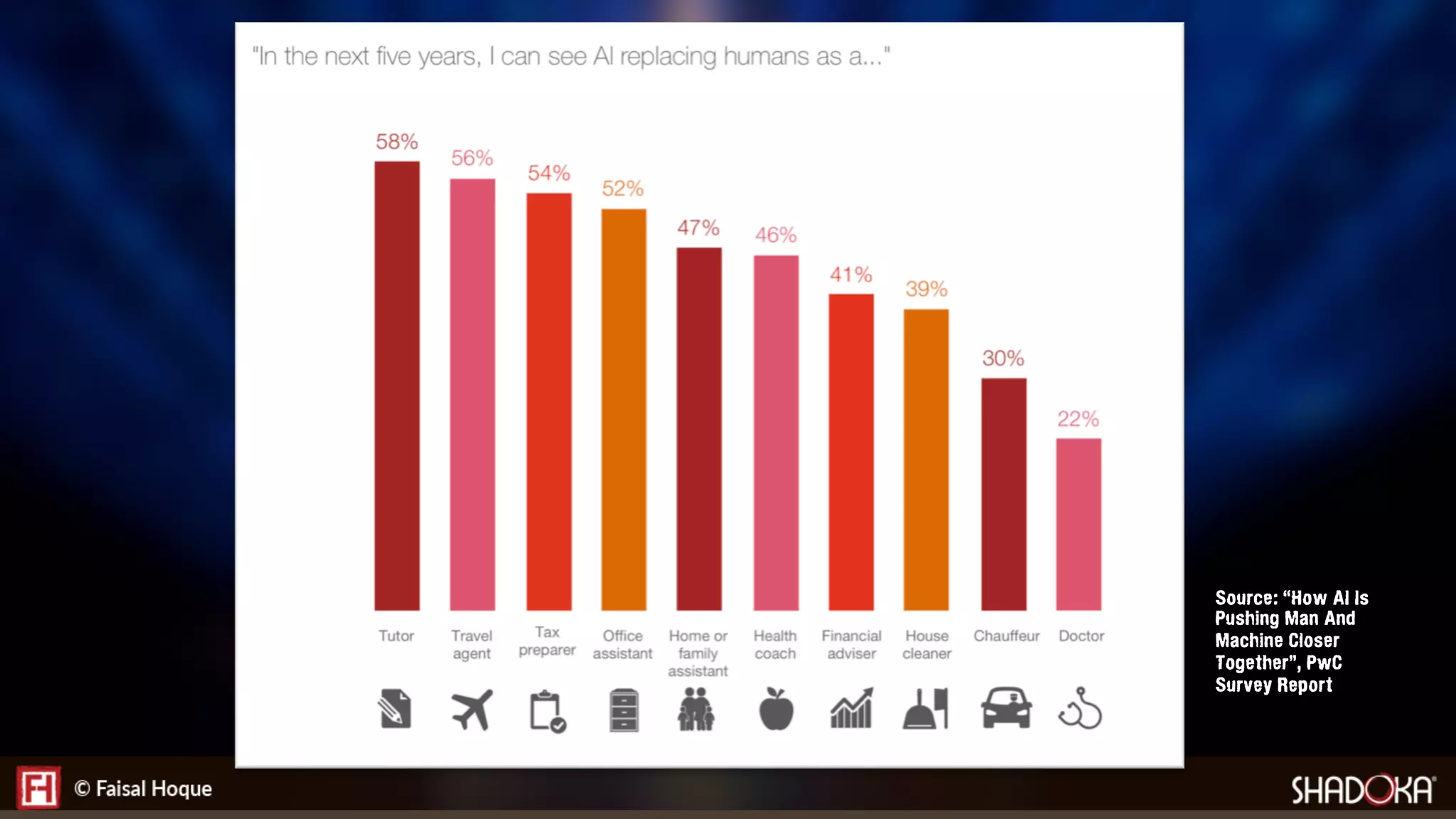
Source: “How AI Is
Pushing Man And
Machine Closer
Together”, PwC
Survey Report
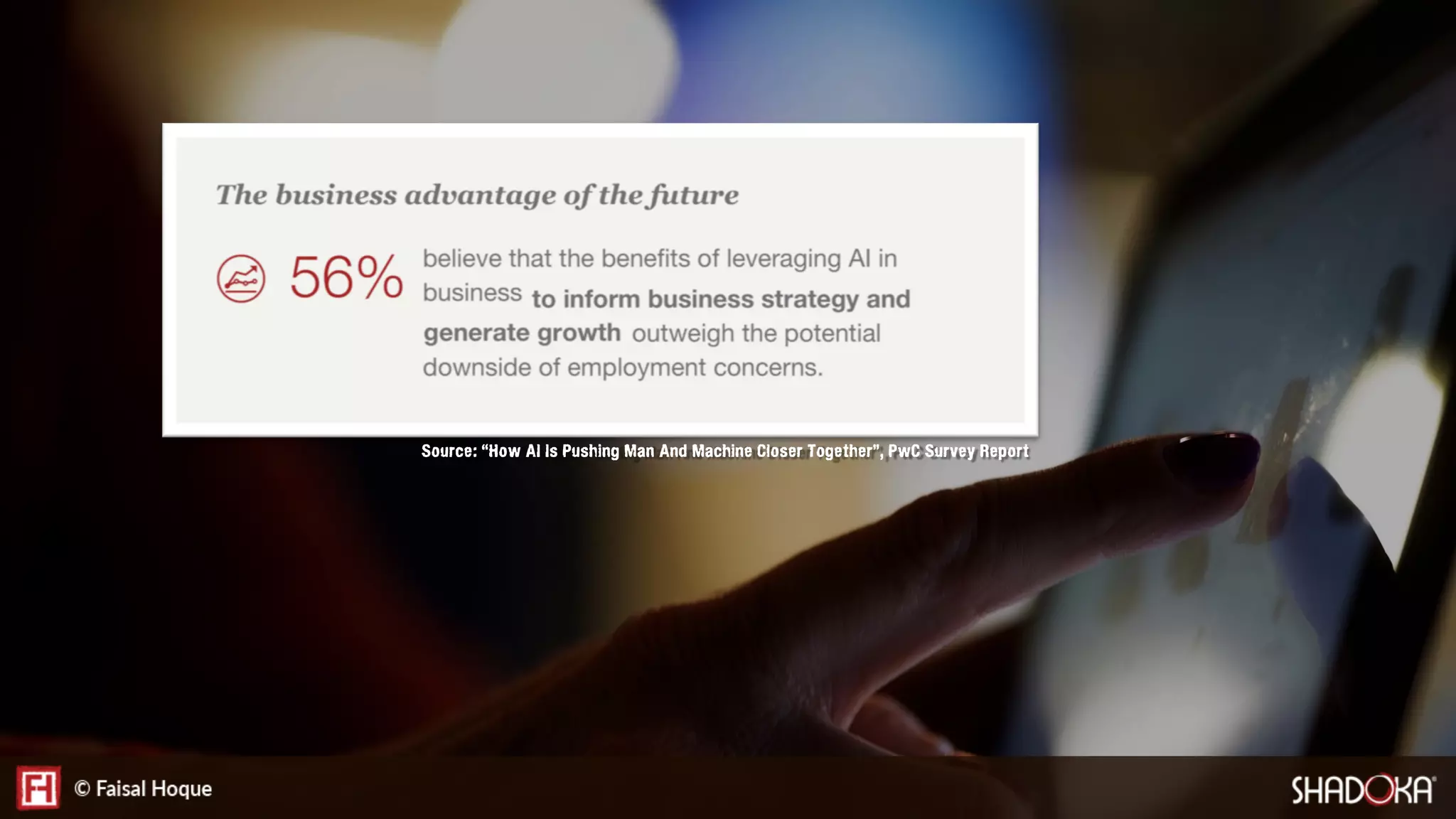
Source: “How AI Is Pushing Man And Machine Closer Together”, PwC Survey Report
$62 billion is lost through
poor customer service 
— a deficit that continues to
increase with every passing
year.
AI can help plug that leak by
going above and beyond what
humans are able to do.
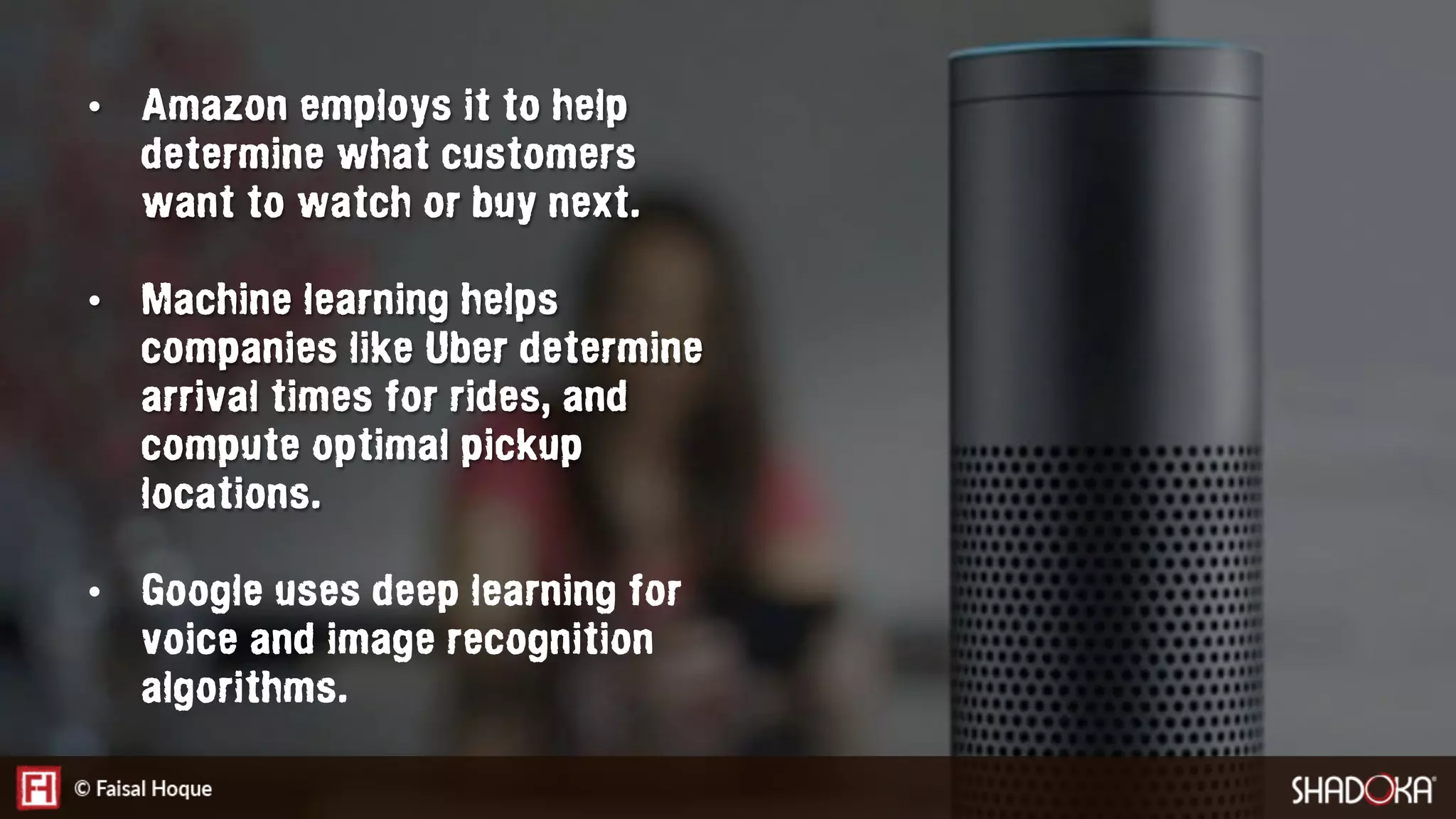
•  Amazon employs it to help
determine what customers
want to watch or buy next.
•  Machine learning helps
companies like Uber determine
arrival times for rides, and
compute optimal pickup
locations.
•  Google uses deep learning for
voice and image recognition
algorithms.
AI and machine learning
have the potential to
significantly reduce and
contain ongoing
operational costs for
public sector agencies.
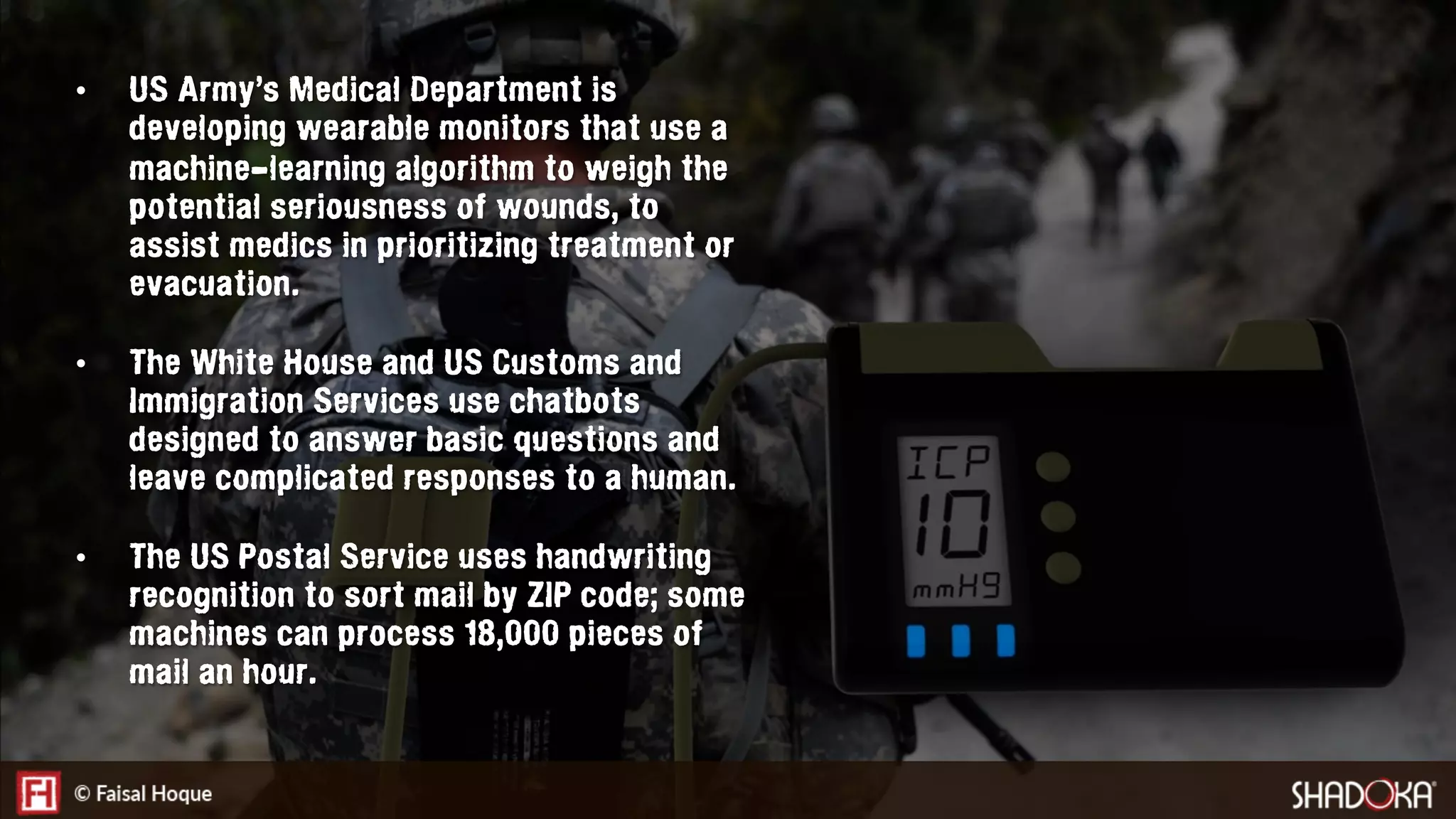
•  US Army’s Medical Department is
developing wearable monitors that use a
machine-learning algorithm to weigh the
potential seriousness of wounds, to
assist medics in prioritizing treatment or
evacuation.
•  The White House and US Customs and
Immigration Services use chatbots
designed to answer basic questions and
leave complicated responses to a human.
•  The US Postal Service uses handwriting
recognition to sort mail by ZIP code; some
machines can process 18,000 pieces of
mail an hour.
Both nebulous and
complicated by nature,
AI and the movements
that it’s fueling all
require a highly
specialized skillset.
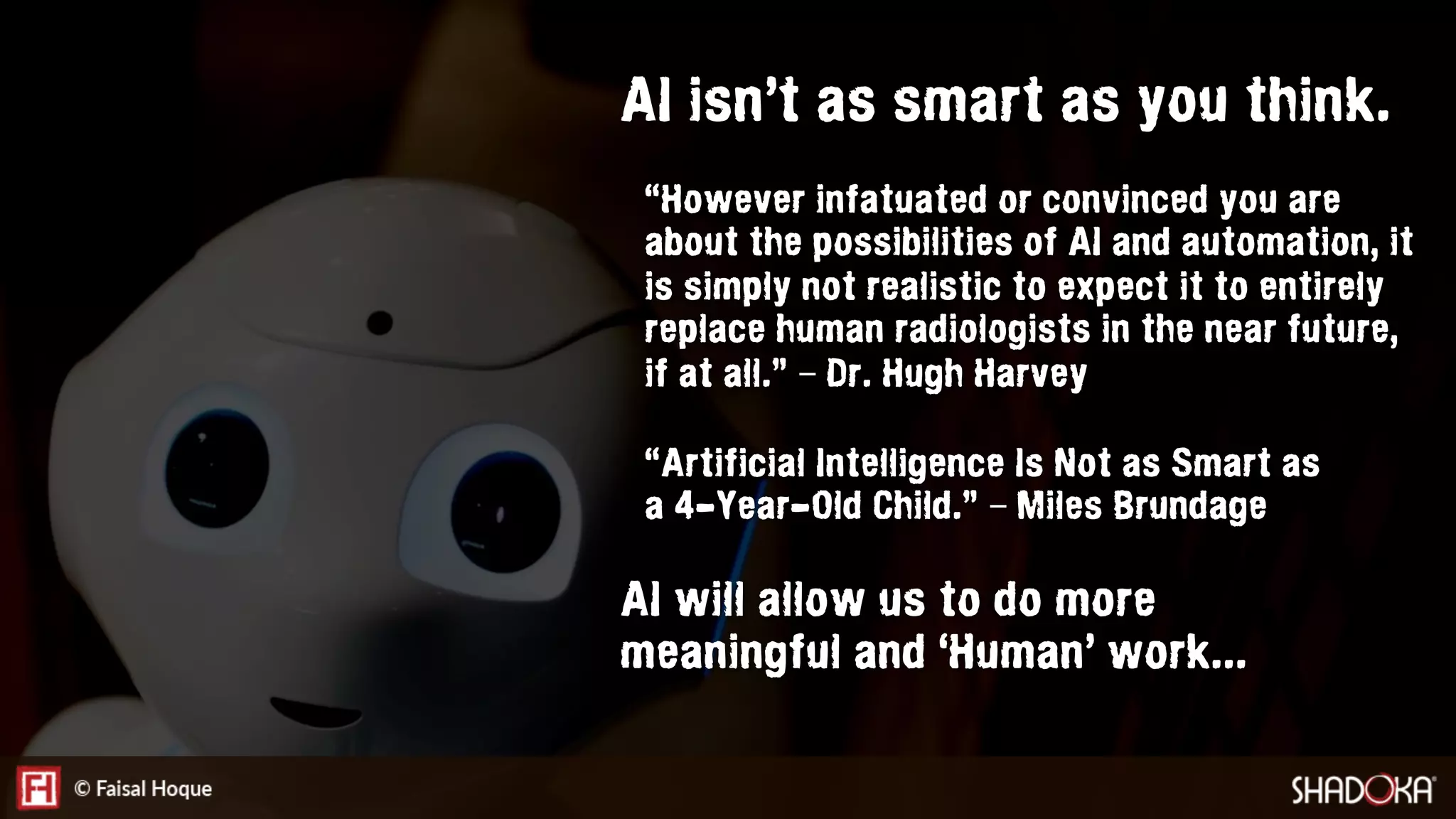
“However infatuated or convinced you are
about the possibilities of AI and automation, it
is simply not realistic to expect it to entirely
replace human radiologists in the near future,
if at all.” – Dr. Hugh Harvey
AI isn’t as smart as you think.
AI will allow us to do more
meaningful and ‘Human’ work...
“Artificial Intelligence Is Not as Smart as
a 4-Year-Old Child.” – Miles Brundage
To do more ‘Human’ work, we have to
double down on our humanity.
We must learn...
•  To be mindful, emphatic, and resilient
•  To inspire, influence, and lead
•  To champion creativity, diversity, and
cross-border collaboration
But to survive and thrive,
we must think, act, and
do digital...
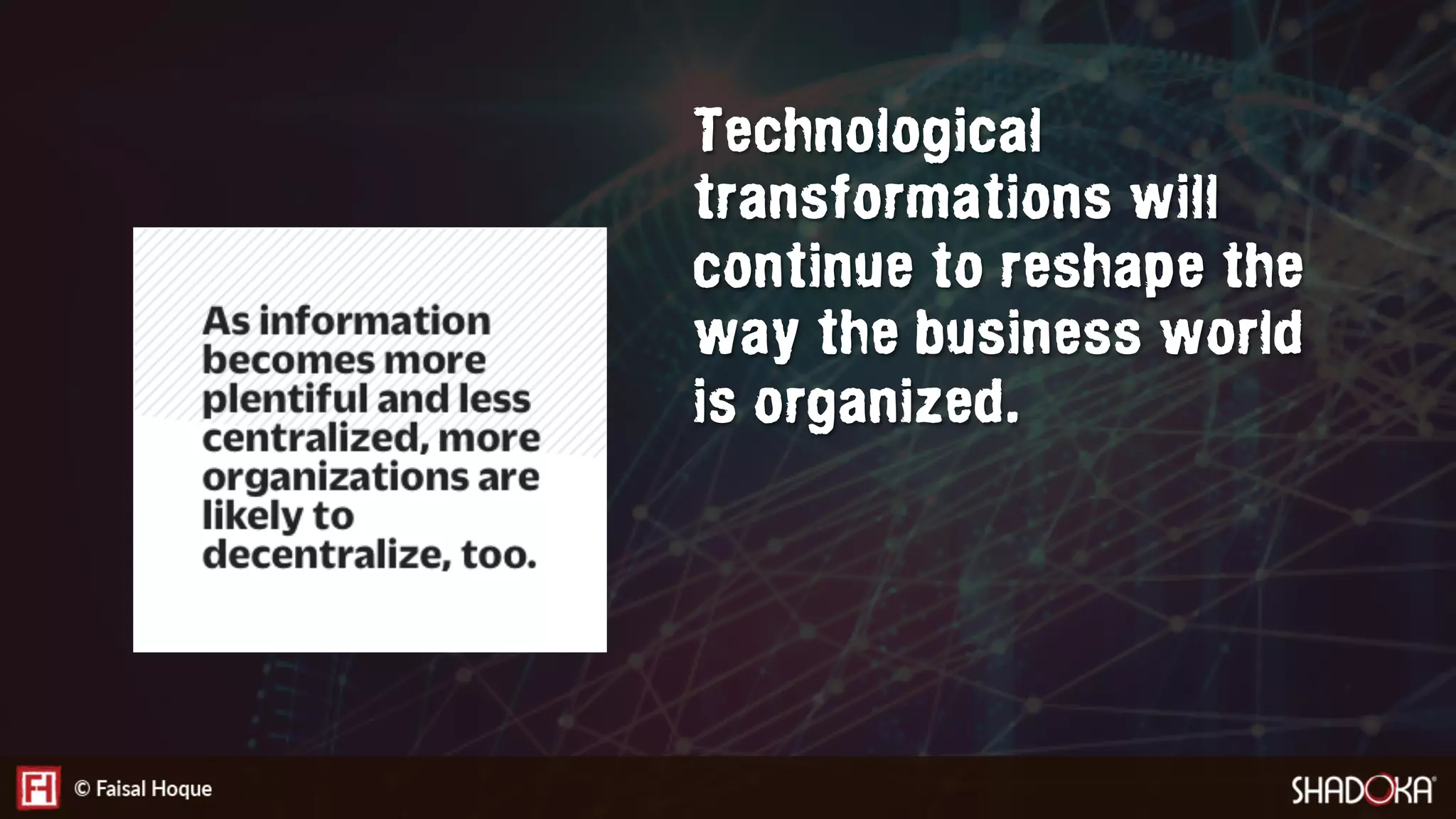
Technological
transformations will
continue to reshape the
way the business world
is organized.
Assess, Learn, Grow, Monitor

Transformational journeys require
acurate assessments, learning, growth,
and monitoring of: 

1) People and Culture;
2) Capacity and Capabilities;
3) Innovation; and
4) Technology.
Research — Do extensive cross-industry
research to understand current and changing
customer behavior.
Define — Define the problem that needs
solving.
Ideate — Consider many options from many
perspectives, disciplines, and sources. 
Execute — Develop rapid prototypes to
gather feedback from stakeholders. 
Apply Design Thinking.
Practice Flexible, Adaptive
Leadership...
Since organizational needs change at
each stage, its leaders need to keep
evolving at the right pace. That
requires introspection, self-
awareness, and a keen sense of
strategy—both in the short- and
long-terms.
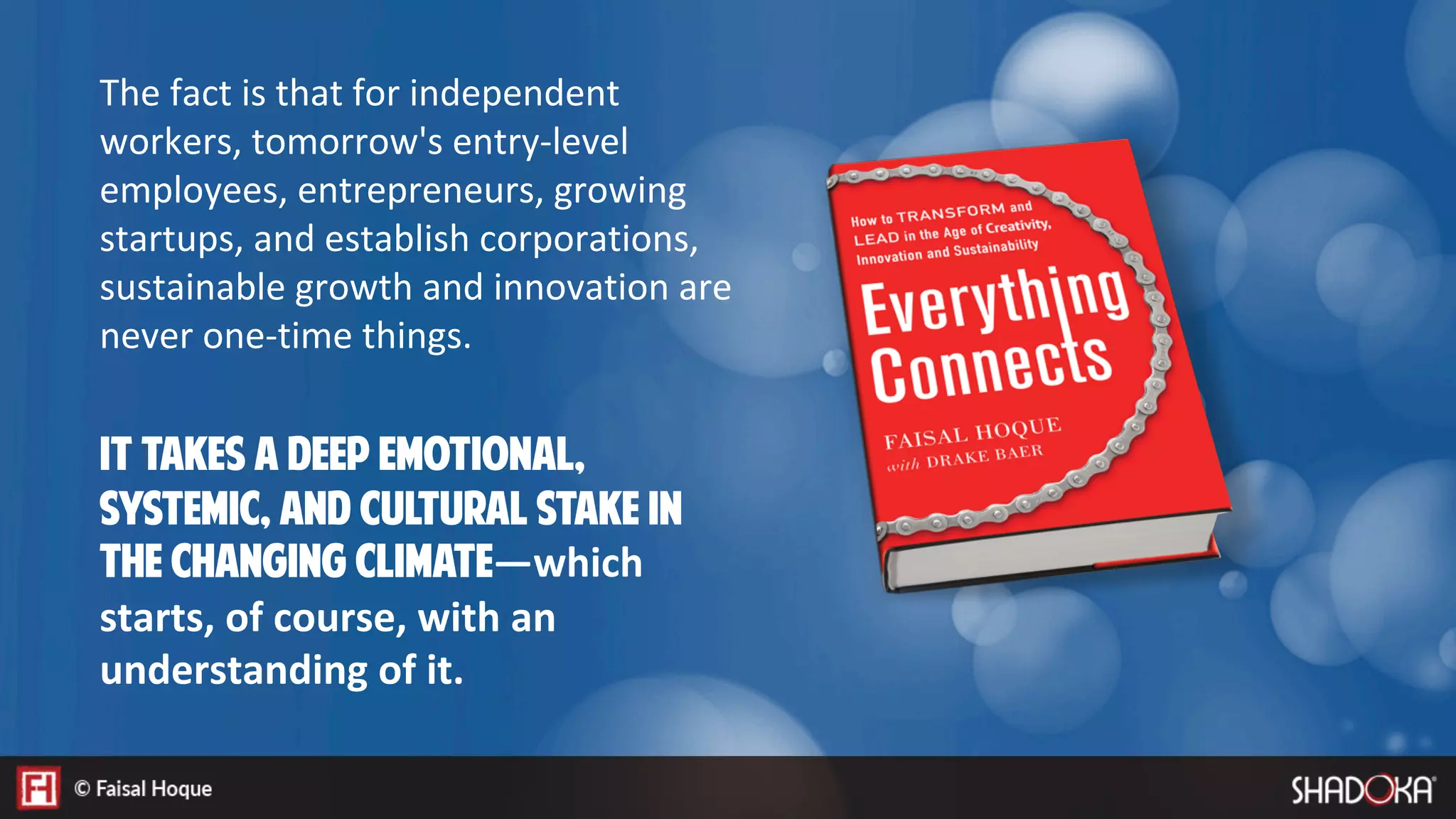
The fact is that for independent
workers, tomorrow's entry-level
employees, entrepreneurs, growing
startups, and establish corporations,
sustainable growth and innovation are
never one-time things. 


It takes a deep emotional,
systemic, and cultural stake in
the changing climate—which
starts, of course, with an
understanding of it.
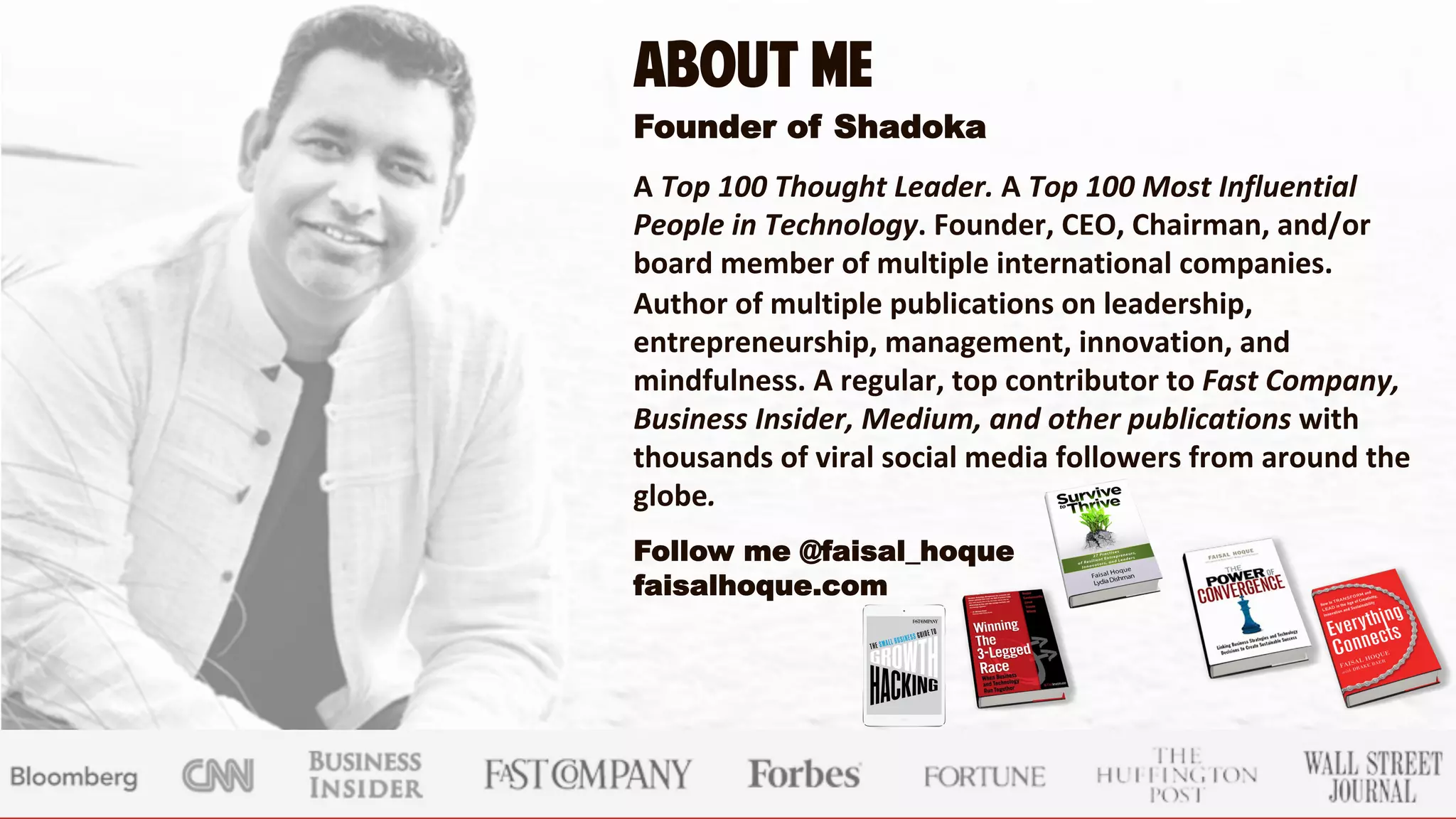
About Me
Founder of Shadoka

A Top 100 Thought Leader. A Top 100 Most Influential
People in Technology. Founder, CEO, Chairman, and/or
board member of multiple international companies.
Author of multiple publications on leadership,
entrepreneurship, management, innovation, and
mindfulness. A regular, top contributor to Fast Company,
Business Insider, Medium, and other publications with
thousands of viral social media followers from around the
globe.

Follow me @faisal_hoque
faisalhoque.com
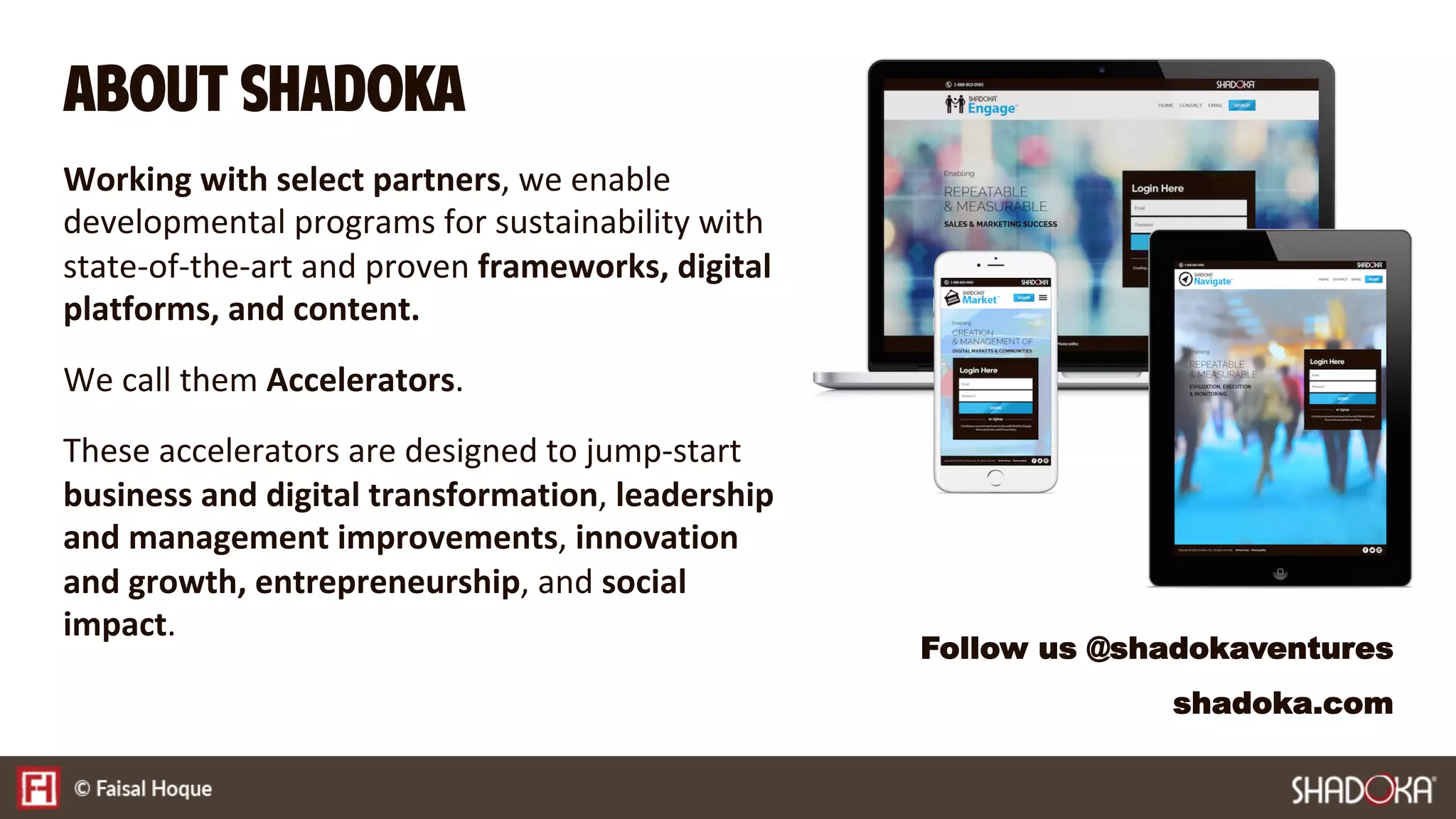
Working with select partners, we enable
developmental programs for sustainability with
state-of-the-art and proven frameworks, digital
platforms, and content.

We call them Accelerators.

These accelerators are designed to jump-start
business and digital transformation, leadership
and management improvements, innovation
and growth, entrepreneurship, and social
impact. 
About SHADOKA
Follow us @shadokaventures
shadoka.com

Future of Work with AI and Machine Learning

  • 1.
    FUTURE OF WORK WITHAI AND MACHINE LEARNING by Faisal Hoque Founder, Shadoka Still in the early stages of development and use, artificial intelligence, machine learning, and deep learning are already impacting how we live, work, and play. Is your organization ready to embrace and leverage these disruptive innovations? [Image: Georgia Tech] Copyright © 2018 by Faisal Hoque. All rights reserved.
  • 2.
    Sooner or lateralmost every organization needs to transform or diversify from their original market intent. Disruption & Transformation is nothing new.
  • 3.
    Source: “How AIIs Pushing Man And Machine Closer Together”, PwC Survey Report
  • 4.
    Source: “How AIIs Pushing Man And Machine Closer Together”, PwC Survey Report
  • 5.
    $62 billion islost through poor customer service  — a deficit that continues to increase with every passing year. AI can help plug that leak by going above and beyond what humans are able to do.
  • 6.
    •  Amazon employsit to help determine what customers want to watch or buy next. •  Machine learning helps companies like Uber determine arrival times for rides, and compute optimal pickup locations. •  Google uses deep learning for voice and image recognition algorithms.
  • 7.
    AI and machinelearning have the potential to significantly reduce and contain ongoing operational costs for public sector agencies.
  • 8.
    •  US Army’sMedical Department is developing wearable monitors that use a machine-learning algorithm to weigh the potential seriousness of wounds, to assist medics in prioritizing treatment or evacuation. •  The White House and US Customs and Immigration Services use chatbots designed to answer basic questions and leave complicated responses to a human. •  The US Postal Service uses handwriting recognition to sort mail by ZIP code; some machines can process 18,000 pieces of mail an hour.
  • 9.
    Both nebulous and complicatedby nature, AI and the movements that it’s fueling all require a highly specialized skillset.
  • 10.
    “However infatuated orconvinced you are about the possibilities of AI and automation, it is simply not realistic to expect it to entirely replace human radiologists in the near future, if at all.” – Dr. Hugh Harvey AI isn’t as smart as you think. AI will allow us to do more meaningful and ‘Human’ work... “Artificial Intelligence Is Not as Smart as a 4-Year-Old Child.” – Miles Brundage
  • 11.
    To do more‘Human’ work, we have to double down on our humanity. We must learn... •  To be mindful, emphatic, and resilient •  To inspire, influence, and lead •  To champion creativity, diversity, and cross-border collaboration
  • 12.
    But to surviveand thrive, we must think, act, and do digital...
  • 13.
    Technological transformations will continue toreshape the way the business world is organized.
  • 15.
    Assess, Learn, Grow,Monitor Transformational journeys require acurate assessments, learning, growth, and monitoring of: 1) People and Culture; 2) Capacity and Capabilities; 3) Innovation; and 4) Technology.
  • 16.
    Research — Do extensive cross-industry researchto understand current and changing customer behavior. Define — Define the problem that needs solving. Ideate — Consider many options from many perspectives, disciplines, and sources. Execute — Develop rapid prototypes to gather feedback from stakeholders. Apply Design Thinking.
  • 17.
    Practice Flexible, Adaptive Leadership... Sinceorganizational needs change at each stage, its leaders need to keep evolving at the right pace. That requires introspection, self- awareness, and a keen sense of strategy—both in the short- and long-terms.
  • 21.
    The fact isthat for independent workers, tomorrow's entry-level employees, entrepreneurs, growing startups, and establish corporations, sustainable growth and innovation are never one-time things. It takes a deep emotional, systemic, and cultural stake in the changing climate—which starts, of course, with an understanding of it.
  • 22.
    About Me Founder ofShadoka A Top 100 Thought Leader. A Top 100 Most Influential People in Technology. Founder, CEO, Chairman, and/or board member of multiple international companies. Author of multiple publications on leadership, entrepreneurship, management, innovation, and mindfulness. A regular, top contributor to Fast Company, Business Insider, Medium, and other publications with thousands of viral social media followers from around the globe. Follow me @faisal_hoque faisalhoque.com
  • 23.
    Working with selectpartners, we enable developmental programs for sustainability with state-of-the-art and proven frameworks, digital platforms, and content. We call them Accelerators. These accelerators are designed to jump-start business and digital transformation, leadership and management improvements, innovation and growth, entrepreneurship, and social impact. About SHADOKA Follow us @shadokaventures shadoka.com