Functions Of
Communication


Chapter 5
Communication is viewed as the
      process through which
 organizations emerge and evolve
     and the basis upon which
individuals, relationships, groups,
  and organizations relate to their
 surroundings and to one another
               Chapter 5
Communication also serves
  in decision making and
 control of the system as a
 whole in its efforts in its
   efforts to adapt to its
       environment
            Chapter 5
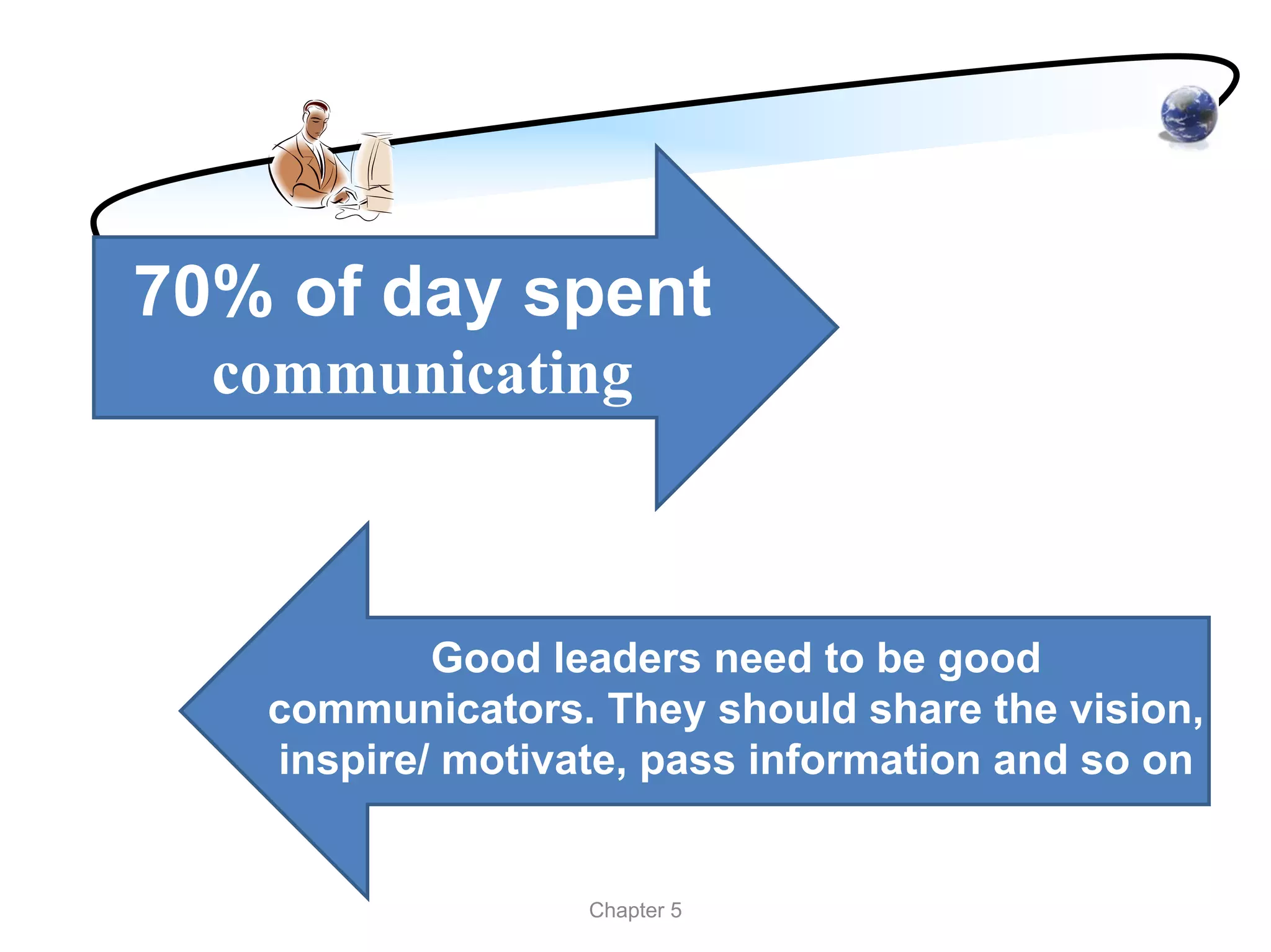
70% of day spent
  communicating


           Good leaders need to be good
   communicators. They should share the vision,
   inspire/ motivate, pass information and so on


                  Chapter 5
Persons who are in leadership
   positions and have to hold a
       team together, often
 communicates to the members
of their team with the objective of
  motivating them to make their
            best efforts.


            Chapter 5
The main functions of communication are
 information and persuasion . Other functions are
        aspects of these broad functions.
   Information consists of facts, figures & data
  arranged as per the diff. purposes. It doesn’t
include emotion. E.g. stock market report, a user
             manual, a news report

    Persuasion needs a basis of information;
     achieved by skilful appeal to emotion.
                      Chapter 5
Modern management believes in keeping
   employees well informed about the company’s
 aims, plans, progress and prospects, working and
     service conditions, training and promotion
opportunities, benefits available to them, handouts,
 announcements, through organized channels like
  the notice board, manual and instruction sheet,
       bulletins, pamphlets, mass media etc
                       Chapter 5
A large amount of information is
    available and moves about in an
organization and in the world. We need
 to develop the ability to take what we
     need and what we can handle.


                 Chapter 5
The conduct of business is based on the given
   information containing data. Information
reduces the uncertainty about the situation or
the environment in which we find ourselves, it
 moves in all directions in the organization; it
       may be given orally or in writing


                     Chapter 5
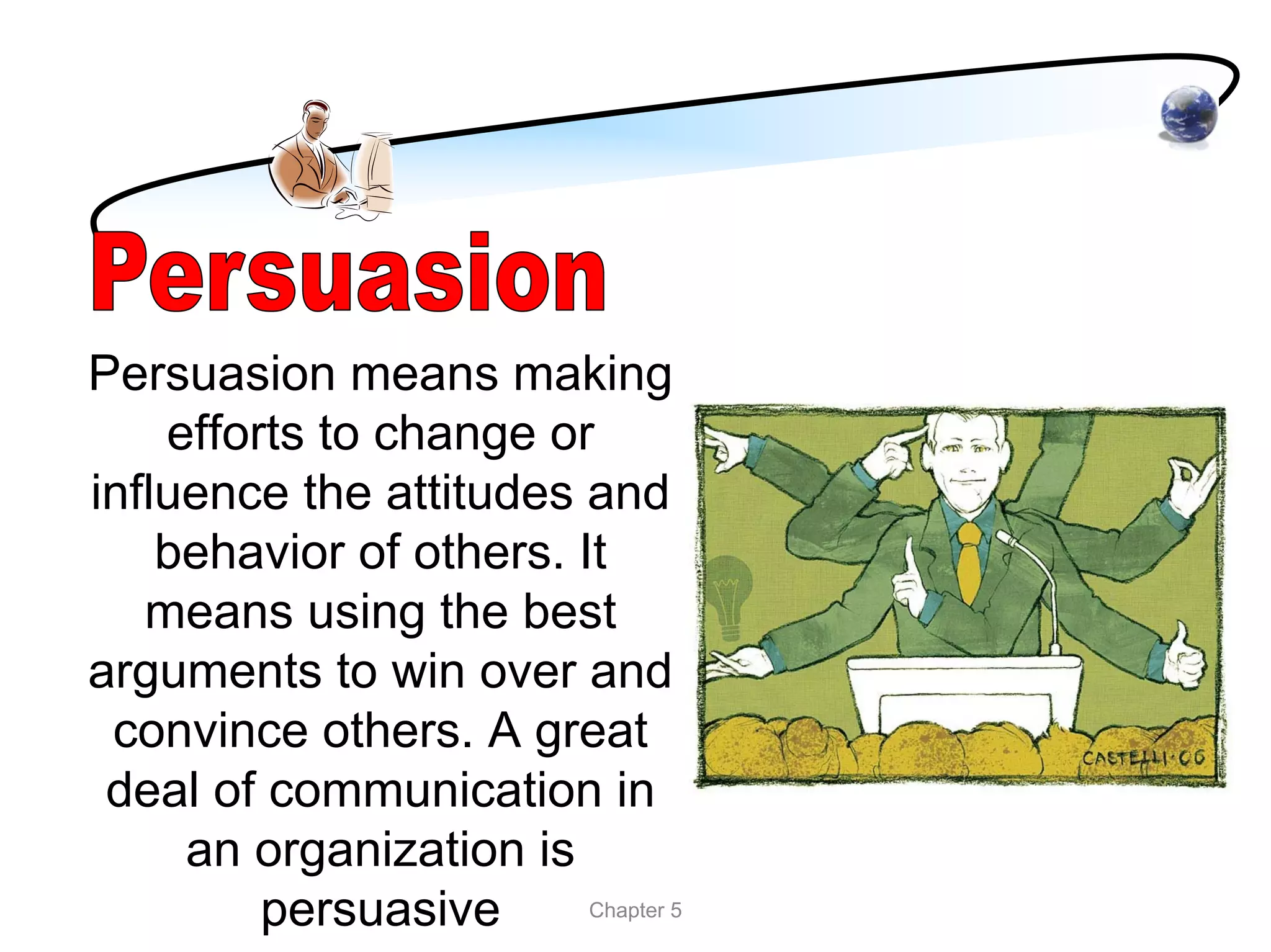
Persuasion means making
    efforts to change or
influence the attitudes and
    behavior of others. It
   means using the best
arguments to win over and
 convince others. A great
 deal of communication in
     an organization is
         persuasive      Chapter 5
The 3 factors of persuasion are:
i) The personal character and reputation of the
persuader must be respected and accepted by others;
people believe what is said or written by a respected and
reputable person or organization. This is known as
source credibility.
ii) The emotional appeal made by the persuader must be
suitable and effective.
iii) The logic of he presentation made by the persuader
must be reasonable.

                         Chapter 5
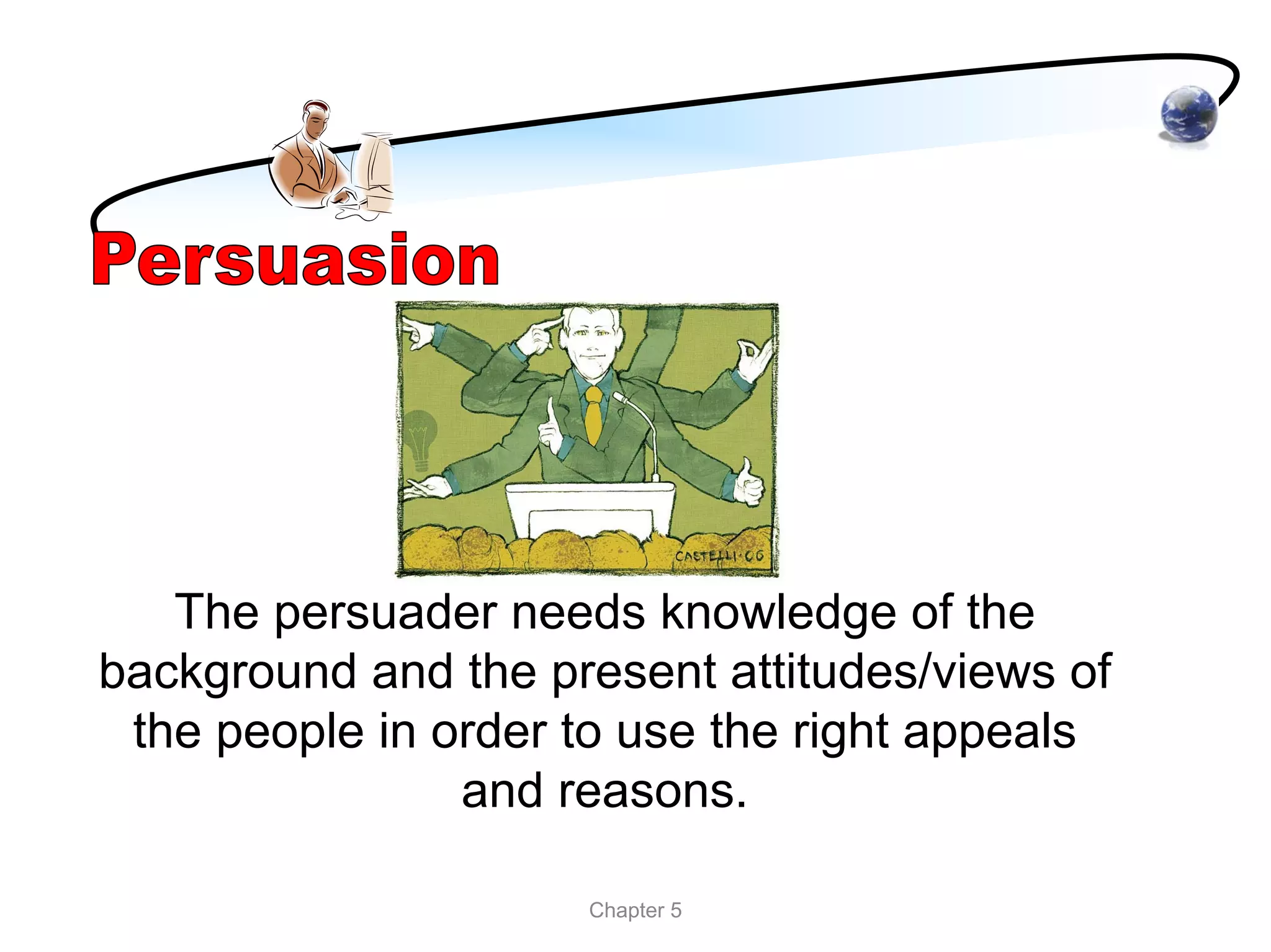
The persuader needs knowledge of the
background and the present attitudes/views of
 the people in order to use the right appeals
                and reasons.

                     Chapter 5
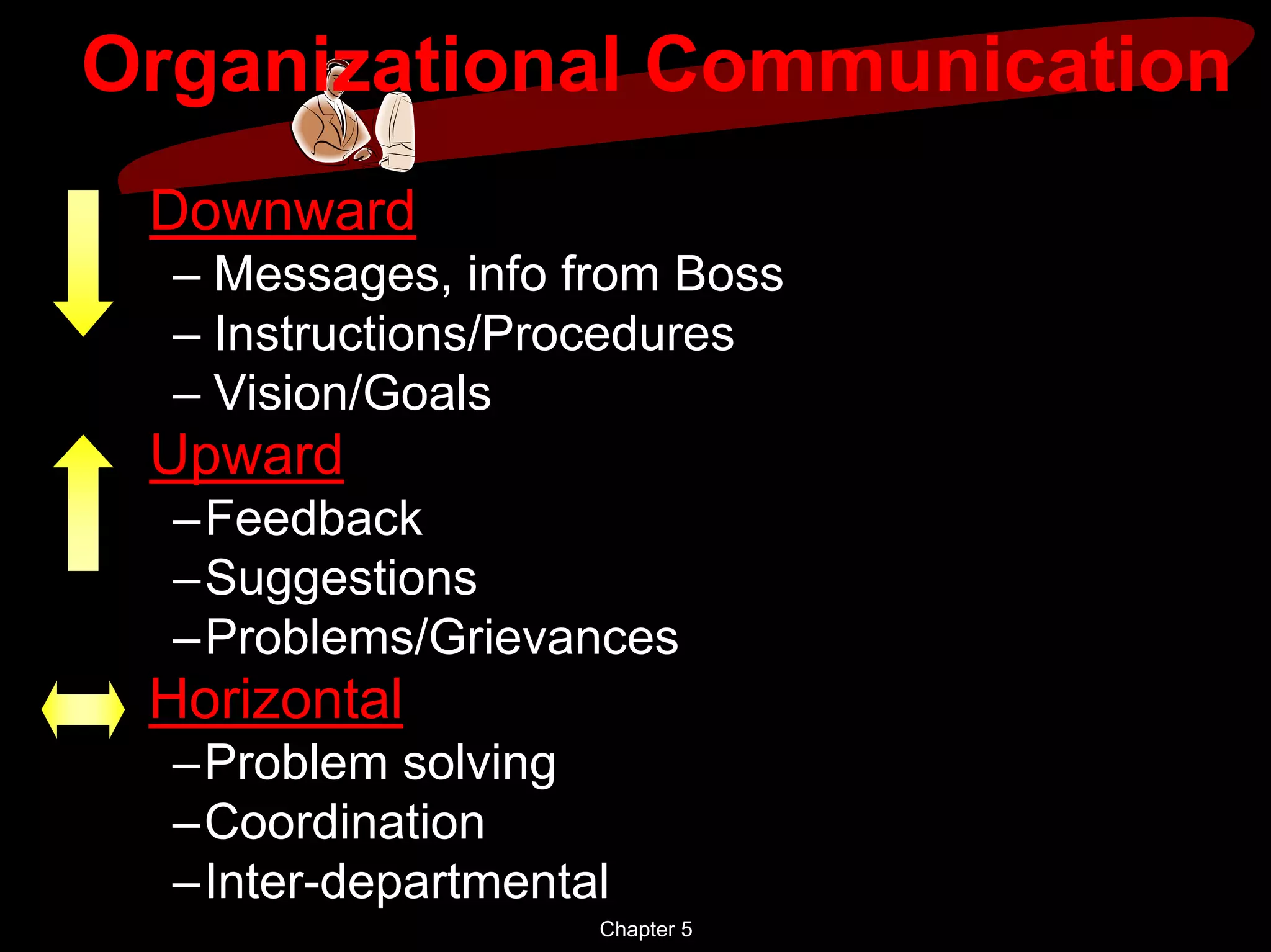
Organizational Communication
 Downward
  – Messages, info from Boss
  – Instructions/Procedures
  – Vision/Goals
 Upward
  –Feedback
  –Suggestions
  –Problems/Grievances
 Horizontal
  –Problem solving
  –Coordination
  –Inter-departmental
                    Chapter 5
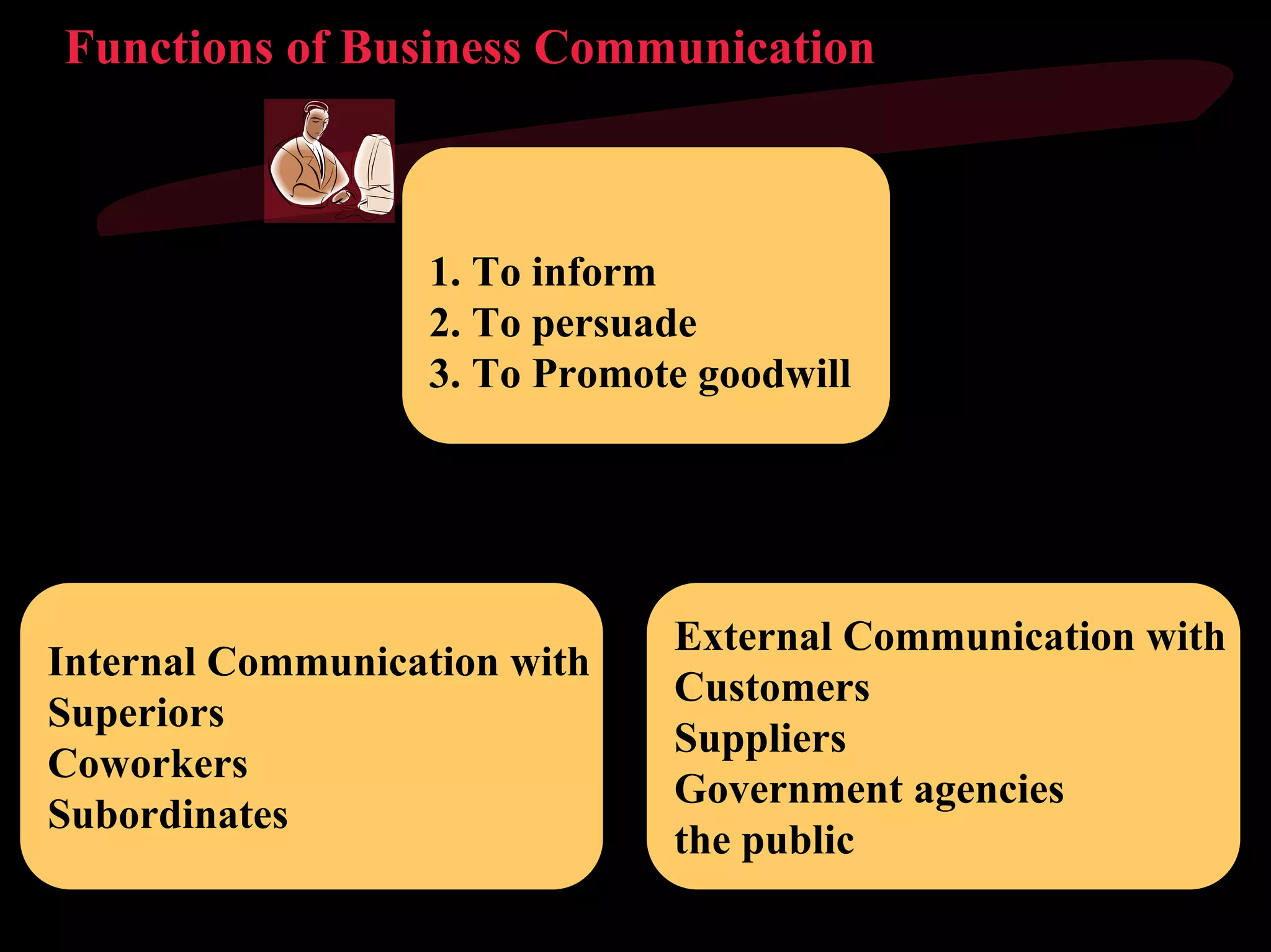
Functions of Business Communication


                  1. To inform
                  2. To persuade
                  3. To Promote goodwill


                              External Communication with
Internal Communication with
                              Customers
Superiors
                              Suppliers
Coworkers
                              Government agencies
Subordinates
                              the public
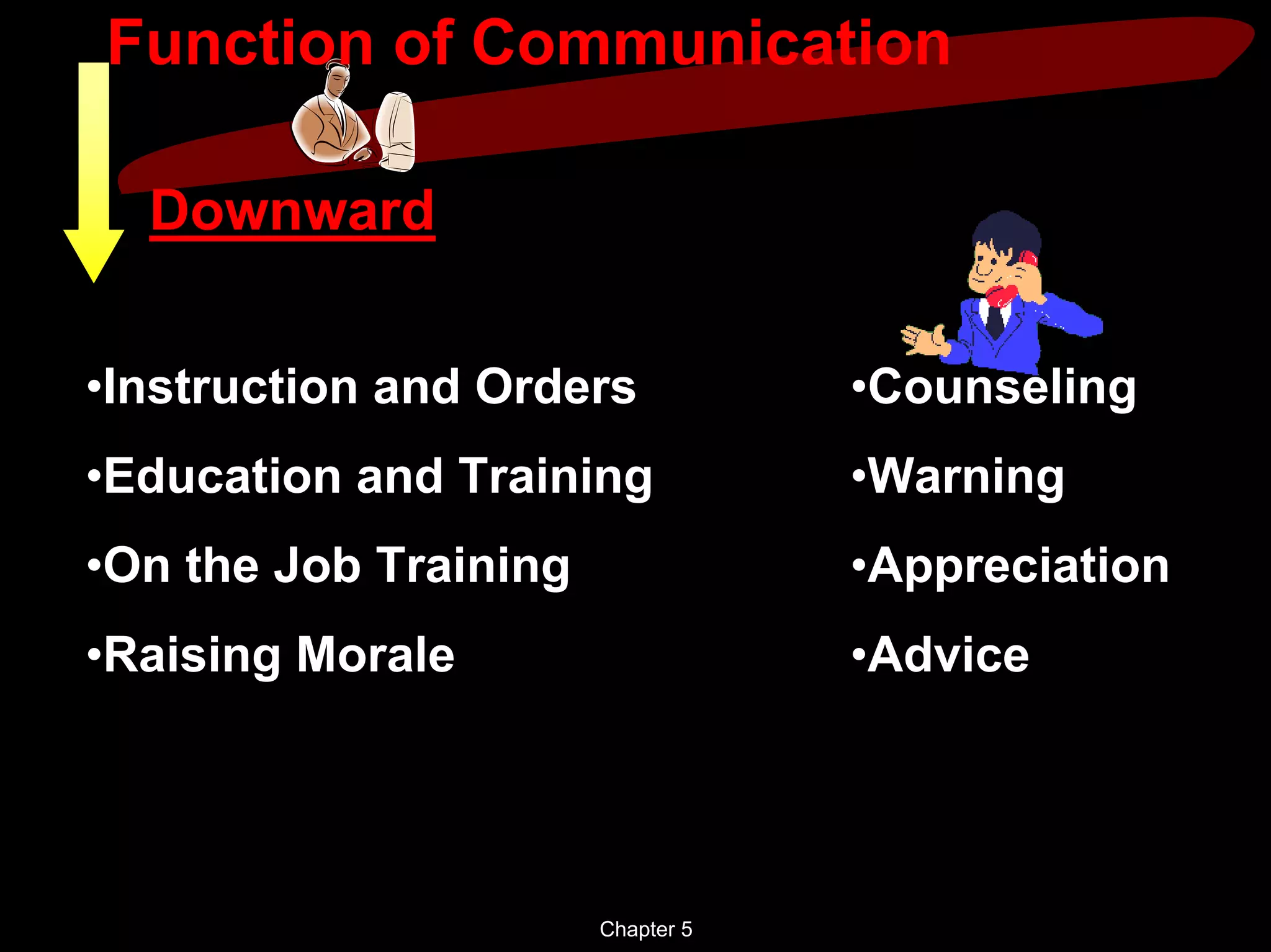
Function of Communication

  Downward


•Instruction and Orders            •Counseling
•Education and Training            •Warning
•On the Job Training               •Appreciation
•Raising Morale                    •Advice


                       Chapter 5
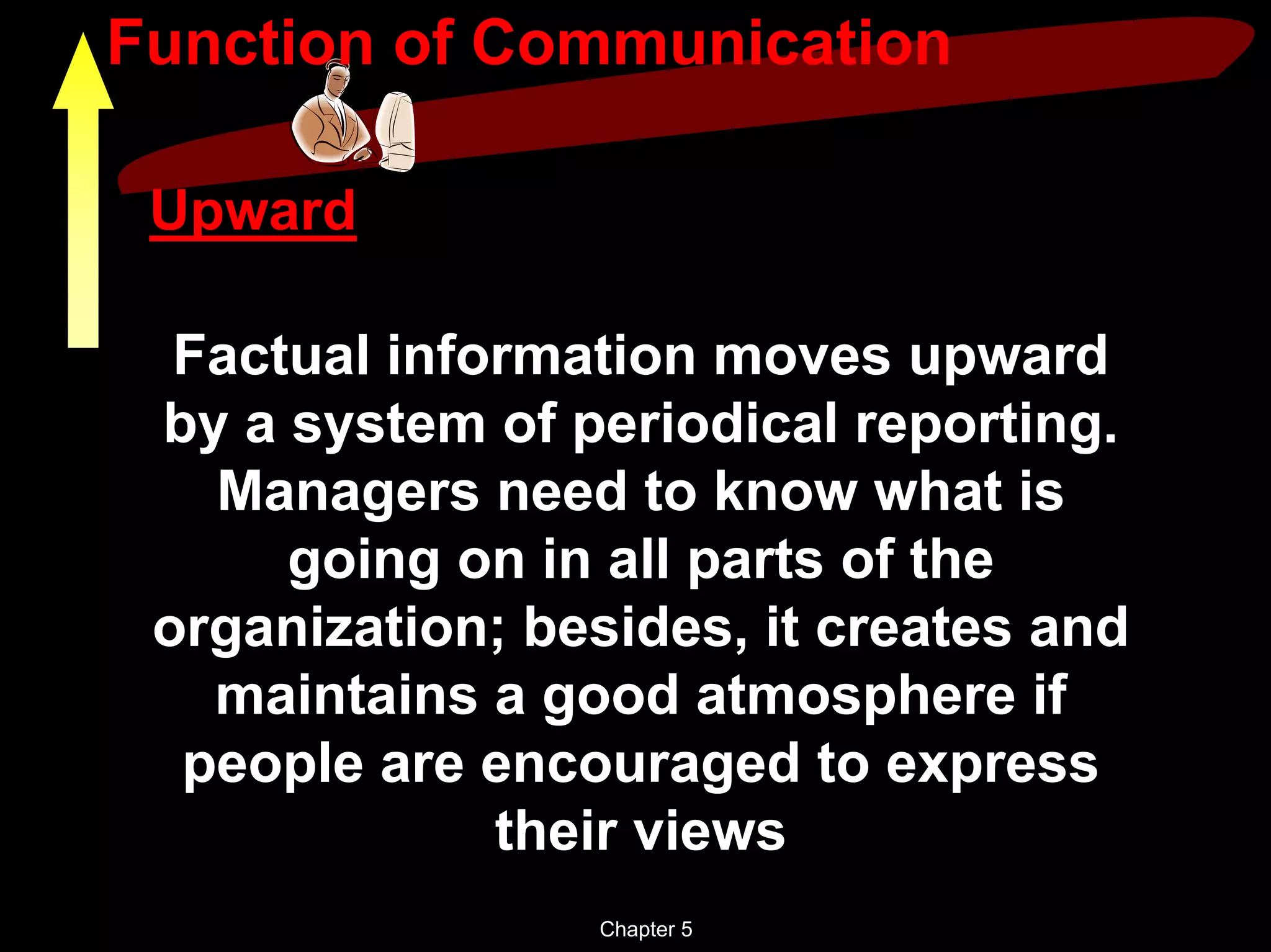
Function of Communication

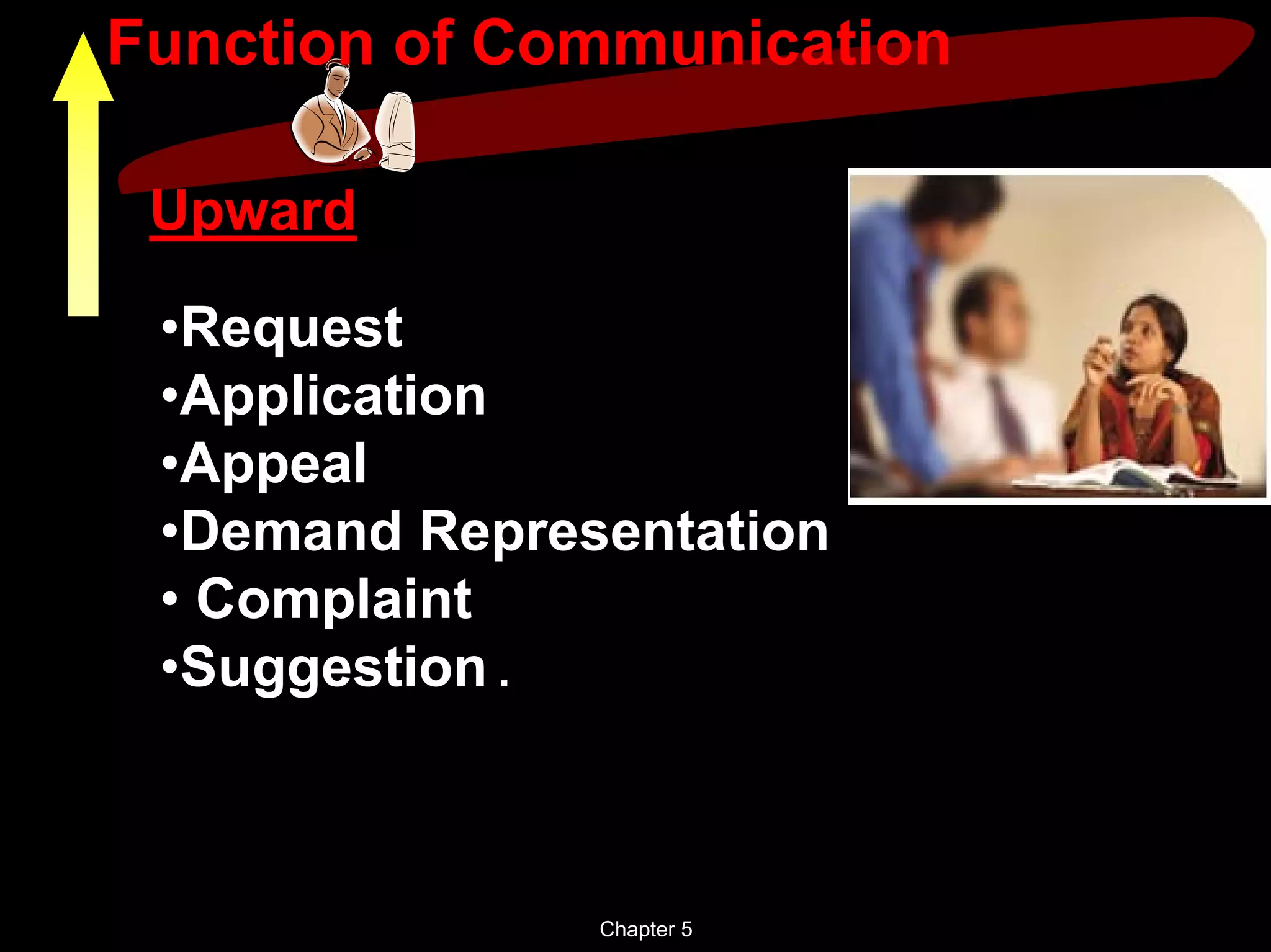
 Upward

  Factual information moves upward
 by a system of periodical reporting.
   Managers need to know what is
      going on in all parts of the
 organization; besides, it creates and
   maintains a good atmosphere if
  people are encouraged to express
              their views
                 Chapter 5
Function of Communication

 Upward

 •Request
 •Application
 •Appeal
 •Demand Representation
 • Complaint
 •Suggestion .


               Chapter 5
Function of Communication


   Office order is a formal written
   statement of any change to be
   effected in office routine. It is a
 record and formal instruction to all
   concerned that the change is
               affected.

                  Chapter 5
Function of Communication


   This can be done by listening to
   them and respecting heir views,
     ensuring that credit is given
     where it is due and avoiding
   criticism of persons even when
         opposing their ideas.


                 Chapter 5
Function of Communication


Raising morale cannot bed done by a
   single communication; morale is
 affected by all communications, and
      by the manner and style of
communications. The special morale-
 boosting communications must be
well-coordinated and carefully planned

                 Chapter 5
Function of Communication


   Horizontal


   Communication among the
  same status is known as the
  horizontal communication. It
    is also known as lateral
         communication.

                Chapter 5
Function of Communication


   Horizontal

 •Exchange of information
 •Discussion
 •Coordination
 •Conflict resolution
 •Problem solving
 •Advice
 •Social and emotional support.


                   Chapter 5
Function of Communication


 Impatience or lack of skill in instructing
   may become a barrier in on the job
training communication. A supervisor or
 mentor must have the ability to instruct.
The managers, supervisors and leaders
should make the subordinates and team
    mates feel that they belong to the
  organization and fulfills their need for
               recognition.
                   Chapter 5
Function of Communication


Organized horizontal communication in the
form of conferences and meetings facilities
    review and discussions of plans and
 problems. Persuasion plays a large part in
  horizontal communication. Discussions
  among persons of equal status have an
  educative value, and are used in training
                 programs


                    Chapter 5

Functions of Communication

  • 1.
  • 2.
    Communication is viewedas the process through which organizations emerge and evolve and the basis upon which individuals, relationships, groups, and organizations relate to their surroundings and to one another Chapter 5
  • 3.
    Communication also serves in decision making and control of the system as a whole in its efforts in its efforts to adapt to its environment Chapter 5
  • 4.
    70% of dayspent communicating Good leaders need to be good communicators. They should share the vision, inspire/ motivate, pass information and so on Chapter 5
  • 5.
    Persons who arein leadership positions and have to hold a team together, often communicates to the members of their team with the objective of motivating them to make their best efforts. Chapter 5
  • 6.
    The main functionsof communication are information and persuasion . Other functions are aspects of these broad functions. Information consists of facts, figures & data arranged as per the diff. purposes. It doesn’t include emotion. E.g. stock market report, a user manual, a news report Persuasion needs a basis of information; achieved by skilful appeal to emotion. Chapter 5
  • 7.
    Modern management believesin keeping employees well informed about the company’s aims, plans, progress and prospects, working and service conditions, training and promotion opportunities, benefits available to them, handouts, announcements, through organized channels like the notice board, manual and instruction sheet, bulletins, pamphlets, mass media etc Chapter 5
  • 8.
    A large amountof information is available and moves about in an organization and in the world. We need to develop the ability to take what we need and what we can handle. Chapter 5
  • 9.
    The conduct ofbusiness is based on the given information containing data. Information reduces the uncertainty about the situation or the environment in which we find ourselves, it moves in all directions in the organization; it may be given orally or in writing Chapter 5
  • 10.
    Persuasion means making efforts to change or influence the attitudes and behavior of others. It means using the best arguments to win over and convince others. A great deal of communication in an organization is persuasive Chapter 5
  • 11.
    The 3 factorsof persuasion are: i) The personal character and reputation of the persuader must be respected and accepted by others; people believe what is said or written by a respected and reputable person or organization. This is known as source credibility. ii) The emotional appeal made by the persuader must be suitable and effective. iii) The logic of he presentation made by the persuader must be reasonable. Chapter 5
  • 12.
    The persuader needsknowledge of the background and the present attitudes/views of the people in order to use the right appeals and reasons. Chapter 5
  • 13.
    Organizational Communication Downward – Messages, info from Boss – Instructions/Procedures – Vision/Goals Upward –Feedback –Suggestions –Problems/Grievances Horizontal –Problem solving –Coordination –Inter-departmental Chapter 5
  • 14.
    Functions of BusinessCommunication 1. To inform 2. To persuade 3. To Promote goodwill External Communication with Internal Communication with Customers Superiors Suppliers Coworkers Government agencies Subordinates the public
  • 15.
    Function of Communication Downward •Instruction and Orders •Counseling •Education and Training •Warning •On the Job Training •Appreciation •Raising Morale •Advice Chapter 5
  • 16.
    Function of Communication Upward Factual information moves upward by a system of periodical reporting. Managers need to know what is going on in all parts of the organization; besides, it creates and maintains a good atmosphere if people are encouraged to express their views Chapter 5
  • 17.
    Function of Communication Upward •Request •Application •Appeal •Demand Representation • Complaint •Suggestion . Chapter 5
  • 18.
    Function of Communication Office order is a formal written statement of any change to be effected in office routine. It is a record and formal instruction to all concerned that the change is affected. Chapter 5
  • 19.
    Function of Communication This can be done by listening to them and respecting heir views, ensuring that credit is given where it is due and avoiding criticism of persons even when opposing their ideas. Chapter 5
  • 20.
    Function of Communication Raisingmorale cannot bed done by a single communication; morale is affected by all communications, and by the manner and style of communications. The special morale- boosting communications must be well-coordinated and carefully planned Chapter 5
  • 21.
    Function of Communication Horizontal Communication among the same status is known as the horizontal communication. It is also known as lateral communication. Chapter 5
  • 22.
    Function of Communication Horizontal •Exchange of information •Discussion •Coordination •Conflict resolution •Problem solving •Advice •Social and emotional support. Chapter 5
  • 23.
    Function of Communication Impatience or lack of skill in instructing may become a barrier in on the job training communication. A supervisor or mentor must have the ability to instruct. The managers, supervisors and leaders should make the subordinates and team mates feel that they belong to the organization and fulfills their need for recognition. Chapter 5
  • 24.
    Function of Communication Organizedhorizontal communication in the form of conferences and meetings facilities review and discussions of plans and problems. Persuasion plays a large part in horizontal communication. Discussions among persons of equal status have an educative value, and are used in training programs Chapter 5