Functional principles for 
object-oriented 
development 
@jessitron
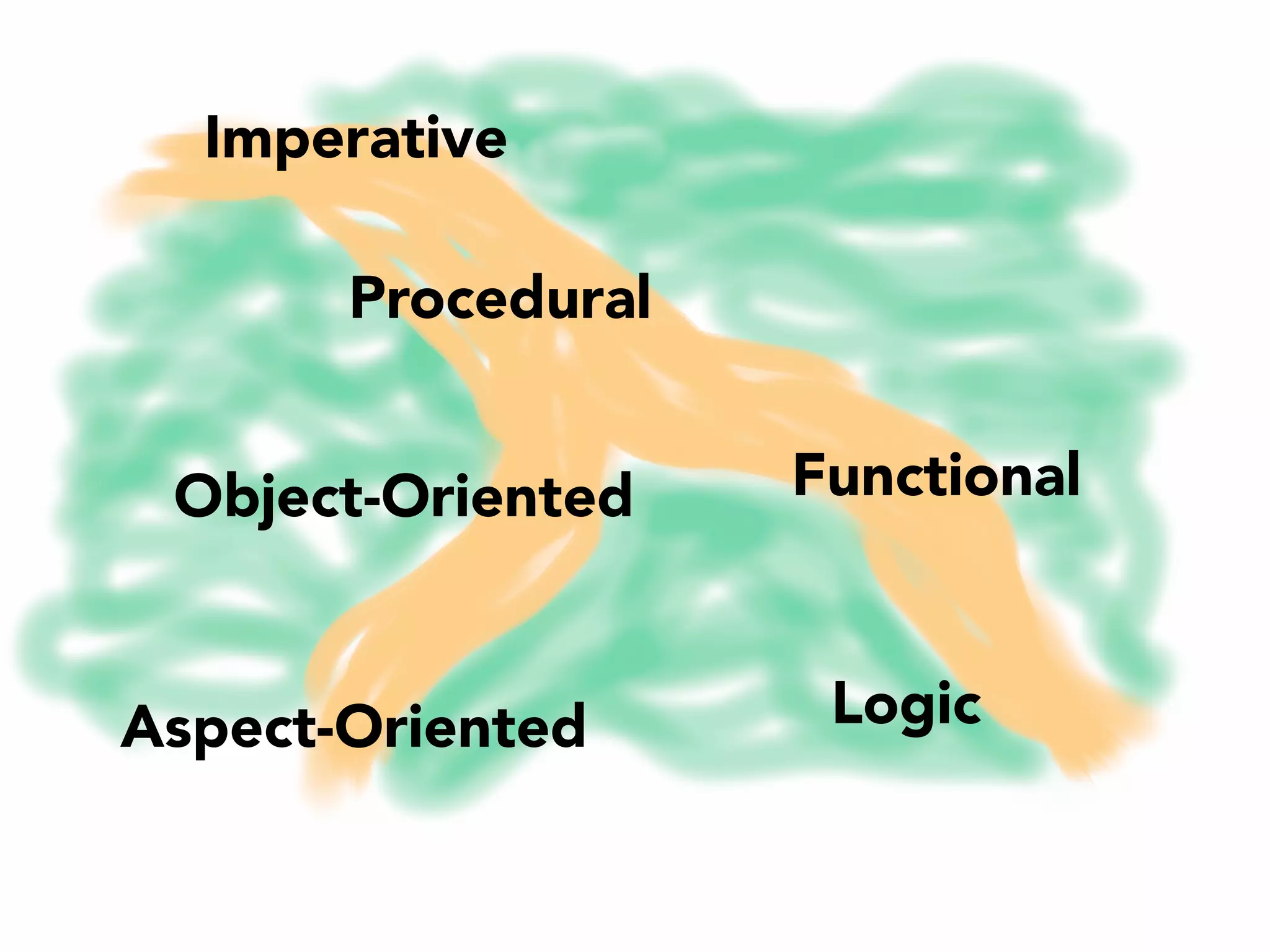
Imperative 
Procedural 
Object-Oriented Functional 
Aspect-Oriented Logic
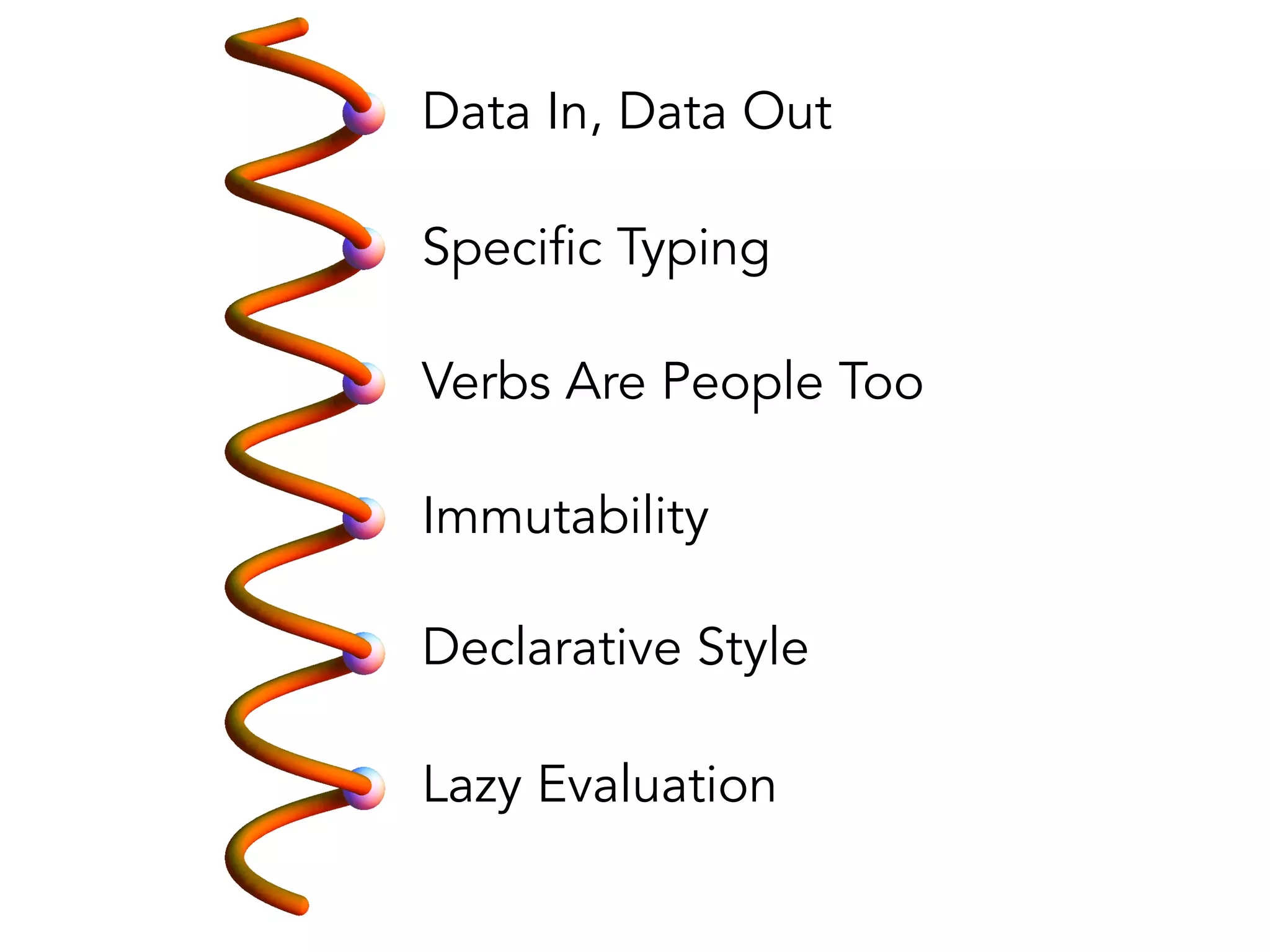
Data In, Data Out 
Specific Typing 
Verbs Are People Too 
Immutability 
Declarative Style 
Lazy Evaluation
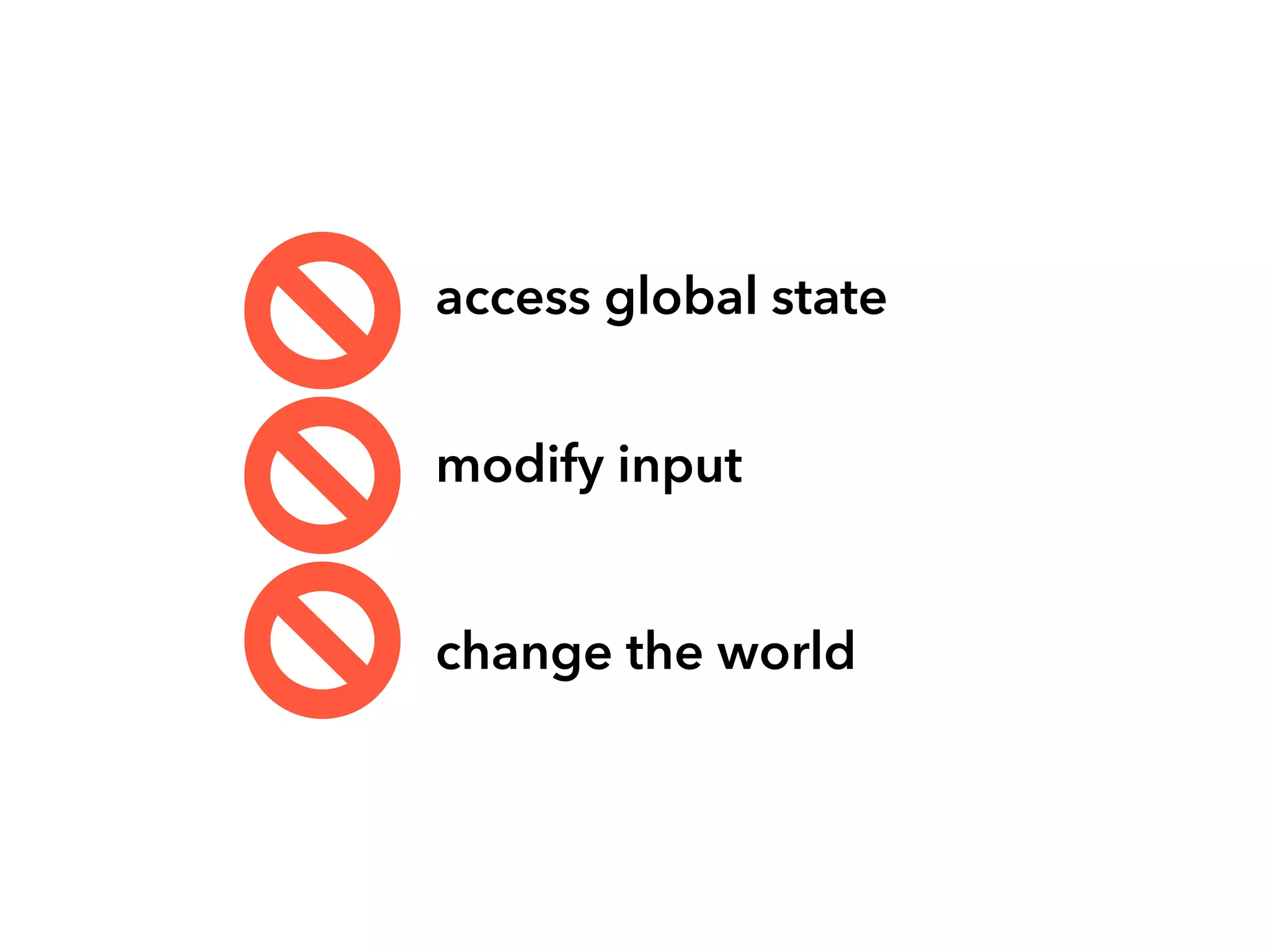
Data In, Data Out
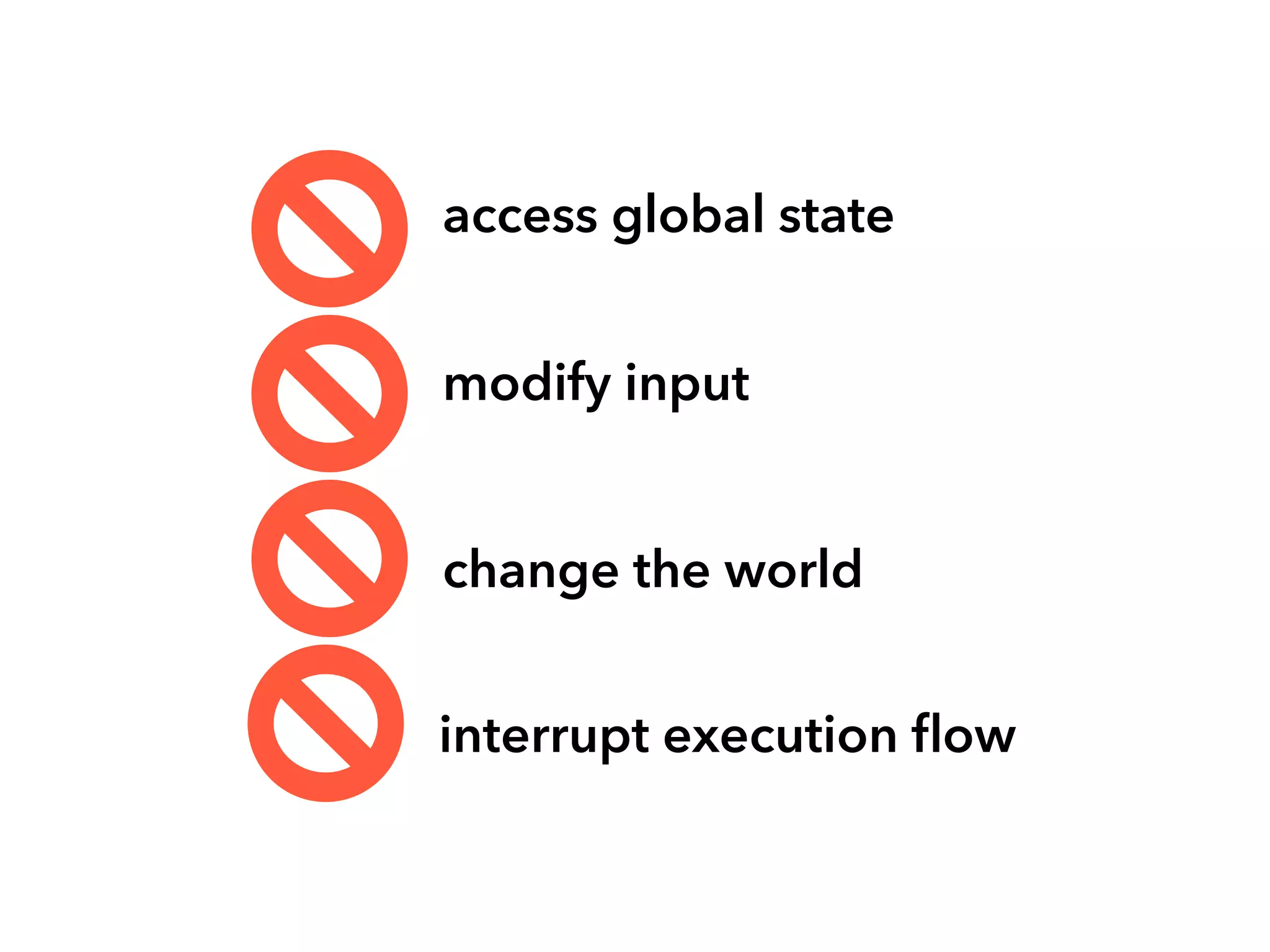
access global state 
modify input 
change the world
Testable 
Easier to understand
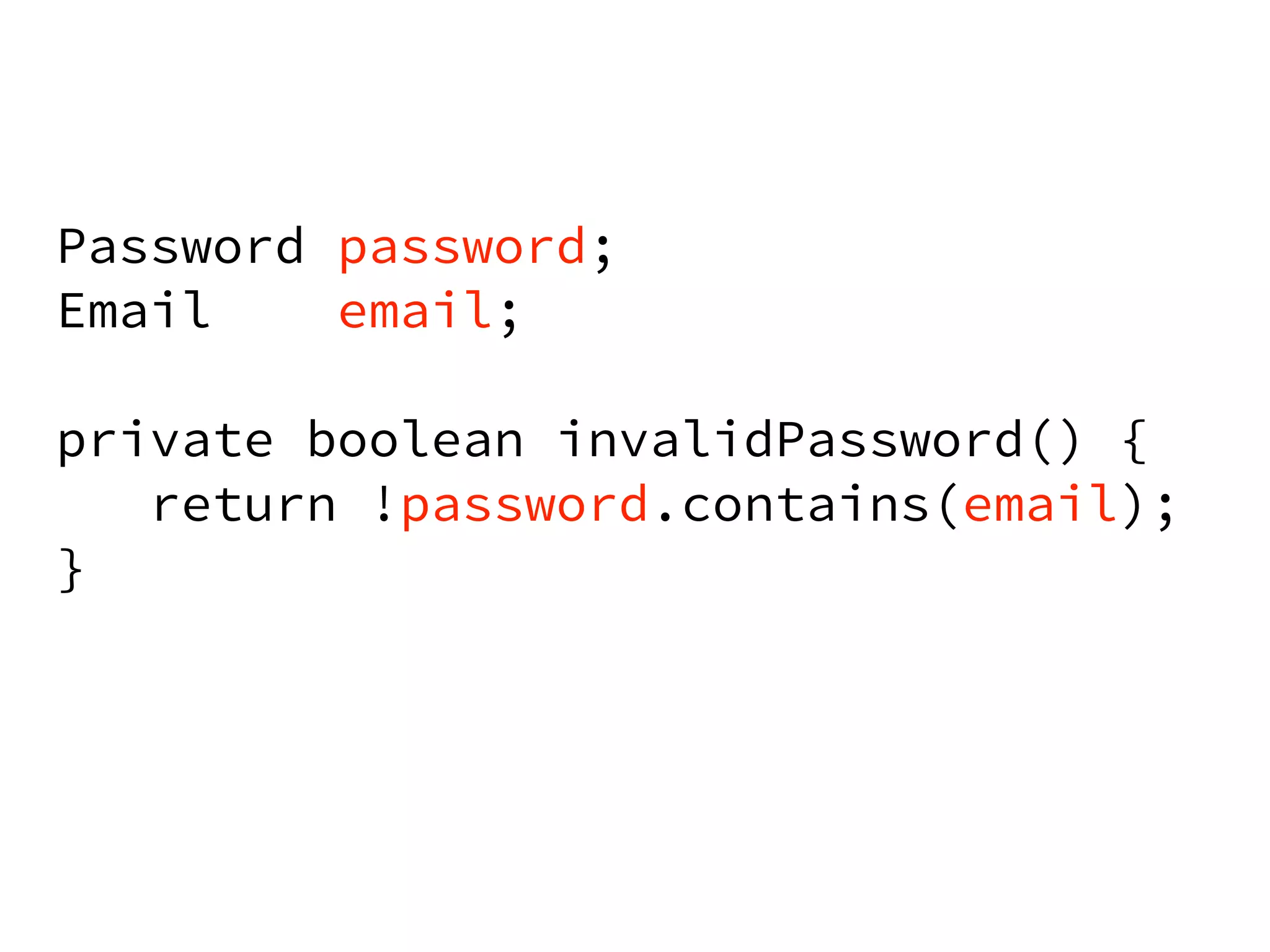
Password password; 
Email email; 
! 
private boolean invalidPassword() { 
return !password.contains(email); 
}
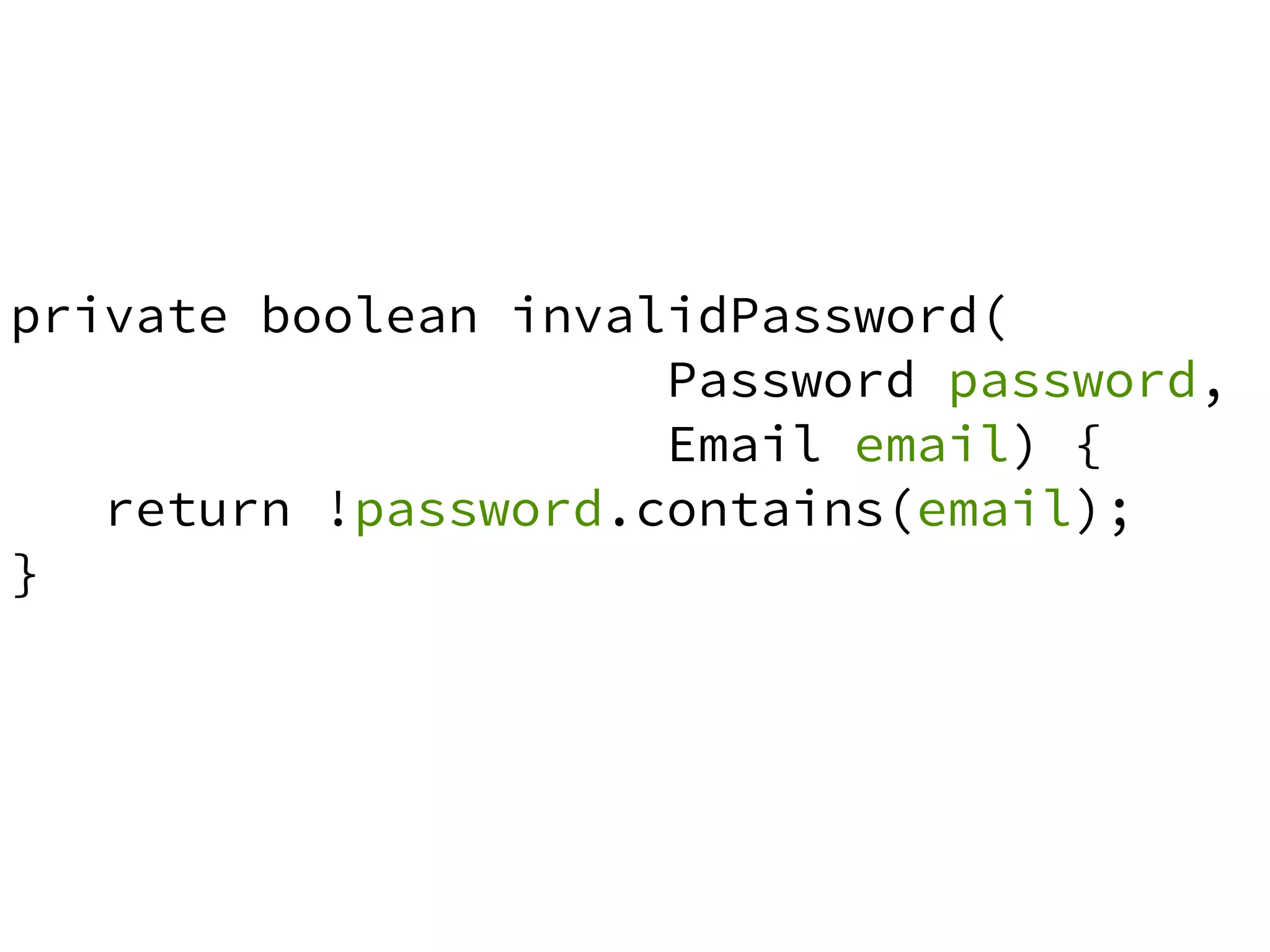
private boolean invalidPassword( 
Password password, 
Email email) { 
return !password.contains(email); 
}
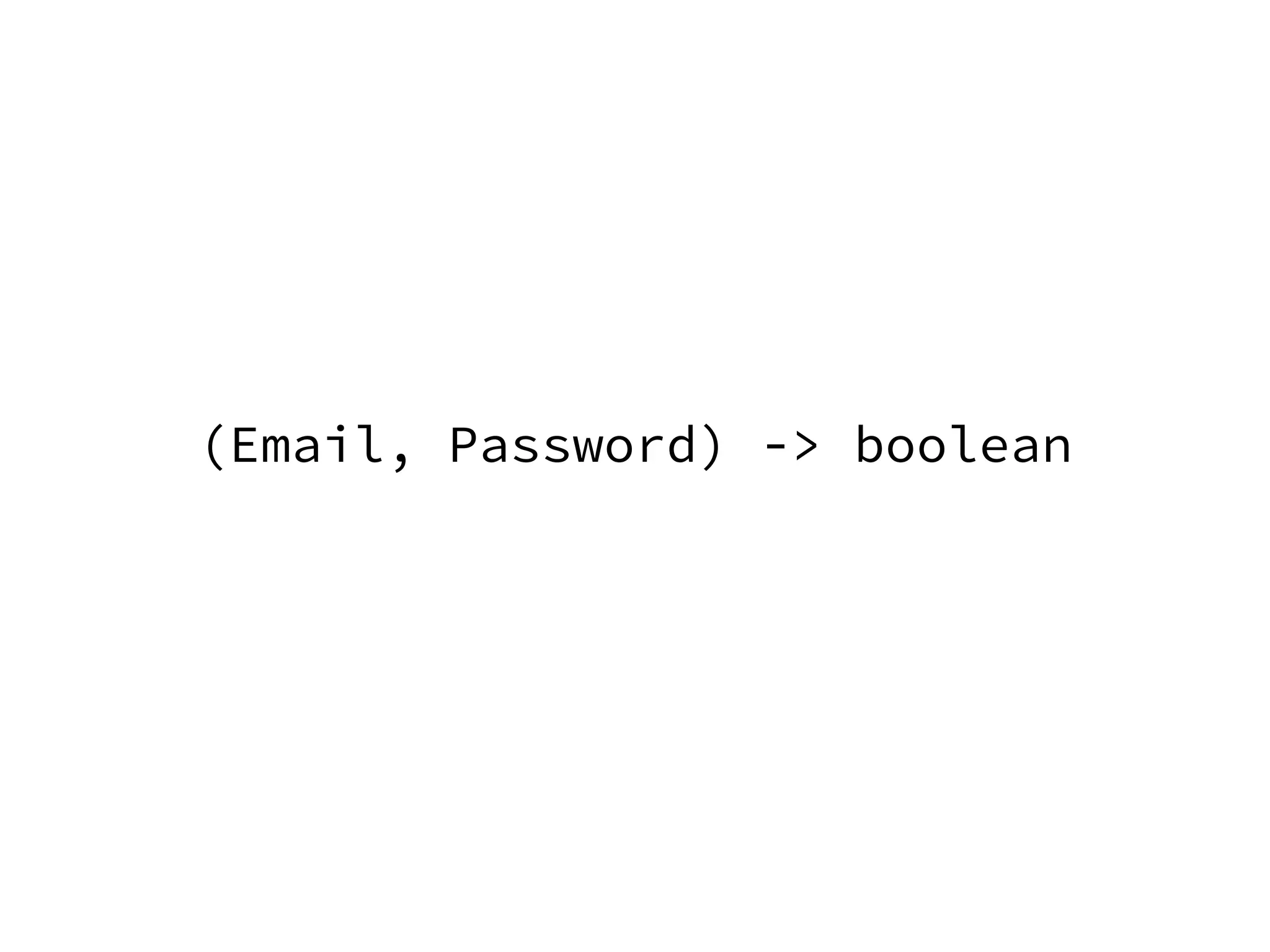
(Email, Password) -> boolean
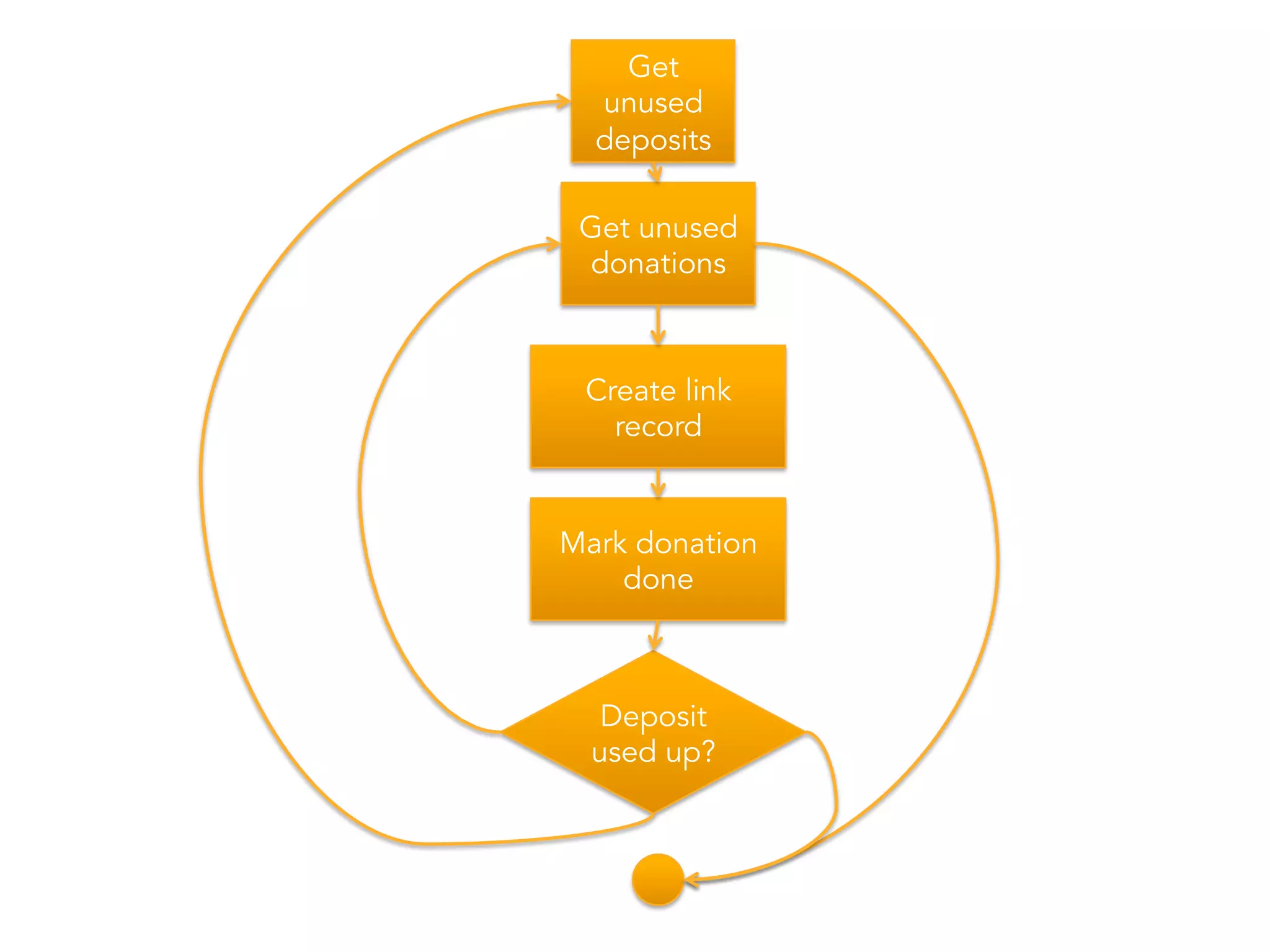
the flow of data
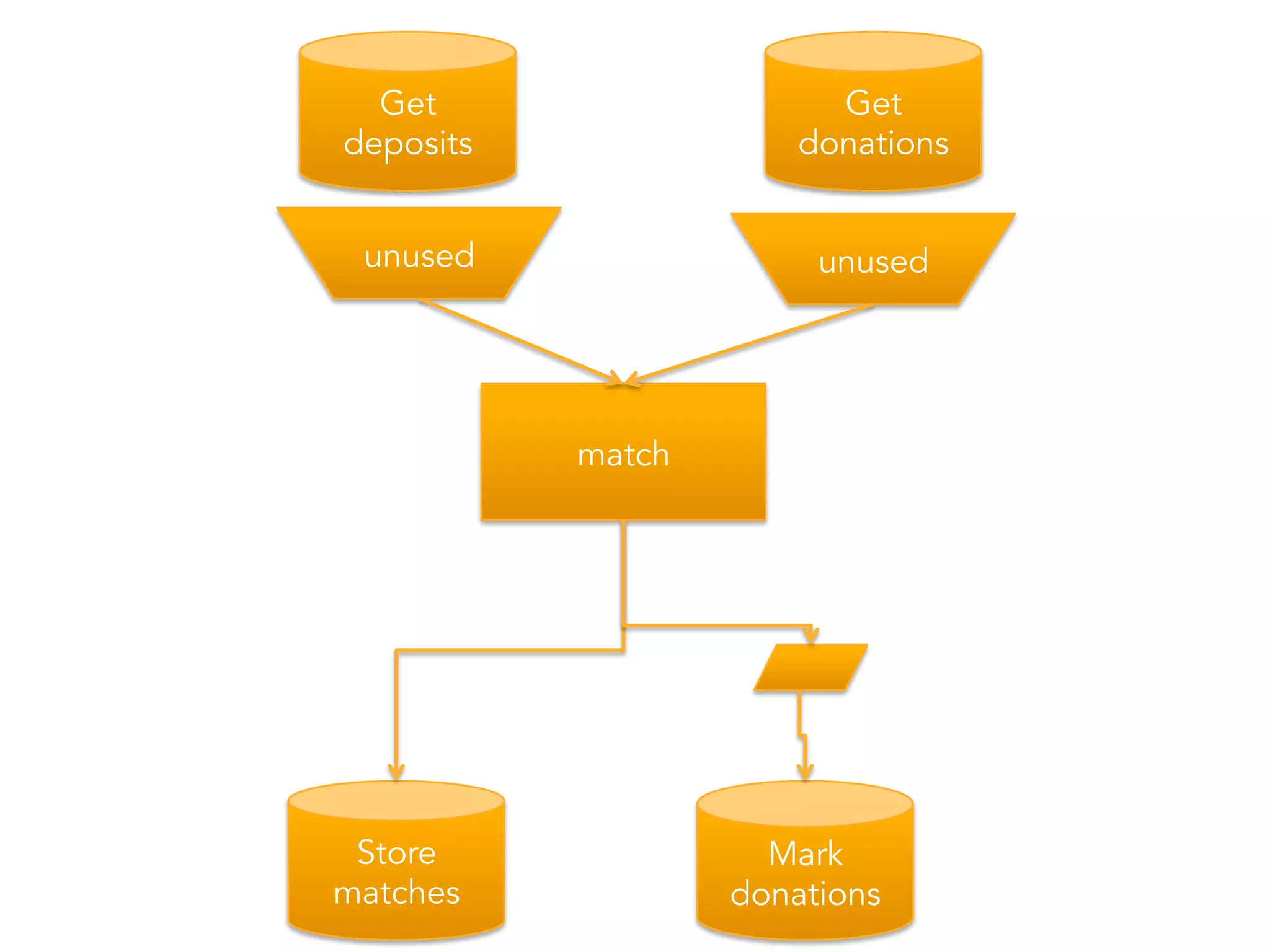
Get 
unused 
deposits 
Get unused 
donations 
Create link 
record 
Mark donation 
done 
Deposit 
used up?
unused unused 
match 
Get 
deposits 
Get 
donations 
Store 
matches 
Mark 
donations
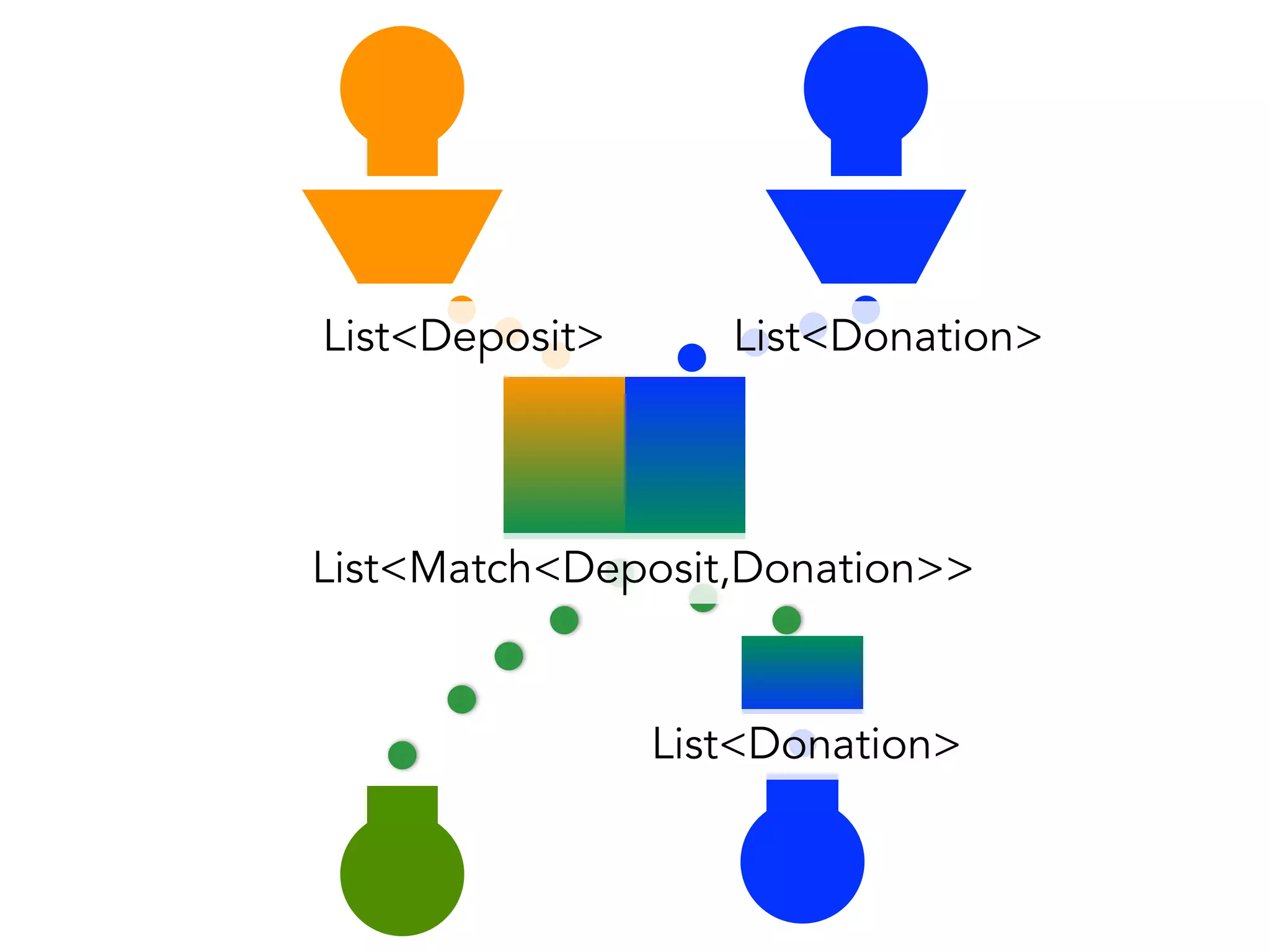
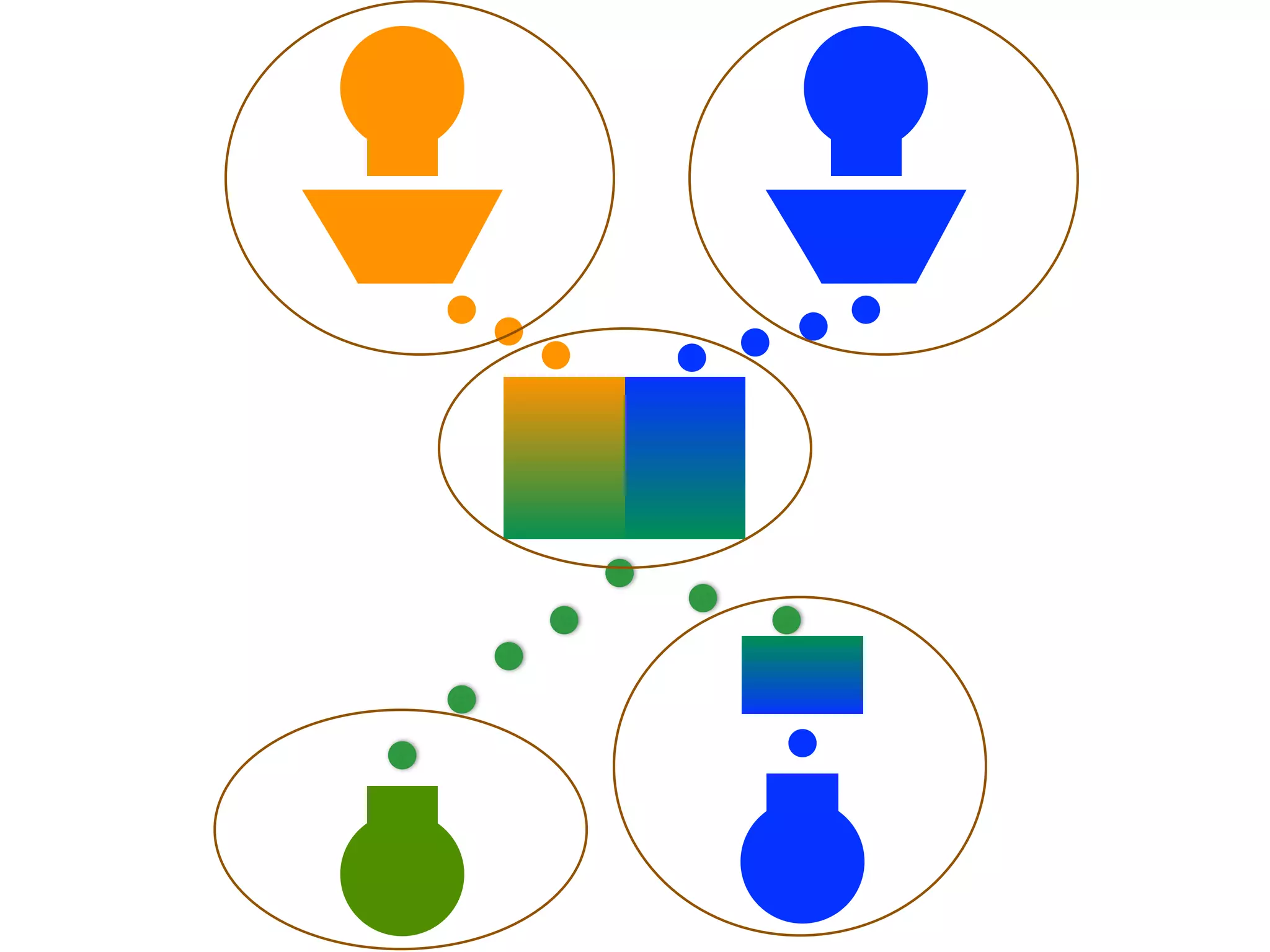
List<Deposit> List<Donation> 
List<Match<Deposit,Donation>> 
List<Donation>
Problem easier, because we know 
each step of the way of data.
Encapsulation
Isolation 
z
! 
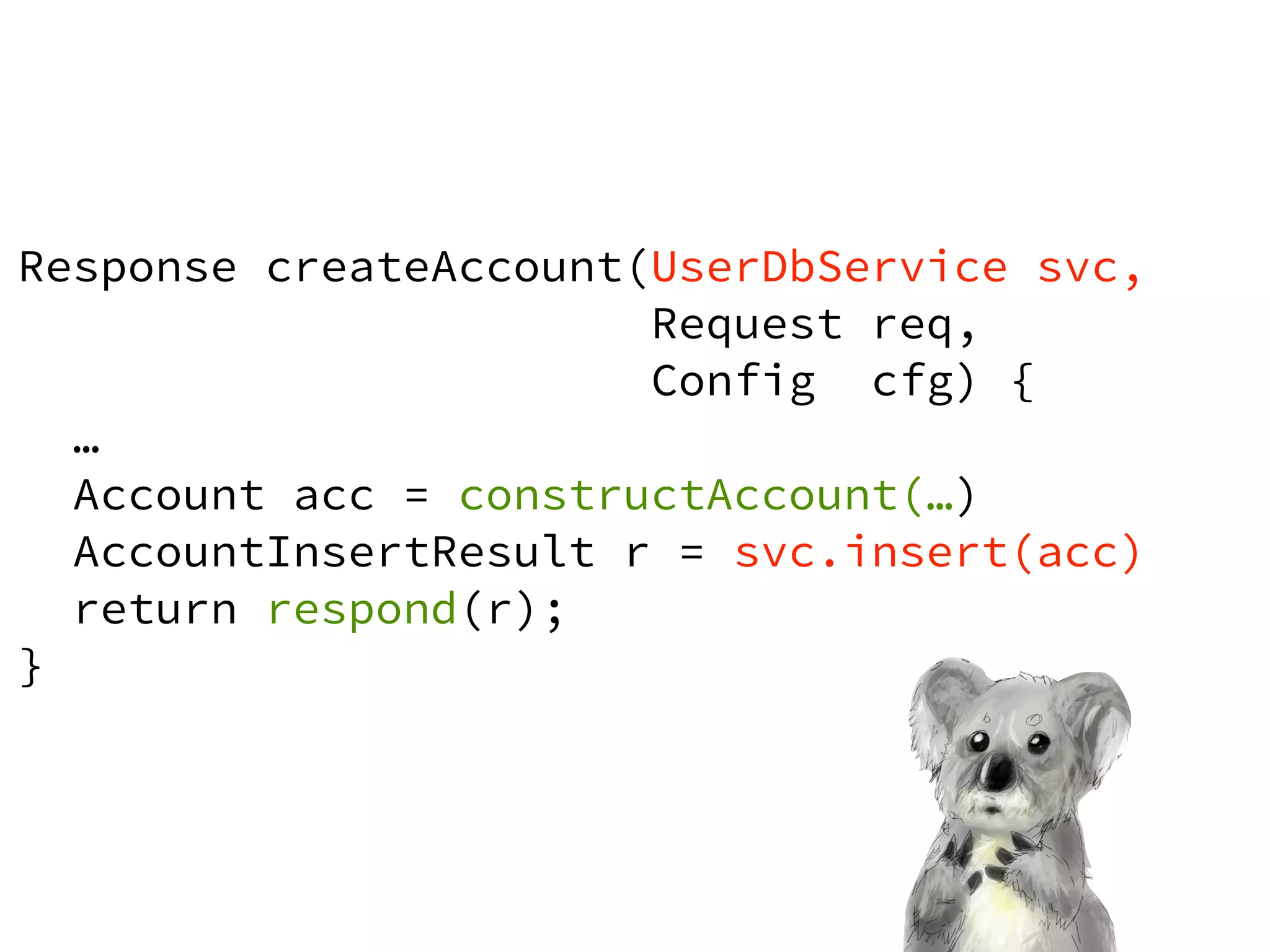
Response createAccount(UserDbService svc, 
Request req, 
Config cfg) { 
… 
Account acc = constructAccount(…) 
AccountInsertResult r = svc.insert(acc) 
return respond(r); 
}
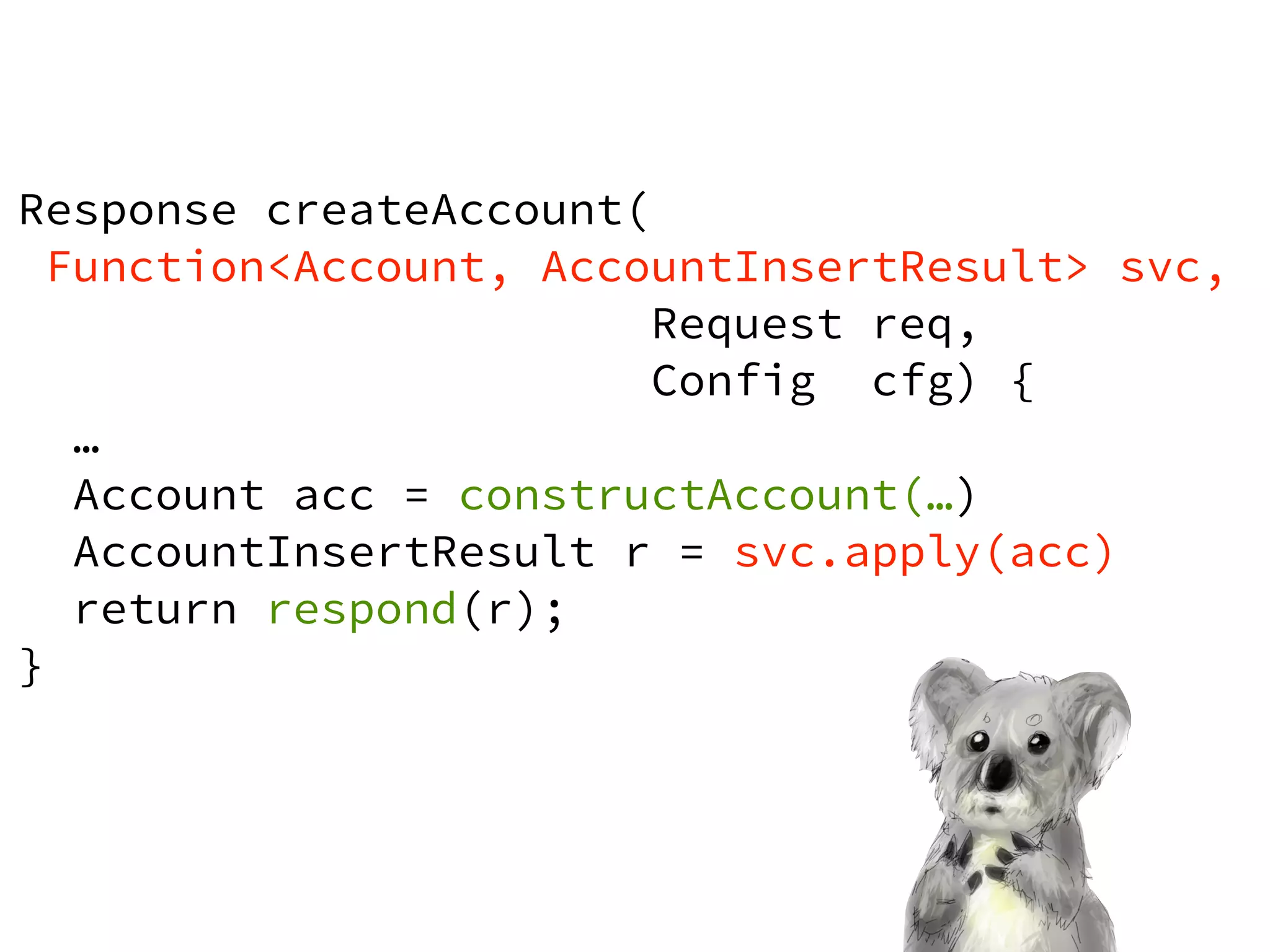
Response createAccount( 
Function<Account, AccountInsertResult> svc, 
Request req, 
Config cfg) { 
… 
Account acc = constructAccount(…) 
AccountInsertResult r = svc.apply(acc) 
return respond(r); 
}
Specific Typing
The beginning of wisdom is to call 
things by their right names.
Java 
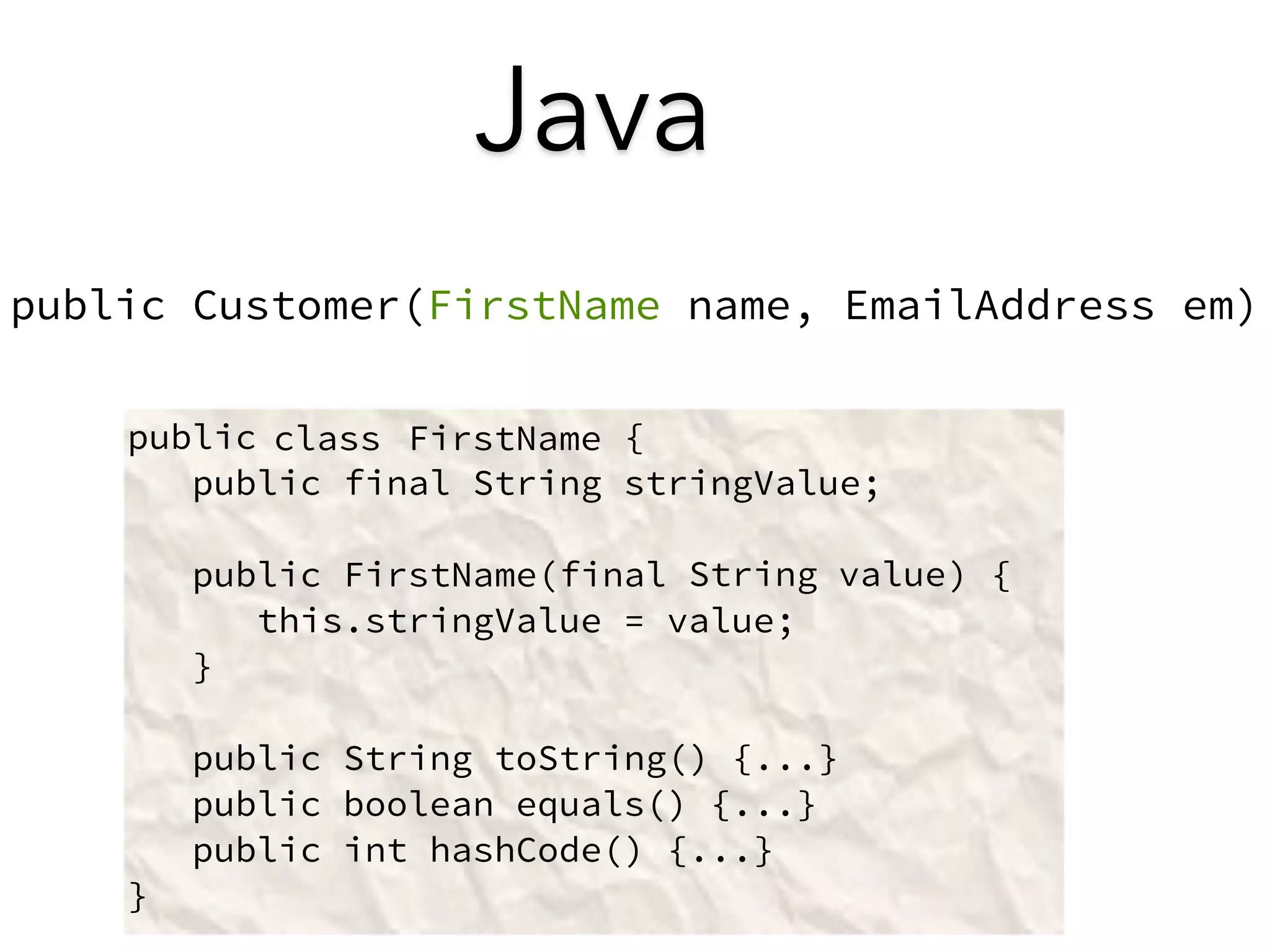
public Customer(FirstName name, EmailAddress em) 
public { 
public final String stringValue; 
public FirstName(final ) { 
this.stringValue = value; 
} 
public String toString() {...} 
public boolean equals() {...} 
public int hashCode() {...} 
} 
FirstName 
String value 
class
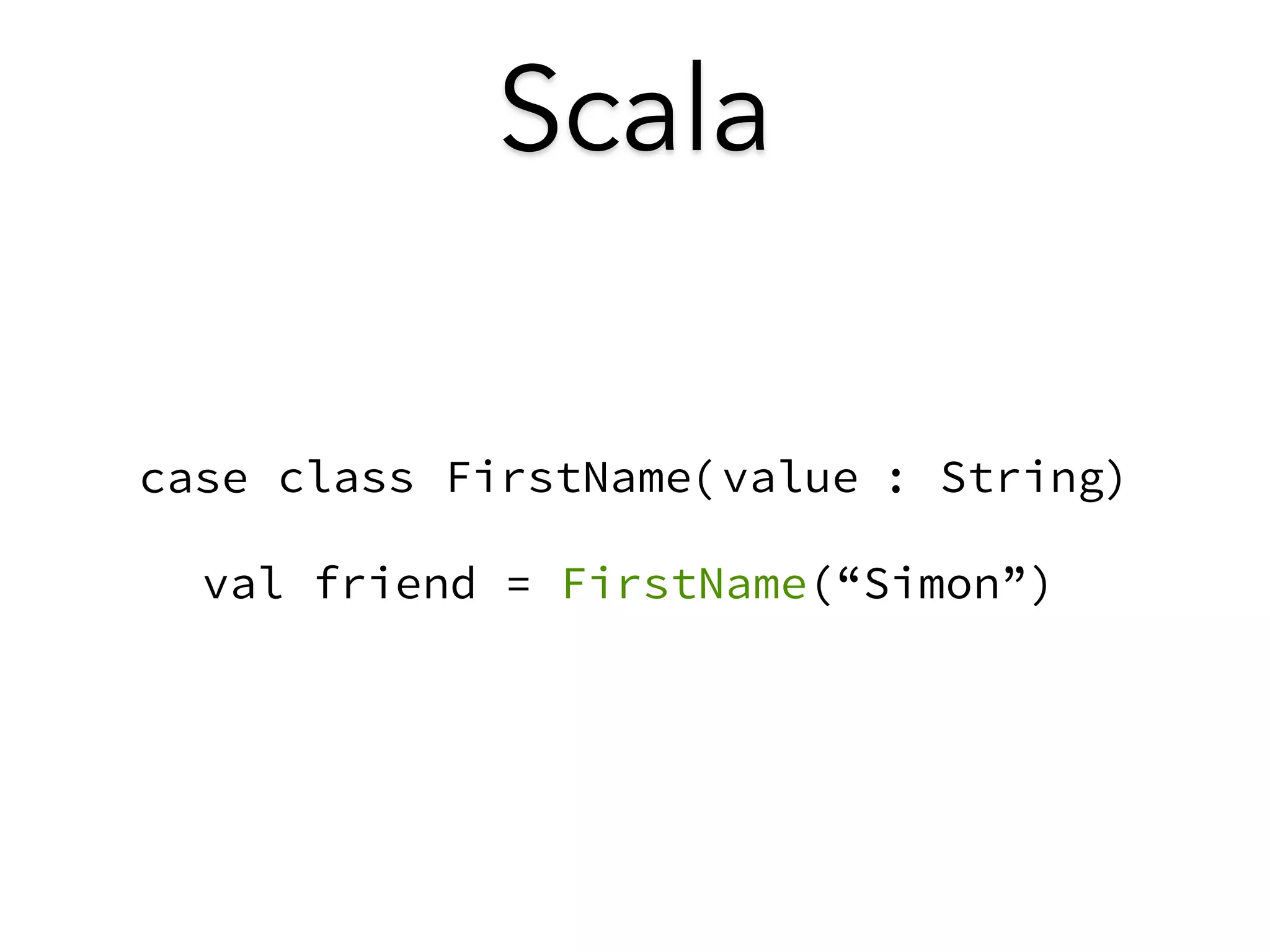
Scala 
case c l a s s F i r s t N a m e( v a l u e : S t r i n g) 
val friend = FirstName(“Simon”)
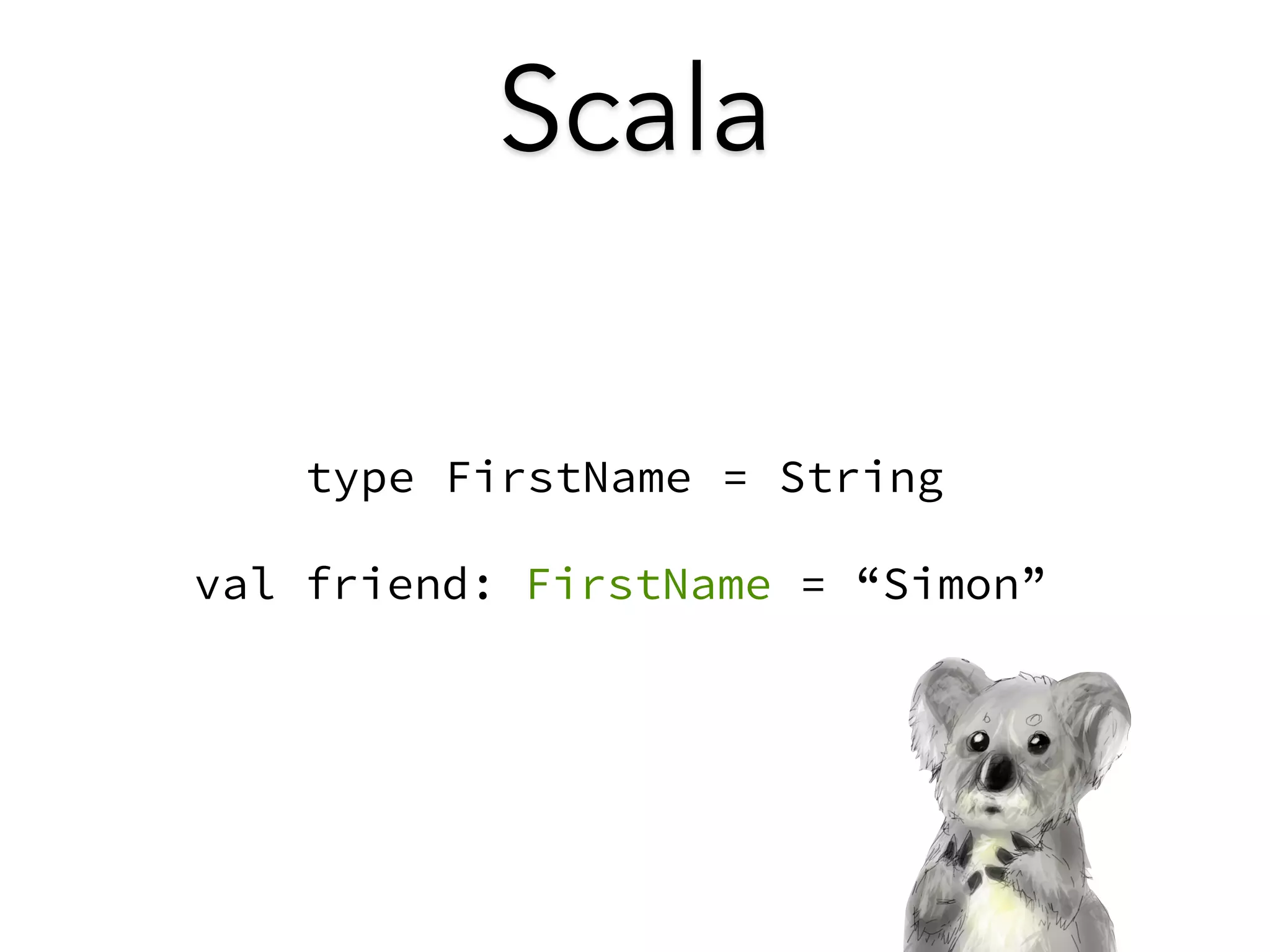
Scala 
type FirstName = String 
val friend: FirstName = “Simon”
expressiveness 
layers of 
thinking
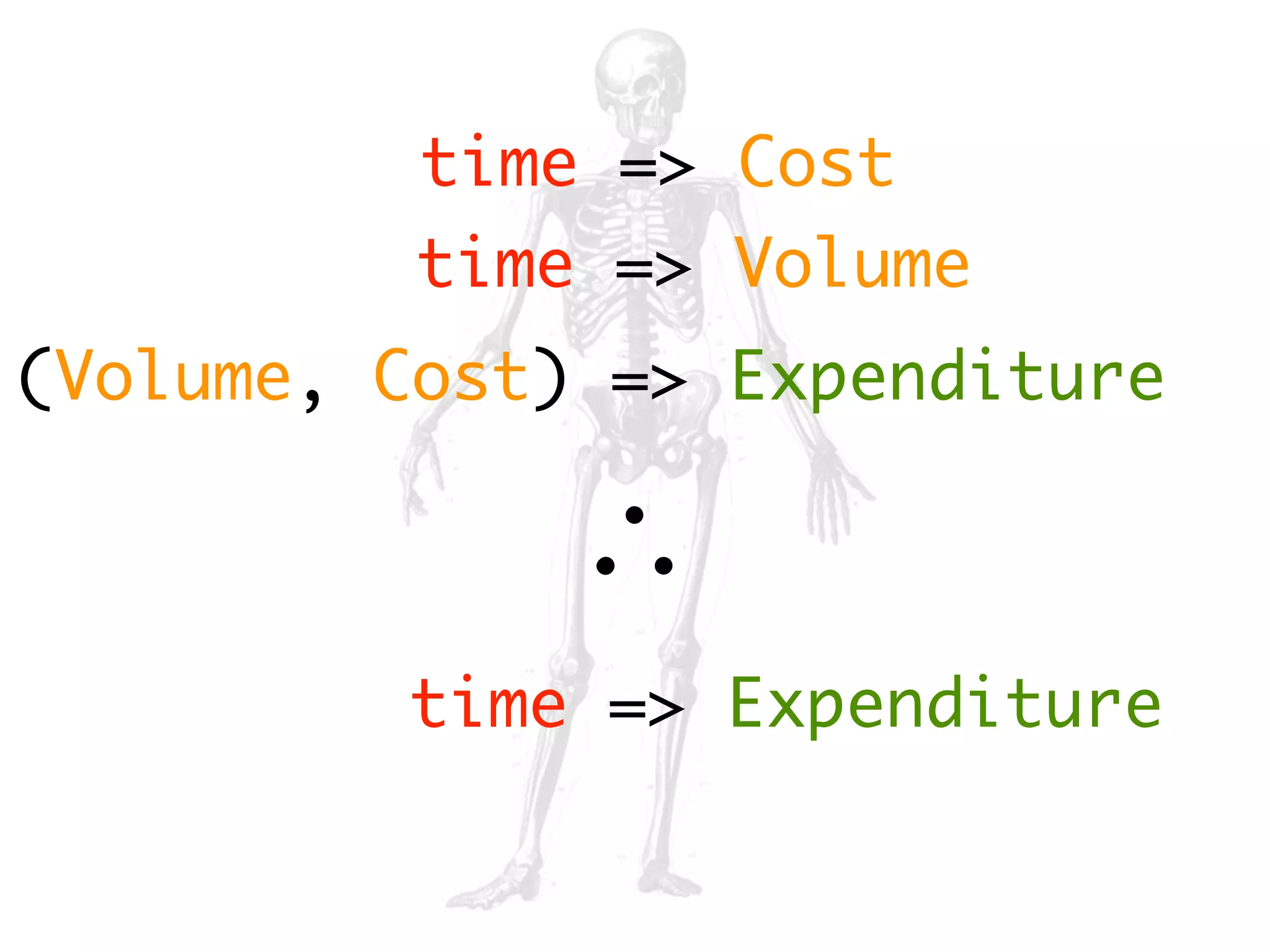
time => Cost 
time => Volume 
(Volume, Cost) => Expenditure 
∴ 
time => Expenditure
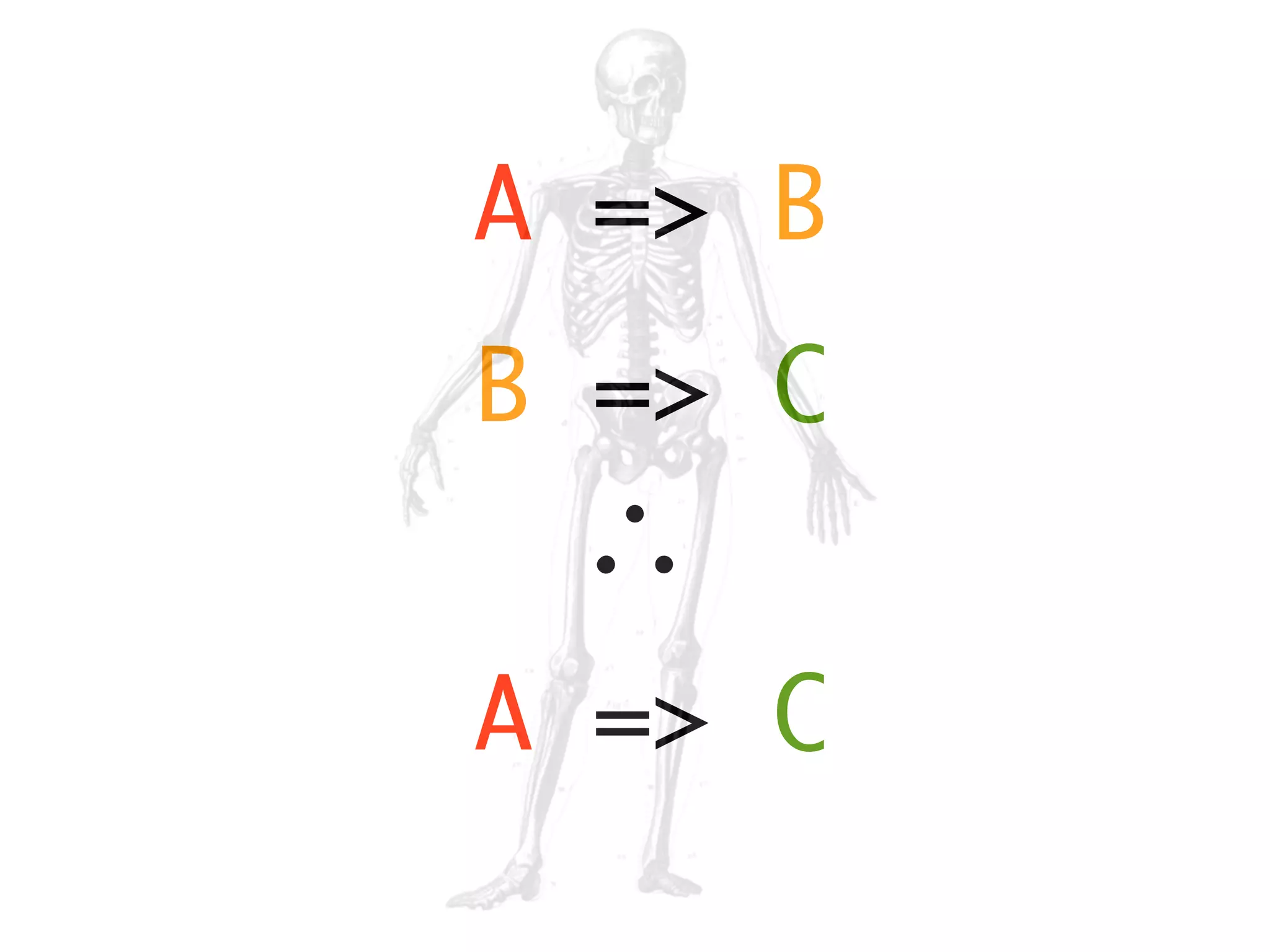
A => B 
B => C 
∴ 
A => C 
((VVoolluummee,, CCoosstt)) ==>> EExxppeennddiittuurree
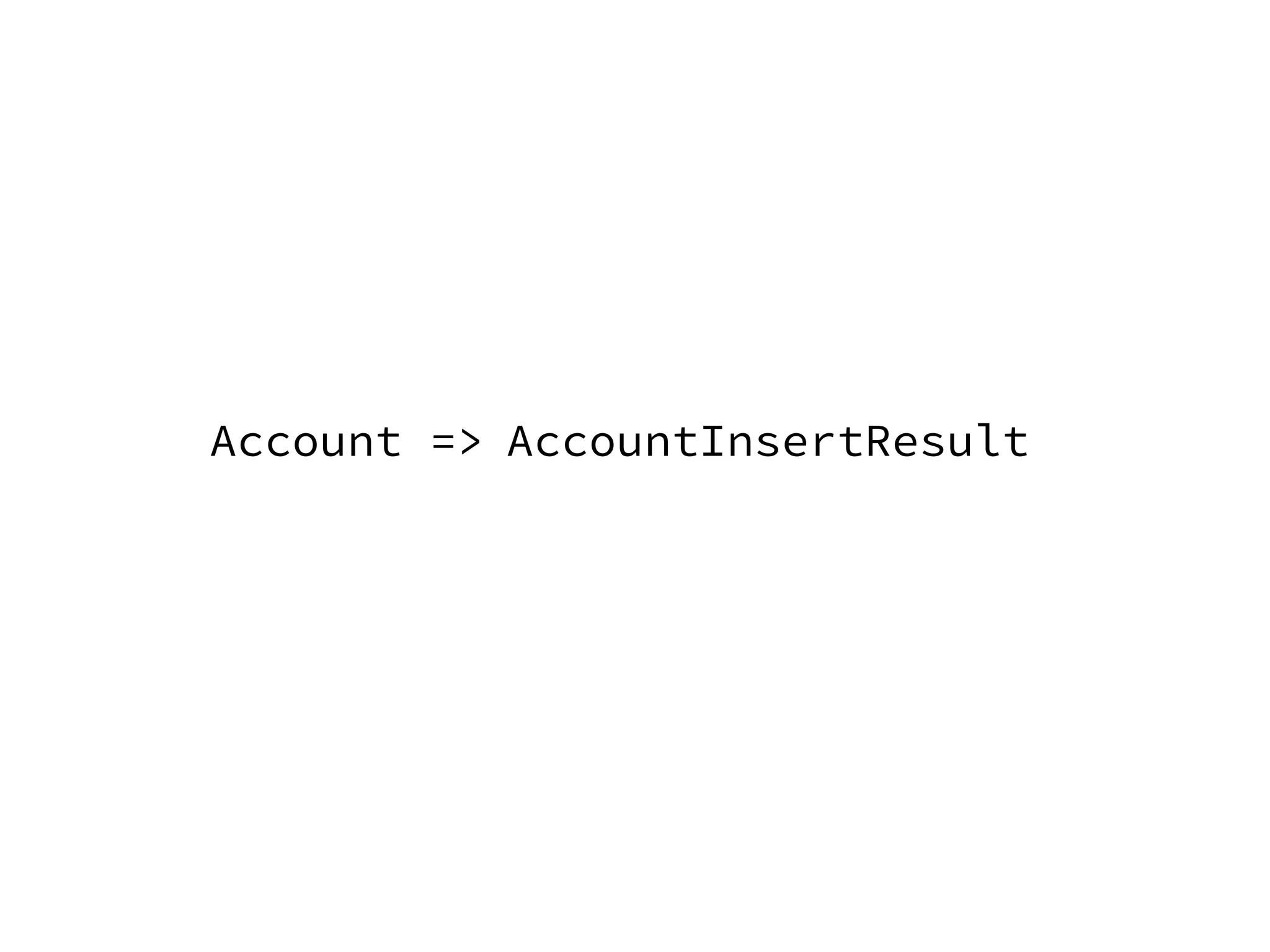
Account => AccountInsertResult
Either[AccountCreationFailure, 
] 
Account => 
AccountInserted
Either[AccountCreationFailure, 
] 
Account => 
AccountInserted
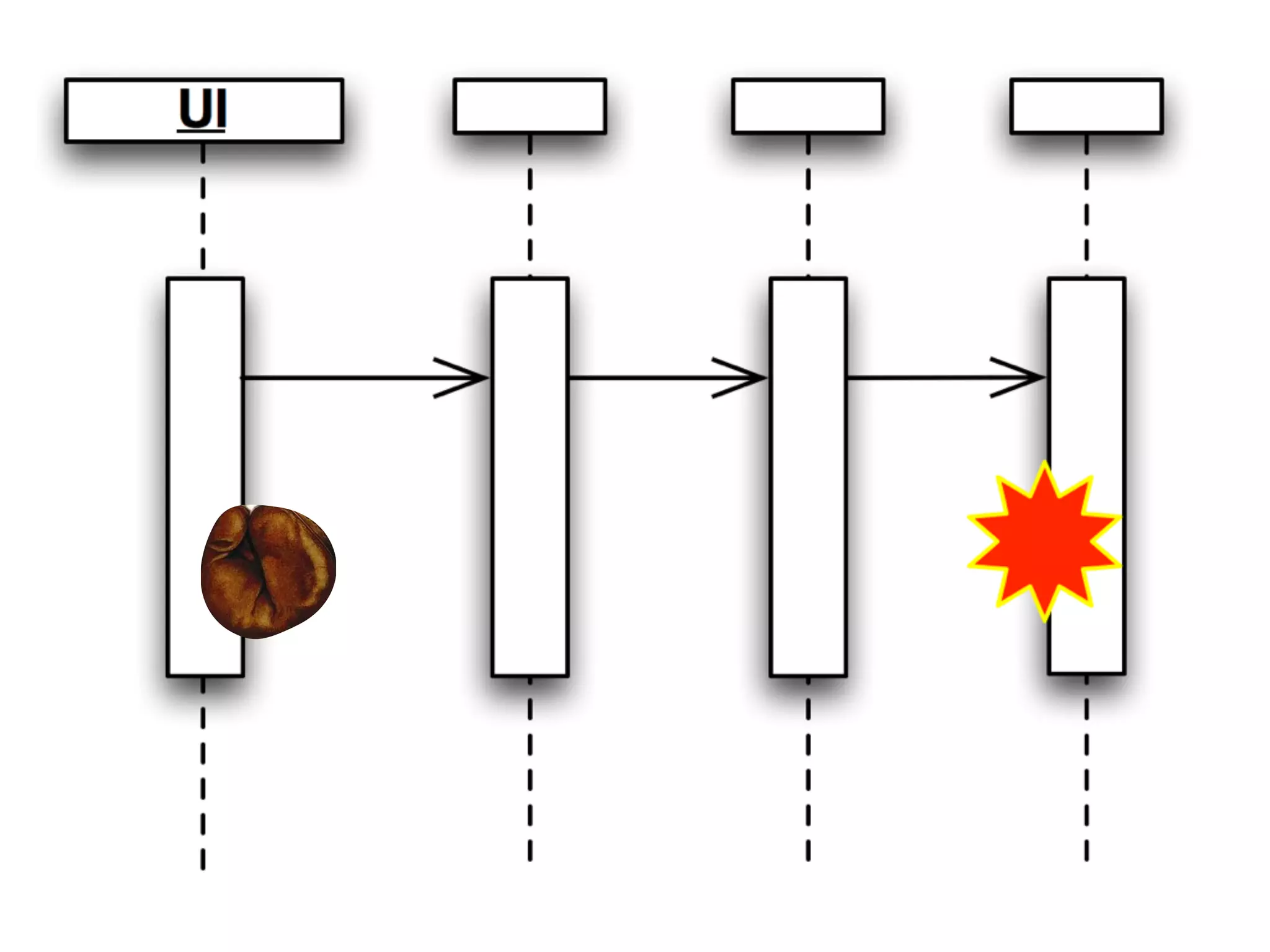
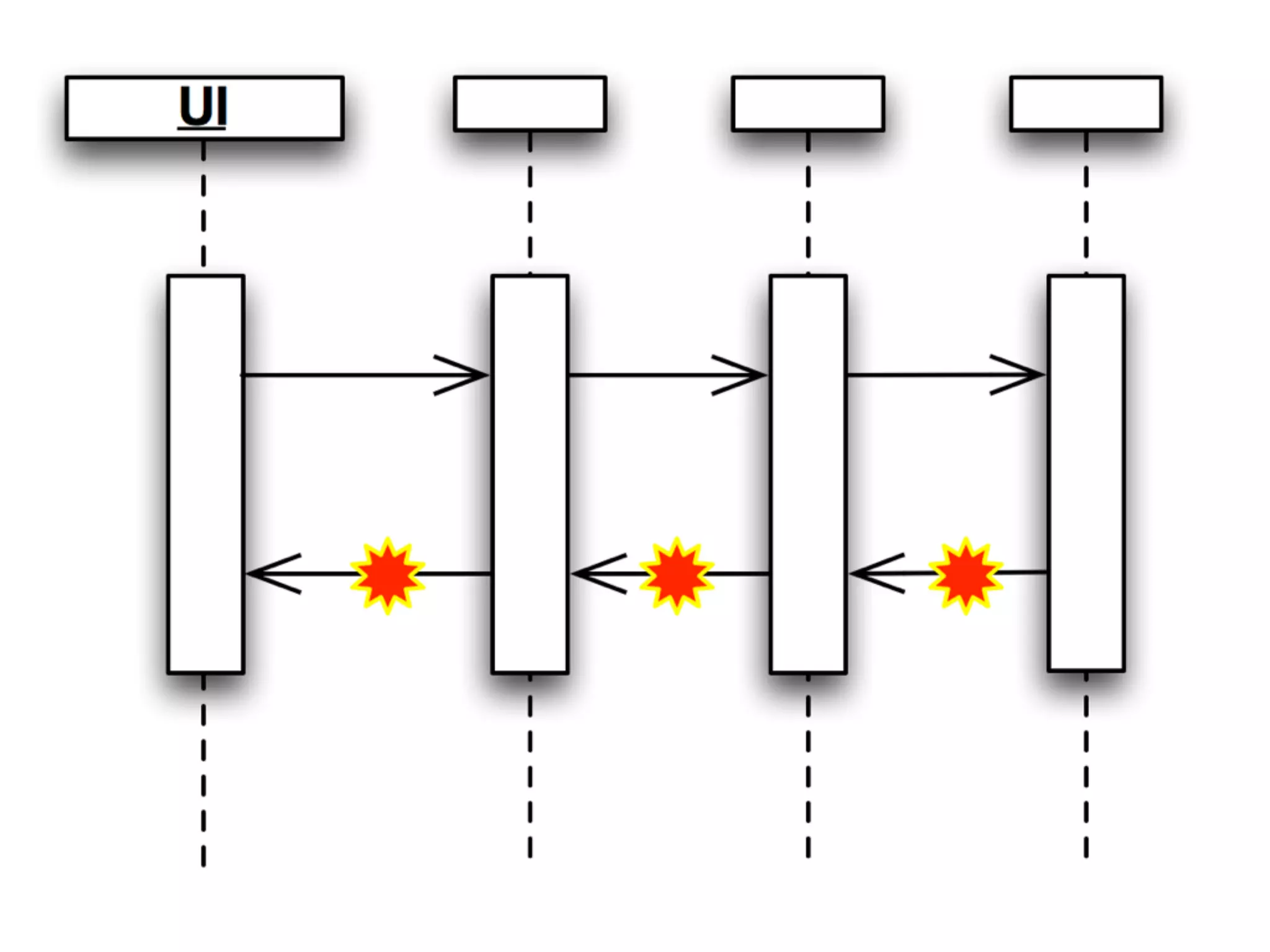
Errors are data too
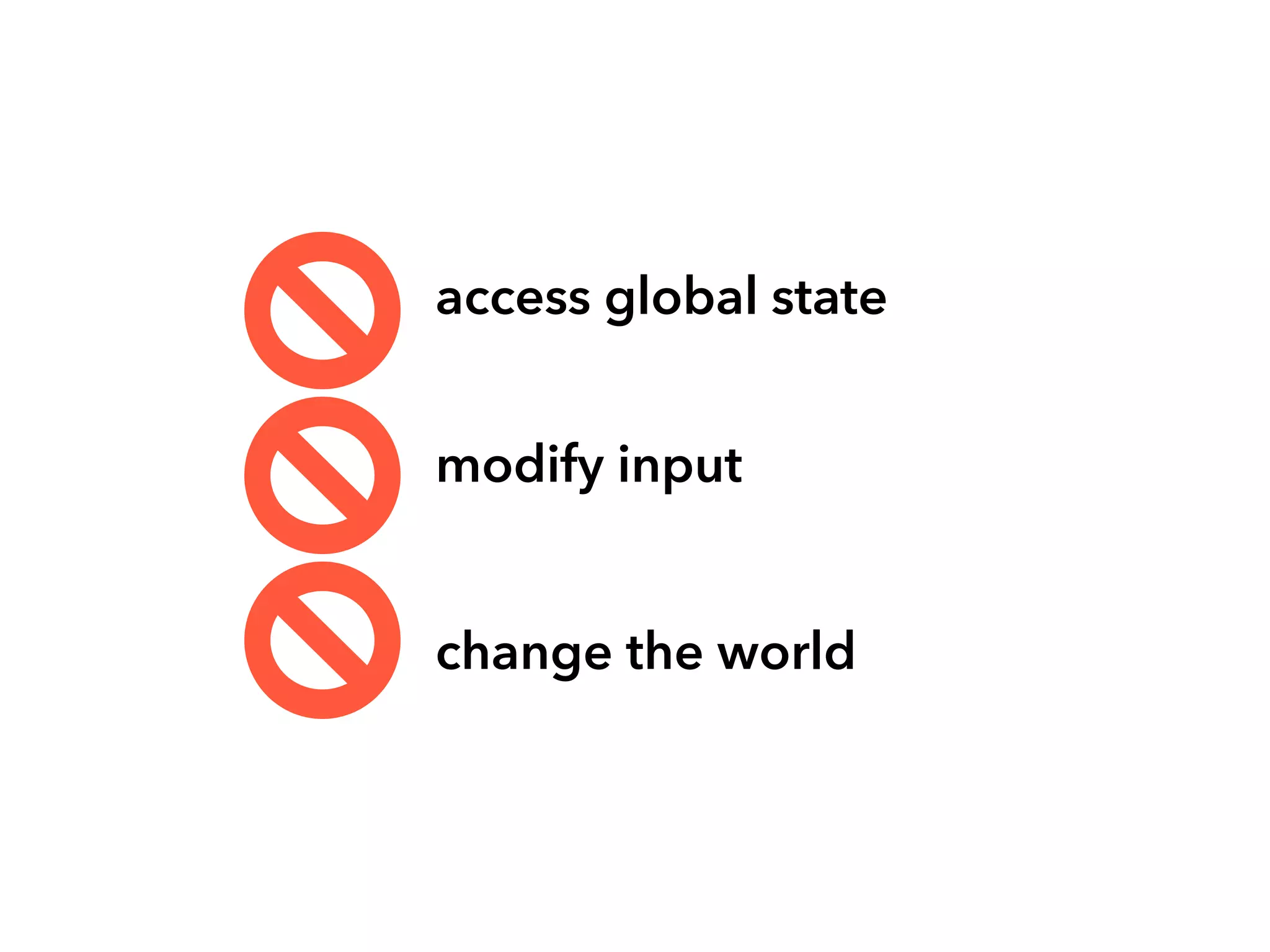
access global state 
modify input 
change the world
access global state 
modify input 
change the world 
interrupt execution flow
Either[AccountCreationFailure, 
] 
Account => 
AccountInserted
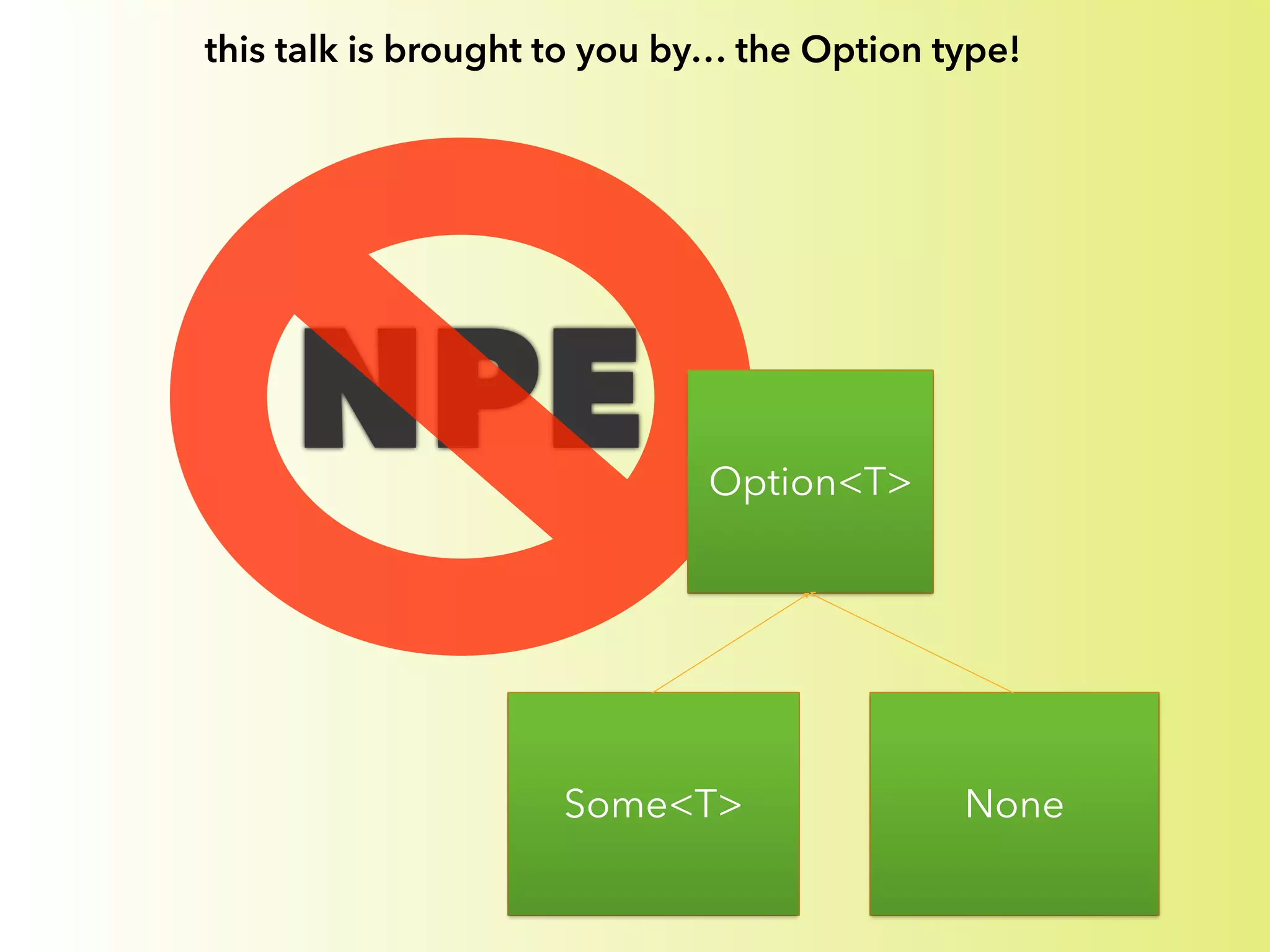
this talk is brought to you by… the Option type! 
NPE Thing 
! 
doStuff() 
NullThing 
! 
doStuff() {} 
Option<T> 
SomeThing 
! 
doStuff() {…} 
Some<T> None
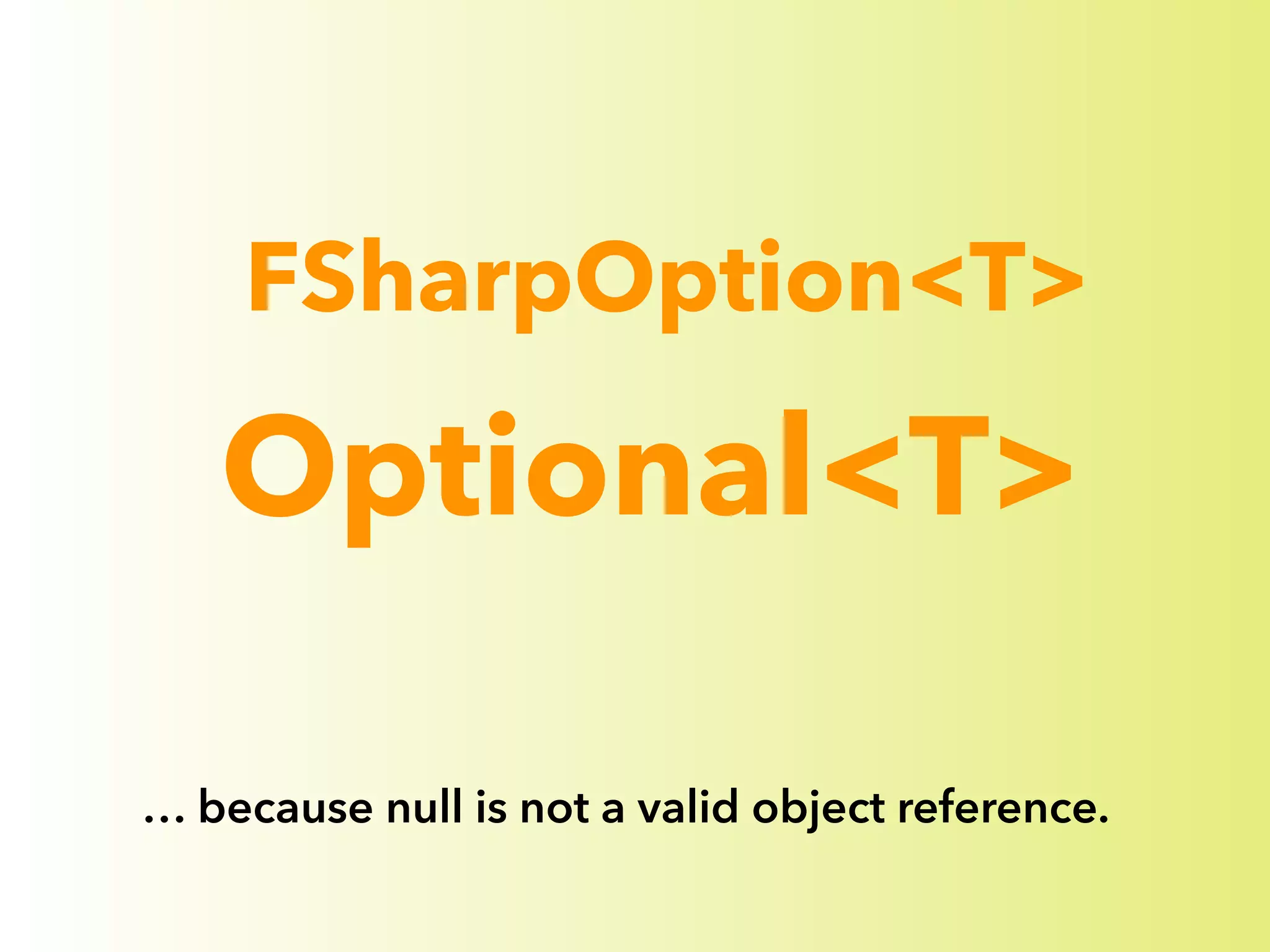
FSharpOption<T> 
! 
! 
Optional<T> 
… because null is not a valid object reference.
Verbs Are People Too
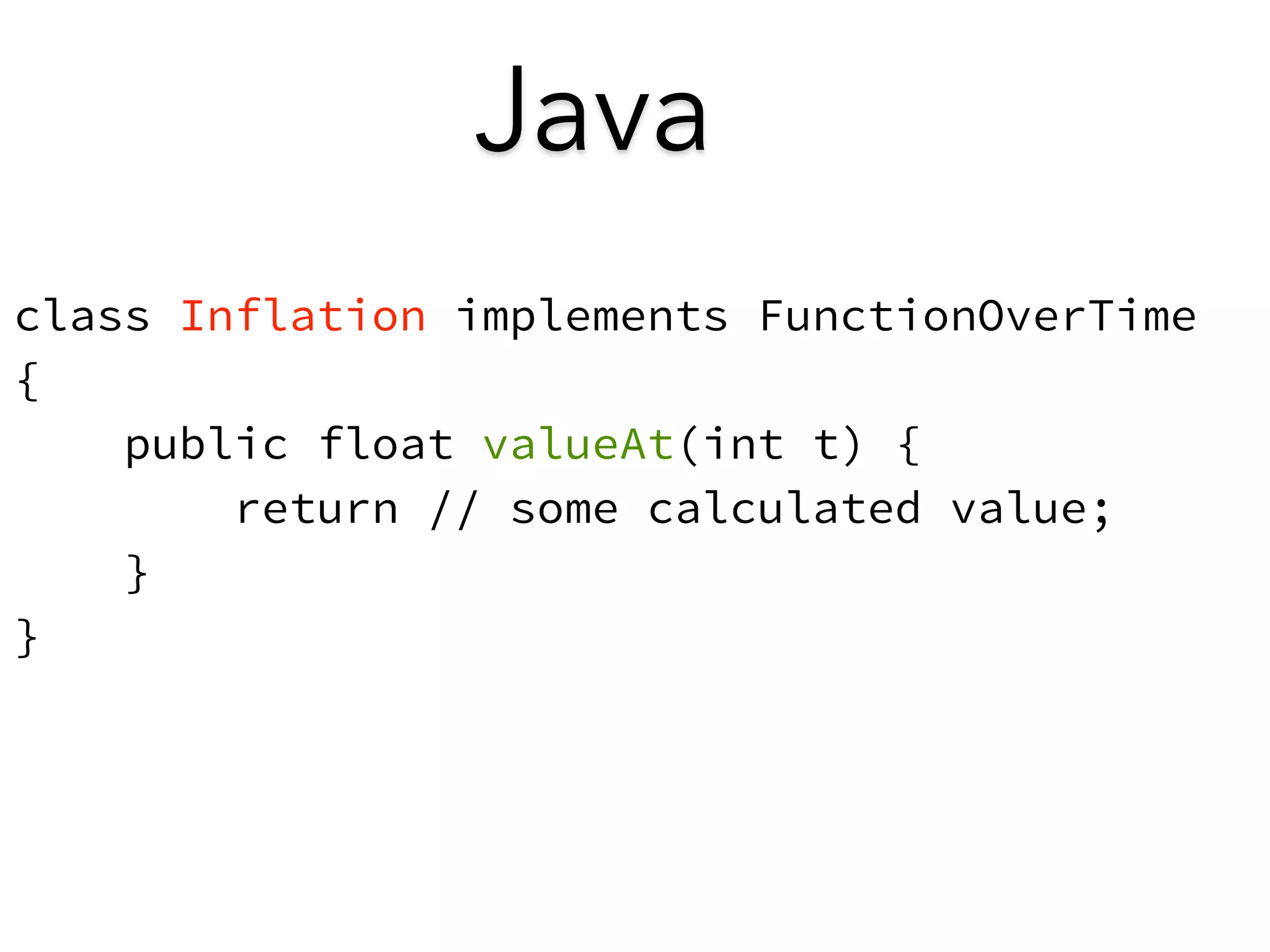
class Inflation implements FunctionOverTime 
{ 
public float valueAt(int t) { 
return // some calculated value; 
} 
} 
Java
Java 
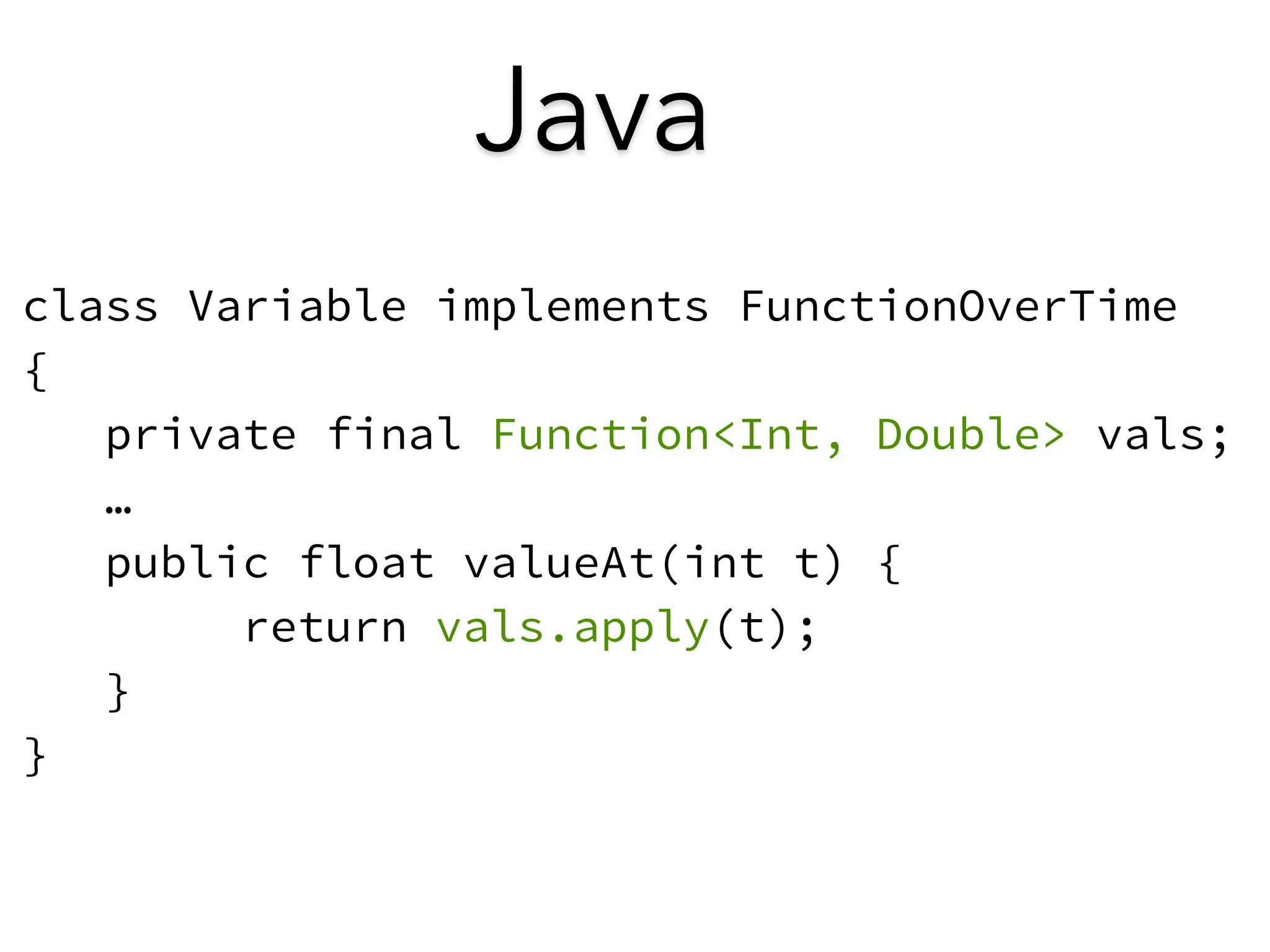
class Variable implements FunctionOverTime 
{ 
private final Function<Int, Double> vals; 
… 
public float valueAt(int t) { 
return vals.apply(t); 
} 
}
Java 
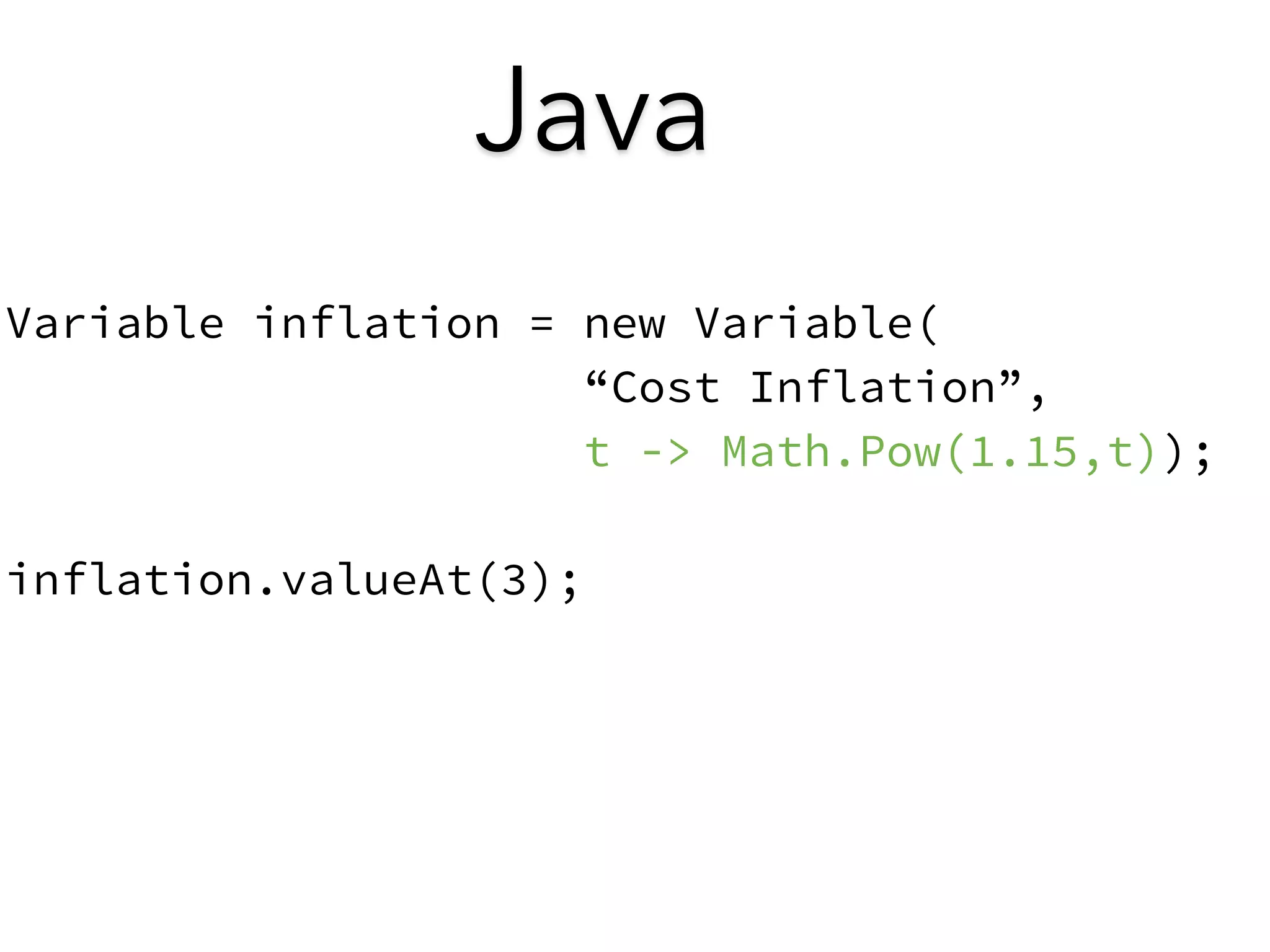
Variable inflation = new Variable( 
“Cost Inflation”, 
t -> Math.Pow(1.15,t)); 
! 
inflation.valueAt(3);
Java 6 
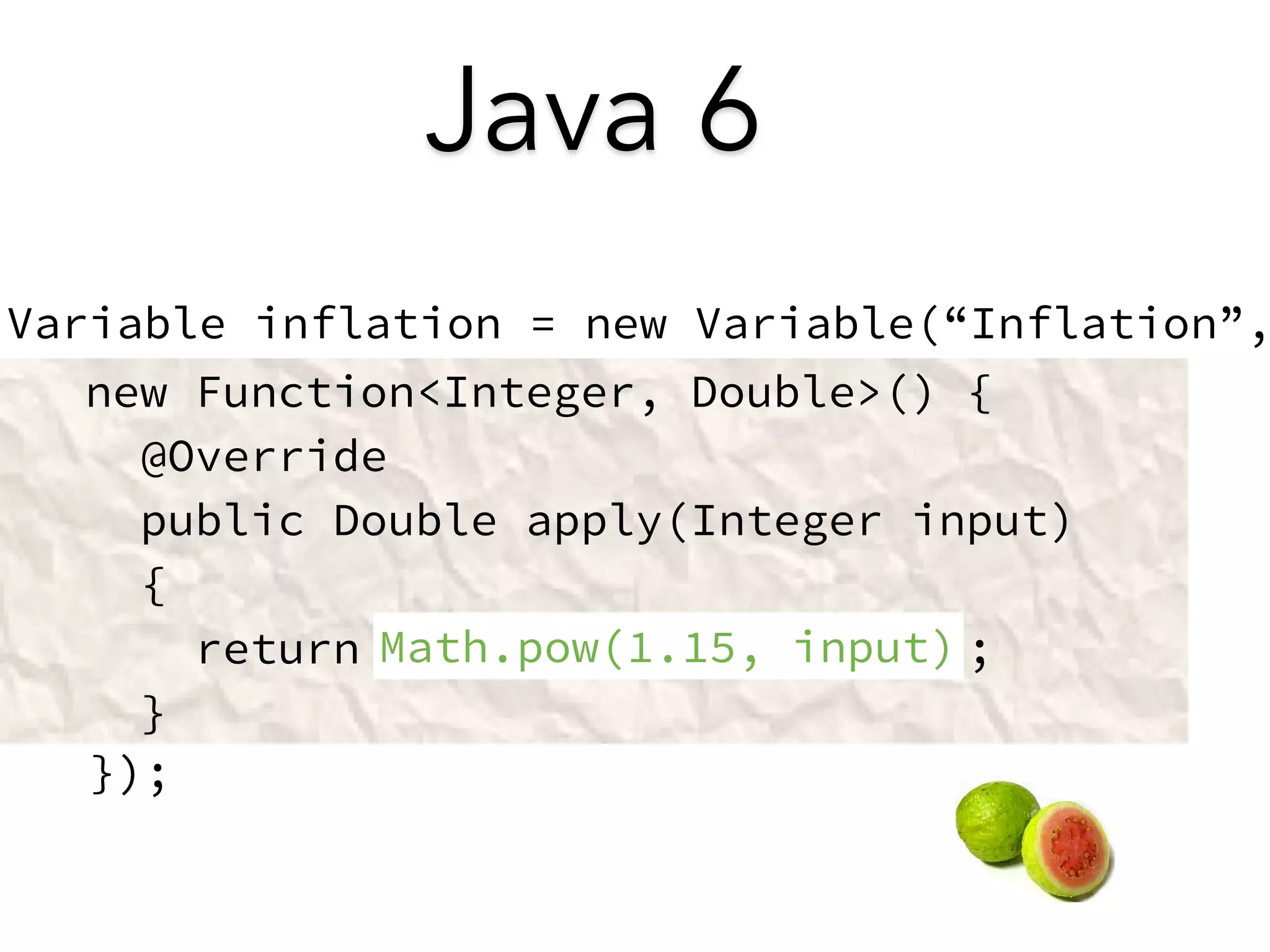
Variable inflation = new Variable(“Inflation”, 
! 
! 
! 
! 
! 
new Function<Integer, Double>() { 
@Override 
public Double apply(Integer input) 
{ 
return ; 
} 
}); 
Math.pow(1.15, input)
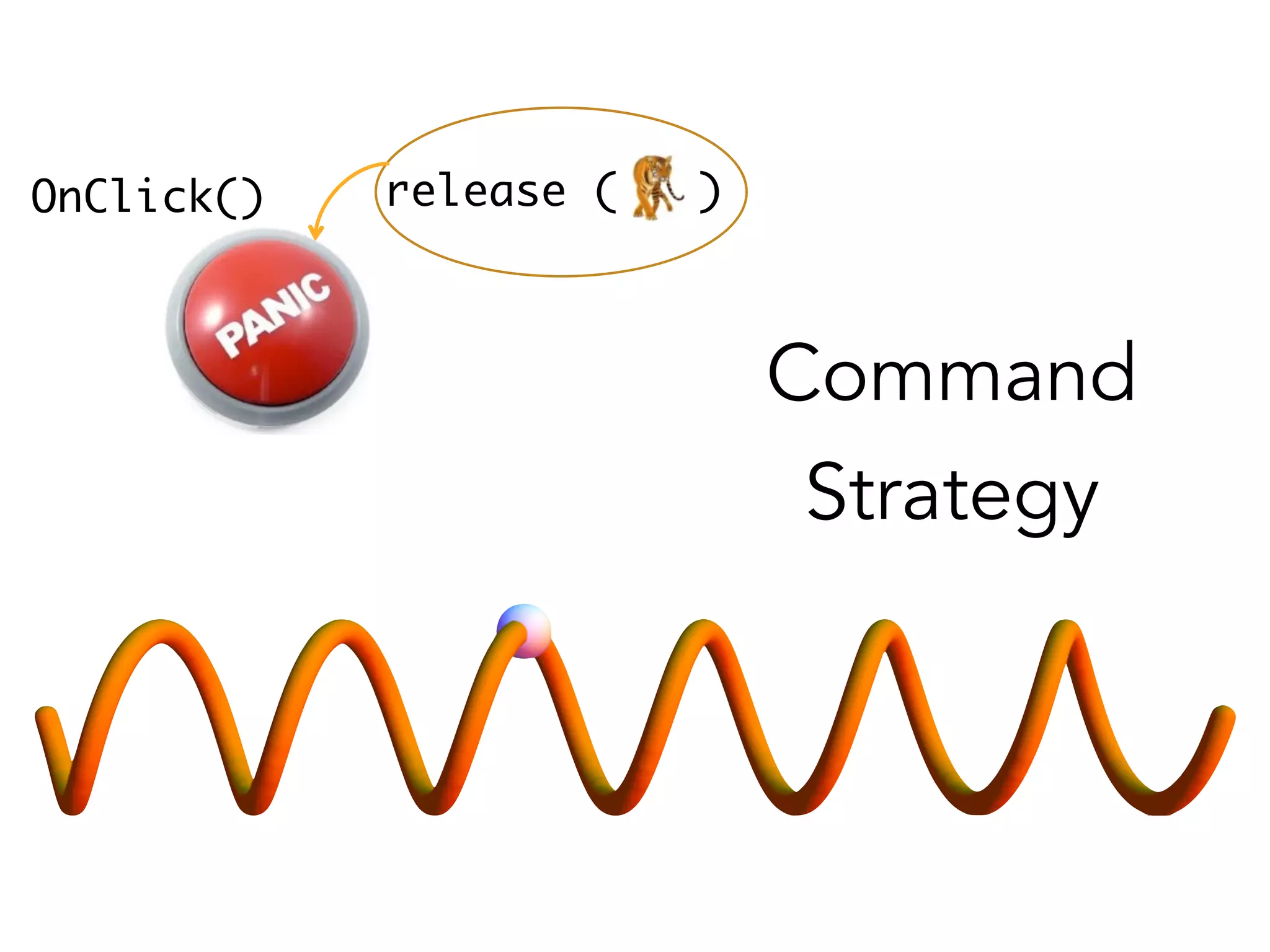
Command 
Strategy 
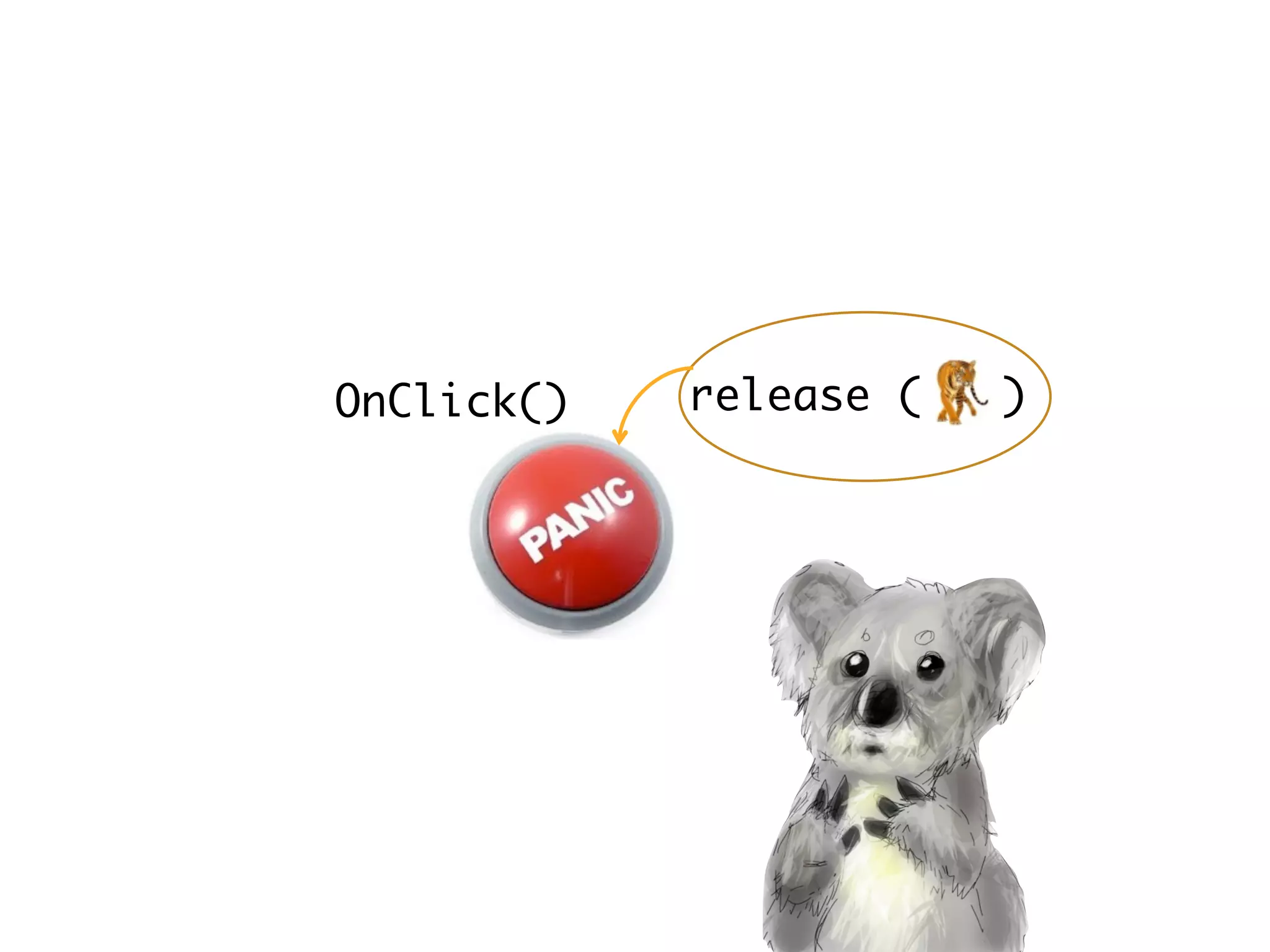
OnClick() release ( )
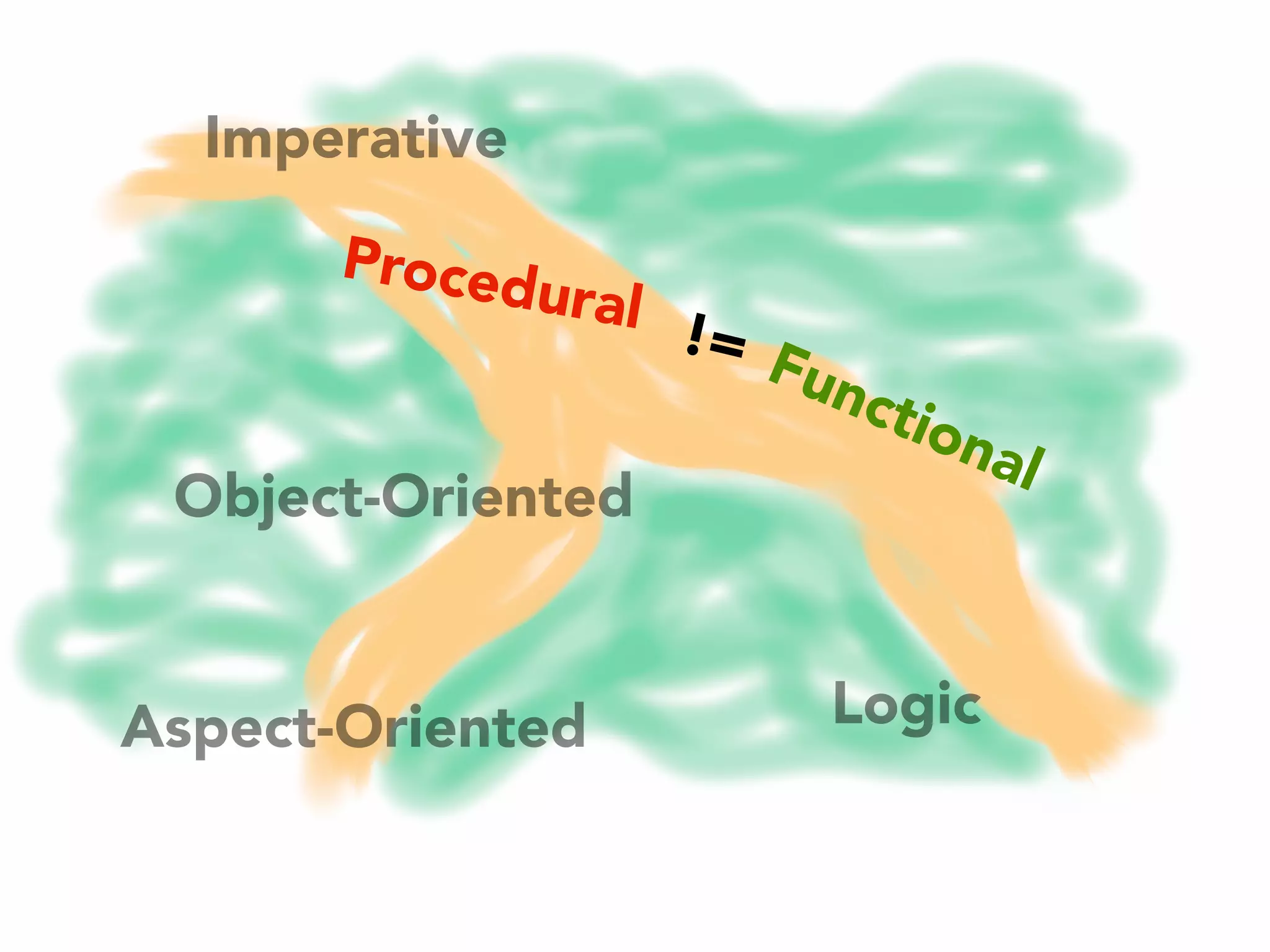
Imperative 
Procedural 
Object-Oriented 
!= 
Functional 
Aspect-Oriented Logic
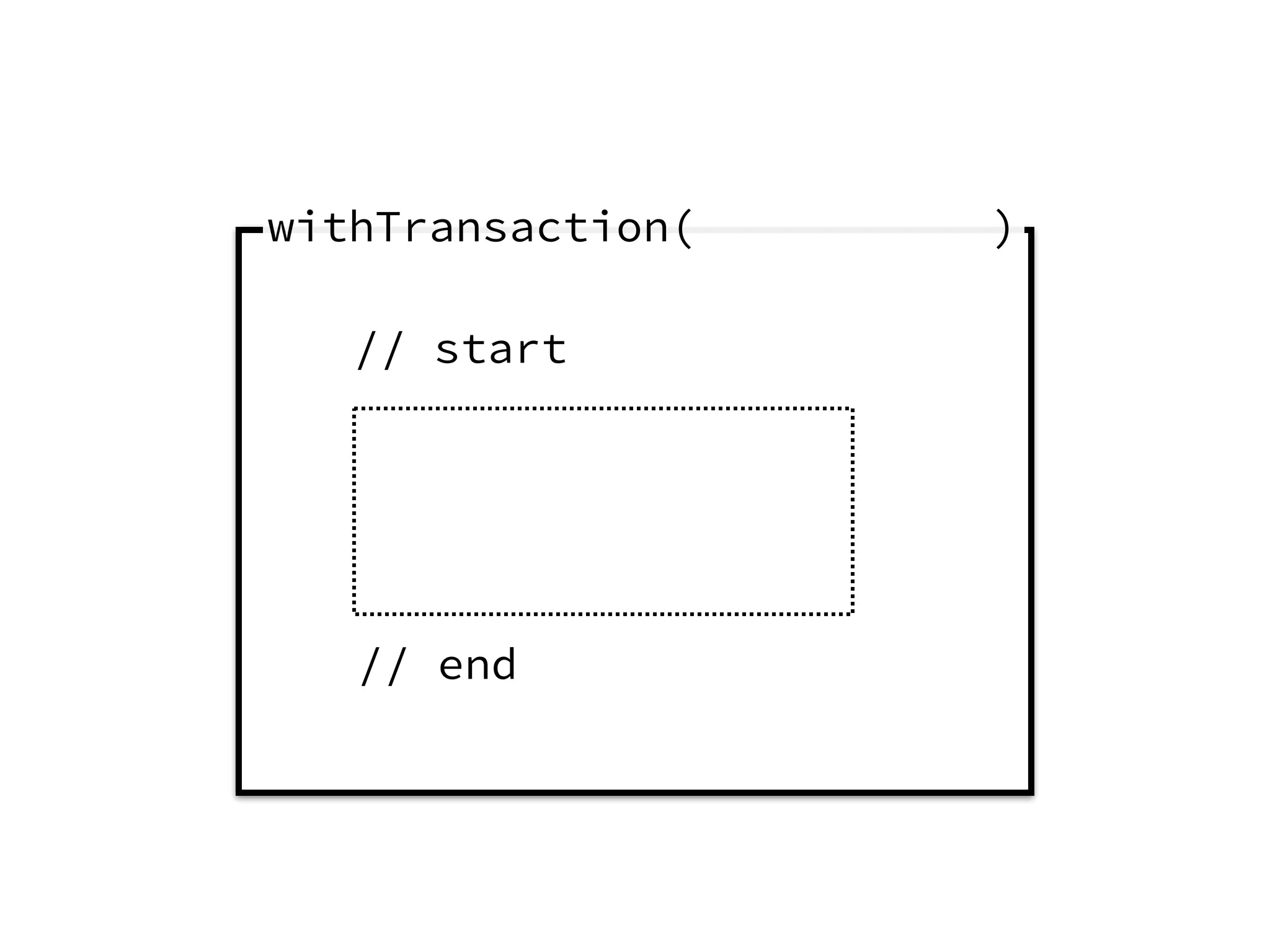
withTransaction( ) 
// start 
// end
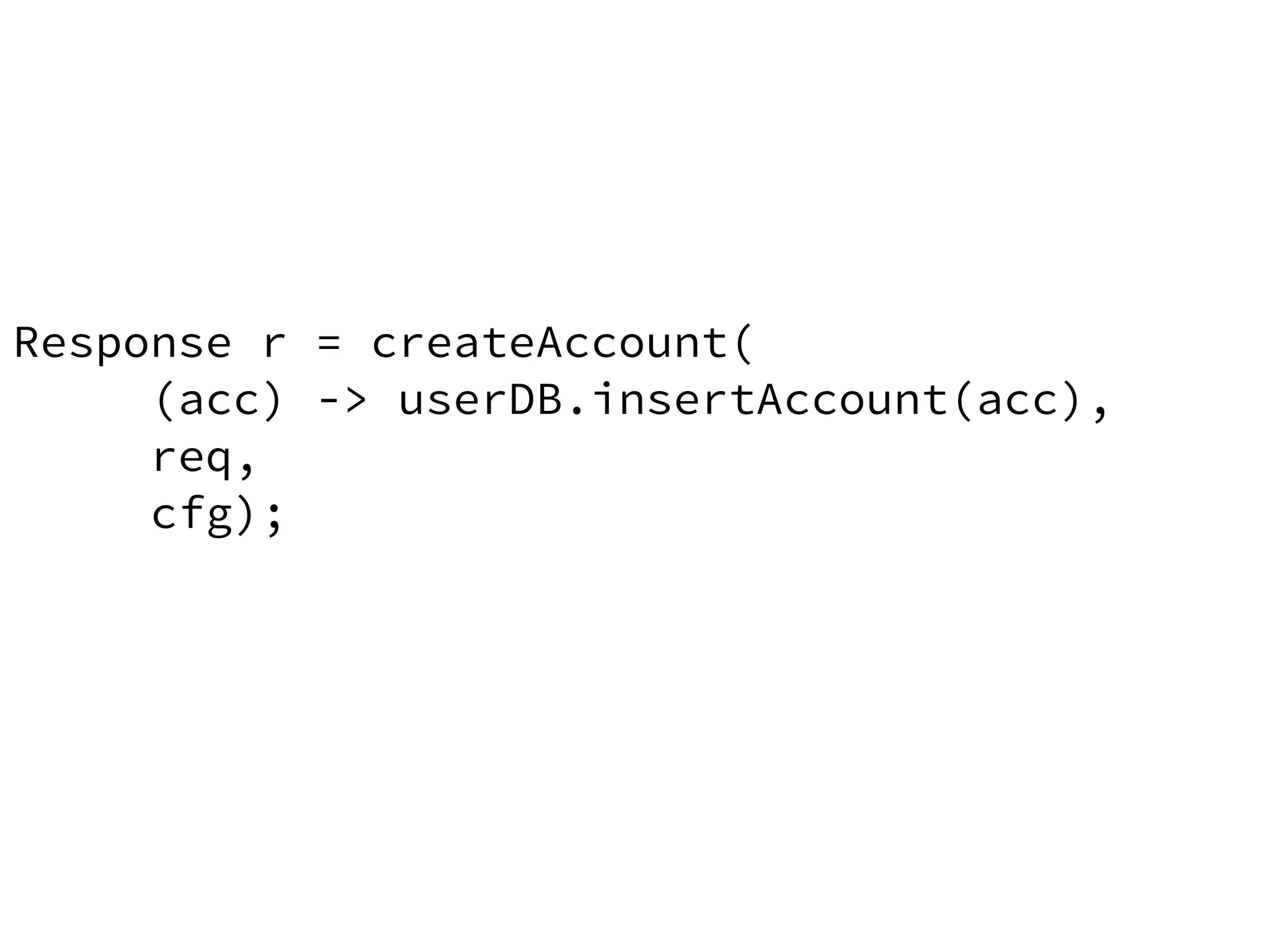
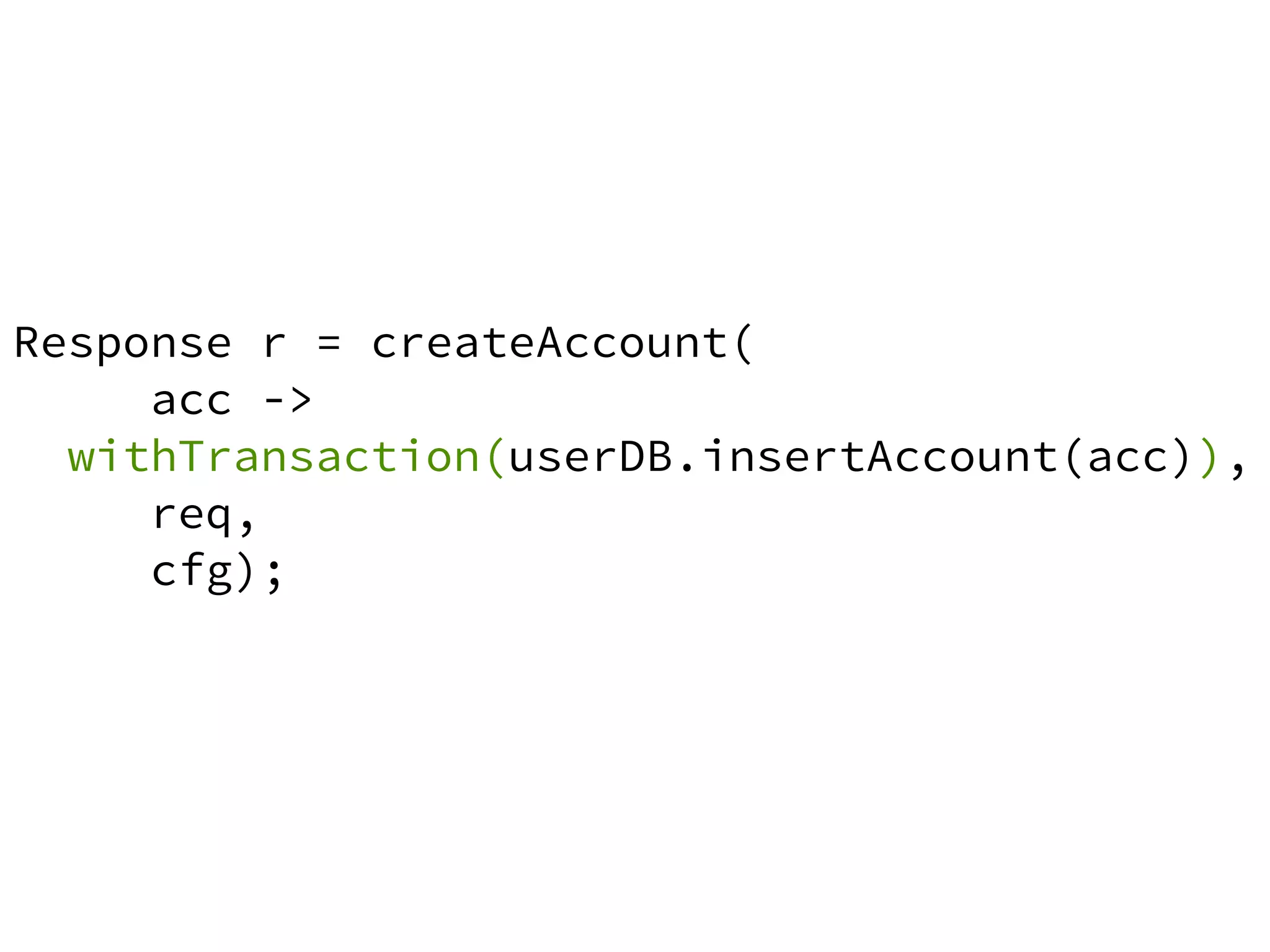
Response r = createAccount( 
(acc) -> userDB.insertAccount(acc), 
req, 
cfg);
Response r = createAccount( 
acc -> 
withTransaction(userDB.insertAccount(acc)), 
req, 
cfg);
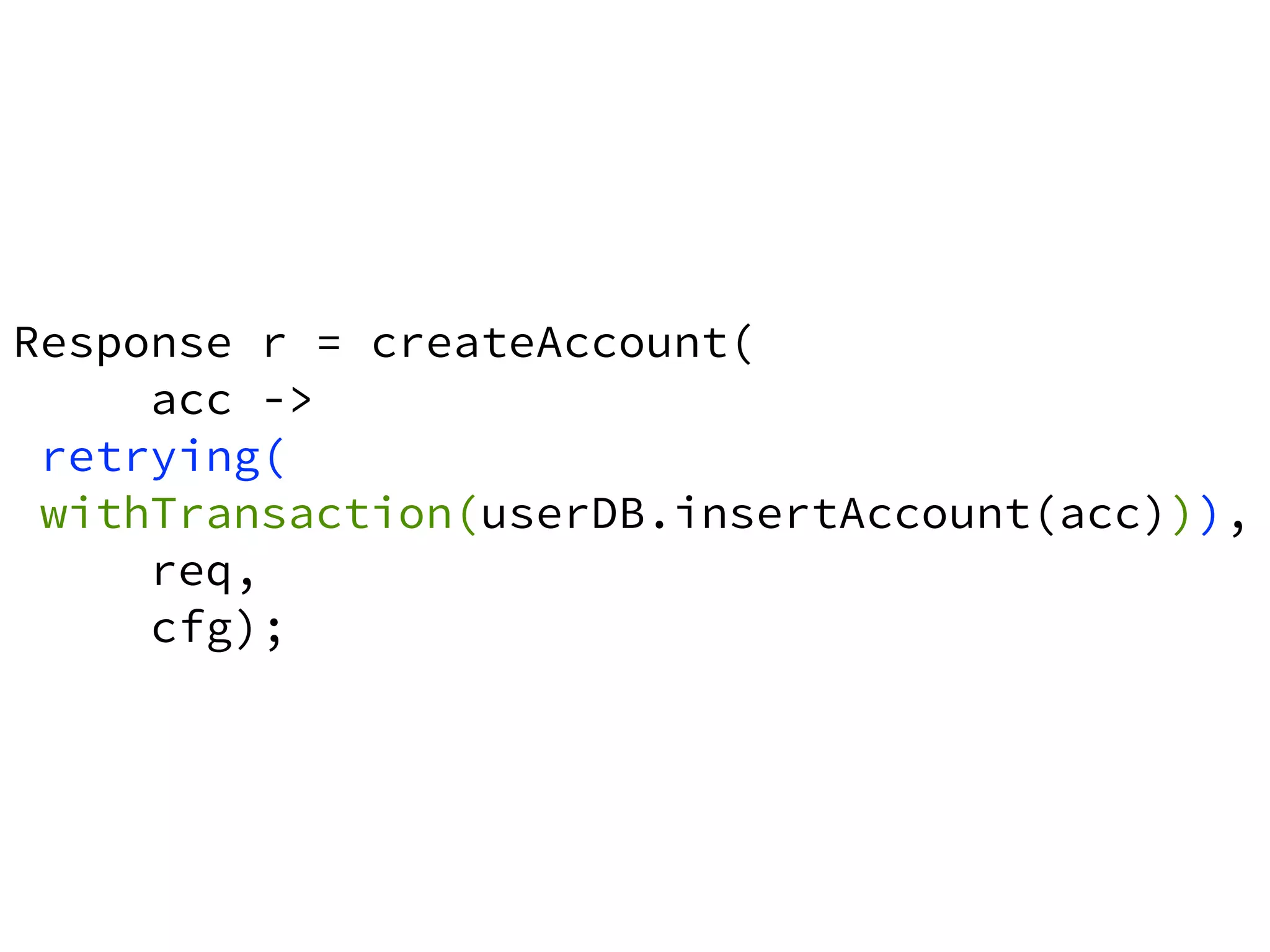
Response r = createAccount( 
acc -> 
retrying( 
withTransaction(userDB.insertAccount(acc))), 
req, 
cfg);
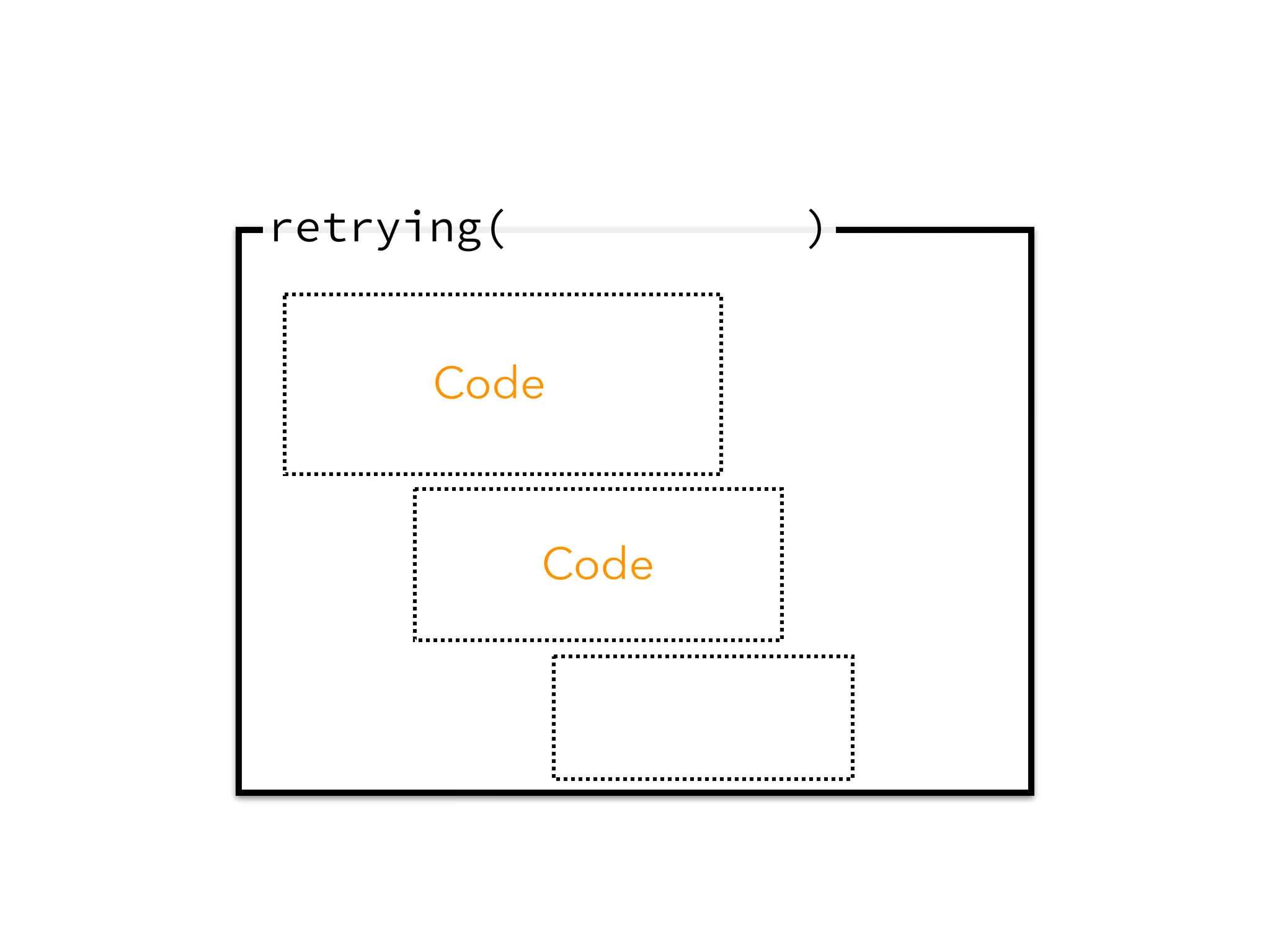
retrying( ) 
Code 
Code
Idempotence
OnClick() release ( )
Immutability
String 
Effective Java 
Effective C#
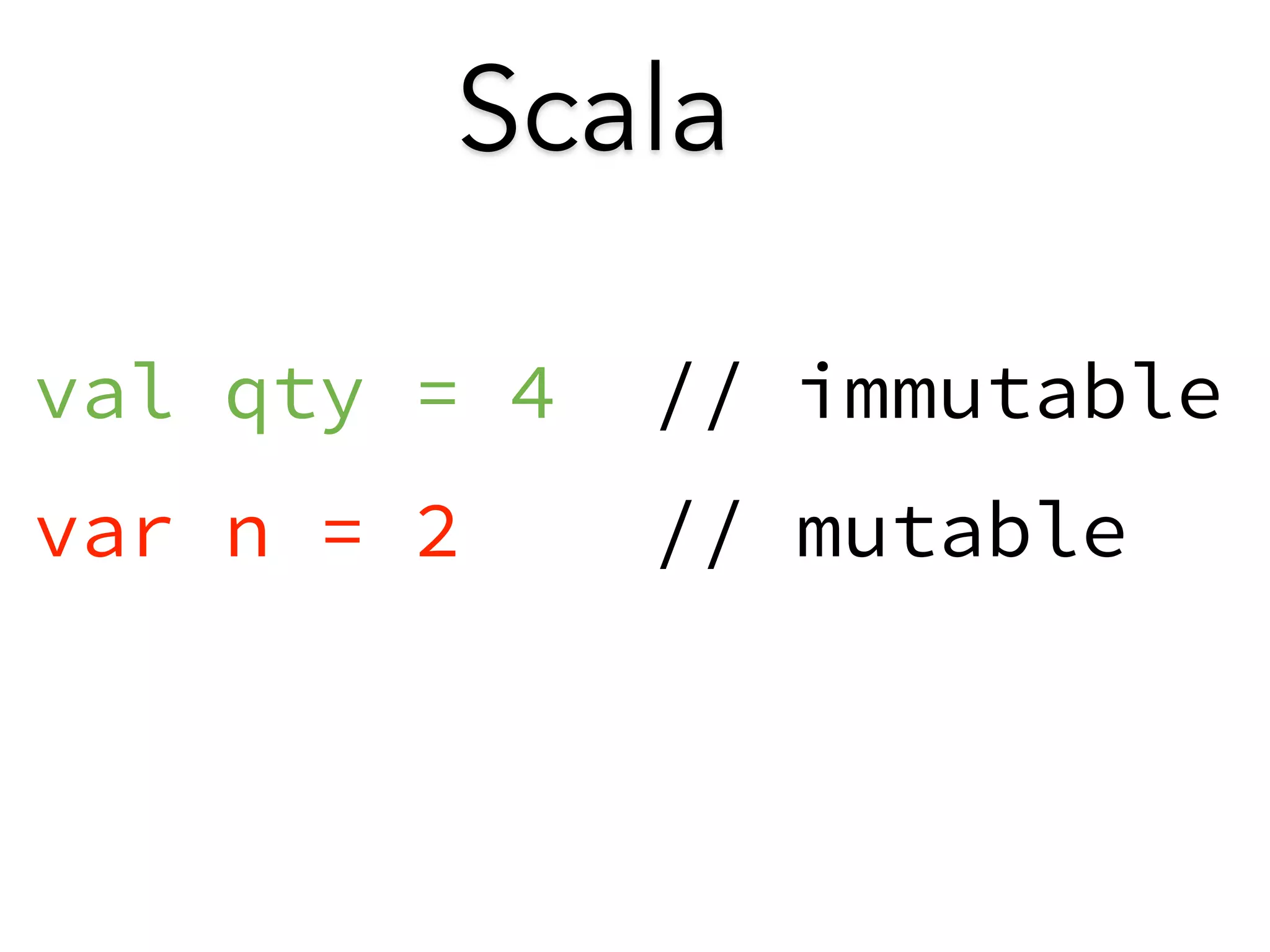
Scala 
val qty = 4 // immutable 
var n = 2 // mutable
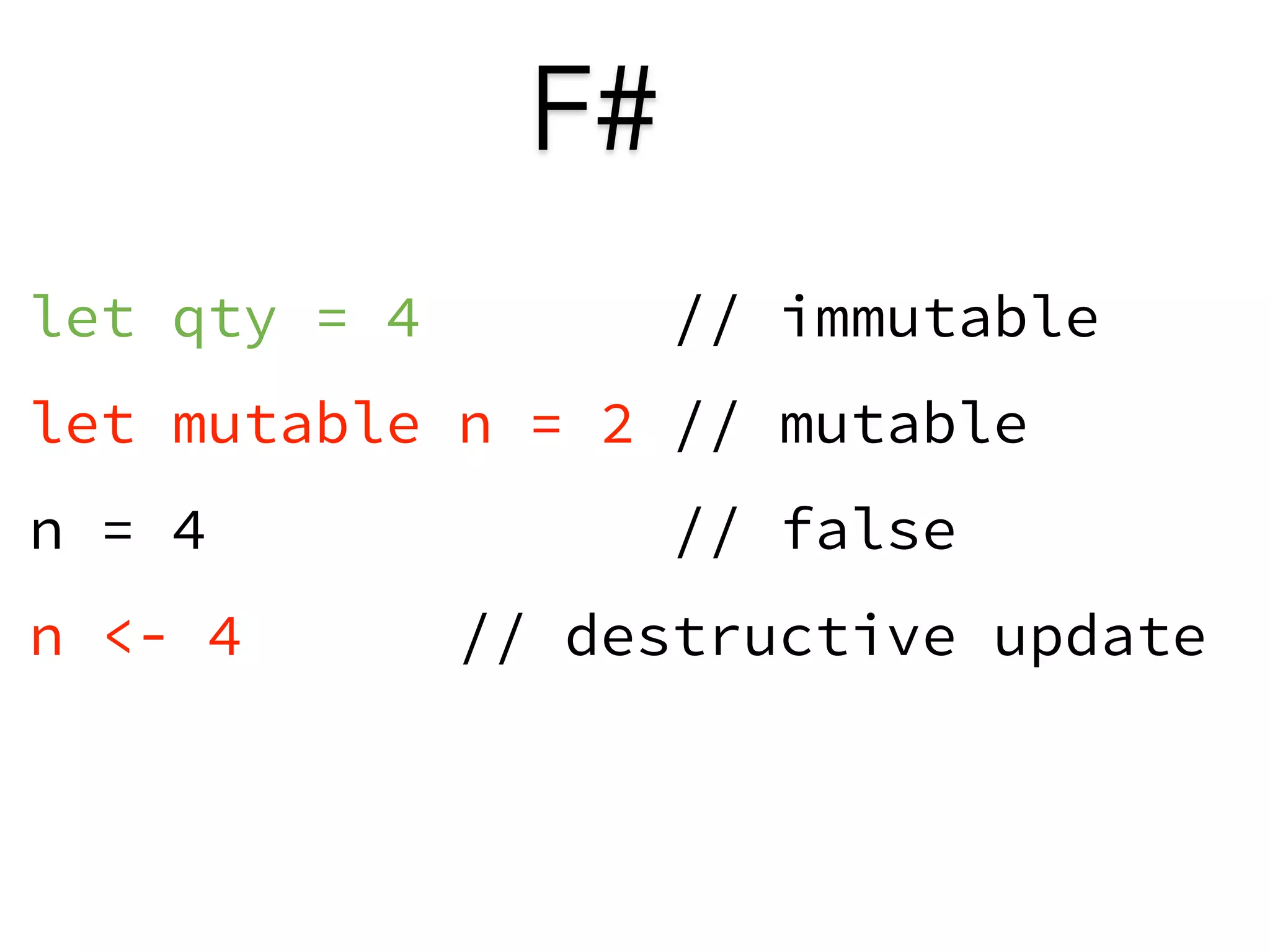
F# 
let qty = 4 // immutable 
let mutable n = 2 // mutable 
n = 4 // false 
n <- 4 // destructive update
Concurrency 
fewer possibilities
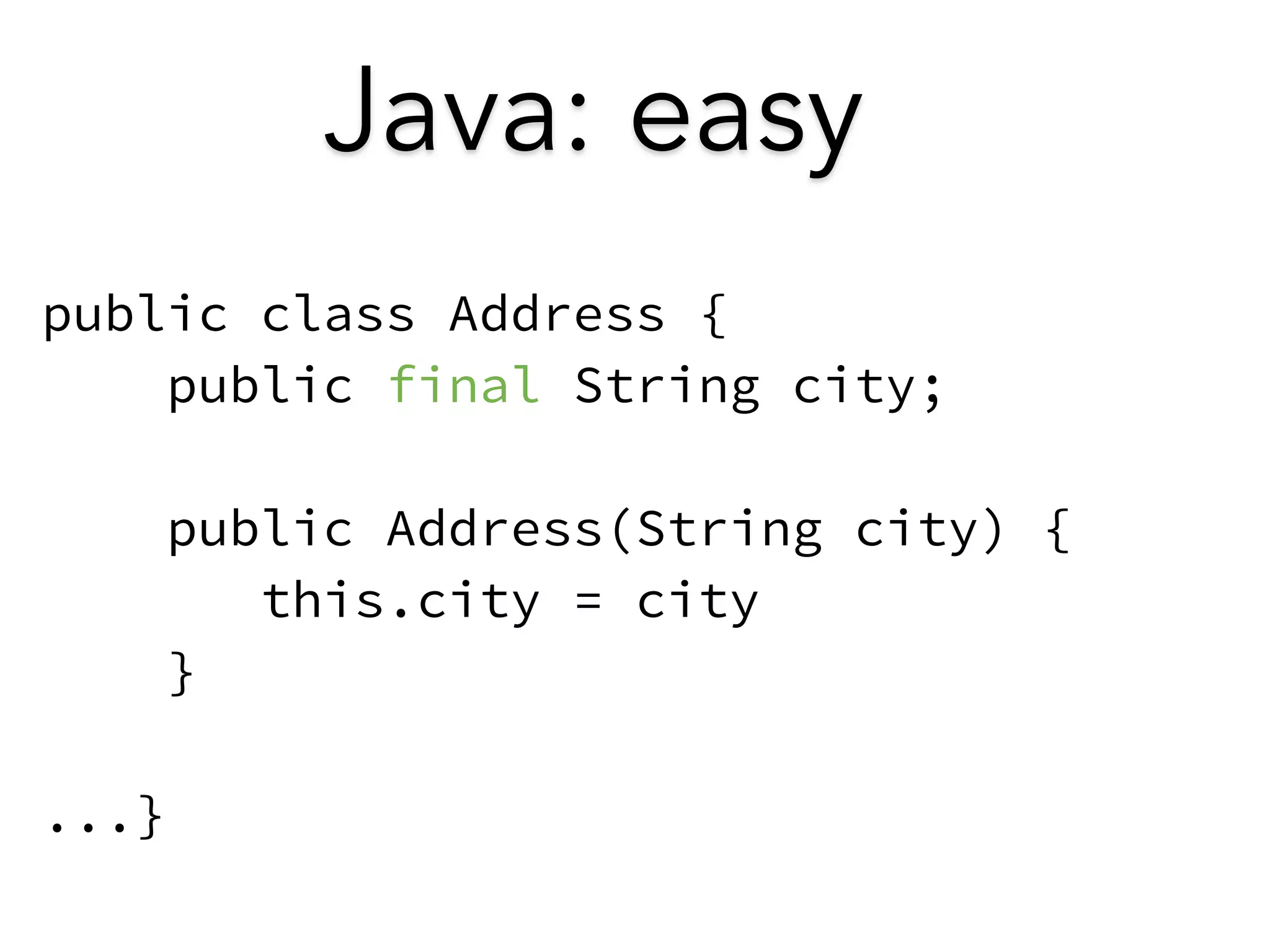
Java: easy 
public class Address { 
public final String city; 
! 
public Address(String city) { 
this.city = city 
} 
! 
...}
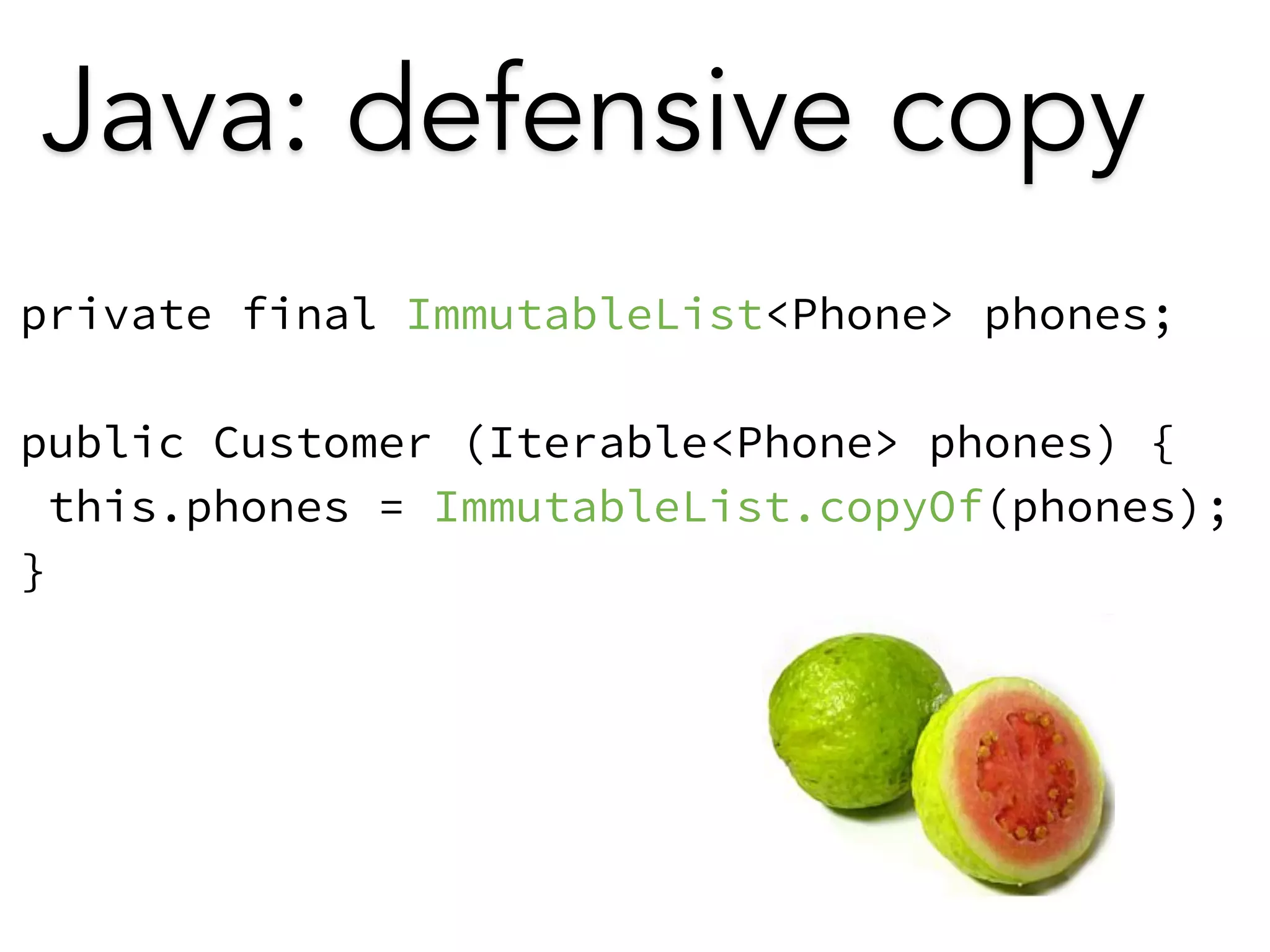
Java: defensive copy 
private final ImmutableList<Phone> phones; 
! 
public Customer (Iterable<Phone> phones) { 
this.phones = ImmutableList.copyOf(phones); 
}
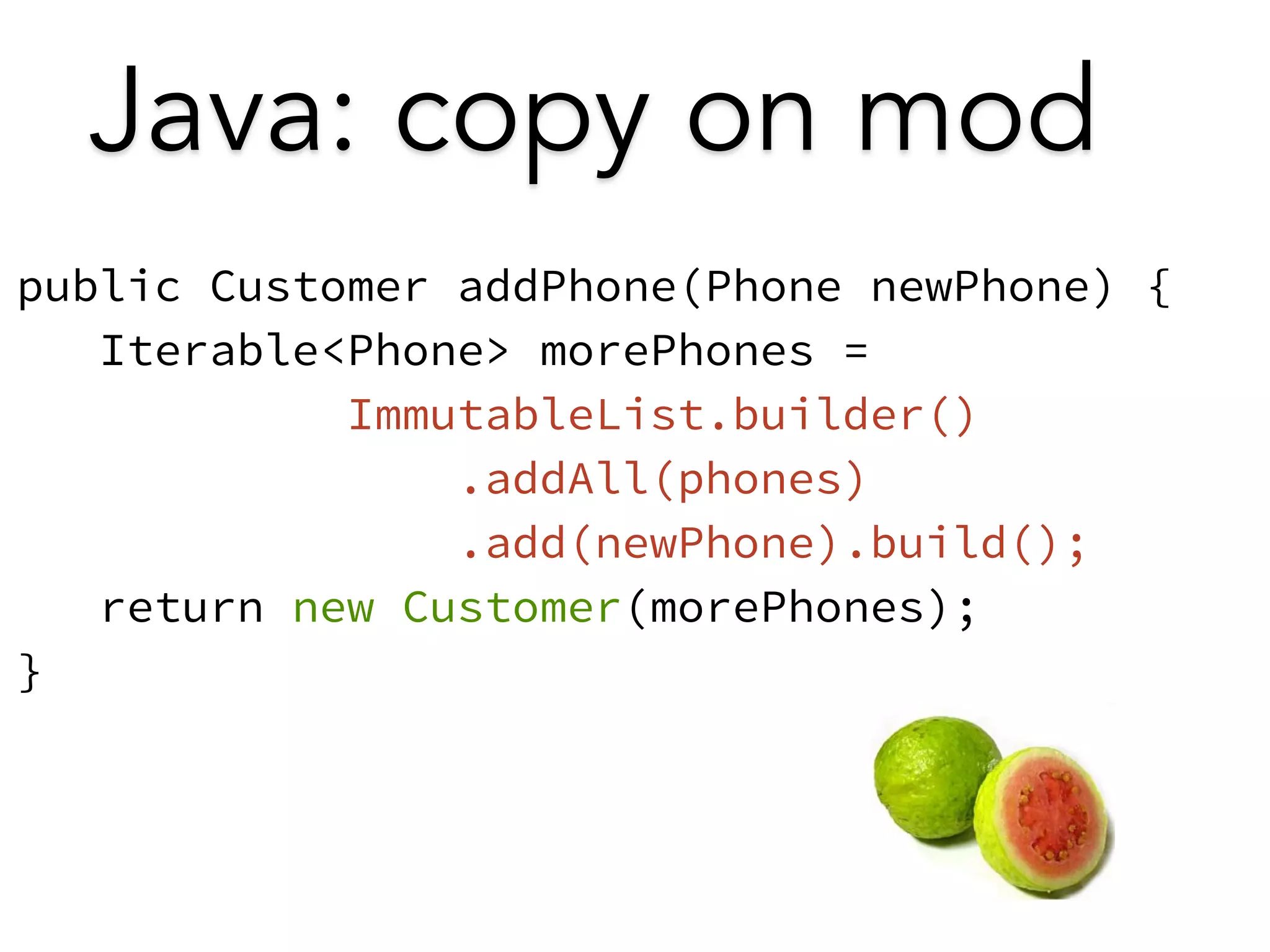
Java: copy on mod 
public Customer addPhone(Phone newPhone) { 
Iterable<Phone> morePhones = 
ImmutableList.builder() 
.addAll(phones) 
.add(newPhone).build(); 
return new Customer(morePhones); 
}
F#: copy on mod 
member this.AddPhone (newPhone : Phone) { 
new Customer(newPhone :: phones) 
}
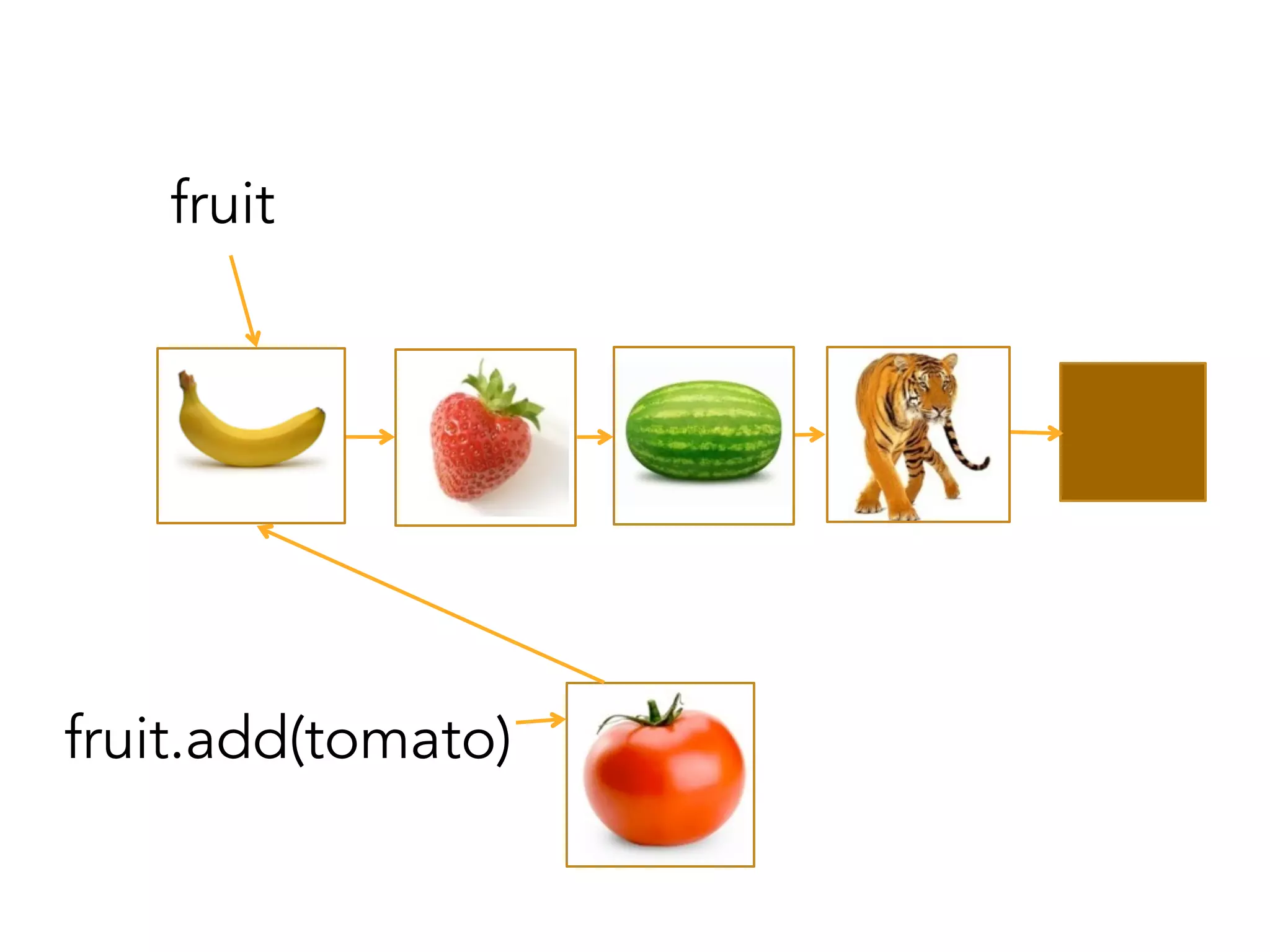
fruit 
fruit.add(tomato)
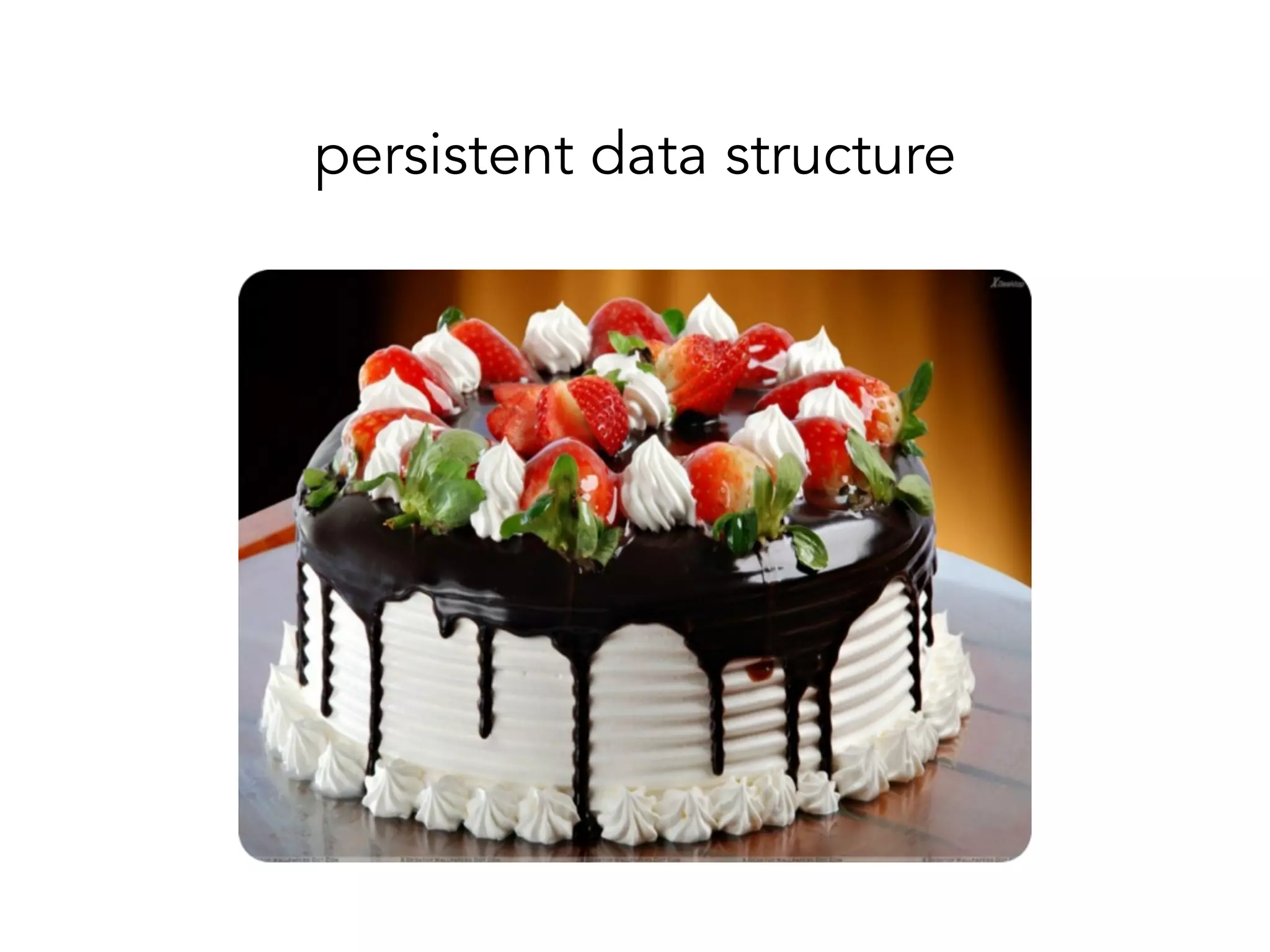
persistent data structure
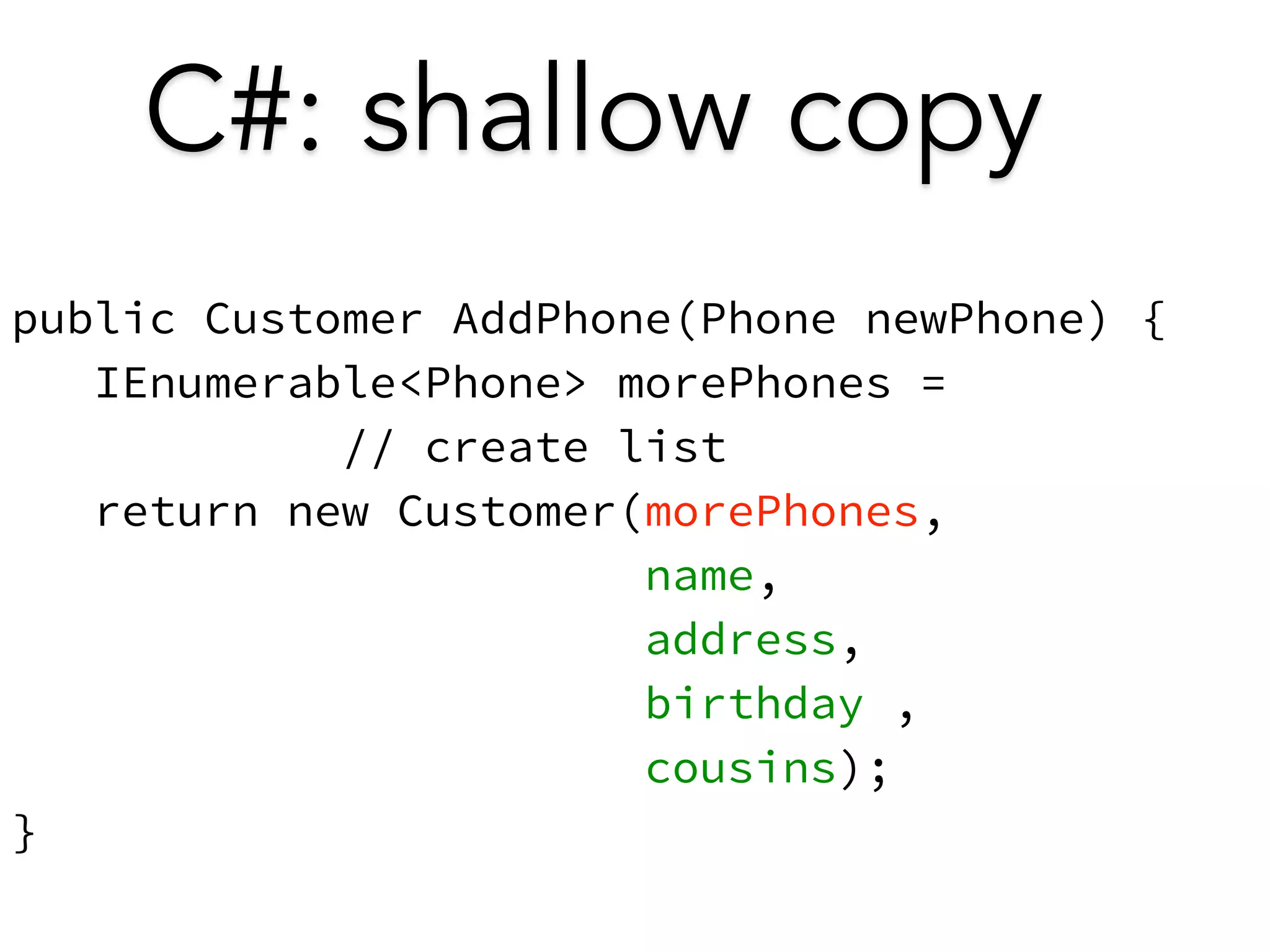
C#: shallow copy 
public Customer AddPhone(Phone newPhone) { 
IEnumerable<Phone> morePhones = 
// create list 
return new Customer(morePhones, 
name, 
address, 
birthday , 
cousins); 
}
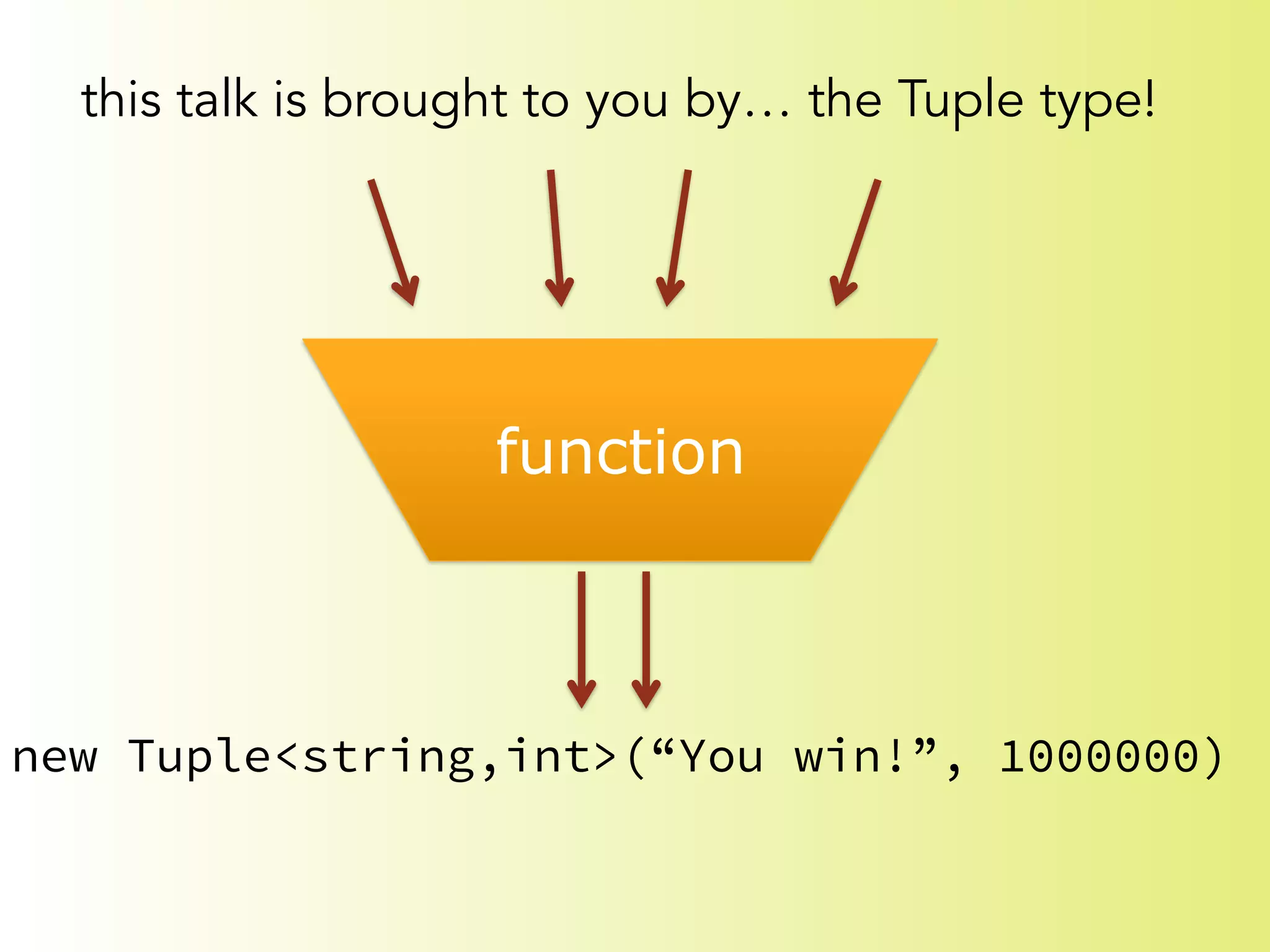
this talk is brought to you by… the Tuple type! 
function 
new Tuple<string,int>(“You win!”, 1000000)
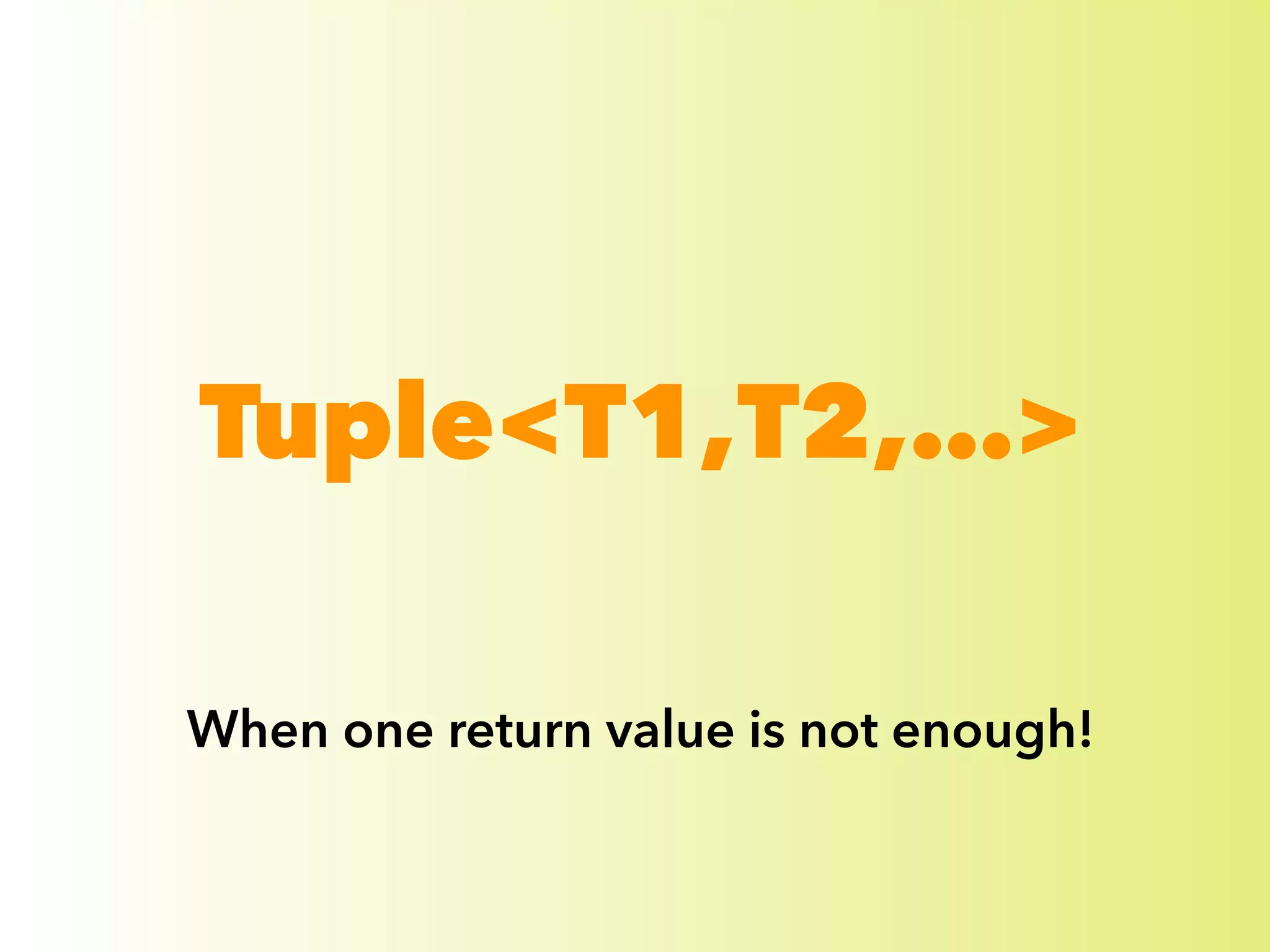
Tuple<T1,T2,…> 
When one return value is not enough!
Declarative Style
say what you’re doing, 
not how you’re doing it
Never tell people how to do things. Tell them what 
to do and they will surprise you with their ingenuity.
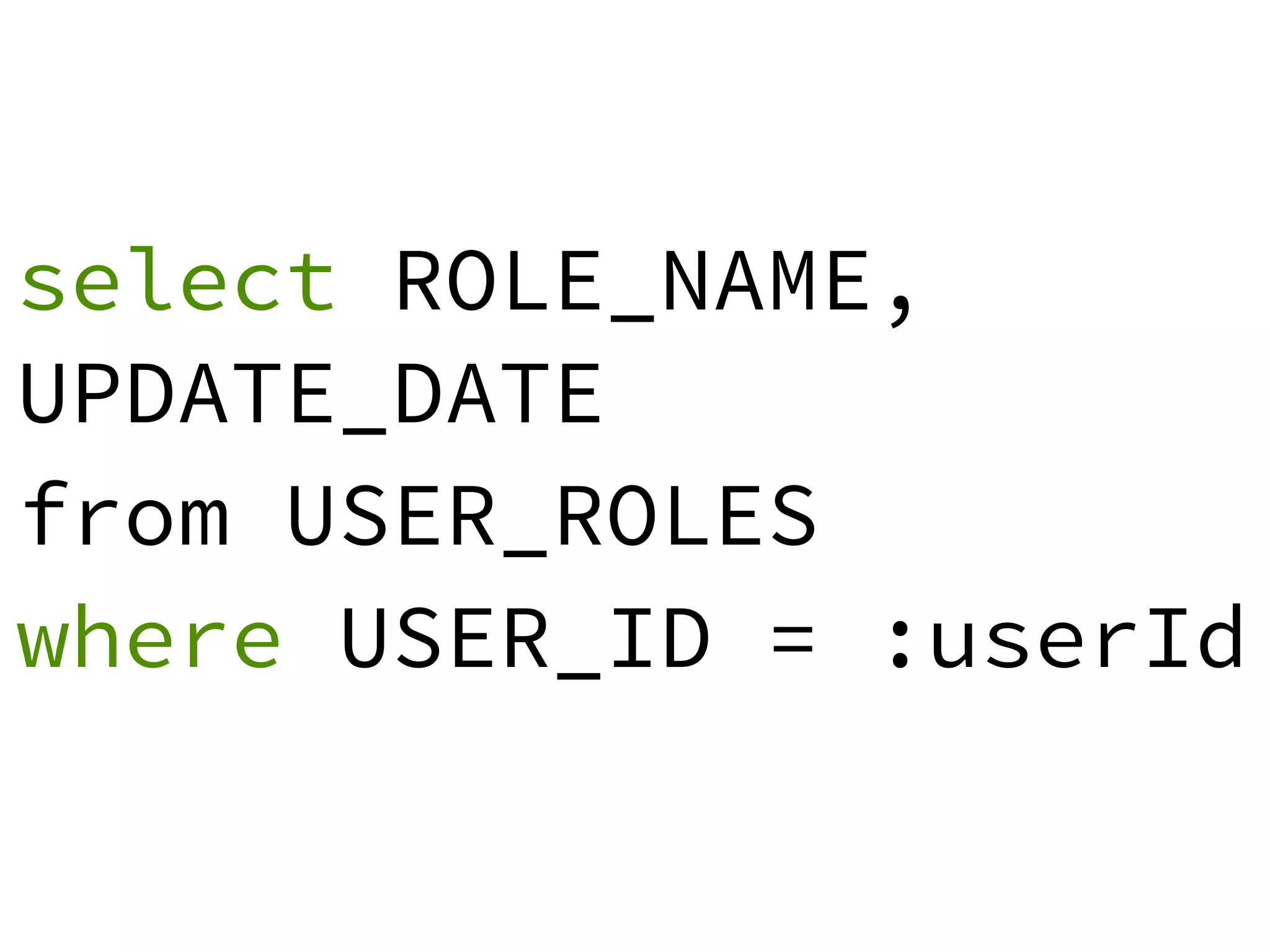
select ROLE_NAME, 
UPDATE_DATE 
from USER_ROLES 
where USER_ID = :userId
readable code 
only the essentials
Java 
public List<String> findBugReports(List<String> lines) 
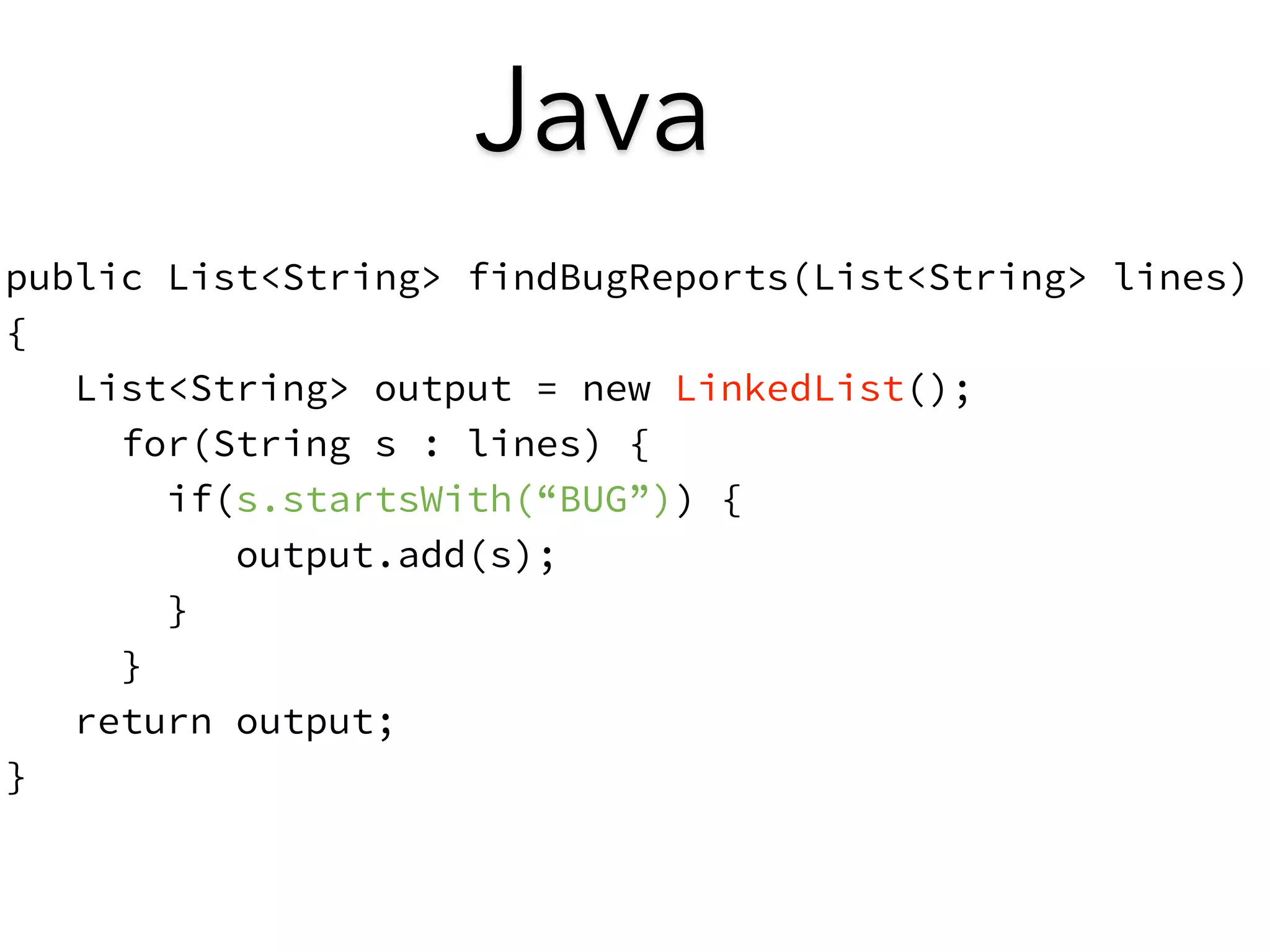
{ 
List<String> output = new LinkedList(); 
for(String s : lines) { 
if(s.startsWith(“BUG”)) { 
output.add(s); 
} 
} 
return output; 
}
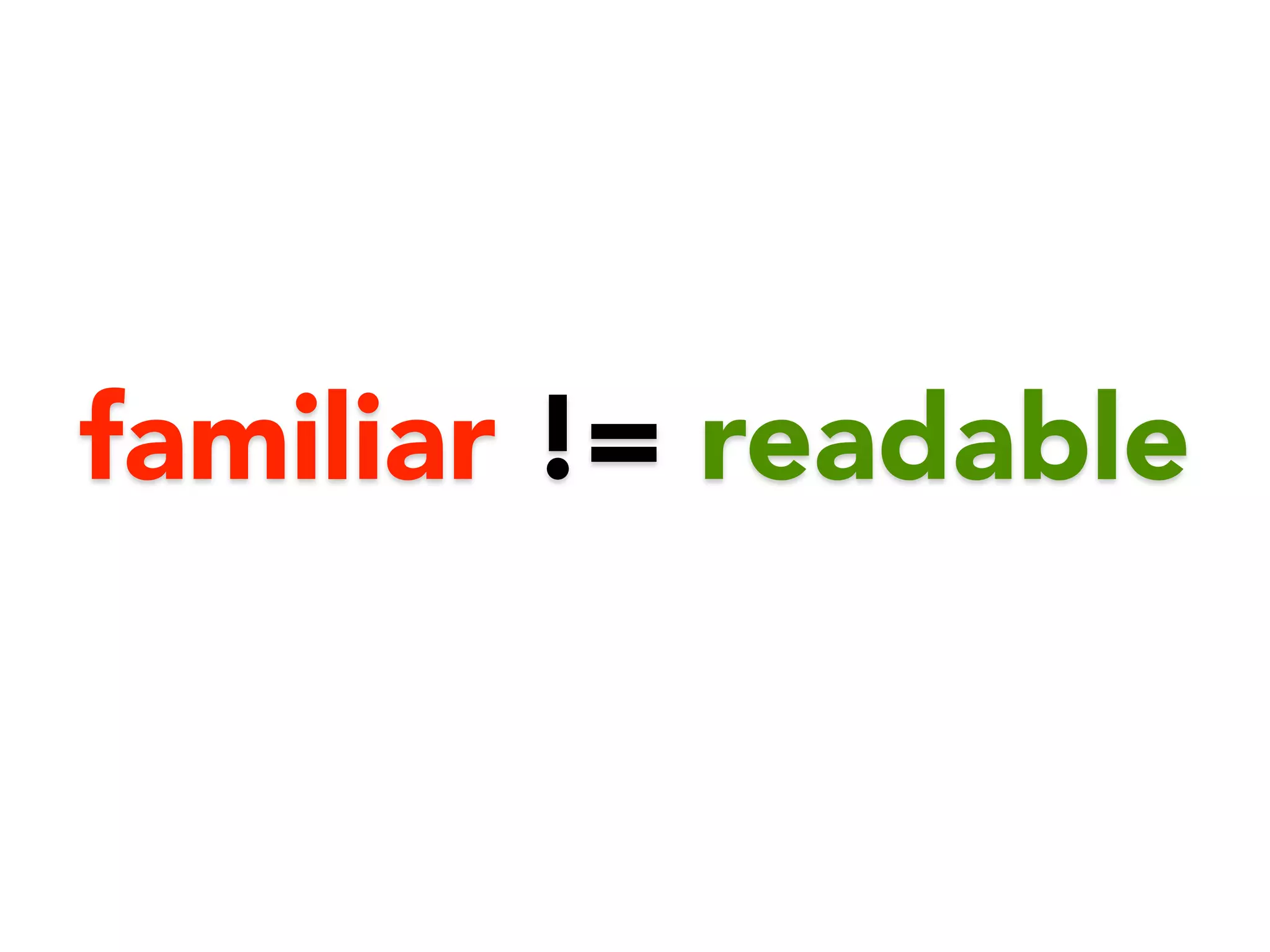
familiar != readable
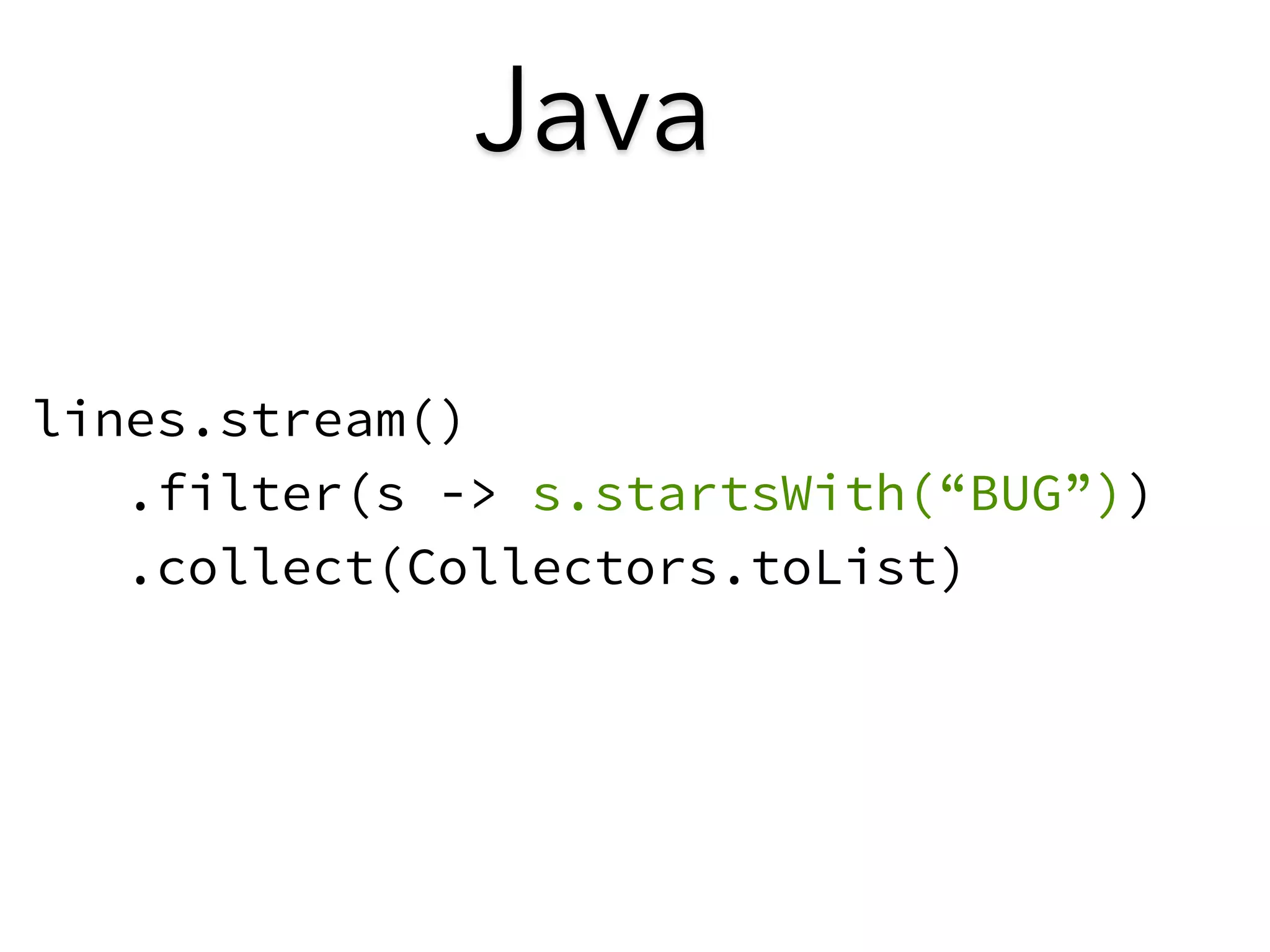
Java 
lines.stream() 
.filter(s -> s.startsWith(“BUG”)) 
.collect(Collectors.toList)
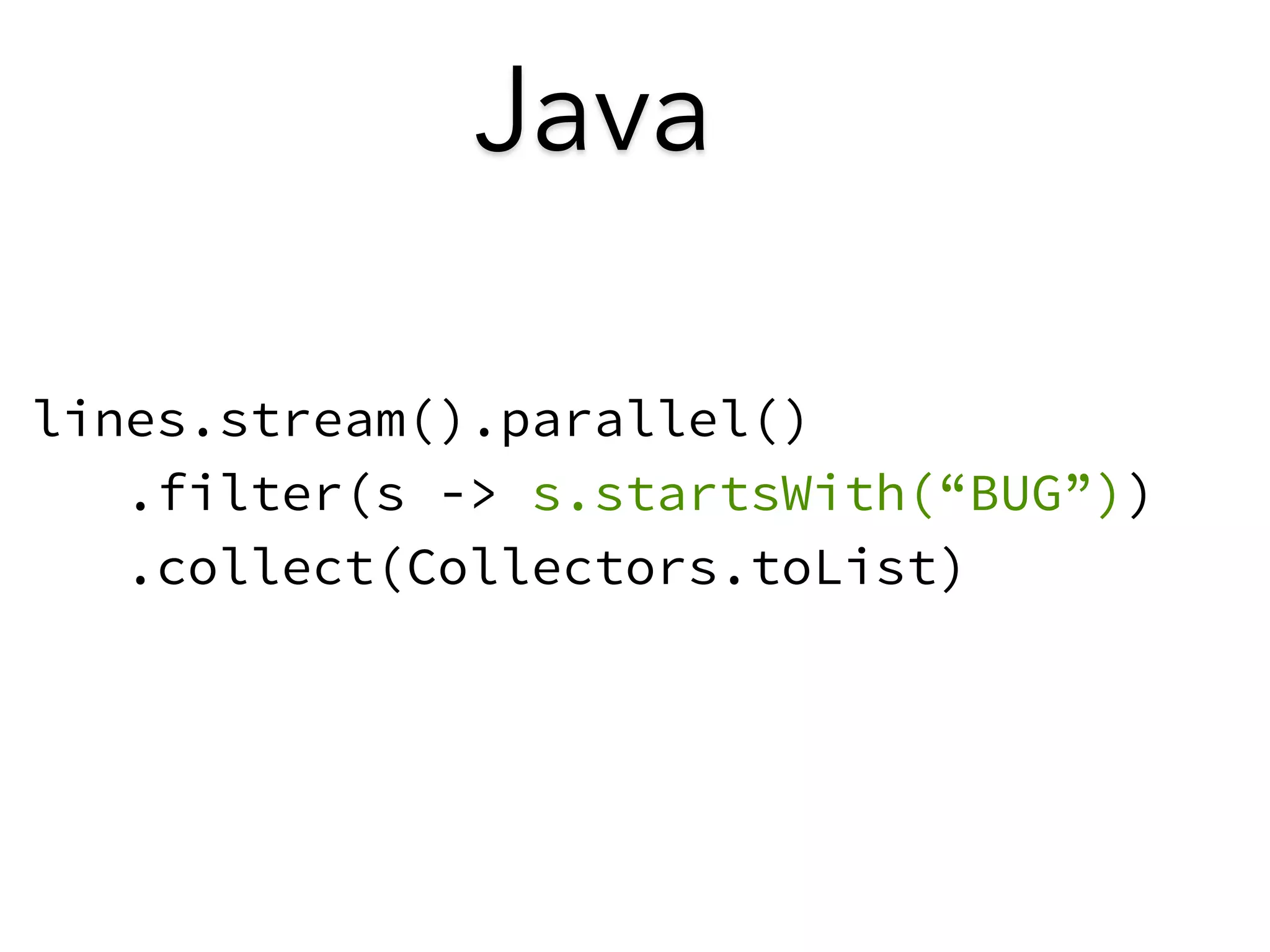
Java 
lines.stream().parallel() 
.filter(s -> s.startsWith(“BUG”)) 
.collect(Collectors.toList)
C# 
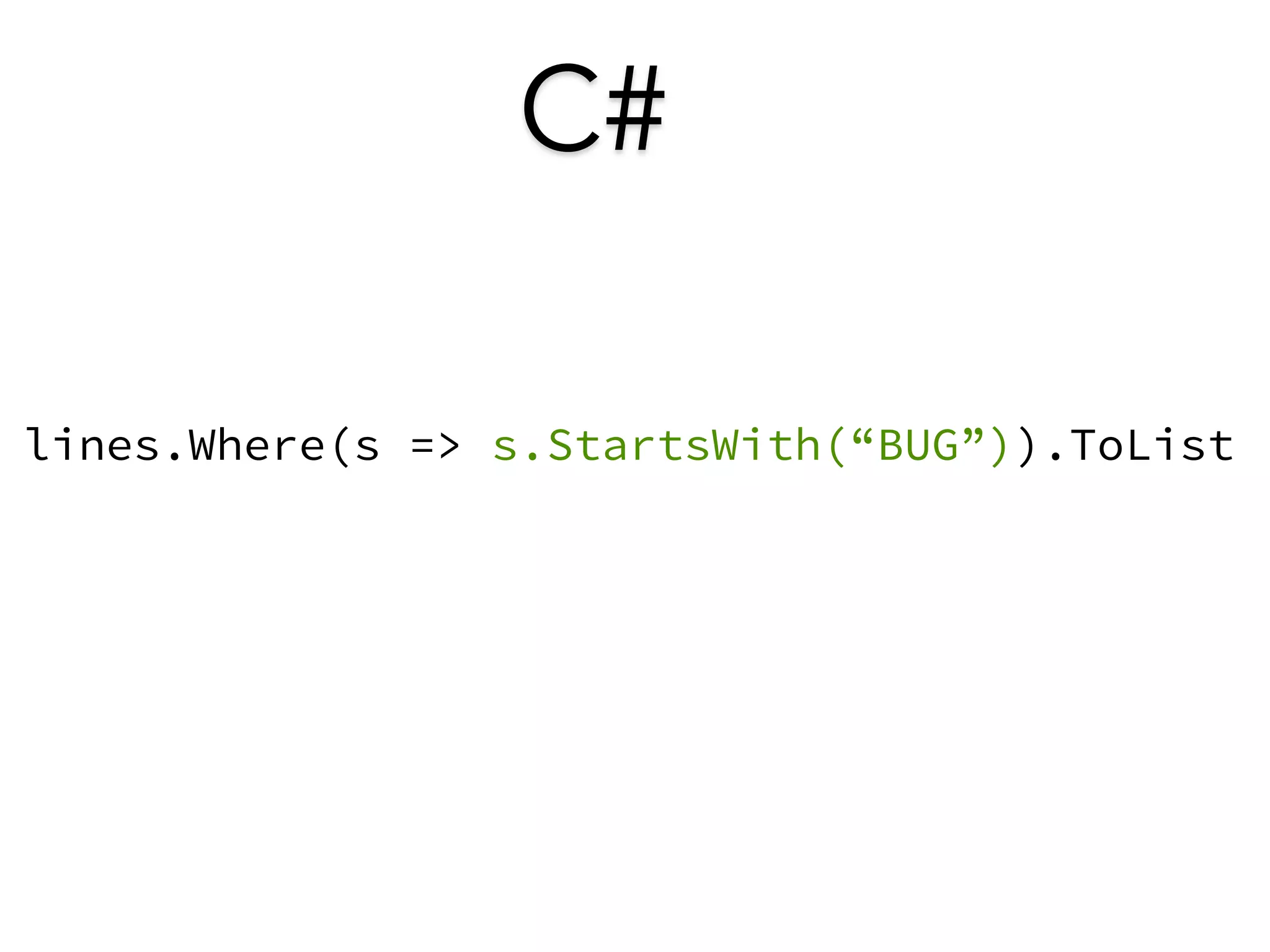
lines.Where(s => s.StartsWith(“BUG”)).ToList
Lazy Evaluation
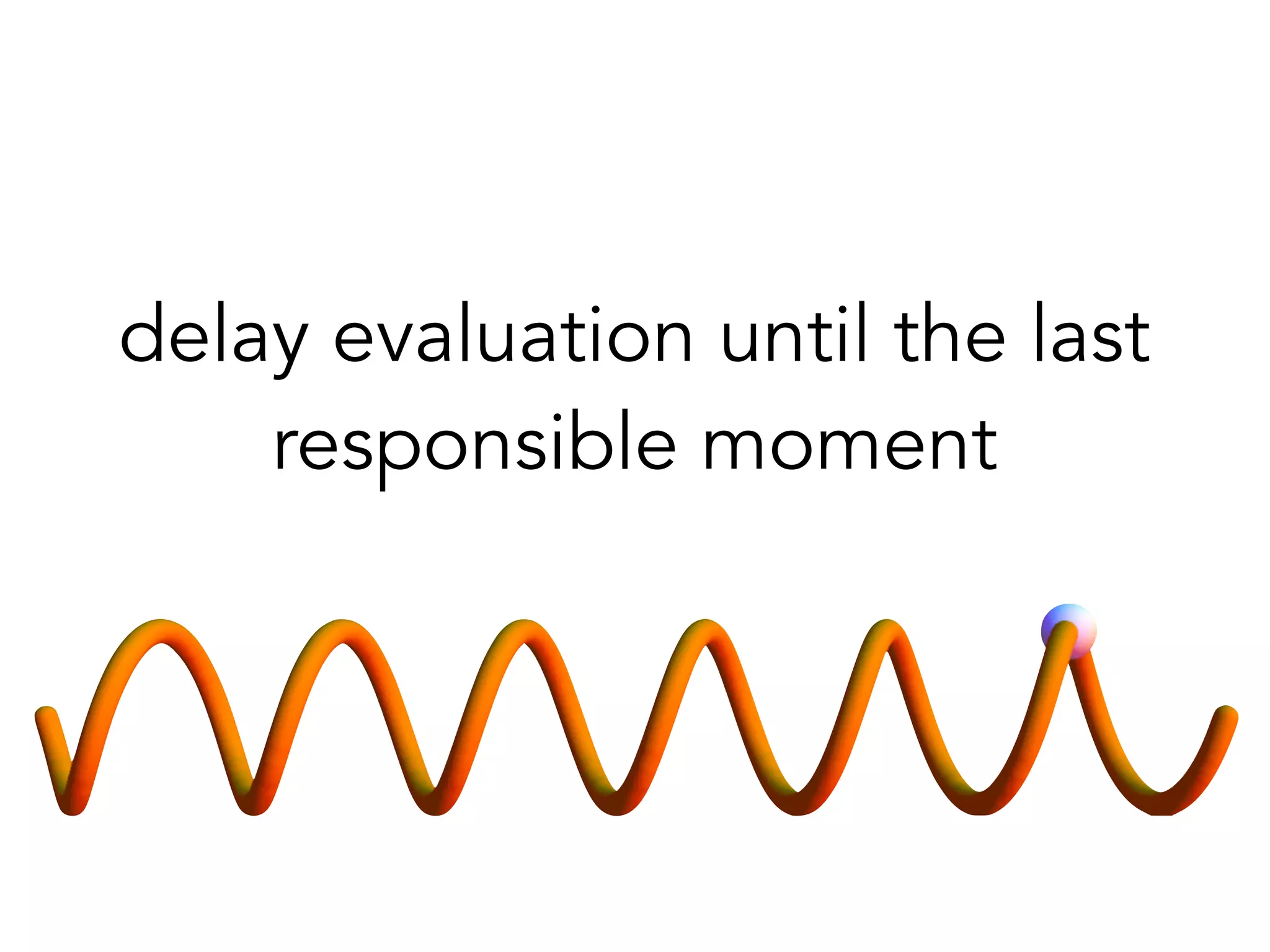
delay evaluation until the last 
responsible moment
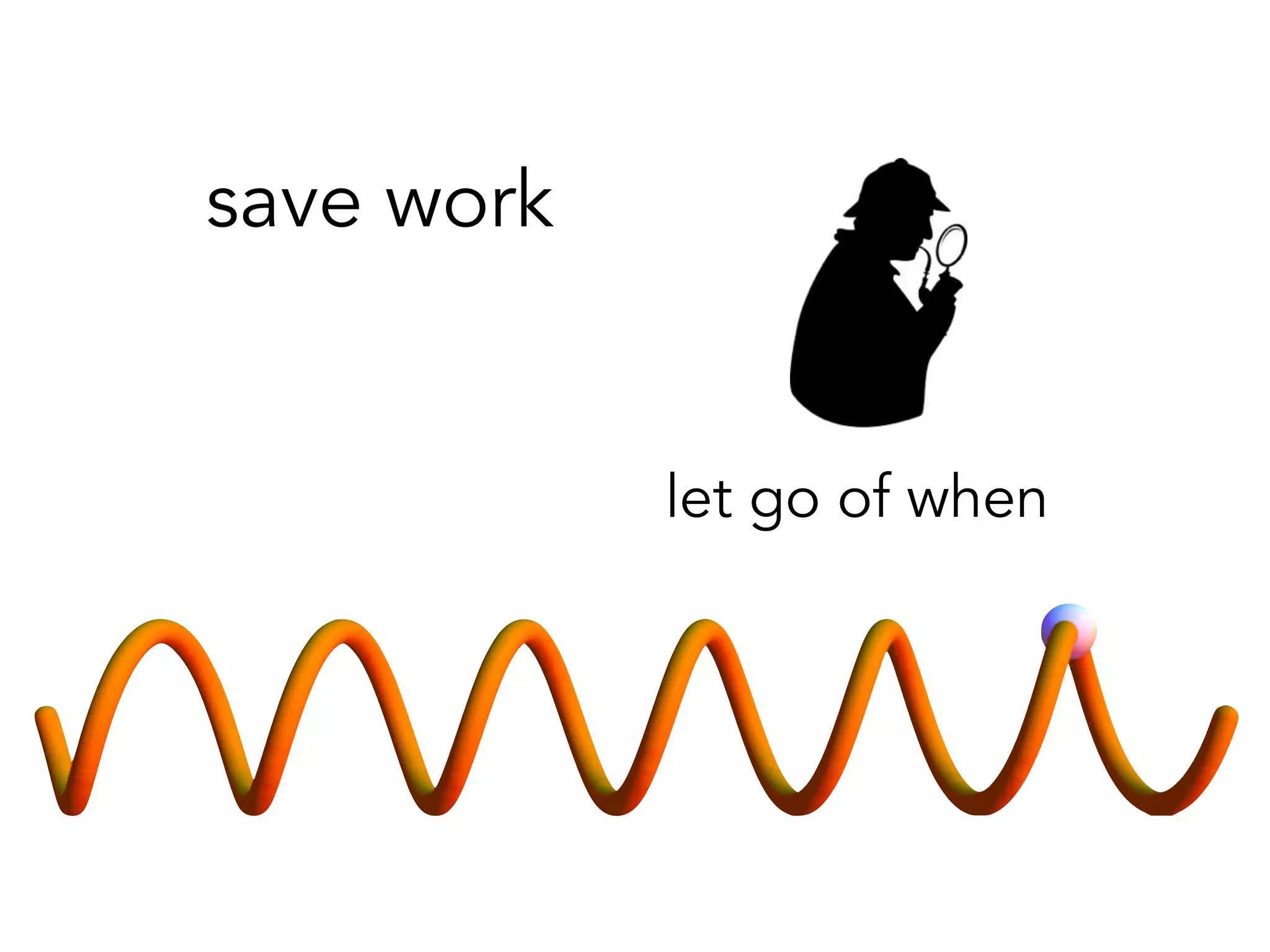
save work 
let go of when
separate what to do 
from when to stop
Java 
int bugCount = 0; 
String nextLine = file.readLine(); 
while (bugCount < 40) { 
if (nextLine.startsWith("BUG")) { 
String[] words = nextLine.split(" "); 
report("Saw "+words[0]+" on "+words[1]); 
bugCount++; 
} 
waitUntilFileHasMoreData(file); 
nextLine = file.readLine(); 
}
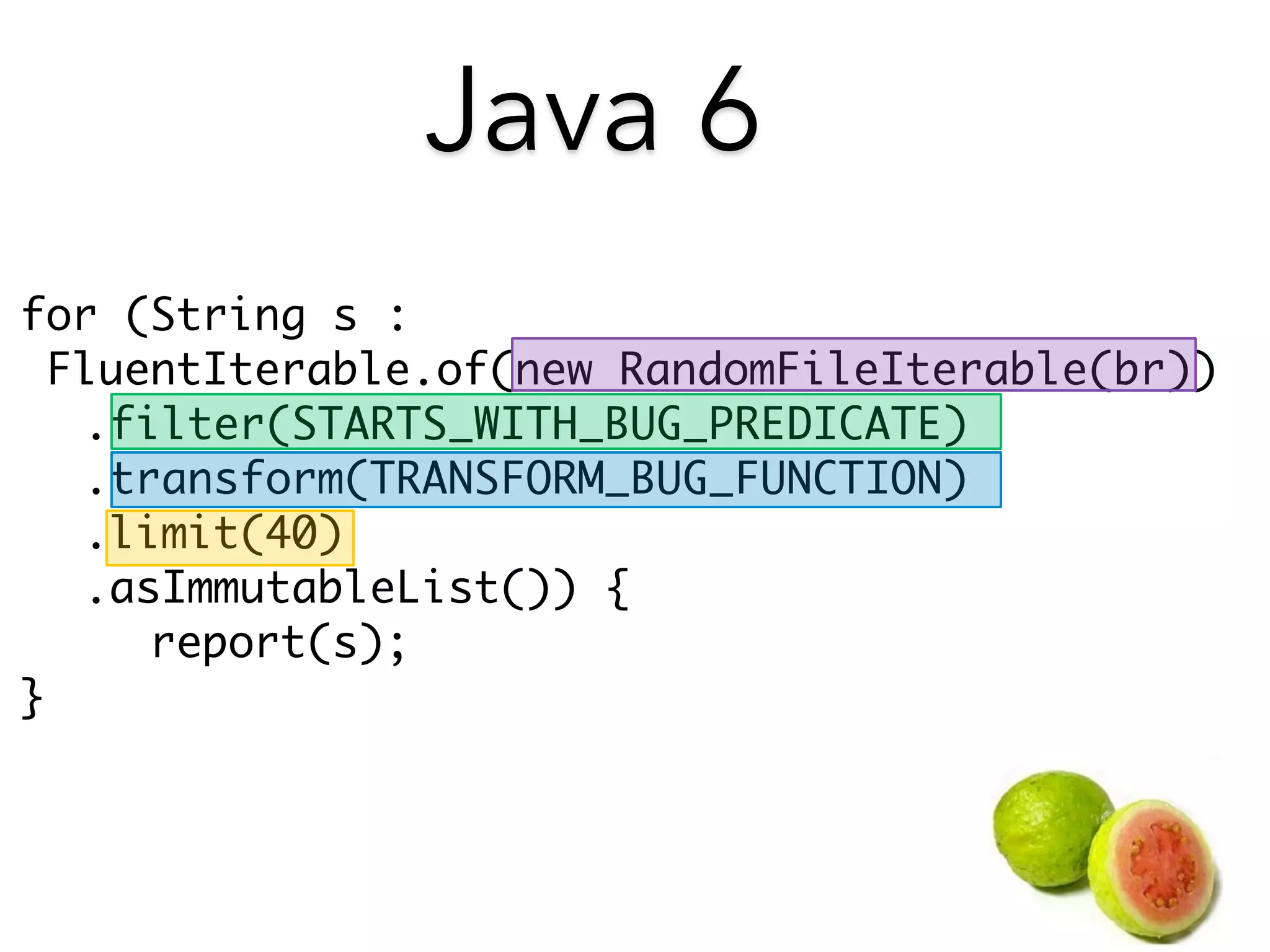
for (String s : 
FluentIterable.of(new RandomFileIterable(br)) 
.filter(STARTS_WITH_BUG_PREDICATE) 
.transform(TRANSFORM_BUG_FUNCTION) 
.limit(40) 
.asImmutableList()) { 
report(s); 
} 
Java 6
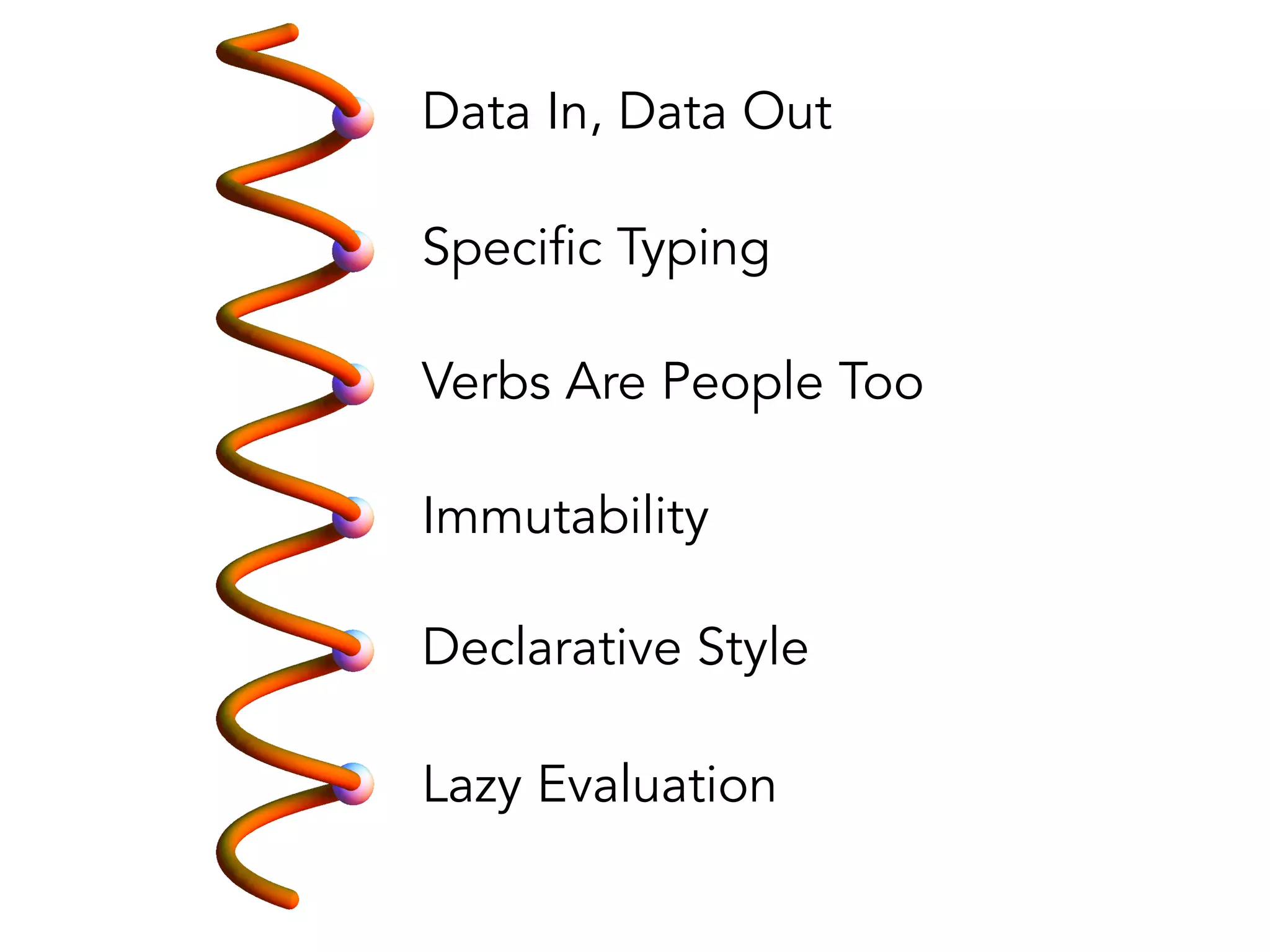
Data In, Data Out 
Specific Typing 
Verbs Are People Too 
Immutability 
Declarative Style 
Lazy Evaluation
I promise not to exclude 
from consideration any idea 
based on its source, but to consider ideas 
across schools and heritages 
in order to find the ones that best suit the 
current situation.
by Faqqotic 
http://www.sketchport.com/drawing/6606411756732416/aeiou
Jessica Kerr 
blog.jessitron.com 
@jessitron 
github.com/jessitron/fp4ood

Functional Principles for OO Developers