Enhancing Input On and Above the
Interactive Surface with Muscle
Sensing
Hrvoje Benko, T. Scott Saponas, Dan Morris, and Desney Tan
Summarized & Presented by:
Reem Alattas
Combining Muscle and Touch Sensing
• Touch-sensitive surfaces and EMG provide
complementary streams of information.
– Touch-sensitive surfaces provide precise location
and tracking information.
– EMG can detect which muscle groups, and
consequently which fingers, are engaged in the
current interaction.
Hardware and Setup
• Microsoft Surface
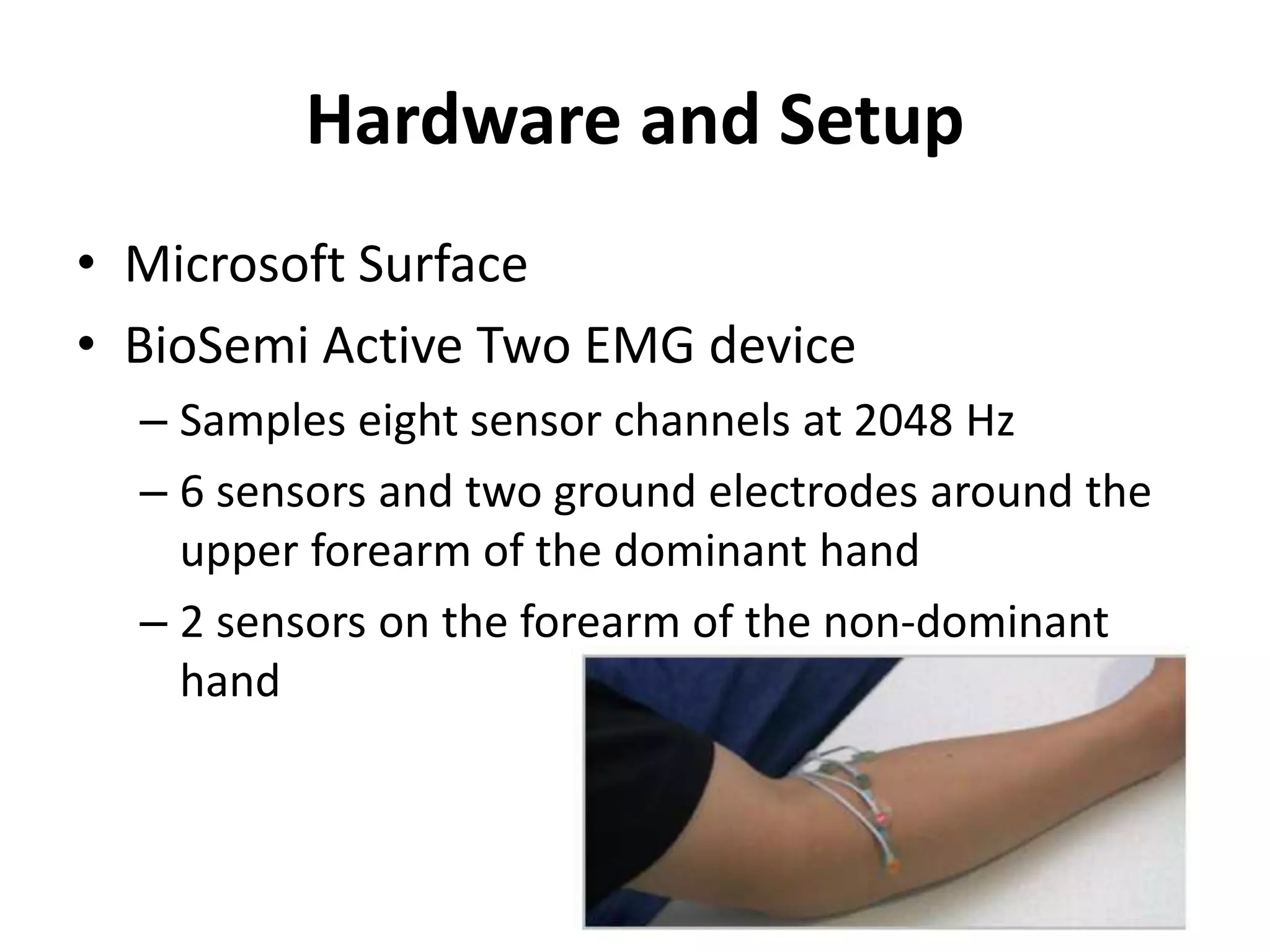
• BioSemi Active Two EMG device
– Samples eight sensor channels at 2048 Hz
– 6 sensors and two ground electrodes around the
upper forearm of the dominant hand
– 2 sensors on the forearm of the non-dominant
hand
Interpretation of Muscle Signals
• Level of pressure
• Contact finger identification
• “Pinch” and “Throw” gestures
• “Flick” gesture
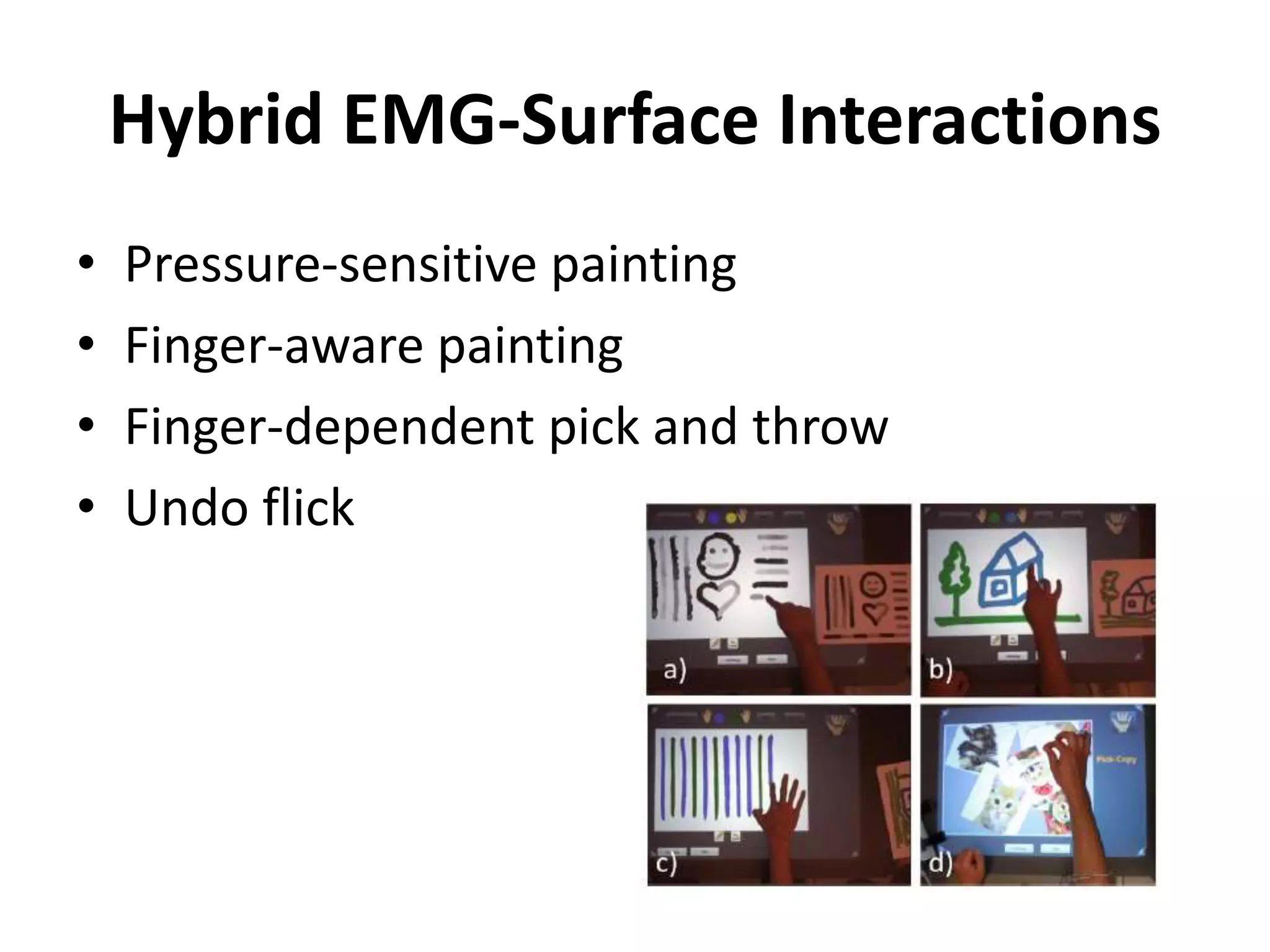
Hybrid EMG-Surface Interactions
• Pressure-sensitive painting
• Finger-aware painting
• Finger-dependent pick and throw
• Undo flick
Exploratory System Evaluation
• Participants: 6 (3 females)
• 90 minutes
• $10 compensation
Goals
• Feasibility Validation
• Reliability Assessment
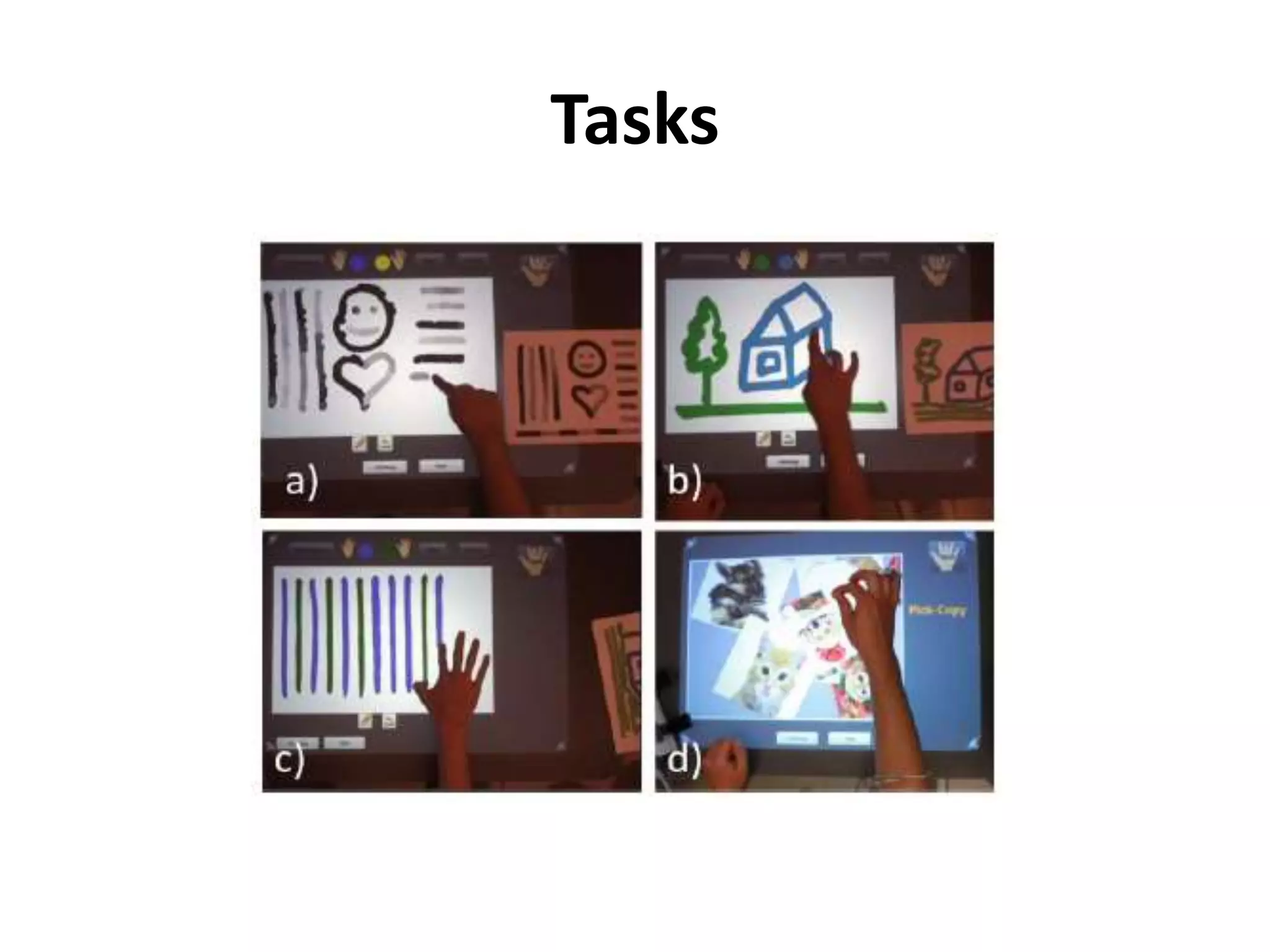
Tasks
• Task 1
– Copy an image from a given paper template using the pressure-
sensitive painting technique
• Task 2
– Copy an image from a given paper template using the finger-aware
painting technique
• Task 3
– Make a series of vertical lines across the surface, changing color with
each vertical line
• Task 4
– Write the numbers from 1 to 10 on the surface, executing the “undo
flick” gesture after each even number, but not after odd numbers.
• Task 5
– Presented with a pile of six images on a canvas, either copy or move
each image to another canvas, depending on the image category.
Tasks
Results
Results
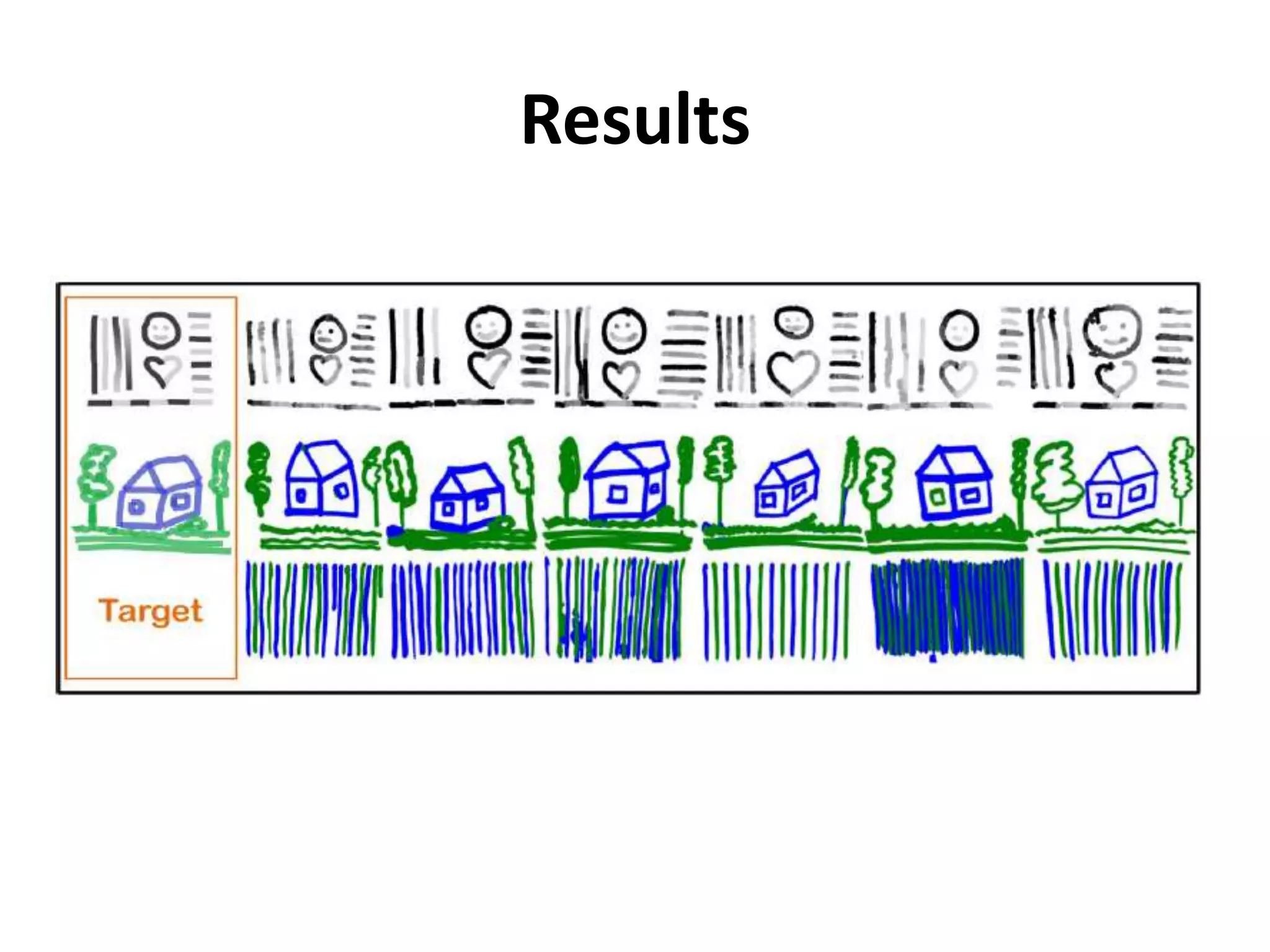
• Task 1 mean accuracy = 93.9%
– All participants were able to effectively manipulate pressure to
control brush darkness.
• Task 2:
– All six participants completed the target drawing.
– One had some difficulty reliably selecting the finger color.
• Task 3 mean accuracy = 90.9%
• Task 4:
– Five out of six participants were able to reliably execute and
control the “undo flick” gesture without any false positives.
• Task 5:
– Three perfect executions
Conclusion
• The proposed approach enhances the existing
tabletop paradigm and enables new
interaction techniques not typically possible
with standard interactive surfaces.
Questions

Enhancing input on and above the interactive surface

  • 1.
    Enhancing Input Onand Above the Interactive Surface with Muscle Sensing Hrvoje Benko, T. Scott Saponas, Dan Morris, and Desney Tan Summarized & Presented by: Reem Alattas
  • 2.
    Combining Muscle andTouch Sensing • Touch-sensitive surfaces and EMG provide complementary streams of information. – Touch-sensitive surfaces provide precise location and tracking information. – EMG can detect which muscle groups, and consequently which fingers, are engaged in the current interaction.
  • 3.
    Hardware and Setup •Microsoft Surface • BioSemi Active Two EMG device – Samples eight sensor channels at 2048 Hz – 6 sensors and two ground electrodes around the upper forearm of the dominant hand – 2 sensors on the forearm of the non-dominant hand
  • 4.
    Interpretation of MuscleSignals • Level of pressure • Contact finger identification • “Pinch” and “Throw” gestures • “Flick” gesture
  • 5.
    Hybrid EMG-Surface Interactions •Pressure-sensitive painting • Finger-aware painting • Finger-dependent pick and throw • Undo flick
  • 6.
    Exploratory System Evaluation •Participants: 6 (3 females) • 90 minutes • $10 compensation
  • 7.
  • 8.
    Tasks • Task 1 –Copy an image from a given paper template using the pressure- sensitive painting technique • Task 2 – Copy an image from a given paper template using the finger-aware painting technique • Task 3 – Make a series of vertical lines across the surface, changing color with each vertical line • Task 4 – Write the numbers from 1 to 10 on the surface, executing the “undo flick” gesture after each even number, but not after odd numbers. • Task 5 – Presented with a pile of six images on a canvas, either copy or move each image to another canvas, depending on the image category.
  • 9.
  • 10.
  • 11.
    Results • Task 1mean accuracy = 93.9% – All participants were able to effectively manipulate pressure to control brush darkness. • Task 2: – All six participants completed the target drawing. – One had some difficulty reliably selecting the finger color. • Task 3 mean accuracy = 90.9% • Task 4: – Five out of six participants were able to reliably execute and control the “undo flick” gesture without any false positives. • Task 5: – Three perfect executions
  • 12.
    Conclusion • The proposedapproach enhances the existing tabletop paradigm and enables new interaction techniques not typically possible with standard interactive surfaces.
  • 13.

Editor's Notes

  • #2 http://research.microsoft.com/en-us/um/redmond/groups/cue/muci/ 2nd video
  • #4 Non-dominant … for recognizing coarse muscle activation.
  • #5 Our system uses the EMG signals to provide four primitives to applications on the interactive surface. identifying the fingers performing these gestures currently requires a two-minute training procedure identical to that described for contact finger identification
  • #7 Each participant spent approximately 90 minutes interacting with our system
  • #11 Pictures painted by participants in our exploratory system evaluation, where rows 1, 2, and 3 show the results of Tasks 1, 2, and 3 respectively. Task 1: copy the leftmost image using pressure-sensitive painting. Task 2: copy the leftmost image using index and middle fingers to paint in blue and green, respectively. Task 3: draw alternating blue and green lines using index and middle fingers, similar to task 2. The leftmost target images were provided to our participants on paper.