Design Patterns for 70% of genious programmers Aamir Khan Solution Architect
Design Patterns for 70% of programmers in the world Saurabh Verma Solution Architect  I blog at http://www.domaindrivendesign.info
Agenda Do you OOPs? Design Patterns? Why Design Patterns? What Design Patterns? How I hate my job
Normal Classes vs Abstract Classes vs Interfaces Normal Class:  This is a normal class   Abstract Class:  These cannot be instantiated directly.  They may provide partial implementations and exists solely for the purpose of inheritance.  Interfaces:  Defines a contract. Concrete implementations needs to implement each property and method as per contract. Shut up ! We know all this
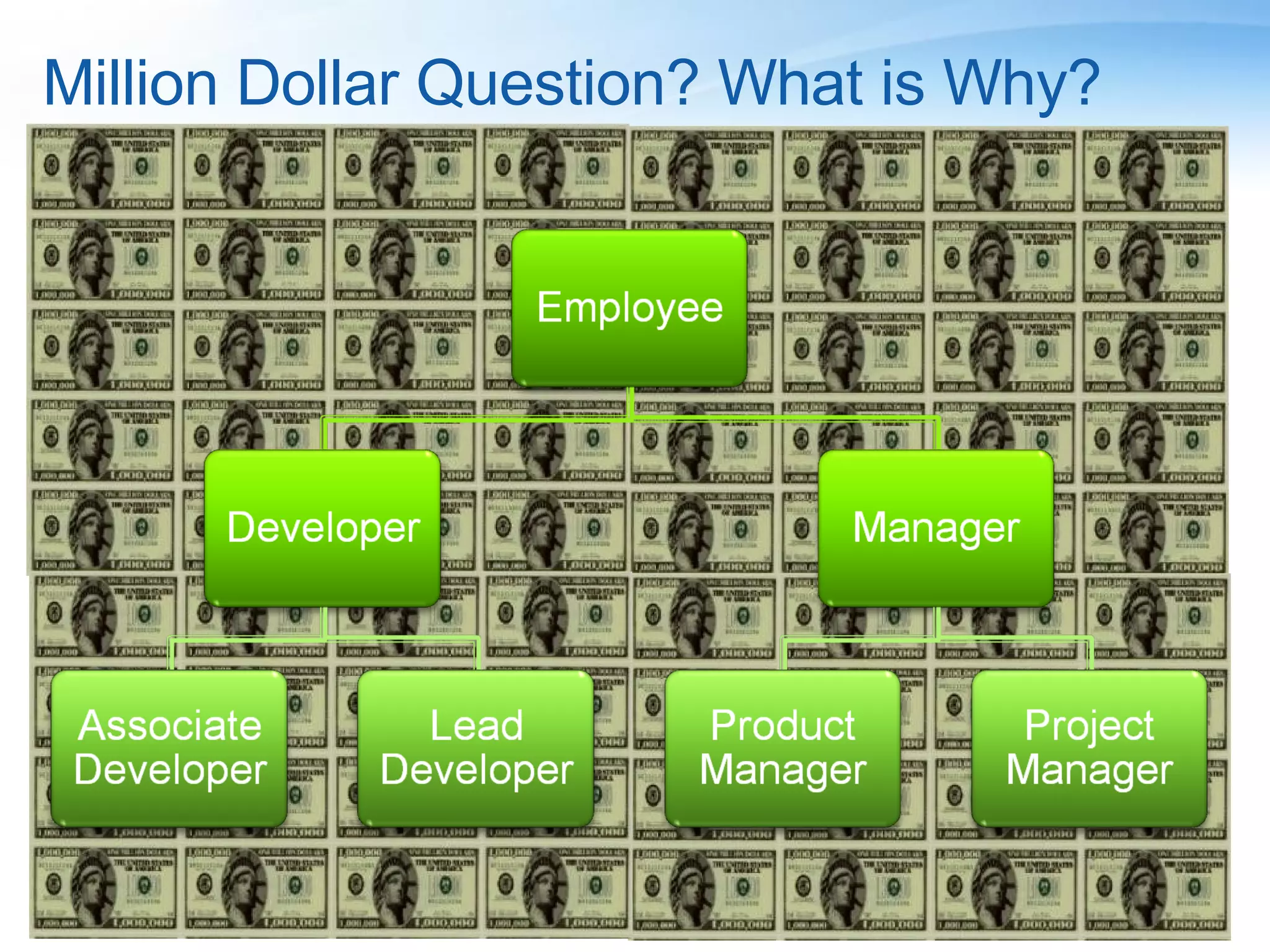
Million Dollar Question? What is Why?
Normal Class vs Abstract Class? If a particular class is a entity which is not required to be instantiated by the application directly, go for  Abstract Class Employee can be abstract class
Abstract Class vs Interfaces? If a particular class contains any default behavior, go for  Abstract Class If every concrete class has its own implementation, go for Interfaces Work – Management, Programming
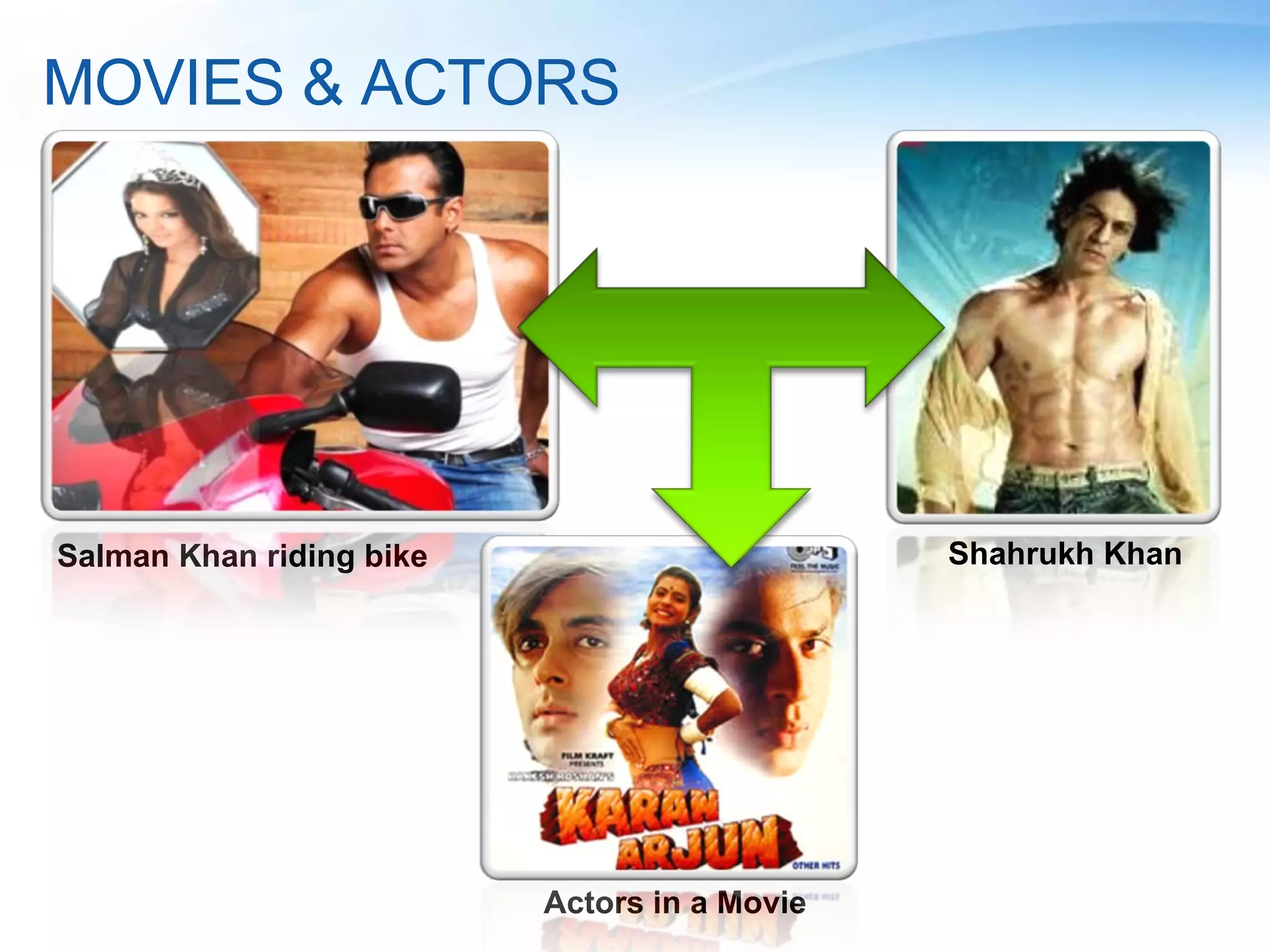
MOVIES & ACTORS Shahrukh Khan Salman Khan riding bike Actors in a Movie
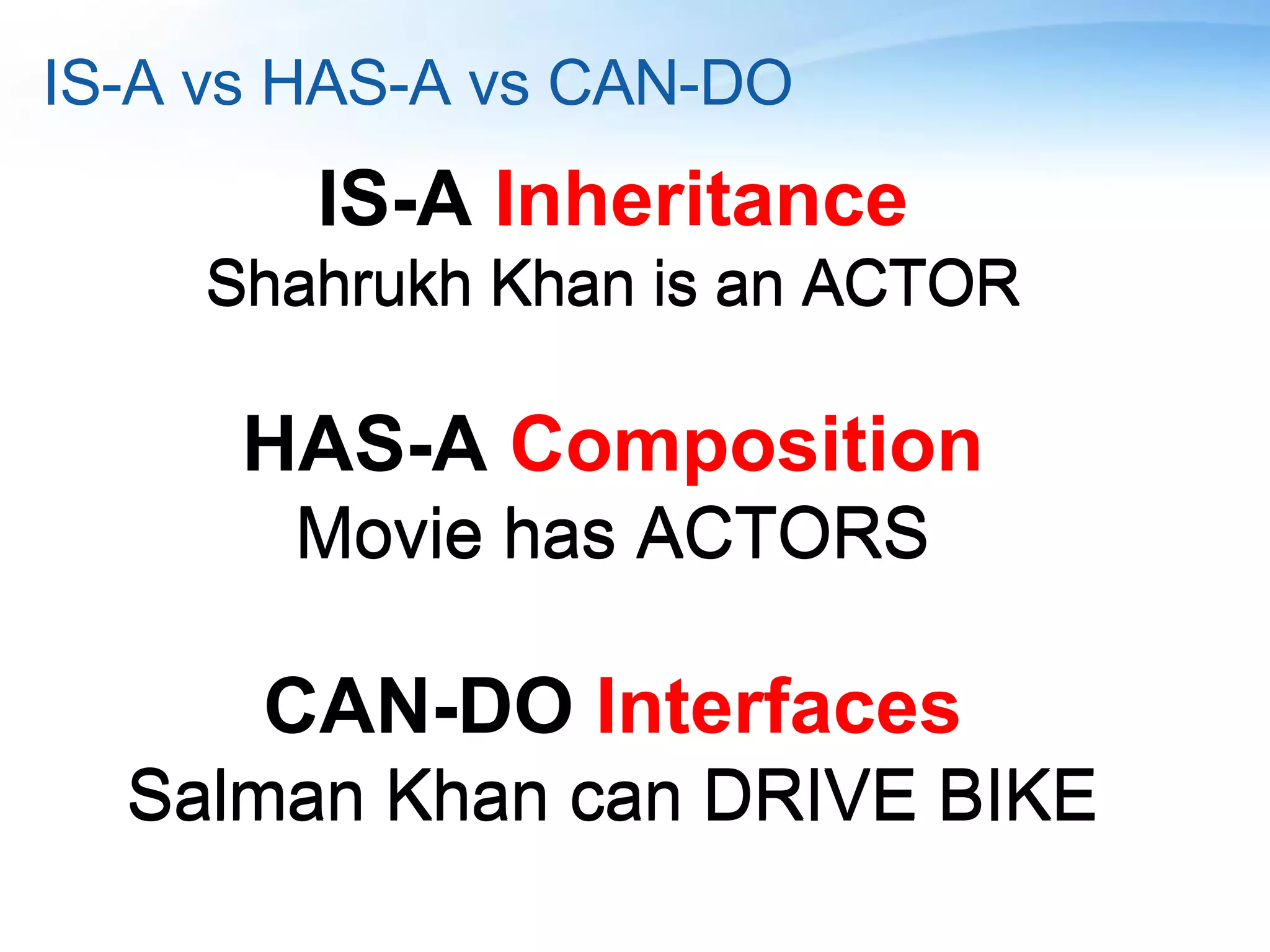
IS-A vs HAS-A vs CAN-DO IS-A Inheritance Shahrukh Khan is an ACTOR HAS-A Composition Movie has ACTORS CAN-DO Interfaces Salman Khan can DRIVE BIKE IS-A  Inheritance Shahrukh Khan is an ACTOR HAS-A  Composition Movie has ACTORS CAN-DO  Interfaces Salman Khan can DRIVE BIKE
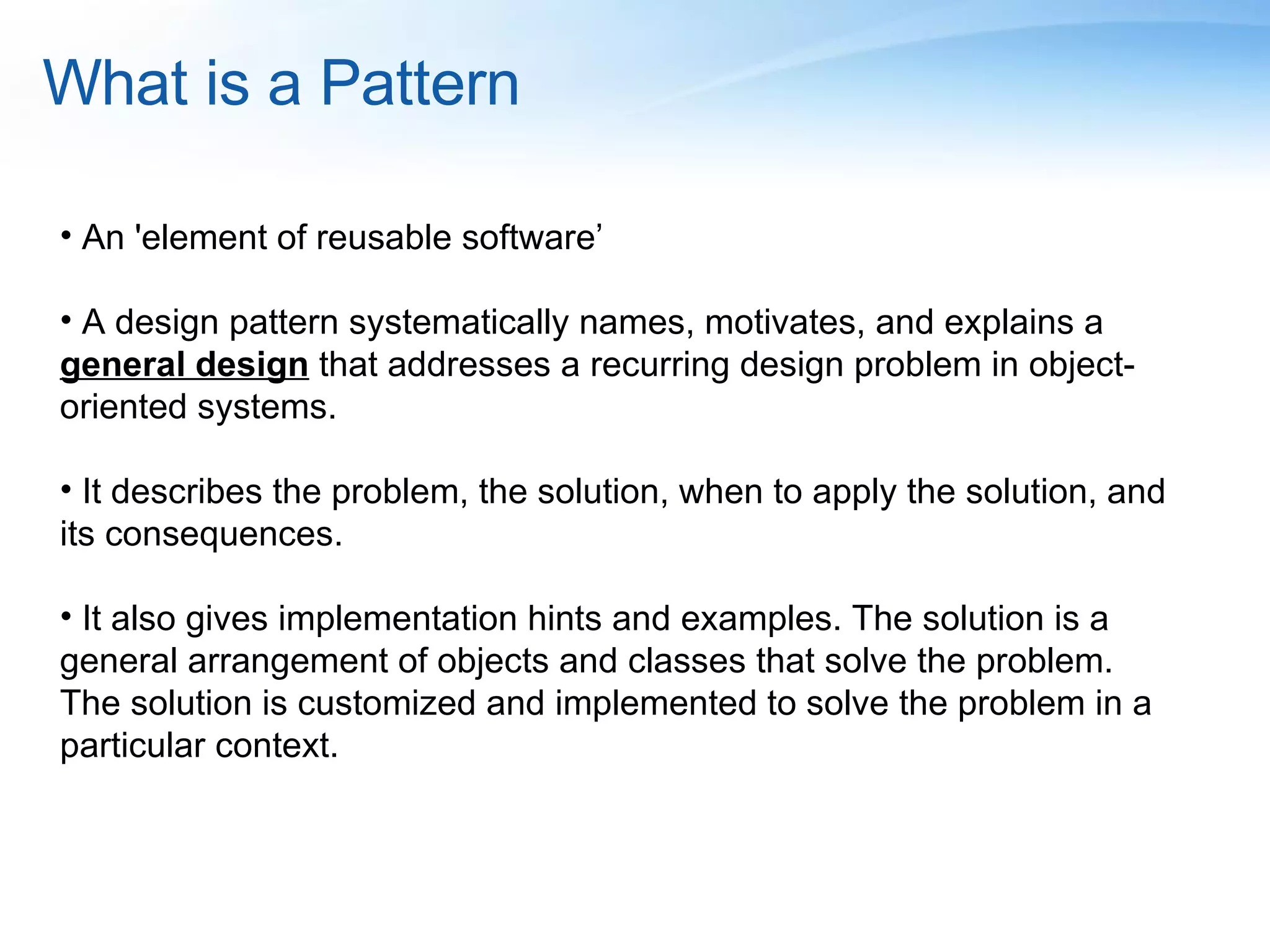
What is a Pattern An 'element of reusable software’ A design pattern systematically names, motivates, and explains a  general design  that addresses a recurring design problem in object-oriented systems.  It describes the problem, the solution, when to apply the solution, and its consequences. It also gives implementation hints and examples. The solution is a general arrangement of objects and classes that solve the problem. The solution is customized and implemented to solve the problem in a particular context.
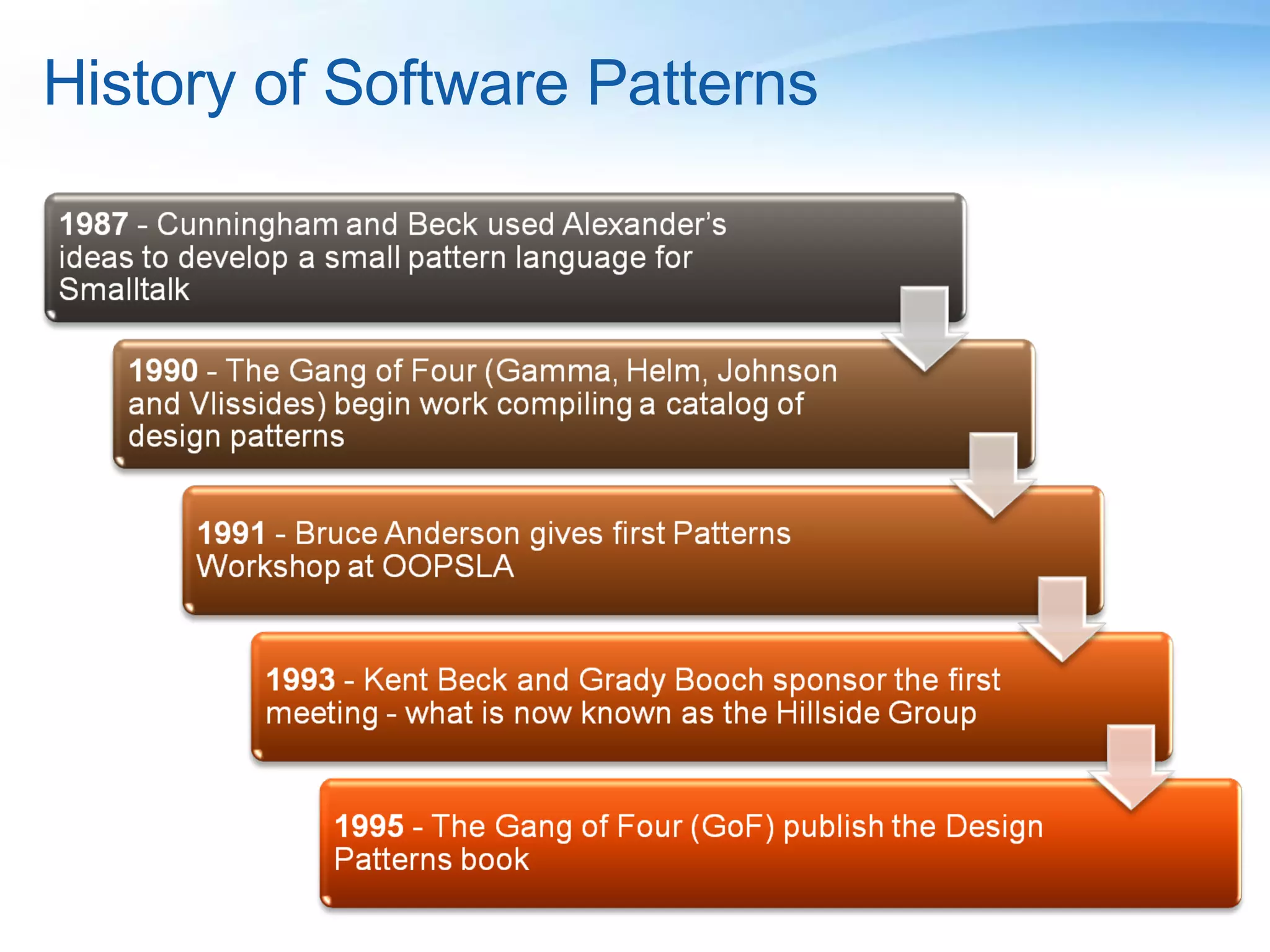
History of Software Patterns
What Wikipedia says, A design pattern is a general repeatable solution to a commonly occurring problem in software design. A design pattern is not a finished design that can be transformed directly into code.  Algorithms are not thought of as design patterns.
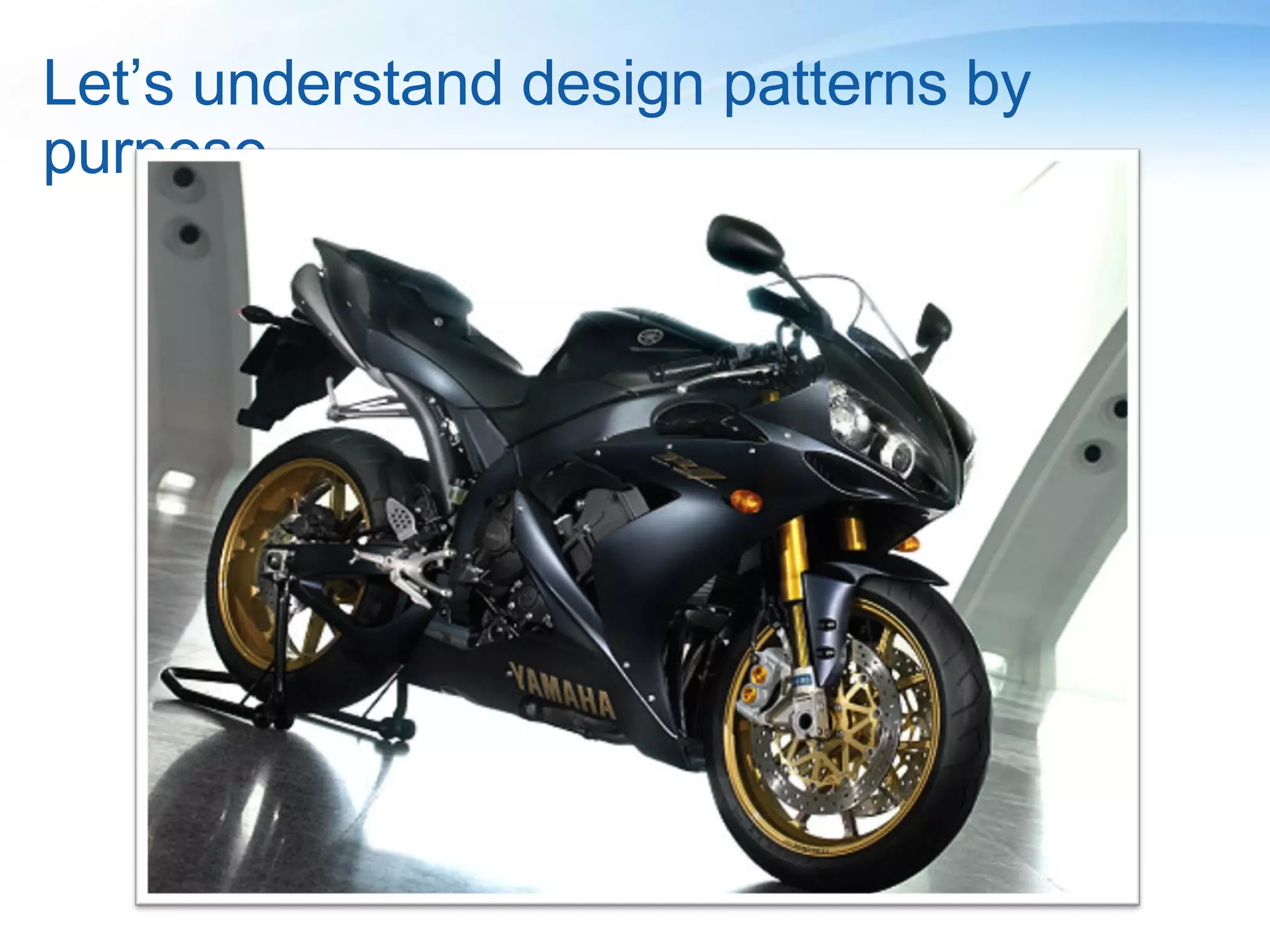
Let’s understand design patterns by purpose
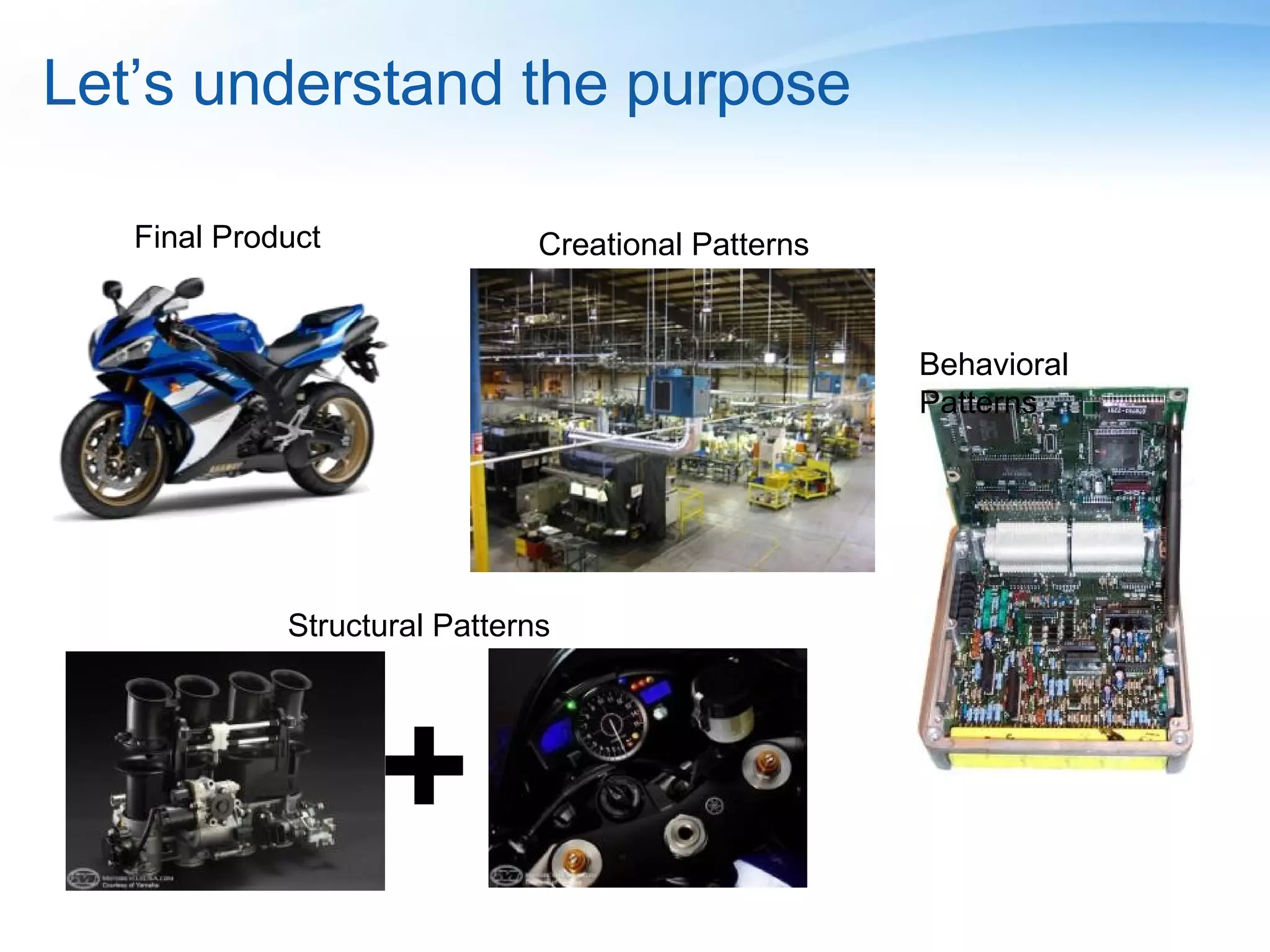
Let’s understand the purpose + Creational Patterns Structural Patterns Final Product Behavioral Patterns
Let’s understand the purpose
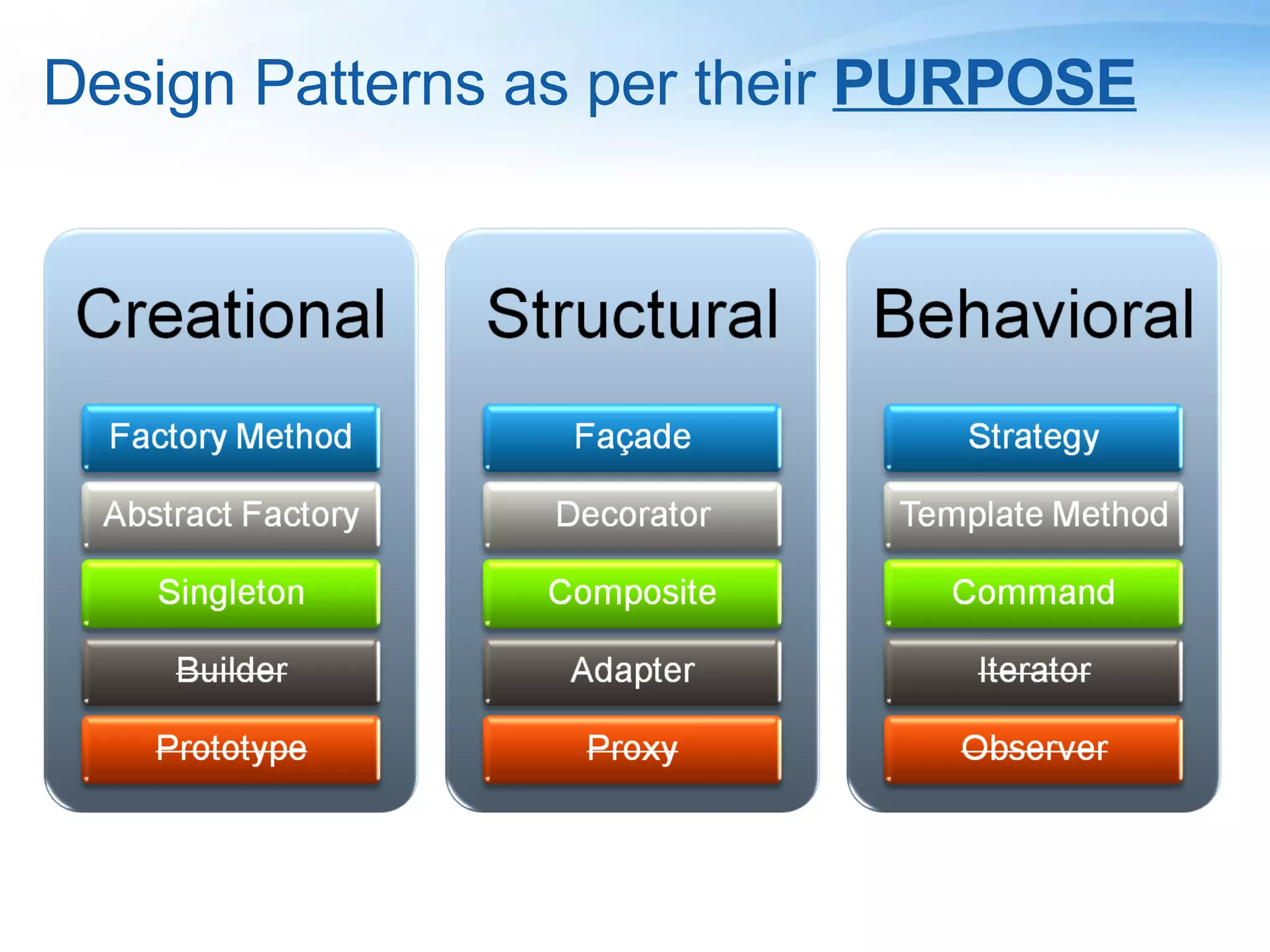
Design Patterns as per their  PURPOSE
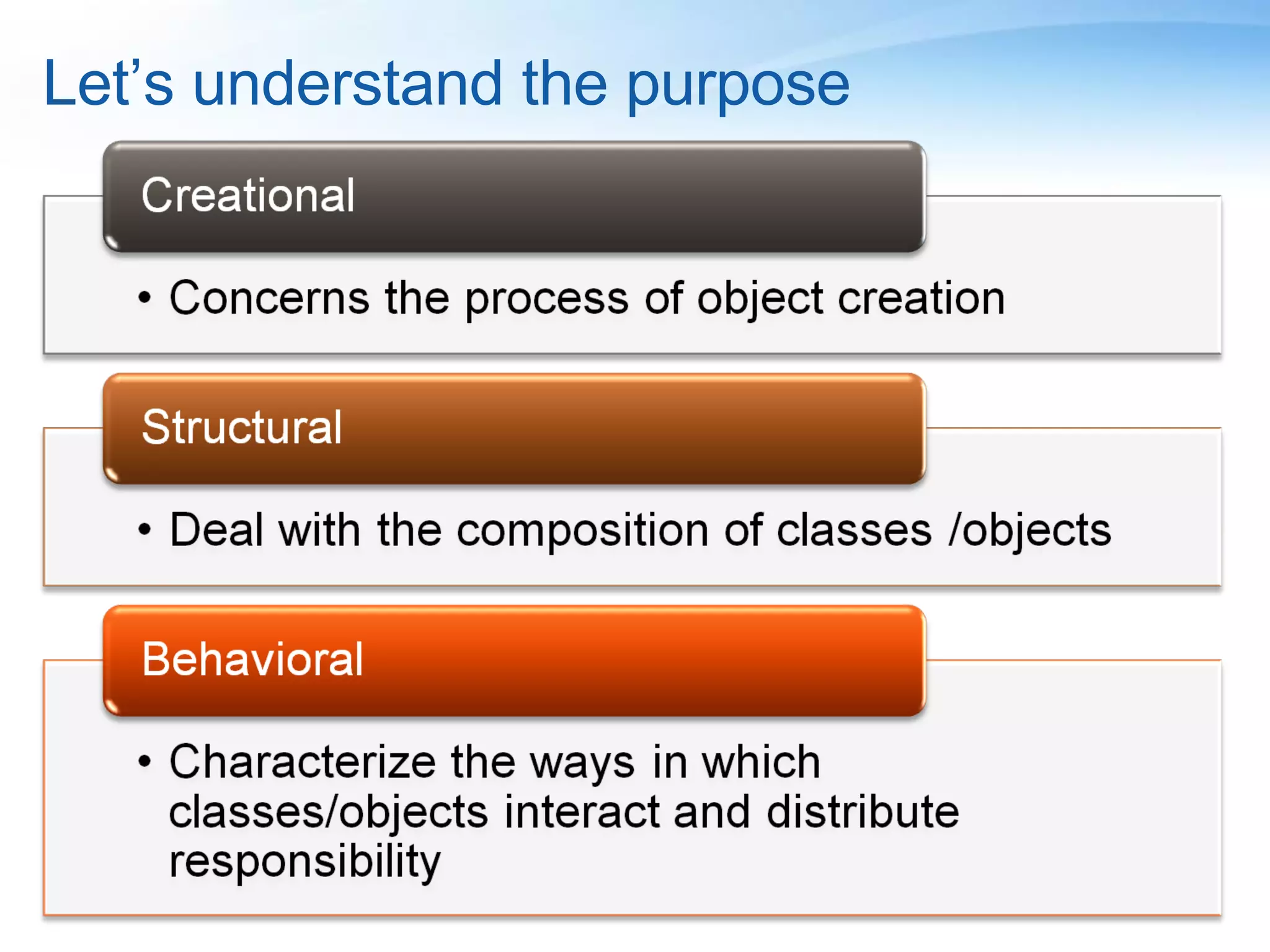
Creational Patterns
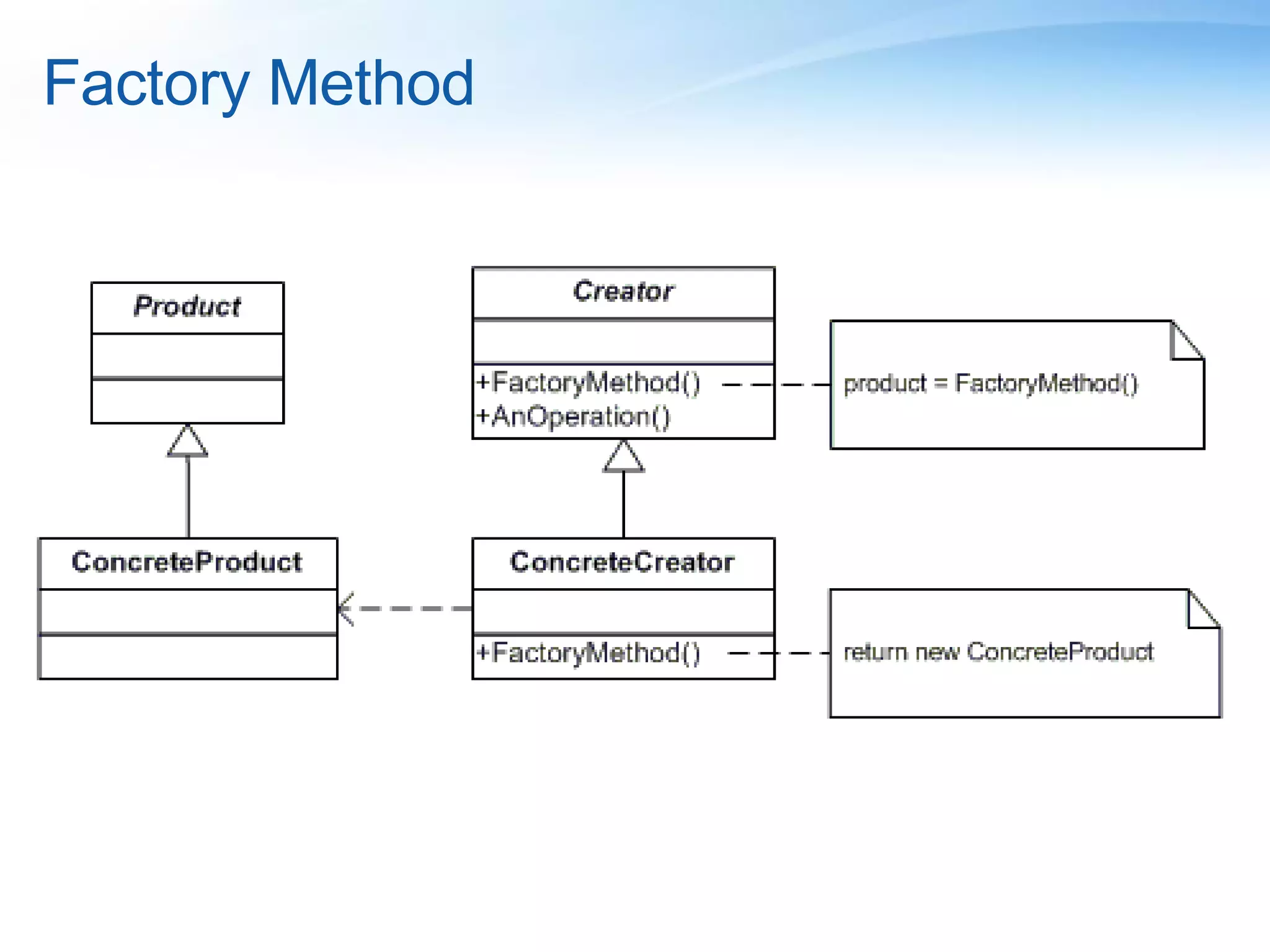
Factory Method
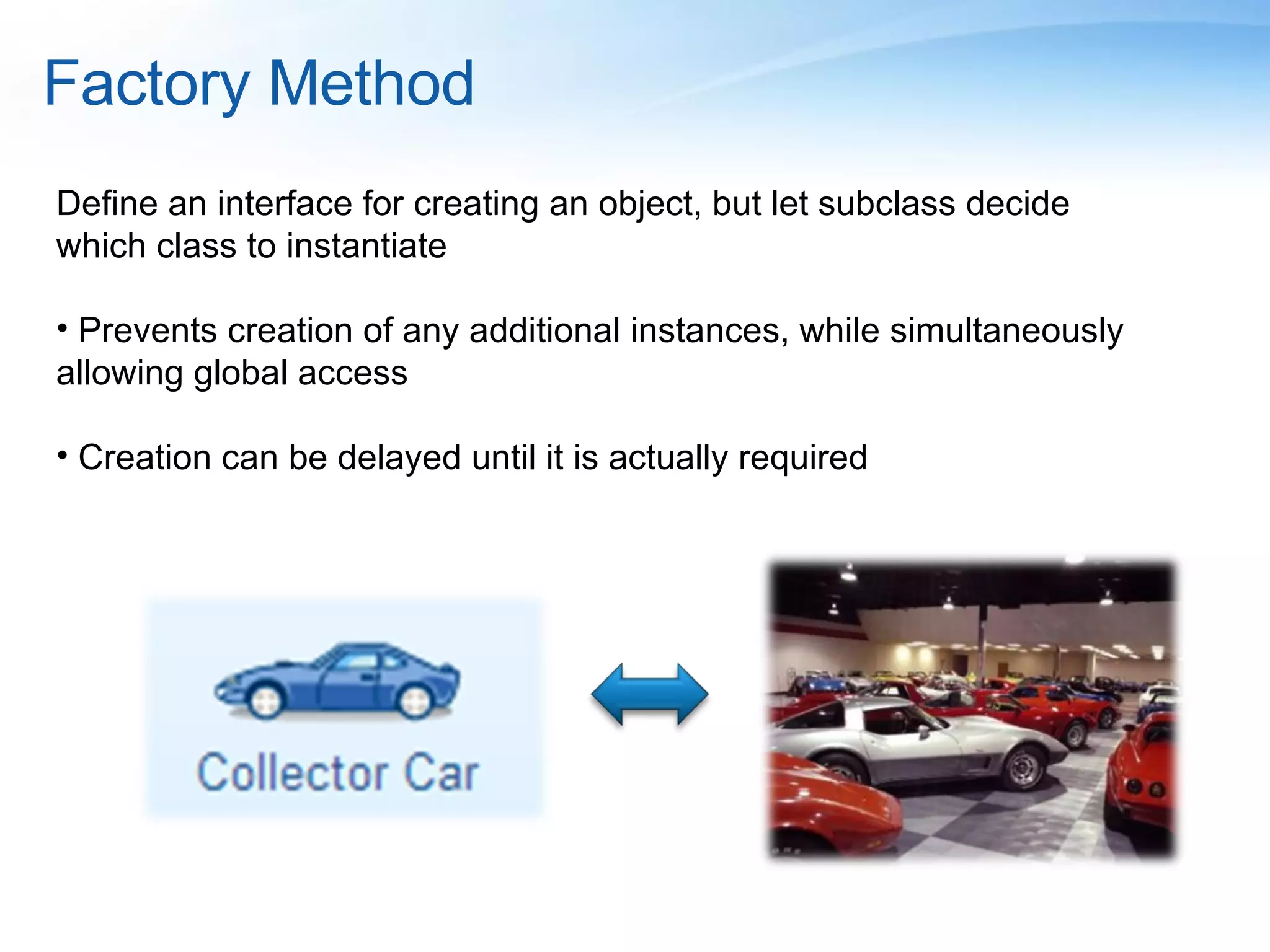
Factory Method Define an interface for creating an object, but let subclass decide which class to instantiate Prevents creation of any additional instances, while simultaneously allowing global access Creation can be delayed until it is actually required
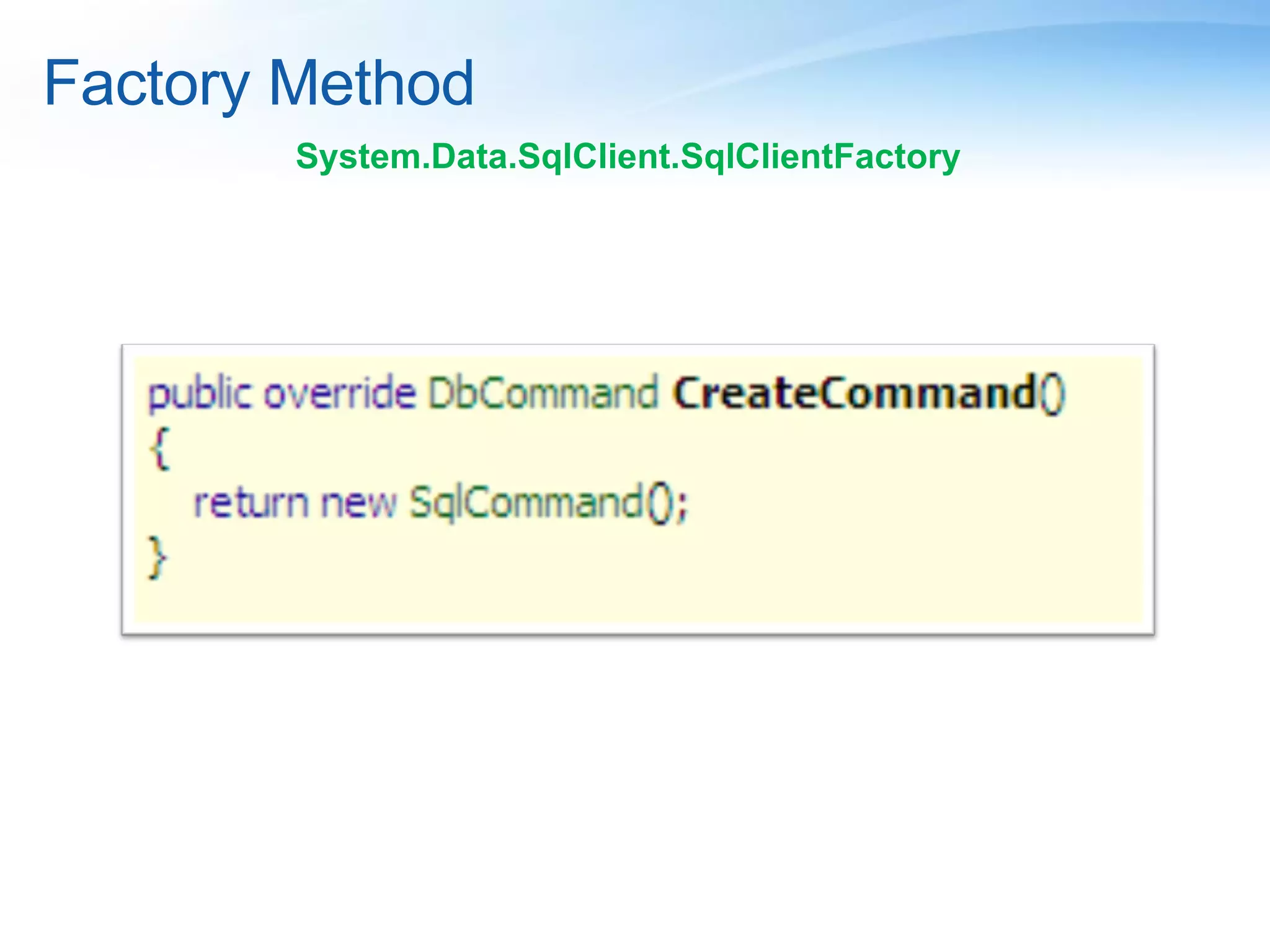
Factory Method System.Data.SqlClient.SqlClientFactory
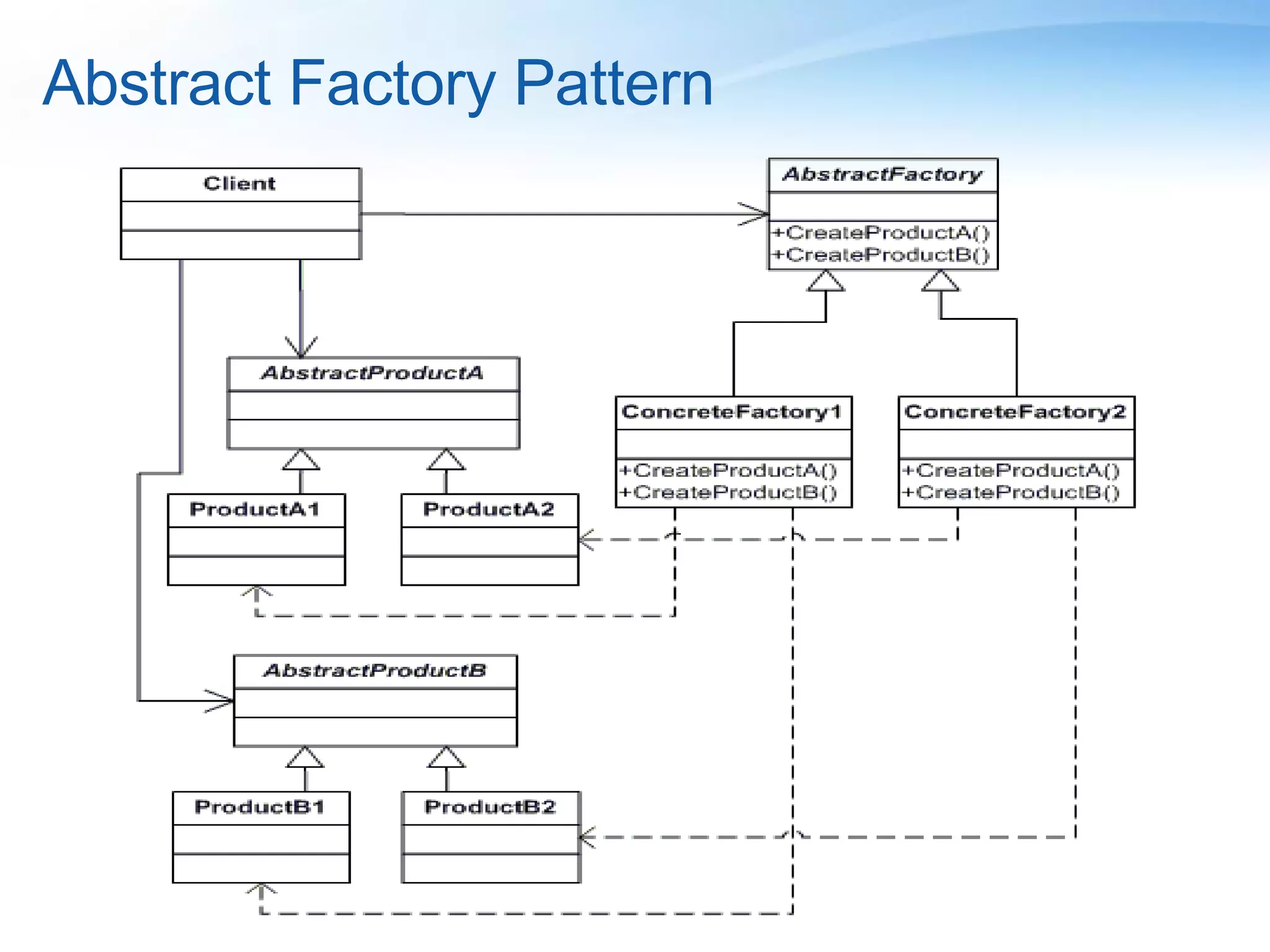
Abstract Factory Pattern
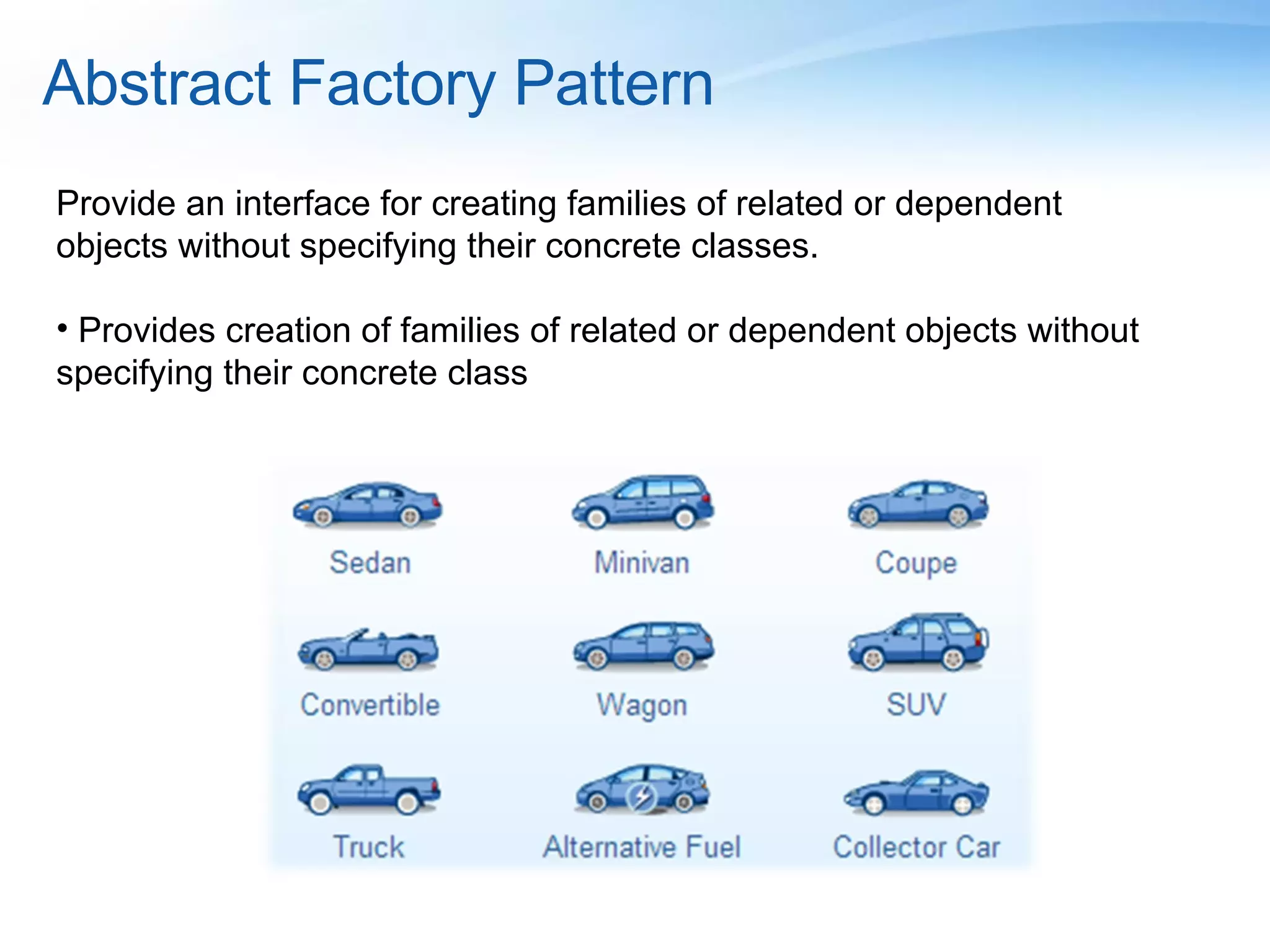
Abstract Factory Pattern Provide an interface for creating families of related or dependent objects without specifying their concrete classes. Provides creation of families of related or dependent objects without specifying their concrete class
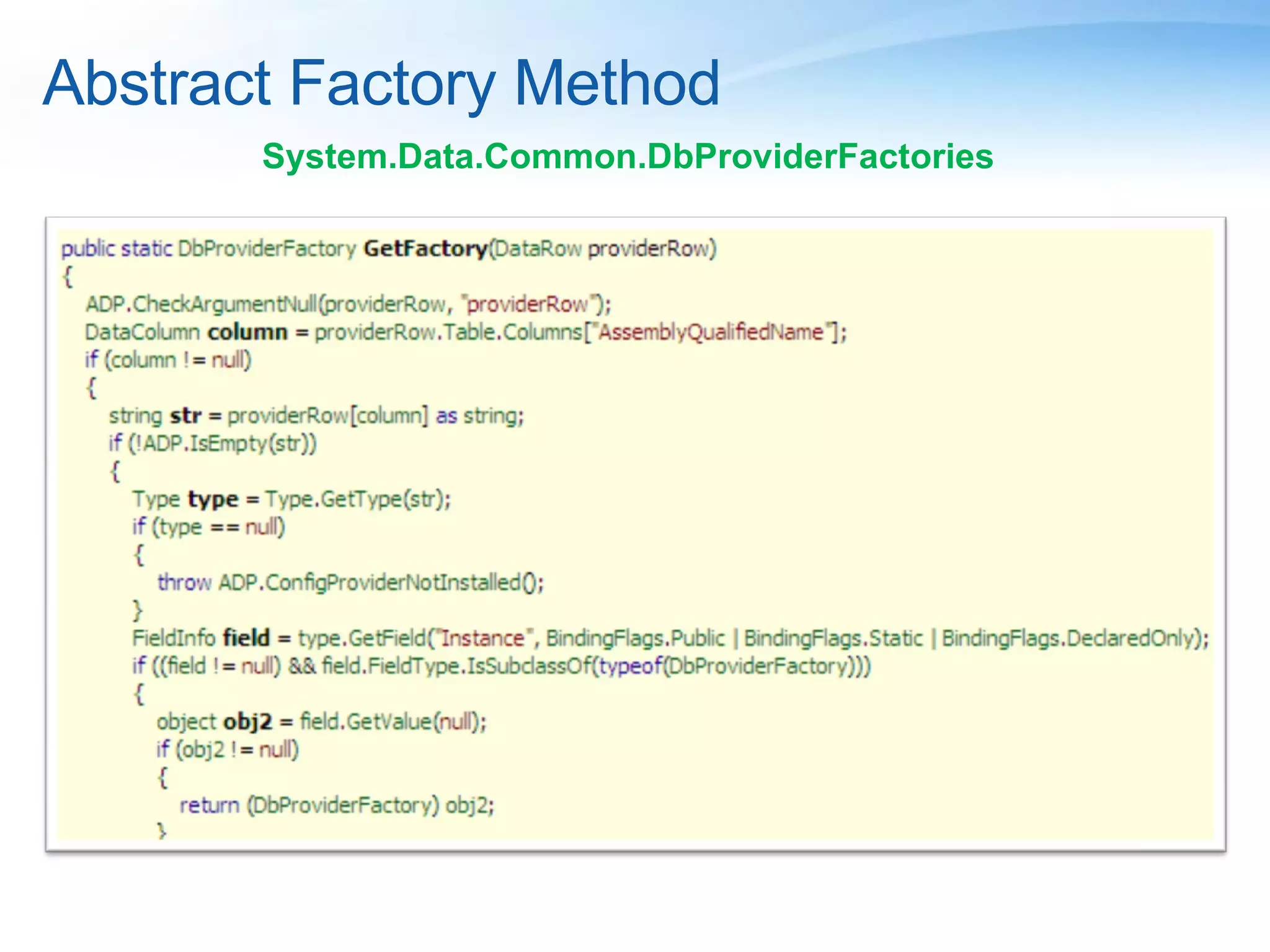
Abstract Factory Method System.Data.Common.DbProviderFactories
Singleton Pattern
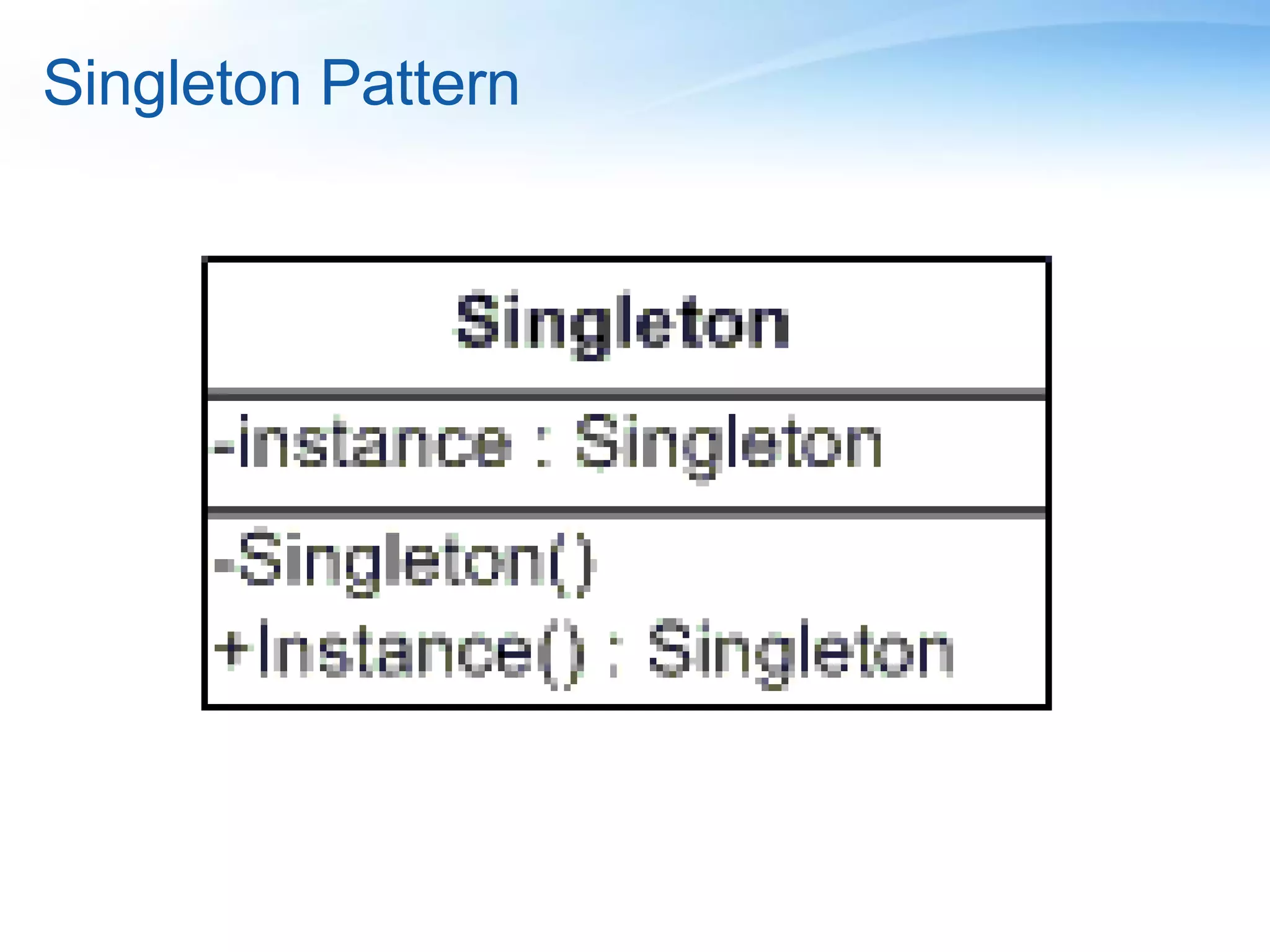
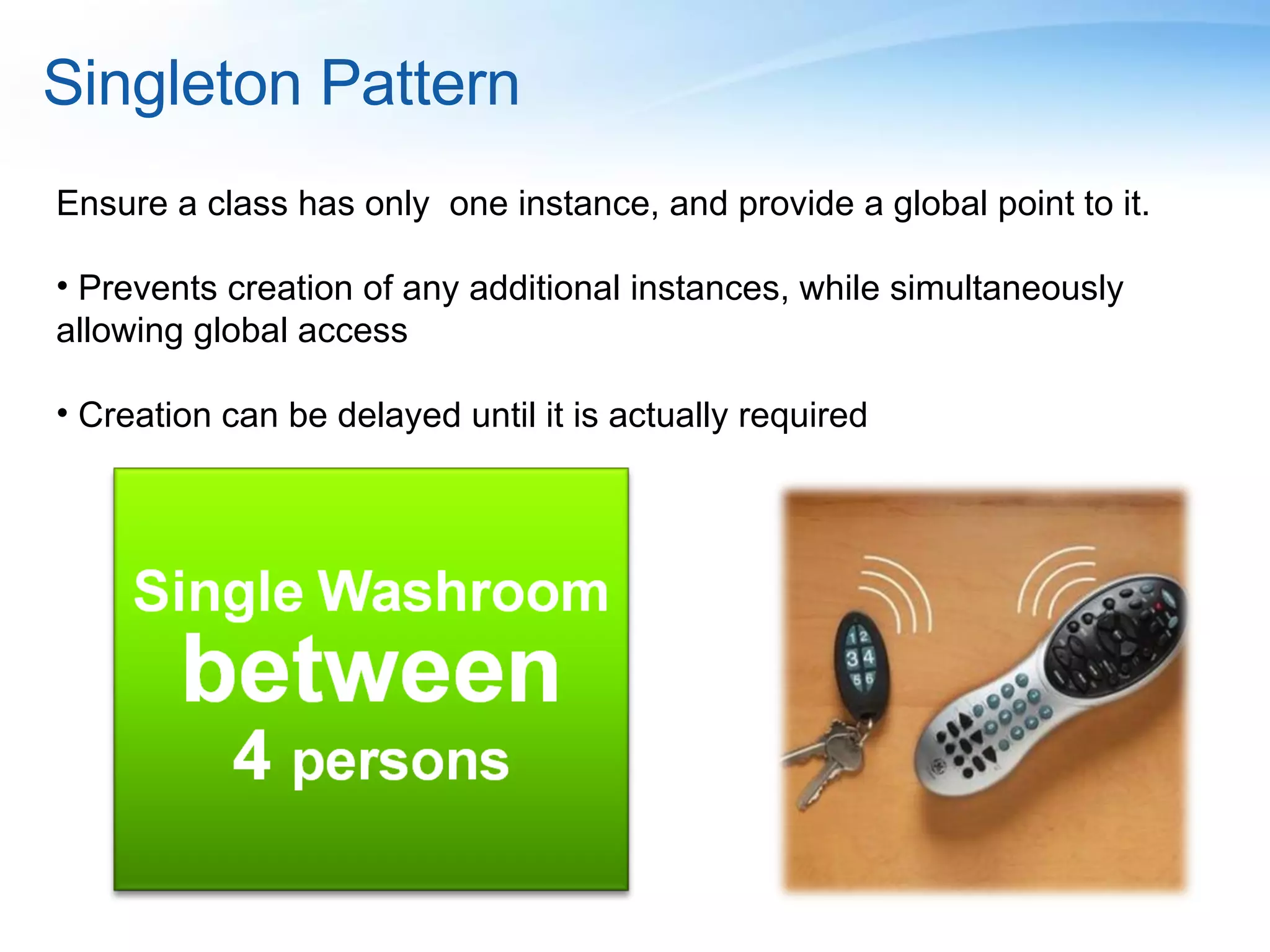
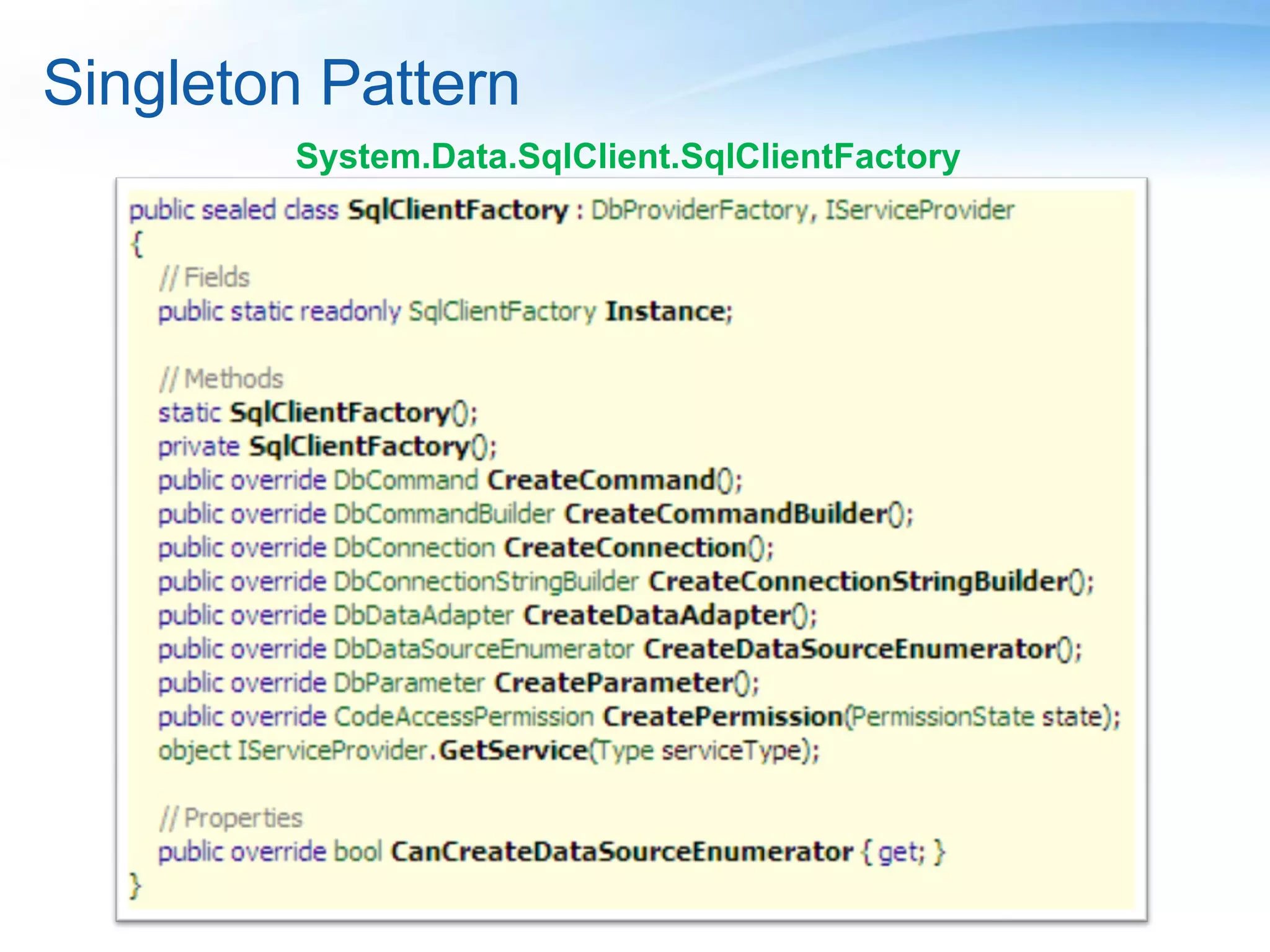
Singleton Pattern Ensure a class has only  one instance, and provide a global point to it. Prevents creation of any additional instances, while simultaneously allowing global access Creation can be delayed until it is actually required
Singleton Pattern System.Data.SqlClient.SqlClientFactory
Structural Patterns
Façade Pattern
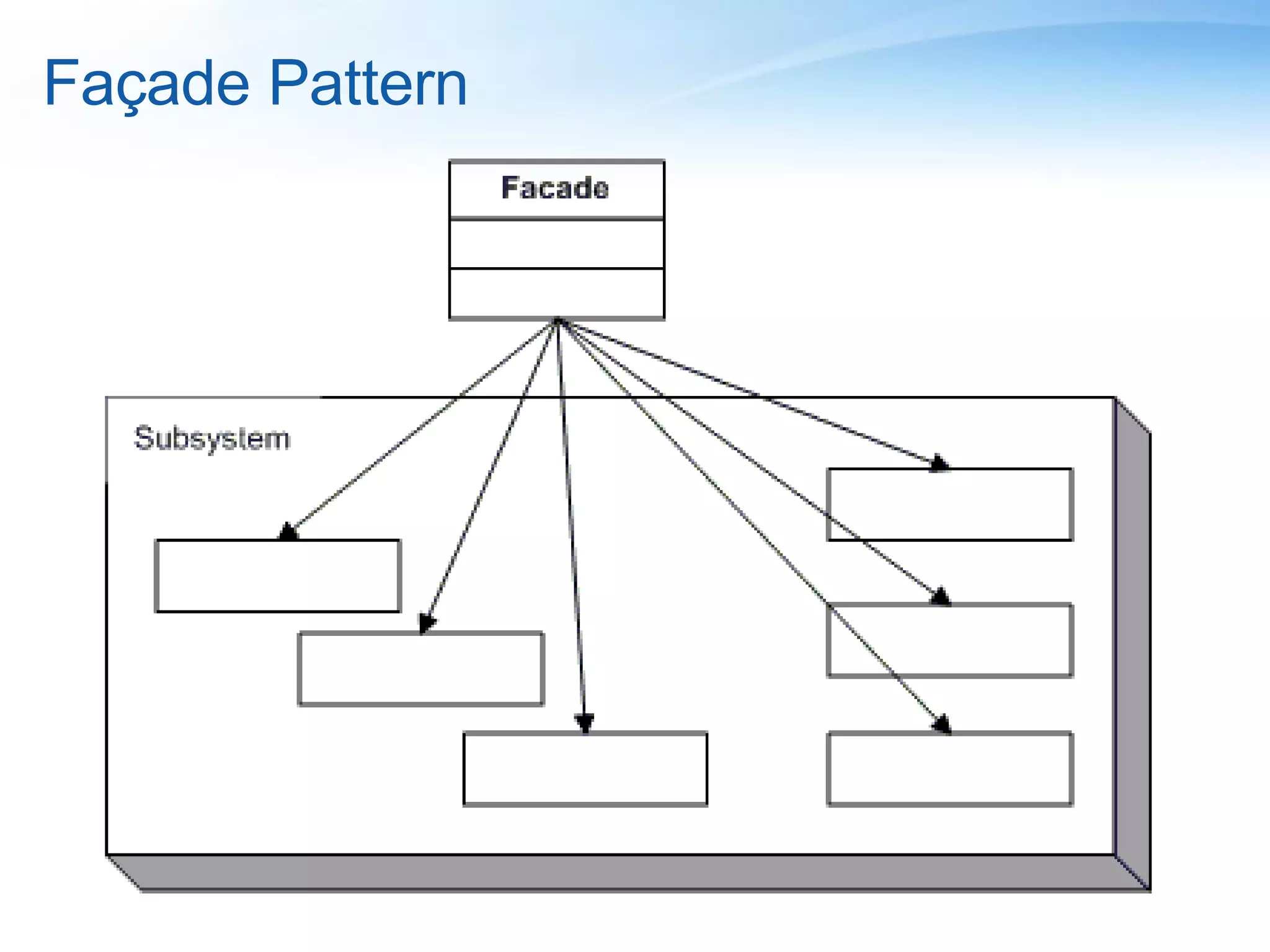
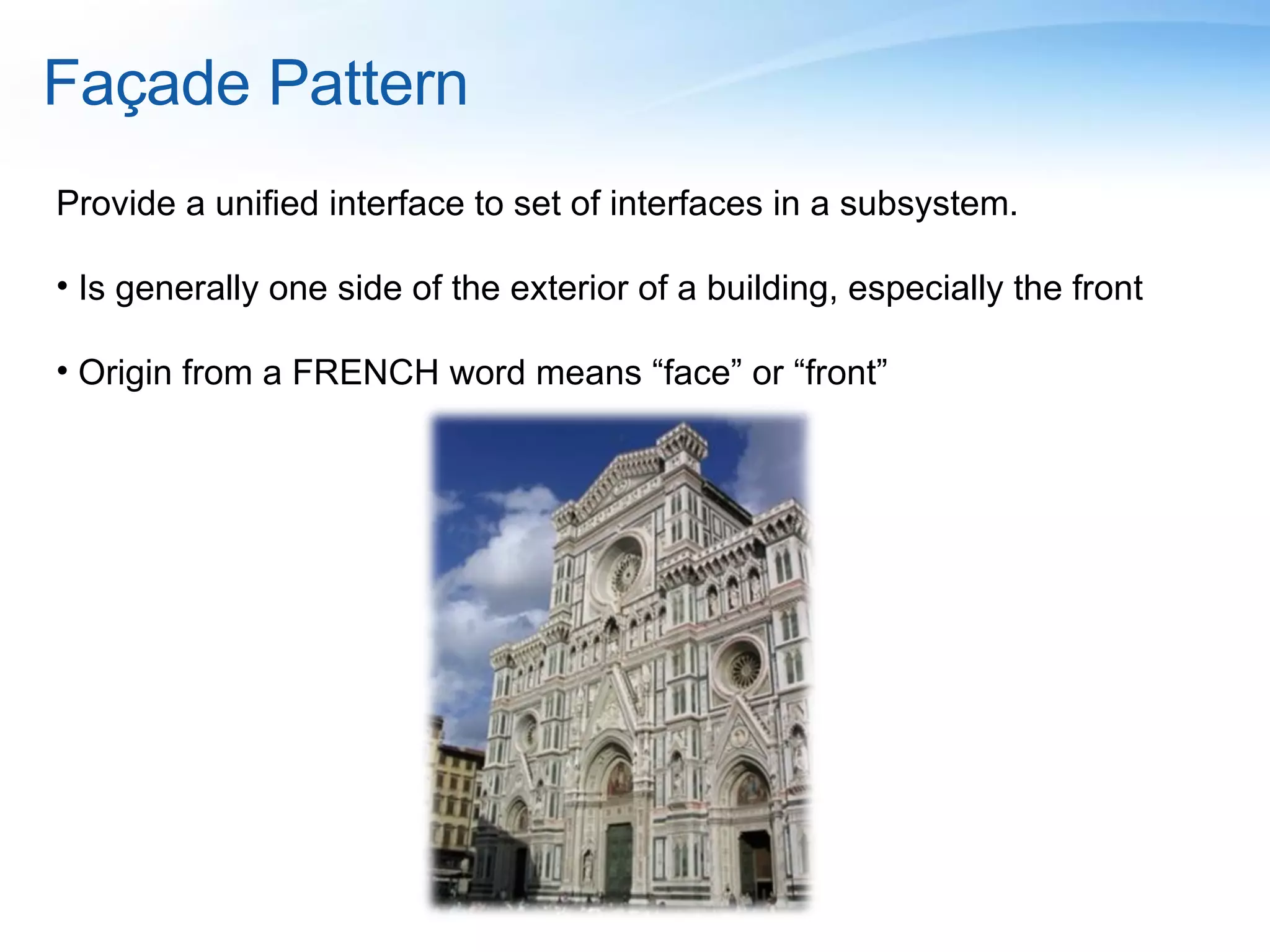
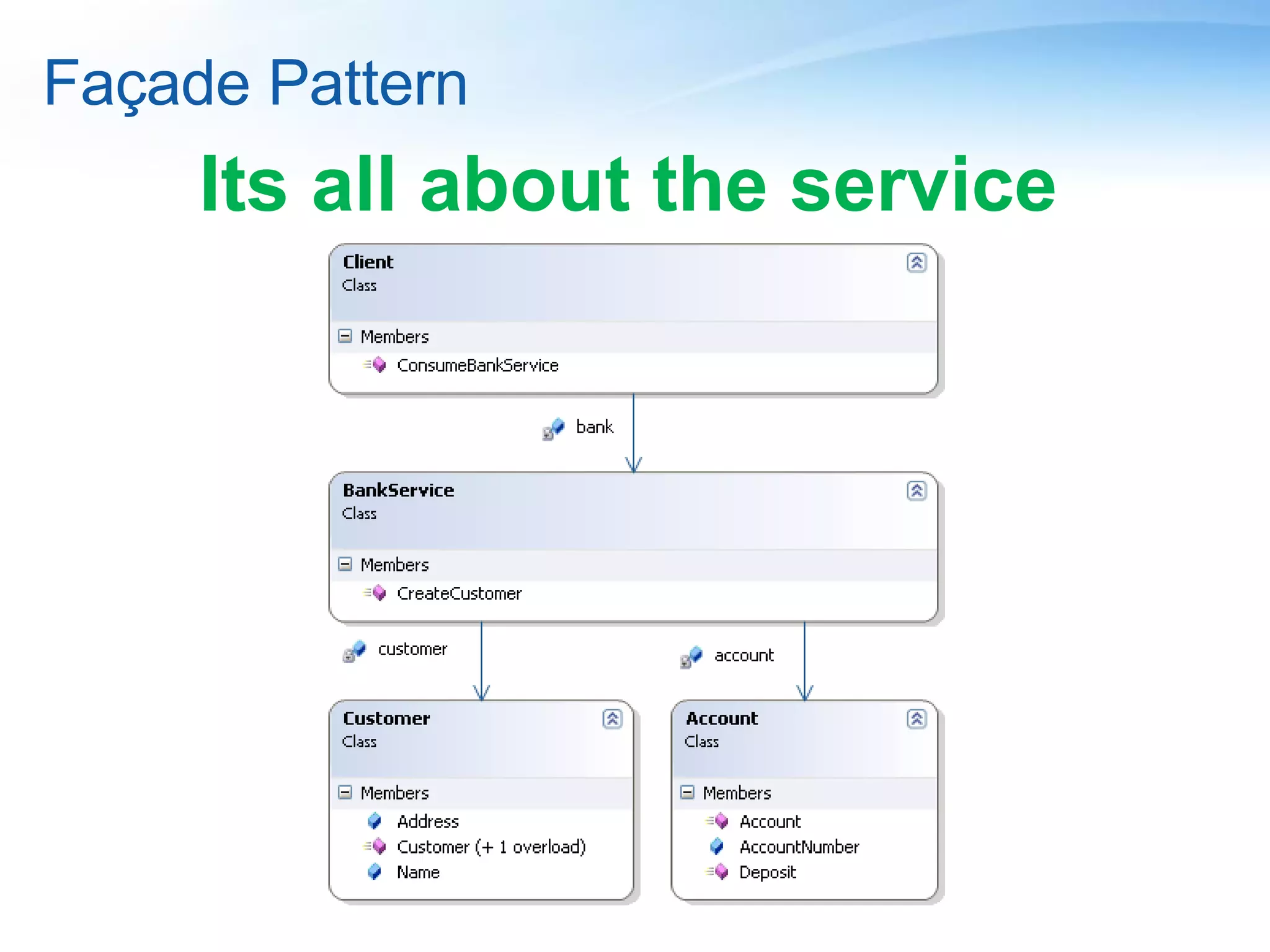
Façade Pattern Provide a unified interface to set of interfaces in a subsystem. Is generally one side of the exterior of a building, especially the front Origin from a FRENCH word means “face” or “front”
Façade Pattern Its all about the service
Decorator Pattern
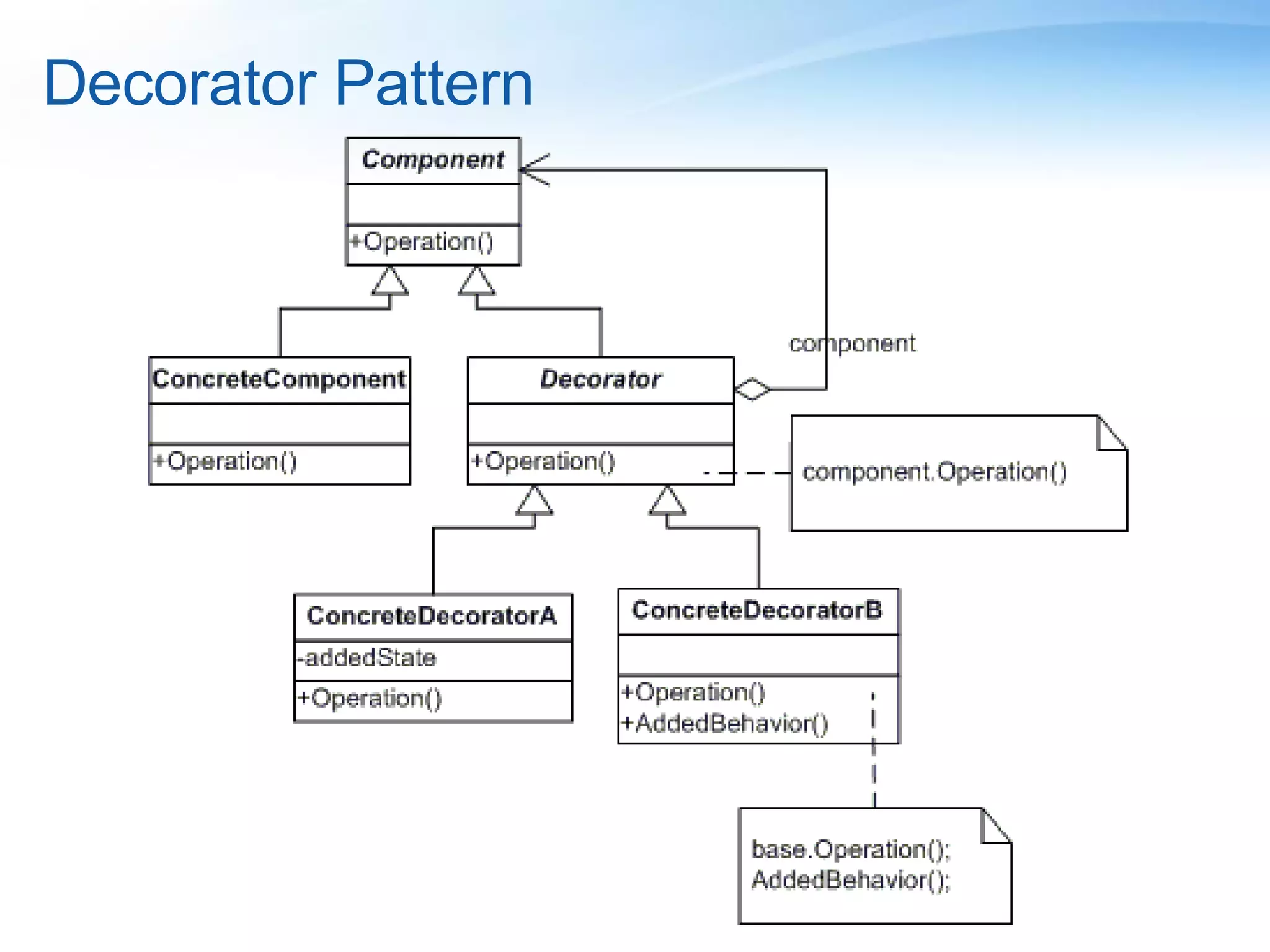
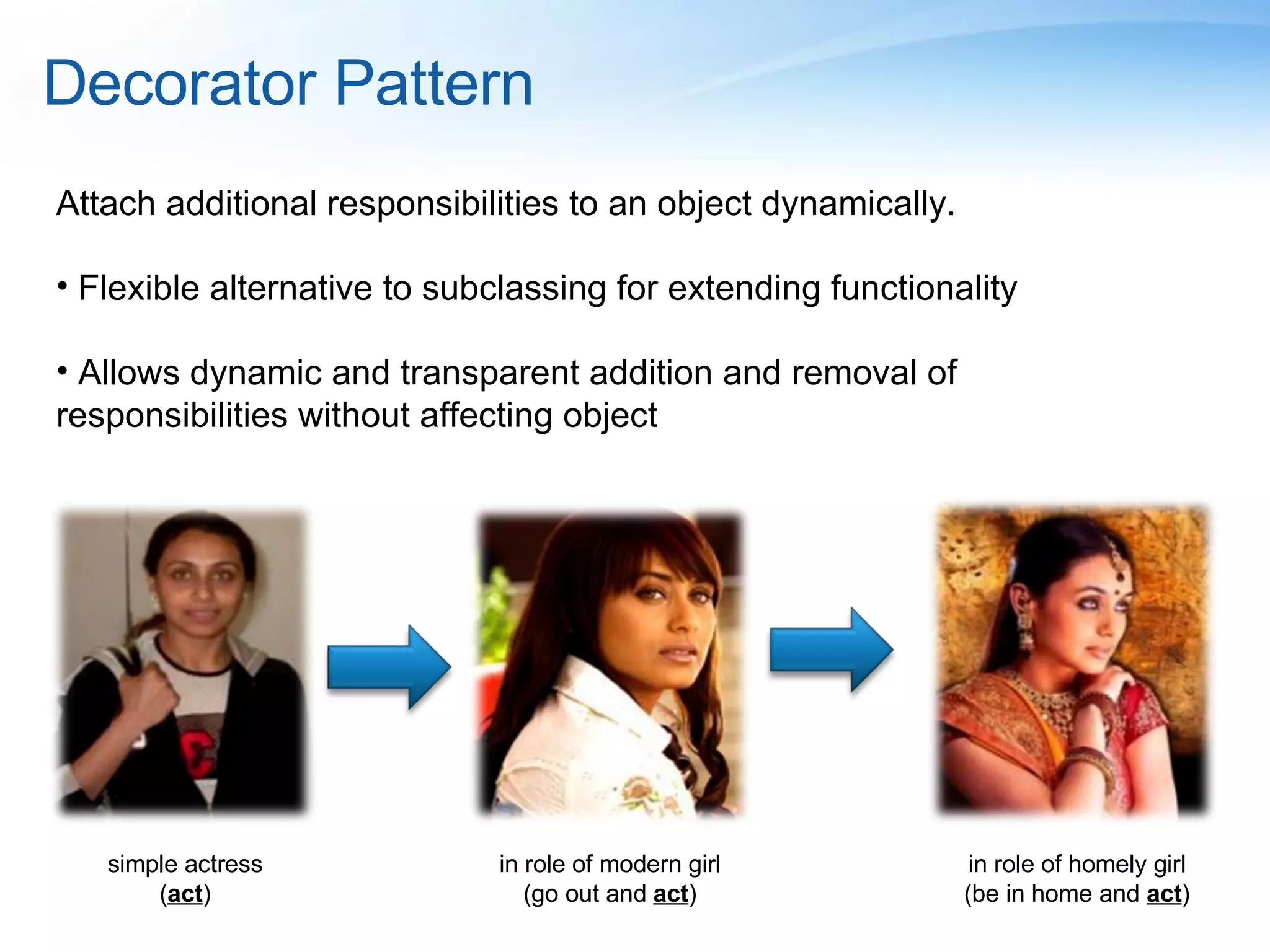
Decorator Pattern Attach additional responsibilities to an object dynamically. Flexible alternative to subclassing for extending functionality Allows dynamic and transparent addition and removal of responsibilities without affecting object simple actress ( act ) in role of modern girl (go out and  act ) in role of homely girl (be in home and  act )
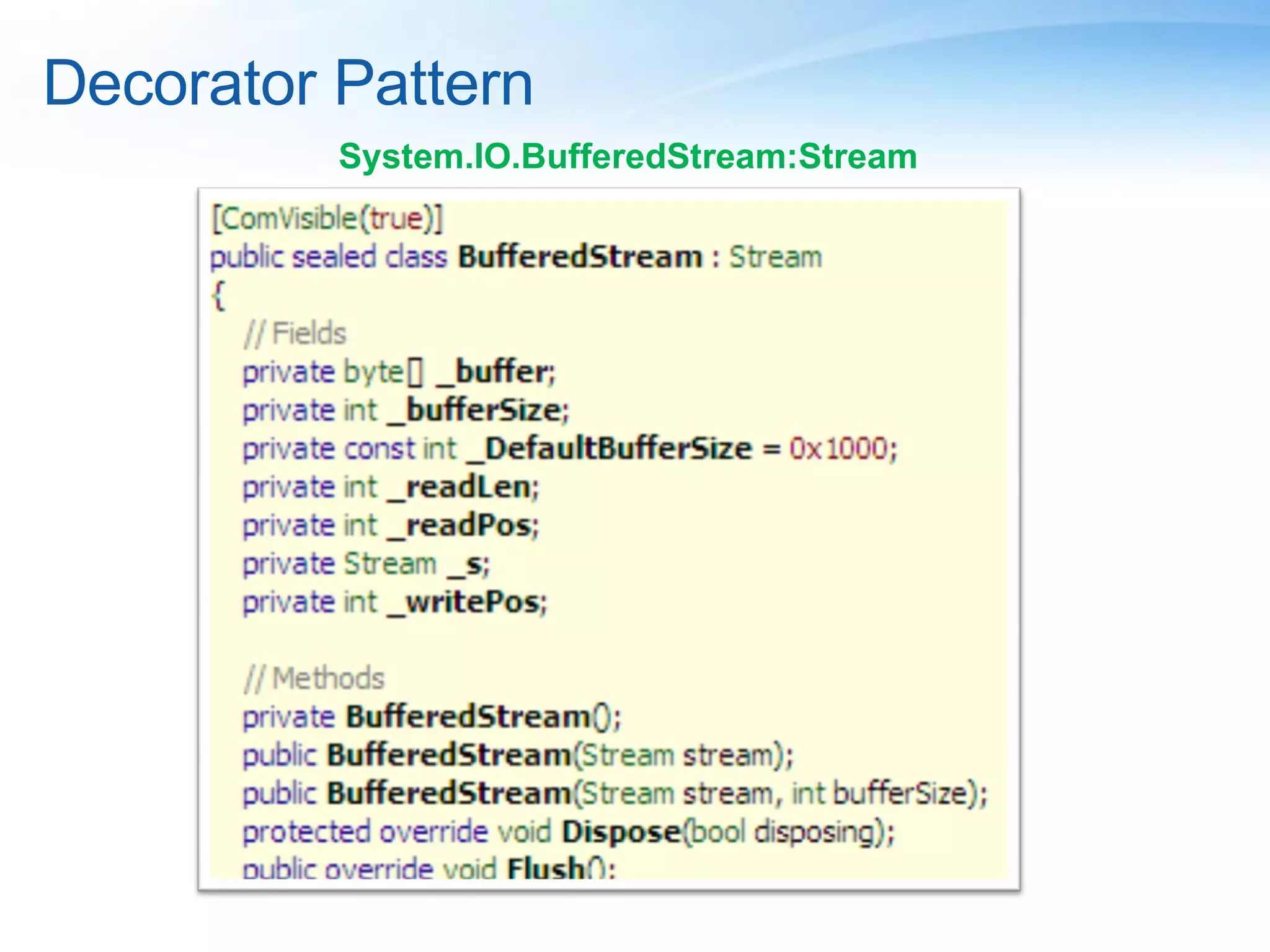
Decorator Pattern System.IO.BufferedStream:Stream
Composite Pattern
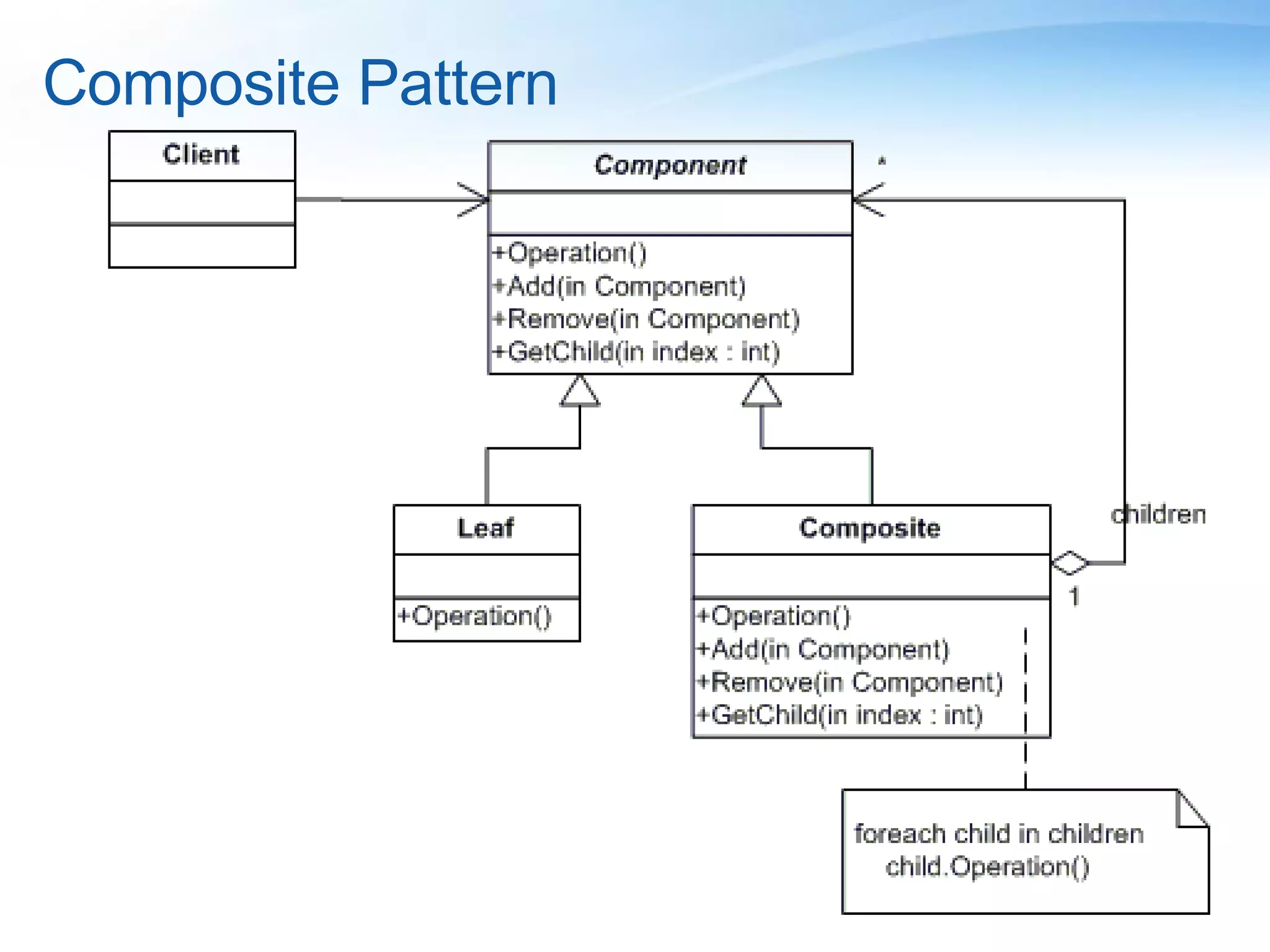
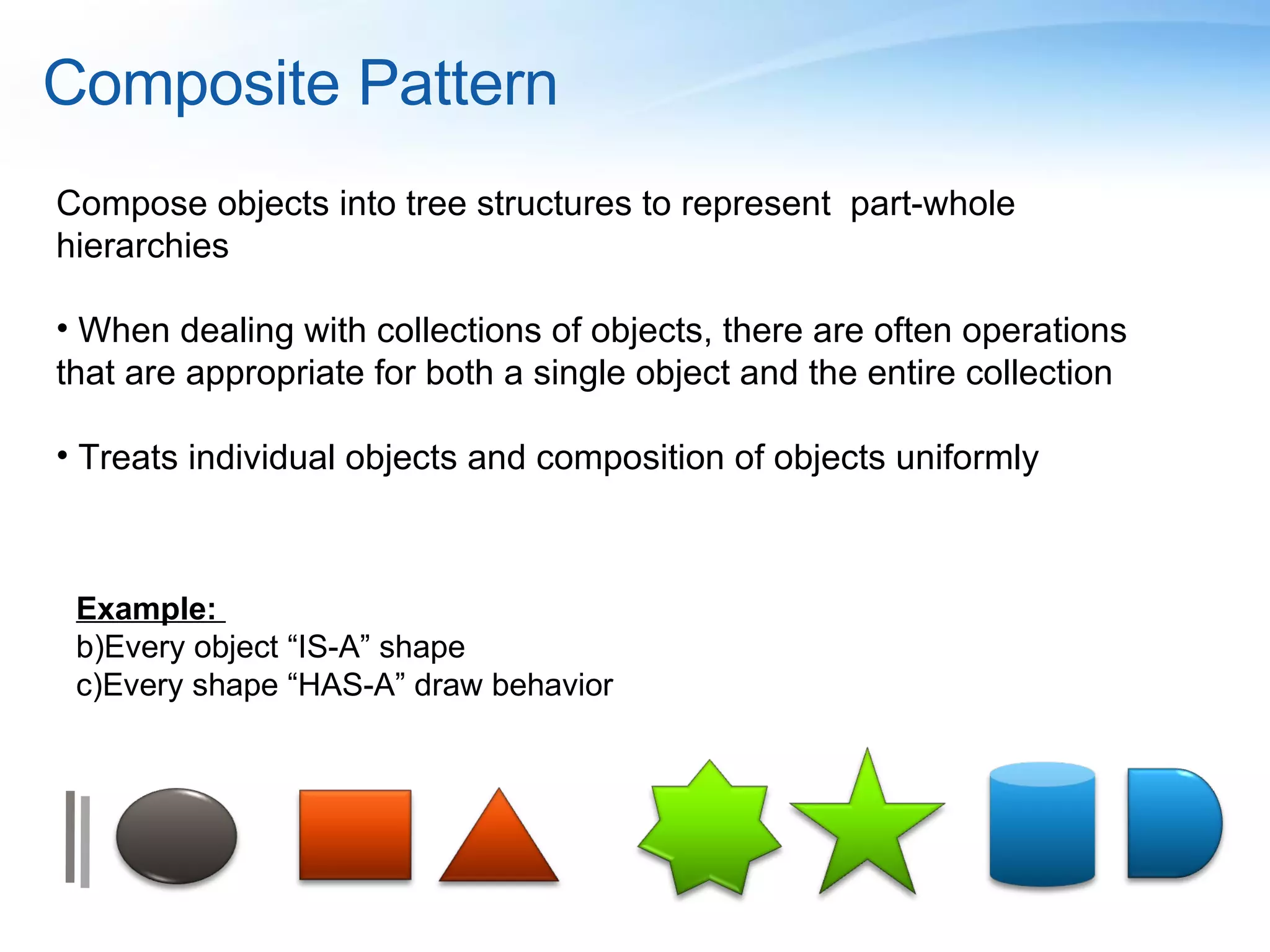
Composite Pattern Compose objects into tree structures to represent  part-whole hierarchies When dealing with collections of objects, there are often operations that are appropriate for both a single object and the entire collection Treats individual objects and composition of objects uniformly Example:  Every object “IS-A” shape Every shape “HAS-A” draw behavior
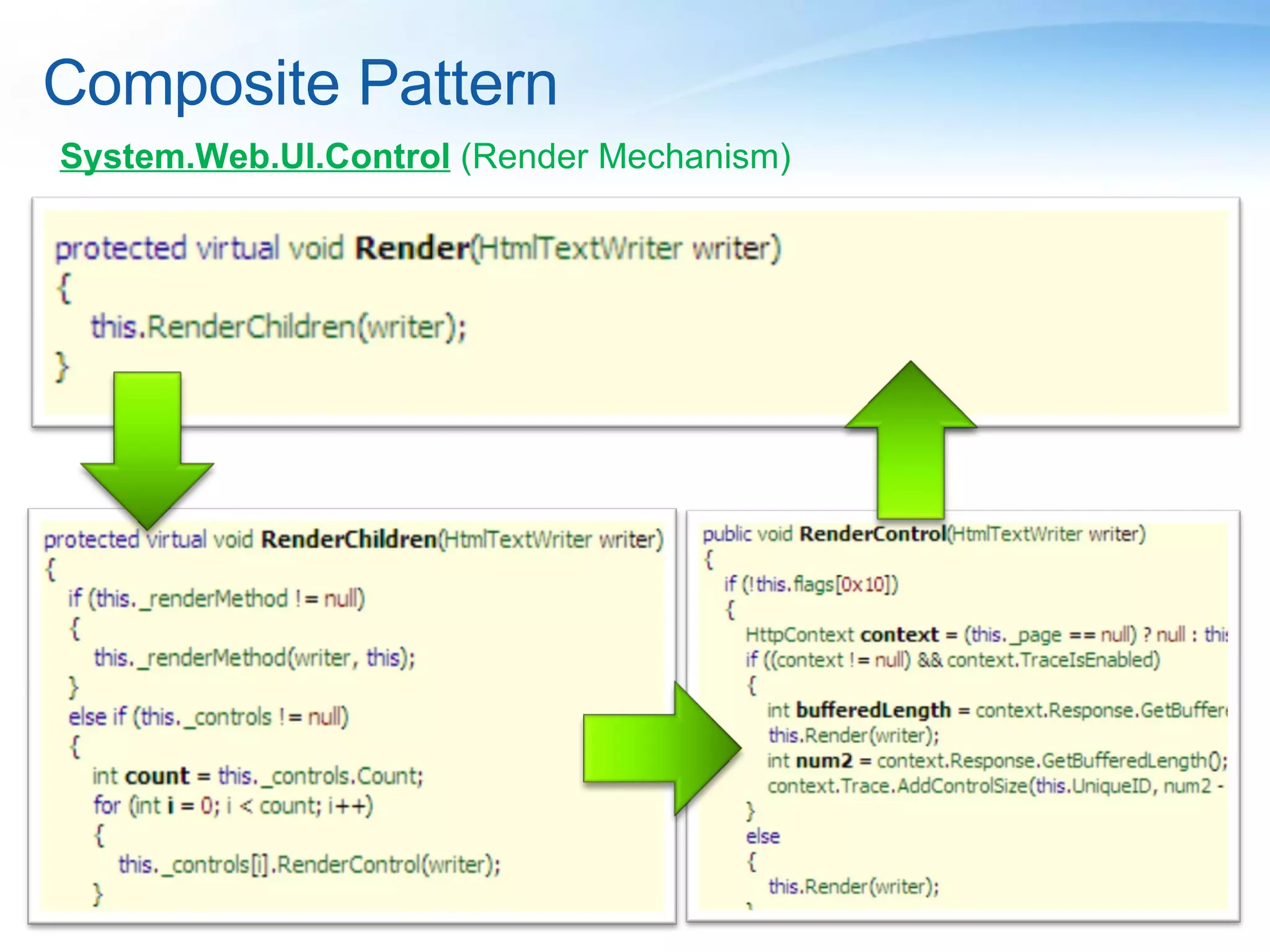
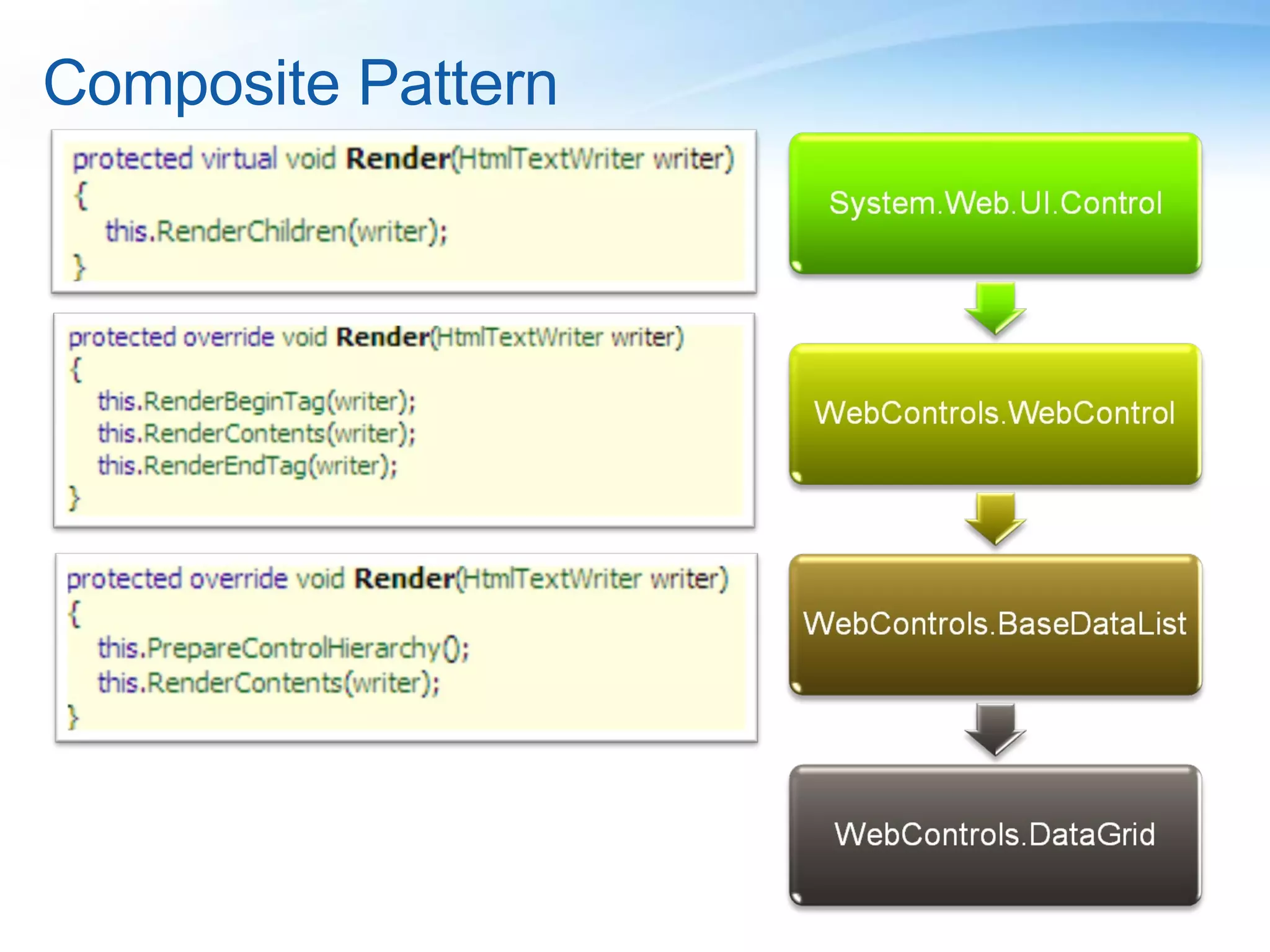
Composite Pattern System.Web.UI.Control   (Render Mechanism)
Composite Pattern
Adapter Pattern
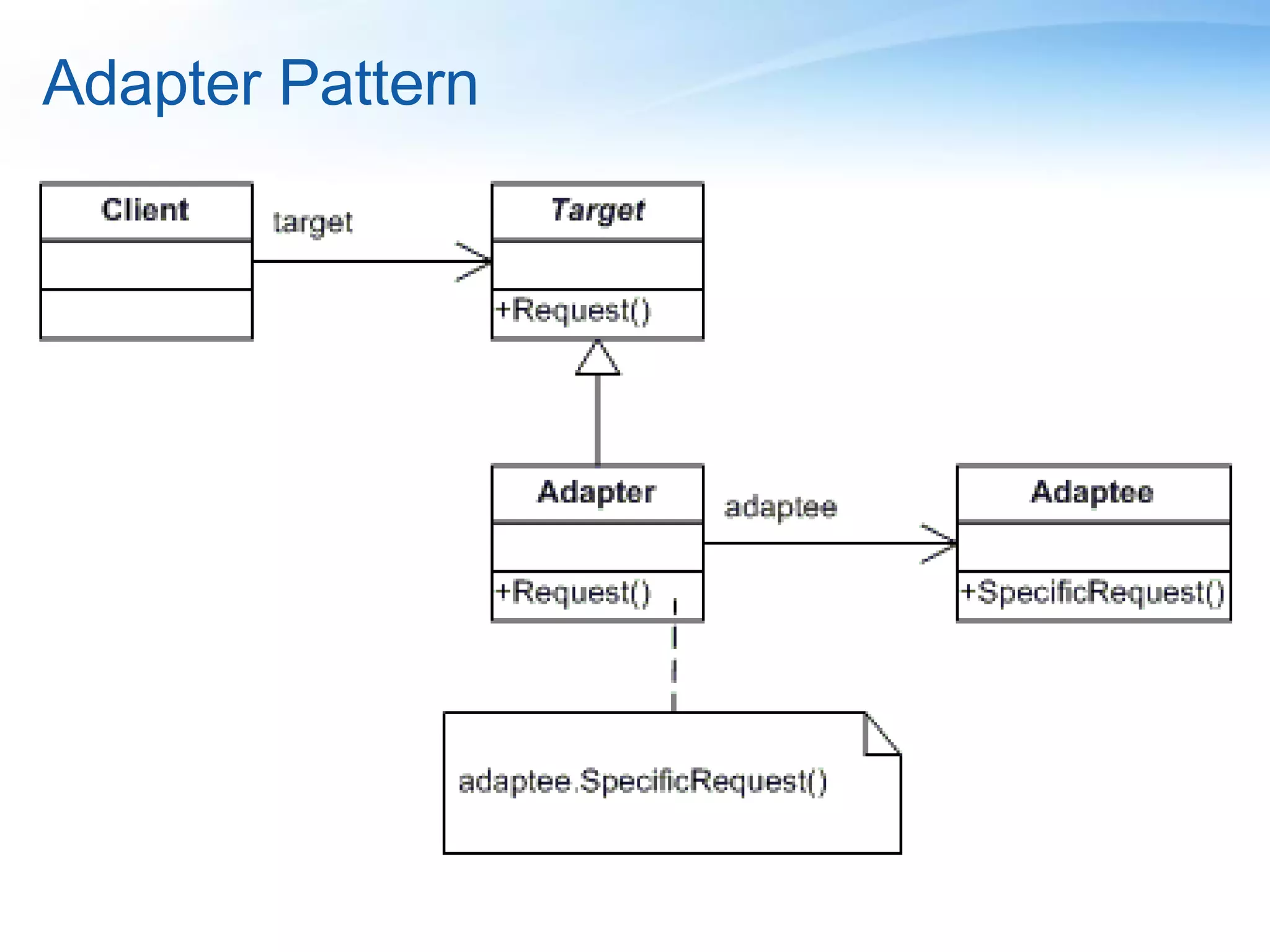
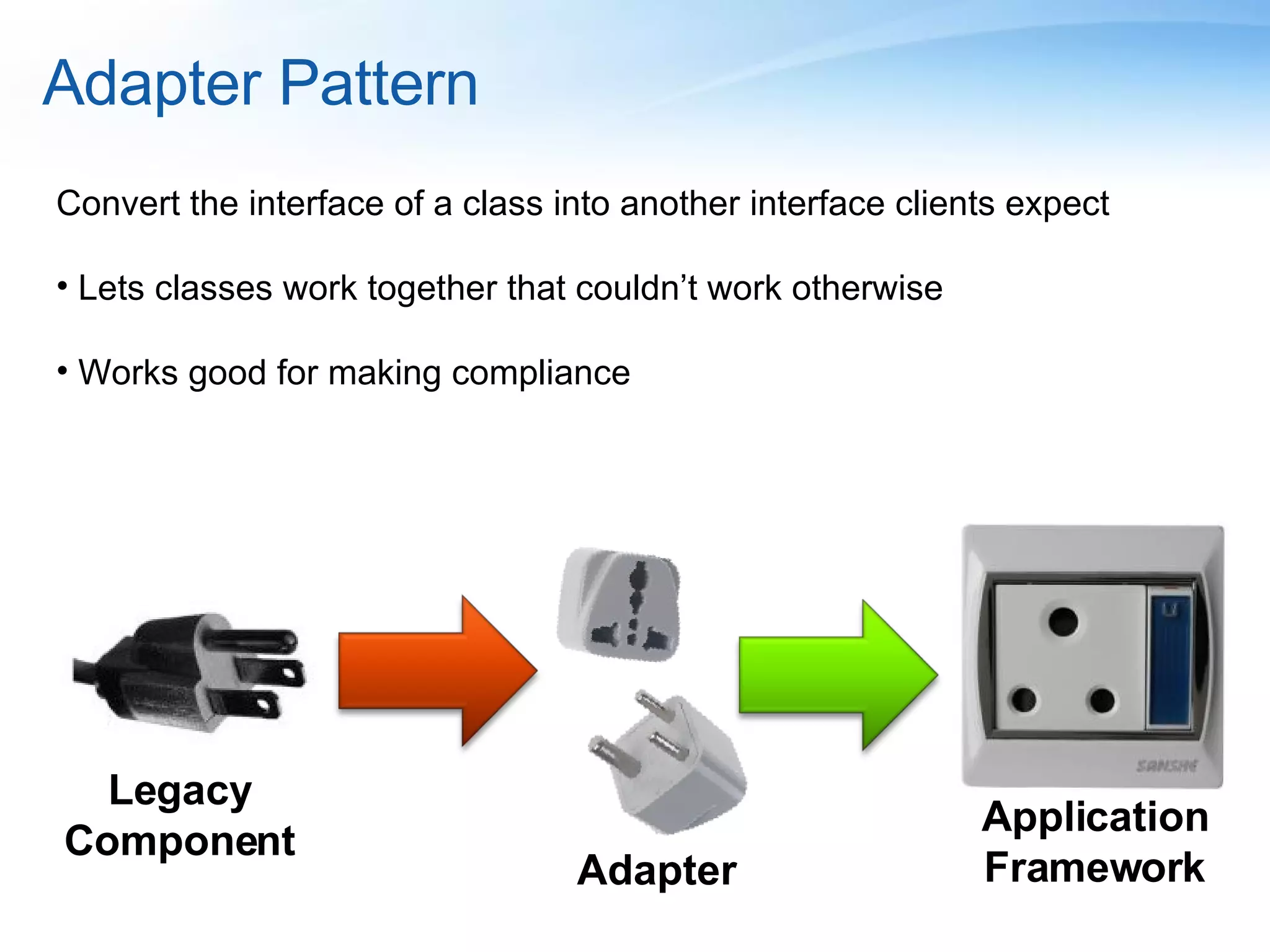
Adapter Pattern Convert the interface of a class into another interface clients expect Lets classes work together that couldn’t work otherwise Works good for making compliance Application Framework Adapter Legacy Component
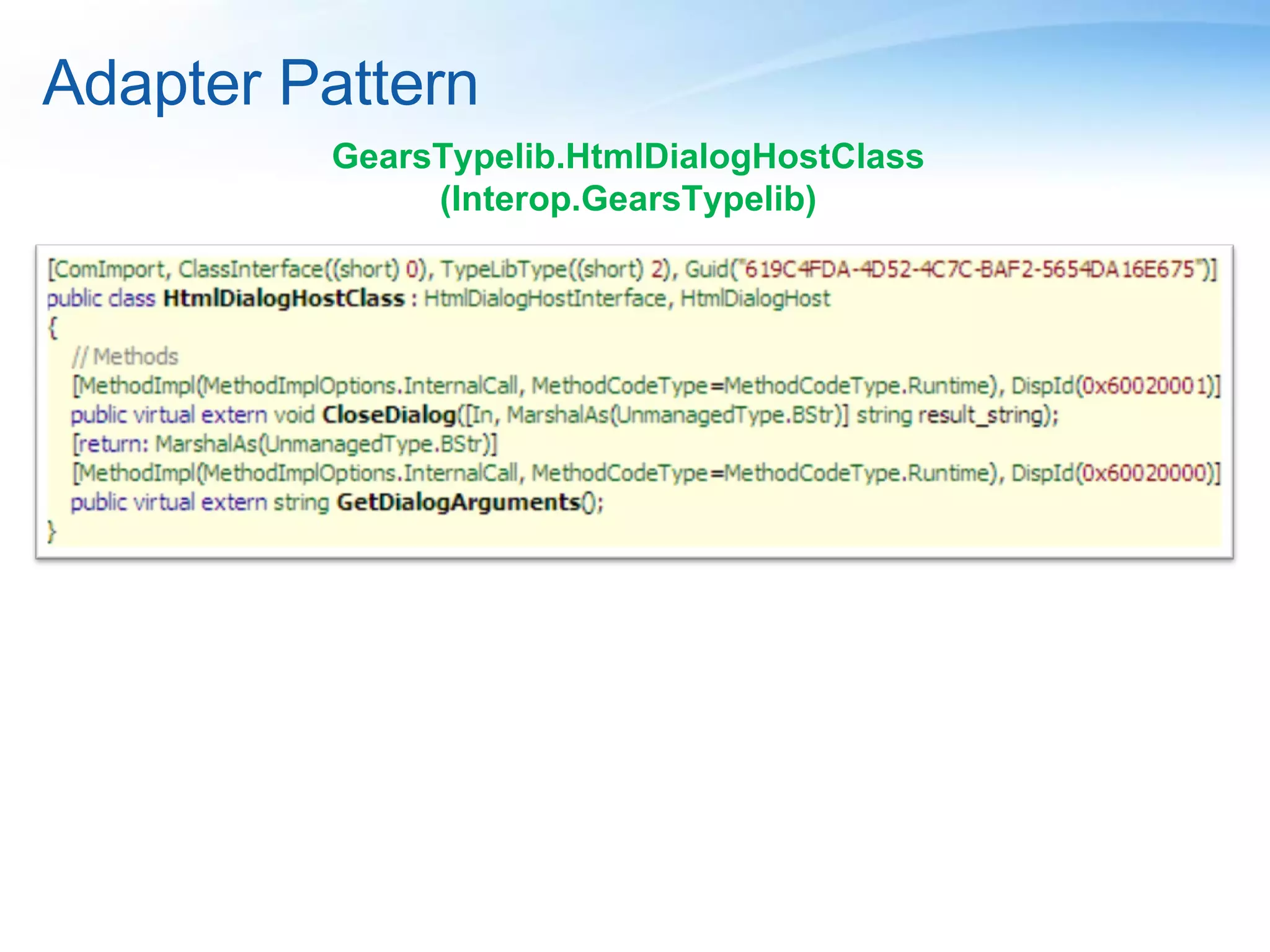
Adapter Pattern GearsTypelib.HtmlDialogHostClass (Interop.GearsTypelib)
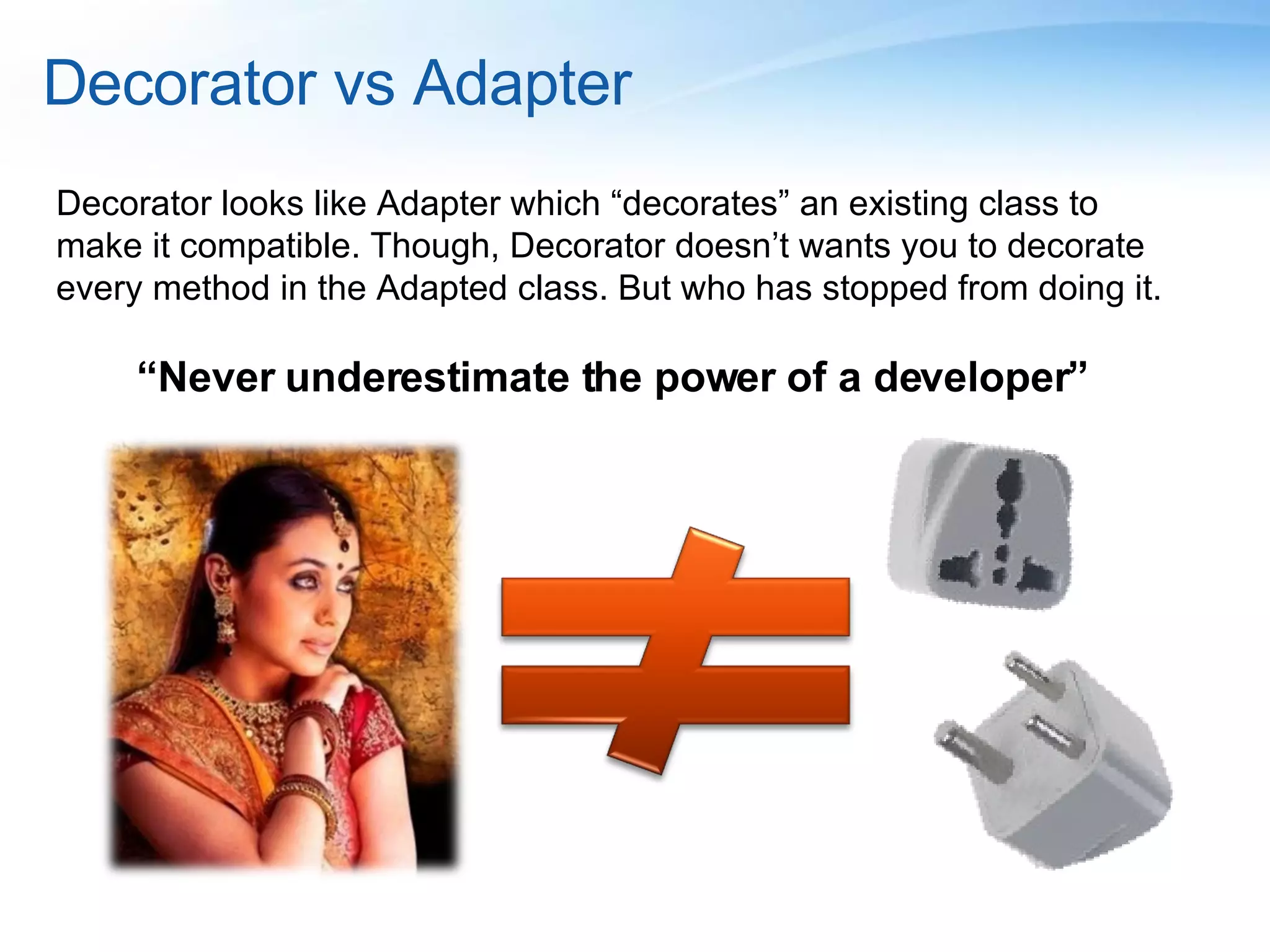
Decorator vs Adapter Decorator looks like Adapter which “decorates” an existing class to make it compatible. Though, Decorator doesn’t wants you to decorate every method in the Adapted class. But who has stopped from doing it. “ Never underestimate the power of a developer”
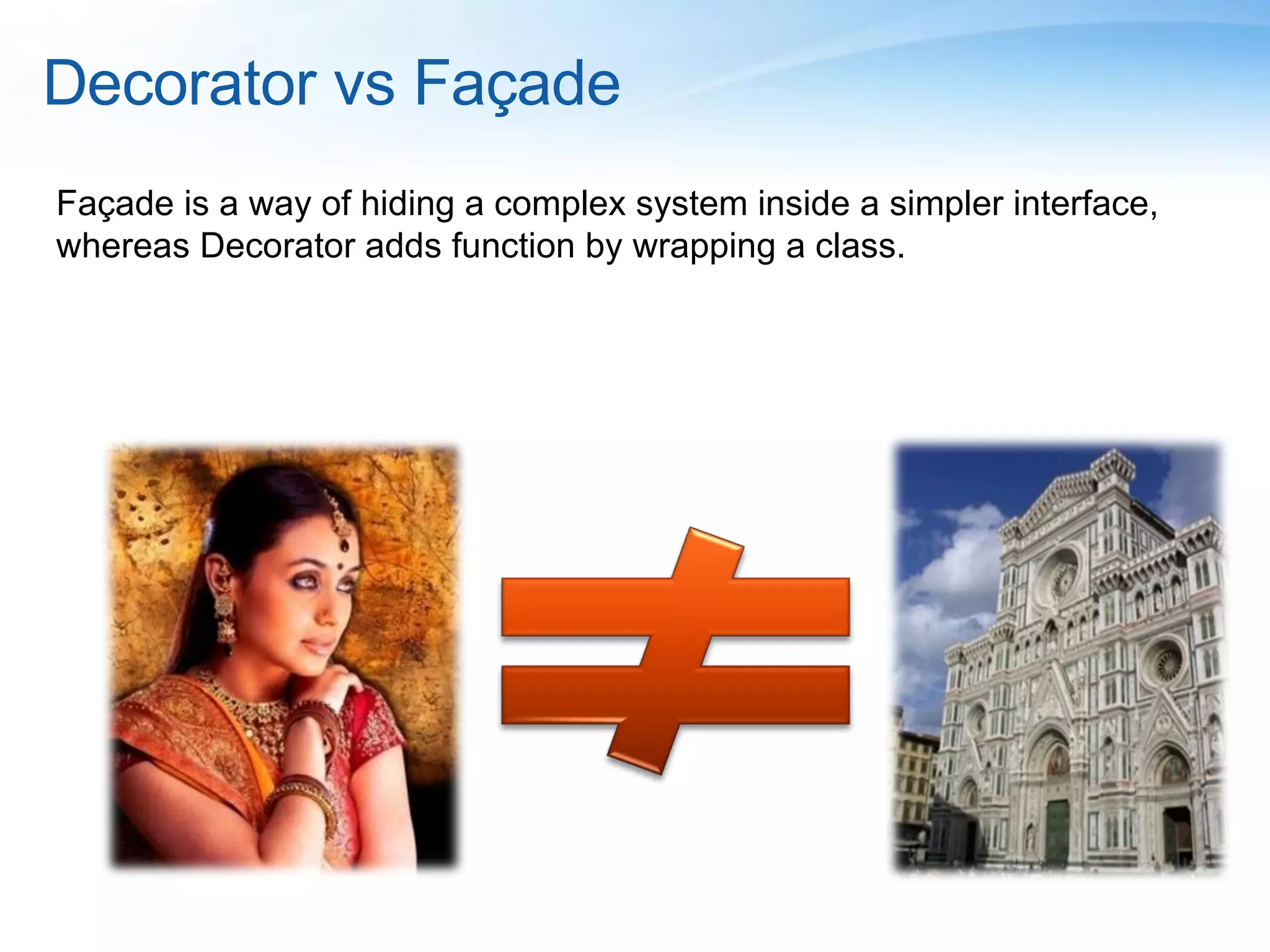
Decorator vs Façade Façade is a way of hiding a complex system inside a simpler interface, whereas Decorator adds function by wrapping a class.
Behavioural Patterns
Command Pattern
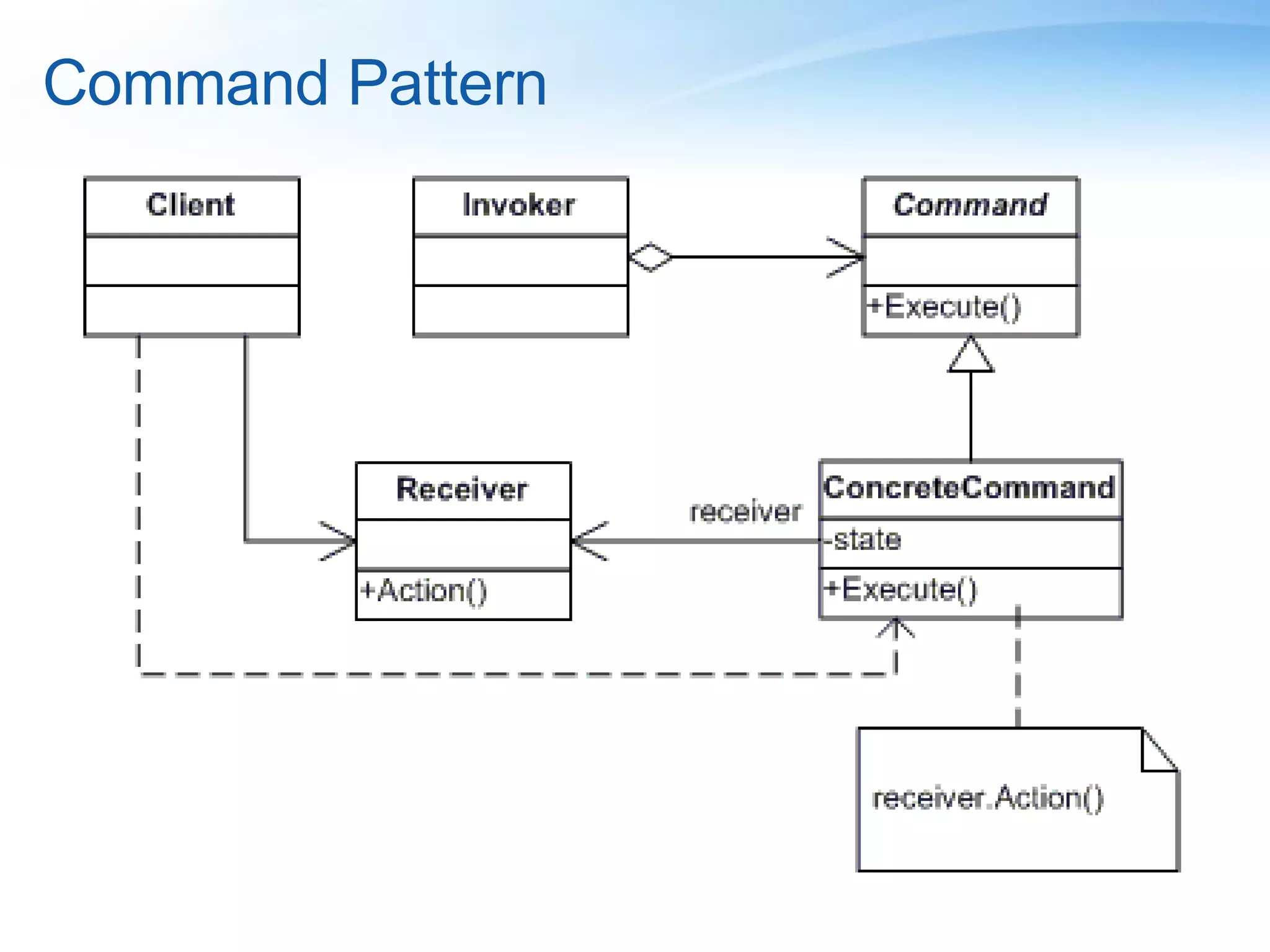
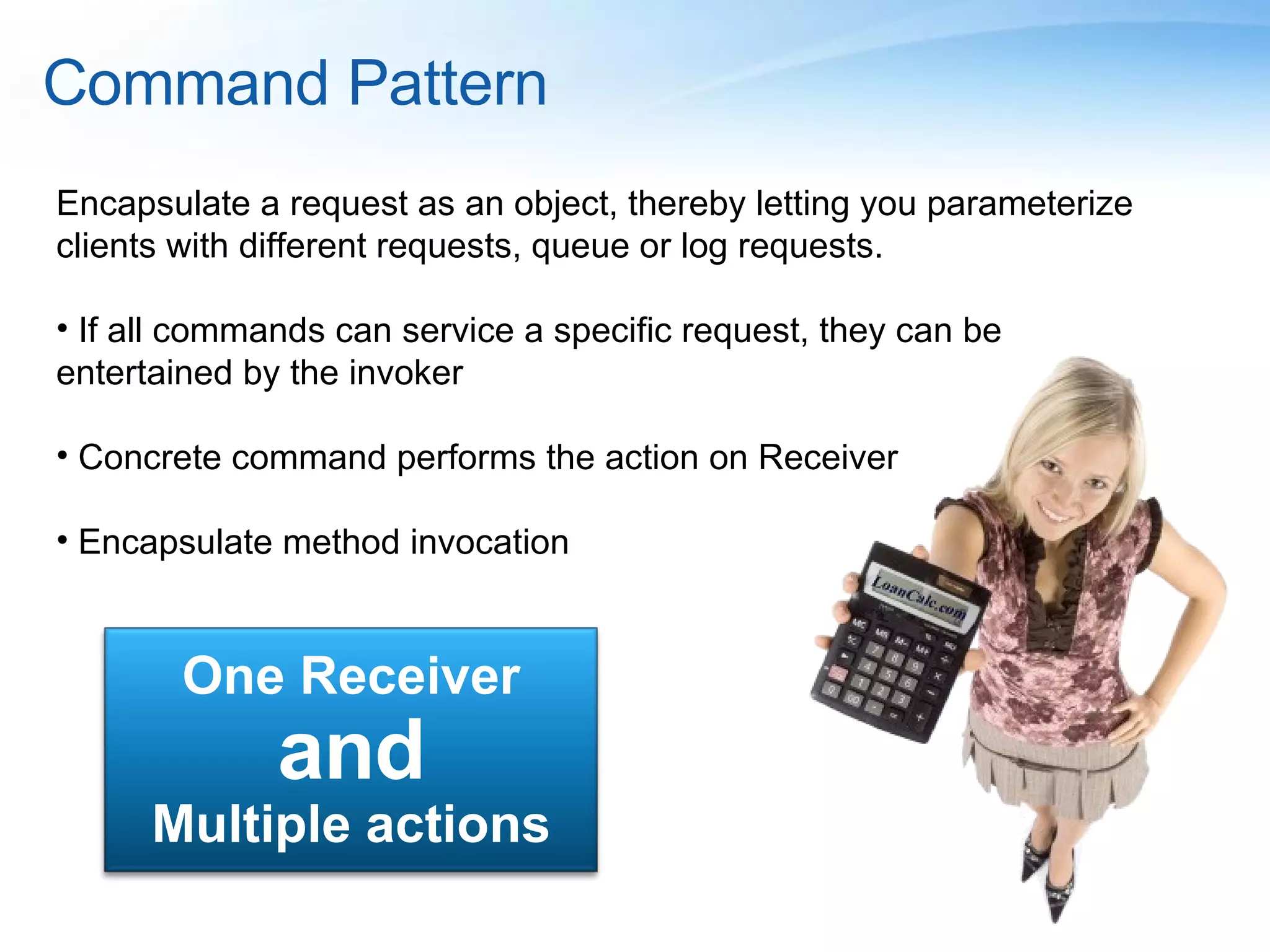
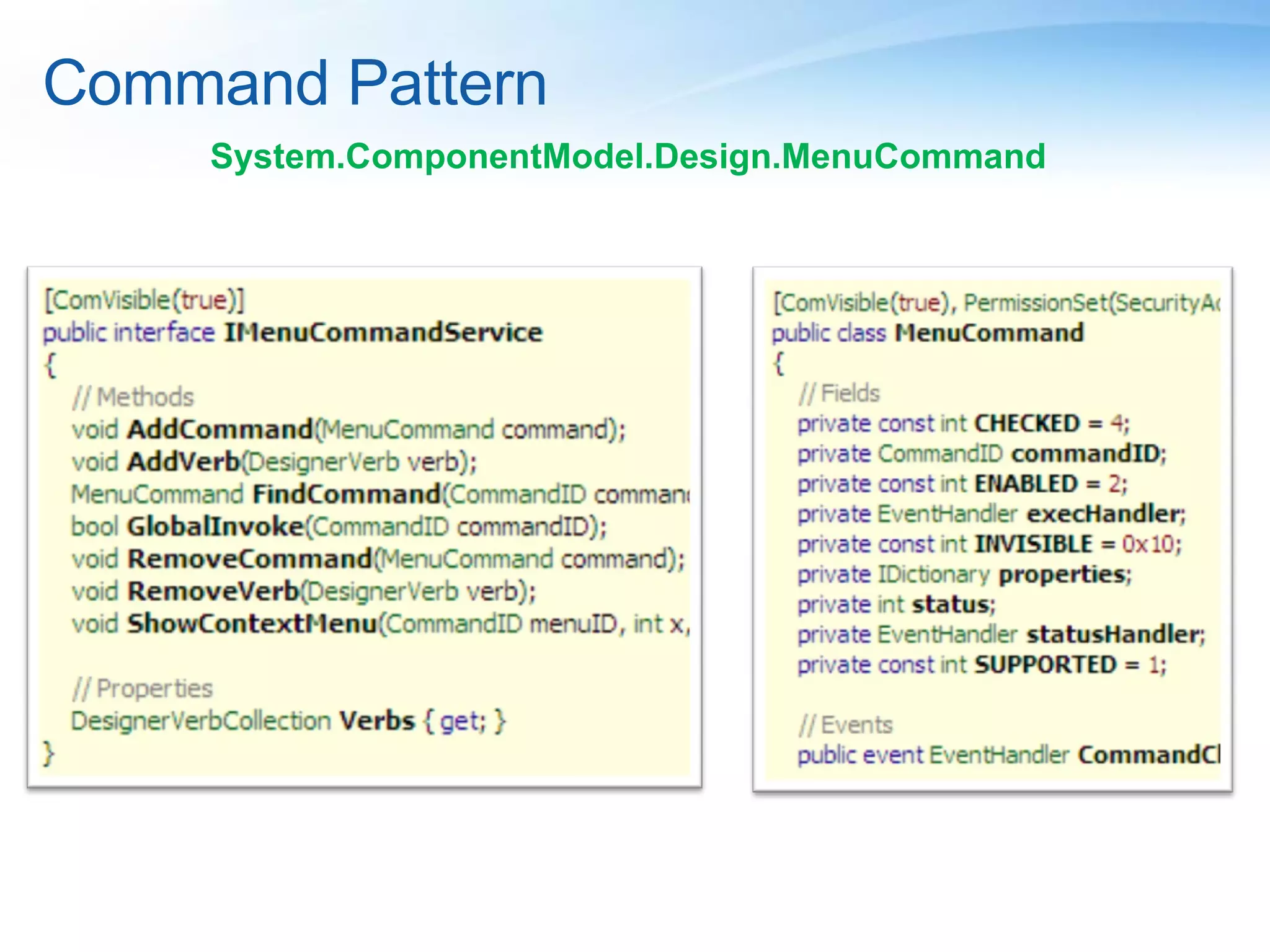
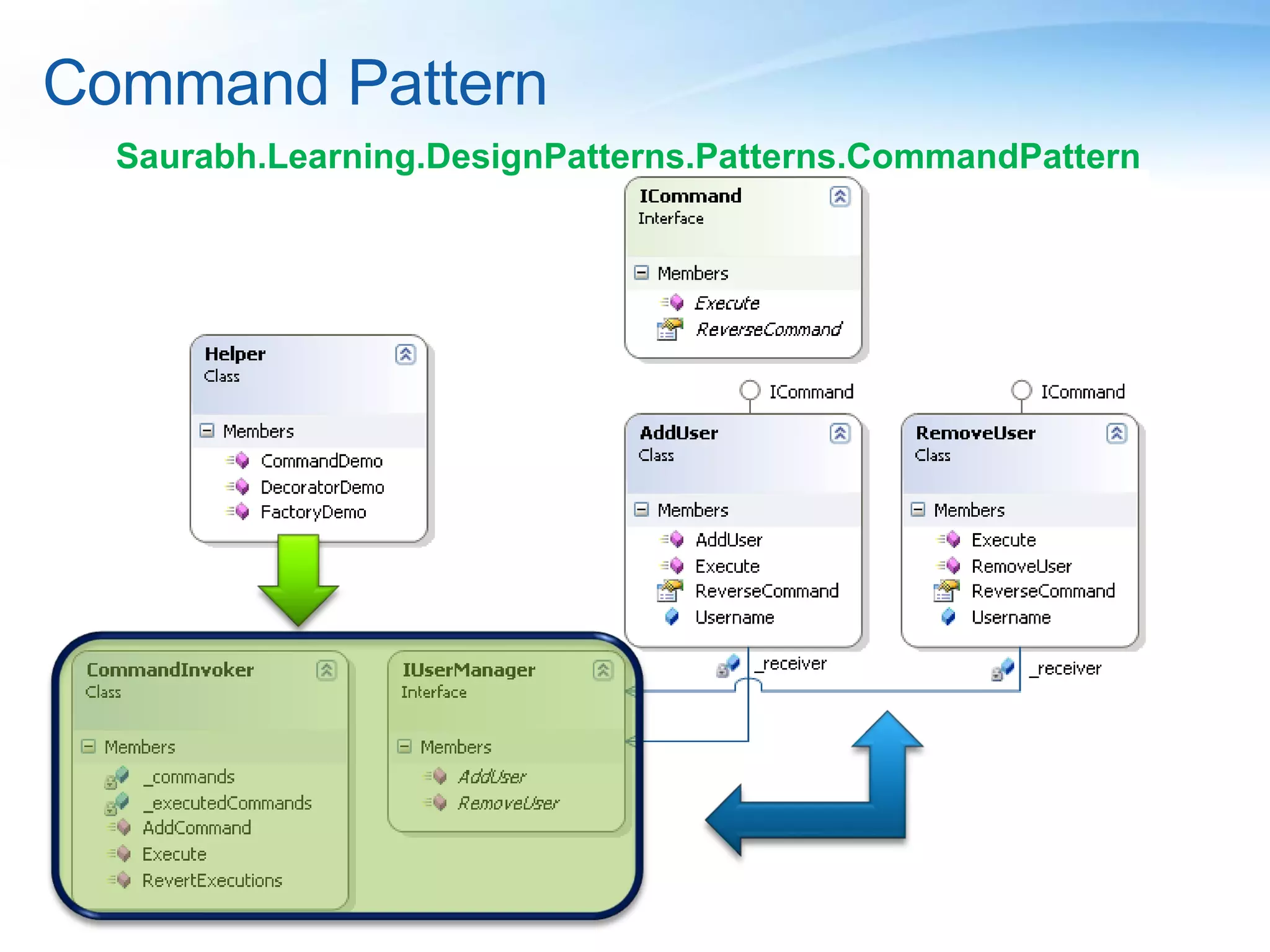
Command Pattern Encapsulate a request as an object, thereby letting you parameterize clients with different requests, queue or log requests. If all commands can service a specific request, they can be entertained by the invoker Concrete command performs the action on Receiver Encapsulate method invocation One Receiver and Multiple actions
Command Pattern System.ComponentModel.Design.MenuCommand
Command Pattern Saurabh.Learning.DesignPatterns.Patterns.CommandPattern
Strategy Pattern
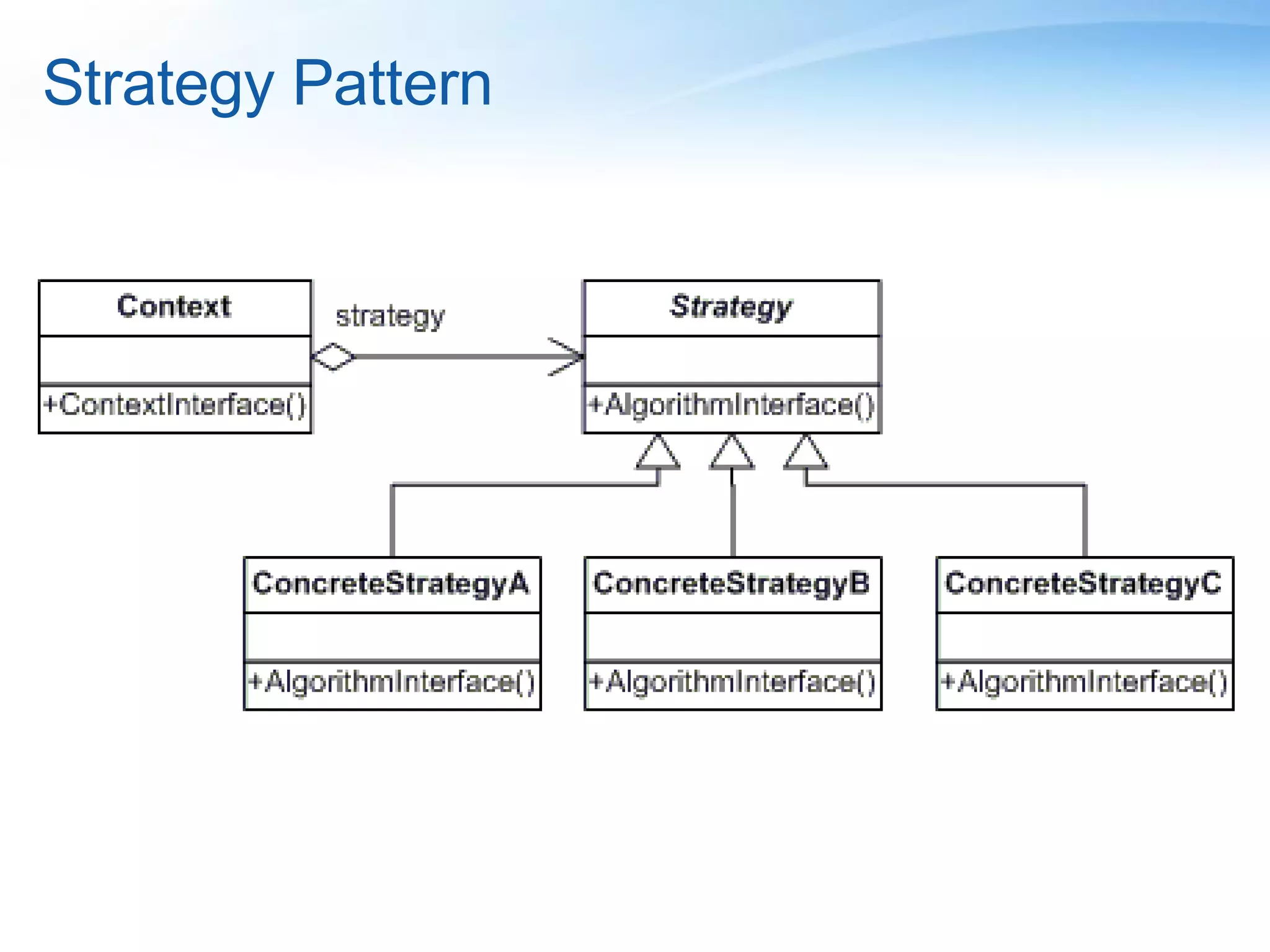
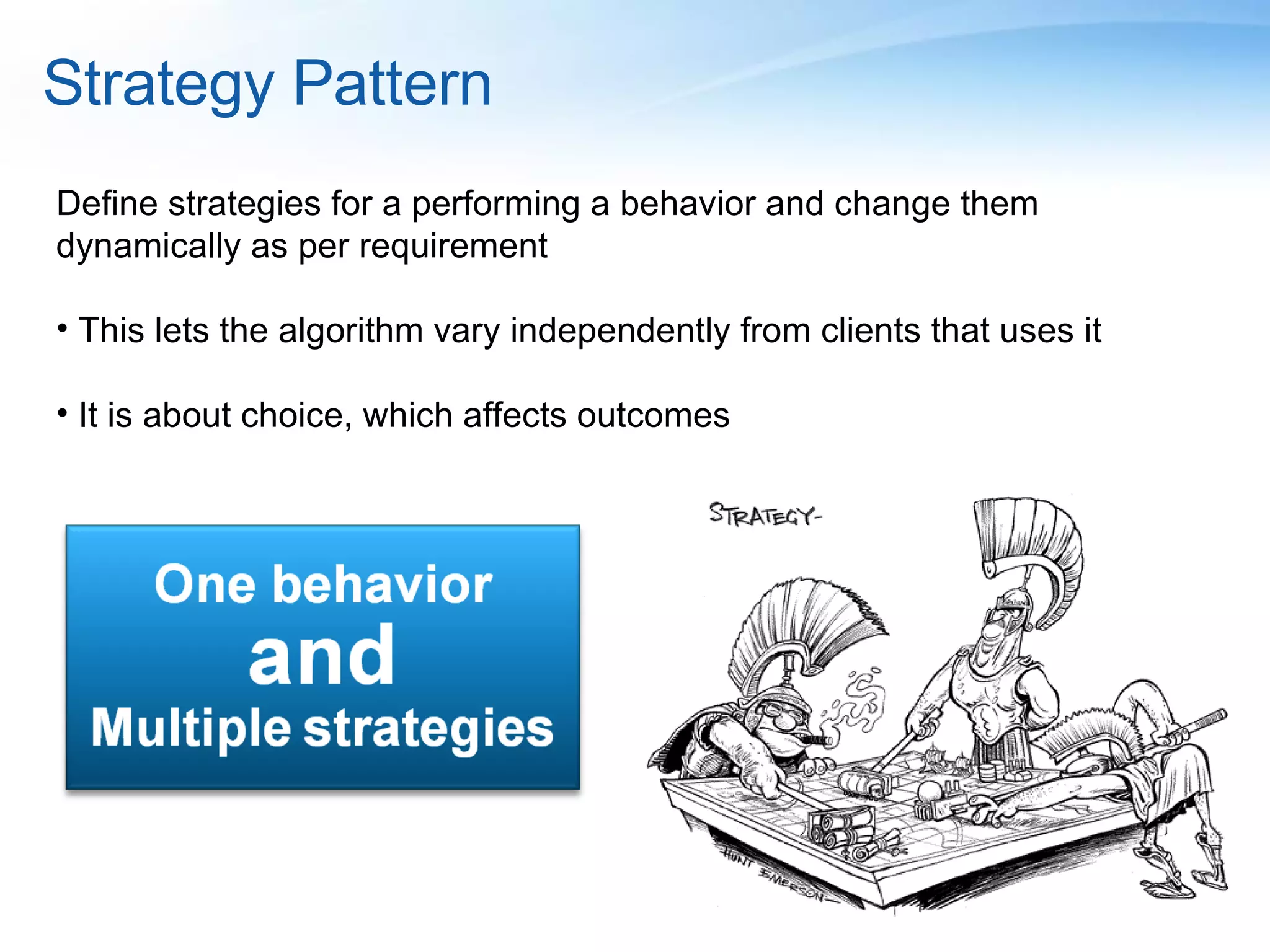
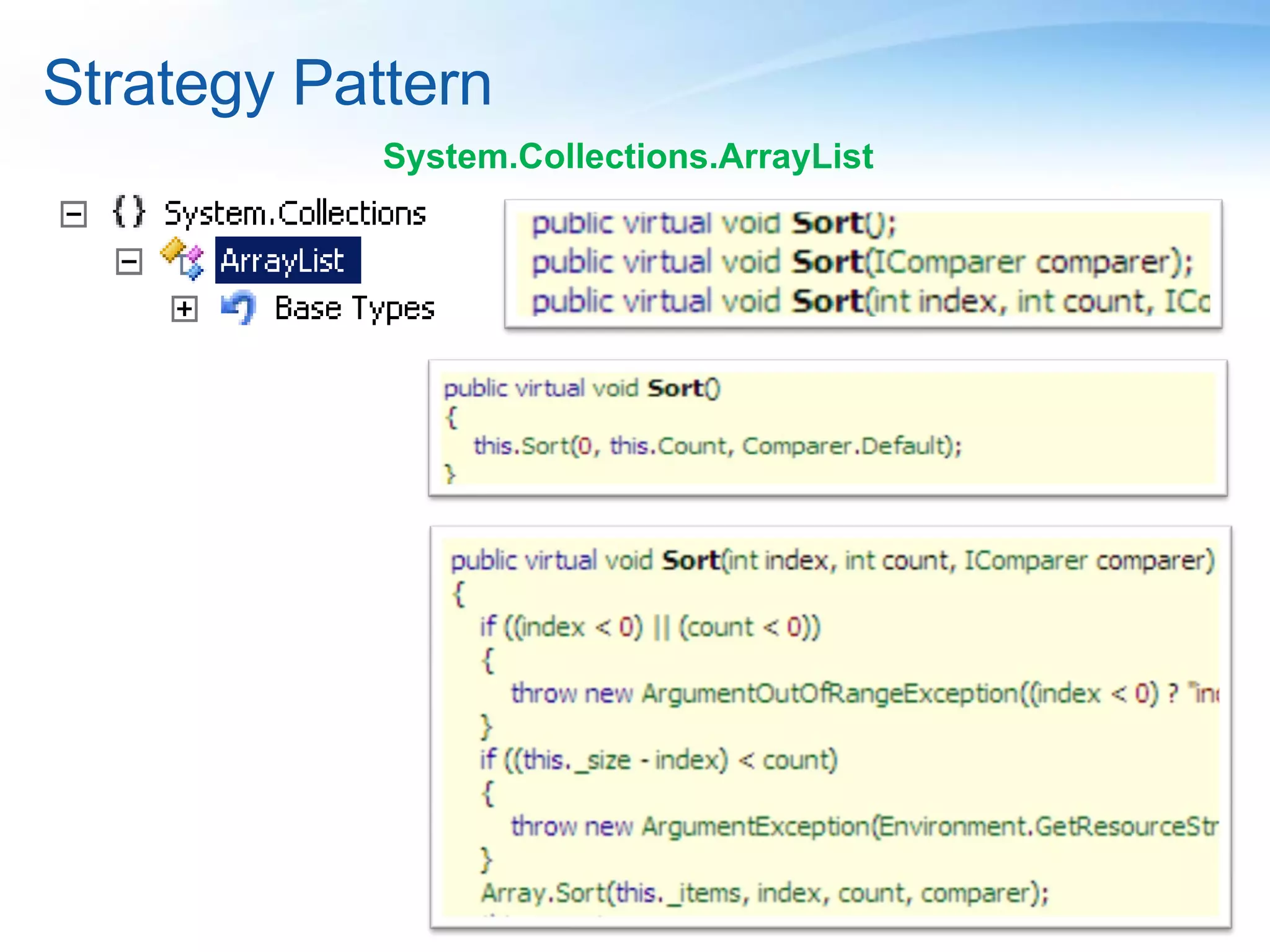
Strategy Pattern Define strategies for a performing a behavior and change them dynamically as per requirement This lets the algorithm vary independently from clients that uses it It is about choice, which affects outcomes
Strategy Pattern System.Collections.ArrayList
Template Method
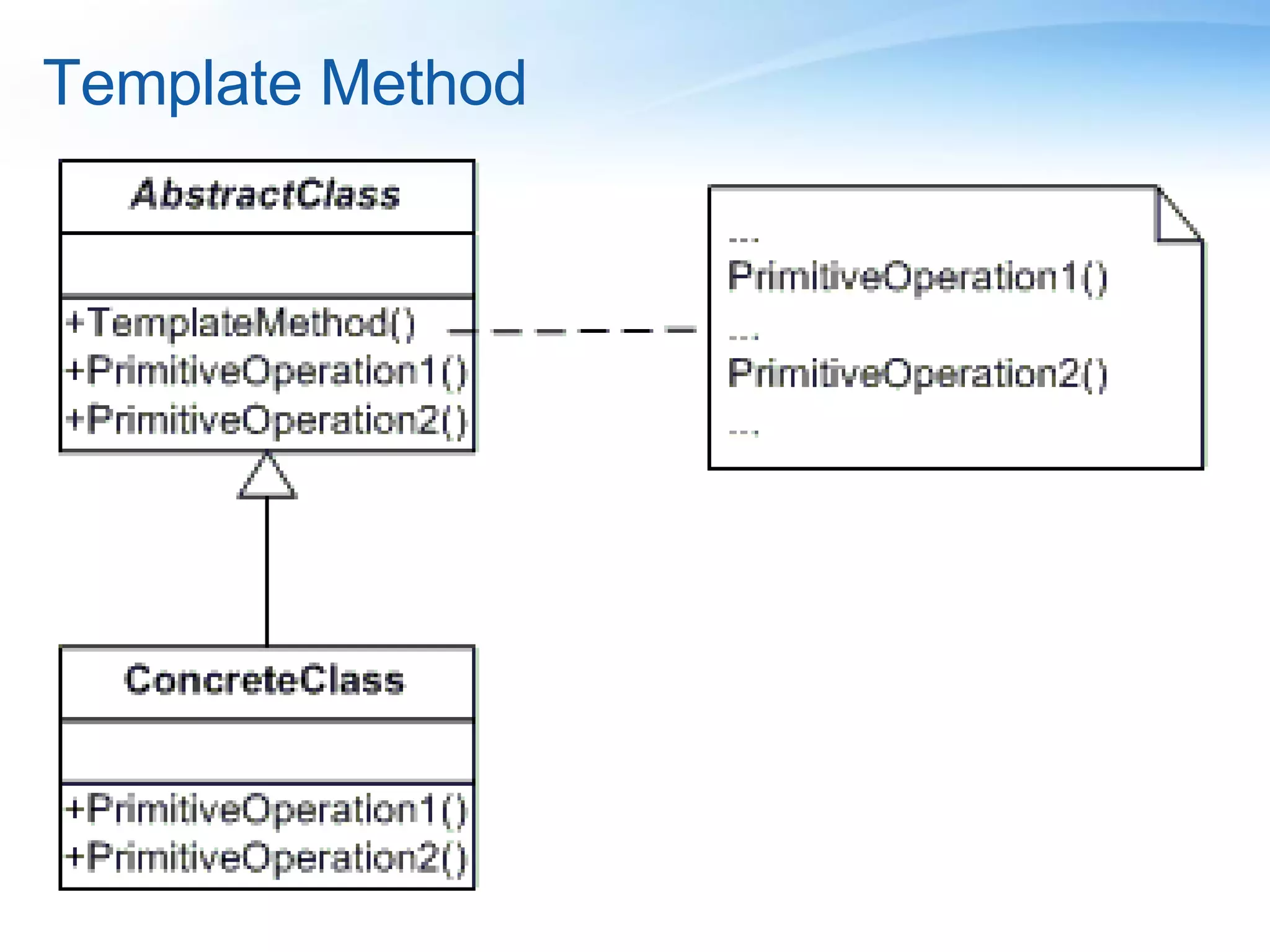
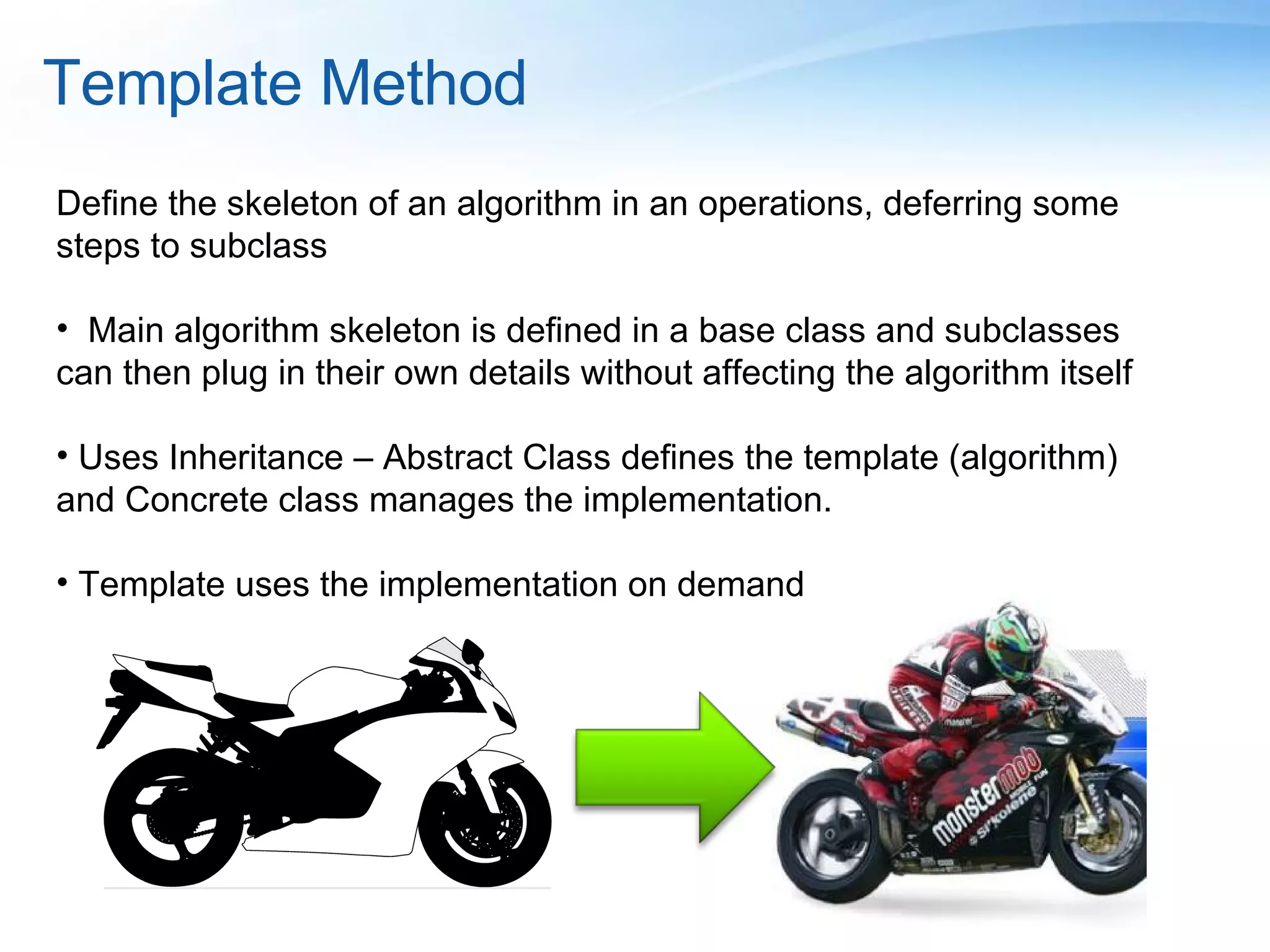
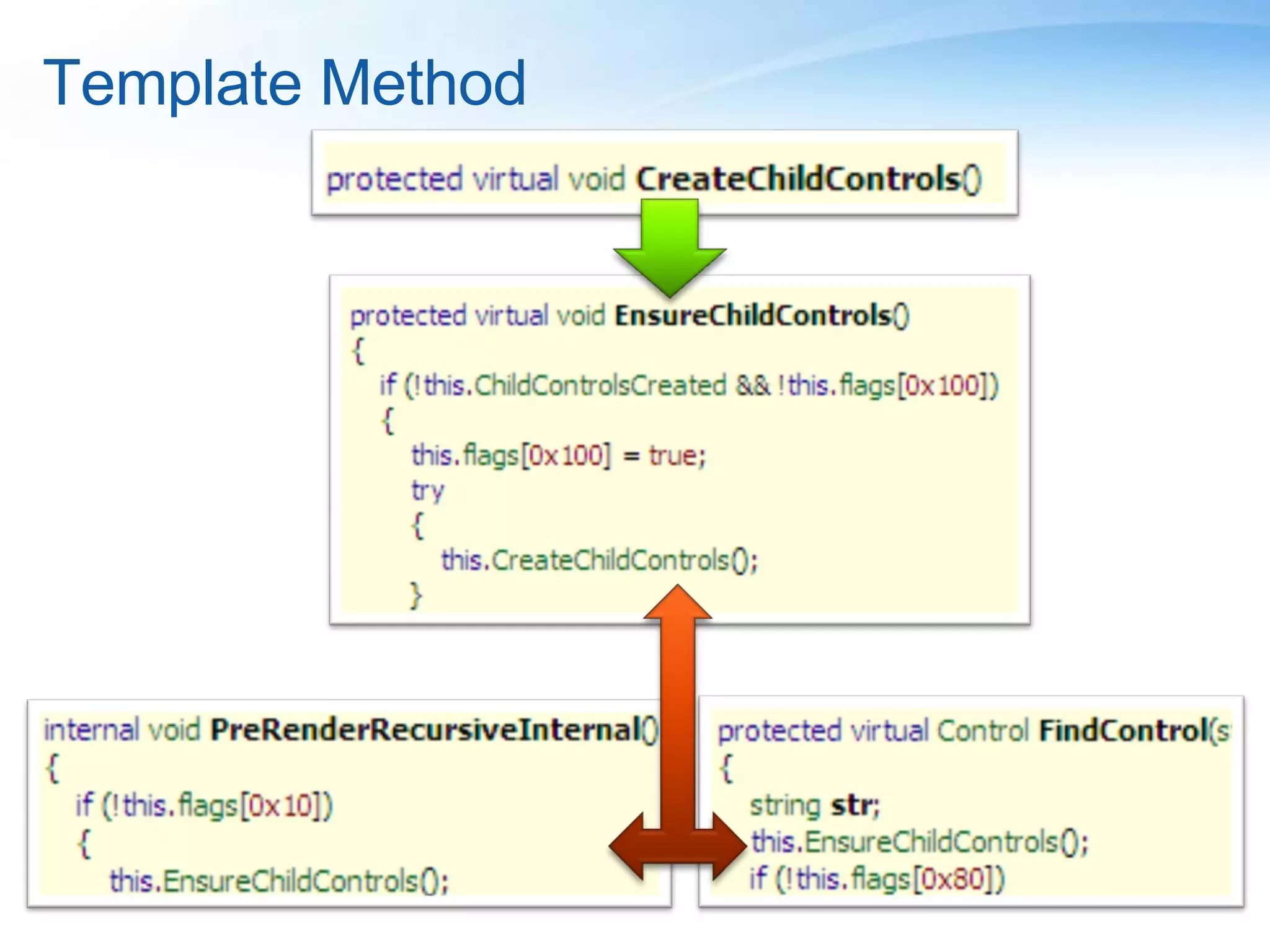
Template Method Define the skeleton of an algorithm in an operations, deferring some steps to subclass Main algorithm skeleton is defined in a base class and subclasses can then plug in their own details without affecting the algorithm itself Uses Inheritance – Abstract Class defines the template (algorithm) and Concrete class manages the implementation. Template uses the implementation on demand
Template Method
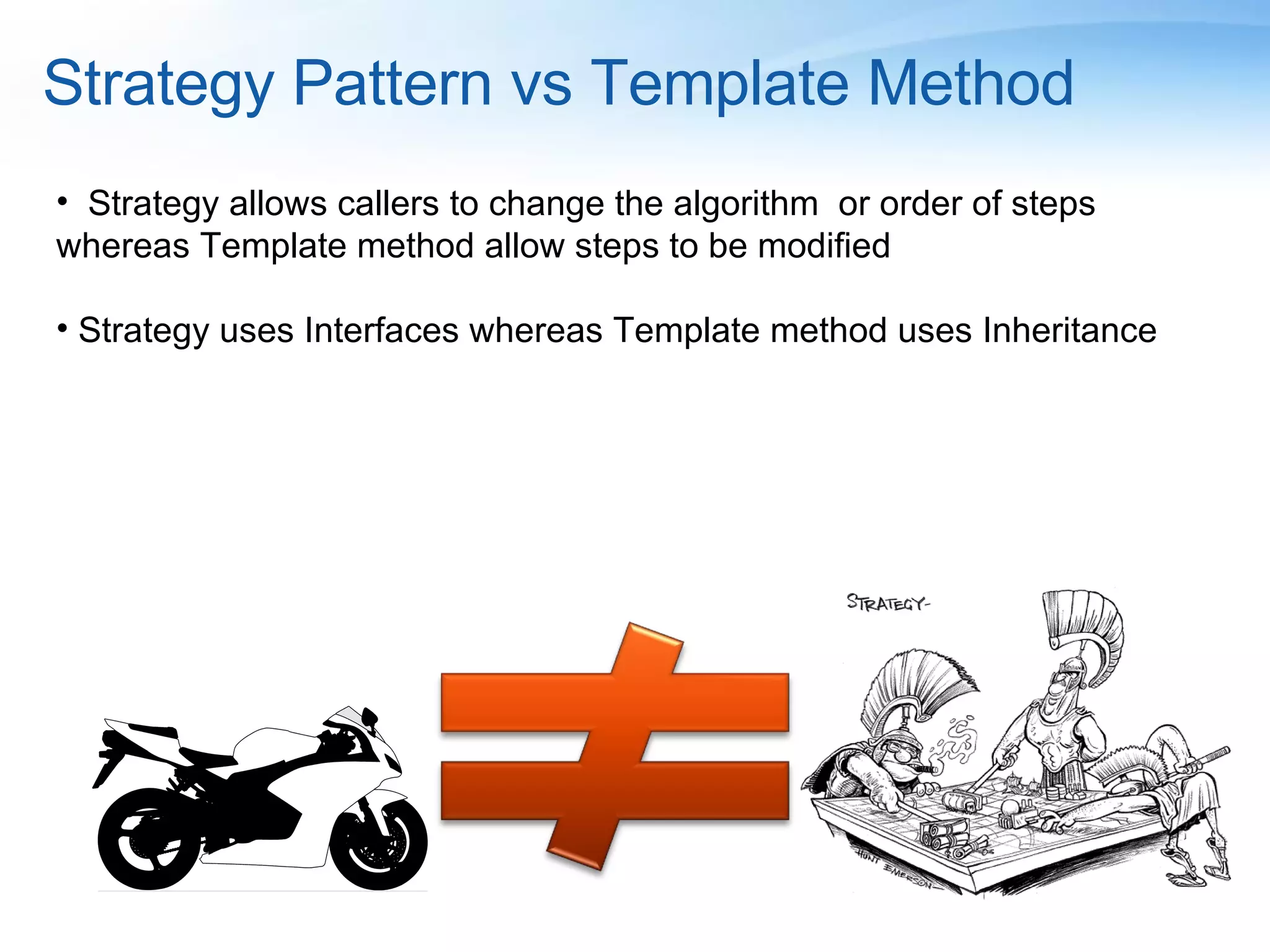
Strategy Pattern vs Template Method Strategy allows callers to change the algorithm  or order of steps whereas Template method allow steps to be modified Strategy uses Interfaces whereas Template method uses Inheritance
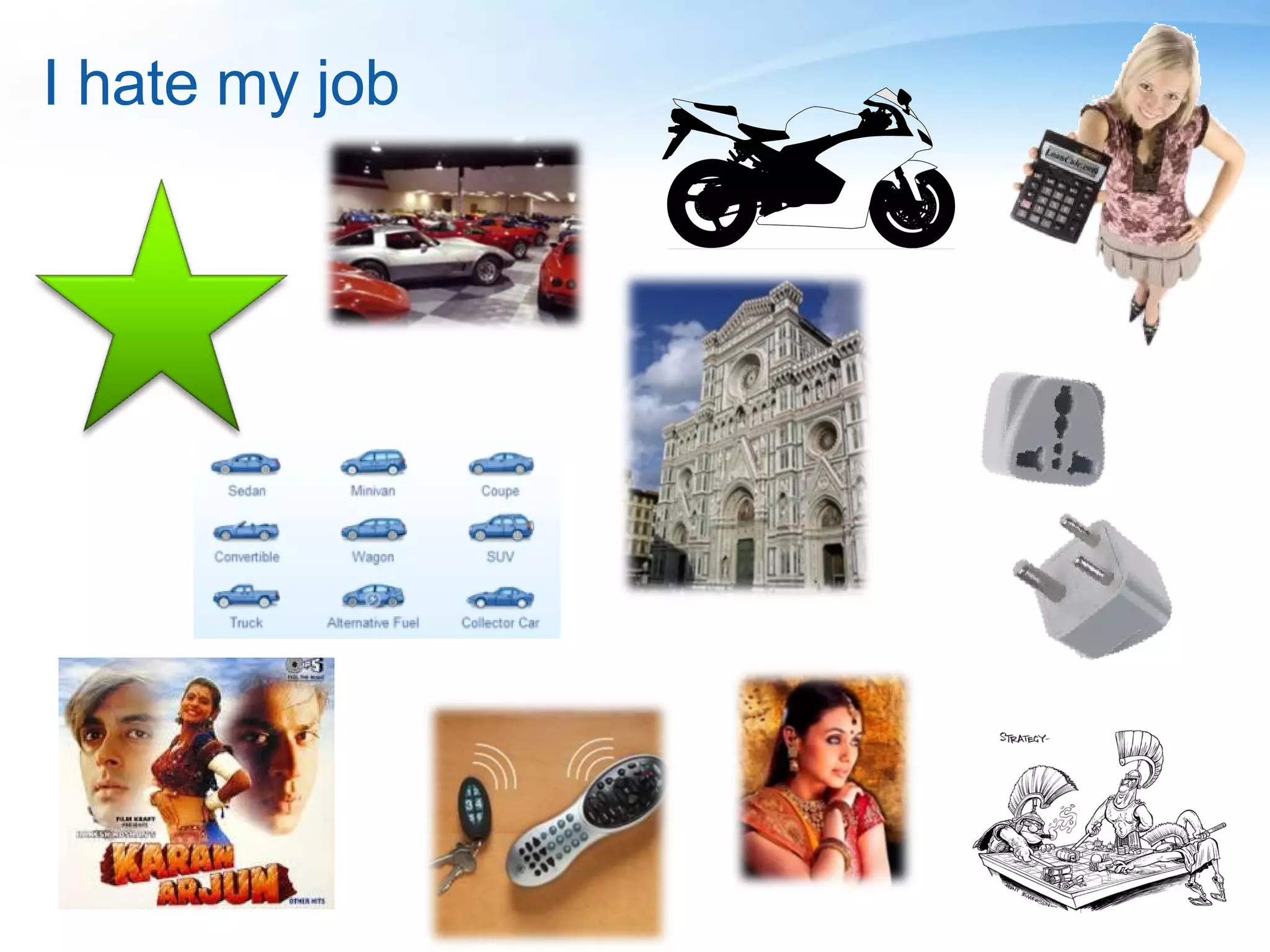
I hate my job
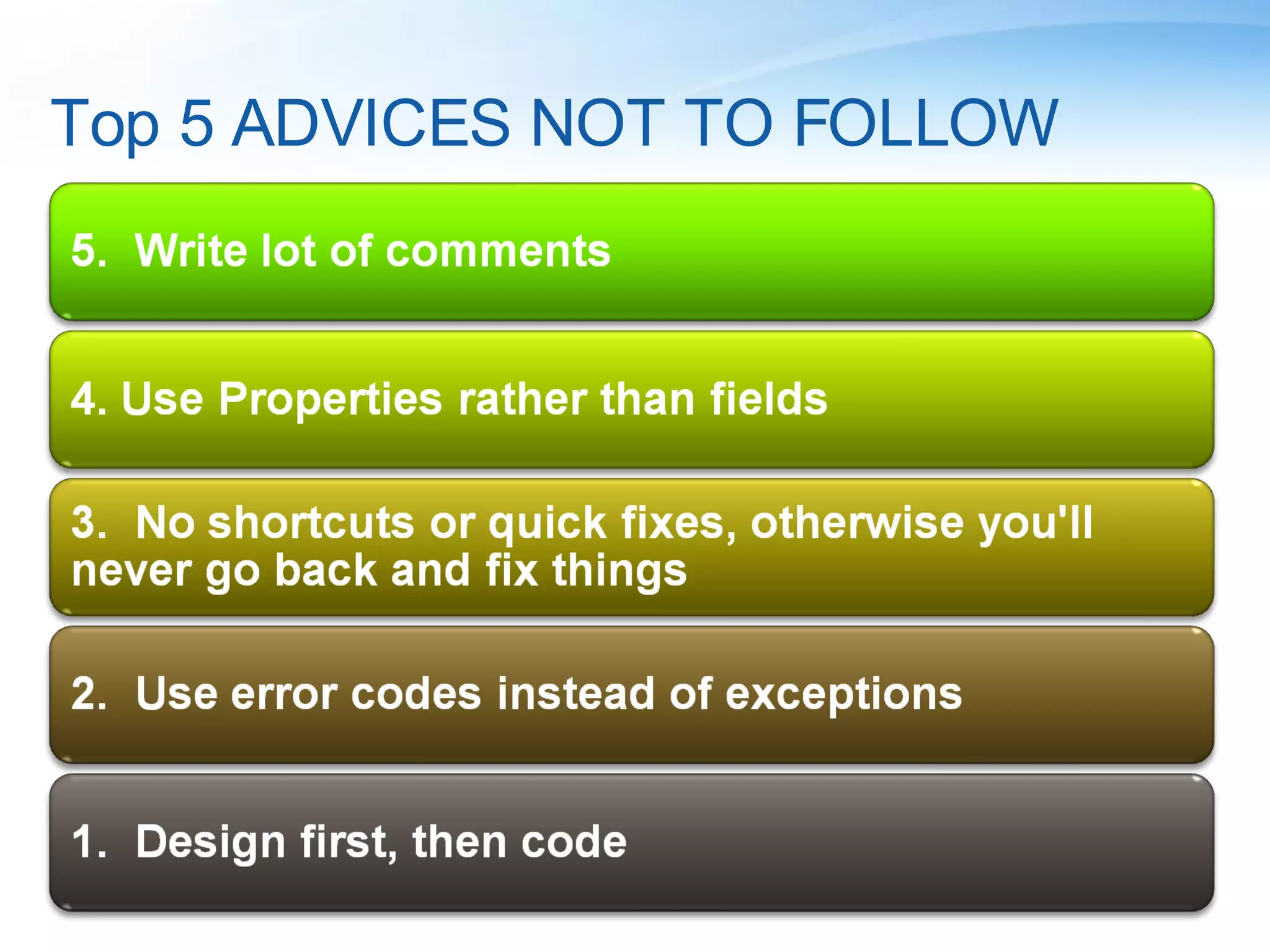
Top 5 ADVICES NOT TO FOLLOW
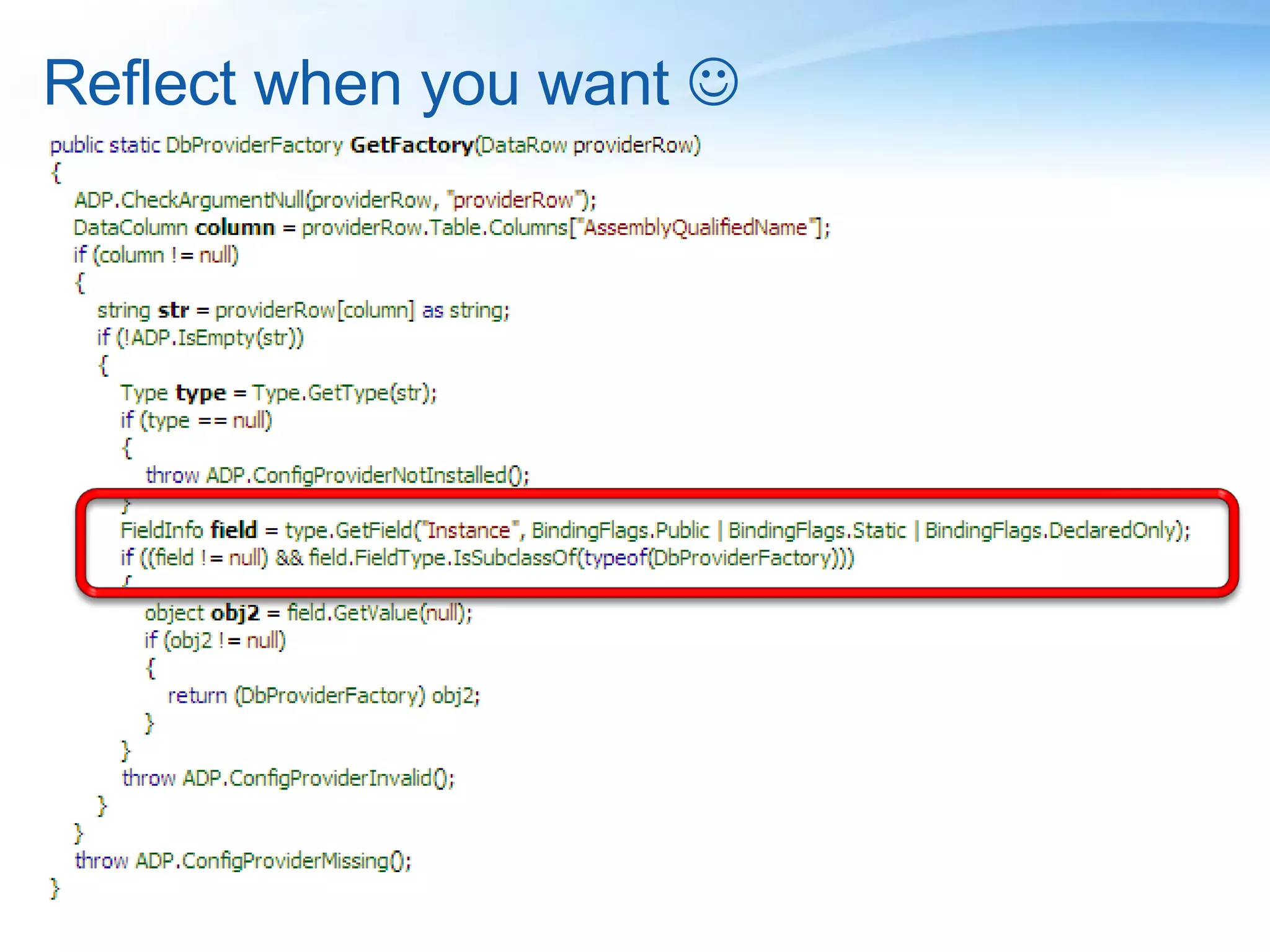
Reflect when you want  
Answers, anybody?
CONTENT STOLEN FROM   BOOKS: Head First Design Patterns Design Patterns in C# Design Patterns WEBSITES: Wikipedia, MSDN, doFactory and GOOGLE
Learn it all,   at my blog http://www.domaindrivendesign.info Don’t contact  me at, saurabh.net [at] gmail.com Saurabh Verma Solution Architect

Design Patterns For 70% Of Programmers In The World

  • 1.
    Design Patterns for70% of genious programmers Aamir Khan Solution Architect
  • 2.
    Design Patterns for70% of programmers in the world Saurabh Verma Solution Architect I blog at http://www.domaindrivendesign.info
  • 3.
    Agenda Do youOOPs? Design Patterns? Why Design Patterns? What Design Patterns? How I hate my job
  • 4.
    Normal Classes vsAbstract Classes vs Interfaces Normal Class: This is a normal class  Abstract Class: These cannot be instantiated directly. They may provide partial implementations and exists solely for the purpose of inheritance. Interfaces: Defines a contract. Concrete implementations needs to implement each property and method as per contract. Shut up ! We know all this
  • 5.
  • 6.
    Normal Class vsAbstract Class? If a particular class is a entity which is not required to be instantiated by the application directly, go for Abstract Class Employee can be abstract class
  • 7.
    Abstract Class vsInterfaces? If a particular class contains any default behavior, go for Abstract Class If every concrete class has its own implementation, go for Interfaces Work – Management, Programming
  • 8.
    MOVIES & ACTORSShahrukh Khan Salman Khan riding bike Actors in a Movie
  • 9.
    IS-A vs HAS-Avs CAN-DO IS-A Inheritance Shahrukh Khan is an ACTOR HAS-A Composition Movie has ACTORS CAN-DO Interfaces Salman Khan can DRIVE BIKE IS-A Inheritance Shahrukh Khan is an ACTOR HAS-A Composition Movie has ACTORS CAN-DO Interfaces Salman Khan can DRIVE BIKE
  • 10.
    What is aPattern An 'element of reusable software’ A design pattern systematically names, motivates, and explains a general design that addresses a recurring design problem in object-oriented systems. It describes the problem, the solution, when to apply the solution, and its consequences. It also gives implementation hints and examples. The solution is a general arrangement of objects and classes that solve the problem. The solution is customized and implemented to solve the problem in a particular context.
  • 11.
  • 12.
    What Wikipedia says,A design pattern is a general repeatable solution to a commonly occurring problem in software design. A design pattern is not a finished design that can be transformed directly into code. Algorithms are not thought of as design patterns.
  • 13.
    Let’s understand designpatterns by purpose
  • 14.
    Let’s understand thepurpose + Creational Patterns Structural Patterns Final Product Behavioral Patterns
  • 15.
  • 16.
    Design Patterns asper their PURPOSE
  • 17.
  • 18.
  • 19.
    Factory Method Definean interface for creating an object, but let subclass decide which class to instantiate Prevents creation of any additional instances, while simultaneously allowing global access Creation can be delayed until it is actually required
  • 20.
  • 21.
  • 22.
    Abstract Factory PatternProvide an interface for creating families of related or dependent objects without specifying their concrete classes. Provides creation of families of related or dependent objects without specifying their concrete class
  • 23.
    Abstract Factory MethodSystem.Data.Common.DbProviderFactories
  • 24.
  • 25.
    Singleton Pattern Ensurea class has only one instance, and provide a global point to it. Prevents creation of any additional instances, while simultaneously allowing global access Creation can be delayed until it is actually required
  • 26.
  • 27.
  • 28.
  • 29.
    Façade Pattern Providea unified interface to set of interfaces in a subsystem. Is generally one side of the exterior of a building, especially the front Origin from a FRENCH word means “face” or “front”
  • 30.
    Façade Pattern Itsall about the service
  • 31.
  • 32.
    Decorator Pattern Attachadditional responsibilities to an object dynamically. Flexible alternative to subclassing for extending functionality Allows dynamic and transparent addition and removal of responsibilities without affecting object simple actress ( act ) in role of modern girl (go out and act ) in role of homely girl (be in home and act )
  • 33.
  • 34.
  • 35.
    Composite Pattern Composeobjects into tree structures to represent part-whole hierarchies When dealing with collections of objects, there are often operations that are appropriate for both a single object and the entire collection Treats individual objects and composition of objects uniformly Example: Every object “IS-A” shape Every shape “HAS-A” draw behavior
  • 36.
  • 37.
  • 38.
  • 39.
    Adapter Pattern Convertthe interface of a class into another interface clients expect Lets classes work together that couldn’t work otherwise Works good for making compliance Application Framework Adapter Legacy Component
  • 40.
  • 41.
    Decorator vs AdapterDecorator looks like Adapter which “decorates” an existing class to make it compatible. Though, Decorator doesn’t wants you to decorate every method in the Adapted class. But who has stopped from doing it. “ Never underestimate the power of a developer”
  • 42.
    Decorator vs FaçadeFaçade is a way of hiding a complex system inside a simpler interface, whereas Decorator adds function by wrapping a class.
  • 43.
  • 44.
  • 45.
    Command Pattern Encapsulatea request as an object, thereby letting you parameterize clients with different requests, queue or log requests. If all commands can service a specific request, they can be entertained by the invoker Concrete command performs the action on Receiver Encapsulate method invocation One Receiver and Multiple actions
  • 46.
  • 47.
  • 48.
  • 49.
    Strategy Pattern Definestrategies for a performing a behavior and change them dynamically as per requirement This lets the algorithm vary independently from clients that uses it It is about choice, which affects outcomes
  • 50.
  • 51.
  • 52.
    Template Method Definethe skeleton of an algorithm in an operations, deferring some steps to subclass Main algorithm skeleton is defined in a base class and subclasses can then plug in their own details without affecting the algorithm itself Uses Inheritance – Abstract Class defines the template (algorithm) and Concrete class manages the implementation. Template uses the implementation on demand
  • 53.
  • 54.
    Strategy Pattern vsTemplate Method Strategy allows callers to change the algorithm or order of steps whereas Template method allow steps to be modified Strategy uses Interfaces whereas Template method uses Inheritance
  • 55.
  • 56.
    Top 5 ADVICESNOT TO FOLLOW
  • 57.
  • 58.
  • 59.
    CONTENT STOLEN FROM  BOOKS: Head First Design Patterns Design Patterns in C# Design Patterns WEBSITES: Wikipedia, MSDN, doFactory and GOOGLE
  • 60.
    Learn it all, at my blog http://www.domaindrivendesign.info Don’t contact me at, saurabh.net [at] gmail.com Saurabh Verma Solution Architect