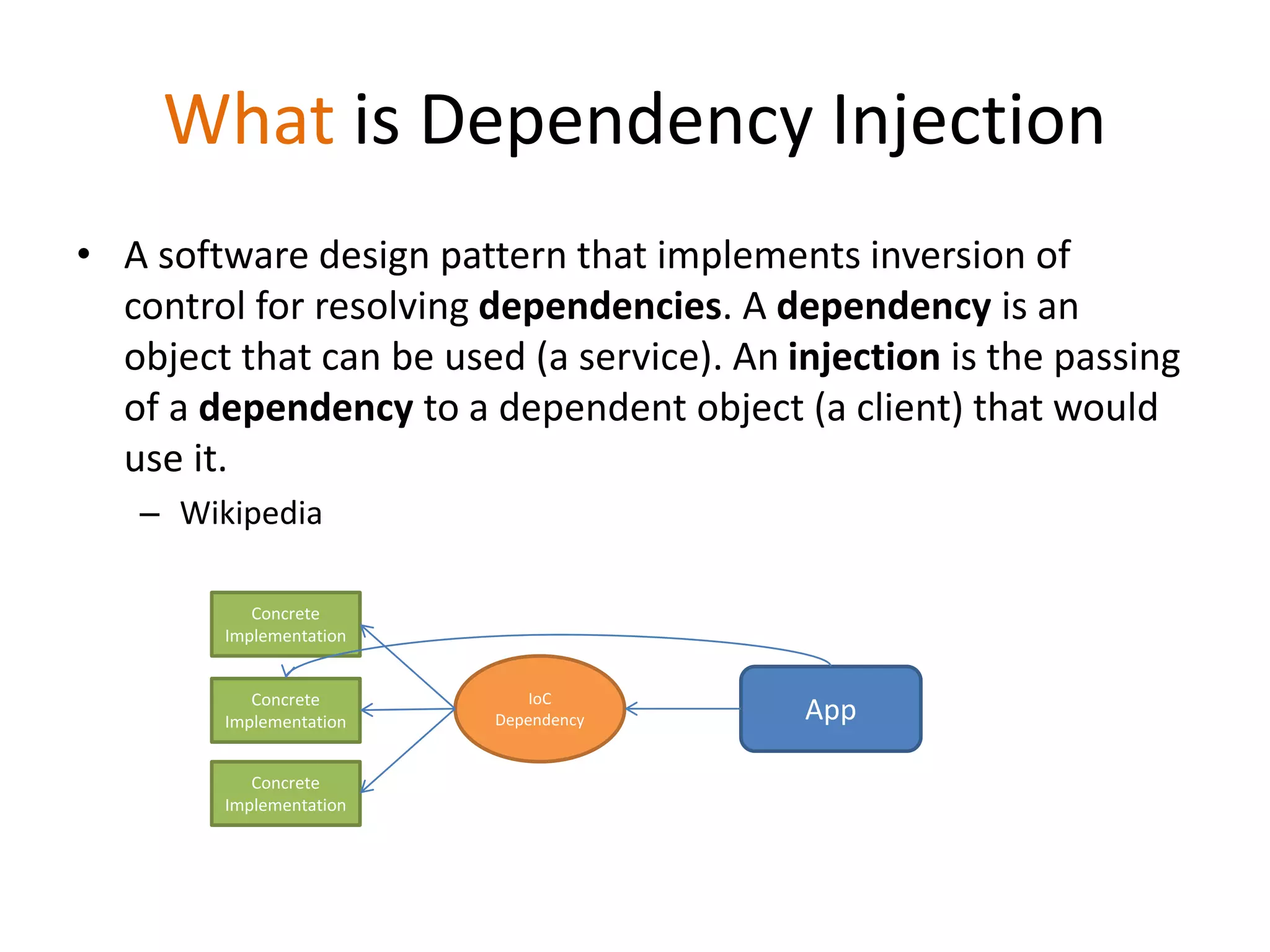
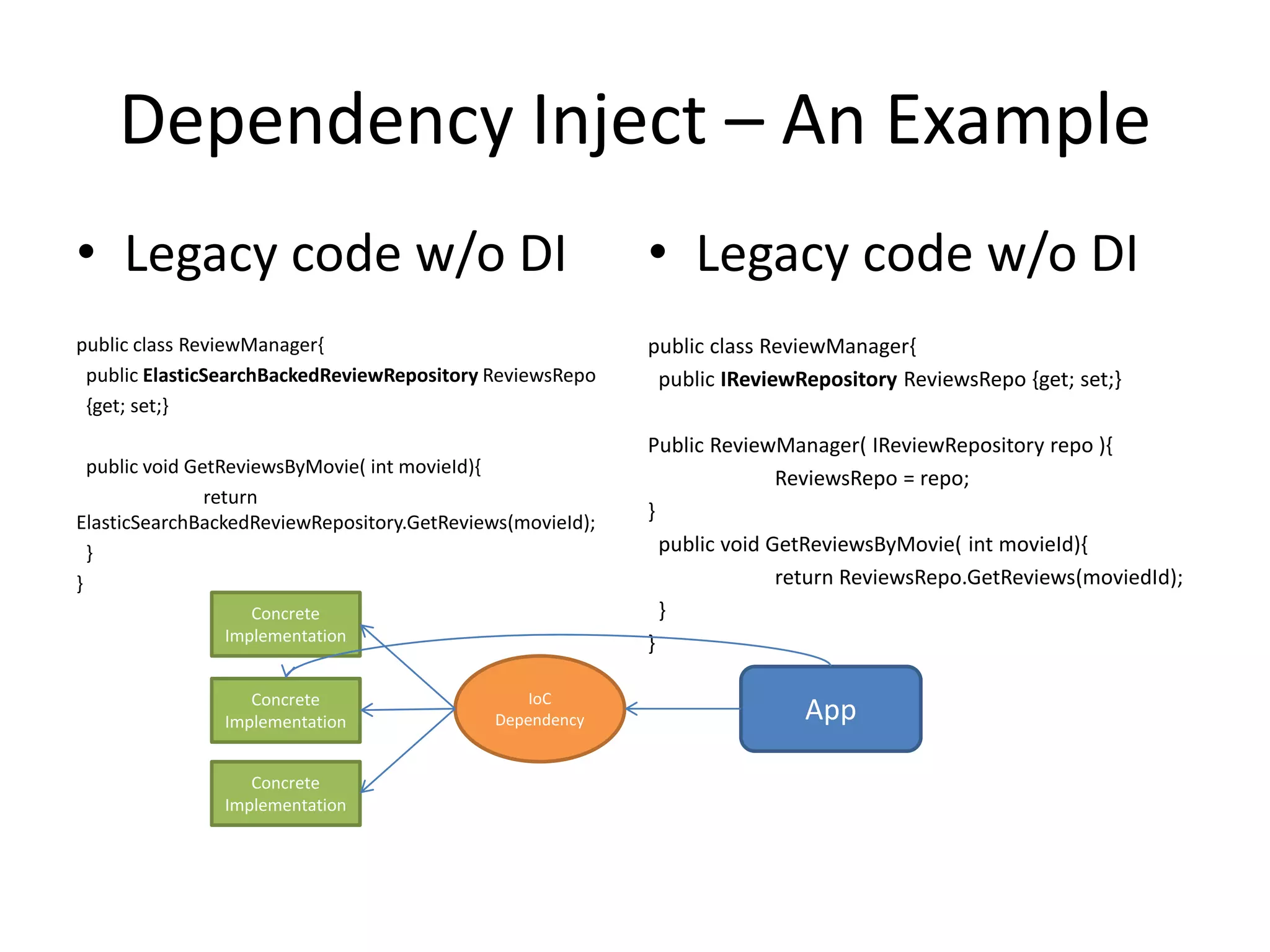
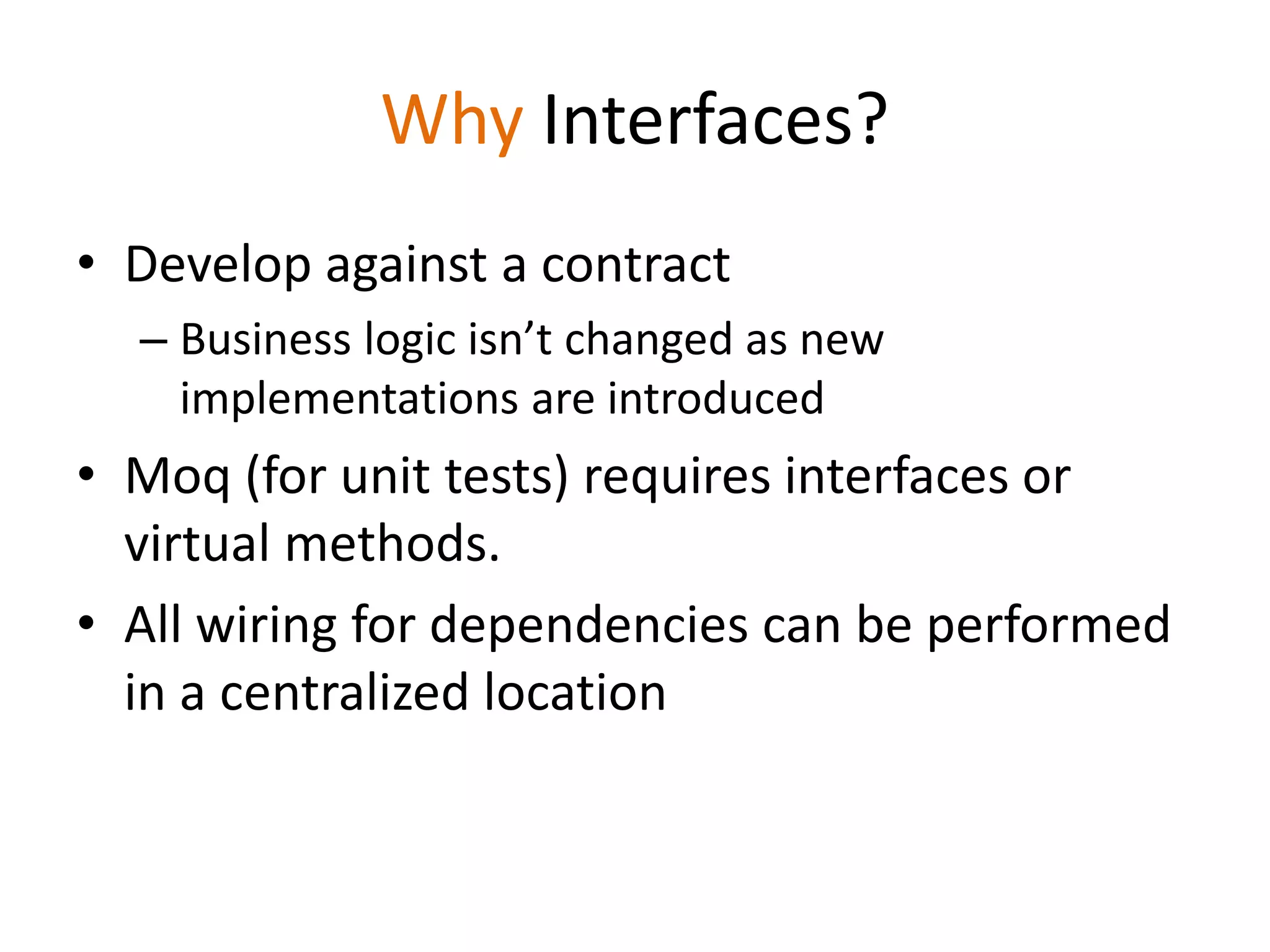
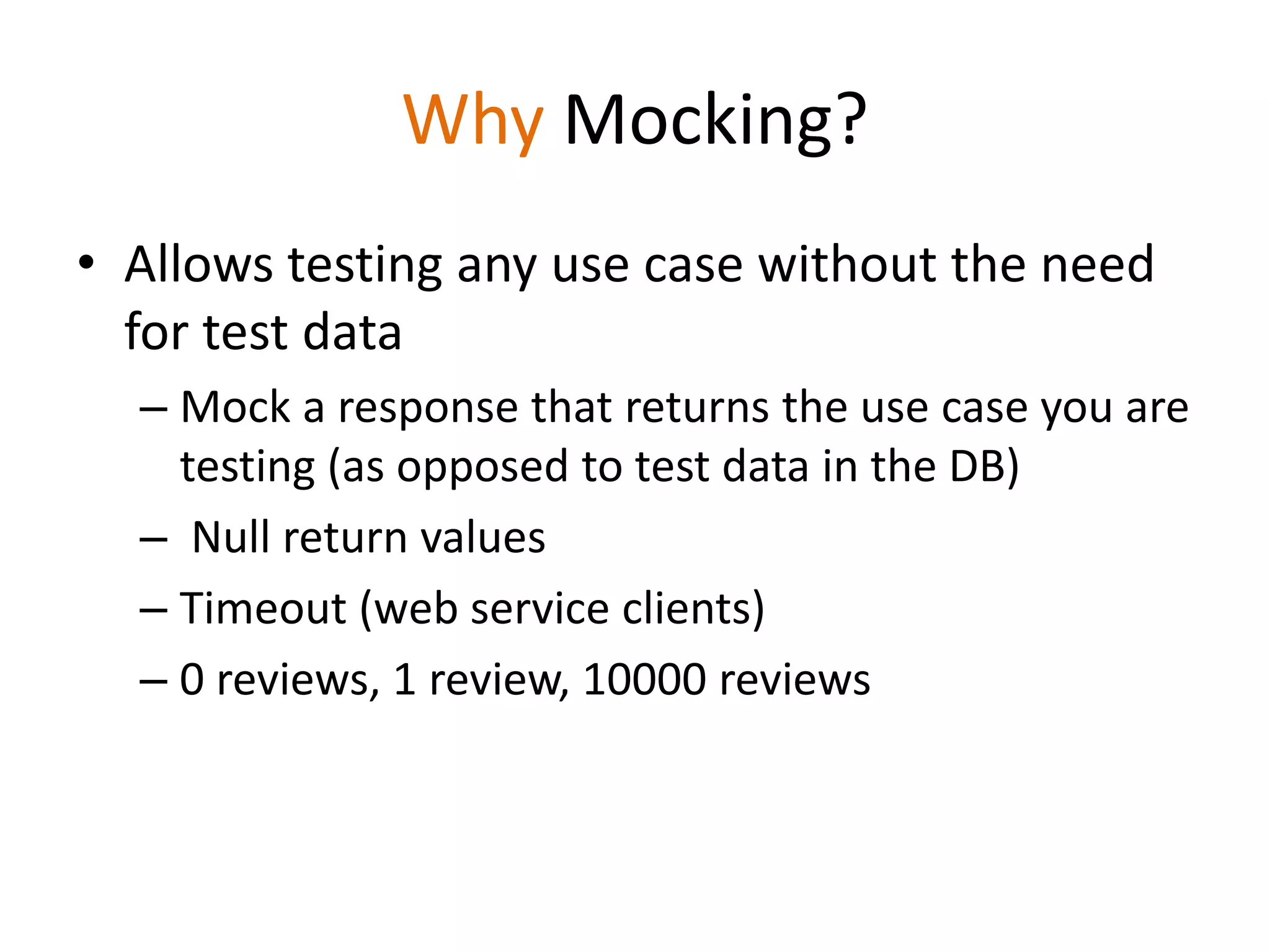
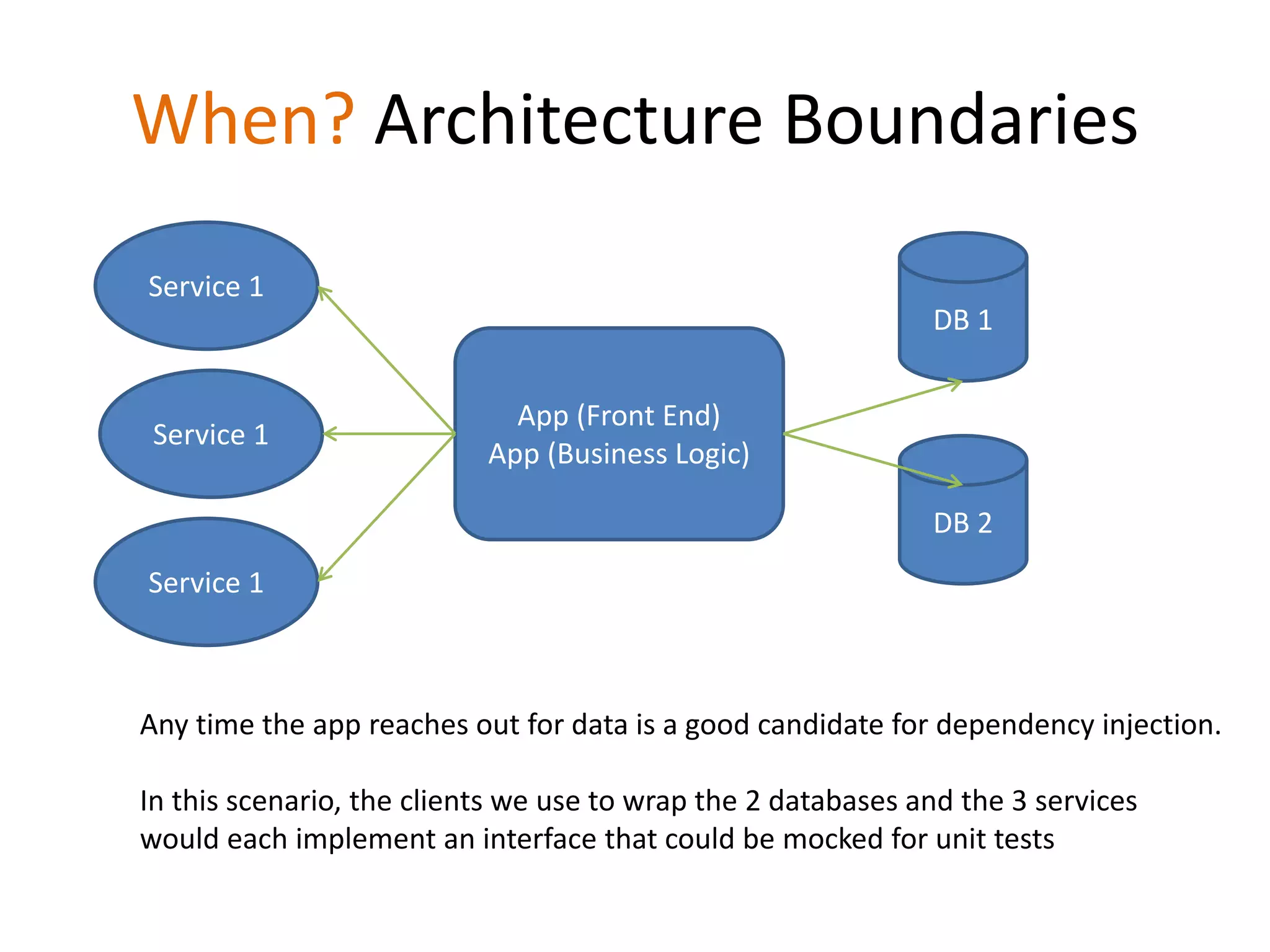
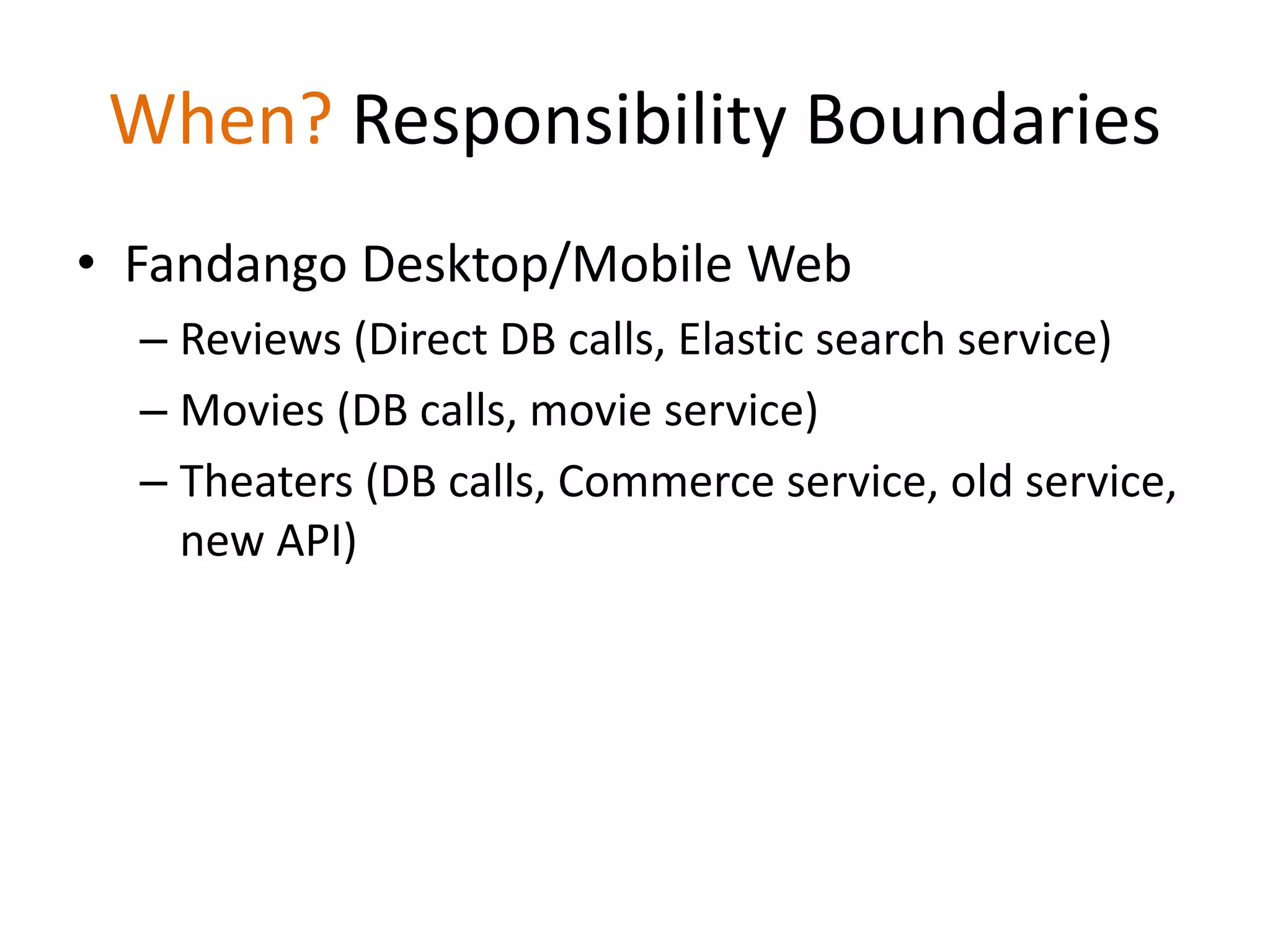
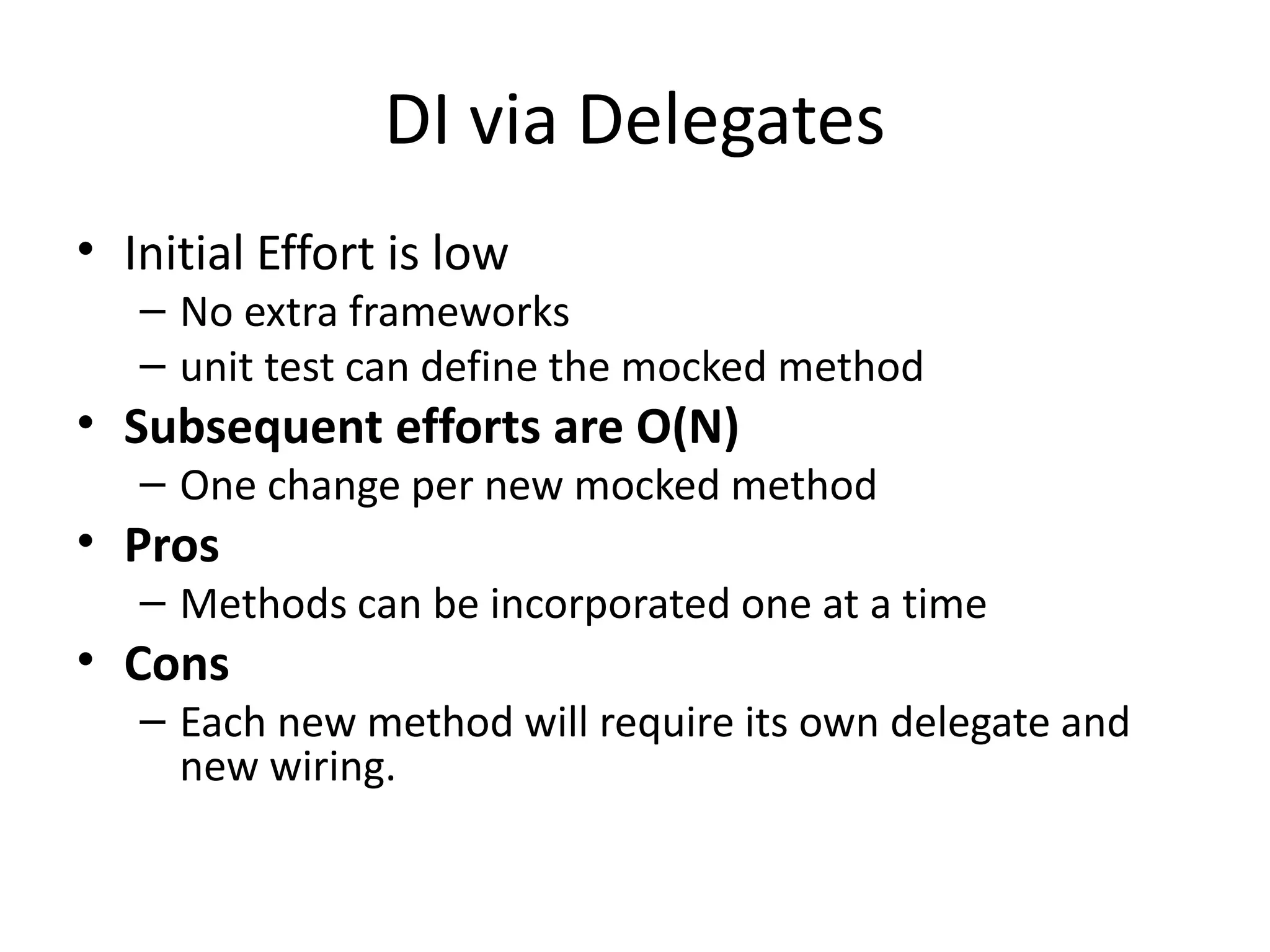
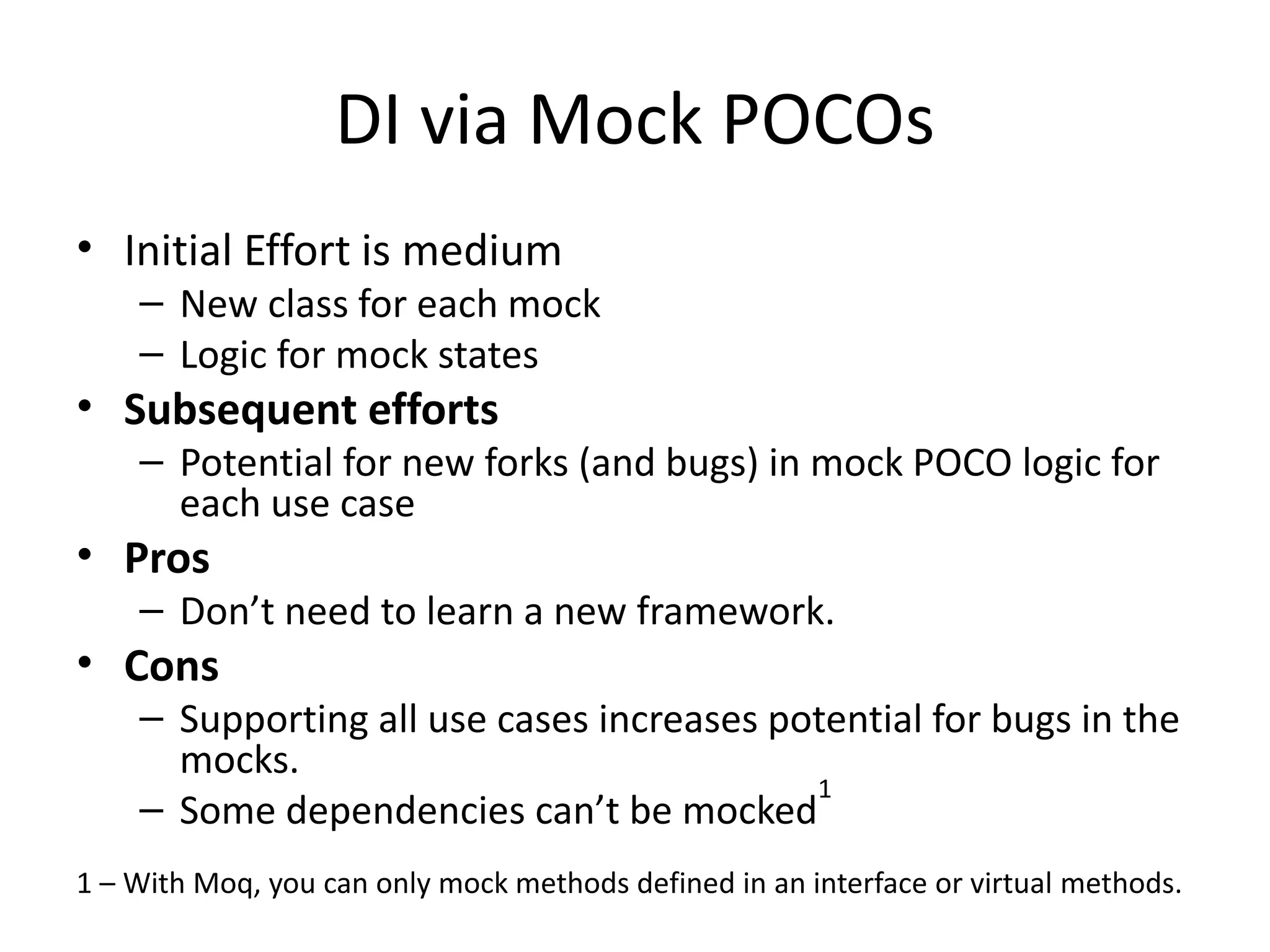
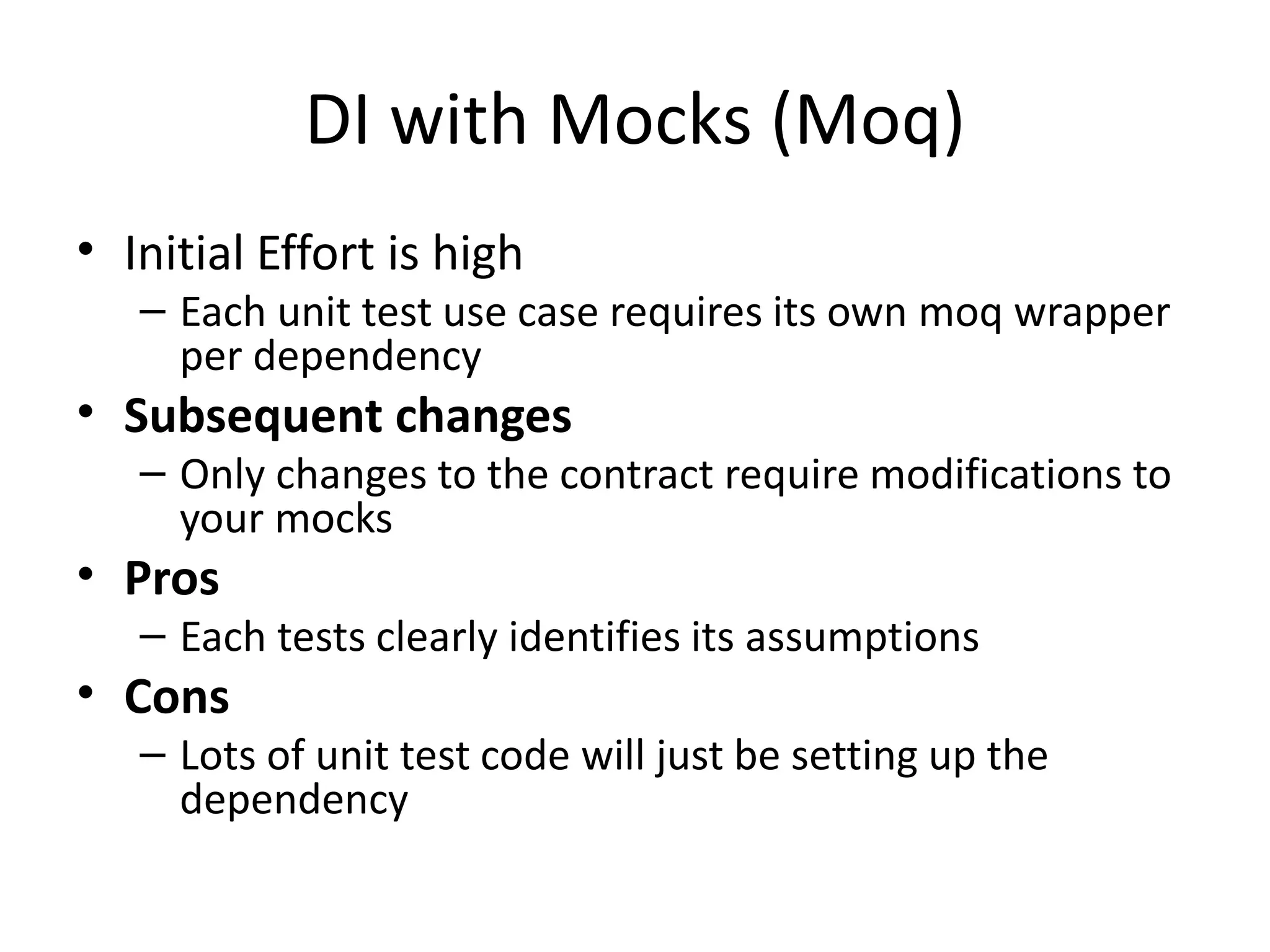
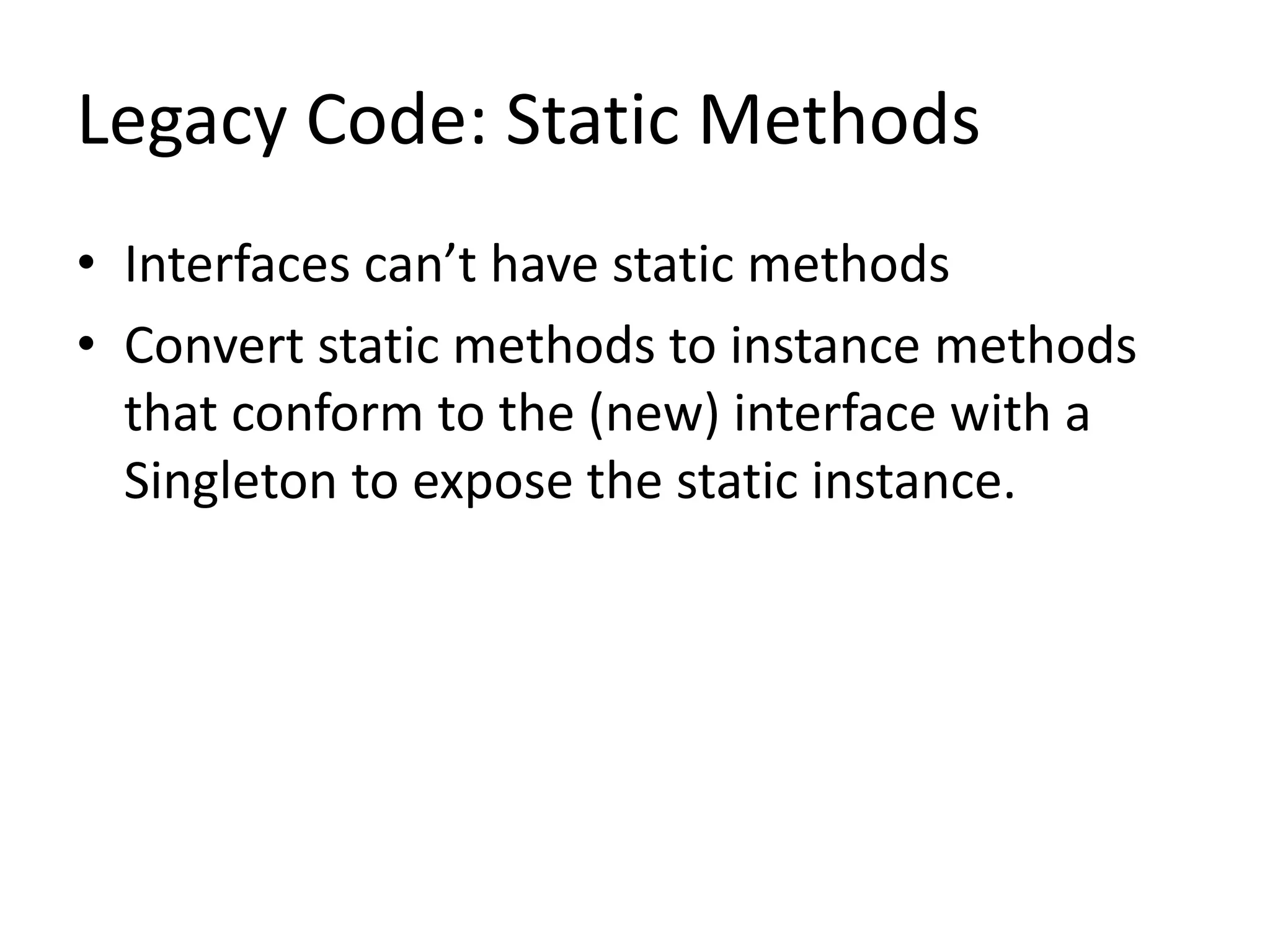
This document discusses dependency injection (DI) in .NET applications. It defines DI as a design pattern that implements inversion of control to resolve dependencies. An example shows how to refactor legacy code to use DI by introducing interfaces and constructor injection. The benefits of DI include easier testing using mocks, loose coupling between classes, and centralized configuration. DI should be used across architectural and responsibility boundaries. Various strategies for implementing DI are discussed, including delegates, mock POCOs, and frameworks like Moq. Legacy code challenges around static methods and cookies are also addressed.
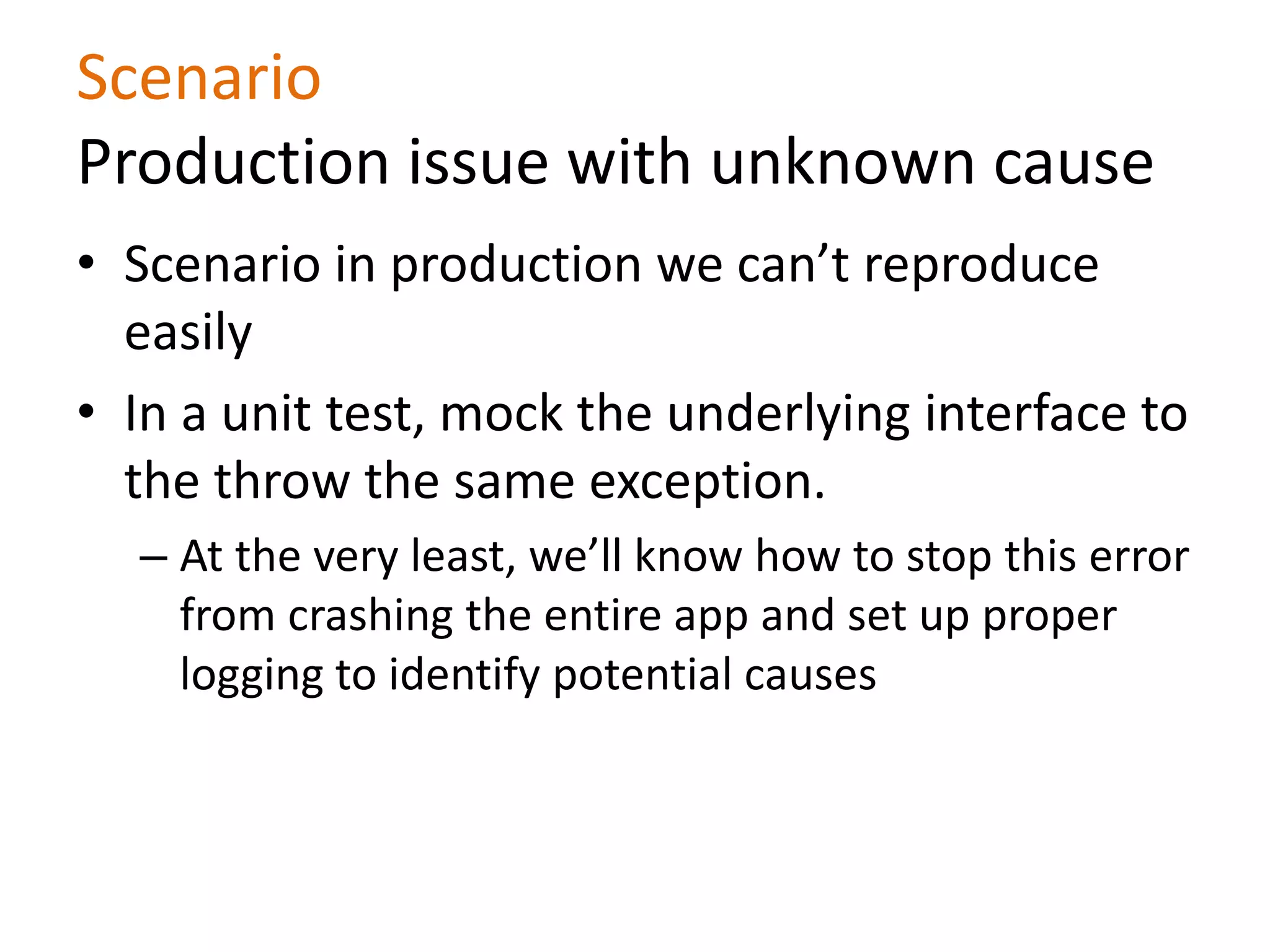
![Scenario
Production issue with unknown cause
[Fact]
public void TestIndex_WebExceptionFromReviewManager()
{
InjectCookieCollectionDependency();
var mock = new Mock<IReviewManager>();
mock.Setup(rm => rm.GetEsReviewsByMovie(
It.IsAny<int>(),
It.IsAny<int>(),
It.IsAny<int>(),
It.IsAny<UserReviewSort>()))
.Throws(new WebException());
IReviewManager reviewManager = mock.Object;
using (var controller = new MovieController(reviewManager) { ControllerContext = new ControllerContext { HttpContext = new
MockHttpContext() } })
{
MockHttpContext httpContext = configureContext(UserAgentValue);
controller.ControllerContext.HttpContext = httpContext;
ActionResult result = controller.Index(MovieIdAmericanBeauty);
Assert.IsType(typeof (ViewResult), result);
}
}](https://image.slidesharecdn.com/dotnetunittestingwithdependencyinjections-160312012448/75/Dependency-Injection-in-NET-applications-14-2048.jpg)
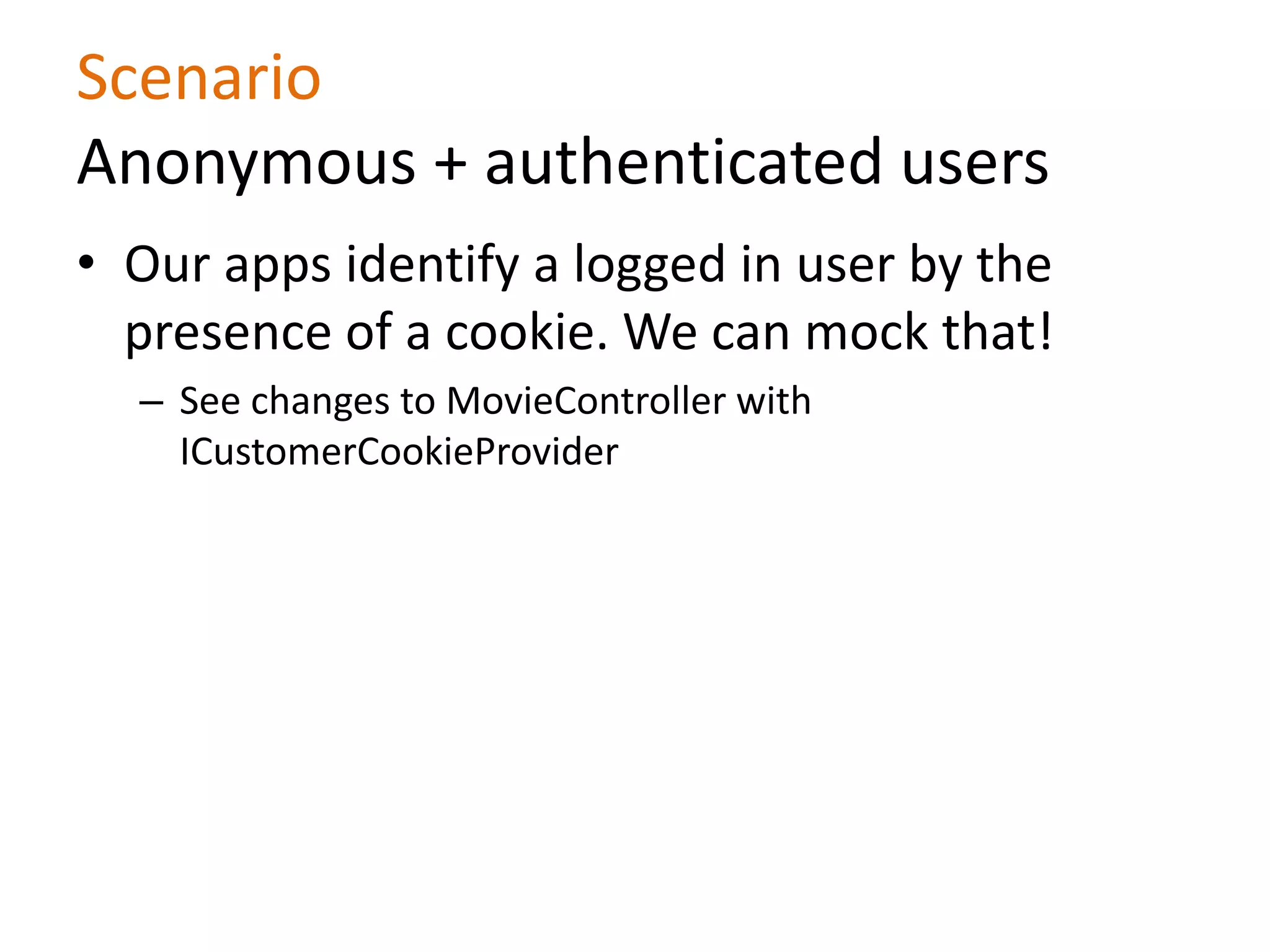
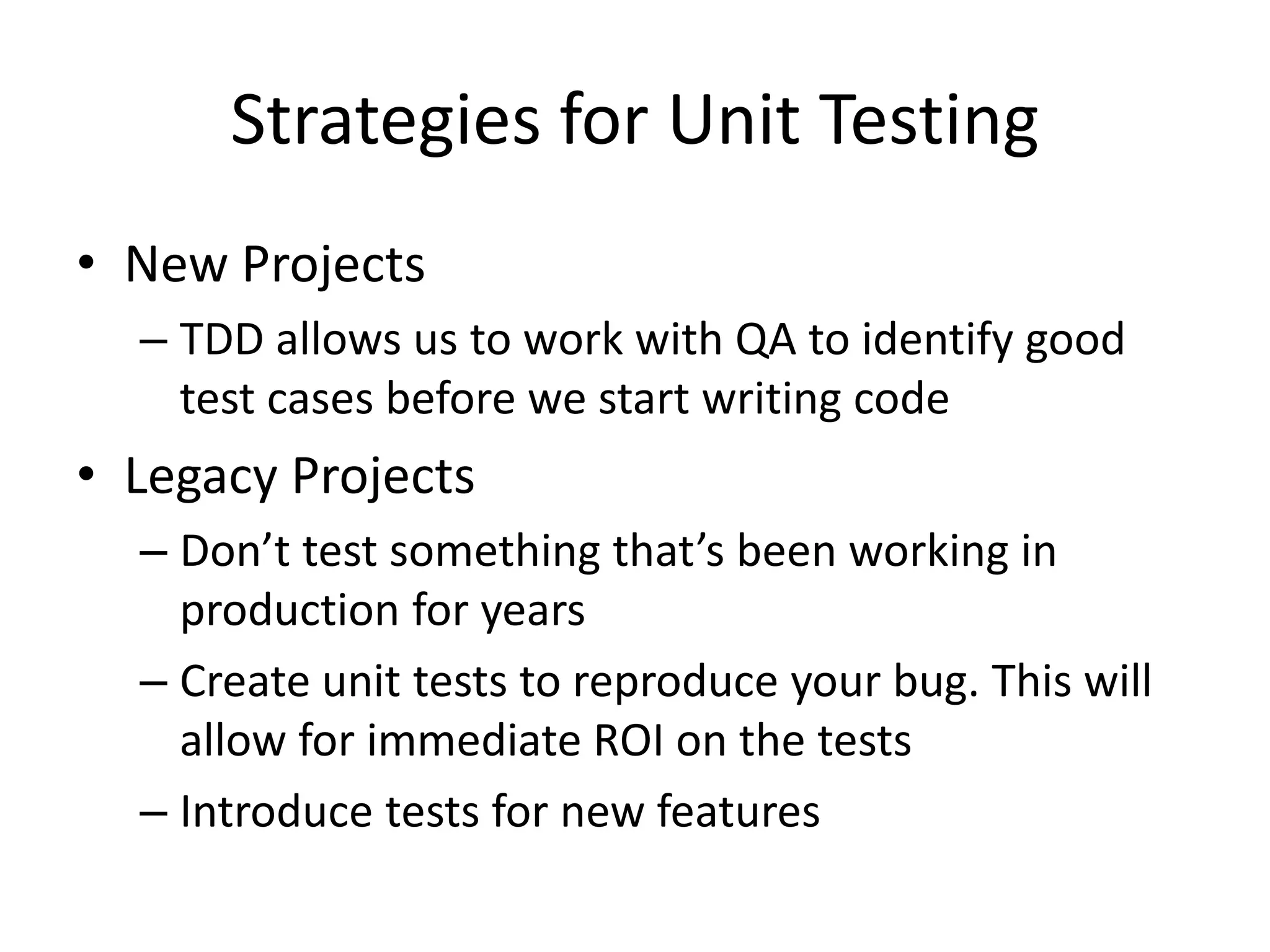
![Side Effect (Good)
• Enforces the SOLID principles
Single Responsibility [link]
If an interface crosses domains, you know to split them
Multiple interfaces too many responsibilities for the class
Open/Closed Principle [link]
Your code is inherently open to extension
Liskov Substitution Principle [link]
Your mocks provide are substituted for the concrete
implementations without code changes
Interface segregation Principle [link]
Interface contract hides helper methods
Dependency inversion principle [link]
This is what we’re talking about here](https://image.slidesharecdn.com/dotnetunittestingwithdependencyinjections-160312012448/75/Dependency-Injection-in-NET-applications-17-2048.jpg)


![[JWPA-1]의존성 주입(Dependency injection)](https://cdn.slidesharecdn.com/ss_thumbnails/dependencyinjection-140711035044-phpapp02-thumbnail.jpg?width=640&height=640&fit=bounds)


