Introduction to Data communication
Lecture #3
Topic :Channel Types
Dr Rajiv Srivastava
Director
Sagar Institute of Research & Technology (SIRT)
Sagar Group of Institutions, Bhopal
http://www.sirtbhopal.ac.in
Unit 1
Lecture 3
• Line configuration refers to the way two or
more communication devices attach to a link.
• Link : A link is the physical communication
pathway that transfers data from the device
to the another.
• Network : A network is two or more devices
connected to each other through connecting
links.
3
Line Configuration, Link & Network in data
communication?
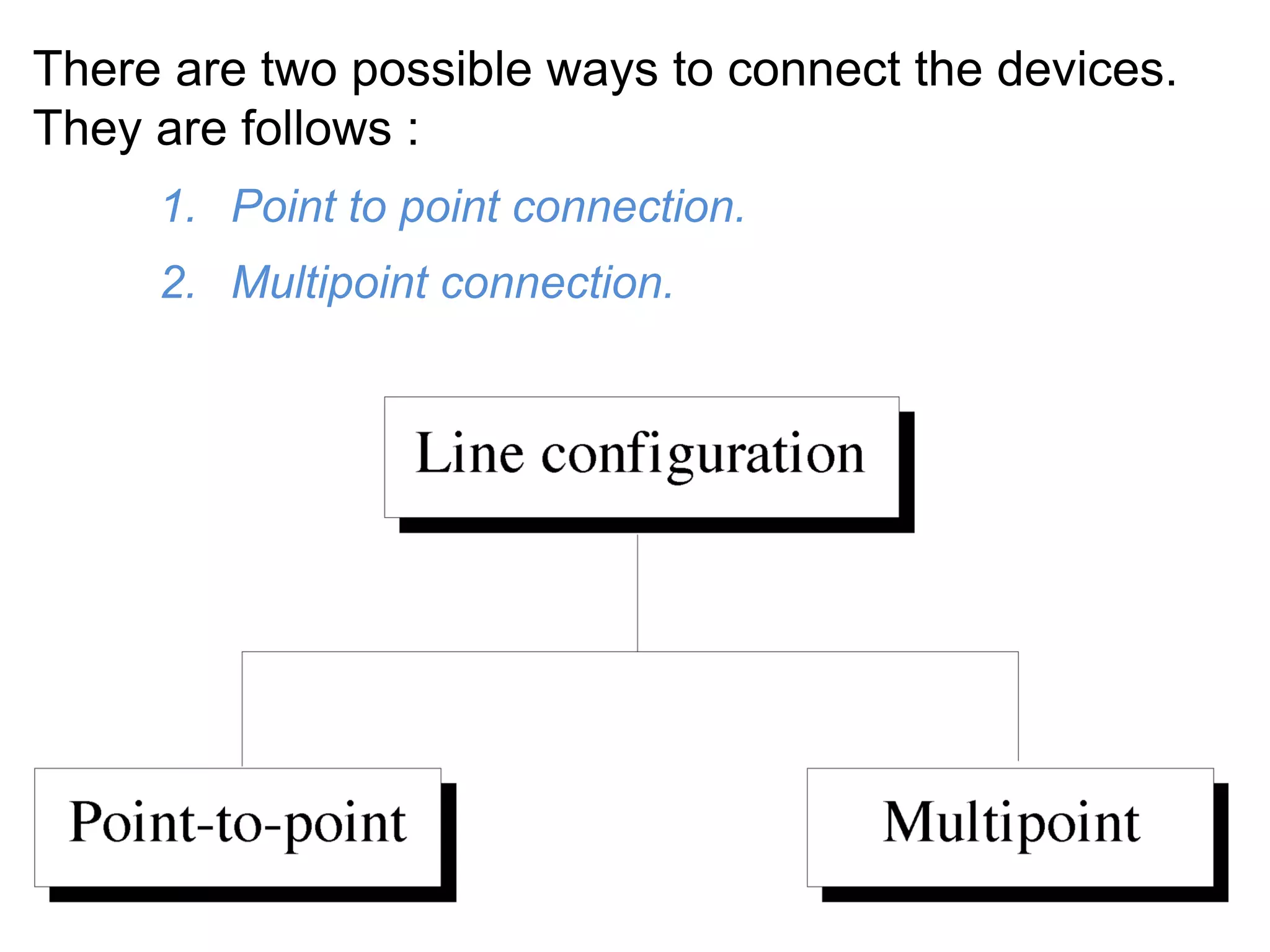
There are two possible ways to connect the devices.
They are follows :
1. Point to point connection.
2. Multipoint connection.
Point to point Line Configuration
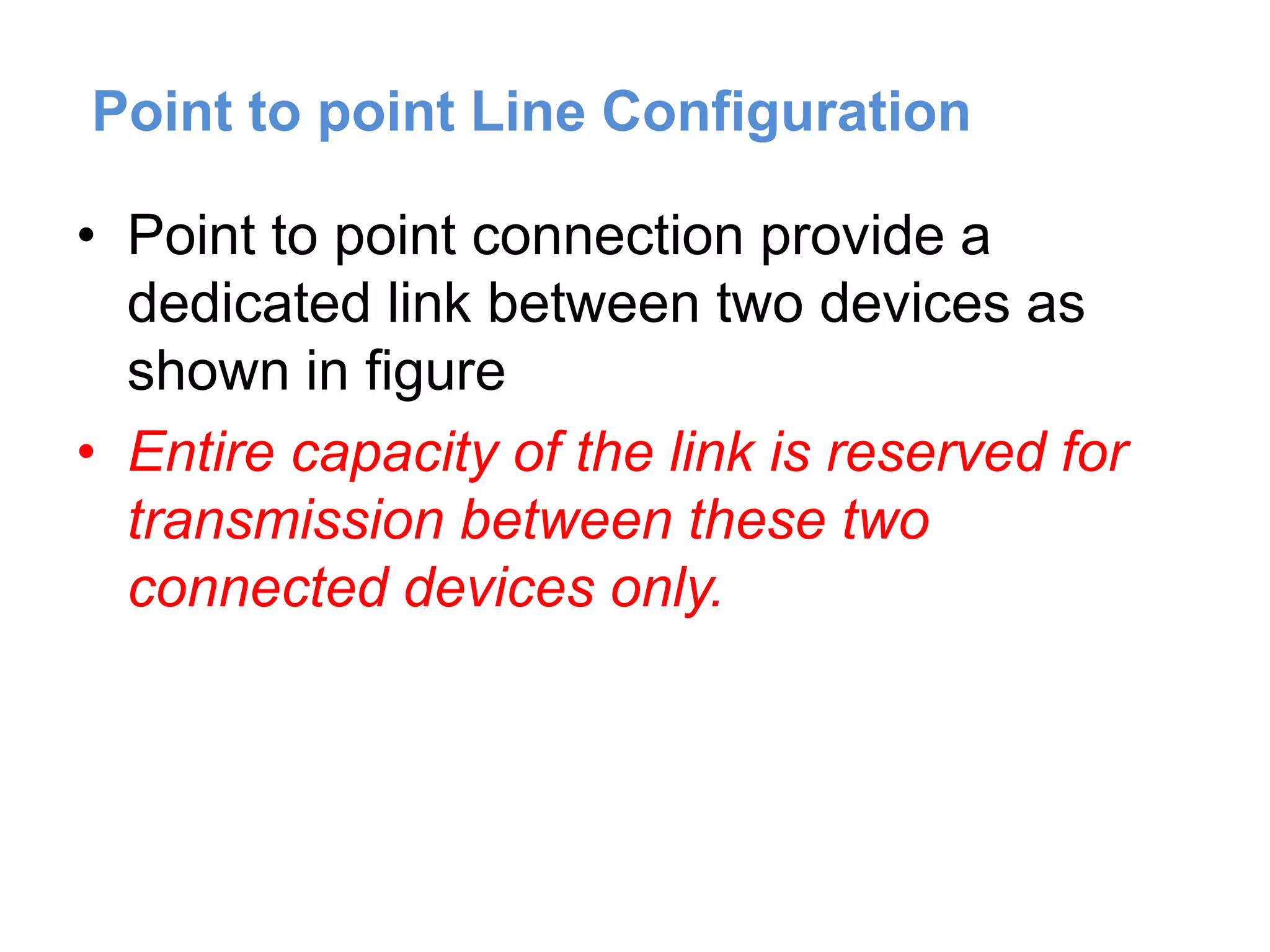
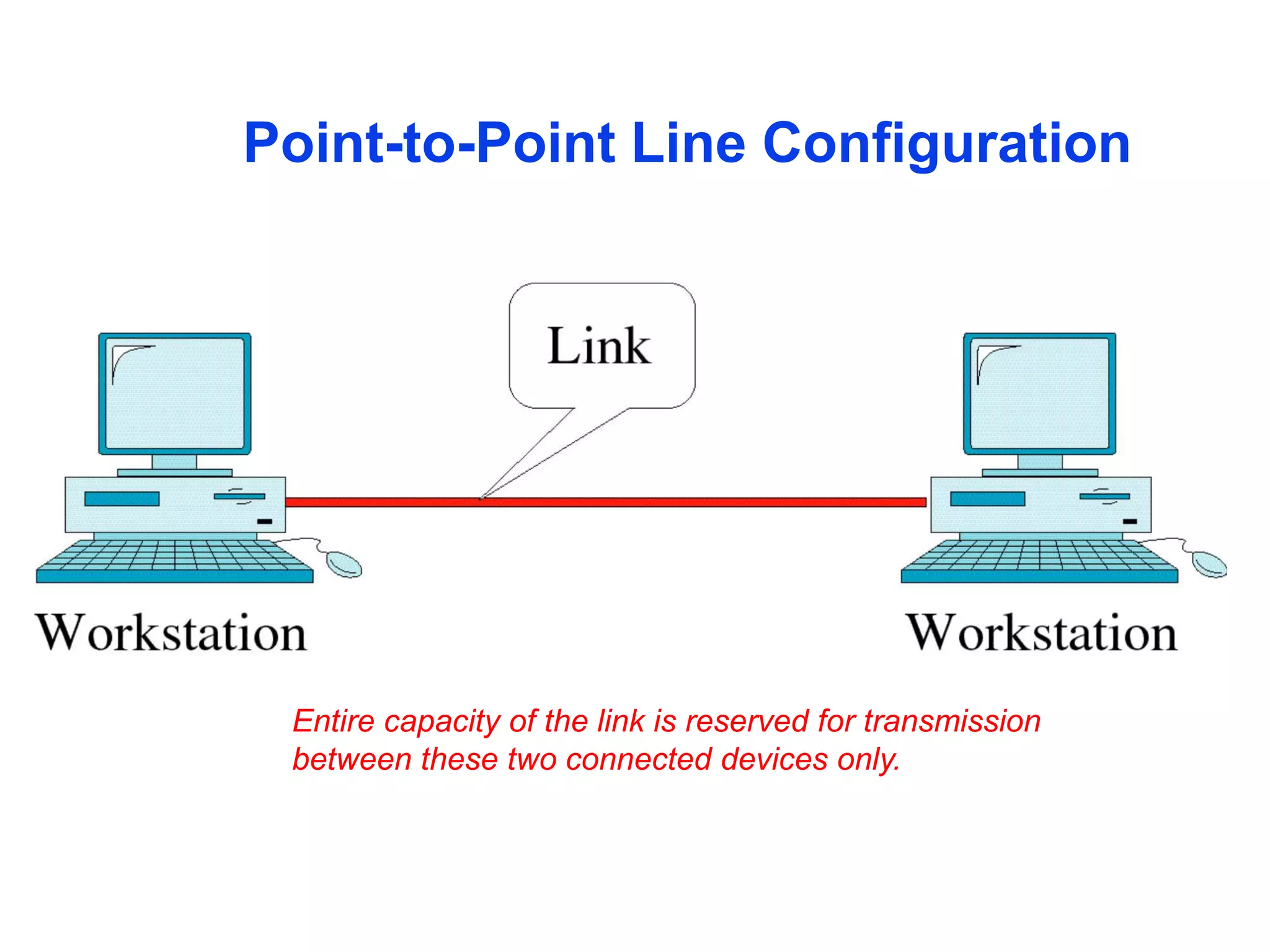
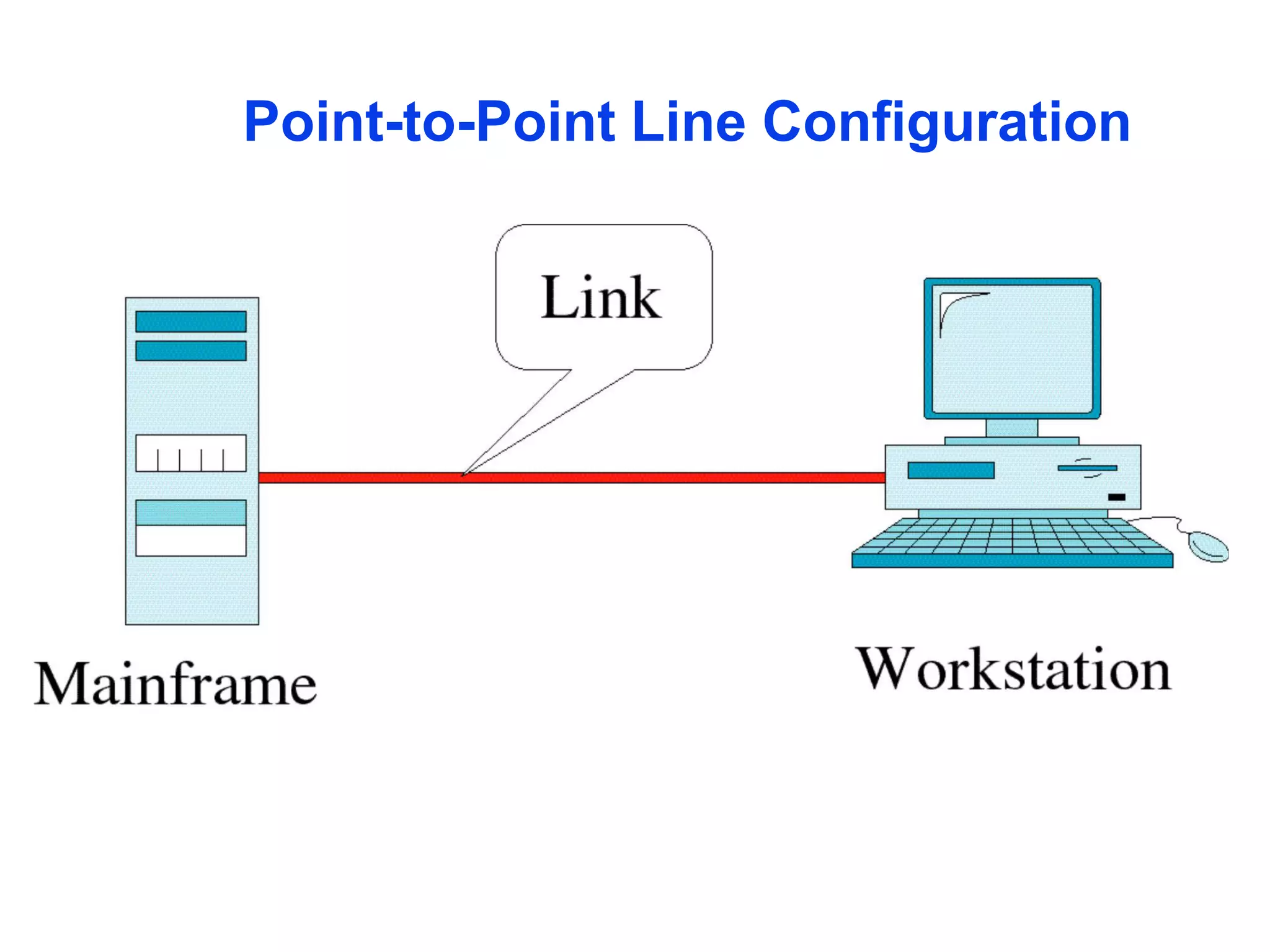
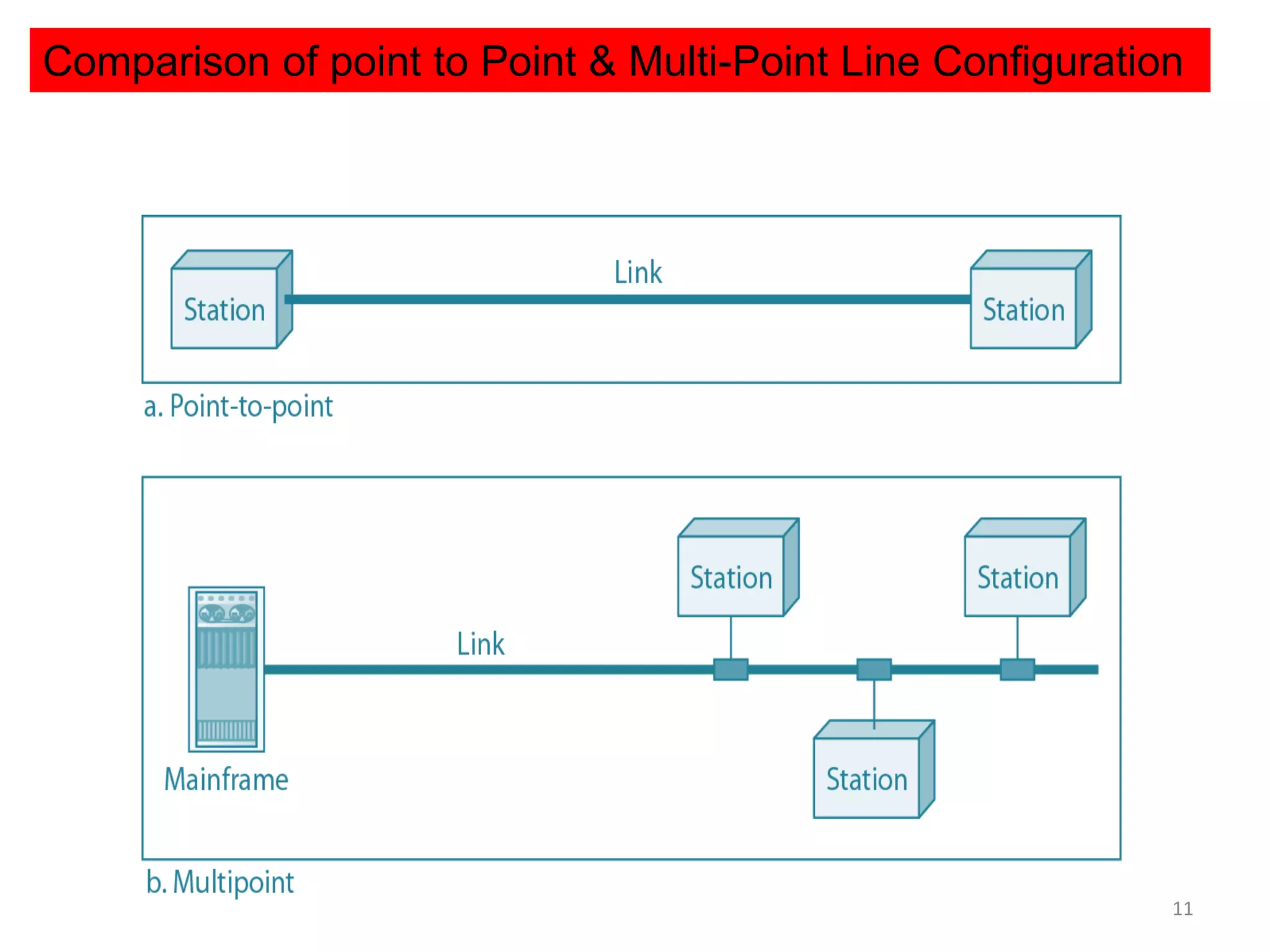
• Point to point connection provide a
dedicated link between two devices as
shown in figure
• Entire capacity of the link is reserved for
transmission between these two
connected devices only.
Point-to-Point Line Configuration
Entire capacity of the link is reserved for transmission
between these two connected devices only.
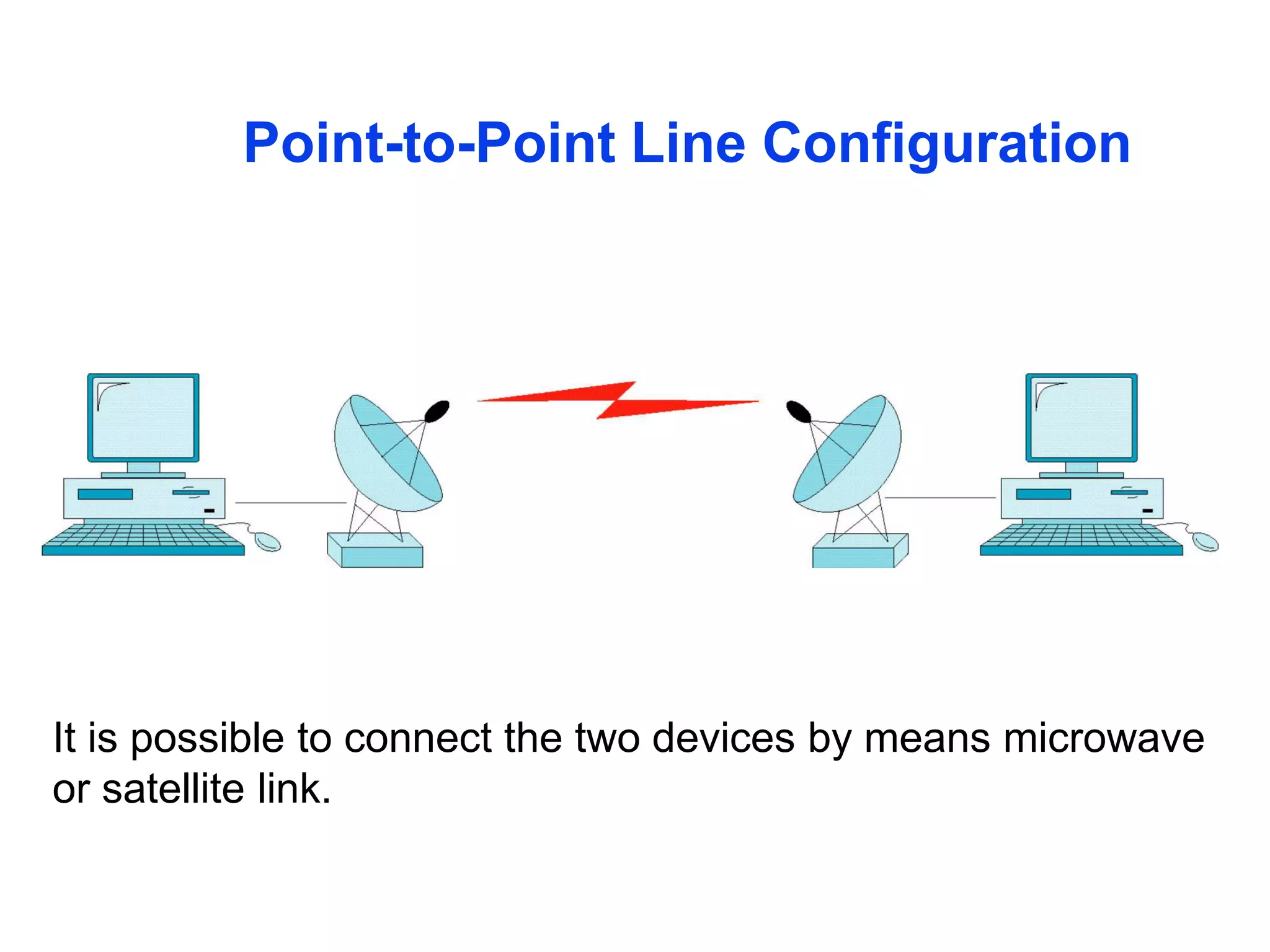
Point-to-Point Line Configuration
It is possible to connect the two devices by means microwave
or satellite link.
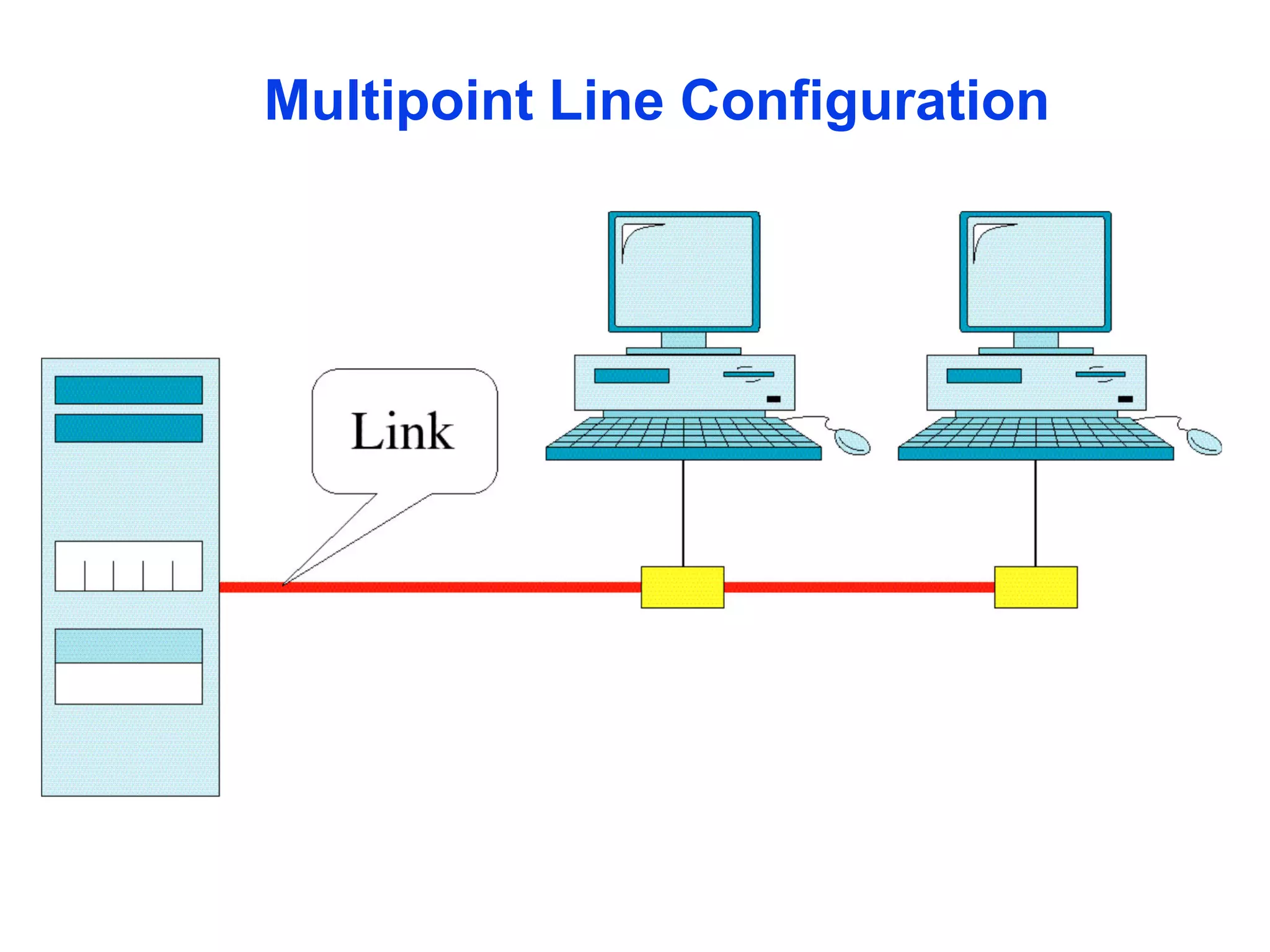
Multipoint connection is also called as a
Multidrop connection.
• In such a connection more than two devices
share a single link as shown in figure.
• In the Multipoint connection the channel
capacity is shared. If many devices share the link
simultaneously, it is called as spatially shared
connection.
9
Multipoint connection
Multipoint Line Configuration
11
Comparison of point to Point & Multi-Point Line Configuration
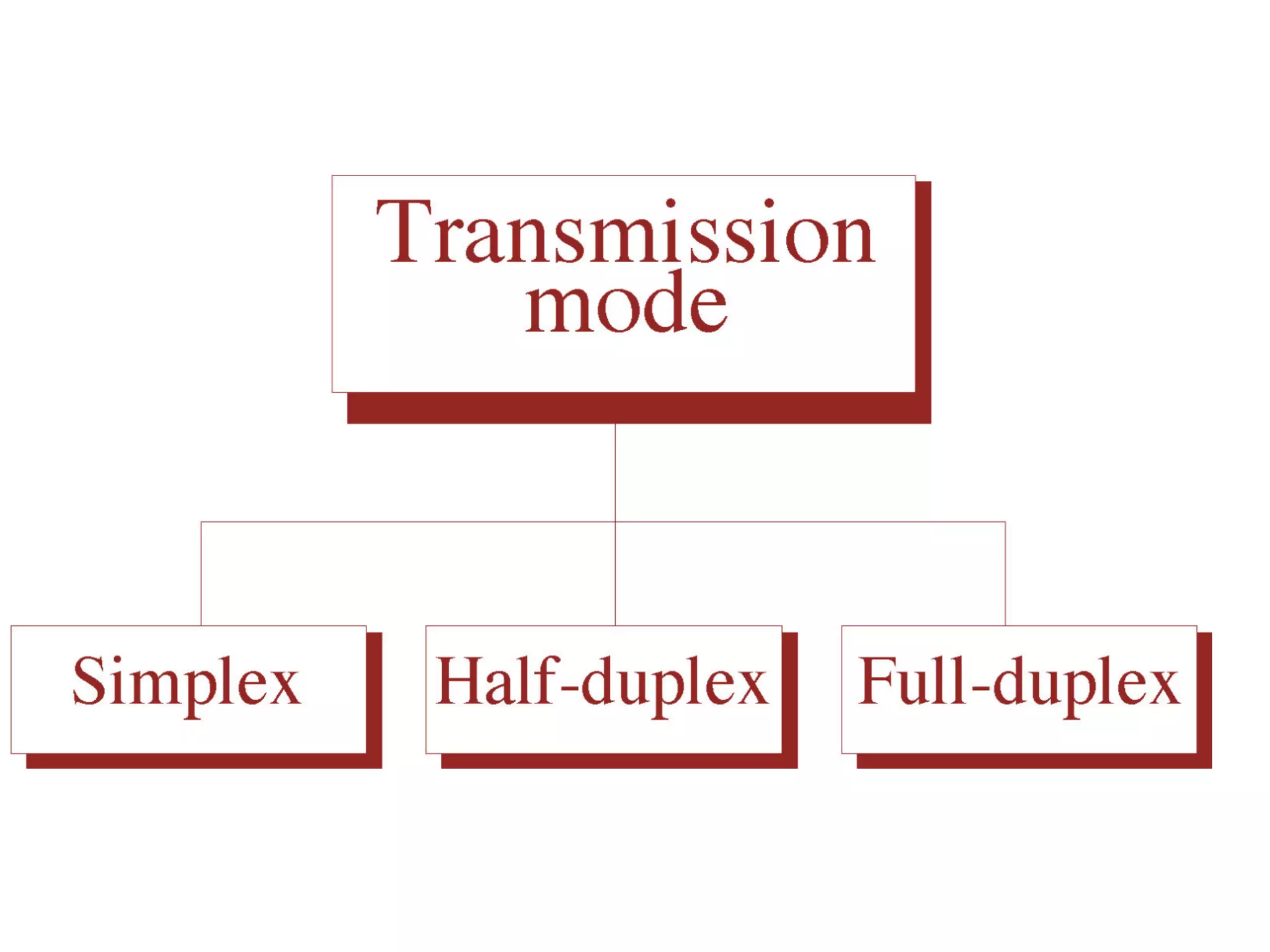
Based on whether the system communicates
only in one direction or otherwise, the
communication system are classified as.
1. Simplex System
2. Half Duplex System
3. Full Duplex System
12
Modes of data communication?
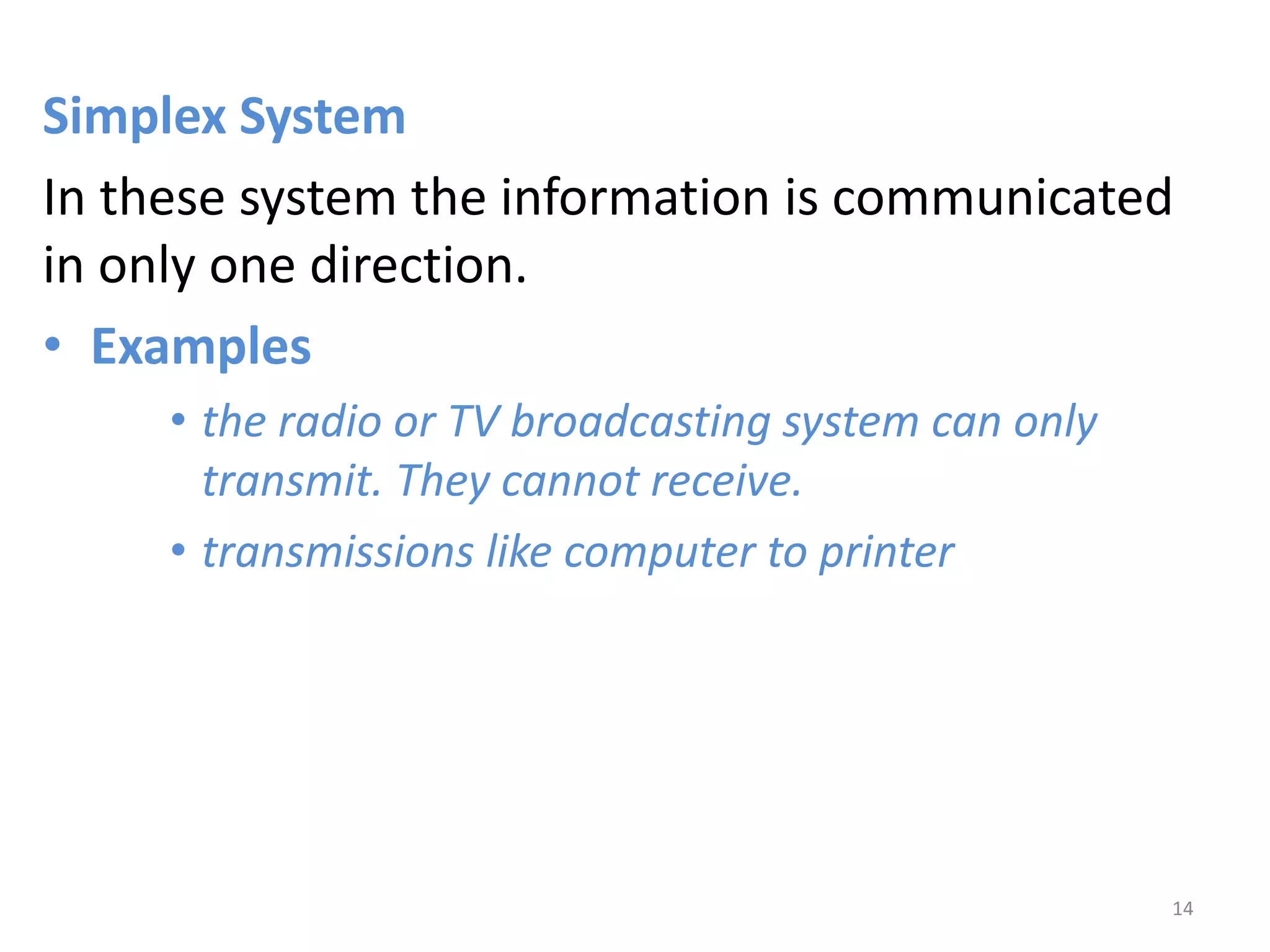
Simplex System
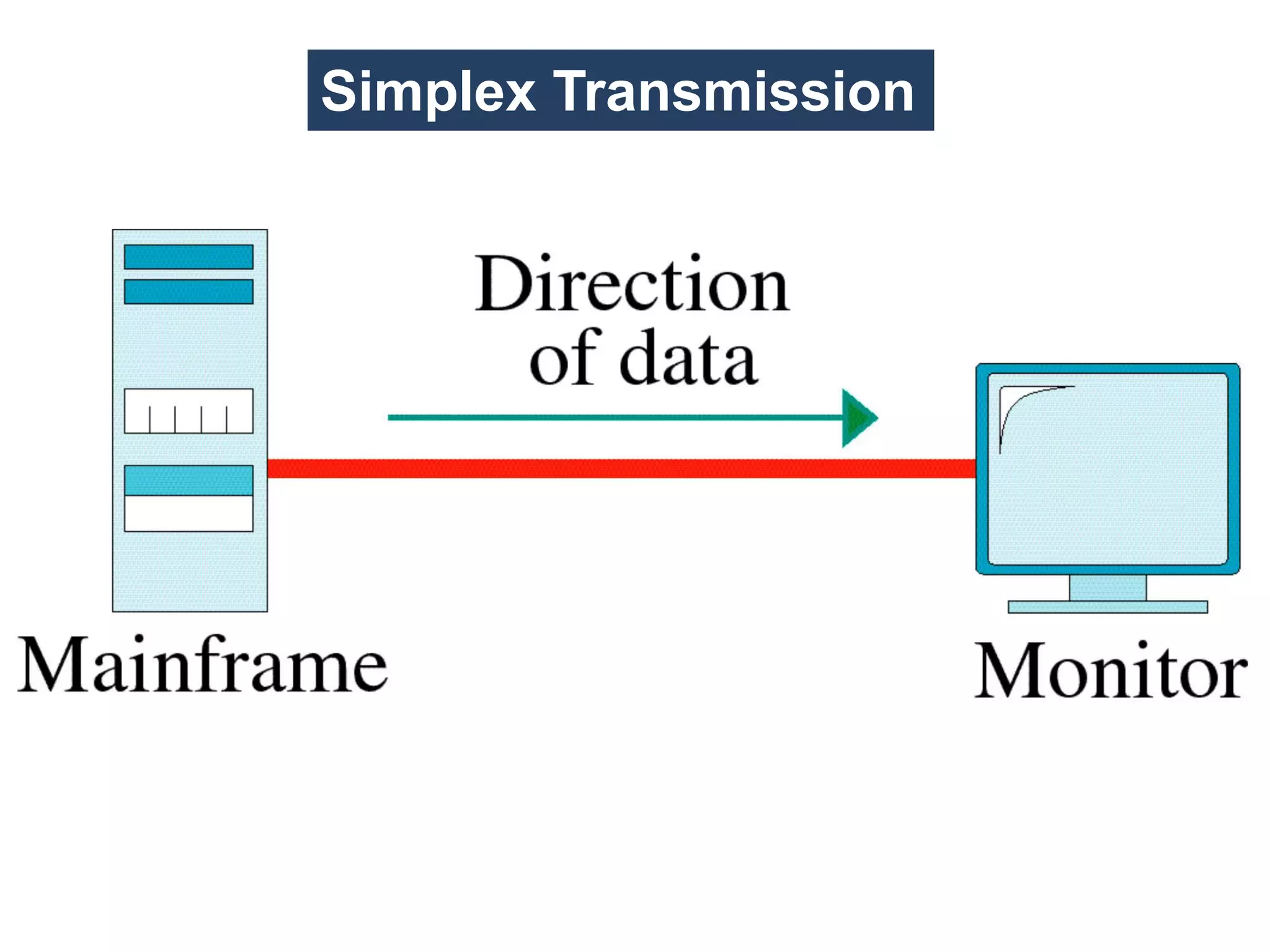
In these system the information is communicated
in only one direction.
• Examples
• the radio or TV broadcasting system can only
transmit. They cannot receive.
• transmissions like computer to printer
14
Simplex Transmission
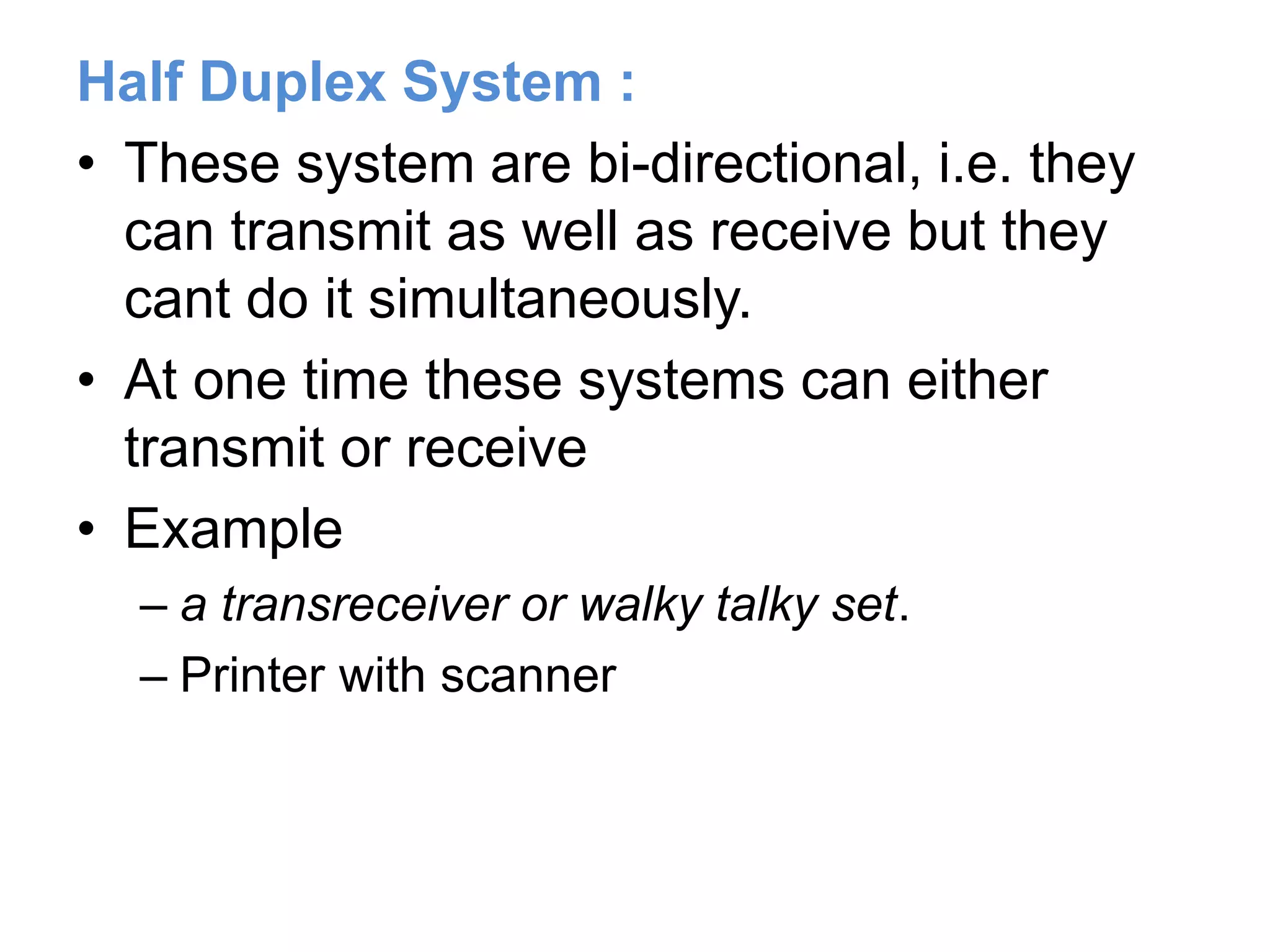
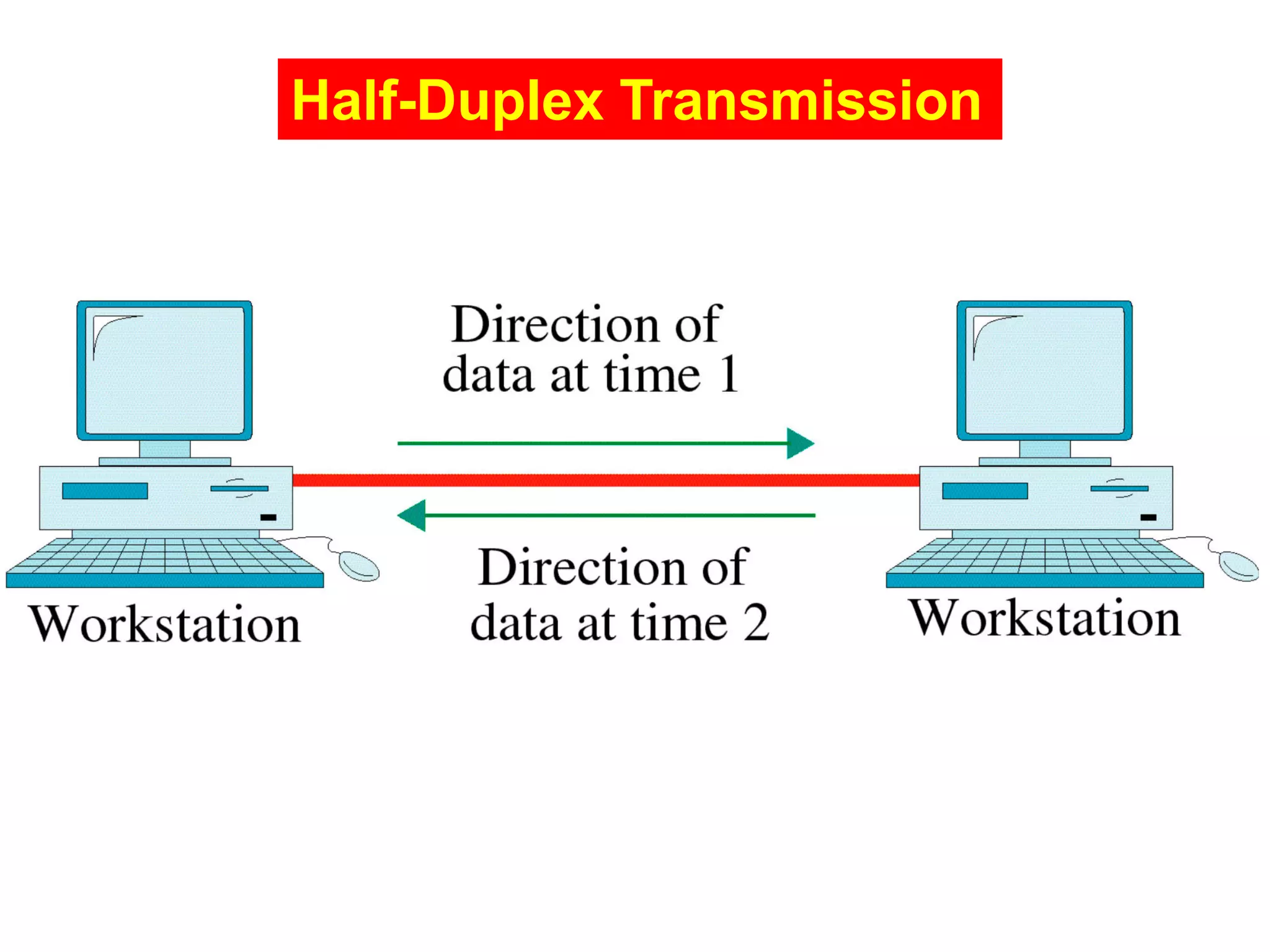
Half Duplex System :
• These system are bi-directional, i.e. they
can transmit as well as receive but they
cant do it simultaneously.
• At one time these systems can either
transmit or receive
• Example
– a transreceiver or walky talky set.
– Printer with scanner
Half-Duplex Transmission
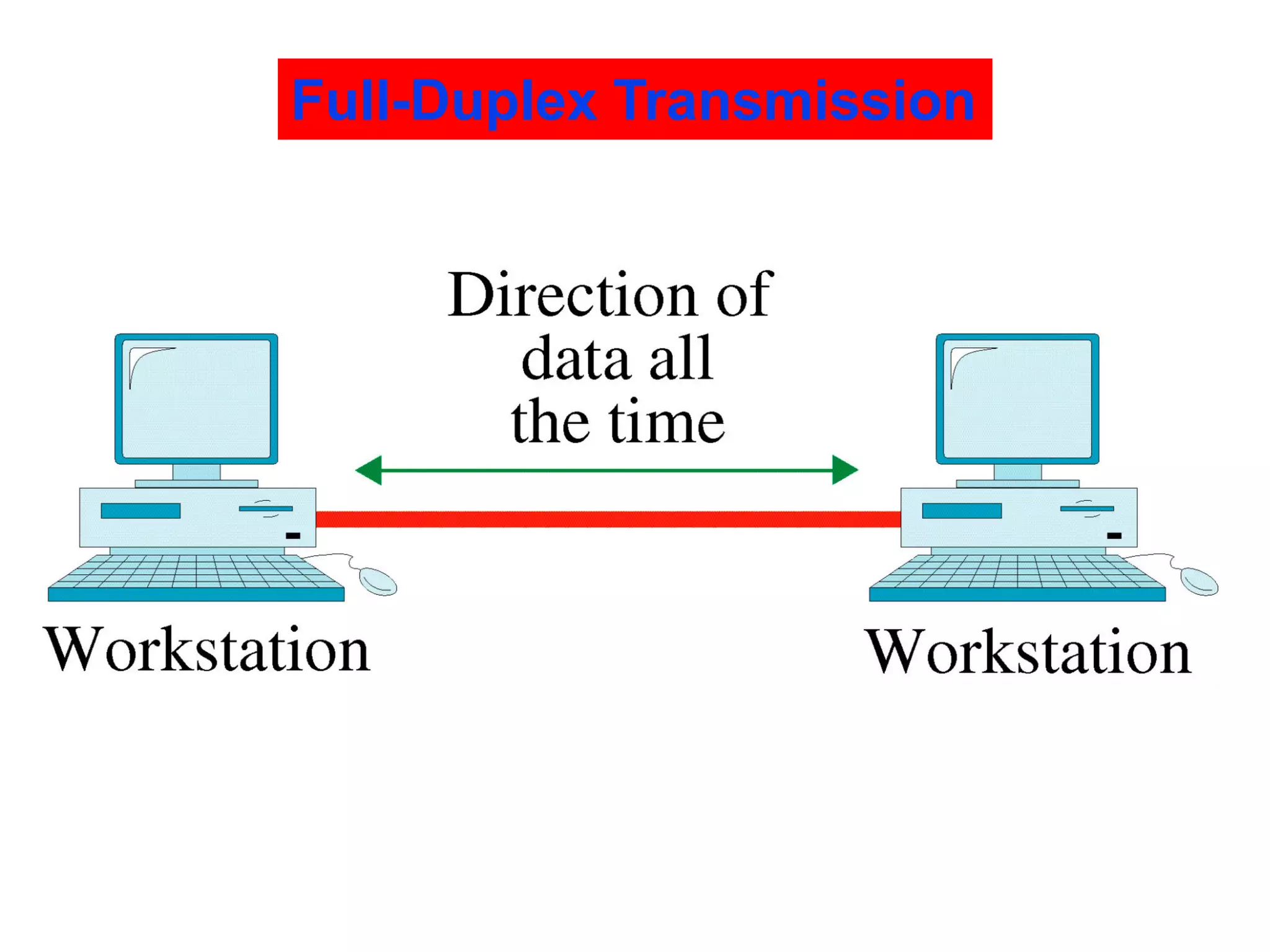
Full Duplex System
• These are truly bi-directional system as they
allow the communication to take place in both
the directions simultaneously.
• These system can transmit as well as receive
information simultaneously
• Example :
– the telephone system.
18
Full-Duplex Transmission
• Data transmission means movement of data (in
the form of bits) between two or more digital
devices. The data transmission takes place over
some physical medium from one computer to
the other.
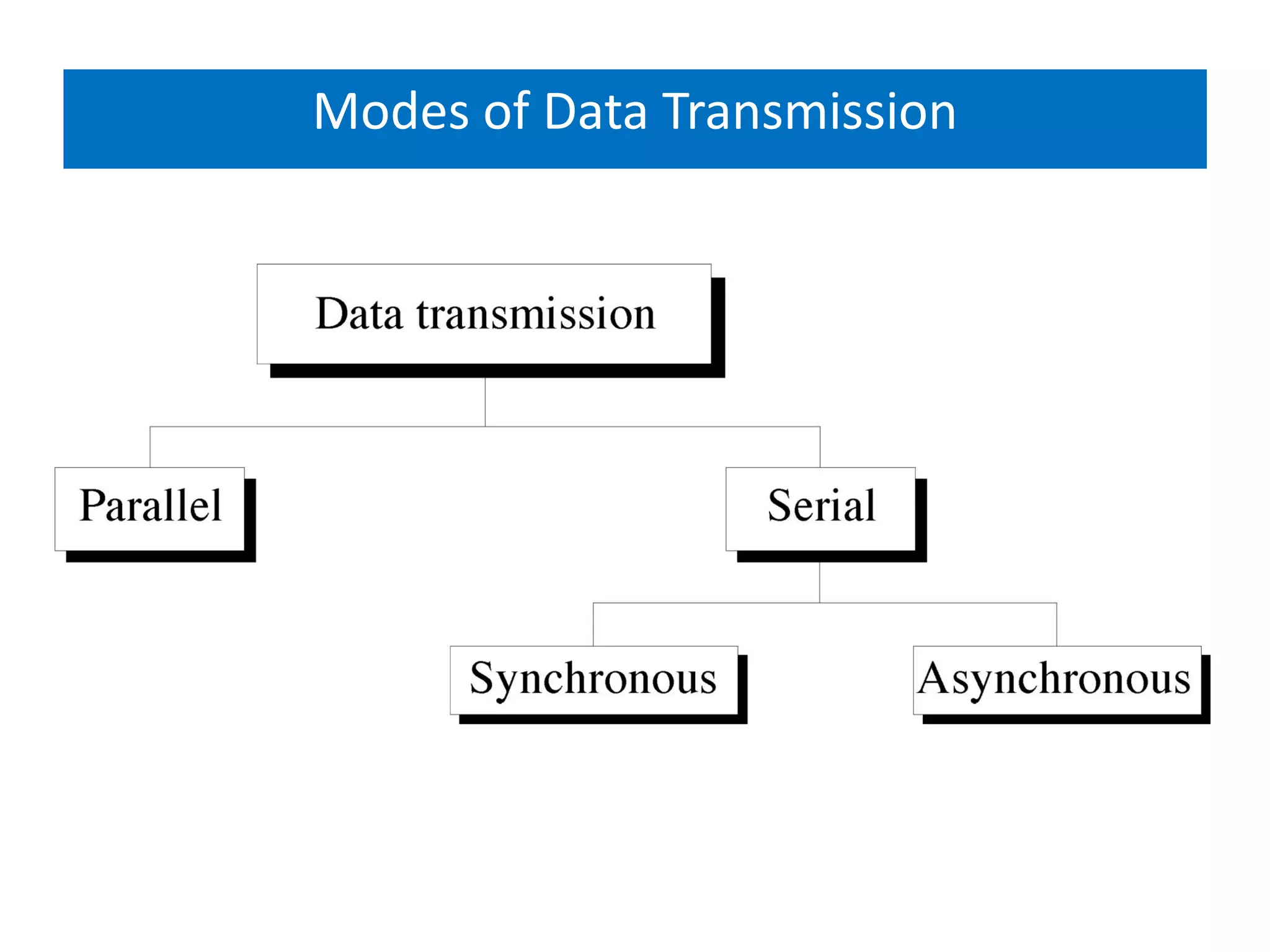
• There are two ways of transmitting a bits. They
are:
1. Parallel Transmission.
2. Serial Transmission.
20
Types of data transmission?
Modes of Data Transmission
Parallel Transmission
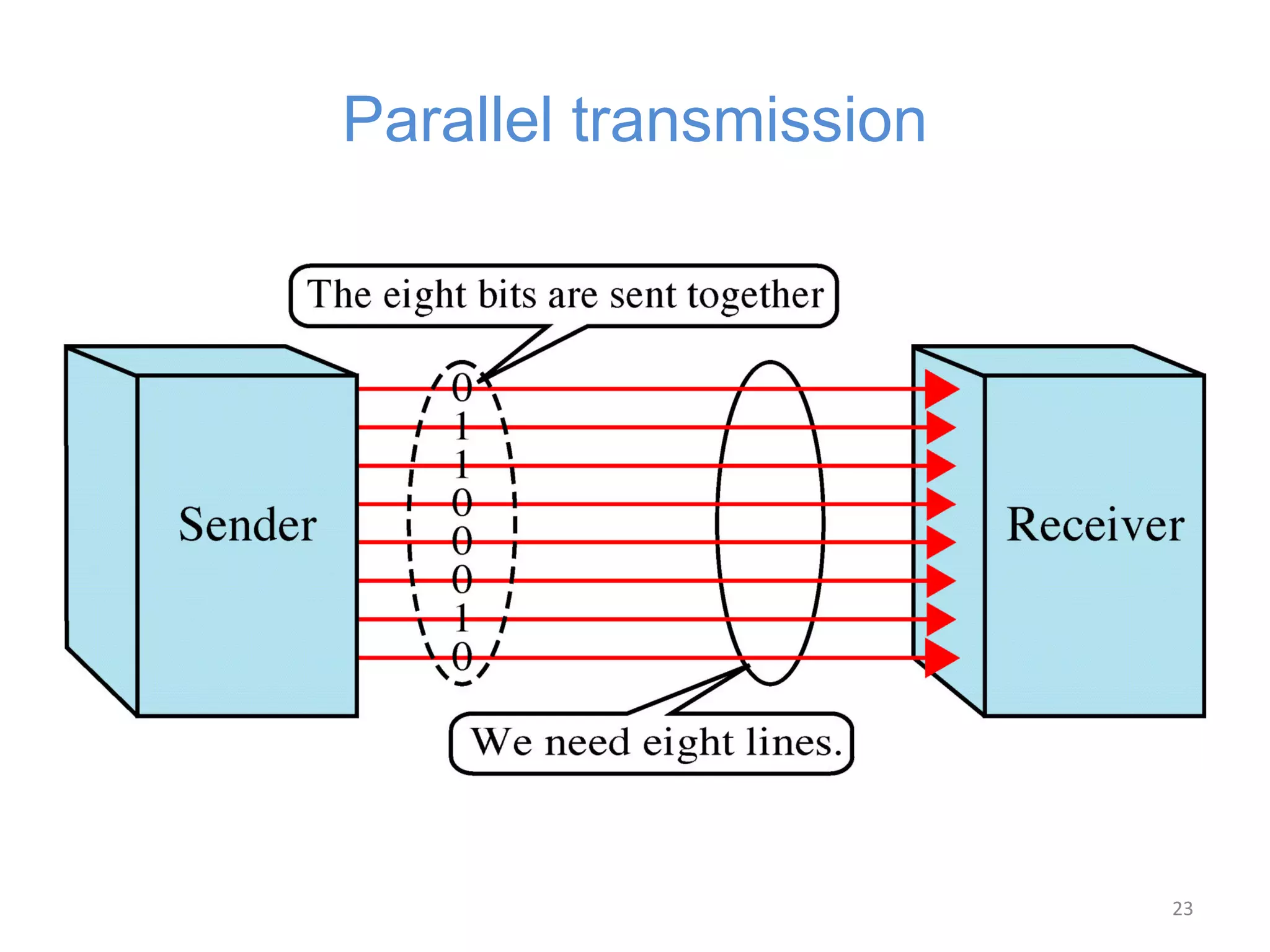
• In Parallel Transmission of data, all the bits of
a byte are transmitted simultaneously on
separate wires.
• This type of transmission requires multiple
circuits for interconnecting the two devices.
• Parallel Transmission is possible practically if
the two devices are close to each other.
22
23
Parallel transmission
Advantages of Parallel Transmission
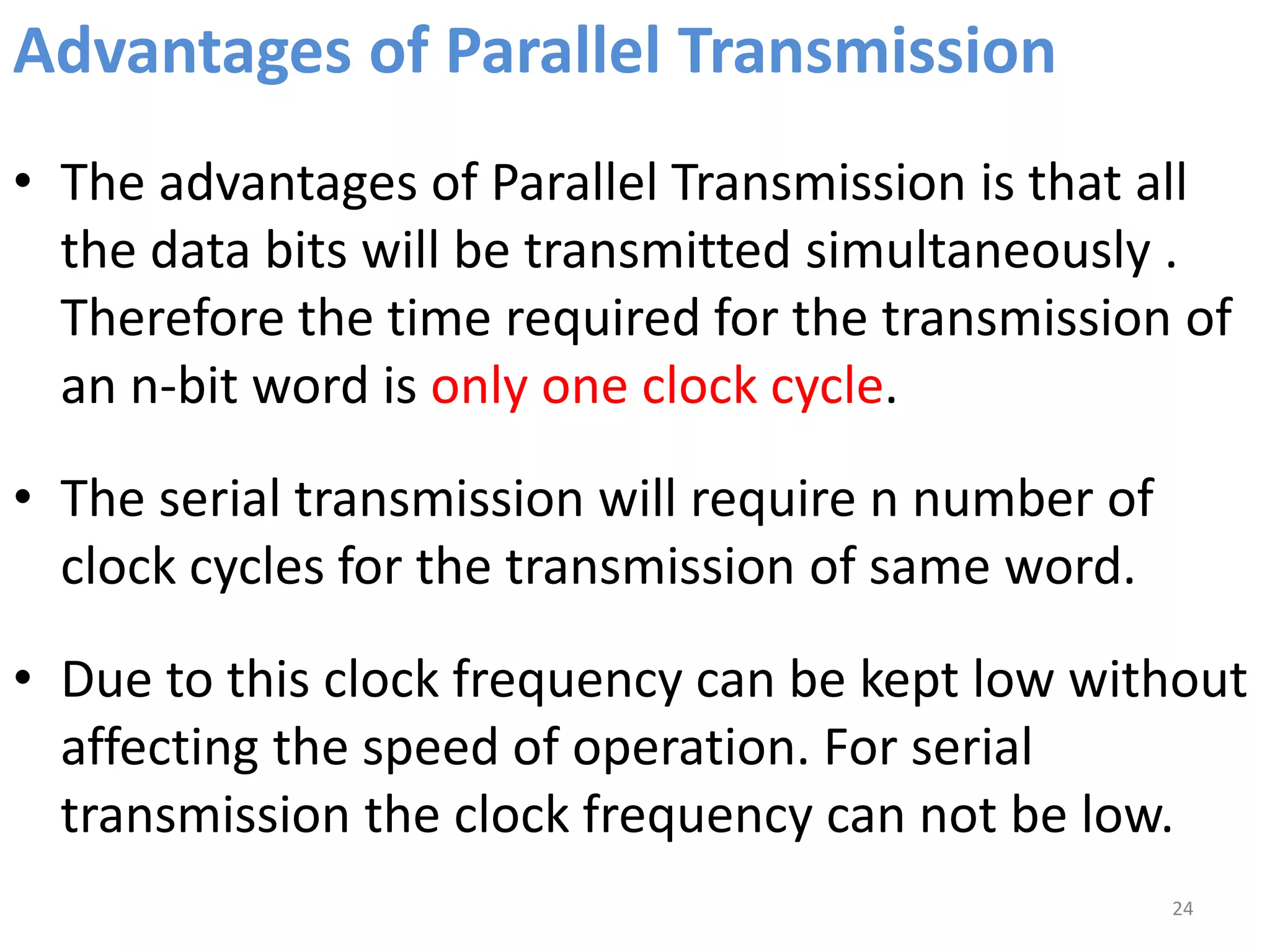
• The advantages of Parallel Transmission is that all
the data bits will be transmitted simultaneously .
Therefore the time required for the transmission of
an n-bit word is only one clock cycle.
• The serial transmission will require n number of
clock cycles for the transmission of same word.
• Due to this clock frequency can be kept low without
affecting the speed of operation. For serial
transmission the clock frequency can not be low.
24
Thank You
Dr Rajiv Srivastava
Director
Sagar Institute of Research & Technology (SIRT)
Sagar Group of Institutions, Bhopal
http://www.sirtbhopal.ac.in

Data Communication & computer network: Channel types

  • 1.
    Introduction to Datacommunication Lecture #3 Topic :Channel Types Dr Rajiv Srivastava Director Sagar Institute of Research & Technology (SIRT) Sagar Group of Institutions, Bhopal http://www.sirtbhopal.ac.in
  • 2.
  • 3.
    • Line configurationrefers to the way two or more communication devices attach to a link. • Link : A link is the physical communication pathway that transfers data from the device to the another. • Network : A network is two or more devices connected to each other through connecting links. 3 Line Configuration, Link & Network in data communication?
  • 4.
    There are twopossible ways to connect the devices. They are follows : 1. Point to point connection. 2. Multipoint connection.
  • 5.
    Point to pointLine Configuration • Point to point connection provide a dedicated link between two devices as shown in figure • Entire capacity of the link is reserved for transmission between these two connected devices only.
  • 6.
    Point-to-Point Line Configuration Entirecapacity of the link is reserved for transmission between these two connected devices only.
  • 7.
  • 8.
    Point-to-Point Line Configuration Itis possible to connect the two devices by means microwave or satellite link.
  • 9.
    Multipoint connection isalso called as a Multidrop connection. • In such a connection more than two devices share a single link as shown in figure. • In the Multipoint connection the channel capacity is shared. If many devices share the link simultaneously, it is called as spatially shared connection. 9 Multipoint connection
  • 10.
  • 11.
    11 Comparison of pointto Point & Multi-Point Line Configuration
  • 12.
    Based on whetherthe system communicates only in one direction or otherwise, the communication system are classified as. 1. Simplex System 2. Half Duplex System 3. Full Duplex System 12 Modes of data communication?
  • 14.
    Simplex System In thesesystem the information is communicated in only one direction. • Examples • the radio or TV broadcasting system can only transmit. They cannot receive. • transmissions like computer to printer 14
  • 15.
  • 16.
    Half Duplex System: • These system are bi-directional, i.e. they can transmit as well as receive but they cant do it simultaneously. • At one time these systems can either transmit or receive • Example – a transreceiver or walky talky set. – Printer with scanner
  • 17.
  • 18.
    Full Duplex System •These are truly bi-directional system as they allow the communication to take place in both the directions simultaneously. • These system can transmit as well as receive information simultaneously • Example : – the telephone system. 18
  • 19.
  • 20.
    • Data transmissionmeans movement of data (in the form of bits) between two or more digital devices. The data transmission takes place over some physical medium from one computer to the other. • There are two ways of transmitting a bits. They are: 1. Parallel Transmission. 2. Serial Transmission. 20 Types of data transmission?
  • 21.
    Modes of DataTransmission
  • 22.
    Parallel Transmission • InParallel Transmission of data, all the bits of a byte are transmitted simultaneously on separate wires. • This type of transmission requires multiple circuits for interconnecting the two devices. • Parallel Transmission is possible practically if the two devices are close to each other. 22
  • 23.
  • 24.
    Advantages of ParallelTransmission • The advantages of Parallel Transmission is that all the data bits will be transmitted simultaneously . Therefore the time required for the transmission of an n-bit word is only one clock cycle. • The serial transmission will require n number of clock cycles for the transmission of same word. • Due to this clock frequency can be kept low without affecting the speed of operation. For serial transmission the clock frequency can not be low. 24
  • 25.
    Thank You Dr RajivSrivastava Director Sagar Institute of Research & Technology (SIRT) Sagar Group of Institutions, Bhopal http://www.sirtbhopal.ac.in