CYBERSECURITY
BEST PRACTICES
Empowering Safe Digital Practices for a
Secure Future.
www.hostingmatchup,co
m
Yasir Naveed Riaz
WHY CYBERSECURITY
MATTERS
Cyber threats are more sophisticated than ever, targeting individuals,
businesses, and critical services. With increased dependence on
digital tools and cloud platforms, a single vulnerability can lead to
identity theft, financial loss, or major organizational disruption.
Cybersecurity is no longer optional—it is essential for protecting
operations, data, and reputations.
As attackers use automation and AI to scale their efforts,
organizations and individuals must strengthen security awareness
and adopt proactive defense measures. Every person plays a role in
creating a safer digital environment, and small actions can
significantly reduce risk across the entire network.
& AUTHENTICATION
STRONG PASSWORDS
Your passwords and authentication methods are the first line of defense
against cyber intrusions. Strengthening them reduces the risk of unauthorized
access, identity theft, and compromised accounts
A password manager securely stores all
your credentials and generates strong,
unique passwords for every service. This
prevents reuse and reduces the risk of
breaches.
MFA adds an extra verification step—such
as a code or fingerprint—making it
significantly harder for attackers to access
your accounts, even if they obtain your
password.
Use a password manager Enable Multi-Factor
Authentication (MFA)
Use long, complex passwords including
letters, numbers, and symbols. Avoid
predictable information like birthdays or
names, and never reuse passwords across
platforms.
Use strong Unique
passwords
UPDATED
KEEP SOFTWARE
Outdated software is one of the most common entry points
for attackers. Regular updates patch vulnerabilities and
strengthen your defense against emerging threats.
Install Updates Promptly
Use Supported Software
Enable Automatic Updates
PHISHING ATTACKS
BE AWARE OF
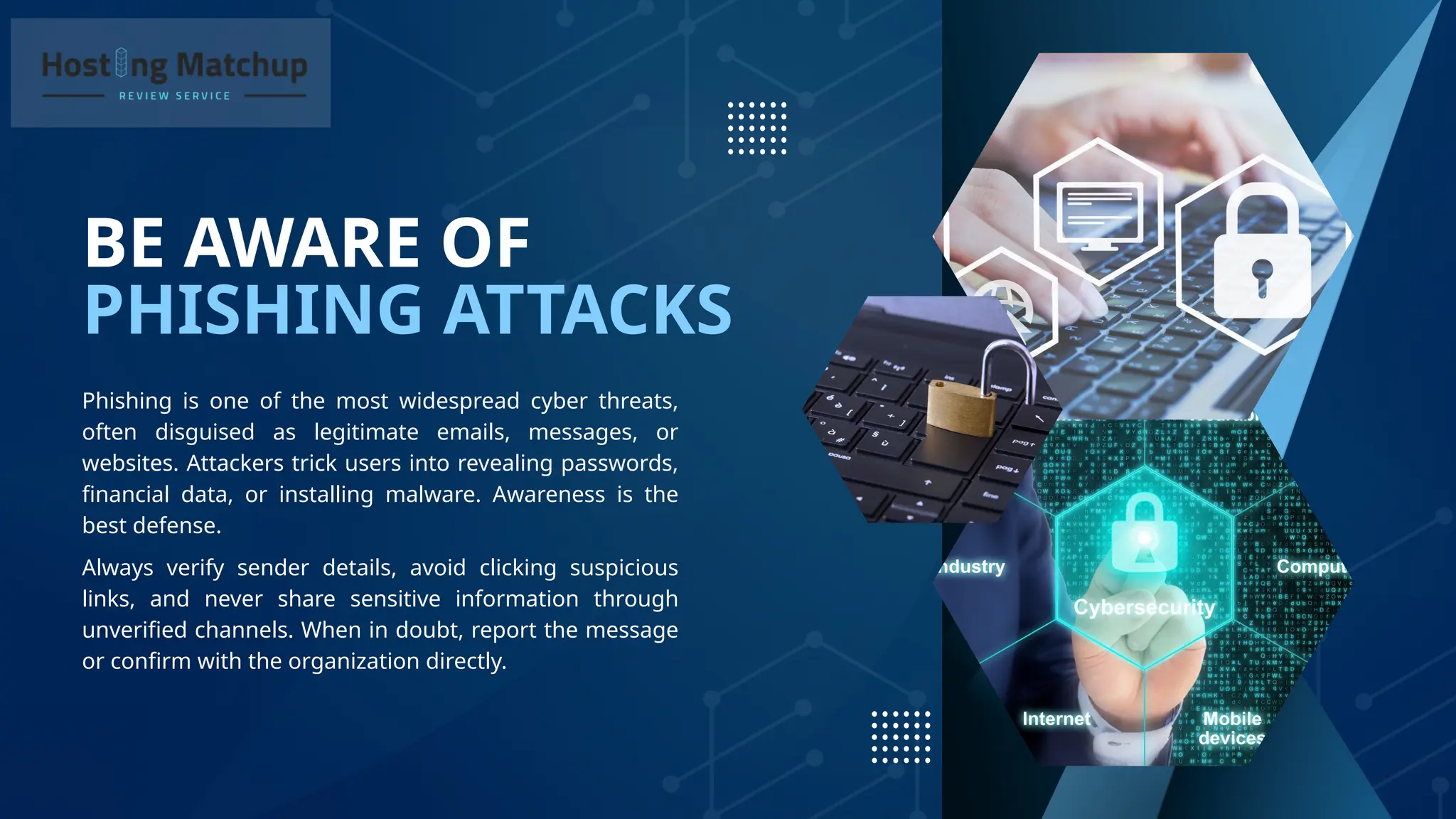
Phishing is one of the most widespread cyber threats,
often disguised as legitimate emails, messages, or
websites. Attackers trick users into revealing passwords,
financial data, or installing malware. Awareness is the
best defense.
Always verify sender details, avoid clicking suspicious
links, and never share sensitive information through
unverified channels. When in doubt, report the message
or confirm with the organization directly.
DEVICES & NETWORK
SECURE YOUR
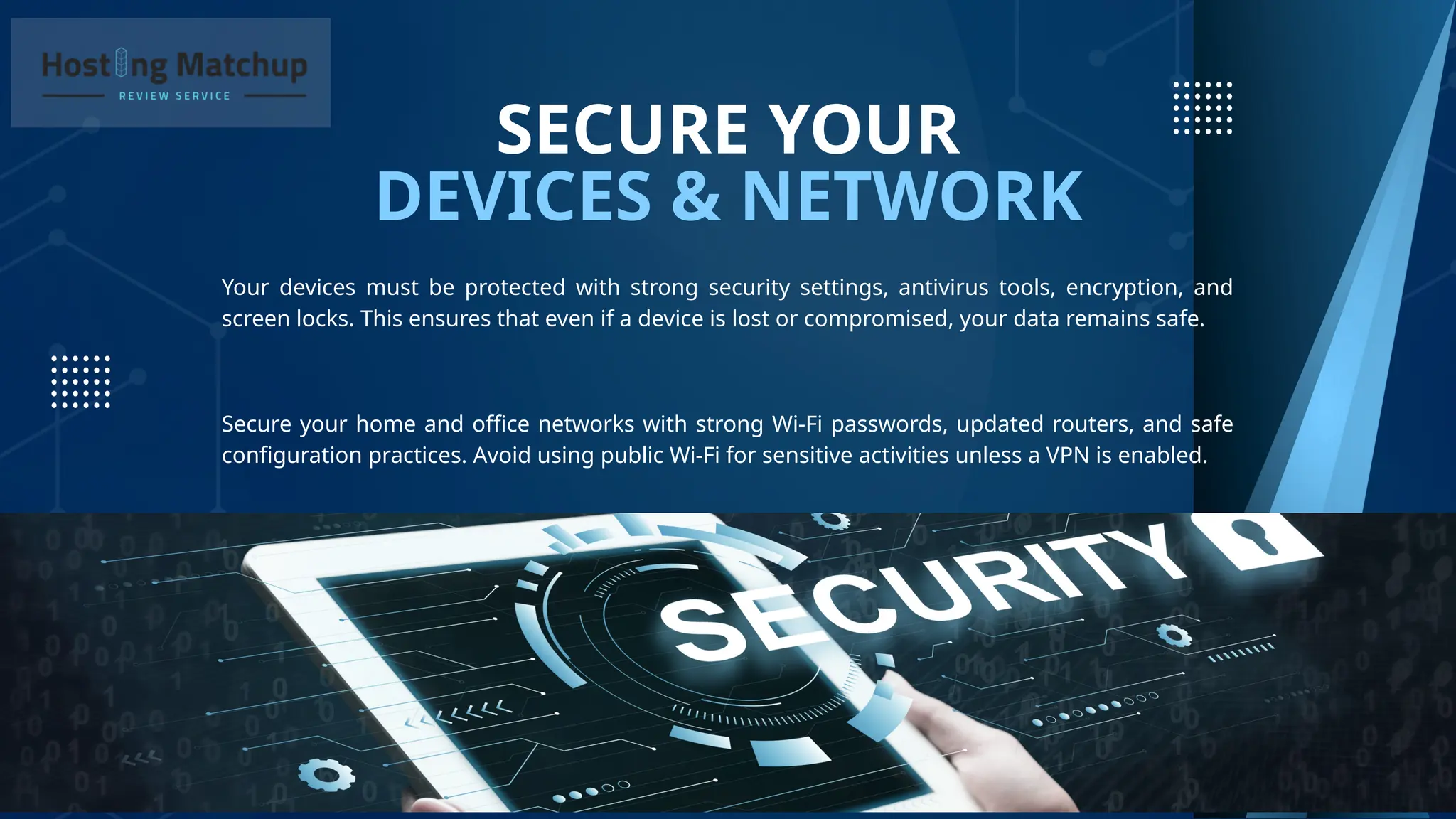
Your devices must be protected with strong security settings, antivirus tools, encryption, and
screen locks. This ensures that even if a device is lost or compromised, your data remains safe.
Secure your home and office networks with strong Wi-Fi passwords, updated routers, and safe
configuration practices. Avoid using public Wi-Fi for sensitive activities unless a VPN is enabled.
SAFE INTERNET
HABITS
PRACTICE
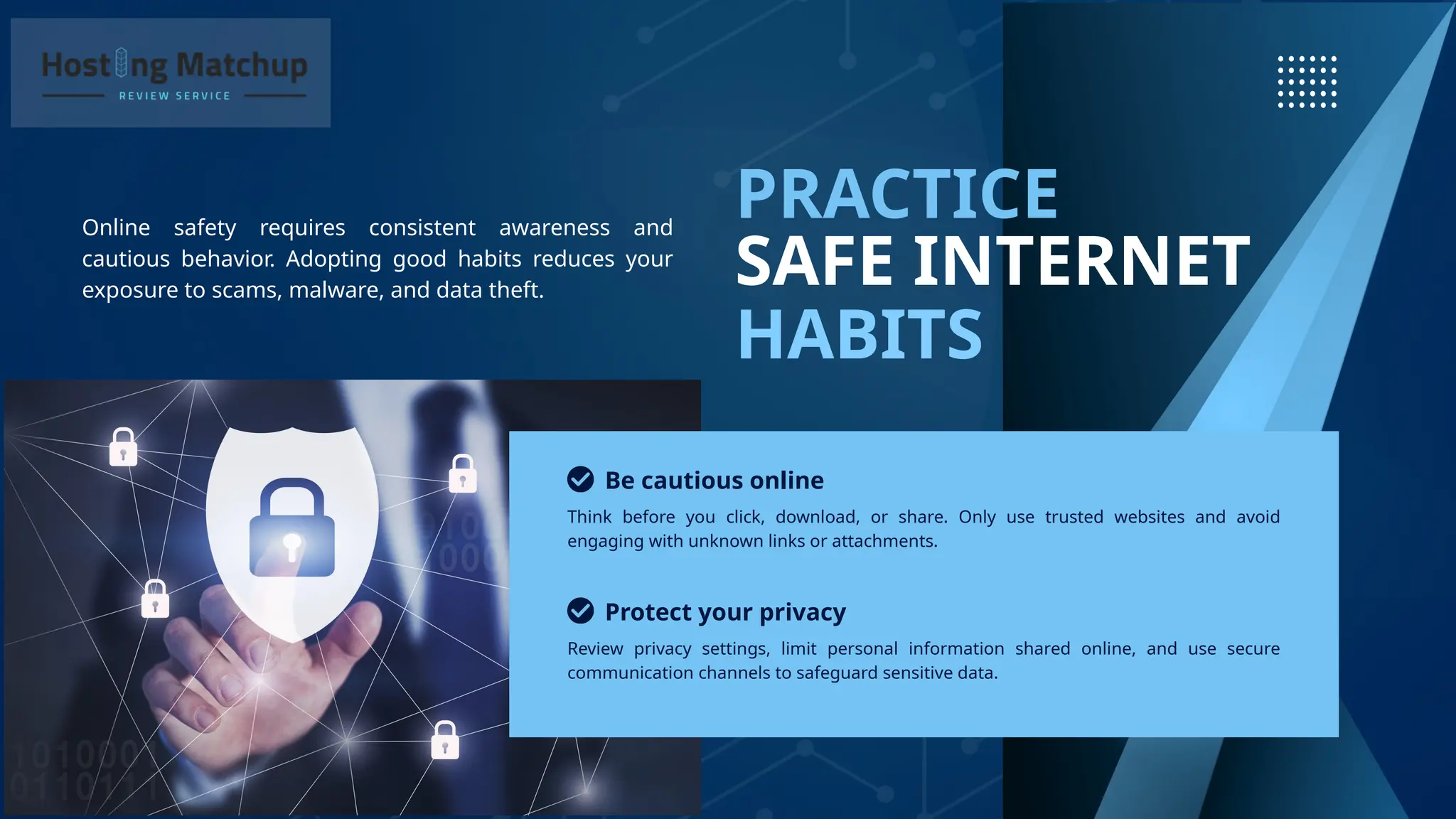
Online safety requires consistent awareness and
cautious behavior. Adopting good habits reduces your
exposure to scams, malware, and data theft.
Be cautious online
Protect your privacy
Think before you click, download, or share. Only use trusted websites and avoid
engaging with unknown links or attachments.
Review privacy settings, limit personal information shared online, and use secure
communication channels to safeguard sensitive data.
CYBERSECURITY
IN THE WORKPLACE
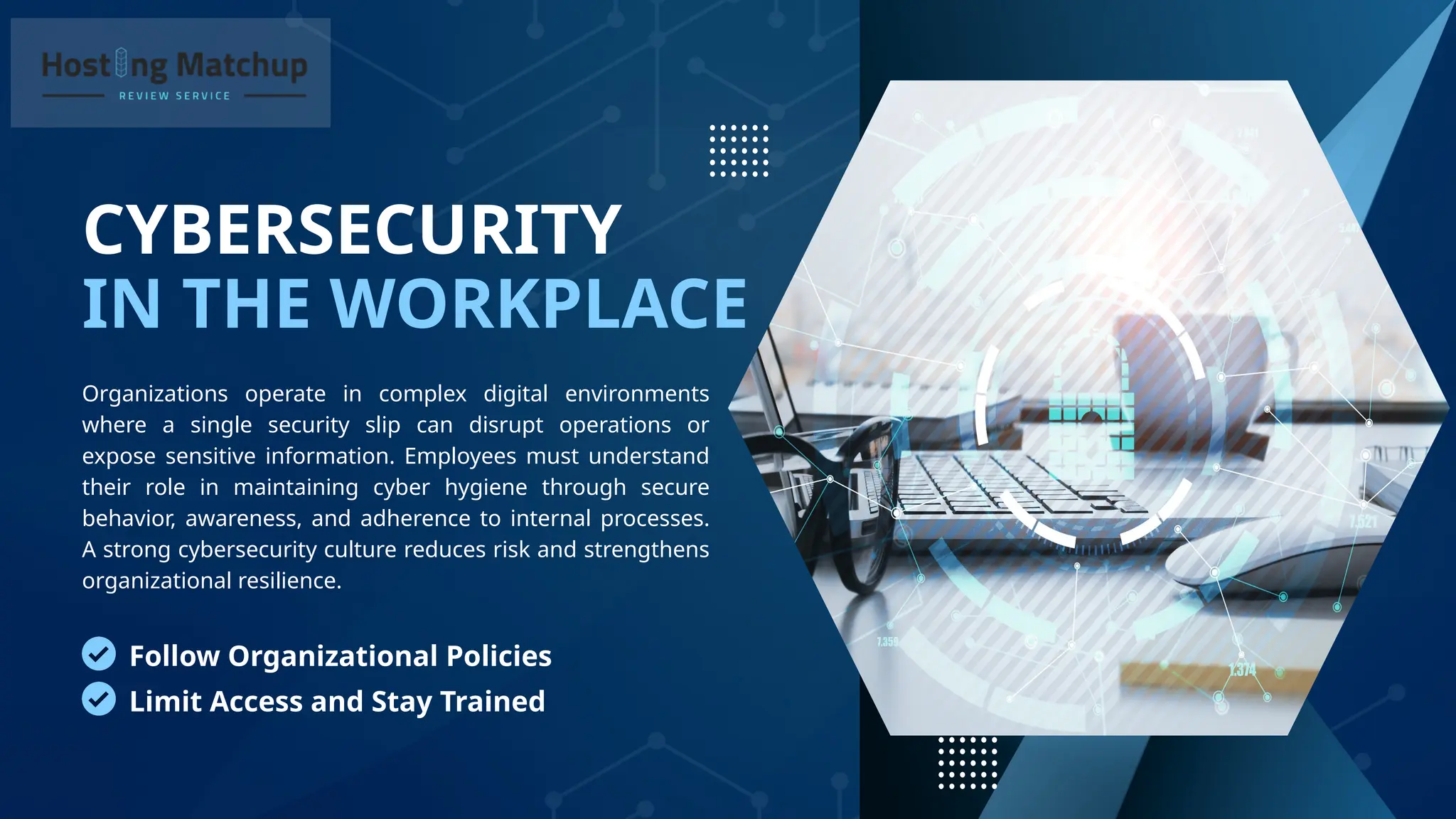
Organizations operate in complex digital environments
where a single security slip can disrupt operations or
expose sensitive information. Employees must understand
their role in maintaining cyber hygiene through secure
behavior, awareness, and adherence to internal processes.
A strong cybersecurity culture reduces risk and strengthens
organizational resilience.
Follow Organizational Policies
Limit Access and Stay Trained
AND INFORMED
STAY VIGILANT
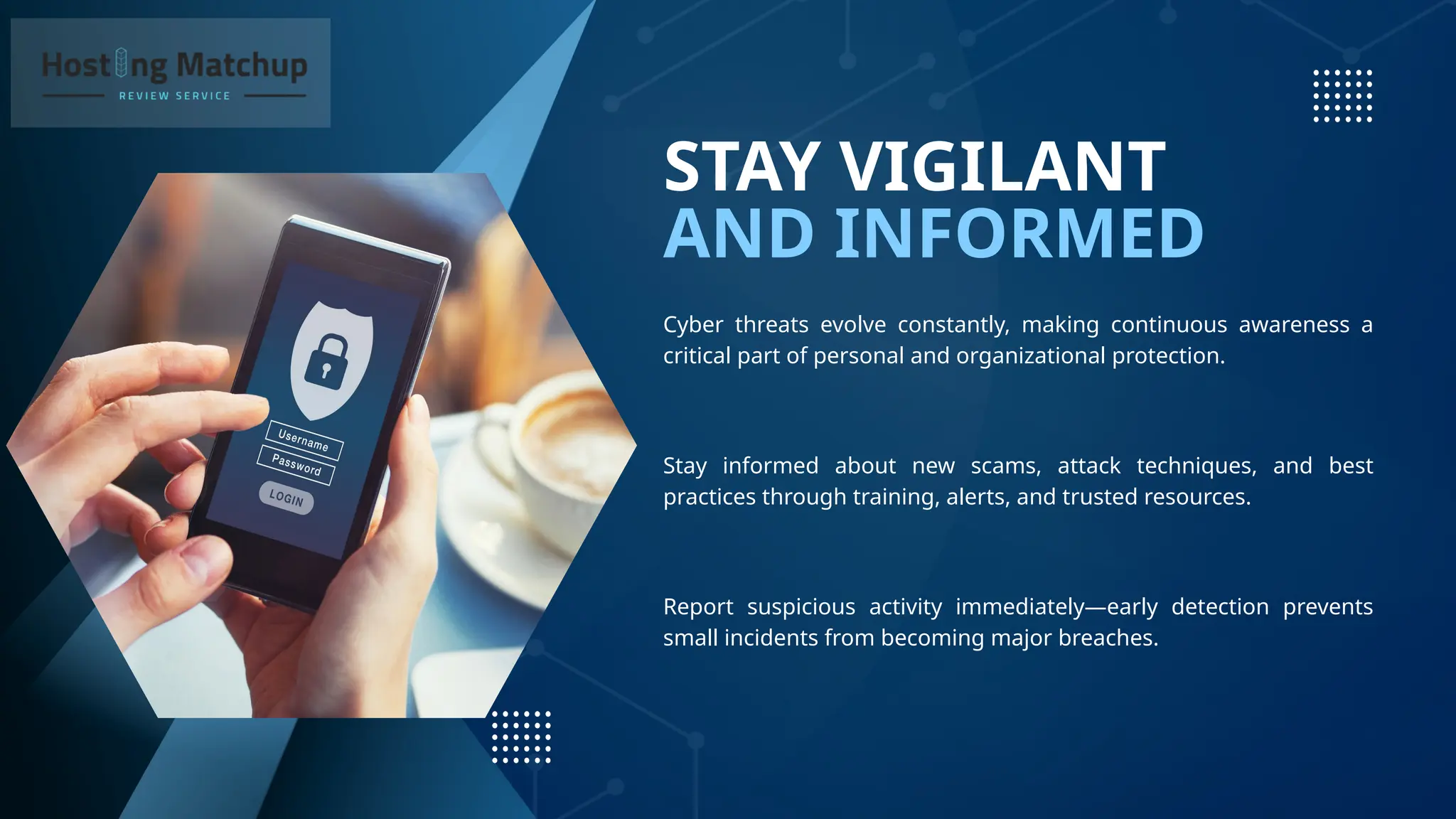
Cyber threats evolve constantly, making continuous awareness a
critical part of personal and organizational protection.
Stay informed about new scams, attack techniques, and best
practices through training, alerts, and trusted resources.
Report suspicious activity immediately—early detection prevents
small incidents from becoming major breaches.
THANK YOU
FOR YOUR
ATTENTION
Cybersecurity starts with
awareness. Your everyday actions
help build a safer digital world.
yasir.naveed@gmail.com
www.hostingmatchup.com

Cybersecurity Best Practices - Step by Step guidelines

  • 1.
    CYBERSECURITY BEST PRACTICES Empowering SafeDigital Practices for a Secure Future. www.hostingmatchup,co m Yasir Naveed Riaz
  • 2.
    WHY CYBERSECURITY MATTERS Cyber threatsare more sophisticated than ever, targeting individuals, businesses, and critical services. With increased dependence on digital tools and cloud platforms, a single vulnerability can lead to identity theft, financial loss, or major organizational disruption. Cybersecurity is no longer optional—it is essential for protecting operations, data, and reputations. As attackers use automation and AI to scale their efforts, organizations and individuals must strengthen security awareness and adopt proactive defense measures. Every person plays a role in creating a safer digital environment, and small actions can significantly reduce risk across the entire network.
  • 3.
    & AUTHENTICATION STRONG PASSWORDS Yourpasswords and authentication methods are the first line of defense against cyber intrusions. Strengthening them reduces the risk of unauthorized access, identity theft, and compromised accounts A password manager securely stores all your credentials and generates strong, unique passwords for every service. This prevents reuse and reduces the risk of breaches. MFA adds an extra verification step—such as a code or fingerprint—making it significantly harder for attackers to access your accounts, even if they obtain your password. Use a password manager Enable Multi-Factor Authentication (MFA) Use long, complex passwords including letters, numbers, and symbols. Avoid predictable information like birthdays or names, and never reuse passwords across platforms. Use strong Unique passwords
  • 4.
    UPDATED KEEP SOFTWARE Outdated softwareis one of the most common entry points for attackers. Regular updates patch vulnerabilities and strengthen your defense against emerging threats. Install Updates Promptly Use Supported Software Enable Automatic Updates
  • 5.
    PHISHING ATTACKS BE AWAREOF Phishing is one of the most widespread cyber threats, often disguised as legitimate emails, messages, or websites. Attackers trick users into revealing passwords, financial data, or installing malware. Awareness is the best defense. Always verify sender details, avoid clicking suspicious links, and never share sensitive information through unverified channels. When in doubt, report the message or confirm with the organization directly.
  • 6.
    DEVICES & NETWORK SECUREYOUR Your devices must be protected with strong security settings, antivirus tools, encryption, and screen locks. This ensures that even if a device is lost or compromised, your data remains safe. Secure your home and office networks with strong Wi-Fi passwords, updated routers, and safe configuration practices. Avoid using public Wi-Fi for sensitive activities unless a VPN is enabled.
  • 7.
    SAFE INTERNET HABITS PRACTICE Online safetyrequires consistent awareness and cautious behavior. Adopting good habits reduces your exposure to scams, malware, and data theft. Be cautious online Protect your privacy Think before you click, download, or share. Only use trusted websites and avoid engaging with unknown links or attachments. Review privacy settings, limit personal information shared online, and use secure communication channels to safeguard sensitive data.
  • 8.
    CYBERSECURITY IN THE WORKPLACE Organizationsoperate in complex digital environments where a single security slip can disrupt operations or expose sensitive information. Employees must understand their role in maintaining cyber hygiene through secure behavior, awareness, and adherence to internal processes. A strong cybersecurity culture reduces risk and strengthens organizational resilience. Follow Organizational Policies Limit Access and Stay Trained
  • 9.
    AND INFORMED STAY VIGILANT Cyberthreats evolve constantly, making continuous awareness a critical part of personal and organizational protection. Stay informed about new scams, attack techniques, and best practices through training, alerts, and trusted resources. Report suspicious activity immediately—early detection prevents small incidents from becoming major breaches.
  • 10.
    THANK YOU FOR YOUR ATTENTION Cybersecuritystarts with awareness. Your everyday actions help build a safer digital world. yasir.naveed@gmail.com www.hostingmatchup.com