Component Based 
Development 
Ben McCormick 
Software Developer at Windsor Circle 
Twitter: @ben336 
benmccormick.org
So What Is Component Based Development?
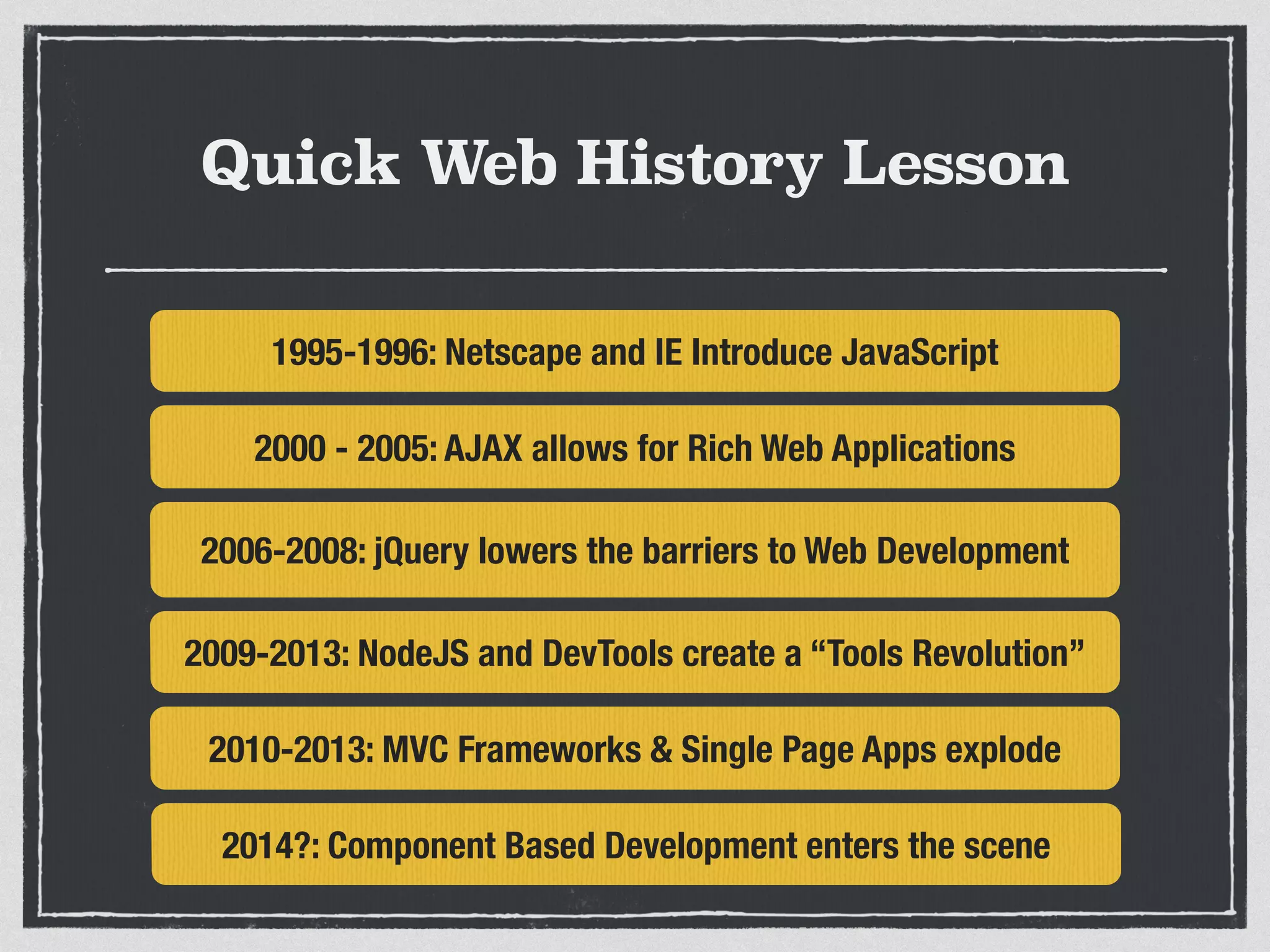
Quick Web History Lesson 
1995-1996: Netscape and IE Introduce JavaScript 
2000 - 2005: AJAX allows for Rich Web Applications 
2006-2008: jQuery lowers the barriers to Web Development 
2009-2013: NodeJS and DevTools create a “Tools Revolution” 
2010-2013: MVC Frameworks & Single Page Apps explode 
2014?: Component Based Development enters the scene
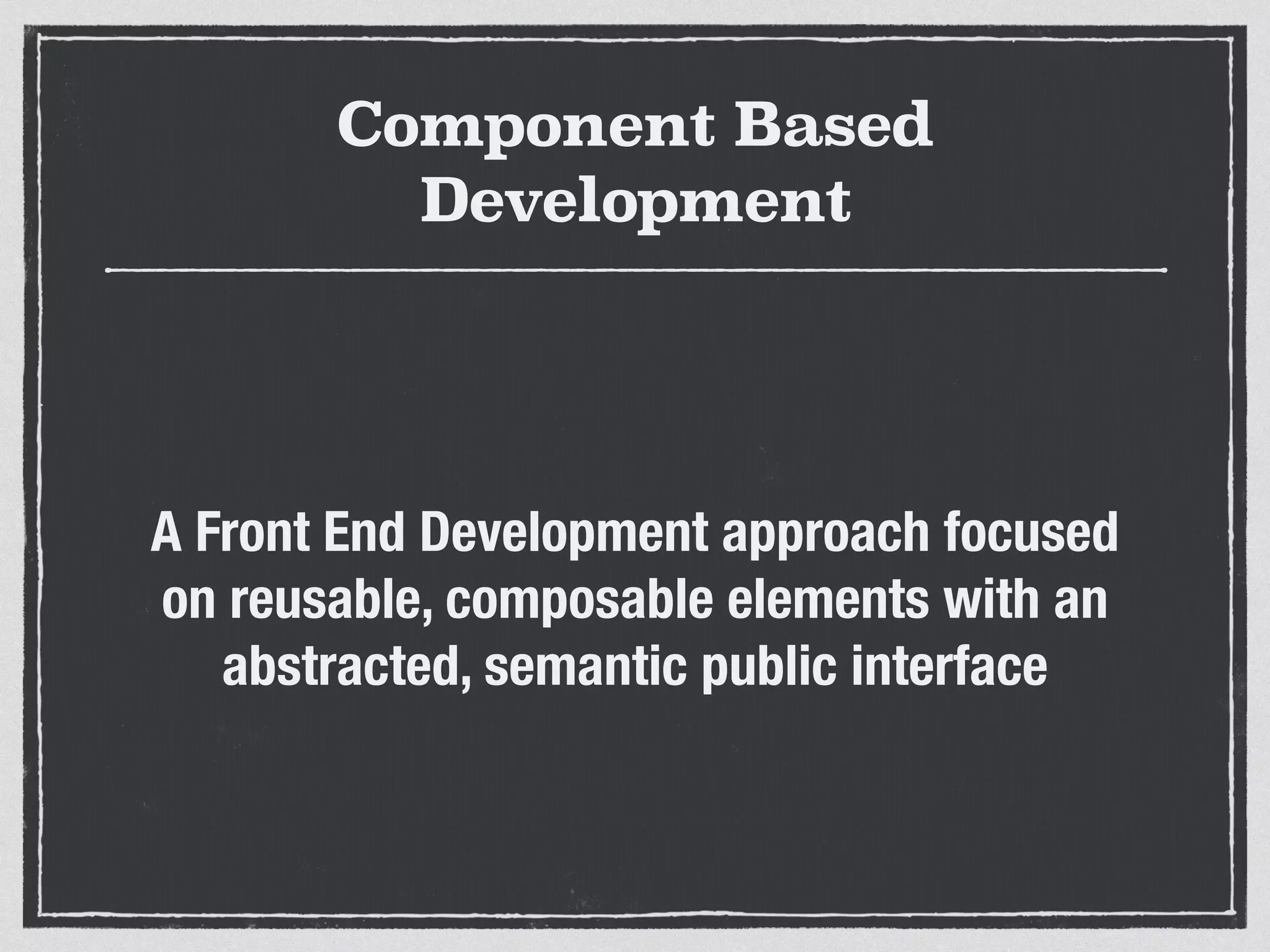
Component Based 
Development 
A Front End Development approach focused 
on reusable, composable elements with an 
abstracted, semantic public interface
Component Based 
Development 
Reusable 
Composable 
Abstracted 
Semantic
Motivation 
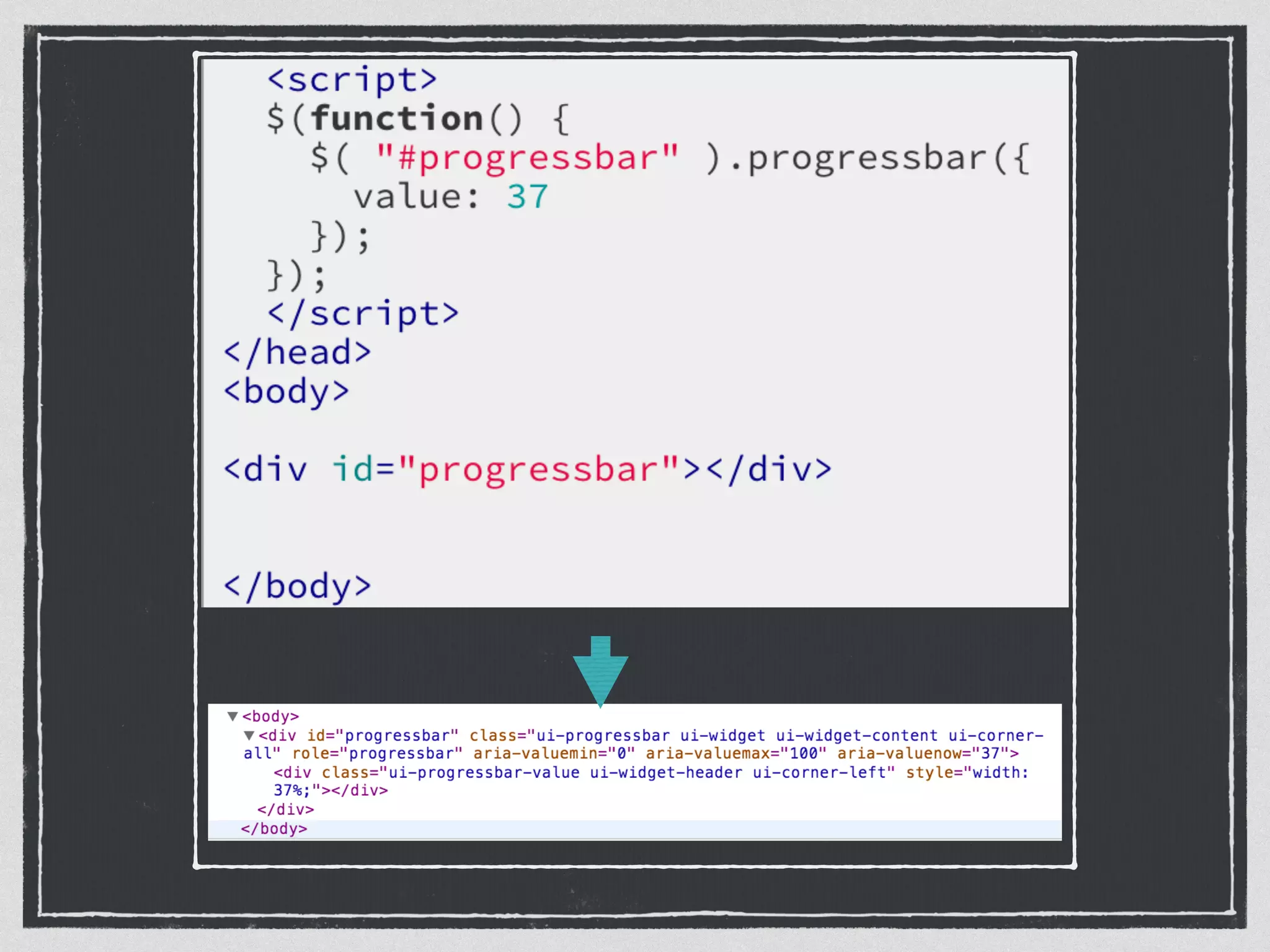
Reusable front-end code is hard 
Single points of truth make development easier 
We’re losing readable markup 
Side Effects make scaling hard
Web Components 
Official W3C Spec 
Complete implementation in Chrome now 
Partial implementation in Firefox
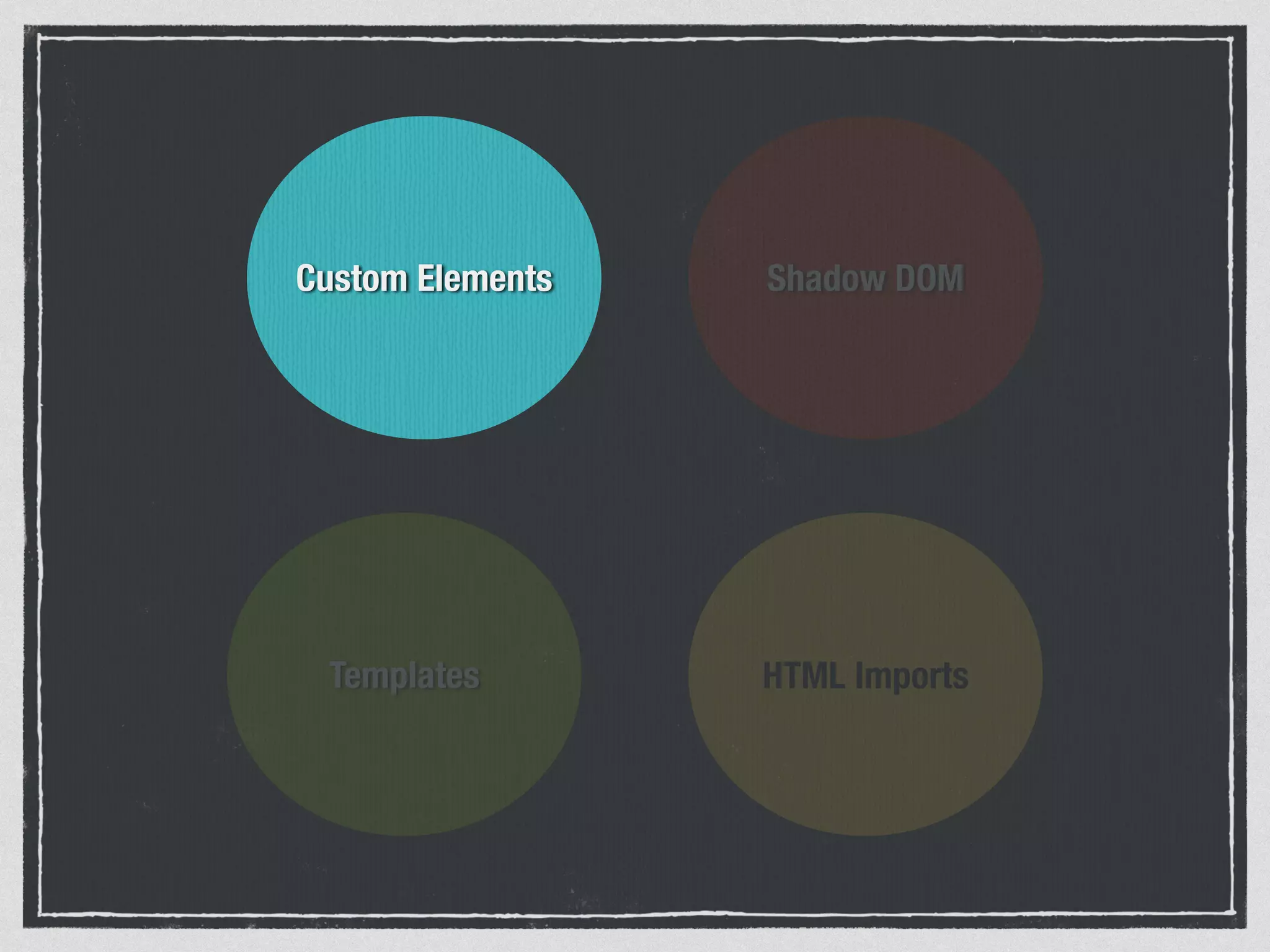
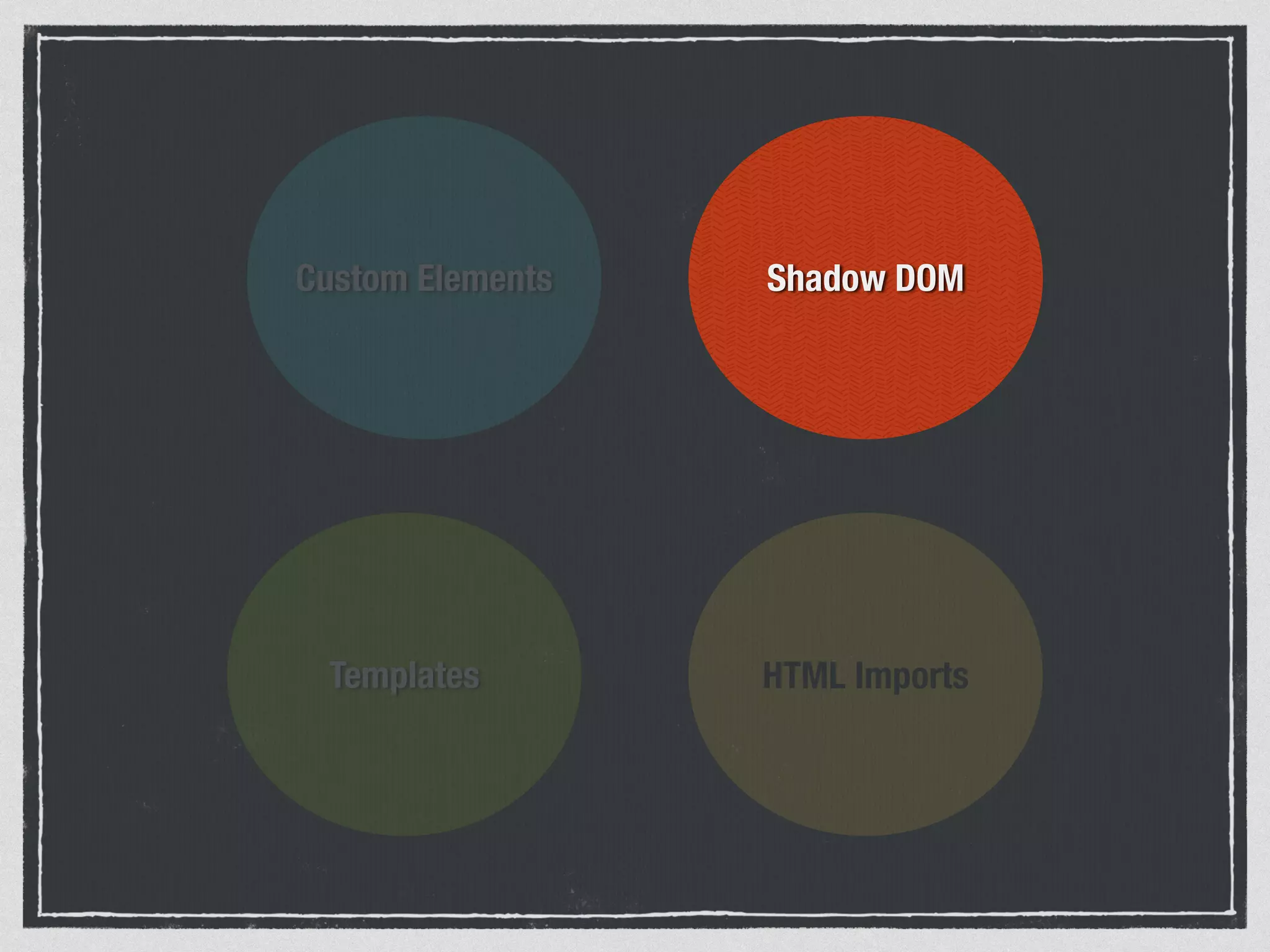
Custom Elements 
Shadow DOM 
Templates HTML Imports
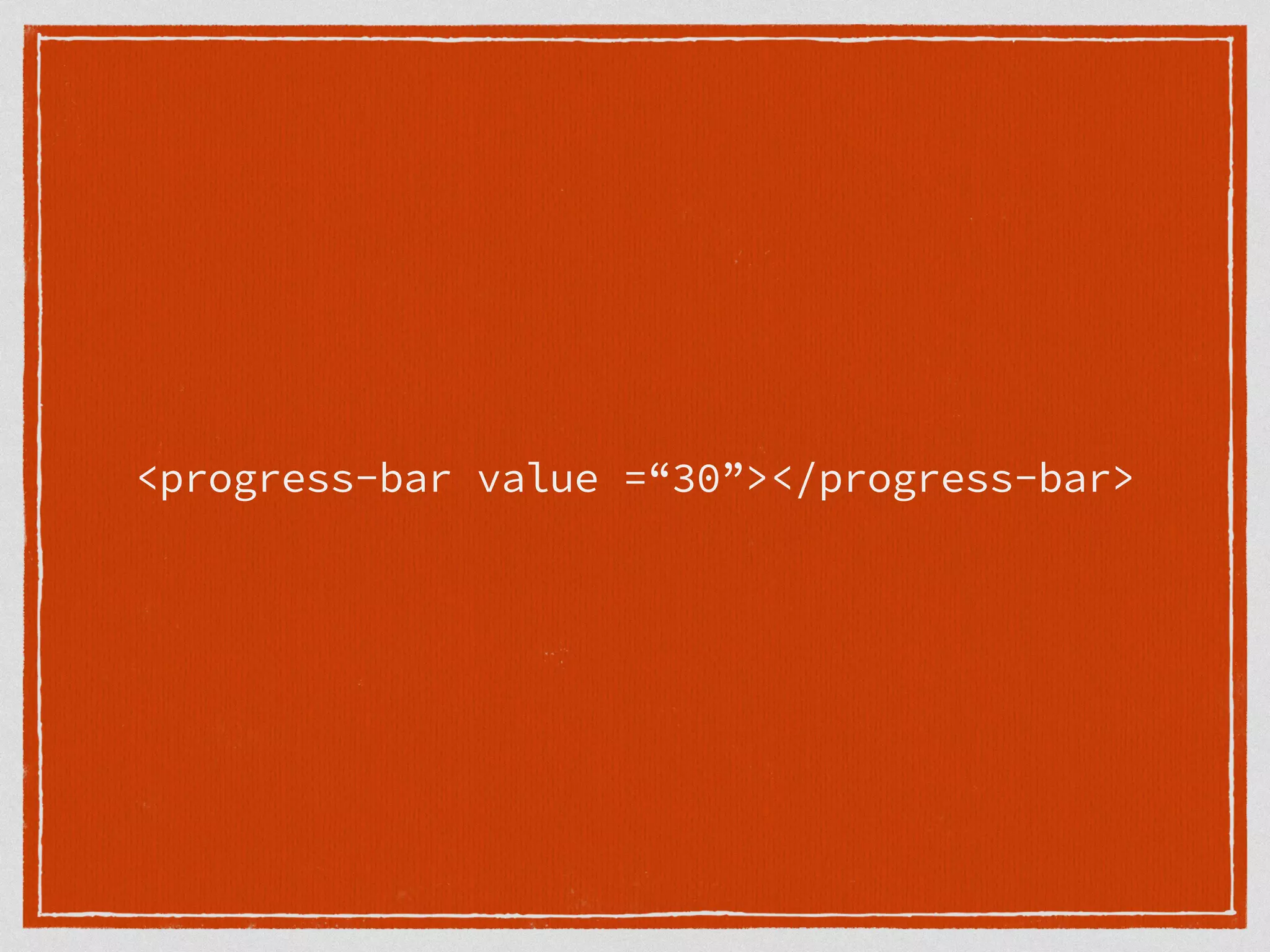
<progress-bar value =“30”></progress-bar>
Custom Elements 
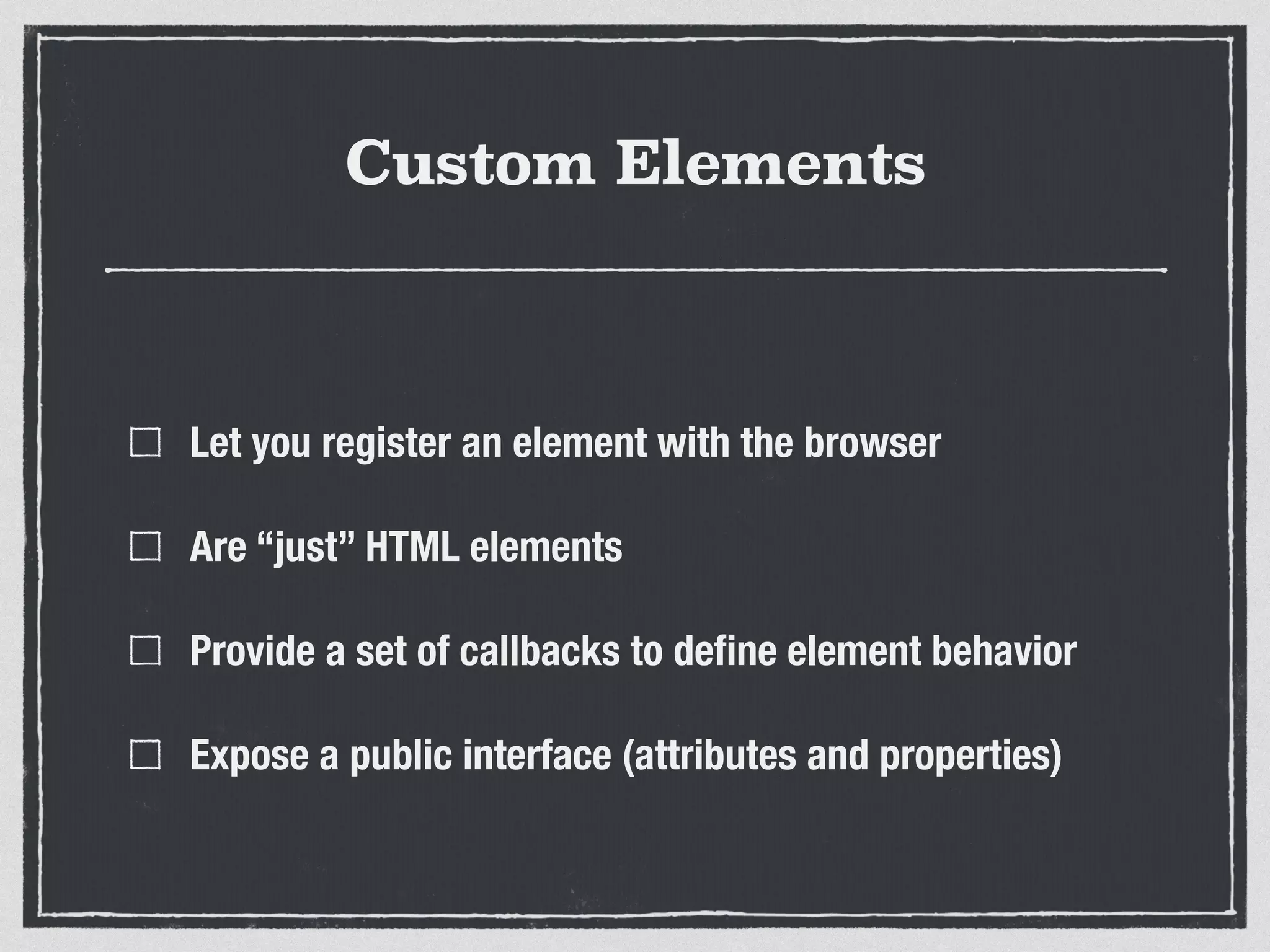
Let you register an element with the browser 
Are “just” HTML elements 
Provide a set of callbacks to define element behavior 
Expose a public interface (attributes and properties)
Custom Element Life-Cycle 
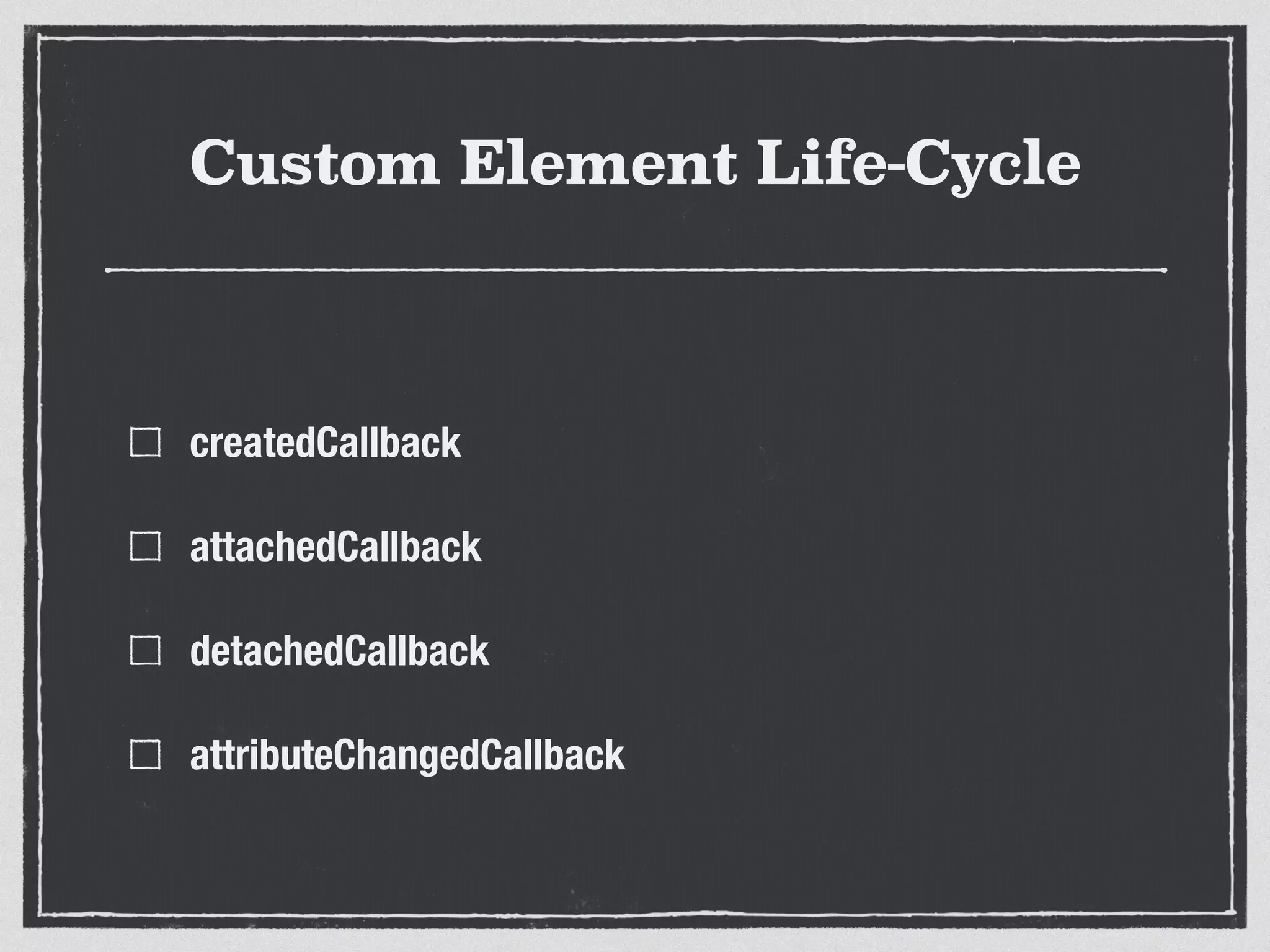
createdCallback 
attachedCallback 
detachedCallback 
attributeChangedCallback
Custom Elements 
Shadow DOM 
Templates HTML Imports
Shadow DOM 
Provides Encapsulation of styles and selectors 
Prevents naming conflicts and related errors 
Can be overridden when necessary
Shadow Dom API 
createShadowRoot() 
::shadow 
<content></content>
Custom Elements 
Shadow DOM 
Templates HTML Imports
Templates 
As Simple as <template></template> 
Reusable DOM Chunks 
No side effects
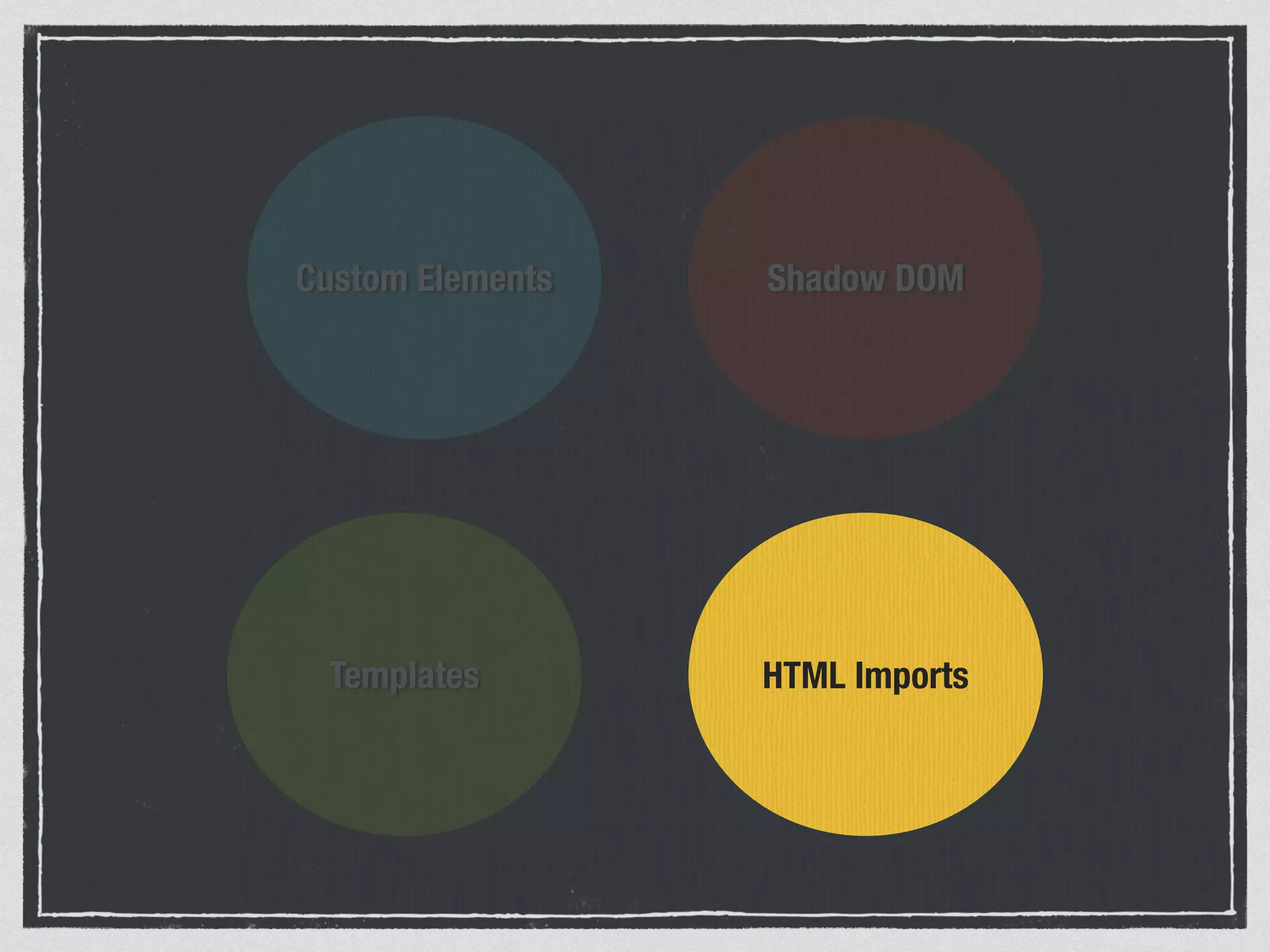
Custom Elements 
Shadow DOM 
Templates HTML Imports
HTML Imports 
<link rel=“import” href=“example.html”> 
Allow you to load HTML like CSS and JS 
Can load chains of resources including scripts and 
styles 
Only parsed once, solving dependency issues
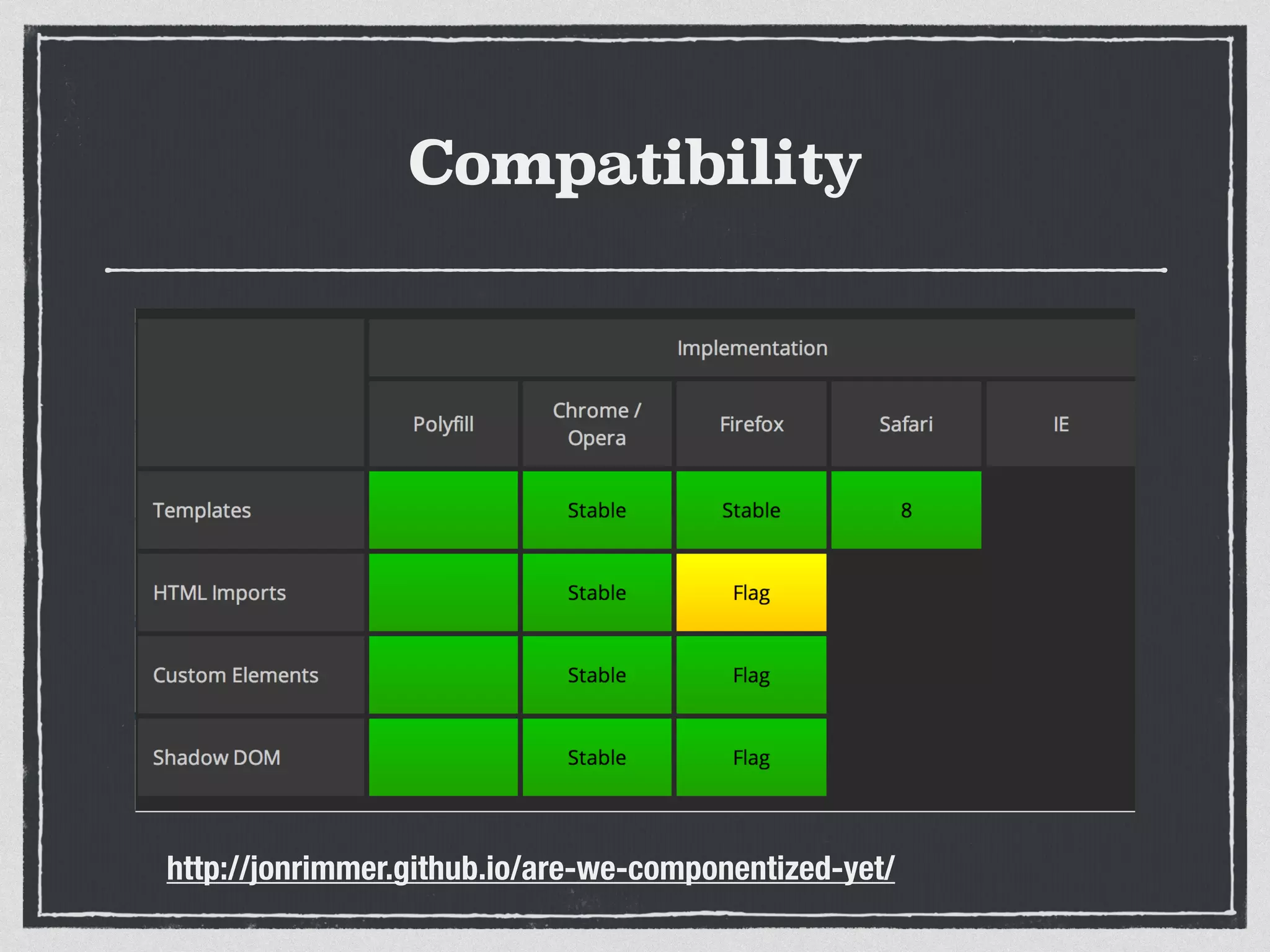
The Bad News
Compatibility 
http://jonrimmer.github.io/are-we-componentized-yet/
The Here And Now
Polymer 
React 
Knockout Ember
Polymer 
Web Components + 
Polyfills for the WC spec 
Also includes helper methods 
and it’s own syntax for creating 
components 
“Everything is an element”
Polymer 
Just Web Components 
Easy transition to the “future” 
Backed by Google 
Polyfills large/incomplete 
Performance is a concern on polyfilled browsers
Polymer 
React 
Knockout Ember
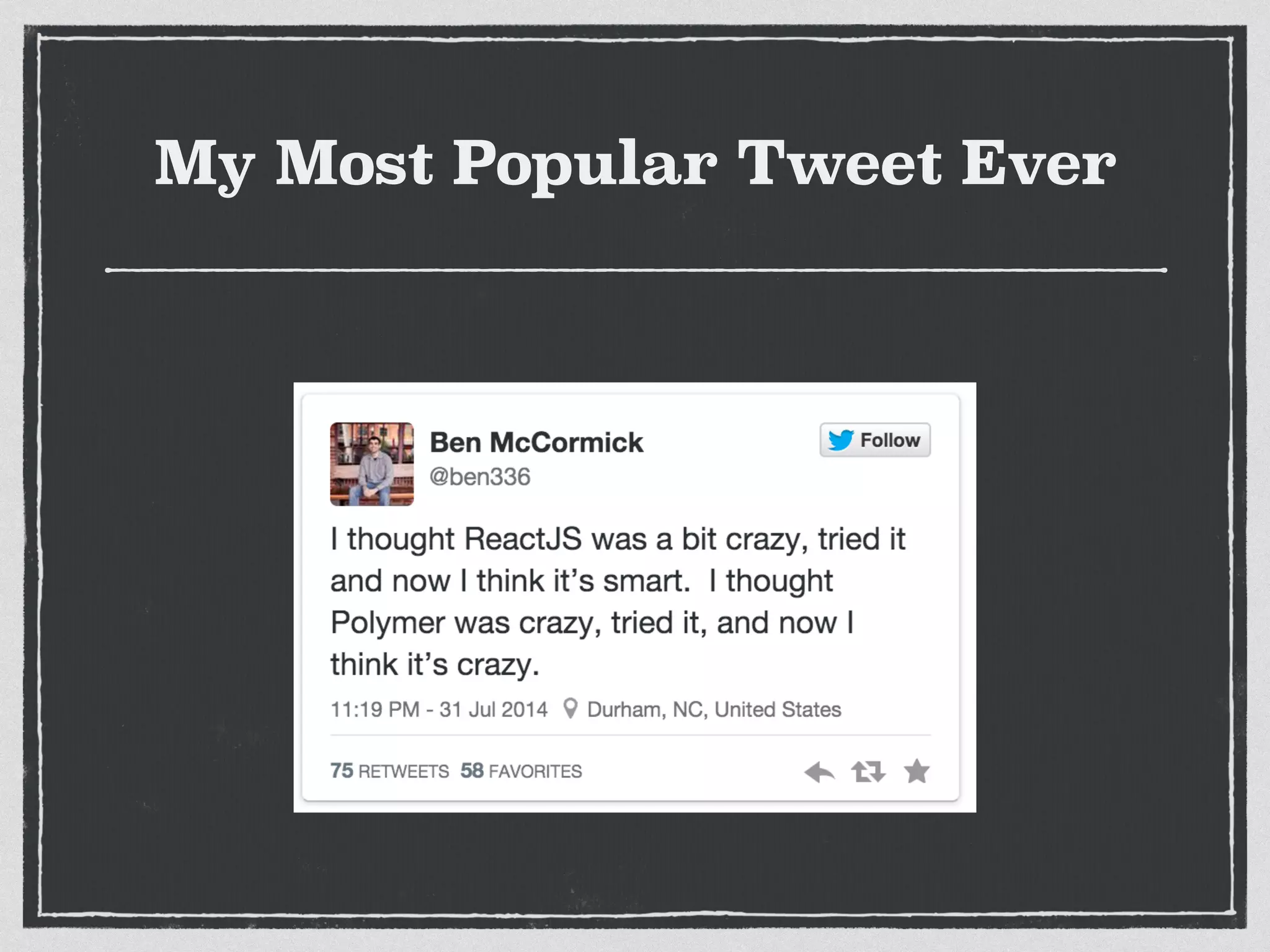
My Most Popular Tweet Ever
React 
An alternative components 
implementation 
Focused on UI (the V in MVC) 
Uses a virtual DOM to track 
changes
React 
Focus on composable components 
Take “state”, produce a section of UI 
Challenges best practices: Combines markup and 
Javascript, rerenders the whole page on each change
Polymer 
React 
Knockout Ember
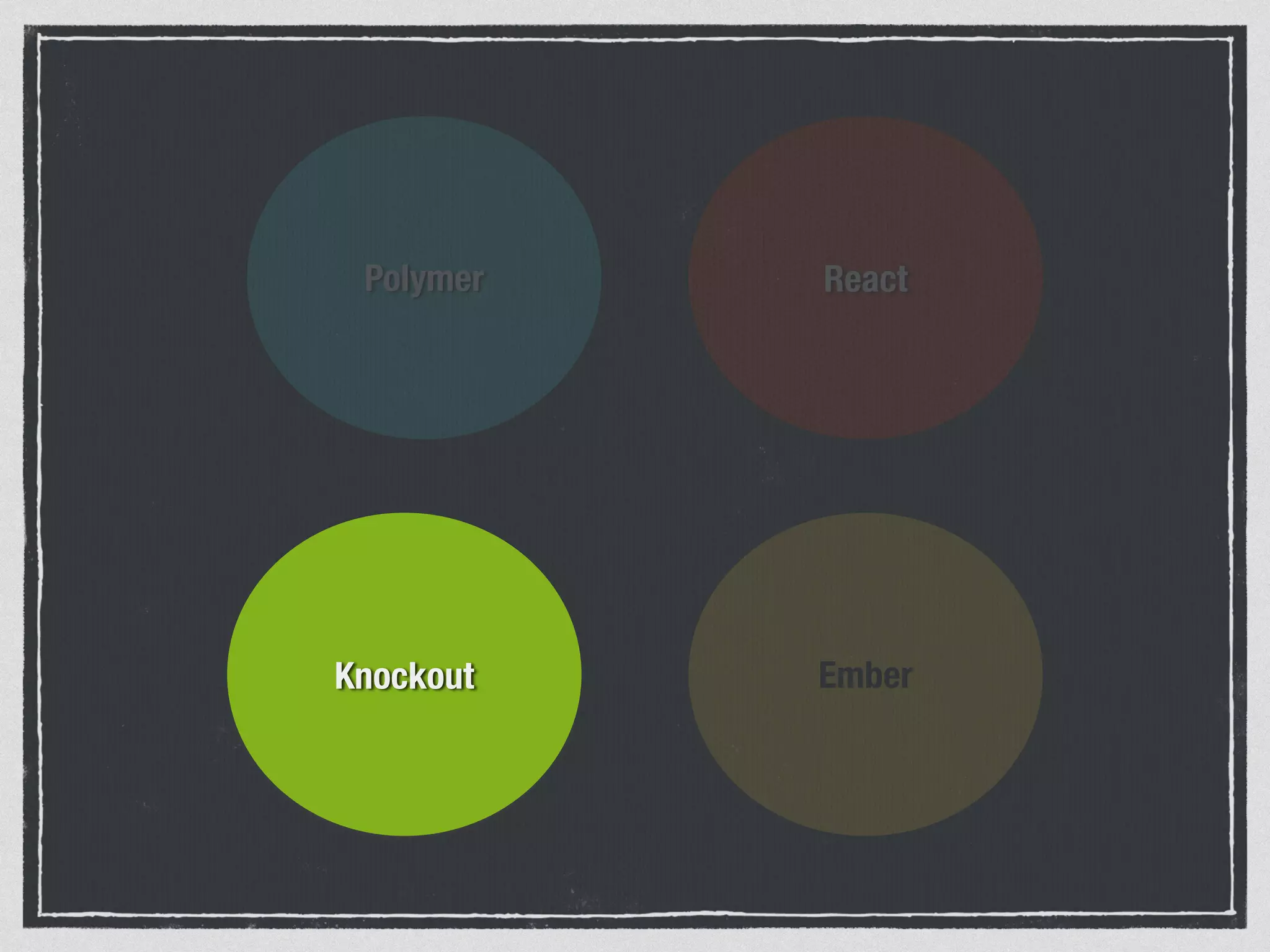
Knockout 
Released in 2010 
Recently added components as 
a recommended development 
style 
Inspired by, but not strictly 
following Web Component 
Syntax
Polymer 
React 
Knockout Ember
Ember 
Released in 2011 
Provide a Web Component-like 
API based on Handlebars 
Meant to ease the transition to 
Web Components in the future.
Component Based 
Development Today 
Component Libraries like React and Polymer 
Component Influenced Libraries like Knockout and 
Ember 
Polyfills to use Web Components in today’s browsers
Component Based 
Development Tomorrow 
Web Components 
3rd Party Libraries
Possibilities 
Truly Reusable Code 
Readable, Meaningful Markup 
Simple to use widgets without side-effects
Thank You 
Ben McCormick 
Windsor Circle 
@ben336 
benmccormick.org

Component Based Development