Chapter 1A Geographer’s World
Section 1Studying Geography
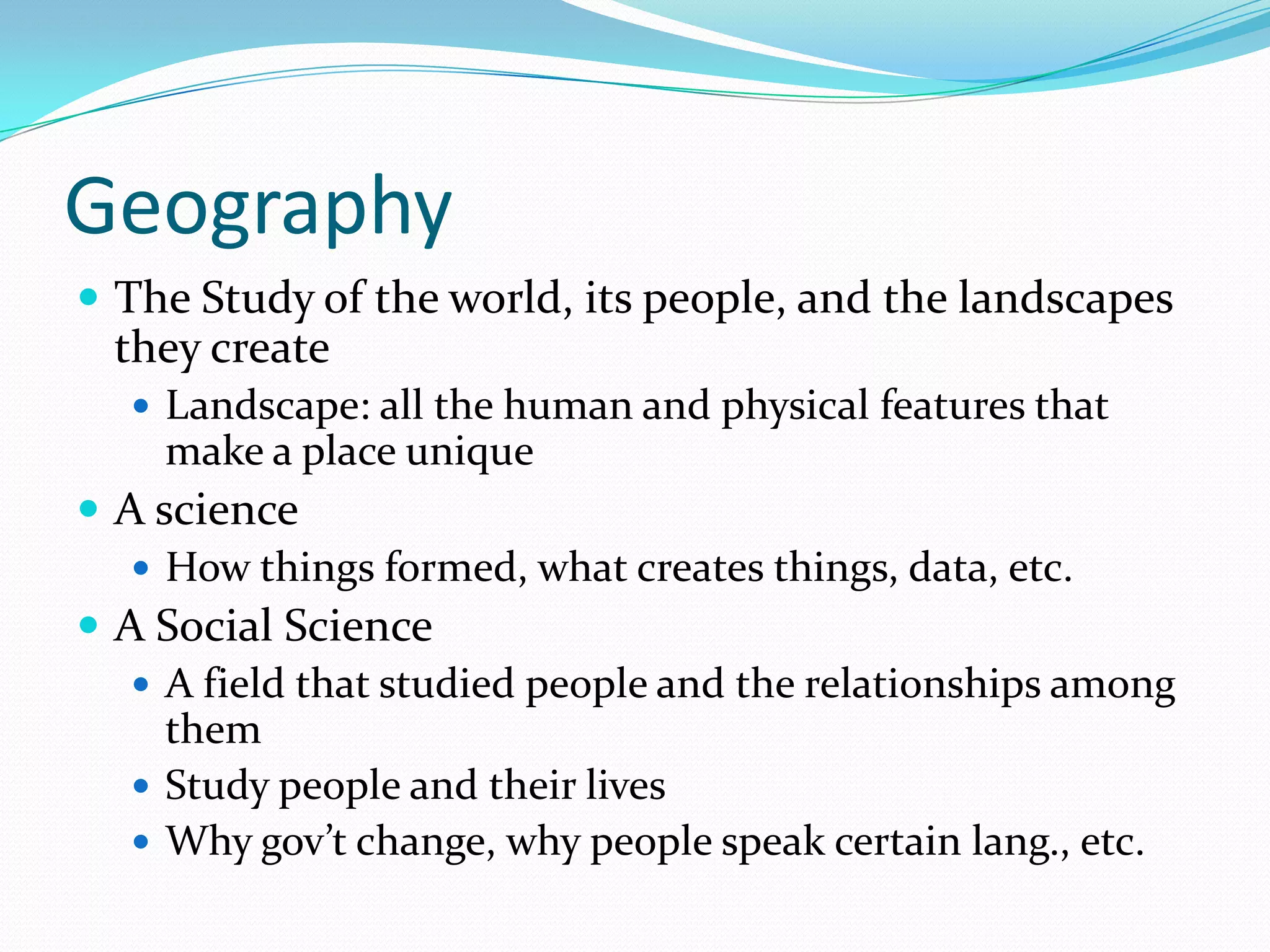
GeographyThe Study of the world, its people, and the landscapes they createLandscape: all the human and physical features that make a place uniqueA scienceHow things formed, what creates things, data, etc.A Social ScienceA field that studied people and the relationships among themStudy people and their livesWhy gov’t change, why people speak certain lang., etc.
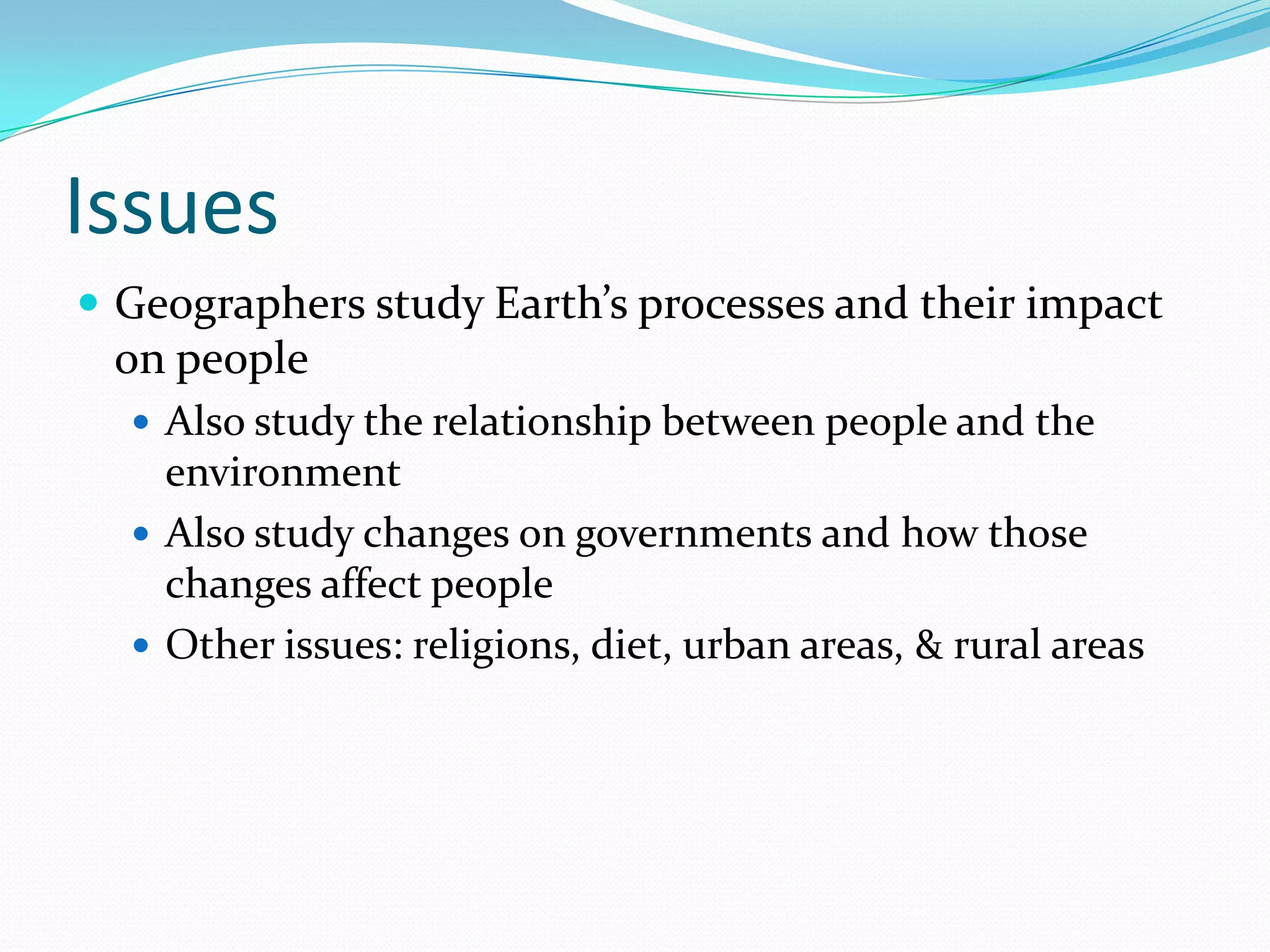
IssuesGeographers study Earth’s processes and their impact on peopleAlso study the relationship between people and the environmentAlso study changes on governments and how those changes affect peopleOther issues: religions, diet, urban areas, & rural areas
Local, Regional, & Global Geographic StudiesLocal: close-up study of community can help you learn geography.  Knowing where homes and stores are, and how to find parks, ball fields, and other fun places.  Change within your community takes place.Regional: organize the world into convenient parts.  Cover larger areas than local studies.  Some regional studies may look at connections like highways and rivers or regional customs.Have one or more common feature that distinguish it from surrounding areasGlobal: study of global issues and the connections between events.
The Geographer’s ToolsMaps and GlobesMap: flat drawing that shows all or part of Earth’s surfaceGlobe: a spherical, or ball-shaped, model of the entire planetSimilarities:Show what world looks likeShow where things are locatedId and describe countries and major citiesDifferences:Globe shows earth as it really is, map can notMaps are easier to work withMaps show more information than globesMaps can show additional information related to places
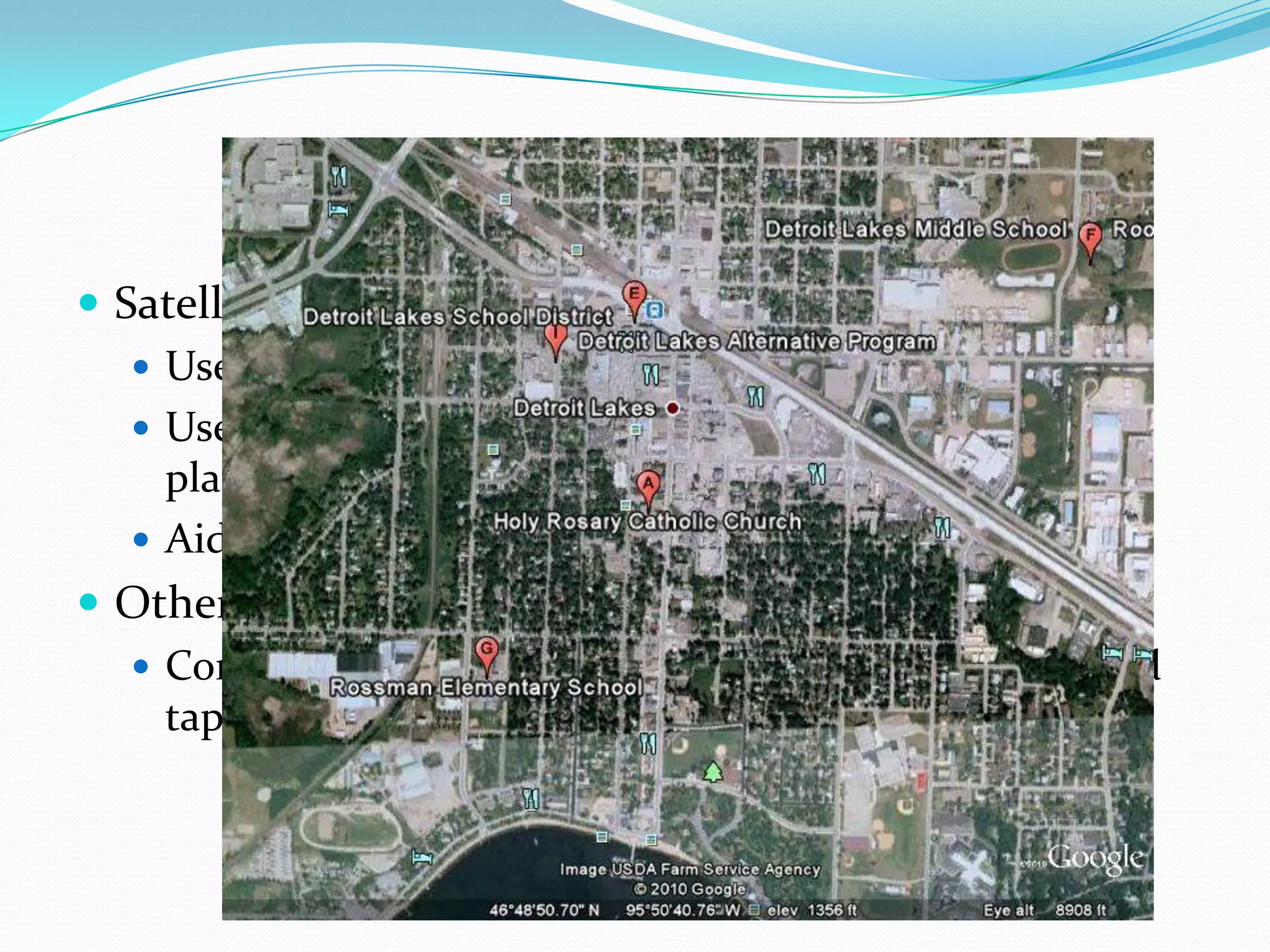
Satellite Images:Used to see what an area looks like from above EarthUsed to collect information that we cannot see from planet’s surfaceAids in the creation of accurate mapsOther tools:Computer programs, measuring devices, notebook and tape recorder

Chapter 1section1

  • 1.
  • 2.
  • 3.
    GeographyThe Study ofthe world, its people, and the landscapes they createLandscape: all the human and physical features that make a place uniqueA scienceHow things formed, what creates things, data, etc.A Social ScienceA field that studied people and the relationships among themStudy people and their livesWhy gov’t change, why people speak certain lang., etc.
  • 4.
    IssuesGeographers study Earth’sprocesses and their impact on peopleAlso study the relationship between people and the environmentAlso study changes on governments and how those changes affect peopleOther issues: religions, diet, urban areas, & rural areas
  • 5.
    Local, Regional, &Global Geographic StudiesLocal: close-up study of community can help you learn geography. Knowing where homes and stores are, and how to find parks, ball fields, and other fun places. Change within your community takes place.Regional: organize the world into convenient parts. Cover larger areas than local studies. Some regional studies may look at connections like highways and rivers or regional customs.Have one or more common feature that distinguish it from surrounding areasGlobal: study of global issues and the connections between events.
  • 6.
    The Geographer’s ToolsMapsand GlobesMap: flat drawing that shows all or part of Earth’s surfaceGlobe: a spherical, or ball-shaped, model of the entire planetSimilarities:Show what world looks likeShow where things are locatedId and describe countries and major citiesDifferences:Globe shows earth as it really is, map can notMaps are easier to work withMaps show more information than globesMaps can show additional information related to places
  • 7.
    Satellite Images:Used tosee what an area looks like from above EarthUsed to collect information that we cannot see from planet’s surfaceAids in the creation of accurate mapsOther tools:Computer programs, measuring devices, notebook and tape recorder