5.1 Organization AnOverview
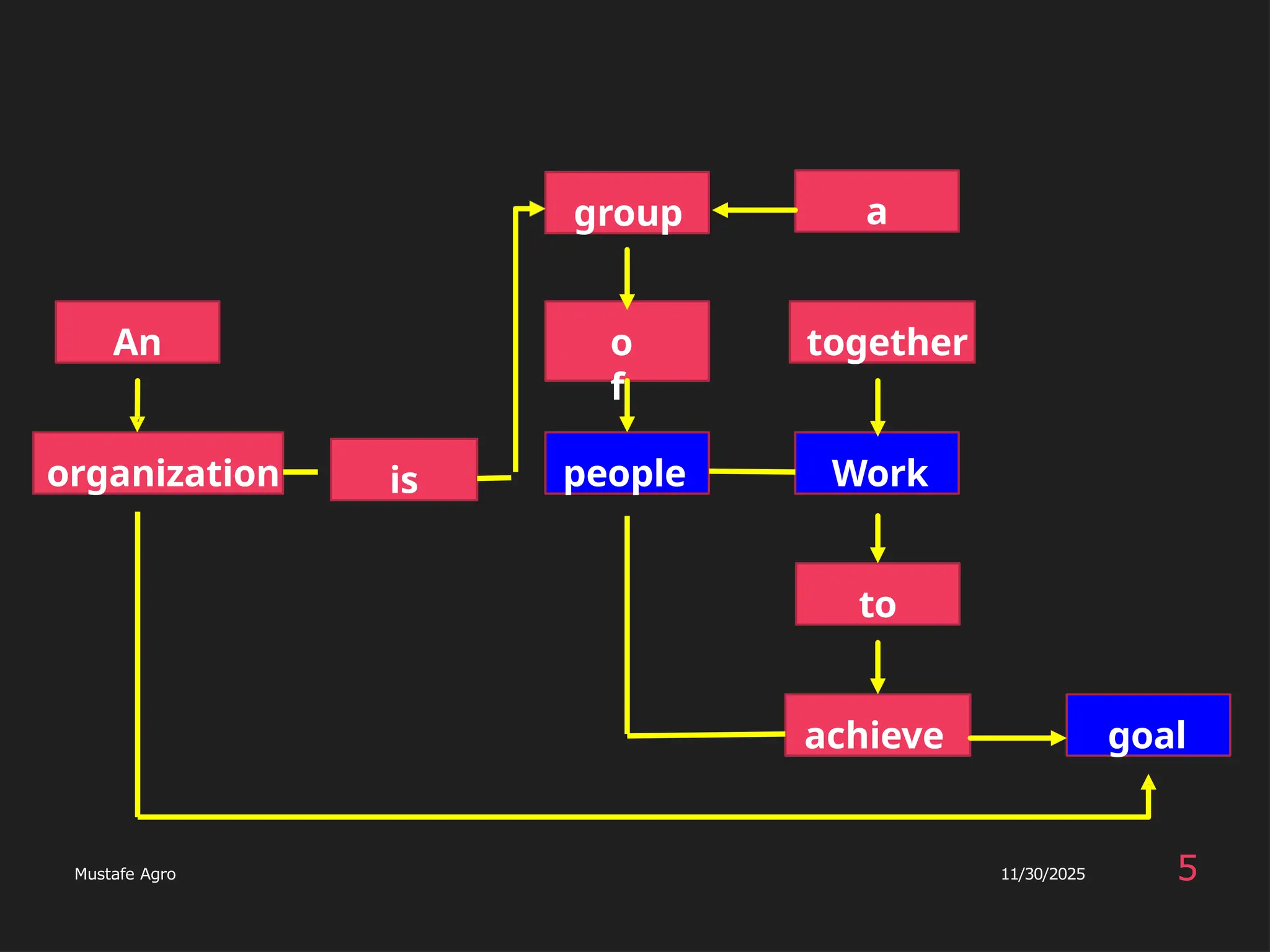
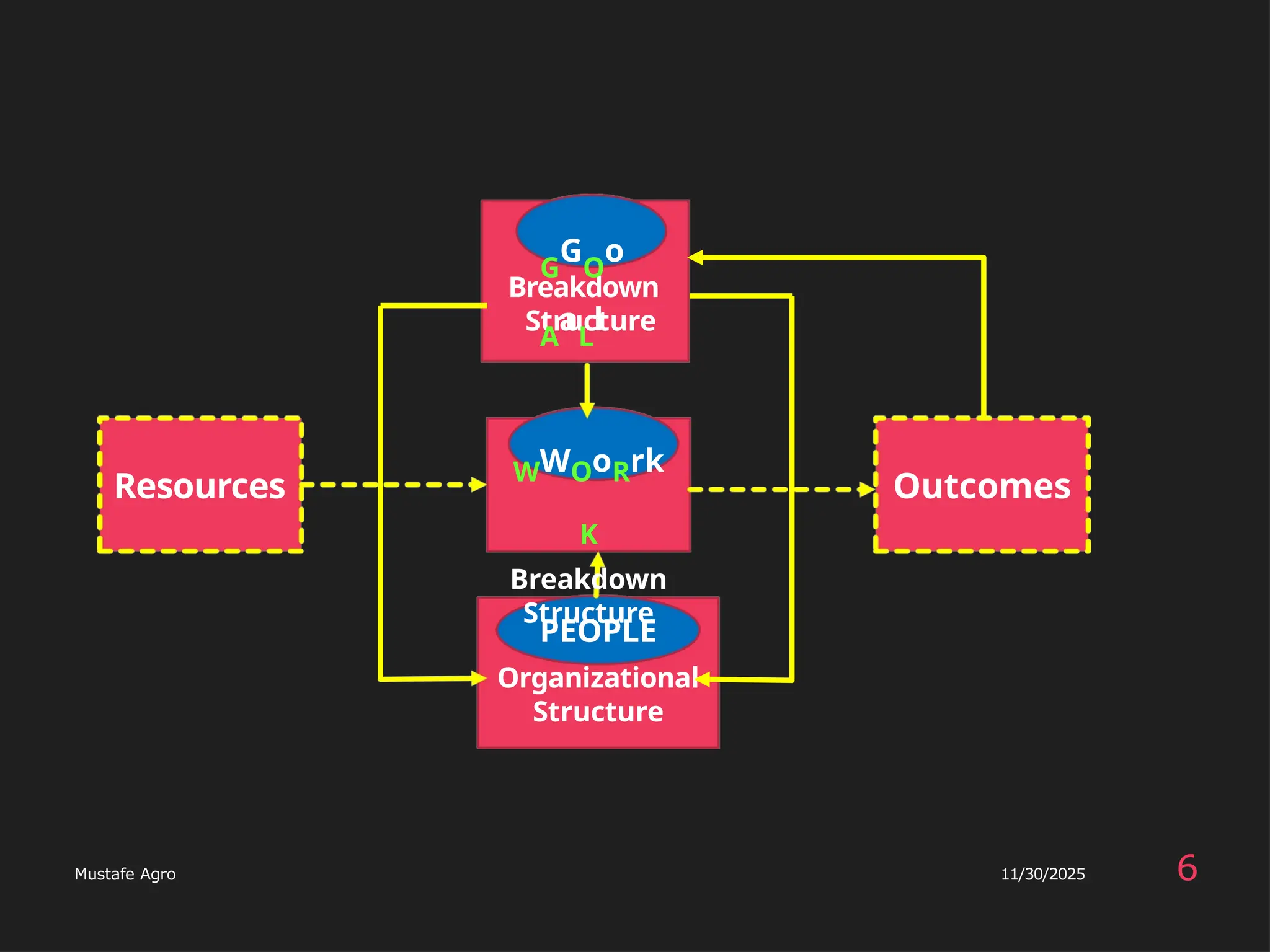
In project management,
organization means arranging people,
resources, and tasks in a clear way so
the project runs smoothly. It shows who
does what, how decisions are made,
and how the team works together to
achieve the project goals (PMI, 2021).
2
Mustafe Agro 11/30/2025
3.
Organizational Capacity
Definition
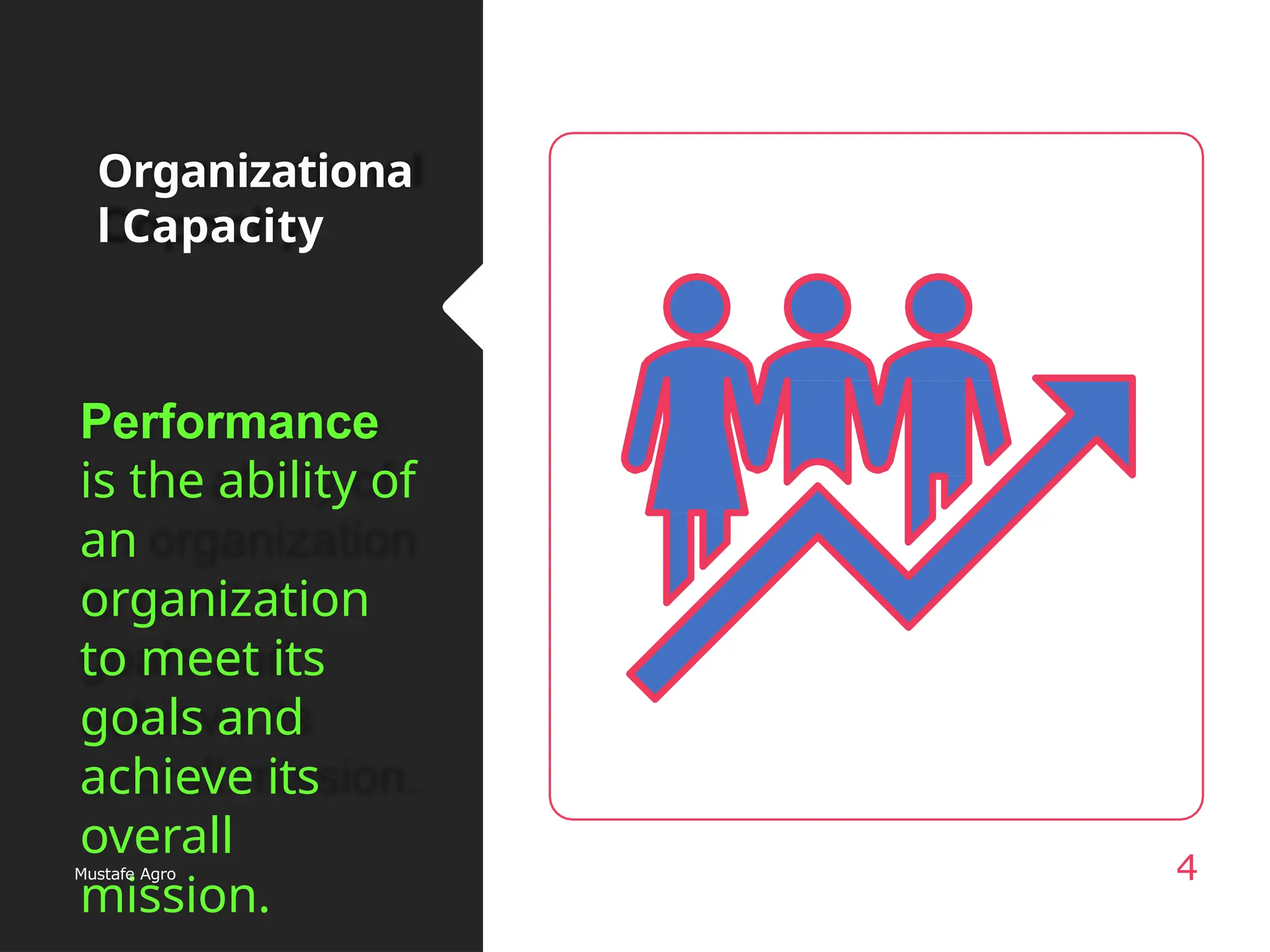
🞅Organizational capacityis “the ability of
an organization to fulfill its mission through
sound management, strong governance,
and a persistent rededication to assessing
and achieving results.”
3
Mustafe Agro 11/30/2025
5.1.1 Line andStaff Organization
7
Mustafe Agro 11/30/2025
A line and staff organization is a structure where line
managers have direct authority to make decisions,
while staff members provide advice and support to help
them. Line handles the main work, and staff offers
expert guidance to improve decisions (Kerzner, 2017).
8.
5.1.2 Divisional Organization
8
MustafeAgro 11/30/2025
A divisional organization is a structure where
the company or project work is divided into
separate units based on products, services,
geography, or customers. Each division
operates like its own small organization with its
own manager, resources, and responsibilities.
This structure makes decision-making faster and
allows each division to focus on its specific
goals (Kerzner
, 2017).
9.
5.1.3 Matrix Organization
project.
MustafeAgro 9
11/30/2025
A matrix organization is a structure where employees
report to two managers at the same time: a functional
manager (in charge of their skills or department) and a
project manager (in charge of the project). This system
allows the organization to share resources and improve
teamwork across departments, but it requires good
communication to avoid confusion (PMI, 2021). For
example, an engineer in a construction company may
report to the Engineering Department Manager and also
work under the Project Manager for a new building
10.
5.2 Project Planning
Projectplanning is the process of defining the project’s
goals, tasks, resources, schedule, and budget before
any work starts. It helps the project manager decide
what needs to be done, who will do it, when it will be
completed, and how much it will cost. Good planning
reduces risks and guides the team throughout the
project (PMI, 2021). For example, if a school wants
to build a new classroom, project planning
includes deciding the design, estimating the
cost, setting the timeline, assigning engineers
and builders, 11/30/2025
anMus
dtafe A
lg
iro
sting all materials
needed.
1
0
11.
5.3 Project Control
1
1
MustafeAgro 11/30/2025
Project control is the process of monitoring the project’s
progress to make sure it stays on schedule, within
budget, and meets the planned quality. It involves
checking the work, comparing actual results with the
plan, and taking action when things go wrong. This
helps the project manager keep the project on track
and avoid delays or extra costs (PMI, 2021). For example,
if a project is supposed to finish a task in two weeks but it
is taking longer, the project manager may add more
workers or adjust the schedule to fix the problem.
12.
5.4 Human Aspectsof Project
Management
performance
.
1
2
Mustafe Agro 11/30/2025
The human aspects of project management focus on
how people behave, communicate, and work together
in a project. It includes understanding teamwork,
motivation, leadership, conflict management, and
communication.
When the project manager understands people’s
needs and behaviors, the team works better, problems
are solved faster, and the project becomes more
successful (Kerzner
, 2017). For example, a project
manager who
listens to team members’ concerns and encourages
cooperation can reduce conflicts and improve team
13.
working
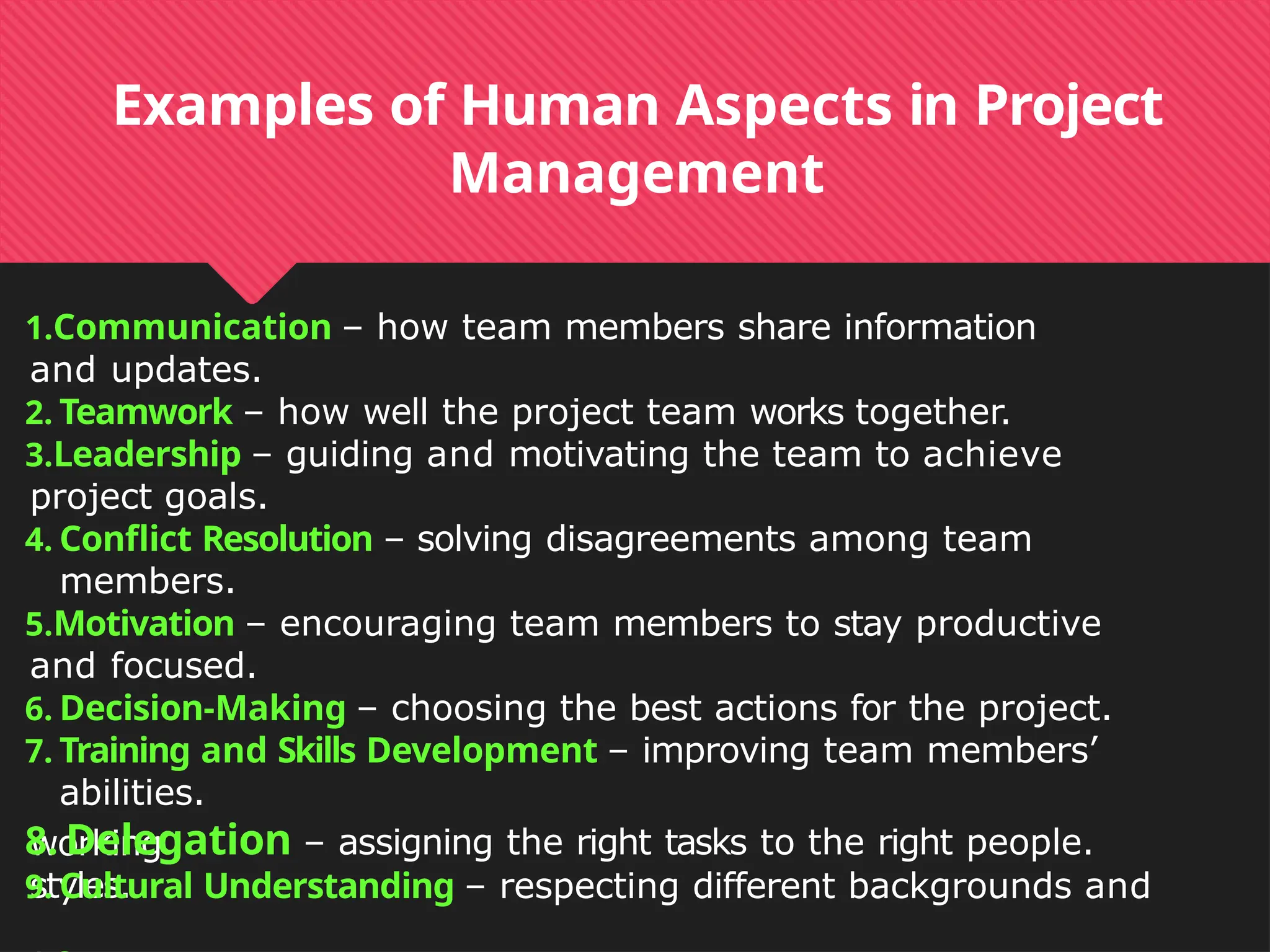
styles.
Examples of HumanAspects in Project
Management
1.Communication – how team members share information
and updates.
2. Teamwork – how well the project team works together.
3.Leadership – guiding and motivating the team to achieve
project goals.
4. Conflict Resolution – solving disagreements among team
members.
5.Motivation – encouraging team members to stay productive
and focused.
6. Decision-Making – choosing the best actions for the project.
7. Training and Skills Development – improving team members’
abilities.
8. Delegation – assigning the right tasks to the right people.
9. Cultural Understanding – respecting different backgrounds and
14.
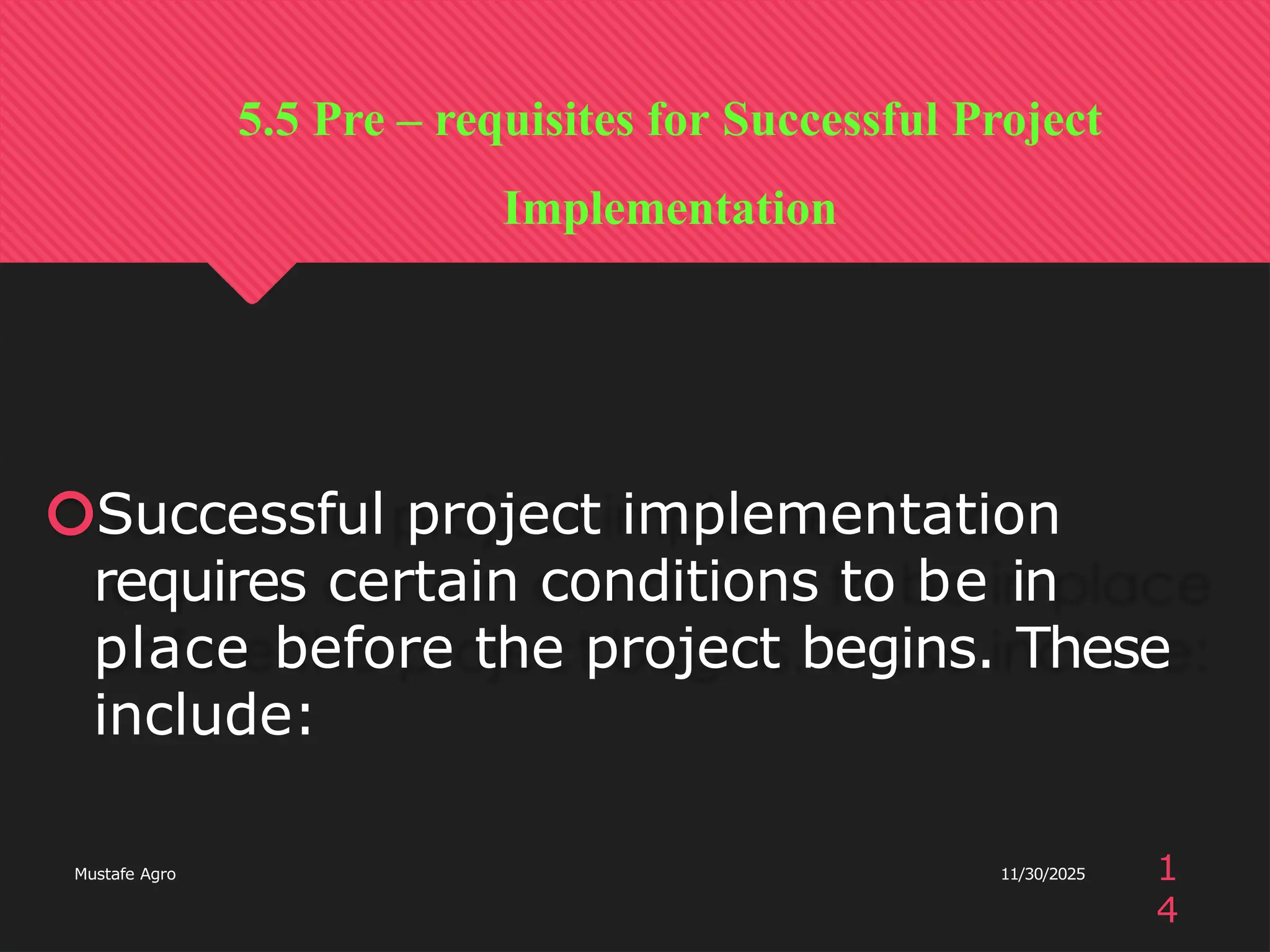
🞅Successful project implementation
requirescertain conditions to be in
place before the project begins. These
include:
5.5 Pre – requisites for Successful Project
Implementation
11/30/2025
Mustafe Agro 1
4
15.
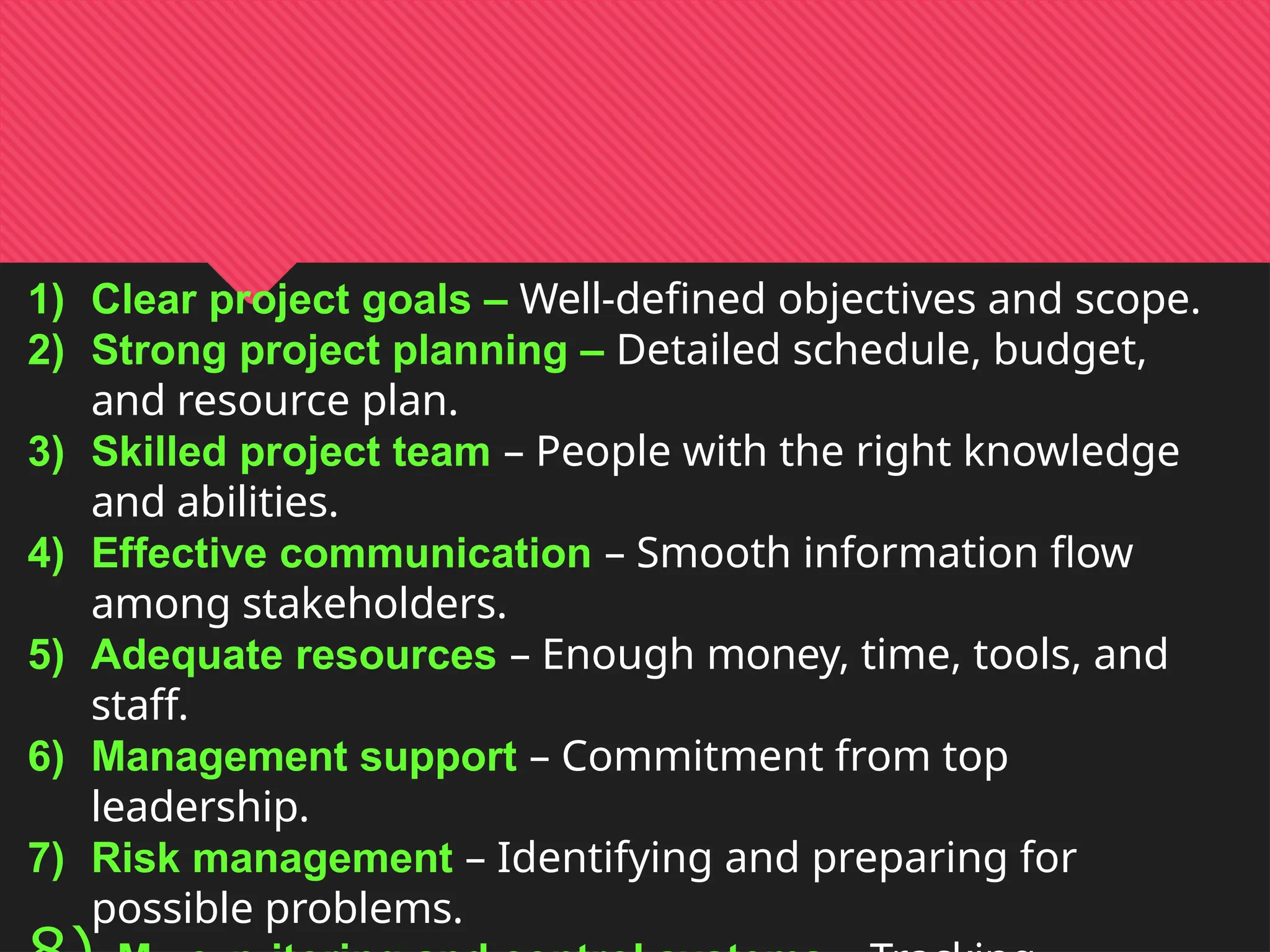
1) Clear projectgoals – Well-defined objectives and scope.
2) Strong project planning – Detailed schedule, budget,
and resource plan.
3) Skilled project team – People with the right knowledge
and abilities.
4) Effective communication – Smooth information flow
among stakeholders.
5) Adequate resources – Enough money, time, tools, and
staff.
6) Management support – Commitment from top
leadership.
7) Risk management – Identifying and preparing for
possible problems.
16.
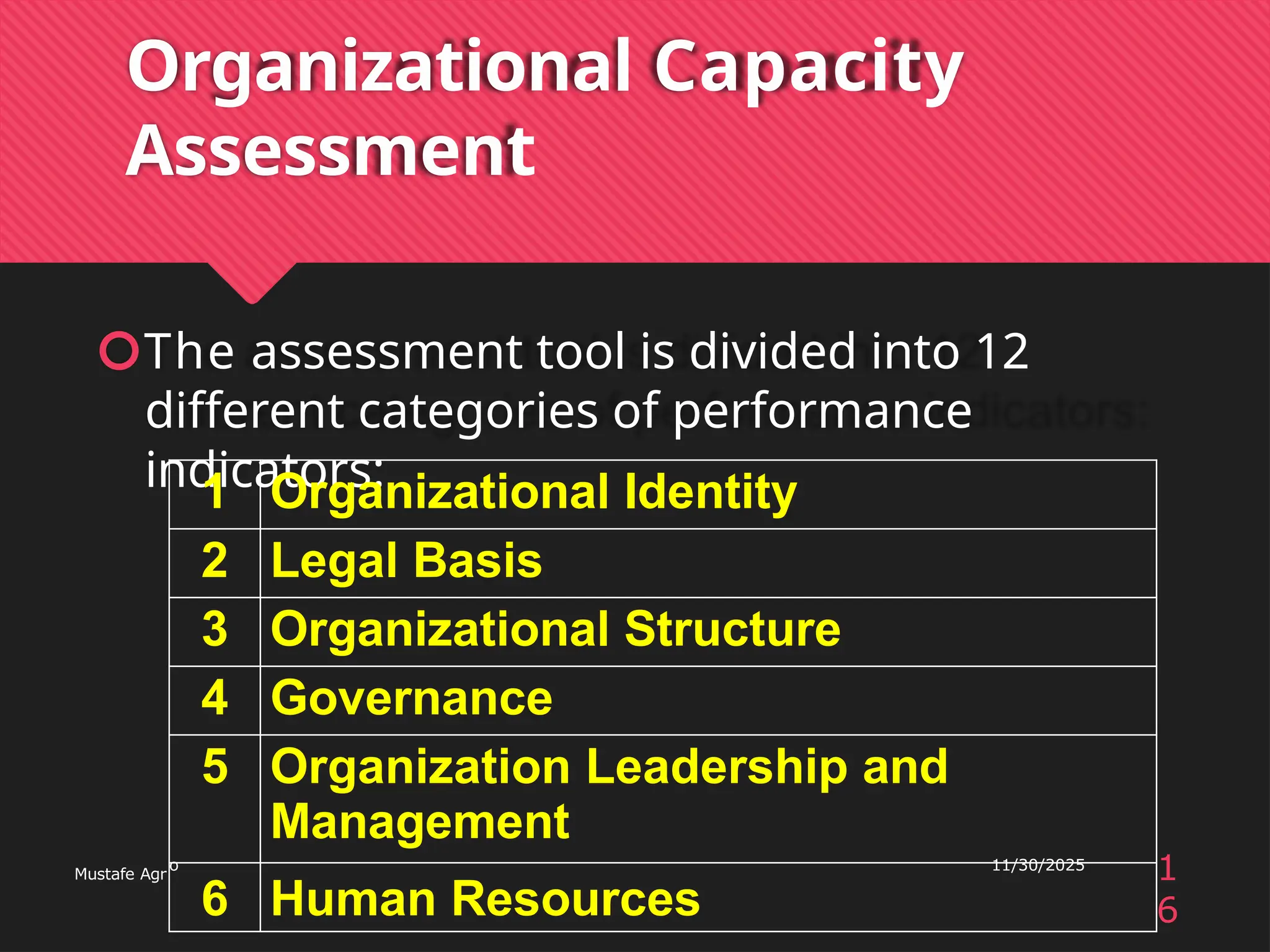
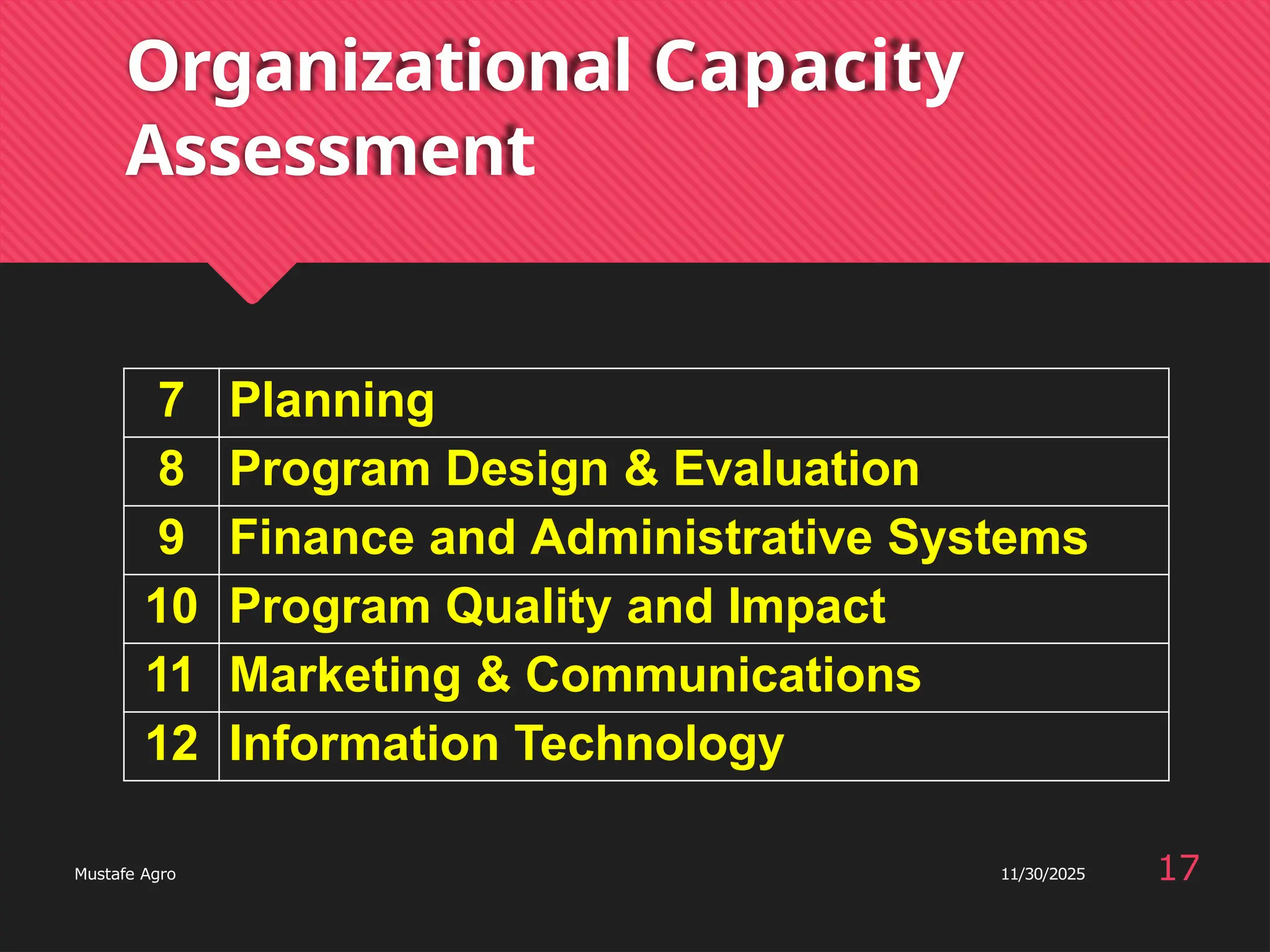
Organizational Capacity
Assessment
🞅The assessmenttool is divided into 12
different categories of performance
indicators:
Mustafe Agr
1 Organizational Identity
2 Legal Basis
3 Organizational Structure
4 Governance
5 Organization Leadership and
Management
o
6
11/30/2025
Human Resources
1
6
17.
Organizational Capacity
Assessment
17
Mustafe Agro11/30/2025
7 Planning
8 Program Design & Evaluation
9 Finance and Administrative Systems
10 Program Quality and Impact
11 Marketing & Communications
12 Information Technology
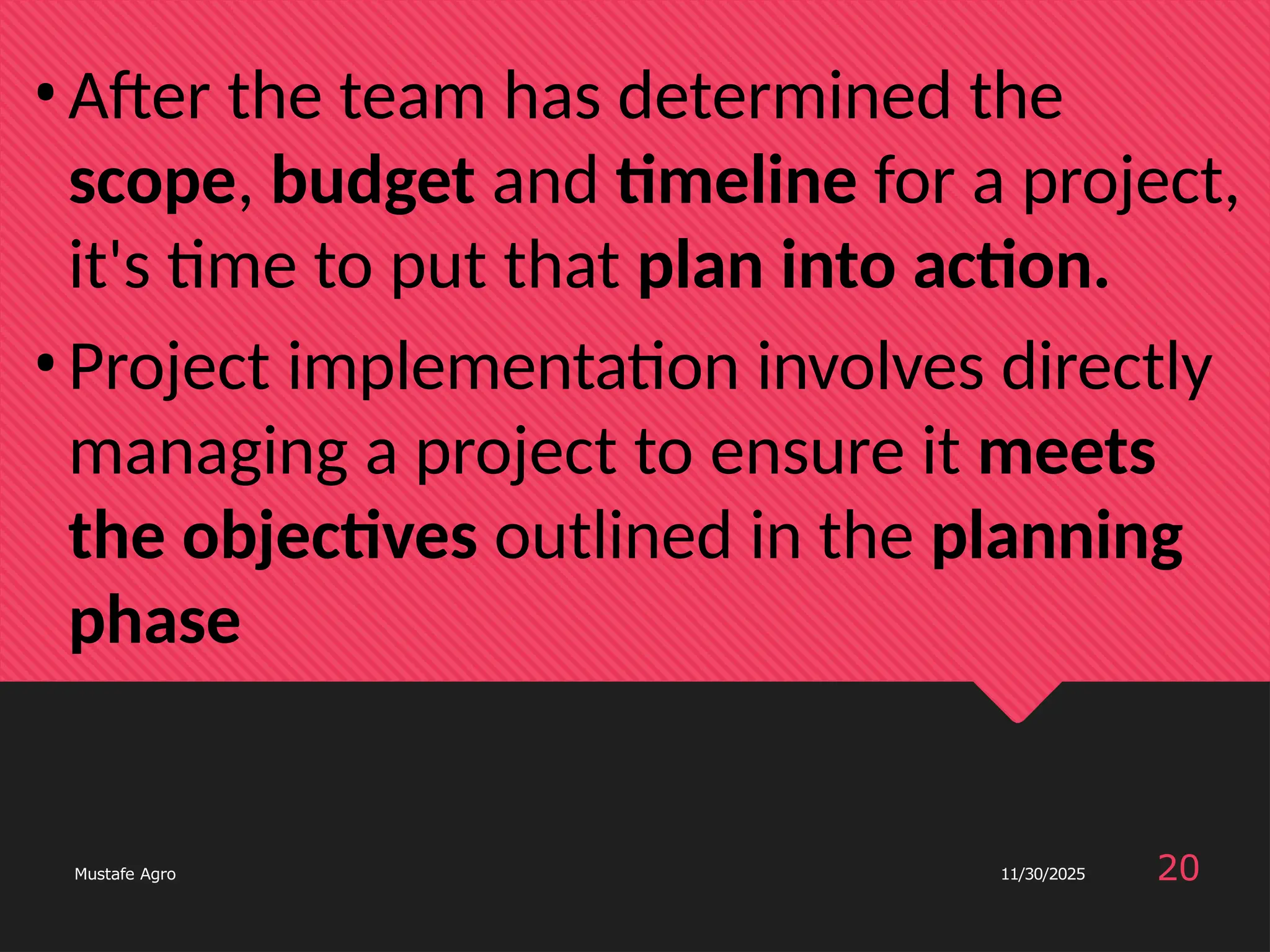
•After the teamhas determined the
scope, budget and timeline for a project,
it's time to put that plan into action.
•Project implementation involves directly
managing a project to ensure it meets
the objectives outlined in the planning
phase
20
Mustafe Agro 11/30/2025
21.
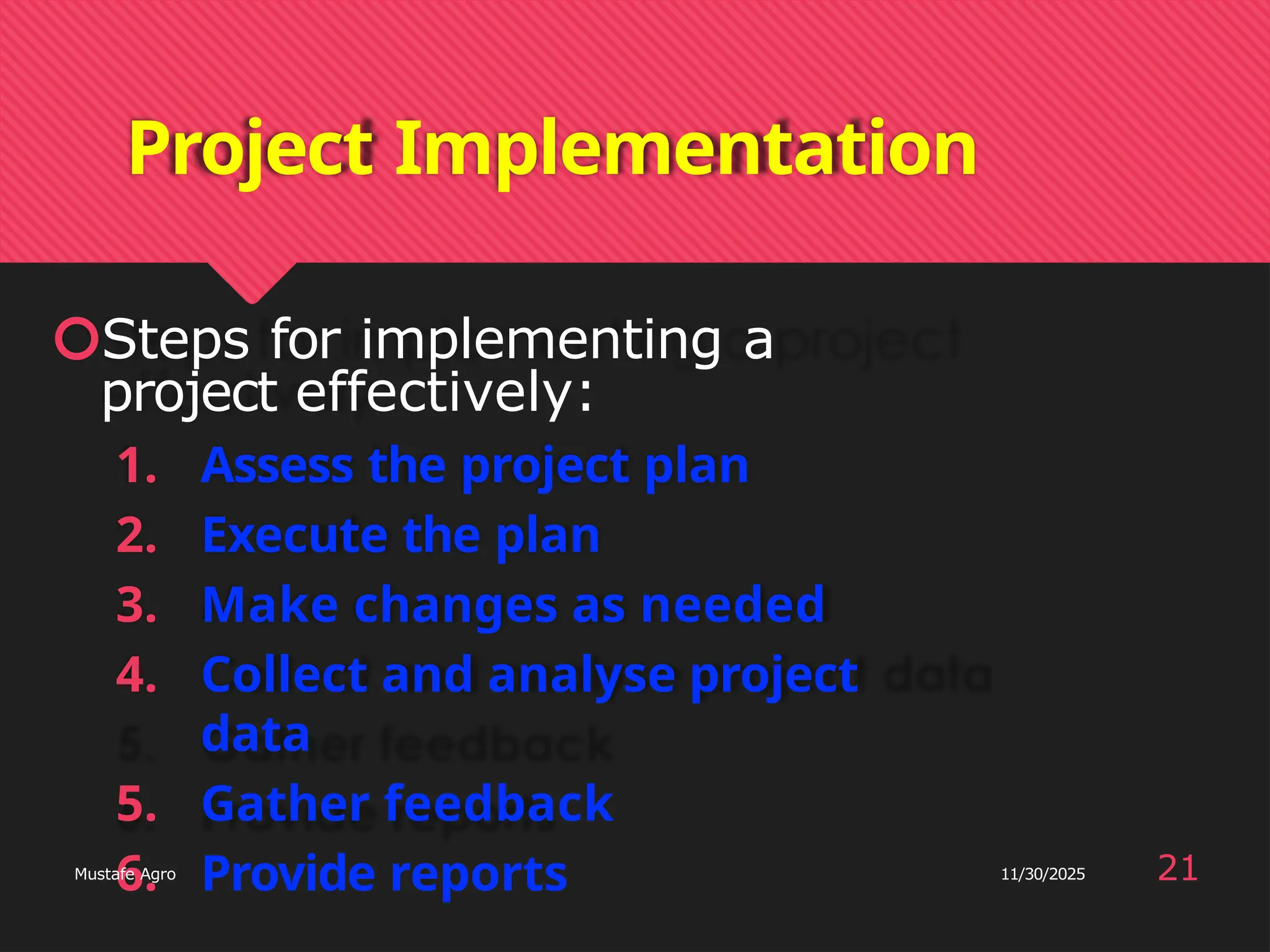
Project Implementation
🞅Steps forimplementing a
project effectively:
1. Assess the project plan
2. Execute the plan
3. Make changes as needed
4. Collect and analyse project
data
5. Gather feedback
6. Provide reports 21
Mustafe Agro 11/30/2025