CHAPTER 3: COMPUTER
NETWORKS AND
COMMUNICATIONS
Basic Concepts of Computer Networks
Definition of Computer Networks
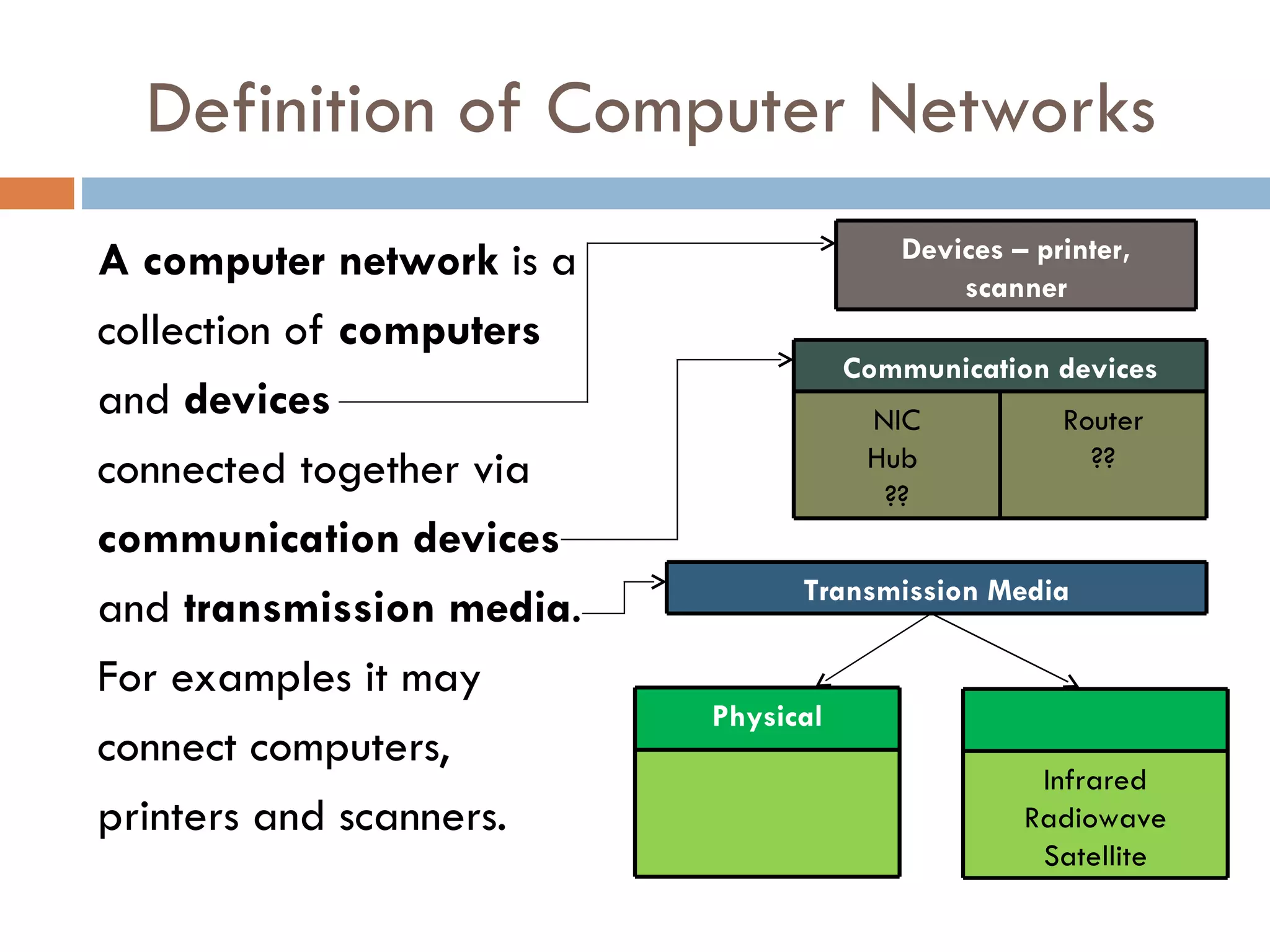
A computer network is a                 Devices – printer,
                                            scanner
collection of computers
                                     Communication devices
and devices                           NIC           Router
connected together via                Hub             ??
                                       ??
communication devices
                                Transmission Media
and transmission media.
For examples it may
                          Physical
connect computers,
                                                  Infrared
printers and scanners.                           Radiowave
                                                  Satellite
Definition of Communication
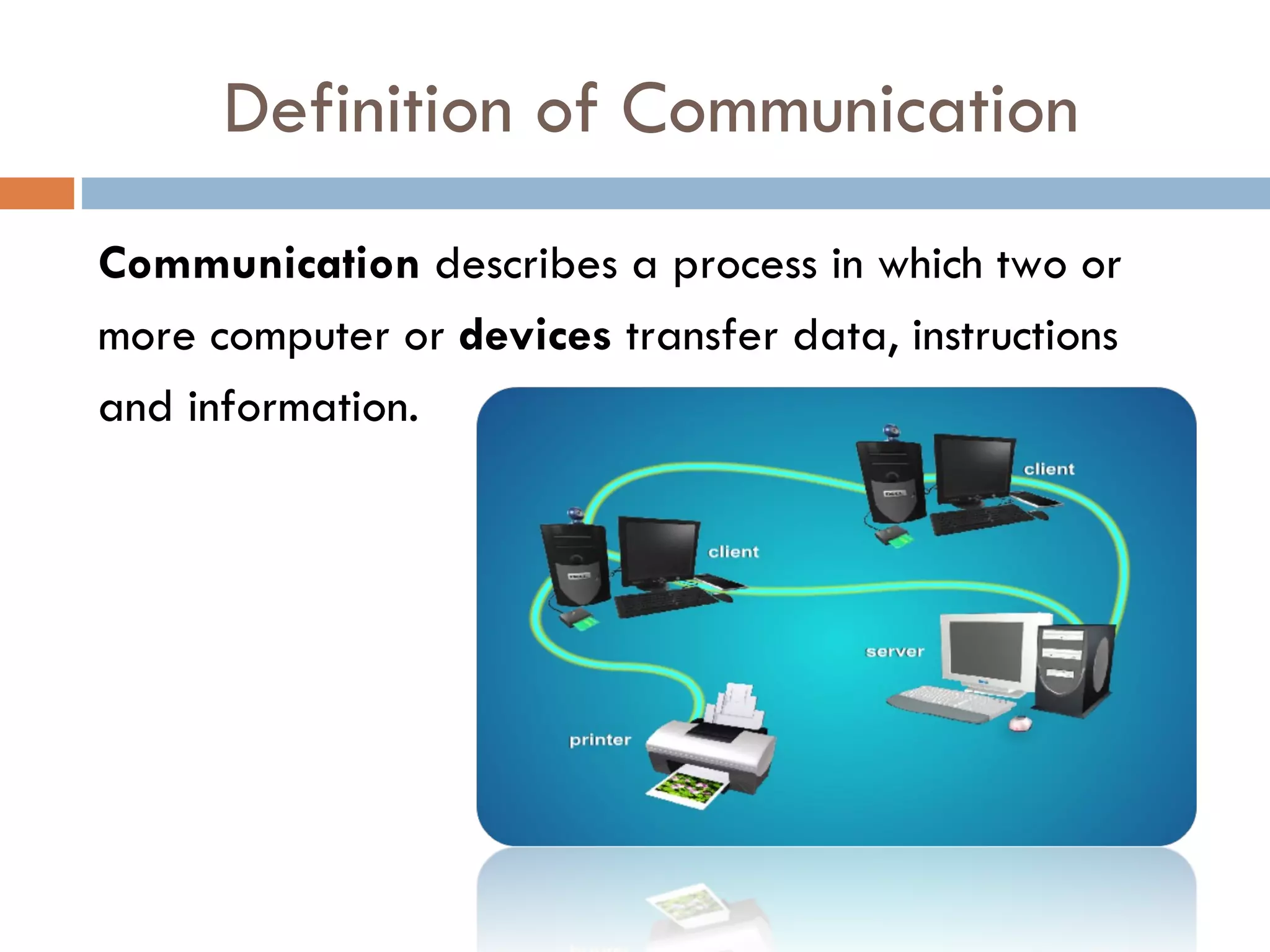
Communication describes a process in which two or
more computer or devices transfer data, instructions
and information.
The Importance/Advantage of
           Computer Networks
s   Sharing of devices such as printer and scanner
a   Sharing of program/software
a   Sharing of files
,   Sharing of data
a   Sharing of information
,   Sharing of single high-speed internet connection
d   Can access server centered database
B   Better communication using internet services such
    as email, mailing list and Internet Relat Chat (IRC)
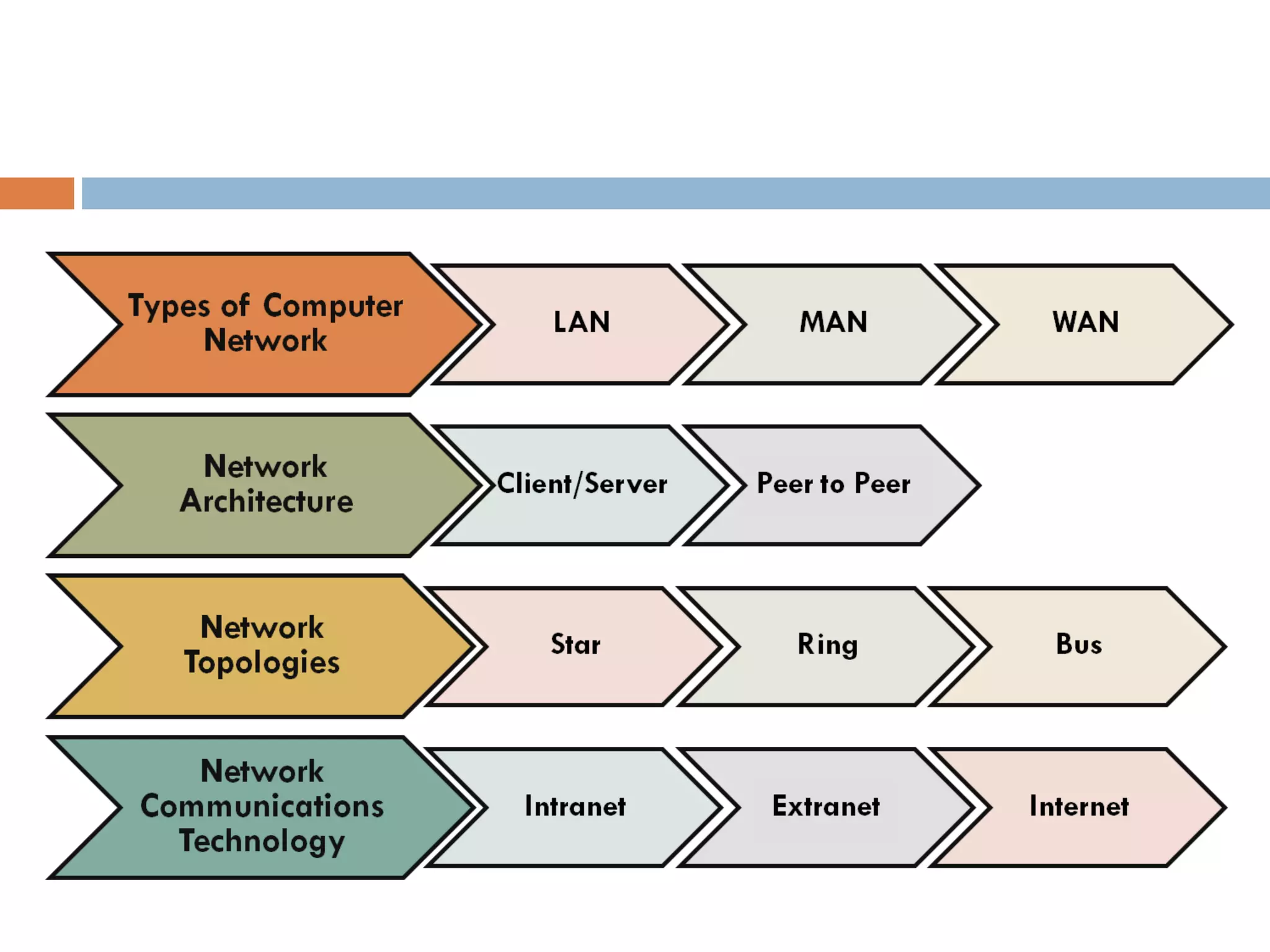
Types of Computer Networks
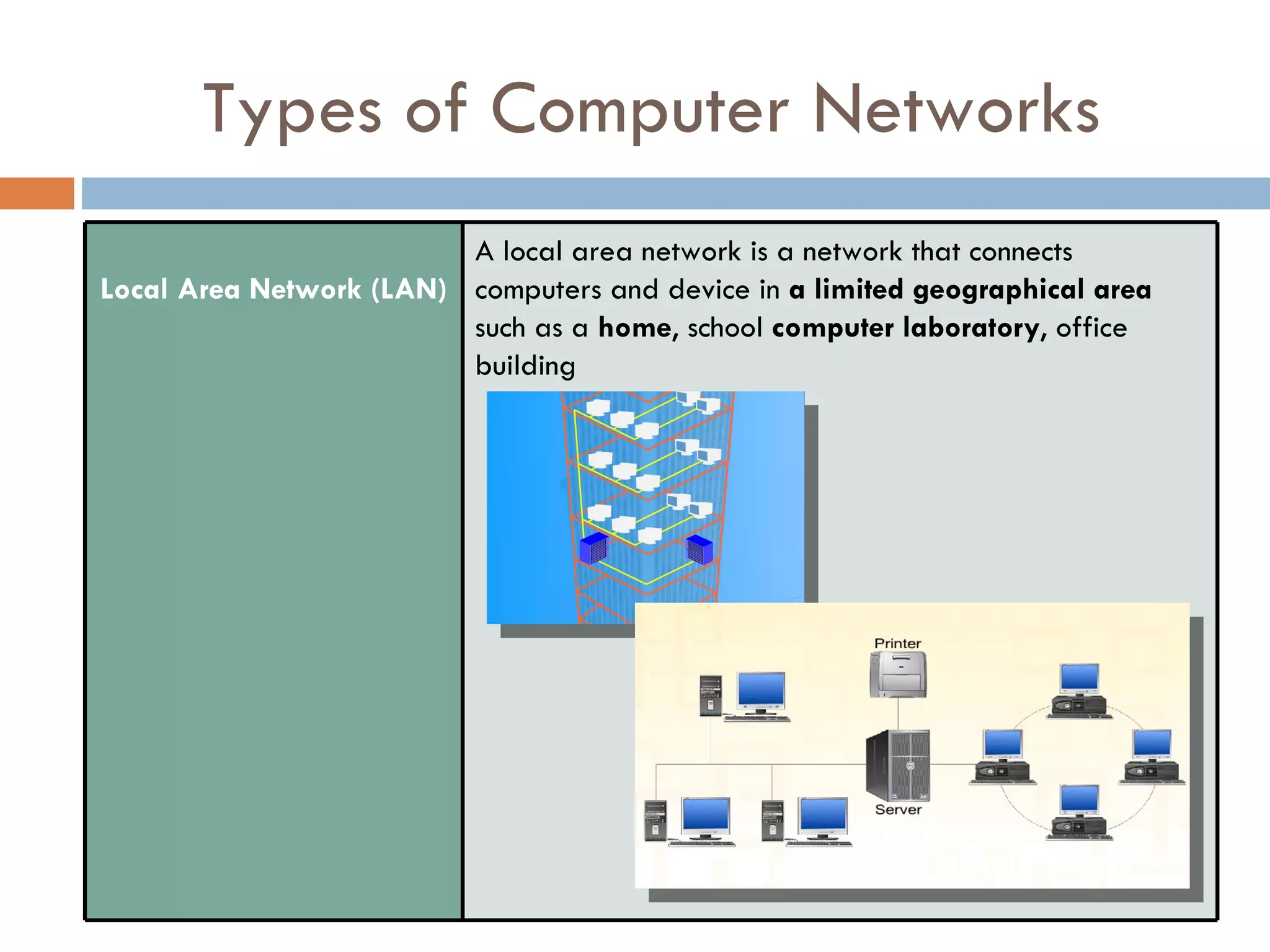
                         A local area network is a network that connects
Local Area Network (LAN) computers and device in a limited geographical area
                         such as a home, school computer laboratory, office
                         building
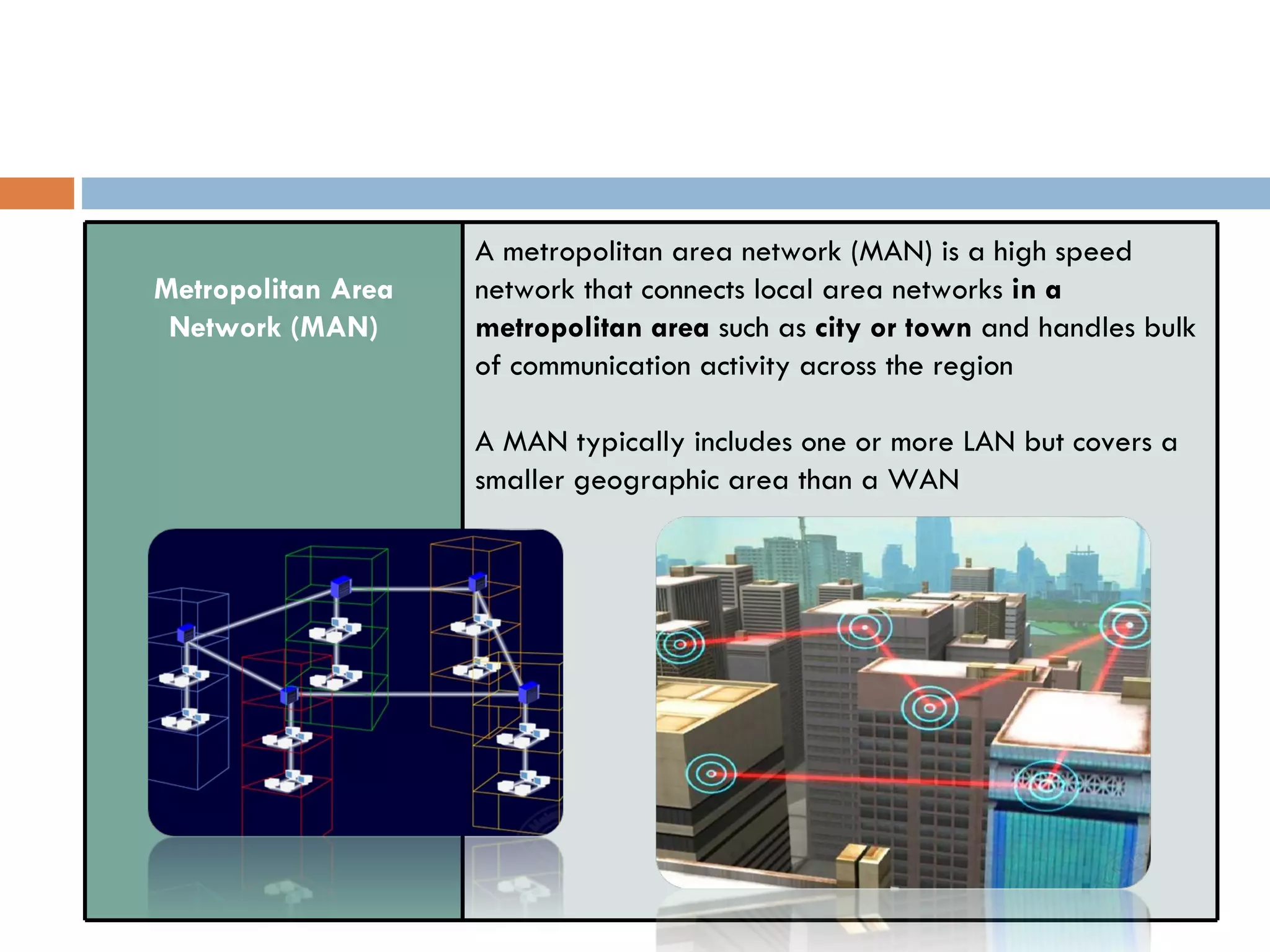
A metropolitan area network (MAN) is a high speed
Metropolitan Area   network that connects local area networks in a
 Network (MAN)      metropolitan area such as city or town and handles bulk
                    of communication activity across the region

                    A MAN typically includes one or more LAN but covers a
                    smaller geographic area than a WAN
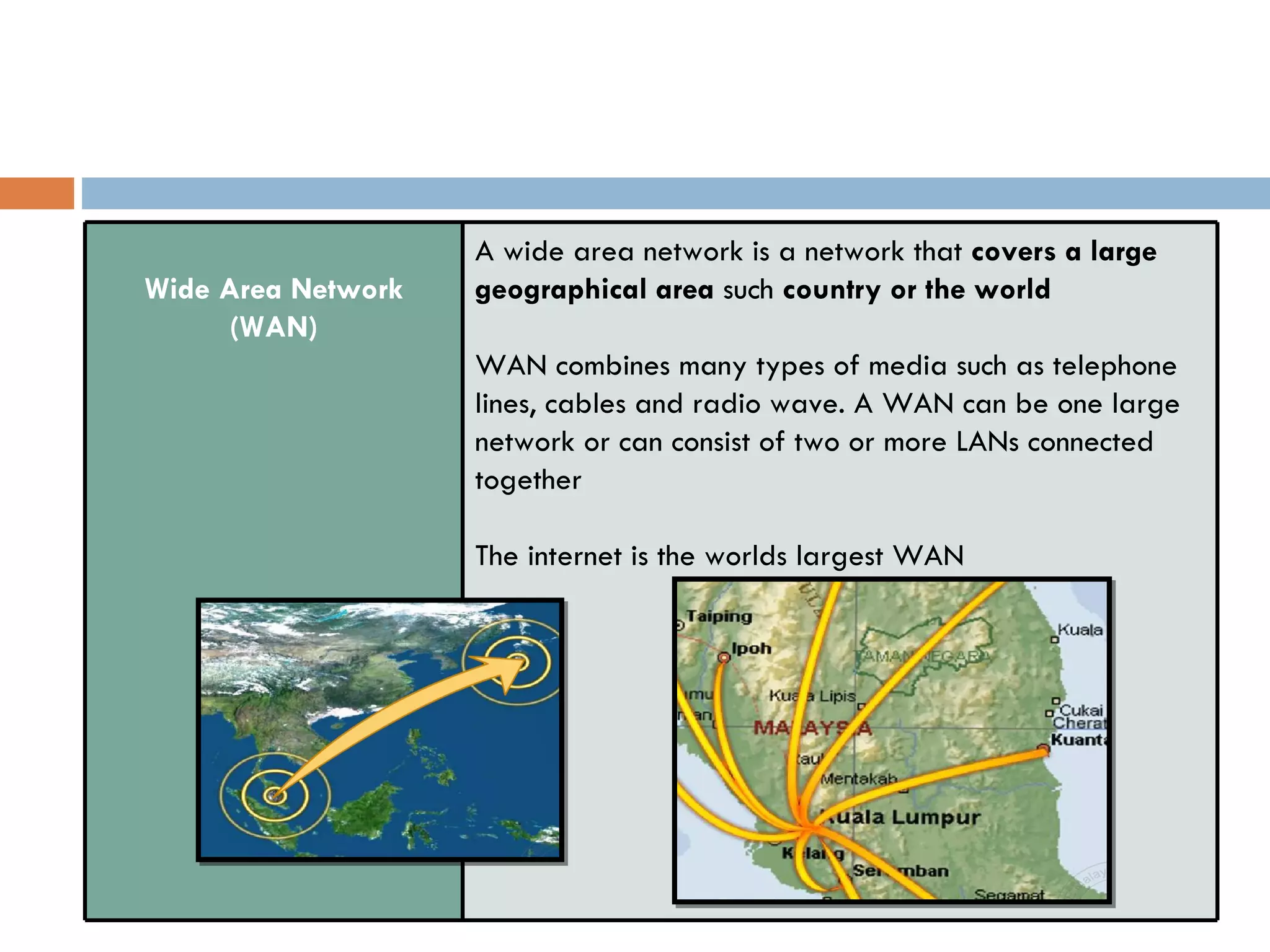
A wide area network is a network that covers a large
Wide Area Network   geographical area such country or the world
      (WAN)
                    WAN combines many types of media such as telephone
                    lines, cables and radio wave. A WAN can be one large
                    network or can consist of two or more LANs connected
                    together

                    The internet is the worlds largest WAN
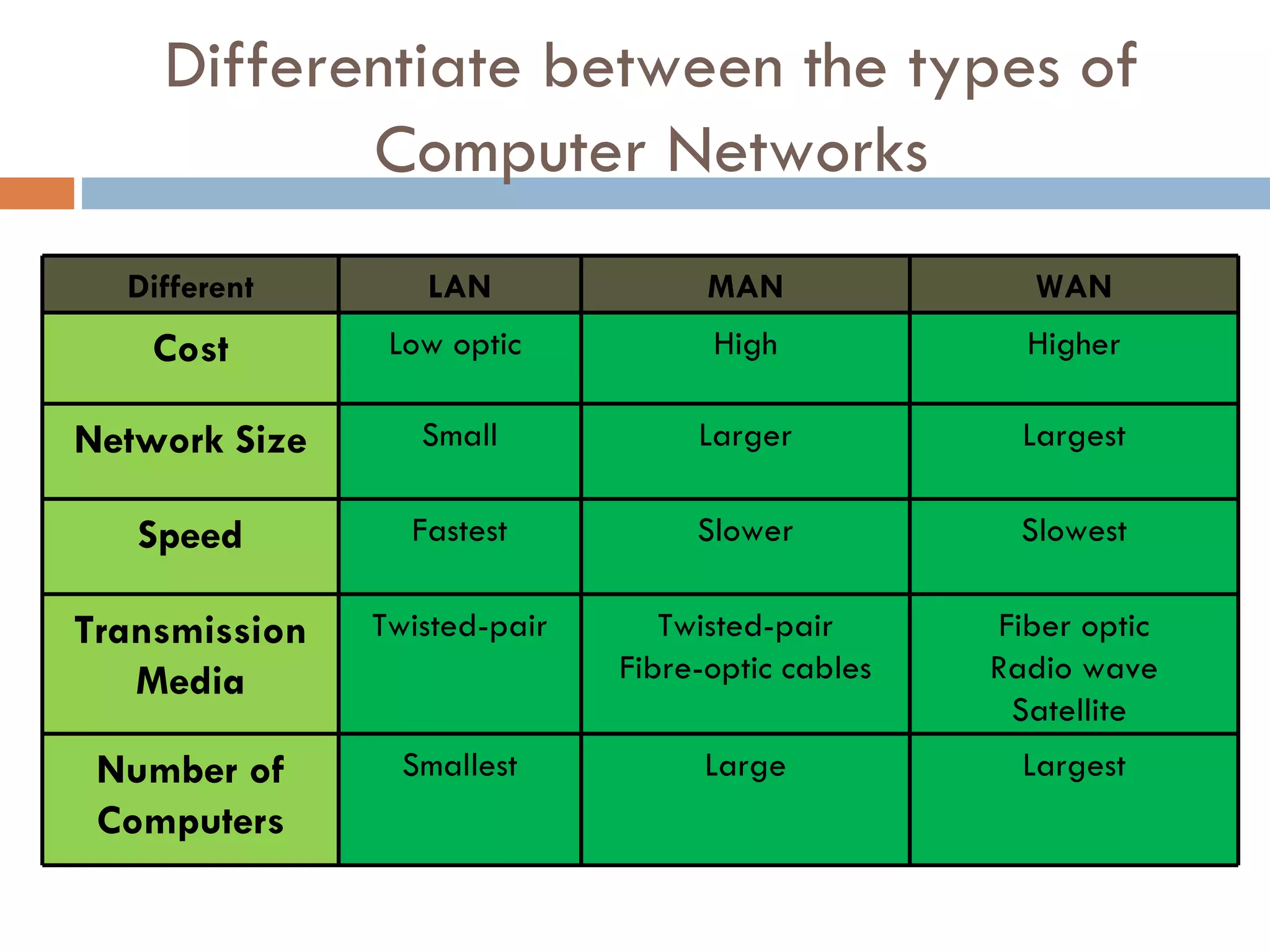
Differentiate between the types of
           Computer Networks
  Different       LAN               MAN               WAN
    Cost        Low optic           High             Higher

Network Size      Small            Larger            Largest

   Speed         Fastest           Slower            Slowest

Transmission   Twisted-pair      Twisted-pair       Fiber optic
   Media                      Fibre-optic cables   Radio wave
                                                     Satellite
 Number of       Smallest           Large            Largest
 Computers
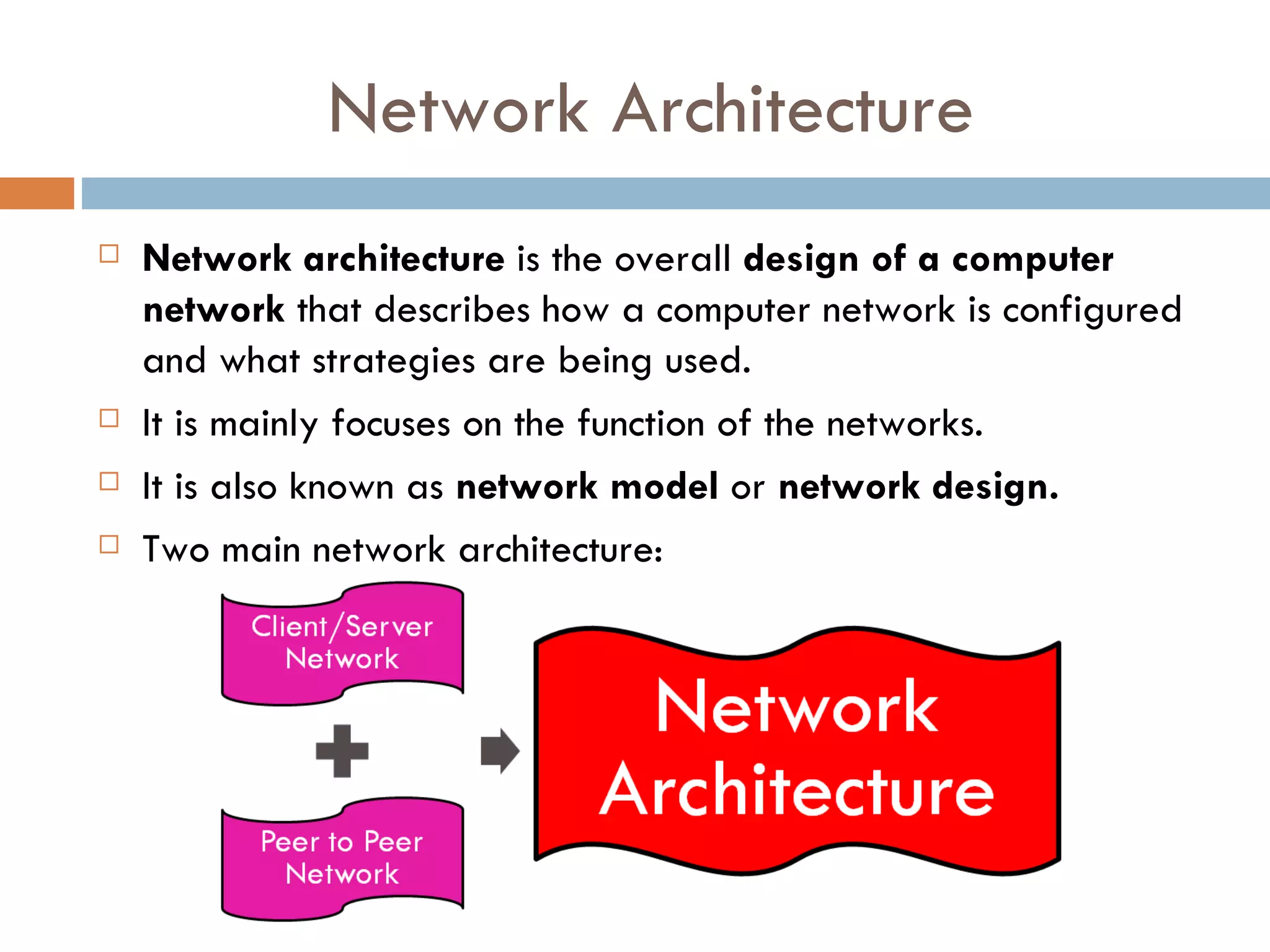
Network Architecture
   Network architecture is the overall design of a computer
    network that describes how a computer network is configured
    and what strategies are being used.
   It is mainly focuses on the function of the networks.
   It is also known as network model or network design.
   Two main network architecture:
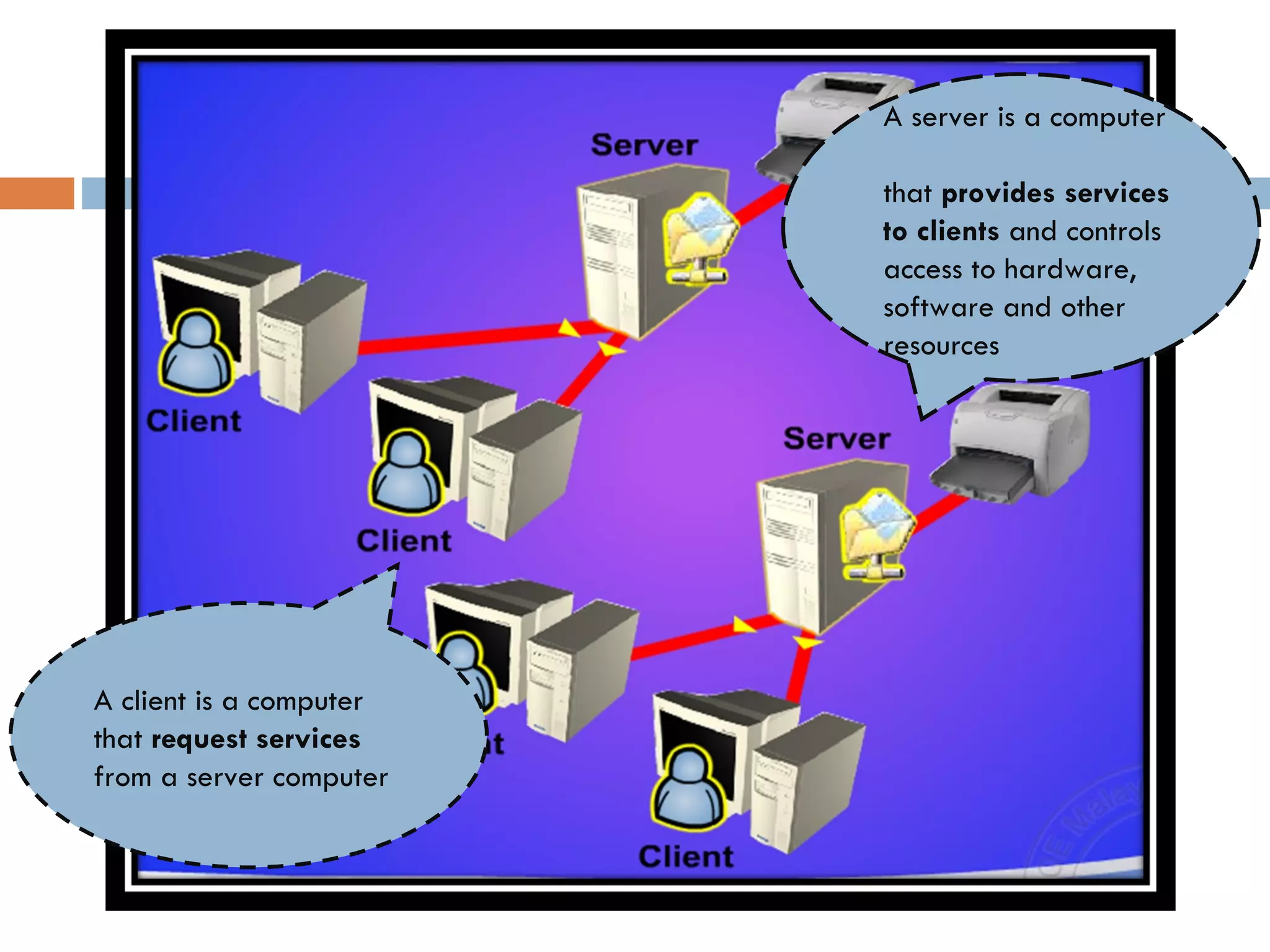
A server is a computer

                         that provides services
                         to clients and controls
                         access to hardware,
                         software and other
                         resources


A client is a computer
that request services
from a server computer
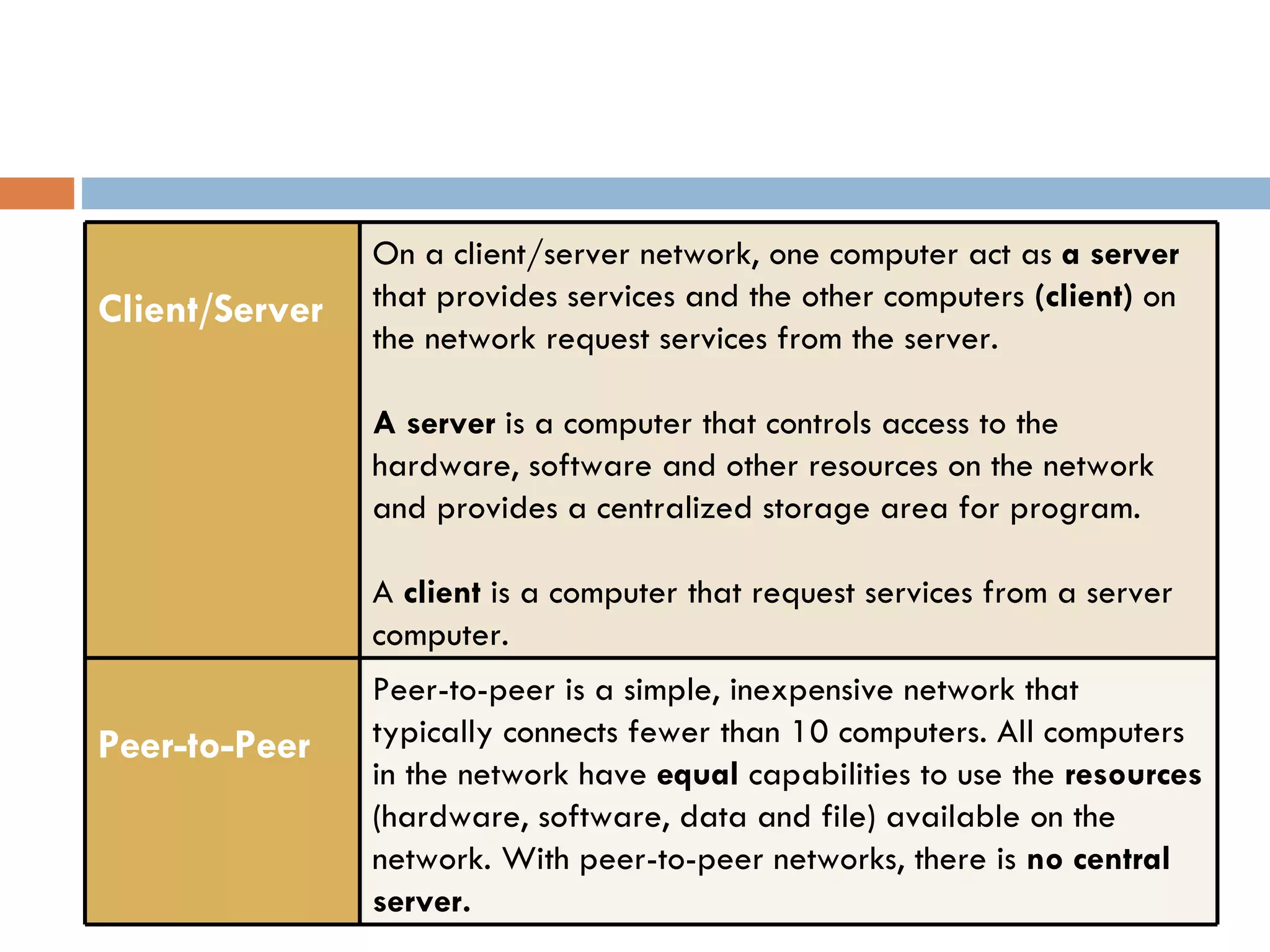
On a client/server network, one computer act as a server
Client/Server   that provides services and the other computers (client) on
                the network request services from the server.

                A server is a computer that controls access to the
                hardware, software and other resources on the network
                and provides a centralized storage area for program.

                A client is a computer that request services from a server
                computer.
                Peer-to-peer is a simple, inexpensive network that
Peer-to-Peer    typically connects fewer than 10 computers. All computers
                in the network have equal capabilities to use the resources
                (hardware, software, data and file) available on the
                network. With peer-to-peer networks, there is no central
                server.
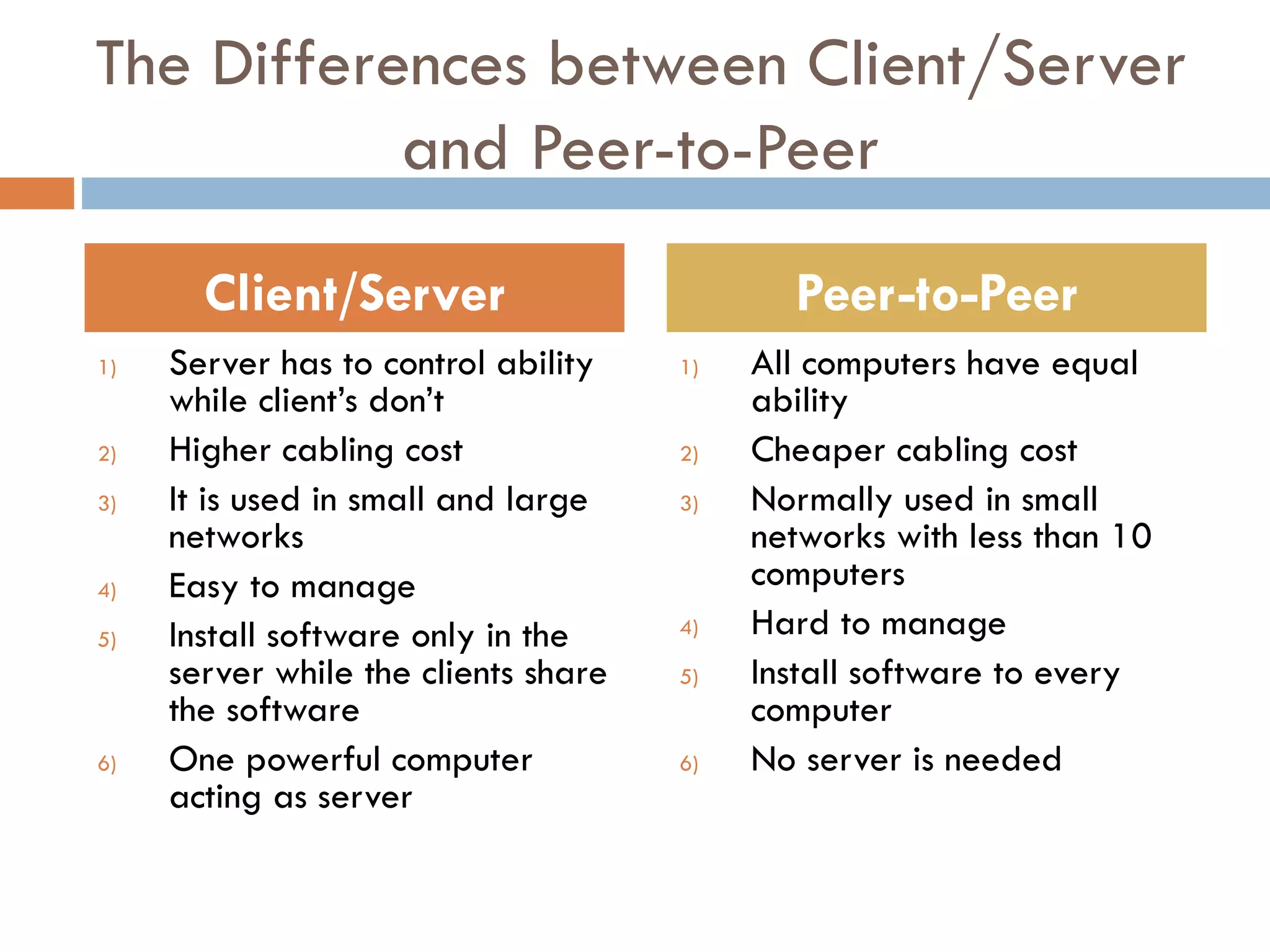
The Differences between Client/Server
           and Peer-to-Peer

       Client/Server                         Peer-to-Peer
1)   Server has to control ability    1)   All computers have equal
     while client’s don’t                  ability
2)   Higher cabling cost              2)   Cheaper cabling cost
3)   It is used in small and large    3)   Normally used in small
     networks                              networks with less than 10
4)   Easy to manage                        computers
5)   Install software only in the     4)   Hard to manage
     server while the clients share   5)   Install software to every
     the software                          computer
6)   One powerful computer            6)   No server is needed
     acting as server

BASIC CONCEPTS OF COMPUTER NETWORKS

  • 1.
    CHAPTER 3: COMPUTER NETWORKSAND COMMUNICATIONS Basic Concepts of Computer Networks
  • 2.
    Definition of ComputerNetworks A computer network is a Devices – printer, scanner collection of computers Communication devices and devices NIC Router connected together via Hub ?? ?? communication devices Transmission Media and transmission media. For examples it may Physical connect computers, Infrared printers and scanners. Radiowave Satellite
  • 4.
    Definition of Communication Communicationdescribes a process in which two or more computer or devices transfer data, instructions and information.
  • 5.
    The Importance/Advantage of Computer Networks s Sharing of devices such as printer and scanner a Sharing of program/software a Sharing of files , Sharing of data a Sharing of information , Sharing of single high-speed internet connection d Can access server centered database B Better communication using internet services such as email, mailing list and Internet Relat Chat (IRC)
  • 7.
    Types of ComputerNetworks A local area network is a network that connects Local Area Network (LAN) computers and device in a limited geographical area such as a home, school computer laboratory, office building
  • 8.
    A metropolitan areanetwork (MAN) is a high speed Metropolitan Area network that connects local area networks in a Network (MAN) metropolitan area such as city or town and handles bulk of communication activity across the region A MAN typically includes one or more LAN but covers a smaller geographic area than a WAN
  • 9.
    A wide areanetwork is a network that covers a large Wide Area Network geographical area such country or the world (WAN) WAN combines many types of media such as telephone lines, cables and radio wave. A WAN can be one large network or can consist of two or more LANs connected together The internet is the worlds largest WAN
  • 10.
    Differentiate between thetypes of Computer Networks Different LAN MAN WAN Cost Low optic High Higher Network Size Small Larger Largest Speed Fastest Slower Slowest Transmission Twisted-pair Twisted-pair Fiber optic Media Fibre-optic cables Radio wave Satellite Number of Smallest Large Largest Computers
  • 11.
    Network Architecture  Network architecture is the overall design of a computer network that describes how a computer network is configured and what strategies are being used.  It is mainly focuses on the function of the networks.  It is also known as network model or network design.  Two main network architecture:
  • 12.
    A server isa computer that provides services to clients and controls access to hardware, software and other resources A client is a computer that request services from a server computer
  • 13.
    On a client/servernetwork, one computer act as a server Client/Server that provides services and the other computers (client) on the network request services from the server. A server is a computer that controls access to the hardware, software and other resources on the network and provides a centralized storage area for program. A client is a computer that request services from a server computer. Peer-to-peer is a simple, inexpensive network that Peer-to-Peer typically connects fewer than 10 computers. All computers in the network have equal capabilities to use the resources (hardware, software, data and file) available on the network. With peer-to-peer networks, there is no central server.
  • 14.
    The Differences betweenClient/Server and Peer-to-Peer Client/Server Peer-to-Peer 1) Server has to control ability 1) All computers have equal while client’s don’t ability 2) Higher cabling cost 2) Cheaper cabling cost 3) It is used in small and large 3) Normally used in small networks networks with less than 10 4) Easy to manage computers 5) Install software only in the 4) Hard to manage server while the clients share 5) Install software to every the software computer 6) One powerful computer 6) No server is needed acting as server