Asynchronous Web Apps with Play 2.0
           Oscar Renalias
What we’ll do today

Take a look at Play’s asynchronous
capabilities

Real world usage scenarios
About me

Oscar Renalias
  oscarrenalias
  github.com/oscarrenalias
  oscar.renalias@accenture.com
  oscar@renalias.net
#wjaxplayasync
?

Stateless
Asynchronous
Reactive
RESTful
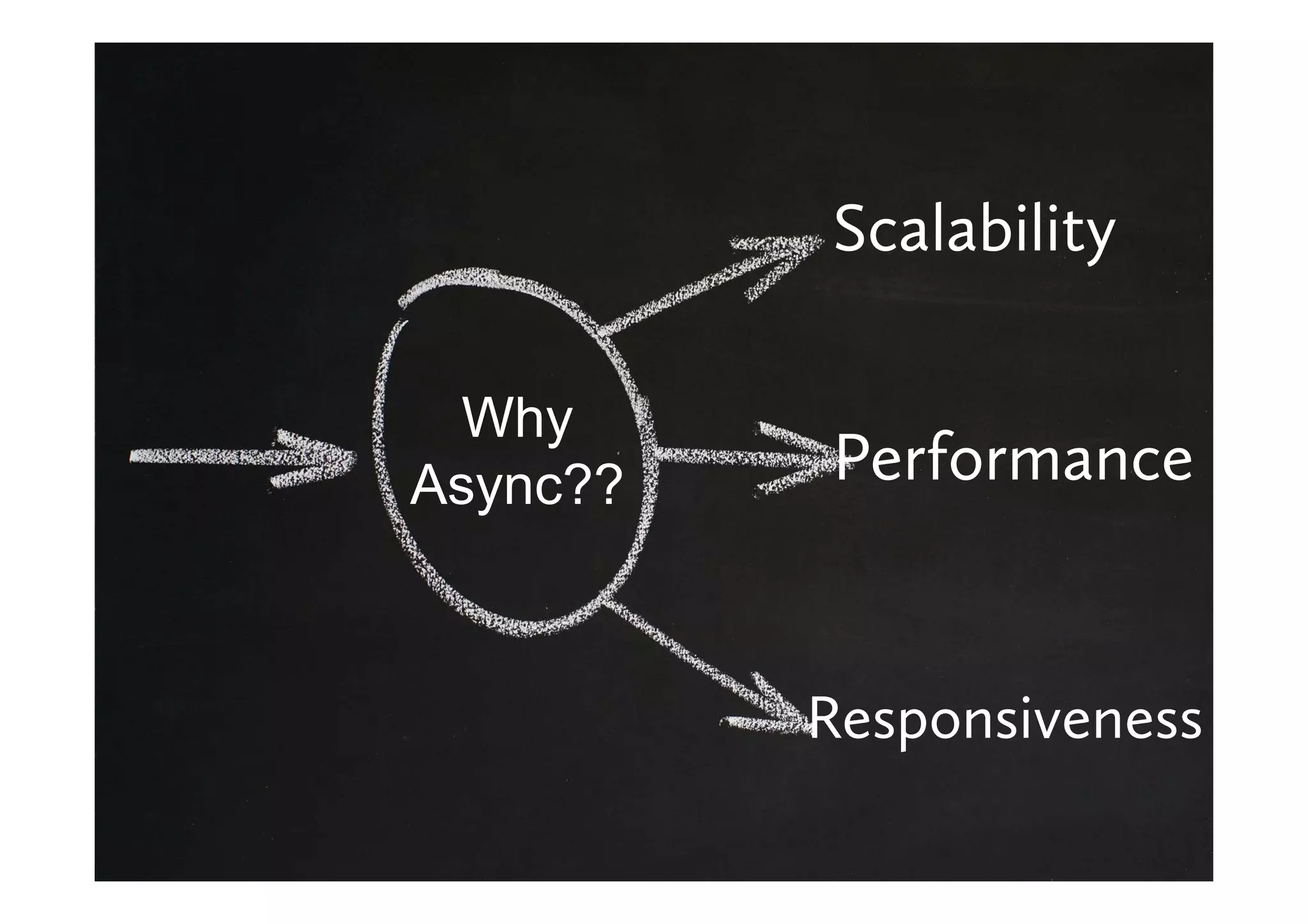
Scalability

  Why
Async??   Performance


          Responsiveness
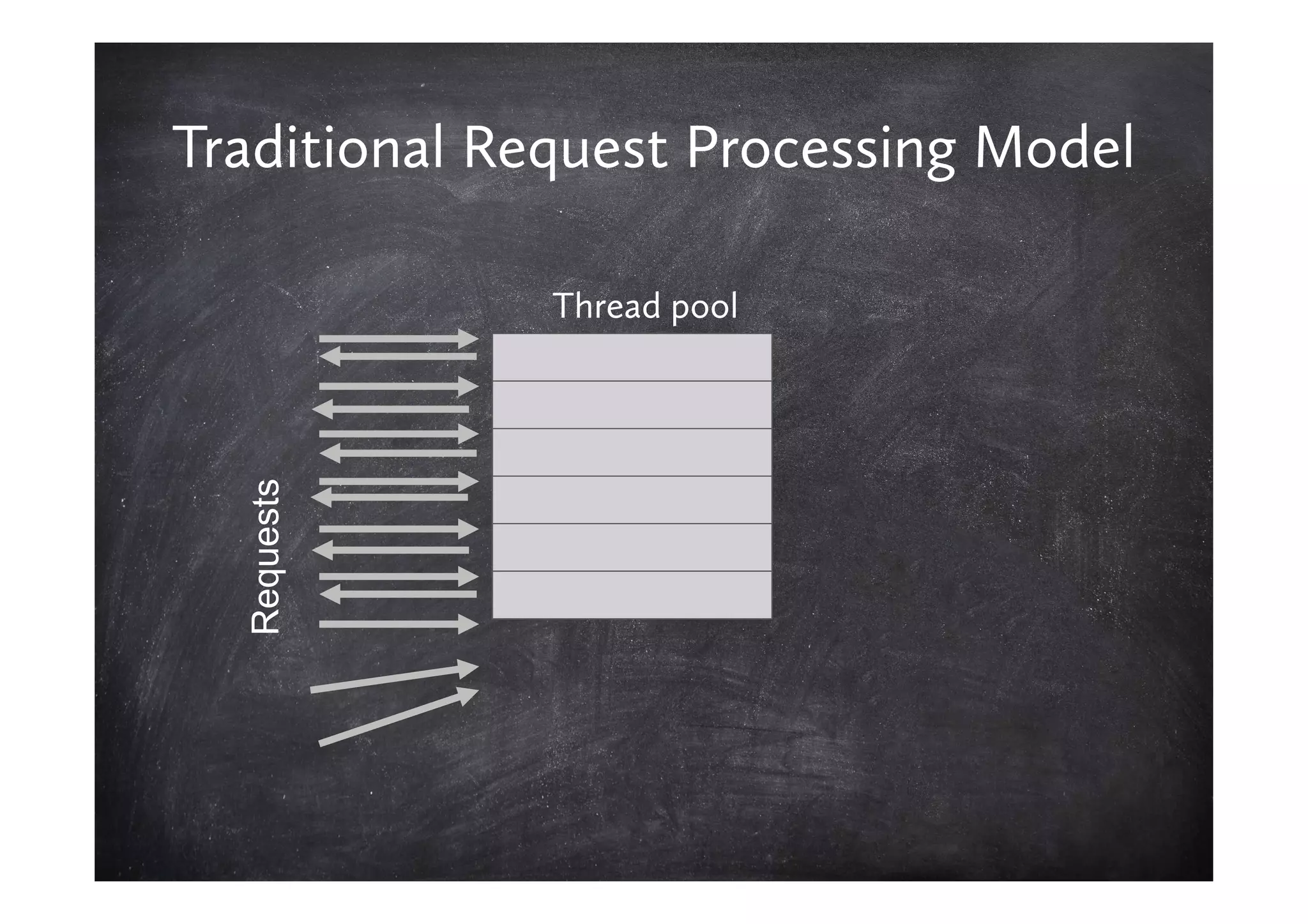
Traditional Request Processing Model

              Thread pool
  Requests
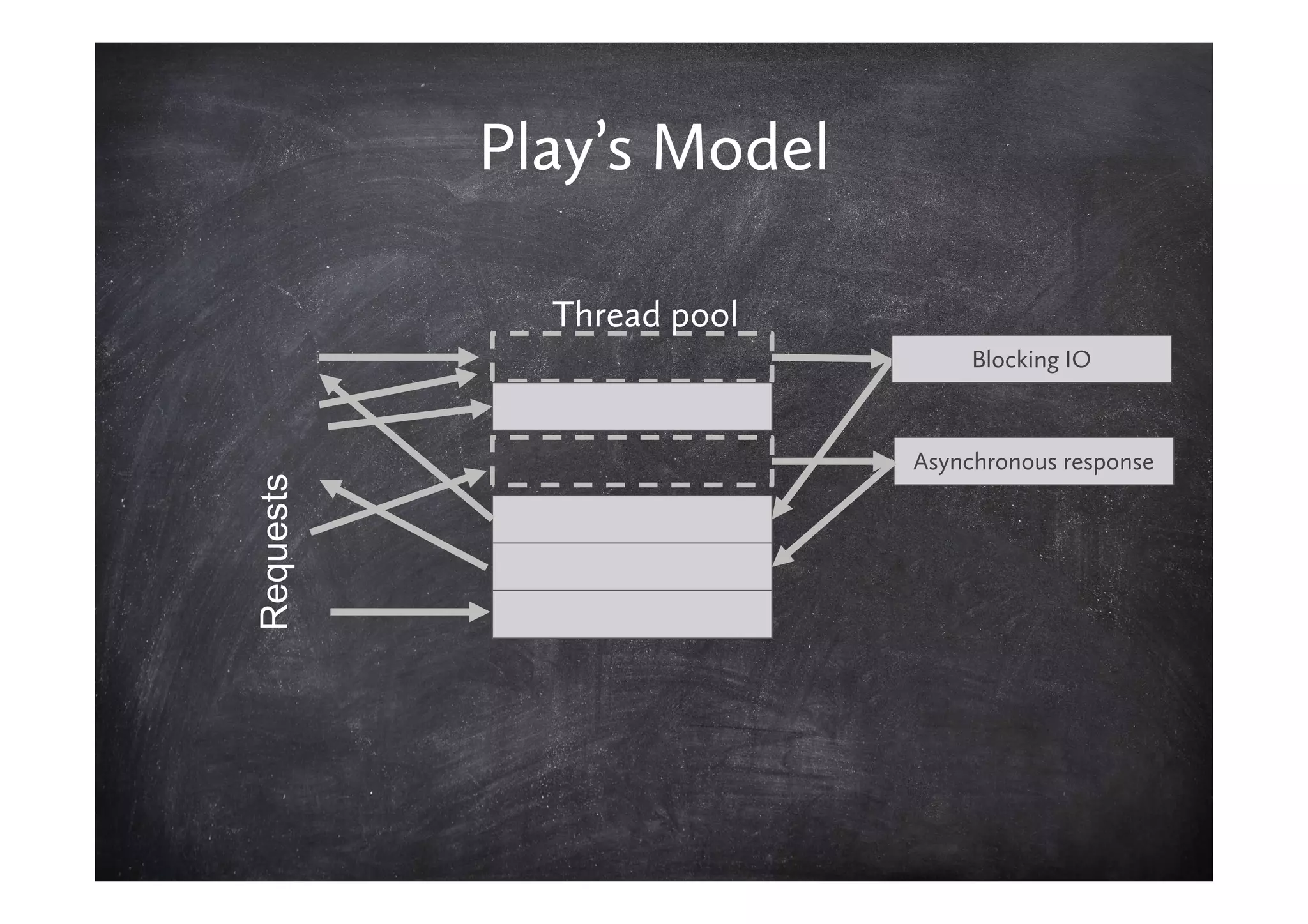
Play’s Model

             Thread pool
                                Blocking IO


                           Asynchronous response
Requests
Haven’t we done this before?
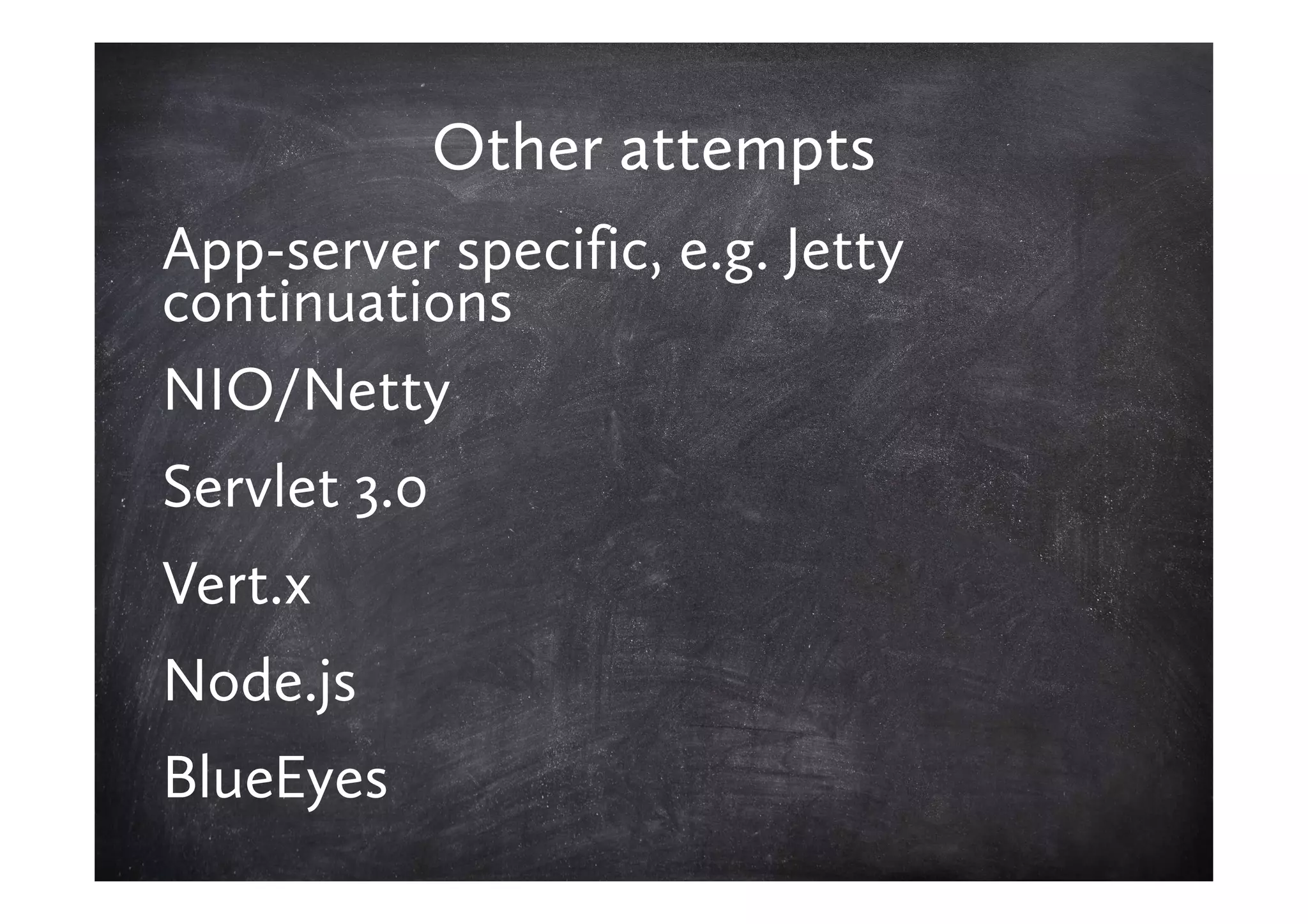
Other attempts
App-server specific, e.g. Jetty
continuations
NIO/Netty
Servlet 3.0
Vert.x
Node.js
BlueEyes
Play’s asynchronous capabilities


Asynchronous requests
Non-blocking reactive IO
Asynchronous Requests


Futures
Promises
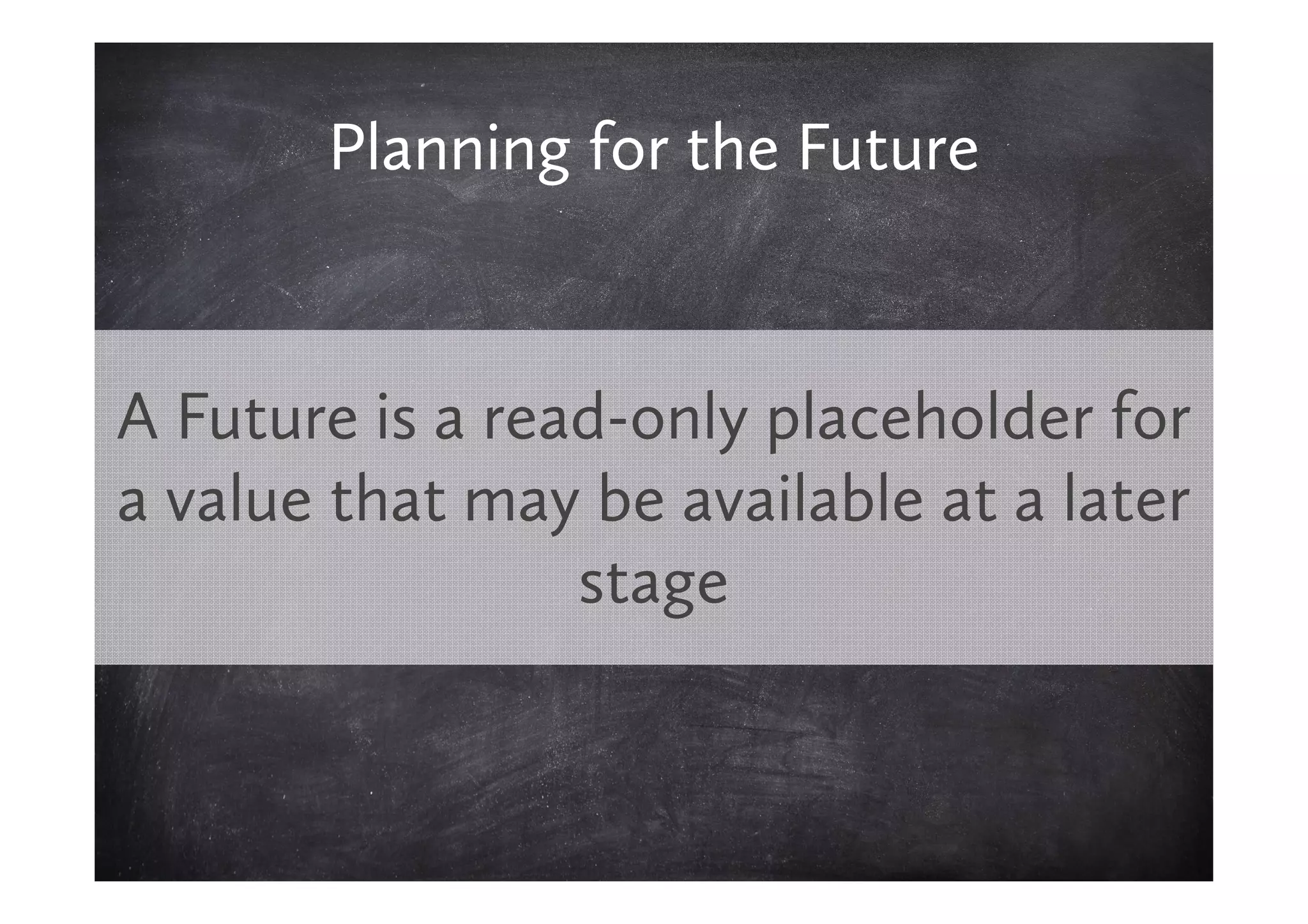
Planning for the Future


A Future is a read-only placeholder for
a value that may be available at a later
                 stage
Futures and Promises
val f:Promise[Something] = Akka.future {
  longOperation()
}

val f2:Promise[SomethingElse] =
  f.map(s=>handleContents(s))

f2.value.fold(
  ex=> handleError(ex),
  value=> handleOk(value)
)
Asynchronous Results

val promiseOfPIValue: Promise[Double] =
    computePIAsynchronously()

val promiseOfResult: Promise[Result] =
    promiseOfPIValue.map { pi =>
         Ok("PI value computed: " + pi)
}


Promise[Something]   Promise[Result]   Browser
Making our actions asynchronous
     with asynchronous responses
object MyController extends Controller {
  def simpleAsyncAction = Action {
    val p:Promise[Result] = Akka.future {
     val someResult = longOperation()
       Ok(someResult)
     }
    AsyncResult(p)
  }
}
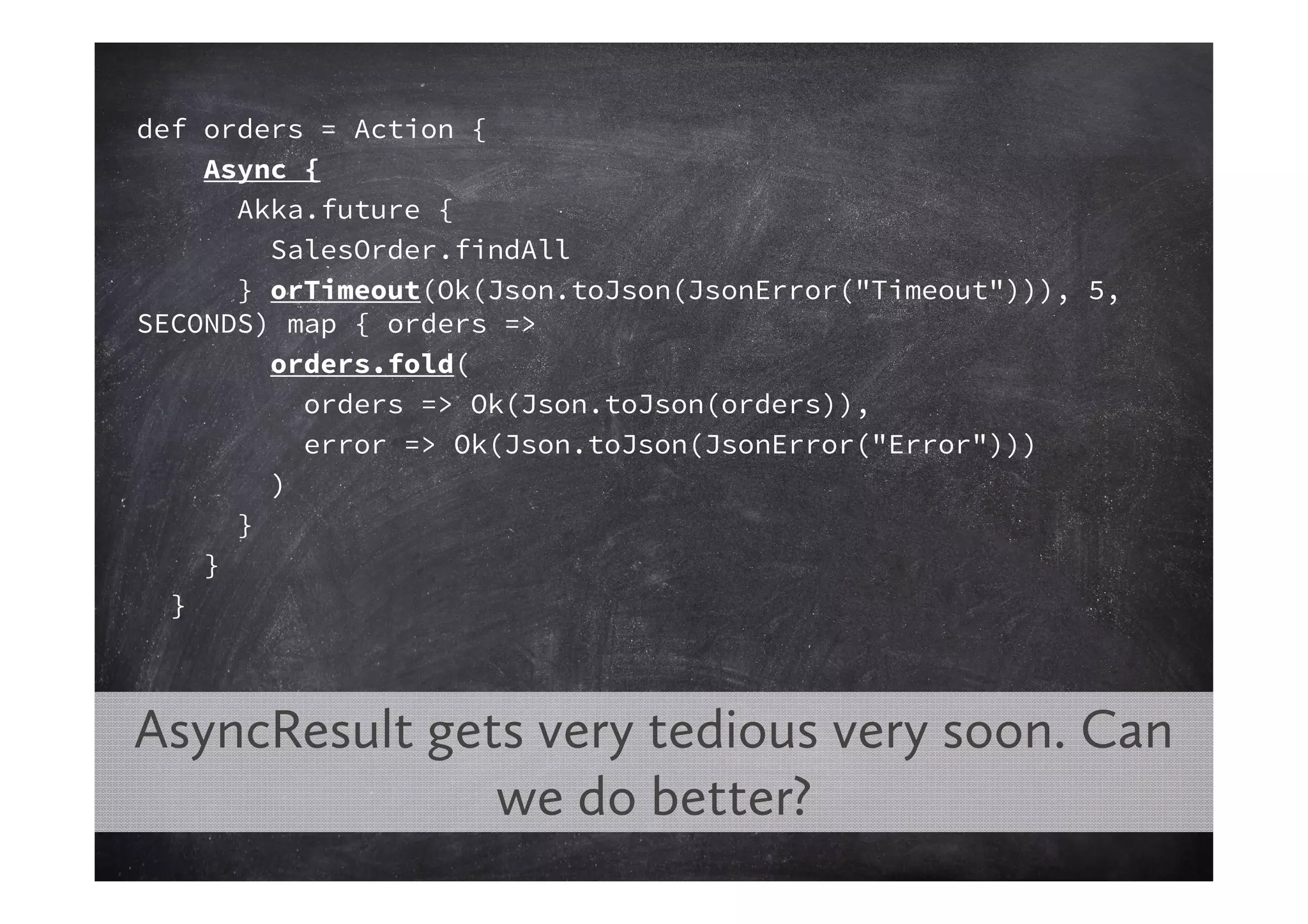
def orders = Action {
    Async {
      Akka.future {
        SalesOrder.findAll
      } orTimeout(Ok(Json.toJson(JsonError("Timeout"))), 5,
SECONDS) map { orders =>
        orders.fold(
          orders => Ok(Json.toJson(orders)),
          error => Ok(Json.toJson(JsonError("Error")))
        )
      }
    }
  }


AsyncResult gets very tedious very soon. Can
               we do better?
Asynchronous responses in the real
                world
 def WithFuture[T](seconds:Int)(f: => T)(implicit jsonHelper:Writes[T]) = {
    Async {
      Akka.future {
        f
      } orTimeout(Ok(Json.toJson(JsonError(”..."))), seconds, SECONDS) map
{ result =>
        result.fold(
          data => Ok(Json.toJson(data)),
          error => Ok(Json.toJson(JsonError("Error")))
        )
      }
    }
  }

  def prettyOrders = Action {
    WithFuture(1) {
      SalesOrder.findAll
    }
  }
Demo: Promises, Futures and
  asynchronous responses
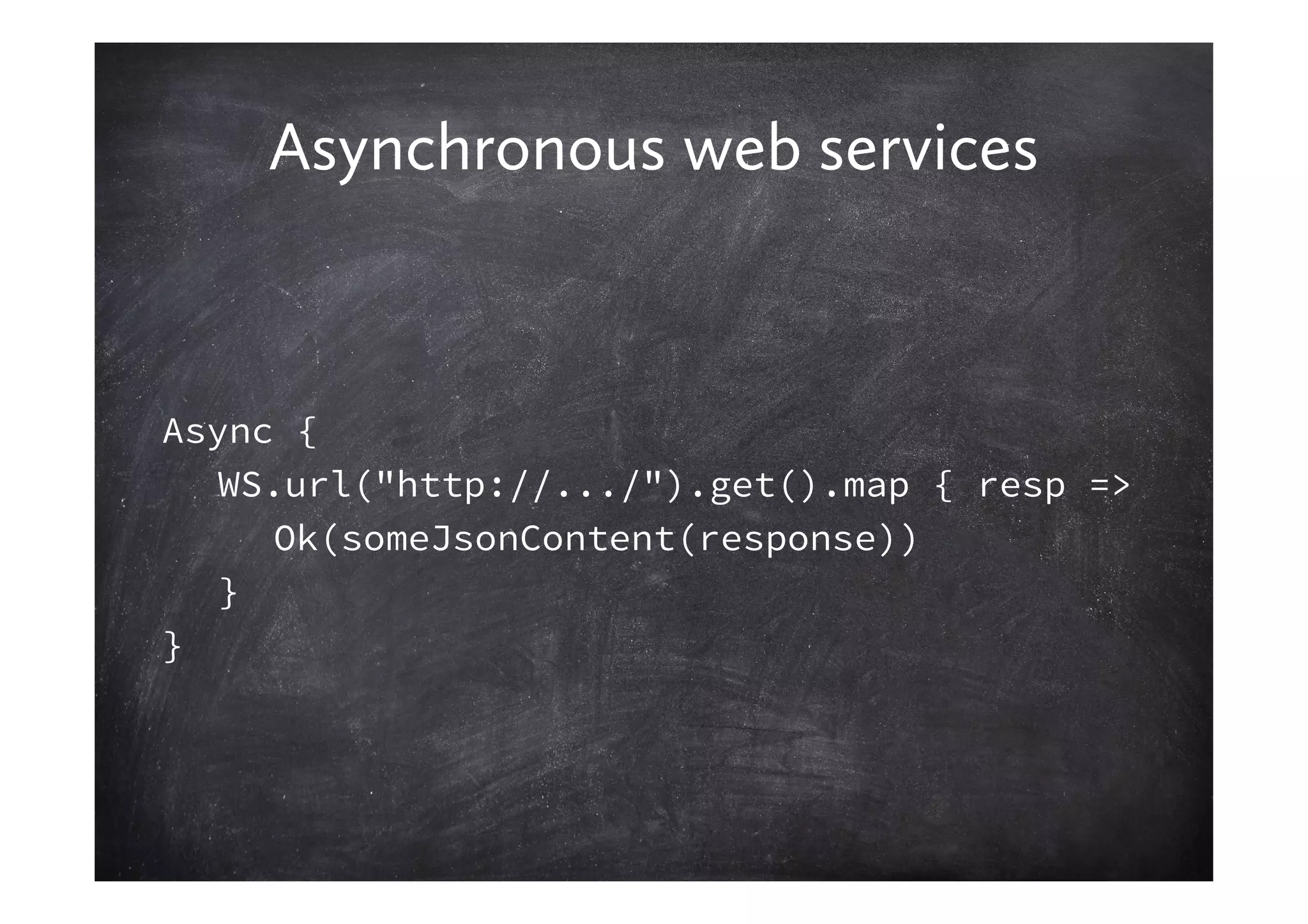
Asynchronous web services


Async {
   WS.url("http://.../").get().map { resp =>
     Ok(someJsonContent(response))
   }
}
Demo: Asynchronous web services
IO WHAT??
Reactive IO


“Don’t call us, we’ll
     call you”
Reactive IO


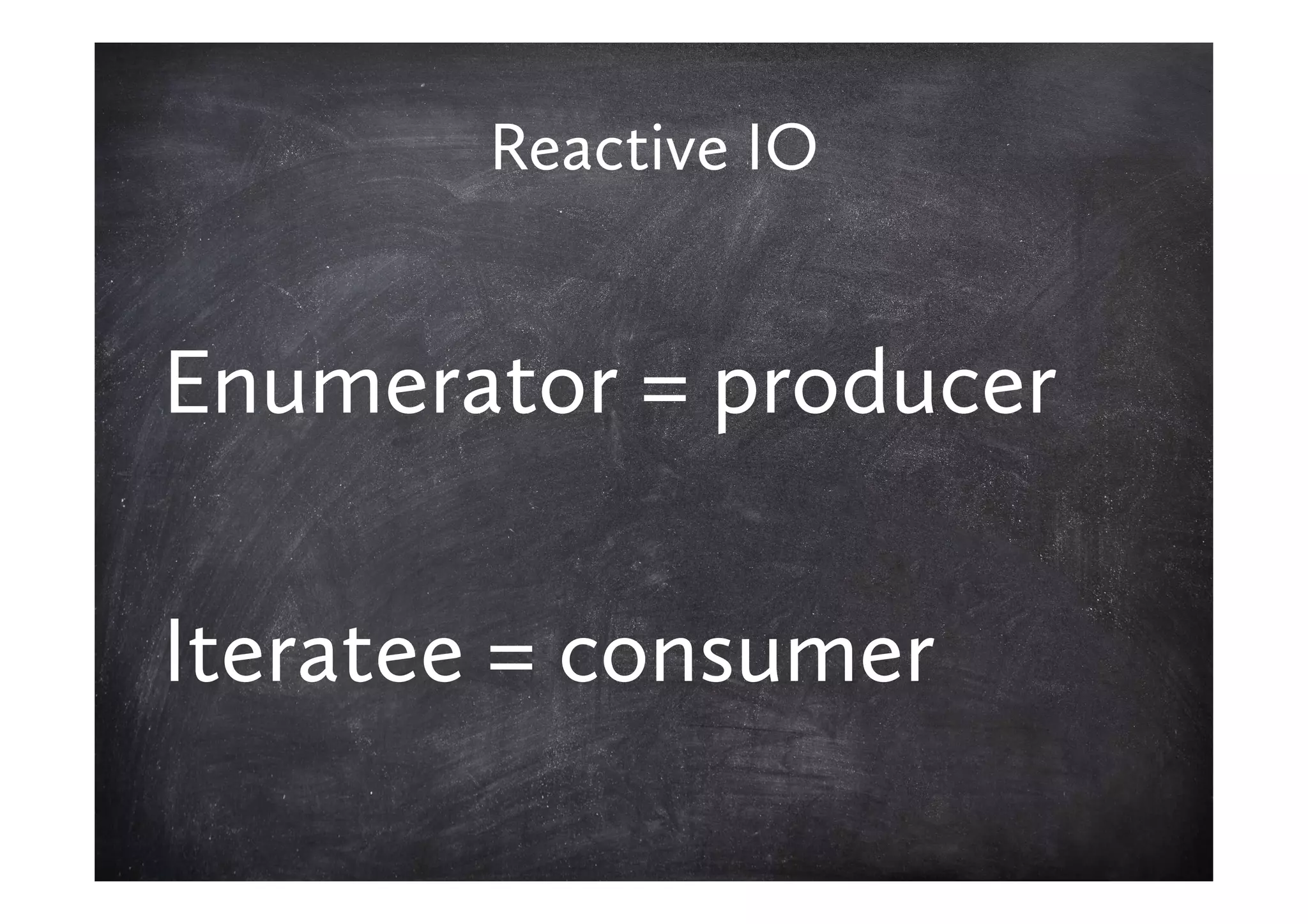
Enumerator = producer

Iteratee = consumer
Enumerators: the theory

  trait Enumerator[E] {
    def apply[A](i: Iteratee[E, A]):
  Promise[Iteratee[E, A]]
  }


Enumerator(Iteratee)   Promise[AnotherIteratee]
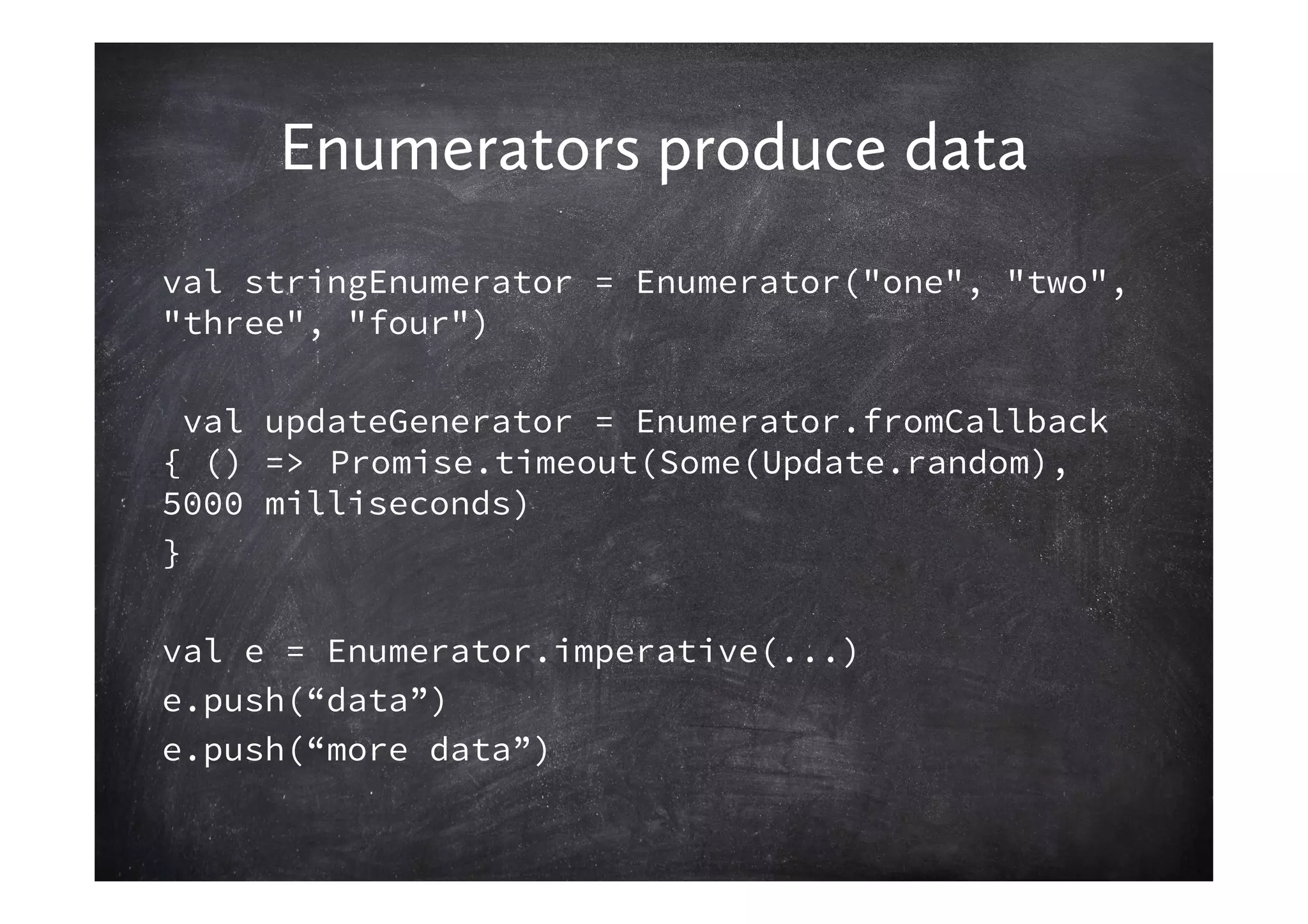
Enumerators produce data
val stringEnumerator = Enumerator("one", "two",
"three", "four")

  val updateGenerator = Enumerator.fromCallback
{ () => Promise.timeout(Some(Update.random),
5000 milliseconds)
}

val e = Enumerator.imperative(...)
e.push(“data”)
e.push(“more data”)
Behind the scenes with Iteratees
 def fold[B](
  done: (A, Input[E]) => Promise[B],
  cont: (Input[E] => Iteratee[E,A]) => Promise[B],
  error: (String, Input[E]) => Promise[B]
 ): Promise[B]


• Done: there is no more input
• Cont: more input incoming
• Error: there was an error with the input
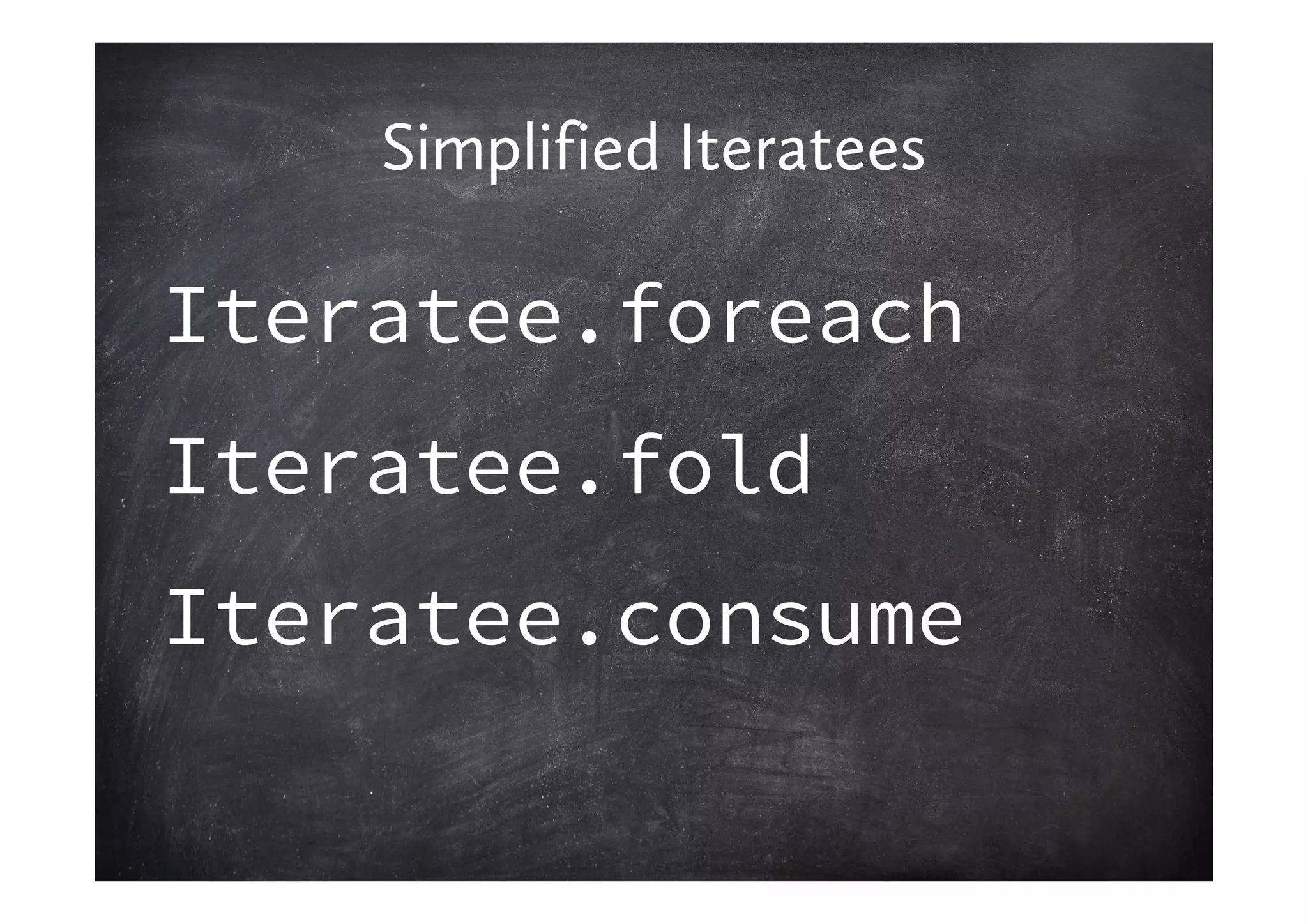
Simplified Iteratees

Iteratee.foreach
Iteratee.fold
Iteratee.consume
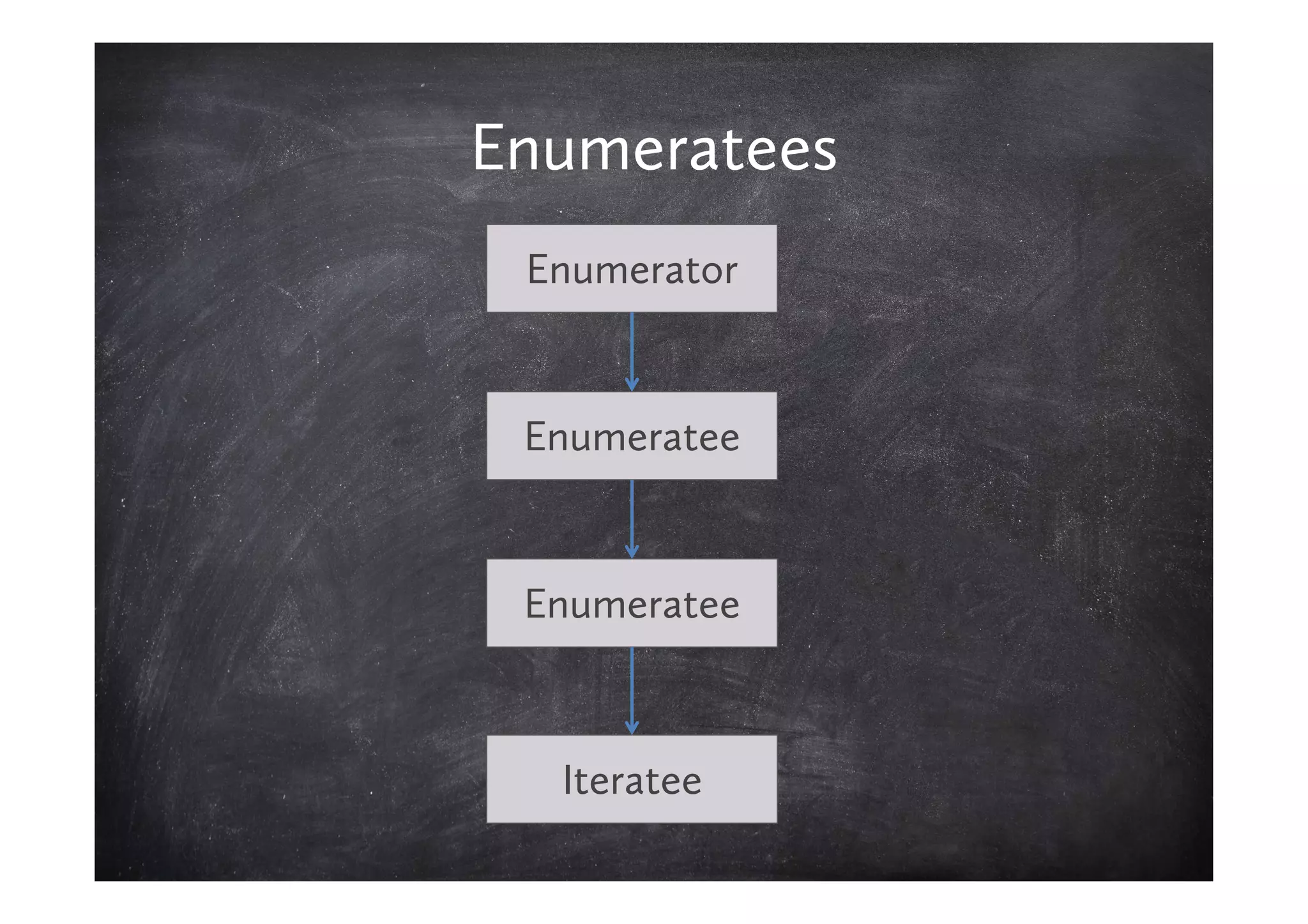
Enumeratees
 Enumerator


 Enumeratee


 Enumeratee


  Iteratee
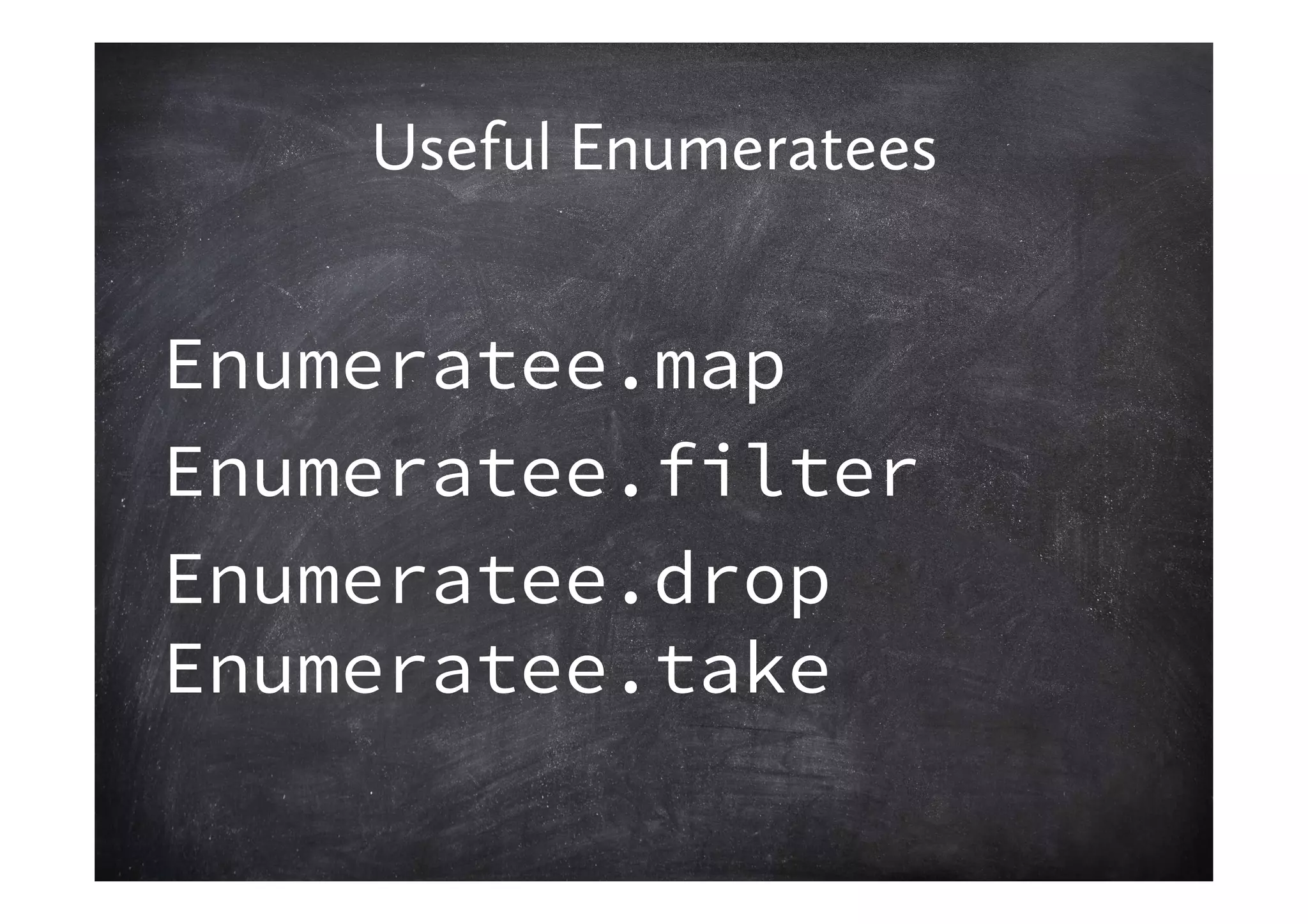
Useful Enumeratees


Enumeratee.map
Enumeratee.filter
Enumeratee.drop
Enumeratee.take
Composability
val dataGenerator = Enumerator.fromCallback { () =>
   Promise.timeout(Some(new
   java.util.Random().nextInt(100)),
   5000 milliseconds)
}

val toStr = Enumeratee.map[Int] { x => x.toString }

val toConsole = Iteratee.foreach[String](println(_))

dataGenerator &> toStr |>> toConsole
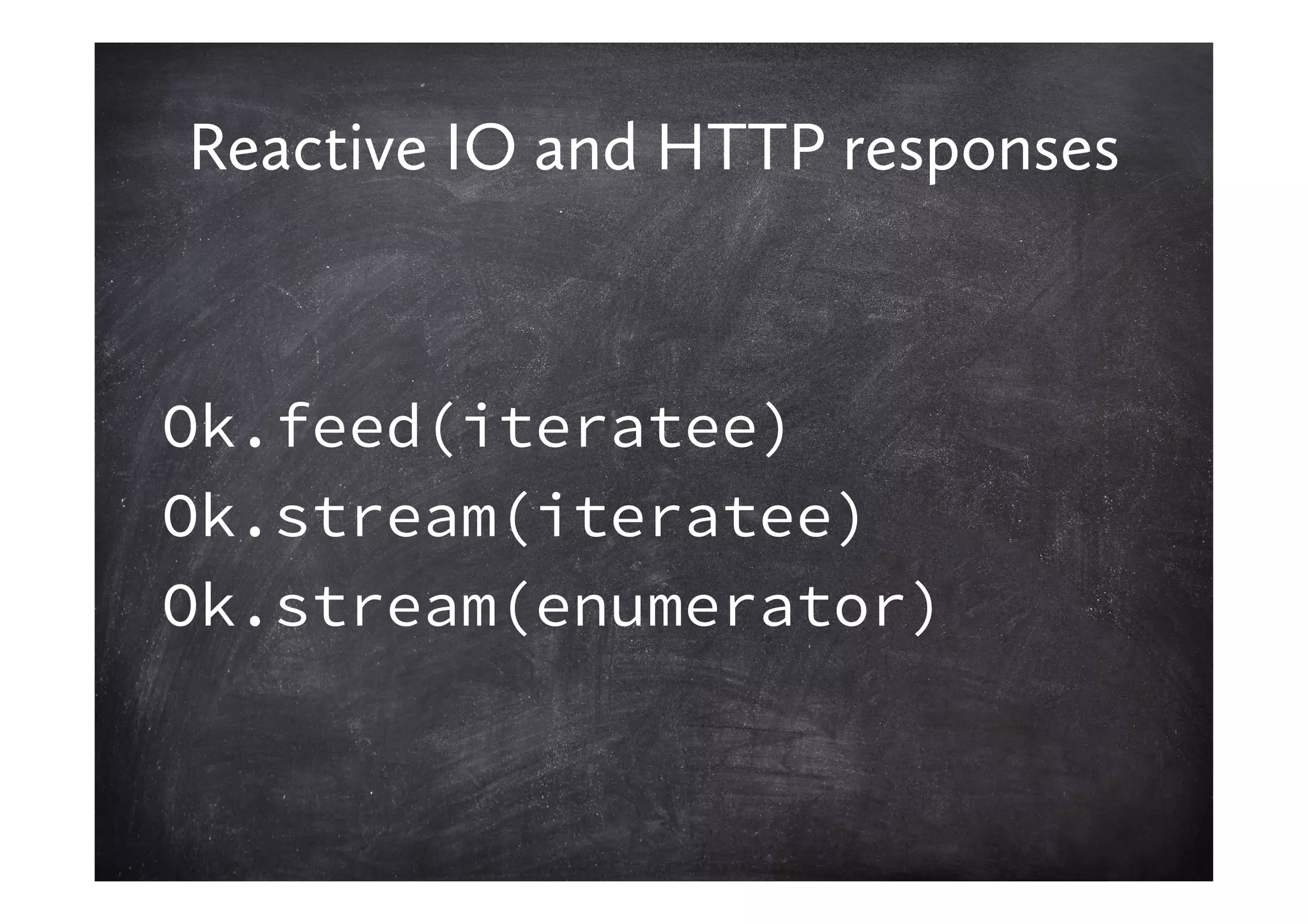
Reactive IO and HTTP responses


Ok.feed(iteratee)
Ok.stream(iteratee)
Ok.stream(enumerator)
Reactive IO in the real world


Streaming APIs
File streaming
Server-generated events
Reactive data
WebSockets
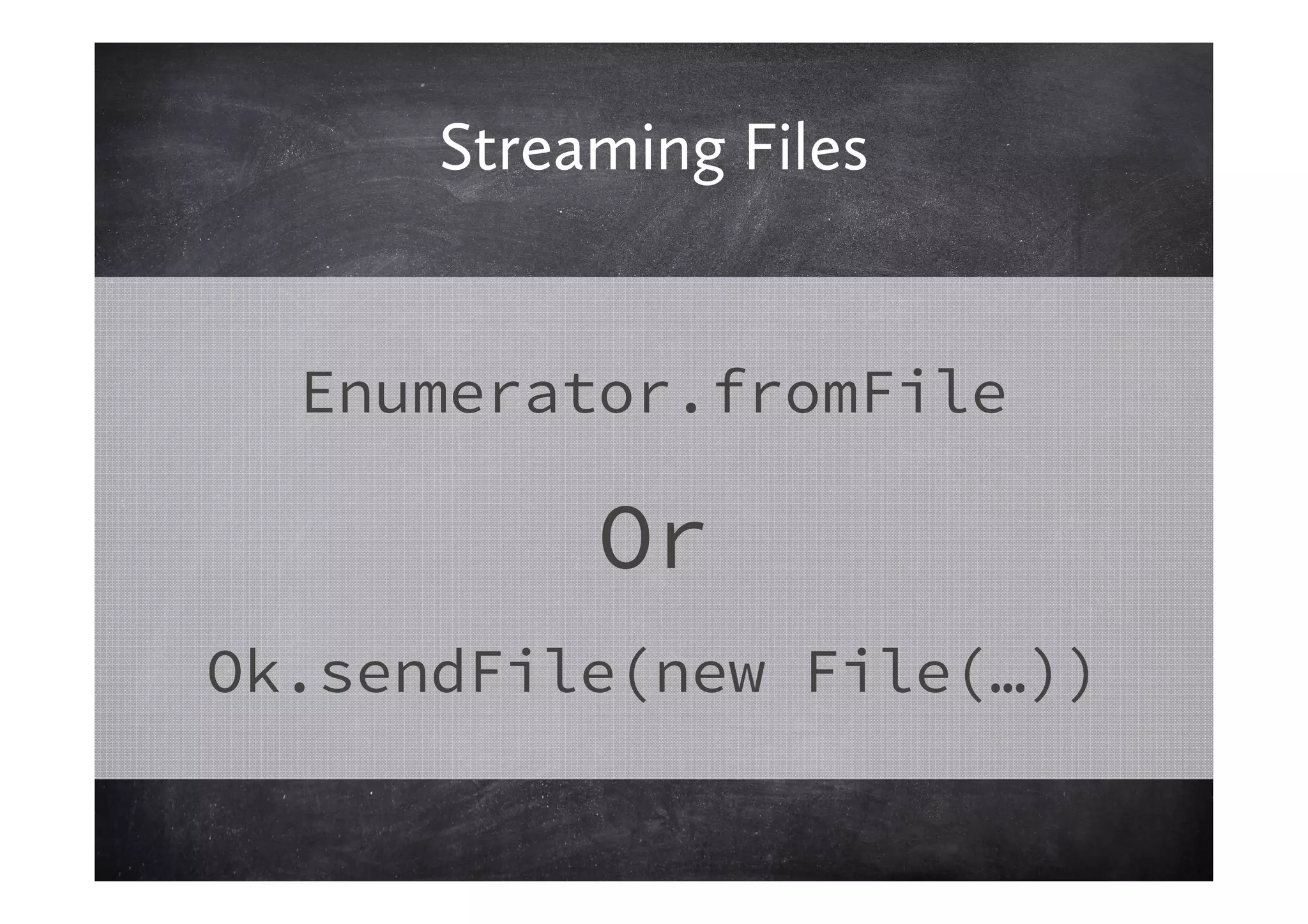
Streaming Files


  Enumerator.fromFile

           Or
Ok.sendFile(new File(…))
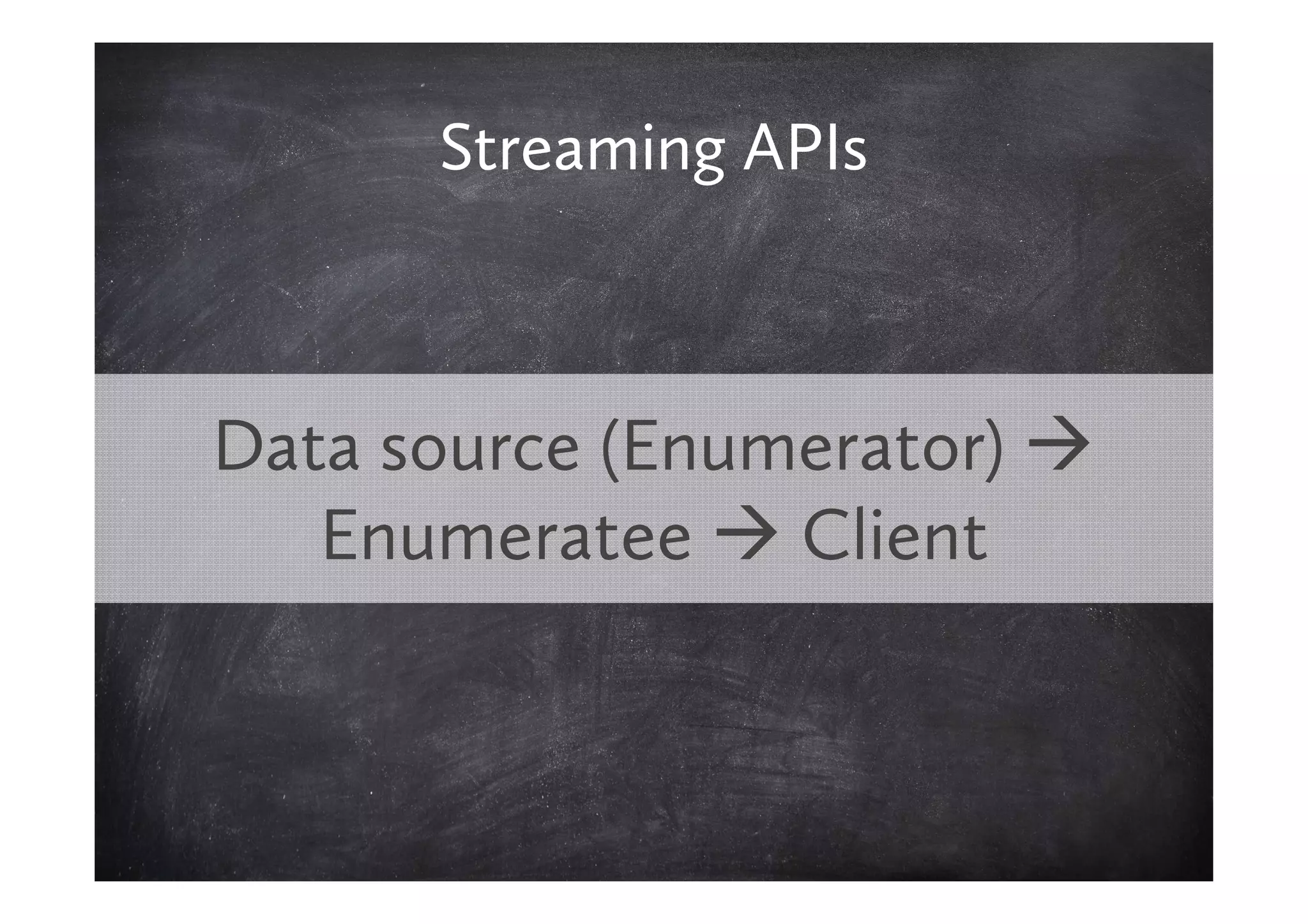
Streaming APIs


Data source (Enumerator)
   Enumeratee Client
WebSockets
 def websocketTime = WebSocket.async[String] { request =>
    Akka.future {
      val timeEnumerator = Enumerator.fromCallback { () =>
        Promise.timeout(Some((new Date).toString()), 5000
milliseconds)
      }

          val in = Iteratee.foreach[String] { message =>
              println(message)
           }

          (in, timeEnumerator)
      }
  }
Demo: Reactive IO
A glimpse of the future: Reactive
                Mongo


val cursor = collection.find(query)
val futureListOfArticles: Future[List[Article]] =
cursor.toList
futureListOfArticles.onSuccess { articles =>
  for(article <- articles)
    println("found article: " + article)
}
All work and no            makes Jack a
     dull boy (but there’s still hope)
Grails 2.0 + Servlet 3.0

def index() {
    def ctx = startAsync()
    ctx.start {
        new Book(title:"The Stand").save()
        render template:"books", model:[books:Book.list()]
        ctx.complete()
    }
}
All work and no            makes Jack a
     dull boy (but there’s still hope)
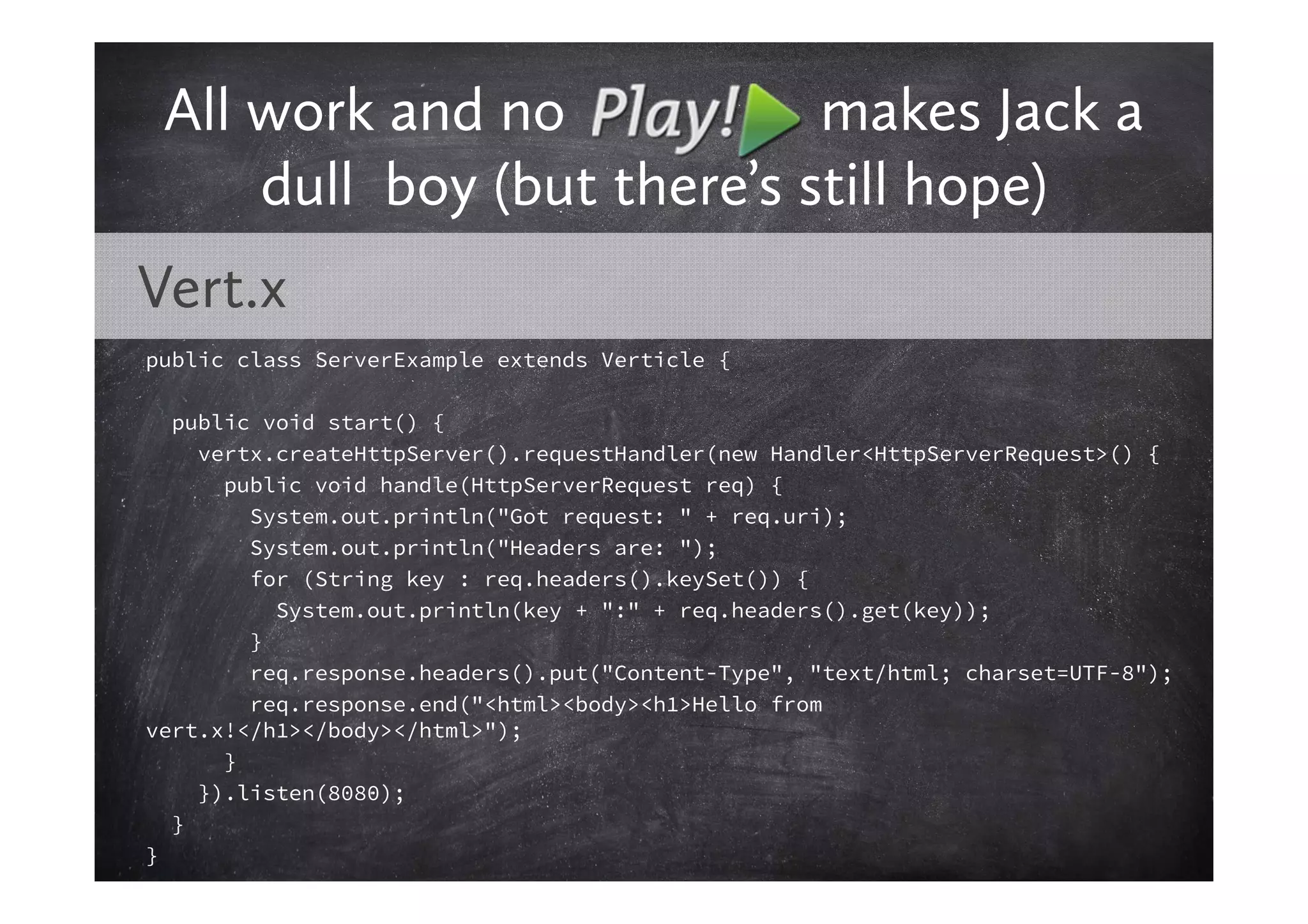
Vert.x
public class ServerExample extends Verticle {

  public void start() {
    vertx.createHttpServer().requestHandler(new Handler<HttpServerRequest>() {
      public void handle(HttpServerRequest req) {
        System.out.println("Got request: " + req.uri);
        System.out.println("Headers are: ");
        for (String key : req.headers().keySet()) {
          System.out.println(key + ":" + req.headers().get(key));
        }
        req.response.headers().put("Content-Type", "text/html; charset=UTF-8");
        req.response.end("<html><body><h1>Hello from
vert.x!</h1></body></html>");
      }
    }).listen(8080);
  }
}
Github repo or it didn’t happen


https://github.com/oscarrenalias/wjax
        -2012-play-async-apps
Thank you

Asynchronous web apps with the Play Framework 2.0

  • 1.
    Asynchronous Web Appswith Play 2.0 Oscar Renalias
  • 2.
    What we’ll dotoday Take a look at Play’s asynchronous capabilities Real world usage scenarios
  • 3.
    About me Oscar Renalias oscarrenalias github.com/oscarrenalias oscar.renalias@accenture.com oscar@renalias.net
  • 4.
  • 5.
  • 6.
    Scalability Why Async?? Performance Responsiveness
  • 7.
    Traditional Request ProcessingModel Thread pool Requests
  • 8.
    Play’s Model Thread pool Blocking IO Asynchronous response Requests
  • 9.
    Haven’t we donethis before?
  • 10.
    Other attempts App-server specific,e.g. Jetty continuations NIO/Netty Servlet 3.0 Vert.x Node.js BlueEyes
  • 11.
    Play’s asynchronous capabilities Asynchronousrequests Non-blocking reactive IO
  • 12.
  • 13.
    Planning for theFuture A Future is a read-only placeholder for a value that may be available at a later stage
  • 14.
    Futures and Promises valf:Promise[Something] = Akka.future { longOperation() } val f2:Promise[SomethingElse] = f.map(s=>handleContents(s)) f2.value.fold( ex=> handleError(ex), value=> handleOk(value) )
  • 15.
    Asynchronous Results val promiseOfPIValue:Promise[Double] = computePIAsynchronously() val promiseOfResult: Promise[Result] = promiseOfPIValue.map { pi => Ok("PI value computed: " + pi) } Promise[Something] Promise[Result] Browser
  • 16.
    Making our actionsasynchronous with asynchronous responses object MyController extends Controller { def simpleAsyncAction = Action { val p:Promise[Result] = Akka.future { val someResult = longOperation() Ok(someResult) } AsyncResult(p) } }
  • 17.
    def orders =Action { Async { Akka.future { SalesOrder.findAll } orTimeout(Ok(Json.toJson(JsonError("Timeout"))), 5, SECONDS) map { orders => orders.fold( orders => Ok(Json.toJson(orders)), error => Ok(Json.toJson(JsonError("Error"))) ) } } } AsyncResult gets very tedious very soon. Can we do better?
  • 18.
    Asynchronous responses inthe real world def WithFuture[T](seconds:Int)(f: => T)(implicit jsonHelper:Writes[T]) = { Async { Akka.future { f } orTimeout(Ok(Json.toJson(JsonError(”..."))), seconds, SECONDS) map { result => result.fold( data => Ok(Json.toJson(data)), error => Ok(Json.toJson(JsonError("Error"))) ) } } } def prettyOrders = Action { WithFuture(1) { SalesOrder.findAll } }
  • 19.
    Demo: Promises, Futuresand asynchronous responses
  • 20.
    Asynchronous web services Async{ WS.url("http://.../").get().map { resp => Ok(someJsonContent(response)) } }
  • 21.
  • 22.
  • 23.
    Reactive IO “Don’t callus, we’ll call you”
  • 24.
    Reactive IO Enumerator =producer Iteratee = consumer
  • 25.
    Enumerators: the theory trait Enumerator[E] { def apply[A](i: Iteratee[E, A]): Promise[Iteratee[E, A]] } Enumerator(Iteratee) Promise[AnotherIteratee]
  • 26.
    Enumerators produce data valstringEnumerator = Enumerator("one", "two", "three", "four") val updateGenerator = Enumerator.fromCallback { () => Promise.timeout(Some(Update.random), 5000 milliseconds) } val e = Enumerator.imperative(...) e.push(“data”) e.push(“more data”)
  • 27.
    Behind the sceneswith Iteratees def fold[B]( done: (A, Input[E]) => Promise[B], cont: (Input[E] => Iteratee[E,A]) => Promise[B], error: (String, Input[E]) => Promise[B] ): Promise[B] • Done: there is no more input • Cont: more input incoming • Error: there was an error with the input
  • 28.
  • 29.
  • 30.
  • 31.
    Composability val dataGenerator =Enumerator.fromCallback { () => Promise.timeout(Some(new java.util.Random().nextInt(100)), 5000 milliseconds) } val toStr = Enumeratee.map[Int] { x => x.toString } val toConsole = Iteratee.foreach[String](println(_)) dataGenerator &> toStr |>> toConsole
  • 32.
    Reactive IO andHTTP responses Ok.feed(iteratee) Ok.stream(iteratee) Ok.stream(enumerator)
  • 33.
    Reactive IO inthe real world Streaming APIs File streaming Server-generated events Reactive data WebSockets
  • 34.
    Streaming Files Enumerator.fromFile Or Ok.sendFile(new File(…))
  • 35.
    Streaming APIs Data source(Enumerator) Enumeratee Client
  • 36.
    WebSockets def websocketTime= WebSocket.async[String] { request => Akka.future { val timeEnumerator = Enumerator.fromCallback { () => Promise.timeout(Some((new Date).toString()), 5000 milliseconds) } val in = Iteratee.foreach[String] { message => println(message) } (in, timeEnumerator) } }
  • 37.
  • 38.
    A glimpse ofthe future: Reactive Mongo val cursor = collection.find(query) val futureListOfArticles: Future[List[Article]] = cursor.toList futureListOfArticles.onSuccess { articles => for(article <- articles) println("found article: " + article) }
  • 39.
    All work andno makes Jack a dull boy (but there’s still hope) Grails 2.0 + Servlet 3.0 def index() { def ctx = startAsync() ctx.start { new Book(title:"The Stand").save() render template:"books", model:[books:Book.list()] ctx.complete() } }
  • 40.
    All work andno makes Jack a dull boy (but there’s still hope) Vert.x public class ServerExample extends Verticle { public void start() { vertx.createHttpServer().requestHandler(new Handler<HttpServerRequest>() { public void handle(HttpServerRequest req) { System.out.println("Got request: " + req.uri); System.out.println("Headers are: "); for (String key : req.headers().keySet()) { System.out.println(key + ":" + req.headers().get(key)); } req.response.headers().put("Content-Type", "text/html; charset=UTF-8"); req.response.end("<html><body><h1>Hello from vert.x!</h1></body></html>"); } }).listen(8080); } }
  • 41.
    Github repo orit didn’t happen https://github.com/oscarrenalias/wjax -2012-play-async-apps
  • 44.