Download as PDF, PPTX





![@NgModule({
declarations: [...],
imports: [
AngularFireModule.initializeApp({
apiKey: “<YOUR API KEY>",
authDomain: “<AUTH DOMAIN>",
databaseURL: “<DB URL>",
projectId: “<PROJECT ID>",
storageBucket: “<STORAGE BUCKET>",
messagingSenderId: “<MESSAGING ID>"
}),
],
providers: [...],
bootstrap: [AppComponent]
})
export class AppModule { }](https://image.slidesharecdn.com/angular-injectiontokenslibraries-181128054618/75/Angular-injection-tokens-Custom-libraries-12-2048.jpg)




![Provide the value
useClass
@NgModule({
declarations: [],
imports: [
],
providers: [ {provide: LoggerService, useClass: LoggerService}],
exports: [LoggerComponent]
})](https://image.slidesharecdn.com/angular-injectiontokenslibraries-181128054618/75/Angular-injection-tokens-Custom-libraries-23-2048.jpg)
![Provide the value
useClass - syntactic sugar
@NgModule({
declarations: [],
imports: [
],
providers: [LoggerService],
exports: [LoggerComponent]
})](https://image.slidesharecdn.com/angular-injectiontokenslibraries-181128054618/75/Angular-injection-tokens-Custom-libraries-24-2048.jpg)
![Provide the value
useValue
@NgModule({
declarations: [],
imports: [
],
providers: [{ provide: loggerConfig, useValue: {appName: 'APP1'} }],
exports: [LoggerComponent]
})](https://image.slidesharecdn.com/angular-injectiontokenslibraries-181128054618/75/Angular-injection-tokens-Custom-libraries-25-2048.jpg)
![Provide the value
useExisting
@NgModule({
declarations: [],
imports: [
],
providers: [{ provide: LoggerService, useExisting: HttpLoggerService }],
exports: [LoggerComponent]
})](https://image.slidesharecdn.com/angular-injectiontokenslibraries-181128054618/75/Angular-injection-tokens-Custom-libraries-26-2048.jpg)
![Provide the value
useFactory
@NgModule({
declarations: [],
imports: [
],
providers: [{ provide: LoggerService, useFactory: () => {
return new LoggerService();
} }],
exports: [LoggerComponent]
})](https://image.slidesharecdn.com/angular-injectiontokenslibraries-181128054618/75/Angular-injection-tokens-Custom-libraries-27-2048.jpg)
![Multi providers
● We have the ability to provide
multi providers into the same
Token -
HTTP_INTERCEPTOR,
APP_INITIZALIER
@NgModule({
bootstrap: [AppComponent],
imports: [...],
providers: [
{
provide: HTTP_INTERCEPTORS,
useClass: TokenInterceptor,
multi: true
},
{
provide: HTTP_INTERCEPTORS,
useClass: LoggerService,
multi: true
}
]
})](https://image.slidesharecdn.com/angular-injectiontokenslibraries-181128054618/75/Angular-injection-tokens-Custom-libraries-28-2048.jpg)
![Deps (dependencies)
● Sometimes providers
depends on other
providers to get
instantiated.
@NgModule({
declarations: [],
imports: [
],
providers: [
{
provide: APP_INITIALIZER,
useFactory: init_app,
deps: [AppInitService],
multi: true
},
],
exports: [LoggerComponent]
})](https://image.slidesharecdn.com/angular-injectiontokenslibraries-181128054618/75/Angular-injection-tokens-Custom-libraries-29-2048.jpg)

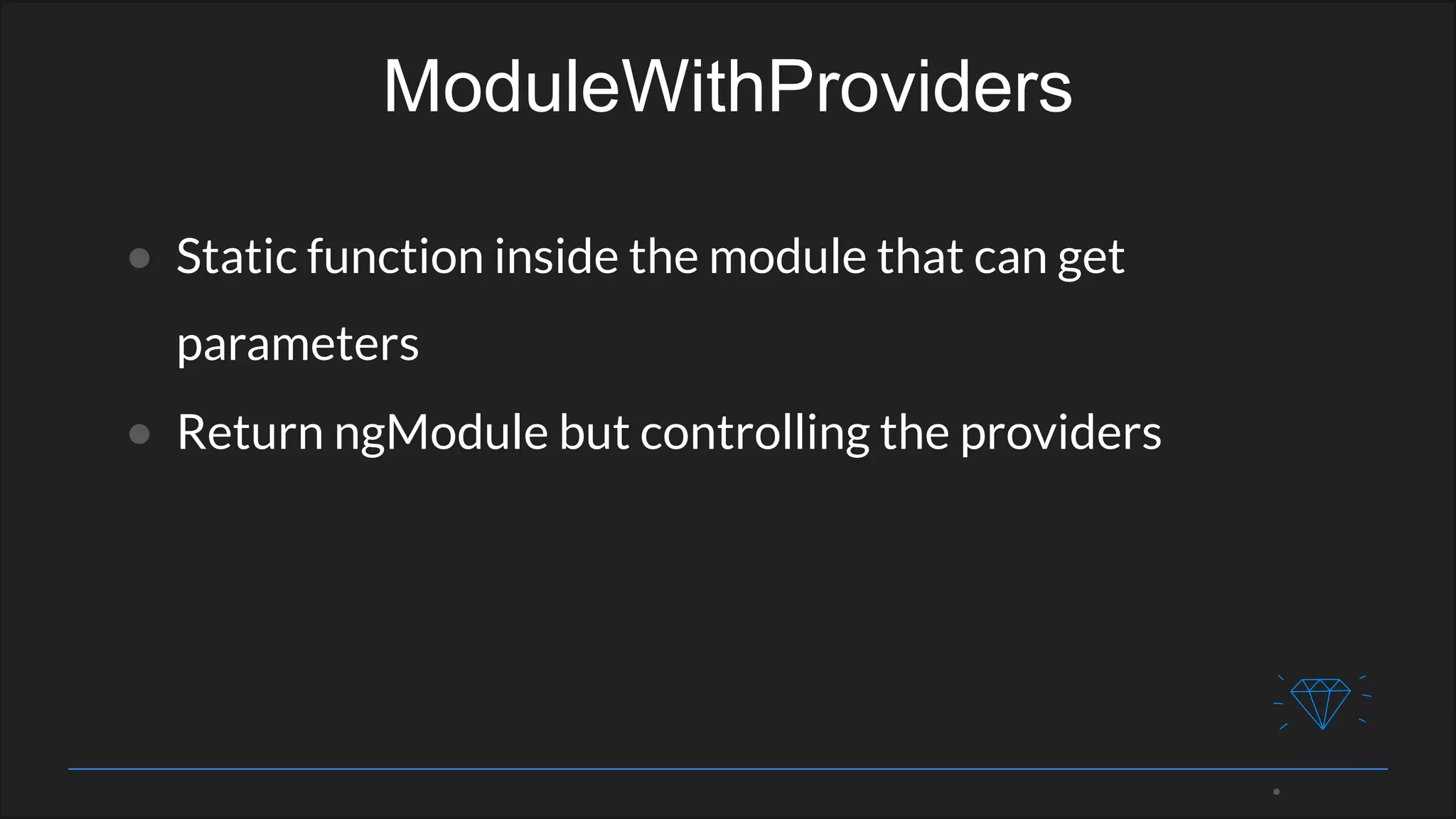
![ModuleWithProviders - Angular Router
export class RouterModule {
static forRoot(routes: Routes, config?: ExtraOptions):
ModuleWithProviders<RouterModule> {
return {
ngModule: RouterModule,
providers: [
...
],
};
}
}](https://image.slidesharecdn.com/angular-injectiontokenslibraries-181128054618/75/Angular-injection-tokens-Custom-libraries-33-2048.jpg)


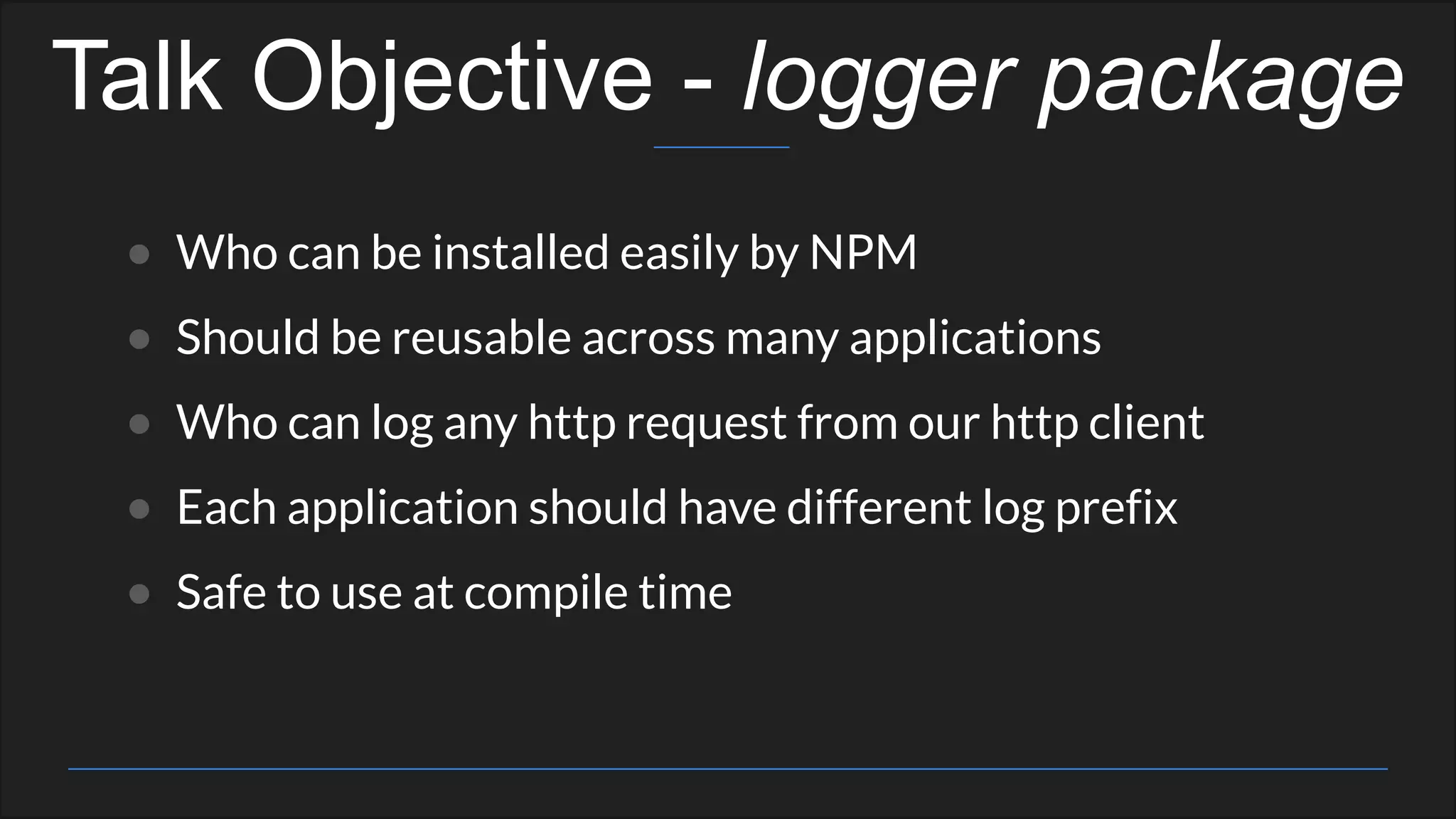
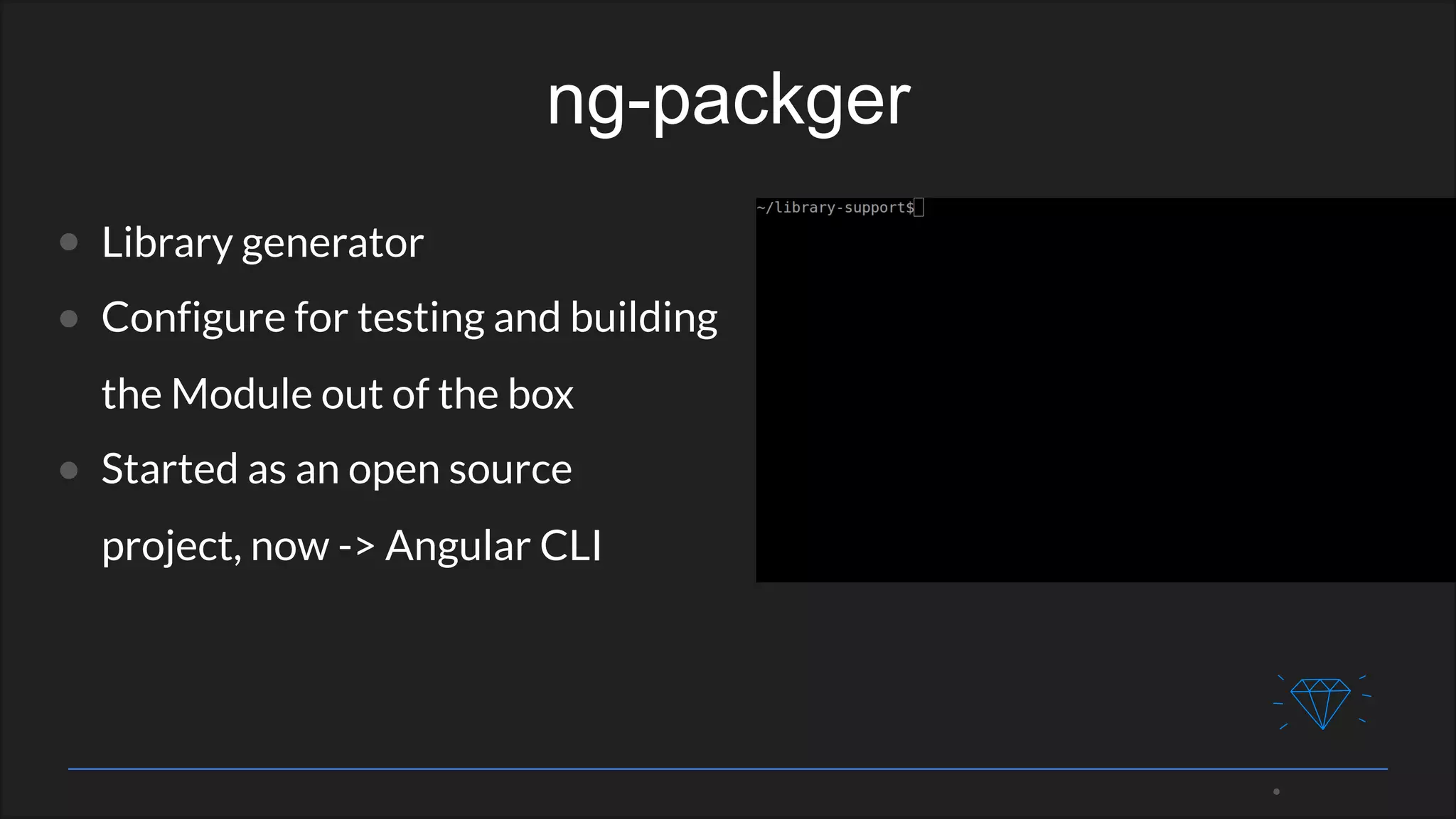
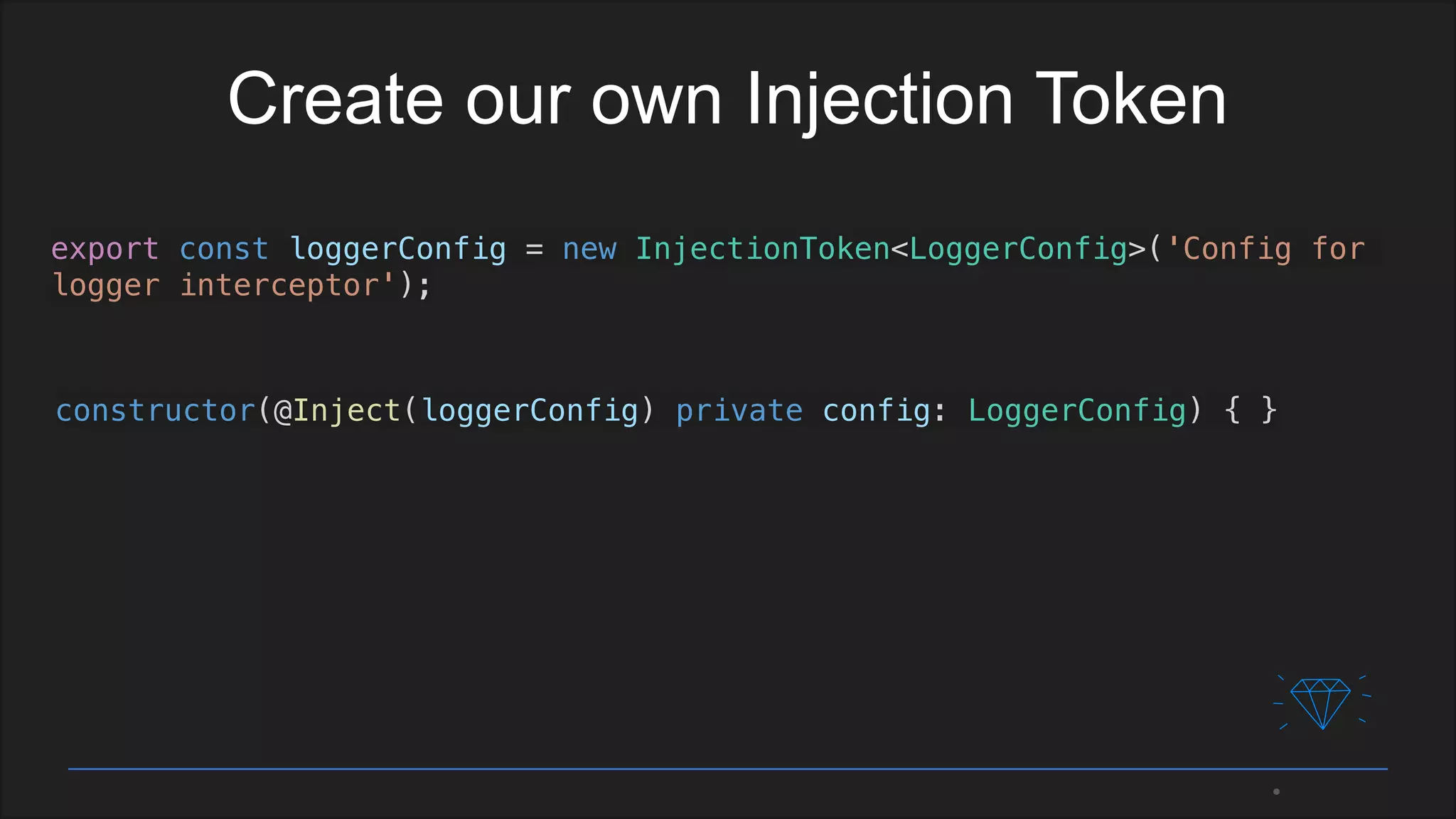
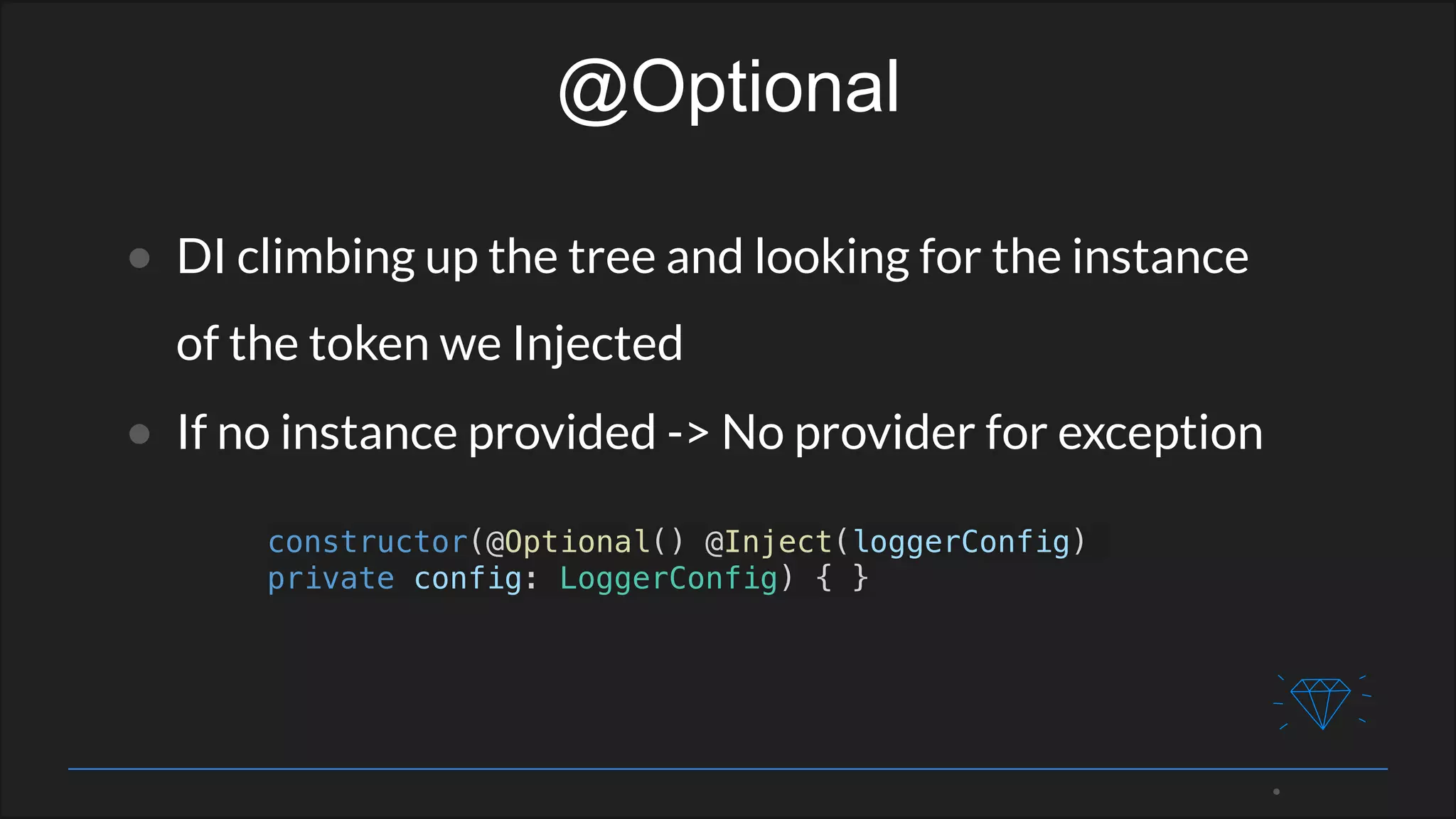
The document outlines the development of a reusable logger package for Angular applications using dependency injection and various provider configurations. Key concepts covered include creating injection tokens, utilizing NgModule for providers, and the importance of decoupling components for testing and reusability. It provides examples of different provider methods such as useClass, useValue, and useFactory, as well as strategies for managing module dependencies.


![Coded Agents – with UiPath SDK + LangGraph [Virtual Hands-on Workshop]](https://cdn.slidesharecdn.com/ss_thumbnails/codedagentsdeck-251215155422-5497c599-thumbnail.jpg?width=640&height=640&fit=bounds)


