The document discusses requirements modeling and analysis modeling in software engineering. It provides information on:
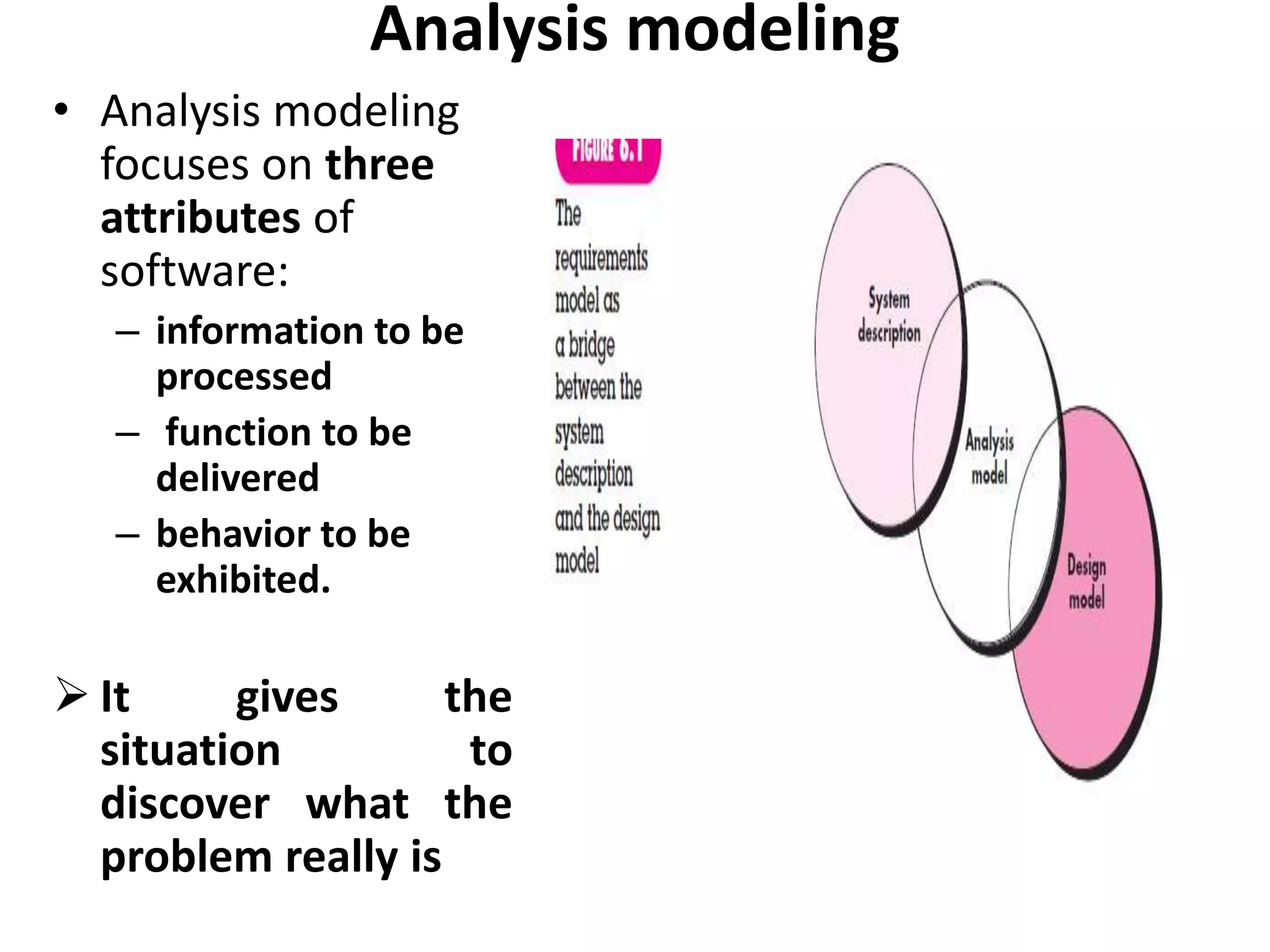
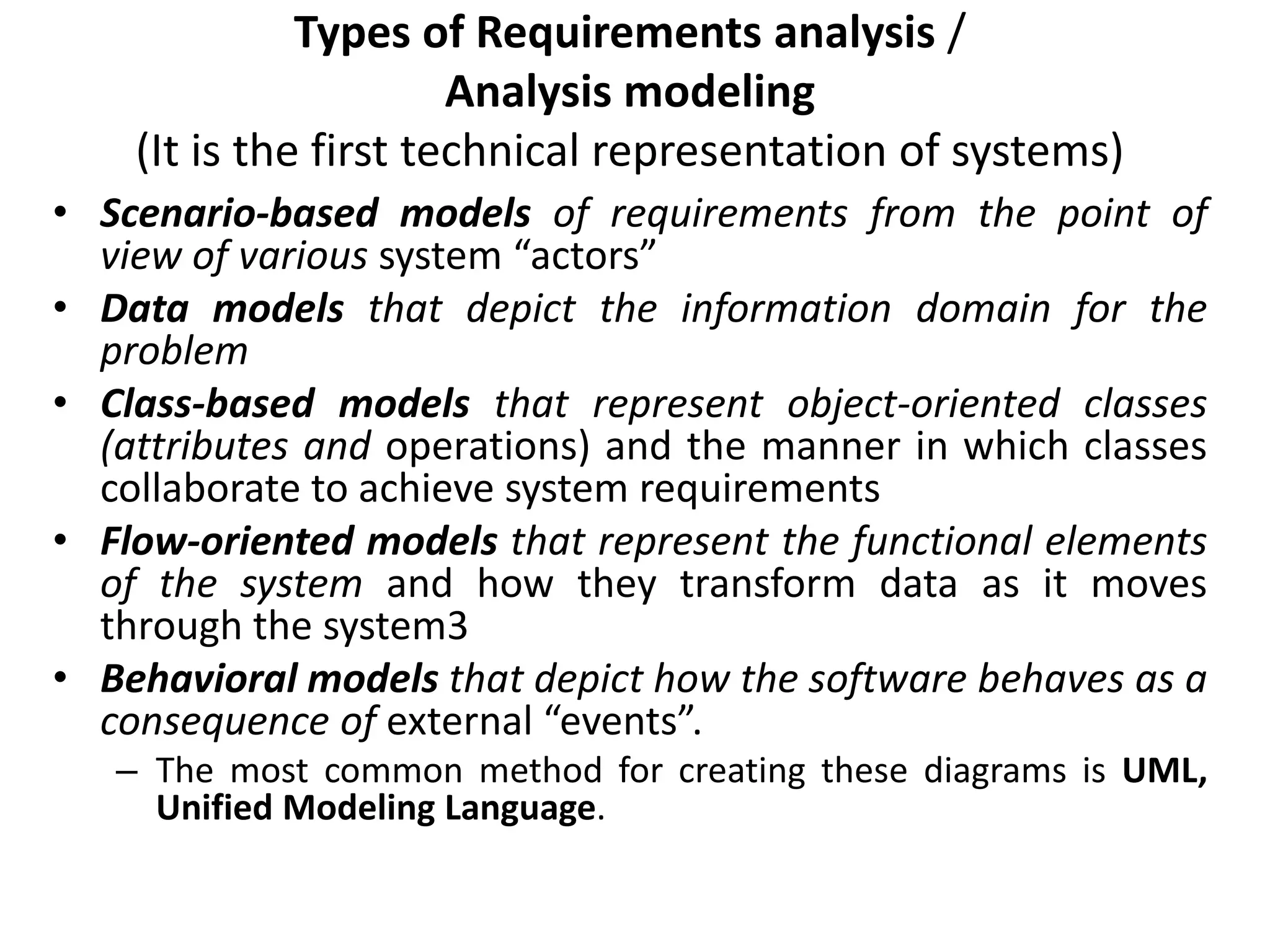
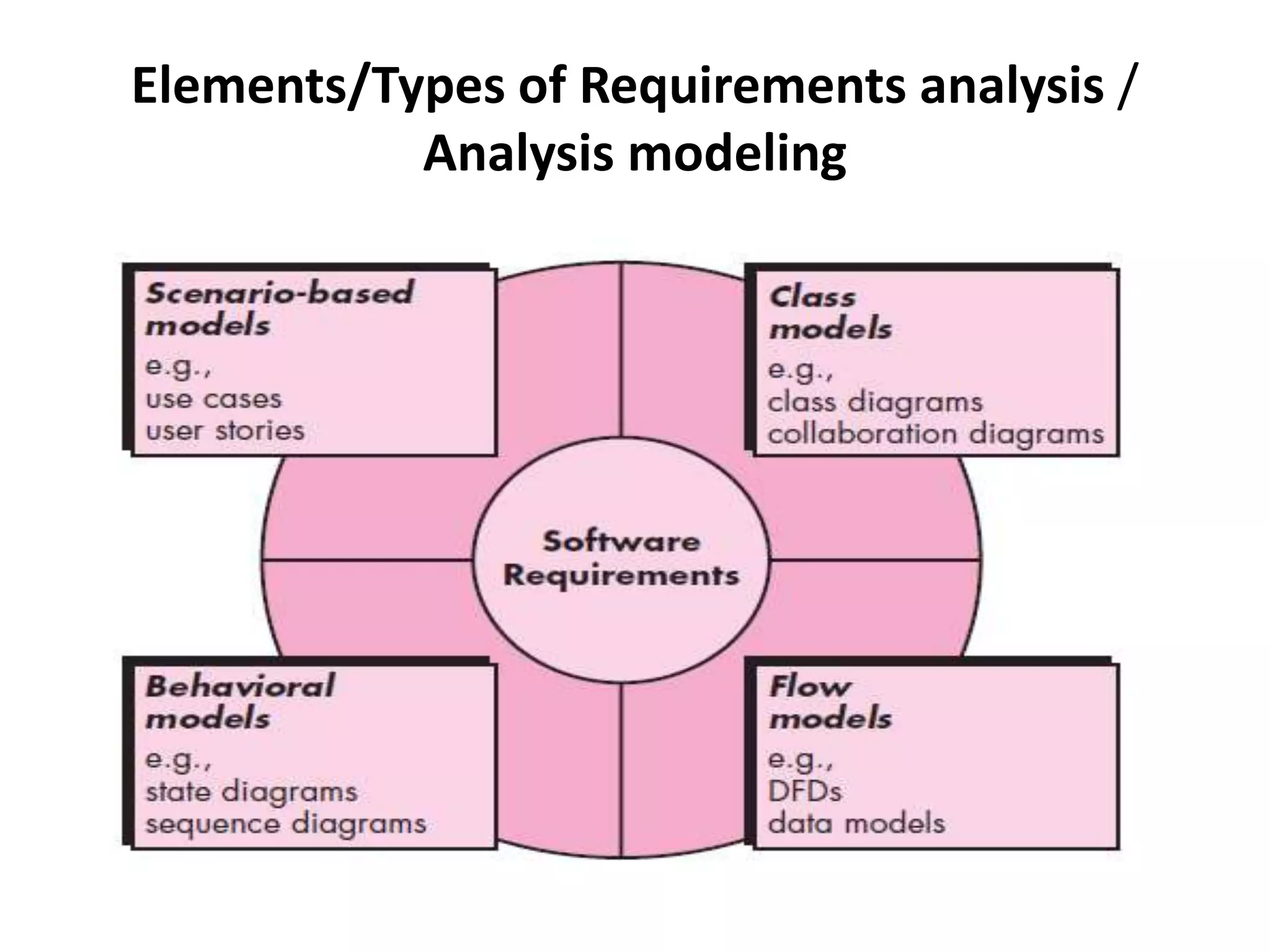
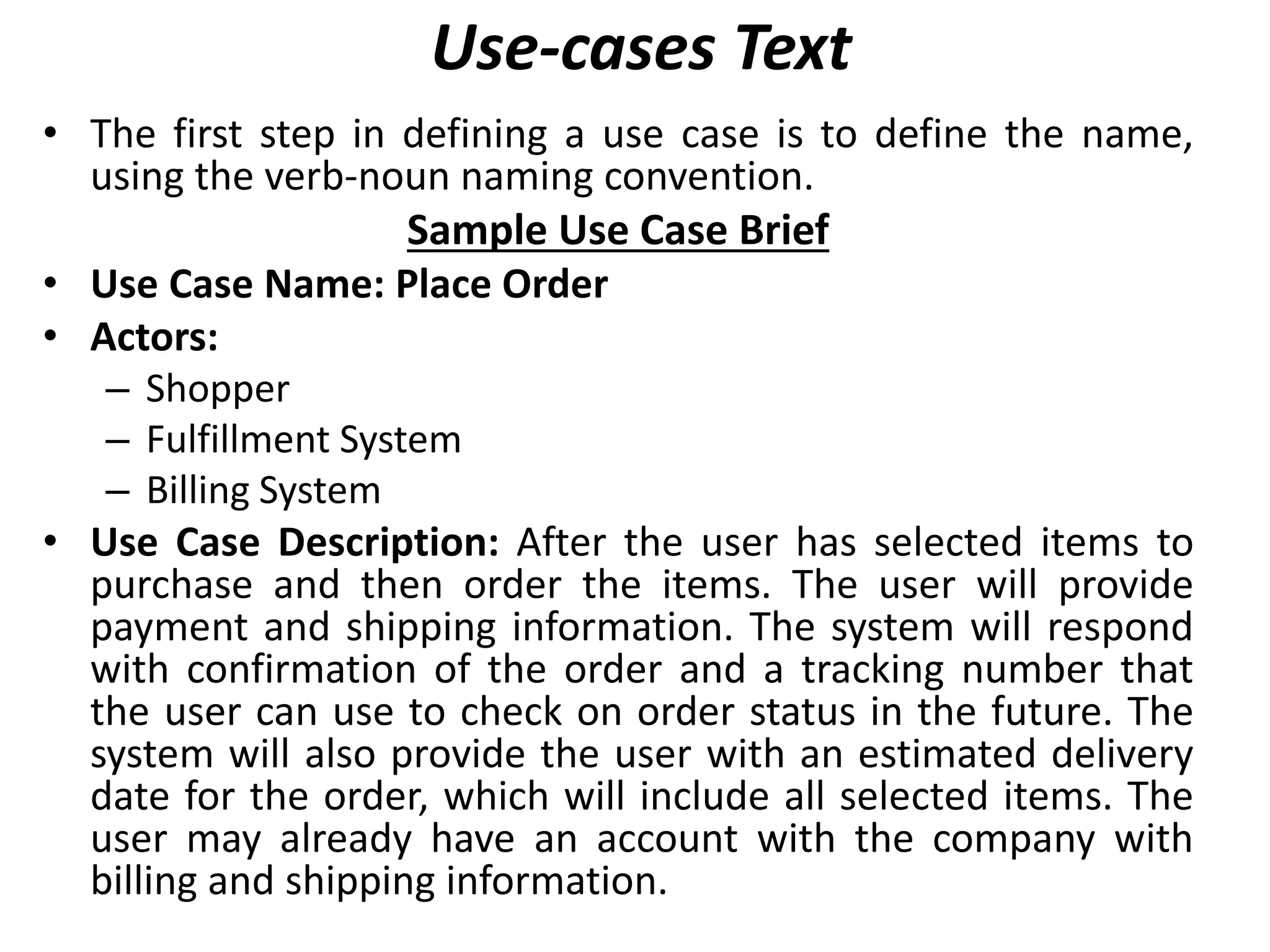
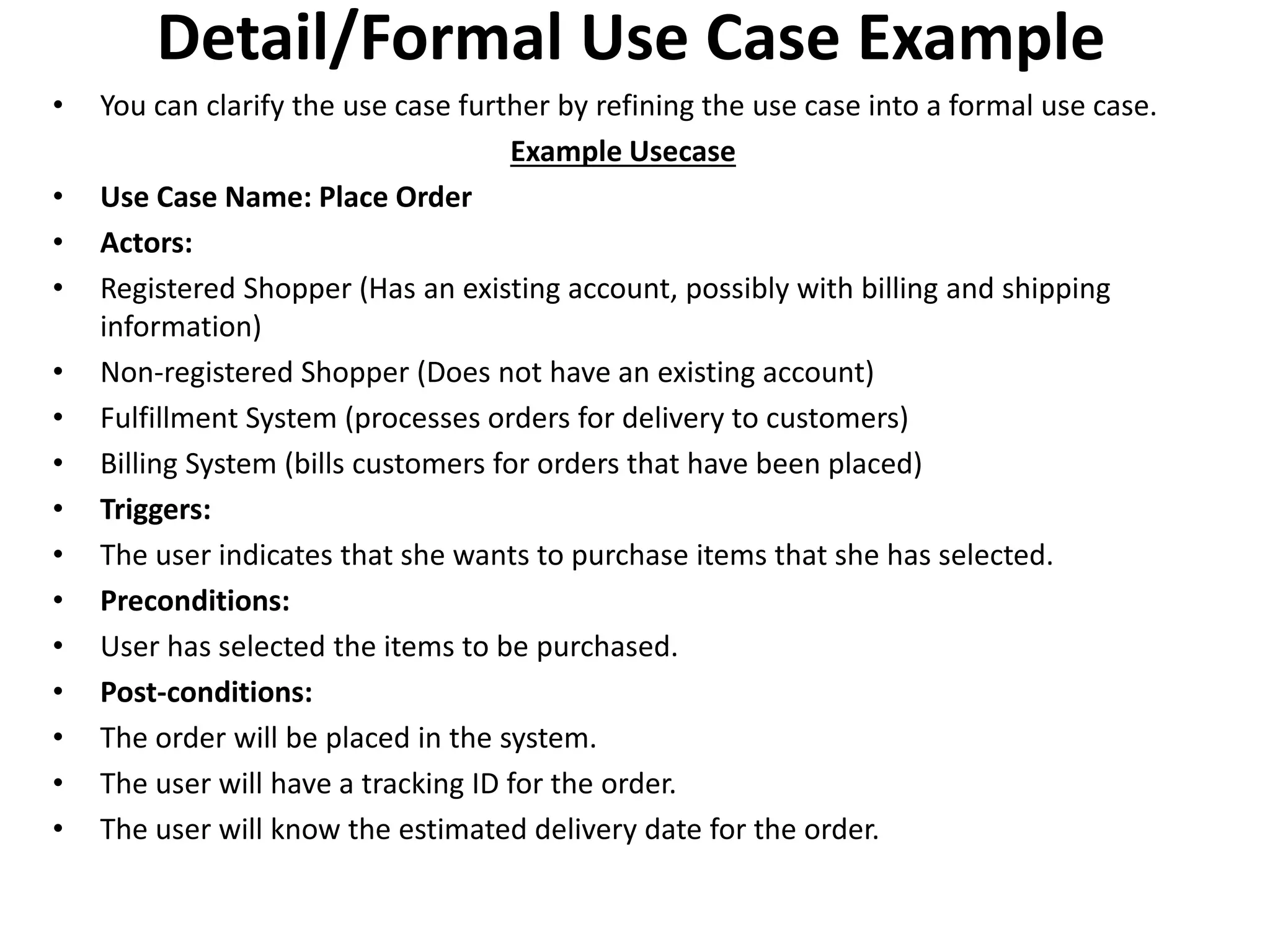
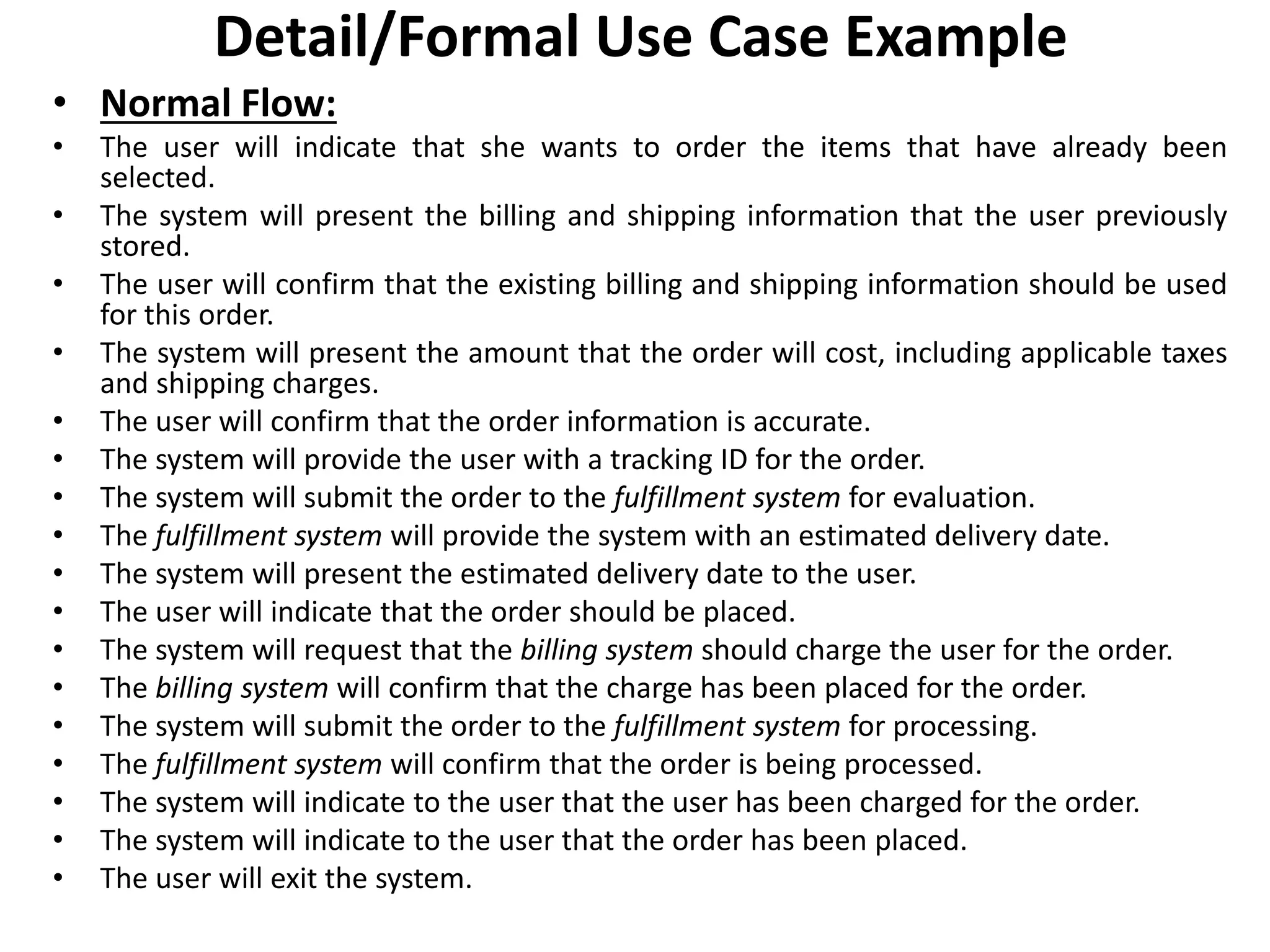
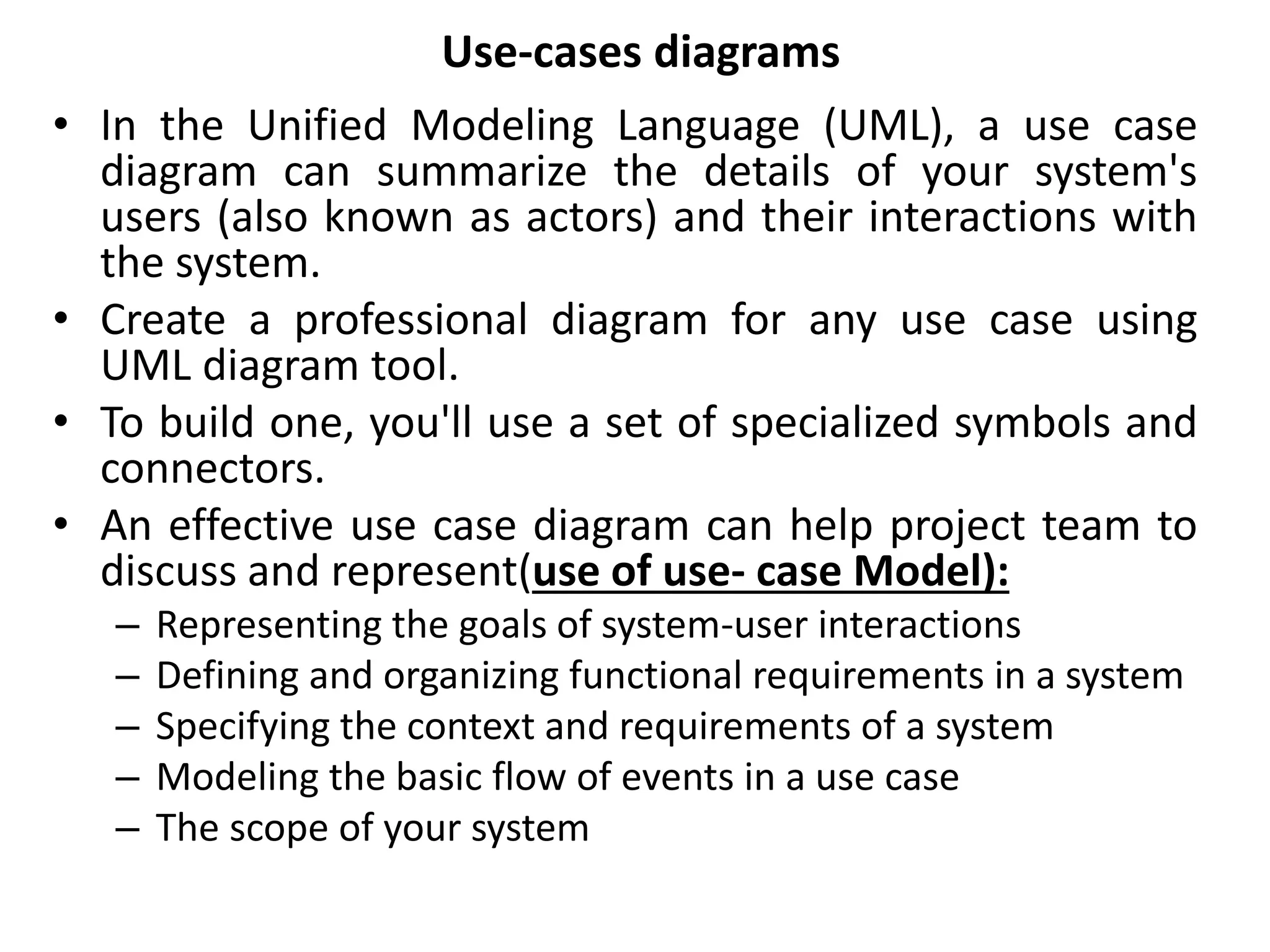
1) The different types of models that can be created during requirements modeling, including requirements models, design models, scenario-based models, data models, class-based models, flow-oriented models, and behavioral models.
2) The purposes of requirements modeling, which include representing customer requirements, gaining a better understanding of the system, and providing information to help with system design and development.
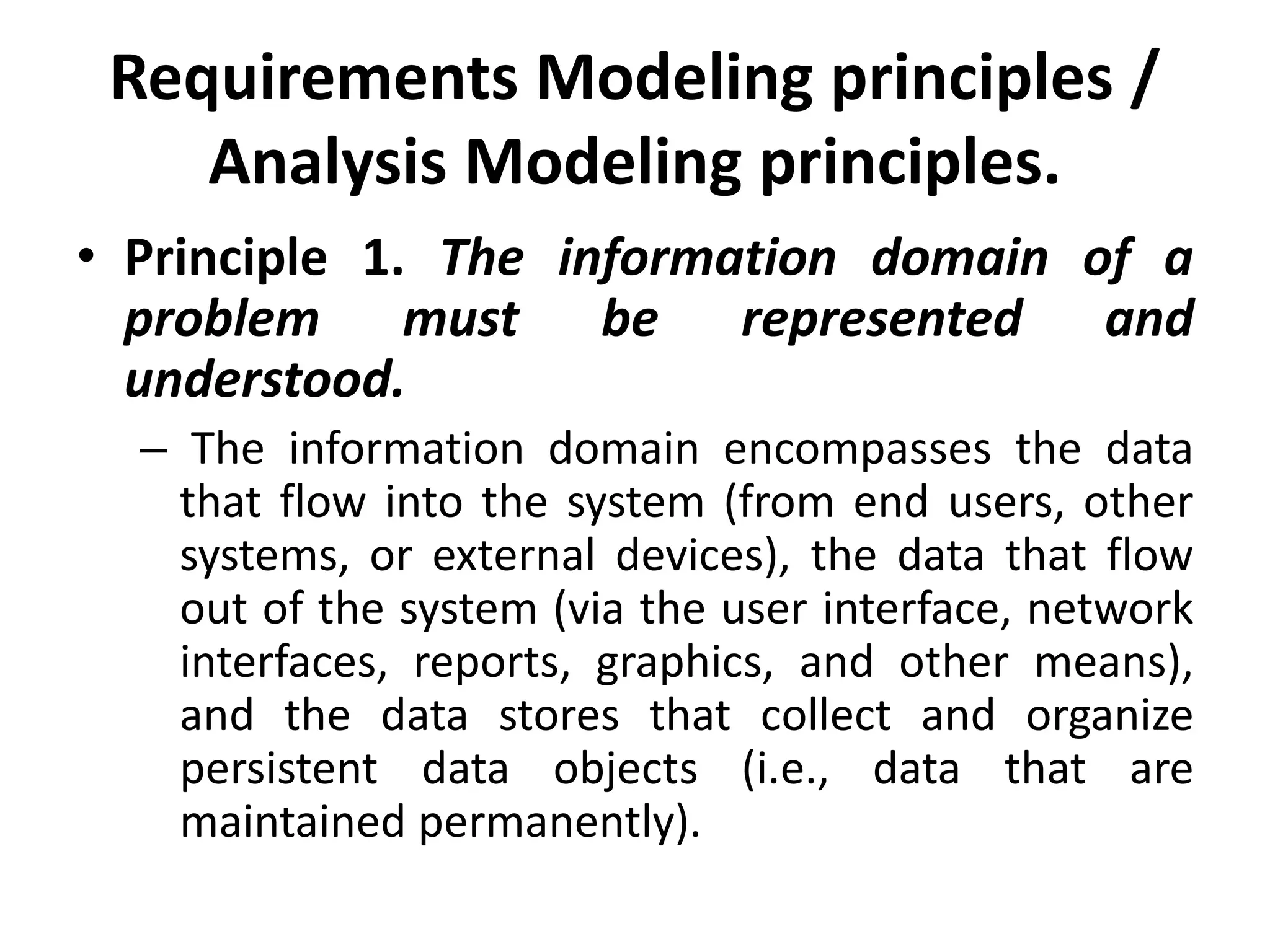
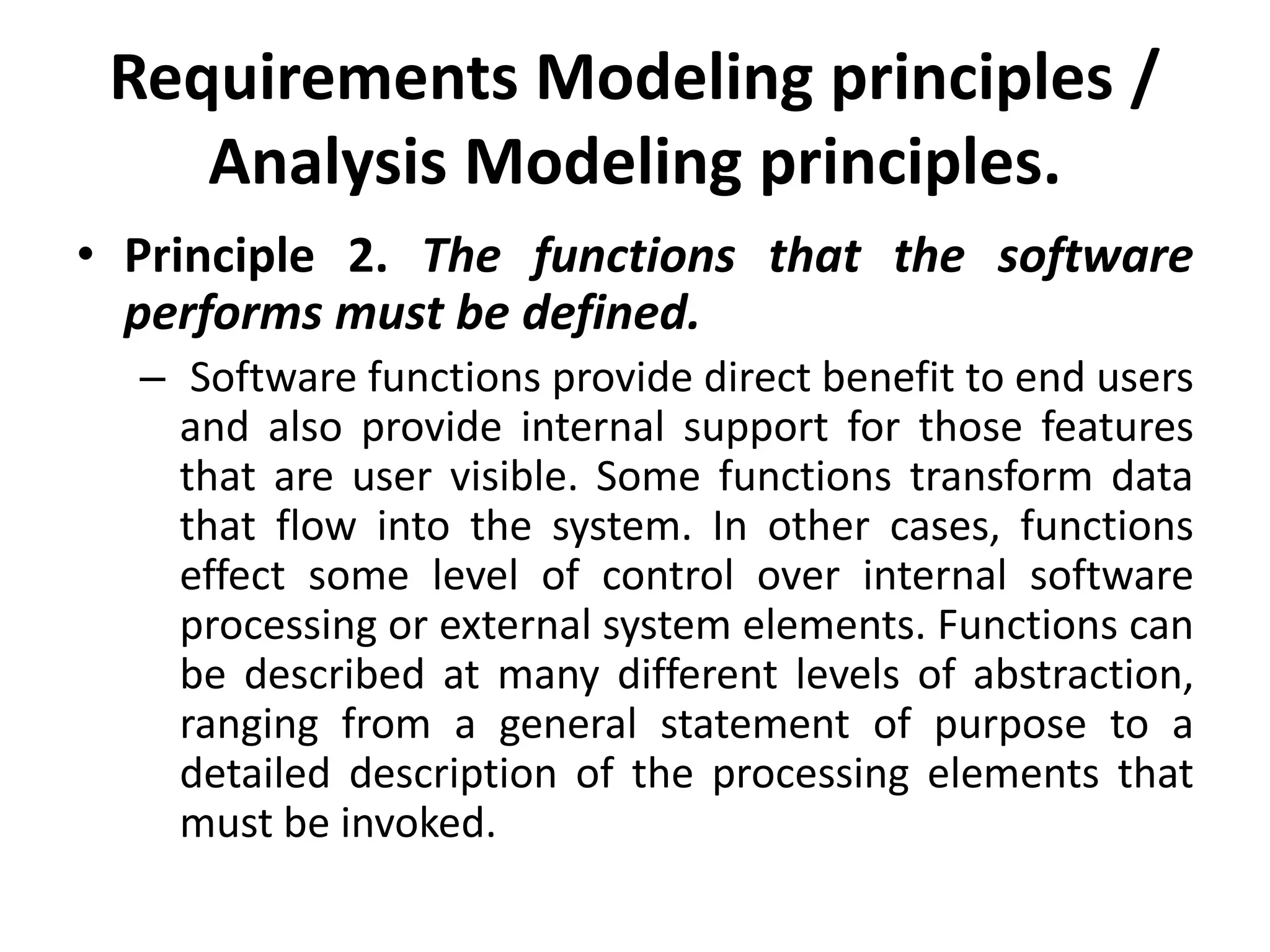
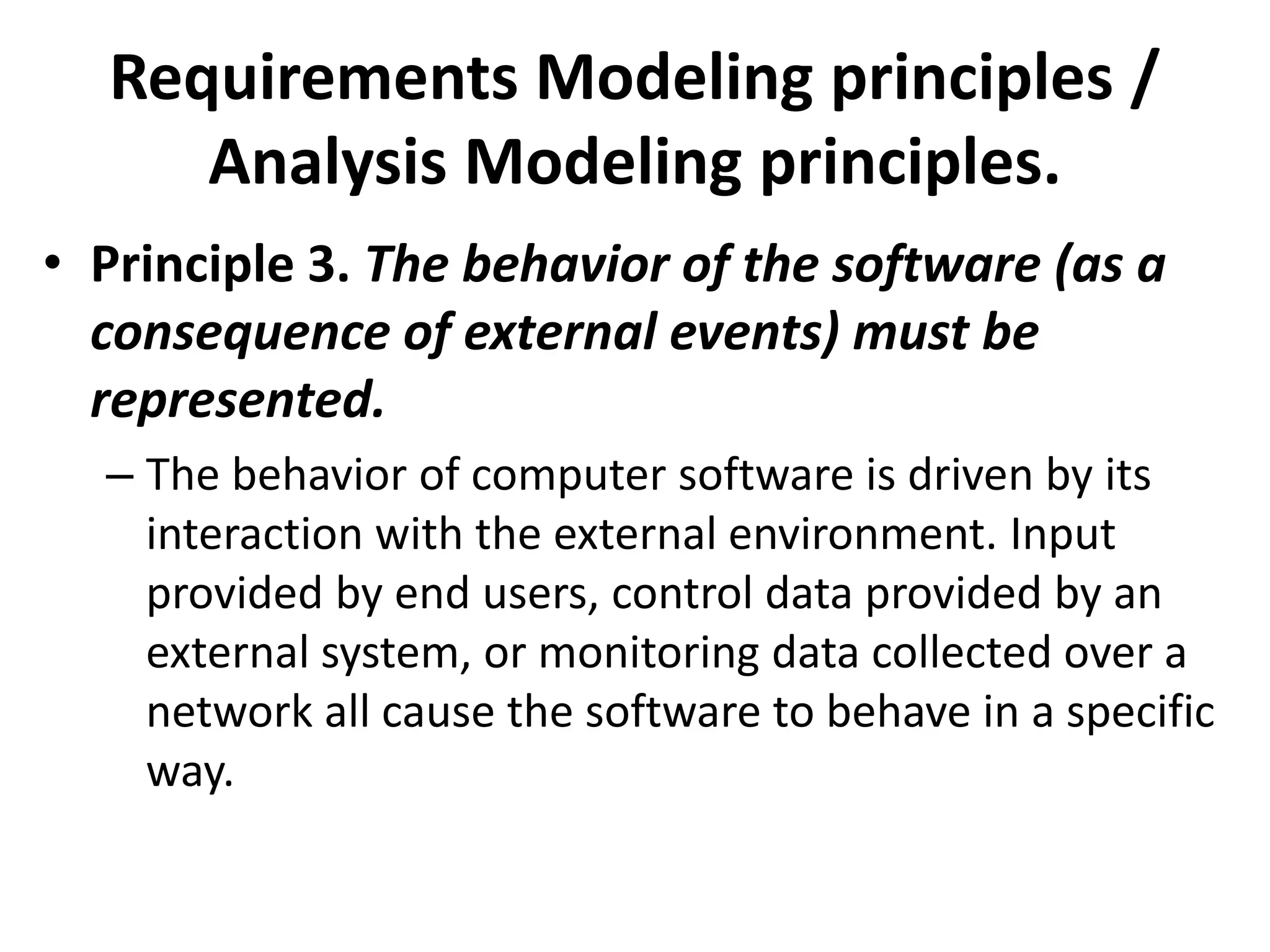
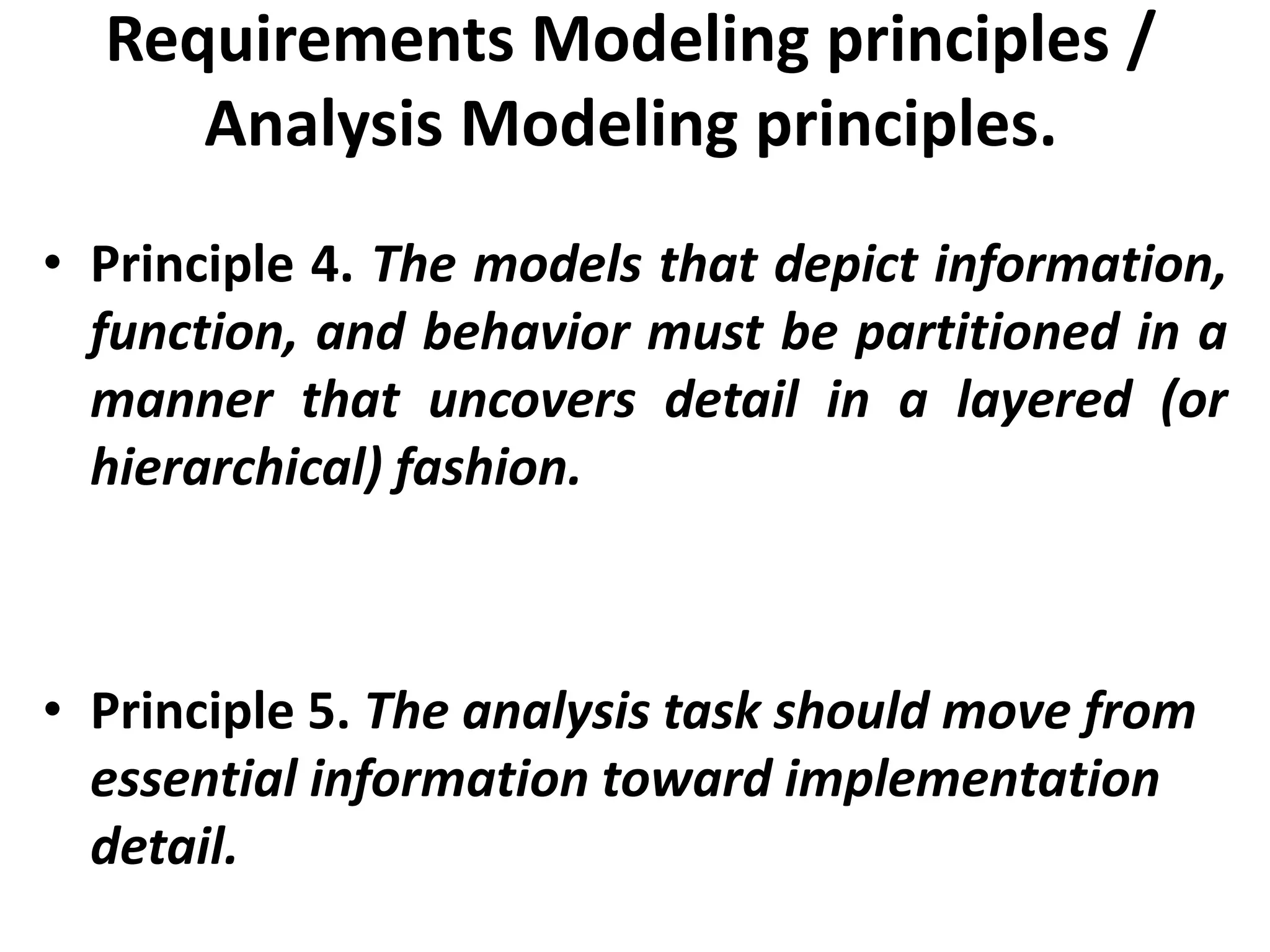
3) Key principles of requirements modeling, such as representing the information, functional, and behavioral domains of the system and partitioning models in a layered/hierarchical way.
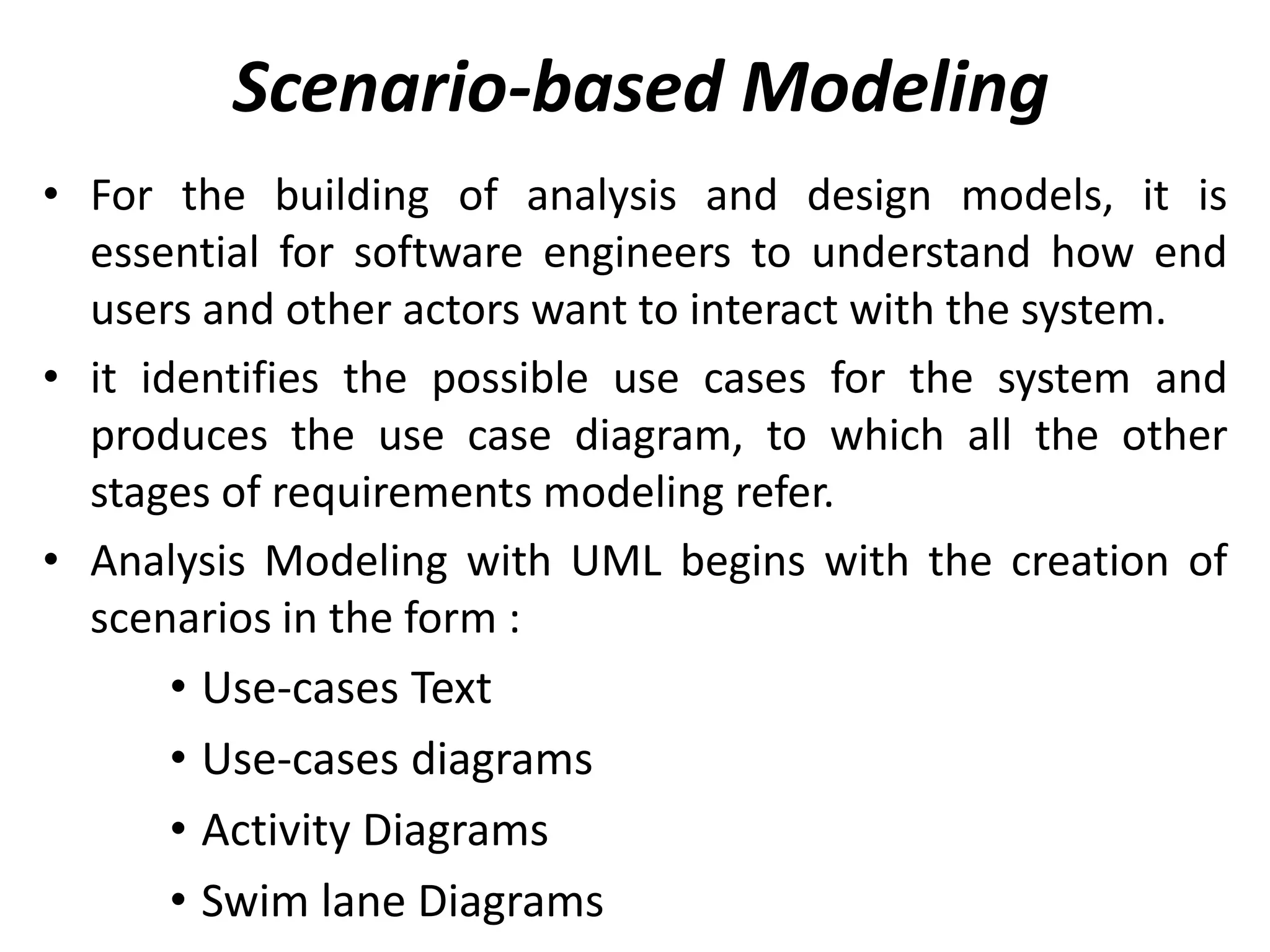
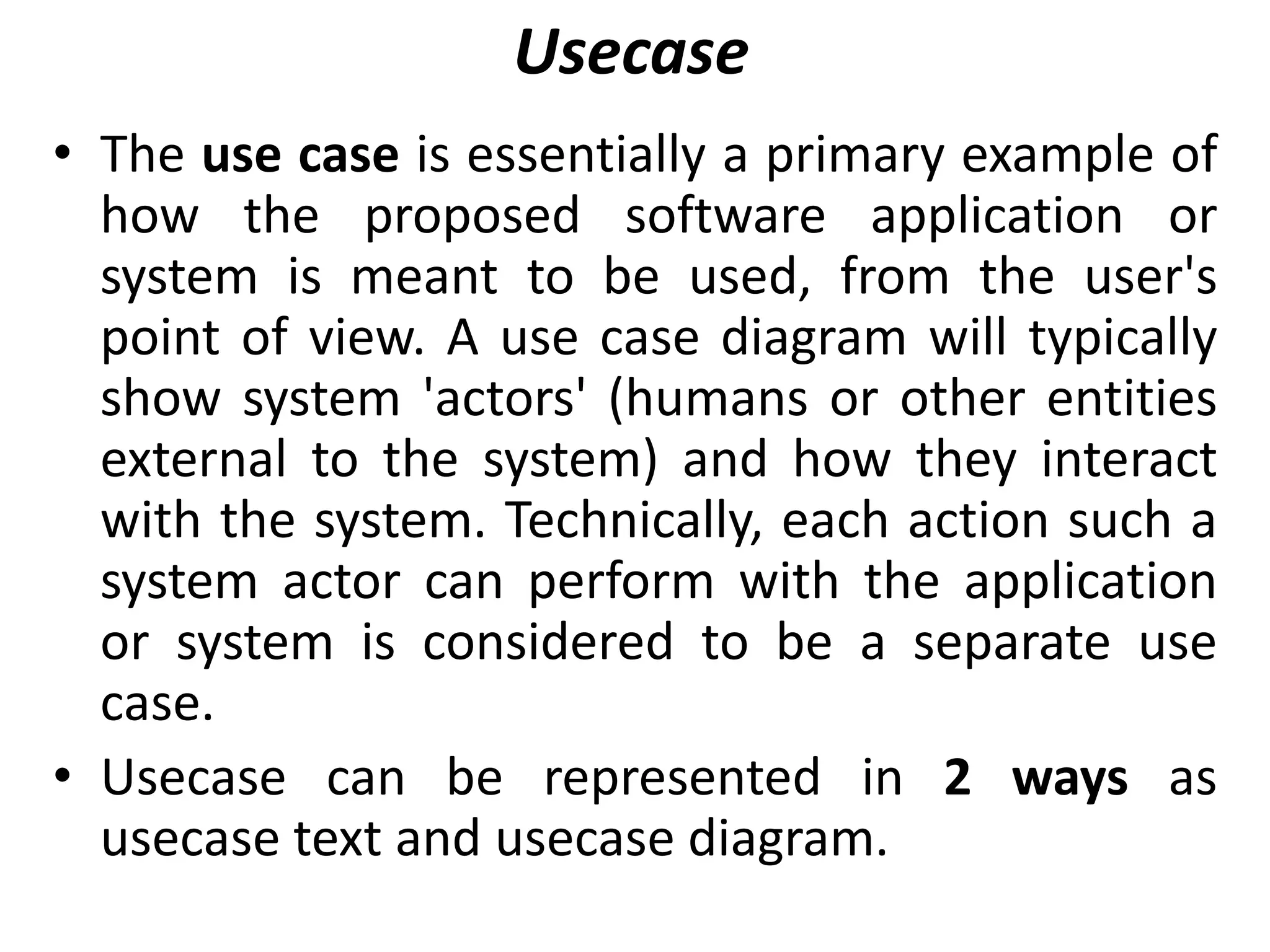
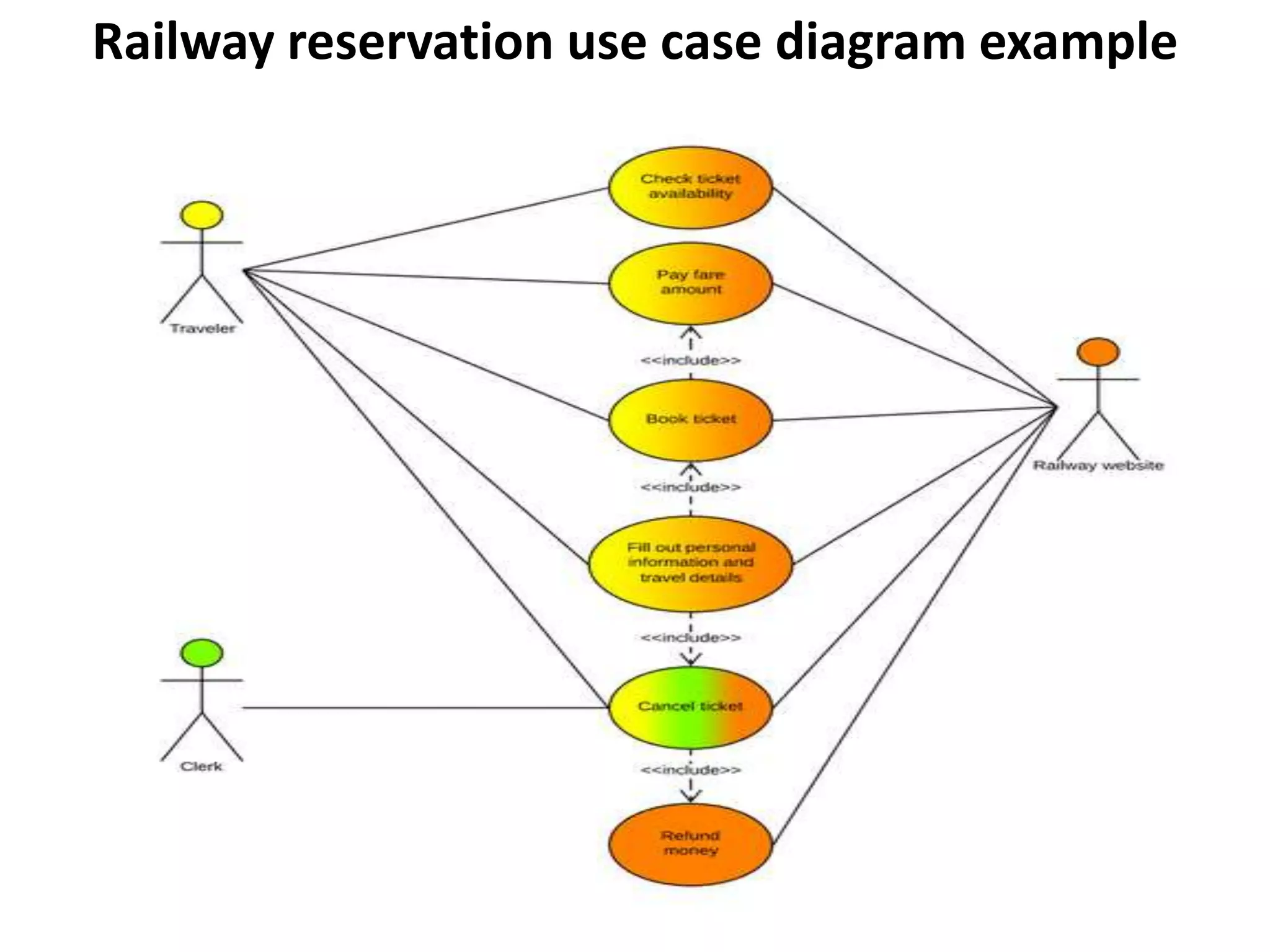
4) Specific modeling techniques like scenario-based modeling, data


![Requirements engineering with UML [Software Modeling] [Computer Science] [Vri...](https://cdn.slidesharecdn.com/ss_thumbnails/02requirements-170211131713-thumbnail.jpg?width=640&height=640&fit=bounds)


