to VISUAL THINKING an  Introduction
Establish to start that advance The Goal a  Common Language Conversations a  Community
Using a VISUAL APPROACH to FACILITATE the THOUGHT PROCESS a  Defenition
“  “ Visual Thinking Leads to Discovery Dave Gray Founder, XPLANE Visual Thinking School Sept. 06
Separated at Birth? Consider:
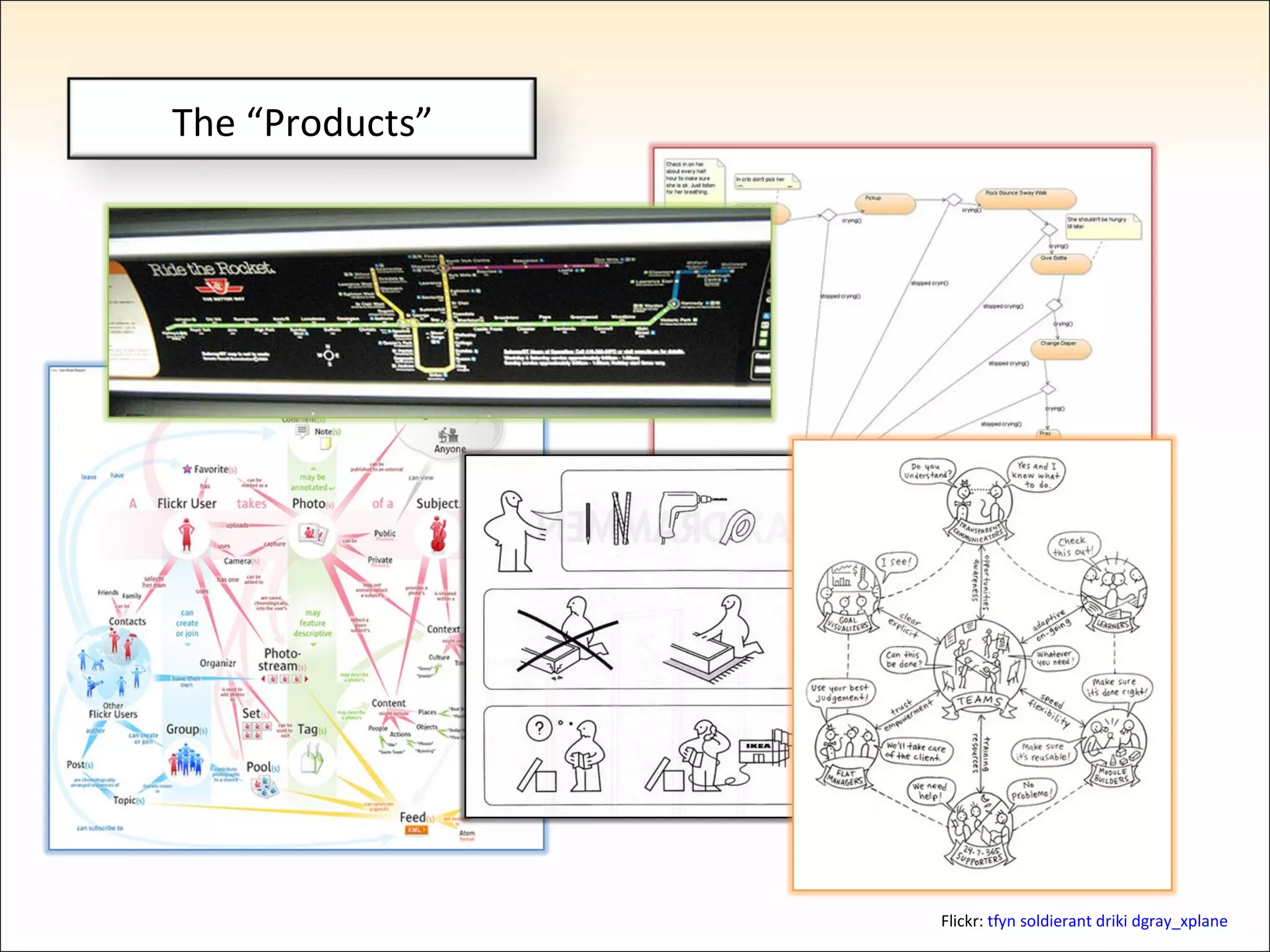
Flickr:  tfyn   soldierant   driki   dgray_xplane The “Products”
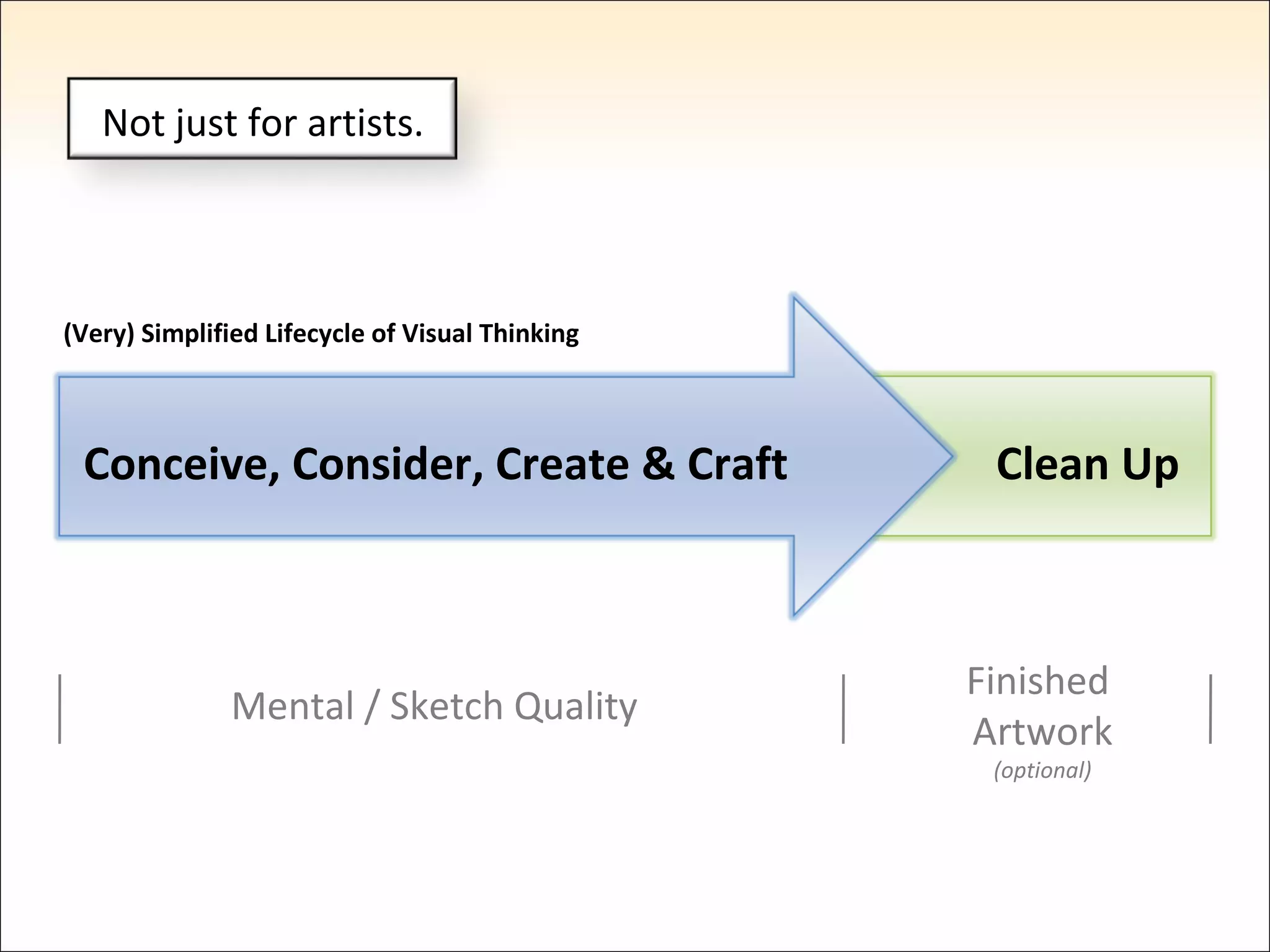
(Very) Simplified Lifecycle of Visual Thinking Conceive, Consider, Create & Craft Clean Up Mental / Sketch Quality Finished  Artwork (optional) Not just for artists.
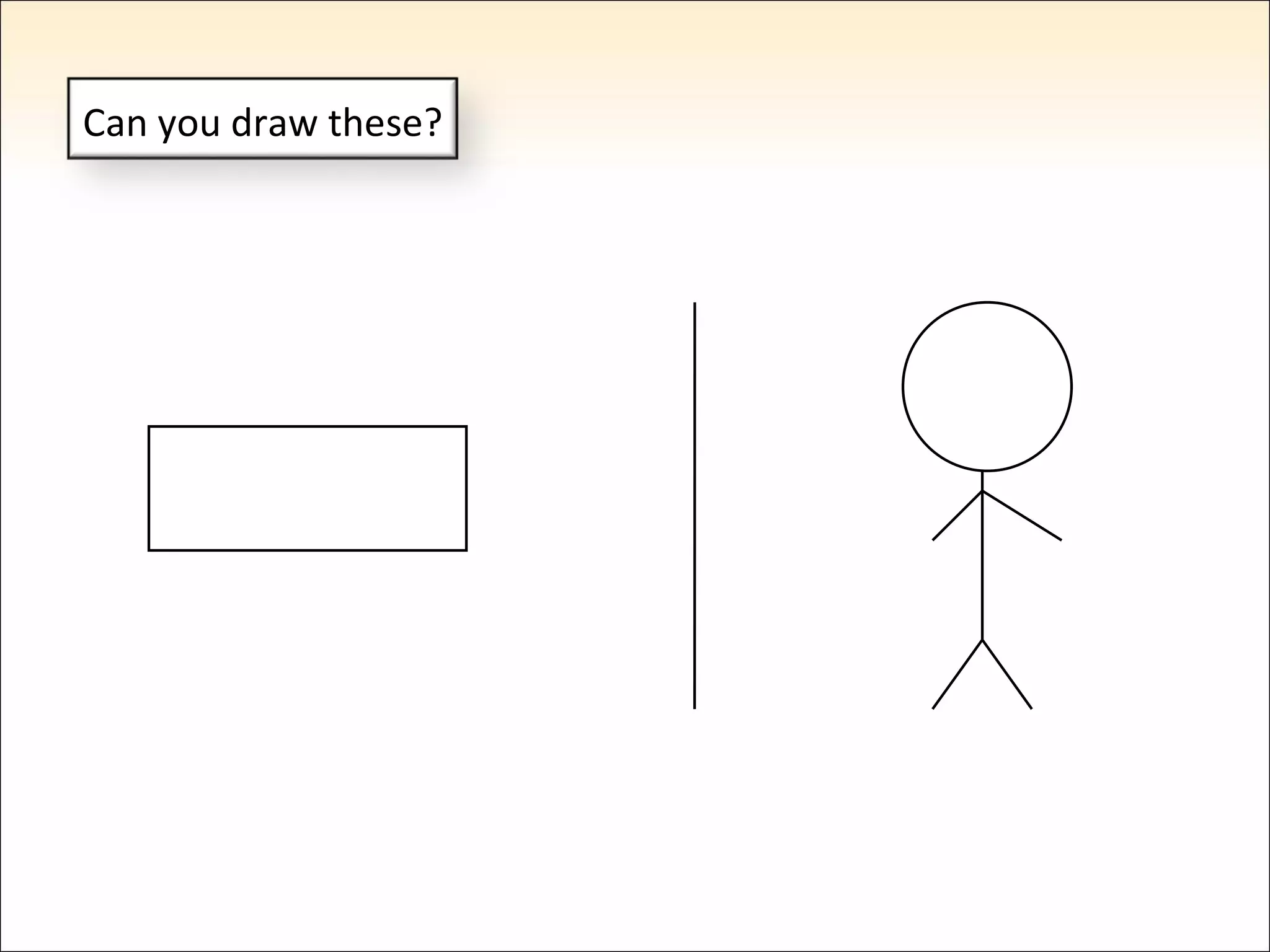
Can you draw these?
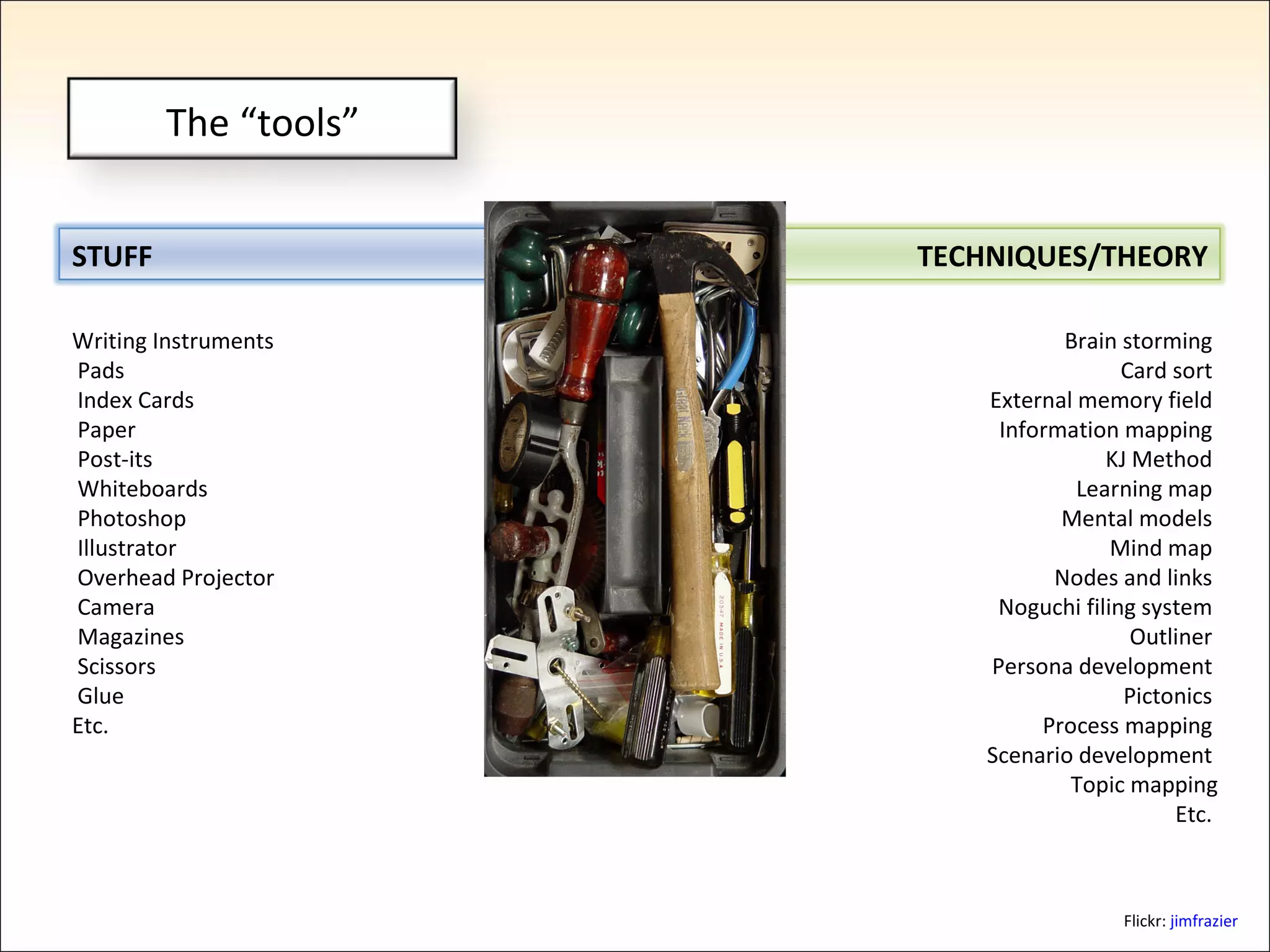
Flickr:  jimfrazier Writing Instruments   Pads   Index Cards   Paper   Post-its           Whiteboards   Photoshop   Illustrator   Overhead Projector   Camera   Magazines   Scissors   Glue Etc. Brain storming  Card sort  External memory field  Information mapping  KJ Method  Learning map  Mental models  Mind map  Nodes and links  Noguchi filing system  Outliner  Persona development  Pictonics  Process mapping  Scenario development  Topic mapping Etc.  The “tools” STUFF TECHNIQUES/THEORY
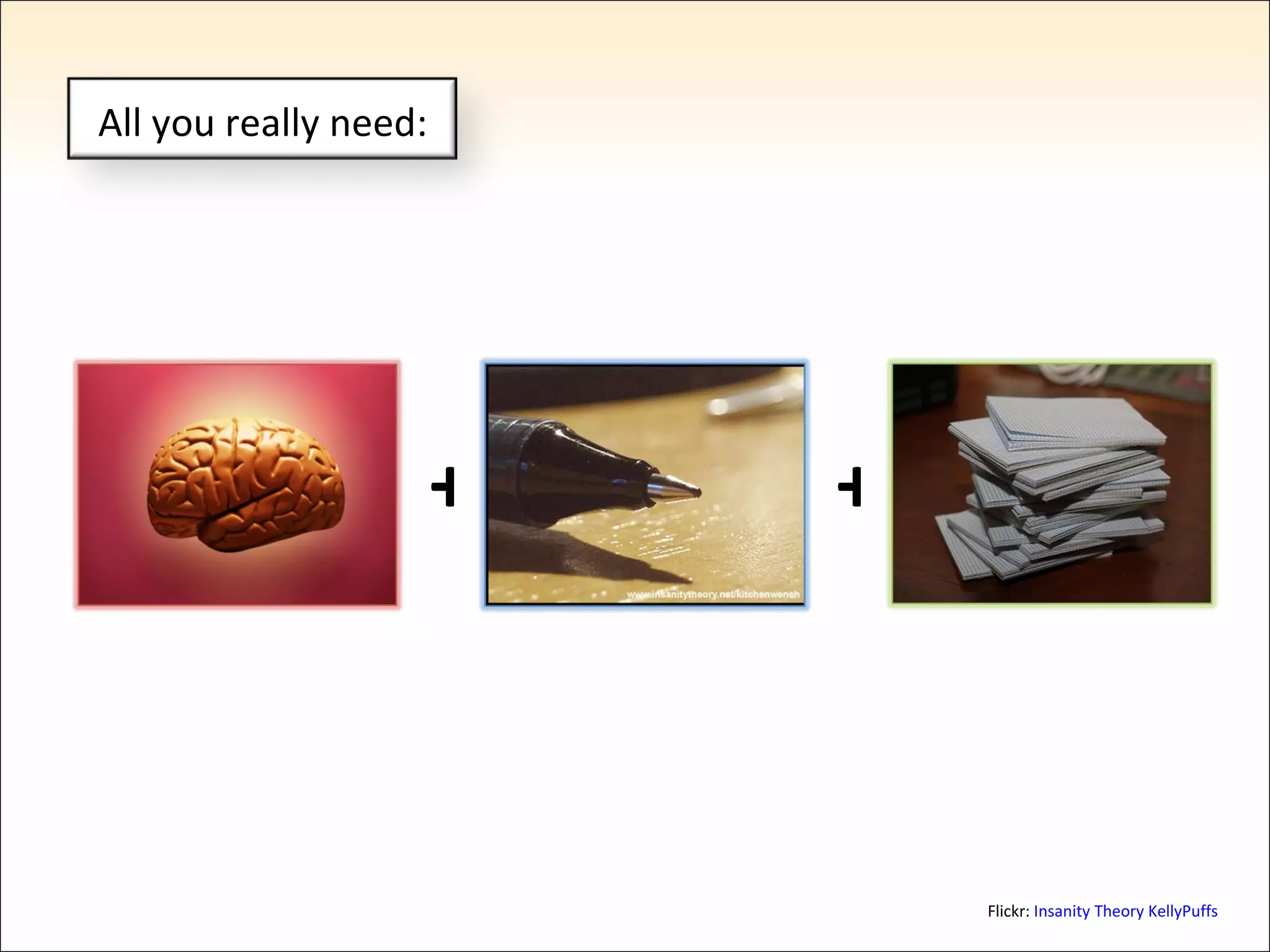
+ + Flickr:  Insanity Theory   KellyPuffs All you really need:
EXERCISE ONE: Draw a Picture of how a Toaster Works
& LINKS NODES
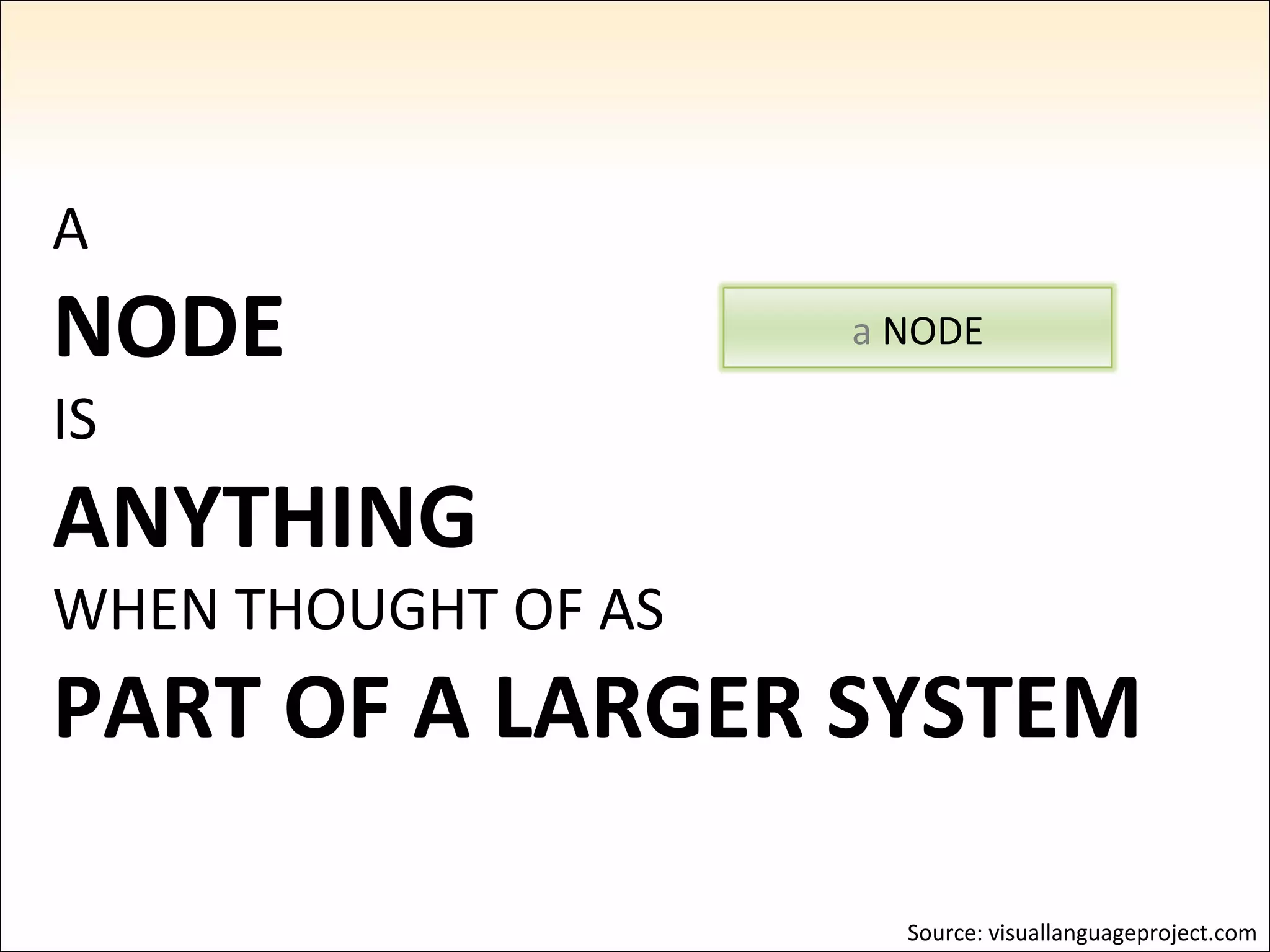
A NODE IS ANYTHING WHEN THOUGHT OF AS PART OF A LARGER SYSTEM Source: visuallanguageproject.com a  NODE
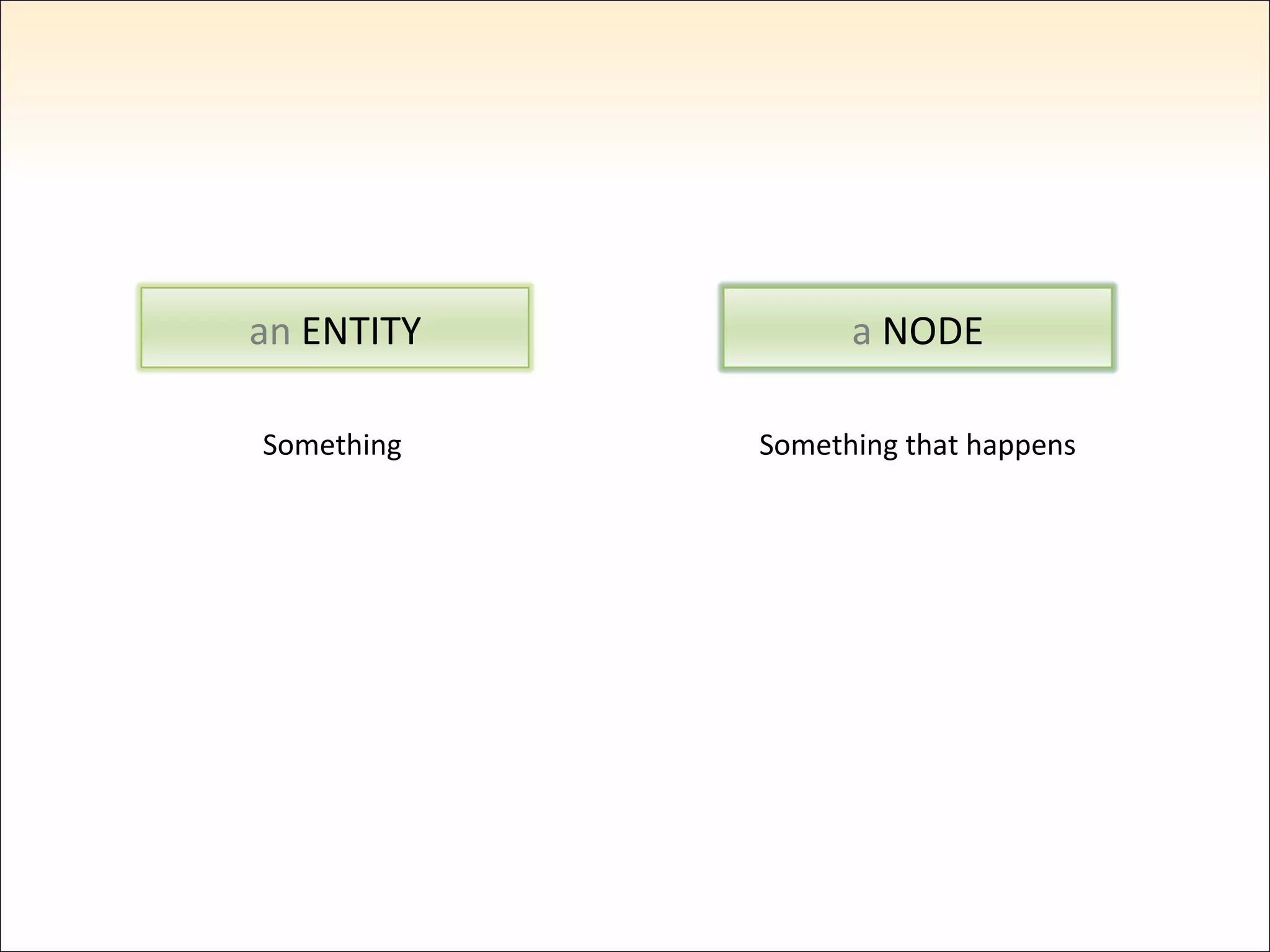
Something Something that happens an  EVENT a  NODE an  ENTITY
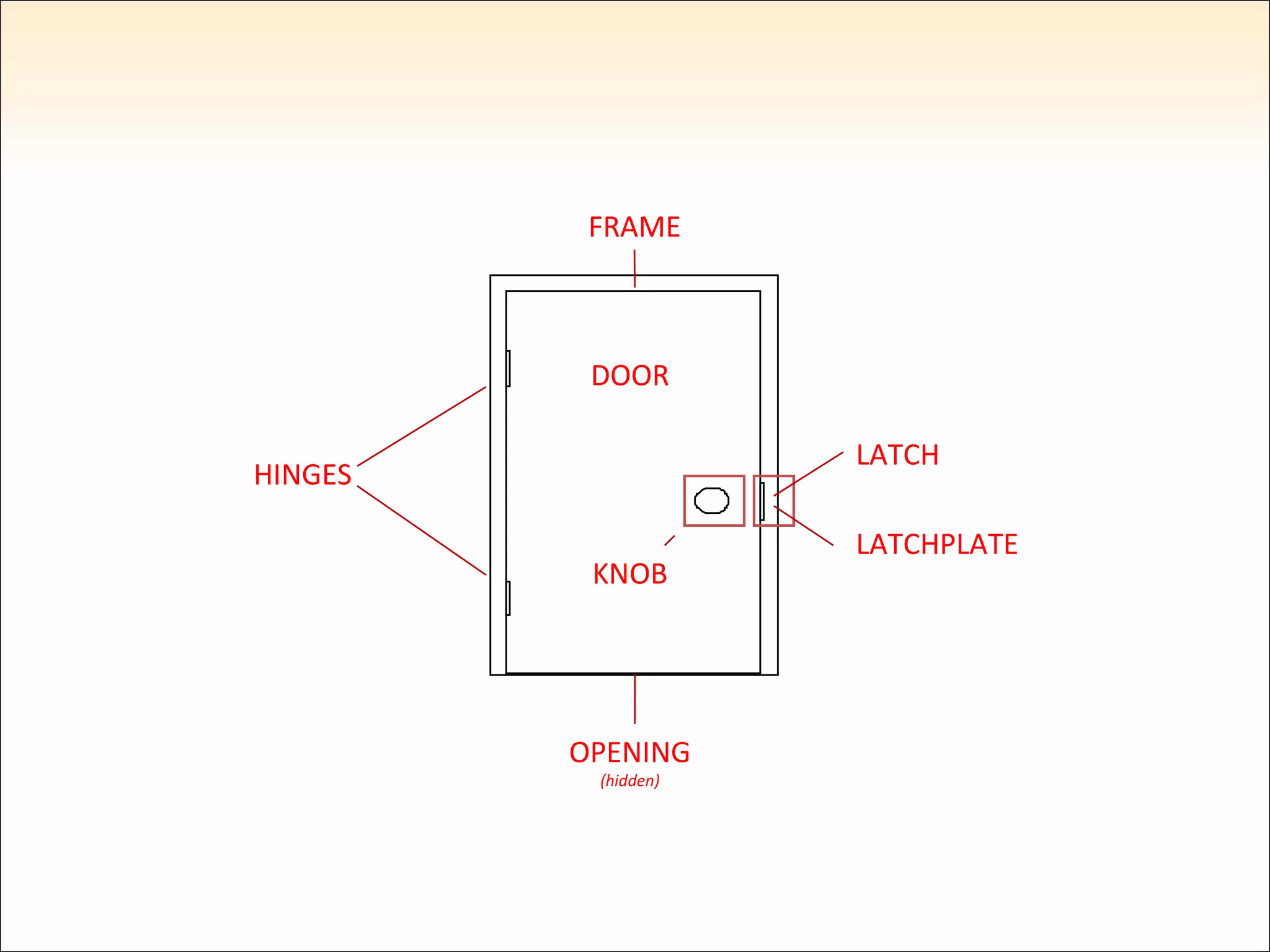
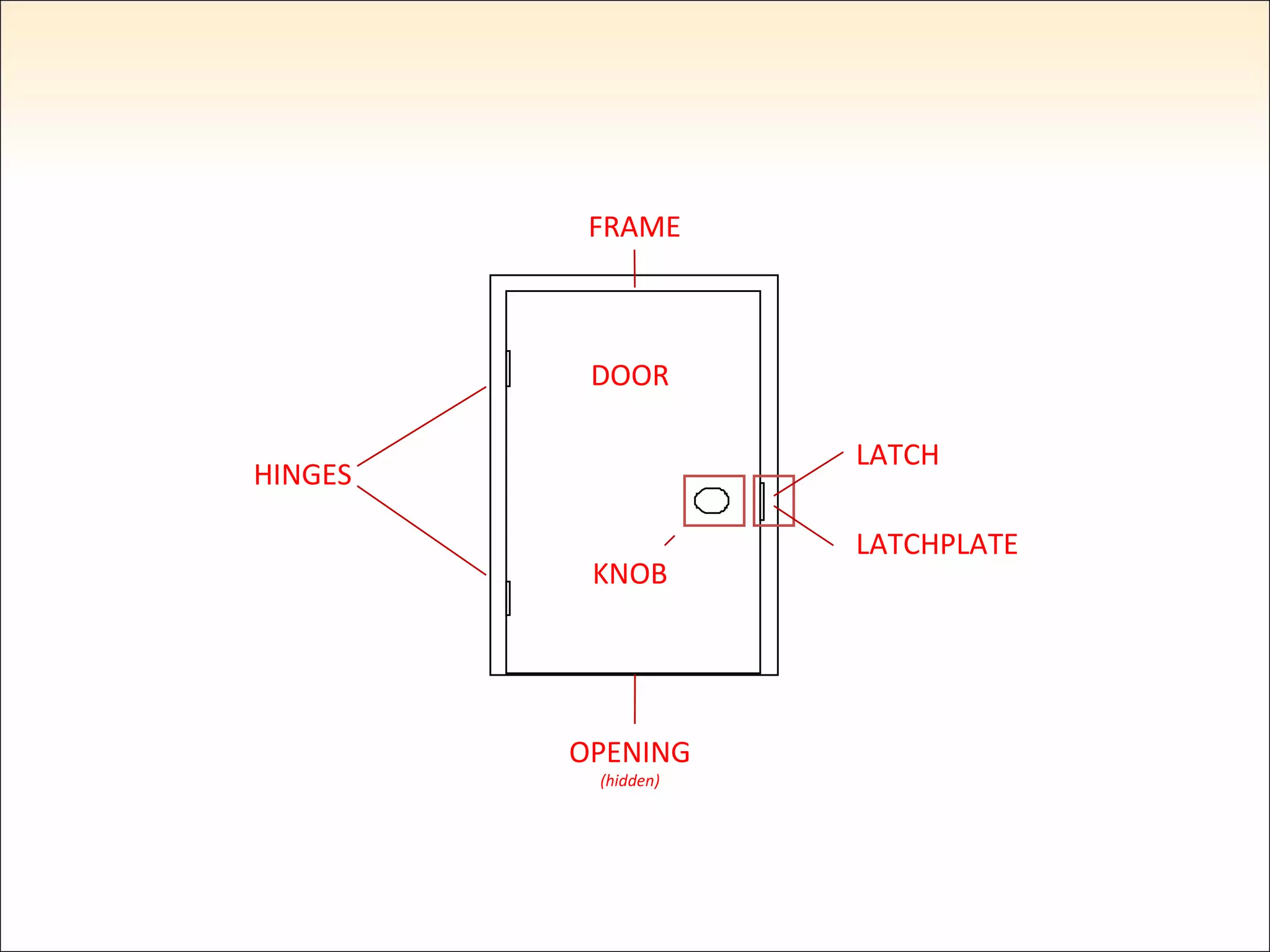
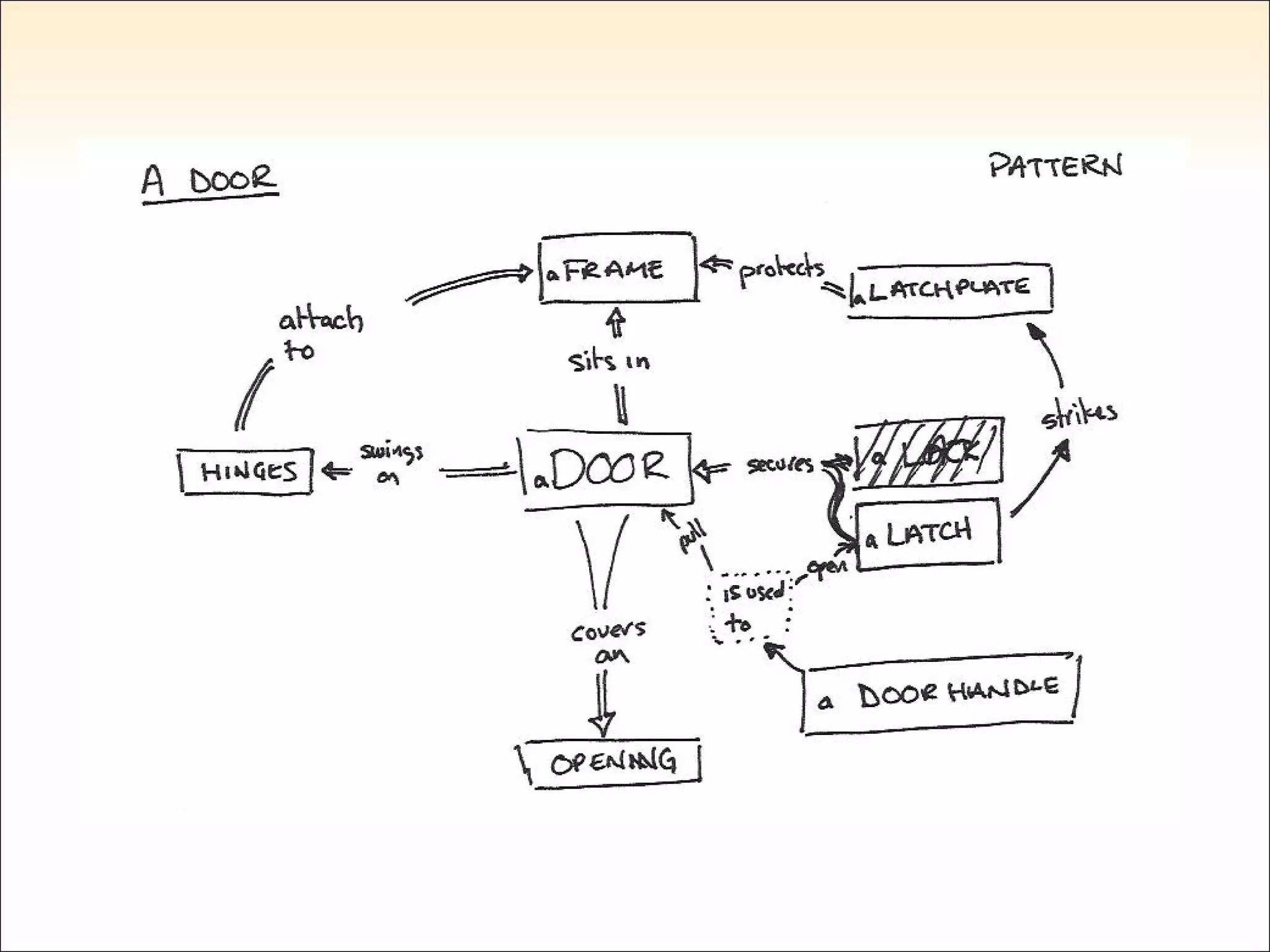
LATCH LATCHPLATE FRAME HINGES KNOB DOOR OPENING (hidden)
EXERCISE TWO: Using your toaster diagram, identify the nodes
LATCH LATCHPLATE FRAME HINGES KNOB DOOR OPENING (hidden)
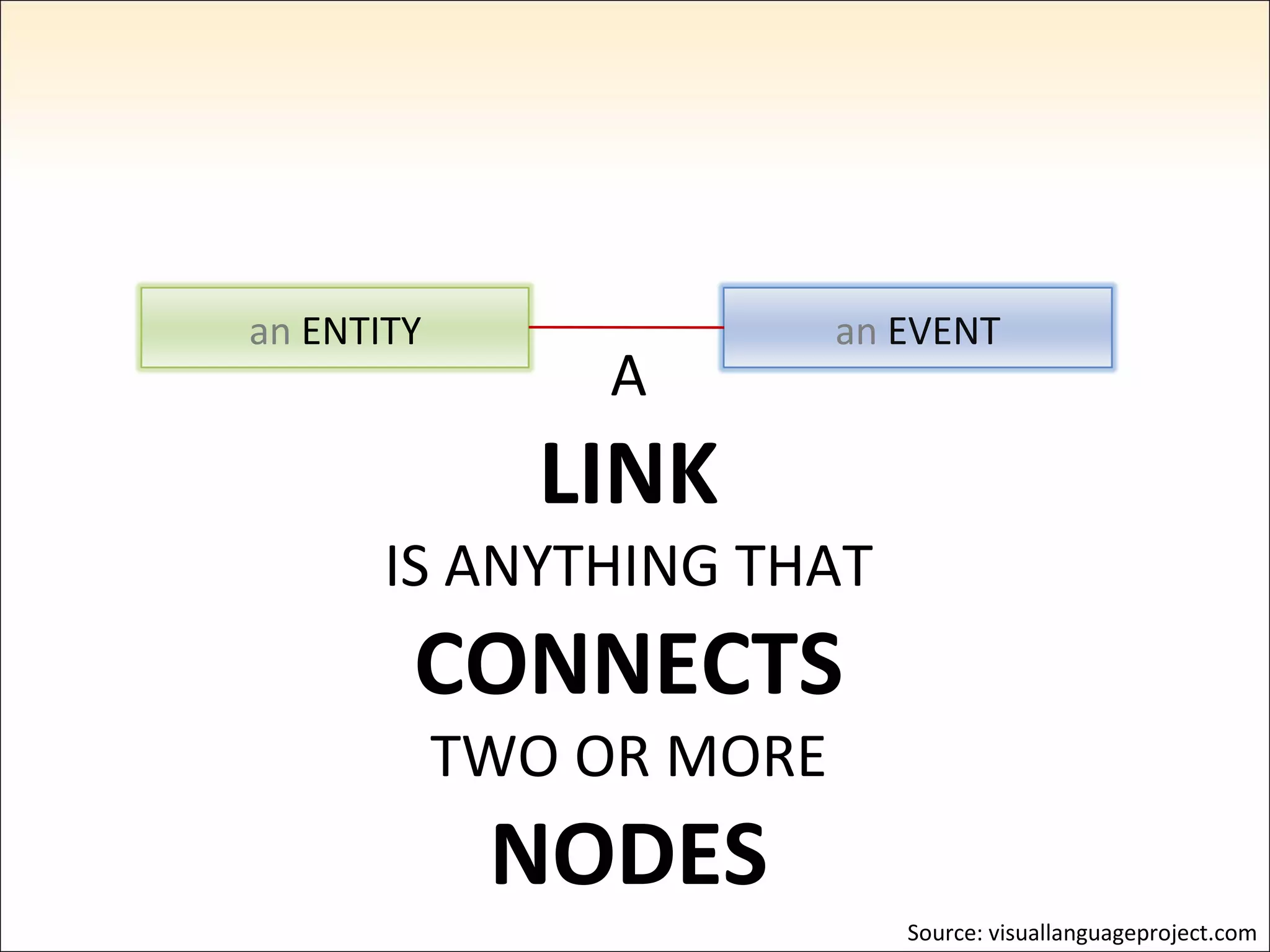
A LINK IS ANYTHING THAT CONNECTS TWO OR MORE NODES Source: visuallanguageproject.com an  EVENT an  ENTITY
MODELS & STORIES
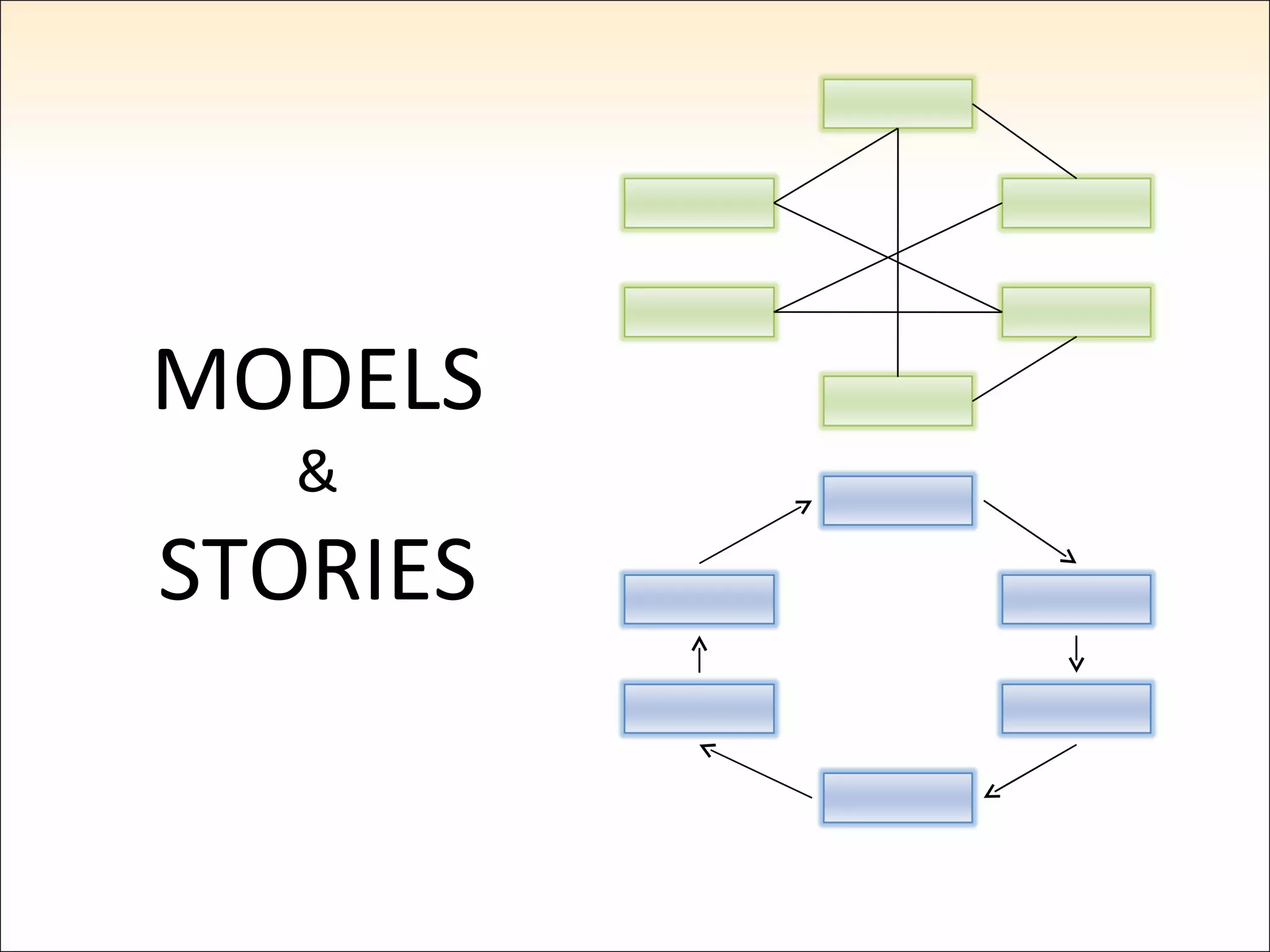
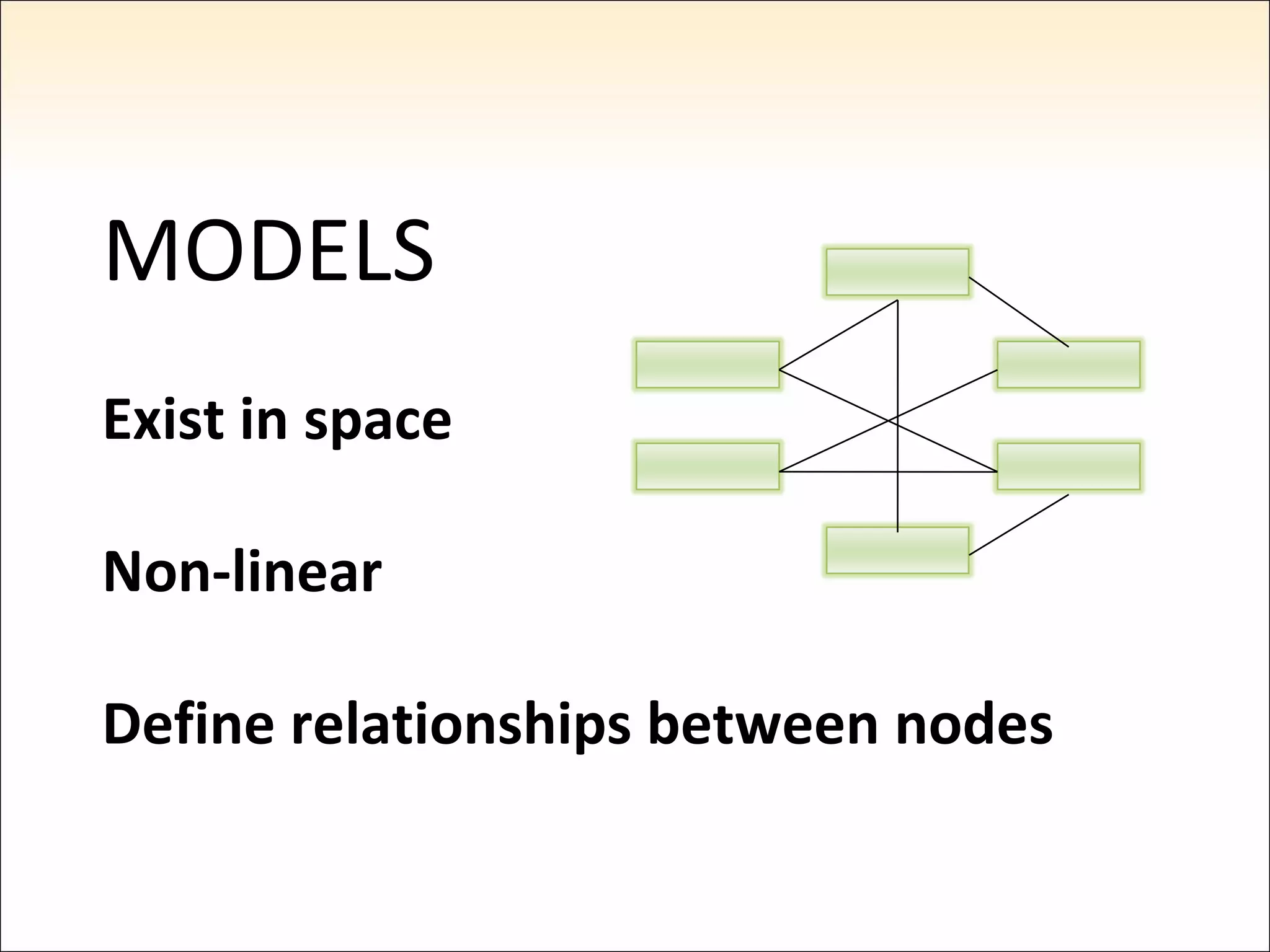
MODELS Exist in space Non-linear Define relationships between nodes
 
EXERCISE THREE: Using the Nodes, Create a Model
BEFORE YOU CAN CHANGE A MODEL YOU MUST FIRST UNDERSTAND THE EXISTING ONE
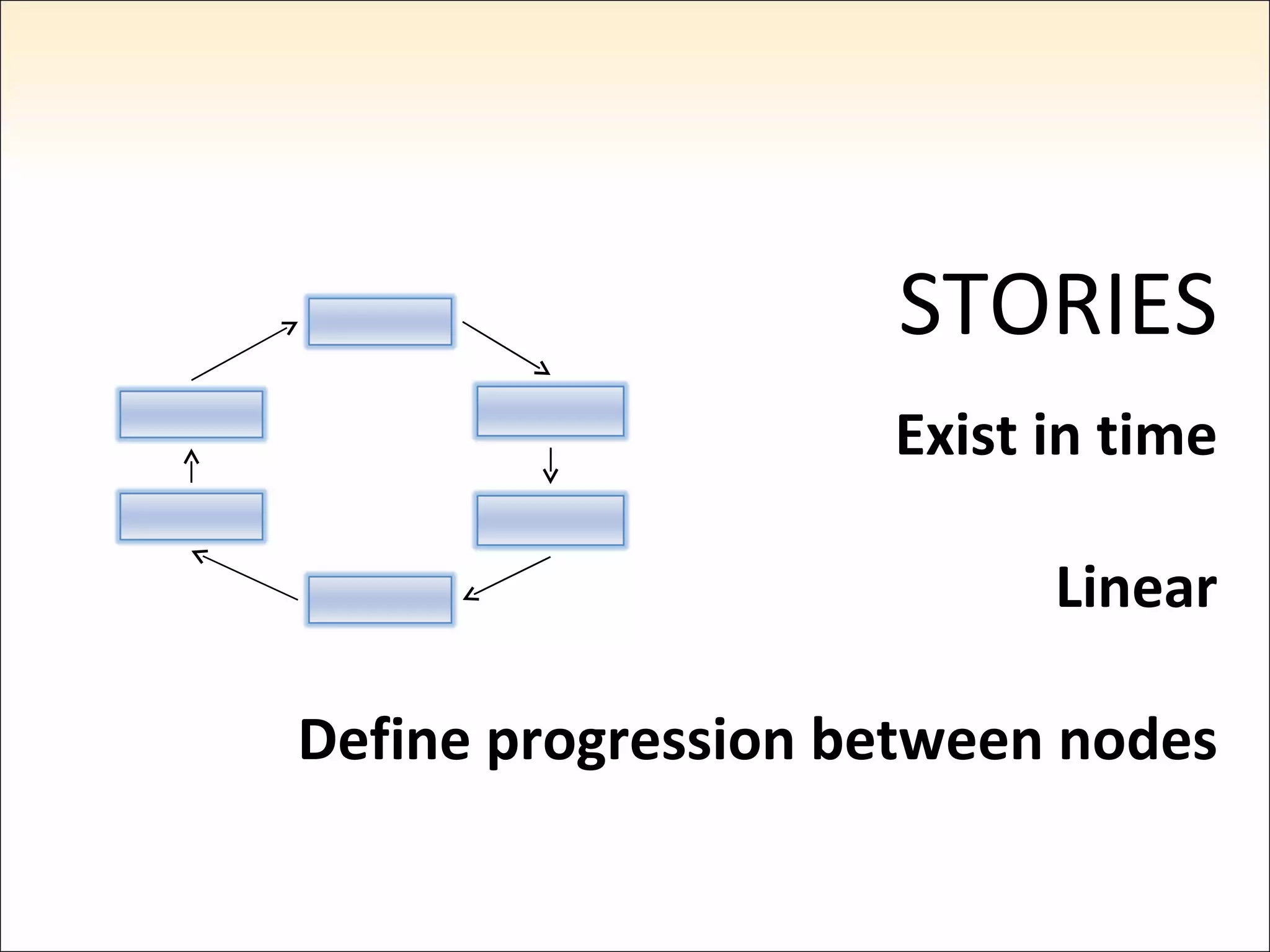
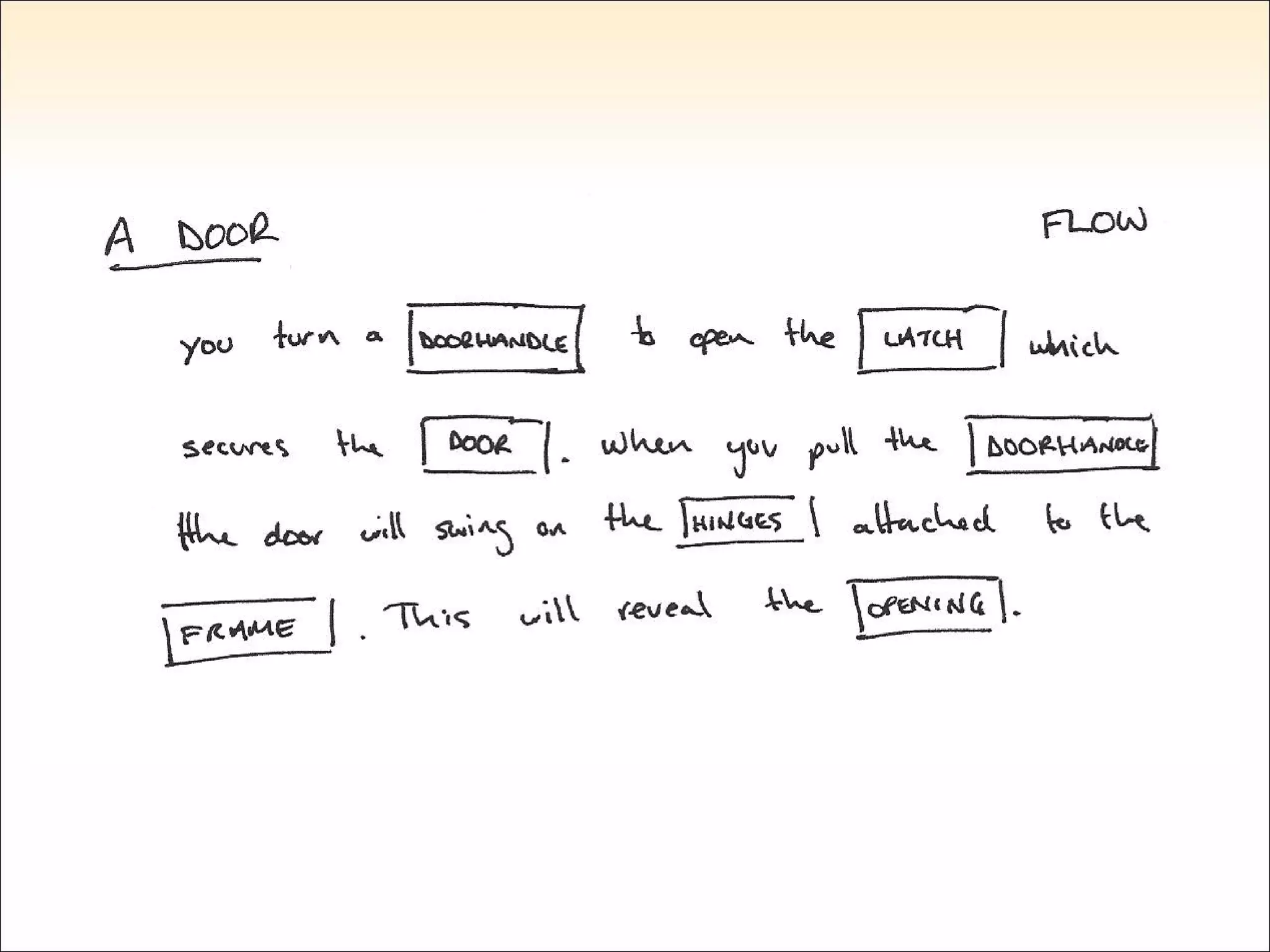
STORIES Exist in time Linear Define progression between nodes
 
EXERCISE FOUR: Using the Nodes, Create a Story
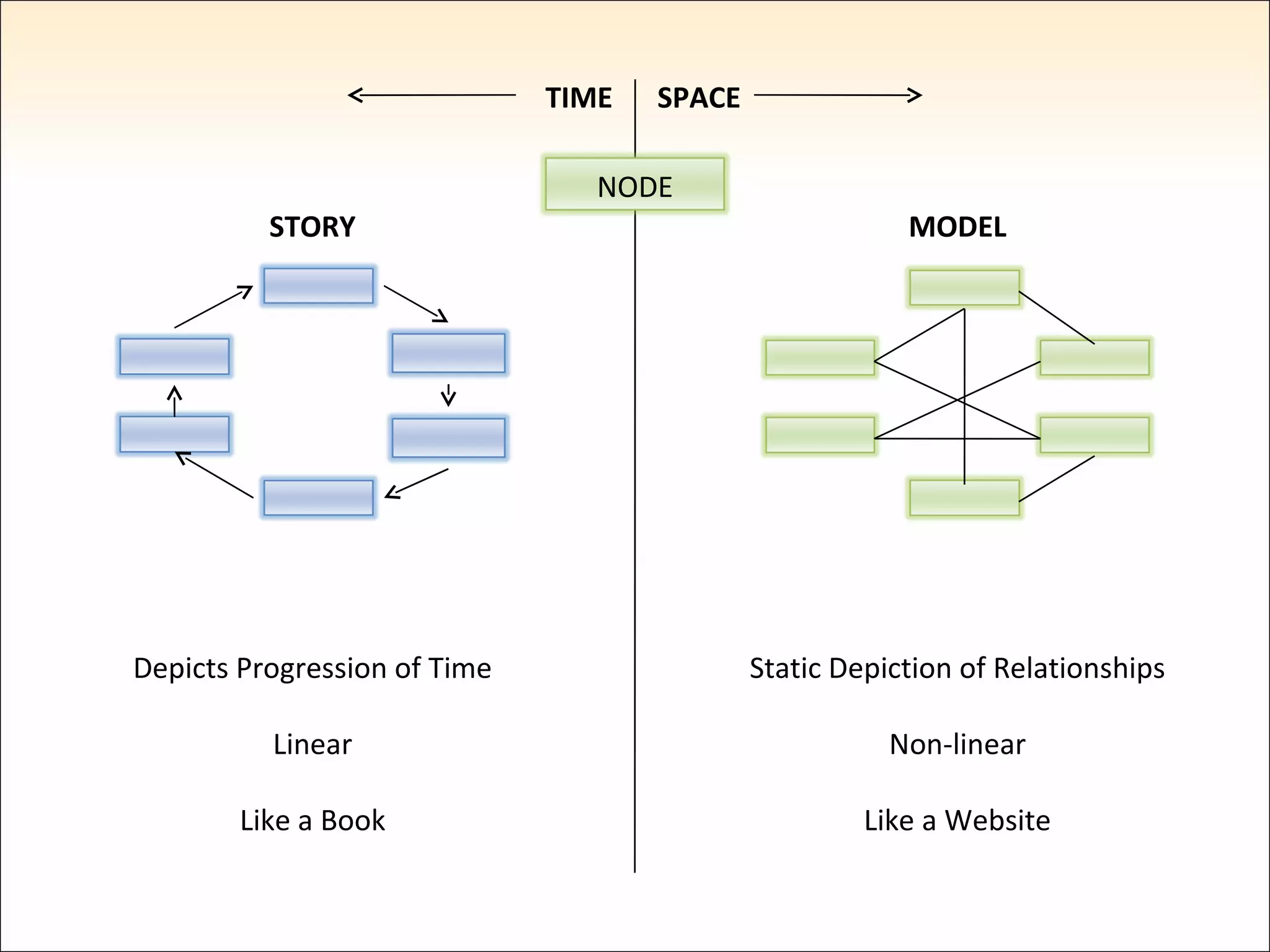
Static Depiction of Relationships Non-linear Like a Website Depicts Progression of Time Linear Like a Book TIME SPACE STORY MODEL NODE
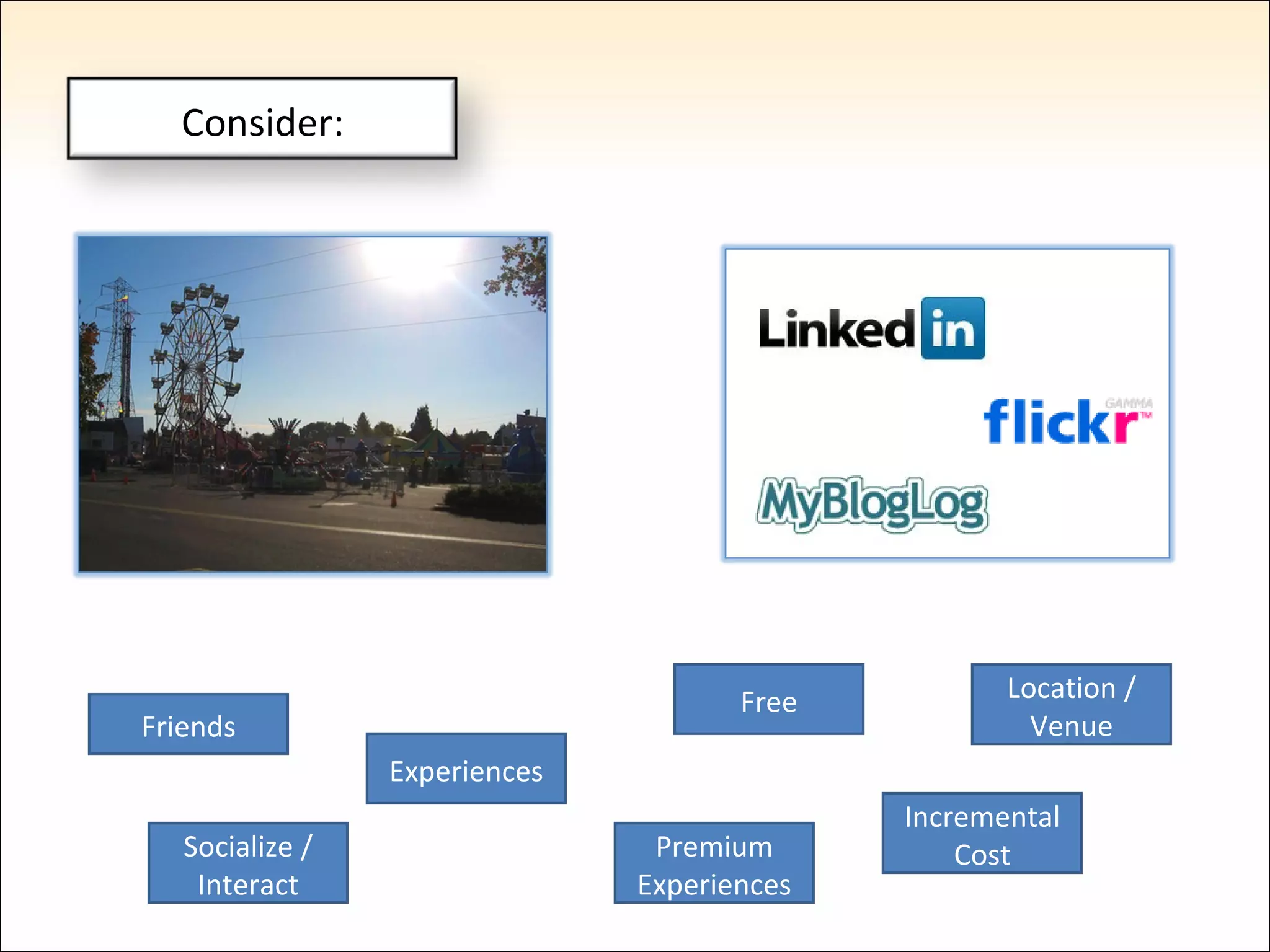
Friends Experiences Free Premium Experiences Location / Venue Incremental Cost Socialize / Interact The Same Model? Consider:
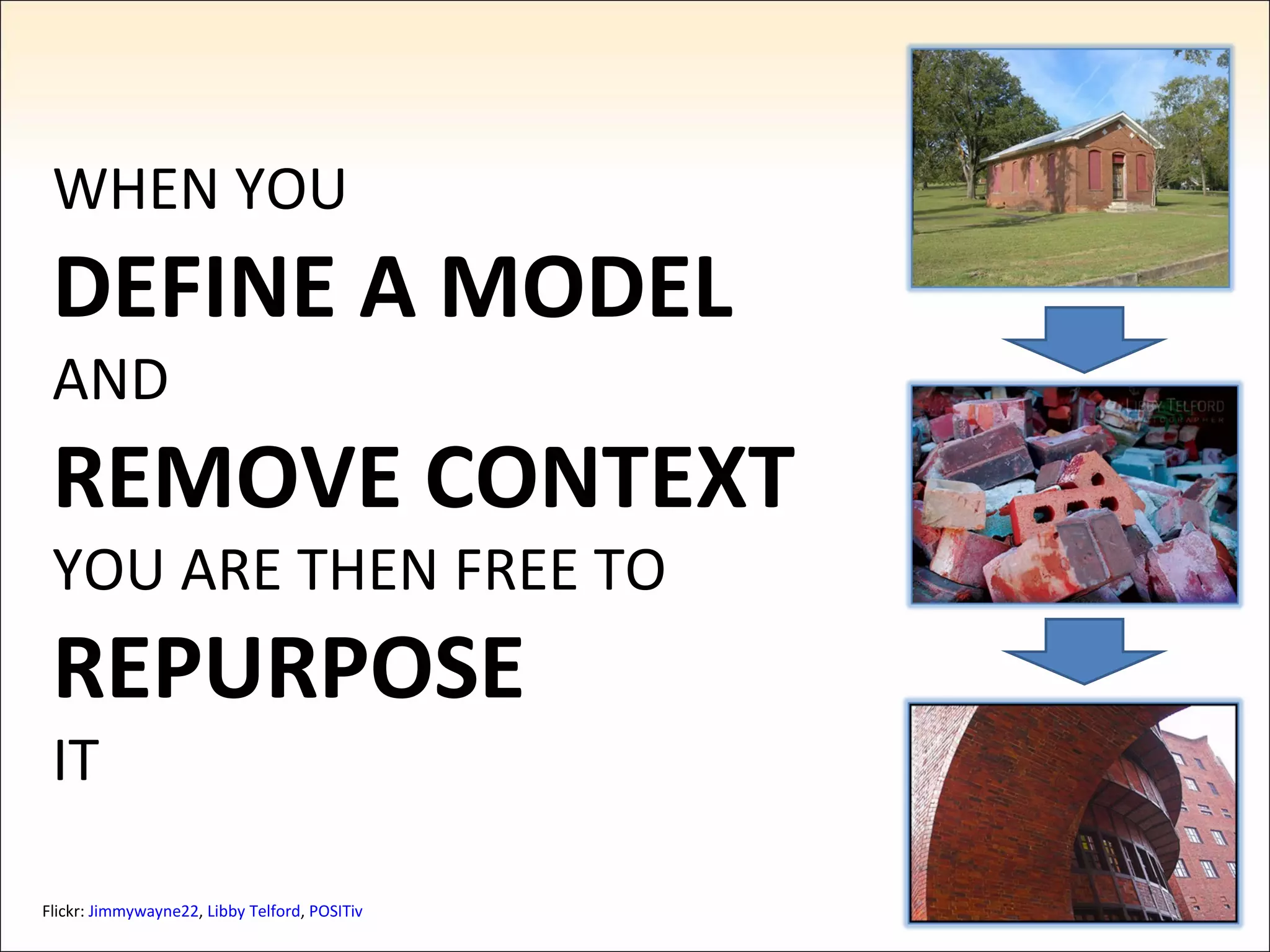
Flickr:  Jimmywayne22 ,  Libby Telford ,  POSITiv WHEN YOU DEFINE A MODEL AND REMOVE CONTEXT YOU ARE THEN FREE TO REPURPOSE IT
Thank you… Resources: http://visuallanguageproject.com http://www.xplane.com/xblog/ http://en.wikipedia.org/wiki/Visual_thinking Conclusion
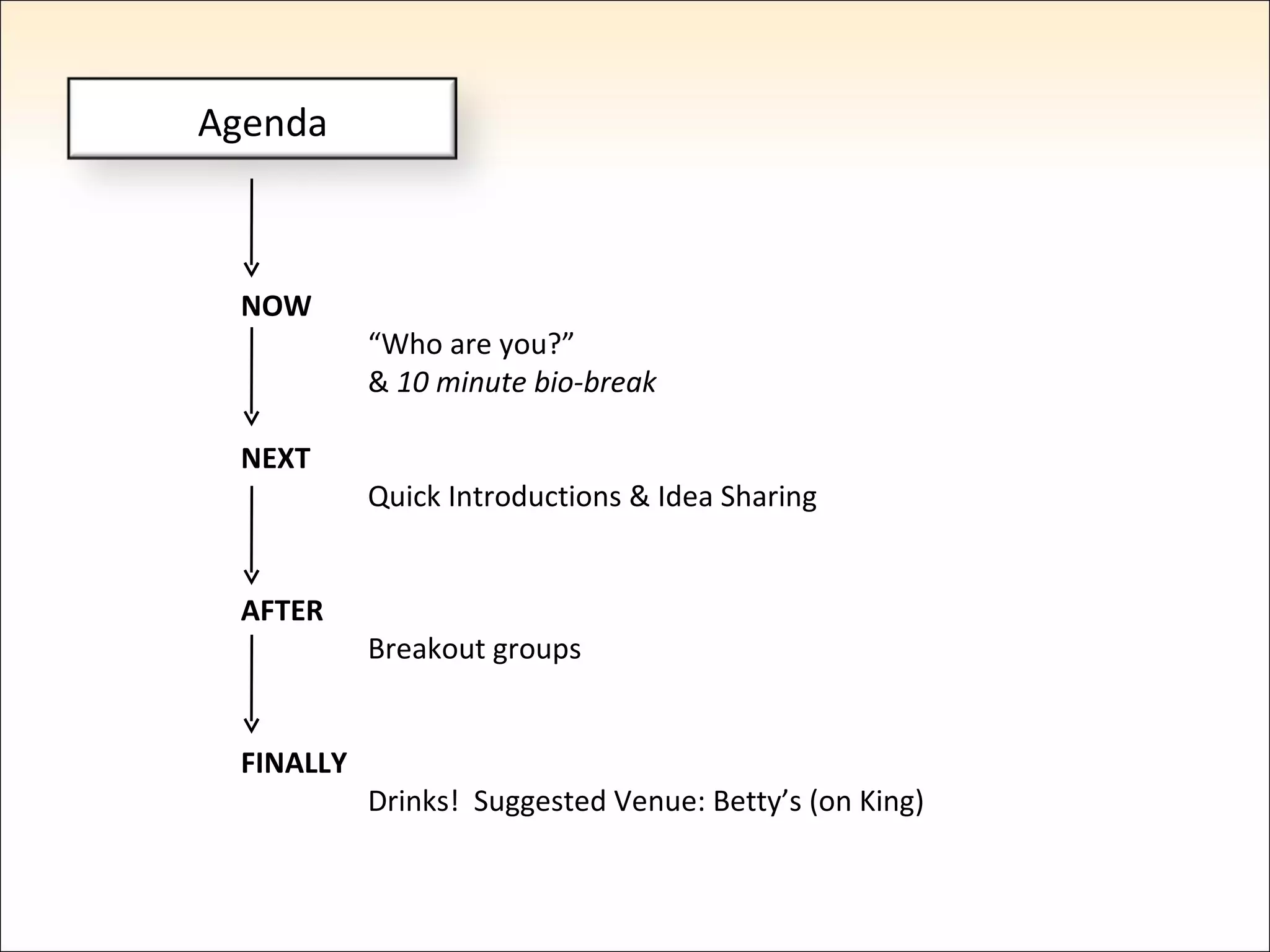
NOW   “ Who are you?” &  10 minute bio-break NEXT   Quick Introductions & Idea Sharing AFTER  Breakout groups FINALLY  Drinks!  Suggested Venue: Betty’s (on King)  Agenda

An Introduction to Visual Thinking

  • 1.
    to VISUAL THINKINGan Introduction
  • 2.
    Establish to startthat advance The Goal a Common Language Conversations a Community
  • 3.
    Using a VISUALAPPROACH to FACILITATE the THOUGHT PROCESS a Defenition
  • 4.
    “ “Visual Thinking Leads to Discovery Dave Gray Founder, XPLANE Visual Thinking School Sept. 06
  • 5.
  • 6.
    Flickr: tfyn soldierant driki dgray_xplane The “Products”
  • 7.
    (Very) Simplified Lifecycleof Visual Thinking Conceive, Consider, Create & Craft Clean Up Mental / Sketch Quality Finished Artwork (optional) Not just for artists.
  • 8.
  • 9.
    Flickr: jimfrazierWriting Instruments   Pads   Index Cards   Paper   Post-its           Whiteboards   Photoshop   Illustrator   Overhead Projector   Camera   Magazines   Scissors   Glue Etc. Brain storming Card sort External memory field Information mapping KJ Method Learning map Mental models Mind map Nodes and links Noguchi filing system Outliner Persona development Pictonics Process mapping Scenario development Topic mapping Etc. The “tools” STUFF TECHNIQUES/THEORY
  • 10.
    + + Flickr: Insanity Theory KellyPuffs All you really need:
  • 11.
    EXERCISE ONE: Drawa Picture of how a Toaster Works
  • 12.
  • 13.
    A NODE ISANYTHING WHEN THOUGHT OF AS PART OF A LARGER SYSTEM Source: visuallanguageproject.com a NODE
  • 14.
    Something Something thathappens an EVENT a NODE an ENTITY
  • 15.
    LATCH LATCHPLATE FRAMEHINGES KNOB DOOR OPENING (hidden)
  • 16.
    EXERCISE TWO: Usingyour toaster diagram, identify the nodes
  • 17.
    LATCH LATCHPLATE FRAMEHINGES KNOB DOOR OPENING (hidden)
  • 18.
    A LINK ISANYTHING THAT CONNECTS TWO OR MORE NODES Source: visuallanguageproject.com an EVENT an ENTITY
  • 19.
  • 20.
    MODELS Exist inspace Non-linear Define relationships between nodes
  • 21.
  • 22.
    EXERCISE THREE: Usingthe Nodes, Create a Model
  • 23.
    BEFORE YOU CANCHANGE A MODEL YOU MUST FIRST UNDERSTAND THE EXISTING ONE
  • 24.
    STORIES Exist intime Linear Define progression between nodes
  • 25.
  • 26.
    EXERCISE FOUR: Usingthe Nodes, Create a Story
  • 27.
    Static Depiction ofRelationships Non-linear Like a Website Depicts Progression of Time Linear Like a Book TIME SPACE STORY MODEL NODE
  • 28.
    Friends Experiences FreePremium Experiences Location / Venue Incremental Cost Socialize / Interact The Same Model? Consider:
  • 29.
    Flickr: Jimmywayne22, Libby Telford , POSITiv WHEN YOU DEFINE A MODEL AND REMOVE CONTEXT YOU ARE THEN FREE TO REPURPOSE IT
  • 30.
    Thank you… Resources:http://visuallanguageproject.com http://www.xplane.com/xblog/ http://en.wikipedia.org/wiki/Visual_thinking Conclusion
  • 31.
    NOW “ Who are you?” & 10 minute bio-break NEXT Quick Introductions & Idea Sharing AFTER Breakout groups FINALLY Drinks! Suggested Venue: Betty’s (on King) Agenda