ABSTRACT CLASS
MOHIT AGARWAL – (161080107026)
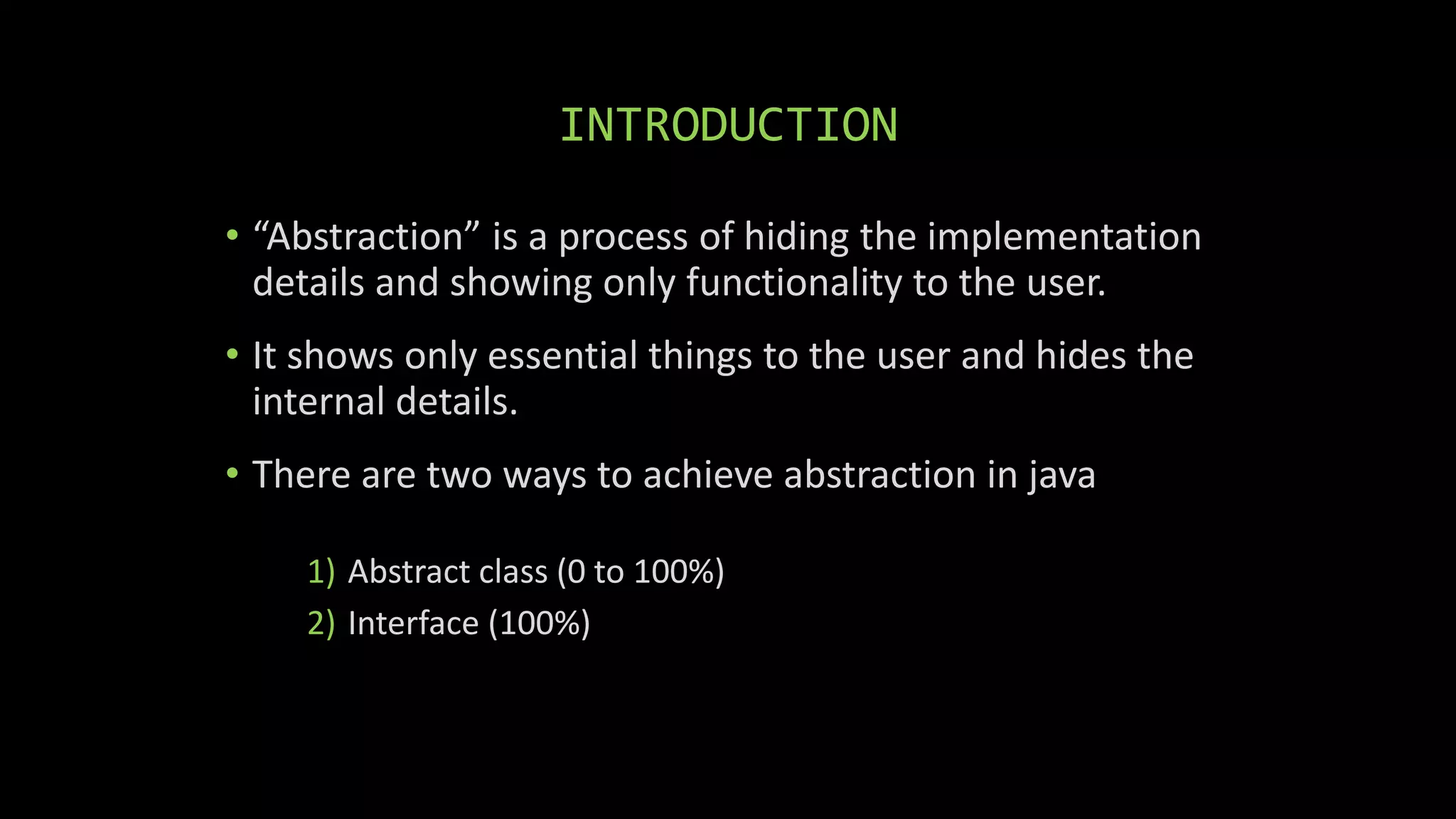
INTRODUCTION
• “Abstraction” is a process of hiding the implementation
details and showing only functionality to the user.
• It shows only essential things to the user and hides the
internal details.
• There are two ways to achieve abstraction in java
1) Abstract class (0 to 100%)
2) Interface (100%)
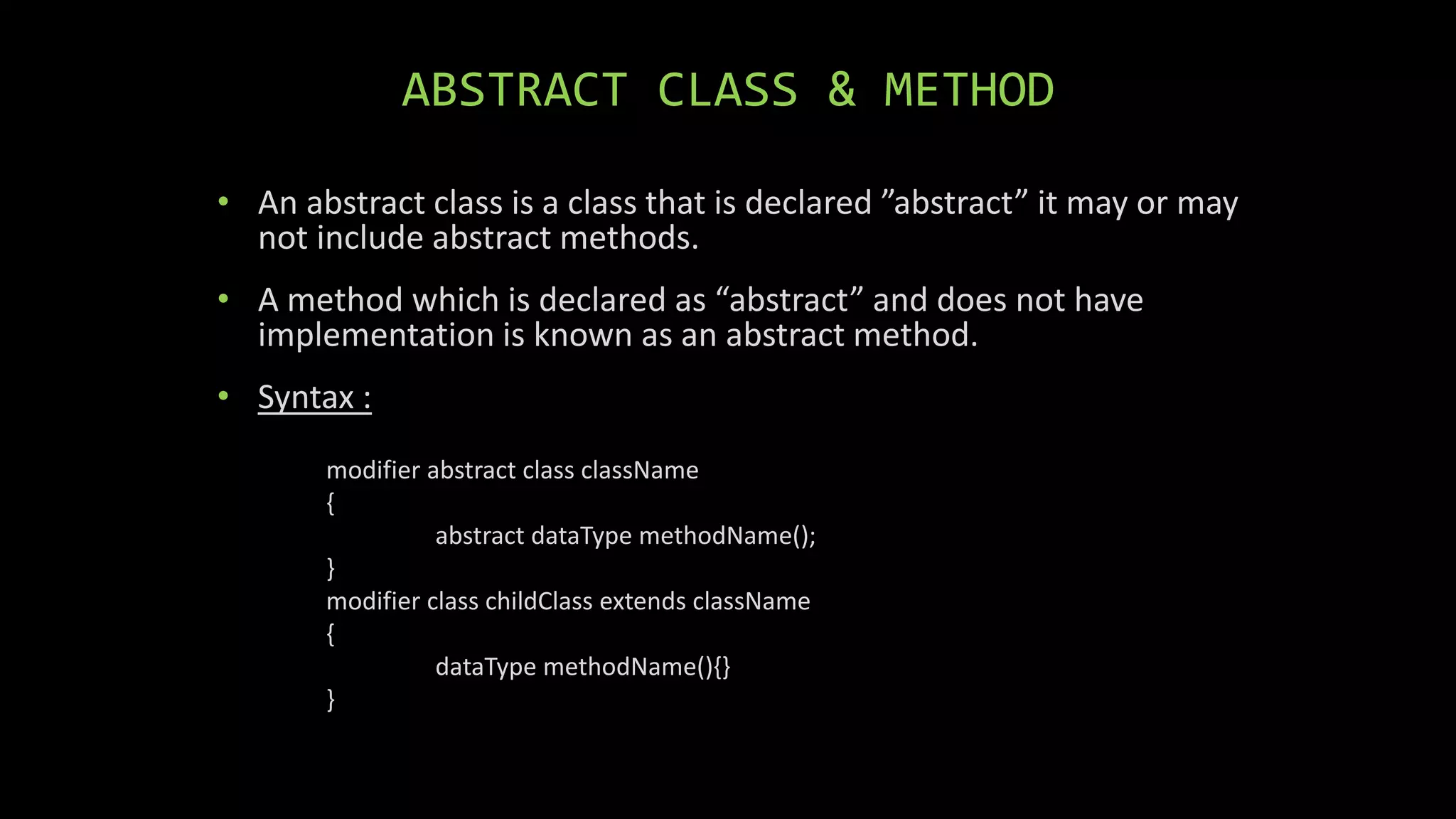
ABSTRACT CLASS & METHOD
• An abstract class is a class that is declared ”abstract” it may or may
not include abstract methods.
• A method which is declared as “abstract” and does not have
implementation is known as an abstract method.
• Syntax :
modifier abstract class className
{
abstract dataType methodName();
}
modifier class childClass extends className
{
dataType methodName(){}
}
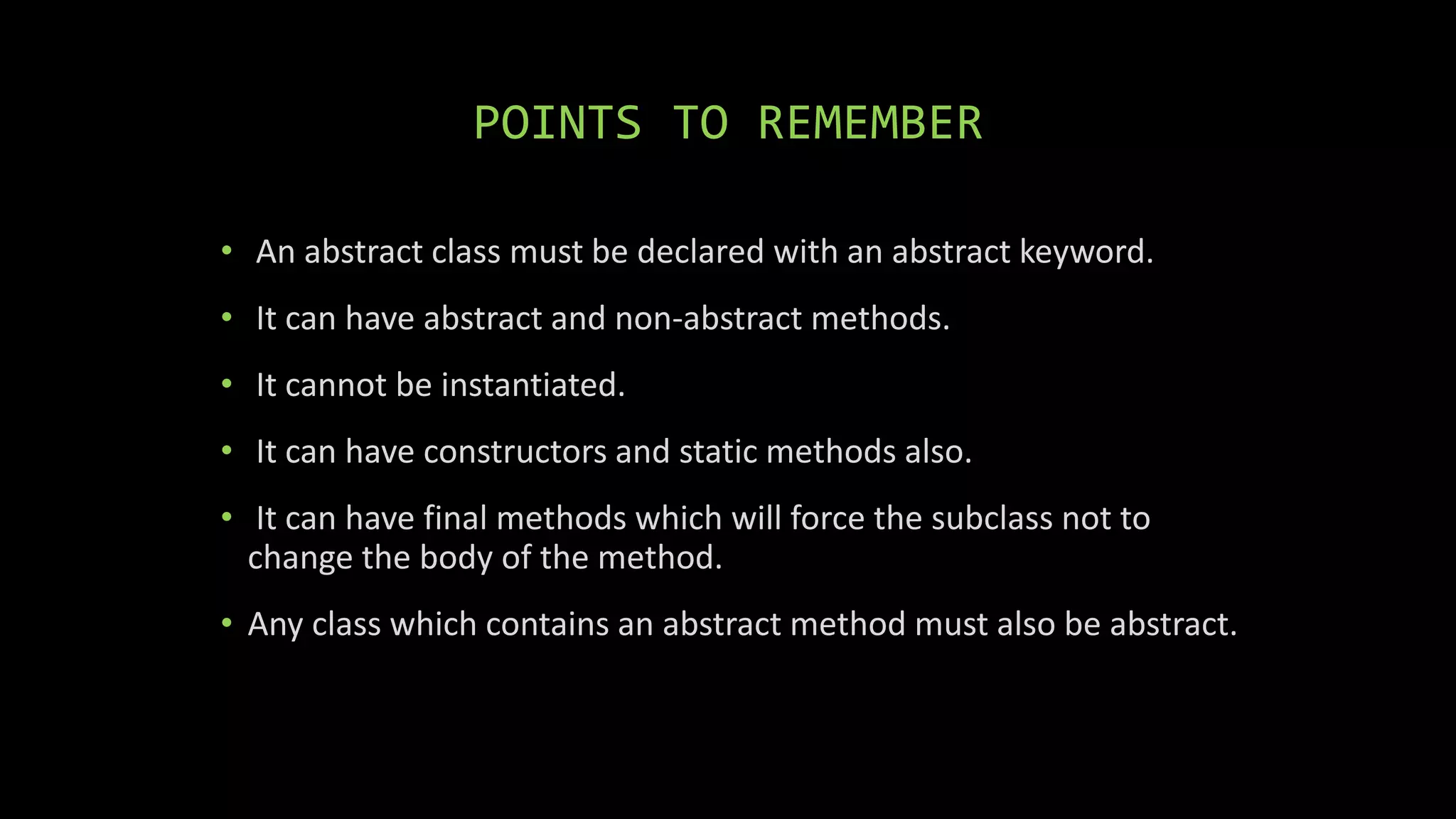
• An abstract class must be declared with an abstract keyword.
• It can have abstract and non-abstract methods.
• It cannot be instantiated.
• It can have constructors and static methods also.
• It can have final methods which will force the subclass not to
change the body of the method.
• Any class which contains an abstract method must also be abstract.
POINTS TO REMEMBER
abstract class Animal //Abstract Class Declaration
{
public abstract void sound(); //Abstract Method Declaration
}
public class Dog extends Animal //Dog inherits from Animal
{
public void sound()
{
System.out.println("Woof");
}
public static void main(String args[])
{
Animal obj = new Dog();
obj.sound();
}
}
OUTPUT : Woof
abstract class MyClass
{
public void disp()
{
System.out.println("Concrete method of parent class");
}
abstract public void disp2();
}
class Demo extends MyClass
{
public void disp2()
{
System.out.println("overriding abstract method");
}
public static void main(String args[])
{
Demo obj = new Demo();
obj.disp2();
}
}
OUTPUT : overriding abstract method
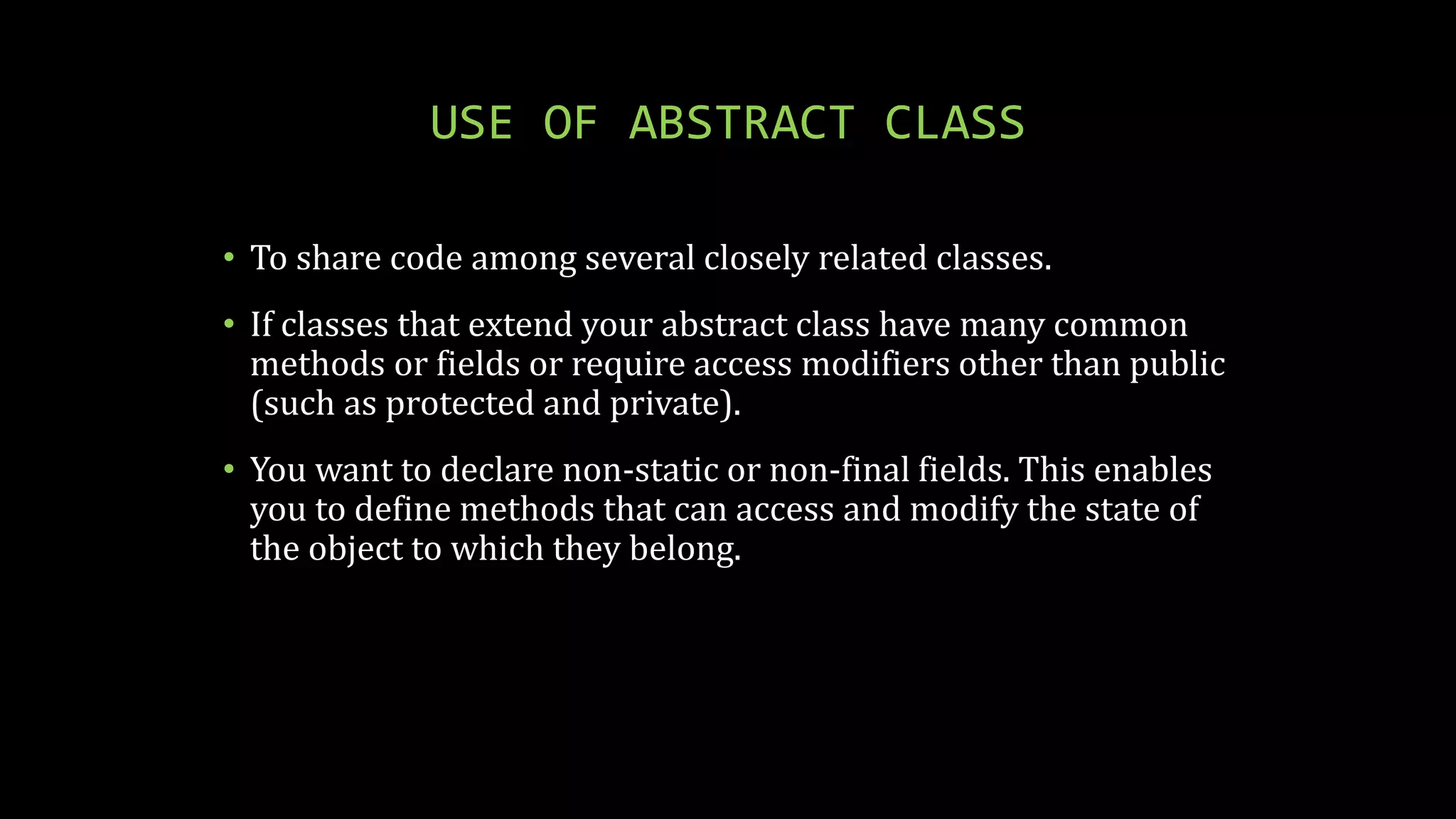
• To share code among several closely related classes.
• If classes that extend your abstract class have many common
methods or fields or require access modifiers other than public
(such as protected and private).
• You want to declare non-static or non-final fields. This enables
you to define methods that can access and modify the state of
the object to which they belong.
USE OF ABSTRACT CLASS
Abstract Class & Abstract Method in Core Java

Abstract Class & Abstract Method in Core Java

  • 1.
    ABSTRACT CLASS MOHIT AGARWAL– (161080107026)
  • 2.
    INTRODUCTION • “Abstraction” isa process of hiding the implementation details and showing only functionality to the user. • It shows only essential things to the user and hides the internal details. • There are two ways to achieve abstraction in java 1) Abstract class (0 to 100%) 2) Interface (100%)
  • 3.
    ABSTRACT CLASS &METHOD • An abstract class is a class that is declared ”abstract” it may or may not include abstract methods. • A method which is declared as “abstract” and does not have implementation is known as an abstract method. • Syntax : modifier abstract class className { abstract dataType methodName(); } modifier class childClass extends className { dataType methodName(){} }
  • 4.
    • An abstractclass must be declared with an abstract keyword. • It can have abstract and non-abstract methods. • It cannot be instantiated. • It can have constructors and static methods also. • It can have final methods which will force the subclass not to change the body of the method. • Any class which contains an abstract method must also be abstract. POINTS TO REMEMBER
  • 6.
    abstract class Animal//Abstract Class Declaration { public abstract void sound(); //Abstract Method Declaration } public class Dog extends Animal //Dog inherits from Animal { public void sound() { System.out.println("Woof"); } public static void main(String args[]) { Animal obj = new Dog(); obj.sound(); } } OUTPUT : Woof
  • 8.
    abstract class MyClass { publicvoid disp() { System.out.println("Concrete method of parent class"); } abstract public void disp2(); } class Demo extends MyClass { public void disp2() { System.out.println("overriding abstract method"); } public static void main(String args[]) { Demo obj = new Demo(); obj.disp2(); } } OUTPUT : overriding abstract method
  • 9.
    • To sharecode among several closely related classes. • If classes that extend your abstract class have many common methods or fields or require access modifiers other than public (such as protected and private). • You want to declare non-static or non-final fields. This enables you to define methods that can access and modify the state of the object to which they belong. USE OF ABSTRACT CLASS