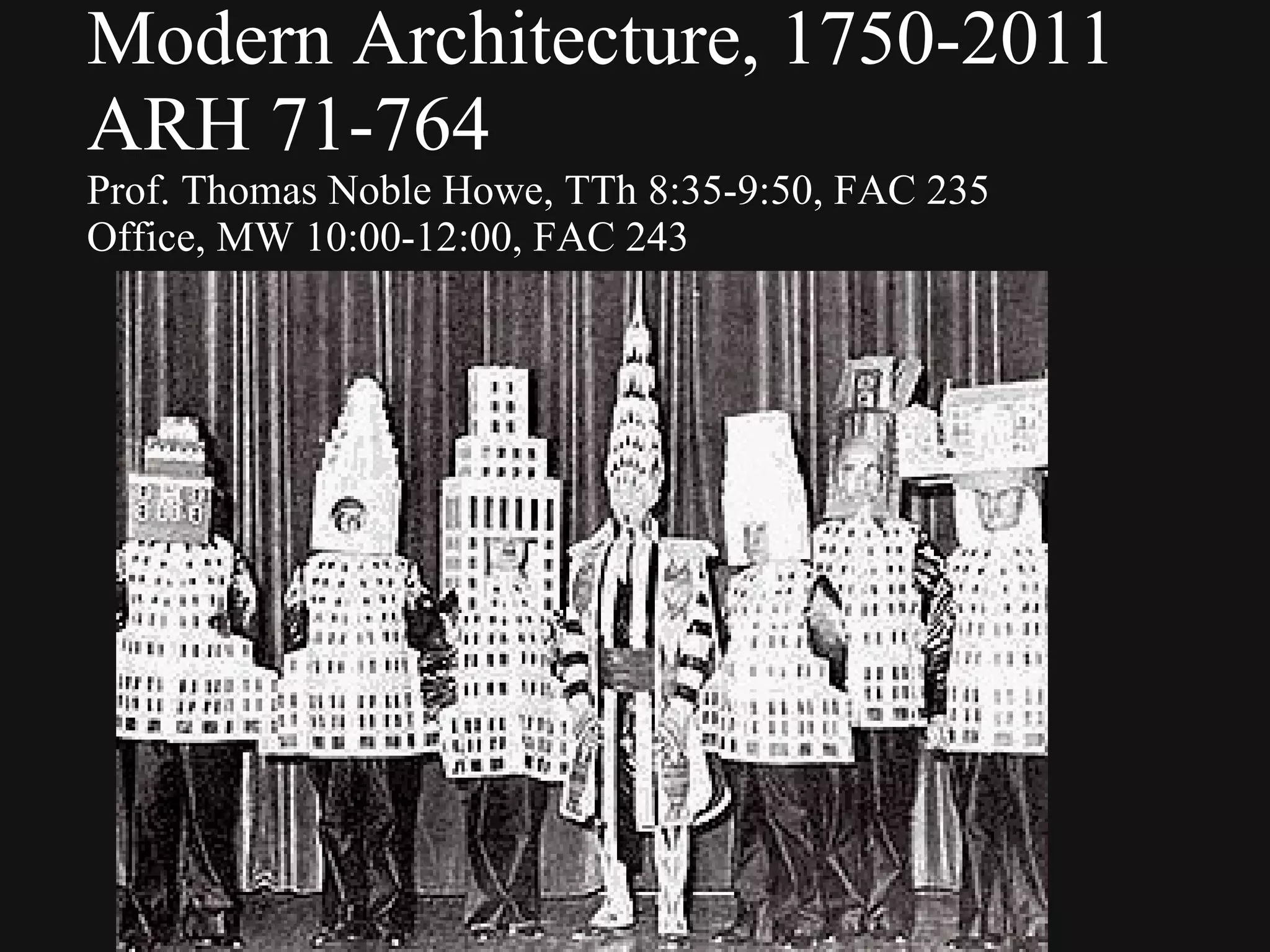
Modern Architecture, 1750-2011 ARH 71-764 Prof. Thomas Noble Howe, TTh 8:35-9:50, FAC 235 Office, MW 10:00-12:00, FAC 243
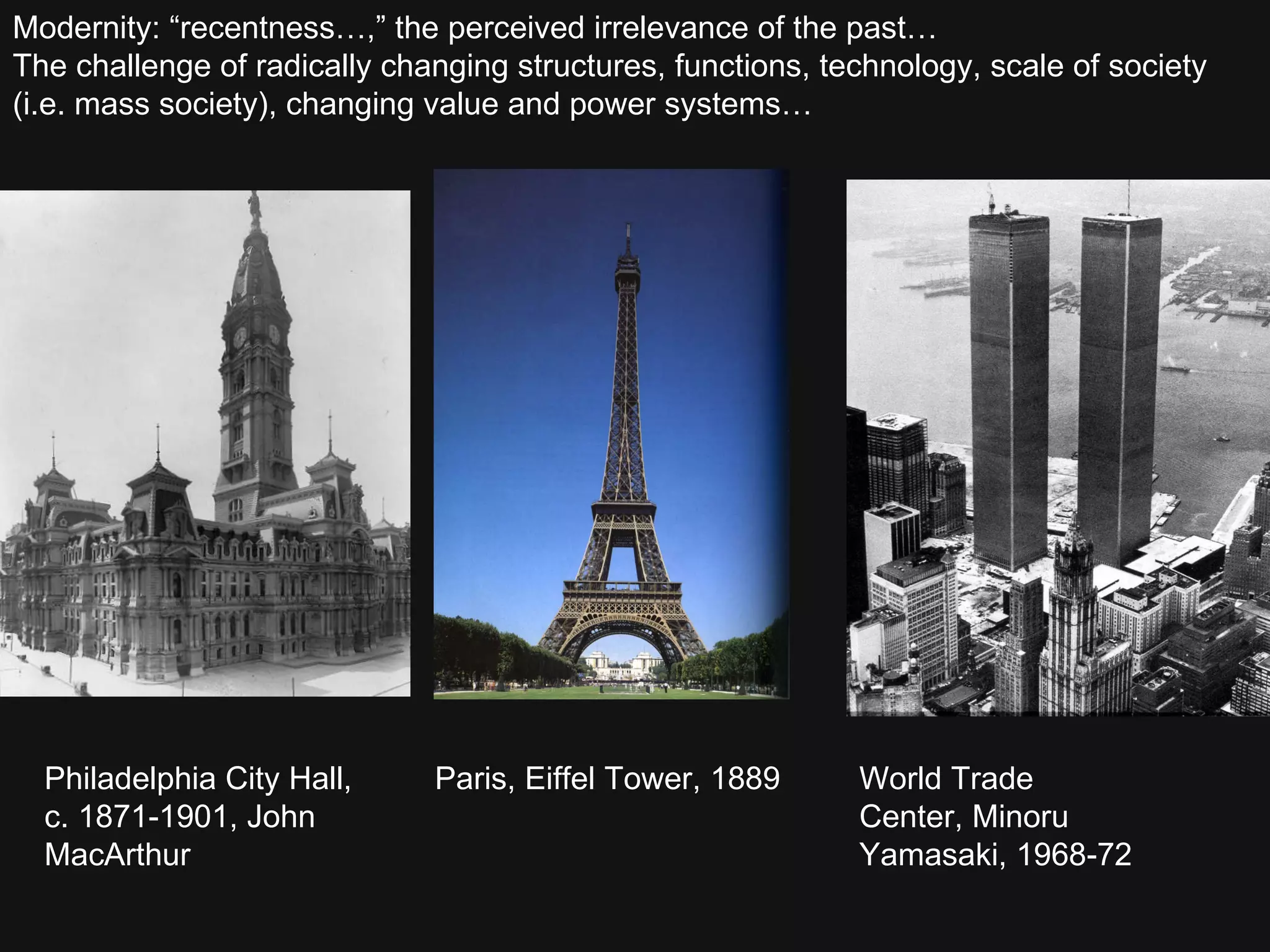
Philadelphia City Hall,  c. 1871-1901, John MacArthur Paris, Eiffel Tower, 1889 World Trade Center, Minoru Yamasaki, 1968-72 Modernity: “recentness…,” the perceived irrelevance of the past… The challenge of radically changing structures, functions, technology, scale of society (i.e. mass society), changing value and power systems…
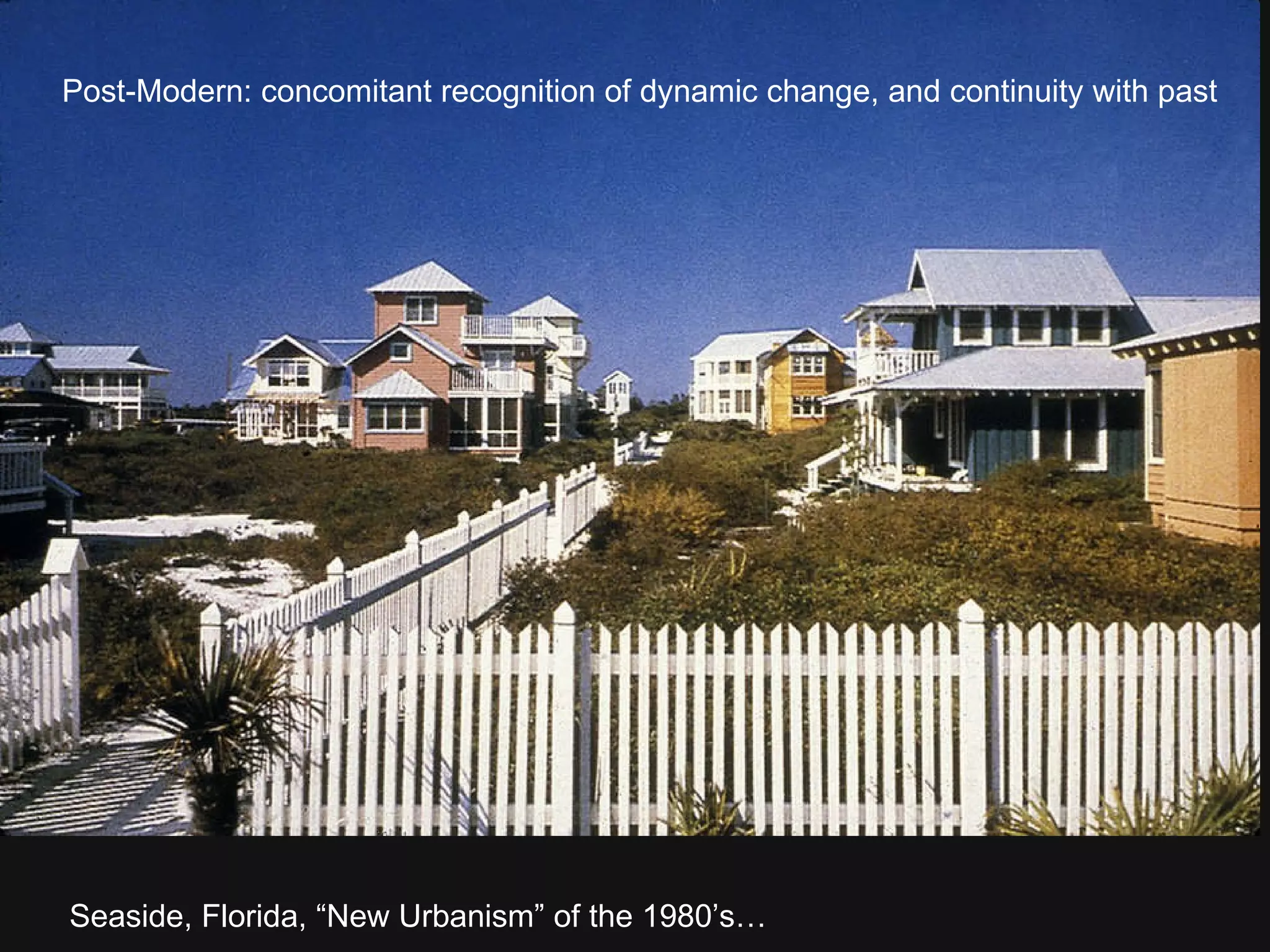
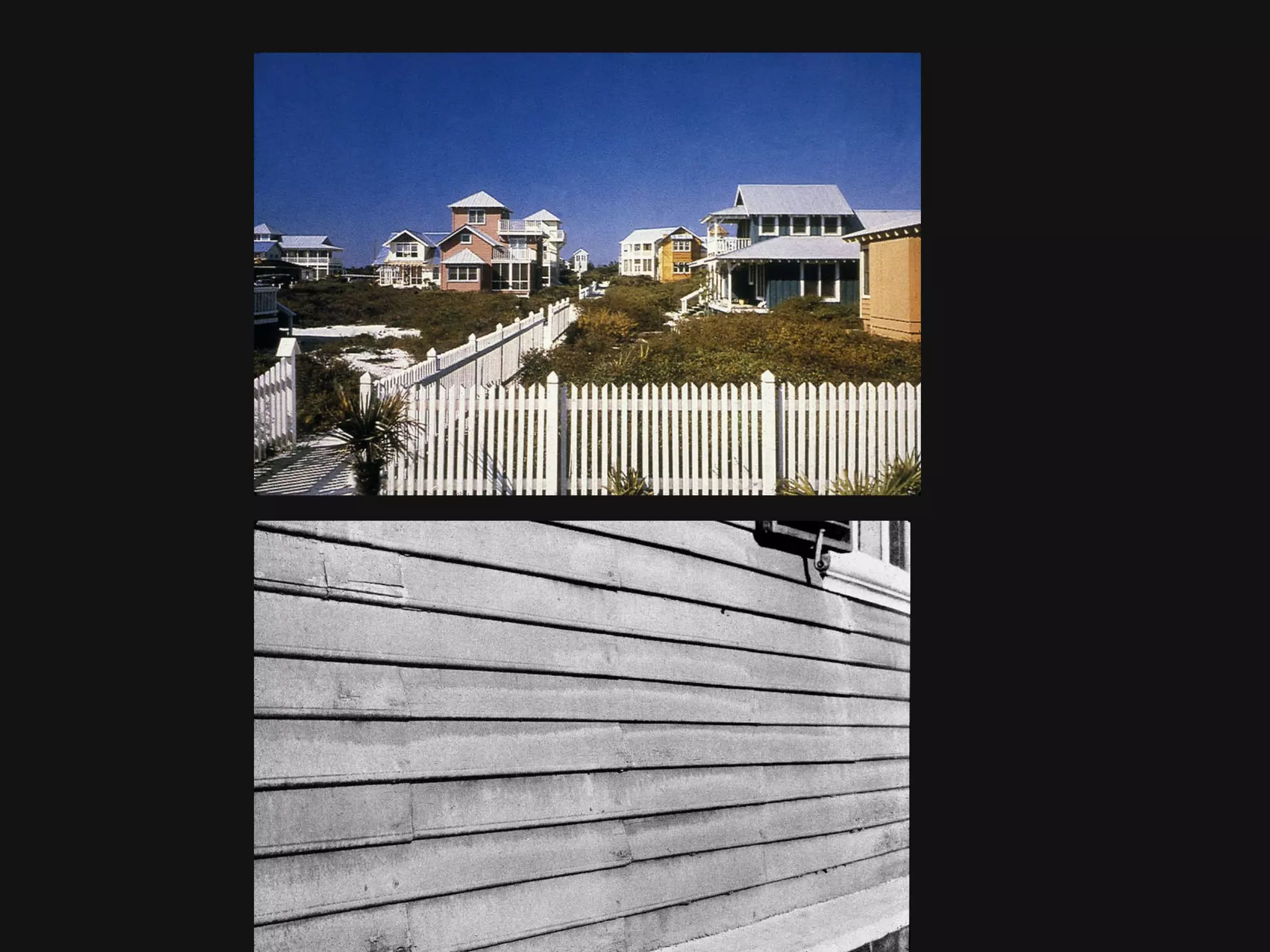
Seaside, Florida, “New Urbanism” of the 1980’s… Post-Modern: concomitant recognition of dynamic change, and continuity with past
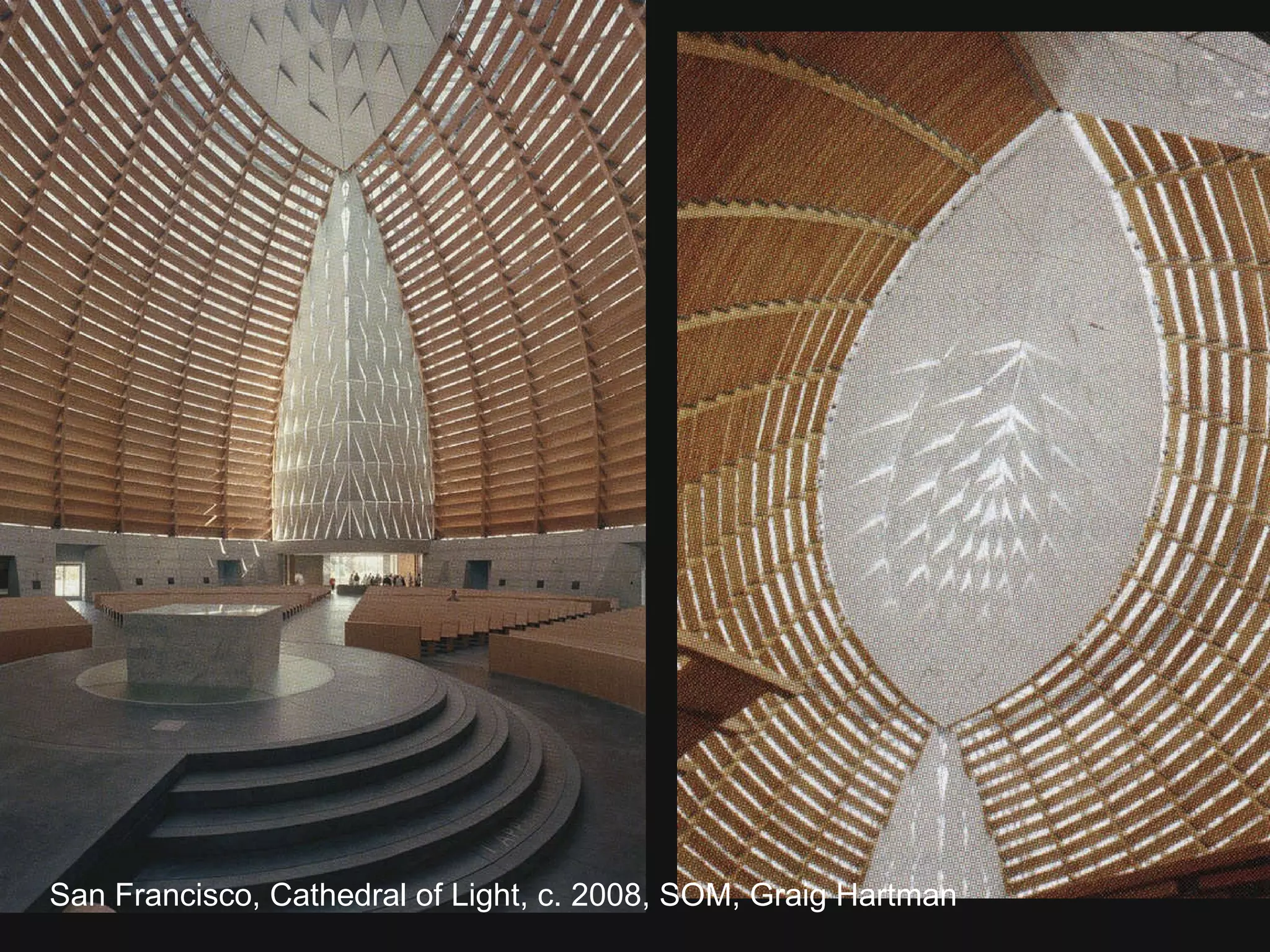
San Francisco, Cathedral of Light, c. 2008, SOM, Graig Hartman
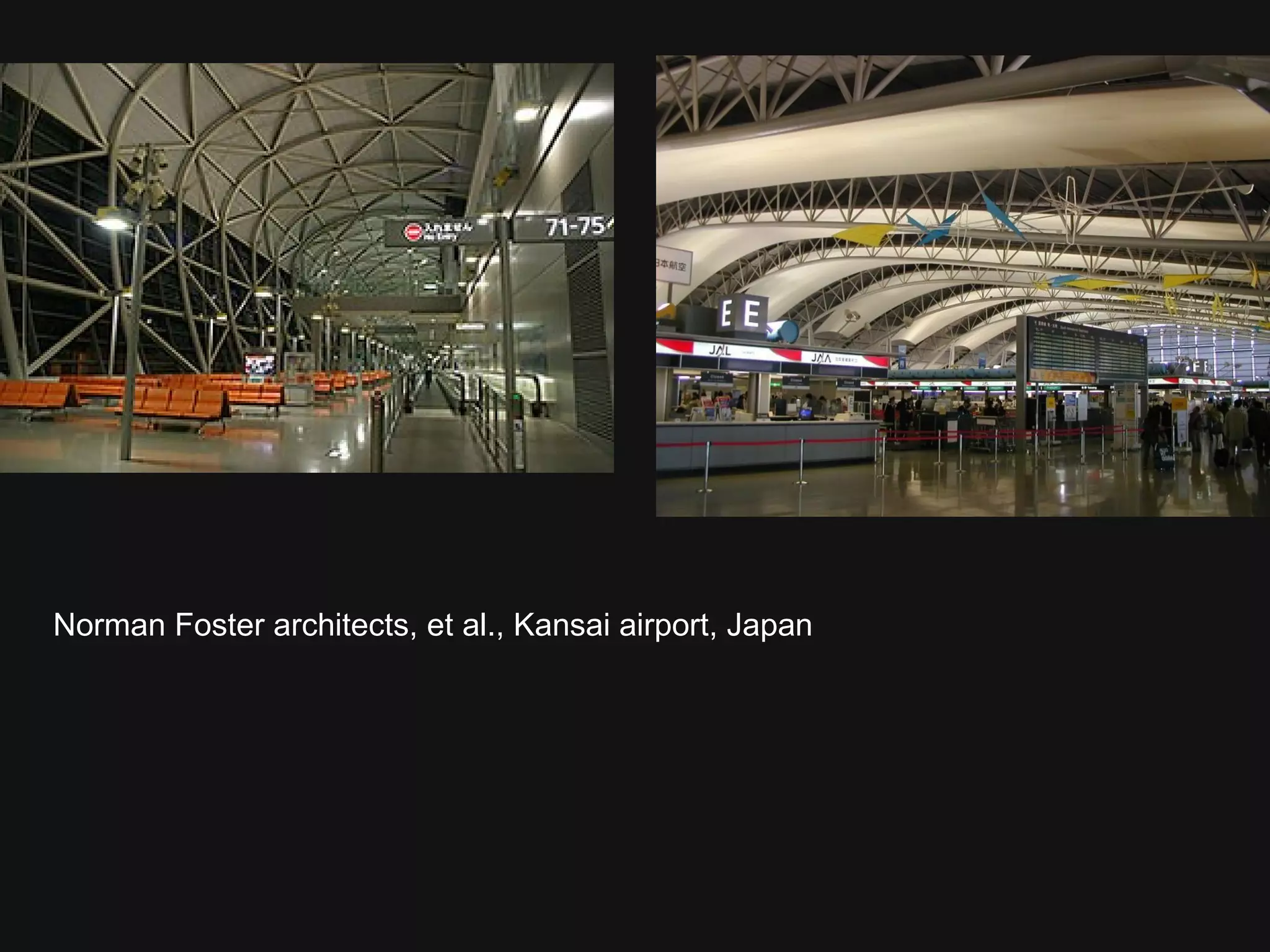
Norman Foster architects, et al., Kansai airport, Japan
 
71-713 Modern Architecture, c. 1750-2009     This is a survey of the development of the architecture of Europe and the Americas, and its consequent world wide spread, primarily from the middle of the eighteenth century to the present. It also introduces fundamental issues of architectural theory, aspects of cultural and intellectual history.  This is a  writing course, not a studio or design course . It is a course about analyzing and writing about architecture. This requires factual knowledge of architectural terminology (including some knowledge of structures, functions, and symbolism), knowledge of historical-cultural contexts and development of skills in analytical writing. Obviously it requires that you develop abilities of visual recognition.  The main things to study or take away from the course should be: 1. The “ information/neat stuff :” a wealth of information (a selection, or as much as you can absorb…) specific to architecture, including terminology, structural forms, decorative forms, uses and functions of buildings, etc. (e.g., words like archivolt, squinch, ribbed groin vault, Doric order, ashlar masonry, etc.).  2.  Some broad historical background , including some chronology, historical conMoffett: social structure, and value systems of the cultures we will be looking at (e.g. power structure of the Roman Senate, hierarchy of Medieval Catholic priesthood…etc.).  3. An ability  critically to analyze and interpret buildings and their contexts .
The“Student Learning Outcomes:”  The main things you should be able to do after this course are: 1. Identify a large amount of the  technical terminology  which is specific to architecture, including terms for structural forms, decorative forms, etc. (e.g., words like archivolt, squinch, ribbed groin vault, Doric order, ashlar masonry, etc.); you should also be able to identify and explain  different types of construction  and structure, and recognize common types of symbolism, uses and functions of modern and “historicizing” buildings. You should be able to “ read” architectural drawings  in 3D (plans, sections and elevations) and recognize types of geometry used in designing buildings. 2. You should have acquired a  broad historical background , of politics, technology, social structure, value (i.e. belief) systems and chronology of Europe and America from 1750 to present.  3. You should also be able to  recognize certain major movements and styles of architecture , and be able to define the characteristics of such movements and recognize and define the approaches and innovations of several significant individual architects.  4. You should be able critically to analyze and evaluate  the design   quality and expressive content and significance  of major buildings, using “formal analysis” (i.e. stylistic analysis), comparison with other buildings, and appreciation of historical context and technique. You should be able research useful and reliable information about buildings, critically evaluate evidence and interpretations, appreciate the interdependency in architecture of building, money, power, social structure, history, values, culture and technology. You should also be able critically to evaluate how a building’s meaning may not be as was intended by the builders, or how it can be altered by users (“reception theory”).  5. You should be able to do  critical evaluation of evidence and the validity of interpretations  based on evidence and logic.
Principal text: The PowerPoint lectures.  I intend to put discs on reserve in the library of the lectures which you can look at on your own computers or in the library, and they should be available fairly soon after the lecture. Much of the material of the lecture notes will appear as text in the PowerPoint lectures. These contain the most essential chronology, information (in text form), images of buildings.   Survey text: Marian Moffett,, Michael, Fazio, Lawrence Wodehouse,  Buildings Across Time  (McGraw-Hill Humanities/Social Sciences/Languages; 3 edition, January 22, 2008)[Any edition will do] ISBN-10: 007305304X  This is broad world survey text, but half of it in fact is recent Western architecture. The text itself will not be the main point of discussion, but the range of images is good, and exams will use images from this text. This text is strong on illustrations, but weaker on interpretation and historical context. Therefore material from the lectures will be important .  We will read only the second half of the text.    Reference book (optional): Patrick Nuttgens,  The Complete Architecture from the First Civilizations to the Present Day , (Harper-Collins, Collins Design, 2006) 0 06 089321 4  This is a fun little book with lots of good line drawings, good summaries of facts to orient you to the swirl of material information.   The Reader. This contains the main theoretical texts for discussion. Very important for exams and essays.      Also: Chronological Outline There will also be a Xerox handout of chronology and images of “required” buildings, both before the midterm and the final .   PPT image list, on CD (or a Segue site…to be determined) I will produce a ppt for each exam (midterm and final) with a list of “required buildings” that you need to be able to identify, date, etc.
Required Work: -papers, either: two short papers   (3-5 pages, a stylistic analysis of one building or a comparison of two)(percentage of grade: 10%, 20% respectively)(recommended for those students for whom this may the first or second course in art or architectural history) or : one short research paper   on a building or topic (8-12 pages, with footnotes, bibliography and illustrations) due at the end of the term (30% of grade).(recommended for those who have had a number or art or architectural history courses.) - midterm exam   (slide identifications, slide comparisons and "unknowns", 20%).  The main exercise in a slide essay exam is to identify a building, its location and culture, who built it as far as is known (the patrons, the architects…), and identify some of its design strategies and interpret. With “unknowns” and comparison essays you need to put it in historical context of what precedes it and influences it, what succeeds it and is influenced by it.  -final examination  (slide identifications, unknowns and comparisons plus essays, 40%). -participation  (10%). (This is usually neutral; I will often use it to raise the final grade if there is substantial improvement over the first assignments. It counts against you if attendance is weak. ) -ungraded quizzes: there may be four to six quizzes, which may or may not be announced in advanced. They are not graded,  but... - all work must be turned in to pass course   Exams are slide essay exams, with some longer cumulative essays for the final. You will be responsible for memorizing all of the material in the image lists; most will be illustrated in the main text. You will NOT be tested on material from the lectures which is not in the image lists.
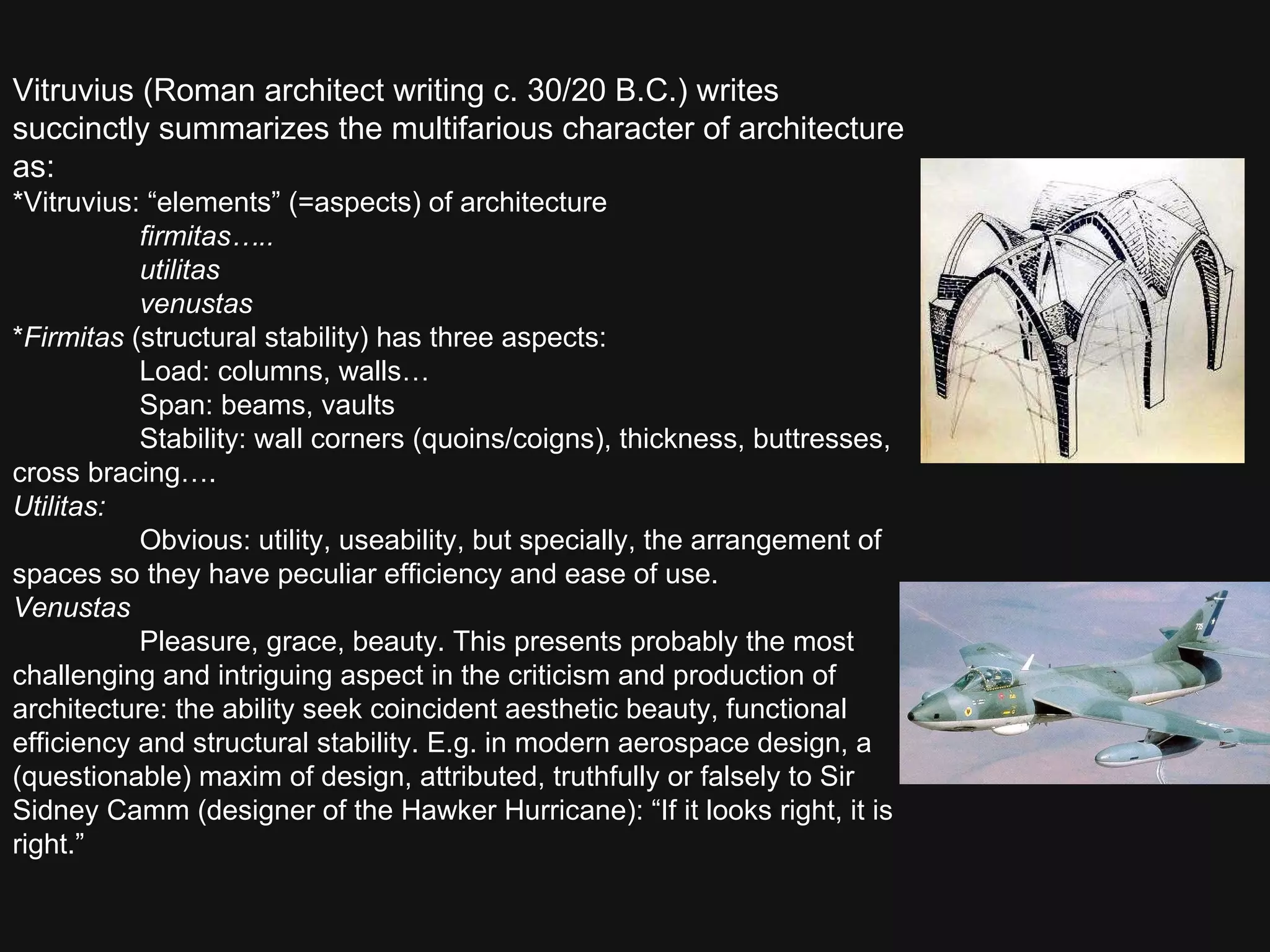
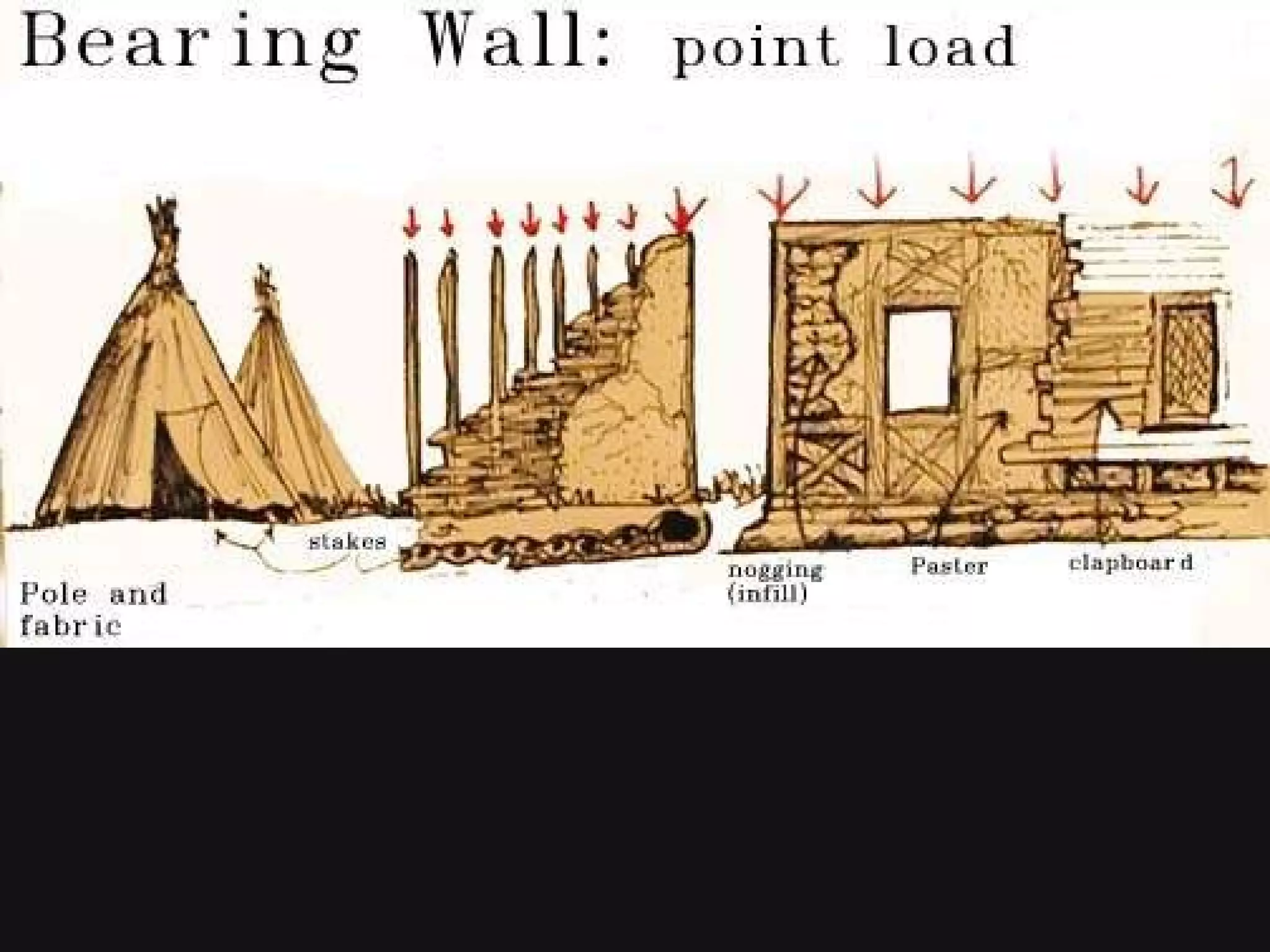
Vitruvius (Roman architect writing c. 30/20 B.C.) writes succinctly summarizes the multifarious character of architecture as:  *Vitruvius: “elements” (=aspects) of architecture firmitas….. utilitas venustas * Firmitas  (structural stability) has three aspects: Load: columns, walls… Span: beams, vaults Stability: wall corners (quoins/coigns), thickness, buttresses, cross bracing…. Utilitas: Obvious: utility, useability, but specially, the arrangement of spaces so they have peculiar efficiency and ease of use.  Venustas Pleasure, grace, beauty. This presents probably the most challenging and intriguing aspect in the criticism and production of architecture: the ability seek coincident aesthetic beauty, functional efficiency and structural stability. E.g. in modern aerospace design, a (questionable) maxim of design, attributed, truthfully or falsely to Sir Sidney Camm (designer of the Hawker Hurricane): “If it looks right, it is right.”
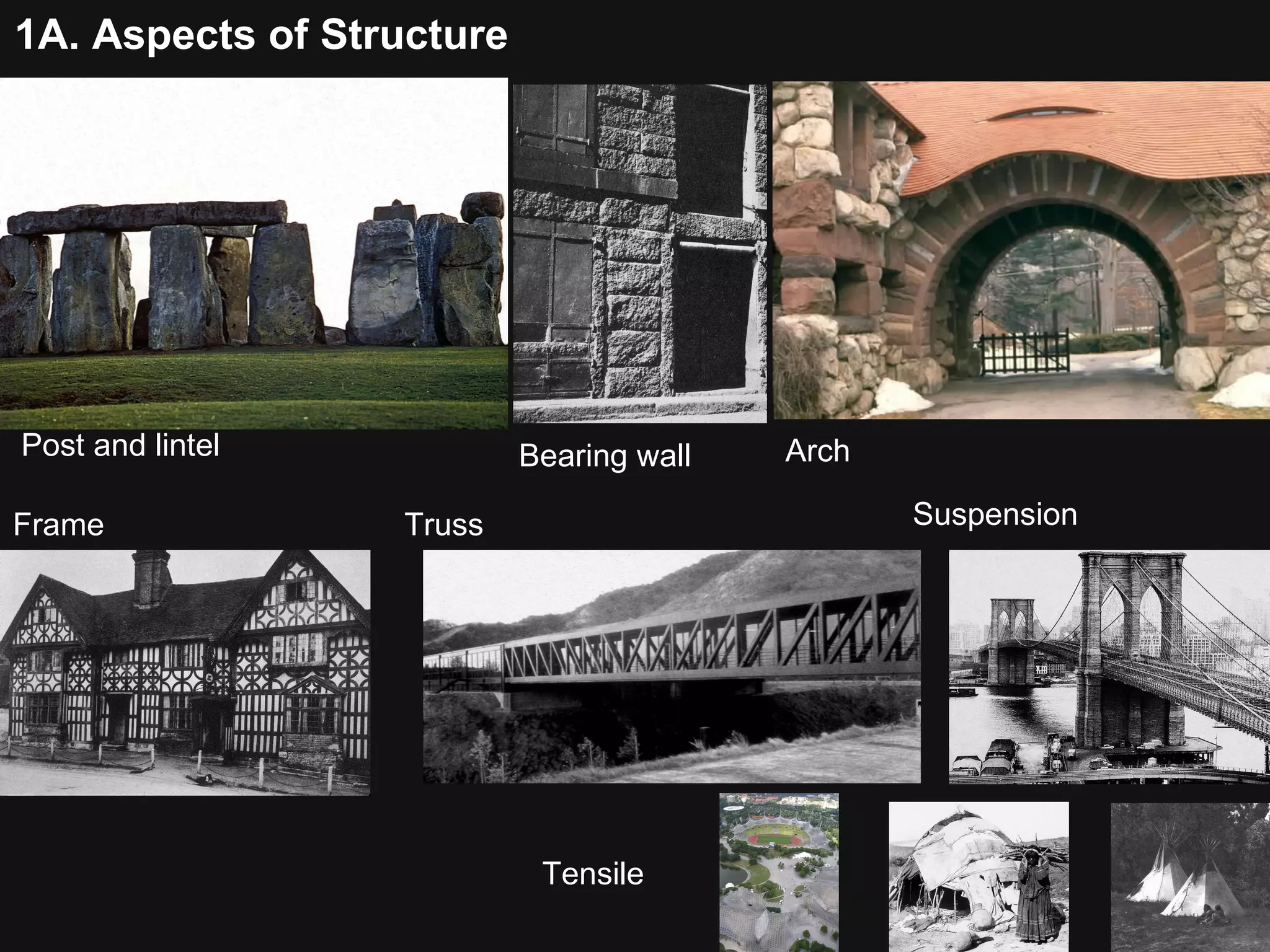
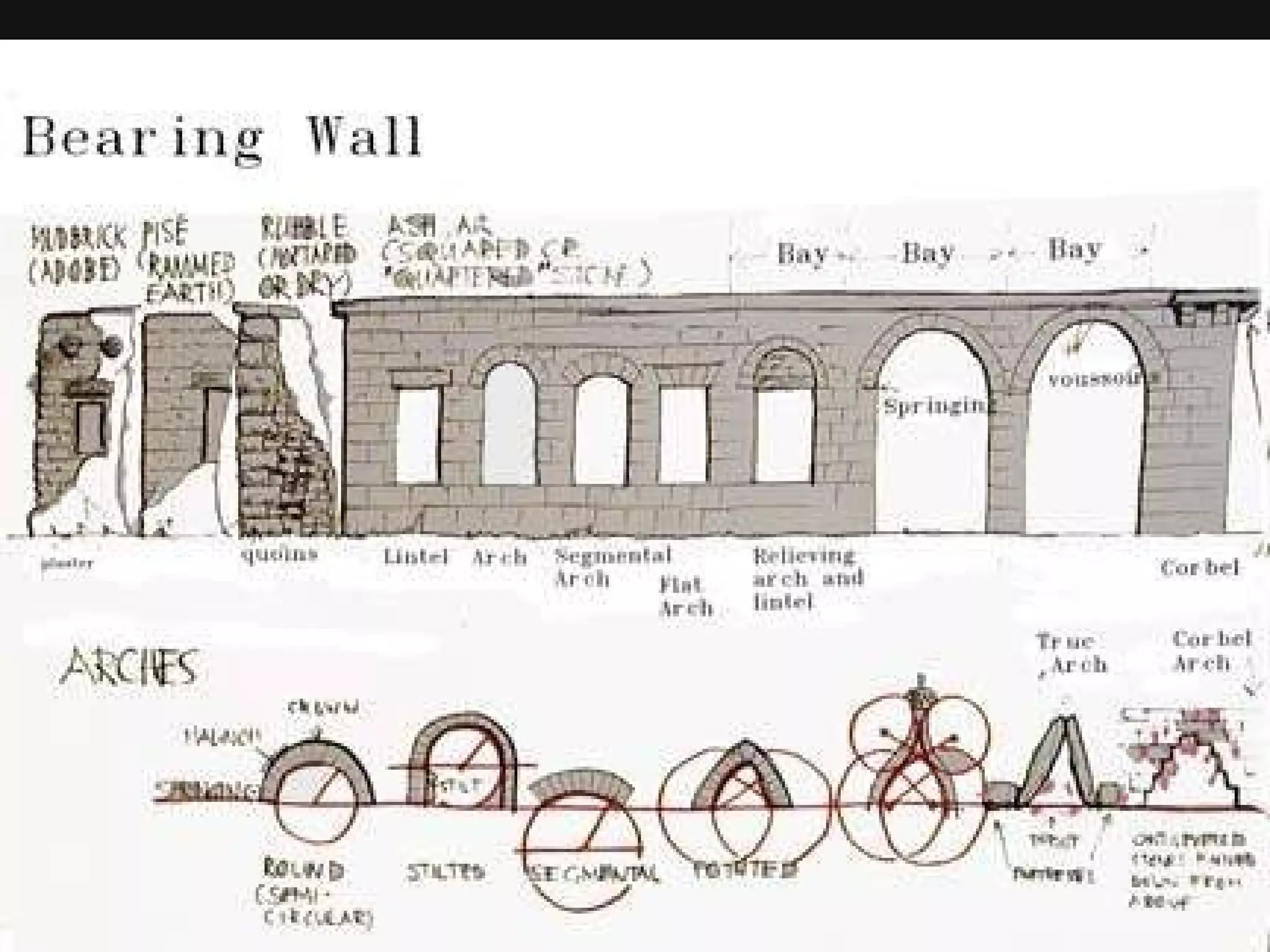
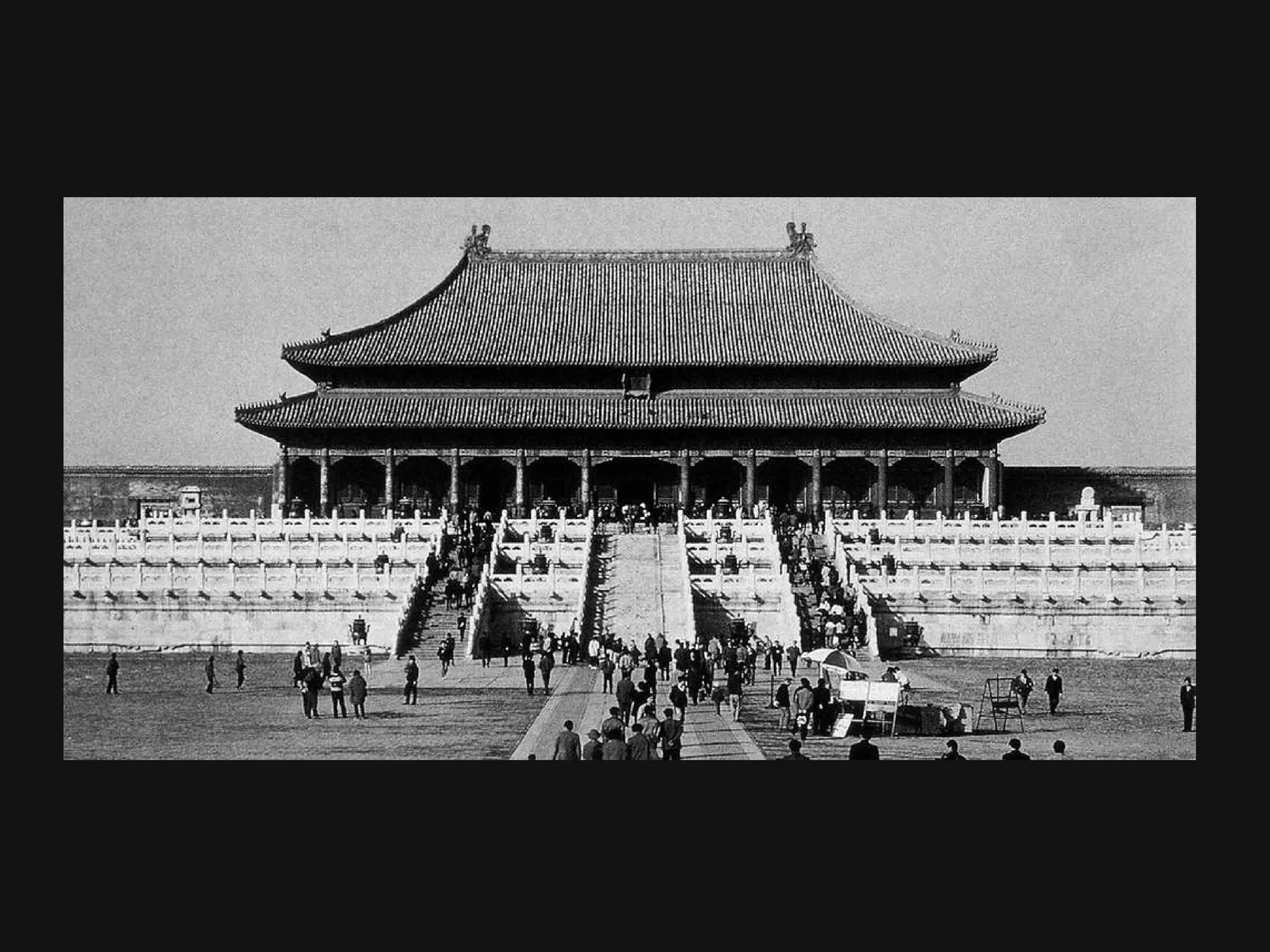
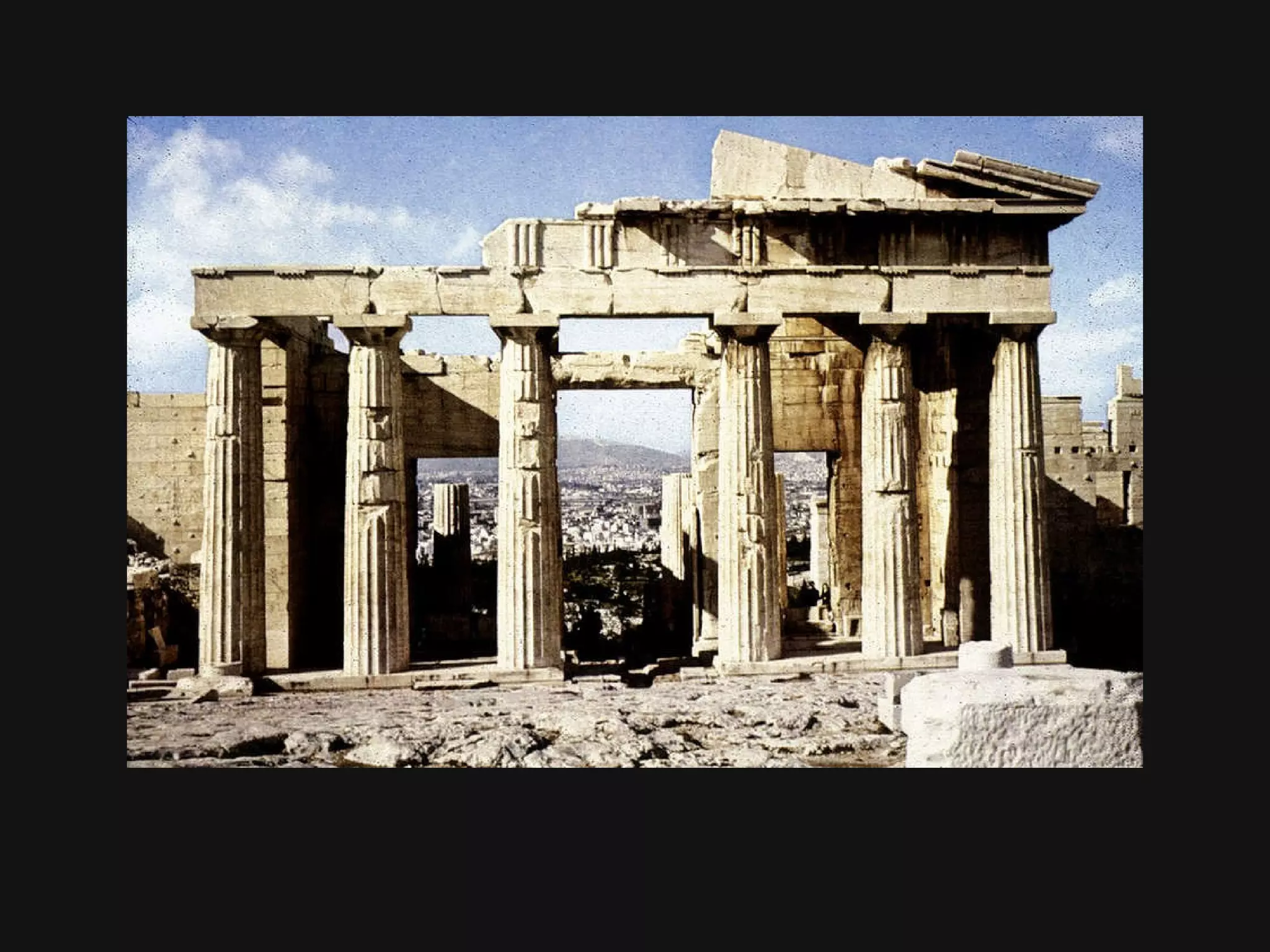
1A. Aspects of Structure Post and lintel Frame Bearing wall Arch Suspension Truss Tensile
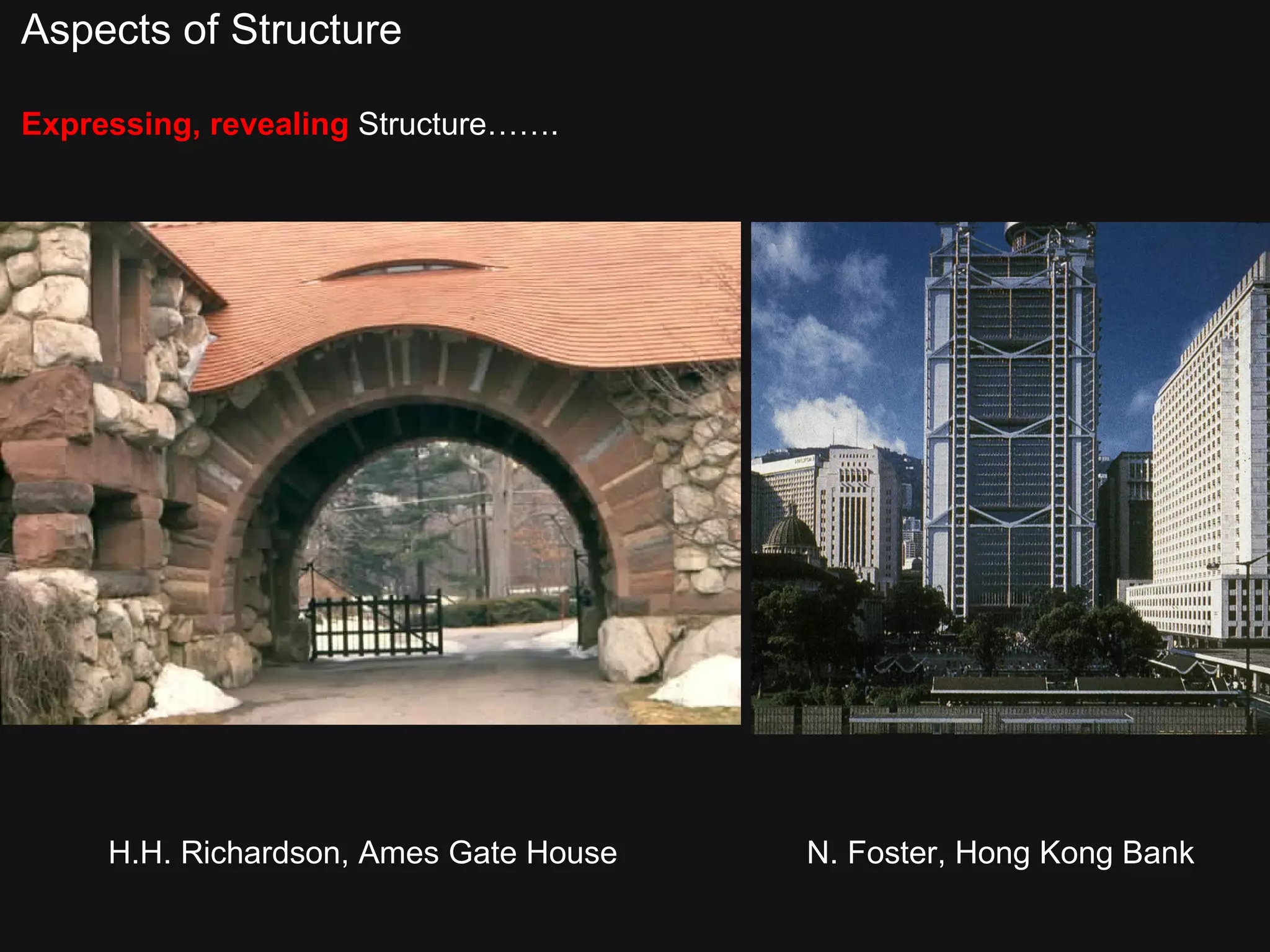
Aspects of Structure Expressing, revealing  Structure……. N. Foster, Hong Kong Bank H.H. Richardson, Ames Gate House
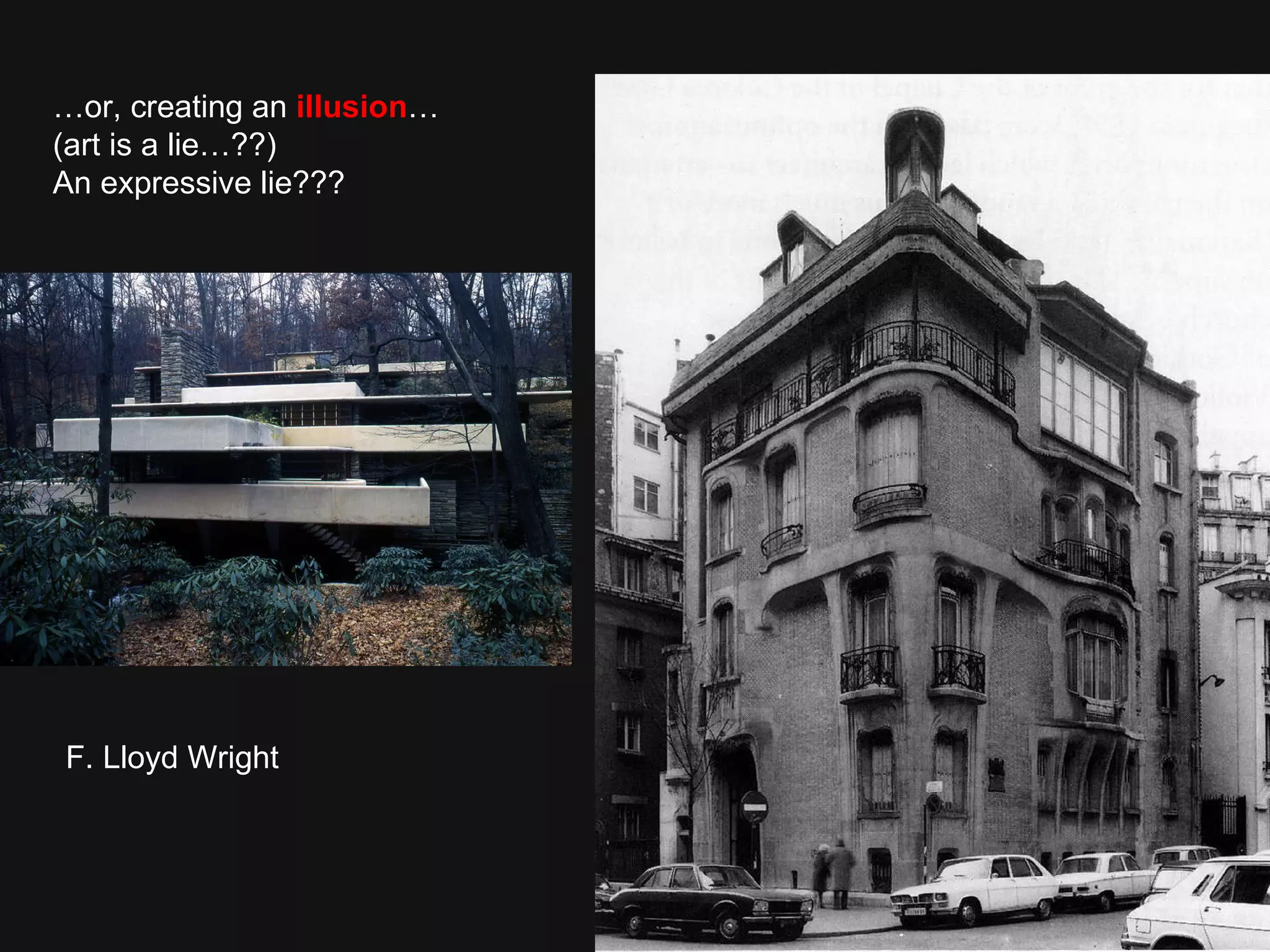
… or, creating an   illusion … (art is a lie…??)  An expressive lie??? F. Lloyd Wright
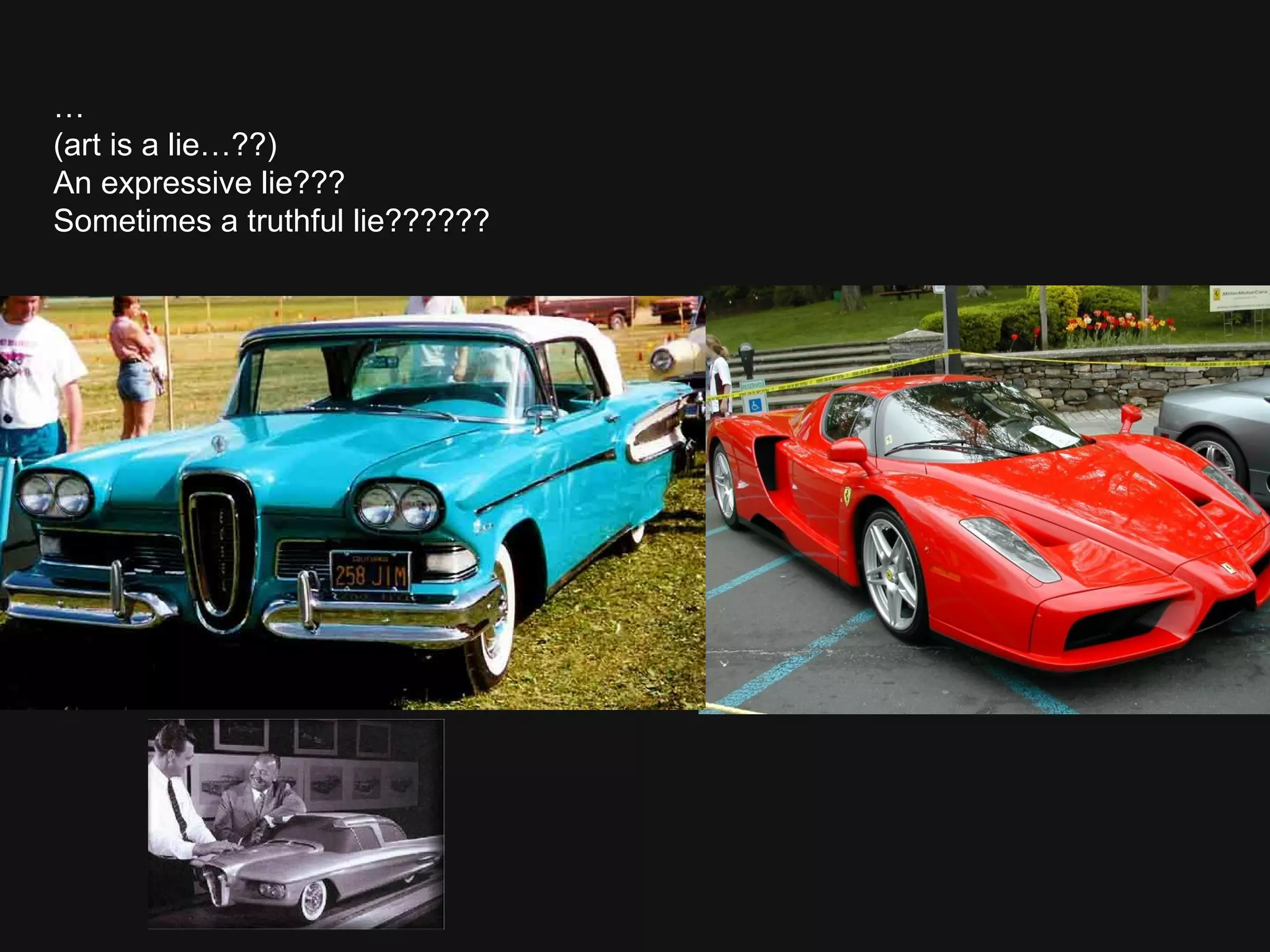
… (art is a lie…??)  An expressive lie??? Sometimes a truthful lie??????
Expressing Structure:
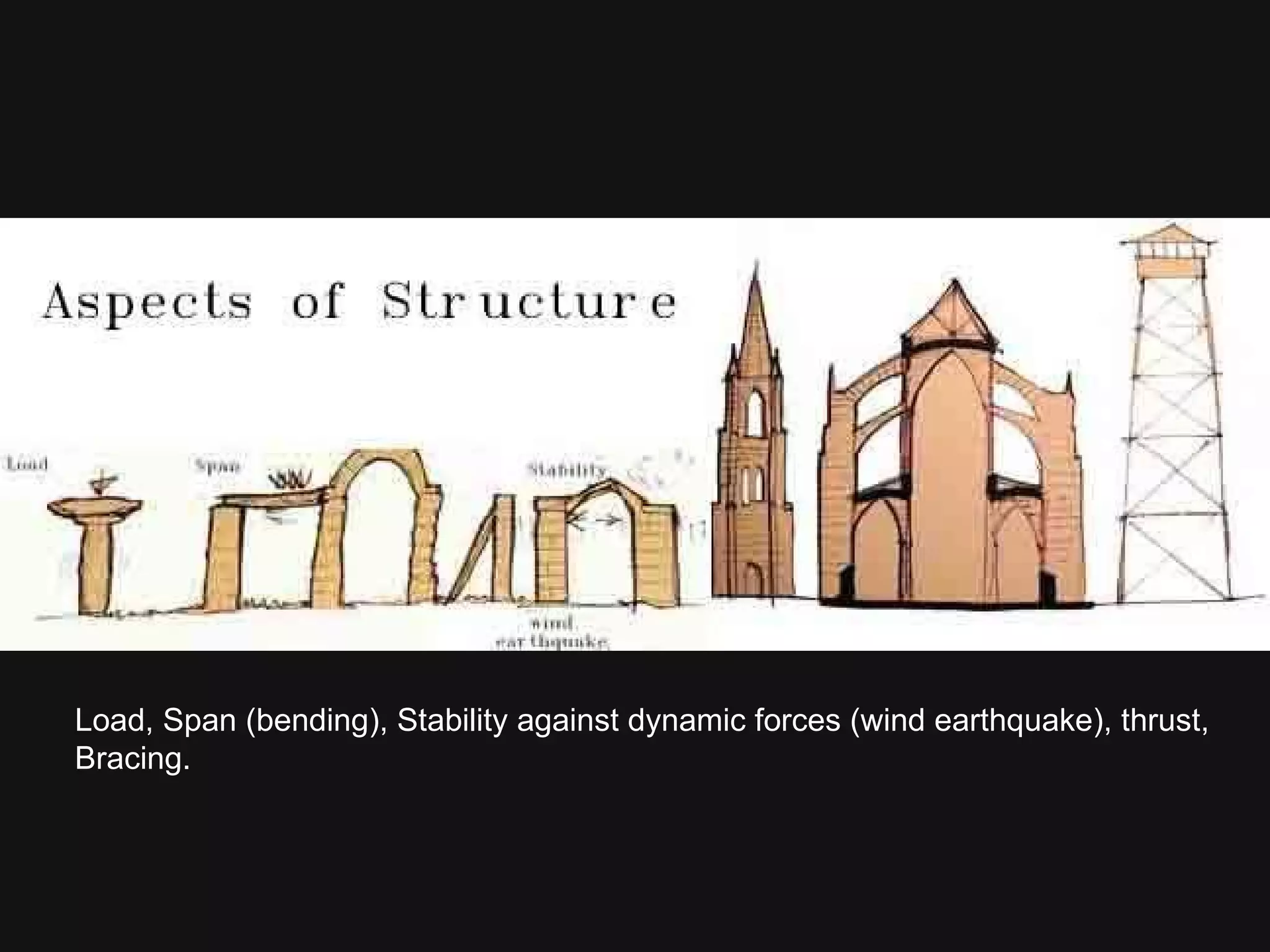
Load, Span (bending), Stability against dynamic forces (wind earthquake), thrust, Bracing.
 
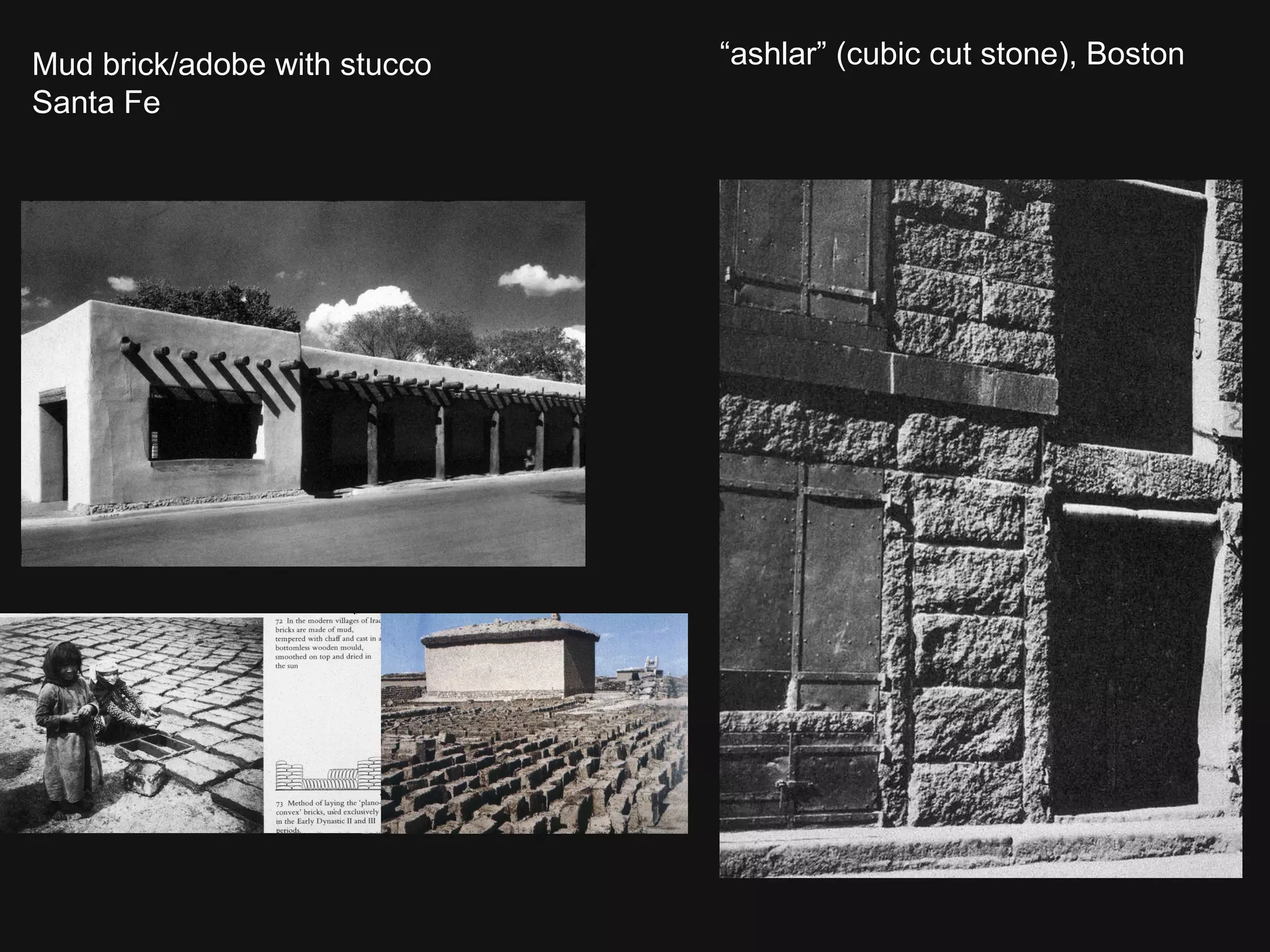
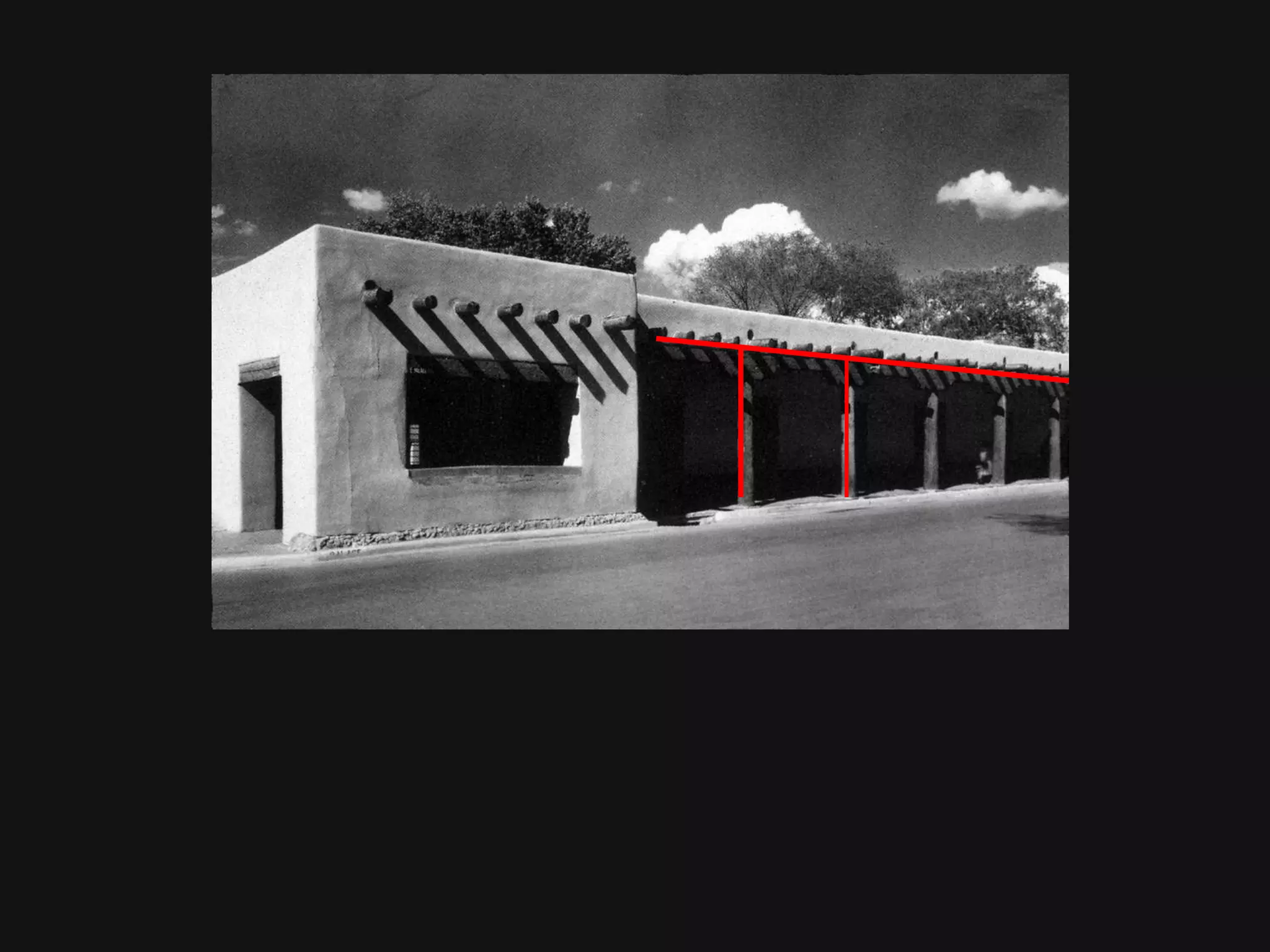
“ ashlar” (cubic cut stone), Boston Mud brick/adobe with stucco Santa Fe


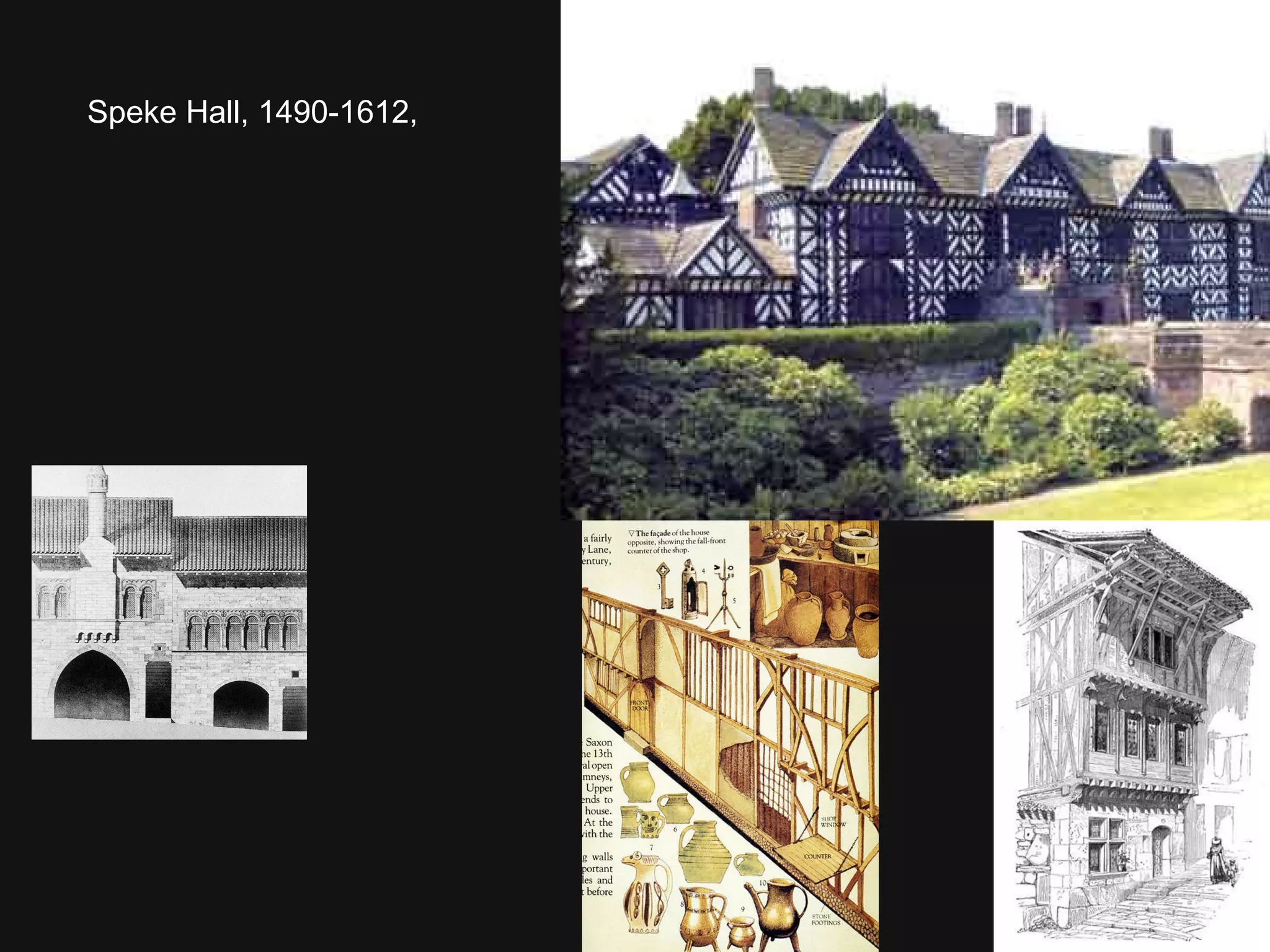
Speke Hall, 1490-1612,


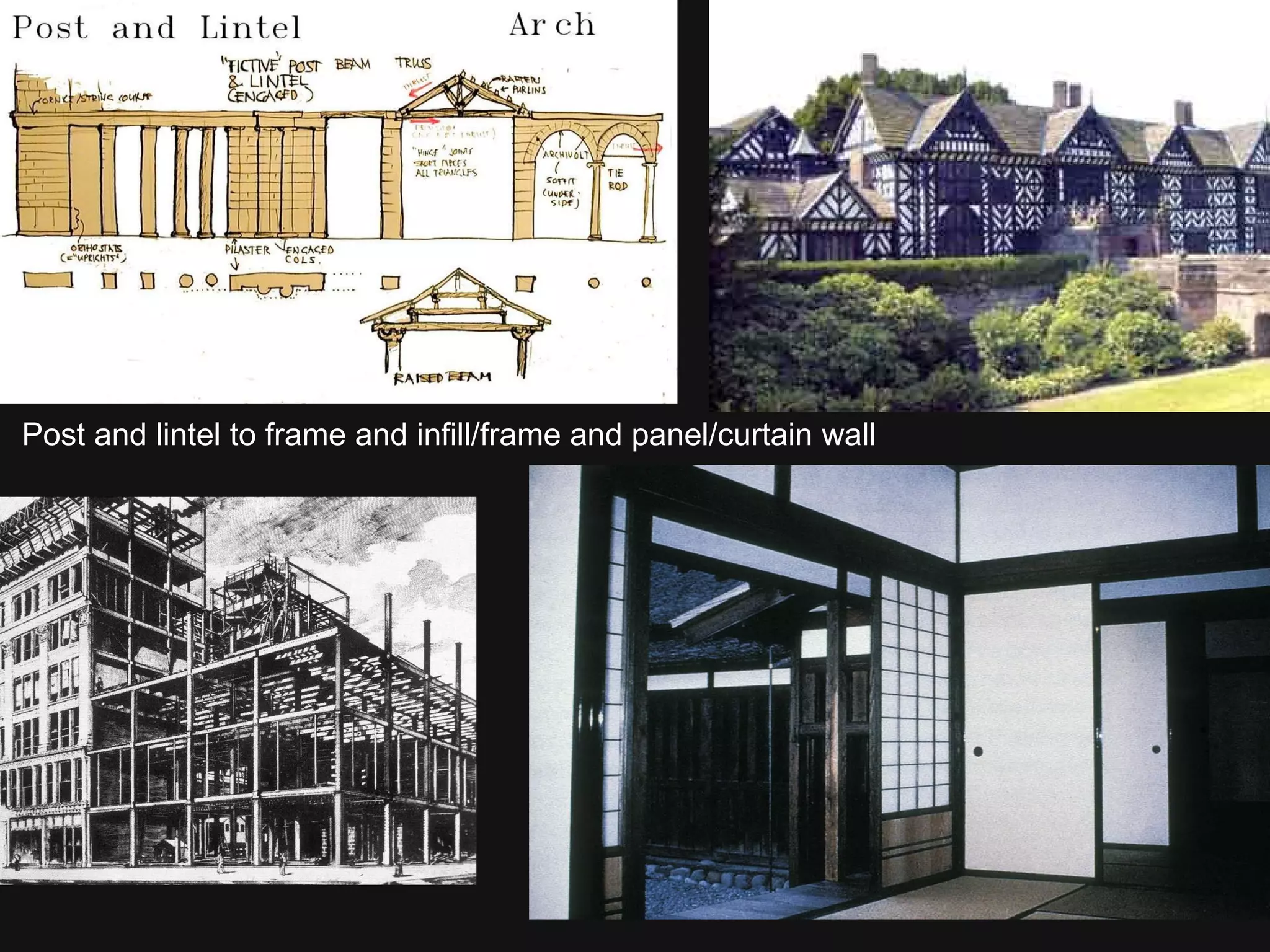
Post and lintel to frame and infill/frame and panel/curtain wall
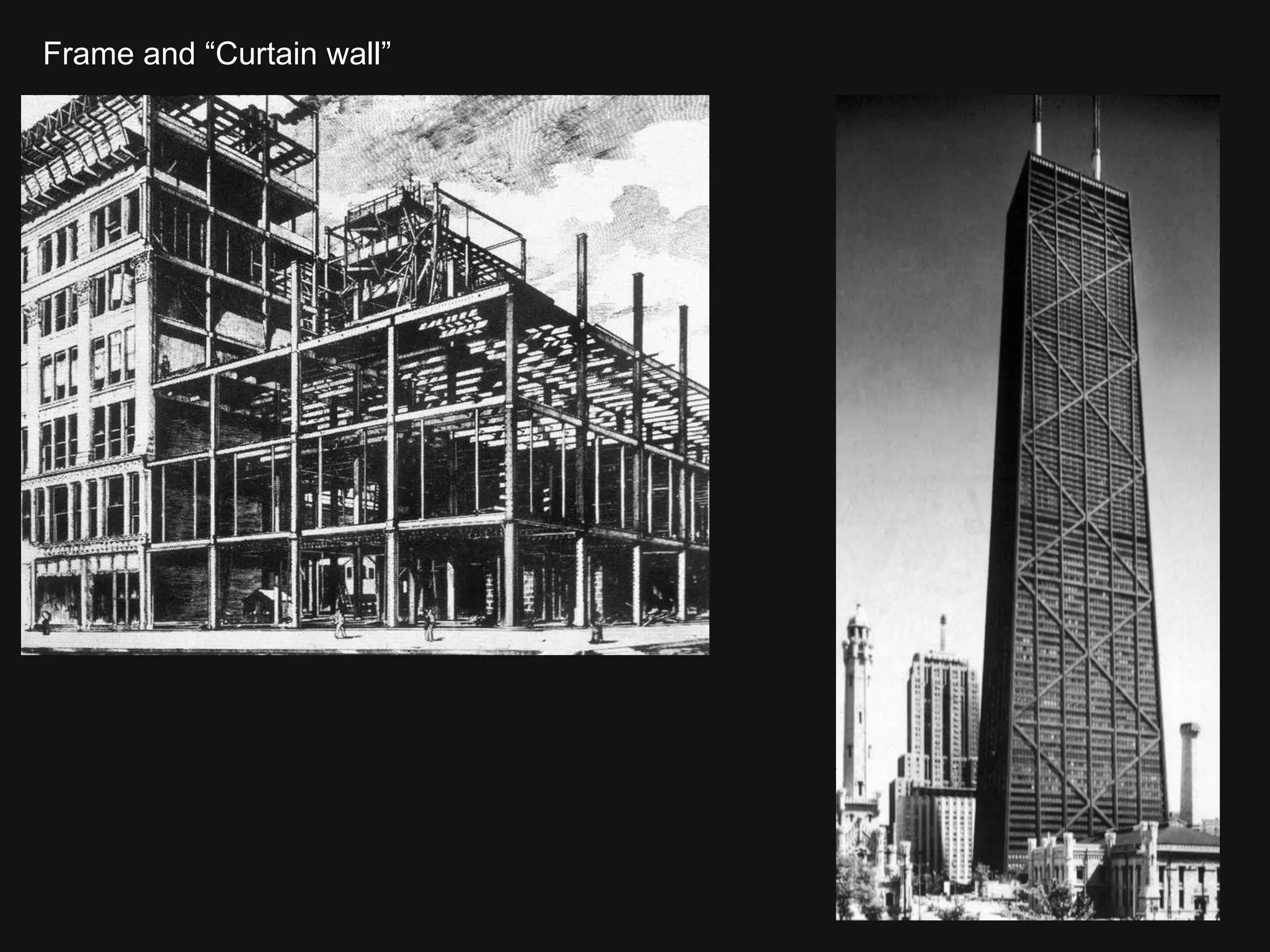
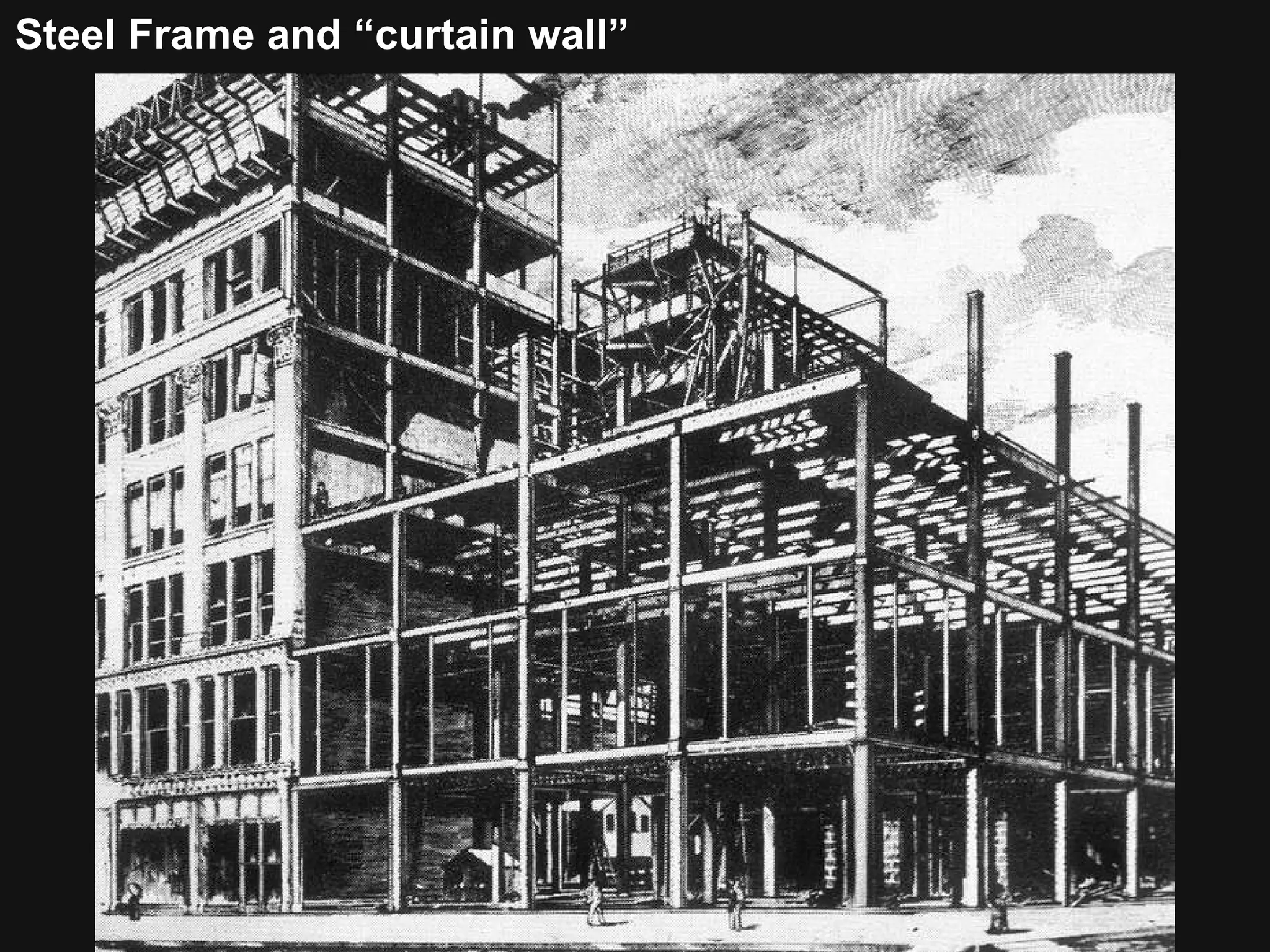
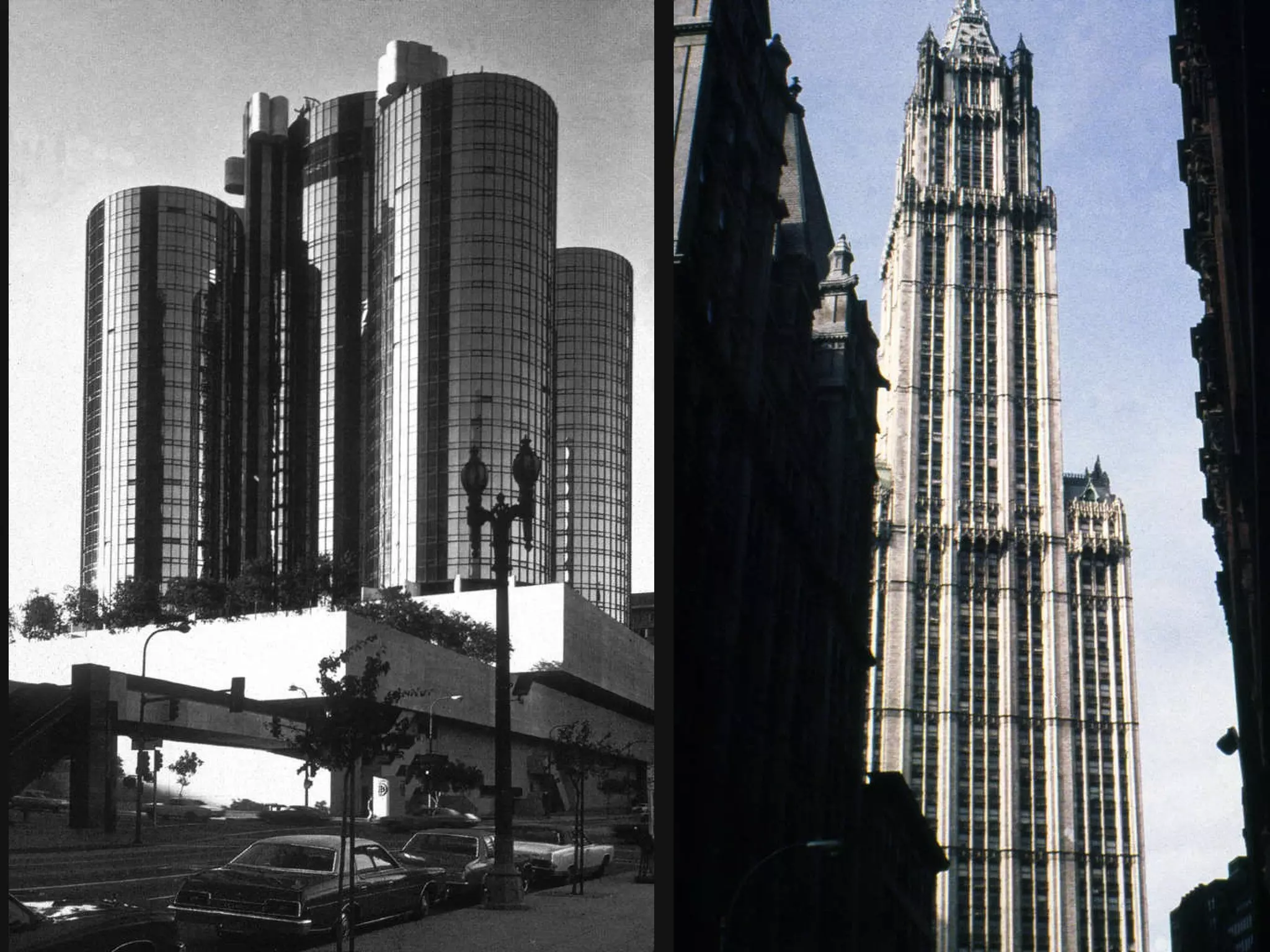
Frame and “Curtain wall”
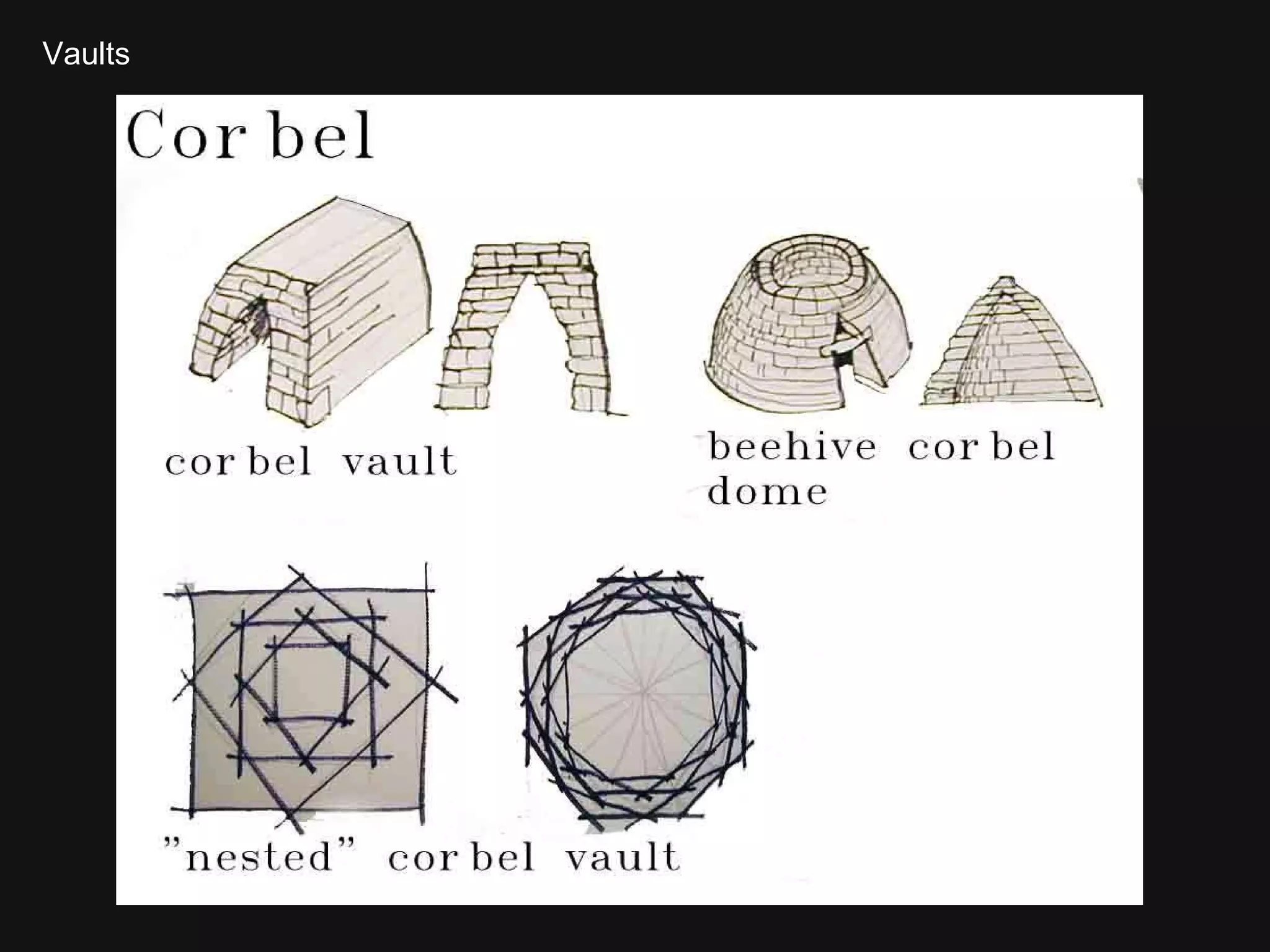
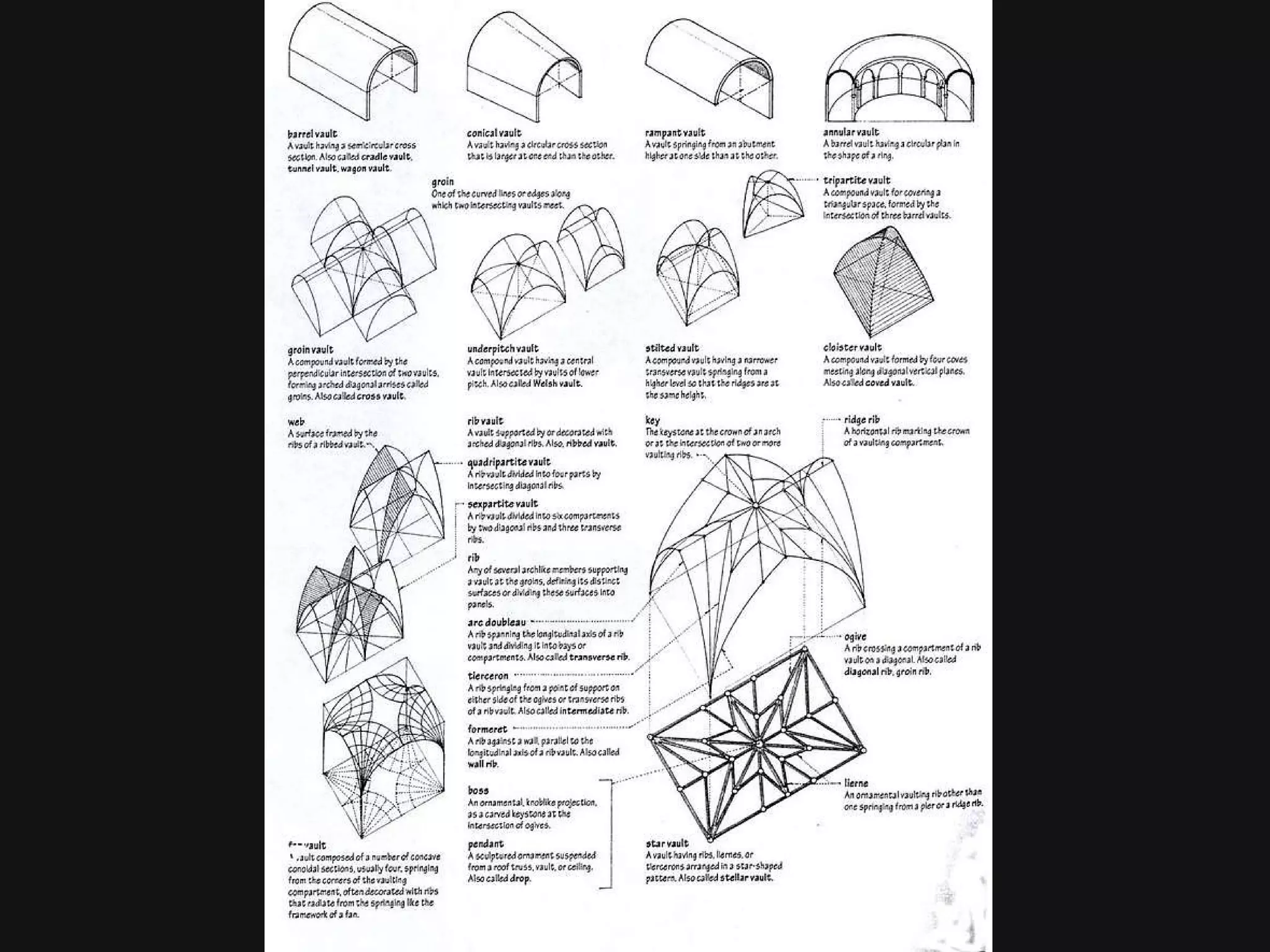
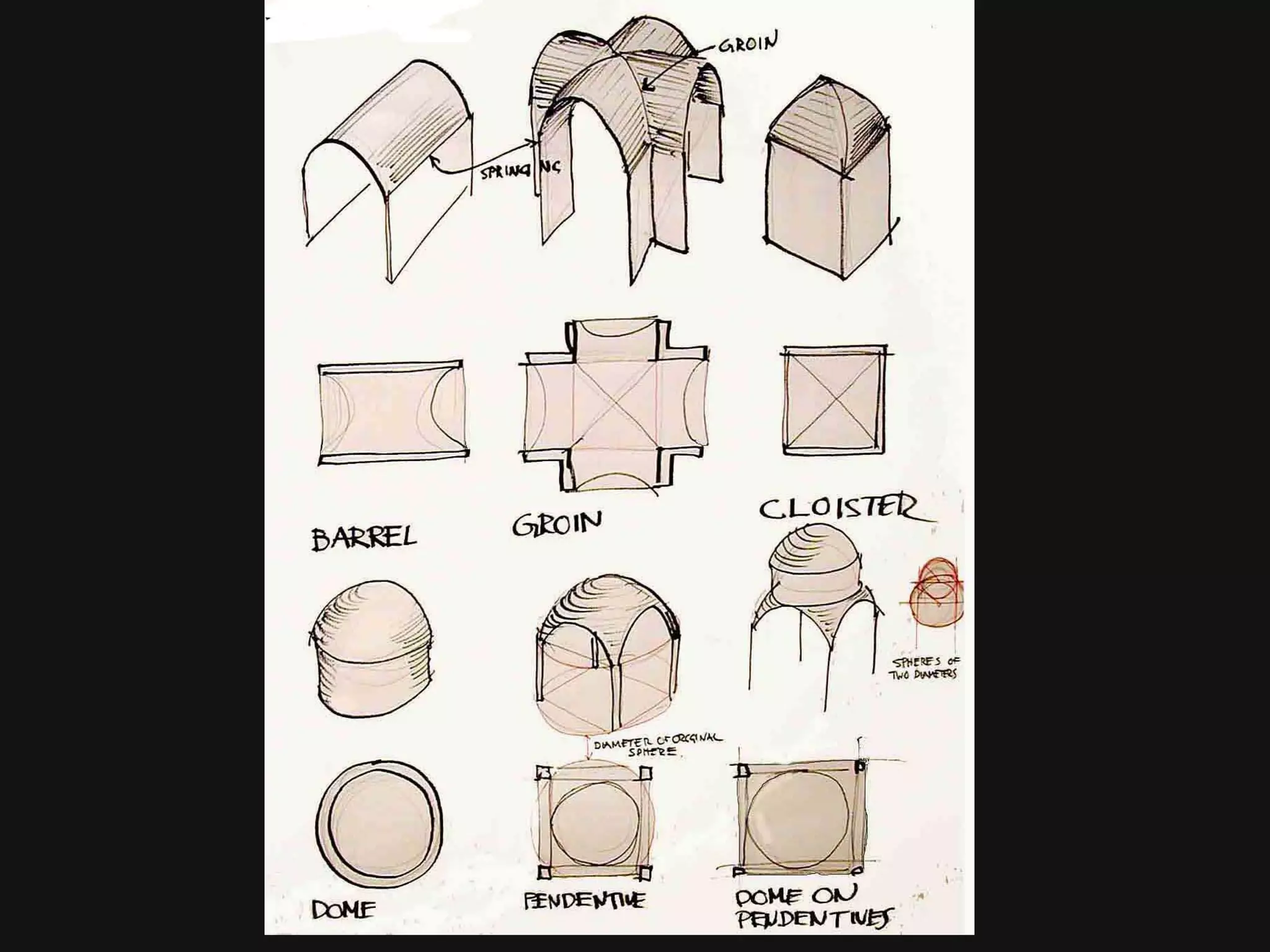
Vaults
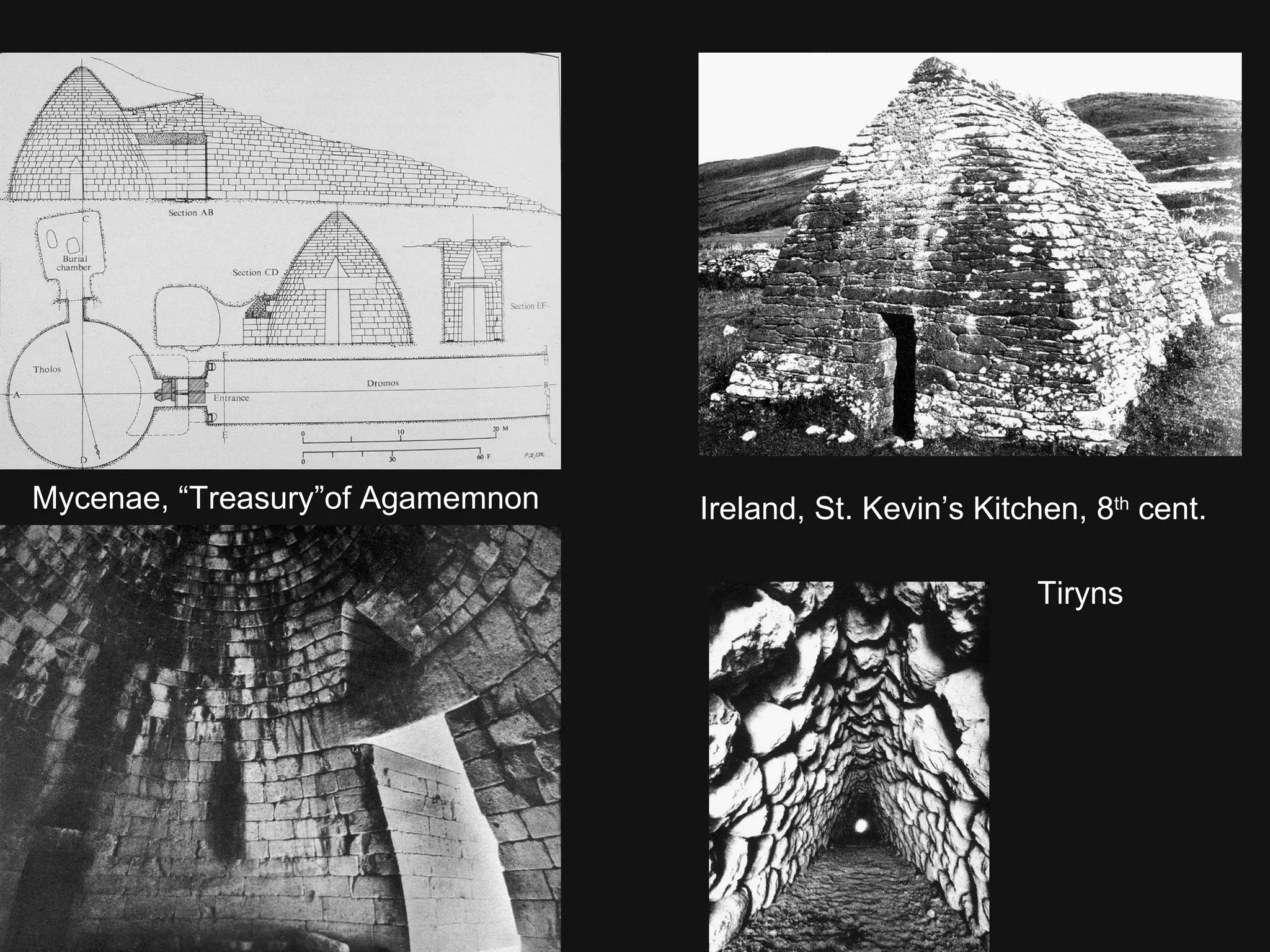
Ireland, St. Kevin’s Kitchen, 8 th  cent.  Mycenae, “Treasury”of Agamemnon Tiryns
 
 
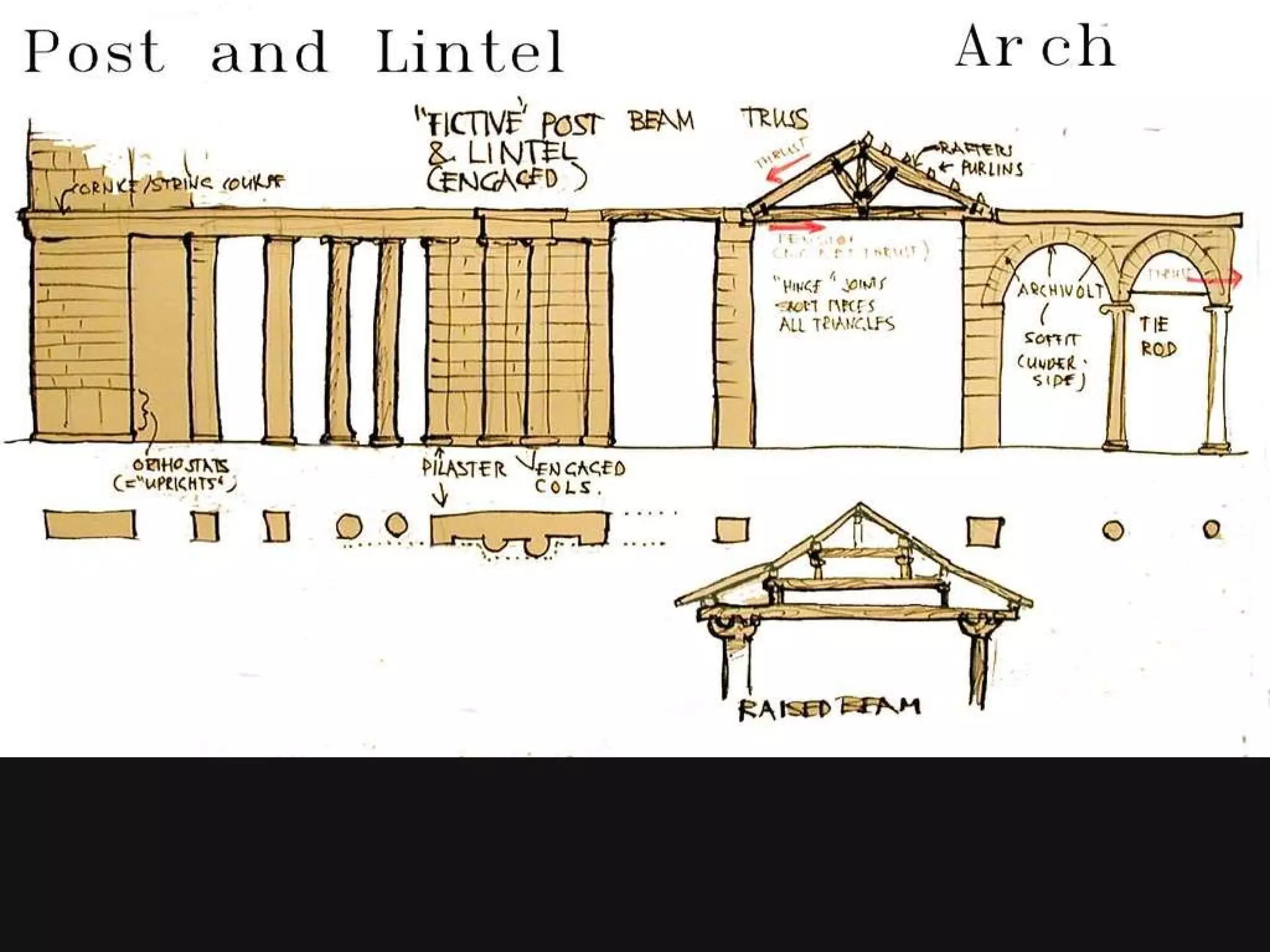
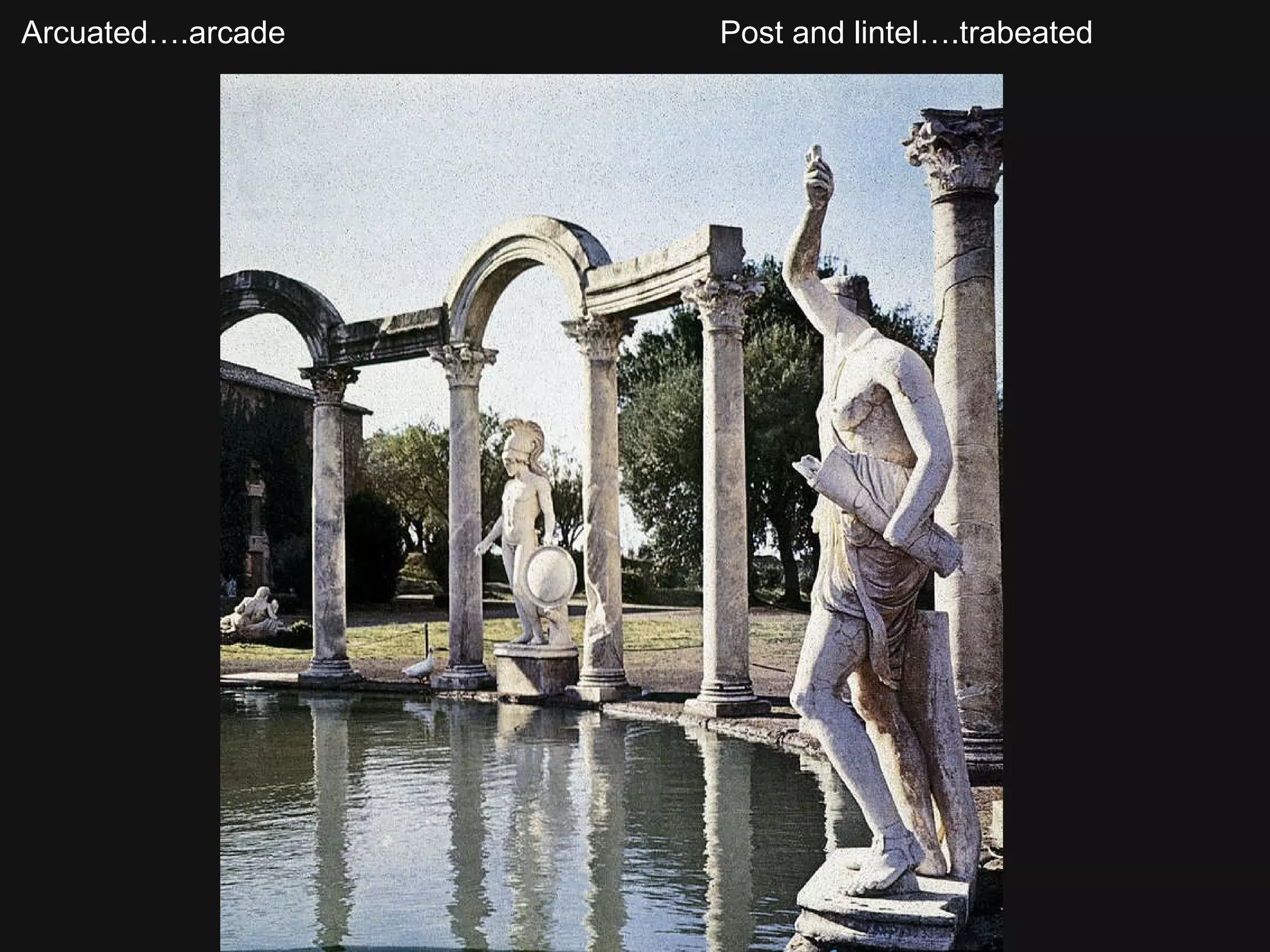
Arcuated….arcade Post and lintel….trabeated
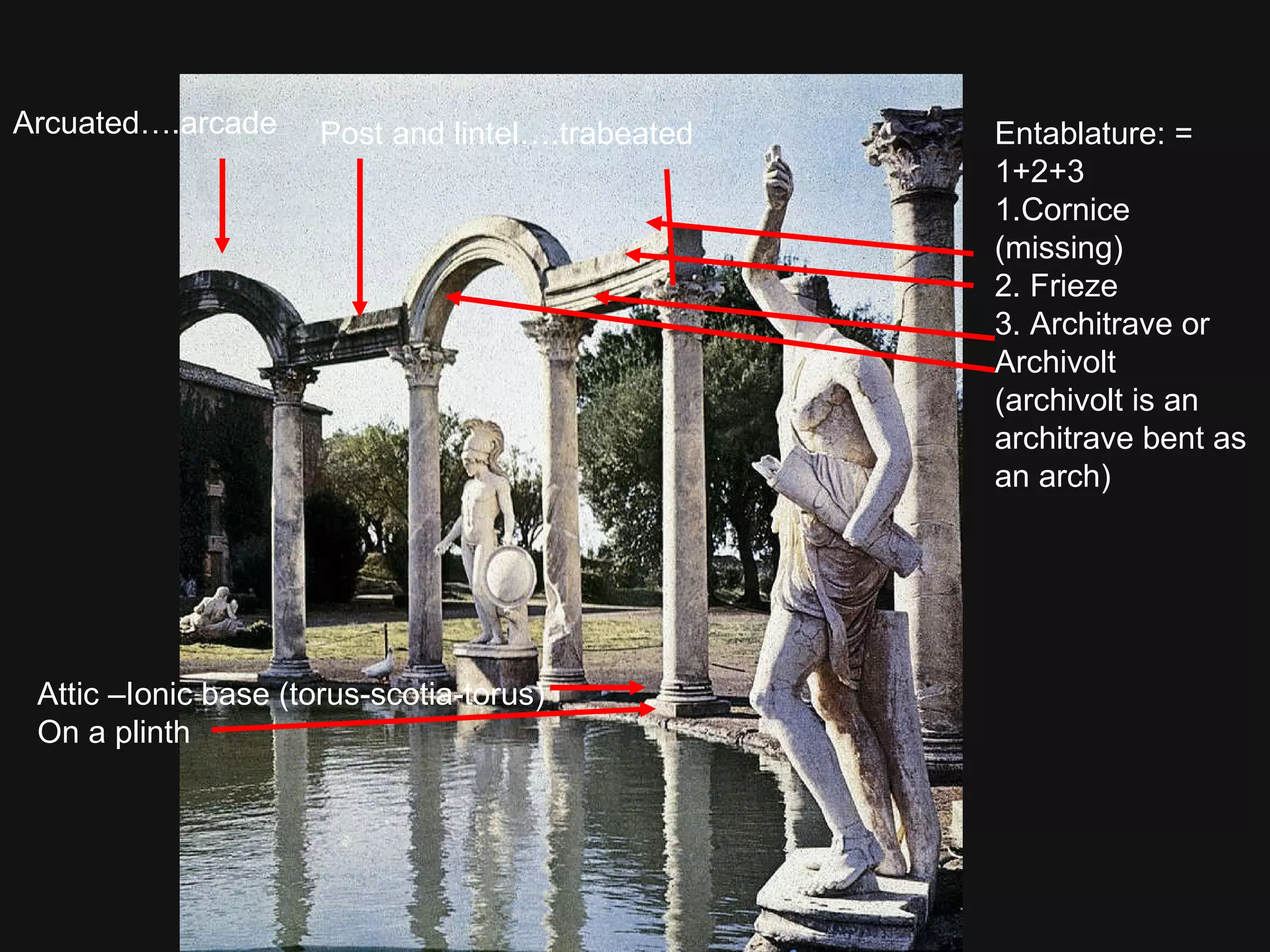
Arcuated….arcade Post and lintel….trabeated Entablature: = 1+2+3 1.Cornice (missing) 2. Frieze 3. Architrave or  Archivolt  (archivolt is an architrave bent as an arch) Attic –Ionic base (torus-scotia-torus) On a plinth
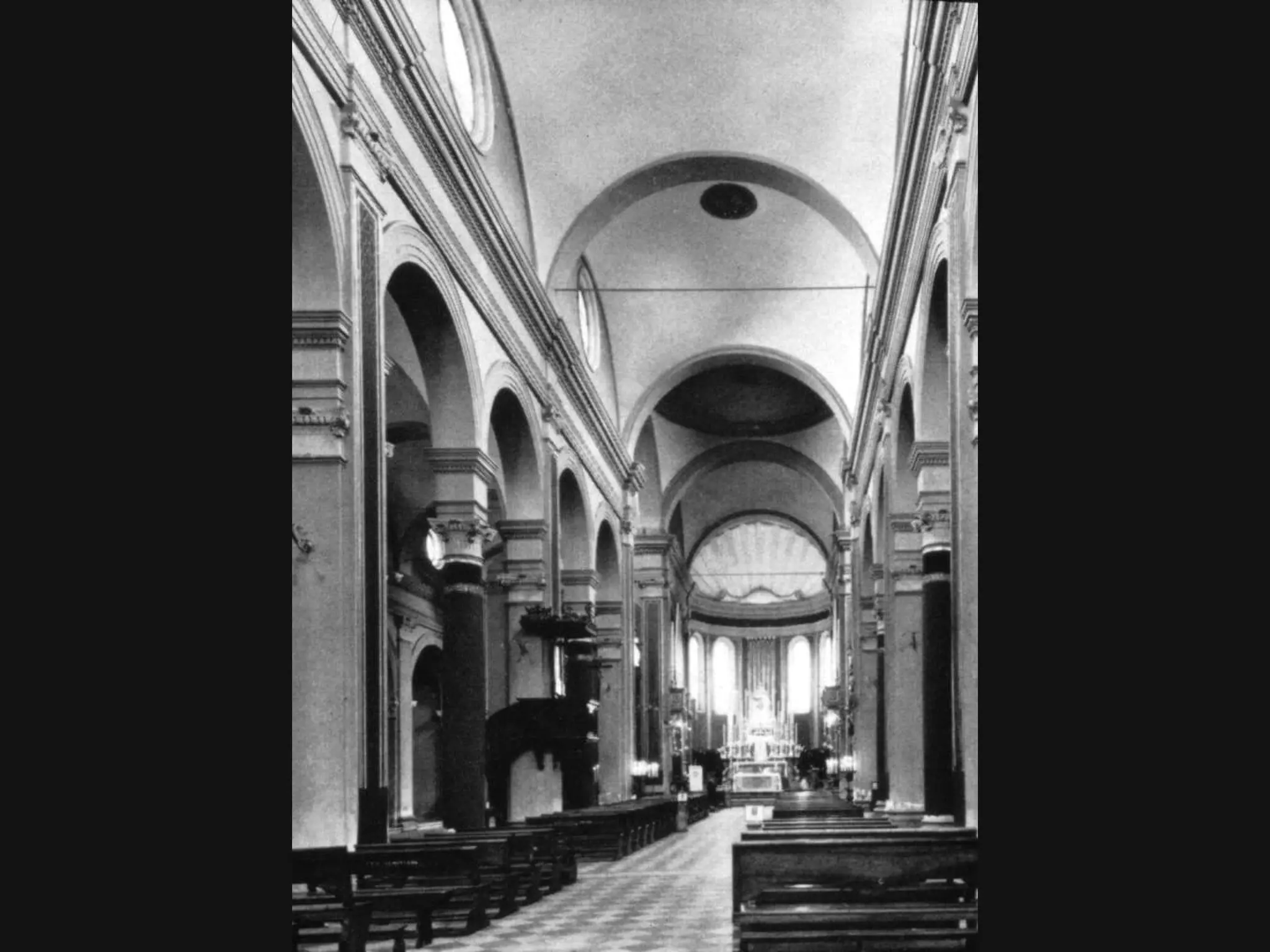
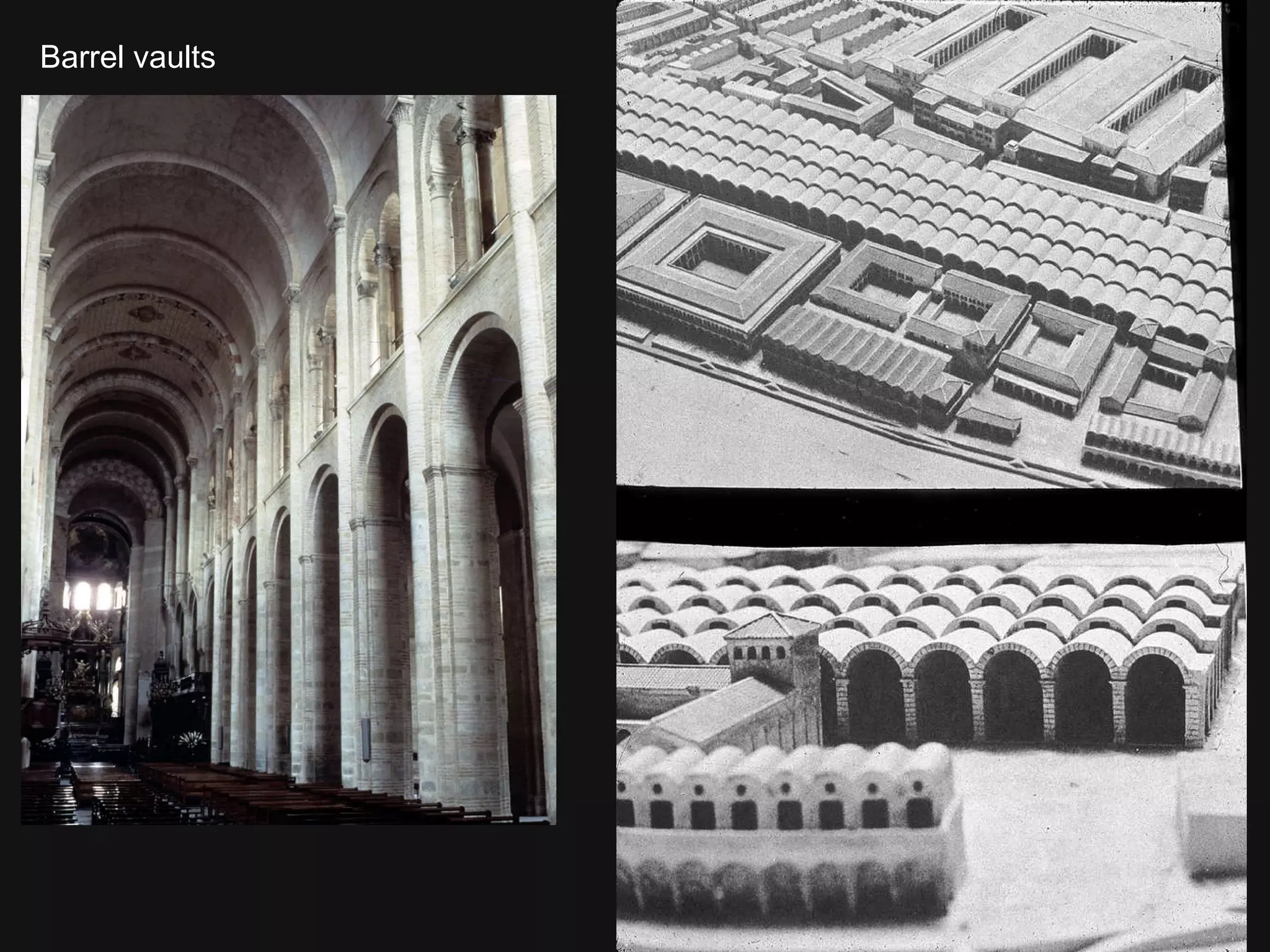
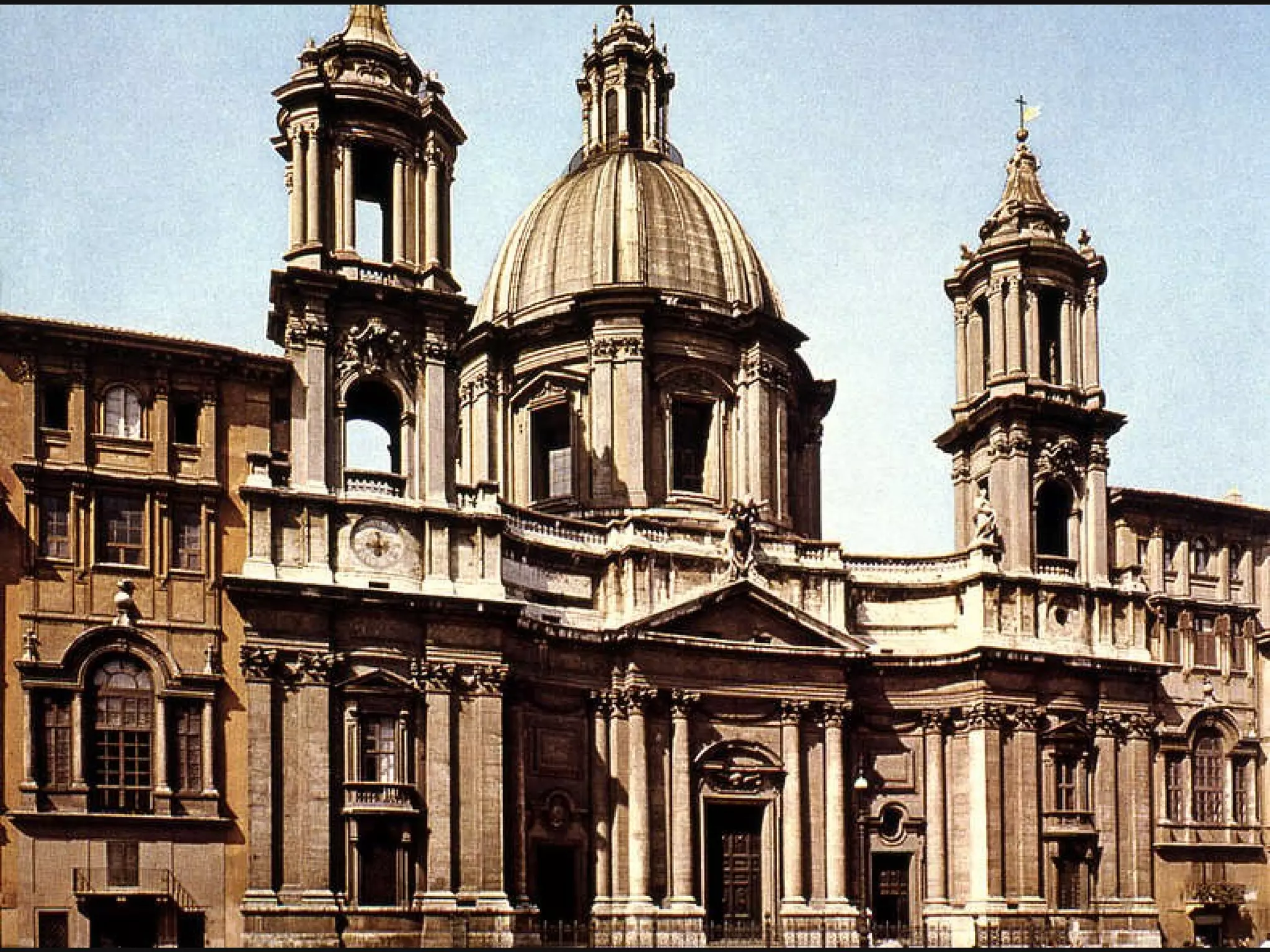
Barrel vaults
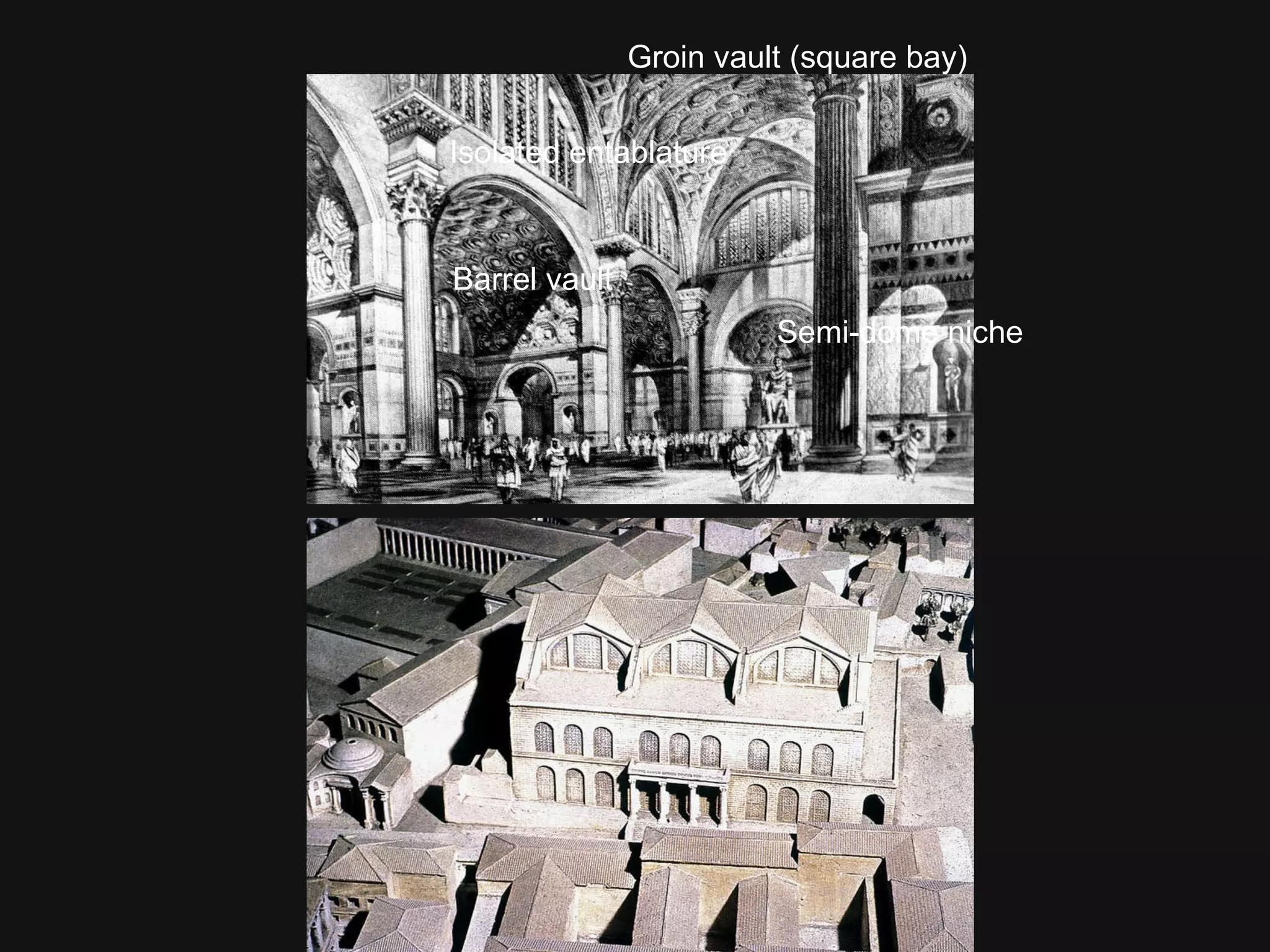
Groin vault (square bay) Barrel vault Semi-dome niche Isolated entablature
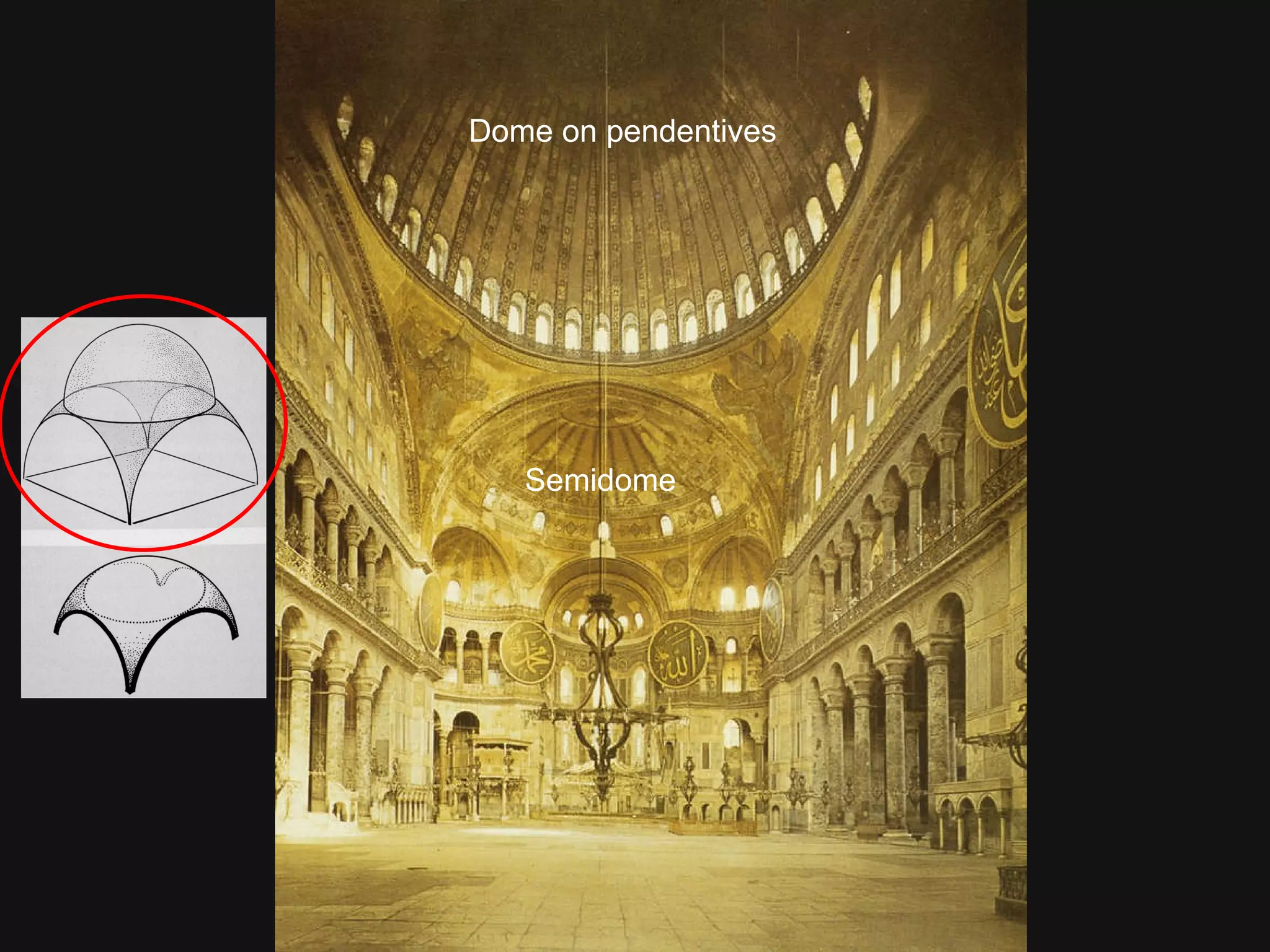
Dome on pendentives Semidome
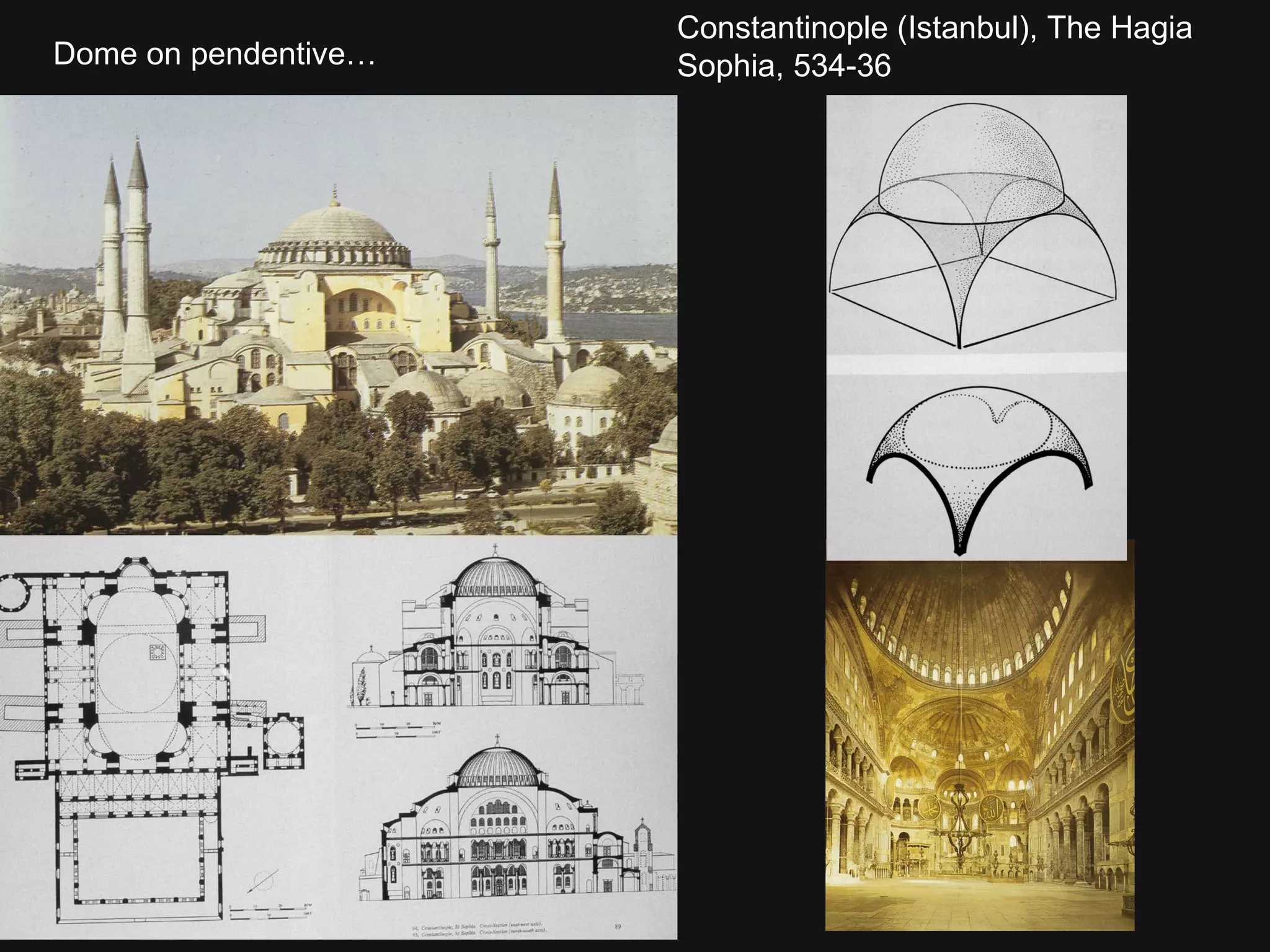
Dome on pendentive… Constantinople (Istanbul), The Hagia Sophia, 534-36
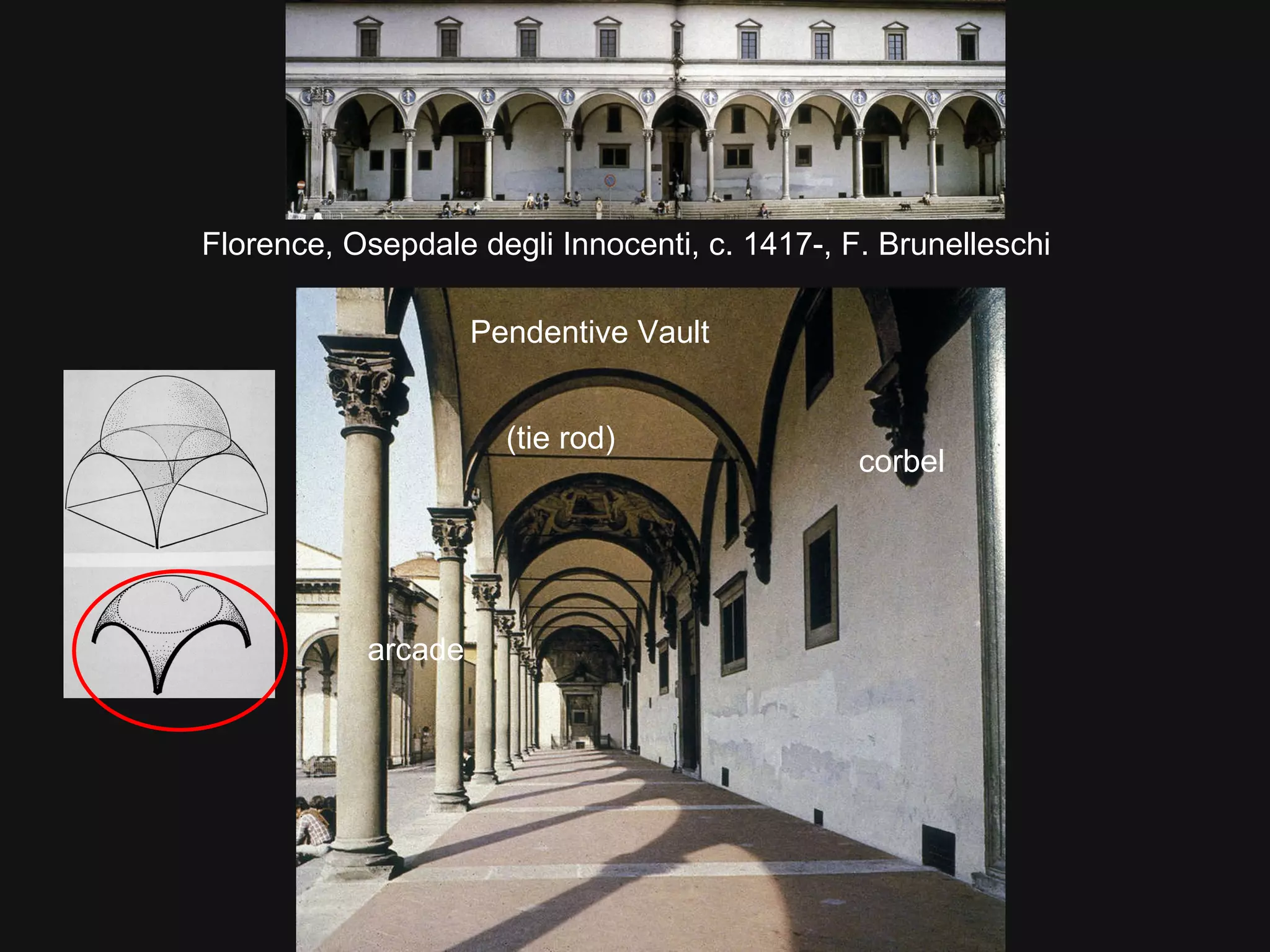
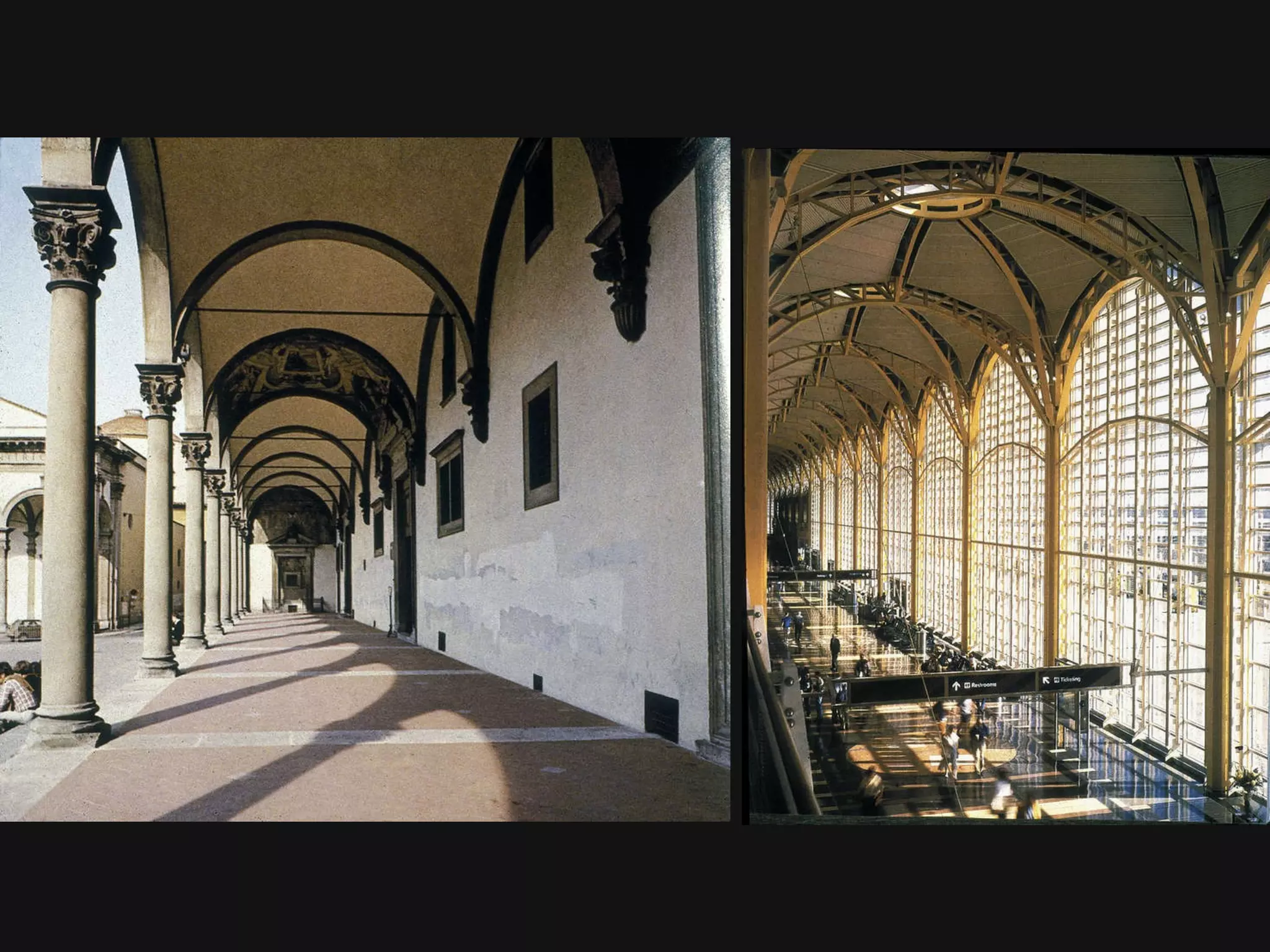
Florence, Osepdale degli Innocenti, c. 1417-, F. Brunelleschi Pendentive Vault arcade corbel (tie rod)
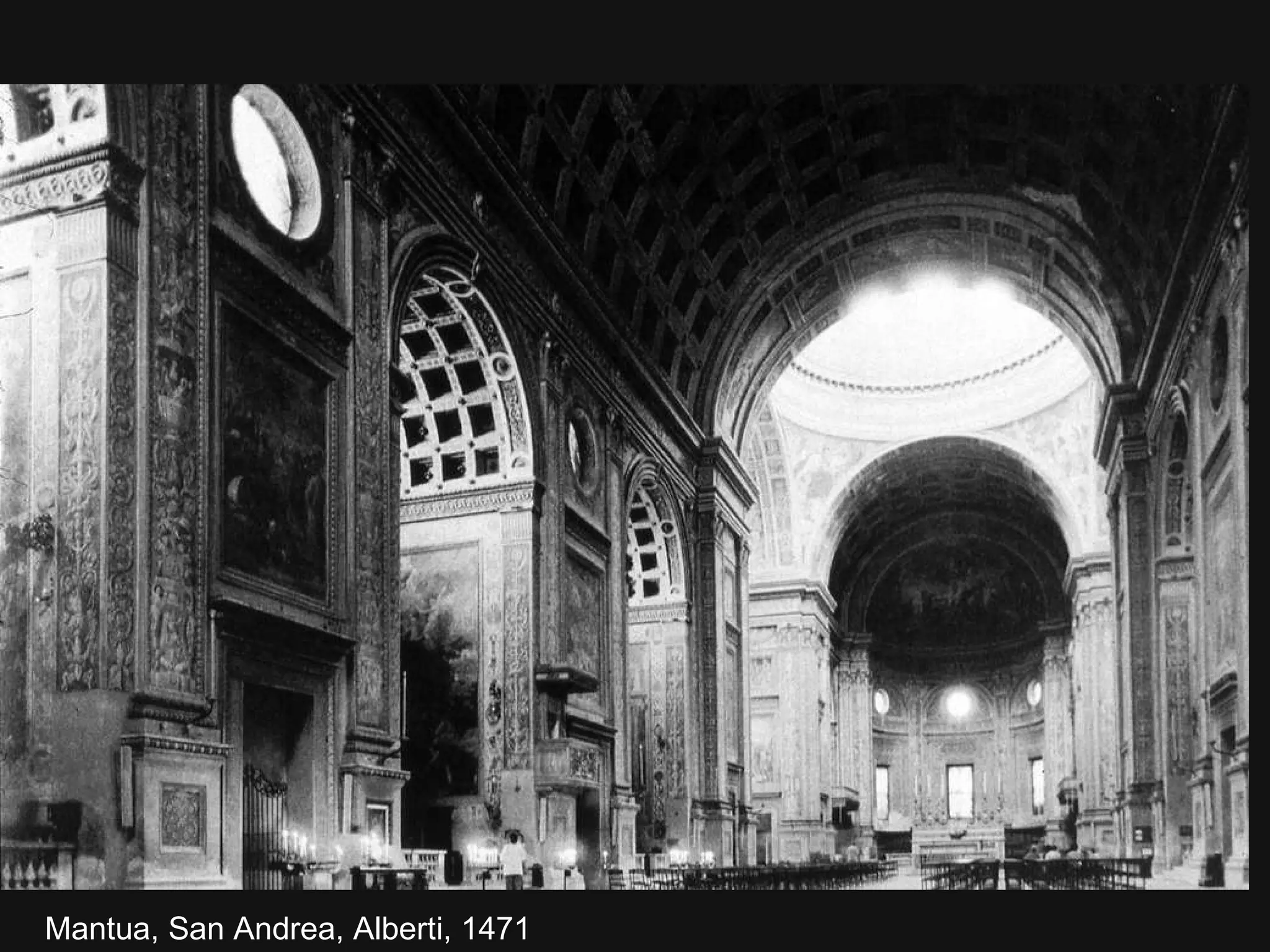
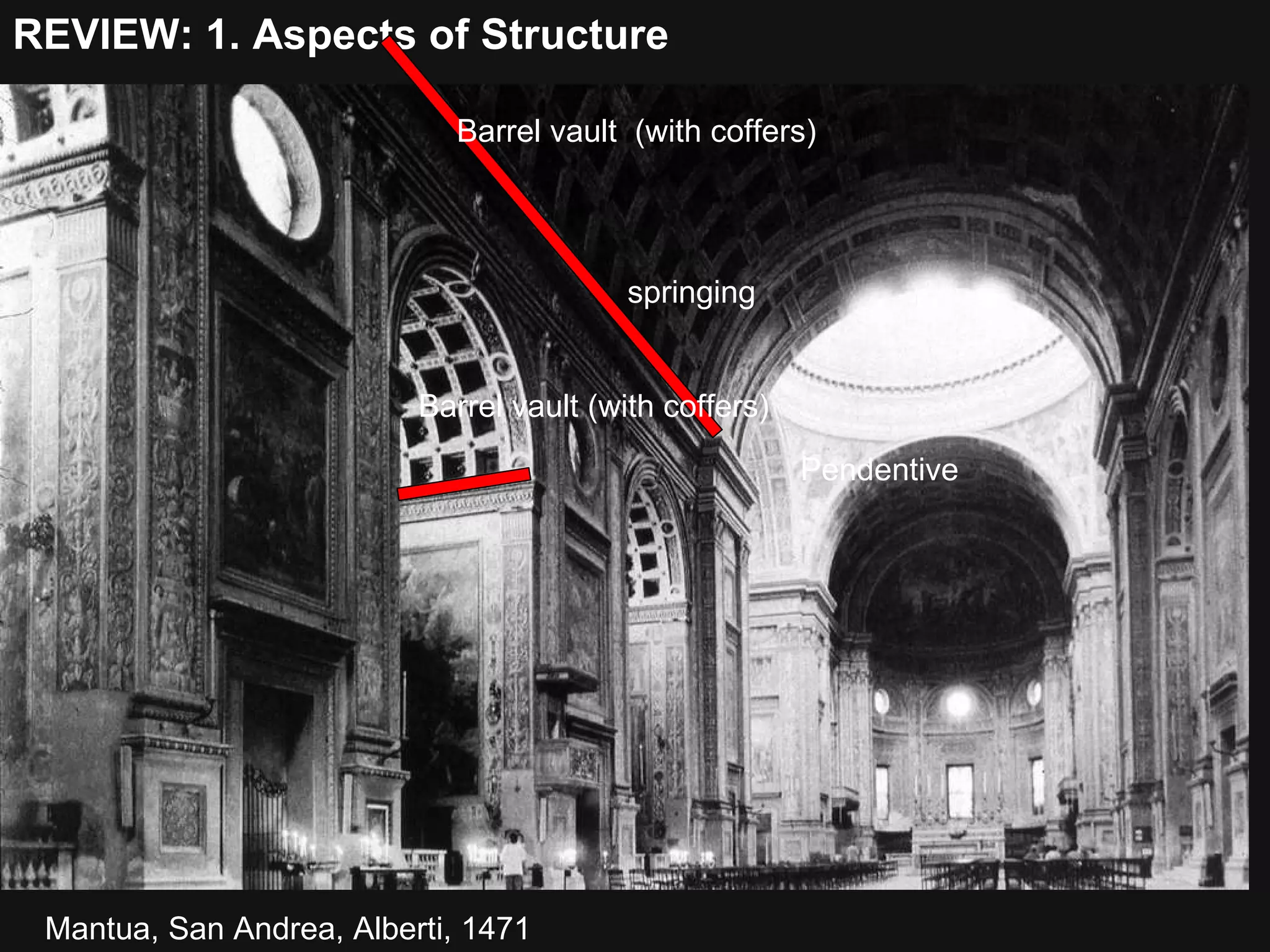
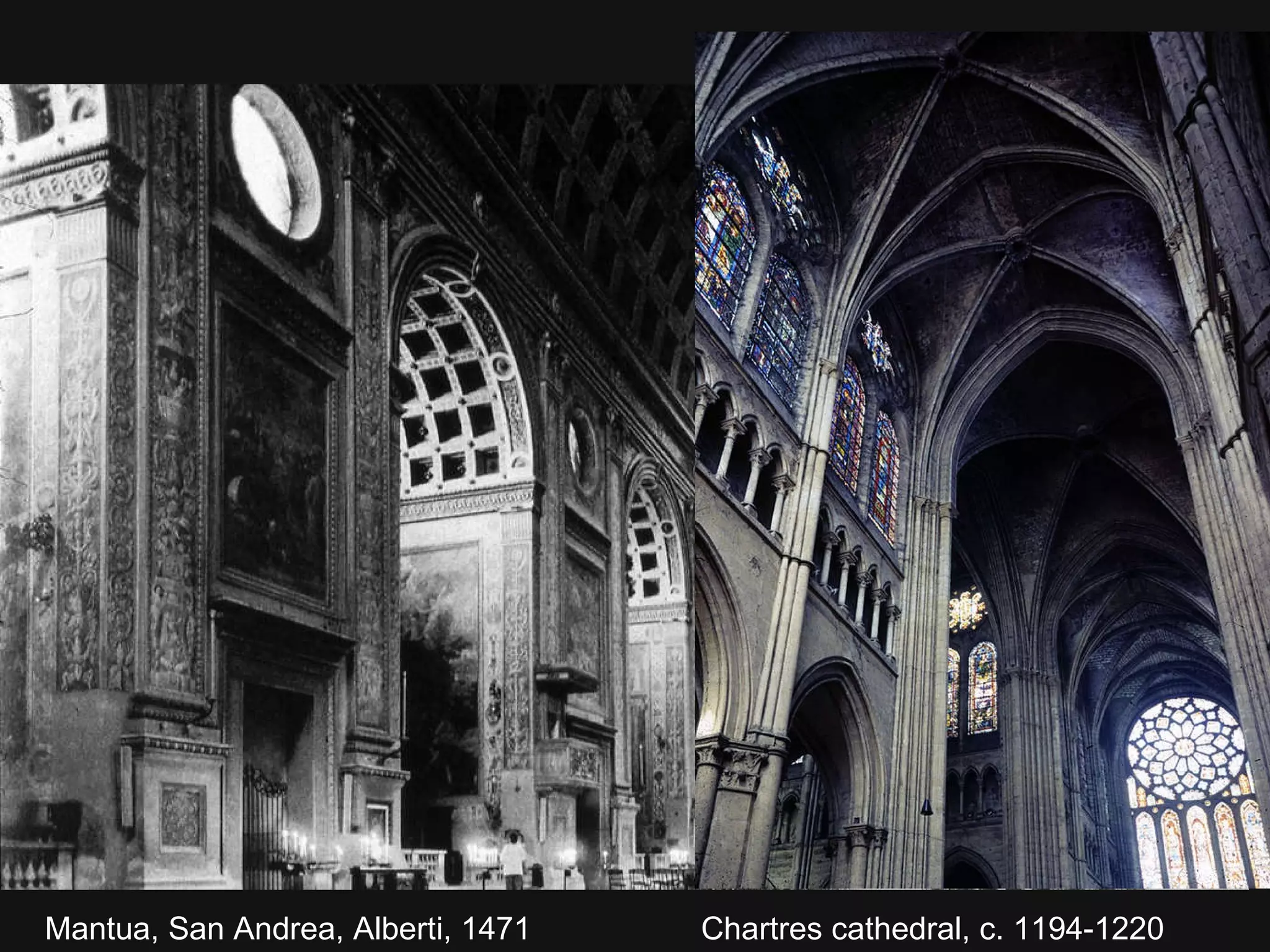
Mantua, San Andrea, Alberti, 1471
Mantua, San Andrea, Alberti, 1471 REVIEW: 1. Aspects of Structure Barrel vault  (with coffers) Barrel vault (with coffers) Pendentive springing
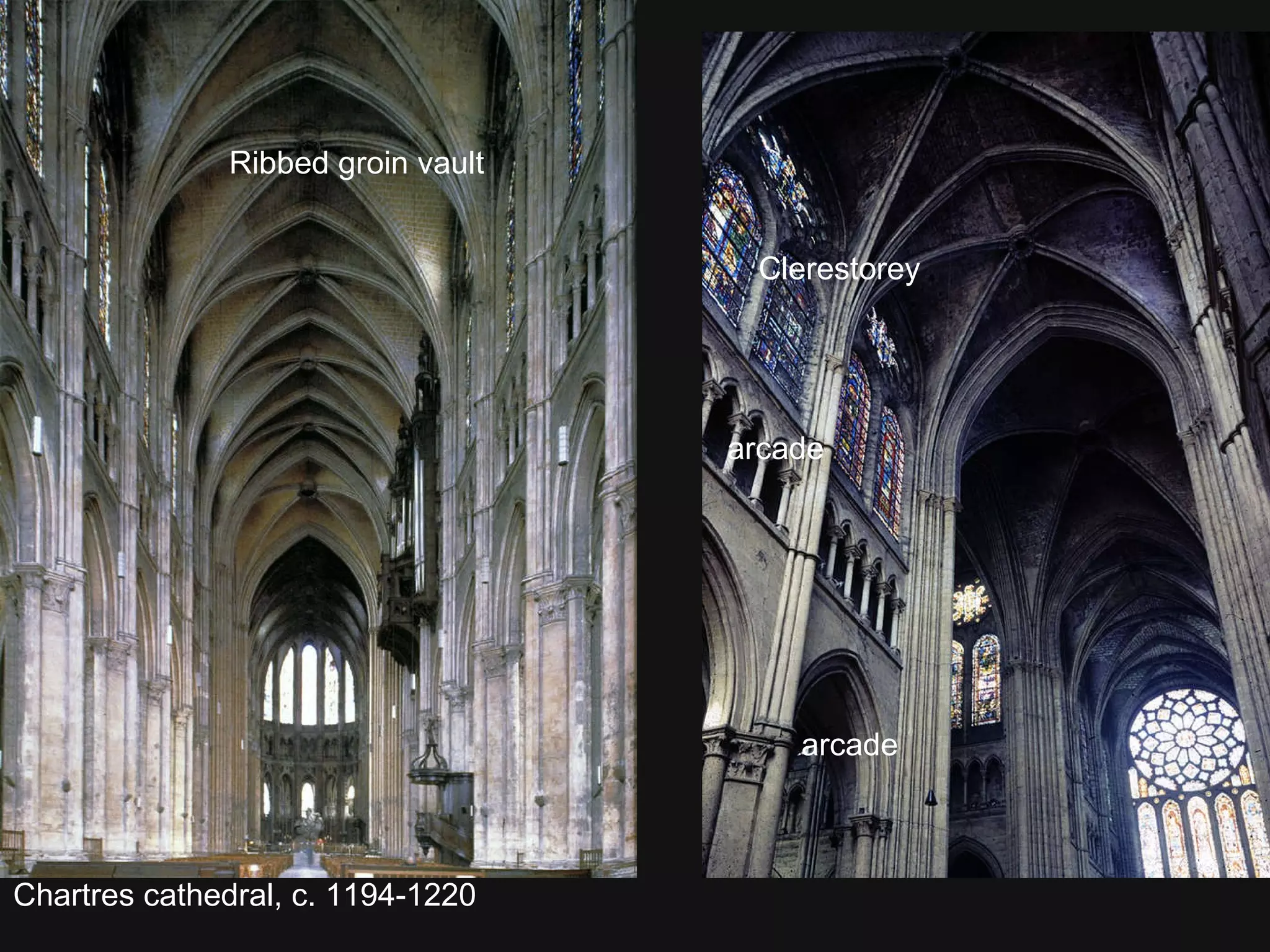
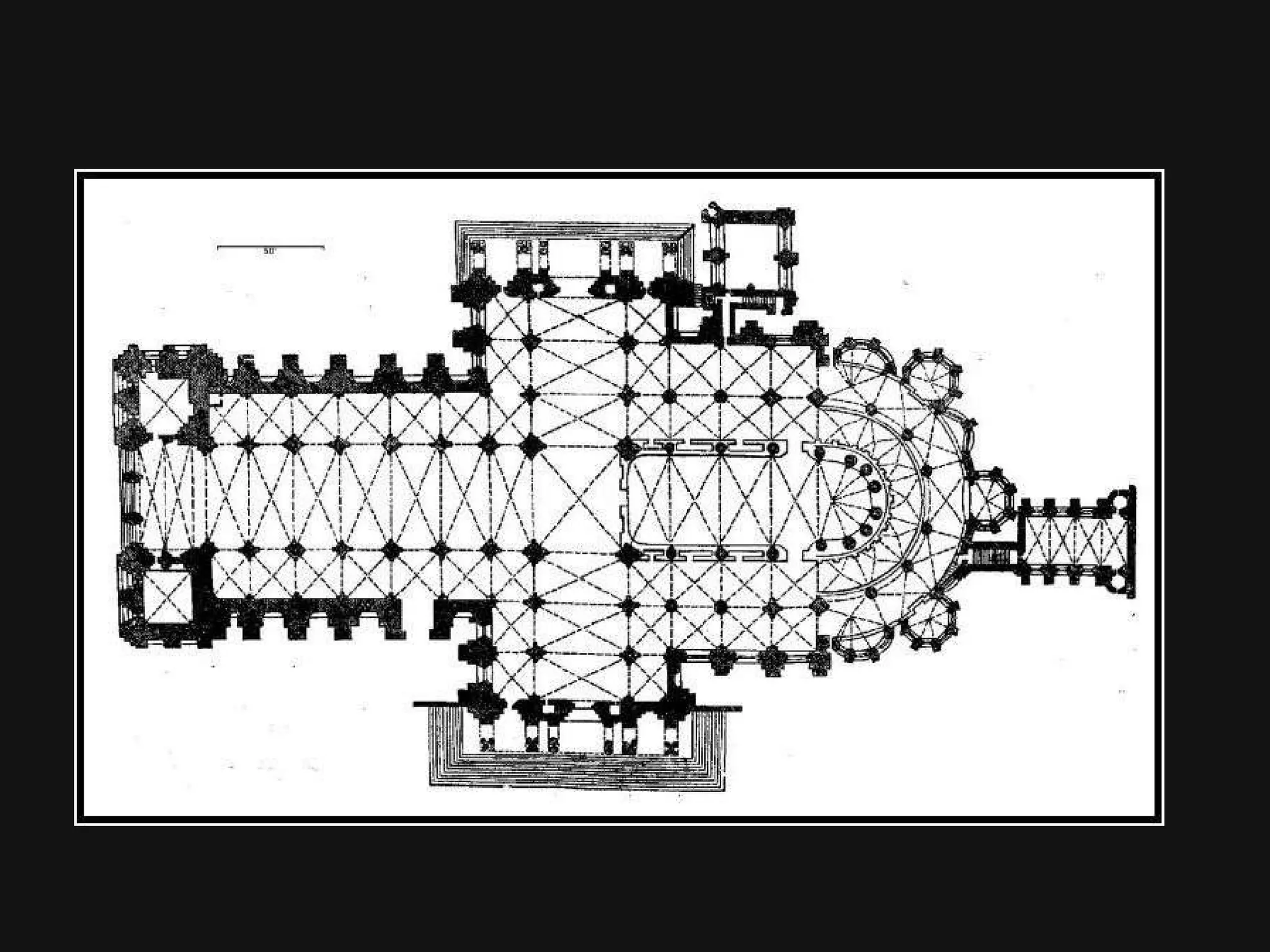
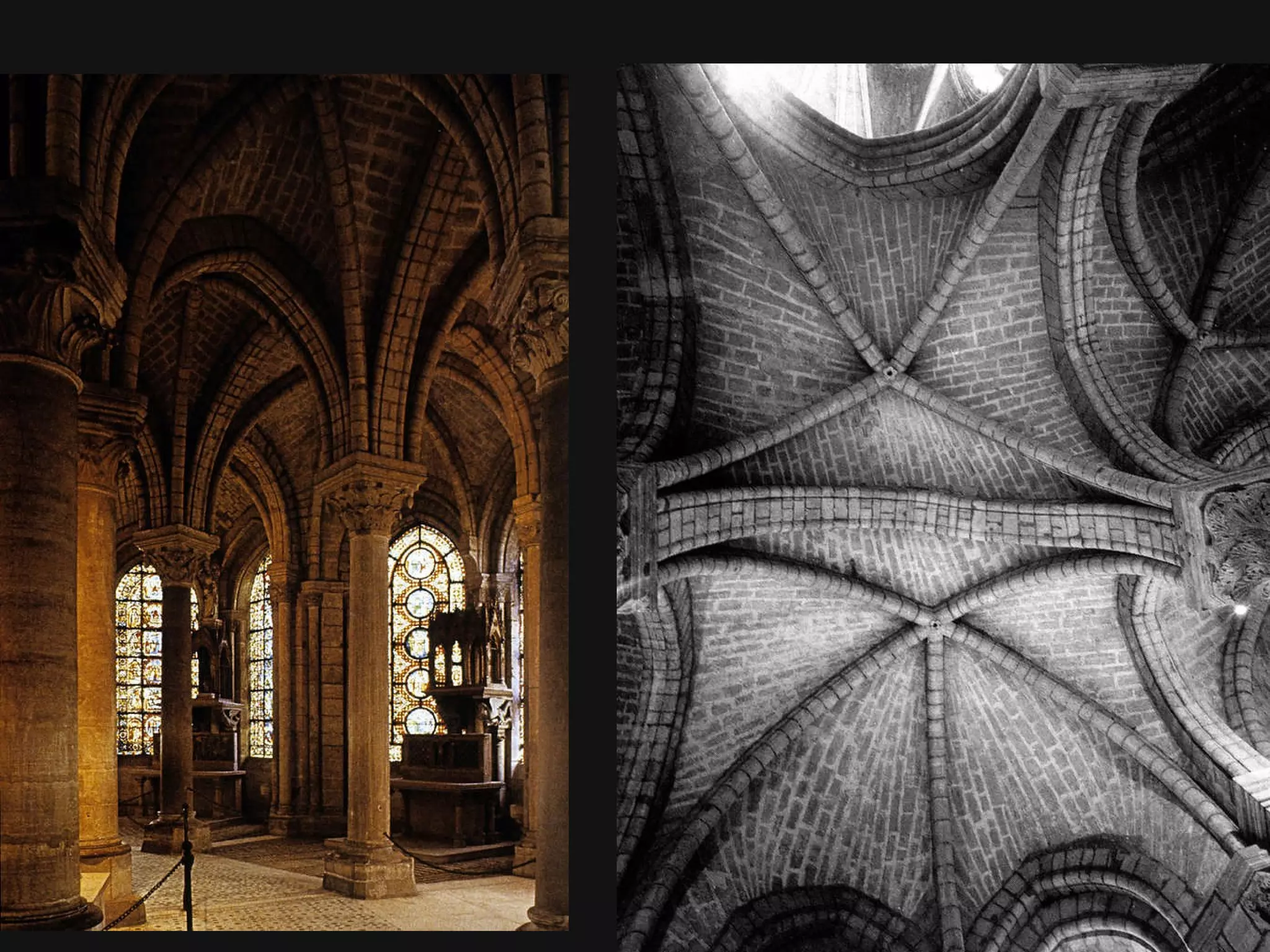
Chartres cathedral, c. 1194-1220 Ribbed groin vault Clerestorey arcade arcade
 
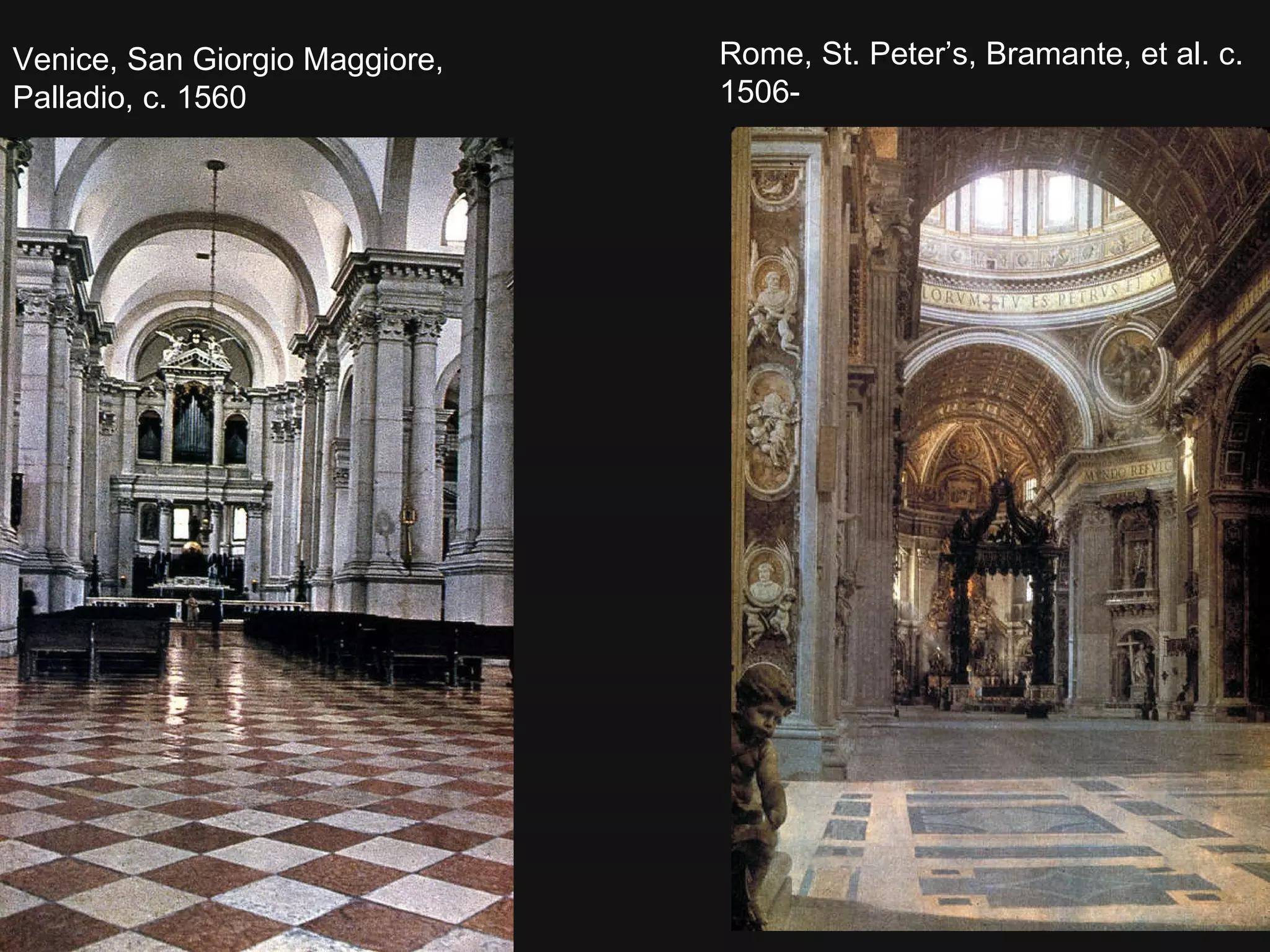
Venice, San Giorgio Maggiore, Palladio, c. 1560 Rome, St. Peter’s, Bramante, et al. c. 1506-
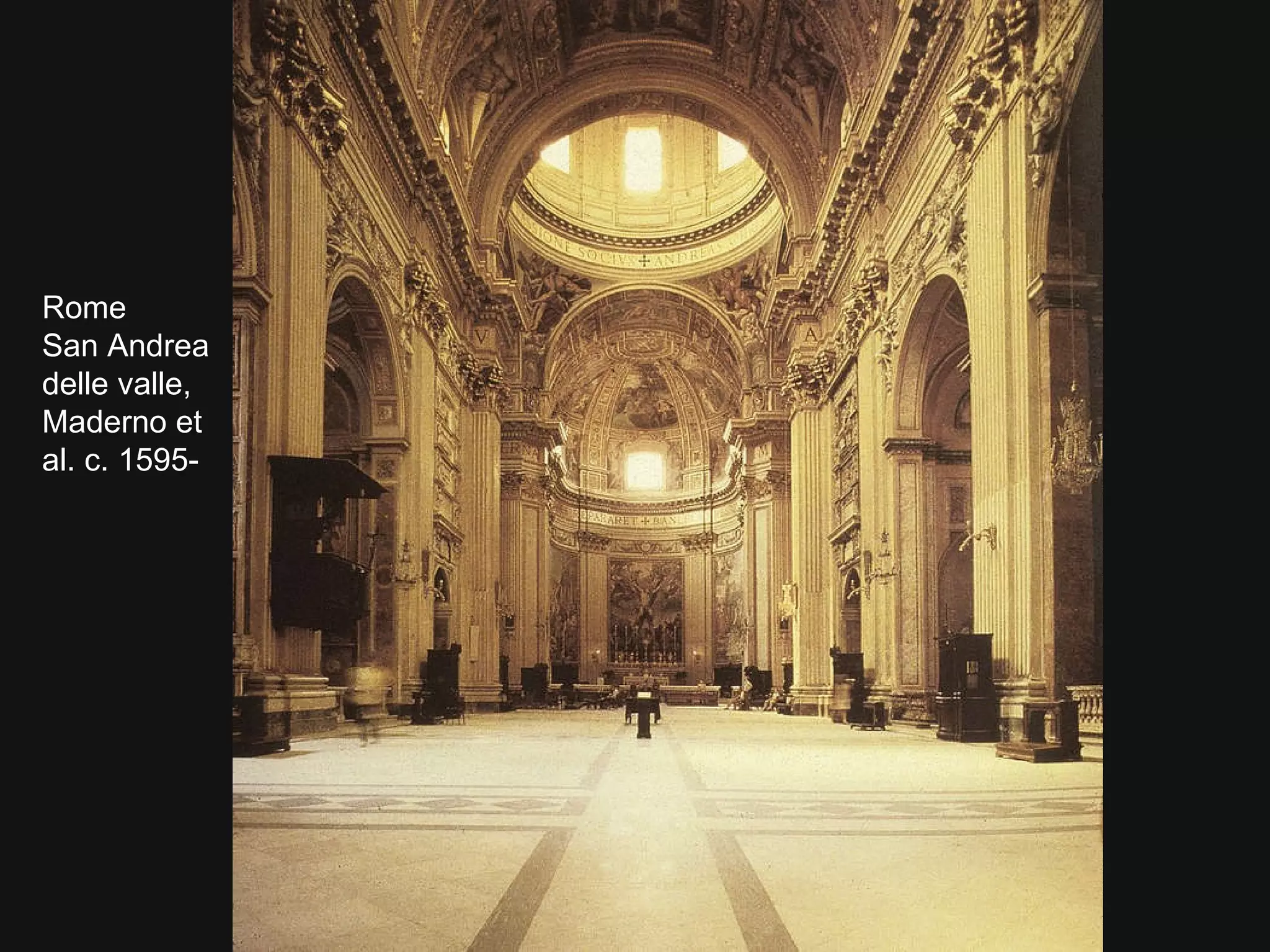
Rome San Andrea delle valle, Maderno et al. c. 1595-
 
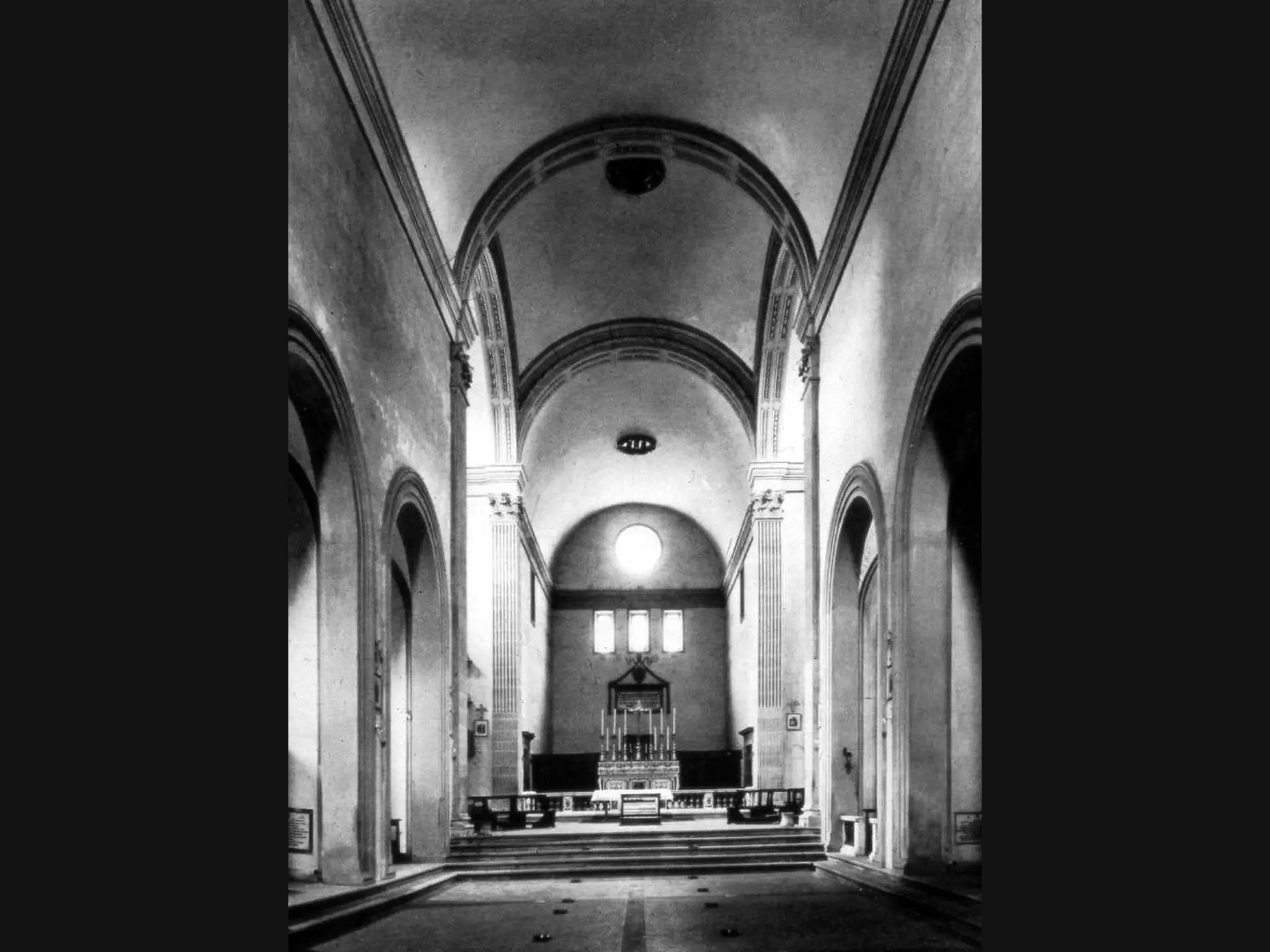
Mantua, San Andrea, Alberti, 1471 Chartres cathedral, c. 1194-1220
 
 
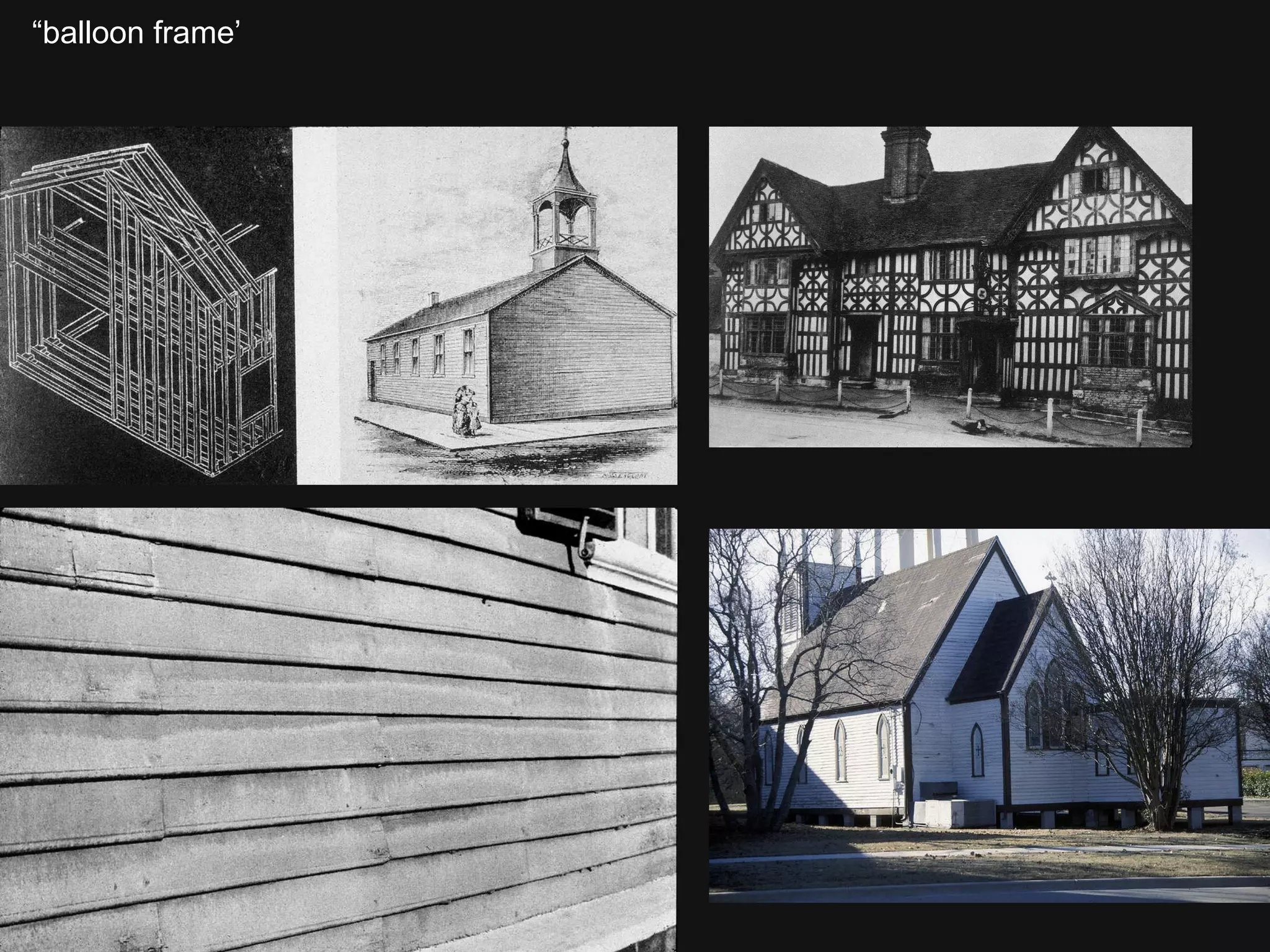
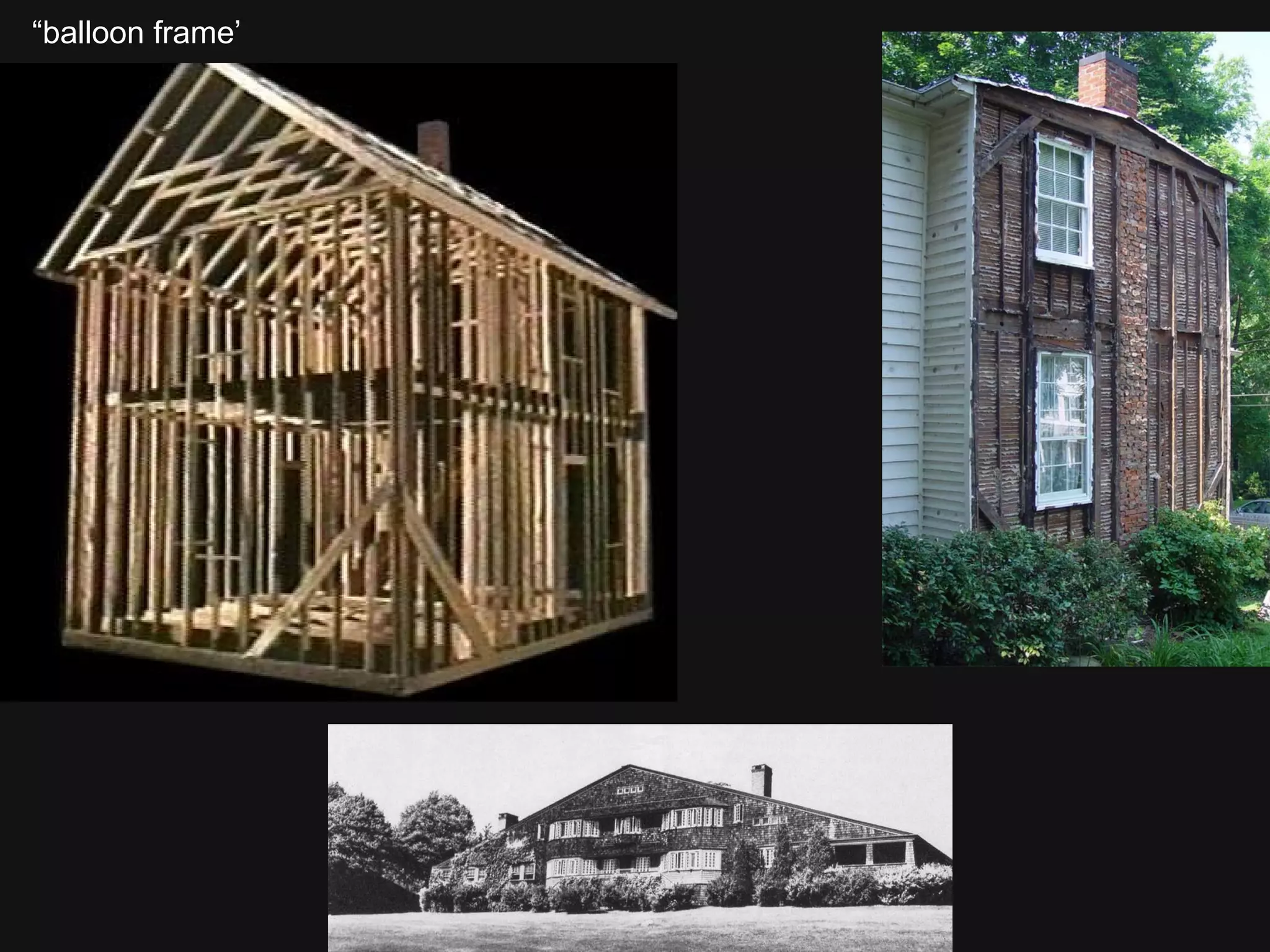
“ balloon frame’
“ balloon frame’
 
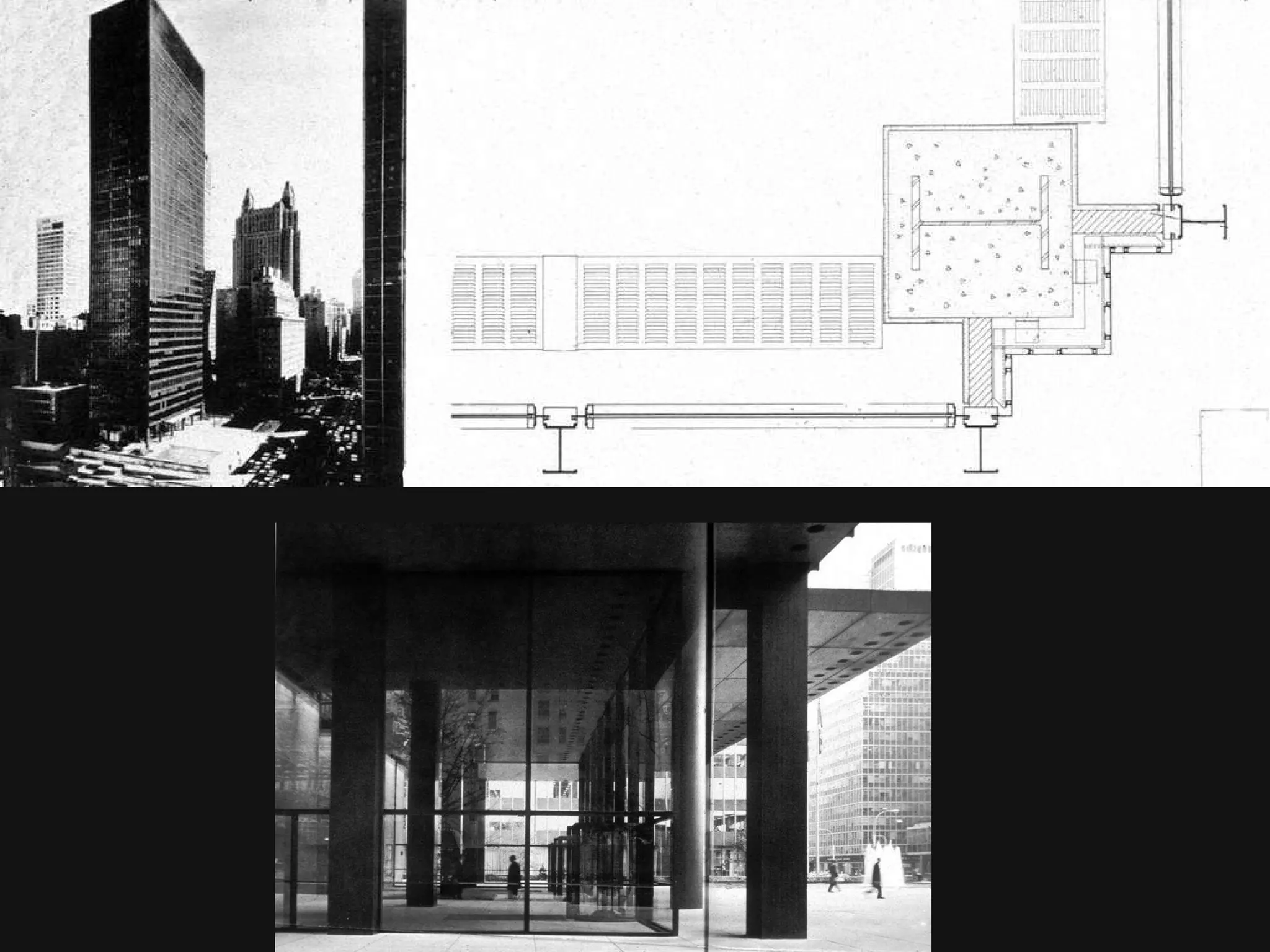
Steel Frame and “curtain wall”
 
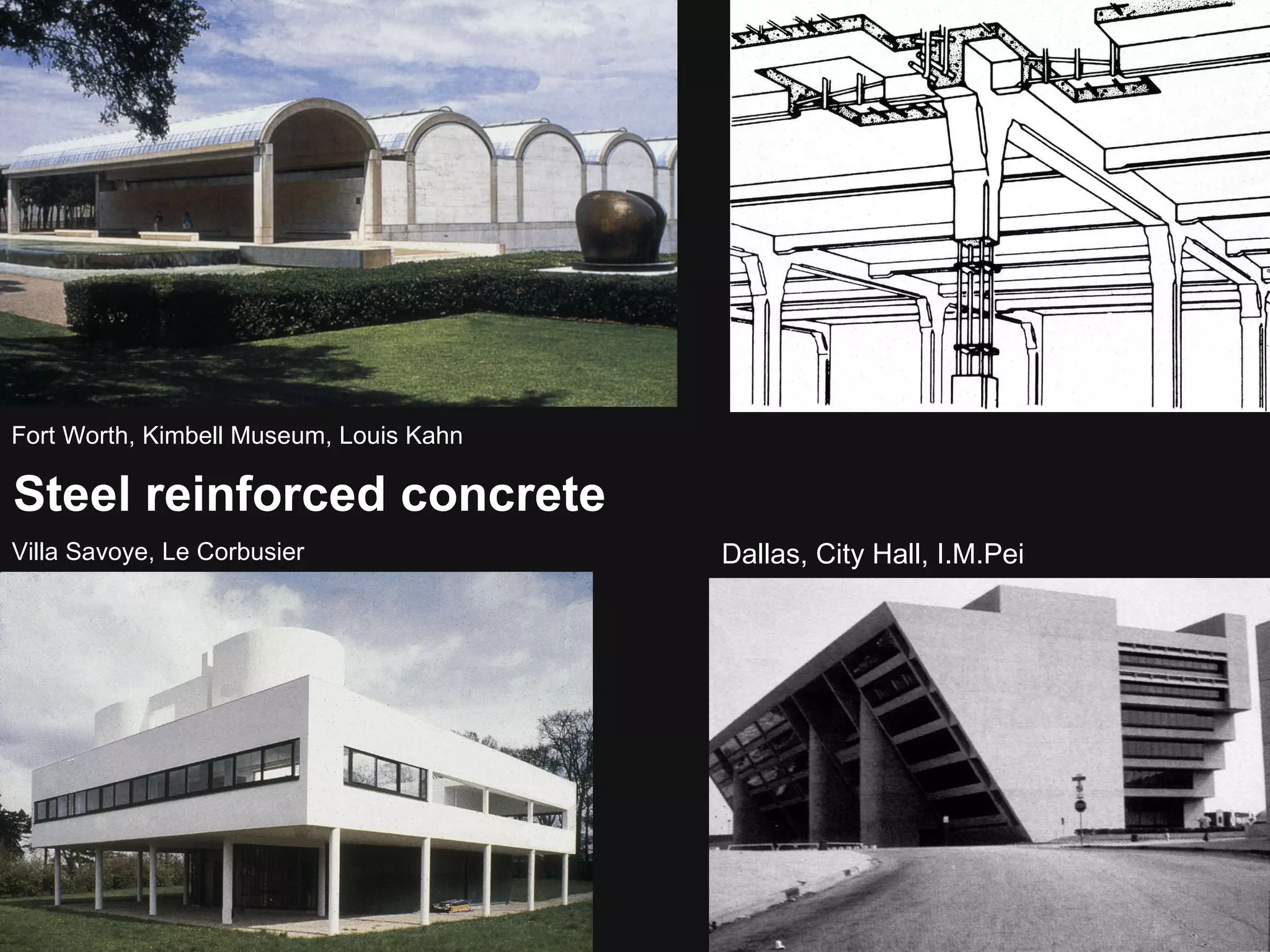
Fort Worth, Kimbell Museum, Louis Kahn Steel reinforced concrete Villa Savoye, Le Corbusier Dallas, City Hall, I.M.Pei
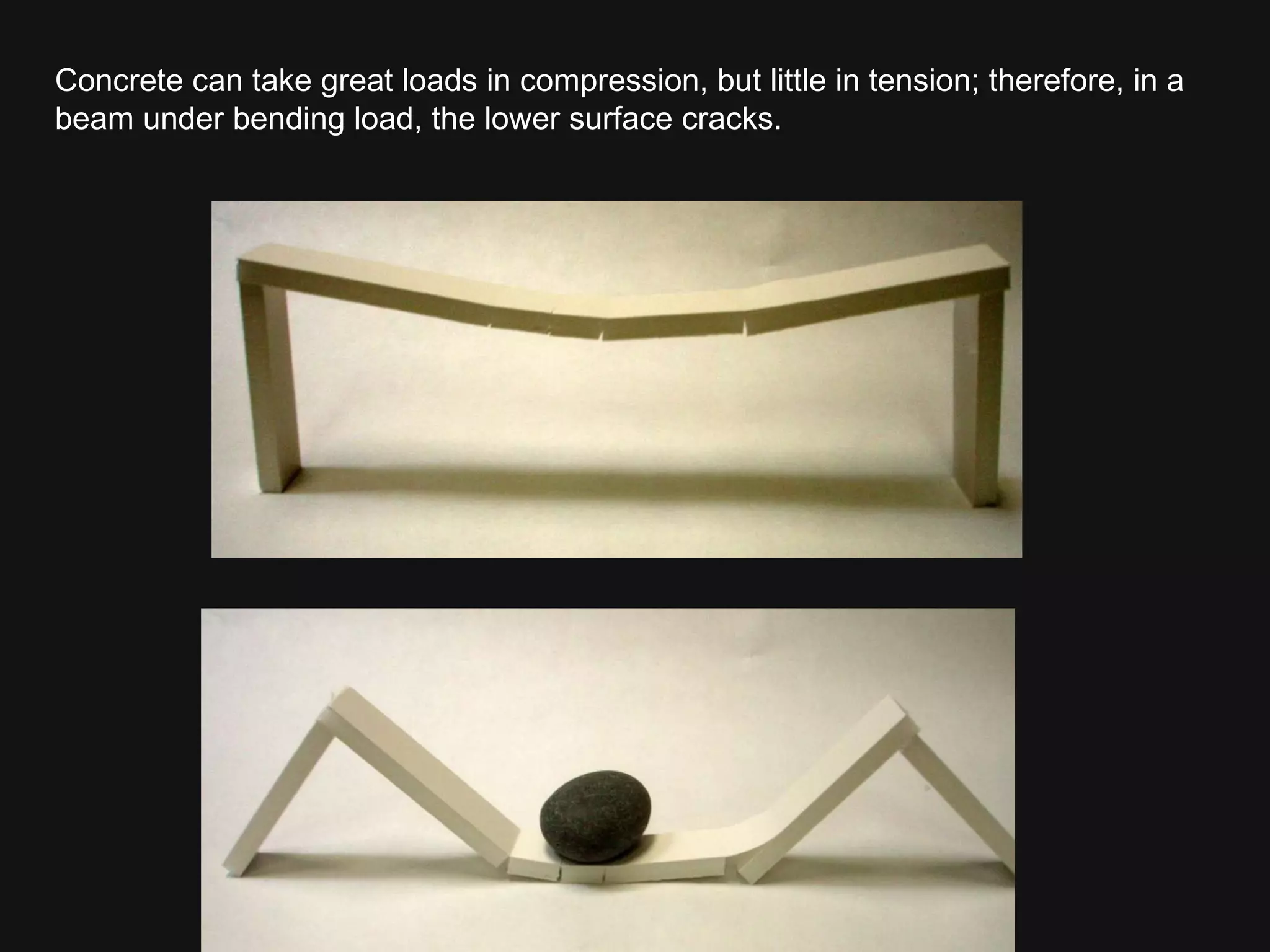
Concrete can take great loads in compression, but little in tension; therefore, in a beam under bending load, the lower surface cracks.
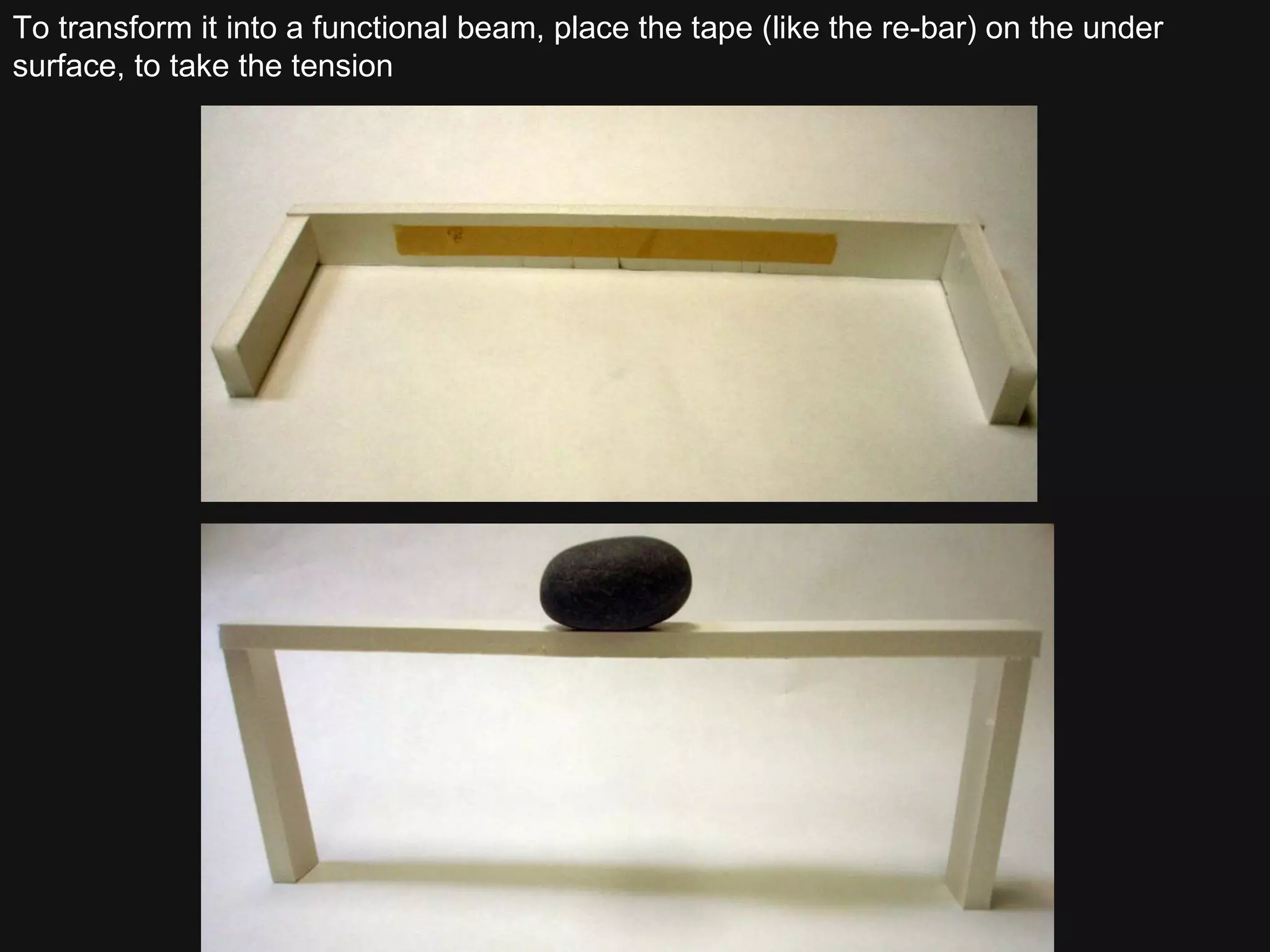
To transform it into a functional beam, place the tape (like the re-bar) on the under surface, to take the tension
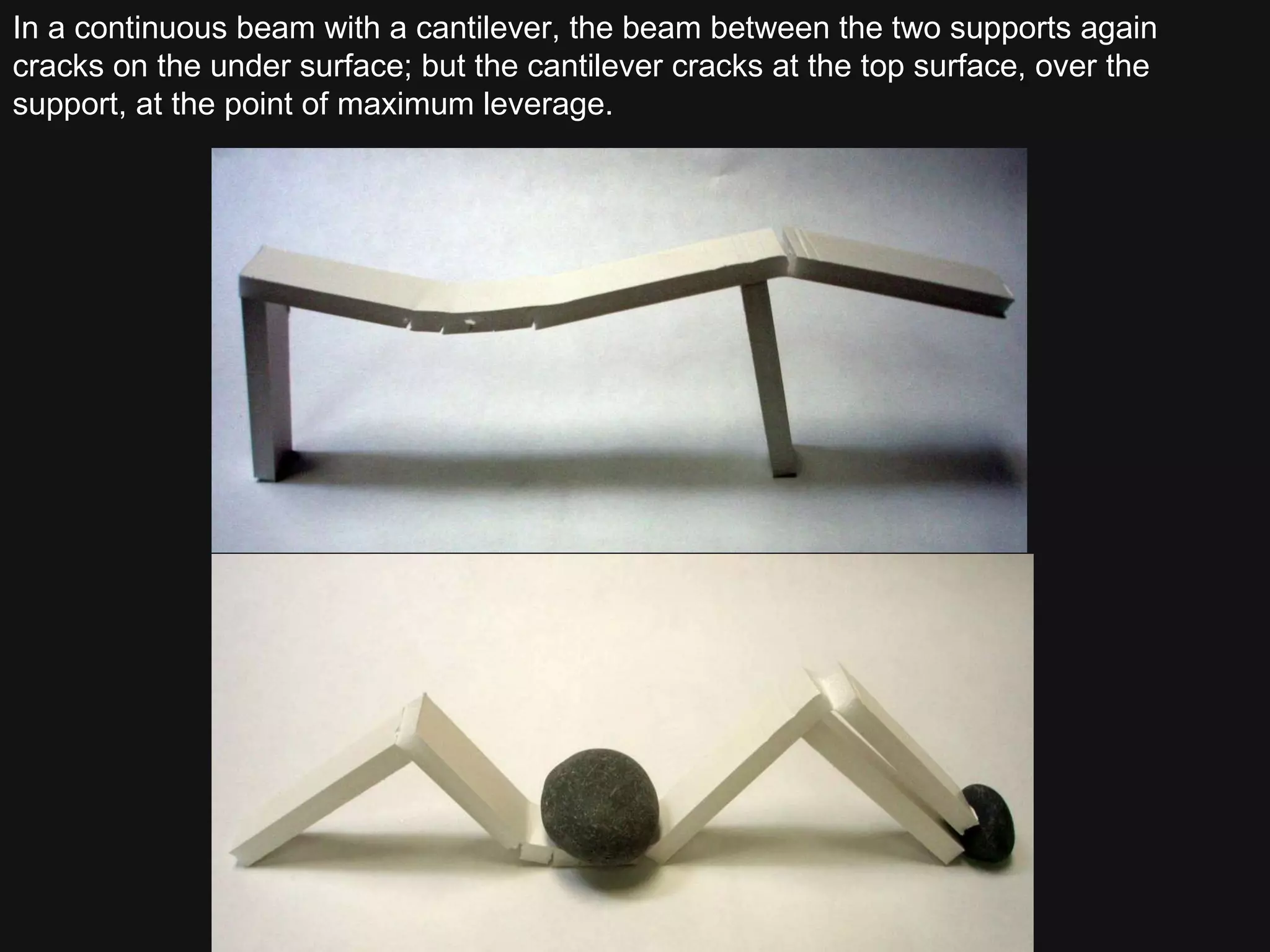
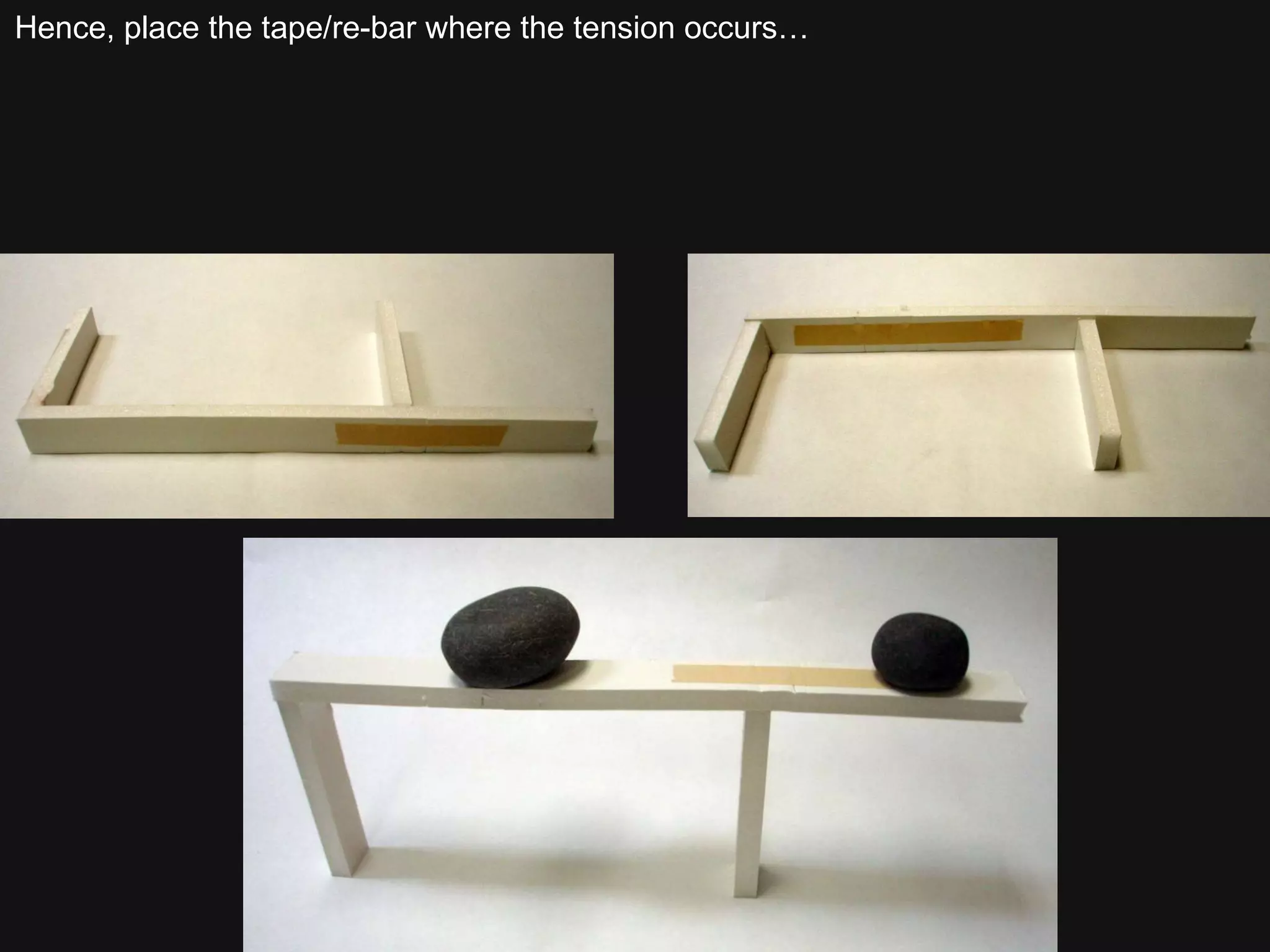
In a continuous beam with a cantilever, the beam between the two supports again cracks on the under surface; but the cantilever cracks at the top surface, over the support, at the point of maximum leverage.
Hence, place the tape/re-bar where the tension occurs…
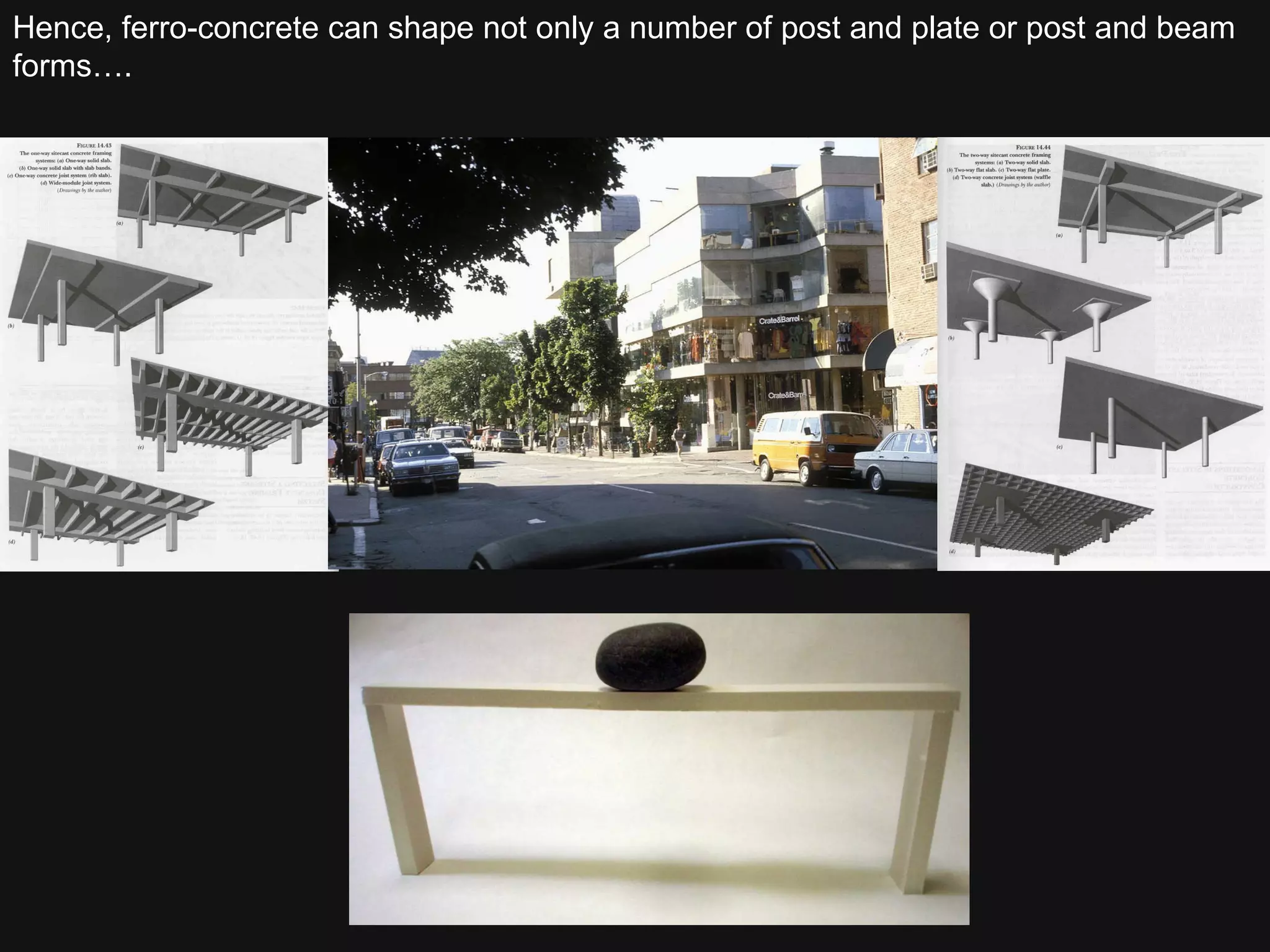
Hence, ferro-concrete can shape not only a number of post and plate or post and beam forms….
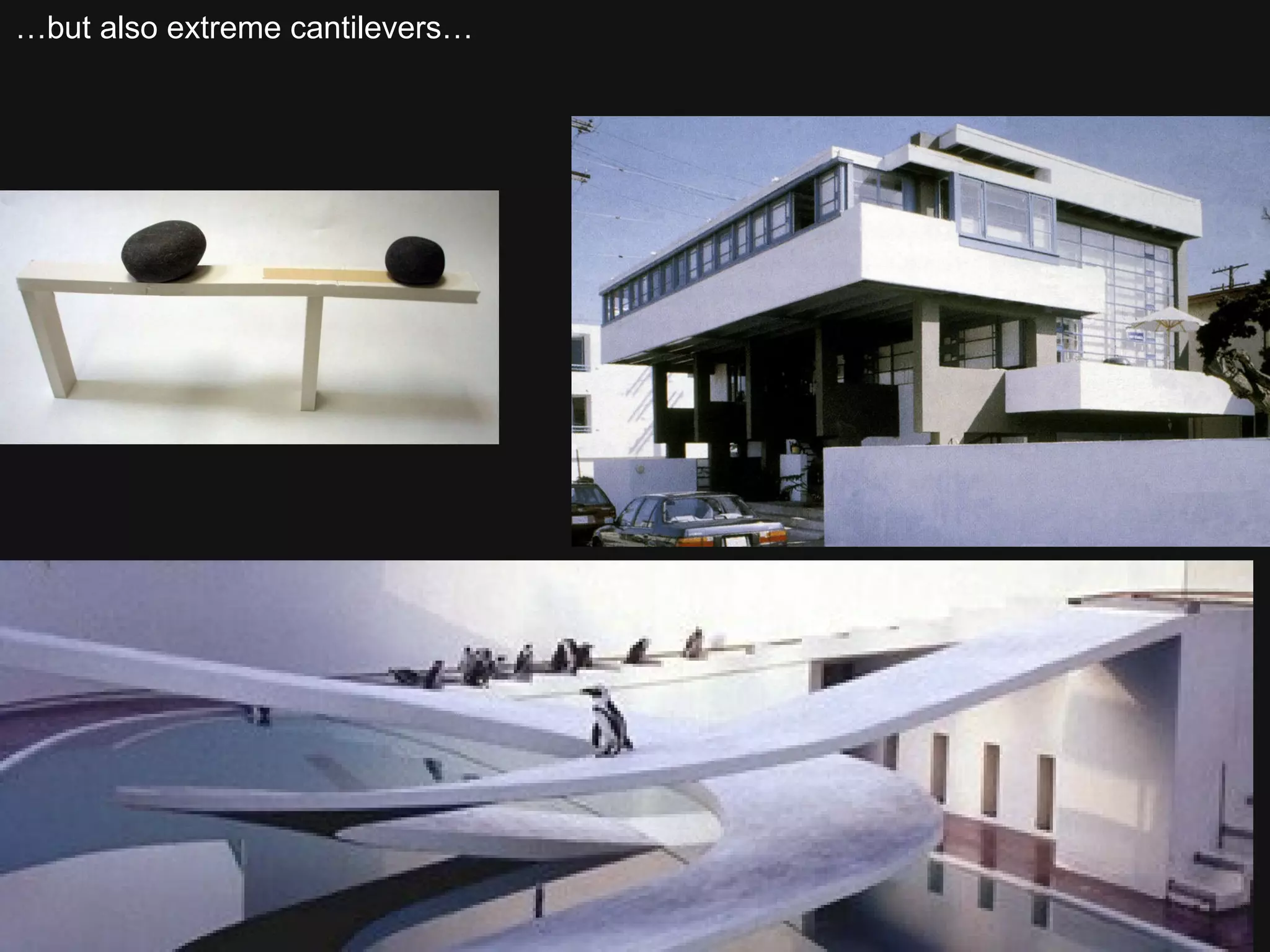
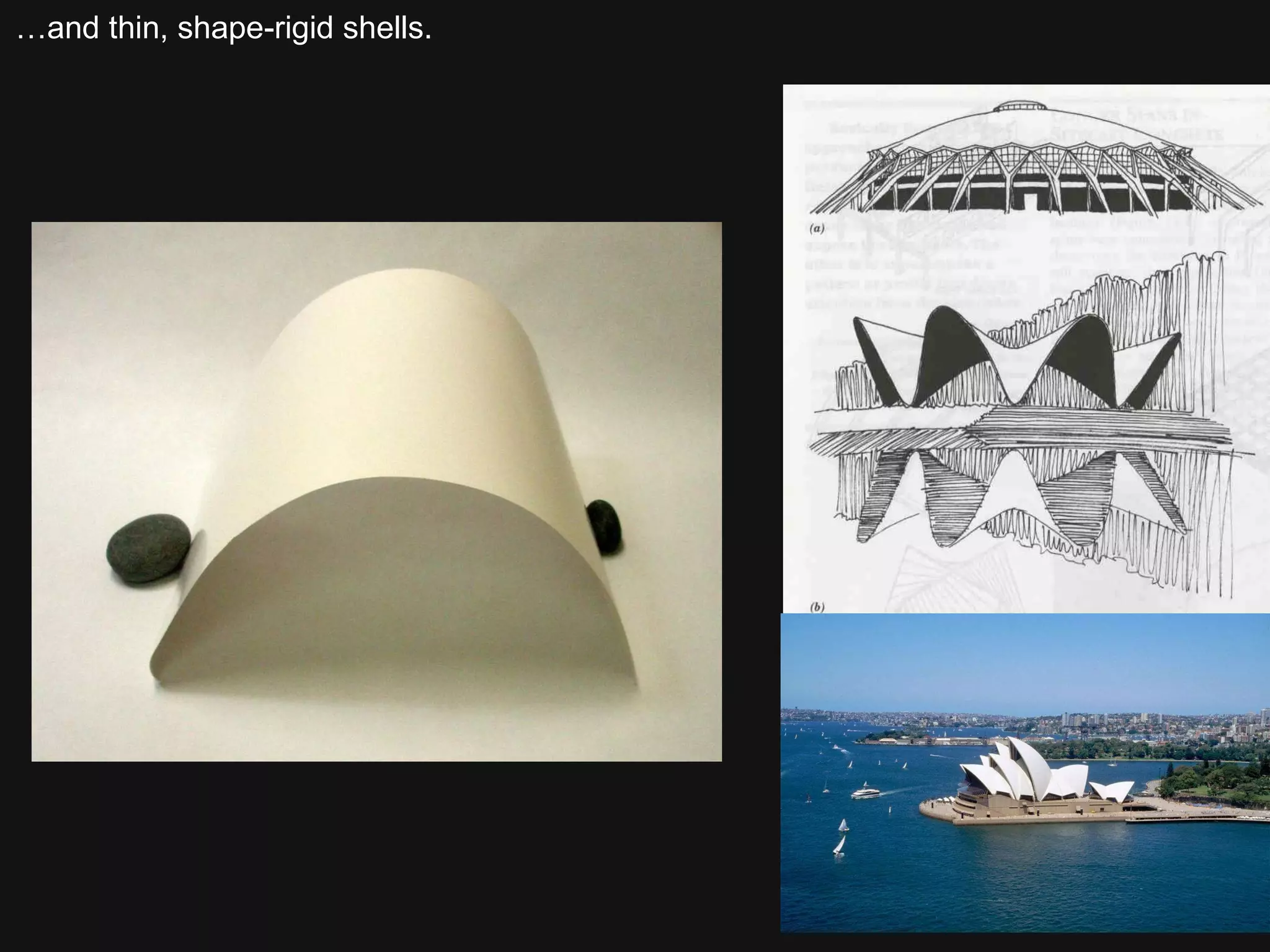
… but also extreme cantilevers…
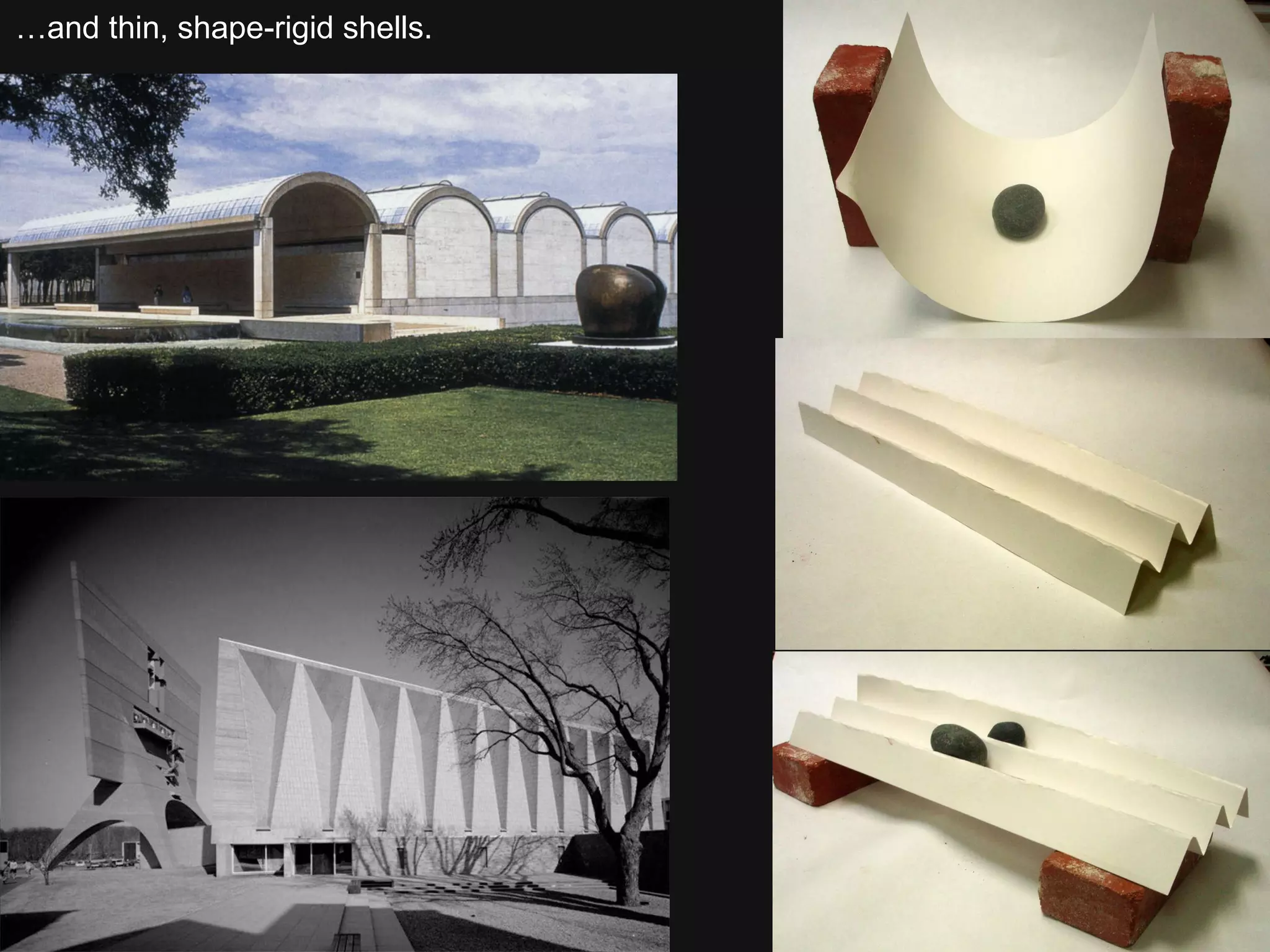
… and thin, shape-rigid shells.
 
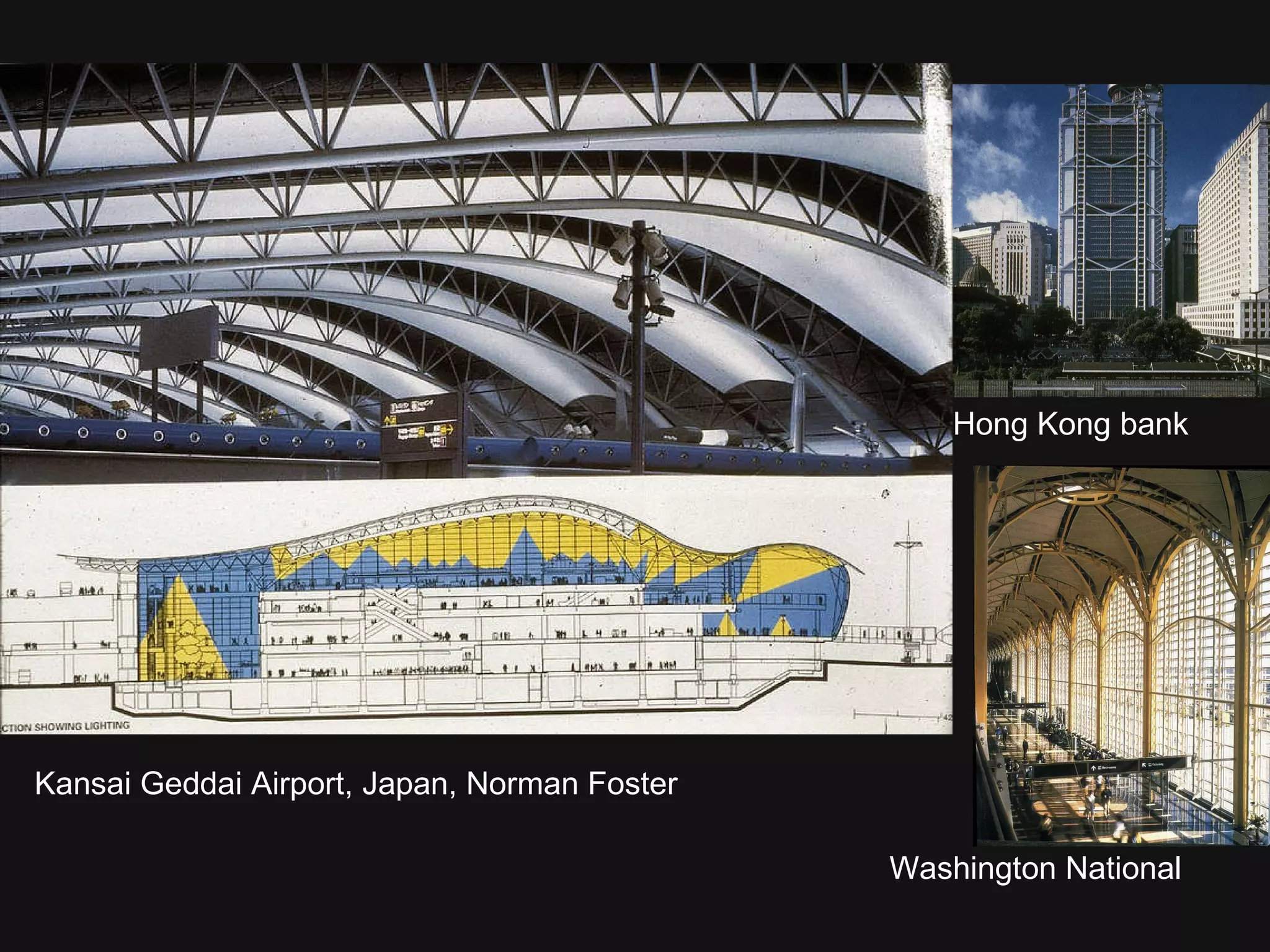
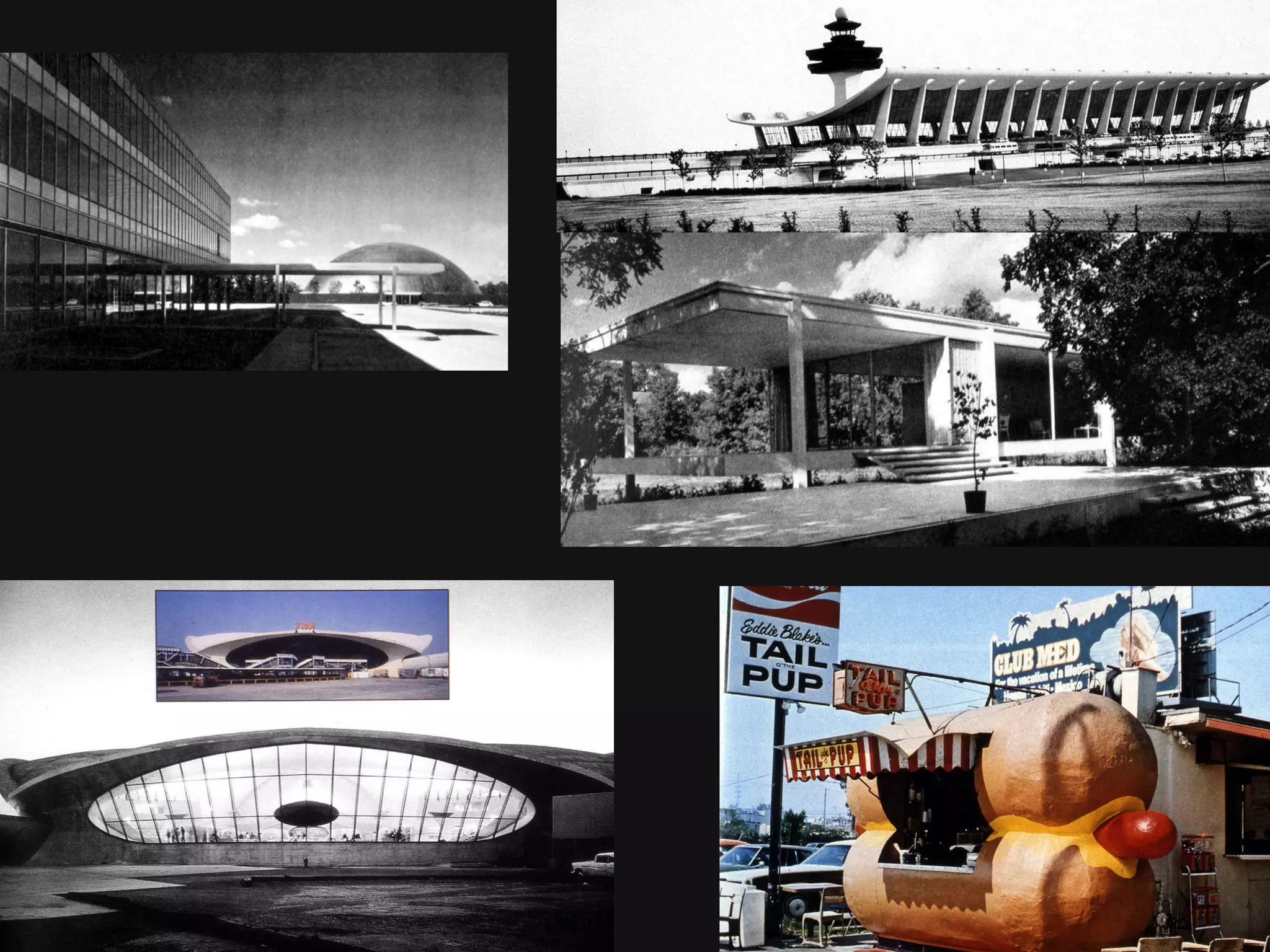
Kansai Geddai Airport, Japan, Norman Foster Washington National Hong Kong bank
 
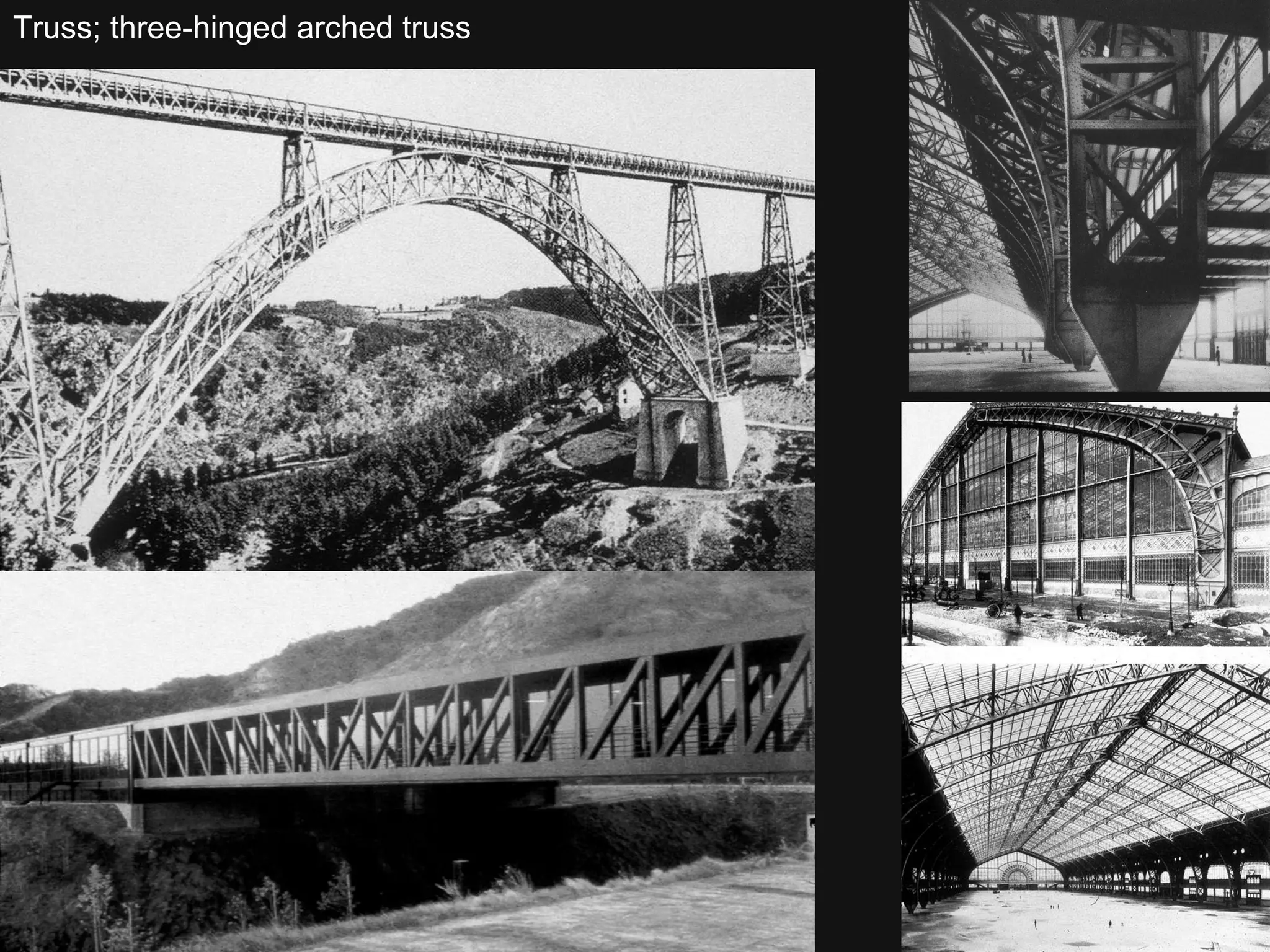
Truss; three-hinged arched truss ?
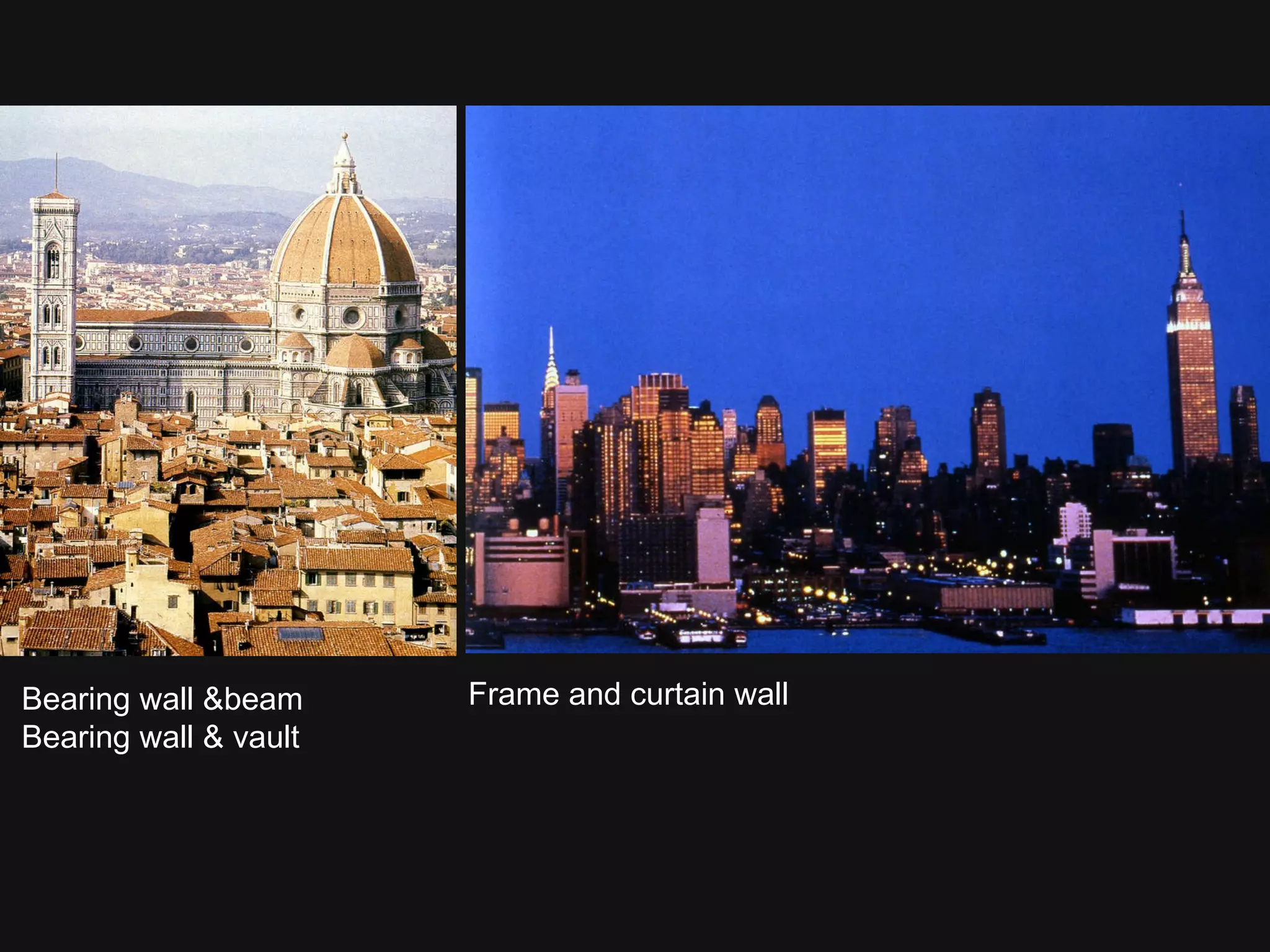
Bearing wall &beam Bearing wall & vault Frame and curtain wall
 
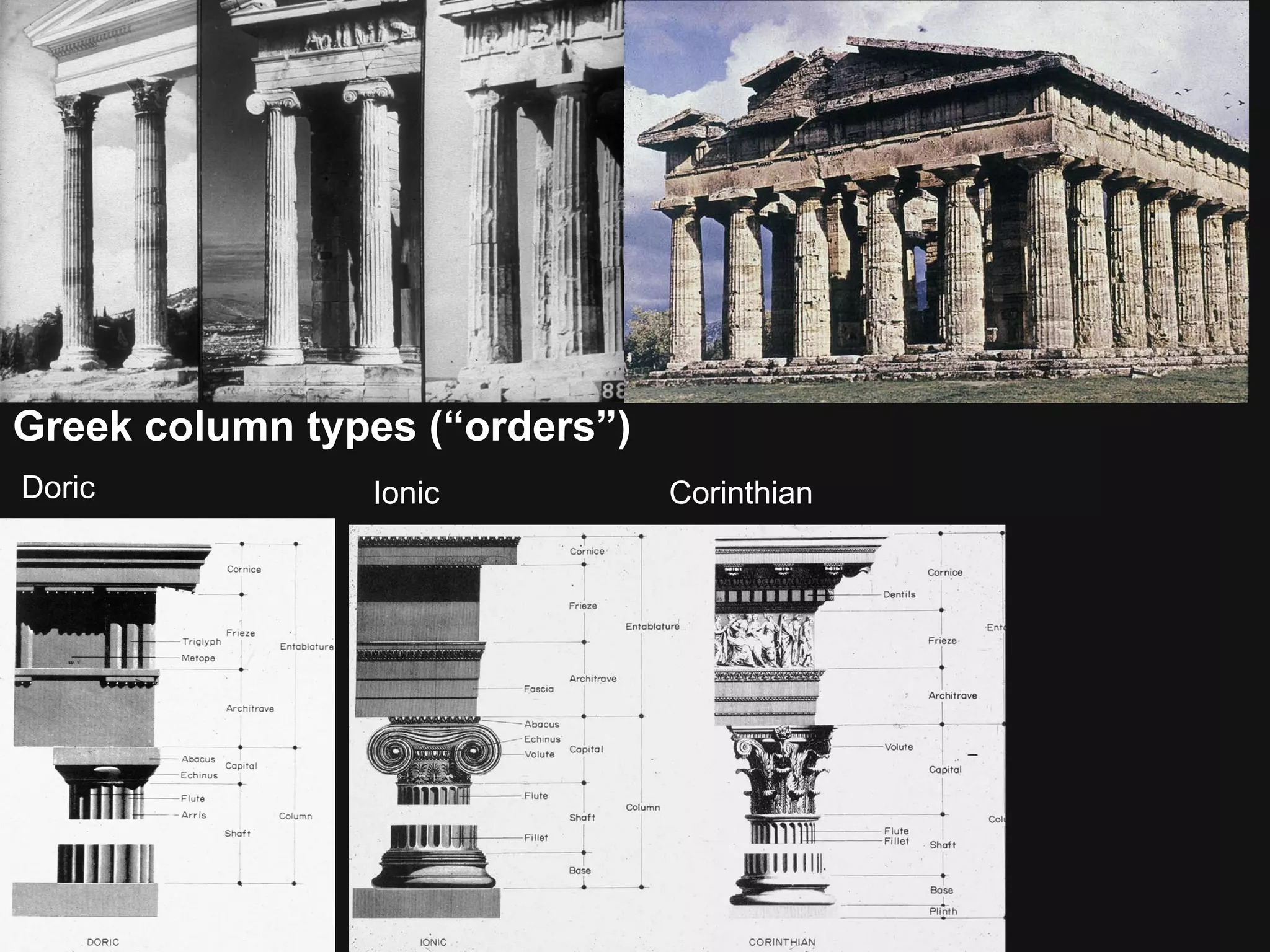
Greek column types (“orders”) Doric Ionic Corinthian
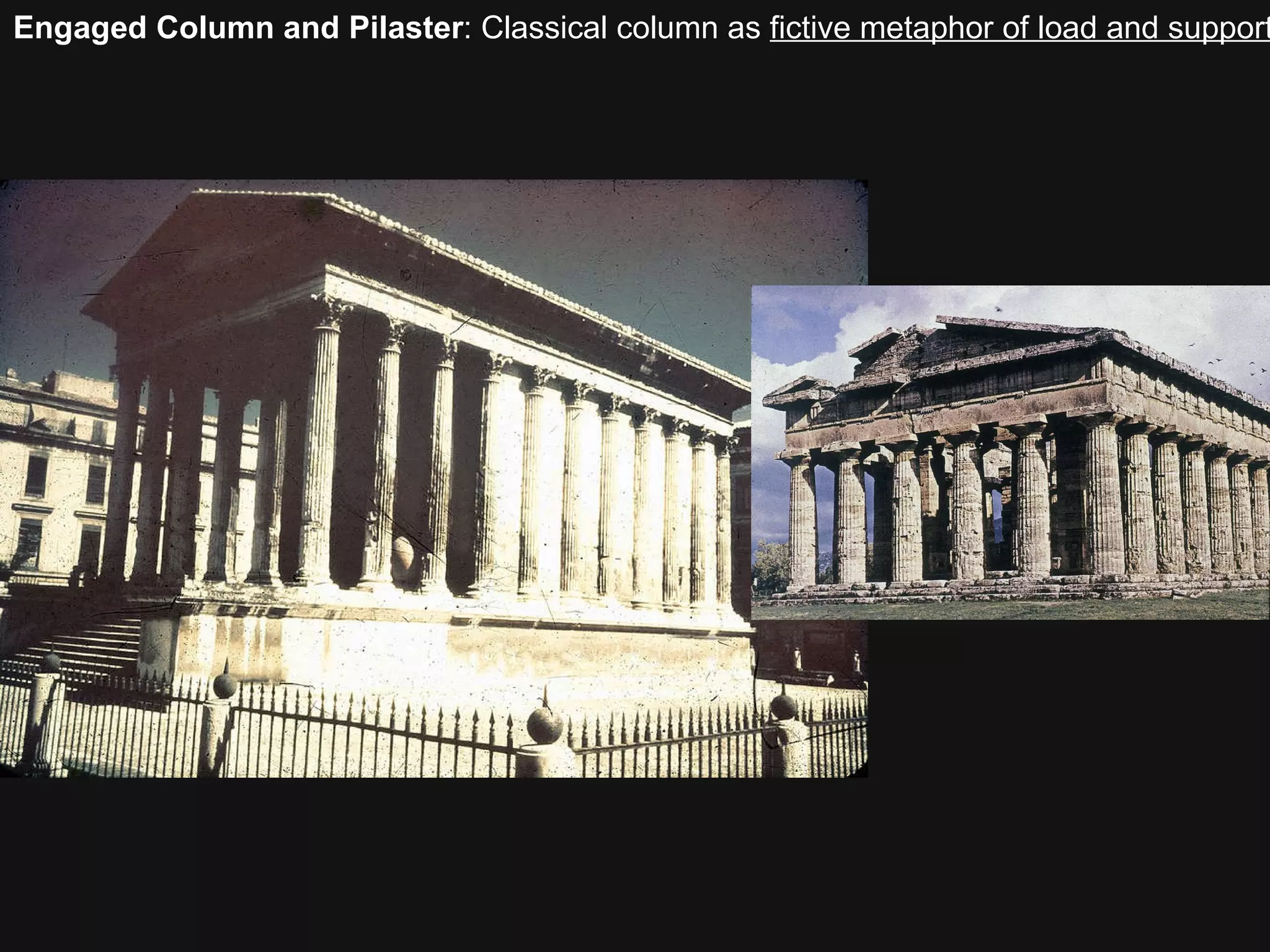
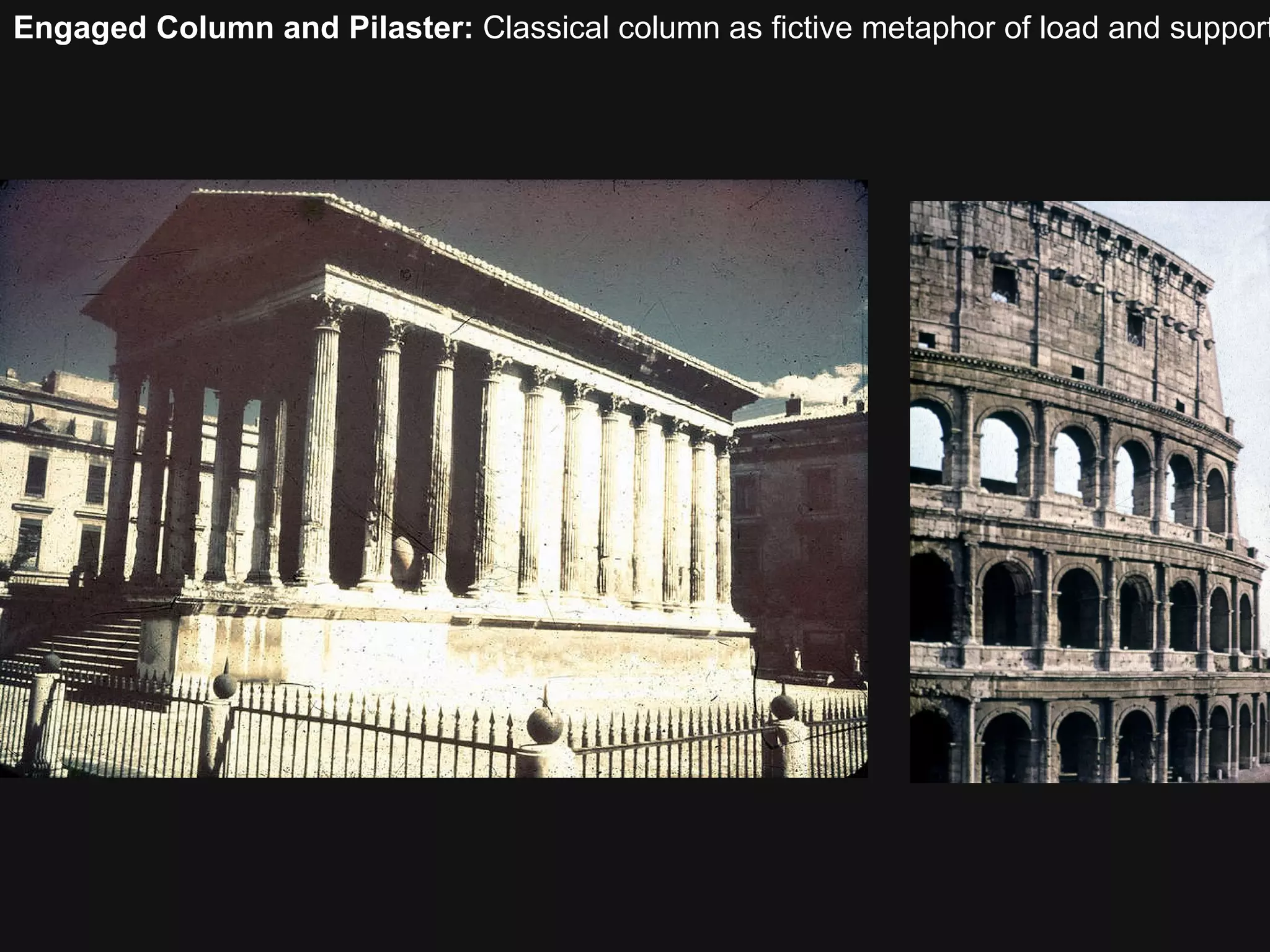
Engaged Column and Pilaster : Classical column as  fictive metaphor of load and support
Engaged Column and Pilaster:  Classical column as fictive metaphor of load and support
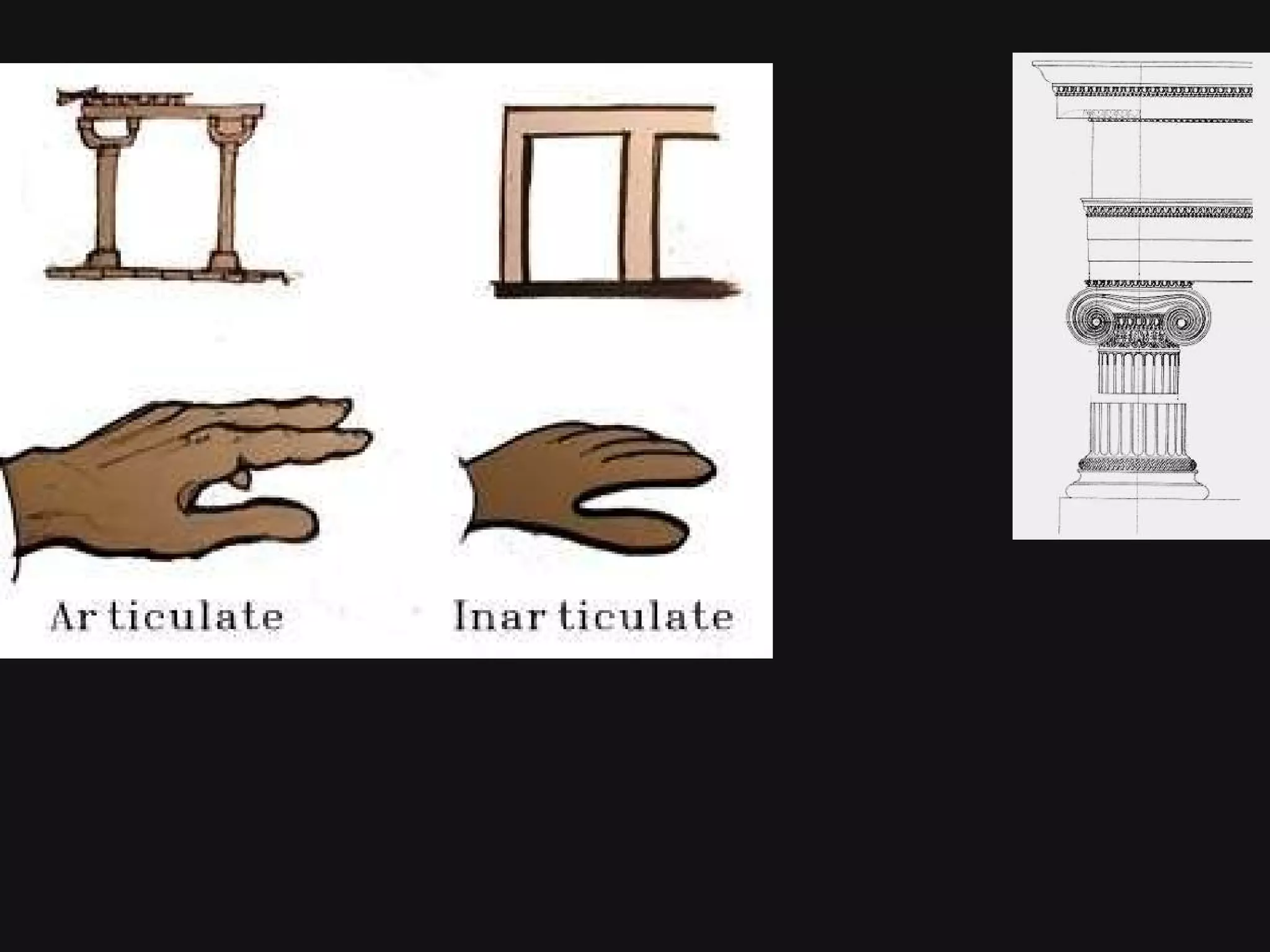
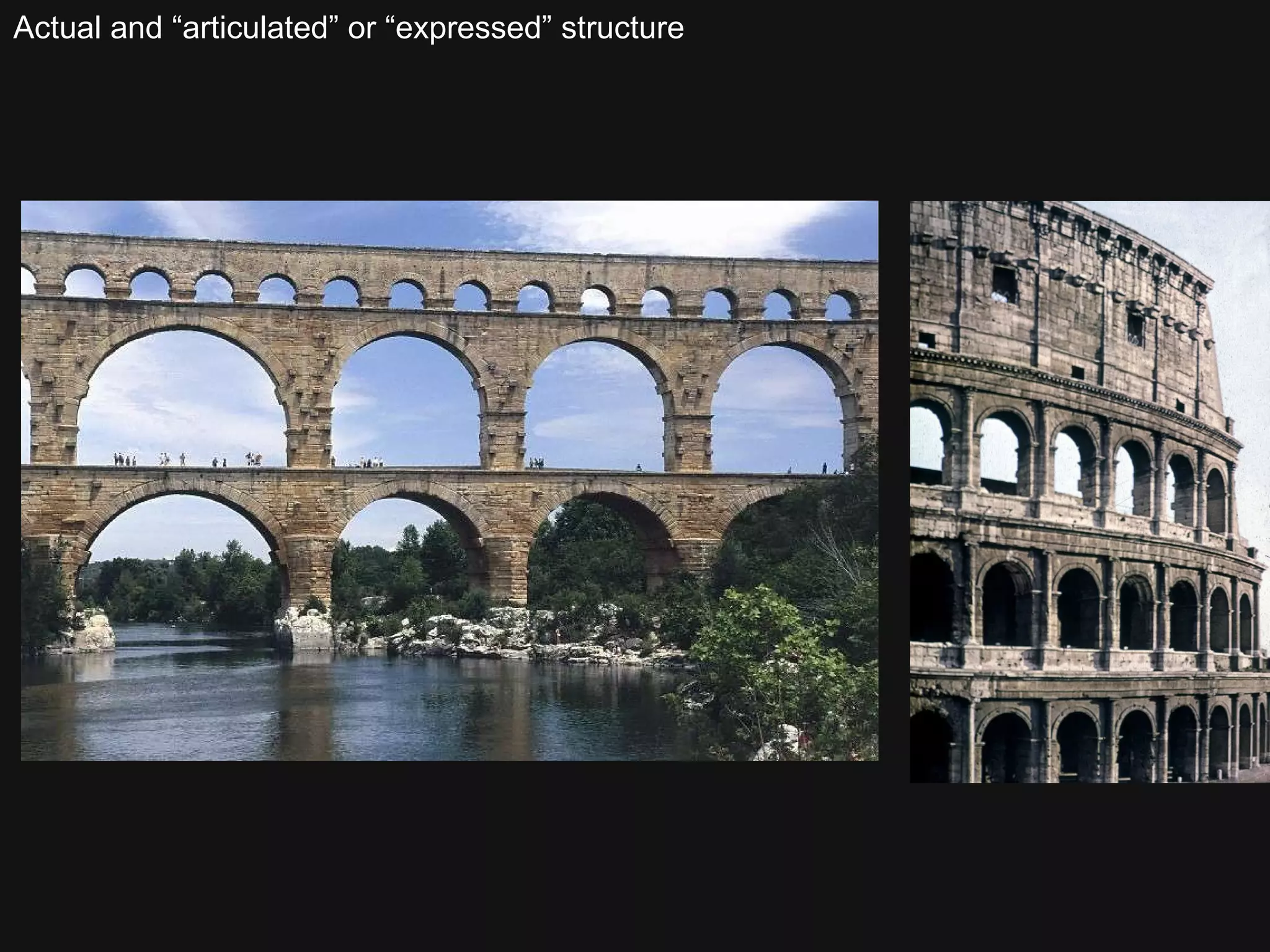
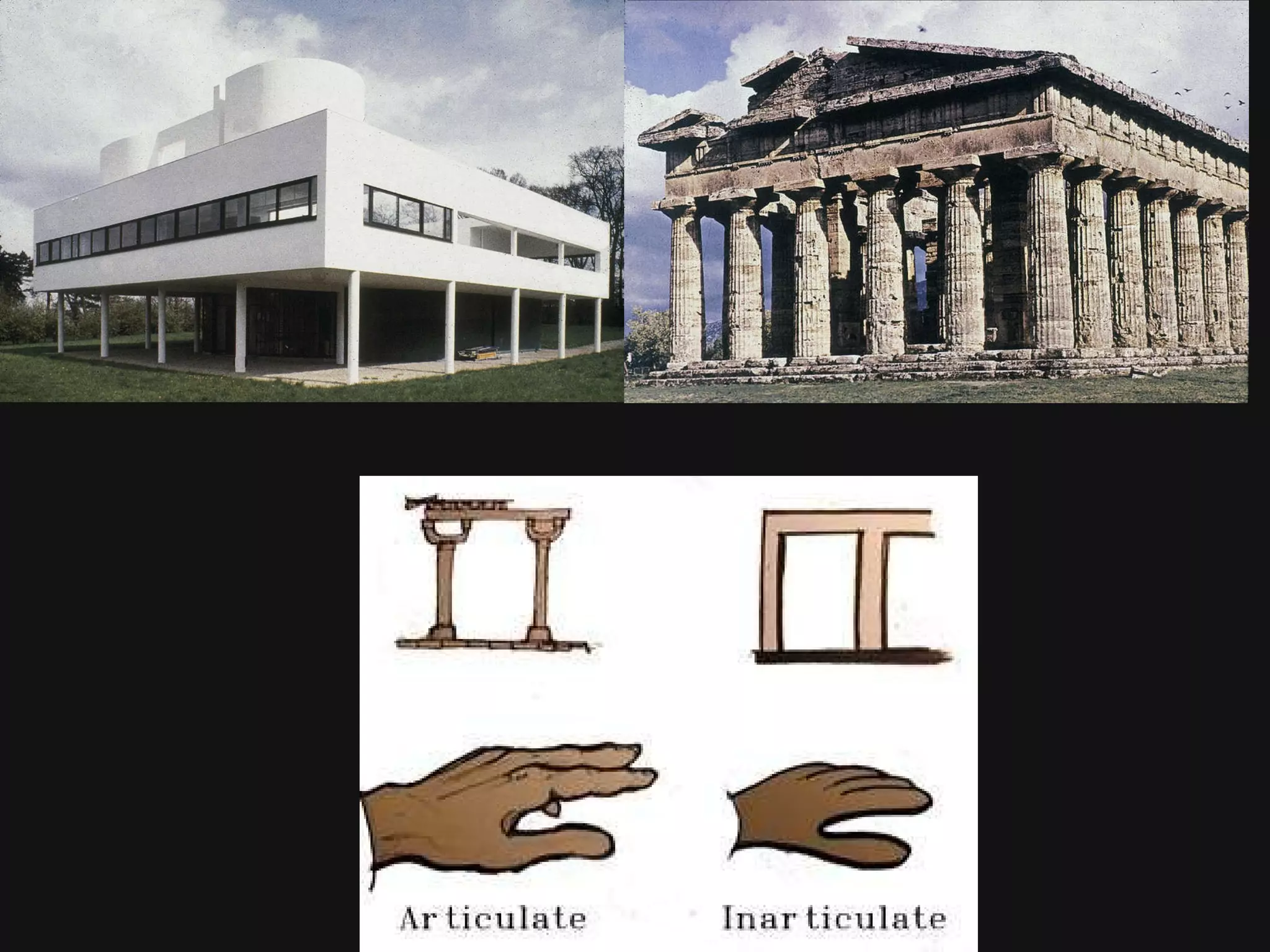
Actual and “articulated” or “expressed” structure


1 introreadingstructures

  • 1.
    Modern Architecture, 1750-2011ARH 71-764 Prof. Thomas Noble Howe, TTh 8:35-9:50, FAC 235 Office, MW 10:00-12:00, FAC 243
  • 2.
    Philadelphia City Hall, c. 1871-1901, John MacArthur Paris, Eiffel Tower, 1889 World Trade Center, Minoru Yamasaki, 1968-72 Modernity: “recentness…,” the perceived irrelevance of the past… The challenge of radically changing structures, functions, technology, scale of society (i.e. mass society), changing value and power systems…
  • 3.
    Seaside, Florida, “NewUrbanism” of the 1980’s… Post-Modern: concomitant recognition of dynamic change, and continuity with past
  • 4.
    San Francisco, Cathedralof Light, c. 2008, SOM, Graig Hartman
  • 5.
    Norman Foster architects,et al., Kansai airport, Japan
  • 6.
  • 7.
    71-713 Modern Architecture,c. 1750-2009   This is a survey of the development of the architecture of Europe and the Americas, and its consequent world wide spread, primarily from the middle of the eighteenth century to the present. It also introduces fundamental issues of architectural theory, aspects of cultural and intellectual history. This is a writing course, not a studio or design course . It is a course about analyzing and writing about architecture. This requires factual knowledge of architectural terminology (including some knowledge of structures, functions, and symbolism), knowledge of historical-cultural contexts and development of skills in analytical writing. Obviously it requires that you develop abilities of visual recognition. The main things to study or take away from the course should be: 1. The “ information/neat stuff :” a wealth of information (a selection, or as much as you can absorb…) specific to architecture, including terminology, structural forms, decorative forms, uses and functions of buildings, etc. (e.g., words like archivolt, squinch, ribbed groin vault, Doric order, ashlar masonry, etc.). 2. Some broad historical background , including some chronology, historical conMoffett: social structure, and value systems of the cultures we will be looking at (e.g. power structure of the Roman Senate, hierarchy of Medieval Catholic priesthood…etc.). 3. An ability critically to analyze and interpret buildings and their contexts .
  • 8.
    The“Student Learning Outcomes:” The main things you should be able to do after this course are: 1. Identify a large amount of the technical terminology which is specific to architecture, including terms for structural forms, decorative forms, etc. (e.g., words like archivolt, squinch, ribbed groin vault, Doric order, ashlar masonry, etc.); you should also be able to identify and explain different types of construction and structure, and recognize common types of symbolism, uses and functions of modern and “historicizing” buildings. You should be able to “ read” architectural drawings in 3D (plans, sections and elevations) and recognize types of geometry used in designing buildings. 2. You should have acquired a broad historical background , of politics, technology, social structure, value (i.e. belief) systems and chronology of Europe and America from 1750 to present. 3. You should also be able to recognize certain major movements and styles of architecture , and be able to define the characteristics of such movements and recognize and define the approaches and innovations of several significant individual architects. 4. You should be able critically to analyze and evaluate the design quality and expressive content and significance of major buildings, using “formal analysis” (i.e. stylistic analysis), comparison with other buildings, and appreciation of historical context and technique. You should be able research useful and reliable information about buildings, critically evaluate evidence and interpretations, appreciate the interdependency in architecture of building, money, power, social structure, history, values, culture and technology. You should also be able critically to evaluate how a building’s meaning may not be as was intended by the builders, or how it can be altered by users (“reception theory”). 5. You should be able to do critical evaluation of evidence and the validity of interpretations based on evidence and logic.
  • 9.
    Principal text: ThePowerPoint lectures. I intend to put discs on reserve in the library of the lectures which you can look at on your own computers or in the library, and they should be available fairly soon after the lecture. Much of the material of the lecture notes will appear as text in the PowerPoint lectures. These contain the most essential chronology, information (in text form), images of buildings.   Survey text: Marian Moffett,, Michael, Fazio, Lawrence Wodehouse, Buildings Across Time (McGraw-Hill Humanities/Social Sciences/Languages; 3 edition, January 22, 2008)[Any edition will do] ISBN-10: 007305304X This is broad world survey text, but half of it in fact is recent Western architecture. The text itself will not be the main point of discussion, but the range of images is good, and exams will use images from this text. This text is strong on illustrations, but weaker on interpretation and historical context. Therefore material from the lectures will be important . We will read only the second half of the text.   Reference book (optional): Patrick Nuttgens, The Complete Architecture from the First Civilizations to the Present Day , (Harper-Collins, Collins Design, 2006) 0 06 089321 4 This is a fun little book with lots of good line drawings, good summaries of facts to orient you to the swirl of material information.   The Reader. This contains the main theoretical texts for discussion. Very important for exams and essays.     Also: Chronological Outline There will also be a Xerox handout of chronology and images of “required” buildings, both before the midterm and the final .   PPT image list, on CD (or a Segue site…to be determined) I will produce a ppt for each exam (midterm and final) with a list of “required buildings” that you need to be able to identify, date, etc.
  • 10.
    Required Work: -papers,either: two short papers (3-5 pages, a stylistic analysis of one building or a comparison of two)(percentage of grade: 10%, 20% respectively)(recommended for those students for whom this may the first or second course in art or architectural history) or : one short research paper on a building or topic (8-12 pages, with footnotes, bibliography and illustrations) due at the end of the term (30% of grade).(recommended for those who have had a number or art or architectural history courses.) - midterm exam (slide identifications, slide comparisons and "unknowns", 20%). The main exercise in a slide essay exam is to identify a building, its location and culture, who built it as far as is known (the patrons, the architects…), and identify some of its design strategies and interpret. With “unknowns” and comparison essays you need to put it in historical context of what precedes it and influences it, what succeeds it and is influenced by it. -final examination (slide identifications, unknowns and comparisons plus essays, 40%). -participation (10%). (This is usually neutral; I will often use it to raise the final grade if there is substantial improvement over the first assignments. It counts against you if attendance is weak. ) -ungraded quizzes: there may be four to six quizzes, which may or may not be announced in advanced. They are not graded, but... - all work must be turned in to pass course Exams are slide essay exams, with some longer cumulative essays for the final. You will be responsible for memorizing all of the material in the image lists; most will be illustrated in the main text. You will NOT be tested on material from the lectures which is not in the image lists.
  • 11.
    Vitruvius (Roman architectwriting c. 30/20 B.C.) writes succinctly summarizes the multifarious character of architecture as: *Vitruvius: “elements” (=aspects) of architecture firmitas….. utilitas venustas * Firmitas (structural stability) has three aspects: Load: columns, walls… Span: beams, vaults Stability: wall corners (quoins/coigns), thickness, buttresses, cross bracing…. Utilitas: Obvious: utility, useability, but specially, the arrangement of spaces so they have peculiar efficiency and ease of use. Venustas Pleasure, grace, beauty. This presents probably the most challenging and intriguing aspect in the criticism and production of architecture: the ability seek coincident aesthetic beauty, functional efficiency and structural stability. E.g. in modern aerospace design, a (questionable) maxim of design, attributed, truthfully or falsely to Sir Sidney Camm (designer of the Hawker Hurricane): “If it looks right, it is right.”
  • 12.
    1A. Aspects ofStructure Post and lintel Frame Bearing wall Arch Suspension Truss Tensile
  • 13.
    Aspects of StructureExpressing, revealing Structure……. N. Foster, Hong Kong Bank H.H. Richardson, Ames Gate House
  • 14.
    … or, creatingan illusion … (art is a lie…??) An expressive lie??? F. Lloyd Wright
  • 15.
    … (art isa lie…??) An expressive lie??? Sometimes a truthful lie??????
  • 16.
  • 17.
    Load, Span (bending),Stability against dynamic forces (wind earthquake), thrust, Bracing.
  • 18.
  • 19.
    “ ashlar” (cubiccut stone), Boston Mud brick/adobe with stucco Santa Fe
  • 20.
  • 21.
  • 22.
  • 23.
  • 24.
  • 25.
  • 26.
  • 27.
  • 28.
    Post and lintelto frame and infill/frame and panel/curtain wall
  • 29.
  • 30.
  • 31.
    Ireland, St. Kevin’sKitchen, 8 th cent. Mycenae, “Treasury”of Agamemnon Tiryns
  • 32.
  • 33.
  • 34.
    Arcuated….arcade Post andlintel….trabeated
  • 35.
    Arcuated….arcade Post andlintel….trabeated Entablature: = 1+2+3 1.Cornice (missing) 2. Frieze 3. Architrave or Archivolt (archivolt is an architrave bent as an arch) Attic –Ionic base (torus-scotia-torus) On a plinth
  • 36.
  • 37.
    Groin vault (squarebay) Barrel vault Semi-dome niche Isolated entablature
  • 38.
  • 39.
    Dome on pendentive…Constantinople (Istanbul), The Hagia Sophia, 534-36
  • 40.
    Florence, Osepdale degliInnocenti, c. 1417-, F. Brunelleschi Pendentive Vault arcade corbel (tie rod)
  • 41.
    Mantua, San Andrea,Alberti, 1471
  • 42.
    Mantua, San Andrea,Alberti, 1471 REVIEW: 1. Aspects of Structure Barrel vault (with coffers) Barrel vault (with coffers) Pendentive springing
  • 43.
    Chartres cathedral, c.1194-1220 Ribbed groin vault Clerestorey arcade arcade
  • 44.
  • 45.
    Venice, San GiorgioMaggiore, Palladio, c. 1560 Rome, St. Peter’s, Bramante, et al. c. 1506-
  • 46.
    Rome San Andreadelle valle, Maderno et al. c. 1595-
  • 47.
  • 48.
    Mantua, San Andrea,Alberti, 1471 Chartres cathedral, c. 1194-1220
  • 49.
  • 50.
  • 51.
  • 52.
  • 53.
  • 54.
    Steel Frame and“curtain wall”
  • 55.
  • 56.
    Fort Worth, KimbellMuseum, Louis Kahn Steel reinforced concrete Villa Savoye, Le Corbusier Dallas, City Hall, I.M.Pei
  • 57.
    Concrete can takegreat loads in compression, but little in tension; therefore, in a beam under bending load, the lower surface cracks.
  • 58.
    To transform itinto a functional beam, place the tape (like the re-bar) on the under surface, to take the tension
  • 59.
    In a continuousbeam with a cantilever, the beam between the two supports again cracks on the under surface; but the cantilever cracks at the top surface, over the support, at the point of maximum leverage.
  • 60.
    Hence, place thetape/re-bar where the tension occurs…
  • 61.
    Hence, ferro-concrete canshape not only a number of post and plate or post and beam forms….
  • 62.
    … but alsoextreme cantilevers…
  • 63.
    … and thin,shape-rigid shells.
  • 64.
    … and thin,shape-rigid shells.
  • 65.
  • 66.
    Kansai Geddai Airport,Japan, Norman Foster Washington National Hong Kong bank
  • 67.
  • 68.
  • 69.
    Bearing wall &beamBearing wall & vault Frame and curtain wall
  • 70.
  • 71.
    Greek column types(“orders”) Doric Ionic Corinthian
  • 72.
    Engaged Column andPilaster : Classical column as fictive metaphor of load and support
  • 73.
    Engaged Column andPilaster: Classical column as fictive metaphor of load and support
  • 74.
    Actual and “articulated”or “expressed” structure
  • 75.
  • 76.