


















How To Maintain A Small Boat’s Electrical System
Well intentioned friends and relatives often make comments along the lines of, “Aren’t you scared of being out on the ocean, all alone, in...

Lightning Protection 101
We now have permanent research satellites in orbit whose sole function is to monitor and study global lightning activity. Like so many areas of...

Install a Standalone Sounder Without Drilling
Are you one of those sailors who believes there are too many holes in the hull of your boat? Have you ever wondered if...

DIY Electrical Panel Replacement
When repowering our 1978 Islander Bahama 30, I was well aware that part of the engine replacement would have to include a serious look...

Testing CIGS Solar Panels: Are Most of Us Holding onto an Inferior Technology?
We've been running solar on our boat for a decade, and after dealing with the rapid degradation of our latest SunPower flexible panels, we...

Sailboat Tech: What’s Worth it and What’s Not
While you may feel the pressure to constantly update your boat tech, its important to understand which features are worth opening your wallet for....

9-in. Chartplotter Guide
With many options on the market in the 9-in. multi-function device (MFD) category, which chartplotter works best for the needs of cruising sailors, racers...

Marine Wiring: Are the Pricey Options Worth the Cost?
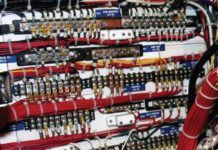
This article launches Practical Sailors long-term test of electrical wires, electrical connections, and corrosion inhibitors for electrical applications onboard sailboats. Ultimately, the goal of this ongoing project is to examine corrosion in wires and connectors in a marine environment. More concisely, it could be presented as a closer look at three common elements in marine wiring to answer some basic questions: What is the best wire to use on a sailboat? Is it tinned wire, automotive wire, or stranded machine tool wire? What are the best corrosion preventatives? Do you apply the anti-corrosion treatment to every connection and every crimp, or just certain types of connections? What are the longest-lasting connections? Which were most prone to electrolysis? We made observations during the six-month test period without disturbing the samples. At the end of the full one-year test period, we will unbolt all of the fittings from the terminal strips and look for corrosion under the fittings.

Navigation App Review: Savvy Navvy
When Savvy Navvy navigation app asked me to review the app and share my impressions, I was curious enough to do a little background...

Lithium Batteries for Small Boats: Troubleshooting
In “Lithium Batteries for Small Boats” we looked at some of the less frequently discussed differences between lead acid and LiFePO4 batteries. In “Lithium...

Why This $1M+ Sailboat Might Be The Best Bluewater Cruiser in...
The Bluewater 56 is one of the most misunderstood offshore cruisers in the sailing world — and today we’re diving deep into what makes...


Latest Sailboat Review

Rethinking Sailboat Structure
When it comes to describing a sailboats most valuable attribute, its surprising how varied opinions can be. Staying afloat should be our first priority, and although you seldom read or hear much about it at boat shows, the structural elements that hold a sailboat together are an all-important consideration.