
Sheng, Shicai, 1895-
Enlarge text Shrink text-
 Personality

-
Save successfulThe item can be found in your Personal ZoneשגיאהLog in to your account to save

- Whiting, A. S.Sinkiang ... c1958.


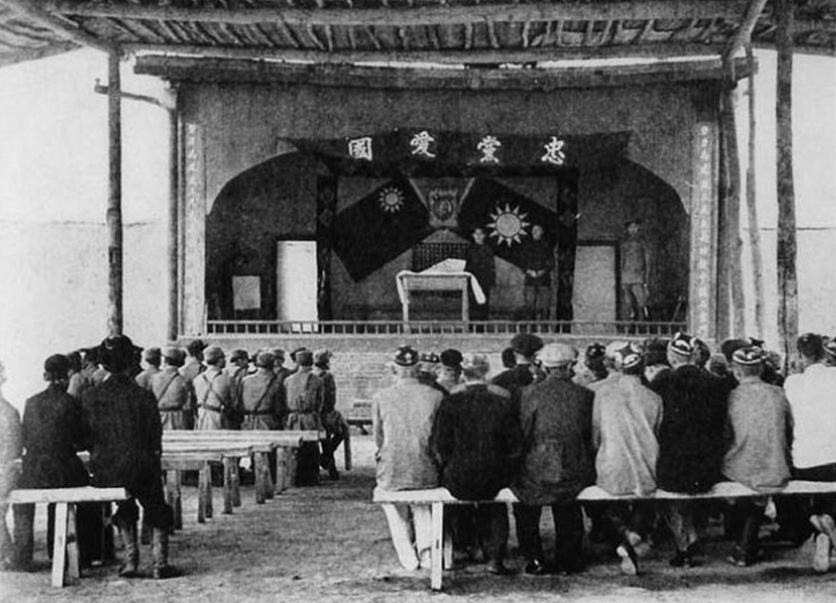


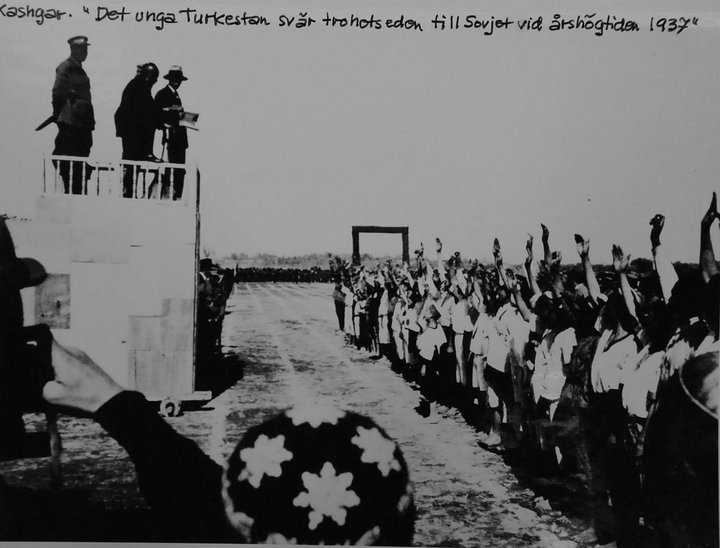


Sheng Shicai (Chinese: 盛世才; 3 December 1895 – 13 July 1970) was a Chinese warlord who ruled the province of Xinjiang from 1933 to 1944. He was a Manchurian-born Han Chinese, educated in Tokyo, Empire of Japan, where he studied political economy and later attended the Imperial Japanese Army Academy. Sheng had become a Marxist in his youth, and after returning to China he participated in the anti-imperialist May Fourth Movement in 1919. In 1927, he joined the Northern Expedition, a military campaign of the Kuomintang against the Beiyang government. In 1929, he was called into service of the Governor of Xinjiang, Jin Shuren, where he served as Chief of Staff of the Frontier Military and Chief Instructor at the Provincial Military College. With the Kumul Rebellion ongoing, Jin was overthrown in a coup d'état on 12 April 1933 and Sheng was appointed duban or Military Governor of Xinjiang. Since then, he led a power struggle against his rivals, of whom Ma Zhongying and Zhang Peiyuan were most notable. The first to be removed were the coup leaders and by them appointed Civil Governor Liu Wenlong by September 1933. Ma and Zhang were defeated militarily by June 1934 with help from the Soviet Union, whom Sheng invited to intervene, subordinating himself to the Soviets in return. He was dubbed the "King of Xinjiang" during his rule. As ruler of Xinjiang, Sheng implemented his Soviet-inspired policies through his political program of Six Great Policies, adopted in December 1934. His rule was marked by his nationality policy which promoted national and religious equality and identity of various nationalities of Xinjiang. The province saw a process of modernization, but also the subordination of economic interests in Soviet favor. The Soviets had a monopoly over Xinjiang trade and exploited its rare materials and oil. In 1937, in parallel with the Soviet Great Purge, Sheng conducted a purge on his own, executing, torturing to death and imprisoning 100,000 people. With the Soviets distracted by its war with Germany, Sheng approached the Nationalist Chinese government in July 1942 and expelled the Soviet military and technical personnel. However, he still maintained effective power over Xinjiang. In the meantime, the Soviets managed to hold off the Germans and the Japanese launched an extensive offensive against the Chinese, which led Sheng to try to change sides again by arresting the Kuomintang officials and invoking Soviet intervention for the second time in 1944. The Soviets ignored the request and the Chinese government removed him from the post naming him Minister of Agriculture and Forestry in August 1944. Sheng held the ministerial post by July 1945 and later worked as an adviser to Hu Zongnan and held a military post. He joined the rest of the Kuomintang in Taiwan after the defeat in the Chinese Civil War in 1949. In Taiwan, Sheng lived in a comfortable retirement and died in Taipei in 1970.
Read more on Wikipedia >