People with Type 1 diabetes are estimated to make up to 180 more decisions a day than someone without the disease, according to a study from Stanford University. Each meal, workout, or night’s sleep carries a risk-versus-safety calculation. For many, the choice comes down to this: prick your fingers multiple times a day, or opt for a device that automatically tracks sugar levels every few minutes, and only finger-prick a few times a month. Most choose the latter, if only to make an already tolling condition slightly simpler.
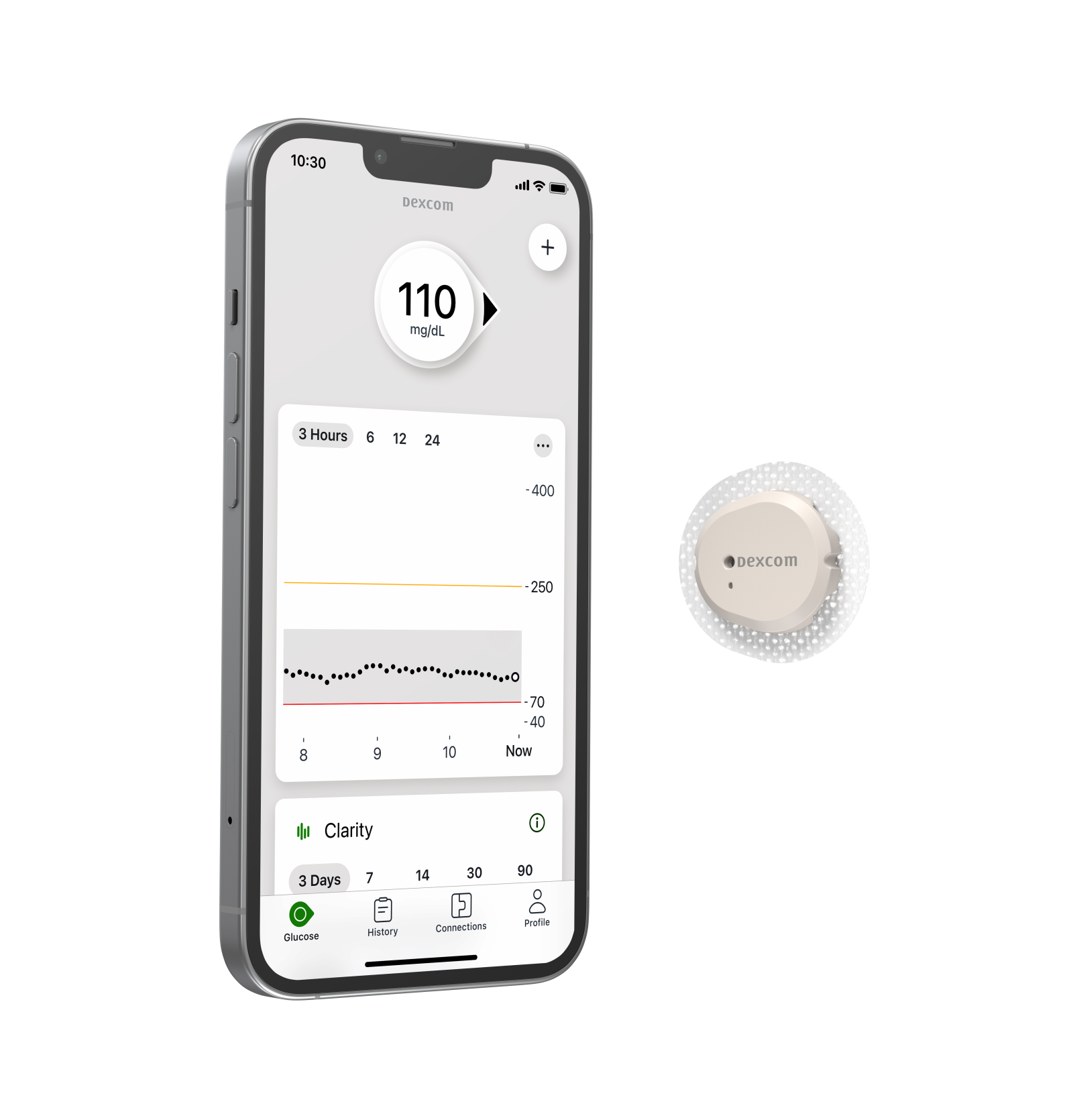
That’s where continuous glucose monitors come in. These small wearable devices track glucose in real time, often syncing with smartphone apps or insulin pumps to help patients make faster, safer decisions about their health. Among the most widely trusted are those from Dexcom, the San Diego–based CGM pioneer that has rolled out a series of innovations over two decades—from the STS (2006) and Seven Plus (2009) to the G4 Platinum (2014), G6 (2019), and its newest model, the G7 (2023).
The Dexcom G7 is the latest link in a line of devices long relied upon by the Type 1 community. But lately, some patients have had difficulty with this device.
Over the past year, patients and caregivers have reported inconsistencies with the G7’s readings—sharp highs when blood sugar is actually stable, or plummeting lows that don’t match fingerstick tests. These discrepancies have led to confusion, fear, and, in some cases, physical danger. And while many say Dexcom is aware of the issue, users describe the company’s response as limited primarily to silence, apologies, and sporadic replacements.
A spokesperson for Dexcom told Newsweek that the company “stands by the performance and accuracy” of its devices and “will replace all sensors confirmed as a product failure during their intended lifetime—without limit.”
When Ashley Raymond (@ashleylaurenraymond) stepped into a hot yoga class last spring, she trusted her Dexcom G7 to alert her if her glucose dropped too low. Her app read a steady 140 mg/dL, perfectly safe. Moments later, she collapsed. A finger-stick test by another diabetic revealed her actual level: 34 mg/dL—a dangerously low number that could have triggered a seizure.
“The Dexcom G7 was telling me, you know, it was 140 or whatever it was saying," Raymond told Newsweek. "And I thought to myself, 'Oh my gosh, I almost literally just, you know, passed out.'"
For Aubrie Lewis, a mother of a 4-year-old named Wells who uses the G7, those inaccuracies are far more than an inconvenience. “It’s life-threatening for him to have a Dexcom be wildly off target,” she told Newsweek. Wells, who doesn’t feel symptoms when his blood sugar spikes or crashes, relies entirely on his CGM alarms to stay safe.
After weeks of erratic readings, Lewis reverted to the older G6 model and raised $25,000 on TikTok (@typeonederfulwells) to purchase a diabetes-alert service dog. “He's a huge asset to us,” she said to Newsweek, “and he beats Dexcom.”
Other parents echo her frustration. Janelle Mitchell, whose 6-year-old son Paxton uses the G7, says the device’s readings “would suddenly show super-high or super-low numbers that made no sense.” Finger-stick tests showed they were often 60 to 80 points off. “The devices they're putting out aren't safe, especially for I mean any T1D in general, but especially for young kids whose insulin dosing and stuff like that is on a much smaller scale than a grown adult, that you know, these small discrepancies can make a huge, huge impac,t and it's not necessarily going to be a good impact,” she said.
Because of similar issues and complaints, longtime Dexcom user Richard Moore began compiling reports from the FDA database and social media. He says he noticed a striking pattern: a 70 percent failure rate among the users he surveyed.
They’re constantly making updates and tweaks to parts of the software and the battery," he told Newsweek. "But I just wish they’d come out and say, ‘Look, this is complicated technology — it’s going to fail sometimes. Here’s what we’ll do to take care of you when it does.”
Newsweek followed up with Dexcom via email for further comment on such inaccuracies, but did not receive a response by the time of publication.
In March 2025, the Food and Drug Administration issued a warning letter to Dexcom after inspectors found that the company had modified the materials used to manufacture its G6 and G7 sensors without obtaining formal premarket clearance. According to the FDA, Dexcom replaced one of the materials used in the sensors’ resistance layer with a new compound that did not meet the company’s own clinical performance targets.
In response, Dexcom spokesperson Nadia Conard told MedTech Dive that the company “qualified a second source for one of its raw materials, developed since 2021, to ensure an uninterrupted supply to customers,” adding that “extensive testing” showed the material met specifications. She maintained that Dexcom “disclosed the change responsibly and transparently” and said the company was “surprised” by the FDA’s letter, which it is now working to resolve.
Following the inspection and the FDA’s findings, multiple consumer class actions have been filed against Dexcom over its G7 (and G6) sensors—one filed by Kelly Grisoli in California alleging defective alerts—and another focused on a materials change uncovered in the FDA warning letter.
One proposed class action lawsuit was filed against Dexcom in the U.S. District Court in California. The 23-page complaint alleges that the unapproved materials change caused the newer G6 and G7 sensors to show “considerably greater variability” in glucose readings than those made with the previously approved material. Plaintiffs claim the devices were “adulterated and misbranded” and that customers “did not receive the benefit of their bargain.”
A second proposed class action lawsuit was also filed last week in the U.S. District Court for the Central District of California. The complaint, brought by Kelly Grisoli, a parent whose child uses the Dexcom G7, alleges that the company’s glucose monitors were “defective, prone to dangerous alert failures, and subject to recall” by the Food and Drug Administration.
According to the filing, Grisoli “repeatedly experienced failed alerts and dangerously inaccurate glucose readings” compared to finger-stick tests. The lawsuit cites Dexcom’s two Class I recalls issued earlier this year, including one over missing audible alarms for critical glucose alerts. It claims the devices also suffered from frequent “sensor failed” messages, short wear life, and premature shutdowns.
Grisoli’s complaint alleges violations of California’s Consumer Legal Remedies Act, Unfair Competition Law, and False Advertising Law, seeking damages and class certification for all U.S. purchasers of the G7.
Before any medical device can be sold in the United States, it must go through the Food and Drug Administration’s (FDA) review process to prove it’s safe and effective for use. One of the most common routes for this approval is called a 510(k) submission, a process used for the majority of Class I and II medical devices, including many glucose monitors, surgical tools, and diagnostic sensors.
A 510(k) is a premarket notification that a company submits to the FDA to demonstrate that its device is “substantially equivalent” to another product already cleared for sale, known as a predicate device. In other words, the manufacturer must show that its new device has the same intended use and poses no new safety or effectiveness questions compared to an existing device.
If the FDA agrees, it issues a clearance letter allowing the company to market the device. This process typically takes about 90 days, and once cleared, the product can be distributed commercially in the U.S. Unlike the more rigorous Premarket Approval (PMA) process, 510(k) clearance does not require new clinical trials unless major design or performance differences are identified.
“When a company like Dexcom or anybody that makes a medical device goes through the 510(k) process, their design is approved prior to distribution,” Mike Morgan, a personal injury lawyer who specializes in such cases as medical malpractice, insurance bad faith, wrongful death, defective products, and other personal injury cases at Morgan & Morgan, told Newsweek.
“What we see from the FDA are multiple warning letters and site investigations where they noticed that the company had changed a critical component, dipping into a different compound that resulted in less accurate readings," Morgan said. "That’s extremely dangerous — and with that change in the component part, it may strip some of those 510(k) preemptions or protections that usually stop consumers from pursuing action if they were harmed.”
For those who use insulin pumps directly linked to CGM readings—like the Tandem Mobi or Omnipod 5—the risk is amplified. “We’ve been fortunate that he hasn’t dropped dangerously low because of it, but there have definitely been discrepancies—especially in the lower blood sugar ranges," Mitchell told Newsweek."His Dexcom might read 100, but he’s actually closer to 65. There’s a big difference between 100 and 65. As you get lower, those numbers really start to matter, and they need to be more precise."
Raymond said, "It literally syncs with the insulin pump, and so it is making decisions for you, sometimes faster, and you can even realize that your number might not be what it's showing. And I think that at a certain level, as type 1 diabetics... depend on it heavily, and if it's telling you something, you trust it sometimes more than you trust yourself until it's really low or really high."
Health care professional Devin Holt, a certified registered nurse anesthetist (CRNA) and creator of Crushing T1, a TikTok platform with more than 84,000 followers, pointed out that Dexcom tightened its goodwill replacement policy this year, limiting users to “three replacement sensors per person per year,” even as more sensors fail early.
Dexcom did not directly address that policy in its email statement to Newsweek. Still, spokesperson Conard said the company “stands by the performance and accuracy” of its devices and “will replace all sensors confirmed as a product failure during their intended lifetime—without limit.”
Dexcom advises users who believe their G7 continuous glucose monitor is showing inaccurate results to consult the Dexcom G7 User Guide first, which includes information on device accuracy and calibration. For further help, the company offers 24-hour technical support at 1-844-607-8398 for troubleshooting or replacement inquiries. Users can also contact the Dexcom CARE team at 1-888-738-3646 (Monday–Friday, 6 a.m.–5 p.m. PST) for training, app setup, and other guidance. Dexcom also provides online resources explaining the differences between fingerstick (BGM) and CGM readings.

Medical experts say mild discrepancies between CGMs and fingerstick tests are normal, but large ones can be dangerous. Dr. Jessica Wilson, an endocrinologist at the Mayo Clinic, said that CGMs measure interstitial glucose, not blood directly.
“There can be a lag time in glucose levels changing with the CGM," she told Newsweek. "It is generally recommended that, if there is a discrepancy, one should believe the blood on the glucose test strip since that is more reflective of 'real-time' data."
She added that placement, pressure, temperature, or certain medications can also affect readings. “If there are glucose inaccuracies and the patient is on insulin therapy, they could receive too much or too little insulin, respectively," Wilson warned. "This is worrisome as either of these causes risks of complications
Online, distrust is spreading as fast as the failures, according to Raymond, who said that some diabetes influencers declined to speak publicly, citing sponsorships. She says Dexcom blocked her Instagram account after she posted about the G7’s issues and launched a petition in February, urging an investigation. “Before I got blocked, I was tagging them in everything, so it's not like I'm a completely crazy person with a fake account or something, posting this stuff, and the number of people commenting, I think too, and views. I know they've they've seen it,” she said.
Holt’s viral TikTok about the G7’s chemical change has been viewed more than 2 million times, with users flooding the comments with similar experiences. He added that Dexcom should improve its transparency on these issues, saying, "How are we supposed to know if certain problems are being corrected or not if they never communicate anything to us? We aren’t going to know, and that creates a lot of anxiety, frustration, and anger among the entire customer base."
Dexcom, meanwhile, is gearing up to push out its next-generation 15-day-wear sensor, approved by the FDA in 2025, which promises "best-in-class accuracy" for users.