
This transcript has been edited for clarity.
Kaniksha Desai, MD: Welcome, everyone, to another episode of the Thyroid Stimulating Podcast, created in conjunction with the American Thyroid Association to discuss up-to-date diagnosis and management across a wide spectrum of thyroid diseases.
I'm your host, Kaniksha Desai. Today we're exploring the expanding role of molecular marker testing in the evaluation of thyroid nodules, particularly those patients with indeterminate cytology. Thyroid nodules are extremely common, with up to 50%-60% of adults developing them over their lifetime. Approximately 15%-30% of nodules that undergo fine-needle aspiration (FNA) are classified as indeterminate.
Over the past decade, molecular diagnostics have transformed how we assess cancer risks, help avoid unnecessary surgeries, and make personalized treatment decisions. In this episode, we'll discuss the evolution of the molecular testing, review commonly used platforms, and explore how to apply the results effectively in clinical practice.
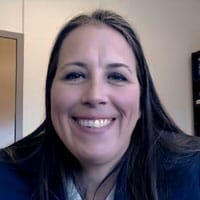
Joining us today is Dr Jennifer Sipos, professor of medicine at The Ohio State University (OSU) and medical director of the Neuroendocrine Cancer Program at the Arthur G. James Comprehensive Cancer Center. She has published extensively on the management of thyroid nodules and thyroid cancer, with a particular focus on improving diagnostic and treatment strategies.
Dr Sipos is also an invited member of the International Thyroid Nodule Ultrasound Working Group, a member of the Writing Task Force for the upcoming American Thyroid Association guidelines on nodule management, and serves on the thyroid carcinoma panel for the NCCN Clinical Practice guidelines.
Thank you, Dr Sipos, for joining us today.
Jennifer A. Sipos, MD: Thank you for having me. It's truly a pleasure and a privilege to be talking with you today, Dr Desai.
Desai: Thank you. To start us off, what is meant by molecular testing in the context of thyroid nodules?
Sipos: Molecular testing, as a general rule, is just a technology that is designed to provide additional risk stratification for thyroid nodules that do not have a clear diagnosis on cytology. That's the main way I think about it when we're talking about indeterminate cytology.
There are two main ways to obtain this material. One is from a dedicated FNA sample that's obtained from the nodule itself. Now, some of these tests are also able to be performed on a slide that's already been prepared for cytologic analysis, and you can go back and do the molecular analysis on it.
When you're thinking about molecular testing, there are really two main ways to approach it. One approach is to try to identify cancer, which is what we do with cytology. We're trying to look for cancer. We can think of this as a rule-in test. The other approach is to try to identify nodules that are benign, and this would be considered a rule-out test.
I think there are virtues to both approaches, but I generally prefer a rule-out test because what I want to know is whether or not I can confidently tell my patients that they do not need to proceed to diagnostic surgery. I want to know who can avoid a potential operation.
Desai: That's important because I think it's two different sides of the same coin. What are we looking for? Are we looking more to try to avoid surgery, like you said? Or are some patients also looking for whether this is 100% cancer?
I think setting those expectations with the patient in the beginning is also very important when you're counseling your patient. What are we achieving with this test? Can you talk a little about how it's different than genetic testing, though?
Sipos: Right, patients often will get that confused. I think that's a fair question. We are looking at the genetics of these lesions, but it's specifically of the tumor itself, so this is not something that is necessarily going to be inherited. This is genetic alterations within the context of the tumor alone.
Also, these molecular tests are not just looking at gene mutations. They're also looking at other types of alterations that we can see at a DNA and an RNA level, specifically looking at point mutations in the DNA or gene fusions, looking at expression patterns, or they're looking at copy number alterations. Is there an increased number or a decreased number of segments of the DNA?
That's particularly important when we're looking at oncotic neoplasms or what we used to call Hürthle cell neoplasms. These tumors will often have alterations in the numbers of various segments of the DNA, and those alterations can induce some genomic instability that can lend to a more aggressive tumor in terms of clinical behavior.
These are looking at a variety of genetic alterations that may occur, not specifically what we think of when we think about molecular events and talking specifically about gene mutations.
Desai: Now that we have some background, I wanted to take a step back in history. Can you tell me a little bit about what drove the discovery of this molecular marker testing and how we got where we are today?
Sipos: You mentioned in your introduction that thyroid nodules are very common. We are starting to see more and more cytologically indeterminate nodules. Historically, we were taught that about one third of nodules are indeterminate on cytology, and with that diagnosis of indeterminate cytology, they have a risk of malignancy of anywhere from 5% to 50%.
That's a pretty wide range of malignancy, and it's really important that we better stratify that risk. A nodule with a 5% risk of malignancy, I’m going to treat very differently than a nodule that has a 50% risk of malignancy. Being able to really narrow down that risk for the individual patient, I think, is really where this came from.
We're definitely beginning to see more and more indeterminate cytologic nodules. Several studies have confirmed that, since the introduction of molecular tests, we're seeing more indeterminate cytology diagnoses. Many, including the authors of those studies, would argue that that's largely due to the increased reliance on these molecular tests by cytopathologists and clinicians saying, “I don't know. I don't want to put myself out there. I know molecular tests perform well, so we can call it indeterminate and see how it does on molecular testing.”
I would agree that certainly that contributes, but I would also argue that I think we're doing a better job of sonographically categorizing nodules and not performing FNAs on nodules that are clearly benign. If we take those clearly benign nodules out of the pool, the pool that we have left is enriched with a higher number of malignancies and indeterminate nodules, so I would argue that it's probably a multifactorial issue that is causing this rise in indeterminate thyroid nodules on cytology.
When this started, there were two initial tests that were available clinically. In 2011, the Afirma Gene Expression Classifier, GEC, was introduced to try to narrow down that risk of malignancy from 5% to 50% down to something that would help us better manage our patients clinically.
This test was really exciting initially, but it was definitely plagued with a poor specificity, meaning there were many false-positive results for nodules that ultimately were benign. To reduce the number of false-positive results, the test was revised in 2018 by increasing the number of genes examined, and then they added a follicular content platform, which provided better stratification for oncotic tumors, which was largely the reason for many false-positive results.
Then they validated that test using the samples from their original cohort that was published in 2011, and they found a significant improvement in the specificity of the test, while still maintaining a high sensitivity. It still performed very well for identifying benign nodules.
ThyroSeq started around the same time in 2011 as well. It initially was really more of a rule-in test as opposed to the rule-out with the Afirma test. In 2011, they had an initial seven-gene panel that really had a very good predictive value for identifying cancers but didn't have sufficient negative predictive value. The absence of one of those mutations was not enough to tell a patient they didn't need to have surgery.
They didn't really impact the diagnostic surgery rate, which is what most of us are after when we're using these molecular tests. We don't want to send patients to surgery unless we know they have cancer. There are expansions of the panel genes, and then adding a platform that includes copy number alterations, gene expression patterns, and identifies additional gene fusions, insertions, and deletions.
That has really improved upon the sensitivity of this test while also maintaining a high specificity. These two tests are largely the foundation for what we have used commercially in the United States. Both have undergone rigorous validation studies, which I think is a really important component of using a molecular test. You need to know how it performs under standardized conditions, and then you want to be able to know how it performs in the real world.
Desai: I believe both of them have had really good publications since then about people who've been using them in practice as well.
Sipos: Yes. I think that's a really important component that maybe doesn't get talked about as much.
Desai: I know you're on the new thyroid nodule guidelines that are going to be coming out from the ATA. Our last set of guidelines is like a decade old now, and so much has happened. Can you give us a sneak peek into what those new guidelines are going to say?
Sipos: Yes. We've been composing these guidelines since 2019. Shortly after the guidelines came out, we were tasked with coming up with new guidelines. We are in the final stages of those guidelines being ready for review.
The biggest section we're working on right now, unfortunately, is the molecular component. We really want to get this right because it is so important and it's something that everyone really wants better guidance on how to use. We don't have these recommendations completely ironed out yet.
What I will say is that we're taking an approach of stressing the importance of using a platform that has been validated with a high-quality, blinded, clinical validation study, and then confirmation by real-world studies that demonstrate that these tests do perform well outside of the individual centers that participate in the validation study, so that it's applicable to patients in all settings. That's going to be a point of emphasis.
I think the other point of emphasis that we're focusing on is looking at nodules with indeterminate cytology in terms of which category of indeterminate cytology are we talking about. When we historically lump indeterminate cytology into Bethesda III or a US atypia of undetermined significance (AUS) plus follicular neoplasm or Bethesda IV, we lump those together as being indeterminate.
We have split them apart because they do look different, they behave differently, and using molecular testing or making decisions about clinical management should be different for those two categories of nodules. Yes, they both have an intermediate risk of malignancy, or an indeterminate risk of malignancy, but they're different tumors. They behave differently. They look different. That's a big area there.
Generally speaking, when we think about nodules that are Bethesda III or AUS, we have a nonhierarchical list of recommendations for how to manage those nodules, really focusing on the individual patient and the clinical scenario in patient preference.
There are several options for how those nodules with AUS cytology can be managed. One of the options would be repeating the FNA for cytologic evaluation, seeing if you can get more sample that will better characterize the type of nodule you have. Another option would be molecular testing.
Another option is surgery. If the patient has a strong preference, the nodule is causing compressive symptoms, if the nodule is growing, or if the nodule has a high-risk sonographic pattern, then we would recommend proceeding straight to surgery in any of those situations. Then, if a nodule has AUS cytology but has a very low risk sonographic appearance, we would recommend consideration of surveillance as an option.
Finally, second-opinion cytology is also a reasonable option for AUS cytology. You have five options of how to manage it. I think that this really gives us, as clinicians, some flexibility to manage the patient in front of us. I think that's important because we know that not every situation is the same.
Desai: What I personally struggle with is, you talked about repeating the FNA biopsy, but what do you do with that first result? Say you had AUS and then you sample it again; it may or may not be at the same exact site in the nodule, right? It's the same nodule, but there are different areas and now you come back with benign. Does that mean I can just ignore or erase the first one?
Sipos: Which one do you believe? You always believe the one that you like. No, it's a challenge, and certainly there's an argument to be made for, well, do you do a third biopsy and then decide which one you're going to pursue or which one you're going to believe?
I don't think any of us have a right answer there, but if you suspect that it was maybe not a representative sample, let's say it's read as AUS because you got a large amount of cellular debris from a cystic part of the nodule, then maybe trying to really focus your efforts more on the solid component of the nodule will help you a little bit more. I think that's a problem we all struggle with.
Desai: We talked about AUS and Bethesda III, and I know you briefly mentioned that the new guidelines are going to separate out Bethesda IV. Can we talk a little bit about Bethesda IV?
Sipos: One of the biggest issues with Bethesda IV nodules is that these nodules have a large amount of follicular cell content and may be arranged in a follicular pattern. We currently are recommending molecular testing as an option for those nodules. We are also recommending surgery for those nodules, and second-opinion cytology is a reasonable option as well.
A repeat FNA has not been considered as part of the equation for those. Similarly, we do not recommend surveillance for these nodules because of the clinical behavior of these nodules when they are malignant. The three recommended options for nodules with follicular neoplasm cytology will be molecular testing, surgery, and second-opinion cytology, with no particular order of hierarchy of preference.
Desai: I think that's an important distinction because they do behave very differently in practice. I think part of the gene mutations that are associated with these tend to be slightly different, with RAS mutations being more in the follicular neoplasm category vs the BRAF and PTC being more of the AUS nodules that come out.
We talked briefly about those two historical platforms for molecular marker testing. What is available in 2025?
Sipos: There are many more available out there. Multiple platforms are available across the world. There is a platform in Chile that's being developed as well as a platform in Canada — ThyroSPEC and ThyroidPrint. Then there is the Afirma GSC, which is the updated version of the Afirma GEC. ThyroSeq is now up to version 3.
Then we have also in the United States ThyGeNEXT multiplatform version 2. That's undergone a number of iterations toward improving the mutation panel of the ThyGeNEXT portion to identify driver mutations, and then the multiplatform or ThyraMIR portion is an expanded version of microRNA alterations. It's a two-step platform that is available for use in the US as well.
Desai: How is it different than the other ones? The other ones are not two steps, right?
Sipos: Right. They're just one step. They do have classifiers that the test runs through. Both ThyroSeq and Afirma have a classifier to pull out parathyroid, medullary thyroid cancer, and then they have a platform that examines the oncotic cells, and then the actual platform, so it's all in one.
Whereas the ThyGeNEXT/ThyraMIR platform first looks at the genetic alterations of driver mutations, and if a strong driver mutation — for example, BRAF V600E — is detected, it's just immediately read as positive. If it only detects a weak driver mutation, like RAS, or no driver mutations, or fusions are identified, then the microRNA platform is triggered.
It's an algorithmic pairwise analysis examining growth-promoting and growth-suppressing microRNAs. If that is negative and the driver mutation is negative, it's considered to be a negative test. If there's a weak driver mutation or no mutations are detected, but the microRNA is read as moderately positive, then this is reported as a moderate risk. It's kind of a three-tiered system.
Desai: You briefly were saying that it has less real-world application. How is the research different?
Sipos: There are some validation studies looking at retrospective analysis of samples that have been collected. Those have varying degrees of blinding to the interpreting pathologists. I know there are a number of studies that have been performed in real-world analysis of this test, but the blinded analysis of this test where all tumors were then prospectively sent to surgery, that has not been performed for this test. It is lacking that prospective, blinded, validation study.
Desai: Thank you for sharing what the differences are and how they've been used in practice. Speaking of these mutations, is there any molecular mutation, like BRAF V600E or RET, for which you would say, this patient should get surgery no matter what. What is the list of those mutations that you consider?
Sipos: These types of alterations have a really high positive predictive value for malignancy, specifically the BRAF V600E, RET/PTC fusions. I would say that if your patient is a candidate for surgery, then yes, identification of one of these alterations would strongly point to recommending removal.
I think we have to think about, of course, the patient in front of us, and I don't think there are sufficient data to suggest that the presence of specifically BRAF V600E — I don't think there's enough evidence to support saying the presence of that alteration warrants a more aggressive initial surgery beyond just removal of the tumor, with consideration of other factors. If the patient has contralateral nodules or maybe has Hashimoto's or a compressive goiter, then okay, consider a total thyroidectomy. Just the presence of the BRAF V600E — I don't know that we have sufficient data to say that warrants total thyroidectomy as opposed to a lobectomy.
It may be a factor in the overall decision-making, but independent of other issues, I don't think it's a standalone measure to say we should recommend total thyroidectomy. We don't have any data to support that.
Desai: Still, for the low-risk patients, we should go for the lobectomy.
Sipos: Right, until more studies come out to say that this is beneficial.
Desai: That's a little bit different from the RAS-mutated nodules, right? Those can be really badly malignant. There's also a group of RAS that are kind of benign or precancerous, I guess you could consider. How do you think of RAS-mutated nodules in your mind?
Sipos: RAS-mutated nodules are a bit more challenging. They are in a gray area because they can be benign tumors or malignant tumors. I think it's important for people to remember that not all RAS alterations are created equally. HRAS and NRAS probably have a higher risk of malignancy than KRAS. We know that HRAS alterations have the highest likelihood of harboring a malignancy.
I'm looking at the specific RAS alteration, and then I'm also paying attention to the size of the nodule. In this scenario, if the nodule is really big, it's important to remember what the underlying pathology of this tumor is going to be. Is this going to be a follicular patterned tumor or a follicular cancer?
Specifically with follicular cancers, the larger the size of the nodule, the greater the likelihood for metastatic spread. Even if you have, let's say, a KRAS alteration but the nodule is 5 cm, you may treat that a little differently than, let's say, HRAS that's 1.3 cm.
I think looking at the size of the tumor matters, and your patient in front of you. Again, I can't say that enough. It's really important to think about the person that's sitting in front of you and what's the risk for this patient. I'm going to treat a 25-year-old much differently than an 88-year-old, just considering all the factors and, hopefully, lifespan ahead of them.
Desai: Speaking of specific for patients, how do you integrate the actual ultrasound findings? Those are also going to be different for every patient. How do you use your molecular marker results in conjunction with the ACR TI-RADS score or the ATA sonographic patterns when you're trying to decide if the higher risk sways you a little bit one way or not?
Sipos: The ultrasound really gives you a significant insight into what the underlying pathology is. Most nodules that are indeterminate cytology are also going to be indeterminate sonographically because these are usually follicular pattern tumors. Follicular pattern tumors, we know, are usually isoechoic or mildly hypoechoic. They're not going to have the punctate echogenic foci or something. Those are more likely to be Bethesda VI or Bethesda V nodules.
Those nodules that kind of fall in the middle range of malignancy risk, whether you're saying TI-RADS 3-4 or ATA low and intermediate risk, those are largely going to be our indeterminate cytologic nodules. Occasionally you'll see a nodule that is in the high-risk category that has an AUS cytology.
If that happens, those usually are cancerous and they have a much higher risk of malignancy. Their risk of cancer, if you have a nodule with AUS cytology and at least one or more suspicious sonographic features, the risk starts to really go up toward that 50% range as opposed to the 5% range that I talked about with all indeterminate nodules.
When you're thinking about a molecular test, it's important to remember that the performance parameters of the test, specifically the negative predictive value, is dependent upon the risk of malignancy. The prevalence of malignancy in a population dictates how high or low the negative predictive value is. The higher the risk of malignancy, the lower the negative predictive value.
In those validation studies, when we talk about Afirma or ThyroSeq with a 94%-97% negative predictive value, that's with a rate of malignancy of maybe 20%-24%. If you've got a nodule with a risk of malignancy of 50%, 60%, or 70%, that negative predictive value is going to drop significantly. That test is not going to give you the confidence with a negative result that you would really feel comfortable to say you don't have to go to surgery.
If the negative predictive value drops to 80%, then you're not going to be comfortable saying that that nodule can be watched with a negative or a benign molecular result. In that scenario, when I have a suspicious nodule on ultrasound and an AUS diagnosis, I feel confident saying that you need to go to surgery. Your risk of malignancy is high enough that I feel like it needs to be removed.
Even with additional molecular testing, I won't feel confident in those results, if they're benign, to tell you that you don't have to have surgery. Before I even stick a needle in a nodule, I'm deciding whether or not I'm going to do molecular testing based on the sonographic appearance. If it's high risk, I'm not doing it. If it comes back indeterminate, it's coming out.
Desai: That brings me to my next question because you alluded to it: cost-effectiveness. It sounds like it's not very cost-effective per se for the high-risk nodules, the TI-RADS 5 and the ATA high risk, because you're not confident that if it comes back negative that you still aren't going to do surgery. If it comes back positive, did it really add anything? Maybe it's not cost-effective there, but how do you feel overall that this test is cost-effective?
Sipos: There have been a number of studies that have tried to address this issue of cost-effectiveness. There was a study that looked at high-risk ultrasound features and whether or not it's useful to do. How often are you getting a benign molecular result that would change your management? It's pretty infrequent.
Yes, I agree. It's not cost-effective in that scenario, but for all-comers, the cost-effectiveness analyses have been conflicting at best. There are some studies showing that these tests are beneficial. There are some studies that show it's not in terms of a cost analysis, and there's a number of reasons for that.
Institution-specific factors that may include the rate of indeterminate cytology diagnoses, and their associated risk of malignancy. How often the test gives you a benign call rate, the specific diagnostic parameters of the molecular tests. You also have to factor in the complications from surgery and the duration of follow-up. How long do you follow molecularly benign nodules when you're assessing cost analysis?
All of these things vary, so it's hard to say whether these things are cost-effective or not. I think my approach is to try to be very mindful when I order these tests. I don't use them for everyone. I'm having a conversation with the patient before I even do a biopsy because I'm considering, does the patient want this removed no matter what the molecular test says? Then why in the world would I do the test? If the patient says, "I don't care what the molecular test says; I'm not having it removed," then that's another question of, well, maybe the molecular test will help me talk them into surgery.
Those are things that we sit down and talk about. I look at the nodule, assessing the malignancy risk based on the ultrasound appearance. If they're having compressive symptoms and I'm thinking they're going to want this thing out eventually anyway, then I'm having a different conversation with them.
I think it's really, really important to think of this testing as a tool, but it should not be something that we reflexively do. We need to be very intentional about when we use any molecular test because it is certainly not always appropriate to use it. Once you have it, you're kind of stuck with, well, what do I do with this?
I think we, as clinicians, need to be considerate of when to use it. I think that will maybe lead to better performance in terms of fitting into the overall schema of our healthcare dollar.
Desai: I think that's very important. Many times, we're like, oh, we'll just get the test and then we'll deal with the results when they come back, but we haven't thought about what we actually want to do with the results and that upfront discussion with the patient.
I know it takes more time in the beginning, but I feel like it really saves you in the aftermath because you're going to have that conversation anyway. If you have it upfront, it's a much better investment than having it after you get the results back, right?
Sipos: So many times I see patients that get referred to me and they're like, "My doctor didn't know what to do with this test." I'm just like, Okay, why was it ordered? It really does tie your hands. You really need to be thoughtful about why you're ordering it and know what to do with the results.
Desai: We can handle it, but it's always nice. Does insurance cover these?
Sipos: They do. They're increasingly covering it. If patients don't have insurance, there are patient-assistance programs I know for ThyroSeq and Afirma. You have an opportunity to get some patient assistance with that.
I always discuss that with the patient as well before I do the test. "Your insurance might not cover it. This is what you would expect to pay out of pocket. Is that acceptable to you?" We have staff who will call and confirm that the insurance covers it before we run the test, but I collect the test upfront when I want to use it.
If I think, yes, it would be appropriate to do molecular testing in this patient, then when I'm doing the biopsy, I collect it upfront, freeze it, and if I get an indeterminate cytologic result, then I will have my team call and see if the patient's insurance company covers it. It's been much better in more recent years in terms of the coverage that we're getting.
Desai: That's good. I know you mentioned before that the main benefit is for the right patient, the select group of patients in whom it's going to prevent unnecessary surgery. Have you felt in your practice that it's reduced the number of surgeries necessary or it's had a meaningful impact?
Sipos: Yes, I do think so. It's hard now to address that question of how much reduction we're seeing in diagnostic lobectomies because we have these tests and we're using them, so it's probably unethical to not use them.
It is a challenging question to answer. In an older study looking at the performance of the GEC, we demonstrated that about 17% of patients only went on to have surgery during their first 2 years of follow-up with a benign GEC result. Patients were believing the results of the test and staying out of the operating room.
We took a group of patients who historically needed to have surgery to get a diagnosis, and then all but 17% were kept out of the operating room. It's a short follow-up of 2 years, but what we found was that the people who ended up having surgery within that 2-year window were people who had larger nodules.
It kind of drives home the message of: If it's big, think about that. I do discuss that with patients and say, "It's pretty big." When people end up having surgery on these, it's because it's a big nodule and they grow. Big nodules get bigger.
In our most recent analysis, looking at our experience at OSU with the gene sequencing classifier of Afirma vs the GEC, we found a much higher benign call rate, 64%, compared to 25% with the GEC. We don't operate on molecularly benign nodules for the most part, so that can indirectly translate to a higher rate of keeping patients out of the operating room. We haven't formally assessed how many people we kept out of the operating room, but you can assume that the majority of people who have a benign molecular test are going to stay unoperated.
Desai: For our trainees, our fellows in endocrinology, and residents interested in this, what clinical pearls do you have to share with them?
Sipos: I think the biggest issue is molecular testing shouldn't be a reflex. You should be thinking about when we want to order it. We need to individualize our management to the patient in front of us, to the nodule in front of us, and to the various factors that can go into the decision of when to operate on a patient.
We didn't touch too much on it, but we need to think about these molecular tests. They're identifying nodules that can be benign, but we also get information about which nodules are cancerous. For the molecularly suspicious, histologically cancerous nodules, their behavior is different than cancerous nodules that are cytologically suspicious, so Bethesda V, Bethesda VI. Those cancers behave differently than Bethesda III cancers.
We spend a large amount of time trying to see how many cancers we can find in this group, but generally speaking, these cancers behave pretty well. We found, and a group from Italy also found, that the clinical behavior of Bethesda III cancers is very different than Bethesda V or VI cancers. They're quicker to have a remission in spite of a longer time to treatment because of the delay inherent from molecular testing, and they had lower recurrence rates.
As we are moving into an era where we're not operating on all thyroid cancers, we need to consider the option to potentially not operate on all molecularly suspicious nodules because not all of them are cancer. Of those that are cancer, they may behave a little bit better than Bethesda V or VI cancers.
Desai: Maybe this is a good area for RFA [radiofrequency ablation] in the future.
Sipos: There we go.
Desai: Just a thought. I had to throw it out there.
Sipos: We just really need to think about what our end goal is, treat the patient in front of us, and don't reflexively pull out molecular tests just because you have an indeterminate cytology.
Desai: It's not just going, oh, it's indeterminate, and here — this is a next step. Right?
Sipos: Right. We need to be more thoughtful about it.
Desai: What three takeaway points do you have for our listeners today as we wrap up this episode?
Sipos: It's important when we think about molecular tests that we remember that we need to know how the test performs. A blinded, prospective validation study is an important component of understanding how these tests perform, and then following that up with real-world performance to show how it performs in a more global population.
That would be my first big message — that you want to know how these tests perform because we have to counsel our patients on what these results mean.
I think, as clinicians, we need to remember that the prevalence of malignancy is an important component of when to use the molecular test because the negative predictive value is going to be dependent on that prevalence of malignancy. Knowing what your individual risk of malignancy is within an AUS cytology is important because that will indicate how the negative predictive value is in terms of where it was with the validation study.
Then, I think we need more studies with longer-term follow-up to understand the clinical behavior of molecularly benign nodules and/or currently benign nodules. With some of the ThyroSeq tests indicating that some nodules are currently benign, I think we really need to have better studies to show us how long we need to follow these, and what is the prevalence of malignancy in these nodules that are read as molecularly benign or currently benign.
Desai: Thank you for joining us today to talk about this. I think this is a very important topic. Hopefully, there's going to be a pretty big emphasis in the new thyroid nodules guidelines about this. Thank you.
Sipos: Thank you. I appreciate you inviting me, and good luck with your future podcasts.
Cite this: Molecular Marker Testing for Evaluation of Thyroid Nodules - Medscape - Jun 23, 2025.





Comments