Korean research team discovers new way to protect crops from the cold
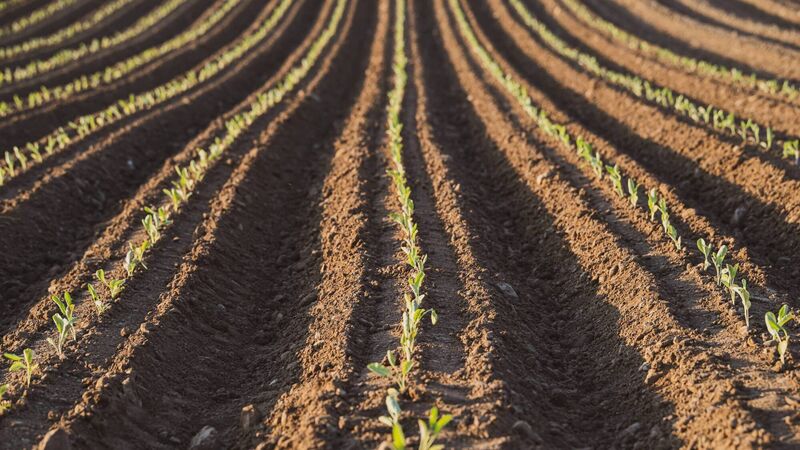
A recently published research paper from Korea has suggested manipulating molecular pathways in crops to make them more resilient in cold weather.
A research team based in Korea has discovered a molecular ‘switch’ that helps crops become more resilient to cold stress.
The team based in Chonnam National University in Gwangju, Korea, has recently published its findings of a rapid molecular ‘switch’ found in plants which could help crops survive in cold environments.
The study was led by Professor Jungmook Kim, Department of Bioenergy Science and Technology at CNU, working with researchers Uyen Thu Nguyen, Na Young Kang, and Dr Dong Wook Lee, also from CNU.
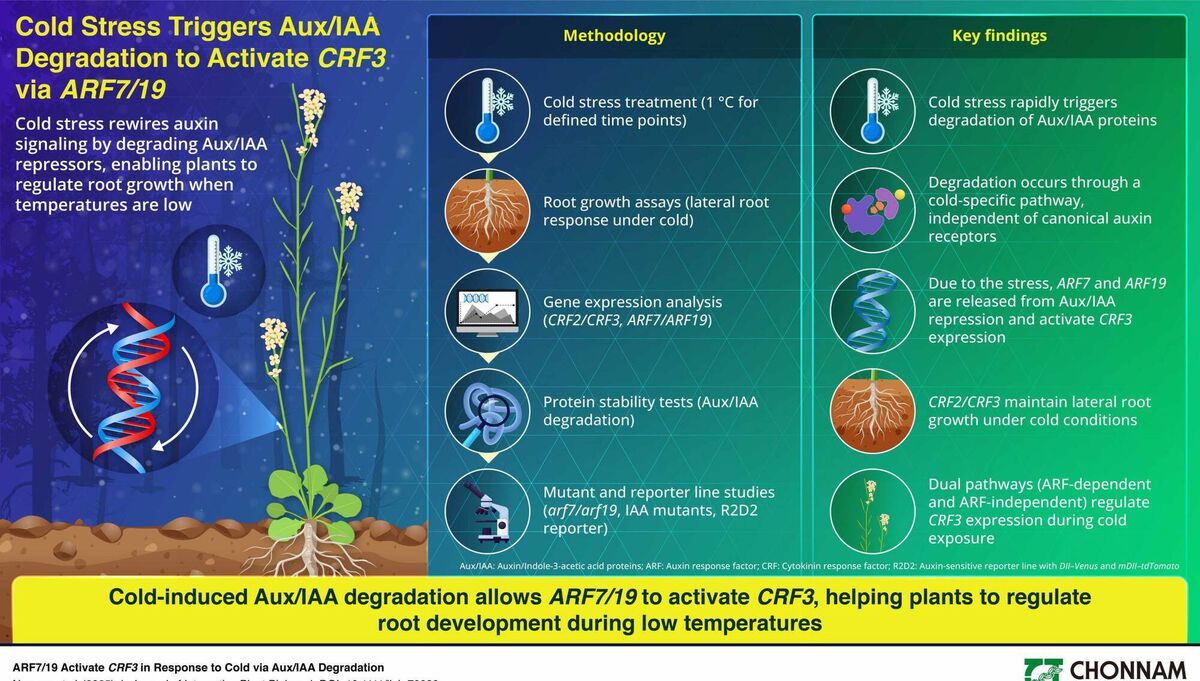
The team’s research demonstrated that during sudden cold weather, a switch in the hormone signalling pathway in crops occurs, triggering the breakdown of auxin or indole acetic acid proteins, which normally suppress growth-related gene activation.
Once those repressor hormones break down, this in turn releases auxin response factors (ARF), ARF7 and ARF19, which primarily promote lateral root growth.
The release of ARFs activates the gene cytokinin response factor 3 (CRF3), a master regulator, which controls root and vital organ growth in the plant, helping it survive adverse weather conditions by reshaping root architecture.
Being able to breed crops with this new pathway in mind will mean crops could remain productive even during unpredictable climate conditions.
“Cold stress doesn’t simply slow plant growth — it actively rewires hormone signalling to adapt root development,” explains Professor Kim.
The study also reveals cold conditions activate cytokinin signalling to induce CRF2, which works together with CRF3. The two genes act as integrators, combining environmental cues with internal hormone signals to fine-tune lateral root initiation under stress.
This also established that auxin and cytokinin pathways converge at CRFs, forming a unified cold-response module.
The findings highlight opportunities to protect crops from rising climate instability. By enhancing CRF2/CRF3 signaling or stabilising ARF activity via targeted degradation of Aux/IAAs, scientists could develop crops that maintain stable root growth in cold soils.
Such varieties would improve early-season growth establishment, increase nutrient uptake efficiency, and support sustainable agriculture with reduced fertiliser use.
The study also highlights the potential for the development of synthetic molecules or bio-stimulants that could protect seedlings during unexpected spells of extreme cold.
Over the next few years, this molecular pathway may help enable crop cultivation in harsher climates and serve as a foundation for precision breeding and CRISPR-based engineering of climate-resilient crops.
The team's research was recently published in the .