

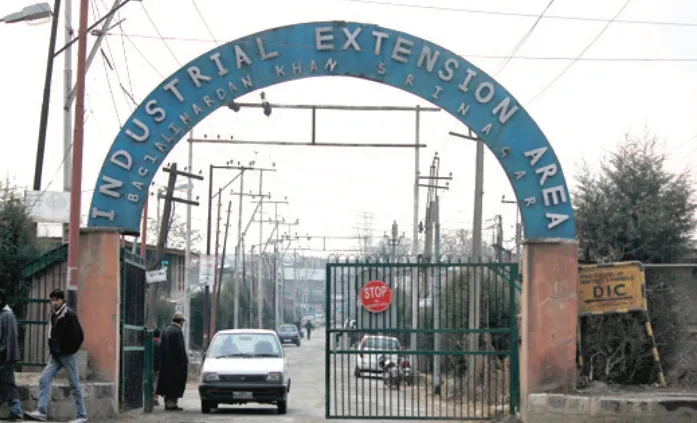






Industrial packages are foundational instruments for economic transformation, particularly in structurally disadvantaged regions like Jammu & Kashmir. Their importance extends beyond merely attracting investment they serve as catalysts for comprehensive socio-economic restructuring in lagging states.
India’s industrial landscape remains heavily skewed toward historically advantaged states. Top industrial states Maharashtra, Gujarat, Tamil Nadu, Karnataka, and Delhi contributed 72% of direct taxes in FY24, while underdeveloped states like Uttar Pradesh, Bihar, and Madhya Pradesh contributed only 5%. Industrial packages function as corrective policy instruments by compensating for geographic, infrastructural, and historical disadvantages that impede industrial development in backward regions. They level the playing field by offsetting the natural advantages that agglomerated industrial clusters in developed states possess.
Manufacturing sectors have significantly higher employment elasticity than service sectors, meaning each unit of sectoral growth produces proportionally more jobs. This is critically important for J&K, where unemployment has surged dramatically in recent years. Approximately 70% of J&K’s population historically depended on agriculture with rising literacy rates, the region requires alternative employment sources. Without industrial packages offering financial incentives, private sector entrepreneurs lack the capital and operational margins to establish manufacturing units in less-developed regions, leaving unemployed youth without viable opportunities.
J&K’s economy demonstrates a telling structural weakness: while the tertiary (service) sector dominates with over 56% of GSDP, the secondary (industrial) sector has collapsed from 19.30% to 18.30% between 2013-14 and 2024-25. This structural deterioration reflects J&K’s inability to develop manufacturing capacity despite significant agricultural and service sector potential. Industrial packages provide the financial scaffolding necessary to rebuild the secondary sector, creating linkages between primary sectors (agriculture, horticulture) and advanced value-addition industries (food processing, pharmaceuticals, agro-manufacturing).Evidence from India’s backward district program (1994) demonstrated that targeted tax incentives generated a 60% surge in firm entry and light manufacturing employment within beneficiary backward districts over a four-year period. Each rupee of incentive deployed through industrial packages generates secondary rounds of economic activity through supplier development, wage spending, infrastructure utilization, and tax collection, amplifying the initial investment’s economic footprint.
The recent decision not to extend incentive packages in J&K reflects a critical policy miscalculation that undermines industrial transformation objectives. The Centre has explicitly confirmed that no proposal exists to extend the New Central Sector Scheme (NCSS) or introduce additional incentives, despite overwhelming investor demand. This decision is particularly problematic given several contextual factors. The NCSS 2021, notified with a ₹28,400 crore allocation, has attracted registrations from 918 units (347 new, 520 existing, 51 substantial expansions). Critically, by August 2024, pending applications alone created a financial liability exceeding ₹71,000 crore more than 2.5 times the original scheme allocation. This supply-demand mismatch indicates that current incentive structures are insufficient to meet entrepreneur demand, making extension economically justified.
Despite policy sophistication, J&K’s industrial development has faced persistent implementation gaps. As of December 2024, while ₹2,449.47 crore in actual investment has materialized across 267 grounded units (from approved new units), this represents only 8.6% of the original ₹28,400 crore allocation. The scheme’s success rate and pending claims crisis 250+ crore outstanding suggest that reducing incentive availability through non-extension may further decelerate industrialization momentum.States like Himachal Pradesh and Uttarakhand maintain ongoing industrial incentive schemes extending beyond J&K’s NCSS expiration. Non-extension exposes J&K to competitive disadvantage, as private investors will gravitate toward regions with sustained policy support, replicating the historical pattern that concentrated industries in already-advanced states.
The decision not to extend NCSS occurs against a backdrop of manufacturing sector stagnation that predates the 2021 policy. J&K’s secondary sector decline reflects multiple causative factors that necessitate, rather than justify, policy withdrawal. Following the abrogation of Article 370 (August 2019), the administration implemented the Government e-Marketplace portal for all government procurement. This eliminated preferential procurement from local manufacturers who previously supplied ₹400-500 crore annually to government departments, rendering approximately 4 lakh workers in 40,000 manufacturing units vulnerable. Local manufacturers cannot compete with industrially advanced states suppliers due to economies of scale and infrastructure disadvantages, fundamentally undermining existing industrial base viability.
Geographic constraints in the Himalayan region create structural disadvantages, difficult terrain, power shortages, and high infrastructure setup costs limit large-scale industrial establishment. These are precisely the disadvantages that industrial incentive packages are designed to overcome. When natural economic forces discourage private investment in a region, policy-driven incentives become the only mechanism through which market entry becomes economically rational for entrepreneurs.
The government should formalize additional tranches of funding to address the liability gap rather than ceasing incentives. This would convert policy aspiration into tangible industrial capacity, generating immediate employment and lasting productive assets that strengthen J&K’s tax base for decades. Manufacturing accounts for 92% of NCSS investment to date, concentrated in metal processing, plastics, pharmaceuticals, and food processing. Rather than non-extension, targeted package deepening in high-employment-intensity sectors (labor-intensive textiles, electronics assembly, agro-processing) could maximize job creation per rupee invested while addressing the region’s unemployment crisis more effectively.
J&K possesses significant agricultural and horticultural output (apples, walnuts, saffron) but lacks downstream processing and value-addition industries. Extended industrial packages with specific targeting of agro-industry clusters would leverage comparative advantage while restoring employment linkages between primary and secondary sectors a particularly relevant consideration given J&K’s horticultural strengths.
Industrial packages are not merely fiscal instruments they are structural policy mechanisms that compensate for historical, geographic, and infrastructural disadvantages that prevent market-driven industrial development in backward regions. The decision not to extend NCSS, when existing investor demand exceeds available incentives by 250%, contradicts evidence on place-based policy effectiveness and undermines J&K’s industrial transformation imperatives. Without policy extension coupled with accelerated implementation, J&K risks perpetuating the regional disparities that have defined its economic marginalization within India’s federal structure.
Dawar Ashraf Mir is an entrepreneur managing infrastructure and agricultural ventures in Kashmir. He is also a fellow of the Ananta Aspen Global Leadership Network (AGLN)