Our mission begins with the words, "Working with others." We invite you to join us in conserving wildlife and wild places for today and for generations to come.

You can get involved by volunteering, partnering, sampling learning opportunities, taking part in education programs, and attending events. You can also comment on proposed rules and notices. Here’s how.

Volunteering

To search for volunteer jobs, type a position, location or other term.

Common Volunteer Opportunities

The Rhode Island National Wildlife Refuge (NWR) Complex consists of 5 National Wildlife Refuges across the state of Rhode Island: Ninigret NWR, Sachuest Point NWR, Trustom Pond NWR, John H. Chafee NWR, and Block Island NWR. Sachuest Point and Ninigret NWR's have Visitor Centers that are open 7...
Volunteer DutiesMay include, but not limited to:Repair, replace, remove, or install directional, informational, and interpretive signs.Gate relocation and installation.Fence repairRepair metal and PVC infrastructure and perform improvements water delivery systems to habitat.General property...
Background: The Arthur R. Marshall Loxahatchee National Wildlife Refuge is home to 146,000 plus acres of cypress swamp, tree islands, and wet prairies- all part of the beautiful Everglades! Our headquarters area contains the headquarters office, visitor center and over 20 miles of trails, and is...

Careers and Internships

Are you passionate about conservation, science, nature, plants and wildlife? A career with us might be just what you’re looking for. It might also be the ticket if you’re into law enforcement, information technology, maintenance, real estate, engineering, communication, cartography, finance, budgeting and more. 

Join us in advancing our mission of working with others to conserve, protect, and enhance, fish, wildlife, plants, and their habitats for the continuing benefit of the American people. 

Partnering With FWS

Partners are valuable allies to the U.S. Fish and Wildlife Service and play a vital role in meeting the Service's conservation goals.

Featured Partners

Here are just a few of our nationals partners. You can view the full list of FWS partners, along with the regions and areas of focus our work together entails.


Learning Opportunities

We offer many types of learning opportunities including formal and informal training. Some of the education we offer includes job training, career enhancement training, and education for environmental or technical professionals and students.

Education Programs

The Fish and Wildlife Service offers many great education programs.

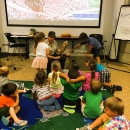
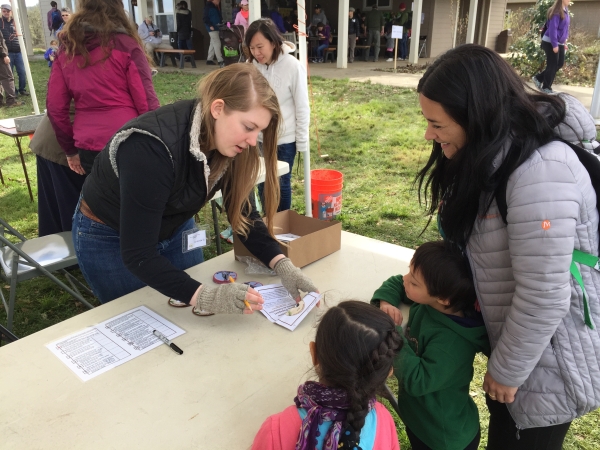
Fish and Wildlife staff conducting the Young Explorer's Club program for a group of children.
Join us the 1st Tuesday of every month for the Young Explorer's Club, an environmental education program specifically developed for 3 & 4 year-olds.
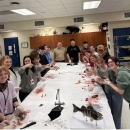
Dissecting trout in the animal science class/Mountain Home
For the past 10 years Thomas Anderson (Trey) has been a guest speaker in the Animal Science Class at the Mountain Home High School. This includes kids in 10th-12th grades. Each time, he speaks to two classes with 15-20 kids per class. They discuss careers that involve the resources that are...

Proposed Rules and Notices Open for Comment

Rulemaking is the policy-making process for agencies of the federal government. Each rule goes through a structured reviewing timeline, including a period for public comments. View policy open for public comment on regulations.gov.

Regulations.gov

Events

The Fish and Wildlife Service hosts many public events at sites across the country.


Winter is here, which means it's the perfect time of year to enjoy a nice, cozy book! Everyone is invited to take a comfortable stroll inside the visitor center while following the pages of a children's storybook. All ages are welcome. More books are available in the hearth room.Questions...

Minnesota Valley National Wildlife Refuge
Bloomington Visitor Center
Outdoor Activity

Join Naturalist Louise Bacon-Ogden for a fun and informative walk along the Shorebird Loop Trail on the first Wednesday of each month.

Humboldt Bay National Wildlife Refuge
Salmon Creek Unit - Richard J. Guadagno Visitor Center

February 4 - 28

As a conservation scientist and photographer, William Michaels has navigated across oceans and continents with camera in hand to capture in the moment light and interactions of nature to inspire support for the conservation of our planet’s wildlife and...

Patuxent Research Refuge
National Wildlife Visitor Center

Get Involved Stories

Future of Conservation Podcast
Get Involved
From Fish Cars to Freezers: The Future of Fisheries
From milk cans packed with ice to freezers preserving fish genetics, fisheries conservation has always been about innovation. In our latest episode of The Future of Conservation Podcast, we explore how U.S. Fish...
Future of Conservation Podcast
Get Involved
Conservation at 250: Honoring the Past, Shaping the Future
We’re celebrating America’s 250th anniversary with a special podcast series exploring the past, present, and future of American conservation. Hear powerful stories from leaders across the U.S. Fish and Wildlife Service, Tribal leaders, historians, refuge and hatchery experts, and the people who’ve...
Two California students watch classroom tank.
Get Involved
West Coast Schools Turn Small Tanks Into Big Lessons
Along the West Coast, salmon and trout are threads in the cultural fabric. They have sustained Native Tribes, fueled the economies of entire towns, and sparked wonder in countless anglers. They have even found their way into thousands of schools. Through state fish and wildlife agency salmon and...
Four hunters in blaze orange walking after a pheasant hunt
Get Involved
An Abundance of Thanks
In this season of gratitude, we give thanks for another year outdoors, for time well spent with loved ones, for meals gathered from the land and waters we all share, and for the generations of foresight that made this abundance possible.
Biologist smiling while lifting a boot up to have friend clean dirt out of tread.
Get Involved
Importance of Investments in Prevention
Invasive species are well known to be bad. But what makes a species invasive? There are two key components that determine if a plant, animal, or other living organism is invasive: # 1. Thrive in an environment where they don’t naturally live and #2. Cause Harm (or are likely to cause) to economic,...
Father and son in hunter blaze orange vests.
Get Involved
The Enduring Importance of Hunting & Fishing
Established in 1972, National Hunting and Fishing Day falls on the fourth Saturday in September. It’s a day of celebration, but not for celebration’s sake alone. It’s a reminder of how hunters and anglers helped build the foundation of modern wildlife management in America. Outdoor pursuits like...