



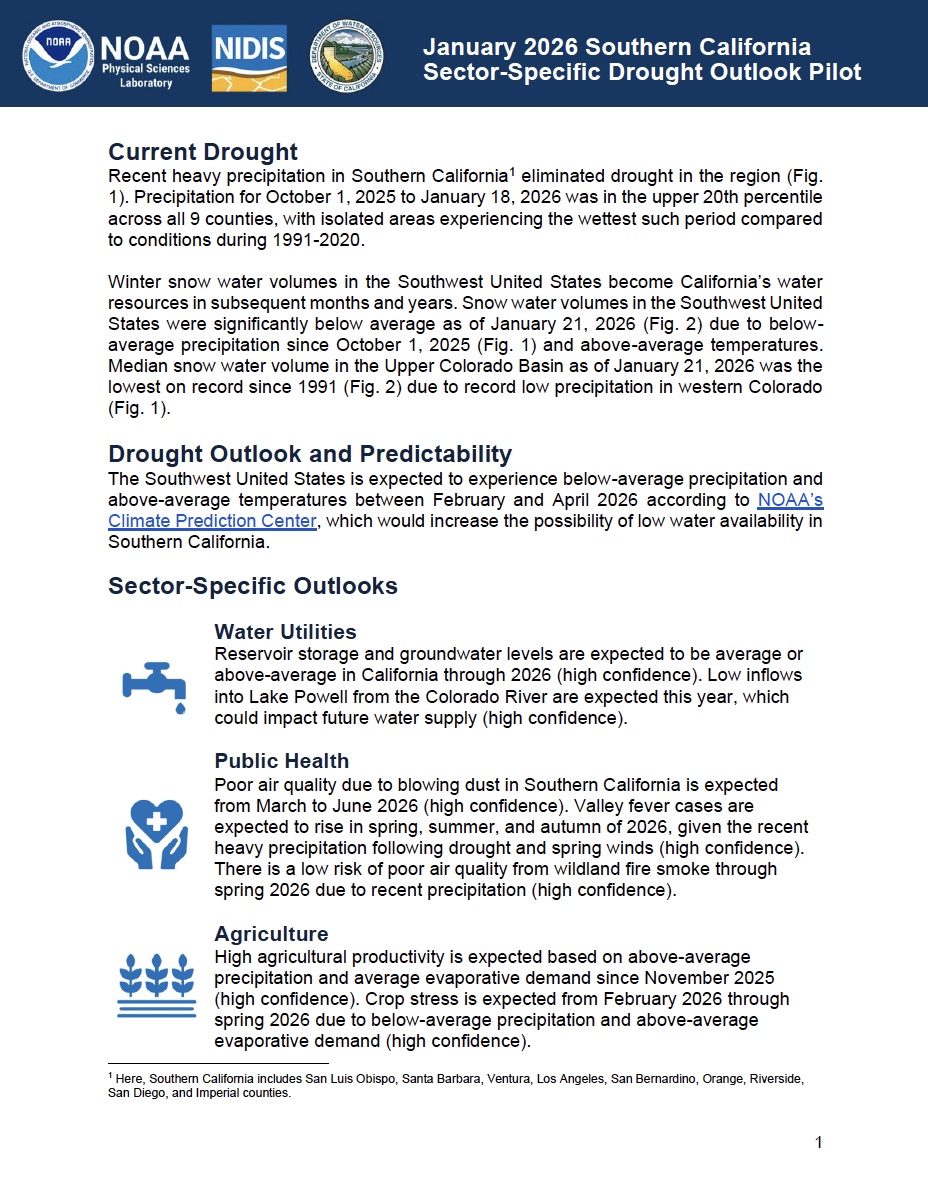
NOAA’s National Integrated Drought Information System (NIDIS) and Physical Sciences Laboratory are partnering with the California State Climatologist/California Department of Water Resources, NOAA’s National Weather Service and National Centers for Environmental Information, and the California-Nevada Adaptation Program (a NOAA CAP team) on the Sector-Specific Drought Early Warning Outlook – Southern California Pilot.
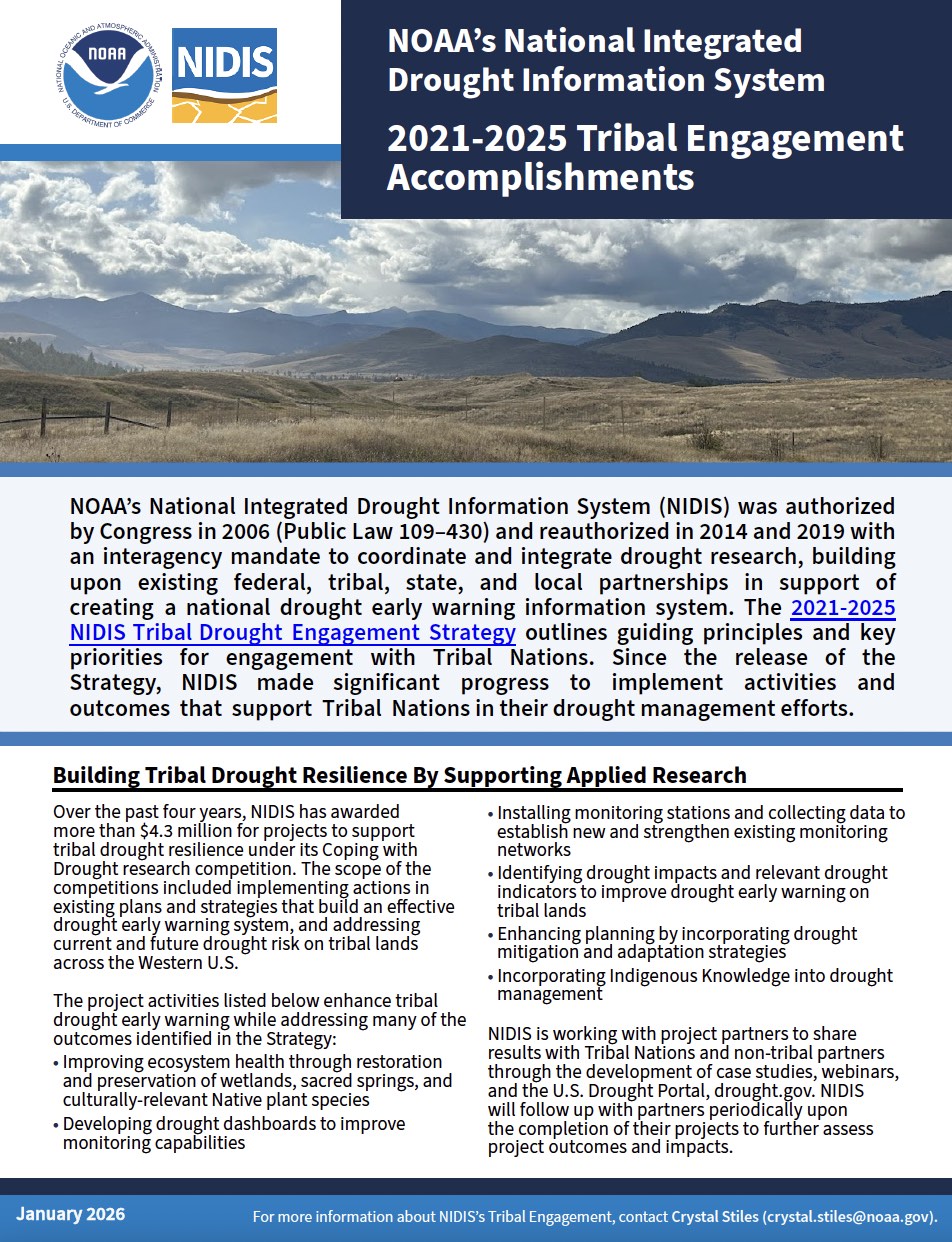
NOAA’s National Integrated Drought Information System (NIDIS) was authorized by Congress in 2006 (Public Law 109–430) and reauthorized in 2014 and 2019 with an interagency mandate to coordinate and integrate drought research, building upon existing federal, tribal, state, and local partnerships in support of creating a national drought early warning information system.
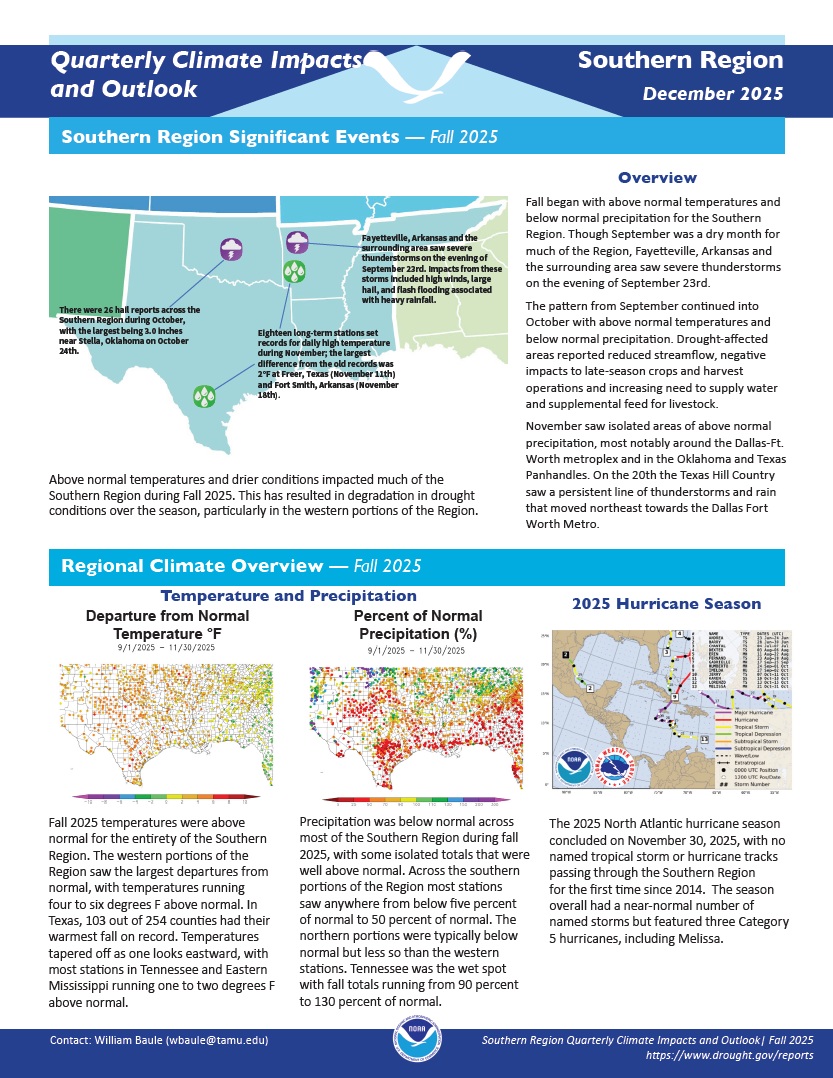
Quarterly Climate Impacts and Outlook for the Southern Region for September–November 2025. Dated December 2025.
Fall 2025 temperatures were above normal for the entirety of the Southern Region. The western portions of the Region saw the largest departures from normal, with temperatures running four to six degrees F above normal. Precipitation was below normal across most of the Southern Region during fall 2025, with some isolated totals that were well above normal.
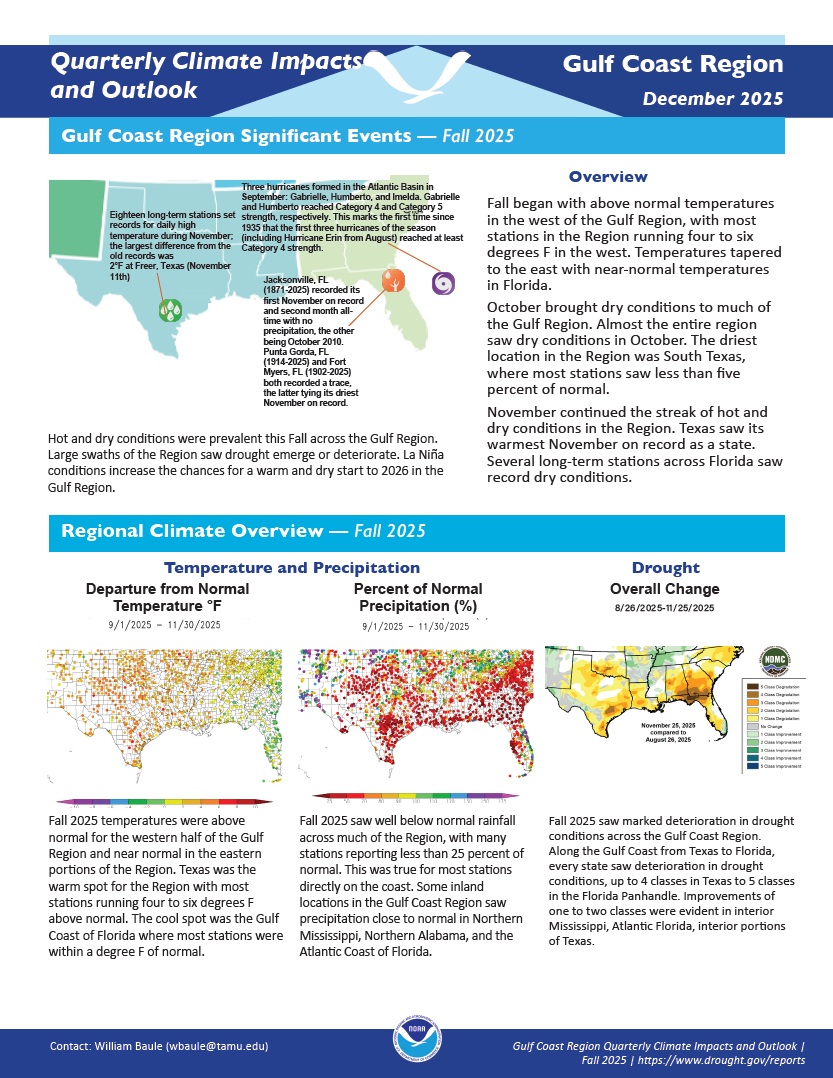
Quarterly Climate Impacts and Outlook for the Gulf Coast Region for September–November 2025. Dated December 2025.
Fall 2025 temperatures were above normal for the western half of the Gulf Region and near normal in the eastern portions of the Region. Fall 2025 saw well below normal rainfall across much of the Region, with many stations reporting less than 25 percent of normal. This was true for most stations directly on the coast.
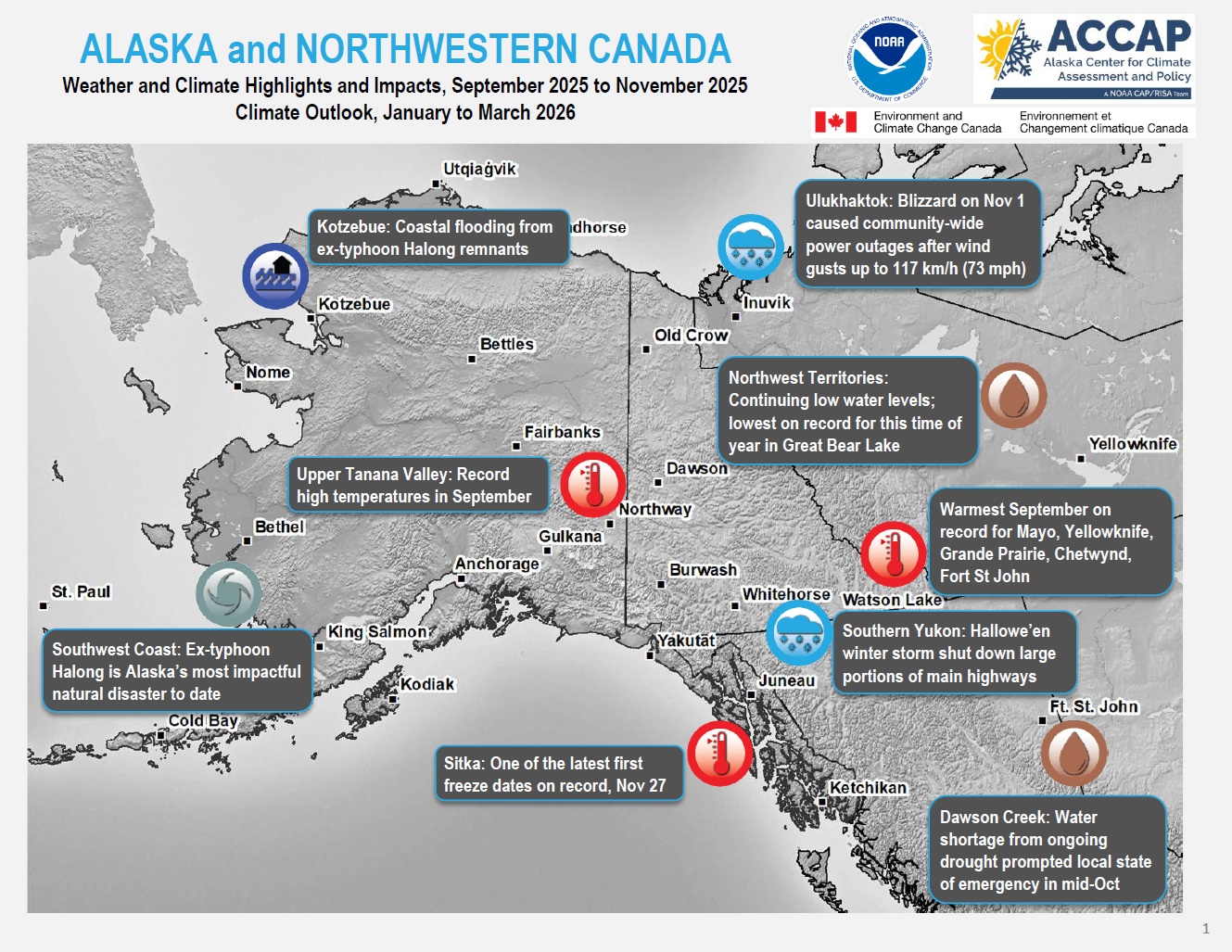
Quarterly Climate Impacts and Outlook for Alaska and Northwestern Canada for September–November 2025, with an outlook for January–March 2026. Dated December 2025.
ECCC, NOAA, and partners created these outlooks to inform the public about recent impacts within their respective regions. Each regional report contains easy-to-understand language, and anyone can access them through the U.S. Drought Portal.
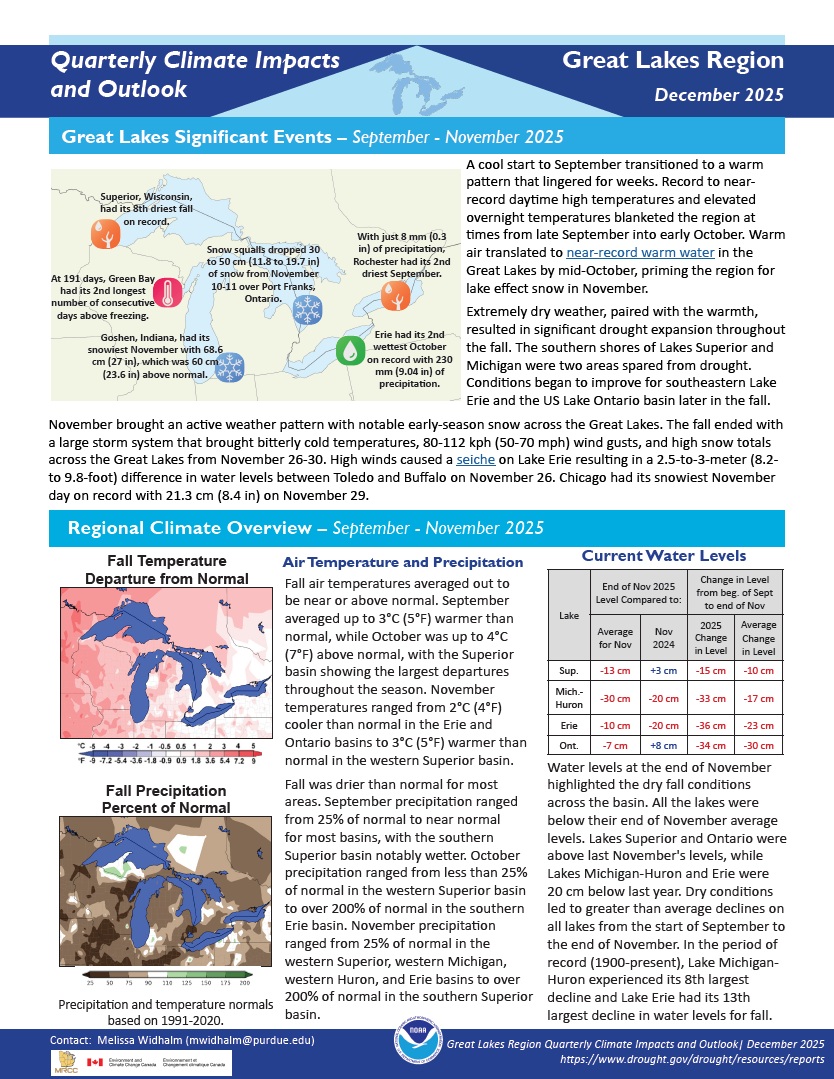
Quarterly Climate Impacts and Outlook for the Great Lakes Region for September–November 2025. Dated December 2025.
Fall air temperatures averaged out to be near or above normal. Fall was drier than normal for most areas. Dry conditions led to greater than average declines on all lakes from the start of September to the end of November. In the period of record (1900-present), Lake Michigan-Huron experienced its 8th largest decline and Lake Erie had its 13th largest decline in water levels for fall.

Quarterly Climate Impacts and Outlook for the Gulf of Maine Region for September–November 2025. Dated December 2025.
Autumn featured near- to above-normal temperatures, ranking among the 10 warmest autumns for several Maritimes sites including Moncton, N.B.; Halifax, N.S.; and Summerside, P.E.I. Below- to near-normal precipitation fueled intense drought conditions that resulted in many impacts, particularly on water resources and agriculture.
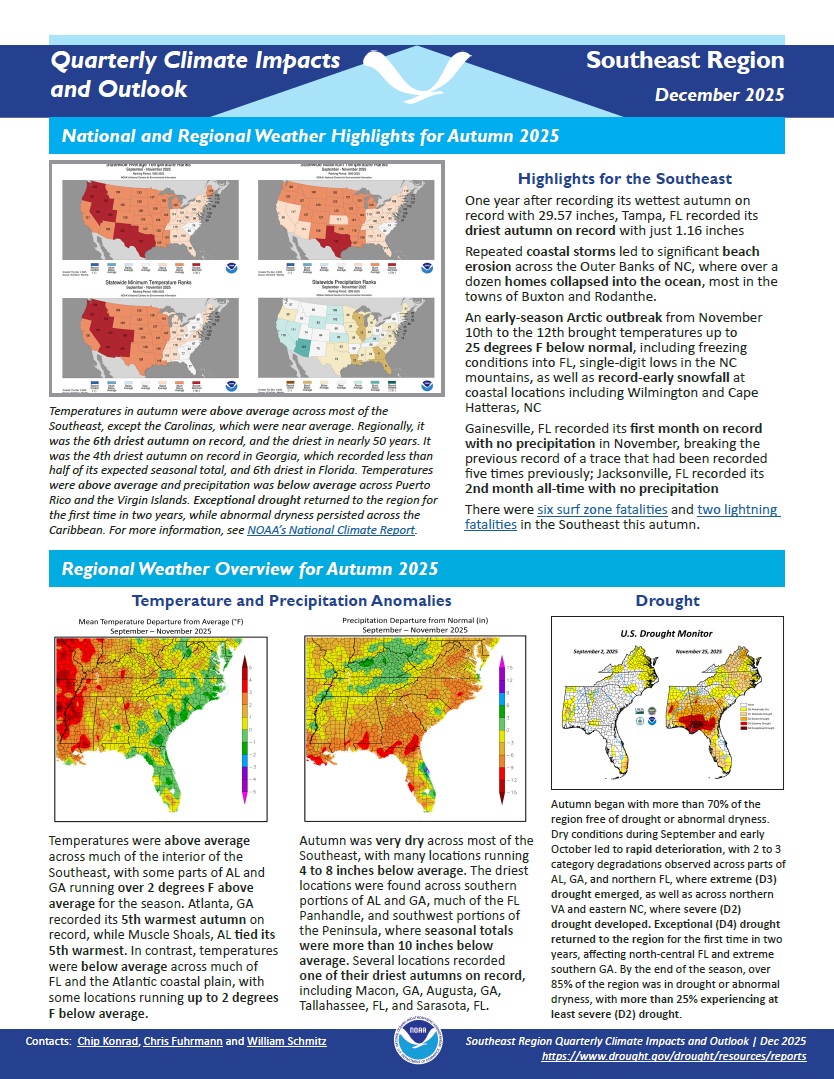
Quarterly Climate Impacts and Outlook for the Southeast and Caribbean Region for September–November 2025. Dated December 2025. (Updated to add Spanish translation of Caribbean information.)
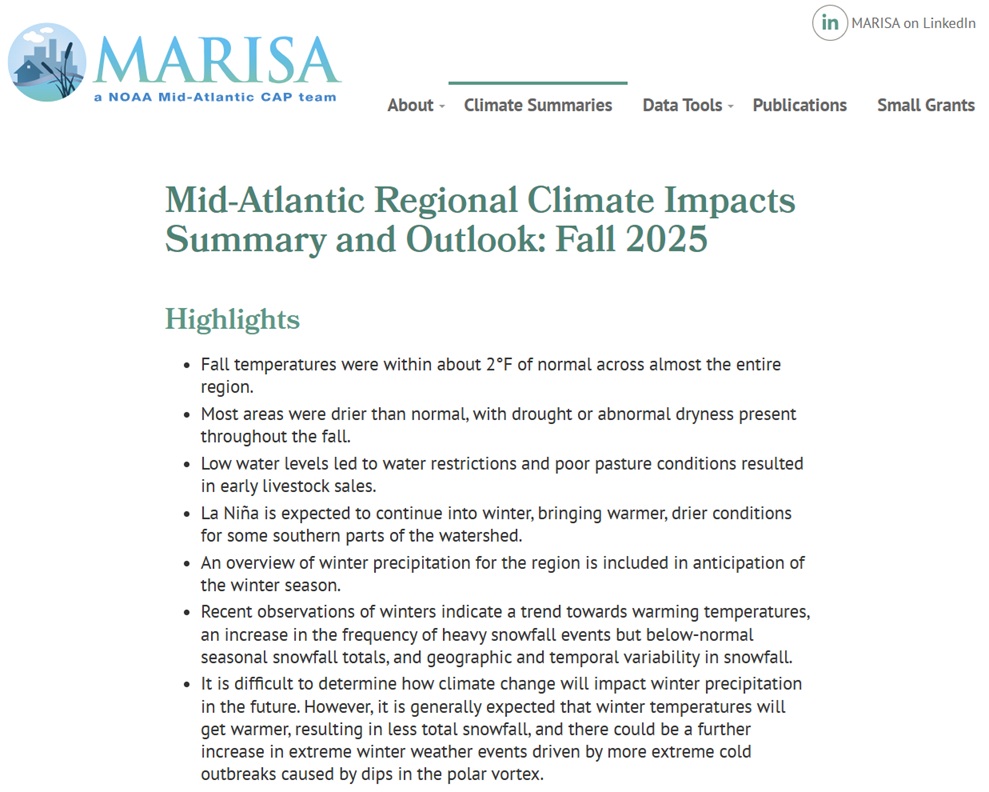
Quarterly Climate Impacts and Outlook for the Mid-Atlantic Region for September–November 2025. Dated December 2025.
Fall temperatures were within about 2°F of normal across almost the entire region. Most areas were drier than normal, with drought or abnormal dryness present throughout the fall. Low water levels led to water restrictions and poor pasture conditions resulted in early livestock sales.
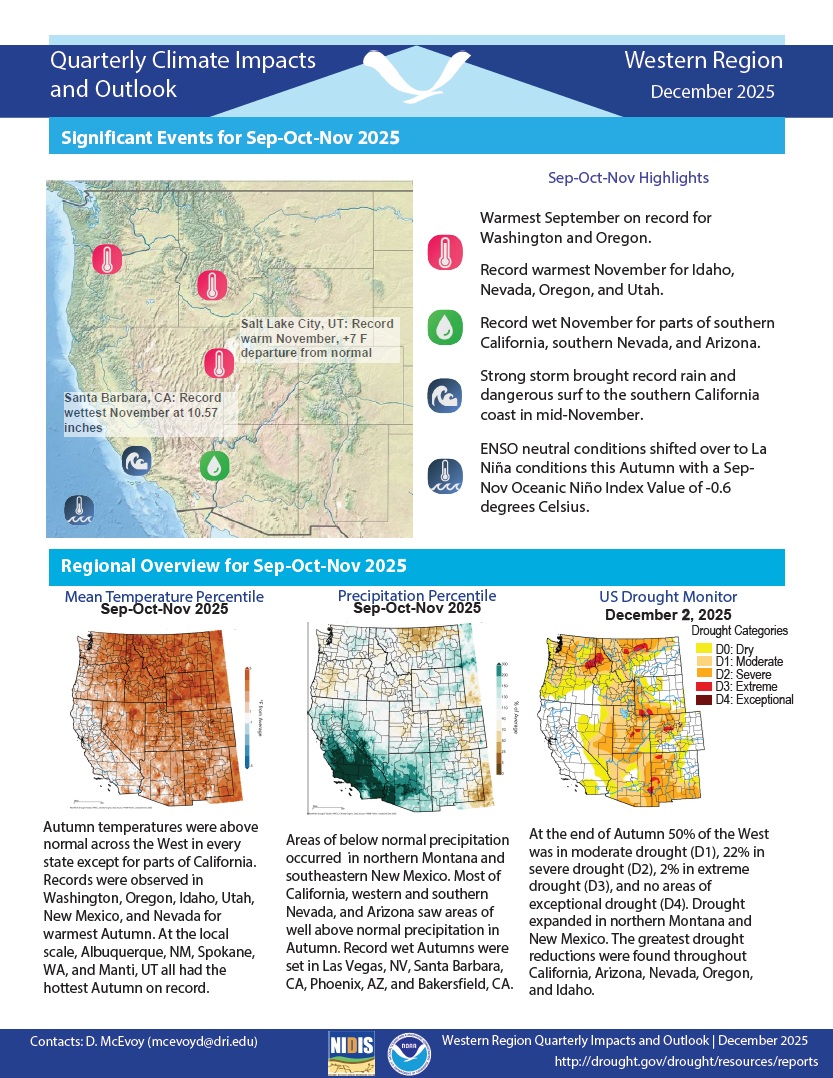
Quarterly Climate Impacts and Outlook for the Western Region for September–November 2025. Dated December 2025.