Sign up for the daily CJR newsletter.
Over the past two decades, as American voters have migrated online, each election cycle has followed their drift. The “internet election” of 2008 begot the “Twitter election” of 2016 and the “podcast election” of 2024. Politicians have increasingly relied on social platforms as a way to reach voters directly and become less dependent on the television, radio, and newspaper interviews of traditional media. This new relationship between politicians and their audiences—what you might call a direct-to-consumer model—leaves the Fourth Estate out of the equation.
For candidates and elected officials, cultivating a presence on social media is nonnegotiable. Republicans are the most active across social platforms, holding 58 percent of accounts, according to a recent analysis by the Tow Center for Digital Journalism. Facebook, with its older user base, is particularly fertile ground; governors including Ohio’s Mike DeWine and Florida’s Ron DeSantis—who has two accounts on the platform—garner the most engagement among state leaders. Democrats narrow the gap somewhat on Instagram and TikTok, which have a younger demographic. There, Gen Z state legislators like Texas’s James Talarico, Tennessee’s Justin Jones, and Arizona’s Analise Ortiz have far more followers than better-known officials.
Republican hegemony online is mostly due to the enormously successful style of direct-to-consumer communications that was pioneered by Donald Trump. Over the first three years of his first presidency, Trump posted more than eleven thousand messages on Twitter. “Boom. I press it,” Trump told a gathering of conservative social media stars that year, “and, within two seconds, ‘We have breaking news.’” Every Republican hoping to speak to the MAGA base replicated his approach, with Marjorie Taylor Greene and Jim Jordan amassing some of the largest followings on the platform.
In his second term, Trump has not only cultivated alternate channels for MAGA to reach people—see: Truth Social—but is also shutting down the media’s access to government offices. Journalists who used to hang out in the corridors of the Pentagon have been pushed out of the building, while the Associated Press is excluded from presidential events because of its refusal to call the Gulf of Mexico the Gulf of America. Karoline Leavitt, the White House press secretary, has excluded reporters from major news outlets from briefings in order to make room for MAGA influencers. Her office is now available by appointment only.
Replacing professional journalists are “new media” ideologues. This means that, rather than face questions about the economic instability of Trump’s on-again-off-again tariffs from a reporter at the New York Times or CNN, Leavitt can instead spend her time fielding sycophantic non-questions like this one, from Cara Castronuova, a former professional boxer turned correspondent for LindellTV: “Will you guys also consider releasing the president’s fitness plan? He actually looks healthier than ever before, healthier than even eight years ago.”
At the same time, the Trump administration has transformed into its own media outlet. The White House’s communications office issues SEO-savvy articles with titles such as “Guard Assisting Law Enforcement in Making DC Safe” and “President Trump Is Right About the Smithsonian” that rank highly on Google News. These articles do not resemble press releases or announcements that make their government provenance clear; rather, they are styled like independent news reports, complete with data and quotes that serve the White House message. (Leavitt did not respond to a request to comment on the West Wing’s media strategy.)
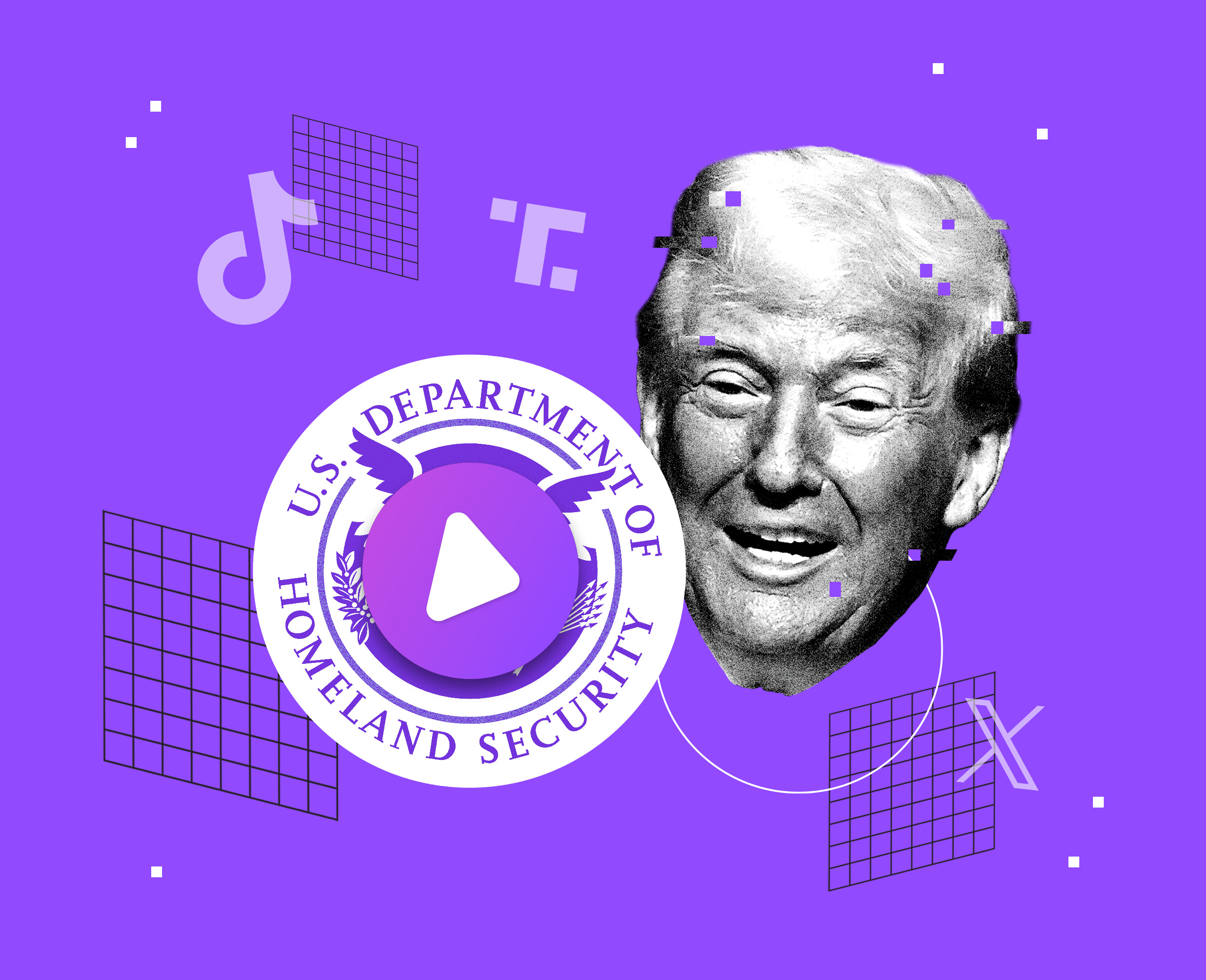
On TikTok, the White House posts meme-coded propaganda—as in a video from October that sets a glamorous montage of Trump footage to a Lil Uzi Vert song. The official social media accounts of government agencies including the Department of Homeland Security and the Department of War (f/k/a the Department of Defense) share more of the same: Pete Hegseth, the defense secretary, piloting a fighter jet in time with an EDM beat, a Halloween-themed threat to people protesting Immigration and Customs Enforcement in Los Angeles. These videos aren’t particularly well crafted—only a true believer could find the pairing of Trump with trap music anything other than cringe-inducing—and they don’t make any pretense of informing the public about government policies. Instead, they serve to advance a narrative of MAGA triumphalism, inflaming the partisan divide that the president has so successfully stoked over the past decade.
Whether this strategy can help the administration overcome Trump’s slumping poll numbers in next year’s midterms will depend on how Democrats respond on the same channels. Democrats may remain more committed to legacy media than Republicans, since their base of well-educated cosmopolitans are the people who most trust print newspapers and NPR, but everyone in politics recognizes that digital strategy is now a tentpole of any campaign.
Pete Buttigieg, who led the Department of Transportation during the Biden administration, was an early adopter of using alternative channels to more effectively reach an online audience. “The secretary just gets it,” Brenna Parker, a communications consultant who led Buttigieg’s digital strategy during the Biden administration, told me. “We had a seat at the table just like everybody else did, which was really refreshing.” Buttigieg gamely sat for YouTube interviews with wonky personalities like Hank Green, a science YouTuber, and Ray Delahanty, who runs a channel about transportation and housing issues called “CityNerd,” as well as off-brand hosts like the comedians Rory & Mal. Buttigieg quickly became the most visible member of the administration to young voters who scrolled on smartphones instead of watching Morning Joe.
Buttigieg’s emphasis on new media has continued through 2025, with the former secretary appearing on a podcast focused on Notre Dame’s football team and a history-minded Substack livestream with Heather Cox Richardson. Most surprising was his three-hour interview with Andrew Schulz, the manosphere comedian who said he’d decided who to vote for in the last election based on “who gets the most pussy.”
Chris Meagher, Buttigieg’s chief of staff, told me that these appearances had been interspersed with more traditional news hits on cable or public radio in order to reach as wide an audience as possible. “With the way the media is fragmented right now, it’s not as simple as going on CNN and calling it a day,” he said. “You have to find places where people are getting their news and where they’re getting their information and where they spend their time online. There’s no cure-all answer to that, so there is a little bit of a flood-the-zone mentality.”
In the digital era, strategists of both parties now recognize that the best way to put themselves in front of internet audiences is through competition with influencers, cute animals, and memes. For conservatives, the way to compete might result in a tweet from JD Vance, the vice president, that reappropriates a left-wing caricature of himself with a grotesquely inflated face; for progressives, perhaps it would be eight-bit sunglasses descending onto the face of Gavin Newsom, the governor of California. These memes may be incomprehensible to anyone who still gets a newspaper delivered to their door every morning. But that’s the point: they’re strange and specific in ways that resonate with a particular demographic of online supporters, rather than the generic “average American” political consultants previously obsessed over.
As both Republicans and Democrats move away from traditional media and toward direct-to-consumer messaging, it has become impossible for journalists to count on the same access and routines that would previously drive coverage. When the George W. Bush administration was laying the foundation for its invasion of Iraq, in 2002, Bush sat for an interview with the Wall Street Journal and Vice President Dick Cheney went on Meet the Press. Now, as Trump contemplates military action against Venezuela, it’s all playing out on social media, with Hegseth posting videos of suspected drug boats being blown up by the US Navy, Trump sharing details about American intelligence, and Marco Rubio, the secretary of state, disputing the Miami Herald’s reporting of planned military strikes.
If the media isn’t able to find a way to challenge the official narrative on those same feeds, journalists risk losing the chance to hold the powerful to account in real time. To navigate this new era, it’s vital to retain a foundation in traditional journalistic standards and develop an understanding of what social media users are most likely to connect with. Dave Jorgensen is one of the few figures who straddles both worlds: from 2019 to this past summer, he starred on the Washington Post’s TikTok account. He left to start an independent site called Local News International, for which he and fellow Post veterans Lauren Saks and Micah Gelman are planning to pair Jorgensen’s daily news videos with a weekly long-form series that includes interviews.
If that sounds just like a million other video podcasts, that’s the point. His ambition is to create a space that pairs satire with seriousness. “What The Daily Show did was effectively tell the news—and it certainly had a slant, but more importantly to me, they said, ‘Here’s what cable news is like. Let’s take that premise and make a show built around it,’” Jorgensen told me.
Of course, you hardly need to have worked at a legacy publication in order to bring journalistic heft to the new media world. “The media’s not dead. It’s just morphing,” Andrew Callaghan, the host of Channel 5, a YouTube news show, said. “If the mainstream press was working in a robust way to give people reliable information in a way they could consume, there wouldn’t be this massive surge in alternative media.” In his view, news organizations still do vital work; the problem is just that they’ve been too slow to compete with the volume and variety of other content that keeps viewers informed.
Channel 5 is the best proof of concept for YouTube becoming a place where rigorous journalism demands attention from political figures. Callaghan started creating content on social media in 2018 while studying for a degree in journalism from Loyola University in New Orleans. Though he had intended to work at a major broadcaster, there simply weren’t any jobs available where he could do the multimedia reporting for which he’d trained. “I went my own way out of necessity,” Callaghan said. “I had the drive and the hunger to do it.”
That year, Callaghan covered anti-lockdown demonstrations and the protests against George Floyd’s murder. Since then, he’s posted detailed reports on homelessness, drug culture, and gentrification in a number of cities. It’s the sort of reporting that may have previously been limited to a local alternative weekly newspaper but can now reach viewers anywhere. All of this has helped Channel 5 surpass three million YouTube subscribers—more than the Washington Post has.
Both Buttigieg and Hunter Biden have sat for marathon interviews with Callaghan. He draws a bright line between those interviews—which were informed by his previous reporting—and what Trump and Kamala Harris were seeking out during the last election. “If you’re just this super relatable, chummy podcast space where you bring on powerful people to make them seem like they’re your friend? That’s not good,” Callaghan said. But “if you’re talking to people and showing reality on the ground, that’s a good thing.”
A case in point is that of Memo Torres, the director of engagement for LA Taco. Over the summer, LA Taco announced it was going to start prioritizing social media over its print stories in order to better respond to the numerous raids that ICE was staging daily across Southern California. Since then, Torres told me, his life has been a sprint to keep up, whether by pursuing stories or working with neighborhood groups to source footage. “I’ll recap it in a video,” he said, “where people can just go and see all the stories that happened that day—actual, verified stories. How many people were taken, what’s the highlight of the day, any new strategies, things to point out.” The result of those labors is the “Daily Memo,” a vertical three- to five-minute video published on Instagram and TikTok that is the most authoritative source for reporting on ICE’s extensive operations in the area.
The success of the “Daily Memo” has helped to buoy the rest of LA Taco, according to Javier Cabral, the editor in chief. Last year, he was forced to briefly furlough the entire staff and issue a plea for support; in August, when the outlet surpassed five thousand subscribers, it was in the black for good, making it possible for Cabral to hire a new reporter to bolster the site’s immigration coverage. Torres said that LA Taco plans to sustain its social media presence going forward. “We’ll just be covering LA in general,” he told me. “The same way I cover ICE, but, you know—hopefully better news.” Though he’s received outreach from politicians who want to go on the “Daily Memo,” so far Torres has been reluctant to indulge them for fear of it distracting from his work chronicling the ICE raids. “At the same time, you want to be able to have communication with them,” he said, “especially for when something comes up later and I can grill them.”
In this new media environment, elected officials don’t have the same incentives to speak candidly to journalists. When those officials have the option of controlling their message on their own accounts, they depend on media interviews for visibility more than to say anything consequential. Benjamin Netanyahu’s appearance on Full Send, for instance, was only newsworthy because of the visual it provided of the Israeli prime minister sitting in the same room as the Nelk Boys. “I think Pete Buttigieg went on Channel 5 because he wanted to connect with a different demographic,” Callaghan told me. “But he wasn’t necessarily very open with his answers.” Sometimes, the politician-meets-social-media-star equation can get awkward, as was the case when a Twitch streamer called Atrioc appeared on Newsom’s podcast, This Is Gavin Newsom. Atrioc was taken aback that Newsom seemed more focused on making small talk about video games than discussing matters of public interest. “It’s not long after we talked about Charlie Kirk getting assassinated—he’s like, ‘Tell me about getting world records in Hitman,’” Atrioc told his followers on a stream recapping the interview. Then he burst out laughing at the idea that Newsom had any real interest in a third-person-shooter game. “I don’t want to talk about Hitman! What was I going to say?”
In this realm, where cut-and-dry exchanges have been replaced by a free-for-all, alternative media figures and elected officials are teasing out new standards and norms. There’s plenty of potential pitfalls in that negotiation, but also an opportunity to reach people who aren’t consuming news anywhere else. “Our audience, they’re not necessarily apathetic,” Jorgensen said, “they’re just not necessarily seeking out the news. But they are interested if you present it to them in a way that fits everything else that they’re consuming.”
To compete with all the digital noise, journalists need to find a way to stand out amid a feed that contains a little bit of everything, including propaganda. By creating channels with a big enough audience, candidates and elected leaders can be drawn into appearing on YouTube, TikTok, and Instagram on our terms, not theirs. For the viewer, that means a higher chance that the infinite scroll eventually turns up something substantive and compelling, so much so that they like, subscribe, and come to trust social reporting as much as their grandparents once trusted the talking heads on TV.
This piece is part of Journalism 2050, a project from the Columbia Journalism Review and the Tow Center for Digital Journalism, with support from the Patrick J. McGovern Foundation.
Has America ever needed a media defender more than now? Help us by joining CJR today.